Inducing Transformative learning in a Game‑
Based Learning Environment
Master Thesis
Zahraa Saadallah
Faculty of Behavioral Scineces, Master Educational
Sciences and Technology
Examination Committee
Dr. Bas Kolloffel
Inducing Transformative Learning in a GameBased Learning Environment Zahraa Salah Abdelhamid Saadallah
University of Twente
Author Note
Zahraa Salah Abdelhamid Saadallah, Student number 1580345, University of Twente; Dr. B.J. Kollöffel, 1st Supervisor, Department of Educational Sciences, University of Twente; T. Hirschler, MSc, 2nd Supervisor, Department of Educational Sciences, University of Twente.
An open version of a master thesis submitted to the Department of Instructional Technology of the Faculty of Behavioural, Management and Social Sciences, in partial fulfilment of the requirements for the degree of Master of Educational Science and Technology.
Correspondence concerning this master thesis should be addressed to Zahraa Saadallah, Student number 1580345, University of Twente, Postbus 217, 7500 AE, Enschede. Email: [email protected]
Table of Contents
Acknowledgement ... 4
Summary ... 8
1. Introduction ... 9
2. Theoretical framework ... 12
Transformational learning ... 12
Theory overview ... 12
Mezirow’s model of transformational learning ... 13
Inducing the transformational process ... 15
Game-based learning as a context of transformation ... 18
Implementing GBL using board games ... 19
Designing board games ... 19
Burnouts: as a target group for transformational learning ... 20
Sources of burnout ... 21
Feelings experienced during burnout ... 21
Transformational learning for burnouts ... 22
The current study ... 23
Context and scope ... 23
Purpose of the study ... 24
Research questions and hypotheses ... 24
Research design. ... 26
3. Method ... 27
Game design and development ... 27
Design ... 27
Construction and Development ... 28
Methodological details ... 37
Sampling Strategy and sample description ... 37
Data collection instruments ... 37
Procedures and ethical concerns ... 38
Data analysis ... 39
4. Results ... 43
Burnout level ... 43
Qualitative overview ... 43
Phase two -The Baggage- ... 49
Phase three -The Mismatch- ... 51
Phase four -The Timeline- ... 56
Phase five -The companionship- ... 59
Phase six -The Birdview- and phase seven -The Anchor- ... 61
Phase eight -The Gift- ... 64
After Game reflection ... 65
5. Discussion and conclusion ... 68
Discussion of the results ... 68
Participants experience of transformative learning ... 68
Evaluation of the learning environment ... 72
Group learning setting ... 72
Safety of the learning environment ... 72
Game Evaluation ... 73
Strengths and weaknesses ... 73
Participants evaluation and feedback on workshop ... 73
Expert impression and feedback ... 74
Suggested Changes ... 74
Theoretical and practical implication ... 75
Methodological limitation and future Research ... 76
Final Conclusion ... 78
References ... 79
Appendix A ... 85
Appendix B ... 88
Appendix C ... 89
Appendix D ... 91
Acknowledgement
ﻤﺤﻟا" ﮫﯾﻻا, فاﺮﻋﻻا ) "ﷲ ﺎﻧاﺪھ نأ ﻻﻮﻟ ىﺪﺘﮭﻨﻟ ﺎﻨﻛ ﺎﻣ و اﺬﮭﻟ ﺎﻧاﺪھ ىﺬﻟا ; ﺪ ٤٣
(
ﻢﻠﺳ و ﮫﯿﻠﻋ ﷲ ﻰﻠﺻ ﺪﻤﺤﻣ "تﺎﺤﻟﺎﺼﻟا ﻢﺘﺗ ﮫﺘﻤﻌﻨﺑ ىﺬﻟا ; ﺪﻤﺤﻟا"
“All praise is due to Allah Who guided us to this, and never could we have found guidance, had it not been that Allah had guided us” (Al Qur'an: 7: 43).
Looking back at my Master's journey, starting from the first days of my pre-master studies till the present day, I really consider myself lucky for being able to study and do something that I’m passionate about. Though it has been a challenging journey -specially because I’m not only a full-time student but also a mother-, it has also been a very enjoyable one. For this, I would like to express my gratitude to those who shared this journey with me. First, I would like to say a deep hearted thank you to my dear husband Ahmed, who supported me throughout this journey and has been sprinting with me these last two months to help me reach the finish line. Also I would to thank my dear son Moez, who is three years old today! for understanding that mummy needs to study hard and be good. Another special thank you to my bigger family, my parents, siblings, and my twin sister Shayma, as well as my in-law parents and siblings, who came many times from Egypt to Holland to help me out when I needed them, you have always made me feel that what I’m doing is worthwhile, thank you for that. Also, another thank you to my close friends who believed in me and encouraged me when I changed careers and pursued this masters. A big thank you to my dear friend Shaimaa, and the coach in this study who also came all the way from Egypt, thank you for your coaching role and efforts in the workshop. I would like also to thank my fellow colleagues who shared this journey with me, I truly enjoyed your company. Further, I would like to thank Ingrid from the HR department of the University of Twente, Jakob and Arnold, the occupational physicists of the University, as well as the independent psychologist Sterre, thank you for your collaboration before and during the workshop. Also I want to thank the participants for being open, sincere and trusting. And last but off-course not least, I would like to deeply thank my two supervisor, Bas Kolloffel and Tim Hirschler. Thank you Bas for making it possible for me to do a research that I’m passionate about, for your feedback, guidance, unlimited support and for believing in me. Thank you Tim for your encouragement, detailed feedback and your very helpful insights to make the best out my thesis.
List of tables
Table 1 Mezirow’s transformational learning Model ... 13
Table 2 The six individual/organization mismatches ... 21
Table 3 Feelings experienced during burnout experience ... 22
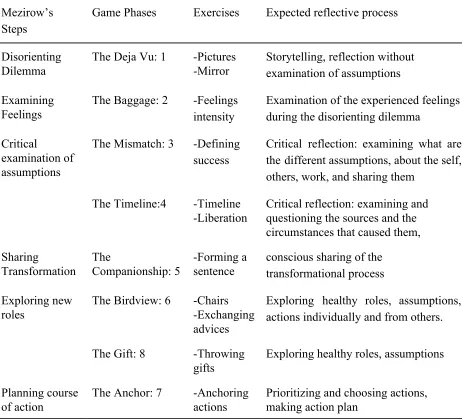
Table 4 Overview of the translation of Mezirow’s first six steps into game phases and exercises ... 32
Table 5 Sentences representing the six mismatches between the individual and organization .. 34
Table 6 A shortened version of the codes and categories of the used coding scheme ... 40
Table 7 Burnout level ... 43
Table 8 Overview of the participant's contribution of the overall transformational coded instances ... 44
Table 9 Non-critical reflection coded instances ... 45
Table 10 Feeling examination coded instances ... 45
Table 11 Critical examination of assumptions coded instances ... 45
Table 12 Sharing unhealthy assumption about self coded instances ... 45
Table 13 Exploring coded instances ... 45
Table 14 Planning coded instances ... 45
Table 15 Coaching roles coded instances ... 46
Table 16 Game interactions coded instances ... 46
Table 17.a Non-critical reflection coded instances ... 47
Table 17.b Coaching roles coded instances ... 48
Table 17.c Game interactions coded instances ... 48
Table 18.a Non-critical reflection coded instances ... 49
Table 18.b Feeling examination coded instances ... 50
Table 18.c Exploring coded instances ... 50
Table 18.d Coaching roles coded instances ... 51
Table 18.e Game interactions coded instances ... 51
Table 19.a Non-critical reflection coded instances ... 52
Table 19.b Feeling examination coded instances ... 52
Table 19.c Critical examination of assumptions coded instances ... 52
Table 19.d Sharing unhealthy assumption about self coded instances ... 52
Table 19.e Exploring coded instances ... 52
Table 19.f Coaching roles coded instances ... 53
Table 19.g Game Interactions coded instances ... 53
Table 20 Participants’ transformation process coded instances ... 53
Table 21.a Non-critical reflection coded instances ... 57
Table 21.b Feeling examination coded instances ... 57
Table 21.c Critical examination of assumptions coded instances ... 57
Table 21.d Sharing unhealthy assumption about self coded instances ... 57
Table 21.e Exploring coded instances ... 58
Table 22.a Critical examination of assumptions coded instances ... 60
Table 22.b Coaching roles coded instances ... 60
Table 22.c Game Interactions coded instances ... 61
Table 23.a Non-critical reflection coded instances ... 62
Table 23.b Feeling examination coded instances ... 63
Table 23.c Critical examination of assumptions coded instances ... 63
Table 23.d Exploring coded instances ... 63
Table 23.e Planning coded instances ... 63
Table 23.f Coaching roles coded instances ... 63
Table 23.g Game interactions coded instances ... 64
Table 24.a Non-critical reflection coded instances ... 64
Table 24.b Feeling examination coded instances ... 64
Table 24.c Exploring coded instances ... 64
Table 24.d Coaching roles coded instances ... 65
Table 24.e Game interactions coded instances ... 65
Table 25.a Non-critical reflection coded instances ... 66
Table 25.b Feeling examination coded instances ... 66
Table 25.c Planning coded instances ... 66
Table 25.d Coaching roles coded instances ... 66
List of Figures
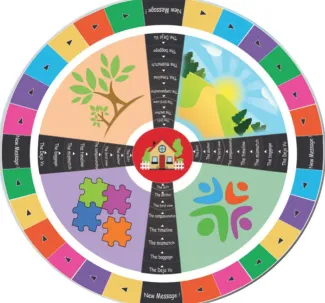
Figure 1. The developed game space. ... 29
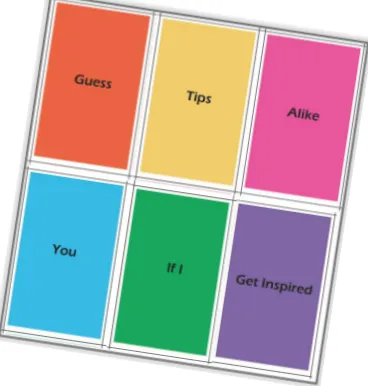
Figure 2. The six miscellaneous action cards. ... 30
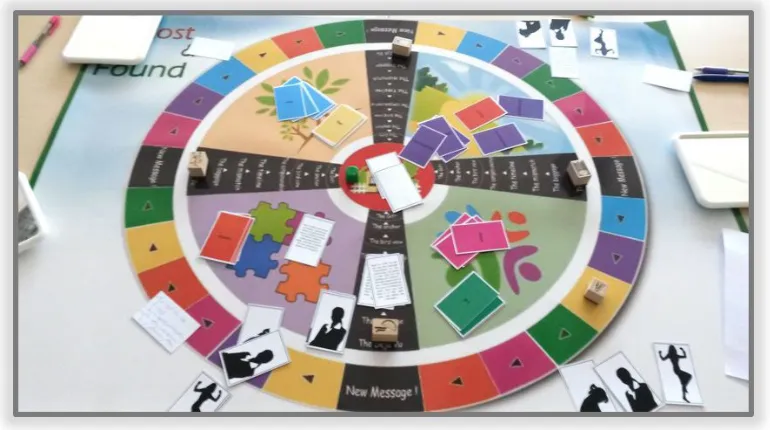
Figure 3. Game view after finishing the first phase. ... 31
Figure 4. Three shadows; sad, indifferent, and happy ... 33
Summary
In the recent decades, the workplace has undergone major changes. The work environments have become more dynamic and demanding affecting employees’ capacity to work effectively. To maintain employability and stay competitive, employees are expected to cope and adapt to these changes. Transformative learning is considered a meaningful type of learning that can help employees and adults in general to develop awareness of self and others. Further, transformative learning can help them to critically reflect on how they perceive their work experience and try to make meaning of it to take better quality actions and thus improve their future experience. A great deal of research studied transformative learning and the requirements needed for it to take place. Most of these researches followed a traditional context of implementation in formal educational or professional settings that are controlled by an instructor. Further the majority of these researches are retrospective nature, which limits our understanding to the transformational process while it is taking place. Hence, there remains a need for creative approaches for implementing and understanding transformative learning while it is taking place, and further for inducing its process and not just promoting it. GBL has proven to be a good medium for meaningful learning since it provides rich social experience, as well as a safe, friendly and engaging learning environment that satisfies the requirements of an appropriate transformative learning environment. Therefore, in the current study GameBased Learning (GBL) was explored as a potential non traditional context for inducing transformative learning in group settings and studying it while it is happening. First, a board game was designed as a tool for inducing transformative learning. Then an explorative case study design was adopted to examine the transformational process while it is taking place and investigate whether the implementation of the game resulted in inducing transformative learning. The target participants of the study were burnout employees, since they were considered as potential beneficiaries of transformative learning. The case study involved four Dutch burnout employees from the University of Twente who attended a workshop in which the board game was implemented. Qualitative as well as quantitative instruments were used in this research. Results showed that three participants experienced transformation, and also provided more understanding of the transformational process. Further, the results indicated that the board game had several strong points and provided a pleasant interactive experience. The current study also discussed points of improvements for next iterations, theoretical and practical implications as well as some limitation and suggestions for future research.
1. Introduction
In the recent decades, the workplace has undergone major changes. The work environments have become more dynamic and demanding affecting employees’ capacity to work effectively ( Schaufeli, Leiter & Maslach, 2009; StArnaud et al., 2007) . To maintain employability and stay competitive, employees are expected to cope and adapt to these changes (Fugate, Kinicki & Ashforth, 2004; Schaufeli et al., 2009 ). In attempt to support their employees in facing such challenges, organizations have become more interested in developing their employees and encouraging adult learning. More specifically, organizations now pay very close attention to offering new ways that provide a meaningful work experience and promote reflection among their workers. In this sense promoting transformative learning through the use of new tools that can engage learners in meaningful type of learning seems to be a worthwhile option that needs to be explored by both researchers and practitioners.
Transformative learning refers to way of adults learning that aims at “improving our understanding —of the world and our experiences— and the quality of our actions through meaningful learning” (Mezirow, 2000, p.8). It implies that individuals should be aware of how we gain our knowledge and aware of the values that form our perspectives (Mezirow, 2000). The transformation in itself is then a cognitive and affective process, that should result in a positive behavioral change (Mezirow, 1978; Taylor, 2008). Transformative learning in this regard is a meaningful learning that can help employees and adults in general to develop awareness of self and others, critically reflect on how they perceive their work experience and try to make meaning of it to take better quality actions and thus improve their future experience ( Kreber, 2004; Mezirow, 2000, 2003; Yorks & Sharoff, 2001 ). Yet, transformative learning is also considered as a complex and multifaceted type of learning that is difficult for the learners to achieve on their own and demands many requirements for it to happen (Kitchenham, 2008; Snyder, 2008). Though a great deal of research addressed these issues extensively, there remains a need for creative approaches for implementing and understanding transformative learning.
induced and not just encouraged or promoted. Further, adult learners have become more sophisticated learners who are bombarded everyday with innovative tools, and transformative learning might not seem appealing if it remains in the traditional direction.
Some of the previous research focused on understanding certain aspects or concepts of transformative learning and their implementation, while the majority focused on how to foster transformative learning (Berger 2004; Cranton and Carusetta, 2004; Daloz, 2012; Groen & Hyland, 2010; King, 2004; Kreber, 2004, Taylor, 2003, 2007). They followed mainly traditional contexts of group learning. For example: “formal higher education inclusive of graduate students, faculty or workshop participants involved in professional and leadership development, with little exploration in nonformal educational settings” (Taylor, 2007, p. 175) as well nonformal professional settings that are “less controlled by the instructor” (Taylor, 2007, 186). Despite the fact that there are existing studies in different contexts or using different mediums, they remain rare ( Doering, 2006; Liimatainen et al. 2001; Ziegahn 2001). Moreover, most research on transformative learning is retrospective nature, which limits our understanding to the transformational process when it is taking place and not just how it is perceived or narrated later while being subjected to learners’ memory loss and social desirability (Groen & Hyland, 2010; Wood, 2007; Taylor, 2007).
Exploring new contexts or mediums for transformative learning will help uncover more of its potential that can inspire new research and can further provide more engagement for its learners. On the one hand, transformational learning is fostered in group learning settings within a safe, supportive and trustful environment (Groen & Hyland, 2010; King, 2004, Wood, 2007). These aspects can be regarded as the requirements for the transformational learning environment, and therefore they should be considered when exploring a new context (Snyder, 2008). On the other hand, a learning context like GameBased Learning (GBL), has shown the potential of offering a good medium for meaningful learning since it provides rich social experience, as well as a safe, friendly and engaging learning environment (Hromek & Roffey 2009; Shute, et al., 2011; Zagal, 2006). Transformative learning can benefit from these qualities since they potentially satisfy the requirements of a transformational learning environment. Hence, GBL seems to be worth exploring as a new untraditional context for transformative learning.
related to the work environment (Garrett & McDaniel, 2001) Moreover, it was found that when burnout employees were encouraged to deeply reflected on their workrelated beliefs, they developed more awareness and were able to take actions to change both themselves and their work situation (Gustafsson, Norberg & Strandberg, 2008; Vinje & Mittelmark, 2007 ). Transformative learning can help burnouts to critically reflect and develop awareness and understanding of self and others, as well as form a healthy perspective about one’s self and work experience (Mezirow, 1978).
To sum up, this study aspires to explore an untraditional context —like GBL— for implementing transformative learning which can satisfy the requirements of a transformational environment and uncover more of its potential. This untraditional context will also provide an opportunity to study transformative learning while it is experienced by a potential adult learners group like the burnout employees. Therefore, the goal of this study is to explore how transformative learning is experienced within a group in a GBL environment. To achieve that, the study will first design and develop a gamebased learning tool that induces transformative learning, taking into account aspects that foster transformative learning provided from previous research. To induce the transformation means that the participants are strongly assisted to experience the transformational process. Then investigate in a qualitative case study how the participants —the burnout employees— experience transformative learning while it is taking place.
2. Theoretical framework
This chapter provides a theoretical framework for understanding the concepts of transformational learning, gamebased learning, game design and burnouts. The chapter discusses overview of these concepts, related definitions, relations and previous findings.
Transformational learning
Theory overview
It was in 1978 when the transformational learning theory was first introduced by Mezirow as a theory for adults learning. Mezirow started theorizing a type of learning experienced by individuals who face a disorienting dilemma in their lives. A disorienting dilemma is a certain challenge “that cannot be resolved by the usual way we handle problems by simply learning more about them or learning how to cope with them more effectively” (Mezirow, 1978, p.101). A challenge could be the loss of loved ones, relocating to a new place, loss of job or career troubles, being rejected or betrayed (Mezirow, 1978). The dilemma is then experienced when the individual's way of making sense or meaning of life and perspectives formed from previous experiences fails to interpret a new situation or how the world works (Mezirow, 1978, 2003). Different feeling of discomfort emerge when one experiences such conflict. It is then when the individual starts to critically reflect and question the validity of the old constructed meaning perspectives and assumptions that form what he called one’s frame of references (Mezirow 1978, 2003).
The learning occurs when one develops awareness and is conscious about this problematic frame of references, explore other perspectives and transform this frame of references to a more liberating and empowering one (Spurlin III, 2013; Mezirow, 1978, 2003). The theory has been revised several times and further developed by Mezirow and others for application in different contexts ( Kitchenham, 2008; Taylor, 2007; Wood, 2007 ). For instance, in educational settings for curriculum development, adults learning, group and organizational learning (Imel, 1999; Mezirow, 2000; Taylor, 2000; Wood, 2007; Yorks & Marsick, 2000 ).
learning in the transformational learning theory can not be viewed merely as a traditional learning that aims at mastering a subject matter. It further implicates a core development process in which there is an evolution and growth of a “refined awareness of self and of others within a broad, flexible way of thinking” (Spurlin III, 2013, p. 36).
Mezirow’s model of transformational learning
Mezirow developed a model to define transformational learning. The model explains the details of the transformational process through ten steps or phases that result in a transformed perspective (see Table 1). The ten step map to a long process of learning and core change that takes time rather than an instantaneous change experienced by the learner ( Kitchenham, 2008 ). This change is realised when the new perspective is fully integrated into one’s life and reflected on actions, behaviours, and attitudes (Mezirow, 1978, 2000, 2003).
The ten steps start with the individual’s experience; a disorienting dilemma. A disorienting dilemma can be for instance a health situation, family conflict or difficult situation, workrelated experience (Howie & Bagnall, 2013; Illeris, 2011; Stuckey, Taylor, & Cranton, 2013; Sessa et al., 2010; in Timmer, 2015). This is followed by the examination of discomfort feelings that leads to the third step of the critical assessment of assumptions. “Without the
expression and recognition of feelings participants will not . . . begin critical reflection” (Taylor, 2000, p.
291). Table 1
Mezirow’s transformational learning model
Steps
1. A disorienting dilemma
2. A selfexamination with feelings of guilt, shame or anger
3. A critical assessment of epistemic, sociocultural or psychic assumptions
4. Recognition that one’s discontent and the process of transformation are shared and that others have negotiated a similar change
5. Exploration of options for new roles, relationships, and actions 6. Planning of a course of action
7. Acquisition of knowledge and skills for implementing one’s plans 8. Provisional trying of new roles
9. Building of competence and selfconfidence in new roles and relationships
10. A reintegration into one’s life on the basis of conditions dictated by one’s perspective
The third step then is considered the core of the transformational process and, during which an intensive examination of the limiting assumptions that caused the dilemma takes place. The assumptions could be about the world, others, or one’s self, and the examination is done through the process of critical reflection, which involves two levels; objective and subjective reframing (Mezirow, 1998). The first involves examination of the assumptions themselves, what are their nature and consequences, and the second involves the examination of their causes and the “related circumstances of their origin” (Kitchenham, 2008, p.114).
The fourth step, is the recognition and sharing of the transformational process, in which the discovery of the unhealthy assumptions and others having similar processes are realised. The fifth step is about exploring new options through the exploration of other perspectives. While, the planning of a course of actions based on the explored options takes place in the sixth step.
The following steps aim at implementing this plan, by first acquiring the skills needed for implementation which is step seven. Then trying out the new roles and actions to validate the new perspective, till they are mastered and one becomes competent in these roles which are steps eight and nine. Finally, in the tenth step, the roles explored from the new perspective, become a way of living and a part that can not be separated from one’s life. In this sense, what we can consider a true transformation that impacts and transforms one’s perspective and way of living is more about the journey and the process rather than reaching a single point of outcome.
A cardinal aspect of transformational learning is the experiences that one face throughout life, and they way one makes sense or meaning of these experiences (Spurlin III, 2013). Meaning making is an ongoing process. It implies that the what we accept as knowledge for experiencing the future is shaped and dictated by the one’s old constructed ways of interpreting and perceiving experiences (Mezirow, 1990, 2000; Spurlin III, 2013; Taylor, 2007). Hence, meaning making is fundamentally dependent on one’s frame of references that acts implicitly as a belief system for interpreting and evaluating the meaning of experience, and consists of smaller units which Mezirow called meaning perspectives (1978, 1991).
Critical reflection is a key aspect to transformation learning. As mentioned earlier, “a refined awareness of self and others” (Spurlin III, 2013, p. 36) is the most important product of the transformation process. Spurlin further elaborates, this learning is concerned with the transformation of one’s consciousness in a way that it becomes reflectively aware. More specifically, transformational learning focuses on critical selfreflection as defined by Cranton and Carusetta as “being aware and critical of our subjective perceptions of knowledge” (as in Snyder, 2008, p. 165). This subjectivity of perception is understood when one is aware that the interpretation or meaning making of experiences is a result of existing meanings of previous experiences. To add, not only it is enough to be aware of such perceptions, the critical aspect of reflection is essential as well for transformation to happen, since it creates the urge of examining and questioning existing perceptions and assumptions.
Central to achieving critical selfreflection is the critical discourse or the reflective “dialogue involving the assessment of beliefs, feelings and values” (Mezirow, 2003, p. 59). It is worth mentioning that the discourse should also involve assessment of the justifications related to the beliefs, feelings and values, as well as a consideration of the other’s perspective (Mezirow, 2003). Further, in the last steps of the transformational process, “the learner tries out new roles in an attempt to test and validate new frames of reference. The learner can only achieve this roleplaying by engaging in critical discourse with others and then reflecting on the results of that discourse.” (Snyder, 2008, p. 165, 166).
According to Snyder (2008) engaging in critical self reflection and discourse are considered two requirements for transformational learning to take place. A third requirement is the existence of appropriate context for transformation. Snyder explains this context in two facets, the first is the learner’s cognitive context that exists in the learner’s mind and represented in one’s life experiences, or in other words transformation is a type of learning that is appropriate for adults with life experiences. While the second facet is the literal context, the actual surrounding environment of the learner, as well as the environment in which the learning takes place. By satisfying and facilitating these three requirements a model for inducing transformational learning can be developed.
Inducing the transformational process
appropriate learning environment of transformation as well as choosing a relevant group of adult learners.
The Role of facilitator in transformational learning. Engaging the learner in discourse involves another person, who tries to guide and facilitate the critical reflection process. This person could be a mentor, instructor, or a coach. Many researchers emphasized the central roles taken by facilitators or coaches in mediating and smoothing the way for transformational learning (Groen & Hyland, 2010; HaberCurran & Tillapaugh, 2015; King, 2004, Timmer, 2015; Southern, 2007, Wood, 2007). A skillful facilitator can encourage participants or learners to reflect more, explore more and endure the discomfort of the transformation process, and therefore promote the transformation. Daloz (2012) explained that one might fear the unknown of the transformational journey and hence the importance of a facilitator who acts as gatekeeper and a guide throughout the process.
Facilitators can have several role throughout the transformational process. When studying the transformation educators experience during professional development courses, King (2004) reported that the roles taken by the instructor had the highest influences on learners’ transformational process. More specifically she found the instructor’s support during the learning process and instructor’s challenge and questioning of students’ views and assumptions are the main roles that contribute to student’s perspective transformation. Other studies like Daloz (2012) and Wood (2007) also found the same two roles of they called a mentor to influence transformation; providing support and challenge. Daloz further added a third role namely providing vision; which refers to facilitating selfreflection and reassuring that a transformation can be achieved, while Wood added a fourth role of celebrating the learner’s achievement. These different roles are interchanged by the facilitator during the transformational process to meet the needs of the learner (Daloz, 2012; Wood, 2007)
Triggers of critical reflection. Besides facilitating the process of transformation and the critical discourse by a coach, critical self reflection can be further facilitated and stimulated with other triggers. Timmer (2015) summarized some of these triggers from previous research. They include, group discussions, using metaphors or fiction, storytelling, role playing, and the use of reflective journals. Also, in King’s study (2004) it was found that providing a variety of reflective activities like discussions, journals, self evaluation and reflective moments influence perspective transformation. Further, other techniques like photo elicitation using symbolic picture as well as real pictures of the individuals themselves were found to promote reflection on experiences and examination of life events (Brand et al., 2016; Frith & Harcourt, 2007; Harper, 2002; Padgett et al, 2013; Taylor, 2003).
Context of transformation. The first facet of the existence of appropriate context is applying the transformational process to learners who have life experiences shaping the way they perceive the world and react to it (Snyder, 2008). In this sense transformational learning can be induced for different target groups of adult learners. Nevertheless this study focuses on employees who suffered or are still suffering from burnout. This target group is chosen because learners were subjected to a workrelated disorienting dilemma that needs to be addressed and resolved in meaningful way than just coping or surviving with the experienced symptoms. A detailed discussion of this target group and its relevance to the context of transformation will be discussed later in this chapter.
The second facet of an appropriate context is creating a learning environment that promotes the transformational process. For this purpose, group learning is considered as an appropriate learning environment. Learning resulting from group activities and interactions within the group members plays an essential role in individual’s learning (Scott, 2003). Critical dialogue or discourse is not necessarily between the learner and the facilitator, it can also occur between group members, in which they can exchange perspectives or what Mezirow called perspective taking from the other (Eisen, 2001; Mezirow, 1978, 2003). Therefore, learning in groups provides space for exchanging experiences, views and sharing of the transformation, which is considered a very important part of the critical reflection process (Mezirow,1987, 1991, 2000).
Group learning was found to be a good context for fostering transformational learning in previous research (King, 2004; Mezirow 1987, 2003, Scott, 2003, Yorks & Sharoff, 2001; Wood, 2007). King (2004) found that being in a group and having group discussion as well as having supportive group members were of the main factors that contributed to perspective transformation and changed the way the participant viewed the world. Also, Wood (2007) found that group members challenge each other's assumptions and beliefs, and therefore influence the transformation of one another.
being in non supportive and unsafe learning group or social circle that criticise, judge and doubt the learner’s new change was the biggest barrier to translating the new perspective into actions.
In the previously highlighted studies, the requirements of transformal process were satisfied mainly in the traditional classroom context or set up. Though these studies reported that the learners experienced transformation of perspective, it is worthwhile to explore other learning contexts that can satisfy the requirements of a transformational environment and further provide more engagement opportunities for learners. Hence, the following section will explore how Gamebased Learning as a learning context can satisfy and realise the requirements of a safe, trustful, friendly and relaxed learning environment that encourages relationships and group learning and therefore how it is relevant to the context of transformation.
Gamebased learning as a context of transformation
Games are considered as powerful tools for fostering both young and adult learning, especially learning that takes place in groups. (Hromek & Roffey, 2009; Xu et al., 2011; Zagal, Rick & Hsi, 2006). They provide a very good context for promoting social interaction between players and fostering engagement. Hromek and Roffey (2009) argues that GBL promotes and facilitates social and emotional learning skills. These skills can be divided into two groups that are relevant to transformational learning. The first group, includes recognizing, identifying, expressing regulating personal feeling, values and strengths, focusing on the positive, ability to plan actions and goals, effectively dealing with personal coping and relationships by means of problem solving (Hromek & Roffey 2009). Such aspects or skills are considered relevant to a high extent to the content of the transformational learning process as described in the ten steps model. Therefore this suggests GBL as a suitable medium to transformational learning from the point of view of the learning process content.
The other group of skills promoted by GBL include good communication with others, treating others with respect, compassion, care and embracing diversity, acknowledging mistakes. Further, they include valuing relationships, managing confrontations and conflict, connecting with individuals by creating and sustaining healthy relationships (Hromek & Roffey 2009). These aspects transpires GBL as a “highly motivating approach provides the opportunity to create a safe, fun environment, where social connectedness and meaningful participation are likely to occur” (Hromek & Roffey 2009, p.2). Therefore, GBL is considered very relevant and appropriate as a context of transformation since they satisfy the previously mentioned requirements of the transformational learning environment.
This makes the choice of the game form an import aspect in facilitating the transformational learning process. Choosing inappropriate game form that conflict with the requirement of the transformational environment could be a barrier to the learning process. For instance one could imagine that using digital game form would not satisfy the requirement of establishing supportive relationships as well as the safety requirement that could be compromised due to the lack of physical presence. On the other hand the use of physical board games can have many benefits that are relevant to the requirements of the transformational environment.
Implementing GBL using board games
For promoting better interaction and connection between players, the physical presence of players, focusing on a mutual object, and the synchronized play experience are regarded as key elements (Collins, 2004). These elements can be realised in board games. Physical board games have different aspects that make them an attractive choice in learning within a group. “The unbroken success of oldfashioned board games clearly relates to the social situation associated with them” (Magerkurth et al., 2004, p. 73). One could describe this social situation as a relaxed, joyful and friendly experience when recalling the mental images associated with playing board game. Further, players are physically present in the same place, focused and oriented to the board as a common object, sharing laughs and fun moments, connecting with one another, and therefore having a very rich engaging social experience (Magerkurth et al., 2004; Xu et al., 2011). Moreover, the open and accessible nature of board games, specially the well structured and designed ones allow transparency of the interaction and players’ status in the game, making it a good choice for observation and analysis in research (Zagal et al., 2006).
Designing board games
When designing board game two important factors are to be considered; the game category and the game design model. First the choice of the game category, games can be categorized as competitive, cooperative and collaborative (Game theory as in Zagal et al., (2006). Considering the transformational learning context, on the one hand competitive games conflict with idea of creating a safe and supportive learning environment since players oppose each other. On the other hand, collaborative games seem more appropriate to the transformational learning environment than cooperative games, since unlike cooperative games players work together as a team to achieve a common goal and therefore collaborative games provide a more supportive and relaxing environment (Zagal et al., 2006).
chosen in this study due to its simple structure and clarity of its components (Heintz & Law, 2015). Details of this model will be presented later in chapter three.
After discussing how GBL can be adopted as an appropriate of transformational learning environment, it is important to discuss the other facet of the transformational context represented in a specific target group for inducing transformational learning. Transformational learning is a meaningful learning that can benefit a wide spectrum of individuals. As mentioned earlier a disorienting dilemma can be manifested in a workrelated experience. Hence, this section explores burnouts as possible beneficiaries of the transformational process.
Burnouts: as a target group for transformational learning
Burnout was introduced in 1970s by Maslach and her colleagues as a workrelated concept of specific negative symptoms that people experience from their work (Schaufeli et al., 2009; Maslach, Leiter, & Schaufeli, 2008). Employees start their worklife with high expectation and determination to succeed, over the time some they start to suffer from high job demands and challenges. They become overwhelmingly exhausted, frustrated, angry, cynical and develop a feeling of ineffective and failure (Leiter & Maslach, 2003). These symptoms and feelings can cause both personal and social impairment, resulting in taking sick leaves in some cases, quitting jobs, while other employees keep working with very minimum resources and productivity (Leiter & Maslach, 2003; Van Der Klink & Van Dijk, 2003)
Burnout was first used as a term to explain what employees in human services suffer from due to the extensive emotional contact with patients or clients (Schaufeli et al., 2009). Nevertheless, nowadays burnout is regarded as a universal mental illness experienced across a wide range of professions outside human services like managers, educator, entrepreneurs, white and blue collars. It is defined as as “a persistent, negative, workrelated state of mind in ‘normal’ individuals that is primarily characterized by exhaustion, which is accompanied by distress, a sense of reduced effectiveness, decreased motivation, and the development of dysfunctional attitudes and behavior at work” (Schaufeli & Enzmann, 1998, in Ruotsalainen et al., 2008, p. 167). Burnout is conceptualized as a construct through three dimension, which are emphasized in the previous definition, namely emotional exhaustion, depersonalization or cynicism, and
professional inefficacy.
emotional exhaustion as “the feeling of being emotionally extended and having depleted emotional and physical resources” ( p.93). Cynicism or depersonalization reflects the interpersonal dimension of burnout, and it refers to a negative feeling of being distant or detached from other people and work with. Distancing can also be mentally through the development of a negative cynical or indifferent attitude. Cynicism is often a protective reaction of being exhausted and overloaded and hence there is a strong relation between the two dimensions (Leiter & Maslach, 2001,2003). The third dimension is the professional inefficacy which explains the self evaluation aspect of burnout, and it refers to the “feeling of incompetence and a lack of achievement and productivity in work ” (Leiter & Maslach, 2003, p. 93) . This feeling of inefficacy is often a result of lack of professional development and social support, and it develops in parallel with emotional exhaustion and cynicism (Leiter & Maslach, 2001, 2003).
Sources of burnout
Previous research investigated sources from the workplace environment that contribute to the development of burnout. Leiter and Maslach (2001)
examined six sources of burnout that
result from a mismatch between the individual’s expectation or resources and individual’s perception of organizational demands (see Table 2). In this study, the six mismatches are used in the context of transformational learning to identify the dilemma and to examine related assumptions of the perception of the work environment.
Table 2
The six individual/organization mismatches
The mismatches
WorkLoad
Control and decision making Reward (moral, financial, social) Supportive community and relations Fairness
Values
Feelings experienced during burnout
organizations (see Table 3). In this study, the presented feeling are used in the context of transformational learning to examine feelings of discomfort associated with the workrelated experience or dilemma.
Table 3
Feelings experienced during burnout experience
Feelings or emotions
Exhaustion/drained/used up dissatisfaction
frustration
Cynicism/ indifferent Anger
Anxiety
Ineffectiveness and failure Incompetent
Overwhelmed Distant/lonely
Abused/taken for granted Feeling of hostility Feeling of inequity Don’t feel worthy Feeling alienated Feeling Unrespected Powerlessness Resentment
Transformational learning for burnouts
inducing transformational learning should be considered as an important part of the reintegration and coping process of both working and non working burnouts.
Transformational learning can help burnouts examine the negative feelings and unhealthy assumptions about their own self, others and work experience. Such assumptions develop unconsciously through the years; some of them are deeply rooted since childhood, teenage, throughout adulthood and work years (Mezirow, 2003; Taylor, 2007). Some of these assumptions are not directly related to work, nevertheless they impact the way burnouts experience the worklife. Therefore, examining them may help burnouts understand what went wrong and resulted in their burnout. For instance, through critical reflection they start questioning how and when did their draining emotional exhaustion and the feeling of inefficacy develop, what were the sources. Also they start developing awareness of the cynical or indifferent attitude developed as a coping or defense reaction, and moreover reflect on how did all the previous affect their perception of work and life in general. Then, they take the next step of transformation and develop a more healthy and liberating perspective about their own self and their work situation by exploring other options, attitudes, roles, relationships, actions and integrating them (Mezirow, ;Van Der Klink & Van Dijk, 2003).
The current study
Context and scope
The discussed previous research in transformational learning either aims at implementing the concept of critical reflection to foster transformational learning or aims at understanding the factors that led to transformational learning. The first type mainly uses reflection trigger and facilitates the three mentioned requirements of transformation. The latter type of research that aims for understanding the transformational factors is mainly retrospective in nature, describing the transformational process after the transformation took place. Both types of research examine transformational learning in what can be called a traditional context; for example in graduate courses, organizational learning programs and workshops.
Unlike these researches, this study tried to induce transformational learning in a short time, in which the participants were strongly assisted and were walked through the steps of transformational learning. Therefore, this study examines the transformational process while it is taking place, while participants are experiencing the transformational process. Further, as mentioned the study explores a non traditional learning context for transformational learning which is the GBL; and therefore the steps of the transformational process will be represented in the form of a game.
The study focuses on inducing only the first six steps of the transformational process, which can be realised in short time. The output of these six steps is a planned course of action after exploring the unhealthy limiting assumptions and exploring other options. While the implementation and integration of this plan remains outside the scope of the study. The study also focuses on inducing transformational learning for burnout employees as they can benefit from this kind of meaningful learning.
Purpose of the study
To sum up, The current study comes from a pragmatic paradigm with the aim of inducing transformative learning in GBL environment using reflection triggers and a facilitator or a coach to engage participants in self critical reflection and discourse. This is done while taking into account the burnout context of the learners. To achieve that, first the study will design and develop an innovative collaborative board game that induces transformational learning. Then the study will evaluate whether this intervention results in perspective transformation as defined by the transformative learning model of Mezirow.
Research questions and hypotheses
Based on the previously mentioned purpose the current study focuses on answering the following two research question:
1. To what extent does inducing the first six steps of transformative learning using the designed board game and facilitated by a coach result in perspective transformation of the burnout employees?
2. To what extent do the reflective processes resulting from inducing transformation follow the reflective processes dictated by the first six steps of transformative learning?
To answer these research questions the study is guided by six hypotheses that are based on the six steps of transformational learning. The first step is the disorienting dilemma, and it represents the experience that already took place in the participants’ past. Hence, this step will be substituted or mapped in the implementation as the participants’ descriptions of the disorienting dilemma. The following are the hypotheses to be tested when inducing the transformational process.
Hypothesis 1. It is hypothesized that:
a. The first step includes storytelling, and reflection without examination of assumptions.
b. The coaching role in the first step is to encourage the participants to start sharing.
Hypothesis 2. It is hypothesized that:
a. The second step includes examination of the experienced feelings during the disorienting dilemma.
b. The coaching role in the second step is to encourage and enable self reflection.
Hypothesis 3. It is hypothesized that:
a. The third step includes critical reflection; examining what are the different assumptions, about the self, others, work, and also examining and questioning the sources and the circumstances that caused them.
b. The coaching role in the third step is to encourage, enable reflection and challenge assumptions.
Hypothesis 4. It is hypothesized that:
a. The fourth step includes conscious sharing of the discovered assumptions in the previous step to be liberated, and by conscious it is meant that the participants by then should be aware that it is an unhealthy limiting assumption that contributed to their dilemma.
b. The coaching role in the fourth step is to reassure participants and encourage the sharing of the process.
Hypothesis 5. It is hypothesized that:
a. The fifth step includes exploring healthy roles and assumptions as well as new actions individually and exploring roles, assumptions and action from the learning group and facilitator.
b. The coach in fifth step is to encourage, enable reflections, and challenge the participant to explore.
Hypothesis 6. It is hypothesized that:
a. The sixth step includes choosing actions from the explored in the previous step as well as planning how and when to execute them in the future.
b. The coaching role in the sixth step is to encourage, enable reflection and challenge to commit to a plan.
Research design.
To answer the research questions and examine the previously mentioned hypotheses an explorative case study design is adopted in this study to help assessing and evaluating how the game implementation induces transformative learning by investigating the participants’ transformational process while playing the different phases of the game. (Yin, 2003)
3. Method
This chapter is divided into two main parts. First, the design and development procedures and details of the implemented board game. Second, the methodological details of the explorative case study.
Game design and development Design
The game design is mainly based on the concept of discourse or reflective dialogue, to guide the players through the critical self reflection process and develop the players’ reflective awareness. Reflection triggers are strongly used as guidelines for the development of reflective exercises. The target group of the game are burnout employees or those who experience similar symptoms, therefore the game is also focused on reflecting on burnout experiences, feelings and sources. Further a physical board is chosen for the game form, and therefore board game design element should also be considered as design guidelines for game development and construction. Based on the previously discussed detailed theoretical framework, the main design requirements and specification are presented below.
Design requirements. First regarding the content design, the game should include and capture the details of the first six steps of the transformational learning model, specially the details of the third step; the critical examination of assumptions, since this is considered the core of the reflective and transformational process. The game should also integrate the feelings experienced during burnout as well as the sources of burnout to the steps of Transformational learning. The steps should be presented as practical exercises that induce transformational learning as defined by the first six steps. Therefore, the six steps can further be split into more steps if needed to support more practical and thorough exercises. The game should also foster reflection in general and use reflection triggers to achieve that. Further, the game should support group learning, discussions, interaction and sharing as well as feeling of togetherness. The game should provide sense of engagement, action and fun or joy.
Second regarding the graphical design, the game should foster the feeling of safety and help participants feel at ease, relaxed, comfortable as well as joyful. The game design should support four players. The graphical design should also reflect the transformational learning steps as a developmental process in which player need to progress through. Further, design should promote reflection and feeling of togetherness and connectedness.
Design specification. As mentioned in the theoretical framework the game design guidelines are based on the game design atoms model by Brathwaite and Schreiber (2009). The first atom is the players, avatars and game bits. Players are the game actors who set game in motion, and they represented with either avatars, tokens or pawns, while the game bits are the physical items required to play the game like cards, dice, coins, soldiers. The second element is the game mechanics which represents the game rules and how it works. Then, the game dynamics, which is the pattern of play that emerges when playing with the defined rules, for instance whether it is keep racing till the end game, chasing game, or acquisition game. Another important element is the game goals, mission or quest. Also, the game space, which is the area where the playing takes place. While, the game state or game view resembles a snapshot of the game space after a game move . Finally, the game theme or setting, and it refers to the story line or the context in which the game happens.
Regarding content design, the game design atoms namely storyline, objective, mechanics, dynamic, avatars and gamebits are used to specify how the mentioned requirement should be translated into a developed board game.
Regarding graphical design: the design should use bright colours, relaxing pictures, use of common group path, individual transformational paths and a final common destination point connecting all the individual transformational paths. The design atom or element “game space” should specify how the previous aspect are integrated in a cohesive implementable design.
Construction and Development
This sections explains how the design requirement and specification are mapped to the actual board game. It is worth noting that the details of the exercised representing the six phases of transformational learning were discussed and further tuned in coordination with a practicing coach to ensure their practicality.
First, the storyline or game theme design element is chosen based on the fiction and metaphor reflection trigger to foster reflection by relating to the given story. The story is about a girl whose father went to the war and left her some messages that she needs to follow in order not to be lost alone without him. The story is represented by a card that the participant should read in the beginning of the game. The card reads as follows:
Back in 1939, he left her the first message “Sweetheart, it’s the call of duty...I’m going to war. But I’m not leaving you behind, I will take good care of you. I have something for you, it is what you need, and you will find it in the right time. Just follow my messages.”
Second the goal or objective is to help the girl find the messages in the right time and solve their mystery to arrive and be safe home. The objective is also based on the metaphor reflection trigger, indicating that there is an explorative journey or a path that the participant need to go through together to arrive safely to new and comfortable place that is the new healthy perspective.
Third, mechanics or rules; all players play in turns and together they should get enough score to enter the “New Message” stop. Each new message represents a phase in the transformational path, and therefore the each player should progress one phase in the individual transformation path when they group gets a new message. The mechanics are devised in way that links the actions players do to progress in the game to the meaningful learning experience or the transformational process, which will be presented later in the form of exercises. These rules are translated into some chores that the players should do, like throwing dice, moving avatars, cards’ dealing, arranging, reading, and writing in reflective journals which can be regarded as bookkeeping activity.
[image:30.612.146.471.327.630.2]
Figure 1.
The developed game space
positioned on its circumference. The outer path is the collective group path, and it is formed of several stops with bright colours to promote openness as well as joyful and playful experience. These stops represent fun and reflective stops called miscellaneous actions, which will be described in the following paragraph. Four “New Message” stops divide the outer path into four equal arches. The inner circle space is also divided into four equal parts by four individual paths consisting of eight phases of transformation. These four paths meet at the final destination or endpoint represented by a picture of a home at the center of the circle. Further four parts of the inner space are filled with four different symbolic pictures. The four pictures are chosen as follows: trees: to promote the feeling of relaxation and growth, a bright path: to promote relaxation and as if the players are walking a journey of reflection and enlightenment, connected hands or people: to promote the feeling of togetherness throughout the journey, and puzzle pieces: to promote the players’ feeling of exploring and finding the missing pieces of themselves.
Fifth, the adopted dynamics is chasing, in which players chase after a new message to keep progressing in their individual transformational paths (Brathwaite & Schreiber, 2009). Also another dynamic used in this game can be described as progressing towards the final destination,
in which players keep moving till reaching home safely. During this chasing players come accross different actions or miscellaneous stops that they need execute to proceed in their path. The miscellaneous game actions not only serve as fun and interactive breaks between the main phases, but also some actions promote reflective skills being based on reflective triggers. There
are six miscellaneous actions all of which promote group discussions (see Figure 2).
[image:31.612.214.398.427.620.2]
Figure 2. The
six miscellaneous action cards
based on the metaphor reflection triggers players are supposed to relate to these quotes and reflect on their experience. The “Tips” actions are about giving advice on a specific topic for instance gardening, cooking or sightseeing, and their purpose is to increase interaction and group discussion. While “If I” actions uses the metaphor reflection trigger in which they are hypothetical situation that foster imagination, reflection, group discussion, and also joy due to the fun nature of some of the situations. Finally, the “You” actions in which the players share something about themselves and they are based on the concept of storytelling to trigger reflection. (see Appendix E).
Sixth, avatars and game bits included one group progress token/avatar to use for the common group path, 4 individual avatars for players to progress in their own transformational paths, a dice, several cards, envelops, balloons, other resources like reflective journals are used.
Seventh, The game state or game view, includes the game space with the group avatar placed on one of the outer path stops. While the four players’ avatars are placed on one of the phases of the transformational paths. A dice is may be present in the middle of the space, while there are some cards scattered in different places on the board (see Figure 3)
[image:32.612.132.517.375.590.2]
Figure 3.
Game view after finishing the first phase.