Individual Learning Curves in Bronchoscopy: Exploring Skill Acquisition with a Low-Fidelity Prototype
Ace Küpper
Thesis for the degree: M.Sc. University of Twente
Faculty of Behavioral Management and Social Sciences,
Course of Studies: Human Factors and Engineering Psychology 1st supervisor: Dr. Martin Schmettow (CPE)
Abstract
Introduction: Minimally invasive surgery is a standard procedure and endoscopes are standard devices in modern medicine. Nevertheless, handling of these devices led to restricted fields of vision, more demanding hand-eye-coordination and dexterity skills. Therefore, adjusted training and assessment methods became necessary to determine the skill levels of surgeons. The current study joins the paradigm shift from traditional apprenticeship to modern virtual-reality simulator training and assessment. For this purpose a low-fidelity, low-budget prototype for flexible endoscopy (EndoProto) was created to explore bronchoscopic skill acquisition.
Method: Twenty-four students executed two basic scope insertion tasks with the EndoProto. First, they trained bronchoscopic skill from an allocentric and then form an egocentric perspective, defined by the visualization through a low-budget endoscopic camera. We made use of a within-subjects design. We focused on the exploration of learning with the estimation of learning curves. No learning curves could be estimated. Instead, explored individual performance and differences between the allocentric and the egocentric tasks.
Results: We applied a multi-level mixed-effects model with a binominal distribution, where trials became exchangeable repeated measures. (1) Results showed group effects for wall contacts conditional on ToT. (2) Participants performed better in the allocentric compared to the egocentric perspectives regarding the performance parameter wall contacts and ToT. (3) We found an
interaction effect of routes conditional on tasks. Results were based on 95% CI.
and expert interviews helped to interpret possible causes for the missing learning curves and helped to adjust the EndoProto for possible future investigations.
Resumé
Introductie: Minimaal invasief chirurgie is een standard procedure en endoscopen zijn de bijhoorende apparaten in de moderne geneeskunde. Toch het gebruik van deze apparaten beperkt de velden van visie en nieuwe eisen zoals meer ingewikkeld hand-oog-coordinatie en handvaardigheden war aan de orde. Aangepast methoden van training en evaluatie waren nodig om de niveaus van de vaardigheden van chirurgen te bepalen. Dit onderzoek sluit aan an het wissel van het traditionele naar het moderne training en evaluatie door simulatoren, die gebruik maken van virtuele-realiteiten. Op grond van dit onderwerp werd een goedkoep en laag-nauwkeurig prototype voor de endoscopie ontwikkelt. Dit thesis is gefocusseerd op het vakgebied van de bronchoscopie, een specifieke vorm van endoscopie. Ons doel was het exploreren van bronchoscopisch vaardigheden met hulp van de ontwikkelde prototype.
Discussie: Het EndoProto maakt uitwisselbare herhaalde metingen mogelijk, zodat onafhankelijke vragen konden onderzocht worden, zoals de invlued van de rotues op de taken. De resultaten van de regressie analyse hebben de geobserveerde problemen van de participanten tijdens het traineren kunnen bevestigen. Verklaringen voor het uitblijven van de leerbochten zijn onderwerp van de discussie. Tot slot hebben qualitatief methoden zoals observaties en interviews met longartsen geholpen om gefundeerd redenen voor het aanpassen en verbeteren van de EndoProto voor toekomstige onderzoeken te geven.
Table of Contents
Abstract... 2
Resumé ... 4
Author Note ... 13
Original Focus of the Study ... 13
Individual Learning Curves in Bronchoscopy: Exploring Skill Acquisition with a Low-Fidelity Prototype ... 14
Focus of the Study ... 16
Design requirements ... 17
Requirement for resemblance ... 18
Shortages in science ... 18
The resemblance spectrum ... 18
Requirement for VR-simulator training and assessment ... 20
Virtual reality (VR) simulators ... 20
Requirement for learning and performance ... 22
Skill acquisition ... 22
Learning curves. ... 23
Prototype Design ... 25
Surgical dexterity ... 26
Surgical dexterity (skills) vs innate ability. ... 31
Requirement for economics ... 32
Low-budget & low-fidelity ... 32
Endoscopy prototype (EndoProto) ... 32
Dividing walls ... 34
Manipulation of the EndoProto for the egocentric task. ... 35
Motivation for Task Design ... 37
Endoscope (Scope) insertion task ... 37
Perspectives... 37
Posture... 38
Distance... 38
Performance parameters... 39
Contribution of the current study ... 40
Research question ... 41
Experimental Design Method ... 42
Recap Focus of the study ... 42
Design ... 43
Task restriction ... 45
Endoscopy prototype (EndoProto). ... 46
Endoscope ... 46
Demographic questionnaire ... 46
Data collection ... 47
Qualitative and quantitative data. ... 47
Quantitative: Performance measurements ... 47
Procedure ... 50
Allocentric task. ... 50
Egocentric task. ... 51
Location ... 53
Debriefing. ... 53
Participants ... 54
Formality ... 54
Demographics ... 54
Exclusion criteria ... 54
Data analysis ... 55
Learning curve model ... 56
Generalized linear model (GLM)... 57
Results ... 58
Exploration of Learning. ... 58
Individual learning curves: Allocentric task. ... 60
Individual learning curves – Egocentric task. ... 61
Exploration of performance ... 62
Individual differences ... 63
Differences between conditions: Population level. ... 64
Interaction effect: Route by tasks... 69
Qualitative analyses: EndoProto Expert Evaluation ... 71
Composition and proportion of material. ... 71
Endoscopic tasks ... 71
Main findings. ... 72
Discussion ... 73
Answering research questions... 73
Discussion of learning... 74
Requirements ... 74
Latent variables ... 75
Critical Reflection of Study ... 77
Degrees of freedom ... 77
Technical inaccuracy ... 77
Skill acquisition: Qualitative insights ... 79
Confirming awareness ... 79
Disconfirming awareness ... 80
Self-reflection ... 80
Towards validation: Task complexity and performance ... 81
Outline for Future Research ... 83
Feedback. ... 83
Conclusion ... 85
References ... 86
Appendix A - Supplementary method for session II: Simulator training ... 93
Design ... 93
Participants ... 96
Procedure ... 93
Location ... 96
Second session – Simulator task. ... 93
Measurements ... 96
Research protocol session 2 – BRONCH Mentor... 97
Guidelines session 2 - BRONCH Mentor ... 99
Appendix B - Informed consent ... 101
Measurement table for dexterity task I – Allocentric... 103
Measurement table for dexterity task II – Egocentric ... 104
Session 2 task 2: BRONCH Mentor - Guided Anatomic Navigation ... 105
Appendix D – Demographic survey ... 106
Appendix E – Technical drawing of the EndoProto ... 111
Figure E1 ...111
Appendix F – Research protocol ...112
1. Test time-frame. ... 112
2. Measurement table for dexterity task I – Allocentric... 113
3. Measurement table for dexterity task II – Egocentric ... 115
4. Glossary ... 116
5. Guidelines – EndoProto session... 119
Appendix G – Observation protocol... 122
Appendix H – R syntax ... 126
Data analysis ... 126
Data preparation - Box study ... 127
Data exploration ... 128
Descriptives... 128
Explorative analaysis ... 129
Examining Routes ... 131
Learning curves ... 133
Estimated curves ... 133
Effects ... 133
Association between performance measures ... 133
Exploratory analysis... 133
Regression ... 135
Additional Plotting ... 141
Individual differences ... 141
Differences between conditions – population level ... 141
Differences between conditions – individual levels ... 141
Interaction effect reoute by task ... 142
Appendix I - Expert Talks ... 143
Expert Meeting I ... 143
Expert Meeting II ... 146
Author Note Original Focus of the Study
The original idea for this thesis was the investigation of the effect of dexterity (expected to be trained with the EndoProto) on the learning curve parameter (ToT). The sample of current study should have served as experimental group, conducting the EndoProto training and a VR-simulator session. The sample of a colleague (Westerhof, 2018) should have served as a control group, only conducting the BRONCH Mentor simulator training. We planned to compare learning curves on individual and group levels between the two samples. In this context we aimed for getting deeper insights in possible consequences of the different training tools and the related hand and finger movements. We planned to use a sensor-glove for this purpose. Nonetheless, technical problems prevented us to use the sensor-glove. Furthermore a breakdown of the BRONCH Mentor and problems with re-availability of the system caused an adjustment of the current study, resulting in a solely focus on the EndoProto training. For reasons of transparency and
Individual Learning Curves in Bronchoscopy: Exploring Skill Acquisition with a Low-Fidelity Prototype
In the 1950s a new standard in modern medicine was set. Accordingly, open surgery was replaced through minimally invasive surgery (MIS). This MIS enabled saver and more qualitative ways in diagnosing and treating human diseases (Alvarado & Reichelderfer, 2000; Gmeiner, et al., 2007; Darzi & Munz, 2004). Nowadays, MIS is a standard procedure used around the globe for all main surgery fields (Degani, Choset, Zubiate, Ota, & Zenati, 2008). The bronchoscopy, defined as the examination of the human lung and internal bronchia, is expected to be the most executed procedure in MIS. Already in the year 1998 more than 200,000 bronchoscopies were executed in Germany. (Rogalla, Rückert, Schmidt, Witt, & Meiri, 2001).
MIS is defined by its endoscopic way of accessing the human body. Accordingly, endoscopic procedures require high-mechanical fiber-optic tools, called endoscopes (Degani, Choset, Zubiate, Ota, & Zenati, 2008). As a consequence of using endoscopes in surgery, new challenges arose for surgeons. In open surgery the perspective of a surgeon was focused directly on the field of operation. As a comparison, in MIS the perspective of a surgeon is focused on a monitor, which provides the recorded procedures in real-time. As a result, MIS led to limited fields of vision and adjusted surgical dexterity skills. Medical examinations became more demanding, time intense and error-prone (Tendick & Cavusoglu, 1997). Compared to traditional open surgery, MIS led to higher complication rates (Gallagher, Leonard, & Traynor, 2009).
simulator training became more relevant (Basdogan, Sedef, Harders, & Wesarg, 2007). Research has demonstrated the usefulness of VR simulators to foster and evaluate endoscopic skills, as dexterity, speed or accuracy (Colt, Crawford, & Galbraith, 2001). Even more important for the current study, VR simulators were reported to improve performance in bronchoscopy (Medford, 2008; Ost, et al., 2001).
Much research has been published about the relevance of VR-simulator training and skill acquisition for performance enhancement in MIS, but professional predictive power has not been reached yet (Groenier, Schmettow, Huijser, & Gallagher, n.d.). One of the main problems of VR-simulator training in MIS is the one of high costs (Gallagher & Smith, 2003). On the contrary, test instruments which are less costly often show decreased resemblance of realistic MIS tasks, as for example demonstrated for laparoscopy (Arendt, 2017). Therefore, the main problem lies in the polarity between resemblance and predictive power, which is examined by an adequate
Focus of the Study
In accordance to the resemblance spectrum, a low-budget low-fidelity prototype for training endoscopic dexterity skills (EndoProto) was developed. With this prototype we face the challenge of (1) finding dexterity tasks which train necessary skills for VR-simulator task improvement and (2) enable the necessary degree of resemblance for (valid and reliable)
predictive power. The EndoProto is thus not regarded as an alternative for VR-simulators, but as a pre-stage for training and developing surgical skills necessary for VR-simulator tasks and
resulting real MIS. In this way we supplement previous research about box trainers for endoscopic performance training (Buser, Pouw, & Kusters, 2016-2017; Ohuchida, et al., 2009).
For this aim we wanted to focus on the exploration of learning, through the estimation of learning curves. Nevertheless, the estimation of learning curves failed. Thus, we made use of a multi-level mixed-effects model, where trials became exchangeable repeated measures, which enabled us to investigate several underlying aspects of learning – different performance
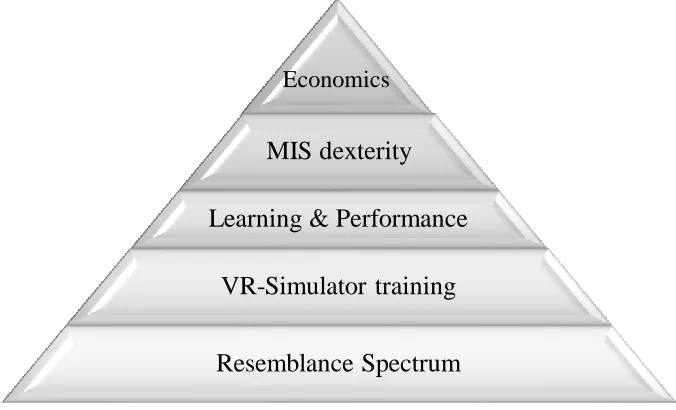
parameters separately. Therefore, we focused on performance differences to investigate possible reasons for missing learning curves. According to this we focussed (1) on individual differences and (2) on differences between the developed basic scope insertion tasks. Our basic research setup is visible in Figure 1.
Figure 1. Research setup .
Learning: Learning Curves
Performance: Multi-level models
Economics
MIS dexterity
Learning & Performance
VR-Simulator training
Resemblance Spectrum
[image:17.612.145.483.276.481.2]Design requirements. Based on the previous introduction we face several requirements which our prototype should fulfill. According to the mentioned problem statements we request the following design requirements, ranged in relevance: (1) Approaching the degree of resemblance (scientific predictive power), (2) Supplement VR-simulator training and assessment, (3) Foster learning and performance, (4) Define skill acquisition to surgical dexterity (visual and spatial), (5) economics (using small resources (a low-cost and low-fidelity construction) to reach the highest possible effect (learning and performance increase)).
Requirement for resemblance
Shortages in science. Literature about the relevance of VR-training and assessment for skill acquisition in MIS hints at lacking predictive power for either scientific methodology (Medford, 2013; Kramp, et al., 2016) , skills (Wolbers & Hegarty, 2010), innate abilities
(Groenier, Schmettow, Huijser, & Gallagher, n.d.; Anastakis, Hamstra, & Matsumoto, 2000) and inferences on individual differences (Stather, MacEachern, Rimmer, Hergott , & Tremblay, 2011). Further shortages related to perspective taking and the content of representations (Klatzky, 1998) or the insecurity about the causes for individual differences in navigational abilities (Wolbers & Hegarty, 2010) were discussed. Shortages in explanatory power reach from tests, objective evaluation criteria for the tested skills or capabilities and suitable tasks related to MIS procedures (Anastakis, Hamstra, & Matsumoto, 2000). To summarize, what still needs more scientific verification, is the transfer from what has been tested and trained (skills, tests, methodology) in the ‘laboratory’ to the real world MIS, related skills and resulting performance – the spectrum of resemblance.
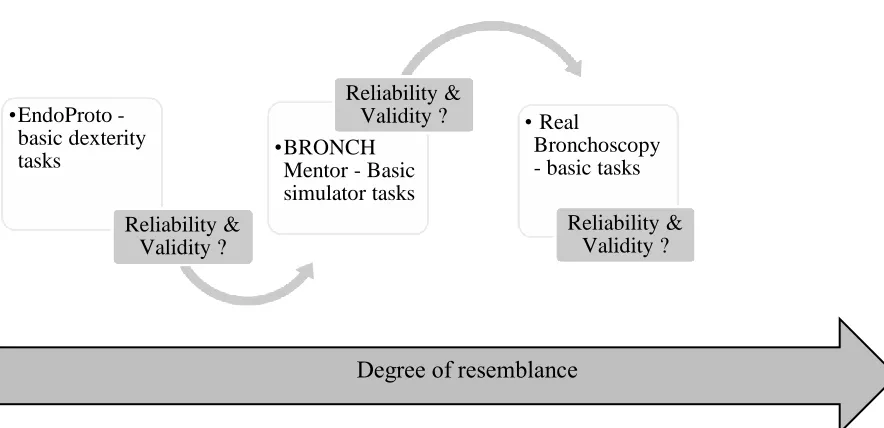
The resemblance spectrum. The resemblance spectrum describes the continuum of validity and reliability from beginning trainable dexterity skills over more realistic simulator tasks until performance improvements in real MIS. The problem is that innate abilities often are
imprecise abstractions of real surgical tasks and often request for simple responses, as for example button presses. In comparison to this, professional simulator tasks are complex and realistic imitations of realistic surgery tasks (Groenier, Schmettow, Huijser, & Gallagher, n.d.). Until now, research about simulator performance has provided the best predictions for real surgery
real surgery tasks, for example creating origami (Arendt, 2017), are low priced, but more
resembling tasks as professional simulator tasks depend on high costs. This problem emphasizes that there is still a need for low-budget tasks, which contribute to training MIS skills and can support expensive simulator tasks. Another reason is the need to better understand the underlying mechanisms, which make virtual reality simulators for MIS so successful.
[image:19.612.97.539.342.556.2]Originally, we aimed to approach the polarity between resemblance and predictive power, through the validation of our prototype with a VR-simulator performance comparison (see Figure 3). Now we approach the resemblance spectrum through the creation and evaluation of a new low-budget tool for training MIS related skills.
Figure 3. Resemblance Spectrum. The x-axis demonstrates the degree of resemblance. The y-axis shows the performance parameter. The linear relation of the test suits indicates an ideal (but unrealistic) training scenario with performance increase. The EndoProto shall be used as a first instrument for unexperienced trainees. The arrows indicate a relationship based on reliability and validity between the test suits. Own design, based on: (Schmettow & Groenier, 2017, p. 26; Arendt, 2017, p. 13).
•EndoProto - basic dexterity tasks
Reliability & Validity ?
•BRONCH Mentor - Basic simulator tasks
Reliability &
Validity ? • Real
Bronchoscopy - basic tasks
Reliability & Validity ?
Requirement for VR-simulator training and assessment
Medical training was long time only regarded as pure education. This means, it was less focused on the available research on learning, training and the development of skills (Gallagher & Smith, 2003). Traditional training methods in MIS and were mainly characterized by completing the curriculum as well as observing and assisting professional surgeons. In this context, practical training consisted of extracting the endoscope from the human body and finally exhibiting it for simple tasks. Complex procedures as biopsies were only admissible to highly experienced surgeons (Ost, et al., 2001).
Virtual reality (VR) simulators. The relevance and opportunities of technical devices as VR simulators were long time not recognized for skill acquisition in MIS (Gallagher & Smith, 2003). This verifies, why traditional educated surgeons were either rarely (Ost, et al., 2001) or not at all (Expert 1, personal communication, June 23, 2018) experienced with VR simulators. For example, from the 9 experts out Ost et al’s study (2001) only two had experience with simulators (mean age: 41). Even before the 1990 VR-simulators for training MIS skills existed, but they were facing problems of validation (Gallagher & Smith, 2003). Finally, in 2002 VR training was argued to decrease error rates for endoscopic procedures in the operation room in a scientific justified way (Gallagher & Smith, 2003). The effectiveness of VR simulator training has also been reported to improve performance for endoscopic (Ohuchida, et al., 2009), laparoscopic (Sangani, Bradley, & Fidopiastis, n.d.; Seymour, et al., 2002) and most important here, flexible bronchoscopy
These results show on the one hand the advantage of skill acquisition for novices until levels of expertise (Ost, et al., 2001) via simulator training against conventional methods.
Furthermore, a background for an additional training and evaluation method was set, which offers more objective assessment criteria than traditional training methods (Ohuchida, et al., 2009; Ost, et al., 2001; Seymour, et al., 2002). These arguments build another aspect where the current study ties in – the constant adjustment of training and assessment for surgeons. Therefore it shall be stated here, that the scientific relevance of stimulator training for skill acquisition of real MIS is still questionable and insecure (Kennedy, Maldonado, & Cook, 2013), because of the shortage of studies (Medford, 2013) and the broad diversity in methodology. This diversity is mainly
grounded on p-values, as the study of Stather et al. (2011) and leaves fewer possibilities to evaluate individual differences.
We use another approach instead, as we base our results on Bayesian statistics, in terms of building inferences on the quantification of uncertainty (Schmettow, in prep., p. 4 ch 3).
Requirement for learning and performance
Skill acquisition. Skill acquisition for MIS is of high relevance for the success and quality of a surgery. The acquirement of skills is defined in four phases of learning: First, the unconscious incompetence, second the conscious incompetence, third the conscious competence and fourth the unconscious competence. Stage one and two are characterized by low success rates, high need cognitive effort and concentration, leading to phases of exhaustion. The latter two stages show decreased cognitive efforts and increased amounts of automated movements. Professional skills most likely can be achieved in the last phase (Mohamed, Raman, Mclaughlin, Anderson, & Coderr, 2010). Other authors have categorized skill acquisition in the following three phases: cognitive, associative and autonomous stage, at which the last phase symbolizes the one in which expertise can be established (Fitts & Posner, 1967).
In order to master certain skills learning is essential and learning is consolidated through repetitions. Research about the amount of necessary repetitions for training MIS procedures, vary according to domains. It was claimed, that the first 10 repetitions show the steepest part of
learning in laparoscopy and can reach until 50. Based on estimated learning curves, the number of repetitions ranged from 25-100 for cystoscopies, over 45 for procedures in the medical field urology and until 300 for gastrointestinal endoscopies (Gallagher & Smith, 2003). The schedule for medical training in bronchoscopy demands the execution of up to 250 procedures in a training-period of 5 years. The recommendation for repeating bronchoscopies involves at least 100
consensus about the minimum of necessary training intervals in bronchoscopy and reported results are lacking scientific relevance (Medford, 2013; Ost, et al., 2001).
Learning curves. It is obvious, that training and experience are necessary to reach expertise. This expertise is characterized by decreased time and effort and an increase in
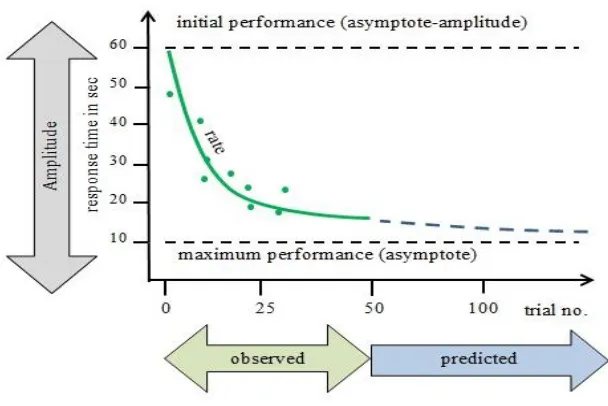
[image:23.612.81.385.293.496.2]repetitions of a certain task or procedure, which finally is defined as learning effect. An analytical representation of such an effect is a learning curve (Srour, Kiomjian, & Srour, 2015). A learning curve demonstrates an exponential function, expressing a skill which develops over time (see Figure 4).
Figure 4. Anatomy of a learning curve. Own design, based on (Schmettow & Groenier, 2017, p. 6). For illustrational reasons trial number and response time intervals can be broadly regarded as examples for the current study.
can be indicated by decreased ToT and thus show the proposition of learning through the slope. In Figure 4 an ideally case is demonstrated, where a person continuously is getting closer to the maximum performance. Learning generally is faster at the beginning and progress gets smaller over time. Professional skills can be regarded as a grade nearest to the maximum performance, the asymptote. At this maximum stage theoretically no learning is possible anymore (Heathcote, Brown, Mewhort, 2000).
Learning curves can help to identify individual differences, because they give a detailed picture on procedural learning effects. In comparison to that, mean learning curves should not be averaged, because they are not adequate for drawing conclusions about individual learning effects (Ackerman, 1987; Estes, 1956; Heathcote, Brown, & Mewhort, 2000). In addition to that, career recommendations should be specified to individuals, due to the fact of the widespread margins and suggestions of necessary training units reported before by Gallagher and Smith (2003) and Ost et al. (2001).
Even more important, the low success in finding reliable learning curves in literature about bronchoscopy show the limits in research for this domain. Some authors even state, that learning curves for conventional bronchoscopy are very variable, hard to predict and may be longer than thought, even among experienced bronchoscopists (Medford, 2013, p. 418). Supplementary, other authors proved strong differences in learning speed among experienced bronchoscopists in
Prototype Design
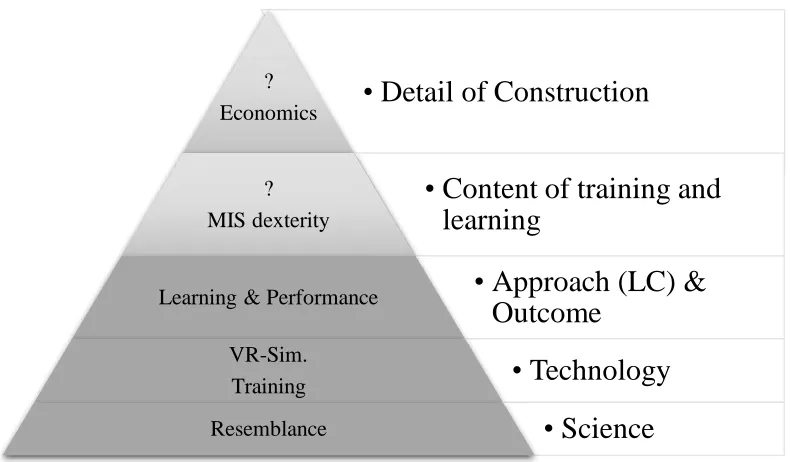
Until now we argued for the first three design requirements (1) degree of resemblance, (2) VR-simulator training and (3) learning and performance. These requirements correspond to a fundament of science (resemblance), technology domain (MIS and VR-simulator training and assessment) and related approach (learning curves) and outcome (learning and performance enhancement). What is still missing is the content of the training and learning we aim to achieve (see Figure 5). Our contribution in the first place was the construction of a prototype for flexible endoscopy and bronchoscopy. This prototype (EndoProto) first had to fulfill two more
[image:25.612.111.506.401.632.2]requirements: First, to foster MIS dexterity skills in order to establish domain related training and second, to be practical and cost efficient in order to be simply reproducible and easy to use. These two requirements are discussed in the following. Finally we present the constructed prototype and finish the chapter with our research questions.
Figure 5. Progress in approaching requirements.
• Detail of Construction
?Economics
• Content of training and
learning
? MIS dexterity
• Approach (LC) &
Outcome
Learning & Performance
• Technology
VR-Sim.Training
Requirement for MIS dexterity
The present thesis focuses on surgical dexterity, because aspects of hand-eye coordination were integrated in the developed prototype tasks (related to the original interest in investigating hand movements with a sensor-glove). Although we face the risk of not being able to train these abilities, we still hope to gain more insights in individual differences and in the aspects which make the VR-simulator training successful in training MIS skills.
Surgical dexterity. The importance of psychomotor and dexterity skills is widely discussed in literature about MIS, especially for the purpose of training (Gallagher, Leonard, & Traynor, 2009). Professional surgeons themselves evaluated cognitive factors, personality traits and innate dexterity as relevant attributes for surgical competence (Cuschieri, Francis, Crosby, & Hanna, 2001; Gallagher, Leonard, & Traynor, 2009). Surgical dexterity defines the following abilities: Spatial perception, hand eye coordination, aiming, multilimb coordination, hand-arm
steadiness (Cuschieri, Francis, Crosby, & Hanna, 2001, p. 112). Abilities were valued as relevant for open and MIS. Visual-spatial abilities are defined as fundamental abilities. Due to their
assumed genetically predetermination they are differentiated from technical and thus trainable
skills. Fundamental abilities as dexterity or hand-eye coordination are regarded to be necessary to
execute some MIS related skills as for example suturing (Gallagher, Leonard, & Traynor, 2009).
their parts and (3) visual imagery involving 2D and 3D whole object rotations and translations (Anastakis, Hamstra, & Matsumoto, 2000, p. 470). Related to MIS, one concrete example would be the transfer of 3-dimensional (3D) bodies into 2-dimensional (2D) pictures. This ability is highly relevant in flexible endoscopy, because surgeons have to transform the bodies or related parts they imagine onto the screen on which they see the inspected area of the endoscope. Vice versa, they have to encode the 2D video information they see on the screen into related motor movements to operate the endoscope inside a 3D human body (Anastakis, Hamstra, & Matsumoto, 2000).
Summarizing, visual-spatial abilities are strongly related to surgical performance (Gallagher, Leonard, & Traynor, 2009; Wanzel, et al., 2003) and reported to be highly relevant for gaining professional performance in MIS (Anastakis, Hamstra, & Matsumoto, 2000). Important to mention is also, that newest scientific findings prove, that innate abilities have no predictive value skill acquisition in MIS (Groenier, Schmettow, Huijser, & Gallagher, n.d.). The according authors warn to rely on innate abilities in accordance to surgical performance assessment and career recommendations. The aim with the current study was not to try to encounter these findings, but to investigate learning and performance with a self-created prototype. We still integrated surgical dexterity in our research setup, because we regarded even the replication of previous findings as valuable.
Visual ability - perspective taking. As the functionality, comprehension and the
mentioned in literature - the allocentric and the egocentric perspective. Broadly spoken, these two are dedicated to spatial perception, spatial cognition and spatially directed acting (Klatzky, 1998, p. 2). The egocentric reference frame is always related to the perspective of a certain perceiver and to his/her localization. Hence, in the egocentric perspective the perceiver defines the axis of
orientation (Klatzky, 1998). In other words, it represents a distance from the self to an object (Wolbers & Hegarty, 2010). In comparison to that, the allocentric or exocentric reference frame is related to the positioning of the surrounding, external to the perceiver. Simplified, allocentric describes the distance form an object to another object (Wolbers & Hegarty, 2010).
In order to relate these perspectives to the context of MIS, surgeons now constitute the primary perceivers. As the perspective of a perceiver defines the reference frame, it is the
perception of a surgeon which defines the perspective he/she takes. Further, our context includes VR-simulators for training purposes, which indicates that the environment in a simulator is not real, but virtual. As stated in literature, the perception in a virtual environment is centered on the position in virtual space of the virtual body (Slater & Wilbur, 1997, p. 3), or more exactly to the eyes of the body. In bronchoscopic surgery, there is no virtual body displayed as for example in a video game. Instead surgeons see the innards of a human body and maybe instruments of a biopsy. Bronchoscopists maneuver through the human bronchia form an egocentric perspective, because they autonomously maneuver the movements of the endoscope, which can be regarded as a mechanical abstraction of their virtual body. In this context, the camera of the endoscope represents the eyes of a surgeon which demonstrates the axis of orientation and thus can be regarded as an egocentric perspective.
Even more relevant is the argument, that the application of an egocentric perspective in a virtual environment is reported to increase task performance, even when controlled for the same ability level of participants. Furthermore, egocentric perspective taking seems to give a higher
impression of presence, which is defined as a sense of being in a place (Slater & Wilbur, 1997). Although this presence seems less relevant for the current study, it is relevant to mention that presence seems to influence the autonomous response and behavior of a person in a virtual surrounding, which might have an effect on the performance of a surgeon.
Spatial ability – Navigation and cognitive maps. The above described ‘mechanical
abstraction of their virtual body’ sounds a bit odd, and this egocentric perspective surely cannot be generalized to every surgeon and every situation during surgery. However, the paragraph above shows that a reference frame is connected to movement, especially in a virtual environment. Furthermore, this implies that perspective taking also is related to spatial abilities, as for example navigation abilities and the ability to generate cognitive maps.
The concept of a cognitive map describes the comprehension of an environment in its dimensional properties. The labelling cognitive map is derived from the idea that the human mind creates something similar as a city map, with local representations of attributes. This implies that such a map is ‘drawn’ from the perspective of a bird, or differently said in an allocentric
Literature about MIS also covers the relevance of spatial navigation abilities for
bronchoscopic training (Naur, Konge, Nayahangan, & Clementsen, 2017) and cognitive maps also for endoscopy (Taylor, Brunyé, & Taylor, 2008). Concluding, as MIS demands for visual-spatial abilities, cognitive maps can be relevant in order to orientate inside the human bronchia and to give a correct localization of a possible tumor. Further, orientation in navigation is fixed to the scope end, which defines the point of view, enabling illumination and symbolizing the central point of movement (Taylor, Brunyé, & Taylor, 2008). Grounded on these facts, we can as assume that a surgeon primarily maneuvers the endoscope via an egocentric perspective, but probably also make use of perspective switching.
Surgical dexterity (skills) vs innate ability. The reference point of the described surgical dexterity skills is the effect of training. If training dexterity skills relevant for MIS or
bronchoscopy could improve surgical performance, this could contribute to training and
assessment criteria for surgeons. Until now, it is not clear if the relation between spatial abilities and surgical skills is rather transient or enduring. Transient means that the association exists at early levels of learning, whereas enduring means that the relations is persistently affecting performance, not only in the early phases of learning (Keehner, Lippa, Montello, Tendick, & Hegarty, 2006). In this context surgical dexterity skills may be grounded to some extend in innate visual-spatial abilities and thus are reported to be genetically predetermined (Gallagher, Leonard, & Traynor, 2009). On the contrary, there are authors arguing that experience can positively influence the construction spatial mental models and resulting navigational skills for endoscopy (Taylor, Brunyé, & Taylor, 2008). Virtual-reality trainers were constructed for training endoscopic navigation skills and construct validity was reported (Haluck, et al., 2001).
The findings above indicate that the boundaries surgical skills and innate abilities may be not that clear. Mentioned aspects of MIS related visual-spatial abilities, skill acquisition and performance processes emphasize the need for a better understanding of the underlying relations for training. The evaluation of skills can have severe consequences for careers regarding
recruitment and assessment. Therefore it is necessary to know the underlying reasons for
Requirement for economics
Low-budget & low-fidelity. One of the main problems of VR-simulator training in MIS is the one of high costs (Gallagher & Smith, 2003). These costs are not only related to the training tool (VR-simulator), but also to the training sessions, supervision and evaluation. For this reason, one of the requirements for our prototype was summarized as economics. We aimed to create a low-budget prototype with which we hoped to prove performance improvements for novices. Further, this economics included that the prototype should be easily transportable, easily usable for a possible wide range of people and less dependent on technical equipment as costly VR-simulators.
Endoscopy prototype (EndoProto) 1
Based on the discussed requirements for (1) resemblance, (2) for VR-simulator training and assessment, (3) learning and performance, (4) MIS dexterity and (5) economics, the following prototype for flexible endoscopy (EndoProto) was created (see Figure 6). In the following we supplement the demonstration and explanation of the prototype with our motivations and
decisions for the task design and end this chapter with a summarizing contribution of the current study.
Figure 6. EndoProto from frontal perspective with dividing wall. Own photo.
1
The basic design of the endoscopy prototype was inspired by the training box for pre-oral endoscopic myotomy, produced by students from the University of Twente and the department of technical medicine (Buser, Pouw, & Kusters, 2016-2017)
4
2
3
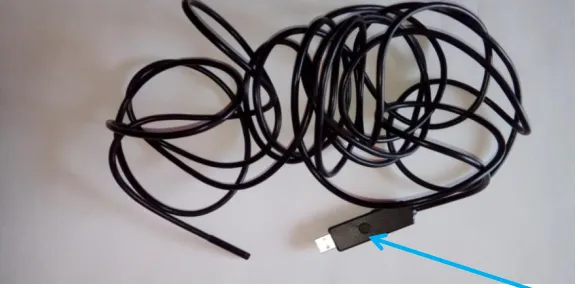
The prototype design was primarily based on the domain of flexible endoscopy, with the aim to enable to train several related domains as the flexible bronchoscopy. The EndoProto is an open polymer box2. This box has uniformly distributed holes in its outer frame. These holes can be used to place dividing walls inside the box. Such a dividing wall has the same hole-pattern as the broadside of the box. The hole-pattern of a dividing wall demonstrates different routes, which can be crossed with a provisional endoscope (low-budget wire camera, see Figure 7). The
[image:33.612.144.433.414.558.2]insertion of the endoscope inside the box and through a route was the fundamental scope insertion task in the current study. In total we defined two main tasks, which based on the same insertion process but differed in the induced perspective. One task was defined as allocentric task (without camera perspective) and one was defined as egocentric task (based on the direct view ‘through’ the endoscopic camera visible on a laptop screen. For further technical details on the EndoProto and reasons of reproducibility we refer to the technical drawing (see Figure E1) in Appendix E.
Figure 7. Endoscope (low-budget Android wire camera) with light control button. Own foto.
2
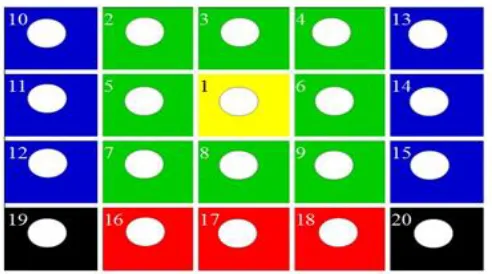
Dividing walls. For the allocentric and the egocentric task each a fitting dividing wall was created. Every of these two dividing walls had the same number of similarly distributed holes. These holes are defined as routes. The routes are numbered based on their levels of difficulty (see Figure 8). The levels of difficulty rise from 1-20 in circuits around the center (route 1). A
difficulty level based on circuits means, that the difficulty is not rising linear from 1-20. The reason for this non-linear difficulty levels is, that they are dependent on the technical and physical possibilities of the used endoscope. This means, that the complexity rises with greater distance and angles to the starting point parallel to route 1 (yellow). In addition to the numbering a coloring pattern was created, which also visualized the circular levels of difficulty. This visualization was chosen for reasons of supporting orientation, instruction simplicity and
[image:34.612.153.399.416.553.2]comprehension. The coloring scheme was chosen based on observations and experience with the pilot test.
Manipulation of the EndoProto for the egocentric task.
Starting Point. We created two main tasks for the current study, according to the induced allocentric or egocentric task. One broadside of the box was marked with numbers (see Figure 6), which indicated the starting point for the allocentric (1) or the egocentric condition (2). Two different starting points were necessary, in order to start in both conditions at the same position, parallel to the first route (1 = yellow, see Figure 6). In the egocentric task the box was turned vertically and the dividing wall was fixed upside down, which led to a shift of the first route. For this reason we had to adjust the starting point (2) to the position of the first route.
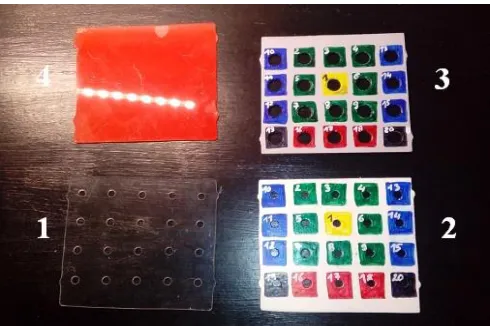
Dividing wall. For the different allocentric and egocentric tasks the dividing walls had to be adjusted. For the allocentric task, the hole-pattern of the dividing wall was similar in number and diameter to the outer frame of the box. For the egocentric task, the hole-pattern was just similar in number, but had a bigger diameter (see Figure 9, dividing wall 3 vs. 2). This difference in diameter was designed because of reasons of feasibility. Own testing’s and the pilot test
[image:35.612.77.322.514.677.2]revealed a higher complexity of the egocentric task. This led to an adjustment in the diameter, in order to prevent disproportionate rates of wall contacts. The dividing walls for both conditions had the same amount and pattern of routes, visualized in numbering and color.
Motivation for Task Design
Endoscope (Scope) insertion task. The insertion of the endoscope inside the human body is a standard procedure in MIS (Lechtzin, Rubin, White, Jenckes, & Diette, 2002), which served as a model for the current task construction. Insertions are important to train, because of their risk of infecting a patient with microorganisms (Kovaleva, Peters, van der Mei, & Degener, 2013). Moreover, some surgeries for example the treatment of gastrointestinal fistulas are of high risk for a patient’s life (Truong, Böhm, Klinge, Stumpf, & Schumelick, 2004). A certain amount of
dexterity (hand-eye-coordination) is necessary to handle the tiny and sensitive parts of an endoscope, especially when inserting it in the human body. Therefore, this task and the related handling are recommended to be trained by surgeons (Mason, 1992). Based on these findings, we developed a basic scope insertion task, in order to try to simulate simplified bronchoscopic insertion procedures (which originally would have been trained in an even more specified way with the VR-simulator). Due to the simplistic prototype design and the missing operation system for the endoscope, we just let participants insert the endoscope from a starting point of the EndoProt into a directed opening (route) and extract it again.
Perspectives. Referring to literature, box trainers were reported as efficient training tool for MIS skill acquisition (Ohuchida, et al., 2009). Such skills were defined as hand-eye
coordination in accordance to the comprehension and related execution of visual information (as transmitted from the endoscope and presented on monitors). This finding was one of our
and train the shifting between allocentric and egocentric (camera-view) perspectives, through the use of a provisional endoscope. The first task (allocentric) was defined by an open box
(EndoProto) and a direct view on the own hands and related movements. This task was thus expected to foster primarily an allocentric perspective. The second scope insertion task was defined by a closed box and a view through the endoscope inside the box via a camera-perspective. This task was thus expected to primarily foster an egocentric camera-perspective. It is
important to highlight, that these conditions cannot exclude that participants made use of different or more than one perspective in the described tasks
Posture. The Endoscopic task was regarded as a second training task. This means, first that we expected participants would have gained some experience with the training tool and related skills. Second, we wanted to adjust the next task more to a basic VR-simulator task. Therefore, we changed the position of the EndoProto through turning it upside down. In
accordance to this change in posture we instructed participants to execute the egocentric task in a standing position, which led to a higher resemblance to the standing posture for the VR-simulator. Related to our original research focus, this change in posture was also expected to maybe change hand and finger movements (measurable with the sensor glove).
Distance in allocentric condition. The decisions for the chosen distances of the allocentric conditions are based on the following evaluations. Previous tests showed that distance 1 was most fitting for first encounters with the EndoProto. Therefore, the closer distance (2) was chosen as a second sub-task for the allocentric condition instead of being the first task. The task with distance 2 was valuable in addition to distance 1, because of the expected simplicity and resulting learning effect for the handling of the endoscope. The third distance appeared to make task 1.3 nearly as difficult as the first task, maybe even simpler. Task 1.3 was thus regarded as an additional task, if time permitted it. All mentioned expectations and evaluations were based on trials of another researcher; own trials and the pilot test (Appendix C).
Distance in egocentric condition. The egocentric task was not varied in distance. The reasons for the chosen distance are the pilot test and our own trials, which proved this one to be the most realizable in accordance to time and performance measures. In addition to that, we decided against the nearest distance of task 1.1, because it was nearly not executable in the camera perspective, because of the bad view on the display. We also decided against the widest distance of task 1.3, because of the expected lack in time
Contribution of the current study
With the current study, we wanted to contribute to lacks of pulmonary(Stather, MacEachern, Rimmer, Hergott , & Tremblay, 2011) or endoscopic training and assessment, through approaching the resemblance spectrum with a new test instrument fulfilling our five design requirements. We tried to slightly approach the resemblance of a real VR-simulator (BRONCH Mentor) and develop our basic scope insertion tasks grounded on previous research. Our aim was to hopefully foster the learning and performance of MIS relevant skills with the low-budget and low-fidelty EndoProto. We contribute to previous research through investigating individual
[image:40.612.72.463.403.600.2]learning curves, instead of just focusing on inaccurate group means. Further, our study contributes with the statistical analysis, which is based on magnitudes and measures of uncertainty, instead of conventional p-values. Summarizing, our extended research setup is visualized in Figure 10.
Research question
For the current paper, no hypotheses have been generated. Instead, an explorative approach was applied, in order to get insights in the scientific contribution of the EndoProto for the
resemblance spectrum of MIS and especially bronchoscopy. Our main focus was the investigation of learning. For this purpose, First wanted to estimate learning curves with the parameters
asymptote, rate and amplitude with our parameters for ToT and trials. Our second aim was to focus on individual differences in learning. And our third aim was to investigate differences of our two main tasks due to expected perspectives. Therefore, our research questions were:
1. Is it possible to estimate learning curves with the amplitude ToT and the rate parameter trial? 2. How do learning curves differ between individuals?
Experimental Design Method Recap Focus of the study
The estimation of learning curves failed. Therefore, we shifted the focus of the study from the exploration of learning towards an exploration of the underlying performance parameters (design requirement 3: Learning and performance). Our analyses simplified to a multi-level mixed effects model in which trials became exchangeable repeated measures. This enabled us to
investigate different aspects of performance and the underlying parameters of difficulty.
Accordingly we explored possible reasons why no learning took place. Finally, we interviewed two experts, in order to evaluate and adjust the EndoProto for possible future investigations. We were not able to answer our research questions without learning curves. For this reason, we generated two quantitative and one qualitative research questions according to the adjusted research setup (see Figure 11).
1. How do individuals differ in the performance parameters?
2. How do participants differ under the circumstance of perspective (allocentric and egocentric)?
[image:42.612.97.444.497.672.2]3. What can the opinions of experts add to the current study?
Design3
[image:43.612.72.530.218.568.2]For the current study a within-subjects design was applied. Every participant executed two main tasks in a training session of 1 hour. The tasks were differentiated by conditions. Every task was expected to induce the use of a different perspective. Therefore, we defined the tasks by their perspectives as allocentric and egocentric task (see Figure 12).
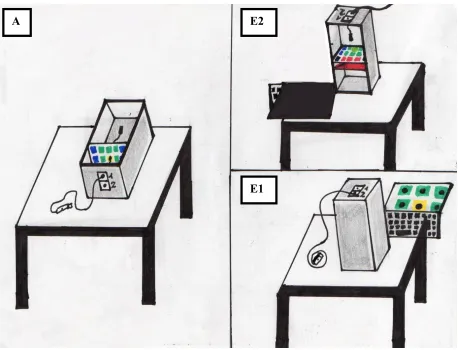
Figure 12. Schematic illustration of the allocentric (A) and egocentric (E1 and E2) condition. In (A) researchers and participants viewed the EndoProto from the same perspective. The egocentric condition is illustrated from the viewpoint of the participant (E1) and from the viewpoint of the researcher (E2), sitting on the opposite side of the table in order to be able to count wall contacts. Own drawing.
3
The word design has been used before in this paper, but with a different meaning. Under the heading design just the experimental design is defined. All other references to design are related to the creation of the EndoProto.
The allocentric task was separated in three sub-tasks (1.1-1.3), which were characterized by distance (see Table 1). This distance was defined in accordance with the numbering of the sub-tasks and their executed sequence. The distance of a sub-task was read off from the rows on the longitudinal side of the box. Rows were technical indicators for the placing of the dividing walls (see technical drawing E1, Appendix E). A dividing wall included possible routes to take. The numbers of routes ranged from 1-20 and indicated their levels of difficulty (see Materials). To summarize, difficulty was expected to be induced first by the condition of perspective, second by the distance of the dividing wall and third by the dividing wall’s routes.
Table 1
EndoProto Task Overview
Level of Difficulty
Condition Sub-task Distance Row* Routes Time Trials
Allocentric 1.1 1 3 1-20 5-10 20
Allocentric 1.2 2 2 1-9 1-5 10
Allocentric 1.3 3 4 1-20 5-10 ≥ 20
Egocentric 2.1 1 3 1-9, 16-18 25 ≥ 30
Note: Time shows the expected duration in minutes and trials the expected number of repetitions for a sub-task. We generated random routes for every trial.
Materials
Endoscopy prototype (EndoProto). A self-created prototype for testing skills in flexible endoscopy and related domains as flexible bronchoscopy was created and used for the current study (see Prototype Design, Figure 6).
Endoscope4. We used a USB Android wire camera (see Prototype Design, Figure 6) as
endoscope. It served as a provisional and simplified version of a real endoscope. Compared to a real endoscope, the tip of the wire-camera was not movable mechanically. The camera was just movable via the movement of the wire itself. The dimensions of the endoscope are a 5.5mm diameter and a length of 5m. The device is equipped with LEDs and offers the possibility of HD video recordings. By connecting the device to Android or Windows XP/VISTA/7/8/10 it enables to take snapshots and real-time-camera-perspectives. For the last mentioned action we made use of the software “ViewPlayCap”.
Demographic questionnaire. On the online platform Survey Monkey we created a demographic questionnaire (Appendix D). The questionnaire was a precondition for taking part in our study. Therefore, we made the link available with our study via SONA systems
(https://www.surveymonkey.de/r/NN383DD, accessed 2018-06-15). The survey contained questions about demographics as age, gender, nationality, study, handedness, limitations of visual strength or color vision, dyslexia, gaming behavior, prior knowledge and experience in the field of simulated endoscopy.
4
Data collection
Qualitative and quantitative data. We collected and measured quantitative and
qualitative data for the current study. We noted the quantitative data for every participant directly in a research protocol (Appendix E). The quantitative data was transferred and saved in
anonymized form in Excel tables on Google Drive. Additionally, we collected qualitative data (1) during the training sessions with the EndoProto and (2) after the completion of participant training in form of expert interviews. The first mentioned qualitative data were observations and personal comments of participants, which we tabulated in an observation protocol (Appendix G). The second mentioned qualitative data was extracted and tabulated in Appendix I (Expert Talks).
Quantitative: Performance measurements. In total we measured five quantitative performance parameters: (1) Trials, (2) ToT, (3) wall contacts, (4) precision and (5) skips. The most relevant performance parameters for the current study were the number of repetitions (trials), task duration (time-on-task: ToT) and the number of errors (wall contacts). The last two
parameters have been validated in a study about the assessment of a bronchoscopy simulator for the skill acquisition of novice bronchoscopists (Ost, et al., 2001). We defined our performance parameters as follows:
(1) We calculated the trials of every participant in every task. Every single trial started at the related starting point of the allocentric or the egocentric task (see Figure 5) and ended with visibly crossing a route. After a trial was finished, the participant visibly had to extract the endoscope out of the box and insert it again for the start of a new trial. Every trial was counted as 1.0.
defined begin and ending of a trial. We noted the time in seconds into the research protocol of the related participant.
(3) One aim of every task was to work as precisely as possible (Appendix F, 5. Guidelines). This means, that we explained participants to try to not touch any wall during the
execution of a trial. Every caused contact with the walls (if touching or scratching) during a trial was counted as one wall contact (1.0). Wall contacts were only calculated in relation to the definition of a trial. This means, that wall contacts which were caused after crossing a route, for example during the extraction of the endoscope, were not counted. When participants touched a route directly – this means, when they already moved the tip of the endoscope inside a hole of a dividing wall - this action was not counted as a wall contact. We decided for this exclusion criteria, because the diameter of the routes was too small to not touch it at all. Conversely, when participants already touched a route, but slipped off again, their action was counted as one wall contact. We decided to include this action as a wall contact, because participants were not successful at finishing their trial.
(4) The precision indicated if a participant was able to insert the endoscope through the right route. A correct precision was labelled in the Boolean programming variable TRUE. If the participant went through a wrong route, this action was noted down as false precision (FALSE). Additionally, the number of the wrong route was noted down in the research protocol. Then the current trial was automatically skipped and a new route was instructed to the participant.
(5) Participants who took longer than two minutes to complete a route were granted the option to skip. When the skip option was approved by us researchers, we instructed the
Procedure
Two researchers supervised the participants in the procedure. We informed all participants about the nature of the research, the requested tasks, related rules, answered open questions and thanked them for their participation. Explicit verbal instructions can be found in the research protocol (Appendix F). Generally participants took part in one session of one hour. However, two participants had to split the session, because of personal circumstances. In these cases we decided for a splitting of the session based on the two conditions, which resulted in two sessions of 30 minutes each. The session was split in half, in order to not interrupt the training of one condition.
Allocentric task. Participants started to perform simple scope insertion tasks on the EndoProto. This allocentric tasks took about half an hour. Depending on the performance of participants they executed either two (1.1-1.2) or three (1.1-1.3) tasks (see Table 1). All sub-tasks were executed in a sitting posture. The EndoProto was placed horizontal in front of the participant and the coloring scheme as well as the inner space of the prototype was visible to them (see Figure 13). We fixed the prototype on the table with a rubber map to prevent it from moving. We generated random routes for every participant and instructed them one by one until the limited number of repetitions or time was reached (see Table 1).
[image:50.612.62.202.511.706.2]
Rules and instructions. The task of participants was to insert the endoscope in the right starting point and cross the route given by us researchers. Our instruction before every condition was to move as fast and precise as possible (Appendix F, 5.). Then the endoscope was extracted out of the box and a new trial was started. Participants had one rule: Hands were only allowed outside the box. In view of this rule, we assumed to foster relevant hand and finger movements for basic scope insertion tasks.
Egocentric task. We granted the participants a break of 5 minutes between the allocentric and the egocentric task. The egocentric task is defined by the assumed perspective participants would take to execute it. For this reason, we adjusted the setting of the condition through placing the EndoProto in a vertical position (see Figure 14) and connecting the endoscope with a
[image:51.612.208.444.428.595.2]computer, which resulted in a real-time transfer of the camera view of the endoscope (see Figure 15). We hoped to induce an egocentric perspective with the direct view through the camera (read visual ability - perspective taking).
Figure 14. EndoProto in vertical positioning for the egocentric task with red wall for haptic feedback from the perspective of the researcher (left photo). The white arrow shows the visible side for participants, looking from above on the EndoProto. Own photo.
We asked the participants to stand up and hold this position for the remaining 30 minutes.. The ground of the EndoProto was turned to the participant, so that they could not see their
movements inside. One of us researchers took place on the other side of the table, where the open sided of the EndoProto was viewable. This positioning was necessary to be able to see the counted performance parameters (wall contacts, precision and trial).
Rules and instructions. The egocentric task was the same as the task of the task of the allocentric condition: To insert the endoscope in the right starting point and cross the route given by us researchers. We gave the same instruction as for the allocentric task and explained the same rule. This rule was enlarged by the restriction to only follow the movements of the endoscope via the laptop screen. We allowed participants to extract the endoscope in order to re-orientate at any time. Such an extraction was not counted as a new trial, when the instructed route was not already crossed.
Difference to allocentric task. The egocentric task differed in two aspects to the
Location. In most cases the EndoProto training took place at the University of Twente in the ECTM’s (Experimental Center for Technical Medicine) simulator room 2. This simulator room was our initial place for all planned EndoProto and simulator sessions. However, acoustic disturbances and unavailability of the room induced us to book separated conference rooms in the University. We expected room changes to not negatively influence the performance of participants first, because silence would rather contribute to the concentration of participants and second, because the experimental execution of the EndoProto tasks just required a table and a chair.
Participants
Formality. The University of Twente’s faculty of Behavioural, Management and Social Sciences (BMS) has an Ethics Committee which approved our study (approval No.: BCE18145). All participants signed an informed consent before participating in our study (Appendix B). If requested, we handed out a copy of the informed consent to the participants. The University provided a SONA test subject pool where we recruited our convenience sample of (N = 25) participants. The first participant served as a pilot test (Appendix C) and was therefore extracted from the dataset of the analysis. If not stated differently, the remaining (n = 24) participants represent the sample we talk about in the following.
Demographics. Six participants of our sample were male. The average age was 21 years (range: 18-28 years, SD = 2.0 years). The majority of the participants studied psychology (n = 21), followed by communication studies (n = 3). Twenty participants were German, two were Dutch, one was Bulgarian and one was Iranian. One participant was ambidextrous. The remaining participants were right-handed. One of the participants was colour-blind and another one had dyslexia. Four participants were wearing glasses. Twelve participants had experience in
video/computer gaming, ranging from 1 until 10 hours a week. No participant had experience in the field of simulated endoscopy.
Learning
Performance
Trials = ExchangeableToT
Wall contacts
Precision
Difficulty
Perspectives(+ distance ) Route Data analysis
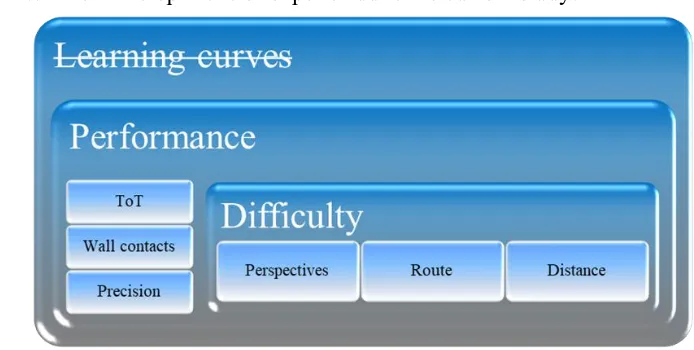
The original focus of the study was to investigate learning effects through the estimation of exponential learning curves with a non-linear learning curve model. The estimation of learning curves failed. Instead, we based the data analysis on a multi-level mixed-effects model in which trials became exchangeable repeated measures. Regarding our research questions, we focused our analyses (1) individual differences in performance based on the parameters ToT and wall contacts and (2) the exploration of differences between the allocentric and the egocentric perspective on individual and group levels. The performance variable precision is a logic dichotomous variable and was therefore not usable for a regression analysis. The difficulty parameter distance was integrated in the parameter task, in order to analyze either the sub-tasks or the different
perspectives. As a result we only had to deal with the two difficulty parameters perspective and route. Finally we found an interaction effect of route by task for wall contacts.
[image:55.612.112.469.509.680.2]For the sake of formality, first the learning curves model and then the multi-level model will be described. For all analyses we used the program Rstudio and the programming language R (version R 3.4.4.), in which we integrated the packages ‘brms’ (version 2.3.0). Figure 16 shows the extended research setup for the data exploration and result section.
Learning curve model. Learning curves are used as likelihood functions of a statistical model. The mathematical formula of a learning curve is as follows:
μi=βasym(1+exp(−βrate(xtraining+βpexp))). (Schmettow, in prep.)
For our estimation of learning curves, we created the LARY model, based on the parameters (amplitude, rate, asymptote). In our LARY model the parameter ToT was the amplitude, trials expressed the rate parameter and the asymptote was the maximum performance. A learning curve demonstrates, ththat the rate of learning is related to the amount of training. Learning typically rises with every unit of (x) and experience (βpexp), which together are signalized as the slope. βasym stands for the asymptote.
Manipulation check. Through link functions, linearity was generated ranging from a
log-scale of [-∞, +∞]. This means, that all possible outcomes were covered by this function, which may also include unrealistic ones. For example, the experience of a participant expressed in trials could not be lower than 1, because every participant started with his/her first trial on the
EndoProto training. As a reverse conclusion, a negative amount of trials would also not be
Generalized linear model (GLM). After the estimation of learning curves failed, we analyzed the effects of the performance parameters ToT and wall contacts. For this purpose, we made use of generalized linear model (GLM), in which trials became exchangeable repeated measures. We created a multi-level mixed-effects model with a negative binominal distribution and executed regressions. Our model accounted for overdispersion, which is the linear increase of variance proportionally to the mean (Schmettow, in prep.). In order to prevent this risk we made use of a two parameter distribution – the negative binominal distribution. Through link functions, we reached linearity. Most importantly, the variance of every measurement could be used as a function of the predicted values. This was important, to investigate performance on the
population-level and to include random effects in the model. (1) In order to present results about individual differences, we had to compare population-level effects to the standard deviations (SD) on the participant level on a linear predictor scale. Because SD cannot be retransformed to their original scales, we compared on linear predictor scales and found fixed effects on the population-level. (2) We created plots to visualize the differences in performance between the perspectives. (3) We accounted for the possibility that route effects differ by tasks and accordingly we found an interaction effect of routes by tasks.
Results
In the current study we analyzed quantitative and qualitative data. First, data exploration of exponential learning curves will be presented. Second, we will present an explorative post hoc analysis on individual differences and the differences between the allocentric and the egocentric condition. Finally, we present the qualitative results of the expert interviews.
Quantitative analyses
Exploration of Learning. For the exploration of learning we made use of a non-linear multilevel mixed-effects model to estimate learning curves. We analyzed the effect of the performance variable ToT on the asymptote. It was not possible to estimate learning curves with the available dataset. This means, no learning took place for the performance variable ToT. In more detail, the performance of the participants varied but did not improve after repeated trials, neither on a population (see Figure 17) nor on a participant level (see Figure 18 and 19).
Raw learning curves: Population level.
Individual learning curves: Allocentric task.
Figure 18. Raw learning curves – participant level – allocentric. The learning curves are estimated for task 1.3 (1, blue), 1.2 (2, green) and 1.1 (3, blue), showing the number of trials on the
Individual learning curves – Egocentric task.
Exploration of performance
Individual differences. Population level effects for the association between performance variables ToT and wall contacts were compared to individual differences as standard deviation of by the parameters (see Table 2). Effects were predicted on a linear predictor scale, because standard deviations cannot be transformed back to original scales. The average effect of causing wall contacts at the first trial is 0.22 [-0.19, 0.60] 95CI on a population level, but the difference between individuals is more than twice 0.55 [0.39, 0.80] 95CI. Security about these effects is not high, because confidence intervals are not dense. The effect of ToT is 0.57 [0.44, 0.72] 95CI on the population level and the individual variation is nearly half of it 0.24 [0.11, 0.42] 95CI. Security about these effects is not high, because confidence intervals are not dense. Most
[image:63.612.67.532.413.672.2]participants have a positive relation between ToT and wall contacts (see Appendix H – R syntax). Individual variation is visible, but not overwhelming, which is visible in Figure 20.
Table 2. Association of ToT and wall contacts on population and individual levels
Population Individual SD
Performance Parameter
Effect estimate
95% CI Effect
estimate
95% CI
Wall contacts 0.22 [-0.19, 0.60] 0.55 [0.39, 0.80]
ToT 0.57 [ 0.44, 0.72] 0.24 [0.11, 0.42]