University of Twente
Management and Governance
NIKOS
Supervisors: Dr. Rainer Harms | University of Twente,
Dr. ir. Sandor Löwik | University of Twente
Berlin Institute of Technology
Innovation Economics
Supervisor: Dr. Annika Lorenz | TU Berlin
Master Thesis
How do Start-ups Recognize the Value of External Knowledge and
Acquire it? A Study on Absorptive Capacity in B2B Start-ups
- Public Version -
Number of pages: 69 | Number of words: 19283
Christoph Baier E-mail: [email protected] M.Sc. Business Administration (UT) M.Sc. Innovation Management & Entrepreneurship (TU) Student Number: s1361449 (UT) 338492 (TU)
Index
List of abbreviations ... III List of figures ... III List of tables ... III
1. Introduction ... 1
1.1 Importance of external knowledge – especially for start-ups ... 1
1.2 Definitions and prior research ... 1
1.3 Research gaps demand further research ... 3
1.4 Purpose to address the black-box of recognition and acquisition in start-ups ... 4
1.5 Contribution of this study ... 6
2. Theory ... 8
2.1 Introducing the entrepreneurial context ... 8
2.2 Central challenges facing entrepreneurs ... 11
2.3 Organisational learning and the sourcing of external knowledge ... 13
2.4 Absorptive capacity as an ability to make use of external knowledge ... 16
2.5 Recognize the value of external knowledge ... 19
2.6 Acquire external knowledge... 24
3. Method ... 28
3.1 Research design ... 28
3.2 Interviewee selection ... 29
3.3 Data collection ... 31
3.4 Data analysis ... 32
3.5 Start-up, interviewee and interview characteristics ... 33
4. Findings ... 35
4.1 The external knowledge sources ... 35
4.3 The connection / the access to external knowledge ... 43
4.4 The triggers to act and react ... 47
4.5 The direction ... 50
4.6 The evaluation ... 52
4.7 The routines with external knowledge ... 56
5. Discussion ... 59
6. Conclusion ... 65
References ... 70
Appendices ... 77
Appendix A: Visually contrasting three common absorptive capacity concepts ... 77
Appendix B: List of identified relevant start-ups ... 78
Appendix C: Interview guide in English ... 79
List of abbreviations
B2B = Business to business
B2C = Business to customers
CEO = Chief Executive Officer
CTO = Chief Technology Officer
CMO = Chief Marketing Officer
ICT = Information and communication technology
R&D = Research and Development
SME = Small and medium-sized enterprises
List of figures
Figure 1: Core components of the used absorptive capacity concept and the research
focus of this thesis highlighted in grey ... 5
Figure 2: Qualitatively investigated early absorptive capacity aspects ... 6
Figure 3: Visualizing the theoretical framework and the investigated core components 8 Figure 4: Illustration of the iterative entrepreneurial process ... 10
Figure 5: The organisational learning framework... 15
Figure 6: Refined model of absorptive capacity ... 18
Figure 7: Illustration of recognize the value in the context of absorptive capacity ... 20
Figure 8: Qualitatively investigated early absorptive capacity aspects ... 27
Figure 9: Final coding categories that represent recurring patterns (Atlas.ti) ... 33
Figure 10: Illustration of interviewees’ central themes for recognizing and acquiring external knowledge ... 36
Figure 11: Recurring patterns of early absorptive capacity stated by interviewees ... 59
Figure 12: Absorptive capacity concept by Cohen & Levinthal (1990) ... 77
Figure 13: Absorptive capacity concept by Zahra & George (2002) ... 77
Figure 14: Absorptive capacity concept by Todorova & Durisin (2007) ... 78
1. Introduction
1.1 Importance of external knowledge – especially for start-ups
In today’s world, which is strongly market-driven, decision makers in business have to learn from external knowledge in order to improve their responsiveness to the market. External knowledge, in this context, refers to knowledge that is new to the firm and exists outside of the organisation. Market-driven actions are, according to Wei & Wang (2011), actions that “respond to the firm's external environment while taking into account the existing framework and
constraints of the market structure and characteristics”. At the same time, the
value of learning from external knowledge for businesses is emphasised in the knowledge-based view. For example, Nonaka, Toyama, & Nagata (2000, p.1-2) describe knowledge as "the most important source of a firm's sustainable
competitive advantage”. Moreover, the topic of open innovation indicates that
companies in today’s market-driven environment depend more and more on external sources of information (Chesbrough, 2003; Laursen & Salter, 2006). This external knowledge is of high relevance for companies of different types.
1.2 Definitions and prior research
In addition to prior research that has analysed the impact of external knowledge in established companies, start-ups represent another company type that requires research. In terms of company size, start-ups are typically categorized as small companies. They represent a segment of small and medium-sized companies (SME) aiming at strong growth and are in an early stage of a company’s development. A well known start-up definition is from Blank & Dorf (2012, p.xvii) and describes a start-up as “a temporary organisation in search of
a scalable, repeatable, profitable business model”. While Ries (2011b, p.27)
defines a start-up as a: “human institution designed to create a new product or
service under conditions of extreme uncertainty”. For the sake of clarity, the
Start-ups can have a significant impact on society, underscoring their high social relevance and importance as a research topic. On a societal level, especially innovative high-tech start-ups are contributing to societies in terms of growth (Audretsch & Fritsch, 2003; Wong, Ho, & Autio, 2005) by “introducing
innovations, creating change, creating competition and enhancing rivalry”
(Wong et al., 2005, p.337). This entrepreneurial activity also impacts competitiveness (Bosma & Levie, 2010) and employment (Thurik & Wennekers, 2004). It can take the form of creative destruction (Schumpeter, 1942), which is initiated with the execution of innovative business ideas.
The use of external knowledge, especially for start-ups, is increasing in importance (Presutti, Boari, & Majocchi, 2011). For start-ups, this knowledge is of an even higher importance due to their typical characteristics. Due to their smallness and newness, (Brettel, Faaß, & Heinemann, 2007) it is more difficult for start-ups to deal with external knowledge. For example, start-ups frequently cannot pay for strong protection mechanisms on their own and face challenges from knowledge-spill-overs. In addition, the change that takes place in a start-up in the early phase requires a certain capability to deal with a high amount of internal and external knowledge. Furthermore, the limitations and challenges of start-ups, such as a lack of extensive internal knowledge, are an important aspect to consider (Brettel et al., 2007).
In dealing with such external knowledge, prior research devised the concept of absorptive capacity. This concept forms the core theory of this study and borrows from Cohen and Levinthal. The concept addresses the absorbing and making use of external knowledge (Cohen & Levinthal, 1990). It is initially defined as the ability of a firm to “recognize the value of new information,
assimilate it, and apply it to commercial ends” (Cohen & Levinthal, 1990, p.128).
While the roots of absorptive capacity originated from research in large R&D intensive firms (Spithoven, Clarysse, & Knockaert, 2011), research on small- and medium-sized firms and especially start-ups is relatively scarce.
1.3 Research gaps demand further research
The first gap consists of a lack of research on different company stages in the context of researching the absorptive capacity concept. Following Flatten, Engelen, Zahra, & Brettel (2011), the investigation of the important absorptive capacity dimensions in different organisational stages requires more attention from researchers. Such research is required to investigate the relevance of the core components of the absorptive capacity concept for each organisational stage.This statement indicates that there should be more research on the influence of the stage and the linked age of the company in order to identify differences in varying settings. A deeper analysis is required in order to understand the applicability and reliability of the concept for different company types and ages. Prior research focused heavily on large R&D intensive firms with their own R&D departments (Flatten et al., 2011) and frequently used patents as an outcome measure. In contrast, start-ups represent a very early stage company that typically does not have a dedicated R&D department due to their size.
Todorova & Durisin, 2007; Zahra & George, 2002) of absorptive capacity show that the research stream is at an early stage of its emergence. In absorptive capacity literature, there are extremely limited definitions and insights about what happens in the black-boxes of its core components. So for example, no clear definition of the core component “recognizing the value of external knowledge” has been stated (Todorova & Durisin, 2007). Research on the core component of “recognizing the value of external knowledge” addresses for example evaluation criteria, routines, proximity, triggers, information filters and prior knowledge. Research into the core component of acquiring external knowledge, on the other hand, addresses for example the direction, intensity, speed, prior knowledge, knowledge sources, triggers and routines.
1.4 Purpose to address the black-box of recognition and acquisition
in start-ups
The objective of this thesis is to understand how start-up companies are learning from the insights of external knowledge sources. More specifically, this research uses the theoretical framework of absorptive capacity by Todorova and Durisin to investigate the early core components of the concept and how start-ups learn from external knowledge in these phases. This early phase of external knowledge sourcing acts as an essential foundation for start-ups in learning to deal with and make use of external knowledge. The phase consists of “recognizing the value of external knowledge” and “acquiring external knowledge”.
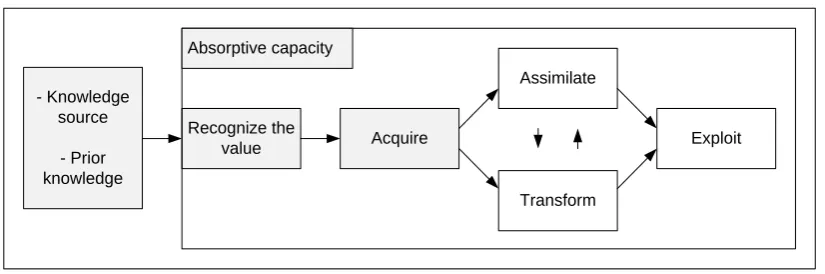
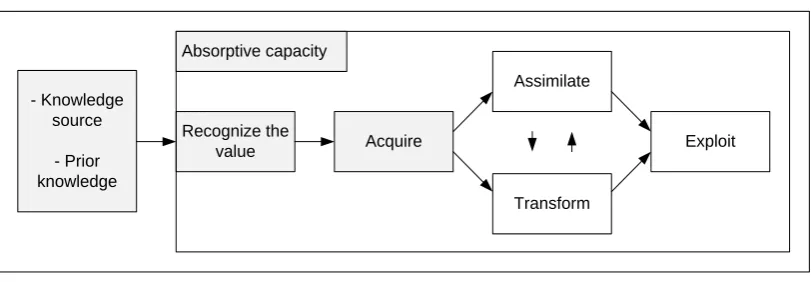
This research is based on semi-structured interviews with 16 start-up entrepreneurs in the early stage of their company. The semi-structured interview guide allows deep insights into the black-boxes and has been executed in order to better understand how start-ups “recognize the value of external information” and how they “acquire external knowledge". Business to business (B2B) start-ups were chosen as a focus due to perceived differences between the absorptive capacity and the usage of external knowledge in B2B and business to customer (B2C) start-ups (see also section 3.2). The following figure 1 shows the core components of the absorptive capacity concept: recognize the value of, acquire, assimilate, transform and exploit external knowledge. In addition, the concept states knowledge source and prior knowledge as important input factors following Todorova & Durisin (2007). Figure 1 visually illustrates the focus of this research in grey.
Figure 1: Core components of the used absorptive capacity concept and the research focus of this thesis highlighted in grey
Recognize the
value Acquire
Assimilate
Transform
Exploit - Knowledge
source
- Prior knowledge
Absorptive capacity
Figure adapted from Todorova & Durisin (2007).
The central research questions for this thesis contain these two dimensions and are:
How do B2B start-ups recognize the value from external knowledge?
How do B2B start-ups acquire external knowledge?
“recognizing the value of external knowledge” and “acquiring external knowledge”.
Figure 2: Qualitatively investigated early absorptive capacity aspects
Recognize the value of external knowledge Acquisition of external knowledge
Investigated aspects:
channels, cognitive mindset, direction, intensity, prior investment, Prior knowledge, prior relationships, routines, sources, speed, trigger. Investigated aspects:
cognitive mindset, evaluation criteria, information filter, prior knowledge, proximity, routines,
trigger, valuation.
Context: Early absorptive capacity in B2B Startups (IT-based in Berlin)
1.5 Contribution of this study
In terms of practical relevance for entrepreneurs, understanding the early phase of developing absorptive capacity in a start-up can contribute to solving entrepreneurial challenges, especially the development of an initial product that is demanded by the market. Such a fitting product is a crucial success factor for a start-up and for start-up survival under conditions of extreme uncertainty (Blank & Dorf, 2012). Moreover, insights from this research can contribute to an understanding of how start-ups learn from external knowledge and highlight which aspects (see figure 2) to pay attention to as a practitioner. For practitioners from established companies this research can also provide valuable insights for the collaboration between established companies (from prior research) and start-ups (from this research), underscoring differences in the way companies in varying stages use external knowledge. Recognizing the value of such knowledge and acquiring it from each other can strongly impact how both parties learn from each other’s external knowledge. Finally, for investors, this research can provide a framework to evaluate how a start-up learns from external knowledge. A better capability to recognize value and acquire external knowledge can be correlated with start-up performance. Accordingly, an evaluation of this capability could be used as investment criteria.
2. Theory
2.1 Introducing the entrepreneurial context
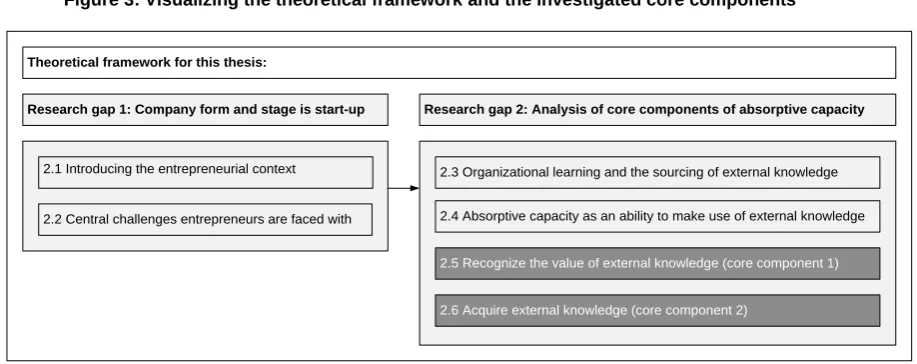
[image:12.595.54.513.355.537.2]Relevant prior literature builds strongly on scientific publications on the topics of entrepreneurship and absorptive capacity. More specific literature on both the entrepreneurial context and entrepreneurial challenges in start-ups build a foundation to address the first research gap. The second research gap is addressed by prior research on organisational learning, the sourcing of external knowledge and on absorptive capacity with its two relevant core components: recognizing the value of external knowledge and acquiring external knowledge. These topics are growing fields and further research is required. The following figure 3 provides an overview of the theoretical framework of this thesis as already explained and highlights the two analyzed core components.
Figure 3: Visualizing the theoretical framework and the investigated core components
2.2 Central challenges entrepreneurs are faced with
2.3 Organizational learning and the sourcing of external knowledge
2.4 Absorptive capacity as an ability to make use of external knowledge
2.5 Recognize the value of external knowledge (core component 1)
2.6 Acquire external knowledge (core component 2)
2.1 Introducing the entrepreneurial context
Research gap 1: Company form and stage is start-up Research gap 2: Analysis of core components of absorptive capacity Theoretical framework for this thesis:
“Absorptive Capacity, Acquire External Knowledge, Entrepreneurial Challenges,
Entrepreneurial Networks, Entrepreneurial Liabilities, External Knowledge, Lean
Startup, Knowledge Networks, Open Innovation, Organizational Learning, Recognizing The Value of External Knowledge, Prior Knowledge”.
First of all, creating an understanding for the entrepreneurial context is a necessary precondition for this research. Therefore, a clear definition of entrepreneurship itself is required. Research on a definition of entrepreneurship shows eight important patterns to consider, namely: innovation, organisation creation, creating value, (non-)profit, growth, uniqueness and the entrepreneur as owner and manager (Gartner, 1990). Looking at these aspects and on ideas from Stevenson & Jarillo's (1990) well cited paper, the following definition is suitable for this thesis: “entrepreneurship is the process of doing something new and something different for the purpose of creating wealth for the individual and
adding value to society” (Kao & Knight, 1993, p.69). Building on this foundation,
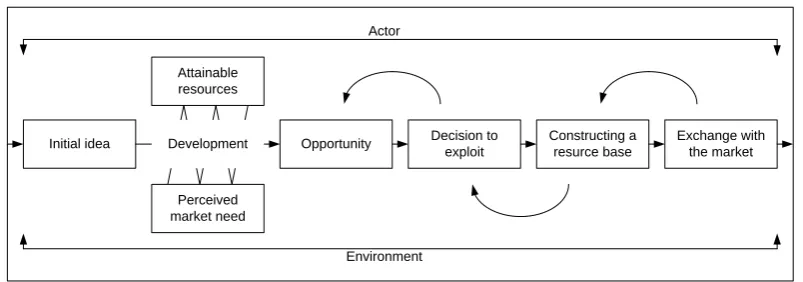
the entrepreneurial activity in the early phase, also called entrepreneurial opportunity development, can be described as a “continuous, proactive process essential to the formation of a business” (Ardichvili, Cardozo, & Ray, 2003,
(Veen & Wakkee, 2004). In figure 4 this entrepreneurial process seems to be linear, while in reality it is rather iterative and dynamic (Veen & Wakkee, 2004), which is an important advancement of the model and is represented by the arrows in figure 4. The stated continuous and iterative exchange with external knowledge illustrates an area where external knowledge is heavily acquired and therefore this field is of central importance for this thesis.
Figure 4: Illustration of the iterative entrepreneurial process
Initial idea
Perceived market need
Attainable resources
Opportunity Decision to exploit
Constructing a resurce base
Exchange with the market Actor
Environment Development
Rebuild from Veen & Wakkee (2004).
In the early phase of developing an entrepreneurial company, the discovery or the creation of an opportunity is one of the first steps in the entrepreneurial process. The discovery of an opportunity assumes there is an existing opportunity in the market, independent of the entrepreneur and his actions. Kirzner (1997) and Shane (2000) identified influencing factors of opportunity discovery. They identify prior information as an important factor and alertness as a distinguishing factor of entrepreneurs. In addition there are two ways to discover opportunities: recognition of and search for opportunities, with the latter being predominant (Shane, 2000). Possible resulting competitive advantages of opportunity discovery are said to be speed, secrecy and barriers to entry (Alvarez & Barney, 2007).
of action and reaction. Furthermore, entrepreneurial actions and decisions in opportunity discovery are described as uncertain, in contrast to risky decisions which occur in opportunity discovery (Alvarez & Barney, 2007; Shepherd, McMullen, & Jennings, 2007).
2.2 Central challenges facing entrepreneurs
The field of discovering entrepreneurial opportunities presents an example of where entrepreneurs face challenges that need to be addressed on top of the general challenges facing companies. These entrepreneurial challenges especially address the following four aspects: the reduction of extreme uncertainty, lacking resources, the initial creation of customer value, as well as gaining initial access to sources of market knowledge. Moreover, these challenges are deeply rooted in two characteristics of start-ups, namely newness and smallness (Aldrich & Auster, 1986). These challenges are going to be presented in the next paragraphs with more detail in order to allow a deeper understanding of the motivation and situation of the entrepreneurs running a start-up.
The challenge of reducing uncertainty has an integral role in the stated definition (see section 1.2) of a start-up. Uncertainty is explained by Hastie (2001, p.657), arguing that uncertainty “refers to the decision-maker’s
judgments of the propensity for each of the conditioning events to occur”.
Start-ups are described as acting in a context of extreme uncertainty and this is a challenge for entrepreneurs, repeatedly recognized in entrepreneurship literature (Elfring & Hulsink, 2003; Starr & MacMillan, 1990). As new opportunities are exploited, decisions need to be taken about opportunities where the value is not yet known or is uncertain (Alvarez & Barney, 2007). While McMullen & Shepherd (2006) name uncertainty a cornerstone for entrepreneurial theories, Alvarez & Barney (2007, p.777) explain:
“Entrepreneurial firms are organized under conditions of uncertainty, and their
primary purpose is to solve transaction difficulties associated with the inability to
Besides the explicit condition of uncertainty, ‘lacking resources’, or the lack of a variety of resources, is also challenging for entrepreneurs. As seen in the entrepreneurial process (see section 2.1), another important aspect is the construction of a resource base. The dimensions of building a resource base are explained by Bessant & Tidd (2007, p.271): “acquiring the resources and
funding necessary for implementation – including expert support and potential
partnerships”. Prior research frequently states that entrepreneurs access their
personal network and business network (Groen, 2005). To overcome this challenge of lacking resources, entrepreneurs often use social transactions instead of purely economic transactions (Starr & MacMillan, 1990), utilizing strong network ties (Leung, Zhang, Wong, & Der Foo, 2006).
The next entrepreneurial challenge addresses the initial creation of customer value and a perceived market need. But what is customer value? Here Johnson, Christensen & Kagermann (2008, p.60-62) contribute strongly to the foundation of understanding customer problems and state that customers hire products to get a job done. The authors define the term job to be done as: “to
solve an important problem or fulfill an important need for the target customer”.
The transformation of customer problems into corresponding product features is addressed by Osterwalder, Pigneur, Bernarda, & Smith (2015) in their Value Proposition Canvas. The canvas illustrates visually that a fit between both sides, the customer with its “customer jobs”, “gains” and “pains”, as well as the company, with its “product or service”, “pain relievers” and “gain creators”, is required.
high value negatively impacts the search for alternatives (Eggert & Ulaga, 2002). But for entrepreneurs there is still the question of where to get knowledge about the “customer jobs”, “gains” and “pains” (see last paragraph). Initially accessing the market to learn from the market is another important challenge that entrepreneurs face, especially with regard to specific customer jobs. In order to learn about such jobs an intense exchange with the market is required (Blank & Dorf, 2012), and prior industry experience and knowledge of the team are often beneficial. As new ventures are typically based on hypotheses about the market needs and product features (Starr & MacMillan, 1990), these hypotheses require validation from the market in order to achieve “product-market-fit”. Marc Andreesen (2007, p.2) an experienced entrepreneur and currently a manager of a venture capital firm that is amongst the biggest in the world, defined product-market-fit as “being in a good market with a product that can satisfy that market".
2.3 Organisational learning and the sourcing of external knowledge
Companies are starting to open their traditionally closed innovation activities towards the theoretical concept of open innovation. The term was coined by Chesbrough (2003) and is based on Hippel’s work on lead users (see Hippel, 1986). In this model “firms commercialize external (as well as internal) ideas by
deploying outside (as well as in-house) pathways to the market” (Chesbrough,
2003, p.36-37). Recent research states the risk of imitation that comes with opening innovation initiatives, illustrating why opening should be considered carefully (Veer, Lorenz, & Blind, 2013). Still, prior research emphasises the increasing importance of exploiting external knowledge in different forms of open innovation (Huff, Möslein, & Reichwald, 2013) and is said to have an essential influence on a company’s innovation activities (Cohen & Levinthal, 1990).
their activities and within their cultures, and adapt and develop organisational
efficiency by improving the use of the broad skills of their workforces” (Dodgson,
1993, p.377). In other words, organisational learning addresses the knowledge base of a company and how it changes with experiences occurring within the organisational context of the company (Argote & Miron-Spektor, 2011).
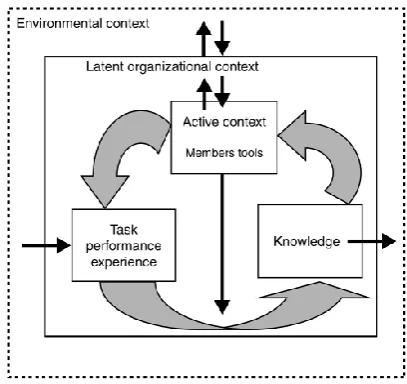
Argote & Miron-Spektor (2011) are the creators of a framework for organisational learning. This framework starts with task performance experience as the input factor, which is transformed and influenced by the context. Knowledge is the outcome. Organisational experience occurs when the organisation executes its tasks and can occur in different forms, including organisational (direct and vicarious learning), content (experience success, novelty, difficulty, task heterogeneity and task or member relatedness), spatial (geographical closeness) or temporal (frequency, pace, time point, natural event, rarity) forms (Argote & Miron-Spektor, 2011).
Figure 5: The organisational learning framework
Argote & Miron-Spektor (2011).
An ambidextrous organisation manages to exploit different forms of organisational learning. On the one hand, these organisations exploit the present opportunities and develop incremental innovation, but on the other hand, they also explore new opportunities (O’Reilly & Tushman, 2004). Furthermore, there is a difference whether the organisation learns explicit (also called codified) knowledge or tacit knowledge that is subjective, experimental, difficult to articulate (Nonaka, Toyama, & Nagata, 2000) and can be represented in routines or heuristics. Moreover, prior research suggests that in terms of the form of organisational learning, a cultural change from a performance-based to a learning-based culture may be required for successful organisational learning (Lorenz, 2014).
In the context of learning from external knowledge, the concept of absorptive capacity is highly relevant and will be discussed in the next chapter of this thesis. It argues that a company requires a basic learning capability in order to be ready to learn from external knowledge in a specific domain (Cohen & Levinthal, 1990).
2.4 Absorptive capacity as an ability to make use of external
knowledge
In today’s world, which is largely driven by knowledge-intensive businesses, the importance of understanding the underlying concepts of learning from external knowledge grows in importance. Cohen & Levinthal (1990) developed the concept of absorptive capacity to address the capability to learn from external knowledge that is new to the firm. It is defined as the ability of a firm to
“recognize the value of new information, assimilate it, and apply it to commercial
ends” (Cohen & Levinthal, 1990, p.128). Absorptive capacity aims at innovation
and performance outcomes. While absorptive capacity is a concept addressing the firm-level, it is deeply rooted in the individual member of the firm and his cognitions, motivation, actions and interactions (Volberda et al., 2010). The concept strongly builds on prior related knowledge (Cohen & Levinthal, 1990), which is formed by the organisational history and industry relevance in terms of complementarity and diversity (Cohen & Levinthal, 1990). Furthermore, Lane, Koka, & Pathak's (2006, p.856) present a definition, that allows an even deeper understanding of absorptive capacity:
“Absorptive capacity is a firm's ability to utilize externally held knowledge
through three sequential processes: (1) recognizing and understanding
potentially valuable new knowledge out-side the firm through exploratory
learning, (2) assimilating valuable new knowledge through transformative
learning, and (3) using the assimilated knowledge to create new knowledge and
commercial outputs through exploitative learning”.
tacit or implicit knowledge, which is “personal, experiential, context-specific and
hard to formalize and communicate” (Bessant & Tidd, 2007, p.188). External
knowledge can occur in different domains “such as technology, product,
processes, strategies, and markets” (Kostopoulos, Papalexandris, Papachroni,
& Ioannou, 2011, p.1336). According to a literature review, about 15% of the investigated literature argues absorptive capacity to be a firm’s resource in terms of the created knowledge base and prior knowledge, or to be both a resource and a capability. The remaining 85% argue absorptive capacity to be a capability (Lane et al., 2006). However, these studies that investigated absorptive capacity as a capability used “compensation policies, dominant logic,
knowledge sharing routines, motivation, and competencies” (Lane et al., 2006,
p.844) as measures for absorptive capacity and have not yet developed consistent measures.
Absorptive capacity is said to be a dynamic capability that aims at knowledge creation and usage, according to Zahra & George (2002). It’s directed to achieve and maintain a competitive advantage in terms of flexibility, innovation and performance, and is no longer restricted to the R&D department in an organisation. In the context of the “learning school” (Mintzberg & Lampel, 1999) a descriptive strategy that demands an experimental and adaptable mentality, Teece, Pisano, & Shuen (1997, p.516) define dynamic capabilities as “the firm's ability to integrate, build, and reconfigure internal and external competences to
address rapidly changing environments”. Dynamic capabilities thus reflect an
organisation's ability to achieve new and innovative forms of competitive advantage given path dependencies and market positions. Eisenhardt & Martin (2000) add that these processes are about acquiring new sets of resources and initiating market change as markets transform, which indicates that the company is adapting. The argument by Zahra & George is partly supported from a large body of literature that perceives absorptive capacity mainly as a capability rather than a resource (Lane et al., 2006).
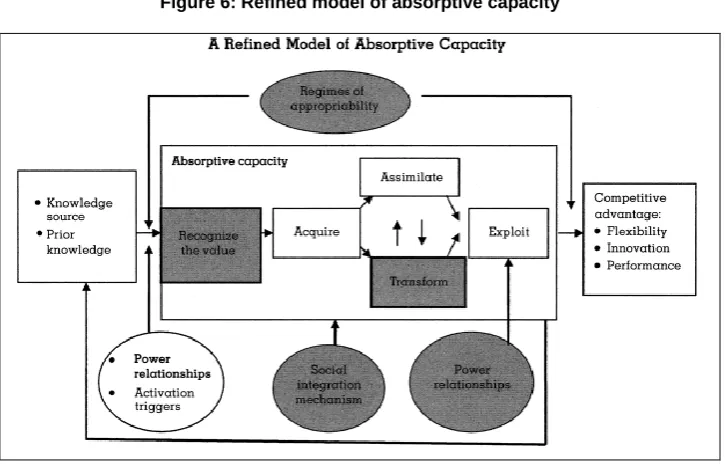
Figure 6: Refined model of absorptive capacity
Todorova & Durisin (2007).
continuous development of new products, processes, structures, knowledge or organisational structures.
Besides the core aspects, the contextual factors of absorptive capacity also require an introduction (see also figure 6). First, an important contextual aspect that influences absorptive capacity has been termed “regimes of appropriability” by Cohen & Levinthal (1990). It addresses the extent to which a firm can capture the outcome of its innovation activities and how much knowledge spills over to the public, including competitors. Furthermore, absorptive capacity is moderated by the contextual factor of activation triggers, which are events that motivate a firm to react to internal or external impulses (Zahra & George, 2002). Another contextual factor is represented by social integration mechanisms that strengthen the sharing and potential exploitation of knowledge (Zahra & George, 2002), creating connectedness and shared meanings (Todorova & Durisin, 2007). Todorova & Durisin (2007) further elaborated on the concept of absorptive capacity and established power relationships as a contextual factor that addresses the exertion of influence by powerful internal or external organisational actors in order to achieve the actors’ preferred outcome.
2.5 Recognize the value of external knowledge
Todorova & Durisin (2007, p.777) and Cohen & Levinthal (1990) emphasise the importance of the ability to recognize the value of new external knowledge, which is the first core component of absorptive capacity (see figure 7). Additionally, research on learning and innovation emphasises the “crucial role of recognizing the value of new external knowledge for the survival of firms in
dynamic environments” (Todorova & Durisin, 2007, p.777). The importance of
“recognizing the value” as a first component before the acquisition of external knowledge is further explained: “Not being able to motivate these efforts by not ‘seeing’ or ‘understanding’ the potential of new external knowledge may be
Figure 7: Illustration of recognize the value in the context of absorptive capacity
Recognize the
value Acquire
Assimilate
Transform
Exploit - Knowledge
source
- Prior knowledge
Absorptive capacity
Figure adapted from Todorova & Durisin (2007).
While a clear definition of recognizing the value is still lacking, Cohen & Levinthal (1990) state that prior related knowledge, skills and evaluation criteria are important aspects to consider. Extending the insights on core factors and contextual factors of absorptive capacity from section 2.4, the recognition of external knowledge is based heavily on the prior knowledge of the organisation and the individual within the organisation, as well as the knowledge source that enables the absorption of knowledge (Cohen & Levinthal, 1990). Following the conceptualization of Todorova & Durisin (2007), recognizing the value is biased due to cognitive and structural embeddedness, and it needs to be fostered in order to enable the absorption of external knowledge to begin.
Prior research on recognizing opportunities from Baron (for the following 2006) can be valuable in order to improve the understanding of the mechanisms behind recognizing the value of external knowledge. Given that there is a lack of explicit research on recognizing the value of external knowledge in the context of absorptive capacity, the reference to research on recognizing opportunities proves valuable here. Baron states that prior research found three central factors that influence opportunity recognition: an active search for opportunities, alertness to new opportunities, and opportunity relevant prior knowledge. Pattern recognition through connecting the dots and recognizing links between apparently unrelated insights plays an important role in recognizing opportunities.
between two actors, and thereby a mutual access to external knowledge, are identified by Boschma (2005). These proximities are cognitive, organisational, social, institutional and geographic proximity. Furthermore, Boschma (2005, p.71) argues that "too much and too little proximity are both detrimental to
learning and innovation”. In contrast Presutti, Boari & Majocchi (2011) argue in
their research on start-ups that geographical proximity is not a positive condition to gain benefits from knowledge spill-overs, while cognitive and social proximity are beneficial for external knowledge acquisition.
Furthermore, with regard to filters and barriers to the recognition of external knowledge, prior research identifies different aspects that can negatively influence this recognition. Related to prior knowledge as an input factor, Todorova & Durisin (2007) add that absorptive capacity can be hindered by an organisation’s embedded knowledge base, rigid capabilities and path-dependent managerial cognition. Henderson & Clark (1990) argue that factors like history and culture influence the outcome. They add that routines and channels become stable and thereby hard to change. The embeddedness of an organisation is also highlighted in research from Dacin, Ventresca, & Beal (1999).
The types of external knowledge sources used in open innovation activities range from a focus on individual stakeholders, for example on customers (Piller & Ihl, 2009), to a more heterogeneous set of sources of external knowledge. Cohen & Levinthal (1990) add an example of building absorptive capacity from external knowledge through a supplier that does advanced technical training for its staff. An important aspect to distinguish is, whether this learning mechanism has more of an informal or formal character (Elfring & Hulsink, 2003). Finally, the differentiation between tacit and codified knowledge (see also section 2.3) needs to be stated.
Companies use routines and methods to foster the identification and recognition of the value of external knowledge. Lewin, Massini, & Peeters (2011) gathered different examples for these routines and methods: the concept of gatekeepers, probing, mining patent literature, industry trade magazines, market research, end user surveys and informal interactions with industry actors. These authors illustrate different mechanisms or routines used by companies to identify external knowledge.
Based on a dedicated literature research on recognizing the value of external knowledge, no research that focuses on the core component of recognizing the value in start-up practice could be identified. In addition, according to Volberda et al. (2010, p.937), who refer to the initial absorptive capacity model of Cohen and Levinthal, just “few studies have broken AC down into its components and
measured elements of recognition, assimilation, and utilization separately”.
There is particularly little research about the early core components of absorptive capacity according to a bibliometric map of the field (Volberda et al., 2010), and none such research is based on the absorptive capacity model of Todorova and Durisin.
knowledge, and most of it is derived from the background and experiences of the founding team. A disadvantage that small firms are facing is that they “might not have the same means and opportunities to exploit external knowledge,
simply because they cannot risk betting on the wrong horse” (Schmidt, 2010,
p.6).
With regard to the knowledge sources start-ups use to recognize external knowledge, prior research emphasises entrepreneurial networks. In theory, as well as in practice, the importance of entrepreneurial networks is highlighted as a success criterion for founders that has a positive impact on the identification and evaluation of external knowledge (Elfring & Hulsink, 2003; Lechner & Dowling, 2003).
For start-ups, the contextual factor of regimes of appropriability is strongly linked with the term “copycat”. This term requires an introduction as it can influence the reasoning of entrepreneurs. So-called copycat companies are replicating initially successful businesses, either in a different or the same market, with typically little innovation at the beginning (Shenkar & Green, 2010). This behaviour is one reason companies typically use appropriability regimes for reputation, external negotiations, licences, financial sector and internally as incentives for R&D personnel and as performance indicators (Blind, Edler, Frietsch, & Schmoch, 2006). As such, start-ups can’t fully benefit from their innovation efforts with emerging copycats in their domain, illustrating the negative impact of the knowledge spill-overs to copycats. But imitational learning and continuous innovation can be a domain, where entrepreneurs can learn from copycats in emerging economies (Luo, Sun, & Wang, 2011).
might influence the cognitive mindset (see appropriability regimes), as well as the evaluation of recognizing the value of external knowledge (see theory of Cohen and Levinthal and prior knowledge). A visual overview is provided at the end of section 2.6.
2.6 Acquire external knowledge
Besides recognizing the value of external knowledge the second core component of this research addresses how external knowledge is acquired. Zahra & George (2002, p.189) state that acquisition “refers to a firm's capability to identify and acquire externally generated knowledge that is critical to its
operations”. Huber (1991, p.90) adds that knowledge acquisition is “the process
by which knowledge is obtained”. Furthermore, Zahra & George (2002) argue
that effort in knowledge acquisition routines has different influential aspects: intensity, speed, direction, prior knowledge and prior investment. While speed and intensity are said to be a driver of quality, direction can influence the path in which the organisation goes, and accordingly, where it is acquiring external knowledge (Zahra & George, 2002).
Acquiring knowledge can take place in different forms. According to prior research, five typical forms are: congenital, experimental, vicarious learning, grafting and searching (Huber, 1991). While congenital learning is present at inception through individuals and their prior knowledge, experimental learning refers to experience of the organisation and vicarious learning to benchmarking from other organisations (Huber, 1991). Moreover, searching occurs as scanning, focused search or performance monitoring. Grafting is a form of acquiring an organisation or developing a joint venture (Huber, 1991).
(2010) emphasises that research into the different types of knowledge to be acquired is a particularly important aspect.
In the start-up context, the Lean Startup literature and mindset can influence the acquisition of external knowledge. For example, customer interviews are frequently stated as a source with which to acquire external knowledge. In the context of Lean Startup and customer development, Blank & Dorf (2012) promote the idea of “get[ting] out of the building” in order to push entrepreneurs to get feedback, learn from the market and understand real customer problems. In start-ups, knowledge acquisition often represents iterative learning in combination with the use of prototypes to communicate to-be-built features and products (Ries, 2011). A side benefit is that such external knowledge sourcing contributes to an entrepreneurial network. Lead users can be attracted and be used for the co-development of the start-up’s product with customer interviews as a means of acquiring external knowledge (Ries, 2011). In contrast to the idea of “getting out of the building”, the so-called “stealth mode paradigm” should be also stated. It aims “to avoid alerting potential competitors to a market
opportunity” (Blank, 2013, p.6).
Moreover, the method of external knowledge acquisition is a crucial factor. In this context Kang & Kang (2009) state that technology innovation performance depends on the sourcing method used for external knowledge and distinguish: informal networks, R&D collaboration and technology acquisition. Furthermore, Grimpe & Kaiser (2010) argue for the consideration of internal, external, collaborative R&D, firm acquisitions and the in-licencing of technology as knowledge acquisition methods. In terms of accessing sources, Grimpe & Kaiser (2010) add that offshore locations give access to more diverse knowledge, which in turn can improve the resources of a company.
stakeholders. In light of open innovation, Lewin et al. (2011) state the following forms: the use of lead users, accessing suppliers, developing R&D alliances, co-development relationships, applying open source approaches, unfiltered input from customers, networking with research partners and initiatives in standard setting. In addition, the acquisition of a company (see also vicarious learning by Huber in section 2.6) can be another form of external knowledge sourcing besides the collaboration with external knowledge sources (Carayannopoulos & Auster, 2010).
In terms of the acquisition of resources that start-ups do not possess internally, start-up firms are required to develop social networks in order to stay competitive (Huggins et al., 2010). These path dependent social networks, which start-ups are typically exploiting when they emerge, develop with the growth of a start-up, as it moves towards calculative networks that consider costs and benefits of maintaining a network (Hite & Hesterly, 2001). Over time these networks also develop modes of exploitating structural holes and are exploited more intentionally instead of through path-dependencies (Hite & Hesterly, 2001). Furthermore, Yli-Renko, Autio, & Sapienza (2001, p.607) add that “social interaction and network ties are positively related to knowledge acquisition, but that relationship quality is negatively related to knowledge
acquisition”.
Finally, there are different influencing factors for the capability to acquire external knowledge for start-ups. The prior knowledge (Zahra & George, 2002) of the founders and the start-up team is of a crucial role. Mechanisms that facilitate the acquisition of external knowledge in the case of start-ups are said to be mobility, geographic co-location and alliances. The first two factors are attenuating with an increasing organisational size (Almeida, Dokko, & Rosenkopf, 2003).
prior knowledge (see Zahra & George) and prior relationships (see e.g. Huggins), the cognitive mindset (see e.g. Blank & Dorf about the mindset shared in Lean Startup), as well as triggers and routines, influence the acquisition of external knowledge. In order to analyze the black box of the two core elements of recognizing the value of external knowledge and acquiring the external knowledge, the following factors in figure 8 have been used to gain insights from the interviewees using the interview guide (see Appendix C, D):
Figure 8: Qualitatively investigated early absorptive capacity aspects
Recognize the value of external knowledge Acquisition of external knowledge
Investigated aspects:
channels, cognitive mindset, direction, intensity, prior investment, Prior knowledge, prior relationships, routines, sources, speed, trigger. Investigated aspects:
cognitive mindset, evaluation criteria, information filter, prior knowledge, proximity, routines,
trigger, valuation.
3. Method
3.1 Research design
This study has a qualitative character, answering mainly how-research questions using a semi-structured interview guide. This setting allows interviewees to describe the subject and their opinions using their own words. Interviewees talk about situations or events that allow a deep understanding of the context. At the same time, this design does not restrict interviewees with a theoretical frame and allows unprejudiced insights into the black-box of the analysis of the early phases of absorptive capacity. The insights address - a component of start-ups insufficiently researched - early aspects of absorptive capacity: recognizing the value of external knowledge and acquiring external knowledge.
The study is exploratory (Boeije, 2010), and no hypotheses are developed as the research aims to be exploratory and to draw from qualitative research that uses semi-structured interviews to disclose a theory from interviewees’ insights. This semi-structured approach allows the interviewees to respond with ideas that come to their mind more freely and doesn’t force them to follow a fully structured survey, with the benefit of deeper insights.
The interviewed founders representing their start-ups are the analyzed unit. Choosing this analyzed unit is important as the recognition of the value and the acquisition of external knowledge is typically done by individuals. More concretely, in an early stage start-up this recognition is done typically by founders. In later phases of absorptive capacity (assimilation, transformation etc.) knowledge is shared within the organisation.
relevant start-ups has been used in order to derive relevant information from interviewees, but at the same time use a repeatable and reproducible method.
3.2 Interviewee selection
In order to gain deep and relevant insights, the following selection criteria have been applied, and subsequently, relevant start-ups have been identified. Selection criteria that apply to the choice of start-ups refer to the organisation as well as to the participating interviewees as follows. Different aspects to distinguish start-ups from other companies have been collected by Brettel, Faaß, Heinemann (2007): the liability of newness, of smallness, of growth, of dependence on founders and of innovativeness. Therefore, all the interviewed start-ups had to be newly founded businesses (max 5 years) with a team size of less than 50 people aiming at growth (scalable offers, no consulting and no agencies) and with an innovative product. The start-up had to be run by at least one of its founders at the point in time of start-up selection (June-July 2014). Besides the age of the enterprises, they were also required to be an independent organisation that makes most decisions on its own. As such, spin-offs are excluded from this study. This criteria also fits the condition of extreme uncertainty from the initial stated definition of a start-up (Blank & Dorf, 2012; Dushnitsky & Lenox, 2005).
significant amount of start-ups that could participate in in person-interviews (14 out of 16 relevant interviews). E-Commerce start-ups that could be seen as ICT start-ups were only included if their value creation incorporated an innovative product or service and addressed business customers (see section 3.2 on distinguishing factors of start-ups).
In order to systematically identify the start-ups, the most complete lists of Berlin-based ups the author could find (Thomas, 2014) were analyzed for start-ups meeting the aforementioned criteria. Applying the criteria of this section to the list resulted in 89 relevant start-ups out of 855 start-ups in the list.
Furthermore, the preconditions for the interviewees have been that they had to have spent a minimum of one year with the for-profit business. The choice of interviewee within the company has been directed towards founders, with a focus on market aspects and customer needs on the one side, and a focus on technology issues on the other side (Abernathy & Clark, 1985). Both roles are typical early roles in a start-up, especially in the ICT sector (see section 3.5 on interviewee characteristics).
the characteristics of the interviewees and their start-ups can be found in section 3.5.
3.3 Data collection
In order to collect the data from the interviewees a semi-structured interview guideline (Bogner, Littig, & Menz, 2009; Gläser, 2009; Mayer, 2013) was developed. The guideline was pretested (Atteslander, 2003) first with two theoretical experts in June, and then, with two entrepreneurs that did not fit to the criteria in July. Insights from these four tests have been used iteratively to clarify the interview guide, change different questions, adapt the order, reduce questions and raise awareness of challenges in using the absorptive capacity concept for start-ups. This tested semi-structured interview guideline enabled the interviewees to answer freely, but directed them towards the topics of this research in order to collect relevant and exhaustive insights. The developed guideline (see appendix C and D in German) starts with insights into knowledge sourcing in general. These questions were followed by more targeted questions addressing the recognition and acquisition of external knowledge in their start-up organisation. The guidelines ends with questions for reflection and conclusion (see appendix C).
individual analysis of their activities after the finalization of this thesis. Details about the interview situation can be found in section 3.5 about the participants in the interviews. While doing the first interviews, the interviewer gained the sensitivity to dig deeper at new and unclear statements of the interviewees. Additional sources for data collection are used in order to strengthen consistency by triangulation (Boeije, 2010). Documentation includes notes from the founders, company documents, the website, product descriptions and in rare cases, strategy documents that were provided. Additionally, the author gained practical insights into the domain as a working student in business development at a B2B start-up in ICT from Berlin (company D) for six months, before the development of the research design.
3.4 Data analysis
In preparation for the data analysis, the taped interviews with an average duration of 59 minutes were transcribed in their original language and coded in English, using Atlas.ti a professional software for qualitative analysis (Atteslander, 2003). For the findings of this thesis, relevant English and German citations were used. Relevant German citations were translated into English and marked as translated. During transcription, the interviews were also anonymized, and pseudonyms were used for the interviewees. This step was beneficial in reducing researcher bias during the further analysis.
For the data analysis, the 16 interview transcripts were searched and compared for patterns and relationships. Based on this analysis and theoretical sensitivity, a coding structure in the context of this research question was developed by the author (Boeije, 2010; Strauss, 1987; Glaser & Strauss, 1967). The analysis is based on grounded theory and is code-based, which means it is oriented towards the occurring themes and categories.
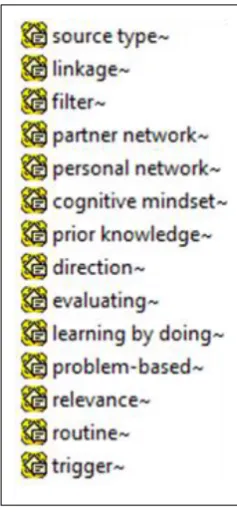
Axial coding addressed the merging, recombination, splitting of codes to identify their shared meaning and similarities, and the formation of categories (called families in Atlas.ti), which resulted in a two-level coding structure. These categories can be found in figure 8 and represent salient and central themes in the findings. Memos have been used to note relationships, new thoughts and conflicts in the data.
Figure 9: Final coding categories that represent recurring patterns (Atlas.ti)
In selective coding the identified categories, the theoretical sensitivity and identified relationships were used as a foundation to develop a conceptual model that forms the agenda of the findings (see section 4.1 figure 10). This model provides a structure that addresses the research question and gives an idea of the relationships between the identified categories from the data.
3.5 Start-up, interviewee and interview characteristics
Besides the stated interviewee selection criteria and the start-up selection criteria, this section gives an overview of further characteristics of the interviewed start-ups.
Education, Entertainment, Fashion, Finance, Health, Journalism, Market research, Psychology, Retail, Tourism. Additionally, eight start-ups addressed purely B2B markets, while eight start-ups acted in a B2B and B2C market. All the start-ups in this sample had their headquarters in Berlin, while two start-ups had a further location in San Francisco, one in Paderborn and one used sales partners in Austria and Switzerland. Furthermore, one start-up, start-up D, was motivated to participate with even two interviewees.
The participating interviewees represented members of the start-up that have been described and perceived as co-founders. There were 11 interviewees with the role of a chief executive officer (CEO), two chief marketing officers (CMO) and three chief technical officers (CTO). For nine of the interviewed entrepreneurs it was their first venture, while seven entrepreneurs had been active in an entrepreneurial way before. It is necessary to point out that all the interviewees were male. The potential interview partners were not solely directed to male interviewees, but it is a recurring pattern in the start-up scene, and in the Berlin start-up scene specifically, that the share of female founders is significantly smaller than the amount of male founders.
stick to the criteria of interviewee choice the conducted interview was not used for the analysis. For the purpose of transparency and verifiability the interview is stated here, but has been excluded in the analysis. Start-up D was convinced to participate with the CEO (#4) as well as the CTO (#8), which enabled the interviewer to get a feeling for some initial differences between the roles of the interviewee (see also conclusion).
Table 1: Overview of interviewees and their context
# Company
Second
industry Role
Target market
[image:39.595.54.484.232.520.2]Further locations
Figure has been removed due to confidentiality.
4. Findings
4.1 The external knowledge sources
The following central buildings blocks give an overview of the patterns emphasised by the interviewees in the context of the core components of recognizing the value of and acquiring from external knowledge. In contrast to figure 8 from theory, which was used as a foundation for the interview guide, not all aspects were stated repeatedly by the interviewees and some had overlapping or sub-components.
[image:40.595.78.458.495.742.2]The findings show the external knowledge source, the influencing factors and the connection to the organisation as factors that address both dimensions: the recognition and the acquisition of external knowledge. Besides, the data shows central themes for the recognition of the value and acquisition of external knowledge: triggers, direction and evaluation. Interviewees talked extensively about these aspects and the researcher tried to analyse them individually for both investigated dimensions of absorptive capacity. Finally, the factor of routines has been in the focus of the interviewees’ statements and has been analyzed for both dimensions together, as a differentiated investigation has not been possible due to overlap in the practice of entrepreneurs. A summary and overview of the findings for recognizing the value of and for acquiring external knowledge can be found in the following figure 10.
Figure 10: Illustration of interviewees’ central themes for recognizing and acquiring external knowledge
4.7 The routines with external knowledge
4.4 The triggers to act and
react 4.5 The direction 4.6 The evaluation Findings and description of recognize value and acquire aspects individually
Findings and description of recognize value and acquire aspects together
Overview of stated aspects by the interviewees
4.1 The external knowledge
sources 4.2 The influencing factors
First of all, the interviewees expressed their thoughts on a wide range of sources used, and secondly, talked about different types of sources used. The questionnaire asked interviewees for a set of sources and types on the one hand, and on the other hand, the entrepreneurs came up with even more sources.
The following sources have been stated repeatedly (in declining order, while * means not explicitly asked for): customers, personal network, events, market*, regulation, inter-industry, intra-industry, vicarious learning, suppliers, competitors, market research, scientific knowledge, employee grafting, advisors, internet, investors, databases, grafting, similar entrepreneurs*, previously used sources*, acquisition grafting and similar companies*. This list of sources illustrates the wide range of used sources of external knowledge. Some of these sources can be seen as categories that are linked or include other sources, and this can result in an overlap of the sources. This overlap is especially prevalent around market related sources, entrepreneurial experience and one’s personal network.
Even more the interviewees highlighted the importance of using different sources in order to combine them with their knowledge and make better decisions. Interviewees especially emphasised that using multiple contexts of sources is required for solving different problems. Interviewee 4 stated on this point:
Citations have been removed due to confidentiality.
is demanded by customers. Some start-ups referred to the lean start-up principles while discussing this point. On the other hand, these customers bring valuable networks to even more customers. Economically speaking, these customers ensure the survival of the company. One start-up stated:
Several entrepreneurs even stated the market or the customer as the most important source that they use and require for economic success. These entrepreneurs emphasised the importance of combining the knowledge from the market with the product of the start-up. At the same time, technically oriented interviewees emphasised the external knowledge from the market in terms of using up-to-date technologies:
One discussed aspect is the question of the right amount of sources a start-up should have. In general, a higher number and heterogeneous sources are stated as better, as such sources allow one to deal with different external knowledge. Furthermore, finding the right external sources was stated as a central aspect in this discussion. Since maintaining contact with sources typically costs time and money for the start-up, finding the right external sources is even more important. Therefore, the benefit of the individual source needs to be evaluated for its relevance, quality and value. And, the start-up should focus on a limited number of sources. One interviewee even stated that there is a danger of overloading the start-up with external knowledge:
Despite the different sources, the entrepreneurs also talked about categories or types of sources that they access to learn from external knowledge. These three pairs of external knowledge types were addressed and sorted by importance: problem based and general knowledge, codified and tacit knowledge and thirdly, formal and informal knowledge exchange.
The analysis of codified and tacit forms of knowledge showed that entrepreneurs heavily distinguish between both of these types of knowledge sources. Codified knowledge was characterized as less relevant by the interviewees and is seen as a basic foundation, but is more easily verifiable. One entrepreneur even stated that codified external knowledge is not relevant as it can be accessed by anybody, meaning one cannot get an advantage over the competition. Tacit knowledge brings relevant insights which are sometimes hard to access and can be more relevant to a specific situation. For example Interviewee 7 stated:
4.2 The influencing factors
The analysis showed two relevant influencing factors that, as of now, have only been partly included in the concept of absorptive capacity, yet they are important for the way B2B start-ups learn. First of all, the entrepreneur’s prior knowledge, formed through experience and education, was mentioned as an important factor that has already been included in the absorptive capacity concept. However, the entrepreneurs emphasised a personality trait of critical reflection and their cognitive mindset, especially with regards to openness to external knowledge. The following two paragraphs focus on these two factors. The analysis of learning from external knowledge in the selected start-up group showed prior knowledge as an important factor that influences all the investigated parts of the organisational absorptive capacity. The interviewees differentiated clearly between prior education and prior experience, stating that this prior knowledge is also beneficial for the selection of the source of external knowledge. Interviewee 7 added:
There were only a few people who talked about prior education when talking about their own prior knowledge. Moreover, prior education was not perceived as a main driver of their success. Still, two interviewees highlighted that their prior education helped them to reflect on external knowledge more and to critically question new insights from external sources. Interviewee 2 explains his thoughts on prior education as follows:
employee often in the same industry. Prior experience was described as valuable, and the interviewees based their evaluation of external knowledge and their decisions on prior experience. Interviewee 17 highlights the impact of his prior experience on business:
The analysis of the transcripts also uncovered that the entrepreneur’s own cognitive mindset is an important pattern in the data. The entrepreneurs stated an open mindset as an important aspect in the context of learning from external knowledge. Moreover, they emphasised the importance of reflecting their own situation and their mindset towards external knowledge critically.
Interviewees claimed the importance of maintaining an open mindset towards – especially new – external knowledge, and stated that start-ups typically have a more open mindset compared to other companies. For example, one entrepreneur stated that from his experience it’s a lot more valuable to collaborate with a start-up than with an established company due to the open mindset on both sides. Aspects like path dependency, prior experience and high expectations towards qualified sources were stated as drivers to lower the openness of entrepreneurs. The less open a mindset is, the harder it is to get external knowledge. An entrepreneur described the mindset in his start-up:
In this context entrepreneurs emphasised that one needs to know what one knows and what one does not know. It’s necessary, however, to know what one should know, and one needs to know where to find this required knowledge. Furthermore, entrepreneurs stated that knowing one way to solve a problem can stop one from paying attention to another, perhaps contrary, way. Finally, the willingness to admit one needs knowledge is required, as well as having the cognitive awareness of a lack of knowledge. Interviewee 17 explains his view:
4.3 The connection / the access to external knowledge
A recurring pattern identified in the analysis has been entrepreneurs talking about the access, linkage or connection to external knowledge. In accordance with prior findings about informal knowledge the own network has been stated as a main driver of connectivity to external knowledge. At the same time it’s said that sometimes it’s difficult to access the market as there are established processes and relationships. Overall entrepreneurs stated their personal network and their partner network as a way to increase their access while entrepreneurs also talked about filters that restrict access to external knowledge.