Stress and coping : A study of elite sports coaches.
OLUSOGA, Peter F.
Available from Sheffield Hallam University Research Archive (SHURA) at:
http://shura.shu.ac.uk/20773/
This document is the author deposited version. You are advised to consult the
publisher's version if you wish to cite from it.
Published version
OLUSOGA, Peter F. (2011). Stress and coping : A study of elite sports coaches.
Doctoral, Sheffield Hallam University (United Kingdom)..
Copyright and re-use policy
See
http://shura.shu.ac.uk/information.html
Stress & Coping: A Study of Elite Sports Coaches
Peter Olusoga
A thesis submitted in partial fulfilment of the requirements of Sheffield Hallam University
for the degree of Doctor of Philosophy
ProQuest Number: 10702875
All rights reserved INFORMATION TO ALL USERS
The quality of this reproduction is dependent upon the quality of the copy submitted. In the unlikely event that the author did not send a com plete manuscript and there are missing pages, these will be noted. Also, if material had to be removed,
a note will indicate the deletion.
uest
ProQuest 10702875
Published by ProQuest LLC(2017). Copyright of the Dissertation is held by the Author.
All rights reserved.
This work is protected against unauthorized copying under Title 17, United States C ode Microform Edition © ProQuest LLC.
ProQuest LLC.
789 East Eisenhower Parkway P.O. Box 1346
Abstract
A cknowledgments
There are several people without whom I could not have completed this thesis,
and I would like to take this opportunity to thank each o f them for their valued
contributions. My thanks are extended to my Director o f Studies, Prof Ian Maynard
whose expertise and guidance always helped to keep the project on track, and whose
ability to spot typos is second to none. I would like to thank Dr. Joanne Butt, whose
guidance, support, and friendship have played a considerable part in my development
as researcher and writer, and I would also like to give my thanks to Dr. Kate Hays for
her invaluable support, feedback, and encouragement throughout the process.
While the guidance I have received from colleagues along the way has been vital,
I would not be where I am today without the support o f my family. Thank you Mum, for
your unflinching love and support. I really don’t know how you managed it, but getting
me from St. Cuthbert's Village to a PhD is nothing but remarkable. I'd also like to
thank my aunt, Verna Kilburn, who was instrumental in encouraging me to return to
academia, as well as each and every one o f my fantastic siblings for always looking
after me. I'd also like to mention Mia, Lucas, Isaac, and Fen, who were born while I
was writing this, and who never failed to make me smile.
I've also had the support o f a fantastic group offriends who I must thankfor
their help. In particular, thanks to all those with whom I have shared an office at
Sheffield Hallam for allowing me to vent (Gemma, and various Andrews), Liam for
mostly attempting to keep me sane... mostly, and basically all the other friends who I
have laughed with over the last five years.
Finally, Alice, thank you for everything, for supporting me, for putting up with
Table of Contents
Abstract .. .. .. .. .. .. .. .. .. iii Acknowledgements .. .. .. .. .. .. .. .. iv Table of Contents .. .. .. .. .. .. .. .. v List of Figures .. .. .. .. .. .. .. .. xi List of Tables .. .. .. .. .. .. .. .. xii List of Appendices .. .. .. .. .. .. .. .. xiii Peer Reviewed Work Related to the Thesis .. .. .. .. xv
Chapter I: Introduction .. .. .. .. .. .. .. 2
1.1 Stress in Sport .. .. .. .. .. .. .. .. 2
1.2 Purpose of the Thesis .. .. .. .. .. .. .. 5
1.3 Structure of the Thesis .. .. .. .. .. .. .. 7
1.3.1 Chapter II (Review of literature) .. .. .. .. 9
1.3.2 Chapter III (Study 1) .. .. .. .. .. .. 9
1.3.3 Chapter IV (Study 2) .. .. .. .. .. .. 9
1.3.4 Chapter V (Study 3) .. .. .. .. .. .. 10
1.3.5 Chapter VI (Study 4) .. .. .. .. .. .. 11
1.3.6 Chapter VII (Summary, discussion and conclusion) .. .. 11
1.4 A Note on Study Methods .. .. .. .. .. .. 11
Chapter II: Review of Literature .. .. .. .. .. .. 14
2.1 Introduction .. .. .. .. .. .. .. .. 14
2.2 Definitional and Conceptual Issues .. .. .. .. .. 15
2.2.1 Stimulus definitions of stress .. .. .. .. .. 16
2.2.2 Response based definitions .. .. .. .. .. 18
2.2.2.1 Criticisms of stimulus and response definitions .. 19
2.2.3 Individual differences .. .. .. .. .. .. 20
2.2.4 Stress as an interaction .. .. .. .. .. .. 21
2.2.5 A transactional theory of stress .. .. .. .. .. 22
2.2.5.1 Primary and secondary appraisal .. .. .. 23
2.2.5.2 Coping... 24
2.2.5.3 Coping dimensions .. .. .. .. .. 25
2.2.6 A meta-model of stress, emotions, and performance .. .. 27
2.2.7 Summary .. .. .. .. .. .. .. 30
2.3 Occupational Stress .. .. .. .. .. .. .. 32
2.3.1 Identifying and classifying work stressors .. .. .. 33
2.3.2 Identifying and classifying work strain .. .. .. .. 37
2.4 Stress in Sport .. .. .. .. .. .. .. .. 40
2.4.1 Organisational stress .. .. .. .. .. .. 42
2.4.2 "Coaches are performers too" .. .. .. .. .. 47
2.5. Coaching Stress Research .. .. .. .. .. .. 48
2.5.1 Coaching stressors .. .. .. .. .. .. 48
2.5.1.1 Issues in coaching stress research .. .. .. 50
2.5.2 Responses and effects of coaching stressors .. .. .. 53
2.5.3 Coping with stressors .. .. .. .. .. .. 55
2.6 Summary and Aims of the Thesis.. .. .. .. .. .. 58
Chapter III: Study 1. Stress in Elite Sports Coaching: Identifying Stressors 62
3.1 Introduction .. .. .. .. .. .. .. •• 62
3.2 Study Aims ... 67
3.3 Method .. .. .. .. .. .. .. .. •• 67
3.3.1 Participants .. .. .. .. .. .. .. 67
3.3.2 Procedure .. .. .. .. .. .. .. 68
3.3.3 Interview guide .. .. .. .. .. .. .. 69
3.3.4 Data analysis .. .. .. .. .. .. .. 69
3.4 Results .. .. .. .. .. .. .. .. .. 71
3.4.1 Conflict .. .. .. .. .. .. .. .. 71
3.4.1.1 Management cohesion .. .. .. .. 71
3.4.1.2 Interference .. .. .. .. .. .. 75
3.4.1.3 Forced collaborations.. .. .. .. .. 75
3.4.2 Pressure and expectation .. .. .. .. .. 76
3.4.2.1 Self-imposed pressure.. .. .. .. .. 76
3.4.2.2 Outcome pressures .. .. .. .. .. 76
3.4.3 Managing the competitive environment .. .. .. 76
3.4.3.1 Unforeseen events .. .. .. .. .. 77
3.4.3.2 Managing time at competition .. .. .. 77
3.4.4 Athlete concerns.. .. .. .. .. .. .. 77
3.4.4.1 Professionalism .. .. .. .. .. 77
3.4.4.2 Commitment .. .. .. .. .. .. 78
3.4.4.3 Performing to potential .. .. .. .. 78
3.4.5 Coaching responsibilities to athletes .. .. .. .. 78
3.4.5.1 Meeting athletes'training needs .. .. .. 79
3.4.5.2 Managing athletes psychologically .. .. .. 79
3.4.6 Consequences of the sport's status .. .. .. .. 80
3.4.6.1 Budget concems/amateur status .. .. .. 80
3.4.6.2 Recognition .. .. .. .. .. .. 80
3.4.7 Competition preparation .. .. .. .. .. 80
3.4.7.1 Demands of maintaining elite standards .. .. 81
3.4.7.2 Preparation for major events .. .. .. .. 81
3.4.8 Organisational management .. .. .. .. .. 81
3.4.9 Sacrificing personal time .. .. .. .. .. 82
3.4.10 Isolation .. .. .. .. .. .. .. 82
3.5 Discussion.. .. .. .. .. .. .. .. •• 83
3.5.1 Strengths and limitations .. .. .. .. .. 88
3.6 Conclusions .. .. .. .. .. .. .. •• 89
Chapter IV: Study 2: Stress & Coping: Exploring Responses and Effects
of Stress, and Coping Strategies of Elite Coaches.. .. .. .. 91
4.1 Introduction .. .. .. .. .. .. .. .. 91
4.2 Study Aims .. .. .. .. .. .. .. .. 94
4.3 Method .. .. .. .. .. .. .. .. .. 95
4.3.1 Participants .. .. .. .. .. .. .. 95
4.3.2 Procedure .. .. .. .. .. .. .. 96
4.3.3 Interview guide .. .. .. .. .. .. .. 97
4.3.4 Data analysis .. .. .. .. .. .. .. 97
4.4 Results .. .. .. .. .. .. .. .. •• 98
4.4.1 Responses & effects of stress .. .. .. .. .. 98
4.4.1.1 Psychological responses .. .. .. .. 102
4.4.1.1.1 Negative cognitions.. .. .. .. 102
4.4.1.1.2 Emotional responses .. .. .. 102
4.4.1.1.3 Confidence .. .. .. .. .. 103
4.4.1.2 Behavioural responses .. .. .. .. 103
4.4.1.3 Physical responses .. .. .. .. .. 103
4.4.1.4 Negative effects on the coach.. .. .. .. 104
4.4.1.4.1 Negative Affect .. .. .. .. 104
4.4.1.4.2 Decreased motivation .. .. .. 104
4.4.1.4.3 Relationships with others .. .. .. 104
4.4.1.4.4 Withdrawal .. .. .. .. .. 105
4.4.1.5 Effects on Athletes .. .. .. .. .. 105
4.4.1.5.1 Behaviour towards athletes .. .. .. 105
4.4.1.5.2 Effects on athletes .. .. .. .. 106
4.4.1.6 Positive effects .. .. .. .. •• 106
4.4.1.6.1 Increased focus .. .. .. .. 106
4.4.1.6.2 Determination .. .. .. .. 106
4.4.1.6.3 Productivity.. .. .. .. .. 106
4.4.2 Coping with stress .. .. .. .. .. •• 107
4.4.2.1 Structuring and planning .. .. .. .. 107
4.4.2.1.1 Planning .. .. .. .. .. 107
4.4.2.1.2 Communication .. .. .. .. 108
4.4.2.1.3 Time management. .. .. .. .. 108
4.4.2.1.4 Scheduled time off .. .. .. .. 112
4.3.2.2 Psychological skills .. .. .. .. .. 112
4.4.2.2.1 Rationalisation .. .. .. .. 112
4.4.2.2.2 Self talk ... 112
4.4.2.2.3 Proactive behaviours .. .. .. 113
4.4.2.2.4 Relaxation .. .. .. .. .. 113
4.4.2.3 Support .. .. .. .. •• •• 113
4.4.2.3.1 Work related support .. .. .. 113
4.4.2.3.2 Advice from others .. .. .. .. 114
4.4.2.3.3 Social support .. .. .. .. 114
4.4.2.4 Distraction .. .. .. .. .. .. 114
4.4.2.4.1 Off task activities .. .. .. .. 114
4.4.2.4.2 Exercise .. .. .. .. .. 115
4.4.2.5 Experience and learning .. .. .. .. 115
4.4.2.5.1 Continued professional development .. 115
4.4.2.5.2 Experience as an athlete .. .. .. 116
4.4.2.5.3 Experience as a coach .. .. .. 116
4.4.2.6 Approach to coaching.. .. .. .. .. 116
4.4.2.6.1 Taking a step back .. .. .. .. 116
4.4.2.6.2 Flexibility .. .. .. .. .. 117
4.4.2.6.3 Consistency .. .. .. .. .. 117
4.4.2.7 Maintaining positive coach athlete relationships .. 117
4.4.2.8 Avoidance .. .. .. .. .. .. 117
4.4.3.9 Confrontation .. .. .. .. .. •• 118
4.5. Discussion .. .. .. .. .. •• •• *• 118
4.5.1 Strengths and limitations .. .. .. .. .. 125
4.6 Conclusions .. .. .. .. .. •• •• •• 126
Chapter V: Study 3: Coaching under pressure: A study of Olympic coaches 128
5.1 Introduction .. .. .. .. .. .. •• •• 128
5.1.1 Coaches'coping strategies and use of psychological skills .. 129
5.1.2 Factors associated with elite performance .. .. .. 132
5.2 Study Aims .. .. .. .. .. .. •• .. 134
5.3 M e t h o d ... 135
5.3.1 Participants .. .. .. .. .. .. .. 135
5.3.2 Procedure .. .. .. .. .. .. .. 135
5.3.3 Interview guide .. .. .. .. .. .. .. 136
5.3.4 Data Analysis .. .. .. .. .. .. .. 137
5.4 Results .. .. .. .. .. .. •• •• •• 138
5.4.1 Successful performance on the Olympic stage .. .. .. 138
5.4.1.1 Psychological attributes .. .. .. .. 138
5.4.1.1.1 Emotional control .. .. .. .. 141
5.4.1.1.2 Perception .. .. .. .. .. 141
5.4.1.1.3 Confidence .. .. .. .. .. 141
5.4.1.1.4 Athlete focus .. .. .. .. 142
5.4.1.1.5 Communication .. .. .. .. 142
5.4.1.1.6 Focus .. .. .. .. .. 142
5.4.1.1.7 Passion .. .. .. .. .. 143
5.4.1.1.8 Support .. .. .. .. .. 143
5.4.1.1.9 Commitment .. .. .. .. 143
5.4.1.1.10 Consistency .. .. .. .. 144
5.4.1.1.11 Fun... 144
5.4.1.2 Preparation .. .. .. .. .. .. 144
5.4.1.2.1 Strategic approach .. .. .. .. 144
5.4.1.2.2 Lifestyle choices .. .. .. .. 145
5.4.1.2.3 Previous experience.. .. .. .. 145
5.4.1.2.4 Contingency planning .. .. .. 145
5.4.1.2.5 Team preparation .. .. .. .. 146
5.4.1.2.6 Athlete preparation .. .. .. .. 146
5.4.1.3 Coping at the event .. .. .. .. .. 147
5.4.1.3.1 Coach specific strategies .. .. .. 147
5.4.1.3.2 Team support .. .. .. .. 147
5.4.1.3.3 Taking time out .. .. .. .. 148
5.4.1.3.4 Drinking/Socialising .. .. .. 148
5.4.1.3.5 Psychological Skills.. .. .. .. 148
5.4.2 Developmental factors .. .. .. .. .. .. 148
5.4.2.1 Coach interaction .. .. .. .. .. 149
5.4.2.2 Experience as an athlete .. .. .. .. 149
5.4.2.3 Structured CPD .. .. .. .. .. 151
5.4.2.4 Personal coaching experience .. .. .. 151
5.4.2.5 Self-directed CPD .. .. .. .. .. 151
5.4.2.6 Working with the sport psychologist .. .. .. 152
5.4.3 Advice for coach development .. .. .. .. .. 152
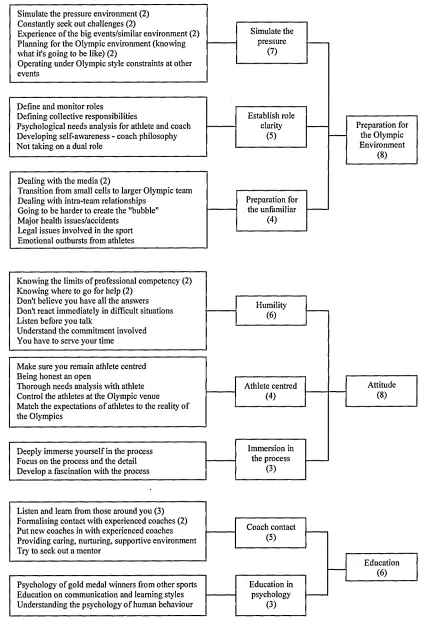
5.4.3.1 Preparation for the Olympic environment .. .. 152
5.4.3.1.1 Simulate the pressure .. .. .. 152
5.4.3.1.2 Establish role clarity .. .. .. 153
5.4.3.1.3 Prepare for the unfamiliar .. .. .. 153
5.4.3.2 Attitude .. .. .. .. .. .. 154
5.4.3.2.1 H u m i l i t y ... 154
5.4.3.2.2 Athlete centred .. .. .. .. 155
5.4.3.2.3 Immersion in the process .. .. .. 155
5.4.3.3 Education .. .. .. .. .. .. 155
5.4.3.3.1 Coach contact .. .. .. .. 155
5.4.3.3.2 Education in psychology .. .. .. 156
5.4.4 Role of the sport psychologist .. .. .. .. .. 158
5.5 Discussion.. .. .. .. .. .. .. .. .. 158
5.5.1, Coach development/practical implications .. .. .. 161
5.5.2 Strengths and limitations .. .. .. .. .. 164
5.6 Conclusions .. .. .. .. .. .. .. .. 166
Chapter VI: Study 4: Evaluation of a ‘Coaching under Pressure’ mental
skills training package for coaches .. .. .. .. .. .. 169
6.1 Introduction.. .. .. .. .. .. .. .. .. 169
6.1.1 Mental skills and stress management for sports performers .. .. 170
6.2 Study Aims.. .. .. .. .. .. .. .. .. 172
6.3 Workshop Development .. .. .. .. .. .. .. 175
6.3.1 Approaches to delivery .. .. .. .. .. .. 175
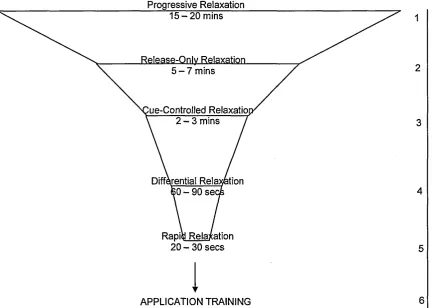
6.3.2 Applied Relaxation .. .. .. .. .. .. 176
6.3.3 Session 1 - Introduction .. .. .. .. .. .. 178
6.3.4 Session2 -Buildingconfidence .. .. .. .. .. 180
6.3.5 Session 3 - Emotional control .. .. .. .. .. 181
6.3.6 Session 4 - Communication .. .. .. .. .. 183
6.3.7 Session 5 -Preparation for major events .. .. .. .. 184
6.3.8 Session 6 - Developing coach-specific coping strategies .. .. 185
6.4 Evaluation of the MST Programme .. .. .. .. .. .. 185
6.4.1 Participants .. .. .. .. .. .. .. 186
6.4.2 Measures .. .. .. .. .. .. .. •• 186
6.4.2.1 Demographic information .. .. .. .. 186
6.4.2.2 Mental Skills Questionnaire .. .. .. .. 187
6.4.2.3 Competitive State Anxiety Inventory-2/modified .. .. 187
6.4.2.4 Modified COPE... 188
6.4.2.5 Social Validation Questionnaire .. .. .. .. 189
6.4.3 Procedure.. .. .. .. .. .. .. .. 190
6.4.4 Data Analysis .. .. .. .. .. .. .. 191
6.5 Results .. .. .. .. .. .. .. .. •• 192
6.5.1 Analysis of questionnaire data .. .. .. .. .. 192
6.5.1.1 M S Q ... 192 6.5.1.2 CSAI-2md ... 195 6.5.1.3 MCOPE... 197
6.5.1.3 MCOPE Effectiveness Scale .. .. .. .. 199
6.5.2 Analysis of Social Validation Questionnaire data .. .. .. 201
6.6 Discussion and Conclusions.. .. .. .. .. .. .. 203
Chapter VII: Summary, Discussion, and Conclusions .. .. .. 210
7.1 Introduction.. .. .. .. .. .. .. .. .. 210
7.2 Summary .. .. .. .. .. .. .. .. •• 210
7.3 Discussion .. .. .. .. .. .. .. .. .. 214
7.3.1 Stress in elite sports coaching .. .. .. .. .. 214
7.3.2 Implications for practice .. .. .. .. .. .. 219
7.3.3 Strengths of the research programme .. .. .. .. 222
7.3.4 Limitations of the research programme .. .. .. .. 224
7.3.5 Future research directions .. .. .. .. .. .. 226
7.4 Concluding Remarks .. .. .. .. .. .. •• 230
References .. .. .. .. .. .. •• •• •• 231
Word Count .. .. .. .. .. .. .. •• •• 260
Appendices .. .. .. .. .. .. .. •• •• 261
List of Figures
Chapter I
1.1 Structure of the Thesis .. .. .. .. .. .. .. 8
Chapter II
Figure 2.1 Two dimensional coping: A conceptual framework
(Anshel et al., 1997). .. .. .. .. .. .. .. .. 26
Fig 2.2 A meta-model of stress, emotions, and performance
(Fletcher & Fletcher, 2005; Fletcher et al., 2006). .. .. .. .. 29
Figure 2.3 Cooper and Marshall's (1976) 6-Factor Theory of Job Stress. .. 35
Chapter III
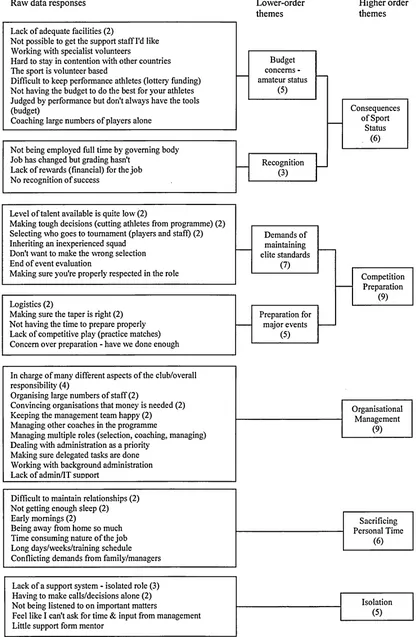
Figure 3.1 Stressors identified by World Class, UK sports coaches .. .. 72
Chapter IV
Figure 4.1 Responses and effects of stress reported by elite, UK sports coaches 99
Figure 4.2 Coping strategies employed by World class, UK sports coaches .. 109
Chapter V
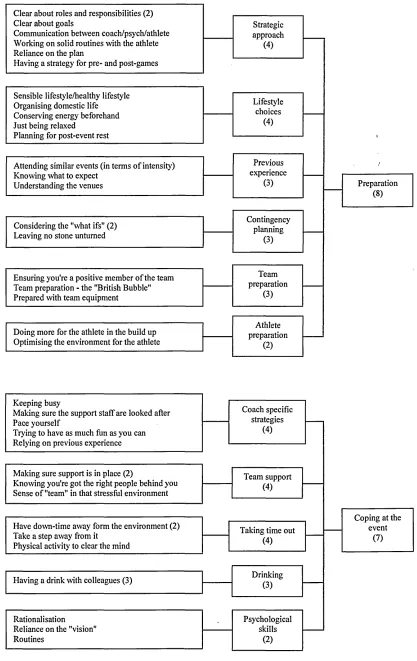
Figure 5.1 Factors influencing successful Olympic coaching .. .. 139
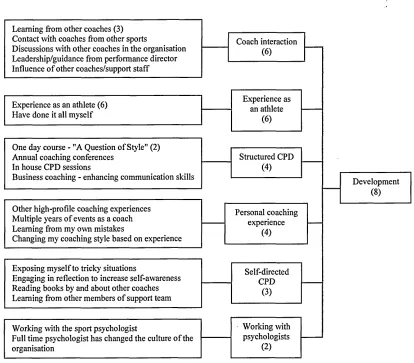
Figure 5.2 Developmental factors .. .. .. .. .. .. 150
Figure 5.3 Training and development strategies .. .. .. .. 157
Chapter VI
Figure 6.1 An applied model of stress management for coaches (Taylor, 1992) 173
Figure 6.2 Overview of the Coaching under Pressure workshop programme 177
Figure 6.3 Changes in coaches' MSQ subscale scores (pre- to post-intervention) 194
Figure 6.4 Changes in coaches' CSAI-2md subscale scores
(pre-to post-intervention) .. .. .. .. .. .. .. 196
Figure 6.5 Changes in coaches' MCOPE subscale scores
(pre-to post-intervention) .. .. .. .. .. .. .. 198
Figure 6.6 Changes in coaches' MCOPE Effectiveness subscale scores
(pre-to post-intervention) .. .. .. .. .. .. .. 200
List of Tables
Chapter VI
List
of Appe
Appendix A: Ethics Approval for Study One and Two..
..
262
Application for approval of research .. .. .. .. .. 263 Risk Assessment form .. .. .. .. .. .. 271 Participant information sheet .. .. .. .. .. .. 273 Informed Consent form .. .. .. .. .. .. 274
Appendix B: Interview Guide for Study One and T w o..
..
275
Appendix C: Example Transcript: Study One & Two Interview 278
Appendix D: Ethics Approval for Study T h r e e ...
293
Application for approval of research .. .. .. .. .. 294 Risk Assessment form .. .. .. .. .. .. 302 Participant information sheet .. .. .. .. .. .. 304 Informed Consent form .. .. .. .. .. .. 305
Appendix E: Interview Guide for Study T h r e e ...
306
Appendix F: Example Transcript from Study Three Interview
309
Appendix G: Workshop Material (developed for study four)..
324
1. Introduction.. .. .. .. .. .. .. .. 325 2. Building Confidence .. .. .. .. .. .. 337 3. Emotional Control .. .. .. .. .. .. .. 346 4. Communication .. .. .. .. .. .. .. 353 5. Preparation for Major Events .. .. .. .. .. 359 6. Developing Specific Coping Strategies .. .. .. 369
Appendix H: Applied Relaxation I n s tr u c tio n s ...
375
Appendix J: Ethics Approval for Study Four
...
392
Application for approval of research .. .. .. .. .. 393 Risk Assessment form .. .. .. .. .. .. 401 Informed Consent form .. .. .. .. .. .. 404
Appendix K: Pre-Workshop Information Pack for Coaches ..
405
Preliminary Information for Coaching Workshops .. .. .. 406 Workshop Registration/Demographic Questionnaire.. .. .. 410 Participant Information S heet.. .. .. .. .. .. 411
Appendix L: Questionnaire Materials for Study Four ..
..
413
Mental Skills Questionnaire .. .. .. .. .. .. 416 Competitive State Anxiety Inventory -2md .. .. .. .. 418 MCOPE ... 420 Social validation questionnaire .. .. .. .. .. 425
Appendix M: SPSS Outputs for Study 4
Peer Reviewed Work Related to the Thesis
Blind refereed publications
Olusoga, P., Butt, J., Maynard, I. W., & Hays, K. (2008). Stress in elite sports coaching:
Identifying stressors (Abstract). Journal o f Sports Sciences, 26, S99.
Olusoga, P., Butt, J., Maynard, I. W., & Hays, K. (2008) Stress in elite sports, coaching:
Exploring Responses to and consequences of stress (Abstract). Journal o f
Sports Sciences, 26, S97-98.
Olusoga, P., Butt, J., Hays, K., & Maynard, I. W. (2009). Stress in elite sports coaching:
Identifying stressors. Journal o f Applied Sport Psychology, 27(4), 442-459.
Olusoga, P., Butt, J., Maynard, I. W., & Hays, K. (2010). Stress and coping: A study of
world class coaches. Journal o f Applied Sport Psychology, 22(3), 274-293.
Olusoga, P., Maynard, I. W., Hays, K., & Butt, J. (2012). Coaching under pressure: A
study of Olympic coaches. Journal o f Sports Sciences, 30(3), 229-239.
Blind refereed presentations
Olusoga, P., Butt, J., Maynard, I. W., & Hays, K. (2008). Stress in elite sports coaching: Identifying stressors. Research paper poster presented at the British Association of Sport and Exercise Annual Conference. Brunei, 2008.
Olusoga, P., Butt, J., Maynard, I. W., & Hays, K. (2008). Stress in elite sports coaching: Exploring responses to and consequences of stress. Research paper poster
presented at the British Association of Sport and Exercise Annual Conference. Brunei, 2008.
Olusoga, P., Maynard, I. W., Hays, K., & Butt, J. (2010). Coaching Under Pressure: A
Study o f World Class Coaches. Oral presentation at the Association of Applied Sport Psychology Annual Conference, Providence, RI, USA, 2010.
The greatest weapon against stress is our ability to choose one thought over another.
CHAPTER I
Introduction
1.1 Stress in Sport
Competitive sport in the new millennium has been transformed into a global
phenomenon (Fletcher, Hanton, & Mellalieu, 2006). Several authors have commented
on the benefits that this globalisation of sport has brought with it. In particular, Thibault
(2009) noted the broadening of sports throughout the world and the increasing number
of countries participating in international sporting competitions. As part of this
transformation, sport has become part of the mass entertainment industry, a process that
has been steadily accelerated by technological developments in the media (Aris, 1990:
Gerrard, 2004; Fletcher et al., 2006). Along with the Superbowl and World Cup Soccer
finals, the Olympic Games is one of the most widely watched sporting spectacles in the
world, with the 2008 Games in Beijing being broadcast to 220 territories and having a
potential television audience of approximately 4.3 billion people worldwide
(International Olympic Committee, 2009).
For those involved, the Olympics can often represent the pinnacle of sporting
success (Gould, Guinan, Greenleaf, & Chung, 2002). In the UK alone, 12.8 million
viewers watched Paula Radcliffe fail to complete the Marathon in Athens, 2004, while
Amir Khan's lightweight boxing semi-final success at the same Games drew 7.4 million
viewers (BBC Press Office, 2004). Outside of the Olympic Games, the University Boat
Race between Oxford and Cambridge is regularly broadcast in over 100 countries, the
2010 Men's singles final at Wimbledon was watched by 6.8 million viewers in the UK
seen by 109 million viewers worldwide (Wildey, 2010). Sport has become big business
with a global audience and the pressure on sport organisations to produce results has
never been greater.
In addition to the pressure placed on sporting organisations due to the fact that
virtually the whole world is watching, the way that sport in the UK is funded can often
heap additional pressure on sport organisations to get results. In the UK, many Olympic
sports often rely on national lottery funding, the allocation of which is dependant on a
number of factors, although performance is still a particularly significant aspect. In a
2006 press release, the then Chairman of UK Sport, Sue Campbell, stated,
Allocating funding across so many sports is never easy but a decision eventually has to be made about the relative merits of competing demands. We believe our no compromise strategy is the most equitable approach to resolving this, taking into account both the detailed information gathered from the sports and significant objective data regarding recent performances, medal opportunities and their overall competitive potential.
(UK Sport, 2006)
Following Great Britain's return of 47 medals at the Beijing Olympics in 2008,
UK sport announced its detailed funding plans for the next four years. Cycling (14
medals), rowing, (6 medals), and sailing (6 medals), all exceeded their predicted medal
totals and all received increases in funding. Athletics, predicted to bring back five
medals, won only four and subsequently had its funding cut from £26.5 million before
Beijing, to £25.1 million in the run up to London 2012 (UK Sport, 2009). With the
future of sports programmes, jobs, and livelihoods often on the line, the pressure to
perform for those involved in sporting organisations is immense.
Developing an understanding of the effects of pressure and stress on sport
performance has been, and continues to be, a major focus of sport psychology research.
performers in and outside of the sporting environment. Indeed the competitive and
organisational demands experienced by performers in an array of diverse sports such as
athletics (McKay, Niven, Lavallee, & White, 2008), ice skating (Scanlan, Stein, &
Ravizza, 1991), golf (Nichols, Holt, Polman, & James, 2005a; Rees, Hardy, & Freeman,
2007) wheelchair basketball (Campbell & Jones, 2002), soccer (Reeves, Nicholls, &
McKenna, 2009), and rugby (Nicholls, Holt, Polman, & Bloomfield, 2006), have all
been explored in detail. A plethora of studies has also investigated the ways in which
performers attempt to cope with the demands placed upon them, with several negative
effects, such as withdrawal from sport and decreased performance, being linked with
less effective coping (cf., Nicholls & Polman, 2007). Again, this research has been
extensive, conducted with performers of varying standards and from a diverse range of
sports (e.g., Anshel & Wells, 2000; Campen & Roberts, 2001; Crocker & Isaak, 1997;
Giacobbi, Foore, & Weinberg, 2004; Gould Eklund & Jackson, 1993; Gould, Finch, &
Jackson, 1993; Holt, 2003; Holt & Hogg, 2002; Nicholls, Holt, & Polman, 2005a,
2005b). However, as alluded to above, with the transformation of sport into a global
industry (Westerbeek & Smith, 2003), it is not only the athletes within sport
organisations who can experience the full impact of what has become a highly
demanding and challenging environment in which to work (Woodman & Hardy, 2001).
The pressure to produce results is often felt throughout sporting organisations, with
performance directors, coaches, and other support staff sometimes under as much
pressure as the athletes themselves. Indeed, coaches are particularly susceptible and,
due to the potential loss of control in unfamiliar surroundings, are often under more
pressure than their athletes (McCann, 2000).
As will be discussed in greater detail elsewhere, a positive coach-athlete
Cockerill, 2003), and, as such, the demands placed on coaches of world class athletes
and the ways in which coaches attempt to manage such demands, appear to be of
particular importance. A significant body of research has investigated the influence that
coach behaviour can have on athletes. For example, Price and Weiss (2000) reported
that coaches with higher levels of emotional exhaustion (a possible response to chronic
stress) were perceived by their athletes to provide less training and instruction and to be
less supportive. Furthermore coaches who were perceived this way were associated
with athletes who reported higher levels of anxiety and lower levels of enjoyment and
perceived competence. Exploring the demands that coaches of world class athletes
encounter, and the ways in which coaches cope with the pressures and demands of the
competitive environment might have important implications for the development of
world class coaches and coach education in the UK, and for the athletes they coach.
By 2012 the practice of coaching in the UK will be elevated to a profession acknowledged as central to the development of sport and the fulfilment of individual potential.
(UK Sport, 2000)
1.2 Purpose of the Thesis
Stress has been well established as an inherent element of competitive sport,
with performers, especially at the top level, required to perform under extremely
demanding conditions (Jones, Hanton, & Connaughton, 2007). As discussed in the
previous section, in many ways a result of the way in which sport in the UK is funded, it
is not only the athletes in sport organisations who are under pressure to perform, but
also coaches and other support staff. While funding issues are likely to be particular
pressures for coaches in the UK, research conducted with coaches of varying levels has
Gould, Guinan, et al., 2002; Taylor, 1992). For example, in addition to financial issues
(Wang & Ramsey, 1998), interpersonal relationships (Kroll & Gundersheim, 1982),
lack of time to adequately prepare, the selection of athletes for competition (Sullivan &
Nashman, 1993), and losing passion for the job (Frey, 2007), have all been cited as
stress factors involved in the coaching role. However, to date, only a relatively small
number of studies has addressed the issue of stress in coaching despite the fact that, as
will be discussed in greater detail in later chapters, coaches, like athletes, are required to
"perform" in highly pressurised situations. The majority of the research that has
focused upon stress in coaching has explored the phenomenon predominantly at high-
school and collegiate levels (e.g., Kelley, 1994; Kelley & Gill, 1993; Frey, 2007).
While the collegiate environment in North America could well be considered elite, the
demands faced by coaches operating in, for example, an Olympic environment, are
likely to be considerably different (Gould, Guinan, Greenleaf, Medbery & Peterson,
1999). Little research has explored stress in world class coaching, and only a handful of
studies have explored stress amongst world class coaches in the UK (Levy, Nicholls,
Marchant, & Polman, 2009; Olusoga, Butt, Hays, & Maynard, 2009; Olusoga, Butt,
Maynard, & Hays, 2010; Thelwell Weston, Greenlees, & Hutchings, 2008b). Thus, a
major purpose of this thesis was to explore, in depth, the phenomenon of stress within
the unique culture of world class sport.
The application of research into practice is a fundamental component of coach
development (Williams & Kendall, 2007). However, it is important to understand that
coaches are often uninterested in theoretical research developments and, instead, require
information and recommendations that can be put into practice immediately (Spinks,
1997). As Williams and Kendall (2007) suggested, both coaches and researchers agree
that via presentations at coaching workshops, articles in coaching magazines, or through
applied practice. Taking this into consideration, the overall aim of this thesis, and the
series of studies contained herein, was to bridge the gap between research and practice
by a) providing practical recommendations for sport organisations and for sport
psychology practitioners working with coaches, b) informing coach education and
development programmes, and c) by developing an intervention programme based on
the experiences of successful, world class coaches, and aimed at helping coaches to
develop the ability to manage stress and coach effectively under pressure.
1.3 Structure of the Thesis
The thesis consists of six further chapters, brief summaries of which are
provided below (see also Figure 1.1). Chapter II provides a review of the extant
research literature surrounding the study of stress in both occupational and sport settings
and provides a theoretical backdrop to the remainder of the thesis. The research studies
contained within the thesis were also conducted in two distinct phases. Chapters III
(study one) and IV (study two) describe the first phase of the research, an interview
based investigation, designed to explore, in depth, elite coaches' experiences of stress
during their careers coaching world class athletes. Chapters V (study three) and VI
(study four) describe the second phase of the research, in which the key psychological
attributes of the successful world class coaches were identified and used to inform an
intervention programme aimed at helping coaches develop their ability to coach under
pressure.
Chapter I
I n tro d u c tio n
I
Chapter II
R eview o f lite r a tu r e
Phase I
Chapter III
Study 1: Identifying stressors
r
Chapter IV
Study 2: Exploring responses and effects of stress, and coping strategies of world class coaches
T
Phase II
Chapter V Chapter VI
Study 3: Coaching under pressure: A Study 4: Design, im plem entation, study of Olympic coaches. and evaluation of an MST (Factors influencing ability to coach training program m e for coaches.
in th e pressurised environm ent)
Chapter VII
S u m m a r y , d isc u ssio n , a n d c o n c lu s io n s
\
_______________1.3.1 Chapter II (Review of literature)
Because, within extant stress research literature, there have been discrepancies
regarding how stress has been conceptualised within stress research, Chapter II first
attempts to provide some conceptual and definitional clarity of the terms used. An
overview of Lazarus' transactional theory of stress (Lazarus & Launier, 1978) is
provided and, subsequently, the chapter critically examines relevant stress research from
occupational and sport settings, identifying areas for future research, and providing a
theoretical background and rationale for the thesis.
1.3.2 Chapter III (Study 1)
Chapter III begins with a review of the extant coaching research literature,
which identifies coaching as a multifaceted and stressful role. While elite athletes have
received a great deal of attention in stress research, coaches of world class athletes have,
until recently, been largely ignored. As such, the first phase of the present research was
concerned with gaining an in-depth understanding of elite coaches' experiences of stress.
Specifically, in study one, 12 elite coaches were interviewed about the stressors they
encountered in their experiences coaching world class athletes.
1.3.3 Chapter IV (Study 2)
Chapter IV describes the second study in the first phase of the research
programme. As discussed in greater detail in Chapter II, from a transactional stress
perspective, the stressors experienced by individuals are considered part of a dynamic
stress process. The responses to stressors described in study one, along with the coping
efforts of coaches, are likely to be complex. Therefore, study two, again using in depth-
interviews with the same 12 coaches as a method of data collection, explored the
response to stressors, coaches experienced symptoms of burnout, such as emotional and
physical exhaustion, lack of confidence and motivation, and withdrawal. Coaches also
felt that their athletes' performances and attitudes could also be negatively influenced by
their own stressful behaviour. Furthermore, an exploration of coaches' coping strategies
indicated that their use of psychological skills was generally limited and that avoidance
and distraction were often used strategies for coping with the demands of world class
coaching.
1.3.4 Chapter V (Study 3)
The first phase of this research project, and previous research findings, identified
coaching, especially in the arena of world class sport, as a particularly stressful
occupation (Taylor, 1992; Gould, Guinan, et al., 2002). Moreover, research has
identified the Olympic Games as representing the pinnacle of success and, therefore, a
competitive environment unlike any other (Greenleaf, Gould, & Dieffenbach, 2001).
Based on the findings from studies one and two, it seemed essential for the education
and the personal and professional development of coaches, and for the continued
success of the athletes in their charge, that we develop a comprehensive understanding
of the factors that enable coaches to perform under pressure at the highest levels.
Indeed, although recent research has identified coaches' coping strategies and use of
psychological skills, little is known as to how coaches have developed the attributes and
coping strategies that allow them to operate successfully in a competitive environment
as demanding as the Olympic Games. Via interviews with eight Olympic coaches, the
study described in Chapter V explored, in depth, the factors that successful, experienced
coaches perceived to be essential for Olympic coaching. The ways in which coaches
had developed these attributes were also explored in detail. Recommendations for the
education and training of development coaches were also provided, which informed the
design of an intervention package and the final study of the research programme.
1.3.5 Chapter VI (Study 4)
Chapter VI describes the design, development, and implementation of an
intervention programme, aimed at developing coaches’ ability to manage stress and
coach effectively under pressure. Five coaches participated in the intervention
programme, which took the form of a series of six workshops, the contents of which
were informed by the findings of the previous three chapters, along with existing
literature. The evaluation of the intervention is also discussed in detail in this chapter.
1.3.6 Chapter VII (Summary, discussion and conclusion)
Chapter VII summarises the findings of the research programme. Theoretical
and practical applications are considered and the strengths and limitations of the
research programme are also discussed in detail. Finally, recommendations for future
research are also discussed.
1.4 A Note on Methods Used Within the Thesis
As noted above, the overall purpose of the thesis was to explore elite sports
coaches' experiences of stress within the unique culture of world class sport. Lazarus'
(Lazarus & Folkman, 1984; Lazarus & Launier, 1978) transactional theory of stress has
been adopted within sport psychology research as a comprehensive framework for
studying the stress process. Further, Fletcher and colleagues (Fletcher & Fletcher, 2005;
Fletcher et al., 2006) developed a meta-model of stress, emotions and performance
delineating the theoretical relationships between the various elements of the stress
process (i.e., the processes involved, the consequences, and the moderating factors) (see
Chapter II, pp. 27-30). Fletcher and Scott (2010) argued that the model provides a
conceptual and theoretical foundation for developing a deeper understanding of the
stress process in sports coaches, and a framework for discussing the various aspects of
the stress process.
The first phase of the research programme (studies one and two - Chapters III &
IV) the thesis adopts a deductive reasoning framework. While these chapters are
concerned with identifying stressors, responses and effects of stress, and coping
strategies (elements of the stress process) the aim of this phase was to gain an overall
understanding of the demands facing world class coaches and the responses and effects
of stress for these coaches as a group. Within this deductive framework, however,
inductive methods of analysis were employed in individual studies. Specifically, while
interview guides were informed by Lazarus' transactional theory of stress and current
stress literature (e.g., Fletcher & Fletcher, 2005; Fletcher et al., 2006; Frey, 2007;
Woodman & Hardy, 2001), the interview transcripts were analysed inductively using
content analysis procedures that have been used extensively within the sport psychology
literature (cf., Gould et al., 1993; Gould, Finch, et al. 1993; Scanlan et al., 1991).
For study three, the busy schedules of the coaches involved precluded the use of
focus group interviews. Because of the exploratory nature of the study, interviews
(conducted via telephone) were deemed the best method of data collection and, as such,
a qualitative method of analysis was selected. As with phase one, the interview guide
was based on existing coaching science literature (e.g., Gilbert, Cote, & Mallett, 2006;
Olusoga et al., 2010), so although inductive methods of analysis were employed, the
framework of the study was still deductive in nature.
In study four, an experimental design was used to evaluate the intervention
programme aimed at developing coaches' ability to manage stress and coach effectively
programme from the small group of coaches who participated. Because of the small
sample size it was not practical to include a control group in the experimental design, so
the results must be interpreted with caution and no causality can be assumed. However,
while analysis of the quantitative data was an important part of the evaluation, the
practical significance of the intervention to the coaches was also considered important
(Daw & Burton, 1994) and was assessed via a social validation questionnaire.
CHAPTER II
Review of Literature
2.1 Introduction
We all know that coach doesn't handle pressure well. Basically, she freaks out! She starts pointing out problems and trying to change things at the last minute, so we try and avoid her the last week before nationals
Multiple national champion and Olympian (McCann, 1997, p. 12)
Stress in sport has become an increasingly popular research topic in sport
psychology (Frey, 2007; Jones & Hardy, 1990; Lazarus, 2000b). At the highest level,
the ability to cope with performance stressors is often cited as a significant factor in
whether or not success is achieved (Nicholls & Polman, 2007). Moreover, the quote
above highlights the fact that it is not just athlete performers who have to be able to
handle the stress of competition, but coaches must also be able to cope with stress if
they are to expect success. The purpose of this chapter is to provide a critical review of
the literature pertinent to issues within stress research and coaching. This review will
first endeavour to critically examine definitional and conceptual issues regarding the
terminology used in stress research, and a discussion of the literature regarding stress
from both work- and sport-based settings will follow. Finally, the aims and objectives
2.2 Definitional and Conceptual Issues
Defining stress is not meant to be a tortuous academic exercise in semantics far removed from the “real world”, nor should it be viewed as some sort of initiation process that all researchers have to go through. .. .we have a moral obligation to those whose working lives we wish to explore. This obligation requires that we give thought to how stress can best be defined so that research captures the reality of the stressful encounter and is relevant to and reflects the experience of those who are being researched.
(Cooper, Dewe, & O’Driscoll, 2001, p.20).
Within the sport psychology literature, failure to clearly differentiate between,
and consistently define the terms stress, arousal, and anxiety have been major
limitations to our understanding of these constructs and their effects upon performance
(Fletcher & Scott, 2010; Hardy, Jones, & Gould, 1996; Gould, Greenleaf, & Krane,
2002). Indeed, several authors have suggested that the concept of stress remains unclear
(e.g., Campbell & Jones, 2002). Stress has been described as a stimulus variable (or
environmental demand) and as a response to a specific situation (Gould & Petlichkoff,
1988). However, alternative definitions have conceptualised stress as an interaction
between stimulus and response, where the interaction is described in terms of some
imbalance between the person and the environment (Appley & Turnbull, 1967).
To address these issues of definitional and conceptual uncertainty in sport
psychology, Lazarus' (Lazarus & Folkman, 1984; Lazarus & Launier 1978)
transactional theory of stress has, relatively recently, been adopted within the sport
psychology literature. Indeed, in their review of organisational stress in competitive
sport, Fletcher et al. (2006) suggested that upon close examination, stimulus and
response conceptualisations are somewhat inadequate as explanations of stress, and that
a transactional approach has evolved from these more traditional approaches. Lazarus'
transactional theory will be discussed in greater detail later in this chapter but, in brief,
the transaction refers to the dynamic relationship between environmental demands (i.e.,
ability). Stress responses (i.e., strain) result from a perceived imbalance between these
demands and resources. In short, the meaning constructed by an individual about their
relationship with the environment is pivotal in their experience of stress.
Although Cooper et al. (2001) suggested that it should not be a "torturous
academic exercise" (p.20), providing clear conceptual definitions of stress is essential in
determining the nature and the direction of future research. The following section of
this literature review will delineate traditional stimulus and response definitions of
stress while considering the strengths and weaknesses of such approaches. Lazarus'
transactional theory of stress will also be discussed in detail, and definitions of stress
and associated constructs that are used throughout this thesis will be presented.
2.2.1 Stimulus definitions of stress
The origins of stimulus-based definitions of stress lie in physics and engineering,
specifically, in exploring how physical structures could be made to withstand heavy
loads. Hooke's Law of elasticity referred to "load" as the demand placed upon a
structure, "stress" as the area affected by the demand, and "strain" as the change in the
structure's form which resulted from the interaction between load and stress (Cooper &
Dewe, 2004). As Lazarus (2006) suggested, in terms of personal experience and
psychological stress, it is intuitively appealing to consider stress in terms of an
environmental stimulus, in that it allows individuals to attribute their "disturbed
emotional reactions" to external events (e.g., poor officiating, cuts in programme
funding, missing the bus), and, therefore, to justify their responses (p.49).
Lending some credence to the notion that stress could be conceived as an
environmental stimulus that causes some kind of reaction in an individual, Lazarus and
Cohen (1977) identified three distinct types of environmental events that are typically
hassles. Catastrophic events, such as natural disasters and war, were considered
universally stressful and might be either long lasting or relatively brief episodes. Major
changes could also be catastrophic but would only affect one or a few people, for
example, the death of a relative or serious injury or illness. As Lazarus (2006) asserted,
"the number of people affected does not crucially alter the power of such events to
disturb" (p.13). Finally, daily hassles referred to the sometimes trivial incidents and
events which are still perceived as causing significant stress, for example, losing one's
keys, having a disagreement with a colleague, an athlete arriving late for training
sessions, or the phone constantly ringing with offers of double glazing or mobile phone
upgrades.
To demonstrate the link between major life events and the likelihood of illness,
Holmes and Rahe (1967) devised the Social Readjustment Rating Scale as a method of
measuring stress, or more specifically, of measuring the magnitude of stressful events.
Culturally and geographically diverse samples were asked to rate several life events in
terms of how much readjustment (some adaptive or coping behaviour) they required.
Although major events such as the death of a spouse, divorce, and imprisonment were
rated as most stressful, other, more positively toned events such as Christmas or going
on holiday, were also rated as life events that could potentially cause stress. While
Holmes (1970) found a positive correlation between major life events and injury in
American Football players, the important point to consider here is that stimulus
definitions of stress do not consider stressors to be exclusively negative, with positively
toned events, such as getting married, also possessing the ability to cause significant
reactions.
The fact that properties of stressors may make them more or less stressful in
both qualitative and quantitative terms serves to enhance the appeal of stimulus-based
stressor may be acute, as in the case of equipment failure or arriving late at a
competition, or may be chronic, as in the case of long-term communication difficulties
or poor training conditions. Lazarus (2006) lists a number of other potential distinctions
that could be made between stressors, including the type of adjustment required, the
positive or negative valence of the stress stimuli and, importantly, the amount of control
over an event a person perceives they have. Again, these distinctions merely serve to
perpetuate the notion that stress exists as an environmental stimulus that causes some
sort of reaction in an individual. Stress has, however, also been considered as a
response to an environmental demand and these response-based definitions of stress will
be considered in the following section.
2.2.2 Response-based definitions
As well as a stimulus variable, stress has been conceptualised as a response to
specific stressors. The origins of this approach to stress can be found in physiology and
medicine and the seminal work of Walter Cannon and Hans Selye. Cannon (1939)
considered stress to be a disturbance of the body’s homeostasis that could result from
various environmental conditions such as lack of oxygen or intense heat or cold. Selye
(1936) similarly posited that stress1 was an organised set of bodily defences against any
noxious stimuli. Selye termed this reaction the General Adaptation Syndrome (GAS)
and, in direct contrast to stimulus-based definitions, stress was conceptualised as a
universal physiological set of reactions created by environmental demands, rather than
as the environmental demands themselves.
2.2.2.1 Criticisms of stimulus and response definitions
A number of criticisms can be levelled at stimulus- and response-based
conceptualisations of stress. For example, defining stress as a response is simplistic and
the reasoning behind it is tautological (Lazarus, 2006). Specifically, stimulus-response
definitions of stress raise two immediate questions: What makes a particular stressor
stressful, and what is it about the response that is indicative of a particular stressor
(Lazarus & Folkman, 1984)? The stress response is considered a reaction to a stressful
stimulus or stressor, yet the stimulus is defined as stressful because it causes some stress
response. Neither the stressor nor the response can be defined without reference to the
other, rendering each somewhat inadequate as a useful definition of stress.
Further complications are encountered when considering the difference between
physical, physiological, and psychological stress. Increased heart rate, for example,
could be an indication of physiological stress. However, the individual concerned may
be in such a state because they have participated in a team warm up, and still remain
psychologically relaxed. Again, the response cannot be defined as a psychological
stress reaction without reference to the stimulus. Although analogies from engineering
can help us understand the concepts of stress and strain, such analogies do not appear to
uncover the apparent complexity of the human stress process (Lazarus, 2006). With
psychological stress, it is not merely the case that demands on an individual will result
in strain. The human element dictates that an individual must first make a decision as to
whether or not the demand or situation is threatening, and assess their ability to cope
successfully, before a situation is considered stressful or not. Despite the intuitive
appeal of thinking of stress as a stimulus, and the notion of stress being a response to
environmental stimuli, it is clear that these conceptualisations are inadequate and that
the personal significance of the person-environment relationship should be considered.
2.2.3 Individual differences
We need to understand human variation if we are to deal effectively with individuals
(Lazarus, 2006, p.53)
As noted above, it seems intuitively appealing to consider certain stimuli or
stimulus conditions as normatively and universally stressful. However, when one
considers the vast diversity of human responses to any potential stimulus, the inherent
complexity of such an argument is made all the more clear. In his work on
physiological stress, Selye (1936) suggested that anything "noxious to tissues" could be
considered a stressor. However, in adopting that definition, the issue still remains as to
what can be considered noxious. For example a tennis ball would not be considered
noxious to tissues unless it hit a player in the face, causing pain. This difficulty
becomes even more apparent when, again, one considers psychological stress as
opposed to physiological stress. Moreover, the suggestion that something is noxious
because it causes a stress response merely leads to the issue of circularity outlined
earlier in the chapter, whereby neither stressor nor response can be defined without
referring to the other.
Lazarus (2006) suggested that "the degree and kind of stress response, even to
singularly powerful stress conditions (e.g., performing at the Olympic Games), are apt
to vary from person to person, and these variations need to be understood" (p.54).
Individual differences in stress responses become even more apparent when considering
the responses to major catastrophes as compared with responses to the minor
inconveniences that people encounter on a day-to-day basis. To illustrate, the death of a
loved one could be thought of as universally stressful, although individuals are still
likely to react in very different ways depending on a number of personal and
to training, are events that some coaches might find highly stressful, whereas others
might find trivial.
Prior to World War II, Yerkes and Dodson's (1908) Inverted-U hypothesis was
the dominant theory used to explain the effects of stress on skilled performance.
Specifically, the theory predicted that increases in stress would facilitate skilled
performance, but only up to an optimal level. Increases in the level of stress past this
optimal level would cause performance to deteriorate. However, research during and
after World War II highlighted the importance of individual differences as a factor in
need of consideration. Lazarus, Deese, and Osier (1952) provided a review of stress
research studies which alluded to the fact that stress had a facilitating effect on some
performers yet a debilitating effect on others. It is clear, therefore, that stress cannot be
defined without referring to the characteristics of the person involved in some way.
2.2.4 Stress as an interaction
The interactional approach to defining stress focuses on the interaction between
an individual and the environment they operate in. From an interactional perspective,
the relationship between stimulus and response is one of cause and effect and is,
therefore, essentially static (Cooper et al., 2001). When an interaction does not occur,
or is different from the predicted relationship, this is explained by the influence of social
(e.g., level and type of social support available), situational (e.g., perceived control over
the environment), or individual (e.g., self-efficacy, optimism, hardiness) moderating
variables. Specifically, from an interactional perspective the person and the
environment (two independent variables) combine to have an effect on the individual's
cognitive-emotional responses (the dependent variable), while remaining independent of
each other and unchanged (Fletcher et al., 2006).
Various researchers have referred to an "interactional" perspective of stress in
both work-stress literature (e.g., Kaufmann & Beehr, 2000; Schmidt, 2007) and in the
sport psychology literature (e.g., Campbell & Jones, 2002; Jones, 1990; Kelley, 1994;
Kelley & Gill, 1993). Specifically, in the case of work stress contexts, this allowed
researchers to develop their understanding of work stressors and their impact on
employee health (Cooper & Dewe, 2004). However, the way in which the relevant
factors interact (i.e., the underlying stress process) is still not explained by an
interactional approach to defining stress. Indeed, the presence of moderator variables is
insufficient to explain the complex relationship between a person and their environment.
Since this relationship is dynamic in nature (with both variables mutually affecting one
another), it cannot be one of simple cause and effect. To overcome this limitation, the
transactional conceptualisation of stress, places the emphasis on the dynamic nature of
the person-environment relationship. Specifically, the meaning an individual constructs
about their relationship with the environment is pivotal to their experience of stress.
2.2.5 A transactional theory of stress
Lazarus’ transactional theory conceptualises stress as an ongoing process; a
transaction between environmental demands and an individual’s psychological
resources for dealing with them, with strain resulting from a perceived imbalance
between those demands and resources (Lazarus & Folkman, 1984; McGrath, 1970).
However, the transactional definition of stress is less concerned with the specific
components of the interaction between person and environment and instead focuses on
the psychological processes of cognitive appraisal and coping that underpin stressful
encounters. As Lazarus stated, the meaning an individual constructs about their
relationship with the environment "operates at a higher level of abstraction than the
concrete variables themselves" (Lazarus, 2006, p. 12). This relational meaning is key to
meaning to their relationship with the environment. Before describing the processes of
appraising and coping, it is worth noting the grammatical distinction made by Lazarus
regarding appraisal and appraising. Lazarus (2006) suggested that the noun form
(appraisal) should be used for the evaluative product, while the verb form (appraising)
should be used to describe the act of making the evaluation. To encourage consistency
within the field, this distinction will be adhered to henceforth in this thesis.
2.2.5.1 Primary and secondary appraisal
For a situation to be appraised as stressful, it must contain both person factors
(goals and goal hierarchies, beliefs about oneself and the world, and personal resources)
and situational factors (demands, constraints, opportunities, and culture) (Lazarus,
2006). Lazarus referred to primary and secondary appraising and it is important to
consider the distinction between the two types. Primary appraising is concerned with
evaluating whether or not a particular encounter is relevant to a person’s goal
commitments (e.g., winning Olympic gold), values (e.g., winning is important above all
else), and self-beliefs (e.g., "I believe I have the capability to win”). If an encounter is
indeed appraised as having implications for an individual’s wellbeing (i.e., impacting
upon their commitments, values, and beliefs), then it has the potential to be stressful.
Interestingly, Lazarus (2006) suggested that values and beliefs are less likely to be
factors influencing an individual's actions or reactions than are goal commitments.
Essentially, an individual can possess values without having to act upon them. For
example, a coach might possess the value that developing young players’ skills is the
most important part of coaching, but may not necessarily be able to act upon it because
of, for example, financial constraints. In contrast, "goal commitment” implies that a
person will "strive hard to attain the goal, despite discouragement or adversity” (p.75-6).
If a transaction is considered irrelevant to an individual’s wellbeing (i.e., no
not occur. However, an encounter with the environment might be appraised as
representing some harm, threat, or challenge to an individual, where harm represents
some damage that has already been done, threat represents the potential for harm, and
challenge focuses on the potential for gain and is associated with positively toned
emotions such as excitement or eagerness2.
Whereas primary appraisal is concerned with evaluating what is happening,
secondary appraising involves an evaluation of what can be done about the stressful
situation. Once a person has appraised an encounter as being harmful, threatening, or
challenging, the process of secondary appraisal involves an evaluation of coping options,
how likely they are to be effective, and how likely it is that they can be applied in the
situation. Although this appraisal is often the cognitive underpinning for coping,
Lazarus (2006) suggested that it is not inappropriate to refer to it as coping as well
(p.76). However, it is important to note that primary and secondary appraising are
somewhat misleading terms, as primary appraisal is neither more important than, nor
does it precede, temporally, secondary appraising. As Fletcher et al. (2006) assert the
need to recognise stress as a process is well established. However, it is vitally important
to understand the inability of an interactional approach to truly capture the essence of an
individual's experience of stress, and, therefore, the value of the stress transaction.
2.2.5.2 Coping
The other important process considered in a transactional approach to stress is
coping. Because stress has been linked to numerous negative outcomes in sport (Hoar,
Kowalski, Gaudreau, & Crocker, 2006), the strategies used to cope with stressful events
continue to be of major interest to sport psychologists (e.g., Giacobbi et al., 2004; Gould
et al., 1993; Gould, Finch, et al, 1993; Nicholls, Levy, Grice, & Polman, 2009;
Ntoumanis & Biddle, 1998). It is important to understand that coping is an integral
component of the stress process. Indeed, providing clear conceptual definitions of
coping and delineating various coping styles and strategies have been important
research topics. In response to the limitations of the traditional psychoanalytical
approaches to coping, Lazarus and Folkman (1984) defined coping as:
constantly changing cognitive and behavioural efforts to manage specific external and/or internal demands that are appraised as taxing or exceeding the resources of the person (p. 141).
Coping here refers to an individual's attempts to either change or avoid (or both) the
situation they encounter, or their emotions, and is defined as a process rather than a trait
or style of an individual. Specifically, the process-oriented approach allows for coping
strategies to change during the stressful episode, or for a number of different strategies
to be utilised based on the individual's perceptions of their likely success. While a more
detailed review of the literature surrounding coping in sport will follow later in this
chapter, it is worth noting that there is significant support for a process-oriented
approach to coping (e.g., Bouffard & Crocker, 1992 Gould et al., 1993, Holt & Hogg,
2002; Poczwardowski & Conroy, 2002).
2.2.5.3 Coping dimensions
The two most often referred to coping dimensions are problem-focused and
emotion-focused coping (cf., Nicholls & Polman, 2007). Problem-focused coping
involves attempts to modify the situation that is causing the stress response, and might
include strategies such as planning or delegating responsibility. Emotion-focused
coping involves attempts to regulate the emotional response and might include
strategies such as seeking social support, thought stopping, or rationalisation. A
significant amount of research to date has suggested that a variety and combination of
appraisal of a given situation (Folkman & Lazarus, 1985; Gould et al., 1993; Gould,
Finch, et al., 1993). However, an often proposed third dimension is avoidance coping
(Endler & Parker, 1990). Avoidance coping represents disengagement or withdrawal
from a situation and can include such behaviours as seeking social support and engaging
in distracting tasks. It should be noted, however, that while Endler and Parker proposed
"avoidance-oriented coping" as a third coping dimension, other researchers (e.g.,
Nicholls et al., 2005a) have categorised avoidance as an emotion focused coping
strategy, rather than as a category in its own right. Anshel, Williams, and Hodge (1997)
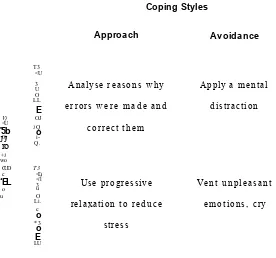
suggested further taxonomy based on two alternative coping dimensions (see Fig. 2.1).
Specifically, approach coping referred to the "process of taking active steps in
attempting to deal with the stressor to ameliorate its effects," while avoidance coping
referred to "repression, disengagement, or rejection" (p. 143).
Coping Styles
Approach Avoidance
T3 <U 3
U A n aly se r e a s o n s w h y A pply a m e n ta l O
LL
E e r r o r s w e r e m a d e a n d d is tra c tio n
V) OJ
<U '5b jQ
o c o r r e c t t h e m 0)
jj i-ro Q . +j
wo CUD T 3
c <L) ‘ELo </l
3u U se p ro g re s s iv e V e n t u n p le a s a n t
u O
Li.
c re la x a tio n t o r e d u c e e m o tio n s , cry o
*3
o s tr e s s E
[image:42.613.151.427.372.630.2]LU
Avoidance has been has been reported as a coping strategy in several previous
studies of s