MACHACZEK, Katarzyna Karolina.
Available from Sheffield Hallam University Research Archive (SHURA) at:
http://shura.shu.ac.uk/20750/
This document is the author deposited version. You are advised to consult the
publisher's version if you wish to cite from it.
Published version
MACHACZEK, Katarzyna Karolina. (2014). Barriers to effective communication
between doctors at shift handover. Doctoral, Sheffield Hallam University (United
Kingdom)..
Copyright and re-use policy
See
http://shura.shu.ac.uk/information.html
Sheffield S10 2BP
102 058 738 5
All rights reserved
INFORMATION TO ALL USERS
The quality of this reproduction is dependent upon the quality of the copy submitted.
In the unlikely event that the author did not send a com plete manuscript and there are missing pages, these will be noted. Also, if material had to be removed,
a note will indicate the deletion.
uest
ProQuest 10702849
Published by ProQuest LLC(2017). Copyright of the Dissertation is held by the Author.
All rights reserved.
This work is protected against unauthorized copying under Title 17, United States Code Microform Edition © ProQuest LLC.
ProQuest LLC.
789 East Eisenhower Parkway P.O. Box 1346
Katarzyna Karolina Machaczek BSc, MSc
A thesis submitted in partial fulfilment of the requirements of Sheffield Hallam University
for the degree of Doctor of Philosophy in Health Services Research
Shift handover is a process during which doctors can exchange information, authority and primary responsibility for patient care. The level of handover standardisation may vary across departments and hospitals, and handover may be affected by the context in which it occurs. If during handover communication doctors do not transfer information pertinent to a patient’s care delivery, it may lead to unintended negative consequences.
An explanatory, mixed-methods study, using the principles of critical realism was conducted to investigate whether or not similar barriers to effective shift handover communication between doctors identified in hospitals around the world are identified by doctors working in hospitals in the Czech Republic and to develop hypotheses regarding how various individual performance-, work environment- and system-related factors may collectively contribute to ineffective shift handover communication between doctors. In accordance with the principles of critical realism the study included theory-testing phases: (i) a critical review of literature; (ii) a cross-sectional questionnaire survey; and (iii) semi-structured interviews with doctors.
This project would have not been possible without the support of several individuals.
I would like to express my sincere gratitude to my research supervisors, Professor Malcolm Whitfield and Dr Peter Allmark, for their invaluable advice, continued encouragement and support. They were there throughout the entire PhD process.
I am also indebted to the study participants.
I would also like to thank Mrs Lenka Obracajowa and Dr Helena Jungova for their help with data collection, Dr Karen Kilner for her guidance on quantitative data analysis and Deborah Harrop for her support with Refworks.
Most importantly, I would like to thank my family, including my husband Nishit Shah and my parents, Czeslawa and Krzysztof Szalaj. No words can express what their support has meant to me.
I declare that, except where indicated by specific reference, the work submitted is the result of my own investigation. No portion of the work presented in this thesis has been submitted in substance for any other degree or award.
Abstract... i
Acknowledgments... iii
Candidate's Statement... iv
Table of Contents... v
List of Tables...viii
List of Charts... xi
List of Graphs...xii
List of Appendices...xiii
Chapter 1 Introduction...1
1.1 Background and Rationale behind the present study...1
1.1.1 International context... 2
1.1.2 The Czech Republic context... 4
1.1.3 the researcher's background...5
1.1.4 Language... 7
1.1.5 Ethical implications...8
1.2 The aim and objectives of the study...9
1.3 The methodological stance deployed in the present study...10
1.4 The initial hypotheses...14
1.5 Terminology: Barriers, Hypotheses and Theory...15
1.6 The overview of the thesis...16
Chapter 2 Methodology...19
2.1 Introduction... 19
2.2 The Research questions... 20
2.3 Methodology versus research methods...21
2.4 Critical realism...22
2.5 What came before critical realism?: Naive/Direct and Indirect realism 22 2.5.1 Naive/direct realism...22
2.5.2 Indirect realism... 23
Research (HSR)... 30
2.6.1 Positivism...30
2.6.2 Constructivism... 34
2.6.3 Reasons for not using positivism and constructivism in the present study....36
2.7 Critical realism...40
2.7.1 How has critical realism responded to some of the problems related to the rejection of naive/direct and indirect realism?... 40
2.7.2 Critical Realist ontology...40
2.7.3 Epistemology: The transcendental manoeuvre... 49
2.7.4 Critical Realism in the present study... 63
2.8 How this research would have looked if guided by different research traditions such as positivism or constructivism?... 66
Chapter 3 Study design: An overview...72
3.1 Introduction... 72
3.2 Study design... 72
3.2.1 Mixed-methods design...72
3.2.2 A sequential mixed design...73
3.3 Study setting... 78
3.4 Ethics...78
3.5 Phase O...79
3.5.1 Familiarisation phase - the initial immersion in the fieldw ork...79
3.6 An overview of methods employed...83
Chapter 4 Theory-testing Phase I - A critical review of literature...89
4.1 Introduction... 89
4.2 Methodology... 89
4.3 Methods used...90
4.3.1 Search strategy... 90
The Study selection process... 95
4.4.3 Section Summary...114
4.5 A summary of the theory-testing Phase 1... 125
Chapter 5 Theory-testing Phase II Questionnaire Survey...128
5.1 Introduction... 128
5.2 The Aim and objectives of Phase II...128
5.3 the Development of the survey instrument...129
5.3.1 Operationalisation of barriers to effective shift handover communication between doctors...130
5.3.2 The validity of the questionnaire survey... 131
5.4 Sampling and Data collection... 132
5.4.1 Sample size calculation...133
5.4.2 Data collection...134
5.4.3 Sample characteristics...135
5.4.4 Response rate...135
5.4.5 Missing data... 136
5.5 Statistical analysis...136
5.6 The Key findings from the theory-testing phase I I ... 140
5.6.1 A comparison of responses provided by less and more experienced doctors ...143
5.6.2 A comparison of experiences and perceptions of barriers to effective shift handover communication held by doctors from the two sites...146
5.6.3 Barriers to an effective shift handover significantly greater than 70% overall ...149
5.7 A summary of the theory-testing phase ii... 154
Chapter 6 Theory-testing Phase III: Interviews with Doctors...158
6.1 Introduction... 158
6.2 The qualitative approach employed in the present study... 158
6.3.3 Eligibility criteria...160
6.4 Data collection...161
6.4.1 Recruitment methods... 161
6.4.2 Interview Methods... 161
6.4.3 An interview schedule... 162
6.4.4 Conducting interviews...162
6.4.5 Advantages and disadvantages of telephone and face-to-face interviews.... 163
6.5 Data analysis... 165
6.5.1 Familiarisation...165
6.5.2 Identifying a thematic fram ework... 166
6.5.3 Indexing...166
6.5.4 Pilot charting and charting...167
6.5.5 Mapping and interpretation... 168
6.6 The key findings from theory-testing Phase I I I ...170
6.6.1 Effective communication between doctors at shift handover is hindered by the inadequacies of the medical education and healthcare systems, including a disruptive working environment... 170
6.6.2 Effective communication between doctors at shift handover is hindered by insufficient clinical and communication skills of doctors...188
6.6.3 Effective communication between doctors at shift handover is hindered by the social context of handover... 195
6.7 A summary of the theory-testing phase iii... 206
Chapter 7 Discussion of the key findings...211
7.1 Introduction... 211
7.2 A new theoretical position, hypotheses, on barriers to effective communication between doctors at shift handover...215
7.3 The use of critical realism to explain barriers to handover communication ...244
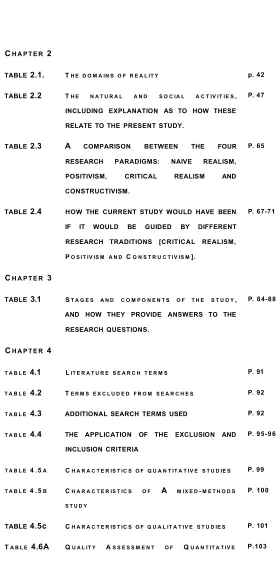
Ch a p te r 2
TABLE 2.1. Th e d o m a in s o f r e a l it y p. 42
TABLE 2.2 Th e n a t u r a l a n d s o c ia l a c t iv it ie s, INCLUDING EXPLANATION AS TO HOW THESE RELATE TO THE PRESENT STUDY.
P. 47
TABLE 2.3 A COMPARISON BETWEEN THE FOUR RESEARCH PARADIGMS: NAIVE REALISM, POSITIVISM, CRITICAL REALISM AND CONSTRUCTIVISM.
P. 65
TABLE 2.4 HOW THE CURRENT STUDY WOULD HAVE BEEN IF IT WOULD BE GUIDED BY DIFFERENT RESEARCH TRADITIONS [CRITICAL REALISM, Po s it iv is m a n d Co n s t r u c t iv is m].
P. 67-71
Ch a p te r 3
TABLE 3.1 St a g e s a n d c o m p o n e n t s o f t h e s t u d y,
AND HOW THEY PROVIDE ANSWERS TO THE RESEARCH QUESTIONS.
P. 84-88
Ch a p te r 4
t a b l e4.1 Lit e r a t u r e s e a r c h t e r m s P. 91
t a b l e4.2 Te r m s e x c l u d e d f r o m s e a r c h e s P. 92
t a b l e 4.3 ADDITIONAL SEARCH TERMS USED P. 92
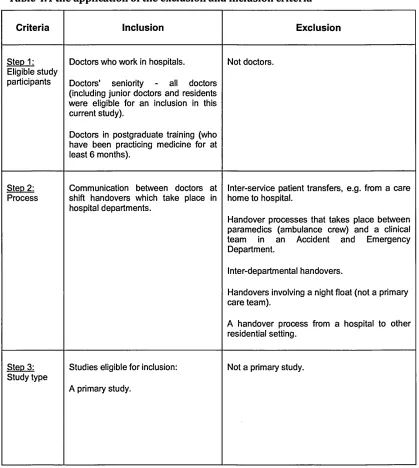
t a b l e 4.4 THE APPLICATION OF THE EXCLUSION AND
INCLUSION CRITERIA
P. 95-96
t a b l e 4 .5a Ch a r a c t e r is t ic so f q u a n t it a t iv e s t u d ie s P. 99
t a b l e 4 .5b Ch a r a c t e r is t ic s o f A m ix e d-m e t h o d s
s t u d y
P. 100
TABLE 4.5c Ch a r a c t e r is t ic so f q u a l it a t iv e s t u d ie s P. 101
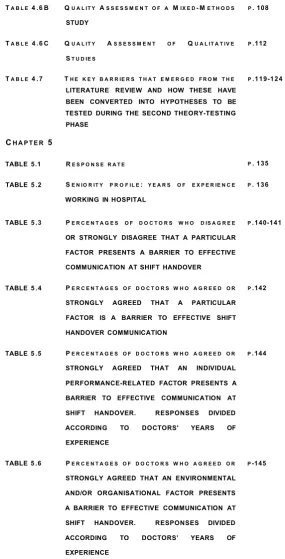
[image:14.613.160.438.112.695.2]Ta b l e 4 .6 C Qu a l it y As s e s s m e n t o f Qu a l it a t iv e p.112 St u d ie s
Ta b l e 4 .7 Th e k e y b a r r ie r s t h a t e m e r g e d f r o m t h e p.119-124
LITERATURE REVIEW AND HOW THESE HAVE BEEN CONVERTED INTO HYPOTHESES TO BE TESTED DURING THE SECOND THEORY-TESTING PHASE
Ch a pte r 5
TABLE 5.1
TABLE 5 .2
TABLE 5 .3
Re s p o n s e r a t e p. 135
TABLE 5 .4
TABLE 5 .5
TABLE 5 .6
Se n io r it y p r o f il e: y e a r s o f e x p e r ie n c e p. 136
WORKING IN HOSPITAL
Pe r c e n t a g e s o f d o c t o r s w h o d is a g r e e p.140-141
OR STRONGLY DISAGREE THAT A PARTICULAR FACTOR PRESENTS A BARRIER TO EFFECTIVE COMMUNICATION AT SHIFT HANDOVER
Pe r c e n t a g e s o f d o c t o r s w h o a g r e e d o r p.142
STRONGLY AGREED THAT A PARTICULAR FACTOR IS A BARRIER TO EFFECTIVE SHIFT HANDOVER COMMUNICATION
Pe r c e n t a g e s o f d o c t o r s w h o a g r e e d o r p.144
STRONGLY AGREED THAT AN INDIVIDUAL PERFORMANCE-RELATED FACTOR PRESENTS A BARRIER TO EFFECTIVE COMMUNICATION AT SHIFT HANDOVER. RESPONSES DIVIDED ACCORDING TO DOCTORS' YEARS OF EXPERIENCE
Pe r c e n t a g e s o f d o c t o r s w h o a g r e e d o r p-145
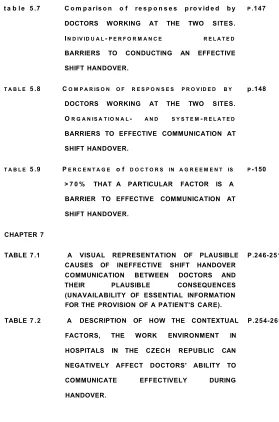
[image:15.613.158.444.100.660.2]BARRIERS TO CONDUCTING AN EFFECTIVE SHIFT HANDOVER.
t a b l e 5 .8 Co m p a r is o n o f r e s p o n s e s p r o v id e d b y p.148
DOCTORS WORKING AT THE TWO SlTES.
Or g a n is a t io n a l- a n d s y s t e m-r e l a t e d BARRIERS TO EFFECTIVE COMMUNICATION AT SHIFT HANDOVER.
t a b l e 5 .9 Pe r c e n t a g e o f d o c t o r s in a g r e e m e n t is p-150
> 7 0 % THAT A PARTICULAR FACTOR IS A BARRIER TO EFFECTIVE COMMUNICATION AT SHIFT HANDOVER.
CHAPTER 7
TABLE 7.1 A VISUAL REPRESENTATION OF PLAUSIBLE P.246-251 CAUSES OF INEFFECTIVE SHIFT HANDOVER
COMMUNICATION BETWEEN DOCTORS AND
THEIR PLAUSIBLE CONSEQUENCES
(UNAVAILABILITY OF ESSENTIAL INFORMATION FOR THE PROVISION OF A PATIENT'S CARE).
TABLE 7 .2 A DESCRIPTION OF HOW THE CONTEXTUAL P.254-263 FACTORS, THE WORK ENVIRONMENT IN
[image:16.612.158.437.84.506.2]Ch a p te r 4
Ch a pte r 1
Ch a pte r 4
APPENDIX 4.1 Se a r c h s t r a t e g y p. 294-311
APPENDIX 4 .2 A Th e q u a l it y a s s e s s m e n t o f
q u a n t it a t iv e s t u d ie s
P.312-321
APPENDIX 4 .2 B t h e q u a l it y a s s e s s m e n t o f t h e
q u a l it a t iv e a n d q u a n t it a t iv e
COMPONENTS OF A MIXED-METHOD STUDY
P.322
APPENDIX 4 .2 C
Th e q u a l it y a s s e s s m e n t o f QUALITATIVE STUDIES
P.323-329
Ch a p te r 5
APPENDIX 5.1 A QUESTIONNAIRE SURVEY P.330-335
APPENDIX 5 .2 Pa r t ic ip a n t s in f o r m a t io n l e t t e r P.336-337
APPENDIX 5 .3 STUDY INFORMATION SHEET P.338-340
APPENDIX 5 .4 Fr e q u e n c y t a b l e s P.341-352
Ch a p t e r 6
Ap p e n d ix 6.1 In t e r v ie w in f o r m a t io n s h e e t P.353-355
Ap p e n d ix 6 .2 A t e m p l a t ec o n s e n t f o r m P.356-357
Ap p e n d ix 6 .3 In t e r v ie w s c h e d u l e P.358-362
Ap p e n d ix 6 .4 Th e In it ia l Da t a An a l y s is Fr a m e w o r k P.363
1.1 Ba c k g r o u n d a n d Ra t io n a l e b e h in d t h e p r e s e n t s t u d y
Shift handover is a process during which doctors can exchange information, as well as exchange authority and primary responsibility for patient care (Stiell, Forster, Stiell and van Walraven, 2003). The level of handover standardisation varies across departments and hospitals; as a result, handover is affected by the context and circumstances in which it occurs. A survey of doctors working in hospitals in Australia by the Agency for Healthcare Research and Quality (AHRQ) found that 49% of respondents believed that important patient-care information is 'lost during shift changes' (The Joint Commission, 2004).
Republic.
1.1.1 In t e r n a t io n a l c o n t e x t
Numerous primary studies (Arora, Manjarrez, Dressier, Basaviah, Halasyamani and Kripalani, 2009; Bump, Jovin and Destefano, 2011) have investigated barriers to effective shift handover communication. These have been collated in a systematic review that identified 91 barriers related to 140 handover strategies or methods of enhancing a handover process (Riesenberg, Leitzsch and Little, 2009). The barriers to handover can be classified into three major categories: the performance of individuals, the work environment and the system factors. We shall consider these in turn:
I. Individual performance: Individual performance-related barriers include lack of clinical capabilities, experience and expertise, and lack of communication skills (Borowitz, Waggoner-Fountain, Bass and Sledd, 2008). Furthermore, with regard to individual-performance related factors arising from experience, expertise and the length of employment, doctors with different types of expertise (specialisation) and work experience may have different expectations of which and how much information should be conveyed during handover; for example less experienced doctors (juniors) may convey different information during handover than more experienced doctors (experts) (Bruce and Suserud, 2005). Or, experts may fail to transfer enough clinical information for juniors to understand a patient's case (Sutcliffe, Lewton and Rosenthal, 2004).
Furthermore, hospital work is hierarchical and both formal and informal authority structures may affect work practices. A handover discussion, therefore, is likely to involve exchanges of 'power', that is, the ability to affect others to follow one's decision (Mintzberg, 1979). Exchanges of 'power' may be relevant to the present study since hospitals are dominated, or at least affected, by medics. Lack of communications skills may reflect the absence of training in how to communicate effectively at shift handover.
II. Factors related to the work environment: Another group of factors that has been found to have an impact on shift handover communication relates to the physical environment. Environmental obstacles to handover include high background noise levels (Borowitz et al., 2008), sometimes resulting in interruptions (Solet, Norvell, Rutan and Frankel, 2005); and, lack of a designated space (Jauhar, 2008; Riesenberg, 2009).
III. Factors related to the system: System-related barriers to handover include lack of time (Pezzolesi et al., 2010), lack of standardisation, standard and/or structured methods for conducting handover (Nagpal et al., 2012), and, insufficient technology support for handover communication e.g. electronic records (Petersen, Orav, Teich, O'Neil and Brennan, 1998).
Furthermore, essential clinical information for a patient’s care delivery e.g. laboratory tests results may be unavailable at the time of shift handover communication (Vidyarthi, 2006).
conditions in which effective shift handover communication between doctors may be compromised. These conditions include lack of resources, heavy workloads and administrative burdens imposed on staff (Elash, 1999). The volume of documents doctors are required to complete during their working hours has significantly increased over the last few years. This can be partially attributed to the fact that in 1999 the Czech Republic government accepted international standards for healthcare organisation accreditation. Heavy workloads and limited resources led to doctors' strike action in 2010, and in 2012 unions threatened another round of strikes. The relevance of heavy workloads here is that they may limit the amount of time doctors devote to non-clinical activities such as shift handover.
patterns of discourse, use of symbols, ways identity is constructed, and so on." (Ashkanasy, Wilderom and Peterson, 2011, p.5). The familiarisation stage of the present study suggested that a blame culture exists in hospitals
in the Czech Republic. According to the human factors approach,
organisations where a blame culture prevails foster a culture of perfection in which there is zero tolerance for errors; such organisations are unlikely to create a supportive work environment (Vincent, 2010, p.142).
Outside the Czech Republic, various methods and strategies such as checklists have been implemented to improve the effectiveness of communication, including the effectiveness of transferring information during handover (Petersen et al., 1998). However, not all of these interventions have been preceded by investigations into barriers to conducting handover within the system in which they were implemented (Behara, Wears, Perry, Eisenberg, Murphy and Vanderhoef, 2005).
1.1.3 THE RESEARCHER’ S BACKGROUND
involved in different research projects focusing on health promotion initiatives, some of which included evaluation of health services in the Czech Republic, Poland and the UK. The research I have been involved in has offered a strong foundation and understanding of the context of healthcare provision, hence I was approached to develop bespoke modules for the 'A Patient Safety Programme - Saving Patients from Harm'.
The preparations of the module involved discussions with doctors and other healthcare providers working in hospitals in the Czech Republic about problems they face. During the discussions it became apparent that shift handover communication presented a significant barrier to effective work in hospital departments in the Czech Republic. Since I was previously involved in a study in the UK around exploring A&E doctors’ perceptions of barriers to effective handover, I decided to undertake a PhD study around barriers to shift handover communication.
As a non-clinician I was an outsider when the present study began. Paradoxically, however, I felt that being ‘an outsider’ to the medical profession and the system, encouraged openness; this became evident during data collection, especially interviews with doctors. Kirkumura (1998)
posits: "On the one hand, advocates for the outsider perspective generally
should (may?) do research on whom' (Rabe, 2003). Can a non-member of the group provide meaningful insights into the experiences and perceptions of the members of the group? Can I, as an outsider to a medical profession, someone who speaks a different first language and works in academia, conduct a meaningful piece of work on doctors' experiences and perceptions of barriers to conducting shift handover in the Czech Republic? Bearing in mind both the obvious and other plausible differences between doctors and myself I preceded the study with the familiarisation stage, during which I explored the feasibility of investigating and reporting barriers to shift handover and the likelihood of establishing a good rapport with Czech doctors (the details of the Familiarisation Stage are described in Section 3.5.1). The familiarisation stage revealed that doctors were interested in being involved in a study investigating barriers to handover and happy to share their experiences and expertise. Although, as a non-clinician I was an outsider when the present study began, however, paradoxically I felt that being ‘an outsider’ to the medical profession and the system, encouraged openness; this became evident during data collection, especially interviews with doctors.
1 .1 .4 La n g u a g e
culture and language of the individuals under study. The researcher- translator was familiar with both the culture and the language of doctors as she had been involved in delivering projects in the Czech Republic.
Interviews were conducted in either English or Polish. Interviews in Polish were possible as in a region where the study was conducted (Hospital 1) many doctors were fluently Czech/Polish bilingual as this part of the Czech Republic has a large Polish speaking community. Many of its citizens have attended Polish schools; in addition some doctors graduated from Polish medical schools. Doctors interviewed at Site 2 were fluent in English as the Site was a large city University hospital. To eliminate translation-related issues an interview schedule in English was pilot tested with one doctor. Furthermore, as the present study focused on the handover process, language used to convey knowledge of the subject was technically constrained and hence, it was not particularly idiomatic. As such, close cultural knowledge was less important than in, for example, a study of humour or attitudes.
1 .1 .5 Et h ic a l im p l ic a t io n s
except in cases of the second type. In the event, although the research identified many problems of the first type, cultural and structural, no such issues of the second type were uncovered and hence no occasion arose to take further action. There was also an issue of interview conduct here. The topic of concern in the interviews was fairly specific, the conduct of handover. However, there is sometimes a possibility that semi-structured interviews stray into new territory that wasn't anticipated and interviewees reveal things they wish they had not (Allmark et al., 2009). In this regard I relied on my experience as a qualitative researcher to keep the focus fairly sharp and, again, no such issue seemed to arise.
1.2 Th e a im a n d o bj e c t iv e s o ft h e s t u d y
The overarching aim of this study was to develop a new theoretical position, hypotheses, on how various factors and mechanisms may collectively contribute to ineffective shift handover communication between doctors working in hospitals in the Czech Republic. As well as this broad aim, the study had three objectives:
I. Using the principles of critical realism, to investigate whether similar
barriers to effective shift handover communication between doctors identified in hospitals around the world are identified by doctors working in hospitals in the Czech Republic.
II. To identify the Czech Republic doctors’ experiences and perceptions
of the key barriers to effective shift handover communication.
guided the conduct of the present study. Critical realism is then discussed in depth in Chapter 2. The purpose of this section is to briefly explain how critical realism affected the roles of different phases of the study and the order in which different chapters are presented in this thesis.
CRITICAL REALISM ONTOLOGY
In terms of the ontological dimension, critical realism posits that the world is independent of human’s perception of it (Collier and Bhaskar, 1994). Critical realism divides empirical reality from Pure Reason; it merges metaphysical, metaphorical and realist propositions, to explain what the world must be, above and beyond individuals’ experiences (Jefferies, 2011). It posits that phenomena have internal mechanisms, and structures, which can be triggered and actualised by various factors (Bhaskar, 1975; Collier and Bhaskar, 1994). In contrast to alternative theoretical positions, such as positivism and constructivism, critical realism aims to explain events, through getting beneath the surface of what ‘appears to be’, in order to understand the mechanisms which cause events to emerge (Bhaskar, 1975; Collier and Bhaskar, 1994). Therefore, critical realism provides an approach from which to understand the fundamental causes of events.
CRITICAL REALISM EPISTEMOLOGY
The key feature of a critical realist investigation is that it is a theory-led approach. Because of its epistemological position it sees the start of a research enquiry as one set of theoretical positions which explain a phenomenon to be tested, and the end of a research enquiry as a new, better theoretical position (Collier and Bhaskar, 1994). That is, a critical realist investigation commences with a set of hypotheses, which are then tested throughout the study, and the main outcome of the investigation is a new theoretical position, a number of hypotheses, from which new studies shall begin. How has this affected the conceptualisation and conduct of the present study?
HOW HAS CRITICAL REALISM AFFECTED THE CONDUCT OF THE PRESENT STUDY?
The initial hypotheses to be tested throughout the study were established during the conceptualisation stage and included a cherry picking review of literature, the review of the researcher’s previous work on handover and familiarisation with shift handover practices in hospitals in the Czech Republic. The initial hypotheses are set out in section 1.4.
precedes the literature review chapter.
The second phase (Phase II) was led by the theories established through the critical review of literature and consisted of testing those theories and developing new ones through a quantitative method, a questionnaire survey, which explored whether or not similar barriers to effective shift handover communication between doctors identified in hospitals around the world are identified by doctors working in hospitals in the Czech Republic, and to explore the Czech Republic doctors’ experiences and perceptions of the key barriers to effective shift handover communication.
The third phase (Phase III) was led by the theories established through the questionnaire survey, and consisted of testing those theories and developing new ones through a qualitative method, semi-structured interviews, which explored doctors’ experiences and perceptions of the causes of the key barriers to effective shift handover communication. This new theoretical position was subject to interpretation in the light of relevant literature including discussion papers and good practice guidelines for doctors on how to communicate effectively at shift handover.
POSITION I
POSITION II a new theoretical
position
POSITION III: a new theoretical
position
POSITION IV: a new theoretical
(1) INDIVIDUAL-RELATED BARRIERS TO EFFECTIVE SHIFT HANDOVER COMMUNICATION BETWEEN DOCTORS
Lack of capabilities e.g. difficulties in recognising which information is essential for the delivery of a patient’s care.
Lack of experience e.g. handover involving junior doctors.
Lack of communication skills (e.g. doctors do not use any strategies to enhance the effectiveness of communication such as asking questions, providing feedback, repeating the key information to ensure that it has been accurately understood).
Handover involving junior and senior doctors (as doctors with different work experience may have different expectations as to what should happen during a shift handover meeting; also, handover involving junior and senior doctors may be affected by differences in doctors’ status).
Disagreements over a medical diagnosis. Interruptions by a handover participant.
(2) Th e s y s t e m a n d e n v ir o n m e n t- (p h y s ic a l e n v ir o n m e n t)-r e l a t e d b a r r ie r s t o
EFFECTIVE SHIFT HANDOVER COMMUNICATION BETWEEN DOCTORS
High background noise level (e.g. due to busy periods in the department and/or hospital). Interruptions from people not directly involved in handover.
Lack of a designated handover space. Lack of time.
Handover is unstandardized.
Handover log or another structured protocol is not used.
The key topics to be included in handover discussion are not defined. Relevant patient documentation is missing
Essential clinical information for a patient's care delivery is unavailable at the time of handover e.g. tests results are unavailable.
of the approach used: barriers, hypotheses and theory. A realist approach in social science is standardly used where a complex network of factors results in phenomena that are puzzling and require explanation. In this thesis the
puzzle is that i) the goal of handover is to ensure that those taking on
responsibility for a patient's medical care are given all relevant available
information; ii) effective handover can occur as evidenced by the fact it often
does; iii) ineffective handover also occurs, evidenced in the same way; iv) it
is not usually known (or transparent) why ineffective handover occurs despite
general agreement on point i), its goal. This situation, where something
works in some social contexts but not others is a classic starting point for realist research. Hence, in this thesis, the term 'barrier' relates to those hidden factors that prevent effective handover.
indicates theory on a small scale rather than a large one. But again, the realist nuance is that hypotheses are the beginning and endpoint of the approach rather than only the beginning, as in, say, a more positivist account. Realist hypotheses often take a Context-Mechanism-Outcome form, as discussed in the next chapter.
1.6 The o v e r v ie w o f t h e th e s is
The thesis comprises seven chapters. Chapter 2 provides the details of the methodology employed in the present study - critical realism. The chapter also briefly describes the principles of alternative philosophical traditions, positivism and constructivism, and the rationale for not adopting them in the present study.
Chapter 3 presents research methods used to answer the research questions addressed in this study.
Chapter 4 provides the details of the first theory-testing phase of the present study, a critical review of literature on barriers to effective shift handover communication between doctors. The purpose of the critical review was twofold: (1) to explore and test initial hypotheses about barriers to effective shift handover communication between doctors through identify types and causes of barriers to effective shift handover communication identified through primary studies conducted around the world; and, (2) to inform the development of a questionnaire survey that formed a basis of theory-testing Phase II.
investigate whether similar barriers to effective shift handover communication between doctors identified in hospitals around the world are identified by doctors working in hospitals in the Czech Republic; (2) to identify doctors' experiences and perceptions of the key barriers to effective shift handover communication; (3) to identify which factors perceived by doctors as barriers to effective shift handover communication were statistically significant; (4) to identify which barriers to effective shift handover communication between doctors were identified by more than 70% of respondents; and (5) to identify any statistically significant correlations between factors (variables) perceived by doctors as barriers to effective shift handover communication, that is, correlations illustrating tendencies and patterns in which those factors (variables) may collectively contribute to ineffective shift handover communication.
Chapter 6 presents the details of the third theory-testing phase of the present study, semi-structured interviews with doctors. The purpose of the qualitative Phase III was to further test hypotheses, which were taken forward as plausible from Phase II through examining doctors' experiences and perceptions of the causes of the key barriers to effective shift handover communication. Furthermore, Phase III explored doctors’ experiences and perceptions of the role(s) and importance of shift handover communication.
2.1 In tr o d u c t io n
This methodology chapter has eight aims:
1) To present the research questions being addressed in the present study (Section 2.2).
2) To describe a distinction between research methodologies and methods; to briefly discuss: (i) why discussing research methodology underlying a research study is important, and (ii) which research methodologies have been prevailing among Health Services Research (HSR) (Section 2.3).
3) To briefly introduce realism (Section 2.4).
4) To present early forms of realism, naTve/direct and indirect realism and discuss why those were displaced by positivism and constructivism (Section 2.5).
5) To briefly discuss the basic principles of alternative philosophical traditions, positivism and constructivism and to present problems with those approaches which affected the researcher's decision to adopt a critical realist approach in the present study, that is, present reasons for not using positivism and constructivism (Section 2.6).
challenges to realism have been tackled recently, under a new label ‘critical realism’, in a way which creates a credible alternative to positivism and constructivism in both the natural and social realms (Section 2.7).
7) To briefly discuss compatibility of critical realism with research methods and to describe how critical realism guided both, the conceptualisation of barriers to effective shift handover communication between doctors and the conduct of the present study (Section 2.8).
8) To illustrate how the present study would have looked if it would be led by different research traditions: critical realism, positivism and constructivism (Section 2.9).
2.2 The Re s e a r c h q u e s t io n s
The overall aim of this study was to establish a new theoretical position, hypotheses, on how various factors and mechanisms may collectively contribute to ineffective communication between doctors at shift handover. This aim included addressing the following research questions:
I. Are similar barriers to effective shift handover communication between
doctors identified in hospitals around the world, identified by doctors working in hospitals in the Czech Republic?
II. What are the Czech Republic doctors’ experiences and perceptions of
the key barriers to effective shift handover communication?
III. What are the Czech Republic doctors’ experiences and perceptions of
2.3 Me t h o d o l o g yv e r s u s r e s e a r c h m e th o d s
Although the term ’methodology' is sometimes used synonymously with 'method' it is also commonly used to mark a useful difference. The methodology is the philosophical stance adopted by researchers in a scientific study; the method is the set of tools used by the researchers in exploring a phenomenon or phenomena (Rossman and Wilson, 1985a). Specifying a philosophical stance employed in a study is important as it represents the researchers' beliefs about how the world works and how they can acquire knowledge of that world (Clough and Nutbrown, 2007). That is, it represents the researchers' interferences about the nature of the reality (ontology), as well as their attempts to comprehend this reality
(epistemology). Consequently, the methodology determines the
conceptualisation of a topic and the conduct of a research inquiry; i.e. it provides a justification for employing chosen research methods (Rossman and Wilson, 1985a) and it determines the conduct of a study: “a good methodology is more a critical design attitude to be found always at work throughout a study, rather than confined within a brief chapter called “Methodology" (Clough and Nutbrown, 2007, p 31).
Positivism, constructivism and realism are the main research methodologies prevailing among Health Services Research (HSR). The critical review of literature on handover in healthcare organisations conducted for the purpose of the present study, which is presented in Chapter 4, revealed that previous studies used qualitative, quantitative and mixed-methods approaches. However, the research methodology was not explicitly stated in any of them, although they were broadly in the most common current traditions of positivism or constructivism.
epistemology. Critical realist approach will be discussed in detail in Section 2.7.
2.4 Cr it ic a l r ea lism_____________________________________________________
Realism in various forms was probably the first methodological approach to science. However, because of numerous problems with this approach, which are briefly described below, it was subsequently replaced by positivism and constructivism (Ladyman, 2002). Some of these problems, which led to the rejection of realism, have been recently tackled by the work of a British philosopher, Roy Bhaskar; whose notion of realism, under a new label ‘critical realism’, has created a credible alternative to positivism and constructivism. While critical realism will be discussed in detail in the next section (2.5), here we briefly discuss what philosophical traditions came before critical realism. The purpose of presenting those philosophical traditions is to describe a wider philosophical context within which the present study is located.
2.5 Wh a t c a m e b e fo r e c r it ic a l r e a l is m?: Na iv e/Dir e c t a n d In d ir e c t REALISM__________________________________________________________________
The following section presents a brief account of naive realism, and discusses the problems with this approach leading to its rejection as a reliable philosophical stance, and its displacement by positivism and constructivism.
2.5.1 Na iv e/d ir e c t r e a l is m
that is because there is a tree with green leaves in front of us. The key problem with this is that what we perceive is a function of our perceptual abilities and beliefs as well as what is actually there (DeWitt, 2011). That is, all individuals are unlikely to perceive the world in the same way, as experiences of human consciousness can differ and different individuals can perceive the same thing differently. And no individual, no matter how well equipped, can perceive the whole world in its true form - for example, see a tree as it is both to humans, bats and every other perceiving creature. This means that the function how we perceive the world represents who we are as well as what the world is.
For example, we see green leaves because our perceptual equipment is set up to register green when in the realm of light waves of a certain frequency (Giere, 2009). The same is true for what we hear, smell, touch and taste. A bat lives in the same world as us but perceives it completely differently. Similarly, individuals can differ; someone might be deaf, or colour blind, for
example (Giere, 2009). By contrast, there are individuals who have
exceptionally acute sense - some women have four cones instead of three in their eyes and thus see a richer colour world than most people (Giere, 2009). People whose brain is disrupted by chemical disturbances, such as drugs, might perceive a large man in a green coat rather than a tree. In addition, the same individual can perceive the same thing differently at various moments in time; for example, an object, such as a tree, looks different during the day and at night. Therefore, naive/direct realism was dismissed as a philosophical tradition underlying scientific investigations, and replaced by indirect realism, which is briefly described below.
2 .5 .2 In d ir e c t r e a l is m
between. Indirect realism introduces a notion of humans being able to access ‘an appearance’ rather than a real object and what we perceive directly are appearances (Ladyman, 2002). Indirect realism introduces the possibility of moving beyond the immediate experience to say that there is the world that posits unperceived, the world that is the basis of our experience. This notion of a world beyond the one we actually experience is sometimes called the Metaphysical Thesis because it seems to refer to a realm that is beyond the everyday physical one.
Furthermore, indirect realism posits that we are constrained in what we can see and perceive by the beings we are but that a scientific method gives us a true account of the world as it is and why it seems to us as it does. That is, the scientists are aware of their limitations but they can explore and describe how the world operates through using their senses and asking the question: ‘How the world must be given its effects on us?’
In broad terms, when we compare naive/direct and indirect realism, a distinction between them is that according to naTve/direct realism we can perceive objects directly, for example, we can perceive an apple itself, in contrast, according to indirect realism, we can perceive/access immediately the appearance of an object, e.g. an appearance of an apple, our mental representation of it (Lacewing, n.d.).
accept Galileo’s theory as instrumentally useful, for example, to predict the movements of the stars. However, Galileo wanted to insist on more, that is, that his theories were true, that is, that the universe really was heliocentric.
Aside from political problems with the Catholic Church there were also other, philosophical problems with indirect realism, which led to its decline in the 20th Century. Comte was an early critic, coining the term 'positivism' in the process. Comte's objection to realism was its reliance on metaphysics; something he felt had no place in scientific methodology (Ladyman, 2002).
Comte and positivism is discussed below. However, two particular
philosophical problems were crucial in the decline of realism; these are: (i) The Underdetermination of Theory by Data (UTD) and, (ii) Pessimistic
Induction (PI); we shall discuss them in turn below.
2.5.3 Th e Un d e r d e t e r m in a t io n o f Th e o r y b y Da t a (U T D )
The Underdetermination of Theory by Data posits that a number of conflicting theories and hypotheses are likely to be compatible with the data/evidence and that predictions cannot be derived from the evaluation of a single hypothesis in isolation from anything else. Furthermore, the results of a scientific investigation cannot prove that a given theory is correct and the
other ones are not (DeWitt, 2011, p. 48-49). Consequently, “crucial
This argument is supported by the notion of auxiliary hypotheses. Whenever an experiment is carried out or data are interpreted, the researcher makes assumptions that can be called auxiliary hypotheses (DeWitt, 2011). For example, one assumption might be that the equipment was not faulty, or that the researcher did not make up the data. Other assumptions apply to the reasoning processes used in statistics, mathematics and logic. It follows that crucial experiments cannot be used to exclude one of the conflicting theories as if the results of an experiments, that is, the data, disconfirm the main theory, it is always plausible to reject auxiliary hypotheses rather than the main theory (DeWitt, 2011, p. 47-48). That is, hypotheses and theories are not rejected/accepted in isolation; they are accepted and rejected together with other hypotheses and theories (DeWitt, 2011). Therefore, if evidence does not support a theory, it is difficult to establish whether the problem is within the theory or with one or more of the auxiliary hypotheses (DeWitt,
2011).
With respect to The Underdetermination of Theory by Data and realist assumptions about reality, if there are numerous incompatible theories about the reality, especially those describing aspects of reality which cannot be observed by us, then how can we decide which one of them shall be accepted as the correct one? That is, each hypothesis possesses verifiable opponents, which agree regarding what we can observe, but disagree about
the unobservable (DeWitt, 2011). Which hypotheses, then, shall be
perceived as being ‘underdetermined’ by data? The further question that emerges is: ‘How can we be certain about any theories arising from realist investigations?’ and we cannot possibly answer this question referring exclusively to the principles of less naive/direct or indirect realism, and this partly explains the decline of realism.
2 .5 .4 Th e Pe s s im is t ic In d u c t io n (P I)
The Pessimistic Induction (PI) posits that because every scientific theory in the past has eventually been overtaken by a different scientific theory, every new theory will be overtaken by a different one (DeWitt, 2011). That is, any theories currently believed to be true will eventually be overtaken. It follows that what we think of as knowledge is actually a flawed theory that will be superseded (DeWitt, 2011). Both, naive/direct and indirect realists failed to defend their position against arguments presented by the Pessimistic Induction (PI).
2 .5 .5 Fu r t h e r p r o b l e m s w it h r e a l is m
Alongside these purely philosophical problems, there were issues in scientific investigation, particularly physics, which created problems for realism; we shall discuss them below.
The first account of the Universe being governed by regular laws originated in astronomy (Laplace’s determinism - a branch of realism). Scientific determinism posits that if at a particular moment in time, we could comprehend the movement of particles in the universe, it would make it possible for us to determine how the participles would behave, move etc. at other times (Hawking, 2013). That is, according to scientific determinism the particular condition that the universe is in at a given time, determines its state at other times (Hawking, 2013). Furthermore, determinists posited that scientific laws can be deemed to be scientific, exclusively when they are independent of the effects of forces beyond scientific comprehension and/or the laws of the universe, that is, independent of God’s will and actions (Hawking, 2013).
(also known as the Quantum Theory), and the Uncertainty Principle (Hawking, 2013). Clearly these theories from physics are beyond the realm of this thesis. However, what matters here is that both raise important problems for realism.
Realist epistemology seems to require that scientific theory gives at least an approximate account of how the world is; the Chaos Theory, the Uncertainty Principle and the Quantum Theory undermine this epistemology.
To summarise, the Uncertainty Principle and the Quantum Theory suggest that there is no single, true description of the world and that in describing or measuring the world we can affect it. A key idea here is the view of probability: is it a fact in the world (ontology - raising problems for realism) or a fact in our understanding of the world (epistemology - compatible with realism)?
This uncertainty arising from the Uncertainty Principle related to how the Universe works was questioned by Einstein who attempted to defend realism against the problems which suggested that realism was both empirically and
philosophically problematic (Kumar, 2009). Einstein claimed that our
uncertainty about the universe was temporary (Kumar, 2009). According to him, underlying reality existed and was governed by the universal laws (DeWitt, 2011) and his saying, “God does not play dice” represented his belief that while God can see and understand the reality, it is impossible for us, humans, since our actions and attempts to understand the nature of the reality are weakened/impaired by the quantum nature of the light (Hawking, 2013). Thus, Einstein rejected the idea that the Universe is affected and controlled by probability (Hawking, 2013). This idea that regular laws govern the universe was the key notion of Einstein’s Theory.
political problems with the Church that were apparent earlier but which, to some extent, showed that the position taken on realist ontology was one that
mattered in some sense. Positivism and constructivism, two major
2.6 Ph il o s o p h ic a l t r a d it io n s a n d p a r a d ig m s c o m m o n l y u sed in Hea lth
Se r v ic e s Re s e a r c h (HSR)_________________________________________
Constructivism and positivism are two research paradigms prevailing among Health Services Research (HSR) (Williams and May, 1996a); we shall discuss them in turn below.
2 .6 .1 Po s it iv is m
The term positivism was coined by Auguste Comte (1798 - 1857). Comte viewed positivism as the modern, scientific turn in human thoughts associated with the Enlightenment of which he was a part. He suggested that human thought had gone through three stages of development: theological, metaphysical and positivist (Ladyman, 2002). In the theological stage, the world was explained as the product of supernatural forces, such as gods. In the metaphysical stage, it was explained as being the product of unseen and unobservable forces, such as 'universal laws' and 'moral rights'. This type of reasoning was undertaken in the absence of, or without adequate reference to empirical evidence (Ladyman, 2002). In the positivist stage, human reasoning was grounded in empirical evidence and did not make essential reference to religious or metaphysical forces except as a matter of convenience (Ladyman, 2002). Thus, for example, positivists allowed science to talk of universal scientific laws or of cause and effect but only as instrumental devices for prediction, not as statements of facts about the world (Ladyman, 2002). Thus, Comte's positivism incorporated several features:
metaphysics so therefore deny that a statement such as 'there is a real realm of objects beyond human experience' is meaningful.
2. An emphasis on prediction over explanation in science. For positivism, the importance of science lays in its ability to predict and control the world. The explanation of the world in terms of, for example, universal laws was simply a convenient model by which this prediction and control could occur.
3. An empiricist epistemology - in other words, everything humans know is ultimately a product of what they experience or could experience. In logical positivism this took the form of saying that statements were either: i) empirically verifiable (e.g. it is raining); ii) tautological (e.g. all not married men are bachelors); or, iii) meaningless (e.g. there is a force that controls the world but which can never be sensed by man).
With regard to eliciting knowledge of the unobservable, positivism posits that we are incapable of doing so. Therefore, investigations in the positivist tradition are limited to exploring the empirical domain and do not facilitate exploring anything like so called other layers of reality which represent the underlying structures and mechanisms which generate events but which are unobservable. Positivism posits that pure data is the basis of knowledge (Chalmers, 1999) and therefore in a positivist tradition a theory is induced from observations of phenomena; for example, observing a kicked ball moving might lead to a theory about how kicking in general causes balls to move.
unobservable except through their effects. Rather they should be seen as useful or not, to the extent that they correctly explain and predict what happens in the observable realm. Positivism shares with constructivism the notion that theories are abstractions and they are useful or not rather than false (Johnson and Gray, 2010). Consequently, all we can know are conceptual constructions, theories and models, which serve more or less useful purpose of explaining the empirical domain (Johnson and Gray, 2010).
would be true on, say, 95 out of 100 times given those results [this is where p = 0.05; where p is the probability of getting certain results, of the occurrence of an event]. We shall return to this point and how hypothetico-deduction raises problems for positivism presently in Section 2.6.3.
Similarly, in social science, a social theory is posited as an instrumental explanation rather than true or not. Two social sciences that are still heavily influenced by positivism are economics and behaviourist psychology. Economics creates models that are known to be based on assumptions that are not supported empirically (e.g. that people are maximising, rational consumers) (Friedman, 2010). But these are justified provided the models can be used to predict and manipulate the economy (Friedman, 2010). In positivist epistemology, models are necessarily unrealistic because they are derived but depart from the empirical realm; and on so7me accounts the more unrealistic they are the better, as they are merely abstractions that enable the scientist to predict and manipulate things in the empirical realm (Friedman, 2010).
Positivism dealt with the problems such as The Underdetermination of Theory by Data (UTD) and the Pessimistic Induction (PI) by breaking the link between scientific theory and the notion of truth, emphasising instead instrumental usefulness of theories. On such an account, the fact that data underdetermine theory is not a problem because positivism does not require there to be only one true account of the world, just accounts that are more or less useful. Similarly, the Pessimistic Induction is not a problem - as science progresses it will happily let go of theories that are less useful.
2 .6 .2 Co n s t r u c t iv is m
The term constructivism was coined by Jean Piaget (1896 -1980). Constructivism represents a theory of knowledge. It covers a range of theories that is wider even than the term 'positivism' but there are characteristics of methodology that are described as constructivist. In the first place, constructivist ontology says that in some way or other, the objects in the world are created by humans. There are two major forms of this: social and natural world constructivism (Williams and May, 1996b).
Social world constructivism says that the objects in the social world are created by humans and only exist because of them: money, for example, exists only because people create it and believe it exists. Concepts and ideas are seen as artificial forms, which are utilised as tools for unfolding, understanding, and negotiating the social world (Williams and May, 1996b).
Natural world constructivism says that objects in the natural world also are created by humans and exist only because of them. Typically, this more radical constructivism draws on anthropology to show that humans have constructed the world in widely variant ways and posits that there is not a realm of real objects that exist beyond human activity.
Constructivism posits that the knowledge we have of the world exists because the researcher exploits the meaning of a phenomenon as perceived by individuals (Patton, 1980). It postulates that all conditions of judgement are dependent upon individual "meaning making" in the given context (Burrell and Morgan, 1979), hence, no single, straightforward explanation or truth about a phenomenon exists and can be objectively described (Lincoln and Guba, 1985). Thus, the value of scientific investigation lies in the way in which researchers construct or make sense of “facts” described by individuals. It is the researcher who selects what to observe, how to interpret it, and, how to disseminate this knowledge to others (Lincoln and Guba, 1985). This multiplicity is at odds with positivism, which prefers the most predictive theory, and even more at odds with realism, which prefers the theory closest to the truth. The theories that people accept are strongly dependent on time, context and cultural site (Chalmers, 1999). Thus, the research process is in a state of flux, there is a constant interaction between the researcher and objects of investigation (Lincoln and Guba, 1985). Consequently, constructivists reject the positivists’ perception that "science can generate objective knowledge" which can be generalised across settings and populations (Creswell, 2007).
Constructivism has dealt with the problems of The Underdetermination of Theory by Data (UTD) and the Pessimistic Induction (PI) by denying that there is a reality beyond our perceptions and ideas of it. Constructivism is probably the prevailing methodology in qualitative research and is certainly influential throughout social science (Creswell, 2007).
2.6.3 Re a s o n s f o r n o t u s in g p o s it iv is m a n d c o n s t r u c t iv is m in t h e p r e s e n t
STUDY
2.6.3.1 Wh yd id p o s it iv is m n o tb e f it t h e p r e s e n ts t u d y?
This chapter earlier summarised three characteristics of positivism: i) hostility to metaphysics; ii) emphasis on prediction over explanation; and iii) empiricist epistemology. One outcome of this view is that it values controlled trials; these emphasise the prediction of change in controlled conditions and thus avoid looking beneath the surface for hidden mechanisms of action or events (Pawson, 2013). What matters in a controlled trial is whether altering one factor is associated with a change in outcome. A controlled trialist might posit a theory as to why the change occurs but this is essentially an instrumental tool, not an account of true but hidden mechanisms. These hidden mechanisms are sometimes referred to as the 'black box' and are of no more than instrumental interest to positivism (Pawson, 2013).
study grounded in the complexity of the social situation rather than abstracted from it - it is a more straightforward way of examining the 'black box'. In addition, if the present study were to adopt the positivist approach, such as a randomised controlled trial, causation would be established at the empirical level and an investigation would be limited to exploring regularities, for example comparing events involving the presence of absence of barriers to effective shift handover communication (Maxwell and Mittapalli, 2010).
Perhaps most importantly in relation to employing positivism in the present study, achieving positivism's 'experimental conditions' and eliminating 'disturbing factors' (Chalmers, 1999) would limit the scope of the present study as distinguishing between 'disturbing factors' and barriers to effective shift handover communication was not possible at the beginning of the study.
All above mentioned factors stress the importance of exploring doctors'
perceptions and experiences of barriers to effective shift handover
communication, and some of positivism's preferred methods such as a randomised controlled trial would undermine the significance of exploring participants' opinions. To summarise, a positivist inquiry would not be appropriate for the present study as:
1) It would not facilitate exploring the so-called ‘black box’, the underlying structures and processes which may generate ineffective shift handover communication. Studies in the positivist tradition are generally not concerned with underlying mechanisms but only with outcomes. Theories are being used as tools for explaining events but they do not explain deeper structures or the deeper nature of the real world.
approaches as they offer the prospect of data that are as pure and uncontaminated as possible. Another distinction between critical realism and positivism is that the latter accepts the plausibility of attaining an objective, verifiable knowledge about phenomenon (Schwandt, 2007).
While the above section describes why positivism did not befit the present study, the next section discusses problems with constructivism, which affected the researcher's decision not to adopt it.
2 .6 3 .2 Wh yd id c o n s t r u c t iv is mn o tb e f it t h ep r e s e n ts t u d y?
The present study was concerned with exploring both: (a) doctors' perceptions of barriers to conducting effective handover, including what are the underlying factors and mechanisms, which may collectively contribute to ineffective shift handover communication between doctors. Constructivism would be a potentially helpful approach to this concern. However, it would be difficult to find a basis in constructivism to give priority to any particular account, or to combine accounts, in order to say what was really going on during handover (Pawson, 2013). Constructivism, in its purest form, posits that there are as many realities as there are individuals and thus the constructivist inquiry is unlikely to lead to specific conclusions (Lincoln and Guba, 1985).
not concerned with testing initial hypotheses (Bryant and Charmaz, 2007; Creswell, 2007).
Thus despite the problems with realism outlined in Section 2.5 that led to the rise of positivism and constructivism, realism has attractions in forming the methodology for this study. As well as this, positivism and constructivism have shown themselves to be at least as problematic as realism in the wider philosophy of science. A full account of these problems is unnecessary here but is set out in a wide range of sources (Ladyman, 2002) (Pawson, 2013). Relevant to this thesis, however, are the following:
1) Positivism struggles to give an account of scientific progress, that does not make use of metaphysical concepts, such as genuine cause (rather than coincidental) and invisible forces such as gravity, social stigma and so on (Ladyman, 2002).
2) Constructivism struggles to give a good account of what is going on over and above what individuals think is going on (Ladyman, 2002; Pawson, 2013). Constructivism only seems to be able to provide the multiple accounts but not to adjudicate between them or to draw them together to create a fuller, and truer, account.