Making it Work: learning and evaluation contract: Final
report
BATTY, Elaine <http://orcid.org/0000-0001-7524-3515>, DAYSON,
Christopher <http://orcid.org/0000-0003-2402-1183>, EADSON, William
<http://orcid.org/0000-0002-2158-7205>, PEARSON, Sarah
<http://orcid.org/0000-0001-5049-5396>, SANDERSON, Elizabeth
<http://orcid.org/0000-0003-1423-1670>, LINDSAY, Colin and CULLEN, Anne
Marie
Available from Sheffield Hallam University Research Archive (SHURA) at:
http://shura.shu.ac.uk/18226/
This document is the author deposited version. You are advised to consult the
publisher's version if you wish to cite from it.
Published version
BATTY, Elaine, DAYSON, Christopher, EADSON, William, PEARSON, Sarah,
SANDERSON, Elizabeth, LINDSAY, Colin and CULLEN, Anne Marie (2017). Making
it Work: learning and evaluation contract: Final report. Project Report. Sheffield,
Centre for Regional Economic and Social Research, Sheffield Hallam University.
Copyright and re-use policy
Making it Work: Learning and
Evaluation Contract
Final Evaluation Report
Elaine Batty, Chris Dayson, Will Eadson, Sarah Pearson, Elizabeth Sanderson
Centre for Regional Economic and Social Research (CRESR)
Sheffield Hallam University
Colin Lindsay, Anne Marie Cullen
Scottish Centre for Employment Research (SCER) University of Strathclyde
Acknowledgements
The authors would like to thank the staff and clients of the five Making it Work partnerships for completing the survey, taking part in interviews and providing other data to the evaluation team.
Contents
Summary ... i
1. Introduction ... 1
1.1. Learning and Evaluation ... 1
2. The MIW partnerships: models of delivery ... 3
2.1. The MIW Partnerships ... 4
3. Supporting lone parents furthest from the labour market ... 9
3.1. The MIW clients: barriers and challenges and distance travelled... 9
3.2. Journeys to work: Client case studies ... 17
4. Supporting lone parents in complex circumstances ... 24
4.1. Outreach and Engagement ... 24
4.2. Co-production ... 25
4.3. Development worker and peer support ... 26
4.4. Childcare ... 27
4.5. Employment and in-work support ... 28
5. Impact and Value for Money ... 31
5.1. Inputs ... 31
5.2. Activities and Outputs ... 32
5.3. Outcomes ... 34
5.4. Skills and capabilities ... 37
5.5. Well-being ... 40
5.6. Additionality ... 41
5.7. Benchmarking with other employment support programmes ... 43
5.8. Value for money ... 44
5.9. Cost-effectiveness ... 47
5.10. Social value ... 48
6. Conclusions and implications for future employability strategies in Scotland ... 50
6.1. Conclusions... 50
6.2. Implications for future employability strategies in Scotland ... 51
Appendix 1: MIW Partnership Data ... 54
Summary
This is the final programme evaluation report for Making it Work (MIW). It accompanies two additional reports: Making it Work: lessons and challenges for Scotland's future employability services; Making it Work impact and value for money.
Making it Work
MIW was a Big Lottery Fund in Scotland programme designed to support lone parents living in complex circumstances. It was delivered from 2013 to 2017 in five local authority areas in Scotland where there are high concentrations of lone parent families: Edinburgh, Fife, Glasgow, North Lanarkshire and South Lanarkshire.
MIW provided lone parents with intensive support in their journeys toward sustainable employment, based on a model which included signposting and access to existing service provision, key worker and peer group support, and linking between employability and other support services including childcare, health and social care, housing and financial inclusion. Participation in the programme was voluntary.
Learning and Evaluation
The evaluation draws on a number of data sources:
Partnership- and programme-level reports produced in years one, two and three of the MIW programme.
Semi-structured interviews (conducted face to face and over the telephone) carried out on an annual basis with representatives of MIW partnerships. More than 90 interviews were conducted over the lifetime of the programme.
In-depth interviews with MIW clients carried out between 2013 and 2017. Over 80 interviews were carried out over the course of the evaluation, including a small number of follow-up interviews with clients who had been interviewed in previous years.
MIW client surveys: support workers assisted MIW clients to complete an-online survey within 4 weeks of joining the programme, and at follow-up intervals of six and 12 months. Baseline surveys were completed for 1,215 lone parents. Follow-up surveys at six months were completed for 435 clients and for 125 clients at 12 months.
Partnership data: MIW partnerships completed a template which collected standardised monitoring data across the five partnerships for each year of the programme.
The MIW Partnerships
identified good practice in supporting disadvantaged parents: tackling barriers to employability and childcare; local flexibility to co-ordinate specialist skills and services; community-based provision; key-workers to provide consistent, flexible and tailored support; stable, longer term funding to mitigate the impact of initial start-up costs and enable learning around effective approaches to be developed and shared; flexible funding regimes to allow support to address local need; support for groups facing the most challenging barriers; performance management frameworks which reflect both 'hard' outcomes and distance travelled or 'soft' outcomes for those requiring long-term support.
Supporting lone parents furthest from the labour market
The programme supported lone parents who were farthest from the labour market. Half were aged under 25 or over 35, and most were in receipt of benefits and living in rented accommodation. Almost one quarter of lone parents indicated that they had an illness or disability that affected their ability to work. The most common conditions were depression, stress or anxiety. Almost all of the lone parents engaged in MIW were not working in the four weeks before joining the programme.
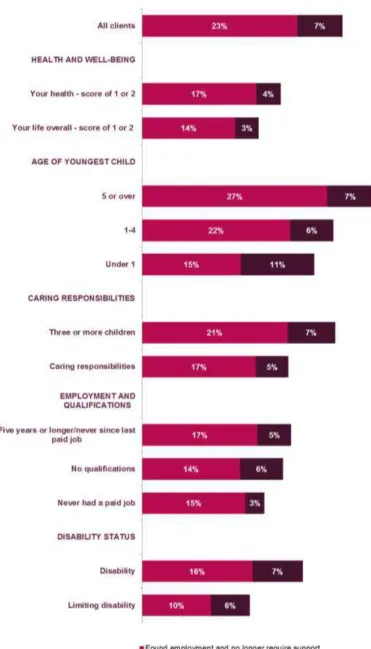
Lone parents lacked confidence at the outset of their engagement with MIW and reported barriers in relation to the availability of suitable local jobs and affordable childcare and weak social and family networks to support their participation in work and training. Analysis of quantitative data gathered through client surveys has demonstrated improvements across a range of indicators at the programme level, particularly between the baseline and six months. The majority of MIW clients experienced improvements across a range of 'distance travelled' measures covering confidence, self-efficacy and perceptions of barriers and 30 per cent of those supported by the programme moved into work.
Qualitative data illustrates the importance of the programme's flexible, holistic and personalised approach to supporting this client group. The views expressed by lone parents were overwhelmingly positive in relation to the support received and the impact this had in terms of improved outcomes for themselves and their families. Lone parents interviewed for the evaluation commented in particular on the benefits associated with bespoke programmes of support which responded to their needs and priorities (and over which they felt a sense of ownership) and allowed them to progress at their own pace. They contrasted this with their experiences of mainstream employability support.
Supporting lone parents in complex circumstances
Outreach and Engagement
The MIW partnerships successfully engaged new clients by developing strategies that reached beyond mainstream employability services: targeting the places, service hubs and communities where key workers could directly engage with lone parents. Consistent elements were present where engagement activities worked well:
MIW teams deployed considerable energy and resources (for example, the time of key workers) in establishing a wide range of relationships with key stakeholders at the outset of the programme.
A range of different approaches were used, all of which focused reaching beyond mainstream employability services.
While the aims and ethos of MIW are distinct from Jobcentre Plus, maintaining a sold working relationship with Jobcentre Plus staff helped to raise awareness and access for lone parents.
Co-production
services and employability journeys. The evaluation consistently found benefits for service users in the way that the programme made user co-production real. Service users told us about how they felt empowered by the programme and the sense of choice and control that defined their MIW journey.
A number of factors were important for MIW in engaging and empowering users to co-produce. First, well-resourced community engagement activities helped to build trust within communities and among lone parents. Second, the partnership-based approach supported by the Big Lottery Fund also facilitated the inclusion of some third sector organisations which would not find a role in the delivery of mainstream contracted-out employability services. These organisations bring both expertise and credibility to attempts to gain the buy-in and co-production efforts of lone parents. In addition, a combination of the Big Lottery Fund's flexible funding package and a collaborative ethos meant that staff and partners were willing to challenge and change things that were not working.
Development worker and peer support
An emphasis on intensive, personalised support was common to all five partnerships and an integral feature of the MIW model which complemented, and supported, mainstream employability services. Early one to one working was a crucial element. The establishment of positive relationships in which trust and rapport was built between lone parents and project workers was critical, and building these relationships in the early stages of client engagement was a precursor to clients engaging with group work, other training activities and ultimately sustainable employment. Benefits associated with development worker support included accessing local authority welfare funds, dealing with debt issues, and developing an action plan to progress employability. Clients interviewed for the research valued the commitment, support and care offered by development workers.
Intensive one to one support was complemented by group work activity to minimise the risk of creating dependency on support workers and to facilitate peer support networks and groups. Opportunities to share experiences, challenges and issues with peers built lone parents' confidence, and supported lone parents to develop skills to engage with new groups of people.
Childcare
The MIW partnerships adopted a range of innovative and flexible approaches to childcare. Common themes were the provision of flexible and tailored support to enable lone parents to access work and training, and the building of local capacity to provide sustainable solutions to local childcare needs. In all the MIW areas a critical success factor was the availability of flexible resources which were used to support lone parents to engage with training and skills development and to make transitions into work. Funding was used to supplement existing provision, which was universally seen to be inadequate, either in supporting lone parents who were some distance from the labour market to make initial steps toward using childcare provision, or to assist lone parents who were in work to sustain jobs which required shift or unsociable hours.
Much of the childcare provided directly through MIW was in the form of bespoke crèche facilities which were successful in helping lone parents to build skills and confidence to use formal childcare provision. Options such as child minding and sitting services were not well supported by lone parents, and the partnerships struggled to build capacity in local provision.
Employment and in-work support
employers. There were examples of clients who had gradually begun to overcome isolation and sometimes mental health issues by engaging in volunteering.
The employer-facing work undertaken by MIW partnerships had positive impacts in challenging some employer attitudes. Participating employers reported they had been encouraged to think differently, particularly about 16 hour contracts as a solution to their employment needs. However, there was also consensus on the need to continue to challenge some employers’ negative or unhelpful attitudes towards lone parents. There is a need to engage employers in an exercise of ‘job crafting’ so that they are persuaded of the case for offering opportunities that provide sufficient hours and a degree of flexibility so that lone parents can balance the demands of work and family life.
In-work support was available for clients through continued engagement with key workers or other appropriate staff members and was valuable in supporting clients following the transition to work, and in facilitating a positive relationship with employers. Partnerships also constructed practical packages of support to help lone parents to manage the transitional costs and other challenges when returning to work. Lone parents were supported through discretionary funding to cover food, clothing and travel costs between the last benefit payment and the first pay day in the client’s new job. They also received support to navigate tax credits claims as well as advice and guidance on budgeting: in most instances starting paid employment meant a change from weekly or fortnightly benefit payments to a monthly wage.
There remained challenges associated with assisting lone parents toward sustained job outcomes under MIW. The programme targeted areas that have experienced labour market problems and in assessing MIW, it is important to acknowledge the demand-side limits on the quantity and quality of jobs in the relevant areas.
Impact and Value for Money
The cost per job outcomes are broadly in line with those achieved by other employability programmes, particularly considering the vulnerable target group for Making it Work, and overall the programme has provided good value for money, although caution needs to be applied in drawing comparisons with other programmes which had different operating and evaluation models. Qualitative evidence suggests strongly that there are wider benefits associated the MIW programme which are likely to have a financial value. Using a willingness to pay methodology to apply a financial value to well-being outcomes suggests an additional £3m social value associated with improvements to mental health and wellbeing can be added to the £11.5 economic value associated with job outcomes.
Conclusions
The evaluation leads to a number of learning points in relation to what has 'worked well' in supporting these lone parents:
Extensive outreach and engagement is needed to engage lone parents facing multiple and complex barriers who might not otherwise be engaged through mainstream provision. There is a crucial role for community-based organisations with expertise in working with this client group to develop effective outreach activities which build trust with lone parents whose experiences and views on mainstream provision are often negative.
Implications for future employability strategies in Scotland
Our final evaluation of Making It Work has identified lessons and areas of good practice in line with six key principles that will inform the services commissioned and define a ‘Scottish Approach to Employability’.
Principle 1: Employability services should be designed nationally but adapted and delivered locally: While MIW was not a national programme covering all of Scotland, it targeted five diverse local authority areas. There was scope for substantial local adaptation, but the Big Lottery Fund in Scotland ensured that the five area partnerships responded to a set of shared and agreed principles. MIW partnerships were effective in developing models of provision that reflected local assets and needs. A key lesson is that if funders send clear messages that establishing locally-responsive services is a priority, then delivery stakeholders will respond accordingly.
Principle 2: Employability services should be designed and delivered in partnership: The Big Lottery Fund in Scotland’s prioritisation of partnership-working incentivised local MIW partnerships to build inclusive collaborations, which helped to deliver more tailored, ‘whole person’ services. MIW partnerships also worked to establish a presence in wider partnership structures. Practical activities within MIW areas ensured that there was information-sharing at a strategic/governance level between partners, while considerable effort was put into establishing services on the ground that tapped the complementary expertise of different MIW partners but offered a seamless, joined-up approach for lone parents. A key lesson from MIW is that it is possible to commission effective local employability services that are based on flexible, collaborative partnership agreements and informed by an ethos of co-production.
Principle 3: Employability services should offer a flexible, tailored, ‘whole person’ approach: MIW was largely successful in developing flexible, tailored services across all five partnership areas. The flexible and tailored approach delivered by MIW was reflected in the broad range of employability interventions taken up by participants. Furthermore, a distinctive feature of MIW’s ‘whole person’ approach focused on ensuring that family and caring responsibilities were addressed alongside action to improve participants’ employability. There are important lessons about the value of linking funding to partnership-working and the development of ‘whole person’ services. In the case of MIW, the result was a programme of flexible provision that could be tailored to individual needs. Even more importantly, the Big Lottery Fund in Scotland’s emphasis on collaboration informed an ethos of co-production in how MIW partners engaged with lone parents, with benefits for the programme and its participants.
Principle 4: Employability services should be responsive to those with high needs: MIW was largely successful in targeting people facing substantial barriers to employability in all five partnership areas. The Big Lottery Fund in Scotland’s identification of lone parents as MIW’s key target group ensured that resources were effectively targeted at a particularly vulnerable population. MIW partnerships were asked specifically to target lone parents facing substantial barriers to employability. The Big Lottery Fund in Scotland’s leadership appears to have helped partnerships to achieve a consensus around the importance of targeting resources on individuals and communities facing greater disadvantage. There are important lessons about the benefits of a funding model that incentivised engagement with people further from the labour market – rather than rewarding ‘quick wins’. While there was considerable local flexibility in the design and shape of services, a partnership-based approach ensured that MIW participants reporting multiple barriers were able to access a range of different services.
Lone parents consistently referred to how they had been encouraged to make choices, ‘take control’ and consider a broader range of career and learning options. MIW’s focus on supporting lone parents’ choices arguably contributed to high levels of job satisfaction (and in many cases sustainable job outcomes) for those entering work.
Principle 6: Employability services should be funded to support job outcomes and progression towards work: MIW partnerships performed effectively in achieving the job outcomes targets set by the Big Lottery Fund in Scotland, but there was also evidence of progression among participants. It is again important to highlight the benefits delivered by MIW in terms of creating a sense of empowerment and control among service users. An ethos of co-production – where service users were challenged to make choices and take control of their own employability journeys – contributed to improved self-confidence and self-efficacy among those participating in our research.
1
1.
Introduction
This report presents the final programme evaluation of Making it Work (MIW). It accompanies two additional reports: Making it Work: lessons and challenges for Scotland's future employability services; Making it Work impact and value for money. Programme-level evaluation reports and separate evaluation reports for each of the five MIW partnerships have been produced in 2014, 2015 and 2016. Two learning outputs have also been produced, focusing on engaging lone parents and co-production1.
The Big Lottery Fund (the Fund) in Scotland invested £7 million in MIW, an innovative programme designed to support lone parents living in complex circumstances. It was delivered between 2013 and 2017 by partnerships involving public, private and third sector providers in five local authority areas in Scotland where there are high concentrations of lone parent families: Edinburgh, Fife, Glasgow, North Lanarkshire and South Lanarkshire.
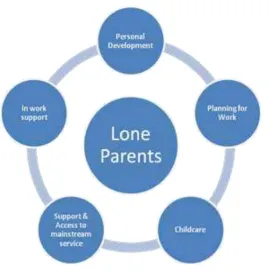
MIW provided lone parents with intensive support in their journeys toward sustainable employment, based on a model which included signposting and access to existing service provision, key worker and peer group support, and linking between employability and other support services including childcare, health and social care, housing and financial inclusion. Participation in the programme was voluntary (although it met the mandatory activity requirements for lone parents, particularly those with children aged under 5 years) and included the following elements:
Early engagement: making contact with lone parents and involving them in the programme.
Pre-engagement: personal development, planning for work and childcare, improved and accelerated access to provision for lone parents.
Engagement: access to mainstream provision, supporting lone parents to engage with mainstream providers and ensuring effective access and support.
Post-employment: support for job retention and progression, and working with employers to encourage family friendly practice.
1.1.
Learning and Evaluation
The learning and evaluation contract was delivered by the Centre for Regional Economic and Social Research (CRESR) at Sheffield Hallam University, and the Scottish Centre for Employment Research (SCER) at the University of Strathclyde. There were three overall objectives for the learning and evaluation contract:
Track the success of the programme, and projects and interventions within it.
Identify what works well, for whom and in what circumstances.
Share learning and improve practice (including amongst grant holders).
The learning and evaluation contract had three work streams:
Work stream 1: bespoke partnership-level evaluations which captured the achievements of the MIW partnerships. A partnership-level evaluation report was produced for each MIW partnership in years one, two and three of the programme.
Work stream 2: programme-level evaluation which builds on the partnership-level evaluations to assess the impact of the programme, and identifies best practice with a view to informing future delivery. A programme level evaluation was produced for each year of the programme including this, final programme evaluation report.
Work stream 3: learning activities which provided learning to partners and other stakeholders to maximise the impact of the programme and support on-going activity. Learning events were held in each year of the programme.
This report draws on a number of data sources:
Partnership- and programme-level reports produced in years one, two and three of the MIW programme.
Semi-structured interviews (conducted face to face and over the telephone) carried out on an annual basis with representatives of MIW partnerships. More than 90 interviews were conducted over the lifetime of the programme.
In-depth interviews with MIW clients carried out between 2013 and 2017. Over 80 interviews were carried out over the course of the evaluation, including a small number of follow-up interviews with clients who had been interviewed in previous years.
MIW client surveys: support workers assisted MIW clients to complete an-online survey within 4 weeks of joining the programme, and at follow-up intervals of six and 12 months. Baseline surveys were completed for 1,215 lone parents. Follow-up surveys at six months were completed for 435 clients and for 125 clients at 12 months.
Partnership data: MIW partnerships completed a template which collected standardised monitoring data across the five partnerships for each year of the programme.
The remainder of the report is structured as follows:
Chapter 2 looks at the implementation of the MIW model across the five partnerships.
Chapter 3 assesses the 'distance travelled' for lone parents supported by the programme and reflects in particular on the 'journeys to work' of lone parents facing significant barriers and challenges to labour market participation.
Chapter 4 explores the MIW programme's approach to supporting lone parents living in complex circumstances to balance work and family life.
Chapter 5 summarises the impact and value for money of the Programme.
Chapter 6 contains conclusions and key learning points.
2
2.
The MIW partnerships:
models of delivery
[image:14.595.168.438.385.660.2]This chapter provides a summary of each of the MIW partnerships. Although there were local variations in delivery, which are discussed further below, the MIW partnerships developed programmes of activity which aimed to provide holistic support to lone parents in order to address a range of barriers and challenges pre- and post- employment. These were based on a common model of support, as outlined in Figure 2.1, which was developed collaboratively through a series of early design and consultation seminars involving the Big Lottery Fund and key agencies with expertise in employability, childcare and direct support for lone parents in Scotland.
It is important to note the impact of this approach on the delivery model: MIW was developed on the basis of extensive consultation and research with stakeholders to identify good practice in supporting lone parents, and drew in particular on experience of previous programmes such as Working for Families (WFF). Although not targeted exclusively at lone parents, evaluation of the WFF's support to disadvantaged parental groups2 identified recommendations for key features of future employability provision that are reflected in MIW: tackling barriers to employability and childcare; local flexibility to co-ordinate specialist skills and services; community-based provision; the importance of key-workers to provide consistent, flexible and tailored support; stable, longer term funding to mitigate the impact of initial start-up costs and enable learning around effective approaches to be developed and shared; flexible funding regimes to allow support to address local need; support for groups facing the most challenging barriers; performance management frameworks which reflect both 'hard' outcomes and distance travelled or 'soft' outcomes for those requiring long-term support.
The legacy of WFF (in terms of infrastructure, partnerships, provision and learning) in the five MIW areas provided a foundation upon which MIW has sought to add value to local employability services by enhancing key worker approaches to deliver intensive and holistic support targeted at lone parents.
2.1.
The MIW Partnerships
This section summarises the approach of each of the MIW partnerships.
2.2.1. Edinburgh
Central to the MIW Edinburgh model was the work of a dispersed delivery team of four development workers based in host organisations in disadvantaged areas of Edinburgh. MIW Edinburgh was led by Capital City Partnership Development Workers, and embedded in four community locations, working closely with trusted local community organisations (two nurseries, an employability service hub, and a community centre) providing a valuable base for outreach and engagement activities. Alongside the intensive support provided by the development workers, MIW was able to add value to local employability services and fill gaps in local provision by drawing on the expertise of partner agencies including the Scottish Childminding Association (SCMA) which supported a small number of participants to progress towards a career in child minding, and One Parent Families Scotland (OPFS), offering advice on benefits and childcare to lone parents and MIW development workers. Effective signposting and referral routes were also established with mainstream providers including local colleges, Jobcentre Plus and employability providers.
The core MIW partnership included:
Capital City Partnership (CCP) - leading the project and delivering key worker (known as ‘development worker’) support in four areas of the city. CCP employed four MIW development workers based in host organisations in disadvantaged areas and a project manager.
Scottish Child Minding Association (SCMA) support for MIW clients to train and make the transition to childminding work with an ambition to address the under-provision of flexible childcare in some areas of the city.
One Parent Families Scotland (OPFS) - providing advice and guidance on childcare and benefits issues to lone parents, development workers and other MIW stakeholders through helpline services. OPFS also delivered training and support for the MIW team.
Edinburgh Voluntary Organisations Council (EVOC) which facilitated partnership and effective governance and engaged smaller third sector organisations working with vulnerable lone parents.
Other stakeholders involved in the development and delivery of MIW included:
City of Edinburgh Council, Employability and Skills Team which provided intelligence and expertise on service provision (having previously led the ‘Working For Families’ programme in the city), and assisted with network-building in the early stages of the programme.
Jobcentre Plus provided lone parents with information about MIW leading to referrals from lone parent advisors.
Women Onto Work - provided complementary services targeting lone parents and other women facing barriers to employability.
2.2.2. Fife
The Fife MIW partnership was led by Fife Gingerbread, with partners including Fife Council (whose ‘Client Action Team’ (CAT) provided employability-focused support); Citizens' Advice and Rights Fife (CARF) which provides money and debt advice through a Financial Inclusion Officer; and One Parent Families Scotland (OPFS) which provides advice and guidance on childcare and benefits issues for lone parents and other MIW stakeholders. The partnership aimed to assist lone parents to realise their potential and support them in moving towards and securing employment.
The core MIW partners included:
Fife Gingerbread - leading the project and delivering key worker (known as ‘support worker’) services. Fife Gingerbread employed MIW support workers and the project manager.
Fife Council which provided ‘Client Action Team’ (CAT) employability services, involving key workers working proactively with lone parents who were ready to engage in pre-vocational and vocational training and progression activities. Fife Council also delivered employer engagement support, designed to place those progressing towards the labour market into placement and job opportunities.
Citizens Advice and Rights Fife (CARF) which provided money and debt advice through a Financial Inclusion Officer and administrative support.
One Parent Families Scotland (OPFS) which provided advice and guidance on childcare and benefits issues for lone parents, support workers and other MIW stakeholders through helpline services. OPFS delivered training and information sessions for MIW team and partners (for example, on the impact of welfare reform on lone parents).
The MIW team liaised closely with other stakeholders, ranging from Jobcentre Plus to health and social work teams to disseminate information about MIW services.
2.2.3. Glasgow
The Glasgow MIW partnership was led by Jobs and Business Glasgow. The partnership aimed to assist lone parents to realise their potential and support them in moving towards and securing employment.
There were six core project partners:
Jobs and Business Glasgow - headed the project and delivered bespoke training and employment support.
The Wise Group, a social enterprise, delivered projects aimed at meeting the needs of people and communities.
One Parent Families Scotland (OPFS) provided outreach, support, advocacy and information.
Rosemount Learning provided confidence building and motivational support and access to basic skills training.
Scottish Child Minding Association (SCMA) provided support for accessing childcare vacancies and promoted child-minding as a viable employment opportunity.
Stepping Stones offered flexible childcare service, crèche provision and a sitter service.
The project was overseen by a project board which comprised representatives of all six core partner agencies, as well as Glasgow City Council Childcare Services, Jobcentre Plus and NHS Greater Glasgow and Clyde.
The programme operated through delivery points across the city and engagement hubs, which met on a monthly basis. In addition, outreach activities were facilitated through co-location arrangements with key partners. The Glasgow MIW programme supported lone parents through a progression model which provided a framework for activities from pre-engagement to in-work aftercare.
2.2.4. North Lanarkshire
The Making it Work partnership in North Lanarkshire was developed under the project brand, Action: Lone Parents (A:LP), and led by Routes to Work. The project aimed to support lone parents to improve their employability through access to personal development programmes, training and/or access to education. This was supplemented by additional support including access to childcare, family support and financial advice.
The project developed learning from Working For Families. The project targeted specific geographical areas within North Lanarkshire on a rolling basis for a six month period. These areas were identified based on having the highest concentrations of lone parent worklessness in the North Lanarkshire local authority area. The project model included:
An intensive marketing and recruitment campaign in each location, using outreach to target lone parents who were not engaged in mainstream provision and employing three local lone parents in each area to undertake engagement work.
Connecting with other services, and encouraging clients to engage with the employability service.
There were six core project partners:
Routes to Work Ltd - lead agency which provided employability support.
One Parent Families Scotland (OPFS) - delivered provision which addressed barriers to work, for instance through participation in personal development programmes.
Greater Easterhouse Money Advice Project (EMAP) - provided money advice, budgeting advice, benefits calculations, financial plans.
Circle- provided specialist support to families with substance misuse issues.
Voluntary Action North Lanarkshire (VANL) - provided support to encourage volunteering, promoted the benefits of volunteering to lone parents and matched volunteers to opportunities. VANL also delivered Steps to Excellence training.
North Lanarkshire Council - was responsible for centralised marketing programme and monitoring data.
Other organisations were involved, primarily through referral of lone parents to specific courses or sources of support. There was a clear fit between the support provided by each partner agency. For example, One Parent Families Scotland’s involvement with the project fitted well with their existing young parents’ pathway. Action: Lone Parents provided a potential follow-on route towards employment following three stages of support through their teen parent mentoring service.
The project offered three basic levels of support, each linked to a keyworker:
in-depth individual and family support for parents with complex needs;
preparing for work;
ready for work.
2.2.5. South Lanarkshire
MIW partners included:
Routes to Work (RTW) - led the project and delivered key worker support in four areas of the city. RTW employed the MIW key workers and the project coordinator.
Voluntary Action South Lanarkshire (VASLAN) provided volunteering opportunities for MIW clients and hosted key worker services.
Scottish Child Minding Association (SCMA) supported MIW clients to train and make the transition to childminding work.
Rutherglen and Cambuslang CAB provided benefits and money advice and financial capability-building services for MIW clients.
Healthy and Happy Development Trust and Healthy Valleys helped to facilitate engagement with MIW in target areas.
Other stakeholders involved in the development of MIW included:
South Lanarkshire Council, Lone Parents Support Project which provided intelligence and expertise on services for lone parents, and South Lanarkshire Council, Regeneration and Inclusion, whichfacilitated collaboration with other locally-funded provision employability and inclusion and services and helped to identify potential MIW clients.
One Parent Families Scotland (OPFS) which provided advice and guidance on childcare and benefits issues for lone parents and MIW stakeholders through helpline services. OPFS also offered training and support for MIW team.
3
3.
Supporting lone parents
furthest from the labour market
3.1.
The MIW clients: barriers and challenges and distance travelled
This section draws on client survey and qualitative data to provide information on the characteristics of lone parents who participated in the MIW programme, the barriers and challenges that they faced and the degree to which their participation in the programme enabled them to overcome these barriers and challenges and progress toward participation in the labour market.
3.1.1. MIW client characteristics
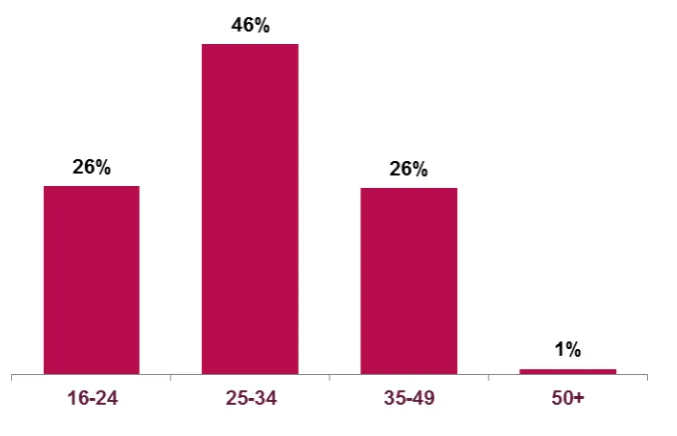
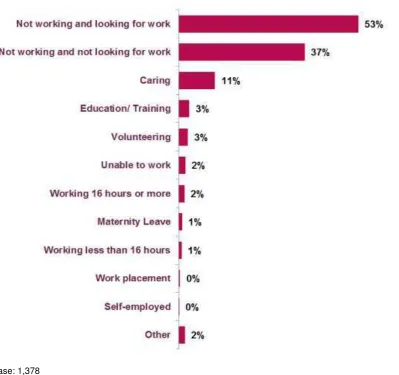
[image:20.595.114.453.505.723.2]The MIW programme aimed to support lone parents who were farthest from the labour market. Figures 3.1 to 3.6 look at the characteristics of lone parents who participated in MIW. They demonstrate that almost half the lone parents were in the 25-34 age bracket, and most were in receipt of benefits and living in rented accommodation. Three hundred and twenty two respondents indicated that they had an illness or disability that affected their ability to work. The most common conditions were depression, stress or anxiety (Figure 3.2). Almost all of the lone parents engaged in MIW were not working in the four weeks before joining the programme.
Figure 3.1: Age
Figure 3.2: Type of disability/illness
Base: 322
Figure 3.3: Benefits received
Figure 3.4: Tenure
Base: 1,378
Figure 3.5: Qualifications
Figure 3.6: Employment status in the four weeks before starting on the programme
Base: 1,378
3.1.2. Barriers and Challenges: Distance Travelled
[image:23.595.117.517.90.465.2]Figure 3.7: To what extent do you agree or disagree with the following statements? I have... (Respondents who agree/strongly agree)
Figure 3.8: Please rate how confident or unconfident you are with the following set of skills: (Respondents who stated very confident/confident)
Figure 3.9: Thinking about some of the things that might affect your ability to find work, at the moment, are the following issues a big factor, a smaller factor or not a factor at all? (Respondents who stated 'Big factor?')
Base: 1,378 (Baseline); 435 (6 months); 125 (12 months)
3.1.3. Job Outcomes
[image:26.595.90.560.112.554.2]3.2.
Journeys to work: Client case studies
Shona is 30 years old, and has three children aged five, six and 10 years. One of her children has been diagnosed with Asperger's syndrome, and she was experiencing isolation and lack of confidence prior to joining MIW.
Shona was referred by Jobcentre Plus to One Parent Families Scotland, and supported through the Glasgow MIW programme. She attended group sessions and worked closely with a key worker to address barriers to work and build her skills. She participated in DIY, COSHH (Control of Substances Hazardous to Health) and food hygiene courses, and received support for confidence building and personal development.
It was helpful to have the courses on my CV and have certificates. It made it look like I was doing a lot to get into employment. Whenever [advisors] offered any course up I put my hands up for it because at this stage of my life I would do
anything, that’s why I've got the food hygiene, that’s why I've got the COSHH, two different areas completely - I done my health and safety moving and handling.
With the support of the key worker Shona secured employment in the hospitality industry, on a part-time basis initially and moving to full-time for a period of over a year. A better-off in work calculation was important in reassuring Shona that there would be financial benefits to moving into work, and the continued reassurance of support from her MIW key worker enabled her to make the transition from part-time to full-time work.
I thought if I worked full time I wouldn't get any help.
At the time of interview Shona had been recently started working on a part-time basis, as a result of changes in her informal childcare arrangements (which had been provided by family members) and difficulty finding affordable childcare for three young children. In addition, childcare which enabled shift and weekend working was in very short supply. Nevertheless, Shona was continuing to work and, with the support of her MIW key worker, was looking to change jobs (perhaps to cleaning which she felt offered more flexibility to fit with childcare arrangements) and was considering progression into a supervisory role.
I won't leave a job until I have another one lined up because that’s the way
being on benefits has put me, I don't like to go back to that.
Shona reflected positively on the support provided by MIW, and the benefits to her and her family associated with her employment.
Nothing was forced on us, we got asked to do it. The help and support you get from it is great, it's helped me a lot.
I wanted to give my kids that work ethic that it's no good just to sit back on your
backside and do nothing. I never want to go back to benefits it’s a better ethic
Grace has one child aged 8 years who, at the time interview, was being assessed for Autism. Grace has been a lone parent for 7 years, and has been volunteering and working for over three years.
She was referred to MIW by Jobcentre plus when she was claiming Income Support and her daughter was four years old. At the time she was concerned that she would need to look to return to work when her daughter was five, and was anxious that she was not ready. MIW offered an opportunity to:
"try and get myself prepared , I had no CV, hadn't worked for a wee while my confidence was low and I needed to take it on board and see what help is out there".
She attended a variety of courses, all of which she found beneficial, and which enabled her to build her CV.
I always viewed it as having a wee empty tool belt and like going to these wee courses it was just something to put into my tool bag … and I had a fat tool bag at the end of it. I may not use them all but it's something I can put on my CV.
Grace also participated in group development and confidence building sessions and particularly valued peer support from others participating in the programme.
Having other lone parents there … finding common ground didn't feel so isolated and all these thoughts an fears that you were having 9 times out of 10 the other people in room were having the same thoughts
The personalised support which allows lone parents to proceed at a pace which is suitable and sustainable has also been very important to Grace.
The whole process of it being really slow was important because I started
panicking and thought I would have to find work as soon as she turned five …I
thought I had to be job ready by then. But then I realised that I don't have to be in work and for that pressure to be taken off was absolutely huge"
The whole approach was something different to what I had experienced at the job centre and you could just tell right away that they were there for you, everything was geared for you progressing.
At the time of interview Grace had been in employment for over three years. The ongoing support from MIW has been critical to her, as it had enabled her to address housing, financial and childcare issues which might otherwise have threatened her ability to maintain work.
Joanne was supported by the MIW programme in Glasgow for two years. In August 2014 she secured employment working 25 hours per week. Joanne was pleased as this was her first interview. She was daunted by the prospect of change and explained that the aftercare worker had provided much needed support and assurance. Joanne described the worker as “a safety net” just in case she needed help but Joanne was also able to explore opportunities independently. However, she did continue to access advice from the worker, checking information and future options. Joanne really valued the continued training opportunities provided and had undertaken a SVQ, a communication skills course and a child protection course, all of which she felt would further her employment.
Joanne was very motivated and determined to succeed and felt that the best thing about her experience of MIW was "achieving what I set out to achieve and getting there, and its only took me about two years". She had made considerable progress and explained that she had a “roof over my head, financial stability, and can see light at the end of the tunnel”.Joanne also reported that she had changed her attitude and now thought she had a “sense of responsibility and working for aliving and was able to pass these attitudes on to her children, particularly the “value of earning”.
Winning an Achievement Award for her endeavours made Joanne feel very proud. She acknowledged she had worked hard but also praised the programme for the help she had received: "we done it but we done it with help".
4
4.
Supporting lone parents in
complex circumstances
This chapter draws on evidence from interviews with MIW clients and stakeholders involved in the delivery of the programme to identify good practice emerging from the programme in supporting lone parents towards and into employment, and helping them to sustain job outcomes achieved. Analysis of particular aspects of the MIW delivery model has been presented in earlier evaluation outputs; the key messages to emerge from these reports are collated here.
4.1.
Outreach and Engagement
MIW has supported lone parents living in complex circumstances who were furthest from the labour market or needed additional assistance to access or maintain work. Many of these lone parents were not in contact with mainstream support services, or had infrequent or minimal contact via statutory services. Finding ways to engage lone parents who would not otherwise be reached was an important early target for activity.
Different engagement strategies were adopted across the partnerships, although there was a common emphasis on outreach and working with other community-based agencies. Local partnerships had the freedom to develop flexible approaches following consultation with community stakeholders. All the MIW partnerships successfully engaged new clients by developing strategies that reached beyond mainstream employability services: targeting the places, service hubs and communities where key workers could directly engage with lone parents. As such, some consistent elements were present where engagement activities worked well:
MIW teams deployed considerable energy and resources (for example, the time of key workers) in establishing a wide range of relationships with key stakeholders at the outset of the programme.
A range of different approaches were used, all of which focused reaching beyond mainstream employability services.
4.2.
Co-production
In all five areas, MIW partnerships demonstrated a collaborative process of partnership-building resulting in the co-planning of services so that the expertise and assets of different partners made a contribution. The collaborative partnership-development process had important benefits in building multi-agency approaches that offered a genuine choice of services for users. No one partner organisation made claims to have all the required expertise or sought to monopolise the resources available. So, across the five partnership areas, there was a genuine mix of expertise encompassing, for example, money advice services delivered by Citizens Advice Bureaux; intensive support delivered by third sector organisations specialising in supporting lone parents; and a range of learning, employability and wellbeing-focused service providers.
An even more crucial element of co-production involved the empowerment of service users to shape their own services and employability journeys. The evaluation consistently found benefits for service users in the way that the programme made user co-production real. Service users told us about how they felt empowered by the programme and the sense of choice and control that defined their MIW journey. One service user summed this up.
“She [MIW key worker] is not saying ‘you have to go to college or I’m not helping
you’. It’s not like that. It’s never ever been like that. It’s always: ‘Would you like
to do this, this or this? You choose’. That’s how it should be. It’s for the person, it’s their life. If they’re making a choice for you you’re going to be less likely to stick at it.” (lone parent)
He [MIW Key Worker] brought me in and he told me all about it properly and
asked me what I wanted. I thought, “Hang on a minute. I've actually never been asked what I want”. I think that really helps because then it's rather than going, “You do this, this and this”. He was like, “What do you think would make you feel
better?” I went, “I don't know. I've never really been asked that before. It's always been said, you either do this or you lose your money”. He was like, “No, this is completely different”. (lone parent)
An emphasis on empowerment, and on a flexible approach which supports lone parents to engage with services on their own terms, and at their own pace, differentiated MIW from mainstream employability provision. A clear and common theme in all interviews carried out with MIW clients in all five MIW partnerships across all four years of the evaluation was the importance of flexibility in provision and the sense that MIW clients were in control of their own journeys towards meaningful employment which suited their circumstances. For clients, this was often in direct contrast to their previous experiences of mainstream employability support, where the emphasis had been solely on job outcomes.
The Jobcentre is like, ‘Get a job, get a job’, and you're constantly pressured. I
made up my mind to go and see [MIW development worker]. She never came to
me and said, ‘Come and see me, come and see me’, and that made all the difference… you don't feel pressured, which is really good. Every time I see her it's something new, and it's positive. It's never, I don't know, back at the Jobcentre or something. It's working towards a better future (lone parent)
Second, the partnership-based approach supported by the Big Lottery Fund also facilitated the inclusion of some third sector organisations, which are run for and by lone parents, but which would not find a role in the delivery of mainstream contracted-out employability services. These organisations bring both expertise and credibility to attempts to gain the buy-in and co-production efforts of lone parents. In addition, a combination of the Big Lottery Fund's flexible funding package and a collaborative ethos meant that staff and partners were willing to challenge and change things that were not working.
Crucially, however, user co-production was central to the ethos promoted by the Big Lottery Fund and each local MIW partnership. Key stakeholders repeatedly highlighted the importance of users taking control of their own employability journeys. The culture and governance regime of the programme led to a shared understanding that the aim was to help users to progress towards fair and productive work, rather than forcing inappropriate transitions in order to meet targets. An MIW key worker expressed a common concern that the programme should be seen as helping lone parents toward good quality outcomes.
“We could probably put ten of them in a cleaning job tomorrow… we could do that but… I don’t want a reputation of putting people into work and it failing, we want a reputation of putting them into work when they’re prepared and ready to
go. They’re skilled and they know what they’re doing…”
4.3.
Development worker and peer support
A key aspect of the MIW model was the provision of integrated, bespoke support to lone parents to enable them to balance work, childcare and family life, and to facilitate access to high quality services to meet their needs. An emphasis on intensive, personalised support was common to all five partnerships and an integral feature of the MIW model which complemented, and supported, mainstream employability services. Early one to one working was a crucial element of support, without which client outcomes would either not be achieved, or would have taken much longer to deliver. The establishment of positive relationships in which trust and rapport was built between lone parents and project workers was critical, and building these relationships in the early stages of client engagement was a precursor to clients engaging with group work, other training activities and ultimately sustainable employment. One project worker commented:
“It allows people to have an identity and it can give a client the encouragement
they need to take a step forward. Because particularly with the early stages, it's somebody caring about them, and if they are caring about them, they’re more
likely to take advice and guidance from them, it makes a big difference. We’ve had one client who’s been through various services in the area over the last 10 years. They’ve been with ALP around 8 months and have started employment
and is now sustaining in the job. For them it was about having someone they
could believe in and trust. There’s often paranoia about ‘what’s in it for them, why do they want to help me?’” (project worker)
Clients highlighted the wide range of benefits associated with development worker support. These included accessing local authority welfare funds, dealing with debt issues, and developing an action plan to progress their employability. At the most basic level, clients interviewed for the research valued the commitment, support and care offered by development workers.
say, ‘I think you should do this’. It was me saying, ‘I want to do this’, and she was like, ‘Right, let's get started’" (lone parent)
This approach can be time and be resource intensive: it was reported by stakeholders that it could take up to six months to stabilise a client's circumstances, and that often underlying barriers were not revealed until after several months of engagement. This placed considerable demands on support workers, and in all partnerships intensive one to one support was complemented by group work activity to minimise the risk of creating dependency on support workers and to facilitate peer support networks and groups. Opportunities to share experiences, challenges and issues with peers built lone parents' confidence, and supported lone parents to develop skills to engage with new groups of people.
A MIW development worker reported on the additional benefits in the peer support offered by group work:
“There’s a real mixture of people who we have got. I think there are four of them who are out working already, there are a few of them who are applying for
college, and there are some who are really far removed… I brought them all together because I think the best learning you can do is from your peers.”
(project worker)
Lone parents also saw the value of peer support through group work.
“It’s definitely positive, it has helped me and I do believe from meeting other mums and stuff, they’re all at different levels and all in different situations but
they seem to be happy working with Making it Work and it is helping them.
There’s no pressure as well, which is a great thing, they won’t judge you, they are more friendly towards you as well which makes you comfortable to go, ‘I am stuck with this thing, it’s a bit personal’. You know they won’t repeat it or anything like that, which is good.” (lone parent)
The combination of intensive one to one support and group work was effective in supporting lone parents to engage with provision and move towards employment. The success of this model in meeting the needs of those furthest from the labour market presented a range of benefits, which included individuals moving into paid work, and also improved social skills and family relationships.
4.4.
Childcare
The MIW partnerships adopted a range of innovative and flexible approaches to childcare. Common themes were the provision of flexible and tailored support to enable lone parents to access work and training, and the building of local capacity to provide sustainable solutions to local childcare needs. In all the MIW areas a critical success factor was the availability of flexible resources which were used to support lone parents to engage with training and skills development and to make transitions into work. Funding was used to supplement existing provision, which was universally seen to be inadequate, either in supporting lone parents who were some distance from the labour market to make initial steps toward using childcare provision, or to assist lone parents who were in work to sustain jobs which required shift or unsociable hours - as has been the case in the sectors in which many of the lone parents supported through MIW have taken up work.
struggled to build capacity in local provision. This meant that there were challenges for lone parents in accessing out of hours and holiday childcare which partnerships sought to address by developing more flexible and sustainable solutions through building peer support networks which were more appealing to lone parents and built local capacity.
Up-front payments for childcare were utilised successfully to support lone parents making transitions into work and education and addressed a key barrier in terms of financial security when moving off benefits.
The experiences of the MIW partnerships highlighted a number of lessons in terms of the childcare needs of lone parents supported through the MIW programme. These included:
The need for a range of childcare providers to support the different needs of lone parents who were moving towards training and employment.
A need to provide resources which could be used flexibly, depending on local circumstances and need.
The availability of funding for short periods to cover providers' requirements for up-front payments was useful in helping lone parents making transitions into training and work.
There were ongoing problems in relation to the availability of childcare for older children and in particular care which wraps around the school day and is available during school holidays.
Sessions which enabled lone parents to place their children in childcare at, or near to, premises in which they undertook skills development and training successfully exposed lone parents to formal childcare arrangements and built skills and confidence to consider a range of childcare options moving forward. Lone parents had a preference for nursery provision or informal childcare provided by friends and family. There was a reluctance to engage with child minding or sitting services provided in lone parents or others homes.
4.5.
Employment and in-work support
All five MIW partnerships prioritised a range of activities around employer engagement and in-work support.
4.5.1. Employer engagement strategies
In terms of priority sectors, parent-friendly employment was prioritised by MIW partnerships and led to targeting on sectors such as retail, social care and childcare as potential destinations. Across MIW areas, there was a concern to ensure a wider range of choice and good quality job opportunities and partnerships sought to develop their own programme content in directions that provided the vocational skills and experience valued by employers.
An alternative approach to building clients’ workplace-based experience was to encourage volunteering which was adopted across MIW areas. There were examples of clients who had gradually begun to overcome isolation and sometimes mental health issues by engaging in volunteering.
“One lady who has now become a volunteer… when I first met her she had no social life at all. She had moved from outside the area, knew no one and was
totally isolated. Didn’t want to meet anybody. Now, she has become a
volunteer... She is on ESA still for depression, but now volunteers at an exercise group. She is still on ESA but you can see a huge difference in her.”
The employer-facing work undertaken by MIW partnerships had positive impacts in challenging some employer attitudes. Participating employers reported they had been encouraged to think differently, particularly about 16 hour contracts as a solution to their employment needs. One example given was of lone parents sharing a post and acting as informal childcare for each other. However, there was also consensus on the need to continue to challenge some employers’ negative or unhelpful attitudes towards lone parents.
“A lot of the employer engagement has been in terms of educating them... But we’re struggling with the 16-hour jobs. We do struggle with them quite a lot.
We’ve sometimes had to look at ‘Are there two eight-hour shifts, or would you
be able to do 20 hours instead?’ So I think there needs to be more of a kind of,
maybe, national or Edinburgh-wide education policy that says to employers, ‘Do
you know, if you tapped into this resource…?’ And also, to dispel the myths
about lone parents being unreliable and not turning up, and taking time off because their children are out of school.” (MIW Worker)
4.5.2. In-work support
All MIW partnerships acknowledged that the transition to work could be challenging for some lone parents, and that in-work support could be valuable. In-work support was available for clients through continued engagement with key workers or other appropriate staff members and was valuable in supporting clients following the transition to work, and in facilitating a positive relationship with employers. It is important to emphasise however that, across MIW partnerships, it was not just one-to-one key worker support that helped clients to sustain work. Partnerships constructed practical packages of support to help lone parents to manage the transitional costs and other challenges when returning to work. Lone parents were supported through discretionary funding to cover food, clothing and travel costs between the last benefit payment and the first pay day in the client’s new job. They also received support to navigate tax credits claims as well as advice and guidance on budgeting: in most instances starting paid employment meant a change from weekly or fortnightly benefit payments to a monthly wage.
There remained challenges associated with assisting lone parents toward sustained job outcomes under MIW. The programme targeted areas that have experienced labour market problems and in assessing MIW, it is important to acknowledge the demand-side limits on the quantity and quality of jobs in the relevant areas.
5
5.
Impact and Value for Money
This chapter looks at the impact and value for money of the MIW programme. It does this by exploring a logical chain of costs (inputs) and benefits (activities, outputs and outcomes). The findings in this chapter draw on data from annual monitoring returns provided by each partnership using a common template and longitudinal surveys of lone parents engaging with the MIW programme.
5.1.
Inputs
The majority of the resource for delivering MIW was provided by the Big Lottery Fund in the form of grants to each of the five partnerships. Some additional resource was 'levered' in to the programme through additional funding, in kind support, and by utilising volunteers. An overview of these resource inputs is provided in table 5.1. It shows that the overall amount of funding provided to deliver MIW between 2013/14-2016-17 was £6.72 million but that this was supplemented by £14,000 of additional levered-in funding and £204,000 of in-kind support.
Table 5.1: Costs of delivering the MIW programme (2013/14-2016/17)
Total Edinburgh Fife Glasgow S Lanarks N Lanarks Total value of MIW
project funding £6.72m £1.13m £1.20m £1.90m £1.25m £1.24m Total value of any
additional funding £0.014m £0.014m - - - -
Total value of
in-kind support in £0.20m £0.15m £0.036m - £0.016m -
Total £6.94m £1.30m £1.24m £1.90m £1.27m £1.24m
Source: Big Lottery Fund, Partnership level monitoring data