Haptic Interaction with a Guide Robot in Zero Visibility
GHOSH, AyanAvailable from Sheffield Hallam University Research Archive (SHURA) at:
http://shura.shu.ac.uk/24028/
This document is the author deposited version. You are advised to consult the publisher's version if you wish to cite from it.
Published version
GHOSH, Ayan (2018). Haptic Interaction with a Guide Robot in Zero Visibility. Doctoral, Sheffield Hallam University.
Copyright and re-use policy
See http://shura.shu.ac.uk/information.html
December 2017
Supervisor: Prof. Jacques Penders Co-supervisor: Dr. Peter Jones
SHEFFIELD HALLAM UNIVERSITY
Haptic Interaction with a Guide
Robot in Zero Visibility
A thesis submitted in partial fulfilment of the requirements of Sheffield
Hallam University for the degree of Doctor of Philosophy
Page 1
Declaration
I hereby declare that this thesis embodies the results of my own work done as a part of EPSRC funded REINS project and that it has not been submitted anywhere for any award apart from that of Doctor of Philosophy at Sheffield Hallam University
I have made acknowledgement of the work of others and have made reference to work carried out in collaboration with other people.
……… ………..
Page 2
Abstract
Abstract
Acknowledgements
Abstract
I would like to start by offering huge thanks to my primary academic supervisor Prof. Jacques Penders. His patience, support and encouragement has helped me through the undulating emotional process of academic research and writing. With his guidance, I have achieved many great feats, for that I am eternally grateful. I also would like to thank my second supervisor Dr. Peter Jones for his comments and support that gave my work an interdisciplinary focus.
I owe thanks to all REINS project team members at Sheffield Hallam University and The King's College, London who challenged and supported my work. Thank you to all the team members, Dr. Alan Holloway, Mr. Heath Reed, Dr. Alessandro Soranzo, and Alireza Janani. I would also like to thank Dr. Lyuba Alboul for helping me at various instances and all other members of Robotics research group of Sheffield Hallam University.
Contents
Abstract ... 2
Acknowledgement... 3
List of figures ... 8
List of tables ... 12
1. Introduction ... 13
1.1. Context ... 13
1.1.1. The smoke conditions on arrival-initial stage ... 13
1.1.2. The smoke conditions after arrival ... 14
1.2. Motivation ... 15
1.2.1. Warehouse Structure ... 15
1.2.2. Background of the research problem ... 16
1.3. The research claim ... 18
1.4. What is the research not about? ... 19
1.5. Research questions and the methodology... 19
1.6. Thesis structure ... 21
1.7. Publications made through the thesis ... 21
2 Interacting in zero visibility ... 23
2.1 Reflecting upon Fire-fighting Protocols for search and navigation with breathing apparatus ... 23
2.1.1 What can be learnt about navigation in zero visibility from firefighters? 27 2.2 Reflecting upon navigation for visually impaired people ... 29
2.2.1 Use of non-visual senses ... 29
2.2.2 Navigation and way-finding in the absence of vision ... 31
2.2.3 Mobility aids for navigation using proprioceptive awareness ... 31
List of figures
Page 5
2.3 Chapter closure ... 40
3 Exploring the haptic sense ... 42
3.1 Human senses ... 42
3.2 Haptic sense ... 43
3.2.1 Human haptics and haptic perception ... 44
3.2.2 Kinaesthetic awareness using haptic sense ... 45
3.2.3 Sensitivity of haptic sense ... 46
3.3 Testing the Haptic Sense ... 48
3.3.1 Experiment rationale ... 48
3.3.2 Transparent technology and haptic sense ... 50
3.3.3 Description of the experiment ... 52
3.4 Discussion ... 59
3.5 Conclusion ... 61
4 A look at previous work on guide robots in zero visibility ... 62
4.1 Introduction to guide robots ... 62
4.2 Interaction with guide robots ... 65
4.2.1 Mixed initiative approach ... 66
4.3 Modelling guide robot systems ... 66
4.4 Using CAT assistive technology block diagram to analyse the use of a guide robot in zero visibility ... 73
4.5 Conclusion ... 76
5 Evaluating the haptic interface for locomotion guidance ... 78
5.1 Introduction ... 78
5.2 The haptic interface: design and history ... 80
5.3 Grip specifications for the interface ... 81
List of figures
Page 6
5.5 Preliminary evaluation for fourth phase testing ... 89
5.5.1 Robot and sensors ... 89
5.5.2 Testing Protocol ... 90
5.5.3 Results ... 92
5.6 Discussion on preliminary evaluation ... 97
5.7 Evaluation of final phase testing ... 97
5.7.1 Testing protocol ... 98
5.7.2 Results ... 100
5.8 Discussion ... 104
5.9 Conclusion ... 105
6 Evaluating the haptic interface for environmental exploration ... 106
6.1 Introduction to using the robot as a tool for exploration ... 106
6.2 Vibration as a form of haptic feedback... 110
6.2.1 Testing Protocol ... 112
6.2.2 Results ... 114
6.2.3 Discussion on preliminary evaluation ... 118
6.3 Evaluation of the final phase testing of the feedback cuff ... 118
6.3.1 Associating Vibration Motors and the Bumper ... 119
6.3.2 Spatial cognition using the feedback cuff ... 121
6.3.3 Design of the test ... 122
6.3.4 Scoring convention followed ... 125
6.3.5 Testing protocol ... 127
6.3.6 Results ... 132
6.4.7 Discussion and conclusion ... 137
7 Conclusion and future work ... 138
List of figures
Page 7
7.2 Contributions of the thesis ... 143
7.2.1 Papers published from the work ... 144
7.3 Reflections on the research ... 145
Bibliography ... 147
List of figures
Page 8
List of figures
List of figures
Figure 1, Smoke Condition at the time of the Arrival of the Fire-fighting team ... 14
Figure 2, Smoke condition after 15 minutes of arrival of the Fire-fighting team ... 15
Figure 3, Fire-Fighters proceeding along the walls (Denef et al 2008) ... 24
Figure 4, Guideline laid along the wall ... 25
Figure 5(a) Fire-fighters proceed along the wall and tied to each other with a rope (b) fire-fighters use dorsal side of their hand to scan hanging obstacles ... 25
Figure 6, When one member stays close to the wall and the other member (connected with a rope) explores the area far from the wall and comes back ... 26
Figure 7, path of a firefighting unit as reconstructed by Denef et al (2008) ... 27
Figure 8, the handle taken apart ... 33
Figure 9, Person being guided by a guide dog ... 33
Figure 10, The dog always walk along straight lines at the centre of the walkway(left) and sits down at the curb or crossings (middle) and watches the handler's legs and arms to receive a command (right). ... 37
Figure 11, Handling a guide dog: task analysis ... 38
Figure 12, Division of Autonomy between handler and the guide robot ... 40
Figure 13, Human robot bonding (Collins et al., 2013) ... 41
Figure 14, (a) Mobile device consisting of a wooden trolley, a rigid handle and a skirt (b) wooden trolley (c) skirt that fits on the wooden trolley ... 53
Figure 15, Subject pushes the device with target object in front. ... 55
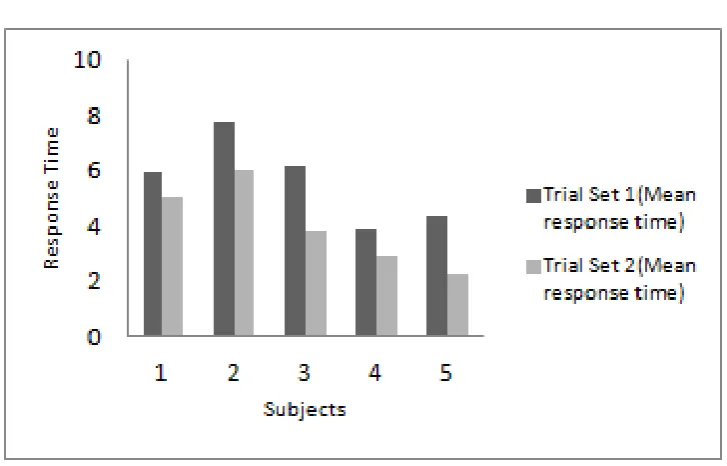
Figure 16, Bar-Graph showing the Mean Response Times for two sessions ... 56
Figure 17, Line-Graphs showing the mean response times of the subjects for two sessions ... 57
Figure 18, Percentage accuracy for all subjects ... 58
Figure 19, Mean accuracy by target state (a)-(d) ... 58
Figure 20, Mean overall percentage accuracy for each target state. ... 59
List of figures
Page 9
Figure 22, Design process of USERfit model (Poulson & Richardson 1998) ... 68
Figure 23, the human activities assistive technology (HAAT) model (Hussey & Cook 2002) ... 68
Figure 24, three-level Assistive technology investigative framework using CAT model (Hersh & Johnson 2008) ... 70
Figure 25, Block diagram of Comprehensive Assistive Technology Model (Marion & Michael 2008) ... 71
Figure 26, Assistive Technology System Block diagram - Guide Dogs (Marion & Michael 2008) ... 72
Figure 27, Assistive Technology System Block diagram - Guide cane (Marion & Michael 2008) ... 72
Figure 28, Locomotion guidance using robot guide ... 74
Figure 29, Environmental exploration using robot ... 75
Figure 30, Block diagram of REINS guide robot using CAT model ... 76
Figure 31, Robot-on-a -stick prototype wit omni-directional wheels ... 82
Figure 32, in the wild trials with the first prototype ... 82
Figure 33, Broom stick interface (Young et al. 2010) ... 83
Figure 34, Subjects tend to hold the prototype with two hands ... 83
Figure 35, Crutch-Like design of the handle ... 84
Figure 36, Left-handed person holding wooden prototype with comfortably flexed elbow ... 84
Figure 37, Ball -in - a - cup joint with detachable pin ... 86
Figure 38, Handler losing track of the position of the robot ... 86
Figure 39, spring system in the handle ... 87
Figure 40, subjects following the robot with spring system in the handle ... 87
Figure 41, Handle with flexible joint at the base ... 88
Figure 42, Handler attached to the handle with flexible joint ... 89
Figure 43, Handler following the robot with a laser range finder at the rear bumper. ... 90
Figure 44, Handle mounted on the middle of the robot and attached to handler ... 92
List of figures
Page 10 Figure 46, (left) Reconstruction of the path when robot takes a longer left turn with fixed joint and (right) Reconstruction of the path when robot takes a longer left turn
with sprung joint ... 94
Figure 47, (left) Reconstruction of the path when robot takes a shorter left turn with fixed joint and (right) Reconstruction of the path when robot takes a shorter left turn with sprung joint ... 94
Figure 48. The elbow posture of a right handed handler during left (left) and right (right) turns. ... 95
Figure 49, (left) Reconstruction of the path when robot takes a longer right turn with fixed joint and (right) Reconstruction of the path when robot takes a longer right turn with sprung joint ... 96
Figure 50, (left) Reconstruction of the path when robot takes a shorter right turn with fixed joint and (right) Reconstruction of the path when robot takes a shorter right turn with sprung joint ... 96
Figure 51, Picture used in pictorial assessment technique for spatial awareness ... 99
Figure 52, Subject 3 (left) and 4 (right) longer turn to the right with fixed handle setting ... 102
Figure 53, Subject 3 (left) and 4 (right) longer turn to the right with flexible handle setting ... 102
Figure 54, Subject 4 longer turn to the left with fixed (left) and flexible (right) handle settings respectively ... 103
Figure 55, Mean deviation for four subjects with fixed/sprung handle settings.. ... 104
Figure 56, Mean T (time delays in seconds) for four subjects with fixed/sprung handle settings. ... 104
Figure 57, Using robot-on-a-stick prototype as a tool ... 108
Figure 58, Mechanical Impedance filter - 'bumper'... 109
Figure 59, Bumper with 3 CRT and Springs ... 109
Figure 60, Reins team performing tests with bumper ... 110
Figure 61, Handle with haptic cuff ... 111
Figure 62, Wearable feedback cuff ... 112
Figure 63, The cuff on trial and the trial's feedback display. ... 113
List of figures
Page 11
Figure 65, Position of the vibration Motors ... 114
Figure 66, Total number of errors across all trial w.r.t number of active motors ... 116
Figure 67, Number of errors across all single active motors ... 116
Figure 68, Number of errors across all double active motors ... 117
Figure 69, Number of errors across all triple active motors ... 117
Figure 70, Reins interface with redesigned cuff... 119
Figure 71, two sets of two vibration motors; left, attached to the inner side of the arm; right, attached to the outer side ... 120
Figure 72, (Left) Points of impact on bumper which are to be provided to the handler (Right) Corresponding vibration motors on right arm ... 120
Figure 73, Subject holding the wooden handle replica straight ... 123
Figure 74, the experimental layout, a protractor painted on the floor as well as a marked position for the subject ... 124
Figure 75, reconstruction of the sector markings on the image ... 125
Figure 76, schematic diagram of the floor layout ... 126
Figure 77, Positioning of vibrating motors on one's arm ... 129
Figure 78, wooden blocks placed on the target states A-D ... 130
Figure 79, Mean original scores in absolute values, L1 associates with target A, R1 with target B, L2 with C and R2 with D. ... 133
Figure 80, Mean relative scores in absolute values, L1 associates with target A, R1 with target B, L2 with C and R2 with D. ... 134
Figure 81, Box plots by score types ... 135
Figure 82, Mean original score for three testing trials ... 136
List of tables
List of tables
List of tables
Table 1, Mean response times in seconds ... 56
Table 2, Match between target states and verbal expressions ... 57
Table 3, Subjects' responses on pictorial representation of paths provided ... 100
Table 4, Table representing angle of turn (degrees) and deviation (meters) from the path of the robot, for four subjects (two different handle settings) ... 103
Table 5, Number assigned to each position of Vibrating Motors ... 115
1. Introduction
Page 13
Chapter
1
Introduction
1. Introduction
This chapter introduces the main context of making use of robotic guides in zero visibility. It also reports on the motivation behind the research, main research questions addressed and presents the main outline of the thesis.
1.1.
Context
Search and rescue scenarios are often complicated by low or zero visibility conditions because of smoke or dust. In the early stages of a fatal fire incident, the situation is usually very far from stable and therefore a dynamic risk assessment by the search and rescue teams (also called fire-fighters) is essential. The term 'dynamic risk assessment (DRA)' is used to describe the continuing assessment of risk that is carried out in a rapidly changing environment1. On the arrival of the initial attendance, the Incident Commander of the team needs to gather information, evaluate the situation (Zúñiga 2012) and then apply judgement to decide the appropriate course of action. Initial strategy to locate and extinguish the seat of fire or conduct a primary search depends on the amount of smoke at the location of the fire incident.
1.1.1. The smoke conditions on arrival-initial stage
In the vast majority of cases, there is either no smoke or light / moderate smoke, on arrival of the firefighting teams at the scene2, as depicted in figure 1. The smoke becomes heavy and dense as time progresses.
1
HM Government. 2008. Vol 2 Fire and Rescue Manual. [ONLINE] Available at:
https://www.gov.uk/government/uploads/system/uploads/attachment_data/file/7643/incidentcommand.pdf. [Accessed 1 January 2017].
2
William R. Mora. 2003. U.S. Firefighter Disorientation Study. [ONLINE] Available at: http://www.trispeceyegear.com/wp-content/uploads/2010/08/FirefighterDisorientationStudy.pdf. [Accessed 1 January 2017].
1. Introduction
Page 14
Figure 1, Smoke Condition at the time of the Arrival of the Fire-fighting team
1.1.2. The smoke conditions after arrival
In most of the cases heavy smoke develops during the course of the incident and lasts longer than 15 minutes, leading to prolonged Zero Visibility Conditions (figure 2). The principal consideration of the incident commander, at that time, is the safety of all personnel. On assessing the hazards and health and safety of personnel in the scene, they commonly take some risk to save lives.
1. Introduction
Page 15
Figure 2, Smoke condition after 15 minutes of arrival of the Fire-fighting team
The deteriorating and unknown conditions make it very difficult for a firefighter to safely traverse the obstacle laden environment. Therefore in attempts to carry out evacuations under extreme conditions, firefighters are subjected to stress and when they exceed air supply or are trapped, they can be highly vulnerable. This can lead to disorientation and firefighters can get lost. Disorientation, can be defined as a loss of direction in absence of vision, and is one of the serious hazards for rescue personnel. William R. Mora3in his studies, states that lack of vision played a major part in most firefighter fatalities.
1.2.
Motivation
1.2.1. Warehouse Structure
Disorientation can depend on various occupancy types, construction types and structures of different sizes and ages3. These structures include places of assembly, office buildings, warehouses, high-rise apartment buildings and commercial structures. Industrial warehouses in particular are of major concern for firefighters because they typically consist of large open spaces along with storage areas consisting of vertical racks. Modern warehouses are usually single storey buildings in which stairs are not very common; they can be as large as 400 x 200 m2. Some are large and divided into
3
1. Introduction
Page 16
sections separated by fire resistant walls (resistant for several hours). The typical dimensions of sections are in the order of 100 x 200 m2.
In the event of fire, the fire is typically confined to a certain area whereas the smoke may cover the entire warehouse. Searching for victims is dangerous because sometimes covering the enormous dimensions of the warehouse in zero visibility can be very dangerous. There might be some debris on the floor, but one may assume that in the majority of the warehouses, things are kept in order. Thus, the ground is easily passable; however if the situation deteriorates and the risk levels are high, fire fighters do not enter the building.
Examples of Warehouse fire incidents
In a warehouse fire of 1991 in Gillender Street London (UK), two fire fighters died and in the 1999 warehouse fire in Worcester (USA), six fire fighters lost their lives. In November 2007 a tragedy happened in Warwickshire (UK), when four fire fighters were killed in a vegetable warehouse blaze (Penders et al. 2011).
In the Worcester case, first a crew of two fire fighters reported being lost 22 minutes into the incident; 30 minutes later, an emergency team consisting of four fire fighters got lost as well. The Worcester warehouse was a six storey building with largest dimensions 40 x 50 m2, where thick smoke developed (Note that this floor space is only a tenth of the floor space of a section of the modern warehouses). The communication link was interrupted and emergency teams were not sure where the crew got lost.
In December of 2005 two firefighters died in a fire of a 3-story house in the city of Tübingen in Germany. Their retreat path was blocked by a burning wall, and they were not able to find a new way out before the air of their respiration apparatuses was gone. Their bodies were found 3 meters away from a window connecting to the outside part of the building (Denef et al. 2008).
1.2.2. Background of the research problem
1. Introduction
Page 17
the group of robots could tackle the navigation and localisation problems, the rescue workers would welcome them as assistants. As an interface, the project put into trial, a wireless visual display (a visor with LEDs mounted in the mask of the fire fighter) (Penders et al. 2011), giving locomotion directions to the fire fighter.
Trials were held with professional fire fighters of South Yorkshire Fire and Rescue. In the trials, the firefighting teams were required to advance, being directed by the visor mask, along with a set of distracting additional tasks. They performed on the whole quite well despite of the distracting additional tasks. However, adherence to the direction indicators of the wireless visual display was poor, meaning they had a large amount of information to be processed (Denef et al. 2008); on occasions, subjects moved ignoring the directions indicated.
Afterwards, it was pointed out that confidence about position and bearing is extremely important in real fire incidents. In the trial setting, attempts were made to disrupt the familiarity with the wall, which acts as a point of reference. Consequently, the fire fighters suggested there was a lack of realism and that the aid did not provide any indication of bearing that they were confident with. Being away from a wall or a physically stable point of reference is apparently problematic for fire fighters and they suggested that the interface would be more useful if it could provide directions to and from the wall (Penders et al. 2011).
To summarise, it became clear that fire-fighters by no means were prepared to give up their procedural routine or the feeling of security given by these routines; they simply ignored instructions that contradicted their procedural routines. This experience led the 'Guardians' project team to reconsider the whole concept of interfacing with a fire fighter when providing guidance. They very strongly indicated that they rely on mutual physical contact, haptic and tactile feedback and it was decided that the area needs further exploration.
1. Introduction
Page 18
The result was the 'REINS' project (EPSRC funded), which aimed to explore the possibility of designing a robot guide which will aid the fire-fighters to explore and safely navigate through an unpredictable space without feedback via sight or hearing. In addition to conditions of zero visibility, the audio cues are negated because the oppressive search environments have a lot of ambient noise; it is difficult to interpret audio feedback.
1.3.
The research claim
Previous research has shown that robots have been deployed as guides in environments of zero visibility for fast navigation and safe exit. These robot guides are technically capable of large/small scale mapping of the environment and solving localisation problems autonomously.
However, not much attention has been given to the interaction with these robots and the interaction design. The haptic sense (addressed in more detail in later chapters) is a natural fall-back option for interaction with the immediate environment in the absence of the visual as well as the auditory sense. This research investigates the interaction, which means if a human being is subjected to conditions of zero-visibility with a robot guide, how haptic sense is used as a mode of communication between the two.
This work is a part of the 'REINS' project (mentioned in section 1.2.2); some team members have focused on designing a haptic interface that connects the human with the robot guide and programming the trajectories of the robot. My research and this dissertation investigated the haptic interaction between the robotic guide and human being (henceforth called 'handler') as an independent piece of work, through developing a thorough understanding of haptic interaction in real world scenarios (e.g. visually impaired person and guide dog). The research also builds on test cases to evaluate the effectiveness of the design (done by other team members) looking through the entire context of the interaction and following a user-centric approach. As an outcome of the evaluations, the design guidelines and recommendations are identified to improve the usability and user-experience in regards to the haptic interface. These guidelines are used by designers and solution developers of the team for design evolution of the interface for the zero visibility conditions.
1. Introduction
Page 19
1.4.
What is the research not about?
In order to present the research in more clear and concise manner, it is important to note what the research does not reflect. First, the research does not focus on designing any algorithm for a mobile robot which involves extracting knowledge of the environment through various sensors. Second, the research also does not focus on developing a motion planner for safe navigation of the robot guide considering the zero visibility of the environment. Third, defining control strategies for human-robot interaction is beyond the scope of this thesis. Fourth, the thesis does not address the issue of practical implementation of any simultaneous localisation and mapping (SLAM). For guidance, the research assumes the robot guide is technically capable of mapping and navigating through the unknown environment with conditions of zero visibility. However, interacting with the robot guide under such circumstances can be demanding and strenuous. As previous research did not shed much light on the interaction, the thesis aims at bridging that gap.
The research does not investigate any local or global navigation abilities of the guide robot. Developing large scale maps that could aid the navigation of the robot in zero-visibility is beyond the scope of this research.
1.5.
Research questions and the methodology
The main aim of this thesis is to study the haptic interaction with the robot and usability of the designed interface in the conditions of zero visibility. This has led to the following sub-questions, which are addressed in the subsequent chapters:
Fire-fighters as well as visually impaired people resort to the haptic sense to interact with the real world. Visually impaired people even make use of dogs to be guided. The first research question is formulated as:
Research Question 1. What can we learn about haptic interaction in zero visibility by studying the fire-fighting protocols and the use of guide dogs by visually
impaired people?(addressed in Chapter 2)
1. Introduction
Page 20
handler is subjected to a sensory deprived stressful setting. Therefore, when assisting, the robotic guide should in general not increase the physical or cognitive load of the handler. The end-users (fire-fighters) are a set of skilled people and they undergo rigorous training. Their haptic senses are highly trained in accordance with the existing protocols. To develop a successful cooperation with a guide robot in these circumstances, a major pre-requisite is haptic sense is sensitive enough to convey information from the robot and it could be trained for the interaction. The second research question is formulated as:
Research Question 2. How sensitive and trainable is the haptic sense?
(addressed in Chapter 3)
Once the second question is addressed, then there are two different aspects to the next phase of the research. The basic requisite for a robotic guide is to direct the handler from one point to the other successfully without collisions. This is referred as 'locomotion guidance' henceforth. When the handler is guided into an unknown environment and wants to search the immediate environment (especially in search and rescue tasks), the robotic guide could be used as an aid. 'Exploration' involves making use of the same robot as a tool for scanning and searching the immediate environment. Although these are integrated aspects of the task condition we are building towards, the locomotion and haptic exploration problems are logically separable so that they can be pursued either in parallel or sequentially. The design of the haptic interface therefore needs to contribute to these aspects and this thesis evaluates the effectiveness of the interface. The third and fourth research questions are formulated as:
Research Question 3. How can the physical interface cater for locomotion guidance in zero visibility conditions? (addressed in Chapter 5)
i. How can various test cases be designed to explore the use of the interface under various predefined circumstances for navigation? Research Question 4. How can the robotic guide be used as an exploratory tool? (answered in Chapter 6)
1. Introduction
Page 21
1.6.
Thesis structure
Broadly the thesis consists of the following: Introduction (Chapter 1), Acting in zero visibility (Chapter 2), Exploring the sensitivity of haptic sense (Chapter 3), The
'REINS' interface (Chapter 5 and Chapter 6) and Conclusion (Chapter 7). The following paragraphs summarise individual chapters and the work included in the thesis.
Chapter 1 provides the context and motivation for the dissertation and lists the fundamental questions behind the research.
Chapter 2 describes the real world scenarios in zero visibility and their influence on the work.
Chapter 3 If the haptic sense is to be used as a medium of communication between the handler and robotic guide, it is important to study how reliable it is. This chapter demonstrates the extreme sensitivity and trainability of the haptic sense in the absence of vision.
Chapter 4 presents a snapshot of the previous studies and existing work that focus on Human-Robot interaction in zero visibility. It also focuses on modelling assistive technology in absence of visibility and how our system fits into that.
Chapter 5 presents an analysis of the haptic REINS interface (connecting the human being and the robot guide) design. It also reports on the experiments performed to test the interface concerning guidance, in which the robot takes the handler from one way point to the next. We discuss evaluating the haptic interface to enable a handler to follow the guide and considerations that led to the design.
Chapter 6 concerns a haptic feedback system, focusing on how it has to behave when the robot is used as an acceptable exploratory tool.
Chapter 7 concludes and summarises the thesis and briefly discusses some possible lines of future work.
1.7.
Publications made through the thesis
1. Introduction
Page 22
Ghosh, A., Alboul, L., Penders, J., Jones, P. and Reed, H., 2014. “Following a robot using a haptic interface without visual feedback” In: ACHI, Barcelona, Spain 23-27 March 2014, pp. 147-153.
Jones, P, Ghosh, A, Penders, J, and Read, H, (2013), "Towards human technology symbiosis in the haptic mode,".In: International Conference on Communication, Media, Technology and Design, Famagusta, North Cyprus, 2-4 May 2013. 307-312.
Ghosh, A, Penders, J, Jones, P, Reed, H, and Soranzo, A, (2014), "Exploring Haptic Feedback for Robot to Human Communication." International Conference Disability, Virtual Reality and Associated Technologies, Gothenberg, Sweden.
2. Interacting in zero visibility
Page 23
Chapter
2
Interacting in zero visibility
2 Interacting in zero visibility
This chapter is dedicated to the research question: What can we learn about haptic interaction in zero visibility by studying the fire-fighting protocols and the use of guide dogs by visually impaired people? We look at how fire-fighters navigate a space in order to understand the task in hand and what sense they use in the absence of vision. We explore the interaction of visually impaired people with their guide dogs and we use that model as a reference, to develop a model for interaction with the robotic guide in zero visibility that could cater for the task in hand.
2.1
Reflecting upon Fire-fighting Protocols for search and
navigation with breathing apparatus
According to Denef et al., ( 2008) navigation in general can be defined as 'a human practice constructed out around technical possibilities such as indoor
positioning of orientation tools, but also around cognitive capabilities of the navigator' and, 'a deep understanding of the context' is required to provide good and supportive navigation technologies. Therefore it is important to take a deep look at the existing navigation practices and protocols prevalent among fire-fighting teams in ever changing spaces and get an insight into their experiences, if we aim to develop a robotic guide for these conditions. Chapter 1 indicates that there are significant challenges for these teams to effectively work in highly oppressive search environment due to:
Poor visibility due to heavy smoke
Limited audibility due to ambient noise. Research done by Reischl et al. (1979) show that noise levels during firefighting exceed safe limits. Firefighters have protection for noise abatement.
2. Interacting in zero visibility
Page 24
Firefighters carry breathing apparatus that suffices air supply for 20 minutes (Penders et al. 2007).
The protective gear gets heated up because of extreme temperatures at the fire scene.
Hence, firefighting teams usually operate in units for fast navigation and exit. Each unit comprises of three personnel, two firefighters and one lead, functioning with established protocols.
Figure 3, Fire-Fighters proceeding along the walls (Denef et al, 2008)
Whenever two firefighters enter a building, the unit lead stays in a safe place outside. They are connected through a 'lifeline' (Ramirez et al. 2009), a rope latched to the belt of one of the firefighter and held on the other end by the unit leader so that it can be used to find the way back to the start point. Because of the danger of losing bearing and orientation, fire fighters proceed along the walls (figure 3) of a building and they report recognition points and obstacles; each member in the unit will try to memorize their findings.
2. Interacting in zero visibility
[image:27.595.143.491.295.530.2]Page 25
Figure 4, Guideline laid along the wall
Figure 5(a) Fire-fighters proceed along the wall and tied to each other with a rope (b) fire-fighters use dorsal side of their hand to scan hanging obstacles
2. Interacting in zero visibility
Page 26
[image:28.595.174.506.265.489.2]At the time of exploration standing on a rear foot, they use the front foot to stamp ahead in a fan-like pattern in order to feel for obstacles and to test the floor before a real step is made. Meanwhile one hand will be moved up and down in front of the head and upper body to feel for hanging obstructions and in particular loose hanging wires, as shown in Figure 5(b). The firefighter always uses the dorsal side of his hand to protect him from accidentally grabbing an uncovered electric wire with the palm, as the contraction of his muscles will move his hand away.
Figure 6, When one member stays close to the wall and the other member (connected with a rope) explores the area far from the wall and comes back
2. Interacting in zero visibility
Page 27
Figure 7, path of a firefighting unit as reconstructed by Denef et al ( 2008)
2.1.1 What can be learnt about navigation in zero visibility from
firefighters?
The navigation practices of firefighters involve complex structures of behaviour, which are very sensitive to change and developed out of experience over long periods of time (Denef et al. 2008). Here we list the lessons learnt, which can help us understand the interaction in zero visibility:
Navigation of firefighters is a collaborative activity and teamwork is an essential element. We are exploring the context of using a robotic guide in zero visibility conditions, where the handler and the guide can develop cooperation and operate as a team, similar to a team of two fire-fighters. The human being must be able to observe the behaviour of the robot in relation to the environment where it is acting.
2. Interacting in zero visibility
Page 28
There is a high level of division of labour among fire-fighters while they scan a room, stay close to the walls, and move to the middle of the room to get a sense of the environment and build an impression of the space. Therefore, we summarise that in relation to a firefighter's navigation of an unknown environment, there are two different aspects (as mentioned in Chapter 1): locomotion guidance (using the wall or rope as a reference) and exploration of space (moving hands and feet). We define locomotion guidance as: 'to be ably guided along a path from one point to the other'. Exploration of space is defined as: 'to be able to gauge the environment around'. And they make use of their proprioceptive senses to achieve these tasks. The envisaged handler-robot partnership will allow an integration of two haptically-mediated functions: a) safe locomotion guidance through an obstacle-strewn environment and b) exploration and discrimination of encountered obstacles according to particular object properties such as weight (‘discrimination’).
Boesch & Boesch (1989) defined cooperation as 'individuals acting together to achieve a common goal' and Naderi et al., (2001) proposed that cooperative interactions can be categorised along three dimensions namely: (i) similarity of the actions performed or congruence (ii) timing or synchrony and (iii) spatial coordination. While a team of two fire fighters navigates the space, the cooperative interaction between them can be described as congruent (similar actions aiming at a goal), simultaneous and homospheric (being in spatial proximity). We believe the cooperative interaction between handler and the robotic guide would also be categorised as congruent, simultaneous and homospheric.
2. Interacting in zero visibility
Page 29
such as 'spatial updating' and 'reference frames' or 'perception-action couplings' (Denef et al. 2008). Researchers have found that navigation in humans can be of two types: landmark-based and path integration. In landmark-based navigation, auditory, visual, tactual or olfactory landmarks provide information about current position and orientation. Firefighters use recognition points, obstacles or knotted ropes at regular intervals along the guideline as landmarks. In path integration the person gathers information while moving to update current position and orientation relative to some starting point (Gallistel 1990). Path integration primarily concerns proprioceptive information. It is believed that, the proprioceptive information from the robotic guide can contribute to the path integration of the handler and his perception of space and help him construct a cognitive map of the environment, thereby giving a sense of security during navigation.
2.2
Reflecting upon navigation for visually impaired people
Firefighters undergo rigorous, systematic and careful training in a low visibility and their cognitive capabilities learn to function more effectively in such an environment. Furthermore, when we try to understand proprioceptive and haptic senses in the absence of vision, prime examples are visually impaired and blind people, who are in a unique position to appreciate and are more proficient at attending to nonvisual stimulus and making better functional use of nonvisual senses (Hollins 1989). The blind community has long been believed to be a motivation for research about zero visibility. It is thus important to have an insight into the use of non-visual senses and how it helps the community.
2.2.1 Use of non-visual senses
2. Interacting in zero visibility
Page 30
with visual impairment, have difficulty in constructing a cognitive or mental map of the environment (Perez-Pereira & Conti-Ramsden 2013), because a comprehensive quantity of spatial information is taken through the visual system in comparison with sensory systems used by the visually impaired (auditory, tactile, etc). But these people can compensate for their lack of sight with other senses. The improvement in the remaining senses is an outcome of learned behaviour; in other words visually impaired people learn how to use these senses more efficiently and have the ability to retain in the memory things they have learned (Fraser 1917).
Researches have shown that people missing one sense not only just learn to use the others better; their brain has the ability to change and adapts to the loss as time progresses and they gain experience. If one sense is lost, the areas of the brain dedicated to handling that sensory information do not go unused — they get used for processing other senses. Karns et al. (2012) provide evidence of this reshaping in the brains of deaf people. People who are born deaf use areas of the brain typically devoted to processing sound (primary auditory cortex) to instead process touch and somatosensation. Perhaps more interestingly, this neural reorganization affects how deaf individuals perceive sensory stimuli, making them susceptible to a perceptual illusion that hearing people do not experience. A large body of evidence shows that when the brain is deprived of input in one sensory modality, it is capable of reorganizing itself to support and augment other senses, a phenomenon known as cross-modal neuroplasticity (Merabet & Pascual-Leone 2010; Gilbert & Walsh 2004). Most of the research on cross-modal neuroplasticity has focused on blind individuals, who often have enhanced auditory abilities (Bedny et al. 2011). Brain imaging studies show the visual cortex in the blind is taken over by other senses (Gougoux et al. 2005), such as hearing or touch, and contributes to language processing (Bedny et al. 2011). Because of this, visually impaired people can read Braille alphabet with more ease than sighted people, perfectly familiar with the alphabet (Perez-Pereira & Conti-Ramsden 2013). Warren (1978) in his book says, that 'the blind have, through need, learned to attend better to auditory stimuli and therefore can make more use of the available auditory information than can sighted
2. Interacting in zero visibility
Page 31
2.2.2 Navigation and way-finding in the absence of vision
The task of navigation gets complicated in case of visual impairment, as one of the main problems being acquiring knowledge of the surrounding environment. However, they use much richer information, such as the environmental sound, the gradient of the slope, direction of the wind to facilitate path integration (Loomis et al. 1993). They have higher mental faculties of attention, giving them a sense of security and ease during navigation.
While walking they drive before them a slight wave of air, which, on striking a solid object, is thrown back upon the face producing a slight sensation. The sensation comes as a warning to the blind pedestrian. Visually impaired people thus can avoid contact with obstacles in their homes or with trees and posts on the sidewalks by the impression made upon their faces from the sudden condensation of air, making them aware of the presence of such obstacles. This facial sensation is not necessarily confined to persons who are blind but is occasionally experienced in the dark by people with sight (Perez-Pereira & Conti-Ramsden 2013). This is called the “obstacle sense”, or “facial vision”, that allows the blind to feel the presence or absence of obstacles (Warren 1978).
The sense of hearing coupled with the faculty of attention enables visually impaired people to move through the streets with comparative ease and safety. They note the vehicles that pass along the highway and can readily recognize the various sounds made by various automobiles. Listening to various sounds, the trained ears learn to estimate distance, to judge direction and get warned of a possible danger. So basically, unlike sight, which is a comprehensive sense and gives synchronous information about the environment as a whole, the other senses represent the environment in parts. Researchers have shown that the presence of obstacles can be mediated by audition, from echo-detection and echo-location (Warren 1978; Hardwick et al. 1998).
2.2.3 Mobility aids for navigation using proprioceptive awareness
2. Interacting in zero visibility
Page 32
and more cognitive effort (Byrne & Salter 1983) for the visually impaired. Although senses, other than sight, can develop to a remarkable degree, simple aids such as the guide dog and the white cane remain the dominant aids for mobility within the community. The use of haptics and proprioceptive feedback is well received by the visually impaired community. The long cane, which was invented in the 1940s, is still the most widely used mobility aid among visually impaired users (Hardwick et al. 1998). It allows the detection of obstacles and drop-offs within a 1-meter range. This short range forces the user to be prepared to stop or to correct course quickly, and thus limits walking speed (Hardwick et al. 1998). The cane is easily identified by other travelers, warning bystanders to get out of the way but also marginalizing the blind (Brabyn 1985). Despite its shortcomings, the long cane is a wonderful instrument providing surprisingly rich information. It is generally used by making arcs, tapping on each end (Brabyn 1985). The sounds emitted by tapping can be used for echolocation. The contact dynamics also provide information about the texture and slope of the ground. This and 'cues through the soles of the feet' are a rich sources of information (Lenay et al. 1997).
The guide dog is also a popular mobility aid (Naderi et al. 2001) and effective, but must be trained by professionals and cared for by their owners. Their cost is approximately $12,000 to $20,000 in order to train guide dogs and their working life is of approximately five years (Shoval et al. 2003). Using a cane means finding a route while the dog can obviously see the route; it's quicker and far less stressful and far more reliable. Clark-Carter et al., (1986) identified that guide dog users attain optimum efficiency during independent mobility. We therefore study the interaction between a visually impaired person and a guide dog during mobility; we model that interaction and use that model as a reference in studying how a person interacts with the robotic guide in zero visibility.
Guide dogs for visually impaired people
2. Interacting in zero visibility
Page 33
trainers of Guide-Dogs-for-the-Blind but it can also be found in the literature (Marston et al. 2007, Marion & Michael 2008).
Handling a guide dog
For clarity, the guiding link between user and dog is called a handle, and the user is usually referred to as the 'handler' (as mentioned before). The dog is also on a lead, but this lead does not serve when the dog is guiding.
Figure 8, the handle taken apart
Figure 9, Person being guided by a guide dog
The interface: the handle
2. Interacting in zero visibility
Page 34
during walking. The handle is shaped so as to hardly need any grip from the handler and is rigid so as to immediately let the handler know when the dog stops.
The handle is not used to push the dog, nor does the dog drag the handler along with it. The default condition is that dog and handler walk at the same pace: the handler feels the dog's movements and direction while the dog monitors the handler's walking and other aspects of the behaviour as they proceed together. As the dog slows down to stop at or negotiate obstacles the handler feels this through the handle. The handle is also used by the handler to communicate particular commands and actions to the dog: it can be used to stop the dog, slow it down, prohibit certain things etc.
The dog can see the handler as well as feeling them through the handle. On being guided by a guide dog, one of the project team members noted: 'I walked blindfolded with the dog along a busy walkway outside. Pretty soon I began to feel even the slight
changes of speed and direction. The trainer who walked with me said that it is important
to swing my hands so that the dog also gets some feedback on your active participation
of walking.'
In addition to the handle, there is a series of verbal and gestural commands that dogs are trained on: directional commands ('left', 'right', etc.) and control commands ('no', 'leave', 'steady', etc.); these can be used in conjunction with commanding through the handle. When stationary, the dog watches the handler`s legs and arms to receive a command (as referred in Figure 10(c)). To start walking, the handler takes the right leg back and swings the right arm forward saying 'forward' and then the dog starts to walk again.
To the general description, notes are added from an interview (with a different font) with a visually impaired female adult, who is referred as ‘N’ henceforth. 'N' currently has a guide dog called Jasper and she has had other guide dogs in the past. She travels to work daily by tram with Jasper's help.
'N' uses a number of verbal commands and gestural signals with
Jasper (as per training) although she finds that the number of gestural
2. Interacting in zero visibility
Page 35
is mainly relying on verbal commands. The handle is used primarily as a
simple guidance tool although she occasionally communicates through it
(she might need to jiggle it or waggle it in order to emphasise
something).
Locomotion guidance
Locomotion guidance concerns moving from point to point in a nearly straight line without collisions and it includes collision avoidance. Dogs are trained to guide according to a strict protocol: they walk in a straight line, in the middle of the pavement; they slow down and negotiate minor obstacles on the pavement, refer to (Figure 10). The dog may begin to take evasive action in advance if a slight deviation is required; which means that the handler will have avoided an obstacle without even knowing it. In a supermarket people with trolleys traverse the aisles, concentrating on shopping and not paying attention to what is going on behind them. The dogs are trained for this: the dog stops when there is no way through without brushing the handler against the obstacle.
On the street, people are on the move and more aware of what is coming up ahead and tend to get out of the way. The dog continues in a straight line until faced with a 'choice' of directions. At that point, the handler will have to prime the dog as to the required direction. For instance, the dog will stop at the kerbside when there is a road to cross, refer to (Figure 10(c)). It is down to the judgement of the handler to initiate a crossing: the handler will have to command the dog forward. However, the dog will not move forward if it is aware of a hazard, so the handler will have to wait and then issue a further command etc.
It is told in the interview that if the pavement is blocked, for
example, Jasper will take N. to the kerb, implying the need to cross
the road at that point. This deviation from the normal route, will be
interpreted by N. as Jasper taking evasive action, although she can
check this by telling Jasper to go ahead as normal (in which case it
can again refuse). The thing that makes N. most anxious is crossing
2. Interacting in zero visibility
Page 36
Thus, on interviewing 'N' and looking at the experiments performed by Naderi et al., (Naderi et al. 2001), we conclude that locomotion guidance involves the following actions:
Start: Locomotion in any direction from a still position.
Stop: Motionlessness lasting for more than 2 seconds.
Obstacle avoidance: Change in direction by some angle followed by a similar change in opposite direction.
Turning: Sharp change in the direction of walking.
Slowing down: Decrease in the speed of walking.
Stepping: Locomotion that results in continuation of walk on a higher level or lower level.
Navigation and exploration
Generally speaking, guide dog and handler only follow fixed routes with which the handler is familiar; indeed prospective handlers are trained on the routes (eg the safest route and way to walk) before they have a dog. A dog trainer says, 'Clients would be taught that if they did not know where they were then to stop and ask someone. Most
clients have a fixed number of set routes and do not venture off those, some clients work
their dogs in lots of environments and they generally tend to have better
orientation/spatial awareness and/or residual vision to support their other skills'.
'N' uses Jasper for a number of familiar routes (e.g. getting to
work) although these routes may vary slightly albeit in predictable
ways: for example, in coming to work she may get off at different tram
stops but the route to work from each stop is familiar. Unlike some
guide dog users, 'N' announces her destination to Jasper (for example
'let's go home') and Jasper will head off in the right direction and
guide 'N' there, subject to her control and command at junctions etc.
On leaving the tram to make her way to work N. will tell Jasper to
'find right' - that is, turn right out of the tram and find the
2. Interacting in zero visibility
Page 37
arriving at the specified destination Jasper will find the entrance
door or whatever looks most like an entrance door on arrival.
Figure 10, The dog always walk along straight lines at the centre of the walkway(left) and sits down at the curb or crossings (middle) and watches the handler's legs and arms to receive a command (right).
[N.] While being guided, N. knows where she is all the time on the
street due to her 'mental map' of the route and her ability to read
all kinds of environmental cues about location and direction etc.
There are occasional times (e.g. crossing the park) where such cues
are sparse or absent for some moments. She has only ever got lost
once, although - due to the familiarity of the route overall - she was
quickly able to find her way back again. She notes that people think
to help her by giving distance indications but these are of no use to
a blind person.
The cooperative interaction and the division of labour between the handler and the
guide dog
2. Interacting in zero visibility
Page 38
this navigation. Navigation concerns making choices, deciding in which direction to go and that requires a (mental) representation of the environment of some sort. It also requires a link between the current position and that representation, if this link is fails the person is lost. Navigation requires some sort of localisation in the representation of the environment.
Figure 11, Handling a guide dog: task analysis
The handler initiates an action by movement or verbal command (sometimes) whereas the dog always initiates by movements. The task of the guide dog is, as the above shows, to negotiating a passage; this activity takes place in locomotor space as it is called in (Veraart & Wanet-Defalque 1987) and we call the task which the dog performs locomotion guidance. Locomotion guidance by the dog and navigation decisions taken by the handler are complementary activities each performed by a 'specialised' agent of cooperative action, refer to (Figure 11)
2.2.4 What can be learnt about navigation in zero visibility from visually
impaired people and their interaction with guide dogs?
2. Interacting in zero visibility
Page 39
Inspired by the study of the handle connecting the handler and the guide dog, we connect the human user and mobile robotic guide with a rigid interface (a ‘stick’). The communication between the user (handler) and the guide will take
place through the interface.
2. Interacting in zero visibility
Page 40
Figure 12, Division of Autonomy between handler and the guide robot
2.3
Chapter closure
Collins et al., (2013) note that the human robot relationship draws similarities from various kinds of existing bonds humans share with other humans, animals or objects (as shown below). Human - human bonds are explained by Hazan and Zeifman (1999) whereas human animal bonds have been discussed by Walsh (2009).
2. Interacting in zero visibility
Page 41
Figure 13, Human robot bonding (Collins et al., 2013)
3. Exploring the haptic sense
Page 42
Chapter
3
Exploring the haptic sense
3 Exploring the haptic sense
This chapter is dedicated to the research question: how sensitive and trainable the haptic sense is? We review the haptic sense in this chapter and conduct an experimental study to demonstrate the extreme sensitivity and trainability of haptic communication and the speed with which users develop and refine their haptic proficiencies. We discuss how these initial explorations may shed light on the more general question of how a human mind, on being exposed to an unknown environment with zero visibility, may enter into collaboration with an external information source in order to learn about that environment, using haptic sense. Part of this chapter is published as
Jones, P, Ghosh, A, Penders, J, and Read, H, (2013), "Towards human technology symbiosis in the haptic mode,".In: International Conference on Communication, Media, Technology and Design, Famagusta, North Cyprus, 2-4 May 2013. 307-312.
3.1
Human senses
3. Exploring the haptic sense
Page 43
naturally integrated in human-machine interaction as well as in the interaction design process.
The haptic sense can be stimulated through heat, vibration, pressure etc. The human haptic system perceives two types of information (El Saddik et al. 2011c), kinaesthetic or proprioceptive and tactile or cutaneous. Though they are not mutually exclusive, this thesis is mostly concerned with the kinaesthetic awareness of a human being. When exploring the haptic sense, the challenge is how to utilise its potential in the interaction context; and what influence the use of these senses has on interactive experience. In this chapter, we study the sensitivity and trainability of the haptic sense.
3.2
Haptic sense
Haptics, the word originates from the Greek word 'Haptos' and it refers to the science of manual sensing (exploration for extraction of information) and modification of the environment through body and touch. (Gibson 1966) describes Haptics as 'the sensibility of the individual to the world adjacent to his body by the use of his body'.
This word was introduced by researchers in the field of experimental psychology to
refer to the active (tactile-kinaesthetic action) exploration (Klatzky & Lederman 2009)
of real objects by humans. Robles-De-La-Torre (2006) notes: ‘In experimental psychology and physiology, the word haptic refers to the ability to experience the
environment through active exploration, typically with our hands, as when palpating an
object to gauge its shape and material properties. This is commonly called active or
haptic touch, in which cutaneous and kinaesthetic capabilities have important roles.’
Furthermore, active touch is closed loop and enables bidirectional flow of energy
due to acting and sensing. It is not limited to the zone of physical contact. It involves
voluntary and exploratory movements essentially resulting in kinaesthetic perceptions,
linked to the cutaneous perceptions, and generating tactile-kinaesthetic action. It may or
may not be accompanied by other sensory modalities such as vision or audition. Prinz (2013) states that 'haptic senses may play a role in giving the world a sense of objectivity. Sight and sound are spatial senses in that they can be used to locate objects
along spatial dimensions, but it is not clear phenomenology that these senses alone give
3. Exploring the haptic sense
Page 44 senses, because they often exploit bodily movement, may present space in a way that is
more decidedly external ' and also convert the visual information into a meaningful action (seeing and reaching for an object), thereby contributing to our 'impression that things are out there'.
Gibson (1962) notes that the term haptics was first proposed by Révész (1950), following observations of ‘the performances of the blind’, to denote ‘an unrecognized mode of experience ... which goes beyond the classical modalities of touch and
kinesthesis’. More specifically, the term is intended to capture ‘active touch’ (an
activity) as opposed to ‘passive touch, or being touched (Gibson 1962)' (a sensation). ‘Active touch’, Gibson emphasises, ‘in an exploratory rather than a merely receptive sense’ (Gibson 1962).
The haptic sense is distributed over the entire body, unlike other senses, which are centralised around specific parts of a human body. Although relatively under-explored in comparison with sight and hearing, the sense is ‘critical for normal human functioning at many different levels, from controlling the body to perceiving the
environment, as well as learning about and interacting with it’ (Robles-De-La-Torre
2006). Consequently, there is now intense psychological interest in the cognitive dimensions of haptic sensing generally as well as in the development of haptic proficiency in blind and visually impaired adults and children.
3.2.1 Human haptics and haptic perception
3. Exploring the haptic sense
Page 45
run his/her fingers across its shape and surfaces to build a mental image of the cup (El Saddik et al. 2011a).
When it concerns active touch, the most significant mechanical component of the human body is essentially the upper limb (hand-arm) system, as it plays an important role in gathering information about the world. Radman (2013) states that 'The body is knowledgeable in its own terms and the hand possesses its authentic know-how. A
"trivial" movement thus give birth to mental happenings '. This component consists of the upper arm, the forearm, and the hand, which, as a whole, possessing twenty-eight degrees of freedom for dexterous exploration and manipulation (El Saddik et al. 2011c). The sensory (or somesthetic) system includes large numbers of various classes of receptors and nerve endings in the skin, joints, tendons, and muscles. Typically, a physical stimulus activates these receptors and causes them to convey sensory information to the central nervous system. The brain, in turn, analyses and 'perceives' this information and issues appropriate motor commands to activate the muscles and initiate hand or arm movements.
Kinaesthetic information can be expressed through active and free movement of the hand, whereas tactile information is conveyed when the human hand is passive and stationary while in contact with an object. Therefore, kinaesthetic awareness involves the position and motion of the hand and arm, as well as the forces acting on them, to give a sense of the total contact forces, surface compliance, and weight (Haggard & Flanagan 1996).
3.2.2 Kinaesthetic awareness using haptic sense
3. Exploring the haptic sense
Page 46
how it conditions our experience of the world in the interactions with and through interactive technologies.
Our kinesthetic sense therefore conditions the manner in which we experience the world in framing our embodied actions, by providing a sense of spatiality and bodily-motor potential in our relation to the physical and socio-cultural world. The bodily-motor abilities are developed into motor skills when they meet the cultural world, responding to the perceptual signals human body receives (Noland, 2007). Fogtmann et al., (2008) cite Ponty (1945) that kinaesthetic awareness is mediated by 'Motor-memory'. It can be defined as a combination of motor skills and kinaesthetic memory to guide human actions (Noland, 2007).
The psychological aspect of motor skills, known as psychomotor abilities, is the cognitive part of the motor system. Psychomotor skills are a result of organized muscle activity in response to stimuli from the environment. Whereas the physical part of motor learning is concentrated around reflex actions, psychomotor skills are complex movement patterns that have to be practiced (Boucher, 2004).
When engaged in any form of sport, the notion of psychomotor abilities is present most of the time. In combat sports like boxing, fencing, taekwondo, etc., elements such as tactics and psychomotor abilities are of greater importance than any other skill. It is not only vital to know how to execute a certain action, but also to know where and when to apply it, which is also the case for fire-fighters. This is the empathic part of our innate bodily intelligence (Czajkowski, 2006).
3.2.3 Sensitivity of haptic sense
3. Exploring the haptic sense
Page 47
and its technological applications (for reviews and commentary see, e.g., (Hayward & Astley 1996; Henriques & Soechting 2005; Robles-De-La-Torre 2006)).
Haptic sensing of weight and force, as well as other object properties such as size, volume and texture, have been extensively studied since the early 19th century (e.g. the pioneering work of Ernst Weber (1996)). The sensitivity of the haptic sense can be demonstrated by the ability of a person to discriminate between objects in the environment haptically. In general, discrimination abilities using haptic sense have been shown to be extraordinarily acute and easily trainable. Indeed, in a study of haptic discrimination of textured surfaces, Lamb (1983) concluded that:
‘Any incremental change in the period of the dots produced d’ values greater than zero; in other words, the subjects could detect to some degree any change in the
period of the dots, no matter how small. There was no evidence of “threshold”
behaviour in this discrimination task’.
d’ represented the discriminative performances of various subjects between two different surfaces using active or passive touch.
In terms of the discrimination of weight more specifically, studies have differentiated between the perception of ‘inertial mass’ (the feeling of the force needed
to move an object) and ‘gravitational mass’ (the feeling of hold