Original Article
Mutations in NSCLC identified by a next-generation
sequencing targeted sequencing panel
Min Li1, Lei Li2, Mingzhu Wang1, Hongjun Ma2, Renya Zhang2, Anna Zhu3, Minying Sun1, Zhenhua Chen1,
Yingsong Wu1,3, Xuexi Yang1,3, Ming Li1,3
1Institute of Antibody Engineering, School of Biotechnology, Southern Medical University, Guangzhou, China; 2Department of Pathology, Affiliated Hospital of Jining Medical University, Shandong, China; 3Guangzhou Darui Biotechnology Co. LTD, Guangzhou, China
Received August 23, 2016; Accepted October 10, 2016; Epub December 1, 2016; Published December 15, 2016
Abstract: Next-generation sequencing (NGS) has become a cost-effective approach to screening for a number of genes simultaneously in clinical use. The purpose of the present study is to screening for known mutations of cancer drug target genes in patients with non-small cell lung cancer (NSCLC) using an NGS targeted sequencing approach.
Genomic DNA was extracted from sections of formalin-fixed paraffin-embedded (FFPE) tissue samples of 58 NSCLC
patients. The Ion AmpliSeq Colon and Lung Cancer Research Panel v2 was used to screen. ARMS-PCR was used to validate the NGS results. NGS targeted sequencing revealed that 44 (75.9%) of the 58 carried mutations in 7
genes. Higher mutation frequencies were found in the EGFR (43.1%), TP53 (37.9%) and KRAS (12.1%) genes, and lower frequencies in the CTNNB1 (3.4%), NRAS (3.4%), SMAD4 (3.4%) and PIK3CA (1.7%) genes. A higher mutation rate was found in adenocarcinoma (ADK) samples compared to squamous cell carcinoma (SCC) samples, but the difference was not significant (P = 0.34). Female patients showed a significantly higher mutation rate in the EGFR gene than male patients (P = 0.03). A significantly higher number of EGFR mutations was observed in ADK samples compared to that in SCC samples (P = 0.02). The findings of the present study indicate that NGS targeted sequenc -ing can effectively detect mutations in clinical tumor samples, thereby highlight-ing that NGS is a promis-ing tool in personalized medicine.
Keywords: Next-generation sequencing, targeted sequencing, non-small cell lung cancer, personalized medicine
Introduction
Non-small cell lung cancer (NSCLC) is the lead-ing cause of cancer-related death, accountlead-ing for 85%-90% of lung cancers, with a poor five-year survival rate of less than 20% [1]. The molecular basis of lung cancer is complex and heterogeneous. The underlying molecular mechanisms between the two major NSCLC histologic subtypes, namely, adenocarcinoma (ADK) and squamous cell carcinoma (SCC) are distinct [2]. For example, 25% of patients with ADK have mutations in the v-Ki-ras2 Kirsten rat sarcoma viral oncogene homolog (KRAS) gene, whereas these are extremely rare in SCCs [3]. In contrast, 35%-45% of patients with SCC carry mutations in the phosphoinositide-3-ki-nase (PI3K) or PTEN gene, but only 5%-10% of ADKs have mutations in these genes [4, 5].
Similar to other malignancies, tumorigenesis in lung cancer involves the activation of growth promoting genes such as EGFR, KRAS, BRAF, MEK1, HER2, MET, ALK, and RET as well as inactivation of tumor suppressor genes such as P53, PTEN and LKB1 [6].
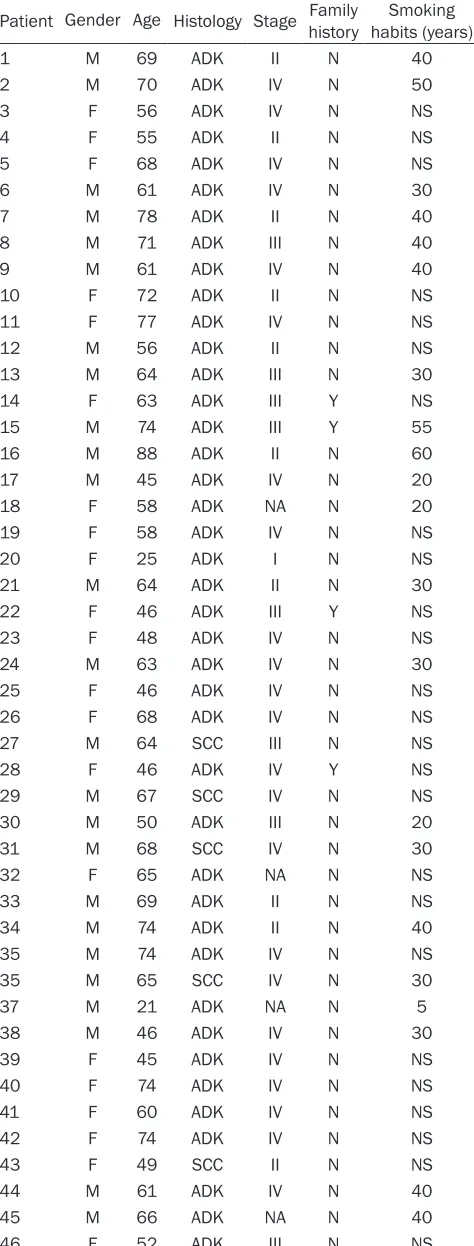
Table 1. Demographic and clinical features of NSCLC patients
Patient Gender Age Histology Stage Family history habits (years)Smoking
1 M 69 ADK II N 40
2 M 70 ADK IV N 50
3 F 56 ADK IV N NS
4 F 55 ADK II N NS
5 F 68 ADK IV N NS
6 M 61 ADK IV N 30
7 M 78 ADK II N 40
8 M 71 ADK III N 40
9 M 61 ADK IV N 40
10 F 72 ADK II N NS
11 F 77 ADK IV N NS
12 M 56 ADK II N NS
13 M 64 ADK III N 30
14 F 63 ADK III Y NS
15 M 74 ADK III Y 55
16 M 88 ADK II N 60
17 M 45 ADK IV N 20
18 F 58 ADK NA N 20
19 F 58 ADK IV N NS
20 F 25 ADK I N NS
21 M 64 ADK II N 30
22 F 46 ADK III Y NS
23 F 48 ADK IV N NS
24 M 63 ADK IV N 30
25 F 46 ADK IV N NS
26 F 68 ADK IV N NS
27 M 64 SCC III N NS
28 F 46 ADK IV Y NS
29 M 67 SCC IV N NS
30 M 50 ADK III N 20
31 M 68 SCC IV N 30
32 F 65 ADK NA N NS
33 M 69 ADK II N NS
34 M 74 ADK II N 40
35 M 74 ADK IV N NS
35 M 65 SCC IV N 30
37 M 21 ADK NA N 5
38 M 46 ADK IV N 30
39 F 45 ADK IV N NS
40 F 74 ADK IV N NS
41 F 60 ADK IV N NS
42 F 74 ADK IV N NS
43 F 49 SCC II N NS
44 M 61 ADK IV N 40
45 M 66 ADK NA N 40
46 F 52 ADK III N NS
The advent of next-generation sequenc-ing (NGS) has revolutionized the app- roach in detecting gene mutations. In particular, an optimized NGS workflow has been established for analyzing 22 lung cancer-related genes in critical samples such as DNA from formalin-fixed paraffin-embedded (FFPE) tissues and circulating free DNA (cfDNA) [15]. Detecting mutations in lung cancer-relat-ed genes from NSCLC patients bascancer-relat-ed on the NGS targeted sequencing has been reported in various ethnic populations [11, 16-19]. However, investigations involving Chinese patients remain limit-ed despite the high incidence of lung cancer and the leading cause of cancer-related death in China [20].
In the present study, we investigated 58 NSCLC patients using a NGS targeted sequencing panel that included 1,850 targeted sites in 22 cancer drug target genes. Our NGS analyses revealed that 75.9% of NSCLC patients carried muta-tions in 7 of these genes. These results suggest that NGS targeted sequencing can effectively detect mutations in clini-cal tumor samples, thereby highlighting this technology as a promising tool in personalized medicine.
Materials and methods
Patients
patients with SCC. One (1.7%) patient was diag-nosed as stage I, 13 (22.4%) patients were diagnosed as stage II, 10 (17.2%) patients were diagnosed as stage III, and 29 (50.0%) patients were diagnosed as stage IV, whereas the stag-es of 5 (8.6%) patients were not determined. Six (10.3%) patients had a family history of lung cancer, whereas 52 (89.7%) had no family his-tory. Twenty-seven (46.6%) patients had a smoking history (34.1 ± 11.6 years, ranging from 5 to 60 years), whereas 31 (53.4%) had none. Informed consent was obtained from all individual participants included in the study.
DNA preparation and Ion torrent PGM library preparation
Genomic DNA was extracted from sections of FFPE tissue samples using the QIAamp DNA Mini Kit (Qiagen, Valencia, CA, USA) according to the manufacturer’s instructions. The Ion AmpliSeq Library Kit 2.0 (Life Technologies, Carlsbad, CA, USA) was used to construct an adapter-ligated library following the manufac-turer’s protocol and previous reports [21]. Then, quality control of libraries was performed with Qubit® 2.0 and a 2100 Bioanalyzer (Agilent Technologies, PaloAlto, CA, USA). There were a multiplexed of 16 libraries consisting of 50 pM prepared library per sample then amplified by emulsion PCR on Ion PI™ Ion Sphere™ Particles (ISPs) with the Ion One Touch™ 2 Instrument (Life Technologies, CA, USA). Template-positive ISPs were enriched (Ion One Touch™ ES Instru- ment), loaded onto an Ion 318™ Chip v2 (Ion PI™ Sequencing 200 Kit v3, Life Technologies,
was performed on the Ion PGM platform (Life Technologies). The detailed methods of Ion Ampliseq Cancer Panel sequencing have been previously described [15, 19, 22].
NGS data analysis was performed with the Ion Reporter software (Life Technologies). Hotspot and targeted regions, together with the json parameters files associated with the Ion AmpliSeq Colon and Lung Cancer Panel v2 (Life Technologies), were loaded into the Variant Caller plugin. All identified variants were visual-ly confirmed by using the Integrative Geno- mics viewer (IGV) [23]. To predict the effect of missense mutations on the corresponding pro-tein and to calculate their conservation scores, variants were annotated using PolyPhen-2 (http://genetics.bwh.harvard.edu/pph2/), SIFT (http://sift.jcvi.org/), and Genomic Evolutionary Rate Profiling (GERP; http://www.broadinsti-tute.org/~mgarber/GERP/documentation.pdf) scores. Variants were named according to the Catalogue of Somatic Mutation in Cancer (COS- MIC; http://cancer.sanger.ac.uk/cosmic) and Single Nucleotide Polymorphism Database (dbSNP; http://www.ncbi.nlm.nih.gov/snp/). Po- pulation frequencies of the variants were obtained from the NHLBI Exome Sequencing Project (http://evs.gs.washington.edu/EVS/). Amplification refractory mutation system
(ARMS)-PCR
To validate the mutations detected by NGS tar-geted sequencing, all patients were screened for 29 known EGFR mutations by using ARMS-PCR as previously described (Supplementary Tables 1, 2) [24].
47 F 64 ADK IV N NS
48 M 67 ADK II N NS
49 M 46 ADK IV N 30
50 M 47 ADK II N 30
51 F 52 ADK IV N NS
52 M 83 SCC IV Y 50
53 M 60 ADK IV N 30
54 F 73 ADK III N NS
55 M 66 ADK III N NS
56 M 53 SCC II N 30
57 M 57 ADK NA N 30
58 F 60 ADK IV Y NS
Abbreviations: NSCLC: Non-small cell lung cancer; M: Male; F: Female; ADK: Adenocarcinoma; SCC: Squamous cell carcinoma; N: No; Y: Yes; NS: Never smoker; NA: Not available.
Carlsbad, CA, USA) and runned on PGM (Life Technologies, Carlsbad, CA, USA).
NGS and data analysis
Statistical analysis
Statistical analysis was performed using SAS (ver. 9.1; SAS Institute, Cary, NC, USA). Fisher’s exact test was used to compare the mutation rates between male and female patients or between ADK and SCC samples. Female patients had a significantly higher mutation rate in the EGFR gene than male patients (60.0% and 30.3%, respectively; P = 0.03). A significantly higher number of EGFR mutations were detected in ADK samples compared to SCC samples (49.0% and 0.0%, respectively; P = 0.02). No significant difference in mutation rate of the other genes was observed between male and female patients or between ADK and SCC samples (all P > 0.05).
Results
Sequence coverage
For the sequencing data of 58 samples ana-lyzed in the present study, the mean depth of coverage was 1,799 reads, ranging from 137 to 2,000 reads.
Mutations detected among 58 NSCLC patients
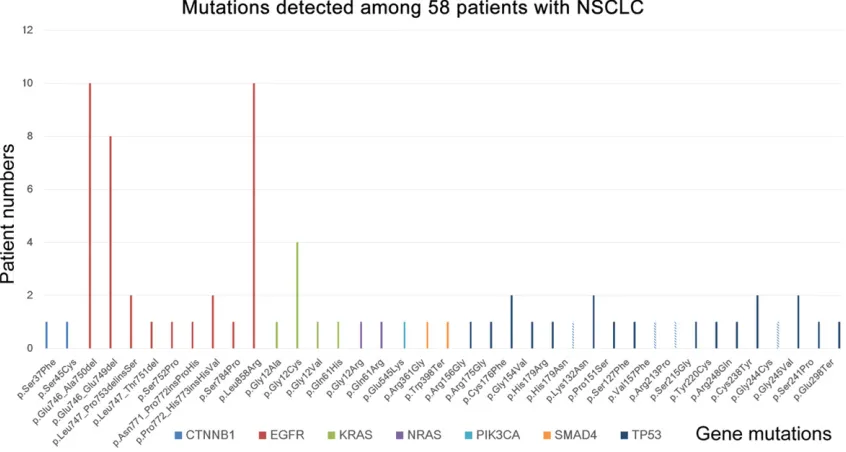
NGS targeted sequencing revealed that 44 (75.9%) of the 58 NSCLC patients carried muta-tions in 7 of the 22 genes screened in the
pres-ent study (Figure 1). Among these patients, 24 patients (41.4%) had one mutation and 20 patients (34.5%) had two or more mutations, whereas 17 patients (29.3%) had mutations in two or more genes.
Distribution of the mutations in 58 NSCLC pa-tients
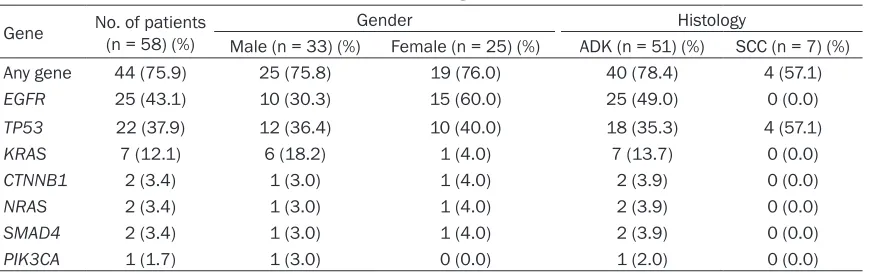
[image:4.612.96.519.76.302.2]Higher mutation frequencies were observed in the EGFR (43.1%), TP53 (37.9%), and KRAS (12.1%) genes, whereas lower frequencies were detected in the CTNNB1 (3.4%), NRAS (3.4%), SMAD4 (3.4%), and PIK3CA (1.7%) genes. No significant difference in mutation rate between males and females were observed (75.8% and 76.0%, respectively; P = 0.62). The ADK sam-ples showed a higher mutation rate compared to the SCC samples (78.4% and 57.1%, respec-tively), although the difference was not cant (P = 0.34). Female patients had a signifi-cantly higher mutation rate in the EGFR gene than male patients (60.0% and 30.3%, respec-tively; P = 0.03). A significantly higher number of EGFR mutations were detected in ADK sam-ples compared to SCC samsam-ples (49.0% and 0.0%, respectively; P = 0.02). No significant dif-ference in mutation rate of the other genes was observed between male and female patients or between ADK and SCC samples (all P > 0.05; Table 2).
Discussion
NGS targeted sequencing has become the pre-ferred technique over the traditional mutation detection methods to simultaneously screen multiple mutations in various genes because it is relatively cheaper, faster, and requires less DNA [18]. In the present study, we investigated 58 NSCLC patients using a NGS targeted sequencing panel that included 1,850 targeted sites in 22 cancer drug target genes. Our NGS analyses revealed that 75.9% of NSCLC patients carried mutations in 7 of 22 interested genes (Figure 1). These results, together with -previous studies [11, 16-19, 25], suggest that NGS targeted sequencing can effectively detect mutations in clinical samples of NSCLC, there-by highlighting that NGS is a promising tool in NSCLC personalized medicine.
In the present study, the highest mutation fre-quency in Chinese NSCLC patients was obser-ved in the EGFR gene (43.1%), followed by the TP53 (37.9%) and KRAS (12.1%) genes (Table 2). Our results were in agreement with previous studies [16-18, 26]. For instance, in an NGS analysis of 38 Belgian NSCLC patients [19], D’Haene and coworkers found that the most common mutations occurred in the KRAS (39.5%), TP53 (39.5%), and EGFR (10.5%) genes. In addition, Zhang et al. [26] screened 184 Chinese NSCLC patients and determined that EGFR mutations were the most prevalent (59.9%), followed by the KRAS (16.9%) and TP53 (12.7%) genes. It appears that the muta-tion frequencies in NSCLC patients vary among populations, particularly among different racial populations [16-18, 26]. Taken together, these findings indicated that the most common
muta-tions in NSCLC patients regardless of popula-tion occur in the EGFR, TP53, and KRAS genes.
Female NSCLC patients showed significantly higher mutation rates in the EGFR gene than male patients (60% and 30%, respectively; P = 0.03; Table 2). Our results were in agreement with the findings of Vigneswaran et al. involving American NSCLC patients with broad ethnic diversity [17], which showed that EGFR muta-tions were more common in female patients than in male patients (59% vs. 41%). Moreover, Zhang et al. [26] also reported that Chinese female NSCLC patients had higher EGFR muta-tion frequencies than male patients (57.3% vs. 33.9%).
In the present study, a significantly higher num-ber of EGFR mutations were observed in ADK samples compared to SCC samples (49% and 0%, respectively; P = 0.02; Table 2). Our find-ings are in line with those of Vigneswaran et al. [17], in which EGFR mutations were more com-mon in ADK samples than in SCC samples (82% vs. 3%). Similarly, Zhang et al. also reported that EGFR mutations more commonly occur in ADK samples than in SCC samples (47.4% vs. 29.2%) [26].
[image:5.612.91.526.82.219.2]The limitation of the present study was that we validated the NGS results by ARMS-PCR only for the EGFR mutations but not for the muta-tions in the six other genes, including CTNNB1, KRAS, NRAS, PIK3CA, SMAD4, and TP53. Although all the EGFR mutations identified by NGS targeted sequencing were validated by ARMS-PCR, further studies are required to rule out possible false-positives in the other genes screened in the present study.
Table 2. Distributions of the mutations detected among 58 NSCLC patients
Gene No. of patients(n = 58) (%) Gender Histology
Male (n = 33) (%) Female (n = 25) (%) ADK (n = 51) (%) SCC (n = 7) (%)
Any gene 44 (75.9) 25 (75.8) 19 (76.0) 40 (78.4) 4 (57.1)
EGFR 25 (43.1) 10 (30.3) 15 (60.0) 25 (49.0) 0 (0.0)
TP53 22 (37.9) 12 (36.4) 10 (40.0) 18 (35.3) 4 (57.1)
KRAS 7 (12.1) 6 (18.2) 1 (4.0) 7 (13.7) 0 (0.0)
CTNNB1 2 (3.4) 1 (3.0) 1 (4.0) 2 (3.9) 0 (0.0)
NRAS 2 (3.4) 1 (3.0) 1 (4.0) 2 (3.9) 0 (0.0)
SMAD4 2 (3.4) 1 (3.0) 1 (4.0) 2 (3.9) 0 (0.0)
PIK3CA 1 (1.7) 1 (3.0) 0 (0.0) 1 (2.0) 0 (0.0)
In summary, we investigated 58 NSCLC patients using a NGS targeted sequencing panel that included 1,850 targeted sites in 22 cancer drug target genes. NGS targeted sequencing revealed that 75.9% of NSCLC patients carried mutations in 7 of these genes. Higher mutation frequencies were observed in the EGFR (43.1%), TP53 (37.9%), and KRAS (12.1%) genes, where-as lower frequencies were detected in the CTNNB1 (3.4%), NRAS (3.4%), SMAD4 (3.4%), and PIK3CA (1.7%) genes. Female patients showed a significantly higher mutation rate in the EGFR gene than male patients. The ADK samples showed a significantly higher number of EGFR mutations compared to SCC samples. These results suggest that NGS targeted sequencing can effectively detect mutations in clinical tumor samples, thereby highlighting NGS as a promising tool in personalized medicine.
Acknowledgements
This study was supported by Science and Technology Program of Guangdong (Grant No. 2015B020233009; Grant No. 2015A030401- 040).
Disclosure of conflict of interest None.
Address correspondence to: Dr. Ming Li, Institute of Antibody Engineering, School of Biotechnology,
Southern Medical University, NO. 1838 Guangzhou
Road, Guangzhou, Guangdong, China. Tel:
+86-20-61648550; Fax: +86-20-61648554; E-mail:
References
[1] Jemal A, Siegel R, Ward E, Hao Y, Xu J and Thun MJ. Cancer statistics, 2009. CA Cancer J Clin 2009; 59: 225-249.
[2] Giangreco A, Groot KR and Janes SM. Lung
cancer and lung stem cells: strange bedfel-lows? Am J Respir Crit Care Med 2007; 175: 547-553.
[3] Heist RS and Engelman JA. SnapShot: non-small cell lung cancer. Cancer Cell 2012; 21: 448, e442.
[4] Yamamoto H, Shigematsu H, Nomura M, Lockwood WW, Sato M, Okumura N, Soh J,
Suzuki M, Wistuba II, Fong KM, Lee H, Toyooka S, Date H, Lam WL, Minna JD and Gazdar AF. PIK3CA mutations and copy number gains in
human lung cancers. Cancer Res 2008; 68: 6913-6921.
[5] Spoerke JM, O’Brien C, Huw L, Koeppen H, Fridlyand J, Brachmann RK, Haverty PM, Pandita A, Mohan S, Sampath D, Friedman LS,
Ross L, Hampton GM, Amler LC, Shames DS and Lackner MR. Phosphoinositide 3-kinase
(PI3K) pathway alterations are associated with
histologic subtypes and are predictive of
sensi-tivity to PI3K inhibitors in lung cancer preclini -cal models. Clin Cancer Res 2012; 18: 6771-6783.
[6] Larsen JE and Minna JD. Molecular biology of lung cancer: clinical implications. Clin Chest Med 2011; 32: 703-740.
[7] Cufer T, Ovcaricek T and O’Brien ME. Systemic therapy of advanced non-small cell lung can-cer: major-developments of the last 5-years. Eur J Cancer 2013; 49: 1216-1225.
[8] Pao W, Miller V, Zakowski M, Doherty J, Politi K, Sarkaria I, Singh B, Heelan R, Rusch V, Fulton L, Mardis E, Kupfer D, Wilson R, Kris M and Varmus H. EGF receptor gene mutations are
common in lung cancers from “never smok-ers” and are associated with sensitivity of
tu-mors to gefitinib and erlotinib. Proc Natl Acad Sci U S A 2004; 101: 13306-13311.
[9] Kobayashi K and Hagiwara K. Epidermal growth factor receptor (EGFR) mutation and
personalized therapy in advanced nonsmall cell lung cancer (NSCLC). Target Oncol 2013; 8: 27-33.
[10] Soda M, Choi YL, Enomoto M, Takada S,
Yamashita Y, Ishikawa S, Fujiwara S, Watanabe H, Kurashina K, Hatanaka H, Bando M, Ohno
S, Ishikawa Y, Aburatani H, Niki T, Sohara Y,
Sugiyama Y and Mano H. Identification of the transforming EML4-ALK fusion gene in
non-small-cell lung cancer. Nature 2007; 448: 561-566.
[11] Vavala T, Monica V, Lo Iacono M, Mele T, Busso S, Righi L, Papotti M, Scagliotti GV and Novello
S. Precision medicine in age-specific
non-small-cell-lung-cancer patients: Integrating biomolecular results into clinical practice-A new approach to improve personalized transla-tional research. Lung Cancer 2016; [Epub ahead of print].
[12] Olivier M, Hollstein M and Hainaut P. TP53 mu-tations in human cancers: origins, conse-quences, and clinical use. Cold Spring Harb Perspect Biol 2010; 2: a001008.
[13] Ye T, Pan Y, Wang R, Hu H, Zhang Y, Li H, Wang L, Sun Y and Chen H. Analysis of the molecular and clinicopathologic features of surgically re-sected lung adenocarcinoma in patients under 40 years old. J Thorac Dis 2014; 6: 1396-1402.
[14] Coco S, Truini A, Vanni I, Dal Bello MG, Alama A, Rijavec E, Genova C, Barletta G, Sini C,
Next generation sequencing in non-small cell lung cancer: new avenues toward the person-alized medicine. Curr Drug Targets 2015; 16: 47-59.
[15] Vanni I, Coco S, Truini A, Rusmini M, Dal Bello MG, Alama A, Banelli B, Mora M, Rijavec E,
Barletta G, Genova C, Biello F, Maggioni C and Grossi F. Next-Generation sequencing workflow
for NSCLC critical samples using a targeted se-quencing approach by Ion torrent PGM plat-form. Int J Mol Sci 2015; 16: 28765-28782. [16] Masago K, Fujita S, Muraki M, Hata A, Okuda
C, Otsuka K, Kaji R, Takeshita J, Kato R, Katakami N and Hirata Y. Next-generation se -quencing of tyrosine kinase inhibitor-resistant non-small-cell lung cancers in patients harbor-ing epidermal growth factor-activatharbor-ing muta-tions. BMC Cancer 2015; 15: 908.
[17] Vigneswaran J, Tan YH, Murgu SD, Won BM,
Patton KA, Villaflor VM, Hoffman PC, Hensing T, Hogarth DK, Malik R, MacMahon H, Mueller J, Simon CA, Vigneswaran WT, Wigfield CH, Ferg-uson MK, Husain AN, Vokes EE and Salgia R. Comprehensive genetic testing identifies tar -getable genomic alterations in most patients
with non-small cell lung cancer, specifically ad -enocarcinoma, single institute investigation. Oncotarget 2016; 7: 18876-18886.
[18] D’Haene N, Le Mercier M, De Neve N, Blan- chard O, Delaunoy M, El Housni H, Dessars B, Heimann P, Remmelink M, Demetter P, Tejpar S and Salmon I. Clinical validation of targeted next generation sequencing for colon and lung cancers. PLoS One 2015; 10: e0138245. [19] Cai X, Sheng J, Tang C, Nandakumar V, Ye H, Ji
H, Tang H, Qin Y, Guan H, Lou F, Zhang D, Sun
H, Dong H, Zhang G, Liu Z, Dong Z, Guo B, Yan
H, Yan C, Wang L, Su Z, Li Y, Jones L, Huang XF, Chen SY, Wu T and Lin H. Frequent mutations in EGFR, KRAS and TP53 genes in human lung
cancer tumors detected by ion torrent DNA se-quencing. PLoS One 2014; 9: e95228. [20] Chen W, Zheng R, Baade PD, Zhang S, Zeng H,
Bray F, Jemal A, Yu XQ and He J. Cancer statis -tics in China, 2015. CA Cancer J Clin 2016; 66: 115-132.
[21] Zheng H, Wang Y, Tang C, Jones L, Ye H, Zhang
G, Cao W, Li J, Liu L, Liu Z, Zhang C, Lou F, Li Y,
Shi Z, Zhang J, Zhang D, Sun H, Dong H, Dong
Z, Guo B, Yan HE, Lu Q, Huang X and Chen SY. TP53, PIK3CA, FBXW7 and KRAS mutations in esophageal cancer identified by targeted se -quencing. Cancer Genomics Proteomics 2016; 13: 231-238.
[22] Bai X, Zhang E, Ye H, Nandakumar V, Wang Z, Chen L, Tang C, Li J, Li H, Zhang W, Han W, Lou
F, Zhang D, Sun H, Dong H, Zhang G, Liu Z,
Dong Z, Guo B, Yan H, Yan C, Wang L, Su Z, Li
Y, Jones L, Huang XF, Chen SY and Gao J. PIK3CA and TP53 gene mutations in human
breast cancer tumors frequently detected by ion torrent DNA sequencing. PLoS One 2014; 9: e99306.
[23] Thorvaldsdottir H, Robinson JT and Mesirov JP. Integrative Genomics Viewer (IGV): high-perfor-mance genomics data visualization and explo-ration. Brief Bioinform 2013; 14: 178-192. [24] Cai W, Lin D, Wu C, Li X, Zhao C, Zheng L, Chuai
S, Fei K, Zhou C and Hirsch FR. Intratumoral heterogeneity of ALK-Rearranged and ALK/ EGFR coaltered lung adenocarcinoma. J Clin
Oncol 2015; 33: 3701-3709.
[25] Xu X, Yang Y, Li H, Chen Z, Jiang G and Fei K.
Assessment of the clinical application of
de-tecting EGFR, KRAS, PIK3CA and BRAF muta -tions in patients with non-small cell lung can-cer using next-generation sequencing. Scand J Clin Lab Invest 2016; 1-7.
[26] Zhang S, Xia B, Jiang H, Wang L, Xu R, Shi Y, Zhang J, Xu M, Cram DS and Ma S. Com-
prehensive profiling and quantitation of onco -genic mutations in non small-cell lung
carci-noma using single molecule amplification and
Supplementary Table 1. 29 EGFR mutations screened by ARMS-PCR
Exon Cosmic ID Mutation Nucleotide change Target sequence Sequence following target sequence
18 6252 G719S 2155G>A CAAAGTGCTG AGC
6253 G719C 2155G>T TGC
6239 G719A 2156G>C GCC
19 6223 E746-A750del (1) 2235-2249 del 15 TATCAA AACATCTC 13551 E746-T751>I 2235-2252>AAT (complex) AATATCTC
6225 E746-A750del (2) 2236-2250 del 15 GACATCTC
12728 E746-T751del 2236-2253 del 18 GTCTCCGA
12384 E746-S752>V 2237-2250>T (complex) GGTACATC
12678 E746-T751>A 2237-2251 del 15 GGCATCTC
12367 E746-S752>A 2237-2254 del 18 GGCTCCGA
12422 L747-A750>P 2238-2248>GC (complex) GGAGCCAACAT 12419 L747-T751>Q 2238-2252>GCA (complex) GGAGCAATCTC
6220 E746-S752>D 2238-2255 del 18 GGATCCGAAAG
6218 L747-E749del 2239-2247 del 9 GGAAGCAACAT
12382 L747-A750>P 2239-2248 TTAAGAGAAG>C (complex) GGAACCAACAT 12383 L747-T751>P 2239-2251>C (complex) GGAACCATCTC
6254 L747-T751del 2239-2253 del 15 GGAATCTCCGA
6255 L747-S752del 2239-2256 del 18 GGAACCGAAAG
12387 L747-P753>Q 2239-2258>CA (complex) GGAACAGAAAG
6210 L747-T751>S 2240-2251 del 12 GGAATCATCTC
12369 L747-T751del 2240-2254 del 15 GGAATCTCCGA
12370 L747-P753>S 2240-2257 del 18 GGAATCGAAAG
20 6241 S768I 2303 G>T GTGATGGCCA T
12376 V769-D770insASV 2307-2308 ins (GCCAGCGTG) GCGTGGCCAGCGTGGAC
12378 D770-N771insG 2310-2311 ins GGT GCGTGGACGGTAAC
12377 H773-V774insH 2319-2320 ins CAC GCGTGGACAACCCCCACCACG
6240 T790M 2369 C>T CTCATCA T
21 6224 L858R 2573 T>G GATTTTGGGC G
Supplementary Table 2. Mutations detected among 58 patients with NSCLC
Gene Exon Mutation Patient Gender Age Histology (ARMS-PCR)EGFR
EGFR 19 p.Glu746_Ala750del 3 F 5 ADK + 6
EGFR 19 p.Glu746_Ala750del 4 F 5 ADK + 5
EGFR 19 p.Glu746_Ala750del 6 M 6 ADK NA 1
EGFR 19 p.Glu746_Ala750del 16 M 8 ADK NA 8
EGFR 19 p.Glu746_Ala750del 28 F 4 ADK + 6
EGFR 19 p.Glu746_Ala750del 39 F 4 ADK + 5
EGFR 19 p.Glu746_Ala750del 40 F 7 ADK NA 4
EGFR 19 p.Glu746_Ala750del 45 M 6 ADK NA 6
EGFR 19 p.Glu746_Ala750del 46 F 5 ADK + 2
EGFR 19 p.Glu746_Ala750del 59 F 6 ADK + 0
EGFR 19 p.Glu746_Glu749del 3 F 5 ADK + 6
EGFR 19 p.Glu746_Glu749del 4 F 5 ADK + 5
EGFR 19 p.Glu746_Glu749del 6 M 6 ADK NA 1
EGFR 19 p.Glu746_Glu749del 39 F 4 ADK + 5
EGFR 19 p.Glu746_Glu749del 40 F 7 ADK NA 4
EGFR 19 p.Glu746_Glu749del 45 M 6 ADK NA 6
EGFR 19 p.Glu746_Glu749del 46 F 5 ADK + 2
EGFR 19 p.Glu746_Glu749del 59 F 6 ADK + 0
EGFR 19 p.Leu747_Pro753delinsSer 11 F 7 ADK NA 7
EGFR 19 p.Leu747_Pro753delinsSer 12 M 5 ADK NA 6
EGFR 19 p.Leu747_Thr751del 44 M 6 ADK NA 1
EGFR 19 p.Ser752Pro 11 F 7 ADK NA
7
EGFR 20 p.Pro772_His773insHisVal 14 F 6 ADK NA 3
EGFR 20 p.Pro772_His773insHisVal 18 F 5 ADK NA 8
EGFR 20 p.Ser784Pro 9 M 6 ADK NA
1
EGFR 21 p.Leu858Arg 12 M 5 ADK +
6
EGFR 21 p.Leu858Arg 13 M 6 ADK +
4
EGFR 21 p.Leu858Arg 26 F 6 ADK +
8
EGFR 21 p.Leu858Arg 30 M 5 ADK +
0
EGFR 21 p.Leu858Arg 32 F 6 ADK +
5
EGFR 21 p.Leu858Arg 40 F 7 ADK +
4
EGFR 21 p.Leu858Arg 47 F 6 ADK +
4
EGFR 21 p.Leu858Arg 48 M 6 ADK +
7
EGFR 21 p.Leu858Arg 51 F 5 ADK +
2
EGFR 21 p.Leu858Arg 55 M 6 ADK +
6