134
Alignment Analysis of Sequential Segmentation of Lexicons to Improve
Automatic Cognate Detection
Pranav A Big Data Institute
Hong Kong University of Science and Technology Hong Kong
Abstract
Ranking functions in information retrieval are often used in search engines to recom-mend the relevant answers to the query. This paper makes use of this notion of information retrieval and applies onto the problem domain of cognate detection. The main contributions of this paper are: (1) positional segmentation, which incorpo-rates the sequential notion; (2) graphical error modelling, which deduces the trans-formations. The current research work focuses on classification problem; which is distinguishing whether a pair of words are cognates. This paper focuses on a harder problem, whether we could predict a possible cognate from the given input. Our study shows that when language mod-elling smoothing methods are applied as the retrieval functions and used in con-junction with positional segmentation and error modelling gives better results than competing baselines, in both classification and prediction of cognates.
1 Introduction
Cognates are a collection of words in different lan-guages deriving from the same origin. The study of cognates plays a crucial role in applying com-parative approaches for historical linguistics, in particular, solving language relatedness and track-ing the interaction and evolvement of multiple lan-guages over time. A cognate instance in Indo-European languages is given as the word group: night (English), nuit (French), noche (Spanish) andnacht(German).
The existing studies on cognate detection in-volve experiments which distinguish between a pair of words whether they are cognates or
non-cognates (Ciobanu and Dinu,2014;List, 2012a). These studies do not approach the problem of pre-dicting the possible cognate of the target language, if the cognate of the source language is given. For example, given the wordnuit, could the algorithm predict the appropriate German cognate within the huge German wordlist? This paper tackles this problem by incorporating heuristics of the prob-abilistic ranking functions from information re-trieval. Information retrieval addresses the prob-lem of scoring a document with a given query, which is used in every search engine. One can view the above problem as the construction of a suitable search engine, through which we want to find the cognate counterpart of a word (query) in a lexicon of another language (documents).
This paper deals with the intersection between the areas of information retrieval and approximate string similarity (like the cognate detection prob-lem), which is largely under-explored in the liter-ature. Retrieval methods also provide a variety of alternative heuristics which can be chosen for the desired application areas (Fang et al.,2011). Tak-ing such advantage of the flexibility of these mod-els, the combination of approximate string simi-larity operations with an information retrieval sys-tem could be beneficial in many cases. We demon-strate how the notion of information retrieval can be incorporated into the approximate string sim-ilarity problem by breaking a word into smaller units. Regarding this, Nguyen et al. (2016) has argued that segmented words are a more practi-cal way to query large databases of sequences, in comparison with conventional query methods. This further encourages the heuristic attempt at imposing an information retrieval model on the cognate detection problem in this paper.
shifts between the cognates. We tackled this by proposing a shingling (chunking) scheme which incorporates positional information (see section 2) and a graph-based error modelling scheme to un-derstand the transformations (see section 3). Our test harness focuses not only on distinguishing be-tween a pair of cognates, but also the ability to pre-dict the cognate for a target language (see section 5).
2 Positional Character-based Shingling
This section examines on converting a string into a shingle-set which includes the encodings of the positional information. In this paper, we notify,
S as the shingle-set of cognate from the source language and T as the shingle-set of cognate for the target language. The similarity between these split-sets is denoted by S ∩ T. An example of cognate from the source language,S (Romanian) could be shingle set of the wordrosmarin andT
(Italian) could beromarin.
K-gram shingling: Usually, set based string similarity measures are based on comparing over-lap between the shingles of two strings. Shingling is a way of viewing a string as a document by con-sideringkcharacters at a time. For example, the shingle of the wordrosmarinis created withk= 2 as: S = {hsir, ro, os, sm, ma, ar, ri, in, nh/si}. Here, hsi is the start sentinel token and h/si is the stop sentinel token. For the sake of simplic-ity, we have ignored sentinel tokens; which trans-forms into: S = {r, ro, os, sm, ma, ar, ri, in, n}. This method splits the strings into smallerk-grams without any positional information.
2.1 Positional Shingling from 1 End
We argue that the unordered k-grams splitting could lead to an inefficient matching of strings since a shingle set is visualized as the bag-of-words method. Given this, we propose a po-sitional k-gram shingling technique, which in-troduces position number in the splits to incor-porate the notion of the sequence of the to-kens. For example, the word rosmarin could be position-wise split with k = 2 as: S =
{1r, 2ro, 3os, 4sm, 5ma, 6ar, 7ri, 8in, 9n}.
Thus, the member 4sm means that it is the fourth member of the set. The motivation behind this modification is that it retains the positional in-formation which is useful in probabilistic retrieval ranking functions.
2.2 Positional Shingling from 2 Ends
The main disadvantage of the positional shin-gling from single end is that any mismatch can completely disturb the order of the rest, leading to low similarity. For example, if the query is rosmarin with cognate ro-marin, the corresponding split sets would be
{1r, 2ro, 3os, 4sm, 5ma, 6ar, 7ri, 8in, 9n} and
{1r, 2ro, 3om, 4ma, 5ar, 6ri, 7in, 8n}. The order of the members after 2ro is misplaced, thus this will lead to low similarity between two cognates. Only{1r, 2ro}is common between the cognates. Considering this, we propose positional shingling from both ends, which is robust against such displacements.
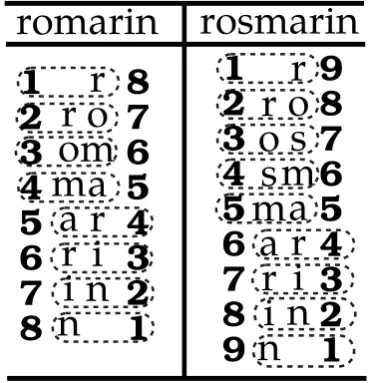
We attach a position number to the left if the numbering begins from the start, and to the right if the numbering begins from the end. Then the smallest position number is selected between the two position numbers. If the position numbers are equal, then we select the left position number as a convention. Figure 1 gives an exemplification of this algorithm illustrated with splits ofromarin androsmarin.
[image:2.595.322.507.401.593.2]r
o
s
m
a
r
i
n
r
o
s
m
a
r
i
n
1
2
3
4
5
6
7
8
9
9
8
7
6
5
4
3
2
1
1
2
3
4
5
6
7
8
8
7
6
5
4
3
2
1
r
o
m
a
r
i
n
romarin rosmarin
r
o
m
a
r
i
n
Figure 1: The process of positional tokeni-sation from both ends. On the left, algo-rithm segments the Romanian word romarininto the split-set{1r, 2ro, 3om, 4ma, ar4, ri3, in2, n1}. On the right, the algorithm segmentsrosmarininto
{1r, 2ro, 3os, 4sm, 5ma, ar4, ri3, in2, n1}.
3 Graphical Error Modelling
Once shingle sets are created, common overlap set measures like set intersection, Jaccard (J¨arvelin et al.,2007), XDice (Brew et al.,1996) or TF-IDF (Wu et al., 2008) could be used to measure simi-larities between two sets. However, these methods only focus on similarity of the two strings. For cognate detection, it is crucial to understand how substrings are transformed from source language to target language. This section discusses on how to view this ”dissimilarity” by creating a graphical error model.
Algorithm 1 explicates the process of graphical error modelling. For illustration purposes, we vi-sualize the procedure via a Romanian-Italian cog-nate pair (mesia,messia). If the source language is Romanian, thenS={1m, 2me, 3es, si3, ia2, a1}, which is the split-set of mesia. Let the tar-get language by Italian. Then the split-set of the Italian word messia, denoted as T, will be
{1m, 2me, 3es, 4ss, si3, ia2, a1}. Thus |S ∩ T|
is the number of common terms. Thus the term matches are,S∩T ={1m, 2me, 3es, si3, ia2, a1}. We are interested in examining the ”dissimilar-ity”, which are the leftover terms in the sets. That means, we need to infer a certain pattern from left-over sets, which areS− {S∩T}andT− {S∩T}. Thus we can draw mappings to gather informa-tion of the correcinforma-tions. Let top and bottom be the ordered sets referring to S − {S ∩T} and
T− {S∩T}respectively. Referring to the exam-ple,T −S∩T ={4ss}, abottomset. Similarly,
S −S∩T = {}, a topset. Then we follow in-structions given in algorithm 1.
Algorithm 1: Graphical Error Model
Graphical Error Model takes two split sets generated by the shingling variants, namely top andbottom. The objective is to output a graphical structure showing connections between members of thetopand thebottomsets.
1. Initialization of thetopand bottom: If the given setstopandbottomare empty, we ini-tialize them by inserting an empty token (φ) into those sets.
Running example: This step transformstop set as{φ}andbottomas{4ss}.
2. Equalization of the set cardinalities: The cardinalities of the setstopandbottommade equal by inserting empty tokens (φ) into the middle of the sets.
Running example: The set cardinalities of topandbottomwere already equal. Thus the output of this step aretopset as{φ}and bot-tomas{4ss}.
3. Inserting the mappings of the set members into the graph: The empty graph is initial-ized asgraph= {}. The directed edges are generated, originating from every set member oftopto every set member ofbottom. This results in a complete directed bipartite graph betweentopandbottomsets. Each edge is as-signed a probabilityP(e)which is discussed in a later section.
Running example: The output of this step would be complete directed bipartite graph betweentopandbottom sets which is
{φ→4ss}
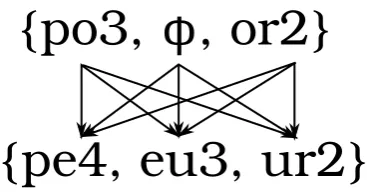
One more example is provided in figure2.
Intuition: The edges created as the result of this graph could be used for probabilistic calcula-tions which are detailed more in section4.2. Intu-itively,φ→ 4ssmeans that if the lettersis added at position 4 of the word of the sourcemesia, then one could get the target wordmessia.
{po3, ϕ, or2}
[image:3.595.323.507.421.517.2]{pe4, eu3, ur2}
Figure 2: The figure shows the bipartite graph out-put of the algorithm when the source cognate is stuporand the target cognate isstupeur.
4 Evaluation Function
The design of our evaluation function focuses on two main properties: set based similarity (see section 4.1) and probabilistic calculation through graphical model (see section4.2)
4.1 Similarity Function
(Melamed,1999)) are also often used to calculate similarity between two strings. Ranking functions incorporate more complex but necessary features which are needed to distinguish between the doc-uments.
In this paper, we use BM25 and a Dirichlet smoothing based ranking function to compute the similarity. BM25 considers term-frequency, in-verse document frequency and length normaliza-tion based penalizanormaliza-tion features for similarity cal-culations. Dirichlet smoothing function ( Robert-son and Zaragoza, 2009) makes use of language modelling features and tunable parameter which aids in Bayesian smoothing of unseen shingles in the split sets (Blei et al.,2003).
4.2 Error Modelling Function
The information of the common morphological transformations for cognates between two differ-ent languages helps in determining if a pair of words could be cognates. Based on the graphs of cognate pairs between Italian and Romanian (sec-tion 3), which models the morphological shifts be-tween the cognates in the two languages, we define an error modelling function on any pair of words from the two languages. The split set from the source language is denoted by S and target lan-guage byT, then probabilistic function would be:
π(S, T)= 1
|G(S, T)|
X
e∈G(S,T)
P(e)q
whereG(S, T) is the constructed graph ofS and
T, the strength parameter is calledqhere with the range of (0,∞), and P(e) is the probability of edge eto occur in between two cognates, which is estimated by its frequency of being observed in the graphs of cognate pairs in the training set.
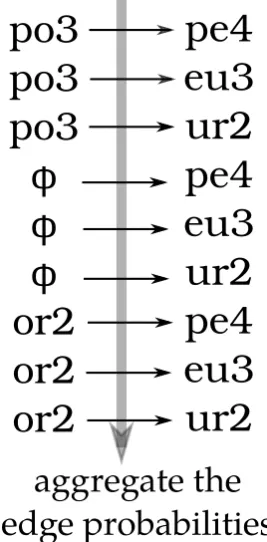
Figure3 illustrates the aggregation of edges in the graph and figure4shows the final output of the error modelling function after normalizing.
π(S, T) is called the error modelling function defined for the word pair, which is an intuitive calculation of probabilty between a pair of cog-nates through estimating their transformations. q
is a tunable parameter that controls the effect of the probabilistic frequenciesP(e)observed in the training set, often useful in avoiding overfitting.
1
|G(S,T)| is the normalization factor to allow us to
compare the quantity across different word pairs.
po3
po3
po3
ϕ
ϕ
ϕ
or2
or2
or2
pe4
eu3
ur2
pe4
eu3
ur2
pe4
eu3
ur2
[image:4.595.346.480.63.335.2]aggregate the
edge probabilities
Figure 3: From the graph created in figure2, we calculate the probabilities of each edge (by com-puting frequencies and smoothing) and then ag-gregate all the probabilities of edges in the graph.
po3
ϕ
or2
[image:4.595.347.483.414.540.2]pe4
eu3
ur2
normalizing
after aggregation
Figure 4: After aggregating, we normalize the sum and the graph conversion score is outputted.
4.3 Combining Error Modelling and Similarity Function metrics
In this subsection, we merge the notion of sim-ilarity and dissimsim-ilarity together. We combine a set-based similarity function (discussed in section
4.1) and the error modelling function (discussed in section4.2) into a score function by a weighted sum of them, which is,
score(S, T) =λ×sim(S, T)+ (1−λ)×π(S, T)
whereλ∈[0,1]is a weight based hyperparameter,
T, and π(S, T) is the graphical error modelling function defined above.
5 Test Harness
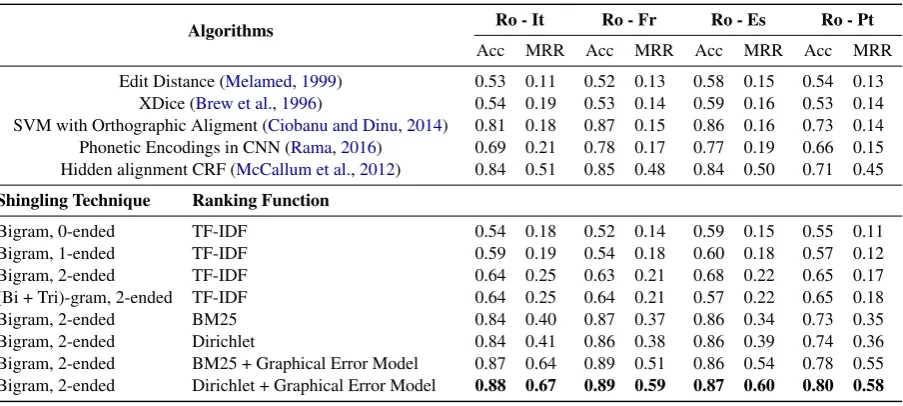
Table1summarizes the results of the experimental setup. The elements of test harness are mentioned as following:
5.1 Setup Description
Dataset: The experiments in this paper are per-formed on the dataset used by Ciobanu et al (2014). The dataset consists 400 pairs of cognates and non-cognates for Romanian-French (Ro - Fr), Romanian-Italian (Ro - It), Romanian-Spanish (Ro - Es) and Romanian-Portuguese (Ro - Pt). The dataset is divided into a 3:1 ratio for training and testing purposes. Using cross-validation, hyperpa-rameters and thresholds for all the algorithms and baselines were tuned accordingly in a fair manner. Experiments: Two experiments are included in test harness.
1. We provide a pair of words and the algo-rithms would aim to detect whether they are cognates. Accuracy on the test set is used as a metric for evaluation.
2. We provide a source cognate as the input and the algorithm would return a ranked list as the output. The efficiency of the algorithm would depend on the rank of the desired target cog-nate. This is measured by MRR (Mean Re-ciprocal Rank), which is defined as,M RR= P|dataset|
i=1 rank1 i, whereranki is the rank of
the true cognate in the ranked list returned to theithquery.
5.2 Baselines
String Similarity Baselines: It is intuitive to compare our methods with the prevalent string similarity baselines since the notions behind cog-nate detection and string similarity are almost sim-ilar. Edit Distance is often used as the baseline in the cognate detection papers (Melamed,1999). This computes the number of operations required to transform from source to target cognate. We have also incorporated XDice (Brew et al.,1996), which is a set based similarity measure that oper-ates between shingle set between two strings. Hid-den alignment conditional random fields (CRF) are often used in transliteration which serves as the generative sequential model to compute the prob-abilities between the cognates, which is analogous
to learnable edit distance (McCallum et al.,2012). Among these baselines, CRF performs the best in accuracy and MRR.
Orthographic Cognate Detection: Papers re-lated to this notion usually take alignment of sub-strings which in classifier like support vector ma-chines (Ciobanu and Dinu,2015,2014) or hidden markov models (Bhargava and Kondrak, 2009). We included Alina et al as the baseline (2014), which employs the dynamic programming based methods for sequence alignment following which features were extracted from the mismatches in the word alignments. These features are plugged into the classifier like SVM which results in decent per-formance on accuracy with an average of 84%, but only 16% on MRR. This result is due to the fact that a large number of features leads to overfitting and scoring function is not able to distinguish the appropriate cognate.
Phonetic Cognate Detection: Research in au-tomatic cognate identification using phonetic as-pects involve computation of similarity by de-composing phonetically transcribed words ( Kon-drak,2000), acoustic models (Mielke,2012), pho-netic encodings (Rama, 2015), aligned segments of transcribed phonemes (List, 2012b). We im-plemented Rama’s research (2015), which em-ploys a Siamese convolutional neural network to learn the phonetic features jointly with language relatedness for cognate identification, which was achieved through phoneme encodings. Although it performs well on accuracy, it shows poor results with MRR, possibly the reason as same as SVM performance.
5.3 Ablation experiments
hy-Algorithms Ro - It Ro - Fr Ro - Es Ro - Pt
Acc MRR Acc MRR Acc MRR Acc MRR Edit Distance (Melamed,1999) 0.53 0.11 0.52 0.13 0.58 0.15 0.54 0.13
XDice (Brew et al.,1996) 0.54 0.19 0.53 0.14 0.59 0.16 0.53 0.14 SVM with Orthographic Aligment (Ciobanu and Dinu,2014) 0.81 0.18 0.87 0.15 0.86 0.16 0.73 0.14 Phonetic Encodings in CNN (Rama,2016) 0.69 0.21 0.78 0.17 0.77 0.19 0.66 0.15 Hidden alignment CRF (McCallum et al.,2012) 0.84 0.51 0.85 0.48 0.84 0.50 0.71 0.45
Shingling Technique Ranking Function
[image:6.595.74.526.61.264.2]Bigram, 0-ended TF-IDF 0.54 0.18 0.52 0.14 0.59 0.15 0.55 0.11 Bigram, 1-ended TF-IDF 0.59 0.19 0.54 0.18 0.60 0.18 0.57 0.12 Bigram, 2-ended TF-IDF 0.64 0.25 0.63 0.21 0.68 0.22 0.65 0.17 (Bi + Tri)-gram, 2-ended TF-IDF 0.64 0.25 0.64 0.21 0.57 0.22 0.65 0.18 Bigram, 2-ended BM25 0.84 0.40 0.87 0.37 0.86 0.34 0.73 0.35 Bigram, 2-ended Dirichlet 0.84 0.41 0.86 0.38 0.86 0.39 0.74 0.36 Bigram, 2-ended BM25 + Graphical Error Model 0.87 0.64 0.89 0.51 0.86 0.54 0.78 0.55 Bigram, 2-ended Dirichlet + Graphical Error Model 0.88 0.67 0.89 0.59 0.87 0.60 0.80 0.58
Table 1: Results on the test dataset. The upper half denotes the baselines used and the lower half de-scribes our ablation experiments. For the experiment 1, we evaluate using the accuracy (Acc) met-ric. We used MRR (Mean Reciprocal Rank) for describing the second experiment. Higher scores signify the better performance. The maximum value possible is 1.0. It is worth noting that for the classification problem (experiment 1), our algorithm has slight improvement. However for the rec-ommendation problem (experiment 2), our algorithm shows massive improvement. The thresholds, hyper-parameters, source code and sample Python notebooks are available at our github repository:
https://github.com/pranav-ust/cognates
perparameterλmentioned in the section 4.3, was tuned around 0.6, which shows the 60% tion by the similarity function and 40% contribu-tion by the dissimilarity. Overall, the combina-tion of bigrams with 2-ended posicombina-tional shingling, graphical error modelling with Dirichlet ranking function gives the best performance with an aver-age of 86% on accuracy metric and 60% on MRR.
6 Conclusions
We approach towards the harder problem where the algorithm aims to find a target cognate when a source cognate is given. Positional shingling out-performed non-positional shingling based meth-ods, which demonstrates that inclusion of posi-tional information of substrings is rather impor-tant. Addition of graphical error model boosted the test results which shows that it is crucial to add dissimilarity information in order to capture the transformations of the substrings. Methods whose scoring functions rely only on complex machine learning algorithms like CNN or SVM tend to give worse results when searching for a cognate.
Acknowledgements
References
Aditya Bhargava and Grzegorz Kondrak. 2009. Mul-tiple word alignment with profile hidden markov models. InProceedings of Human Language Tech-nologies: The 2009 Annual Conference of the North American Chapter of the Association for Computa-tional Linguistics, Companion Volume: Student Re-search Workshop and Doctoral Consortium, pages 43–48. Association for Computational Linguistics. David M. Blei, Andrew Y. Ng, and Michael I. Jordan.
2003. Latent dirichlet allocation. J. Mach. Learn. Res., 3:993–1022.
Chris Brew, David Mckelvie, and Buccleuch Place. 1996. Word-pair extraction for lexicography. Alina Maria Ciobanu and Liviu P Dinu. 2014.
Au-tomatic detection of cognates using orthographic alignment. InACL (2), pages 99–105.
Alina Maria Ciobanu and Liviu P Dinu. 2015. Au-tomatic discrimination between cognates and bor-rowings. InProceedings of the 53rd Annual Meet-ing of the Association for Computational LMeet-inguistics and the 7th International Joint Conference on Natu-ral Language Processing (Volume 2: Short Papers), volume 2, pages 431–437.
Hui Fang, Tao Tao, and Chengxiang Zhai. 2011. Di-agnostic evaluation of information retrieval models.
ACM Trans. Inf. Syst., 29(2):7:1–7:42.
Anni J¨arvelin, Antti J¨arvelin, and Kalervo J¨arvelin. 2007. s-grams: Defining generalized n-grams for in-formation retrieval. Information Processing & Man-agement, 43(4):1005–1019.
Grzegorz Kondrak. 2000. A new algorithm for the alignment of phonetic sequences. In Proceedings of the 1st North American chapter of the Asso-ciation for Computational Linguistics conference, pages 288–295. Association for Computational Lin-guistics.
Johann-Mattis List. 2012a. Lexstat: Automatic de-tection of cognates in multilingual wordlists. In
Proceedings of the EACL 2012 Joint Workshop of LINGVIS & UNCLH, EACL 2012, pages 117–125, Stroudsburg, PA, USA. Association for Computa-tional Linguistics.
Johann-Mattis List. 2012b. Lexstat: Automatic de-tection of cognates in multilingual wordlists. In
Proceedings of the EACL 2012 Joint Workshop of LINGVIS & UNCLH, pages 117–125. Association for Computational Linguistics.
Andrew McCallum, Kedar Bellare, and Fernando Pereira. 2012. A conditional random field for discriminatively-trained finite-state string edit dis-tance. arXiv preprint arXiv:1207.1406.
I. Dan Melamed. 1999. Bitext maps and alignment via pattern recognition. Comput. Linguist., 25(1):107– 130.
Jeff Mielke. 2012. A phonetically based metric of sound similarity. Lingua, 122(2):145–163.
Ken Nguyen, Xuan Guo, and Y Pan. 2016. Multiple Biological Sequence Alignment: Scoring Functions, Algorithms and Applications.
Taraka Rama. 2015. Automatic cognate identification with gap-weighted string subsequences. In Proceed-ings of the 2015 Conference of the North Ameri-can Chapter of the Association for Computational Linguistics: Human Language Technologies., pages 1227–1231.
Taraka Rama. 2016. Siamese convolutional networks based on phonetic features for cognate identifica-tion.CoRR, abs/1605.05172.
Stephen Robertson and Hugo Zaragoza. 2009. The probabilistic relevance framework: Bm25 and be-yond.Found. Trends Inf. Retr., 3(4):333–389. Ho Chung Wu, Robert Wing Pong Luk, Kam Fai