E
ff
ects of Dynamical Electron Di
ff
raction on Phase Shift Detected by Electron
Holography
Zentaro Akase
1,2and Daisuke Shindo
1,21Institute of Multidisciplinary Research for Advanced Materials, Tohoku University, Sendai 980-8577, Japan 2Center for Emergent Matter Science, RIKEN, Wako 351-0198, Japan
Recently, the effect of dynamical electron diffraction on the phase shift in electromagnetic field analysis using transmission electron microscopy has become increasingly important. In the present study, we investigated the effect of dynamical electron diffraction on the phase shift in electron holograms recorded from a wedge-shaped specimen of single-crystal Si around a Bragg diffraction condition. The results show that the effective inner potential depends on the direction of the incident electron beam, especially near Bragg conditions. The characteristic phase shift was analyzed using dynamical electron diffraction theory (Bethe method). [doi:10.2320/matertrans.MT-MI2019007]
(Received April 26, 2019; Accepted August 5, 2019; Published August 30, 2019)
Keywords: dynamical electron diffraction, phase shift, electron holography
1. Introduction
With recent improvements in the precision and sensitivity
of electromagneticfield analysis using transmission electron
microscopy, such as electron holography,13) DCP-STEM4)
and electron diffractive imaging,5) the effect of dynamical
electron diffraction on the phase shift º has become
important. Generally, the phase shift of an electron beam
passing through an electrical potential ¤is described by
ºðx; yÞ ¼·
Z
¤ðx; y; zÞdz ð1Þ
where the interaction constant·is given by
· ¼ 2³
Eð1þpffiffiffiffiffiffiffiffiffiffiffiffiffi1¢2Þ
where¢=¯/c,Eis the accelerating voltage,is the electron
wavelength, ¯ is the electron velocity and c is the light
velocity.6)In calculating the phase shift of an electron passing
through a specimen, the mean inner potential V0 of the
specimen can be used instead of ¤ when the effect of the
electron diffraction is weak.7,8) However, when the effect of
the electron diffraction is large, for example, when the
specimen exhibits large bending (many bend contour lines
appear on the bright-field image) or a polycrystalline
structure with grains of random orientation, it is difficult to
apply eq. (1). In that case, the dynamical electron diffraction
should be taken into account because kinematical diffraction
theory cannot be used near Bragg diffraction. In previous
research, the dynamical diffraction effect on the phase shift
was discussed using the two-beam approximation,911) and
inner potentials were determined by multi-beam dynamical
diffraction theory.12) The dynamical diffraction effect of
diffracted beam for the dark-field electron holography was
also discussed.13) In our research, we recorded holograms
from a wedge-shaped specimen of single-crystal Si around
a Bragg diffraction condition. We discuss the characteristic
phase shifts of the transmitted beam, which appear in the reconstructed phase images, as functions of thickness and
specimen tilt using multi-beam dynamical electron diffraction
theory, in order to understand how dynamical diffractions
affect the phase shift through a quantitative interpretation
with high accuracy.
2. Method
2.1 Calculation of phase shift with dynamical theory of electron diffraction
For the phase shift of an electron beam, the solution of the
HowieWhelan equations14)for the two-beam approximation
of dynamical theory gives a qualitative solution. Near the
Bragg condition, two Bloch waves with slightly different
wavelengths are excited, and the excitation rate depends on the incident beam direction. However, the solution of the
HowieWhelan equation includes many approximations
ignoring phase terms to ensure intensity, and we therefore
selected to use the Bethe method,1522)which is a multi-beam
dynamical diffraction theory, for a quantitative analysis of the
phase shift.
According to the dynamical theory of electron diffraction
(Bethe method), the wave function ¼0 of a transmitted
electron beam (which corresponds to the object wave in the
term of electron holography) that propagates a distance tin
a crystal specimen is expressed by a linear combination of
Bloch waves, as follows:23)
¼0¼X j
¡ðjÞCðjÞ
0 expð2³ijkðjÞjtÞ
¼X
j
¡ðjÞCðjÞ
0 expð2³iðjKj þ£ðjÞÞtÞ
¼expð2³ijKjtÞX
j
¡ðjÞ
CðjÞ0 expð2³i£ðjÞtÞ ð2Þ
whereKis the wave vector of an incident beam in the mean
inner potential of the specimen.k( j),C0( j),£( j)and¡( j)are the
wave vector, amplitude of the incident wave (eigenvector),
eigenvalue and excitation coefficient of the j-th Bloch wave,
respectively. The parametersC0( j),£( j)and¡( j)can be solved
from Schrodinger’s equation. When the crystal has a
centrosymmetric structure, ¡( j)=C
0( j). The intensity I0 of
the object wave can then be calculated using the following equation:
I0¼¼0¼0 ¼
X
j
¡ðjÞCðjÞ
0 expð2³i£ðjÞtÞ
2
ð3Þ
The phase shiftºis the difference between the phase of an
object wave (eq. (2)) and the phase of a reference wave. The
phase of the reference wave is expressed by2³jjt, where
is the wave vector of an electron in vacuum. Therefore,ºcan
be calculated using the following formula; º¼anglef¼0expð2³ij»jtÞg
¼angle
"(
expð2³ijKjtÞX
j
¡ðjÞCðjÞ
0 expð2³i£ðjÞtÞ
)
expð2³ij»jtÞ
#
¼angle expð2³iðjKj j»jÞtÞX
j
¡ðjÞCðjÞ
0 expð2³i£ðjÞtÞ
( )
¼angle exp i·
Zt
0 V0dt
X
j
¡ðjÞCðjÞ
0 expð2³i£ðjÞtÞ
( )
ð4Þ
where angle (x) is a function that outputs the angle of the
complex number x. Comparing eq. (4) with eq. (1), it is
noted that the effect of dynamical electron diffraction appears
in the summation term in eq. (4).¡,C0and £depend on the
excitation errors (deviation parameter, the distance between a
reciprocal lattice point and the Ewald sphere)sgof the excited
Bragg reflections, i.e. the tilting angle of the specimen.
Hence, it is considered that the phase shift also depends on the tilting angle. Equation (3) and eq. (4) enable us to determine the intensity and phase shift of an object wave
under the effect of dynamical diffraction as a function of the
specimen tilting angle and thickness.
To simulate the intensity and phase shift of the transmitted beam, nine beams in a 220 systematic row (000, 220, 440,
660, 880, -2-20, -4-40, -6-60, -8-80) are considered in our
calculations. The effects of absorption of intensity are not
considered. We developed a code to calculate the dynamical
electron diffraction using the Bethe method including an
external subroutine that yields the atomic form factors for
electron diffraction.24)The value ofV0of Si used in our code
is 11.5 V.25)
2.2 Experimental procedure
A TEM specimen was prepared from a Si (100) wafer using a focused ion beam (FIB) milling system (JIB-45000 MultiBeam, JEOL). The wedge angle, which was controlled by FIB, was about 52°. Electron holography was performed using a 300-kV TEM system (JEM-3000F, JEOL) equipped with a single biprism. The holograms were recorded under a
two-beam condition (transmitted beam and 220 reflection).
The incident beam direction was controlled using a beam tilt function.
[image:2.595.52.289.170.328.2]3. Results and Discussion
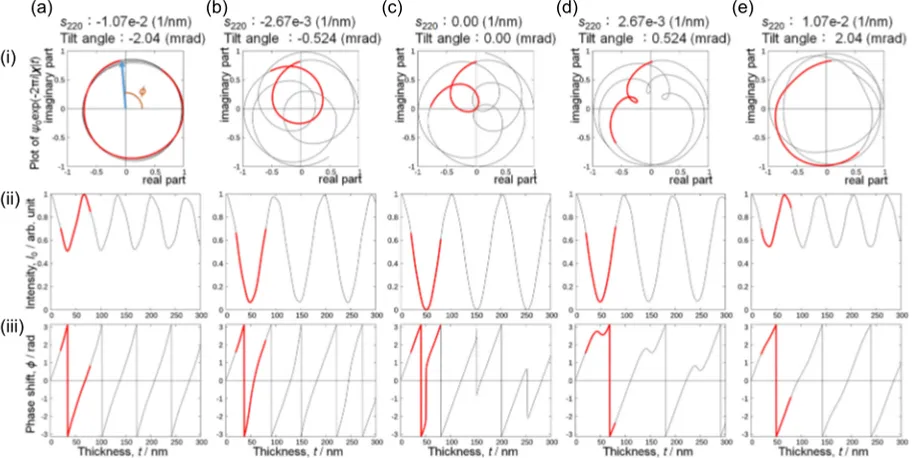
Figure 1 shows the results of a calculation of the
dynamical theory of electron diffraction. The columns (a)
(e) show different diffraction conditions. The upper row (i)
shows plots of ¼0expð2³ijjtÞ on a complex plane with
thickness as a parameter (refer eq. (4)). The range of the thickness is from 0 nm to 300 nm. The data from 20 nm to 80 nm are plotted by red bold lines. To explain Fig. 1(i), a
blue vector indicating¼0expð2³ijjtÞat 20 nm thickness is
drawn in Fig. 1(a-i). The length of the vector corresponds to
the square root of the intensityI0, and the angle between the
real axis and the vector corresponds to the phase shiftº. The
middle row (ii) and the lower row (iii) show the intensity and
the phase shift plotted as functions of thicknesst.
In the center column (Fig. 1(c)), the specimen is under an
exact 220 Bragg diffraction condition. In this condition, the
(a) (b) (c) (d) (e)
(i)
(ii)
(iii)
[image:2.595.71.529.522.751.2]trajectory of ¼0expð2³ijjtÞ intersects the origin of the complex plane, as shown in Fig. 1(c-i). At the thickness of the intersection, the length of the vector is zero, so that the
corresponding position in the bright-field image shows a dark
contrast. It is noted that the direction of the¼0expð2³ijjtÞ
vector is turned over by ³across the origin of the complex
plane in Fig. 1(c-i). Therefore, the phase shift profile
(Fig. 1(c-iii)) shows jumps of³at the dark thickness fringes.
In our calculation, those thicknesses are 50.8 nm, 152.0 nm
and 253.2 nm. Those thicknesses become close to (1/2+
n)²220, because the diffraction condition is almost two beams
condition. Here, ²220 is the extinction distance of 220
reflection, and n is an integer (n²0). In our calculation
²220becomes 108 nm.
The left and right side columns of Fig. 1 show the results
when the sign of the excitation error of the 220 reflection
s220is negative and positive, respectively. Figure 1(iii) shows
that the gradient of the phase shift depends on the sign of the
excitation error s220, i.e. when s220<0, the gradient of the
phase-shift is high and when s220>0, the gradient of the
phase-shift is low. This result can be understood by
comparing Fig. 1(b-i) and Fig. 1(d-i). In those figures, the
trajectory of ¼0expð2³ijjtÞ, shown as red bold lines for
thicknesses from 20 nm to 80 nm, forms a shape of a small
loop. When the sign ofs220is negative (Fig. 1(b-i)), the small
loop includes the origin of the complex plane. This means the
increase of the phase shift is larger than 2³. When s220 is
positive (Fig. 1(d-i)), the small loop does not include the origin of the complex plane, which means the increase of
the phase shift is less than 2³. Thus, eq. (4) explains the
[image:3.595.134.463.330.753.2]characteristic phase shift around the Bragg condition that is not explained by eq. (1).
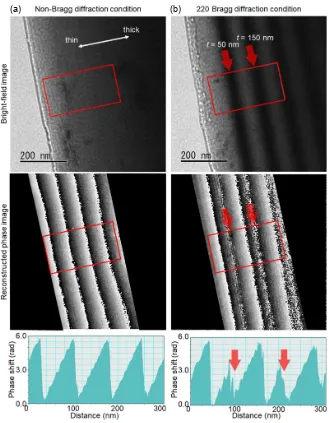
Figure 2 shows bright-field images and reconstructed
phase images of a wedge shape Si specimen, and the phase
shift profiles in the region of the specimen indicated by the
red rectangles in the bright-field and reconstructed phase
images. The specimen shown in Fig. 2(a) is under a non-Bragg condition and that shown in Fig. 2(b) is under an exact
220 Bragg diffraction condition. Under the non-Bragg
condition, there are no thickness fringes in the bright field
(a) (b)
image, and the phase shift increases in proportion to the
specimen thickness. Under the exact 220 Bragg diffraction
condition, thickness fringes appear in the bright-field image,
and the phase shift jumps by³(indicated by red arrows in the
reconstructed phase image and the phase-shift profile) where
the dark thickness fringes appear in the corresponding
bright-field image. These ³jumps cannot be explained by eq. (1).
But they can be explained by dynamical theory of electron
diffraction as shown in Fig. 1(c).
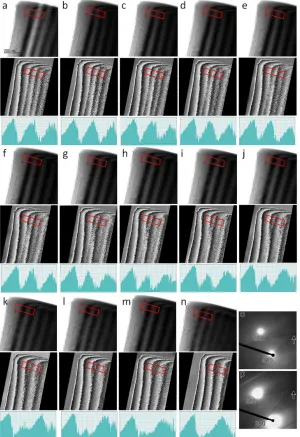
Next, we systematically tilted the direction of the incident
electron beam around the 220 Bragg diffraction condition
using a beam tilt function of the illumination system. The
bright field images, the reconstructed phase images and the
phase shift profiles for each tilt conditions are shown in
Fig. 3(a)(n). Figures 3(o) and 3(p) are diffraction patterns
obtained in the diffraction condition of Figs. 3(a) and 3(n),
respectively. From a movement of a cross point of Kikuchi lines indicated by black arrows in Figs. 3(o), (p), the total tilting angle from Fig. 3(a) to 3(n) is estimated to be 5.04 mrad. The tilting was changed in constant steps
(0.39 mrad), such that for the tilting condition of Fig. 3(a)
(g), the excitation error of the 220 reflections220is negative
(which means that the reciprocal lattice point of 220 is
located outside the Ewald sphere) and for Fig. 3(h)(n)s220is
positive (the reciprocal lattice point of 220 is located inside the Ewald sphere). It should be noted that the gradient of the phase-shift against specimen thickness depends on the sign of the excitation error as discussed in the simulation part, i.e.,
when s220<0, the gradient of the phase-shift is high and
when s220>0, the gradient of the phase-shift is low. The
[image:4.595.150.450.73.510.2]complicated phase shifts near the thickness of (1/2+n)²220,
which was expected by the simulation, were also observed experimentally.
4. Summary
The complicated phase shifts of an object wave around the
Bragg diffraction condition, such as a jump in the phase shift
and an effective inner potential depending on the diffraction
conditions, were explained by the dynamical theory of
electron diffraction. Near a Bragg condition, many Bloch
waves with slightly different wavelengths are excited, and
the excitation rate of each Bloch wave depends on the
incident beam direction. By taking into account the effect
of dynamical electron diffraction, the phase-shift map
acquired by TEM methods, such as electron holography,
DCP-STEM and electron diffractive imaging, can be
interpreted quantitatively with high accuracy.
Acknowledgements
This work was supported by JSPS Grant-in-Aid for
Scientific Research No. JP15K06419.
REFERENCES
1) A. Lubk, D. Wolf and H. Lichte:Ultramicroscopy110(2010) 438446.
2) D. Shindo and Y. Murakami:J. Phys. D41(2008) 183002.
3) D. Shindo and Y. Murakami: J. Electron Microsc.60(2011) S225 S237.
4) N. Shibata, S.D. Findlay, Y. Kohno, H. Sawada, Y. Kondo and Y. Ikuhara:Nat. Phys.8(2012) 611615.
5) J. Yamasaki, K. Ohta, S. Morishita and N. Tanaka:Appl. Phys. Lett.
101(2012) 234105.
6) D. Shindo and T. Oikawa: Analytical Electron Microscopy for Materials Science, (Springer-Verlag, Tokyo, 2002).
7) D. Shindo, T. Musashi, Y. Ikematsu, Y. Murakami, N. Nakamura and H. Chiba:J. Electron Microsc.54(2005) 1117.
8) C.-W. Lee, Y. Ikematsu and D. Shindo:Mater. Trans.41(2000) 1129 1131.
9) K. Yada, K. Shibata and T. Hibi:J. Electron Microsc.22(1973) 223 230.
10) G. Ade: Optik62(1982) 6785.
11) K.J. Hanszen:J. Phys. D19(1986) 373395.
12) M. Gajdardziska-Josifovska, M.R. McCartney, W.J. de Ruijter, D.J. Smith, J.K. Weiss and J.M. Zuo: Ultramicroscopy 50 (1993) 285 299.
13) A. Lubk, E. Javon, N. Cherkashin, S. Reboh, C. Gatel and M. Hÿtch:
Ultramicroscopy136(2014) 4249.
14) A. Howie and M.J. Whelan:Proc. R. Soc. A263(1961) 217.
15) H. Bethe:Ann. Phys.392(1928) 55129.
16) C.H. Mac Gillavry:Physica7(1940) 329343.
17) R.D. Heidenreich:J. Appl. Phys.20(1949) 993.
18) N. Kato:J. Phys. Soc. Jpn.7(1952) 397406.
19) L. Sturkey: Acta Crystallogr.10(1957) 858859. 20) F. Fujimoto:J. Phys. Soc. Jpn.14(1959) 1558.
21) H. Niehrs: Z. Naturforsch.14a(1959) 504511. 22) H. Niehrs:Z. Phys.156(1959) 446467.
23) C.J. Humphreys:Rep. Prog. Phys.42(1979) 1825.
24) D.M. Bird and Q.A. King:Acta Crystallogr. Sec. A46(1990) 202208.