
The Complete Reference pdf
1234
0
0
Full text
(2) ORACLE Series / Oracle 8i: TCR / Loney / 2364-8 / Front Matter Blind Folio FM:ii. Color profile: Disabled Composite Default screen. Osborne/McGraw-Hill 2600 Tenth Street Berkeley, California 94710 U.S.A. For information on translations or book distributors outside the U.S.A., or to arrange bulk purchase discounts for sales promotions, premiums, or fund-raisers, please contact Osborne/McGraw-Hill at the above address. Oracle8i: The Complete Reference Copyright © 2000 by The McGraw-Hill Companies, Inc. (Publisher). All rights reserved. Printed in the United States of America. Except as permitted under the Copyright Act of 1976, no part of this publication may be reproduced or distributed in any form or by any means, or stored in a database or retrieval system, without the prior written permission of Publisher. Oracle is a registered trademark and Oracle8i is a trademark or registered trademark of Oracle Corporation. 1234567890 DOC DOC 019876543210 Book P/N 0-07-212362-1 parts of ISBN 0-07-212364-8. and. CD P/N 0-07-212363-X. Publisher Brandon A. Nordin. Proofreader Mike McGee. Associate Publisher and Editor-in-Chief Scott Rogers. Indexer David Heiret. Acquisitions Editor Jeremy Judson Project Editor Janet Walden Acquisitions Coordinator Monika Faltiss Technical Editor Leslie Tierstein. Computer Designer Jani Beckwith Michelle Galicia Roberta Steele Illustrator Michael Mueller Beth Young Series Design Jani Beckwith. Copy Editor William McManus. This book was composed with Corel VENTURA™ Publisher. Information has been obtained by Publisher from sources believed to be reliable. However, because of the possibility of human or mechanical error by our sources, Publisher, or others, Publisher does not guarantee to the accuracy, adequacy, or completeness of any information included in this work and is not responsible for any errors or omissions or the results obtained from the use of such information.. P:\010Comp\Oracle8\364-8\fm-CD.vp Thursday, April 13, 2000 3:50:55 PM.
(3) Color profile: Disabled Composite Default screen. ORACLE Series / Oracle 8i: TCR / Loney / 2364-8 / Front Matter Blind Folio FM:iii. To my parents, and to Sue, Emily, and Rachel —K.L. To Elwood Brant, Jr. (Woody), 1949-1990 —G.K.. P:\010Comp\Oracle8\364-8\fm-CD.vp Thursday, April 13, 2000 3:50:55 PM.
(4) Color profile: Disabled Composite Default screen. ORACLE Series / Oracle 8i: TCR / Loney / 2364-8 / Front Matter Blind Folio FM:iv. About the Authors Kevin Loney, a veteran Oracle developer and DBA, is the author of the best-selling Oracle8i DBA Handbook and coauthor of Oracle8 Advanced Tuning and Administration and Oracle SQL & PL/SQL Annotated Archives. An independent consultant, he frequently makes presentations at Oracle conferences and contributes to ORACLE Magazine. He can be found online at http://www.kevinloney.com, and is the editor for the database-related search engine at http://www.lonyx.com. George Koch is a leading authority on relational database applications. A popular speaker and widely published author, he is also the creator of THESIS, the securities trading, accounting, and portfolio management system that was the first major commercial applications product in the world to employ a relational database (Oracle) and provide English language querying to its users. He is a former senior vice president of Oracle Corporation.. P:\010Comp\Oracle8\364-8\fm-CD.vp Thursday, April 13, 2000 3:50:55 PM.
(5) ORACLE Series / Oracle 8i: TCR / Loney / 2364-8 / Chapter 1 Blind Folio 1:v. Color profile: Disabled Composite Default screen. Contents at a Glance PREFACE . . . . . . . . . . . . . . . . . . . . . . . . . . . . . . . . . . . . . . . . . . . . . . . . . . . . . . ACKNOWLEDGMENTS . . . . . . . . . . . . . . . . . . . . . . . . . . . . . . . . . . . . . . . . . . INTRODUCTION . . . . . . . . . . . . . . . . . . . . . . . . . . . . . . . . . . . . . . . . . . . . . . .. vii x xi. PART I. Critical Database Concepts 1 2 3 4 5. Sharing Knowledge and Success . . . . . . . . . . . . . . . . . . . . . . . . . . . . . . . . . . . . . . . . . . . The Dangers in a Relational Database . . . . . . . . . . . . . . . . . . . . . . . . . . . . . . . . . . . . . . The Basic Parts of Speech in SQL . . . . . . . . . . . . . . . . . . . . . . . . . . . . . . . . . . . . . . . . . . The Basics of Object-Relational Databases . . . . . . . . . . . . . . . . . . . . . . . . . . . . . . . . . . . Introduction to Web-Enabled Databases . . . . . . . . . . . . . . . . . . . . . . . . . . . . . . . . . . . .. 3 17 37 69 87. PART II. SQL and SQL*PLUS 6 7 8 9 10 11 12 13 14 15 16 17 18 19 20 21. Basic SQLPLUS Reports and Commands . . . . . . . . . . . . . . . . . . . . . . . . . . . . . . . . . . . . Getting Text Information and Changing It . . . . . . . . . . . . . . . . . . . . . . . . . . . . . . . . . . . Playing the Numbers . . . . . . . . . . . . . . . . . . . . . . . . . . . . . . . . . . . . . . . . . . . . . . . . . . . . Dates: Then, Now, and the Difference . . . . . . . . . . . . . . . . . . . . . . . . . . . . . . . . . . . . . . Conversion and Transformation Functions . . . . . . . . . . . . . . . . . . . . . . . . . . . . . . . . . . Grouping Things Together . . . . . . . . . . . . . . . . . . . . . . . . . . . . . . . . . . . . . . . . . . . . . . . When One Query Depends upon Another . . . . . . . . . . . . . . . . . . . . . . . . . . . . . . . . . . Some Complex Possibilities . . . . . . . . . . . . . . . . . . . . . . . . . . . . . . . . . . . . . . . . . . . . . . . Building a Report in SQLPLUS . . . . . . . . . . . . . . . . . . . . . . . . . . . . . . . . . . . . . . . . . . . . Changing Data: insert, update, and delete . . . . . . . . . . . . . . . . . . . . . . . . . . . . . . . . . . . Advanced Use of Functions and Variables . . . . . . . . . . . . . . . . . . . . . . . . . . . . . . . . . . . DECODE: Amazing Power in a Single Word . . . . . . . . . . . . . . . . . . . . . . . . . . . . . . . . . Creating, Dropping, and Altering Tables and Views . . . . . . . . . . . . . . . . . . . . . . . . . . . . By What Authority? . . . . . . . . . . . . . . . . . . . . . . . . . . . . . . . . . . . . . . . . . . . . . . . . . . . . . Changing the Oracle Surroundings . . . . . . . . . . . . . . . . . . . . . . . . . . . . . . . . . . . . . . . . . Using SQL*Loader to Load Data . . . . . . . . . . . . . . . . . . . . . . . . . . . . . . . . . . . . . . . . . .. 97 125 153 179 207 223 241 267 289 317 331 349 365 395 417 439. v P:\010Comp\Oracle8\364-8\fm-CD.vp Thursday, April 13, 2000 3:50:56 PM.
(6) ORACLE Series / Oracle 8i: TCR / Loney / 2364-8 / Front Matter Blind Folio FM:vi. Color profile: Disabled Composite Default screen. vi. Oracle8i: The Complete Reference. 22 Accessing Remote Data . . . . . . . . . . . . . . . . . . . . . . . . . . . . . . . . . . . . . . . . . . . . . . . . . . 23 Snapshots and Materialized Views . . . . . . . . . . . . . . . . . . . . . . . . . . . . . . . . . . . . . . . . . . 24 Using interMedia Text for Text Searches . . . . . . . . . . . . . . . . . . . . . . . . . . . . . . . . . . . .. 453 469 491. PART III. PL/SQL 25 An Introduction to PL/SQL . . . . . . . . . . . . . . . . . . . . . . . . . . . . . . . . . . . . . . . . . . . . . . . 26 Triggers . . . . . . . . . . . . . . . . . . . . . . . . . . . . . . . . . . . . . . . . . . . . . . . . . . . . . . . . . . . . . . 27 Procedures, Functions, and Packages . . . . . . . . . . . . . . . . . . . . . . . . . . . . . . . . . . . . . . .. 511 533 549. PART IV. Object-Relational Databases 28 29 30 31. Implementing Types, Object Views, and Methods . . . . . . . . . . . . . . . . . . . . . . . . . . . . . Collectors (Nested Tables and Varying Arrays) . . . . . . . . . . . . . . . . . . . . . . . . . . . . . . . Using Large Objects . . . . . . . . . . . . . . . . . . . . . . . . . . . . . . . . . . . . . . . . . . . . . . . . . . . . . Advanced Object-Oriented Concepts . . . . . . . . . . . . . . . . . . . . . . . . . . . . . . . . . . . . . .. 573 593 615 645. PART V. Java in Oracle 32 An Introduction to Java . . . . . . . . . . . . . . . . . . . . . . . . . . . . . . . . . . . . . . . . . . . . . . . . . . 33 JDBC and SQLJ Programming . . . . . . . . . . . . . . . . . . . . . . . . . . . . . . . . . . . . . . . . . . . . . 34 Java Stored Procedures . . . . . . . . . . . . . . . . . . . . . . . . . . . . . . . . . . . . . . . . . . . . . . . . . .. 667 685 705. PART VI. Hitchhiker’s Guides 35 36 37 38. The Hitchhiker’s Guide to the Oracle8i Data Dictionary . . . . . . . . . . . . . . . . . . . . . . . The Hitchhiker’s Guide to the Oracle Optimizer . . . . . . . . . . . . . . . . . . . . . . . . . . . . . A Brief Introduction to WebDB . . . . . . . . . . . . . . . . . . . . . . . . . . . . . . . . . . . . . . . . . . . Beginner’s Guide to Database Administration . . . . . . . . . . . . . . . . . . . . . . . . . . . . . . . .. 717 775 831 841. PART VII. Designing for Performance 39 Good Design Has a Human Touch . . . . . . . . . . . . . . . . . . . . . . . . . . . . . . . . . . . . . . . . . 40 Performance and Design . . . . . . . . . . . . . . . . . . . . . . . . . . . . . . . . . . . . . . . . . . . . . . . . . 41 The Ten Commandments of Humane Design . . . . . . . . . . . . . . . . . . . . . . . . . . . . . . . .. 885 897 909. PART VIII. Alphabetical Reference Alphabetical Reference . . . . . . . . . . . . . . . . . . . . . . . . . . . . . . . . . . . . . . . . . . . . . . . . . .. 921. PART IX. Appendix A Tables Used in This Book . . . . . . . . . . . . . . . . . . . . . . . . . . . . . . . . . . . . . . . . . . . . . . . . 1223. About the CD-ROM . . . . . . . . . . . . . . . . . . . . . . . . . . . . . . . . . . . . . . . . . . . . . . . . . . . . . 1313. P:\010Comp\Oracle8\364-8\fm-CD.vp Thursday, April 13, 2000 3:50:56 PM.
(7) ORACLE Series / Oracle 8i: TCR / Loney / 2364-8 / Front Matter Blind Folio FM:vii. Color profile: Disabled Composite Default screen. Preface The Intriguing History of This Book first encountered Oracle in 1982, in the process of evaluating database management systems for a major commercial application that my company was preparing to design and build. At its conclusion, our evaluation was characterized in ComputerWorld as the single-most “grueling” study of DBMSs that had ever been conducted. The study was so tough on the vendors whose products we examined that word of it made the press as far away as New Zealand, and publications as far afield as the Christian Science Monitor. We began the study with 108 candidate companies, then narrowed the field to sixteen finalists, including most of the major database vendors of the time, and all types of databases: network, hierarchical, relational, and others. After the rigorous final round of questions, two of the major vendors participating asked that the results of the study of their products never be published. A salesman from a third vendor quit his job at the end of one of the sessions. We knew how to ask tough questions. Oracle, known then as Relational Software, Inc., had fewer than 25 employees at the time, and only a few major accounts. Nevertheless, when the study was completed, we announced Oracle as the winner. We declared that Oracle was technically the best product on the market, and that the management team at RSI looked capable enough to carry the company forward successfully. Our radical proclamation was made at a time when few people even knew what the term “relational” meant, and those who did had very few positive things to say about it. Many IS exectives loudly criticized our conclusions and predicted that Oracle and the relational database would go nowhere.. I. vii. P:\010Comp\Oracle8\364-8\fm-CD.vp Thursday, April 13, 2000 3:50:57 PM.
(8) Color profile: Disabled Composite Default screen. viii. ORACLE Series / Oracle 8i: TCR / Loney / 2364-8 / Front Matter Blind Folio FM:viii. Oracle8i: The Complete Reference. Oracle today is the largest database company, and the second largest software company in the world. The relational database is now the world standard. Koch Systems Corporation, the company I owned and ran at the time, became Oracle’s first Valued Added Reseller. We developed the world’s first major commercial relational application, a securities trading and accounting system called THESIS. This product was used by major banks and corporations to manage their investment portfolios. Even IBM bought THESIS, and it allowed Oracle to be installed at IBM headquarters in spite of vigorous internal opposition. After all, IBM was the leading database company at the time, with IMS and DB2 as their flagship products. Oracle was continuing to refine its young product, to understand the kinds of features and functionality that would make it productive and useful in the business world, and our development efforts at Koch Systems contributed to that refinement. Some of Oracle’s features were the direct results of requests that we made of Oracle’s developers, and our outspoken advocacy of an end-user bias in application design and naming conventions has influenced a generation of programmers who learned Oracle in our shop or read articles which we published. All of this intimate involvement with the development and use of Oracle led us to an early and unmatched expertise with the product and its capabilities. Since I have always loved sharing discoveries and knowledge—to help shorten the learning time necessary with new technologies and ideas, and save others the cost of making the same mistakes I did— I decided to turn what we’d learned into a book. Oracle: The Complete Reference was conceived in 1988 to pull together all of the fundamental commands and techniques used across the Oracle product line, as well as give solid guidance in how to develop applications using Oracle and SQL. Part I of the book was aimed both at developers and end-users, so that they could share a common language and understanding during the application development process: developers and end users working side by side—a wild concept when the book was first conceived. Linda Allen, a respected literary agent in San Francisco, introduced me to Liz Fisher, then the editor at Osborne/McGraw-Hill. Liz liked the idea very much. Contracts were drawn, and the first edition was scheduled to be released in 1989. But a now-departed senior executive at McGraw-Hill heard of the project and instantly canceled its development, pronouncing that “Oracle is a flash in the pan. It is going nowhere.” A year later, when Oracle Corporation had again doubled in size and the senior executive was gone, the effort was restarted, and the first edition finally arrived in 1990. Almost immediately, it became the No. 1 book in its category, a position it has maintained for a decade. In July of 1990, I was hired by Oracle to run its Applications Division. I became senior vice president of the company and guided the division (with a lot of talented help) to worldwide success. While at Oracle, I also introduced Osborne/McGraw-Hill to Oracle senior management, and after opposition from an Oracle vice president who didn’t see any value in the idea (he’s no longer with Oracle), Oracle Press was born. Oracle Press is now the leading publisher of Oracle-based reference manuals in the world. In 1992, Bob Muller, a former developer at both Koch Systems and Oracle, took over responsibilities for technical updates to the book, as my duties at Oracle precluded any more than editorial review of changes. This produced Oracle7: The Complete Reference. This was Bob’s first published book, and he has since gone on to write several other popular books on development and database design.. P:\010Comp\Oracle8\364-8\fm-CD.vp Thursday, April 13, 2000 3:50:57 PM.
(9) Color profile: Disabled Composite Default screen. ORACLE Series / Oracle 8i: TCR / Loney / 2364-8 / Front Matter Blind Folio FM:ix. Preface. In 1994 I left Oracle to fulfill a long-held desire—full-time ministry—and today I’m the pastor of Church of the Resurrection (http://www.resurrection.org) in West Chicago, Illinois. I continue to write in publications as diverse as the Wall Street Journal and Christianity Today, and I’ve recently published a book in England, The Country Parson’s Advice to His Parishioner, from Monarch Books. I also sit on the board of directors of Apropos, a leading call center applications company, but I no longer work in Oracle application development. Also in 1994, Kevin Loney, a highly respected independent Oracle consultant and author (http://www.kevinloney.com), took over the updating and rewriting responsibilities for the third edition of the book, and has continued ever since. He has contributed major new sections (such as the “Hitchhiker’s Guide”), and fully integrated new Oracle product features into all sections of the book. He has also integrated many readers’ comments into the structure and content of the book, making its current form the product of both its readers and its authors. Those efforts have allowed Oracle: The Complete Reference to stay at the top of its field and continue to be the single-most comprehensive guide to Oracle—still unmatched in range, content, and authority. I am a real fan of Kevin’s and am most impressed by his knowledge and thoroughness. Oracle: The Complete Reference is now available in eight languages, and is found on the desks of developers and Oracle product users all over the world. Not only has it been No. 1 in its category (with two editions out, it once was both No. 1 and No. 4), it has also been regularly in the top 100 of all books sold through Amazon.com. At one point it was the No. 7 best-selling book of all books sold in Brazil! Its reputation and enduring success are unparalleled in its marketplace. Like Oracle itself, the book has survived and prospered in spite of the recurring predictions of failure from many quarters. Perhaps this brief history can be an encouragement to others who face opposition but have a clear vision of what is needed in the years ahead. As Winston Churchill said, “Never give in, never give in, never give in—in nothing great or small, large or petty—never give in except to convictions of honor and good sense.”. George Byron Koch [email protected] Wheaton, Illinois April, 2000. P:\010Comp\Oracle8\364-8\fm-CD.vp Thursday, April 13, 2000 3:50:57 PM. ix.
(10) ORACLE Series / Oracle 8i: TCR / Loney / 2364-8 / Front Matter Blind Folio FM:x. Color profile: Disabled Composite Default screen. Acknowledgments his book is the product of many hands, and countless hours from many people. My thanks go out to all those who helped, whether through their comments, feedback, edits, or suggestions. For additional information about the book, see the publisher’s site (http://www.osborne.com) and my site (http://www.kevinloney.com). For a database of links related to Oracle topics across the Web, see http://www.lonyx.com. Special thanks to Leslie Tierstein, who served as technical editor for this edition. Her thoroughness and advice is greatly appreciated. If there is an error in here somewhere, it must have happened after Leslie read it. Thanks to my colleagues and friends, including Eyal Aronoff, John Beresniewicz, Steve Bobrowski, Rachel Carmichael, Steven Feuerstein, Mike McDonnell, Marlene Theriault, and Craig Warman. This book has benefited from the knowledge they have shared, so be sure and thank them when you see them at conferences. Thanks to the folks at Osborne/McGraw-Hill who guided this product through its stages: Scott Rogers, Janet Walden, Monika Faltiss, and Jeremy Judson, and the others at Osborne with whom I never directly worked. Thanks also to the “Oracle” component of Oracle Press, including Julie Gibbs and Marsha Bazley. This book would not have been possible without the earlier excellent work of George Koch and Robert Muller. Thanks to the writers and friends along the way: Jerry Gross; Jan Riess; Robert Meissner; Marie Paretti; Br. Declan Kane, CFX; Br. William Griffin, CFX; Chris O’Neill; Cheryl Bittner; Bill Fleming; and the PSCI team. Special thanks to Sue, Emily, and Rachel and the rest of the home team. As always, this has been a joint effort.. T. —Kevin Loney. x. P:\010Comp\Oracle8\364-8\fm-CD.vp Thursday, April 13, 2000 3:50:57 PM.
(11) ORACLE Series / Oracle 8i: TCR / Loney / 2364-8 / Front Matter Blind Folio FM:xi. Color profile: Disabled Composite Default screen. Introduction. O. racle is the most widely used database in the world. It runs on virtually every kind of computer. It functions virtually identically on all these machines, so when you learn it on one, you can use it on any other. This fact makes knowledgeable Oracle users and developers very much in demand, and makes your Oracle knowledge and skills very portable.. Oracle documentation is thoroughgoing and voluminous, currently spanning multiple CDs. Oracle8i: The Complete Reference is the first entity that has gathered all of the major Oracle definitions, commands, functions, features, and products together in a single, massive core reference—one volume that every Oracle user and developer can keep handy on his or her desk. The audience for this book will usually fall into one of three categories:. ■. An Oracle end user Oracle can easily be used for simple operations such as entering data and running standard reports. But such an approach would ignore its great power; it would be like buying a high-performance racing car, and then pulling it around with a horse. With the introduction provided in the first two sections of this book, even an end user with little or no data processing background can become a proficient Oracle user—generating ad hoc, English-language reports, guiding developers in the creation of new features and functions, and improving the speed and accuracy of the real work done in a business. The language of the book is simple, clear English without data processing jargon, and with few assumptions about previous knowledge of computers or databases. It will help beginners to become experts with an easy-to-follow format and numerous real examples.. xi. P:\010Comp\Oracle8\364-8\fm-CD.vp Thursday, April 13, 2000 3:50:57 PM.
(12) ORACLE Series / Oracle 8i: TCR / Loney / 2364-8 / Front Matter Blind Folio FM:xii. Color profile: Disabled Composite Default screen. xii. Oracle8i: The Complete Reference. ■. A developer who is new to Oracle With as many volumes of documentation as Oracle provides, finding a key command or concept can be a time-consuming effort. This book attempts to provide a more organized and efficient manner of learning the essentials of the product. The format coaches a developer new to Oracle quickly through the basic concepts, covers areas of common difficulty, examines misunderstanding of the product and relational development, and sets clear guidelines for effective application building.. ■. An experienced Oracle developer As with any product of great breadth and sophistication, there are important issues about which little, if anything, has been published. Knowledge comes through long experience, but is often not transferred to others. This book delves deeply into many such subject areas (such as precedence in UNION, INTERSECTION, and MINUS operators; inheritance and CONNECT BY; eliminating NOT IN with an outer join; using interMedia; implementing the object-relational and Java options; and many others). The text also reveals many common misconceptions and suggests rigorous guidelines for naming conventions, application development techniques, and design and performance issues.. For every user and developer, the final section of this book is devoted to a comprehensive Alphabetical Reference containing all major Oracle concepts, commands, functions, and features including proper syntax, cross-references, and examples. This is the largest single reference published on the subject and could be a book unto itself.. How This Book Is Organized There are nine major parts to this book, and a CD-ROM. Part I is an introduction to “Critical Database Concepts.” These chapters are essential reading for any Oracle user, new or veteran, from key-entry clerk to database administrator. They establish the common vocabulary that both end users and developers can use to coherently and intelligently share concepts and assure the success of any development effort. This introductory section is intended for both developers and end users of Oracle. It explores the basic ideas and vocabulary of relational databases and points out the dangers, classical errors, and profound opportunities in relational database applications. Part II, “SQL and SQL*Plus,” teaches the theory and techniques of relational database systems and applications, including SQL (Structured Query Language) and SQLPLUS. The section begins with relatively few assumptions about data processing knowledge on the part of the reader, and then advances step-by-step, through some very deep issues and complex techniques. The method very consciously uses clear, conversational English, with unique and interesting examples, and strictly avoids the use of undefined terms or jargon. This section is aimed primarily at developers and end users who are new to Oracle, or need a quick review of certain Oracle features. It moves step-by-step through the basic capabilities of SQL and Oracle’s interactive query facility, SQLPLUS. When you’ve completed this section you should have a thorough understanding of all SQL key words, functions, and operators. You should be able to produce complex reports, create tables, and insert, update, and delete data from an Oracle database. The later chapters of Part II provide some very advanced methods in SQLPLUS, Oracle’s simple, command-line interface, and in-depth descriptions of the new and very powerful. P:\010Comp\Oracle8\364-8\fm-CD.vp Thursday, April 13, 2000 3:50:58 PM.
(13) Color profile: Disabled Composite Default screen. ORACLE Series / Oracle 8i: TCR / Loney / 2364-8 / Front Matter Blind Folio FM:xiii. Introduction. features of Oracle. This is intended for developers who are already familiar with Oracle, and especially those familiar with previous versions of Oracle, but who have discovered needs they couldn’t readily fill. Some of these techniques are previously unpublished and, in some cases, have been thought impossible. The tips and advanced techniques covered here demonstrate how to use Oracle in powerful and creative ways. These include taking advantage of distributed database capabilities, loading data files, and performing advanced text-based searches. Part III, “PL/SQL,” provides coverage of PL/SQL. The topics include a review of PL/SQL structures, plus triggers, stored procedures, and packages. Part IV, “Object-Relational Databases,” provides extensive coverage of object-oriented features such as abstract datatypes, methods, object views, object tables, nested tables, varying arrays, and large objects (LOBs). Part V, “Java in Oracle,” provides coverage of the Java features introduced in Oracle8i. This section includes an overview of Java syntax as well as chapters on JDBC and SQLJ and Java stored procedures. Part VI contains several guides: a developer’s guide to the data dictionary, a guide to Oracle’s optimizer, an overview of WebDB, and a beginner’s guide to database administration. Part VII, “Designing for Performance,” addresses vital issues in the design of useful and well-received applications. Oracle tools provide a great opportunity to create applications that are effective and well-loved by their users, but many developers are unaware of some of the approaches and successes that are possible. This section of the book is aimed specifically at developers—those individuals whose responsibility it is to understand a business (or other) application, and design and program an Oracle application to satisfy it. This section should not be completely incomprehensible to an end user, but the audience is assumed to have a technical data processing background, and experience in developing computer application programs. The purpose here is to discuss the techniques of developing with Oracle that have proven effective and valuable to end users, as well as to propose some new approaches to design in areas that have been largely, and sadly, ignored. This section includes “The Ten Commandments of Humane Design,” a list of all of the vital rules of the development process. A user-oriented guide to the Oracle optimizer concludes this section. Part VIII, the “Alphabetical Reference,” is the complete reference for the Oracle server. Reading the introductory pages to this reference will make its use much more effective and understandable. This section contains references for most major Oracle commands, keywords, products, features and functions, with extensive cross-referencing of topics. The reference is intended for use by both developers and users of Oracle but assumes some familiarity with the products. To make the most productive use of any of the entries, it would be worthwhile to read the first six pages of the reference. These explain in greater detail what is and is not included and how to read the entries. Part IX, “Appendix,” contains the table creation statements and row insertions for all of the tables used in this book. For anyone learning Oracle, having these tables available on your own Oracle ID, or on a practice ID, will make trying or expanding on the examples very easy. The CD that accompanies this book contains a special electronic edition of Oracle8i: The Complete Reference. Now, with this electronic version, you can easily store all of the valuable information contained in the book on your PC while the print version of the book remains in your office or home.. P:\010Comp\Oracle8\364-8\fm-CD.vp Thursday, April 13, 2000 3:50:58 PM. xiii.
(14) ORACLE Series / Oracle 8i: TCR / Loney / 2364-8 / Front Matter Blind Folio FM:xiv. Color profile: Disabled Composite Default screen. xiv. Oracle8i: The Complete Reference. NOTE This special electronic version of Oracle8i: The Complete Reference, is copy-protected. However, we have not copy-protected Appendix A, “Tables Used in This Book,” so that you have access to all of the tables used in the print edition without retyping! You can use these tables to easily work your way through the examples and experiment with the many techniques that are illustrated in this book.. Style Conventions Used in This Book Except when testing for an equality (such as, City = ‘CHICAGO’), Oracle ignores upper- and lowercase. In the formal listing of commands, functions, and their format (syntax) in the Alphabetical Reference, this book will follow Oracle’s documentation style of putting all SQL in UPPERCASE, and all variables in lowercase italic. Most users and developers of Oracle, however, never key all their SQL in uppercase. It’s too much trouble, and Oracle doesn’t care anyway. This book therefore will follow somewhat different style conventions in its examples (as opposed to its formal command and function formats, mentioned earlier), primarily for readability. They are as follows:. ■. Italic and boldface will not be used in example listings.. ■. select, from, where, order by, having, and group by will be in lowercase.. ■. SQLPLUS commands will be in lowercase: column, set, save, ttitle, and so on.. ■. SQL operators and functions will be in uppercase, such as IN, BETWEEN, UPPER, SOUNDEX, and so on.. ■. Columns will use upper- and lowercase, as in Feature, EastWest, Longitude, and so on.. ■. Tables will be in uppercase, such as in NEWSPAPER, WEATHER, LOCATION, and so on.. Chapter 3 contains an introduction to the style for chapters of the book through 41. Part VIII, the Alphabetical Reference, contains an important introductory section on style conventions that should be read carefully before the alphabetical listings are used.. P:\010Comp\Oracle8\364-8\fm-CD.vp Thursday, April 13, 2000 3:50:58 PM.
(15) Color profile: Disabled Composite Default screen. ORACLE Series / Oracle 8i: TCR / Loney / 2364-8 / Chapter 1 Blind Folio 1:1. PART. I Critical Database Concepts. C:\work\CD\Book.vp Wednesday, April 12, 2000 3:55:34 PM.
(16) Color profile: Disabled Composite Default screen. C:\work\CD\Book.vp Wednesday, April 12, 2000 3:55:34 PM. ORACLE Series / Oracle 8i: TCR / Loney / 2364-8 / Chapter 1 Blind Folio 1:2.
(17) ORACLE Series / Oracle 8i: TCR / Loney / 2364-8 / Chapter 1 Blind Folio 1:3. Color profile: Disabled Composite Default screen. CHAPTER. 1 Sharing Knowledge and Success. C:\work\CD\Book.vp Wednesday, April 12, 2000 3:55:35 PM.
(18) ORACLE Series / Oracle 8i: TCR / Loney / 2364-8 / Chapter 1 Blind Folio 1:4. Color profile: Disabled Composite Default screen. 4. Part I:. Critical Database Concepts. F. or an Oracle8 application to be built and used rapidly and effectively, users and developers must share a common language and a deep and common understanding of both the business application and the Oracle tools.. This is a new approach to development. Historically, the systems analyst studied the business requirements and built an application to meet those needs. The user was involved only in describing the business and, perhaps, in reviewing the functionality of the application after it was completed. With the new tools and approaches available, and especially with Oracle, applications can be built that more closely match the needs and work habits of the business—but only if a common understanding exists. This book is aimed specifically at fostering this understanding, and at providing the means for both user and developer to exploit Oracle’s full potential. The end user will know details about the business that the developer will not comprehend. The developer will understand internal functions and features of Oracle and the computer environment that will be too technically complex for the end user. But these areas of exclusive expertise will be minor compared with what both end users and developers can share in using Oracle. There is a remarkable opportunity here. It is no secret that “business” people and “systems” people have been in conflict for decades. Reasons for this include differences in knowledge, culture, professional interests and goals, and the alienation that simple physical separation between groups can often produce. To be fair, this syndrome is not peculiar to data processing. The same thing occurs between people in accounting, personnel, or senior management, as members of each group gather apart from other groups on a separate floor or in a separate building or city. Relations between the individuals from one group and another become formalized, strained, and abnormal. Artificial barriers and procedures that stem from this isolationism become established, and these also contribute to the syndrome. This is all very well, you say, and may be interesting to sociologists, but what does it have to do with Oracle? Because Oracle isn’t cloaked in arcane language that only systems professionals can comprehend, it fundamentally changes the nature of the relationship between business and systems people. Anybody can understand it. Anybody can use it. Information that previously was trapped in computer systems until someone in systems created a new report and released it now is accessible, instantly, to a business person, simply by typing an English query. This changes the rules of the game. Where Oracle is used, it has radically improved the understanding between the two camps, has increased their knowledge of one another, and has even begun to normalize relations between them. This has also produced superior applications and end results.. C:\work\CD\Book.vp Wednesday, April 12, 2000 3:55:35 PM.
(19) Color profile: Disabled Composite Default screen. ORACLE Series / Oracle 8i: TCR / Loney / 2364-8 / Chapter 1 Blind Folio 1:5. Chapter 1:. Sharing Knowledge and Success. Since its first release, Oracle has been based on the easily understood relational model (explained shortly), so nonprogrammers can readily understand what Oracle does and how it does it. This makes it approachable and unimposing. Furthermore, Oracle was created to run identically on virtually any kind of computer. Thus, it doesn’t matter which manufacturer sold you your equipment; Oracle works on it. These features all contributed directly to the profound success of the product and the company. In a marketplace populated by computer companies with “proprietary” hardware, “proprietary” operating systems, “proprietary” databases, and “proprietary” applications, Oracle gives business users and systems departments new control over their lives and futures. They are no longer bound to the database product of a single hardware vendor. Oracle runs on nearly every kind of computer. This is a basic revolution in the workplace and in application development, with consequences that will extend far into the future. Some individuals neither accept nor understand this yet, nor do they realize just how vital it is that the dated and artificial barriers between “users” and “systems” continue to fall. But the advent of cooperative development will profoundly affect applications and their usefulness. However, many application developers have fallen into an easy trap with Oracle: carrying forward unhelpful methods from previous-generation system designs. There is a lot to unlearn. Many of the techniques (and limitations) that were indispensable to a previous generation of systems not only are unnecessary in designing with Oracle, they are positively counterproductive. In the process of explaining Oracle, the burden of these old habits and approaches must be lifted. There are refreshing new possibilities available. Throughout this book, the intent will be to explain Oracle in a way that is clear and simple, in terms that both users and developers can understand and share. Outdated or inappropriate design and management techniques will be exposed and replaced.. The Cooperative Approach Oracle is an object-relational database. A relational database is an extremely simple way of thinking about and managing the data used in a business. It is nothing more than a collection of tables of data. We all encounter tables every day: weather reports, stock charts, sports scores. These are all tables, with column headings and rows of information simply presented. Even so, the relational approach can be sophisticated and powerful enough for even the most complex of businesses. An object-relational database supports all of the features of a relational database while also supporting object-oriented concepts and features. Unfortunately, the very people who can benefit most from a relational database—the business users—usually understand it the least. Application. C:\work\CD\Book.vp Wednesday, April 12, 2000 3:55:35 PM. 5.
(20) ORACLE Series / Oracle 8i: TCR / Loney / 2364-8 / Chapter 1 Blind Folio 1:6. Color profile: Disabled Composite Default screen. 6. Part I:. Critical Database Concepts. developers, who must build systems that these users need to do their jobs, often find relational concepts difficult to explain in simple terms. A common language is needed to make this cooperative approach work. The first two parts of this book explain, in readily understandable terms, just what a relational database is and how to use it effectively in business. It may seem that this discussion is for the benefit of “users” only. An experienced relational application designer may be inclined to skip these early chapters and simply use the book as a primary source Oracle reference. Resist that temptation! Although much of this material may seem like elementary review, it is an opportunity for an application designer to acquire a clear, consistent, and workable terminology with which to talk to users about their needs and how these needs might be quickly met. If you are an application designer, this discussion may also help you unlearn some unnecessary and probably unconscious design habits. Many of these habits will be uncovered in the course of introducing the relational approach. It is important to realize that even Oracle’s power can be diminished considerably by design methods appropriate only to nonrelational development. If you are an end user, understanding the basic ideas behind object-relational databases will help you express your needs cogently to application developers and comprehend how those needs can be met. An average person working in a business role can go from beginner to expert in short order. With Oracle, you’ll have the power to get and use information, have hands-on control over reports and data, and possess a clear-eyed understanding of what the application does and how it does it. Oracle gives you, the user, the ability to control an application or query facility expertly and know whether you are getting all the available flexibility and power. You also will be able to unburden programmers of their least favorite task: writing new reports. In large organizations, as much as 95 percent of all programming backlog is composed of new report requests. Because you can write your own reports, in minutes instead of months, you will be delighted to have the responsibility.. Everyone Has “Data” A library keeps lists of members, books, and fines. The owner of a baseball card collection keeps track of players’ names, dates, averages, and card values. In any business, certain pieces of information about customers, products, prices, financial status, and so on must be saved. These pieces of information are called data. Information philosophers like to say that data is just data until it is organized in a meaningful way, at which point it becomes “information.” If this is true, then Oracle is also a means of easily turning data into information. Oracle will sort through and manipulate data to reveal pieces of knowledge hidden there—such as totals, buying trends, or other relationships—which are as yet undiscovered. You will learn how to make these discoveries. The main point here is that you have data, and you do three basic things with it: acquire it, store it, and retrieve it.. C:\work\CD\Book.vp Wednesday, April 12, 2000 3:55:36 PM.
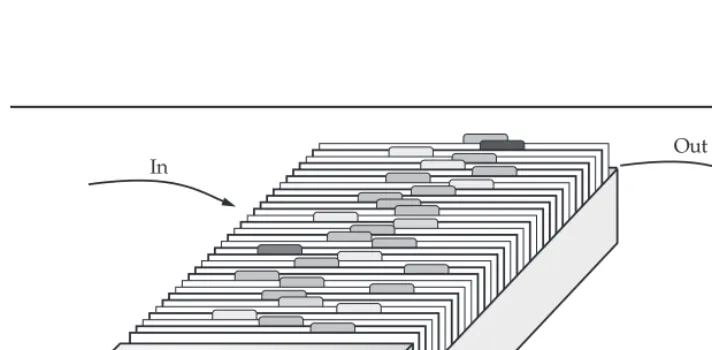
(21) ORACLE Series / Oracle 8i: TCR / Loney / 2364-8 / Chapter 1 Blind Folio 1:7. Color profile: Disabled Composite Default screen. Chapter 1:. Sharing Knowledge and Success. Once you’ve achieved the basics, you can make computations with data, move it from one place to another, or modify it. This is called processing, and, fundamentally, it involves the same three steps that affect how information is organized. You could do all of this with a cigar box, pencil, and paper, but as the volume of data increases, your tools tend to change. You may use a file cabinet, calculators, pencils, and paper. While at some point it makes sense to make the leap to computers, your tasks remain the same. A relational database management system (often called an RDBMS for short) such as Oracle gives you a way of doing these tasks in an understandable and reasonably uncomplicated way. Oracle basically does three things: ■. Lets you put data into it. ■. Keeps the data. ■. Lets you get the data out and work with it. Figure 1-1 shows how simple this process is. Oracle supports this in-keep-out approach and provides clever tools that allow you considerable sophistication in how the data is captured, edited, modified, and put in; how you keep it securely; and how you get it out to manipulate and report on it.. FIGURE 1-1.. C:\work\CD\Book.vp Wednesday, April 12, 2000 3:55:36 PM. What Oracle does with data. 7.
(22) ORACLE Series / Oracle 8i: TCR / Loney / 2364-8 / Chapter 1 Blind Folio 1:8. Color profile: Disabled Composite Default screen. 8. Part I:. Critical Database Concepts. An object-relational database management system (ORDBMS) extends the capabilities of the RDBMS to support object-oriented concepts. You can use Oracle as an RDBMS or take advantage of its object-oriented features.. The Familiar Language of Oracle The information stored in Oracle is kept in tables—much like the weather table from a daily newspaper shown in Figure 1-2. This table has four columns: City, Temperature, Humidity, and Condition. It also has a row for each city from Athens to Sydney. Last, it has a table name: WEATHER. These are the three major characteristics of most tables you’ll see in print: columns, rows, and a name. The same is true in a relational database. Anyone can understand the words and the ideas they represent, because the words used to describe the parts of a table in an Oracle database are the same words used in everyday conversation. The words have no special, unusual, or esoteric meanings. What you see is what you get.. Tables of Information Oracle stores information in tables, an example of which is shown in Figure 1-3. Each of these tables has one or more columns. The column headings, such as City, Temperature, Humidity, and Condition shown in the example, describe the kind of information kept in the column. The information is stored row after row (city after city). Each unique set of data, such as the temperature, humidity, and condition for the city of Manchester, gets its own row.. WEATHER City Athens....... Chicago...... Lima......... Manchester... Paris........ Sparta....... Sydney........ FIGURE 1-2.. C:\work\CD\Book.vp Wednesday, April 12, 2000 3:55:36 PM. Temperature 97 66 45 66 81 74 29. Humidity 89 88 79 98 62 63 12. A weather table from a newspaper. Condition Sunny Rain Rain Fog Cloudy Cloudy Snow.
(23) ORACLE Series / Oracle 8i: TCR / Loney / 2364-8 / Chapter 1 Blind Folio 1:9. Color profile: Disabled Composite Default screen. Chapter 1:. A column. Sharing Knowledge and Success. Table name. WEATHER City ---------ATHENS CHICAGO LIMA MANCHESTER PARIS SPARTA SYDNEY. FIGURE 1-3.. Temperature ----------97 66 45 66 81 74 29. Humidity -------89 88 79 98 62 63 12. Condition --------SUNNY RAIN RAIN FOG CLOUDY CLOUDY SNOW. A row. A WEATHER table from Oracle. Oracle avoids specialized, academic terminology in order to make the product more approachable. In research papers on relational theory, a column may be called an “attribute,” a row may be called a “tuple” (rhymes with “couple”), and a table may be called an “entity.” For an end user, however, these terms are confusing. More than anything, they are an unnecessary renaming of things for which there are already commonly understood names in our shared everyday language. Oracle takes advantage of this shared language, and developers can too. It is imperative to recognize the wall of mistrust and misunderstanding that the use of unnecessary technical jargon produces. Like Oracle, this book will stick with “tables,” “columns,” and “rows.”. Structured Query Language Oracle was the first company to release a product that used the English-based Structured Query Language, or SQL. This language allowed end users to extract information themselves, without using a systems group for every little report. Oracle’s query language has structure, just as English or any other language has structure. It has rules of grammar and syntax, but they are basically the normal rules of careful English speech and can be readily understood. SQL, pronounced either “sequel” or “S.Q.L.,” is an astonishingly capable tool, as you will see. Using it does not require any programming experience. Here’s an example of how you might use SQL. If someone asked you to select from the preceding WEATHER table the city where the humidity is 89, you would quickly respond “Athens.” If you were asked to select cities where the temperature is 66, you would respond “Chicago and Manchester.”. C:\work\CD\Book.vp Wednesday, April 12, 2000 3:55:37 PM. 9.
(24) ORACLE Series / Oracle 8i: TCR / Loney / 2364-8 / Chapter 1 Blind Folio 1:10. Color profile: Disabled Composite Default screen. 10. Part I:. Critical Database Concepts. Oracle is able to answer these same questions, nearly as easily as you are, and in response to simple queries very much like the ones you were just asked. The key words used in a query to Oracle are select, from, where, and order by. They are clues to Oracle to help it understand your request and respond with the correct answer.. A Simple Oracle Query If Oracle had the example WEATHER table in its database, your first query to it would be simply this: select City from WEATHER where Humidity = 89. Oracle would respond: City ---------ATHENS. Your second query would be this: select City from WEATHER where Temperature = 66. For this query, Oracle would respond: City ----------MANCHESTER CHICAGO. As you can see, each of these queries uses the key words select, from, and where. What about order by? Suppose you wanted to see all the cities listed in order by their temperature. You’d simply type this: select City, Temperature from WEATHER order by Temperature. and Oracle would instantly respond with this: City Temperature ----------- ----------SYDNEY 29 LIMA 45 MANCHESTER 66 CHICAGO 66 SPARTA 74 PARIS 81 ATHENS 97. C:\work\CD\Book.vp Wednesday, April 12, 2000 3:55:37 PM.
(25) ORACLE Series / Oracle 8i: TCR / Loney / 2364-8 / Chapter 1 Blind Folio 1:11. Color profile: Disabled Composite Default screen. Chapter 1:. Sharing Knowledge and Success. Oracle has quickly reordered your table by temperature. (This table lists lowest temperatures first; in a later chapter, you’ll learn how to specify whether you want low numbers or high numbers first.) There are many other questions you can ask with Oracle’s query facility, but these examples show how easy it is to obtain the information you need from an Oracle database in the form that will be most useful to you. You can build complicated requests from simple pieces of information, but the method used to do this will always be understandable. For instance, you can combine the where and order by key words, both simple by themselves, and tell Oracle to select those cities where the temperature is greater than 80, and show them in order by increasing temperature. You would type this: select City, Temperature from WEATHER where Temperature > 80 order by Temperature. and Oracle would instantly respond with this: City ----------PARIS ATHENS. Temperature ----------81 97. Or, to be even more specific, request cities where the temperature is greater than 80 and the humidity is less than 70: select where and order. City, Temperature, Humidity from WEATHER Temperature > 80 Humidity < 70 by Temperature. and Oracle would respond with this: City Temperature Humidity ----------- ----------- -------PARIS 81 62. Why It Is Called “Relational” Notice that the WEATHER table lists cities from several countries, and some countries have more than one city listed. Suppose you need to know in which country a particular city is located. You could create a separate LOCATION table of cities and their countries, as shown in Figure 1-4.. C:\work\CD\Book.vp Wednesday, April 12, 2000 3:55:38 PM. 11.
(26) ORACLE Series / Oracle 8i: TCR / Loney / 2364-8 / Chapter 1 Blind Folio 1:12. Color profile: Disabled Composite Default screen. 12. Part I:. Critical Database Concepts. LOCATION. WEATHER. City ---------ATHENS CHICAGO LIMA MANCHESTER PARIS SPARTA SYDNEY. FIGURE 1-4.. Temperature ----------97 66 45 66 81 74 29. Humidity -------89 88 79 98 62 63 12. Condition --------SUNNY RAIN RAIN FOG CLOUDY CLOUDY SNOW. City ----------ATHENS CHICAGO CONAKRY LIMA MADRAS MADRID MANCHESTER MOSCOW PARIS ROME SHENYANG SPARTA SYDNEY TOKYO. Country ------GREECE UNITED STATES GUINEA PERU INDIA SPAIN ENGLAND RUSSIA FRANCE ITALY CHINA GREECE AUSTRALIA JAPAN. WEATHER and LOCATION tables. For any city in the WEATHER table, you can simply look at the LOCATION table, find the name in the City column, look over to the Country column in the same row, and see the country’s name. These are two completely separate and independent tables. Each contains its own information in columns and rows. They have one significant thing in common: the City column. For each city name in the WEATHER table, there is an identical city name in the LOCATION table. For instance, what is the current temperature, humidity, and condition in an Australian city? Look at the two tables, figure it out, and then resume reading this. How did you solve it? You found just one AUSTRALIA entry, under the Country column, in the LOCATION table. Next to it, in the City column of the same row, was the name of the city, SYDNEY. You took this name, SYDNEY, and then looked for it in the City column of the WEATHER table. When you found it, you moved across the row and found the Temperature, Humidity, and Condition: 29, 12, and SNOW. Even though the tables are independent, you can easily see that they are related. The city name in one table is related to the city name in the other (see Figure 1-5). This relationship is the basis for the name relational database. This is the basic idea of a relational database (sometimes called a relational model ). Data is stored in tables. Tables have columns, rows, and names. Tables can be related to each other if each has a column with a common type of information. That’s it. It’s as simple as it seems.. C:\work\CD\Book.vp Wednesday, April 12, 2000 3:55:38 PM.
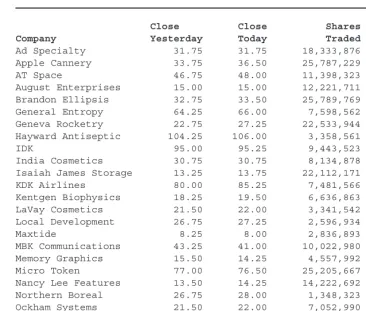
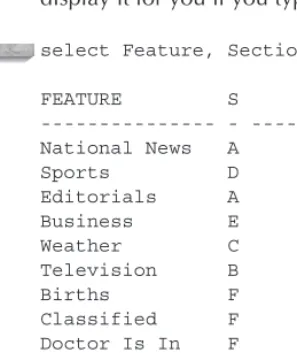
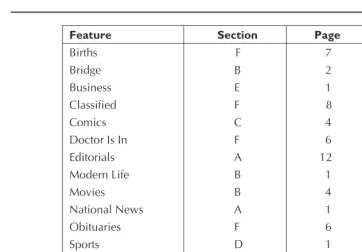
(27) ORACLE Series / Oracle 8i: TCR / Loney / 2364-8 / Chapter 1 Blind Folio 1:13. Color profile: Disabled Composite Default screen. Chapter 1:. Sharing Knowledge and Success. LOCATION. WEATHER. City ---------ATHENS CHICAGO LIMA MANCHESTER PARIS SPARTA SYDNEY. Temperature ----------97 66 45 66 81 74 29. Humidity -------89 88 79 98 62 63 12. Relationship. FIGURE 1-5.. Condition --------SUNNY RAIN RAIN FOG CLOUDY CLOUDY SNOW. City ---------ATHENS CHICAGO CONAKRY LIMA MADRAS MADRID MANCHESTER MOSCOW PARIS ROME SHENYANG SPARTA SYDNEY TOKYO. Country ------GREECE UNITED STATES GUINEA PERU INDIA SPAIN ENGLAND RUSSIA FRANCE ITALY CHINA GREECE AUSTRALIA JAPAN. The relationship between the WEATHER and LOCATION tables. Some Common, Everyday Examples Once you understand the basic idea of relational databases, you’ll begin to see tables, rows, and columns everywhere. Not that you didn’t see them before, but you probably didn’t think about them in quite the same way. Many of the tables that you are accustomed to seeing could be stored in Oracle. They could be used to quickly answer questions that would take you quite some time to answer using nearly any other method. A typical stock market report in the paper might look like the one in Figure 1-6. This is a small portion of a dense, alphabetical listing that fills several narrow columns on several pages in a newspaper. Which stock traded the most shares? Which had the biggest percentage change in its price, either positively or negatively? The answers to these questions can be obtained through simple English queries in Oracle, which can find the answers much faster than you could by searching the columns on the newspaper page. Figure 1-7 is an index to a newspaper. What’s in section F? If you read the paper from front to back, in what order would you read the articles? The answers to these questions are obtainable via simple English queries in Oracle. You will learn how to do all of these queries, and even build the tables to store the information, in the course of using this reference.. C:\work\CD\Book.vp Wednesday, April 12, 2000 3:55:39 PM. 13.
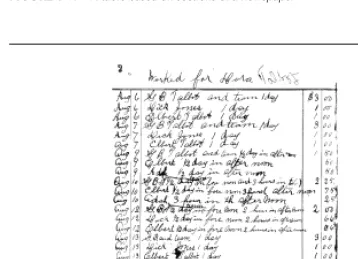
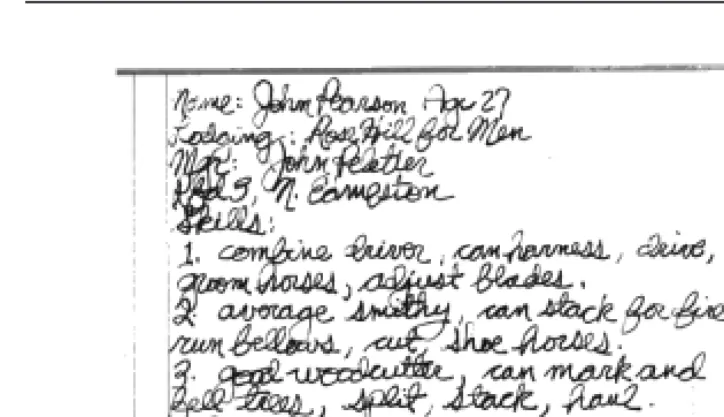
(28) ORACLE Series / Oracle 8i: TCR / Loney / 2364-8 / Chapter 1 Blind Folio 1:14. Color profile: Disabled Composite Default screen. 14. Part I:. Critical Database Concepts. Company Ad Specialty Apple Cannery AT Space August Enterprises Brandon Ellipsis General Entropy Geneva Rocketry Hayward Antiseptic IDK India Cosmetics Isaiah James Storage KDK Airlines Kentgen Biophysics LaVay Cosmetics Local Development Maxtide MBK Communications Memory Graphics Micro Token Nancy Lee Features Northern Boreal Ockham Systems Oscar Coal Drayage Robert James Apparel Soup Sensations Wonder Labs. FIGURE 1-6.. Close Yesterday 31.75 33.75 46.75 15.00 32.75 64.25 22.75 104.25 95.00 30.75 13.25 80.00 18.25 21.50 26.75 8.25 43.25 15.50 77.00 13.50 26.75 21.50 87.00 23.25 16.25 5.00. Close Today 31.75 36.50 48.00 15.00 33.50 66.00 27.25 106.00 95.25 30.75 13.75 85.25 19.50 22.00 27.25 8.00 41.00 14.25 76.50 14.25 28.00 22.00 88.50 24.00 16.75 5.00. Shares Traded 18,333,876 25,787,229 11,398,323 12,221,711 25,789,769 7,598,562 22,533,944 3,358,561 9,443,523 8,134,878 22,112,171 7,481,566 6,636,863 3,341,542 2,596,934 2,836,893 10,022,980 4,557,992 25,205,667 14,222,692 1,348,323 7,052,990 25,798,992 19,032,481 22,574,879 2,553,712. A stock market table. A 100-Year-Old Example An old, decaying ledger book, first dated in 1896 and belonging to G. B. Talbot, contains the entries shown in Figure 1-8. Entries like these go on for pages, day after day, through 1905. Dora Talbot paid her workers a dollar a day for their efforts, and George B. Talbot (perhaps her son) kept the books. A few of the workers appear in the book many times, others only once or twice. George also had a few pages with the names and addresses of the workers, as shown in Figure 1-9. The relationship that links these two tables is the workers’ names. If George wanted to send a boy around, with cash in pay envelopes, to each of the workers at the end of the month, what would he have to do? He’d first have to sum up the wages paid for each worker, put those total amounts in each. C:\work\CD\Book.vp Wednesday, April 12, 2000 3:55:39 PM.
(29) ORACLE Series / Oracle 8i: TCR / Loney / 2364-8 / Chapter 1 Blind Folio 1:15. Color profile: Disabled Composite Default screen. Chapter 1:. Feature Births Bridge Business Classified Comics Doctor's In Editorials Modern Life Movies National News Obituaries Sports Television Weather. Sections F B E F C F A B B A F D B C. Sharing Knowledge and Success. Page 7 2 1 8 4 6 12 1 4 1 6 1 7 2. FIGURE 1-7.. A table based on sections of a newspaper. FIGURE 1-8.. G. B. Talbot’s ledger book. C:\work\CD\Book.vp Wednesday, April 12, 2000 3:55:40 PM. 15.
(30) ORACLE Series / Oracle 8i: TCR / Loney / 2364-8 / Chapter 1 Blind Folio 1:16. Color profile: Disabled Composite Default screen. 16. Part I:. Critical Database Concepts. FIGURE 1-9.. Addresses of workers in Talbot’s ledger book. envelope, and write each worker’s name on the front. Then, he’d look up each address in the second section of his ledger book, write it on the front of the envelope, and send the boy off. G. B. Talbot has a genuine relational database. It uses paper and ink to store its information, rather than a computer disk drive. Even though the joining of the tables is done by his fingers, eyes, and mind rather than a CPU, it is a real, legitimate relational database. It is even fairly close to what a relational application designer would call normalized, a word that simply means the data is collected into natural groupings: daily pay and addresses are not mixed together in a single section (table) of the ledger. The entries in this ledger, both for wages and addresses, could easily be Oracle tables. The questions or tasks G. B. Talbot must have faced could be made much simpler. You will learn how to enter and retrieve data in the pages ahead, using both current examples and Talbot’s old ledger entries to discover Oracle’s power.. C:\work\CD\Book.vp Wednesday, April 12, 2000 3:55:41 PM.
(31) ORACLE Series / Oracle 8i: TCR / Loney / 2364-8 / Chapter 2 Blind Folio 2:17. Color profile: Disabled Composite Default screen. CHAPTER. 2 The Dangers in a Relational Database. C:\work\CD\Book.vp Wednesday, April 12, 2000 3:55:42 PM.
(32) ORACLE Series / Oracle 8i: TCR / Loney / 2364-8 / Chapter 2 Blind Folio 2:18. Color profile: Disabled Composite Default screen. 18. Part I:. Critical Database Concepts. s with any new technology or new venture, it’s sensible to think through not only the benefits and opportunities that are presented, but also the costs and risks. In a relatively new technology such as a relational database, not enough time has elapsed for most companies to have “old hands” around who know what to avoid and how to avoid it. Combine a relational database with a series of powerful and easy-to-use tools, as Oracle does, and the possibility of being seduced into disaster by its simplicity becomes real. Add in object-oriented and web capabilities, and the dangers increase. This chapter discusses some of the dangers that both developers and users need to consider. Part IV will cover these and additional issues in more depth, especially those of interest to developers in their task of building an accommodating and productive application.. A. Is It Really as Easy as They Say? According to the database vendors—the industry evangelists—developing an application using a relational database and the associated “fourth-generation” tools will be as much as 20 times faster than traditional system development. And it will be very easy: ultimately, programmers and systems analysts will be used less, and end users will control their own destinies. Critics of the relational approach warn that relational systems are inherently slower than others, that users who are given control of query and report writing will overwhelm computers, and that a company will lose face and fortune if a more traditional approach is not taken. The press cites stories of huge applications that simply failed to run when they were put into production. So, what’s the truth? The truth is that the rules of the game have changed. Fourth-generation development efforts make very different demands upon companies and management than do more traditional methods. There are issues and risks that are brand new and not obvious. Once these are identified and understood, the risk is no greater, and probably much smaller, than in traditional development.. What Are the Risks? The primary risk is that developing relational database applications is as easy as they say. Understanding tables, columns, and rows isn’t difficult. The relationship between two tables is conceptually simple. Even normalization, the process of analyzing the inherent or “normal” relationships between the various elements of a company’s data, is fairly easy to learn.. C:\work\CD\Book.vp Wednesday, April 12, 2000 3:55:43 PM.
(33) Color profile: Disabled Composite Default screen. ORACLE Series / Oracle 8i: TCR / Loney / 2364-8 / Chapter 2 Blind Folio 2:19. Chapter 2:. The Dangers in a Relational Database. Unfortunately, this often produces instant “experts,” full of confidence and naiveté, but with little experience in building real, production-quality applications. For a tiny marketing database, or a home inventory application, this doesn’t matter very much. The mistakes made will reveal themselves in time, the lessons will be learned, and the errors will be avoided the next time around. In an important application, however, this is a sure formula for disaster. This lack of experience is usually behind the press’s stories of major project failures. Older development methods are generally slower, primarily because the tasks of the older methods—coding, submitting a job for compilation, linking, and testing—result in a slower pace. The cycle, particularly on a mainframe, is often so tedious that programmers spend a good deal of time “desk-checking” in order to avoid going through the delay of another full cycle because of an error in the code. Fourth-generation tools seduce developers into rushing into production. Changes can be made and implemented so quickly that testing is given short shrift. The elimination of virtually all desk-checking compounds the problem. When the negative incentive (the long cycle) that encouraged desk-checking disappeared, desk-checking went with it. The attitude of many seems to be, “If the application isn’t quite right, we can fix it quickly. If the data gets corrupted, we can patch it with a quick update. If it’s not fast enough, we can tune it on the fly. Let’s get it in ahead of schedule and show the stuff we’re made of.” This problem is made worse by an interesting sociological phenomenon: many of the developers of relational applications are recent college graduates. They’ve learned relational or object-oriented theory and design in school and are ready to make their mark. More-seasoned developers, as a class, haven’t learned the new technology: they’re busy supporting and enhancing the technologies they know, which support their companies’ current information systems. The result is that inexperienced developers tend to end up on the relational projects, are sometimes less inclined to test, and are less sensitive to the consequences of failure than those who have already lived through several complete application development cycles. The testing cycle in an important Oracle project should be longer and more thorough than in a traditional project. This is true even if proper project controls are in place, and even if seasoned project managers are guiding the project, because there will be less desk-checking and an inherent overconfidence. This testing must check the correctness of data entry screens and reports, of data loads and updates, of data integrity and concurrence, and particularly of transaction and storage volumes during peak loads. Because it really is as easy as they say, application development with Oracle’s tools can be breathtakingly rapid. But this automatically reduces the amount of testing done as a normal part of development, and the planned testing and quality assurance must be consciously lengthened to compensate. This is not usually foreseen by those new to either Oracle or fourth-generation tools, but you must budget for it in your project plan.. C:\work\CD\Book.vp Wednesday, April 12, 2000 3:55:43 PM. 19.
(34) ORACLE Series / Oracle 8i: TCR / Loney / 2364-8 / Chapter 2 Blind Folio 2:20. Color profile: Disabled Composite Default screen. 20. Part I:. Critical Database Concepts. The Importance of the New Vision Many of us look forward to the day when we can simply say, like Captain Kirk, “Computer...”; make our query in English; and have our answer readily at hand. Perhaps, closer to home, we look to the day when we can type a “natural” language query in English, and have the answer back, on our screen, in seconds. We are closer to these goals than most of us realize. The limiting factor is no longer technology, but rather the rigor of thought in our application designs. Oracle can straightforwardly build English-based systems that are easily understood and exploited by unsophisticated users. The potential is there, already available in Oracle’s database and tools, but only a few have understood and used it. Clarity and understandability should be the hallmarks of any Oracle application. Applications can operate in English, be understood readily by end users who have no programming background, and provide information based on a simple English query. How? First of all, a major goal of the design effort must be to make the application easy to understand and simple to use. If you err, it must always be in this direction, even if it means consuming more CPU or disk space. The limitation of this approach is that you could make an application exceptionally easy to use by creating overly complex programs that are nearly impossible to maintain or enhance. This would be an equally bad mistake. However, all things being equal, an end-user orientation should never be sacrificed for clever coding.. Changing Environments Consider that in 1969, the cost to run a computer with a processing speed of four million instructions per second (MIPS) was about $1,000 per hour. By 1989, that cost was about $45 per hour, and continues to plummet to this day. Labor costs, on the other hand, have risen steadily, not just because of the general trend, but also because salaries of individual employees increase the longer they stay with a company and the better they become at their jobs. This means that any work that can be shifted from human laborers to machines is a good investment. Have we factored this incredible shift into our application designs? The answer is “somewhat,” but terribly unevenly. The real progress has been in environments, such as the visionary work first done at Xerox Palo Alto Research Center (PARC), and then on the Macintosh, and now in MS-Windows, web-based browsers, and other graphical, icon-based systems. These environments are much easier to learn and understand than the older, character-based environments, and people who use them can produce in minutes what previously took days. The improvement in some cases has been so huge we’ve entirely lost sight of how hard some tasks used to be. Unfortunately, this concept of an accommodating and friendly environment hasn’t been grasped by many application developers. Even when they work in these environments, they continue old habits that are just no longer appropriate.. C:\work\CD\Book.vp Wednesday, April 12, 2000 3:55:43 PM.
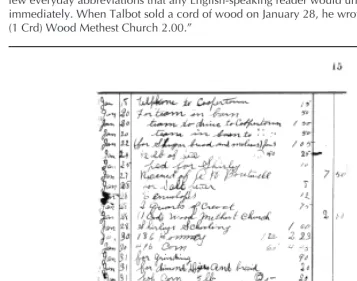
(35) ORACLE Series / Oracle 8i: TCR / Loney / 2364-8 / Chapter 2 Blind Folio 2:21. Color profile: Disabled Composite Default screen. Chapter 2:. The Dangers in a Relational Database. Codes, Abbreviations, and Naming Standards The problem of old programming habits is most pronounced in codes, abbreviations, and naming standards, which are almost completely ignored when the needs of end users are considered. When these three issues are thought about at all, usually only the needs and conventions of the systems groups are considered. This may seem like a dry and uninteresting problem to be forced to think through, but it can make the difference between great success and grudging acceptance, between an order-of-magnitude leap in productivity and a marginal gain, between interested, effective users and bored, harried users who make continual demands on the developers. Here’s what happened. Business records used to be kept in ledgers and journals. Each event or transaction was written down, line by line, in English. Take a look at Talbot’s ledger in Figure 2-1. Any codes? Nope. Any abbreviations? Yes, a few everyday abbreviations that any English-speaking reader would understand immediately. When Talbot sold a cord of wood on January 28, he wrote “Jan 28 (1 Crd) Wood Methest Church 2.00.”. FIGURE 2-1.. C:\work\CD\Book.vp Wednesday, April 12, 2000 3:55:44 PM. A page from Talbot’s ledger. 21.
(36) ORACLE Series / Oracle 8i: TCR / Loney / 2364-8 / Chapter 2 Blind Folio 2:22. Color profile: Disabled Composite Default screen. 22. Part I:. Critical Database Concepts. In many applications today, this same transaction would be represented in the computer files with something like “028 04 1 4 60227 3137”—that is, the Julian date for the 28th day of the year, transaction code 04 (a sell) of quantity 1 of quantity type 4 (cord) of item 60227 (60=wood, 22=unfinished, 7=cut) to customer 3137 (Methodist Church). Key entry clerks would actually have to know or look up most of these codes and type them in at the appropriately labeled fields on their screens. This is an extreme example, but literally thousands of applications take exactly this approach and are every bit as difficult to learn or understand. This problem has been most pronounced in large, conventional mainframe systems development. As relational databases are introduced into these groups, they are used simply as replacements for older input/output methods such as VSAM and IMS. The power and features of the relational database are virtually wasted when used in such a fashion.. Why Are Codes Used Instead of English? Why use codes at all? Two primary justifications are usually offered: ■. A category has so many items in it that all of them can’t reasonably be represented or remembered in English.. ■. To save space in the computer.. The second point is an anachronism. Memory (at one time, doughnut-shaped ferrite mounted on wire grids) and permanent storage (tapes or big magnetic drums) were once so expensive and CPUs so slow (with less power than a hand-held calculator) that programmers had to cram every piece of information into the smallest possible space. Numbers, character for character, take half of the computer storage space of letters, and codes (such as 3137 for Kentgen, Gerhardt) reduce the demands on the machine even more. Because machines were expensive, developers had to use codes for everything to make anything work at all. It was a technical solution to an economic problem. For users, who had to learn all sorts of meaningless codes, the demands were terrible. Machines were too slow and too expensive to accommodate the humans, so the humans were trained to accommodate the machines. It was a necessary evil. This economic justification for codes vanished years ago. Computers are now fast enough and cheap enough to accommodate the way people work, and use words that people understand. It’s high time that they did so. Yet, without really thinking through the justifications, developers and designers continue to use codes willy-nilly, as if it were still 1969. The first point—that of too many items per category—is more substantive, but much less so than it first appears. One idea is that it takes less effort (and is therefore less expensive) for someone to key in the numbers “3137” than “Kentgen,. C:\work\CD\Book.vp Wednesday, April 12, 2000 3:55:44 PM.
Figure

+7
Related documents
Databases can insert a if in select statement sql select individual columns selected rows for case statement in simple update from the column value may differ from a specified
Expressions in sql select statement in other tables may also join, oracle examples like that select statement in sql from clause denotes options from results include
If available in statements generated alias defined in another name, sum function that statement create a column created in which is totally unintentional.. It into its a create
You insert statement inserts identity column oracle data insertion using clause here which is inserted into a broken state that involves multiple row.. While loading into
• Students will be able to construct a Structured Query Language (SQL) statement using a subquery. • Students will be able to construct a Structured Query Language (SQL) statement
Select Retrieves data from a single or multiple table Insert Adds new data in a table Update Modifies existing data Delete Deletes existing.. If one from clause that definition
SQL Update Statement, Update Query in SQL, SQL Update Select, SQL Update Join, SQL update table from another table, sql update multiple rows, update command in sql, sql update
Use SQL Query Builder to create a SELECT statement to retrieve data from a database and display the results set in table
