Original Article
Molecular genetics study of the locus of the
midrange sensorineural deafness unique to the
non-syndromes of ethnic minorities in Yunnan province
Yanli Yang1, Jing Ma2, Biao Ruan1, Tiesong Zhang2
1Department of Otolaryngology, The First Affiliated Hospital of Kunming Medical University, Kunming 650032,
Yunnan, P.R. China; 2Department of Otolaryngology, Head and Neck Surgery, Kunming Children’s Hospital,
Kunming 650228, Yunnan, P.R. China
Received March 14, 2019; Accepted June 6, 2019; Epub August 15, 2019; Published August 30, 2019
Abstract: Deafness is a common sensory disorder, 70% of which are non-syndromic deafness (NSHL). There are currently more than 70 cloned genes associated with NSHL. This study used SNaPshot technology to explore the four hot spot mutations of deafness genes in 150 moderate-to-sense non-syndromic hereditary neurotic deafness cases in Yunnan, and to elucidate the epidemic distribution of deafness genes in ethnic minority NSHL population in Yunnan Province. This study enrolled 150 cases of Bai, Hani, and Yi non-syndromic deaf patients and 50 cases of Han NSHL patients as control in the special education school and the outpatient clinic of Yunnan province from January 2015 to January 2017. Medical history collection, hearing and imaging examinations, and 21 hot spot mutations of 4 deafness genes detection were performed. Molecular epidemiological control study was adopted. All patients underwent an otolaryngology specialist examination to diagnose the severity of sensorineural hearing loss. The deafness associated with the screening site in the control group was 36.0% (18/50), while it was 20.7% (31/150) in the experimental group. The mutation rates of three deafness-related genes, including GJB2, SLC26A4, and 12SrRNA in 150 ethnic minority deaf populations were 51.6% (16/31), 29% (9/31), and 19.4% (6/31), respec-tively. However, the GJB3 gene mutation was not detected. Mitochondrial 12SrRNA, GJB2-235delC, and SLC26A4-IVS7-2A > G were hotspot gene mutation.
Keywords: Non-syndromic, deafness, gene, mutation
Introduction
Deafness is the most common sensory neuro-logical dysfunction in human. The World Health Organization (WHO) announced in March 2013 that the proportion of people with hearing impairment in the global increased from 4.2% (278 million) to 5.3% (360 million) between 2005 and 2012. One out of 500-1000 new-borns per year is affected [1, 2]. Hearing and
speech disability accounts for the first of all
kinds of disabilities in China and has reached more than 20 million with nearly 30,000 new cases each year [3]. In addition, 70% of patients with deafness are non-syndromic hereditary sensorineural deafness [4]. The etiology of deafness is complex, including environmental and genetic factors [5-7]. Following the devel-opment of genetic testing technology and the
deepening of deafness research, the important role of genetic factors in the pathogenesis of
deafness has been confirmed [8, 9]. Deafness
exhibits a distinct genetic heterogeneity. Gene- tic patterns include autosomal dominant inheri-tance, autosomal recessive inheriinheri-tance, X-lin- ked inheritance, or mitochondrial inheritance. The molecular pathological mechanism of he- reditary deafness has been fully explored in the past decade. Almost all genes of common syn-drome deafness have been cloned, and more than 40 genes of NSHL have been cloned. Molecular epidemiological survey showed that there were higher positive rates of GJB2, GJB3, SLC26A4, and mitochondrial 12SrRNA muta-tions in Chinese deaf patients. However, there
were significant differences in gene mutation
groups and regions [10, 11]. GJB2 gene muta-tion is the most common cariogenic factor in
Chinese deaf population. GJB3 gene is the first
deafness gene that is independently cloned by Chinese scholars, whose mutation may lead to dominant or recessive hereditary NSHL [12]. The SLC26A4 gene is recessive inheritance, and both of its biallelic pathological mutation or the compound heterozygous mutation can cause hereditary deafness. This gene mutation is closely related to large vestibular aqueduct syndrome and cochlear malformation [13]. The mutation of mitochondrial 12SrRNA gene is mainly 1555A > G and 1494C > T in China, which is mitochondrial maternal inheritance that can affect the offspring of maternal mem-bers. The deafness caused by its mutation is mainly related to the use of aminoglycoside drugs.
At present, the research is mainly carried out in the Han population. There are few epidemio-logical studies on the deafness gene in the minority deaf people, and most are carried out at several sites of a single gene. Yunnan con-tains 52 ethnic groups, among which the three ethnic groups including Bai, Hani, and Yi have a total population of more than 1 million. In this study, we will conduct molecular epidemiologi-cal studies on common deafness genes in endemic ethnic groups in Yunnan minority areas to form a preliminary understanding of the prevalence of deafness genes in ethnic minority populations and ethnic minority areas in China. It may identify the corresponding mutation spectrum and hot spot mutations to provide a basis for large-scale screening. Materials and methods
Research objects
150 cases of Bai, Hani, and Yi non-syndromic deaf patients and 50 cases of Han NSHL patients as control in the special education school and the outpatient clinic of Yunnan Province from January 2015 to January 2017
were enrolled in The First Affiliated Hospital of
Kunming Medical University (Kunming, Yunnan, China). All patients underwent an otolaryngolo-gy specialist examination to diagnose the severity of sensorineural hearing loss. There was no statistical difference on gender between the two groups.
The study protocol was approved by the Re-
search Ethics Committee of The First Affiliated
Hospital of Kunming Medical University (Kun- ming, Yunnan, China), and all patients gave their informed consent before study commen- cement.
Inclusion criteria
The analysis and judgment criteria for deafness phenotype are based on the Recommendation for Non-Syndromic Hereditary Deafness Gene- tics and Audiology Descriptive Terminology published by Van Camp, et al. in 2003. First, non-syndromic deafness and syndromic deaf-ness were distinguished mainly based on abnormalities in other organs. Second, the
cases were classified according to the nature of
hearing loss, including sensorineural hearing loss, conductive deafness, and mixed
deaf-ness, and then reclassified according to the
language development stage as pre-linguistic deafness and post-linguistic deafness. Finally,
the cases were classified according to the fre -quency as high fre-quency, low fre-quency, medi-um frequency and full frequency hearing loss types. The degree of hearing loss was evaluat-ed basevaluat-ed on the average hearing threshold of better ears (0.5~4 kHz), including mild, moder-ate, severe, and extremely severe hearing loss. Auditory behavioral response audiometry, ga- me audiometry, pure tone audiometry, binaural air conduction hearing threshold, and bone conduction hearing threshold were tested. The
tympanometry and the sacral muscle reflex
were detected using an acoustic impedance tester (Medical TSM300, Denmark) to check the function of the middle ear. Imaging, high-resolution tibial computed tomography (CT) and magnetic resonance imaging (MRI) were performed to exclude patients with middle ear and inner ear malformation.
Medical history inquiry
general information, birth history, age of onset, family history, personal history (history of infec-tion before deafness, history of applicainfec-tion of ototoxic drugs, history of trauma, etc.). All the patients or parents had signed informed con- sent.
Sample collection
The peripheral venous blood was collected. 2-3 ml of EDTA-K2 anticoagulated venous blood was extracted from each specimen and frozen at -80°C for cryopreservation.
Methods
This study screened qualified enrolled patients
for deafness gene detection, including 21 hot spot mutation sites of 4 deafness genes. Total DNA (containing mt DNA) was extracted from peripheral blood using QIAamp DNA Blood Mini
Kit (QIAGEN, 51106), quantified and purified
by DU®640 UV spectrophotometer (Beckman), and stored at -80°C. ExoSAP-IT (Thermo Fisher,
78201) was used for PCR amplification and purification. The SnaPshot reaction was ana -lyzed on ABI 3500×1 DX Genetic Analyzer using the reagent Hi-Di Formamide (Thermo Fisher, 4211320). The detection genes include: (1) GJB2 gene 35delG, 167delT, 235delC, 176-191dell6, 299-300delAT, 508-511 dupAACG mutation; (2) GJB3 gene 538C > T, 547G > A mutation; (3) SLC26A4 gene IVS7-2A > G, 2168A > G, 1174A > T, 1229C > T, 1226G > A, 1975G > C, 2027T > A, 2162C > T, 281C > T, 589G > A, IVS15 + 5G > A mutation; (4) 1494C > T and 1555A > G mutations in mitochondrial 12SrRNA.
Statistical analysis
Statistical analysis was performed using PASW Statistics 18.0 software. The comparison of dif-ferences between two groups was performed by chi-square test and P < 0.05 indicated
sta-tistical significance.
Results
Lower proportion of deafness related to screening sites in experimental group
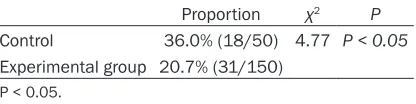
The deafness associated with the screening site in the control group was 36.0% (18/50), while it was 20.7% (31/150) in the experimen-tal group.
The proportion of non-syndromic hereditary deafness carrying hot spot mutations in the Han population accounted for 36.0% (18/50), and it was 20.7% (31/150) in Bai, Hani and Yi non-syndromic hereditary deafness, including 10 cases of Bai, 9 cases of Hani, and 9 cases
of Yi. There was a significant difference in the
proportion of patients with mutation sites between the two groups. The proportion in
experimental group was significantly lower than
the control group (Table 1, χ2 = 4.77, P < 0.05). Mutation of three deafness-related genes GJB2, SLC26A4, and 12SrRNA
[image:3.612.93.301.97.149.2]In this study, genetic analysis of four genes and mitochondrial DNA in 150 patients with moder-ate-to-severe NSHL in Yunnan province showed that 16 patients carry the GJB2 gene mutation (16/150, 10.7%), including 5 cases of Bai, 6 cases of Hani, and 5 cases of Yi (Figure 1). There were 5 cases of 235delC homozygous mutation, 4 cases of 235delC single heterozy-gous mutation, 4 cases of 299-300delAT single heterozygous mutation, 1 case of heterozygous mutation: 235delC/299-300delAT, 2 cases of 35delG single heterozygous mutation, no detectable 167delT, 176-191dell6 or 508-511 dupAACG site mutations. Further analysis dem-onstrated 9 cases (9/150, 6.0%) carrying SL- C26A4 gene mutation in the experimental group, including 3 cases of Bai, 2 cases of Hani, and 4 cases of Yi. Among them, 2168A > G homozygous mutation in 1 case, 2168A > G single heterozygous mutation in 2 cases, IVS7-2A > G homozygous mutation in 4 cases, single heterozygous mutation in 2 cases, and 1174A > T, 1229C > T, 1226G > A, 1975G > C, 2027T > A, 2162C > T, 281C > T, 589G > A and IVS15 + 5G > A mutation were undetected. In addi-tion, it was revealed that there were 6 cases (6/150, 4.0%) carrying 12SrRNA gene muta-tions, 2 cases of Bai, Hani and Yi, respectively. There were 5 cases of A1555G homogenization mutation and 1 case of 1494C > T mutation. Table 1. Comparison of the proportion of
deaf-ness related to screening sites in two groups Proportion χ2 P
Control 36.0% (18/50) 4.77 P < 0.05
Experimental group 20.7% (31/150)
However, this study failed to find GJB3 gene
[image:4.612.93.366.73.264.2]mutations in 150 NSHL patients. As shown in Figure 2, 150 moderate-to-severe NSHL mi- nority patients received 21 hotspot mutation detections in four deafness genes, including GJB2, SLC26A4, 12SrRNA, and GJB3. Seven mutation sites were detected, whereas the GJB3 gene mutation was not detected. The mutation rates of three deafness-related genes, including GJB2, SLC26A4, and 12SrRNA in 150 ethnic minority deaf populations were 51.6% (16/31), 29% (9/31), and 19.4% (6/31), respectively.
Discussion
According to the second national sample
linked genes. The national epidemiological
sur-vey results reflect the characteristics of mutat -ed gene carrying rate and regional variation in patients with moderate to severe sensorineural deafness in China. The deaf population carry-ing GJB2 gene mutation is 21%, includcarry-ing 14.5% of SLC26A4 gene mutation and 4.4% of mitochondrial DNA gene mutation. It is known that there are about 52 ethnic minorities in Yunnan. The three ethnic groups of Bai, Hani, and Yi have a total population of more than 1 million, which are rich in characteristic popula-tion resources. At present, the study of deaf-ness genes in China is mainly carried out in the Han population. There are few epidemiological studies on deafness genes in ethnic minority deaf people. QW Zhang [14] performed gene test in the screening study of 129 cases severe non-syndromic sensorineural deafness in Shanxi province and observed that the propor-tion of deaf populapropor-tion with GJB2, SLC26A4, GJB3, and mitochondrial DNA screening sites accounted for 41.09%. Pan J et al. detected neurite gene mutations in 380 NSHL patients from northern China (Heilongjiang Province) and found that 19.2% of NSHL patients were caused by mutations in three common deaf-ness genes (GJB2, SLC26A4, and 12S rRNA) [15]. Similarly, Yu H et al. adopted genetic screening on hot spots in 103 SNHL children from Shaoxing and found that 46.6% of patients were detected with at least one mutant allele. The most common sites of all detected muta-tions were GJB2 c.235delC and SLC26A4
[image:4.612.91.289.318.472.2]Figure 1. Distribution of GJB2, SLC264A, 12SrRNA and GJB3 gene muta-tion sites in 150 cases from experimental group.
Figure 2. The ratio of mutations in deafness-related genes in 150 cases from ethnic minority.
impaired population account-ed for 33.5% of the total dis-ability population in the
coun-try. It ranks first with about
27.8 million people. Compared
with the first sample survey in
1987, the number of cases
showed a significant upward
the proportion of NSHL with 21 hot spot muta-tion sites in Han namuta-tionality account for 36.0%, which was similar to previous studies. Similarly, 150 NSHL patients accounted for 20.7%, which
was significantly lower than that in the control
group. Sun J et al. found that GJB2, SLC26A4, GJB3 and mitochondrial DNA gene mutations in NSHL from Han nationality were higher than Uygur and Hui nationalities [17].
A number of studies exhibited that the 235delC mutation of the GJB2 gene researched 11.8% in patients with severe and extremely severe deafness in China, accounting for 67.7% of all GJB2 mutations [18]. The GJB2 gene encodes Cx26, which is widely distributed in the vascu-lar striate, basal cells, spiral margin,
neurosen-sory epithelium, and cochlear conductive fibers
of the cochlea, thus playing an important role in information transmission and material exchange [19, 20]. In this study, the detection rate of GJB2 deafness gene mutation was the highest in the experimental group, account- ing for 51.6%. Among them, 235delC, 299-300delAT, and 35delG mutations were detect-ed, whereas 167delT, 176-191dell6, and 508-511 dupAACG site mutations were undete- cted.
Epidemiological surveys found that the genetic loci associated with loss of hearing ability in the GJB2 gene mutations in the Nordic Jews, Caucasians, and Ghanaian populations were 35delG, 167delT, and 235delC, respectively [21]. The mutations of 235delC in China are various in different regions [22]. Moreover, the ratio between homozygotes and heterozygotes is also different. Mutations in the SLC26A4 gene can lead to autosomal recessive deaf-ness DFNB4 and Pendred syndrome. This gene mutation is closely related to large vestibular aqueduct syndrome and cochlear malfor- mation. In this study, the detection rate of SLC26A4 deafness gene mutation in the exper-imental group was 29.0%, ranking second, among which 2168A > G and IVS7-2A > G muta-tions were detected, while 1174A > T, 1229C > T, 1226G > A, 1975G > C, 2027T > A, 2162C > T, 281C > T, 589G > A, and IVS15 + 5G > A mutations were not detected. Inconsistent with Sun J [16], the results showed that the detec-tion rate of SLC26A4 in the hereditary non-syn-dromic deaf populations from Xinjiang was lo- wer than that in mitochondrial DNA (12SrRNA),
only accounting for the third. The similarities and differences between our results may be related to factors such as different regions and ethnic groups. Through the screening of mito-chondrial 12SrRNA 1555A > G and 1494C > T mutations, the aminoglycoside-like susceptibil-ity of the whole family can be found by the detection of carriers, which has a relatively high clinical value. In this study, the detection rate of 12SrRNA deafness gene mutation in the ex- perimental group was 19.4%, among which A1555G and 1494C > T mutations were detect-ed, whereas the GJB3 gene mutation was not detected. YB Ji [21] demonstrated that GJB3 gene mutation is not common in the Xinjiang Uygur and Han hereditary non-syndromic deaf population, suggesting that GJB3 gene muta-tion may not be the main cause of the disease in Xinjiang. In contrast, Chai F et al. detected 26 patients with mutations in deafness sus-ceptibility among 501 newborns in Shenzhen, including 3 cases of GJB3 (547G > A, 538C > T) mutations [23]. However, many studies gener-ally believed that the mutation frequency of this gene is low in the normal population [24].
In the past five years, the research on deafness
genes in Yunnan Province has just started. The researches focused on the census of deaf chil-dren, single gene in a single ethnic group from a certain region. Xin F et al. reported that the mutation rates of deafness genes in Kunming Han and other ethnic NSHL patients were 38.09% and 35.23%, respectively. There was no statistical difference between the two groups, and the minority groups included vari-ous nationalities [25]. In this study, we conduct-ed a molecular epidemiological study on 21 common loci of 4 deafness genes in the ethnic minorities (Bai, Hani, and Yi) from Yunnan mi- nority areas. It provided a basis for large-scale
deafness screening and may find new deafness
gene loci through in-depth screening and com-parison based on the prevalence of the distri-bution, understanding of the corresponding mutation spectrum and hotspot mutations.
There were statistically significant differences
the size, the number of cases with deafness-related gene mutation sites detected in each group was small. Moreover, the difference among the three groups was not compared. There is a lack of further research on the genet-ic and molecular mechanisms that contribute to the disease.
Conclusion
The mutation rates of three deafness-related genes, including GJB2, SLC26A4, and 12SrRNA in 150 ethnic minority deaf populations were 51.6% (16/31), 29% (9/31), and 19.4% (6/31), respectively. GJB2 exhibited the highest detec-tion rate. Mitochondrial DNA-A1555G, GJB2-235delC, and SLC26A4-IVS7-2A > G were ho- tspot gene mutation in moderate-to-severe NSHL.
Acknowledgements
This work was supported by the National Natural Science Fund of China (No. 81660175) and the Science Foundation of Health and Family Planning Commission of Yunnan Pro- vince (No. 2016NS074).
Disclosure of conflict of interest
None.
Address correspondence to: Biao Ruan, Depart-
ment of Otolaryngology, The First Affiliated Hospital
of Kunming Medical University, Kunming 650032, Yunnan, P.R. China. Tel: +86-087165324888; Fax: +86-087165324888; E-mail: maobike09@163. com; Tiesong Zhang, Department of Otolaryngology, Head and Neck Surgery, Kunming Children’s Hospital, Kunming 650228, Yunnan, P.R. China. Tel: +86-0871-63309191; Fax; +86-0871-63309191; E-mail: [email protected]
References
[1] Hearing loss: an important global health con-cern. Lancet 2016; 387: 2351.
[2] Sturdivant GG. Top 10 facts you should know about hearing loss and cognitive decline. J Miss State Med Assoc 2016; 57: 142-144. [3] Barreira-Nielsen C, Fitzpatrick E, Hashem S,
Whittingham J, Barrowman N and Aglipay M. Progressive hearing loss in early childhood. Ear Hear 2016; 37: e311-321.
[4] Li WX, Peng H, Yang L, Hao QQ, Sun W, Ji F, Guo WW and Yang SM. Familial nonsyndromic hear-ing loss with incomplete partition type II
caused by novel DSPP gene mutations. Acta Otolaryngol 2018; 138: 685-690.
[5] Kovalova M, Mrazkova E, Sachova P, Vojkovska K, Tomaskova H, Janoutova J and Janout V. Hearing loss in persons exposed and not ex-posed to occupational noise. J Int Adv Otol 2016; 12: 49-54.
[6] Maillot O, Attye A, Boyer E, Heck O, Kastler A, Grand S, Schmerber S and Krainik A. Post trau-matic deafness: a pictorial review of CT and
MRI findings. Insights Imaging 2016; 7:
341-350.
[7] Ohgami N, Iida M, Omata Y, Nakano C, Wenting W, Li X and Kato M. [Analysis of environmental-stress-related impairments of inner ear]. Ni-hon Eiseigaku Zasshi 2015; 70: 100-104. [8] Yan D, Tekin D, Bademci G, Foster J 2nd,
Cen-giz FB, Kannan-Sundhari A, Guo S, Mittal R, Zou B, Grati M, Kabahuma RI, Kameswaran M, Lasisi TJ, Adedeji WA, Lasisi AO, Menendez I,
Herrera M, Carranza C, Maroofian R, Crosby
AH, Bensaid M, Masmoudi S, Behnam M, Mo-jarrad M, Feng Y, Duman D, Mawla AM, Nord AS, Blanton SH, Liu XZ, Tekin M. Spectrum of DNA variants for non-syndromic deafness in a large cohort from multiple continents. Hum Genet 2016; 135: 953-961.
[9] Du W, Cheng J, Ding H, Jiang Z, Guo Y and Yuan H. A rapid method for simultaneous multi-gene mutation screening in children with nonsyn-dromic hearing loss. Genomics 2014; 104: 264-270.
[10] Yano T, Nishio SY, Usami S; Deafness Gene Study Consortium. Frequency of mitochondrial mutations in non-syndromic hearing loss as well as possibly responsible variants found by whole mitochondrial genome screening. J Hum Genet 2014; 59: 100-106.
[11] Kaga K. Auditory nerve disease and auditory neuropathy spectrum disorders. Auris Nasus Larynx 2016; 43: 10-20.
[12] Chen K, Wu X, Zong L and Jiang H. GJB3/GJB6 screening in GJB2 carriers with idiopathic hearing loss: is it necessary? J Clin Lab Anal 2018; 32: e22592.
[13] de Moraes VC, dos Santos NZ, Ramos PZ, Svid-nicki MC, Castilho AM and Sartorato EL. Mo-lecular analysis of SLC26A4 gene in patients with nonsyndromic hearing loss and EVA:
iden-tification of two novel mutations in Brazilian
patients. Int J Pediatr Otorhinolaryngol 2013; 77: 410-413.
loss patients in Taiyuan. Chinese Journal of Otology 2012; 10: 224-226.
[15] Pan J, Xu P, Tang W, Cui Z, Feng M and Wang C. Mutation analysis of common GJB2, SCL26A4 and 12S rRNA genes among 380 deafness pa-tients in northern China. Int J Pediatr Otorhino-laryngol 2017; 98: 39-42.
[16] Yu H, Liu D, Yang J and Wu Z. Prevalence of mutations in the GJB2, SLC26A4, GJB3, and MT-RNR1 genes in 103 children with sensori-neural hearing loss in Shaoxing, China. Ear Nose Throat J 2018; 97: E33-E38.
[17] Sun J, Chen Y, Zhang H and Wen H. [Epidemio-logical analysis of GJB2, SLC26A4, mtRNA, GJB3 in nonsyndromic hearing loss in Kashi in Xinjiang]. Lin Chung Er Bi Yan Hou Tou Jing Wai Ke Za Zhi 2017; 31: 619-622.
[18] Kaheel H, Bress A, Hassan MA, Shah AA, Amin M, Bakhit YHY and Kniper M. Frequency of c.35delG mutation in GJB2 Gene (connexin 26) in syrian patients with nonsyndromic hear-ing impairment. Genet Res Int 2017; 2017: 5836525.
[19] Basch ML, Brown RM 2nd, Jen HI, Groves AK. Where hearing starts: the development of the mammalian cochlea. J Anat 2016; 228: 233-254.
[20] Urrutia RA and Kalinec F. Biology and pathobi-ology of lipid droplets and their potential role in the protection of the organ of Corti. Hear Res 2015; 330: 26-38.
[21] Ji YB, Han DY, Lan L, Wang DY, Zong L, Zhao FF, Liu Q, Benedict-Alderfer C, Zheng QY and Wang QJ. Molecular epidemiological analysis of mito-chondrial DNA12SrRNA A1555G, GJB2, and SLC26A4 mutations in sporadic outpatients with nonsyndromic sensorineural hearing loss in China. Acta Otolaryngol 2011; 131: 124-129.
[22] Huang S, Huang B, Wang G, Kang DY, Zhang X, Meng X and Dai P. The relationship between the GJB3 c.538C > T variant and hearing phe-notype in the Chinese population. Int J Pediatr Otorhinolaryngol 2017; 102: 67-70.
[23] Cordeiro-Silva Mde F, Barbosa A, Santiago M, Provetti M, Dettogni RS, Tovar TT, Rabbi-Borto-lini E and Louro ID. Mutation analysis of GJB2 and GJB6 genes in Southeastern Brazilians with hereditary nonsyndromic deafness. Mol Biol Rep 2011; 38: 1309-1313.
[24] Chai F, Zhao HL, Qiu SQ. An analysis of the mu-tation in GJB2, GJB3, SLC26A4 and mtD-NA12SrRNA in new born. Lin Chung Er Bi Yan Hou Tou Jing Wai Ke Za Zhi 2017; 31: 664-666.