Available on-line at: www.oapub.org/edu
DOI: 10.46827/ejpe.v6i6.3200 Volume 6 │ Issue 6 │ 2020
EFFECT OF REGULAR PRACTICING GREEK
TRADITIONAL DANCES ON BODY COMPOSITION
PARAMETERS IN ADULT PEOPLE
Alexandros G. Malkogeorgos1i,
Styliani A. Malkogeorgou1,
Eirini A. Argiriadou1,
Argirios F. Mavrovouniotis2,
Fotios I. Mavrovouniotis1
1School of Physical Education and Sport Sciences, Aristotle University of Thessaloniki, Greece 2School of Medicine, Faculty of Health Sciences, Aristotle University of Thessaloniki,
Greece
Abstract:
The aim of the present study was to examine the effects of a Greek traditional dances
program on adult individuals’ body composition parameters. For this purpose, 73
sedentary healthy adults, 42 women and 31 men, aged 38-58 years, were randomly chosen and separated into an experimental and a control group. The subjects of the experimental group (n=37, 22 women and 15 men) engaged in a 24-week Greek traditional dance program with moderate intensity, and at a frequency of three training sessions per week, each lasting 60 minutes. The control group (n=36, 20 women and 16 men) did not engage in any physical activity. Body mass, waist circumference (WC) and hip circumference (HC) were measured, and BMI, body fat percentage and waist to hip ratio (WHR) were assessed pre- and post-24-week Greek traditional dances program. For the statistical analysis the Statistical Package for Social Sciences ver. 23.0 for windows was used. No significant difference was found in the baseline measurements between the two groups. After the participation in the 24-week Greek traditional dances intervention program the experimental group presented significant decreases in body mass from 77,71±16,8 kg to 75,57±15,7 kg (t=5,121, p<0,001), in BMI from 25,75±4 kg/m2 to 25,05±3,8
kg/m2 (t=5,289 p<0,001), in BF percentage from 28,3±6,4% to 26,33±5,6% (t=5.279 p<0,001)
and in WC from 89,81±12,9 cm to 87,46±12 cm (t=5.703, p<0,001). No significant difference was found after the 24-week period for the control group. Regarding the WHR, no significant change was observed, although the experimental group showed a tendency
for reduction while the control group showed a slight increase. The results of this study indicate that Greek traditional dances are a very beneficial alternative exercise form that brings favorable changes in body mass and body composition parameters. In general, among its multiple utilities and benefits, dancing can contribute to weight loss programs.
Keywords: folk dance, BMI, waist circumference, WHR, body fat
1. Introduction
Evidently, regular exercise presents numerous great benefits; among other things it can improve musculoskeletal health, control body weight and reduce symptoms of depression (World Health Organization, 2009). However, most people in the western world do not engage enough in physical activity in order to draw these health benefits. As a result, it is well documented that nowadays adult people live a sedentary life that may result either immediately or long term in many health problems mainly related to the increased body weight, such as obesity, poor metabolic health, hyperlipidemia, coronary heart disease, various types of cancer, and mortality (Healy et al., 2011; Hu et al., 2003; Katzmarzyk et al., 2009).
However, one popular and alternative form of exercise is dancing (Argiriadou, 2018). Dancing can increase people's motivation to participate in physical activity and maintain this participation, mainly because they perceive dance as a fun, expressive, non-competitive and social activity (Keogh et al., 2009; Malkogeorgos et al., 2011b; Malkogeorgos et al., 2012). Dancing is a great way to improve physical fitness and develop social skills, resulting in better mental health. Moreover, previous research supports that dancing presents similar cardiorespiratory fitness benefits and calories output levels with other uncompetitive physical activities such as walking and running, as well as with sports such as football or tennis in a non-competitive level (Allen, & Wyon, 2008; Hui et al., 2009; Ribeiro-Nunes et al., 2007; Shimamoto et al., 1998).
As for Greek traditional dances, it is an alternative type of moderate aerobic exercise, which addresses all ages; and in most cases it doesn’t require any money, or any special equipment (Mavrovouniotis et al., 2010). It is worth mentioning that training with Greek traditional dances presented similar functional and cardiovascular benefits with formal exercise training (Kaltsatou et al., 2014). Furthermore, dancing in general, as well as Greek traditional dances in particular, is considered a safe form of exercise, since it appears to have lower chances of injuries compared to other types of exercise (Anagnostopoulou et al., 2017; Malkogeorgos et al., 2010; Malkogeorgos et al., 2011a).
established that dancing consists an effective therapeutic tool for the treatment of Parkinson's disease (Earhart, 2009; Hackney & Earhart, 2010), dementia (Hokkanen et al., 2008; Karkou & Meekums, 2017), overweight (Murrock & Gary, 2010), and reduced risk for cardiovascular disease mortality (Merom et al., 2016).
Moreover, the participation in a dance program improved cardio-respiratory endurance, balance, agility and flexibility of the body, and reduced body fat of the elderly sedentary female participants (Hopkins et al., 1990). In addition, previous research has shown that the participation in cultural dance programs reduced body weight (Murrock, & Gary, 2010; Cruz-Ferreira et al., 2015; Jeon & Choe, 1996), body fat (Arslan, 2011; Jeon & Choe, 1996; Jaywant, 2013; Kostic et al., 2006), WHR and WC (Arslan, 2011; Cruz-Ferreira et al, 2015; Dewhurst et al., 2014), as well as BMI (Shimamoto et al., 1998; Dewhurst et al., 2014; Mejia-Downs et al., 2011; Murrock, & Gary, 2010). Thus, dancing can help address many current societal issues related to obesity, inactivity, and aging (Hui et al., 2009; Keogh et al., 2009; Murcia et al., 2010).
However, although the effects of dance on people’s psychosomatic state have been
studied adequately the effects of Greek traditional dances on body composition parameters in adult people have not been studied yet. Therefore, the purpose of the present study is to examine the effects of a 24-week Greek traditional dances exercise program on the body parameters of healthy sedentary adult men and women.
2. Materials and Methods
2.1 Sample
The sample consisted of 80 sedentary individuals, 46 women and 34 men aged 38 to 58 years old. All of them fulfilled the required criteria. More specifically, the participants had to be healthy, not undergoing any medication or any form of diets, as well as not participating in any physical activity or exercise individually or in group for the past six months. A written informed consent for the participation in the research was obtained from each subject. All the subjects had to agree that they will not participate in any other group or individual exercise, physical activity or dancing program for the duration of the experiment, that is a 24-week period.
The subjects were separated randomly into two groups, 40 in the experimental group and 40 in the control group. After the 24-week period, 73 subjects completed the experimental procedure, that is 37 subjects from the experimental group (22 women and 15 men) with mean age 42,22±5,32 years, and 36 subjects from the control group (20 women and 16 men) with mean age 42,50±6,20 years.
2.2 Procedure
Procedures were consistent with the ethical standards of the Declaration of Helsinki of
aim and general requirements. In addition, all the subjects were asked to continue their daily habits without any alterations through the 24-week period.
The subjects of the experimental group took part in a 24-week group program of Greek traditional dances performance of moderate intensity, at a frequency of three training sessions per week, for 60 minutes each. Each Greek traditional dancing session included 8-12 minutes warm up with low intensity dances, the main part that was 40-45 minutes of moderate to high intensity dances, and a 5-7 minutes of cool-down with low intensity dances for recovery. Regarding the main part, the intensity of the dances varied from 60% to 70% of the maximum HR, which corresponds to 40-60% of VO2max
(moderate intensity) (Swain et al., 1994; Tanaka et al., 2001; Uth et al., 2004). In order for subjects to keep dancing continuously throughout each dance session there were frequent alterations to the rhythm. The Greek traditional dances used for the sessions were from different areas of Greece. The 24-week program contained a variety of dances that varied in rhythm, kinetic repertoire and style. Individuals from the experimental group that concluded the program attended at least 80% of the sessions.
The subjects of the control group were asked to continue their daily habits without any changes, at the 24-week period, as it was recorded at the beginning of the research. Measurements and each session of Greek traditional dances were conducted by a single, male investigator, teacher of physical education with extensive practical experience in Greek traditional dances.
2.3 Measurements
Body height was measured once at the baseline of the 24-week Greek traditional dances program with a precision of 0.5 cm, using a Seca 216 mechanical measuring rod. Body mass was measured using a Microlife WS80 electronic scale with a precision of 0.1 kg. The data from body mass and height were used to calculate the BMI (kg/cm2). The waist
circumference and the hip circumference were measured in cm and the data were used to calculate the waist to hip ratio (WHR). BF-907 Body Fat Analyser from Maltron was
used to assess the participants’ body fat percentage. Body mass, waist circumference, hip
circumference, WHR, BMI and body fat percentage, for both groups (experimental & control), were measured before and after the 24-week Greek traditional dances program.
2.4 Statistical Analysis
measures were used to determine if significant pre- to post-test differences existed (before and after the Greek traditional dances program for experimental group, and before and after the 24-week period for control group). Regarding the non-normally distributed variables a further test was conducted with non-parametric tests, such as Mann-Whitney U test for independent samples, and Wilcoxon test for related samples. The level of significance was set to p<0,05.
3. Results
The results from the anthropometric measurements of the experimental group that attended the Greek traditional dances program, and the control group are presented in Table 1. Independent samples t-tests showed that there was no significant difference between the two groups, concerning the anthropometric characteristics.
Table 1: Anthropometric characteristics of experimental and control group
Parameters Group Mean Std. Deviation
Age (years) Experimental 42,22 5,324
Control 42,50 6,199
Height (m) Experimental 1,731 ,094
Control 1,726 ,088
Body mass (kg) Experimental 77,711 16,771
Control 81,764 16,330
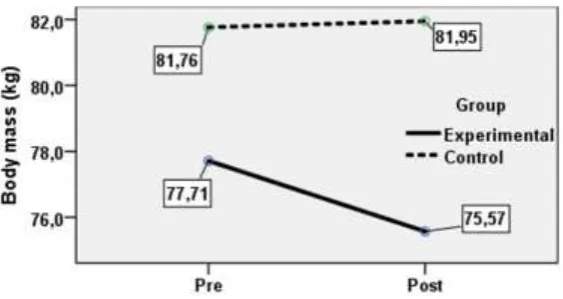
Descriptive statistics for the body mass variable of both groups (experimental & control), which were measured before the beginning and at the end of the 24-week intervention program, and the significance of any demonstrated changes are shown in Figure 1 and Table 2.
Figure 1: Body mass for Greek traditional dances group and control group before and after the 24-week period
traditional dances program, while no changes were observed for the subjects of the control group (Figure 1, Table 2).
Descriptive statistics for the WC variable of both groups (experimental & control), measured before the beginning and at the end of the 24-week intervention program, and the significance of any demonstrated changes are shown in Figure 2 and Table 2.
Figure 2: WC for Greek traditional dances group and control group before and after the 24-week period
There were no changes in WC for the control group after 24 weeks. On the contrary, the experimental group presented significant changes in the WC (-2,62%) after the 24-week period (Figure 2, Table 2).
Descriptive statistics for the BMI variable of both groups (experimental & control), assessed before the beginning and at the end of the 24-week intervention program, and the significance of any demonstrated changes are shown in Figure 3 and Table 2.
After their participation in the 24-week intervention program the experimental group showed a significant decrease in the BMI (-2,72%). On the other hand, the control group did not present any changes (Figure 3, Table 2).
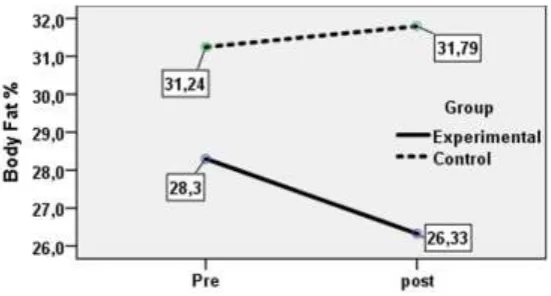
Descriptive statistics for the body fat percentage of both groups (experimental & control), assessed before the beginning and at the end of the 24-week intervention program, and the significance of any demonstrated changes are shown in Figure 4 and Table 2.
Figure 4: Body fat % for Greek traditional dances group and control group before and after the 24-week period
Similarly, the results showed significant changes in the Body fat % of the experimental group (-6,96%), following the 24-week Greek traditional dances program; while the control group presented a slight increase in the Body fat% (Figure 4, Table 2). Descriptive statistics for the HC variable of both groups (experimental & control), measured before the beginning and at the end of the 24-week intervention program, and the significance of any demonstrated changes are shown in in Figure 5 and Table 2.
According to the results from the paired samples t-tests, after their participation in the 24-week intervention program the experimental group showed a significant decrease in the HC (-1,74%). On the other hand, the control group did not present any changes (Figure 5, Table 2).
Descriptive statistics for the WHR variable of both groups (experimental & control), assessed before the beginning and at the end of the 24-week intervention program, and the significance of any demonstrated changes are shown in Figure 6 and Table 2.
Figure 6: WHR for Greek traditional dances group and control group before and after the 24-week period
According to the results from the paired samples t-tests, the two groups (experimental & control) did not present any significant differences in the WHR after the 24-week period. However, the experimental group showed a tendency for reduction in WHR from 0.844 to 0.837 (0,83%), while the control group presented a slight increase in the WHR (Figure 5, Table 2).
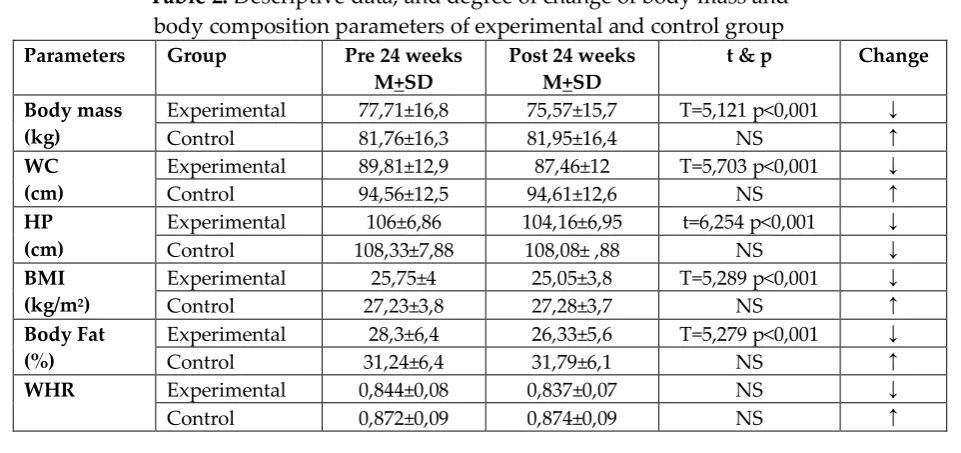
Table 2: Descriptive data, and degree of change of body mass and body composition parameters of experimental and control group Parameters Group Pre 24 weeks
M+SD
Post 24 weeks M+SD
t & p Change
Body mass (kg)
Experimental 77,71±16,8 75,57±15,7 T=5,121 p<0,001 ↓
Control 81,76±16,3 81,95±16,4 NS ↑
WC (cm)
Experimental 89,81±12,9 87,46±12 T=5,703 p<0,001 ↓
Control 94,56±12,5 94,61±12,6 NS ↑
HP (cm)
Experimental 106±6,86 104,16±6,95 t=6,254 p<0,001 ↓
Control 108,33±7,88 108,08± ,88 NS ↓
BMI (kg/m2)
Experimental 25,75±4 25,05±3,8 T=5,289 p<0,001 ↓
Control 27,23±3,8 27,28±3,7 NS ↑
Body Fat (%)
Experimental 28,3±6,4 26,33±5,6 T=5,279 p<0,001 ↓
Control 31,24±6,4 31,79±6,1 NS ↑
WHR Experimental 0,844±0,08 0,837±0,07 NS ↓
The results of the independent samples t-tests showed that at the baseline that is before the 24-week period, there were no significant differences between the two groups for all dependent variables; suggesting that the two groups were similar in all the measured variables. In addition, for the variables of the body mass, WC and BMI, Mann-Whitney U tests were conducted and showed similar results.
According to the results of the paired t-tests and repeated measures ANOVA, all the body parameters of the experimental group demonstrated significant differences between the two measures, pre- and post-participation in the 24-week intervention program with Greek traditional dances. On the contrary, the control group did not demonstrate any significant changes in the duration of the same 24-weeks period (Table 2). Additionally, for the body mass, WC and BMI variables, Wilcoxon tests were performed and showed similar results. It is worth mentioning, that gender did not have any significant effect on the results.
4. Discussion
The results of the present study support our hypothesis by clearly showing that the individuals of the experimental group, after their participation in the Greek traditional dances program, exhibited significant changes on body parameters. More specifically, the body mass of the participants in the 24-week Greek traditional dances program was significantly decreased from 77,71±16,8 kg to 75,57±15,7 kg, which corresponds to a 2,76% decrease. This finding is in agreement with previous findings in studies focusing to determine the utility of dance in an intervention program and its effects on body mass, BMI and body fat percentage. Cruz-Ferreira et al. (2015) by using a creative dance program for 24 weeks in older women, found a significant reduction in body mass (3,68%). Similarly, another study found a significant difference in body mass after eight weeks of dance exercise program in 49 healthy sedentary obese women (Arslan, 2011).
Regarding traditional dances, it has been observed that they positively affect body weight and body composition. More specifically, Hidayah and Syahrul Bariah (2011) found significant difference in body weight (4,9%) between a group of Malaysian female dancers and their control group of inactive subjects. Jeon and Choe (1996) designed a study using a Korean traditional dance program for 12 weeks, 3 times a week and approximately 50 minutes duration. They found that the people who participated in the program presented a significant effect on their body weight and body fat (p<0,001)
compared to the people who didn’t participate in the program.
In the present study the BMI of the participants in the 24-week Greek traditional dances program was significantly decreased, from 25,75±4 kg/m2 to 25,05±3,8 kg/m2,
which corresponds to a 2,72% decrease. Similarly, Mejia-Downs et al. (2011) found a significant decrease in the BMI of 20 adults (from 26,96 kg/m2 to 26,21 kg/m2; -2,87%),
In addition, Cruz-Ferreira et al. (2015), found a significant decrease in the BMI of sedentary elderly women, from 32,43±0,98 to 30,64±0,84 kg/m2 (-5,52%), after their
participation in a six-month dancing program. Likewise, Murrock and Gary (2010), provided evidence of a decrease in obesity, as measured by body fat and BMI, in African American women after taking part in a specific cultural dance intervention. In addition, Tai Chi utilized as an intervention program resulted in significant decreases in BMI and body fat in older adults with hypertension in China, and in patients with schizophrenia in Korea (Kwon, & Kwag, 2011; Sun, & Buys, 2015).
Moreover, after the 24-week intervention program of Greek traditional dances the individuals in the experimental group demonstrated significant improvement in WC from 89,81±12,9 cm to 87,46±12 cm (-2,62%) and in HC from 106±6,86 cm to 104,16± 6,95 cm (-1,74%). Even though, the paired t-test did not present any significant differences in the WHR between the experimental and the control group after the 24-week intervention, the people from the experimental group showed a tendency for reduction in WHR from 0,844±0,08 to 0,837±0,08 (-0,83%), while the control group presented a slight increase in the WHR. In accordance with previous researches, it could be said that participation in a dance-based exercise program could positively affect WC and WHR (Arslan, 2011; Cruz-Ferreira et al, 2015; Kontaxi, 2015; Mavrovouniotis et al., 2018)
Finally, body fat percentage of the experimental group following the 24-week Greek traditional dances program decreased significantly from 28,3±6,4% to 26,33±5,6% (-6,96%), while the control group presented a slight increase. In agreement with this finding, Banerjee et al., (2014), found out significantly lower body weight and body fat percentage in the experimental group dancing Bharatanatyam (a major form of Indian classical dance) than in the control group. Similarly, Arslan (2011) who applied a dance exercise program for three days per week with one-hour duration in 49 healthy sedentary obese women, observed a significant decrease in body fat percentage from 39,32±2,64% to 37,56±2,49% (-4,48%). Moreover, a 12-week low-impact dance program, improved significantly the functional fitness components, including body fat (Hidayah & Syahrul Bariah, 2011).
Summing up, the sample of the present study who participated in a 24-week Greek traditional dances program demonstrated beneficial effects concerning their body weight, as well as their body composition. The findings from our research is consistent with previous studies that used various types of dance and demonstrated the beneficial effects of dancing, in terms of body characteristics and body composition. The induced of the Greek traditional dances program changes on body weight and body composition parameters are not just changes in body image, but also have a positive effect on body condition, health status, prevention of related diseases, as well as on the quality of life.
5.Conclusions
Greek traditional dances are an alternative exercise form, that may constitute an exercise program aiming on health promotion, when performed regularly in a frequency of at least 3 times per week for 60 min each session. The participation in Greek traditional dances could lead in body improvements, concerning body mass, BMI, waist and hip circumference, and body composition of adult participants. Consequently, Greek traditional dances may improve body condition inducing favorable changes in body mass status and body composition. In general, among its multiple utilities and benefits, dancing can contribute to weight loss programs.
Conflicts of interest
The authors declare that there are no conflicts of interest.
About the Authors
Alexandros G. Malkogeorgos is a specialized educational staff, at Aristotle University of
Thessaloniki, Department of Physical Education and Sport Science at Thessaloniki, and he teaches Greek Traditional Dances. He has a MSc in Exercise and Health. He is a PhD student at Aristotle University of Thessaloniki at Thessaloniki and his research area is dance and health, fitness and motor development.
Styliani A. Malkogeorgou has a BSc in Psychology and a MSc in Clinical Cognitive
Neuroscience, from Sheffield Hallam University, United Kingdom. Moreover, she is a student at Aristotle University of Thessaloniki, Department of Physical Education and Sport Science at Thessaloniki.
Eirini A. Argiriadou is an assistant professor in Greek Traditional Dance, at Aristotle University of Thessaloniki, Department of Physical Education and Sport Science at Serres. Her research area includes the effect of dance on the development of children’
Argirios F. Mavrovouniotis is a medicine doctor specializing in Orthopedics. He has a MSc in Sports Medicine from the interdepartmental postgraduate program in cooperation of School of Medicine, Faculty of Health Sciences and Department of Physical Education and Sport Science of Aristotle University of Thessaloniki, Greece.
Fotios I. Mavrovouniotis is a professor in Exercise and Physical Health, at Aristotle
University of Thessaloniki, Department of Physical Education and Sport Science at Thessaloniki. His research areas include the effect of the exercise in mechanism of coagulation-fibrinolysis, blood lipids and obesity. In applications of exercise in people with chronic diseases and the preventive role of exercise and dance (dance therapy) in health and quality of life.
References
Allen, N., & Wyon, M. (2008). Dance Medicine: Artist or Athlete. SportEX Medicine, 35, 6-9.
Anagnostopoulou, E., Argiriadou, Eir., Mavrovouniotis, F., & Mavrovouniotis, A. (2017). The examination of injuries in dancers. World Journal of Research and Review, 5(6), 67-74.
Argiriadou, Eir. (2018). Greek Traditional Dances and health effects for middle-aged and elderly people- A review approach. World Journal of Research and Review, 6(6), 16-21.
Argiriadou, Eir., Mavrovouniotis, F., Mavrovouniotis, A., Mavrovounioti, Ch., Nikitaras, N., & Mountakis, C. (2017). Greek traditional dances program and self-evaluated effects and changes in life. World Journal of Research and Review, 5(6), 19-24. Arslan, F. (2011). The effects of an eight-week step-aerobic dance exercise programme on
body composition parameters in middle-aged sedentary obese women.
International SportMed Journal, 12(4), 160-168.
Banerjee, N., Chatterjee, S., Kundu, S., Bhattacharjee, S., & Mukherjee, S. (2014). Effect of regular practicing Bharatnatyam dancing exercise on body fat of urban female teenagers. Indian Journal of Clinical Anatomy and Physiology Vol, 1(1), 29-33.
Burkhardt, J., & Brennan, C. (2012). The effects of recreational dance interventions on the health and well-being of children and young people: a systematic review. Arts and Health, 4(2), 148-161.
Cruz-Ferreira, A., Marmeleira, J., Formigo, A., Gomes, D., & Fernandes, J. (2015). Creative dance improves physical fitness and life satisfaction in older women. Research on aging, 37(8), 837-855.
Earhart, G. M. (2009). Dance as therapy for individuals with Parkinson disease. European journal of physical and rehabilitation medicine, 45(2), 231-238.
Flores, R. (1995). Dance for health: improving fitness in African American and Hispanic adolescents. Public health reports, 110(2), 189-193.
Hackney, M. E., & Earhart, G. M. (2010). Effects of dance on gait and balance in
Parkinson’s disease: a comparison of partnered and nonpartnered dance
movement. Neurorehabilitation and neural repair, 24(4), 384-392.
Healy, G. N., Matthews, C. E., Dunstan, D. W., Winkler, E. A. H., Owen, N. (2011). Sedentary time and cardio-metabolic biomarkers in US adults: NHANES 2003–
2006. Eur Heart J, 32, 590-597.
Hidayah, G. N., & Syahrul Bariah, A. H. (2011). Eating Attitude, Body Image, Body Composition and Dieting Behaviour among Dancers. Asian Journal of Clinical Nutrition, 3, 92-102.
Hokkanen, L., Rantala, L., Remes, A. M., Härkönen, B., Viramo, P., & Winblad, I. (2008). Dance and movement therapeutic methods in management of dementia: a randomized, controlled study. Journal of the American Geriatrics Society, 56(4), 771-772.
Hopkins, D. R., Murrah, B., Hoeger, W. W., & Rhodes, R. C. (1990). Effect of low-impact aerobic dance on the functional fitness of elderly women. The Gerontologist, 30(2), 189-192.
Hu, F. B., Li, T. Y., Colditz, G. A., Willett, W. C., Manson, J. E. (2003). Television watching and other sedentary behaviors in relation to risk of obesity and type 2 diabetes mellitus in women. JAMA, 289, 1785-1791.
Hui, E., Chui, B. T. K., & Woo, J. (2009). Effects of dance on physical and psychological well-being in older persons. Archives of gerontology and geriatrics, 49(1), e45-e50. Jaywant, P. J. (2013). Effect of aerobic dance on the body fat distribution and
cardiovascular endurance in middle aged women. Journal of Exercise Science and Physiotherapy, 9(1), 6-10.
Jeon, M. Y., & Choe, M. (1996). Effect of Korean traditional dance movement training on psychophysiological variables in Korean elderly women. The Journal of Nurses Academic Society, 26(4), 833-852.
Kaltsatou, A. C., Kouidi, E. I., Anifanti, M. A., Douka, S.I ., & Deligiannis, A. P. (2014). Functional and psychosocial effects of either a traditional dancing or a formal exercising training program in patients with chronic heart failure: a comparative randomized controlled study. Clinical Rehabilitation, 28(2), 128-138.
Karkou, V., & Meekums, B. (2017). Dance movement therapy for dementia. Cochrane
Database of Systematic Reviews, (2). Published online 2017 Feb
3. doi:10.1002/14651858.CD011022.pub2
Keogh, J. W., Kilding, A., Pidgeon, P., Ashley, L., & Gillis, D. (2009). Physical benefits of dancing for healthy older adults: a review. Journal of Aging & Physical Activity, 17(4), 479-500.
Kontaxi, (2015). The effect of a traditional Greek dance programme on lipid profile of
postmenopausal women. Retrieved from:
https://ikee.lib.auth.gr/record/282122/files/GRI-2016-16114.pdf
Kostić, R., Đurašković, R., Miletić, Đ., & Mikalački, M. (2006). Changes in the cardiovascular fitness and body composition of women under the influence of the aerobic dance. Facta universitatis-series: Physical Education and Sport, 4(1), 59-71. Kwon, Y. H., & Kwag, O. G. (2011). Effects of group Tai Chi exercise program on Body
Mass Index (BMI), positive and negative psychiatric symptoms in patient with schizophrenia. The Korean Journal of Rehabilitation Nursing, 14(2), 129-135.
Malkogeorgos, A., Argiriadou, E., Mavrovouniotis, F., & Zaggelidis, G. (2010). The frequency of injuries in Greek traditional dances. Scientific Report Series Physical Education and Sport, 14, 105-107.
Malkogeorgos, A., Mavrovouniotis, F., Zaggelidis, G., & Ciucurel, C. (2011a). Common dance related musculoskeletal injuries. Journal of physical education and sport, 11(3), 259-266.
Malkogeorgos, A., Zaggelidou, E., & Georgescu, L. (2011b). The effect of dance practice on health. Asian Journal of Exercise & Sports Science, 8(1). Available at:
https://js.sagamorepub.com/ajess/article/view/2454.
Malkogeorgos, A., Zaggelidou, E., Manolopoulos, E., Zaggelidis, G. (2012). The Social-Psychological Outcomes of Dance Practice: A Review. Sport Science Review, 20, (5-6), 105-126.
Malkogeorgos, A., Zaggelidou, E., Zaggelidis, G., & Galazoulas, C. (2013). Physiological elements required by dancers. Sport Science Review, 22(5-6), 343-368.
Mavrovouniotis, F. H., Argiriadou, E. A., & Papaioannou, C. S. (2010). Greek traditional dances and quality of old people's life. Journal of Bodywork and movement therapies, 14(3), 209-218.
Mavrovouniotis, F., & Argiriadou, Eir. (2008). Dance, Old People and Psychosomatic Health. Inquiries in Sport & Physical Education, 6(2), 222-231.
Mavrovouniotis, F., Malkogeorgos, A., & Argiriadou, Eir. (2001). Greek dances. Thessaloniki, Greece.
Mavrovouniotis, F., Proios, M., Argiriadou, Eir., & Soidou, Andr. (2013). Dynamic balance in girls practicing recreation rhythmic gymnastics and Greek traditional dances. Science of Gymnastics Journal, 5(1), 61-70.
Mejia-Downs, A., Fruth, S. J., Clifford, A., Hine, S., Huckstep, J., Merkel, H., Wilkinson, H., & Yoder, J. (2011). A preliminary exploration of the effects of a 6-week interactive video dance exercise program in an adult population. Cardiopulmonary physical therapy journal, 22(4), 5-11.
Merom, D., Ding, D., & Stamatakis, E. (2016). Dancing participation and cardiovascular disease mortality: a pooled analysis of 11 population-based British cohorts.
American journal of preventive medicine, 50(6), 756-760.
Murcia, C., Kreutz, G., Clift, S., & Bongard, S. (2010). Shall we dance? An exploration of the perceived benefits of dancing on well-being. Arts & Health, 2(2), 149-163. Murrock, C. J., & Gary, F. A. (2010). Culturally specific dance to reduce obesity in African
American women. Health Promotion Practice, 11(4), 465-473.
Papaioannou, C., Argiriadou, Eir., Mavrovouniotis, F. (2009). The effect of Greek
traditional dances on elderly women’s well-beingWoman and Sports, 7, 25-38.
Ribeiro-Nunes, S. M., Irene-Monte, A. S., Ferreira-Emygdio, R., & Knackfuss, M. I. (2007). Folk-dancing and walking: a comparative study of college students' calorific output. Revista de Salud Pública, 9(4), 506-515.
Shimamoto, H., Adachi, Y., Takahashi, M., & Tanaka, K. (1998). Low impact aerobic dance as a useful exercise mode for reducing body mass in mildly obese middle-aged women. Applied Human Science, 17(3), 109-114.
Sun, J., & Buys, N. (2015). Community-based mind–body meditative tai chi program and its effects on improvement of blood pressure, weight, renal function, serum lipoprotein, and quality of life in Chinese adults with hypertension. The American journal of cardiology, 116(7), 1076-1081.
Swain, D. P., Abernathy, K. S., Smith, C. S., Lee, S. J., & Bunn, S. A. (1994). Target heart rates for the development of cardiorespiratory fitness. Medicine and Science in Sports and Exercise, 26(1), 112-116.
Tanaka, H., Monahan, K. D., & Seals, D. R. (2001). Age-predicted maximal heart rate revisited. Journal of the American College of Cardiology, 37, 153-156.
Uth, N., Sorensen, H., Overgaard, K., & Pedersen, P. K. (2004). Estimation of V̇O2max
from the ratio between HR max and HR rest–the Heart Rate Ratio Method.
European Journal of Applied Physiology, 91(1), 111-115.
World Health Organization (2009). Global health risks: mortality and burden of disease attributable to selected major risks. Geneva: World Health Organization, 2009. Retrieved from: https://apps.who.int/iris/handle/10665/44203
Creative Commons licensing terms