FUNCTIONAL EXPLORATION OF BIOACTIVE MOIETIES OF FERMENTED AND NON-FERMENTED SOY MILK
WITH REFERENCE TO NUTRITIONAL ATTRIBUTES
Samreen Ahsan
1, Adnan Khaliq
1, *, Muhammad Farhan Jahangir Chughtai
1, Muhammad Nadeem
2,Amir Alaud Din
3, Miroslava
Hlebová
4, Maksim Rebezov
5,6,7, Mars Khayrullin
8, Ivan Mikolaychik
9, Larisa Morozova
9, Mohammad Ali Shariati
8, *Address(es): 1
Department of Food Science and Technology, Khawaja Fareed University of Engineering and Information Technology, Rahim Yar Khan-Pakistan. 2Department of Environmental Sciences, COMSATS University Islamabad, Vehari-Pakistan.
3Department of Chemical Engineering, Khawaja Fareed University of Engineering and Information Technology, Rahim Yar Khan-Pakistan. 4 Department of Biology, Faculty of Natural Sciences, University of SS. Cyril and Methodius, Trnava, Slovakia.
5 V. M. Gorbatov Federal Research Center for Food Systems of Russian Academy of Sciences,109029, Moscow, Russian Federation. 6A. M. Prokhorov General Physics Institute, Russian Academy of Science, 17218, Moscow, Russian Federation.
7Ural State Agrarian University, 620075 Yekaterinburg, Russian Federation.
8K.G. Razumovsky Moscow State University of technologies and management (the First Cossack University) 109004, Moscow, Russian Federation. 9Kurgan State Agricultural Academy by T.S. Maltsev, Lesnikovo village, Ketovsky district, Kurgan region, 641300 Russian Federation.
*Corresponding author: [email protected]; [email protected]
ABSTRACT
Keywords: Functional, Soy Milk, Nutritional Aspects
INTRODUCTION
Soy bean (Glycine max.) compositional profile is such as macromolecules include 40% protein, 20% oil contents and 30% carbohydrates (15% soluble and 15% non-soluble) that can be slightly differ from variety to variety (Li et al., 2015). The bioactive moieties include isoflavones, saponins, flavonoids, phytic acids, phytosterols and inhibitors of trypsin (Sanjukta and Rai, 2016). These bioactive compounds can show various bio functional attributes act as anti-cancer, hormone-altering activities, anti-oxidant, anti-hypertensive, anti-diabetic, hypocholesterolemic and chemopreventive (Medic et al., 2014) Bioactive peptide can be varying in size from 2-20 amino acids and some may be 43 amino acids “Lunasin” (Singh et al., 2014). Consumption of soybean is attributed to mitigate various health related maladies like prostate cancer, cardiovascular heart diseases, diabetes and controlling blood pressure (Jayachandran et al., 2019). Soybean is used as food, feed and also for the production of biodiesel. In food it is consumed in two form either fermented or non-fermented soy products. Non-fermented soy products include a huge range like soy flour in various bakery items, and soy milk used to prepare soy ice-cream, flavored soy milk, frozen soy dessert and tofu. Fermentation can be done by bacteria predominantly Lactobacillus species and Bacillus subtilis preferred and among fungus mainly by Aspergillus during which microbes break down complex organic compounds into simple molecules. Fermented products made by Bacillus as a solely bacterial culture are “natto, kinema and chungkookjang” while some are fermented only with specific fungal culture are “sufu, tempeh and douche” and to modify features in some cases both cultures used in combination e.g. in “doenjang” it is a Korean old-style fermented soybean paste (Rai and Jeyaram, 2015; Sanjukta et al., 2015). Fermentation plays a physiological role other than nutritive functions. During fermentation of soybean, microbes release enzymes that breakdown proteins into peptides, carbohydrates are converted into simple sugars and lipids into fatty acids (Rai and Jeyaram, 2015; Sanjukta et al.,
2015). The fermentation in soy bean is considered as key process to improve shelf life, texture, aroma and flavor other than these it also improves digestibility by fermentation of aglycones isoflavones (genistein, daidzein, and glycitein) that cannot be absorbed in GIT modified into glycones (daidzin, genistin, and glycitin). Overall fermentation upsurges the quality of soybean products by improving antioxidant status, functional features and digestibility of isoflavones (Xu et al., 2015).
The current research is designed to compare functional assessment of soy milk with fermented soy milk to give a clear glance picture of comparison on physiological, antioxidant, isoflavone, rheological, organoleptic evaluation and to ratify the hypothesis that fermentation in soy milk can modify its nutritional status.
MATERIAL AND METHODS
Preparation of soy milk and fermented soy milk
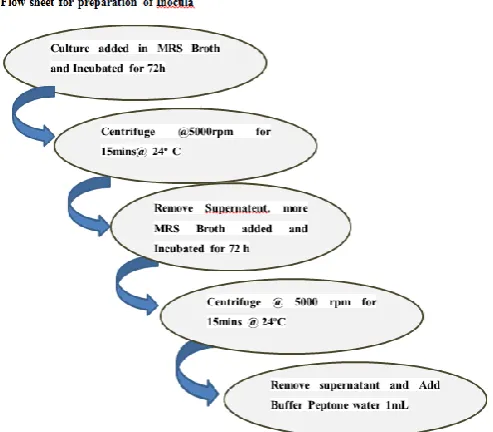
The soy milk was prepared from soybean that were soaked and then blended with water. The soybean extract in water is known as soy milk. Soy milk was fermented with inocula of Lactobacillus acidophilus (ATCC® 4356™) and Lactobacillus casei (ATCC® 393™) (Wang et al., 2006; Ahsan et al., 2015). The details are mentioned in Figure 1 and Figure 2.
Soybean an amusing source of protein, oil, carbohydrates and bioactive moieties make it functional to combat hypercholesterolemia, hyperglycemia, age related bone loss, hormone replacement therapy and anti- cancer. Fermentation is considered as a pragmatic approach to augment bioactive moieties and to eliminate anti-nutritional components in soy bean. The current research was done to compare fermented and non-fermented soy milk by estimating their physicochemical analyses (Fat, protein, ash, SNF, TSS) pH, acidity, antioxidant (DPPH, ABTS and FRAP), rheology and isoflavones content (Genistein and Daidzein). The resultant data justify that process of fermentation boost up antioxidant profile, bioactive moieties becomes more viable and rheological analysis stated that soy milk is non-Newtonian fluid and fermentation increases the viscosity of soy milk by making gel network with LAB and protein. The sensory evaluation also justifies the hypothesis of current research by getting bountiful higher score to fermented soy milk for (color, flavor, aroma, texture and overall acceptability).
ARTICLE INFO
Received 10. 12. 2019 Revised 29. 4. 2020 Accepted 5. 5. 2020 Published 1. 8. 2020
Regular article
Figure 1 Preparation of inocula (Lactobacilus acidophilous and Lactobcilus casei)
Figure 2 Preparation of fermented and non-fermented soy milk
Sensory evaluation of soy milk
The soy milk was sensory evaluated by 9 trained panels. They evaluated soy milk for the parameter of colour, aroma, flavor, texture and overall acceptability (Içier et al., 2015).
Analysis of value added fermented soy milk
Compositional analyses of soy milk
Soy milk was analyzed for its composition (fat, protein, ash, SNF and total solids) by following methods of AOAC (2016).
Determination of pH
The pH of fermented and non-fermented soy milk was measured through electronic digital pH meter (Schott Lab-150) after calibration of equipment electrodes of pH meter were immersed in soy milk and the readings were noted when it was stable AOAC (2016).
Acidity
Acidity of fermented and non-fermented soy milk was determined by titration method as given in AOAC (2016).
Anti-oxidative activities of fermented soy milk
Anti-oxidant capacity of soy milk fermented and non-fermented was checked by following assay of DPPH, FRAP and ABTS. The samples were centrifuged at the
speed of 5000×g for 10 minutes and then clear supernatant was used for evaluation of antioxidant potential. The protocols were followed as described by Pyo et al. (2005) and Subrota et al. (2013).
Rheological analysis
The rheological analysis of fermented and non-fermented soy milk was done to know apparent viscosity by using HR-2 Discovery Hybrid Rheometer and small to large amplitude shear rate tests done by selecting sweep flow method (Maftei et al., 2012).
Quantification for isoflovone by high pressure liquid
chromatography (HPLC)
Standards of genistein and daidzein were procured from Sigma Aldrich by diluting HPLC grade methanol. The sample purity was checked by plotting percentage peak area and final concentrations were adjusted on the basis of these purities. The mobile phase were made as 85% A by diluting 0.1% Acetic acid in water and 15% B by diluting 0.1% acetic acid in acetonitrile). 2.5mg/mL of stock solution was used and 5 point standard curve was prepared between 15.6 and 250 µg/mL (Pyo et al., 2005). Soy milk extract was extracted by using methanol and then shaked on orbital shaker. After that sample were centrifuged at 8000rcf for 20 minutes. After that clear supernatant was filtered by using microfilter and samples were preserved in eppendorf tubes (GolKhoo et al., 2008). The HPLC system Agilent 1100 series a equipped with UV-vis detector (254 nm), column C18 with 100 vial auto samplers at 25oC and the run time was 43 min. Data acquirement and analysis is performed using chem station software.
RESULTS AND DISCUSSION
Compositional analyses of soy milk
Soy milk and fermented soy milk was prepared by using starter culture L. acidophilus and L. casei. Total soluble solids content is an important parameter for beverage evaluation in food industry. TSS in soy milk tells lipids and proteins contents of soy milk and also different other for nutrition value (Rinaldoni et al., 2012). TSS if higher in product they are always cherished by consumer. So, it was necessary to find them in product. The results showed 11.23±0.34% and 10.39±0.34% TSS in fermented soy milk (Table 1).
Table 1 Comparison of fermented and non-fermented soy milk Physicochemical
Parameters
Non-Fermented Soy
milk Fermented soy milk
TSS % 11.53±0.35 10.09±0.31
SNF 9.43±0.23 8.39±0.27
Protein 3.02±0.13 2.65±0.12
Fat (%) 1.94±0.046 1.53±0.037
Ash (%) 0.26±0.34 0.83±0.045
Ph 6.68±0.03 5.23±0.01
Acidity (%) 0.41±0.01 0.93±0.022
fermented soy milk could be due to breakdown of fat molecules into fatty acid and glycerol. Another reason for fat reduction was reported by group of researchers Astuti et al. (2000) they stated that fatty acids were used as an energy source by LAB that may cause lowering fat content in soy milk at the completion of fermentation. The results of current study are in correspondence with Obadina et al. (2013) who has studied the effect of natural fermentation on the chemical and nutritional composition of fermented soy milk. They reported that fermentation showed the fat contents varied between 1.43 to 1.09%.
The inorganic material left after the burning for complete removal of water and organic matter in the food stuff is known as ash. Soy milk is rich in calcium, iron, magnesium and zinc and all of these are important for human body (Pu et al., 2016). The ash content in non-fermented soy milk was 0.26% and 0.83% in fermented soy milk (Table 1). The process of fermentation significantly increases the ash contents. Obadina et al. (2013) suggested that the increase in ash content in fermented soy milk in comparison to non-fermented soy milk could be due to reduction of certain other compounds such as loss of moisture and breakdown of fat and carbohydrates. Moreover, Amanze and Amanze (2011) reported that ash contents in soy yogurt were 0.51± 0.23% and these values are also in association to current study. pH is a negative logarithm of hydrogen ion concentration and it is a measure of acidity or basicity of that system. Acidity is measure of amount of acids in any food sample. The pH has direct influence on biochemical changes during storage that can effects on flavour perception of the product. Acidity correlates with the pH, lower the pH results higher the acidity and vice versa. pH of soy milk was recorded as 6.68% while that of fermented soy milk it was 5.23% (Table 1). The process of fermentation with lactic acid bacteria produces acid that causes decrease in pH and increase in acidity. The result of current investigation is supported by Ismail et al. (2016) and Wang et al. (2009) who have studied fermented soy milk.
Rheology (viscosity)
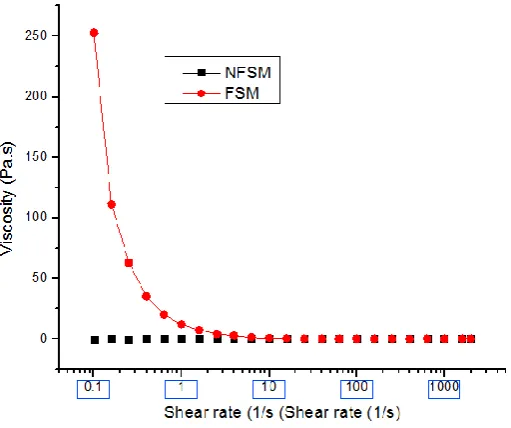
Rheology is a fundamental interdisciplinary science that has been gaining increasing importance in food product quality. Flow properties in foods, such as consistency, thickness, viscosity, viscoelasticity and yield stress, help to characterize macroscopic phenomena that occur before, during and after the deformation of materials. They can improve the flow behavior of fluids, gel stability, particle flocculation, encapsulation and emulsion formation (Charchoghlyan and Park, 2013). Therefore, soy milk fermented with LAB provides an approach for improving aroma and flavor. They also modulated the textural properties of soy milk which improved the apparent viscosity (Champagne et al., 2009; Yeo and Liong, 2010). The results for the viscosity of soy milk decreased sharply with the increase of shear rate, which indicated that these fermented products were shear thinning fluid and the product is non-Newtonian (Figure 3).
Figure 3 Variation in viscosity of fermented and non-fermented soy milk at different shear rate
The viscosity of soy milk increase due to coagulation of soy protein molecules and development of well strengthened structure. The increase in shear rate effects on dispersion of water molecules and ability of gel to retain water molecules within cells effects badly. That causes increase in shear rate and decrease of viscosity. Likewise, do Espirito-Santo et al. (2014) support the results of recent finding. They studied on soy milk and reported that the apparent viscosity increased significantly as the result of fermentation.
Antioxidant Analysis
Overall the study evaluated that antioxidant potential of fermented soy milk was augmented in comparison to non-fermented soy milk. Antioxidant status was checked by DPPH, ABTS and FRAP. DPPH is a stable free radical when DPPH encounters a proton-donating substance such as an antioxidant, the radical is scavenged and the absorbance is reduced (Yang et al., 2008) and this radical scavenging activity is visually noticeable as a change in the color of DPPH, i.e. from purple to yellow, in the presence of an antioxidant. The DPPH results were 27.32% in non-fermented soy milk while higher status was observed in fermented soy milk as 59.23% (Table 2). Likewise FRAP measures the ferric reducing ability of the samples, in acidic medium forming an intense blue color as the ferric tripyridyltriazine (Fe3+-TPTZ) complex is reduced to the ferrous (Fe2+) form. FRAP recorded in non-fermented soy milk was 0.31 mmolFe2+/L while that in fermented soy milk it was increased upto 0.75 mmolFe2+/L (Table 2). ABTS inhibition results were such as 58.91 % in non-fermented soy milk while that of fermented soy milk it was 89.69% (Table 2).
Table 2 Comparison of Antioxidant and Isoflavones in non-fermented and fermented soy milk
Antioxidant analyses NFSM FSM
DPPH (%) 27.32±0.52 59.23±1.20
ABTS (%) 58.91±1.82 89.69±2.67
FRAP(mmolFe2+/L) 0.32±0.007 0.75±0.017 Isoflavones
genistein (ppm) 4.45±0.18 8.97±0.40 daidzein (ppm) 13.86±0.61 27.38±1.28
The present results are in conformity with Abubakr et al. (2012) they checked antioxidant activity of lactic acid bacteria fermented skim milk. The current research is in assenting with findings of Subrota et al. (2013), who have studied the antioxidative activity (DPPH, FRAP and ABTS) in fermented soy milk. After that, Embiriekah et al. (2016) studied the selection of lactobacillus strains for improvement of antioxidant activity of different soy, whey and milk protein drinks checked by DPPH and FRAP. They also noticed that antioxidant status was augmented in fermented soy milk. It is concluded that lactic acid fermentation may constitute a promising route to improve the antioxidants ability and nutritional qualities of processed soy milk. It could be said that enzymatic system of L. casei and L. acidophilus much efficiently hydrolyzes the soy protein sources leading to the production of significantly higher antioxidant activity.
Sensory evaluation of soy milk
The sensory evaluation is a critical key tool to process this all. Sensory evaluation of soy milk is an important step to know the consumer perception about value added product. Soy milk was evaluated by using 9 point hedonic scale at the four intervals for parameters i.e. color, appearance, aroma, flavor, taste and overall acceptability. The results are depicted by graphical representation in Figure 4 and it is clearly showing higher score for all sensory parameters in fermented soy milk.
Figure 4 Sensory evaluation of fermented and non-fermented soy milk
In any of food products, color and appearance are the main attributes that influence the consumer’s opinion and perceptions of taste, flavor, and acceptance. These are the two foremost factors that motivate the consumers to the long-lasting purchase of such foods (Granato et al., 2010). Generally speaking, consumers of soy milk expect the product to have a pale yellow color. Therefore, commercial manufacturers tend to maintain this natural color of soybean without adding color agent. In this research, natural soybeans were used and no color agent was added. Fermentation of soy milk offers chance to vary sensory features
0 1 2 3 4 5 6 7 8 9 10
Color Texture Aroma Flavour Overall acceptability NFSM FSM
S
co
re
of soy-based foods. It gives peculiar aroma due to lactic acid production which dramatically contributes to flavor of products. The results of recent findings for aroma were consistent with Falade et al. (2015) who also probed the mean scores of sensory attributes of soy and bambara plain yoghurts. Likewise, Ma et al. (2014) studied the soy milk and reported that soy milk aroma parameter had significant variances showing that environmental conditions plays a vital role. Flavor may influence food market habits, and consumer’s judgement.The product acception is mainly depends on flavor of any product than consumer will goes toward health benefits. The soy natural flavor is beany and astringent that did not liked by consumers. So, soy functional food is mainly targeting for flavor development. Fermentation of soy offers chance to vary sensory features of soy-based foods. It gives peculiar aroma from lactic acid bacteria which dramatically produces flavor of products. Further, process of fermentation with lactobacilli assists in flavor modification. It will decrease levels of volatile that causes natural beany flavor in soy products (Blagden and Gilliland, 2005). The results showed fermentation was helpful in increasing flavor score as compared to non-fermented soy milk. It has been stated that lactic acid increases the nutritional value of fermented products by engendering flavor and structure (Kun et al., 2008). Another group of scientists Khiralla et al. (2009) has studied on probiotic fermented soy milk and found significant enhancements in the odor and flavor due to using the probiotics in fermentation of soy milk comparing with the unfermented soy milk. Ara et al. (2002) stated that this may be due to organic acids and flavoring agents produced by probiotic bacteria in soy milk. LAB can influence on the metabolism of carbohydrates and proteins which improve the nutritional and final sensory quality of the fermented products. Moreover, fermentation in soy milk improves the sensory quality of final product by metabolizing n-hexanal which causes beany flavor in soy milk. Fermentation also decreases the activity of galacto-oligosaccharides that improves the digestibility of fermented soy milk (Mühlhans et al., 2015). Overall acceptability of any product plays a significant role in product accpetion rate. The quality of any product is mainly based on sensory properties and among which overall acceptability is top of all. The industry always develops any of the products after testing their color, aroma, texture, flavor and overall acceptability. So, the fermented soy milk was also passed from all these features for its commercialization and consumer acceptance (Granato et al., 2010).
Quantification for isoflovone by high pressure liquid
chromatography (HPLC)
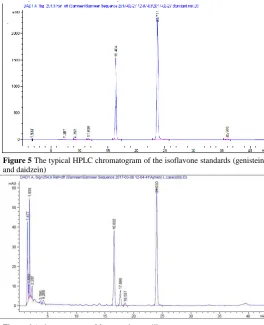
Bioactive peptides are inactive chains of 2-20 amino acids and their activity depends on amino acid composition, sequence of amino acids and chain length. Isoflavones are bioactive peptides that can improve functional properties of fermented food, having different therapeutic values and act as an antioxidant (Sanjukta et al., 2015), antihypertensive (Zhang et al., 2006), anti-tumor, antidiabetic (Kwon et al., 2011) and are also being recognized to preclude atherosclerosis. This allows them to act as an alternate to synthetic drugs. The administration of fermentation in soy milk is effective to enhance the aglycones isoflavones in soy milk that include genistein and daidzein that can absorb more efficiently in gastrointestinal tract. The current research reported that genistein contents in non-fermented soy milk were reported as 4.45 ppm while that fermentation enhanced the value upto 8.97 ppm (Table 2). Likewise, daidzein contents were 13.86 while in fermented soy milk it was 27.38 ppm (Table 2). The current data pertaining to daidzein concentration was in accordance with work of Cheng et al. (2011). They observed black soybean milk fermented for six days by using Rhizopus oligosporous as a starter culture and reported concentration of genistein was 18.9±0.6 aglycone/mM and upon complete fermentation it was 27.8±1.3 aglycone/mM. The increment in the concentration of bioactive isoflavone aglycones through microbial β glucosidases is an important step in enhancing the potential clinical effectiveness of soy-based foods. The conclusion drawn from the present study is the increase in antioxidant activity of fermented soy milk is due to the significant bioconversion of the glucosidic form of isoflavones (genistin and daidzin) into their bioactive aglyconic form of isoflavones (genistein and daidzein) Rekha and Vijayalakshmi (2008). Isoflavone glycosides in soy milk converted to isoflavone aglycones by lactic acid fermentation because of cleavage of glycosyl bond by microbial fermentation. Fermented soy milk is a superior functional food modulating lipid metabolism and many other benefits. Although soy milk isoflavones seem to be 85% degraded in the intestine, the bioavailability, especially of daidzein, may be sufficient to exert some health-protective effects Pyo et al. (2005). The present study demonstrated the fermentation characteristics of two pure starter cultures Lactobacillus acidophilus and Lactobacillus casei in soy milk being probiotic and inducing the intestinal health, these bacteria could be used to alter the biological activity of soy milk by transforming the predominant concentration of isoflavone glucosides to bioactive aglycones. Overall, Lactobacillus casei and L. acidophilus showed adequate technology characteristics and abundant potential for further possible application in the development of high viscosity fermented soy milk (Figure 5 and 6).
Figure 5 The typical HPLC chromatogram of the isoflavone standards (genistein and daidzein)
Figure 6 A chromatogram of fermented soy milk
CONCLUSION
The conclusion drawn from this research indicated the potential of soy milk fermented with L. acidophilus and L. casei is characterized as paramount than non-fermented soy milk due to its superior physicochemical and compositional results, higher antioxidant activity based on DPPH, ABTS and FRAP, rheology showed high viscosity of fermented soy milk, sensory evaluation showed more acceptability and bioactive component (genistein and daidzein) were also higher. So, it can be stated that fermented soy milk can be served as complementary and functional diet to curb health related maladies.
REFERENCES
Abubakr, M.A., Hassanand, Z., & Imdakim, M.M.A. (2012). Antioxidant activity of lactic acid bacteria (LAB) fermented skim milk as determined by 1,
1-diphenyl-2-picrylhydrazyl (DPPH) and ferrous chelating activity (FCA). African
Journal of Microbiology Research, 6, 6358-6364.
Ahsan, S., Zahoor, T., Hussain, M., Khalid, N., Khaliq, A., Umar, M. (2015). Preparation and quality characterization of soy milk based non-dairy ice
cream. International Journal of Food and Allied Science, 1, 25-31.
https://doi.org/10.21620/ijfaas.2015125-31 .
Amanze, K.O., & AMANZE, J.O. (2011). Quality evaluation of yoghurt from
cow milk, soy milk and cow/soy milk. Journal of Research in National
Development, 9, 44-47.
Ara, K., Yoshimatsu, T., Ojima, M., Kawai, S., OKUBO K. (2002). Effect of new lactic acid fermentation on sensory taste of fermented soy milk. JPN Soc. Food Science.
Astuti, M., Andreanyta, M., Fabien, S.D., & MARK, L. (2000). Tempe, a nutritious and healthy food from Indonesia. Asia Pacific Journal of Clinical
Nutrition, 9, 322-325.https://doi.org/10.1046/j.1440-6047.2000.00176.x .
Bian, X., Muhammad, Z., Evivie, S.E., Luo, G.W., & XU. M. (2016). Screening
of antifungal potentials of Lactobacillus helveticus KLDS 1.8701 against
spoilage microorganism and their effects on physicochemical properties and shelf life of fermented soybean milk during preservation. Food Control, 66,
183-189. https://doi.org/10.1016/j.foodcont.2016.02.004 .
Blagden, T.D., & Gilliland, S.E. (2005). Reduction of levels of volatile
components associated with the “beany” flavor in soy milk by Lactobacilli and
Streptococci. Journal of Food Science, 70, 186-189.
https://doi.org/10.1111/j.1365-2621.2005.tb07148.x .
Charchoghlyan, H., Park, H.D. (2013). Characteristics of a novel bacterial
polysaccharide consisted of glucose and mannose as major components. Food
Cheng, K.C., Lin, J.T., & LIU W.H. (2011). Extracts from fermented black soybean milk exhibit antioxidant and cytotoxic activities. Food Technology, 49, 111-117.
Embiriekah, S., Bulatović, M., Borić, M., Zarić, D., Arsić, S., & RAKIN, M.
(2016). Selection of Lactobacillus strains for improvement of antioxidant activity
of different soy, whey and milk protein substrates. Journal of Hygienic
Engineering and Design, 16, 64-69.
Falade, K.O., Ogundele, O.M., Ogunshe, A.O, Fayemi, O.E., & OCLOO, F.C. (2015). Physico-chemical, sensory and microbiological characteristics of plain
yoghurt from bambara groundnut (Vigna subterranea) and soybeans (Glycine
max). Journal of Food Science and Technology, 52, 5858-5865.
https://doi.org/10.1007/s13197-014-1657-3 .
GolKhoo, S., Ahmadi, A.R., Hanachi, P., Barantalab, F., & VAZIRI M. (2008). Determination of daidzein and genistein in soy milk in Iran by Using HPLC
analysis method. Pakistan Journal of Biological Sciences, 11, 2254-2258.
https://doi.org/10.3923/pjbs.2008.2254.2258 .
Granato, D., Masson, M.L., & FREITAS, R.J.S.D. (2010). Stability studies and shelf life estimation of a soy-based dessert. Food Science and Technology, 30,
797-807. https://doi.org/10.1590/s0101-20612010000300036 .
Içier, F., Gündüz., G.T., Yılmaz., B., & MEMELI. Z. (2015). Changes on some quality characteristics of fermented soy milk beverage with added apple juice.
Food Science and Technology, 63,57-64.
https://doi.org/10.1016/j.lwt.2015.03.102 .
Ismail, M. M., Tabekha, M.M., EL-Boraey, N.A., Gehan, A.A., & HODA, F.A. (2016). Chemical composition, microbial properties and sensory evaluation of
yoghurt made from buffalo, cow and soy milk mixtures. Journal of Food Dairy
Science, 7, 299- 306. https://doi.org/10.21608/jfds.2016.43011 .
Jayachandran, M., & XU, B. (2019). An insight into the health benefits of
fermented soy products. Food Chemistry, 271, 362-371.
https://doi.org/10.1016/j.foodchem.2018.07.158 .
Khiralla, G.M., Rasmy, N.M.H., El-Malky, W.A, & IBRAHIM, M.T. (2009). The role of fermented soy milk with potential probiotic properties in the treatment of diarrhea in young rats. Pakistan Journal of Biotechnology, 6, 89-100.
Kun, Sz., Rezessy-Szabó, J.M., Nguye, Q.D., & HOSCHKE, A. (2008). Changes of microbal population and some components in carrot juice during fermentation
with selected Bifidobacterium strains. Process Biochemistry, 43, 816-821.
https://doi.org/10.1016/j.procbio.2008.03.008 .
Kwon, D.Y., Hong, S.M., Ahn, I.S., Kim, M.J., Yang, H.J., & PARK S. (2011). Isoflavonoids and peptides from meju, long-term fermented soybeans, increase insulin sensitivity and exert insulinotropic effects in vitro. Nutrition, 27, 244-252.
https://doi.org/10.1016/j.nut.2010.02.004 .
Li, L., Hur, M., Lee, J.Y., Zhou, W., Song, Z., Ransom, N., Demirkale, C.Y., Nettleton, D., Westgate, Arendsee, M.Z., IYER, V. (2015), December. A systems
biology approach toward understanding seed composition in soybean. BMC
Genomics, 16(3), 1-9.
Ma, Y., & HUANG, H. (2014). Characterisation and comparison of phenols, flavonoids and isoflavones of soy milk and their correlations with antioxidant
activity. International Journal of Food Science and Technology, 49, 2290-2298.
https://doi.org/10.1186/1471-2164-16-s3-s9 .
Maftei, N.M., Dinica, R., & BAHRIM, G. (2012). Functional characterisation of
fermented beverage based on soy milk and sea buckthorn syrup. Food
Technology, 36, 81.
Medic, J., Atkinson, C., & HURBURGH, C.R. (2014). Current knowledge in
soybean composition. Journal of American Oil Chemistry, 91(3), 363-384.
https://doi.org/10.1007/s11746-013-2407-9 .
Mühlhansová, A., Sluková, M., Schulzová, V., & PLOCKOVÁ, M. (2015).
Fermentation of soy milk by yoghurt and bifidobacteria strains. Czech Journal of
Food Science, 33, 313-319.https://doi.org/10.17221/115/2015-cjfs .
Obadina, A.O., Akinola, O.J., Shittu, T.A., & BAKARE, H.A. (2013). Effect of natural fermentation on the chemical and nutritional composition of fermented
soy milk Nono. Nigerian Food Journal, 91-97.
https://doi.org/10.1016/s0189-7241(15)30081-3 .
Pu, F., Chen, N., & XUE, S. (2016). Calcium intake, calcium homeostasis and
health. Food Science and Human Wellness, 5,
8-16. https://doi.org/10.1016/j.fshw.2016.01.001 .
Pyo, Y.H., Lee, T.C., & LEE, Y.C. (2005). Enrichment of bioactive isoflavones in soy milk fermented with β-glucosidase producing lactic acid bacteria. Food
Research International, 38,
551-559. https://doi.org/10.1016/j.foodres.2004.11.008 .
Rai, A.K., Sanjukta, S., & JEYARAM, K. (2015). Production of angiotensin I converting enzyme inhibitory (ACE-I) peptides during milk fermentation and
their role in reducing hypertension. Critical Review Food Science and Nutrition,
57, 2789-2800.https://doi.org/10.1080/10408398.2015.1068736 .
Rekha, C.R., & Vijayalakshmi, G. (2008). Biomolecules and nutritional quality of soy milk fermented with probiotic yeast and bacteria. Biotechnology Applied
Biochemistry, 151, 452-463.https://doi.org/10.1007/s12010-008-8213-4 .
Rinaldoni, A.N., Campderrós, M.E., & PADILLA, A.P. (2012). Physico-chemical and sensory properties of yoghurt from ultra filtreted soy milk
concentrate added with inulin. LWT, 45, 142-147.
https://doi.org/10.1016/j.lwt.2011.09.009 .
Sanjukta, S., Rai, A.K., Muhammed, A., Jeyaram, K., & TALUKDAR, N.C. (2015). Enhancement of antioxidant properties of two soybean varieties of Sikkim Himalayan region by proteolytic Bacillus subtilis fermentation. Journal
of Functional Food, 14, 650-658.https://doi.org/10.1016/j.jff.2015.02.033 .
Singh, B.P., Vij, S., & HATI, S. (2014). Functional significance of bioactive
peptides derived from soybean. Peptides, 54, 171-179.
https://doi.org/10.1016/j.peptides.2014.01.022 .
Subrota, H., Shilpa, V., Brij, S., Vandna, K., & SURAJIT, M. (2013). Antioxidative activity and polyphenol content in fermented soy milk
supplemented with WPC-70 by probiotic Lactobacilli. International Food
Research Journal, 20, 2125-2131.
Wang, Y.C., Yu, R.C., & CHOU, C.C. (2006). Antioxidative activities of
soymilk fermented with lactic acid bacteria and bifidobacteria. Food
Microbiology, 23, 128-135.https://doi.org/10.1016/j.fm.2005.01.020 .
Xu, L., Du, B., & XU B. (2015). Food; A systematic, comparative study on the beneficial health components and antioxidant activities of commercially
fermented soy products marketed in China Chemistry. Food Chemistry, 174,
202-213.https://doi.org/10.1016/j.foodchem.2014.11.014 .
Yang, B., Zhao, M., Shi, J., Yang, N., & JIANG, Y. (2008). Effect of ultrasonic treatment on the recovery and DPPH radical scavenging activity of
polysaccharides from longan fruit pericarp. Food Chemistry, 106, 685-690.
https://doi.org/10.1016/j.foodchem.2007.06.031 .
Yang, M., & Li, L. (2010). Physicochemical, textural and sensory characteristics of probiotic soy yoghurt prepared from germinated soybean. Food Technol.
Biotechnology, 48, 490-496.
Yeo, S.K., & Liong M.T. (2010). Effect of prebiotics on viability and growth characteristics of probiotics in soy milk. Journal of the Science of Food and
Agriculture, 90, 267-275. https://doi.org/10.1002/jsfa.3808 .
Zhang, J.H., E. Tatsumi, Dingand, C.H., & LI, L.T. (2006). Angiotensin I-converting enzyme inhibitory peptides in douchi, a Chinese traditional fermented
soybean product. Food Chemistry, 98, 551-557.