Current Issues
Received 01/26/13 Revised 05/29/13 Accepted 06/22/13 DOI: 10.1002/j.1556-6978.2014.00048.x
Gatekeeping During Admissions:
A Survey of Counselor Education Programs
Jacqueline M. Swank and Sondra Smith-AdcockWithin counselor preparation, gatekeeping begins during the admission process. This article focuses on the prevalence of screening procedures used in master’s- and doctoral-level counselor educator programs (N = 79) accredited by the Council
for Accreditation of Counseling and Related Educational Programs. Addition -ally, programs’ selection and matriculation processes are discussed along with implications for counselor education and supervision.
Keywords: counselor education, gatekeeping, admissions, screening
The admission process in counselor education is a crucial part of the ethi-cal and legal responsibilities counselor educators embrace as gatekeepers
for the counseling profession (American Counseling Association [ACA], 2005; Council for Accreditation of Counseling and Related Educational Programs [CACREP], 2009). Scholars have defined gatekeeping as counsel -ors’ responsibility to intervene with counseling professionals who “engage in behavior that could threaten the welfare of those receiving their services” (Foster & McAdams, 2009, p. 271). Specifically within the academic environ-ment, counselor educators serve as gatekeepers in selecting, retaining, and remediating students who have the potential to become effective, ethical counselors (Ziomek-Daigle & Christensen, 2010).
The ACA Code of Ethics (ACA, 2005) includes a general statement regard -ing counselor educators’ gatekeep-ing responsibility without specifically
addressing the admission process. However, the CACREP (2009) Standards
identify three key areas (i.e., academic aptitude, career goals, and ability to form interpersonal relationships) for interviewers to consider when selecting individuals for a master’s-level counseling program. In addition,
CACREP identifies another five areas (i.e., doctoral-level academic aptitude; professional experience; professional fitness; communication skills; and
scholarship, leadership, and advocacy potential) to consider in the
selec-tion of doctoral students. Although ACA and CACREP have articulated the
ethics of gatekeeping and standards for selecting students, the full extent to which counselor educators use these guidelines in selecting students for their programs remains unclear.
Jacqueline M. Swank and Sondra Smith-Adcock, School of Human Development and Orga-nizational Studies in Education, University of Florida. Correspondence concerning this article should be addressed to Jacqueline M. Swank, Counselor Education Program, School of Human Development and Organizational Studies in Education, University of Florida, 1215 Norman Hall, PO Box 117046, Gainesville, FL 32611 (e-mail: [email protected]).
The responsibility of counselor educators to act as gatekeepers for the pro-fession during the selection process is essential to screen out applicants with
deficiencies who may cause harm to future clients (Nagpal & Ritchie, 2002).
Deficiencies in effective professional functioning may include inadequate skills and abilities or a lack of characteristics that are considered crucial for
counseling professionals (Henderson & Dufrene, 2012; Homrich, 2009). It
is estimated that students with deficiencies may account for as much as 10%
of all students in counseling programs (Gaubatz & Vera, 2002, 2006). There -fore, it is crucial for counselor preparation programs to be aware of research related to the development of effective counselors and establish evaluation procedures for assessing these skills and qualities during the admission process.
Researchers have asked counselor educators to identify skills and qualities
that are crucial to assess in applicants during the screening process. The
identified areas include both academic aptitude (Nagpal & Ritchie, 2002;
Ziomek-Daigle & Christensen, 2010) and nonacademic characteristics (Duba,
Paez, & Kindsvatter, 2010; Halinski, 2009; Nagpal & Ritchie, 2002; Pope & Kline, 1999; Wheeler, 2000; Ziomek-Daigle & Christensen, 2010). Academic
aptitude refers to an individual’s potential to perform scholastically, which is generally measured using academic performance criteria (e.g., grade point
average [GPA], test scores). Nonacademic characteristics refer to qualities that characterize an individual’s interpersonal interaction style (Ziomek-Daigle &
Christensen, 2010), which are usually measured during interview activities.
Researchers have also examined a variety of methods that counselor educa -tors use to evaluate applicants’ academic skills and personal characteristics
(Bradey & Post, 1991; Leverett-Main, 2004; Perusse, Goodnough, & Noel, 2001; Walfish & Moreira, 2005; Ziomek-Daigle & Christensen, 2010). Com
-mon methods used to evaluate applicants include (a) standardized tests, (b)
GPA, (c) letters of recommendation, (d) interviews, (e) writing samples,
(f) personal statement, and (g) experience. However, additional research
is needed that more exhaustively examines the process used in counselor education programs to select students. This includes determining how the admission process of master’s and doctoral programs differs and, for programs that conduct interviews, what specifically occurs before, after, and during the interviews to guide the selection of qualified applicants. Thus, the purpose of this study is to increase knowledge within the counselor education com-munity by describing fully the screening and selection process of master’s and doctoral applicants. One research question was posed in this study: What are
the criteria and procedures used by a national sample of CACREP-accredited
counseling programs at the master’s and doctoral levels to screen applicants?
Method
Participants and Procedure
The targeted population consisted of counselor educators at CACREP-accredited counselor preparation programs throughout the United States.
surveys (33% response rate). Every participant was from a different institu
-tion, representing 36 states. Twenty-one (27%) programs were classified as private and 58 (73%) were public, which closely represents the percentage of CACREP-accredited private (28%) and public (72%) institutions. Carnegie classifications included 12 (15%) very high research, 12 (15%) high research, 10 (13%) doctoral, 18 (23%) master’s large, 17 (22%) master’s medium, eight (10%) master’s small, and two (3%) baccalaureate. (Percentages do not total 100 because of rounding.) Fifty-nine institutions (75%) had master’s-only programs, which represented 30% of all CACREP-accredited master’s programs (CACREP, 2012). Twenty institutions (25%) had both master’s- and doctoral-level programs, which represented 35% of all CACREP-accredited
doctoral programs. In regard to accredited program specialty area, there
were 69 (87%) programs with a clinical mental health specialty area; three (4%) with a career specialty area; 15 (19%) with a marriage, couple, and family specialty area; 70 (89%) with a school counseling specialty area; nine (11%) with an addictions specialty area; and two (3%) with a student affairs
and college counseling specialty area.
Prior to initiating the study, we obtained institutional review board approval.
Counselor educators from CACREP-accredited programs throughout the
country were eligible to participate in the study. We attempted to identify e-mail addresses for counselor educators at all institutions that have at least
one CACREP-accredited counseling program, which resulted in contact
information for 241 participants. We e-mailed one faculty member at each of the 241 institutions inviting him or her to participate in the study. Within programs where we knew faculty members, we contacted these individuals. Within the other programs, we contacted the program coordinator listed on
the CACREP website or randomly selected another faculty member when
we were unable to locate contact information for the program coordinator. Potential participants were sent an e-mail message with the link to the ques-tionnaire, which was located on CounselingTechnology.net. We chose a survey method, instead of interviews or focus groups used in some previous studies
(Leverett-Main, 2004; Nagpal & Ritchie, 2002; Ziomek-Daigle & Christensen, 2010), to increase the sample size and generalize the results to CACREP-accredited counselor education programs throughout the United States. Additionally, we
asked participants to include their contact information if they were willing to provide more information in a follow-up telephone call. The e-mail message also included a request to forward the e-mail to another representative of their program, if they were unable or unwilling to complete the questionnaire. Pro-gram representatives who did not respond were sent a follow-up e-mail message approximately 1 month following the initial request. Participants were asked to report the name of their institution to avoid multiple responses from the same institution. This information was deleted prior to data analysis.
Instrument
A 60-item questionnaire was constructed by the first author on the basis of the existing literature and in consultation with other counselor educators
about screening procedures. The questionnaire included two sections: one focusing on master’s programs and the other on doctoral programs. There-fore, representatives from programs that did not have doctoral programs completed only the first half of the questionnaire. Participants were asked to indicate which listed screening procedures they used during the admission
process (e.g., standardized tests, recommendation letters) and to describe
the specific cutoff scores and prompts used in the applicable areas. They were also given the opportunity to write in additional procedures that were used that were not listed on the survey. Furthermore, participants were asked to describe the interview process (i.e., sample questions, experiential exercises), as applicable, and the decision-making process for selecting ap-plicants. Participants were also asked demographic questions that included (a) institution (removed before analysis), (b) state, (c) Carnegie classifica-tion, (d) public or private designaclassifica-tion, (e) program levels, and (f) program specialty areas.
Results
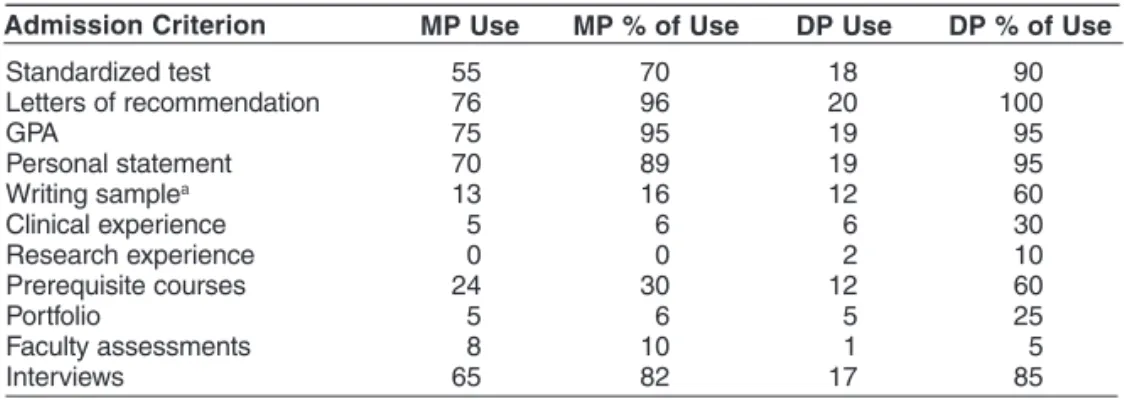
Table 1 presents participants’ reported admission criteria, procedures, and policies, which involved those included as application documents, those included as part of an interview or assessment, and those related to selec-tion and matriculaselec-tion processes.
Application Documents Reviewed
There were nine primary screening foci that were reviewed within the
admission materials provided by the applicants: (a) standardized tests, (b)
letters of recommendation, (c) GPA, (d) personal statement, (e) writing sample, (f) clinical experience, (g) research experience, (h) prerequisite courses, and (i) portfolio. Additionally, in an open-ended response item, participants were asked to include any additional screening procedures they
Table 1
Prevalence of admission Criteria and Procedures for Master’s- and Doctoral-level Programs admission Criterion Standardized test Letters of recommendation GPA Personal statement Writing samplea Clinical experience Research experience Prerequisite courses Portfolio Faculty assessments Interviews
Note. MP = master’s program; DP = doctoral program; GPA = grade point average.
aMaterials submitted with the application packet, not writing exercises conducted during
the interview. 55 76 75 70 13 5 0 24 5 8 65
MP Use MP % of Use DP Use DP % of Use
70 96 95 89 16 6 0 30 6 10 82 18 20 19 19 12 6 2 12 5 1 17 90 100 95 95 60 30 10 60 25 5 85
used that were not included on the provided list. Two additional foci were added within this category (résumé and background check). In addition to reporting the occurrence of screening methods, participants were also asked to provide information about cutoff scores, prompts, rating scales,
or other specific procedures. Unless noted, the standards discussed in the
following paragraphs represent information reported from both master’s and doctoral programs.
In regard to the requirement of standardized tests, the Graduate Record Examination (GRE) was the most commonly reported; however, the Miller
Analogies Test was also accepted in some programs. Cutoff scores for the
GRE were generally around 1,000 (old scale) or 300 (new scale); however,
this benchmark varied in some programs depending on the applicant’s GPA. Programs requiring letters of recommendation generally (approximately 90%) required three letters from professional references. The minimum
GPA ranged from 2.4 to 3.5 for master’s applicants and from 3.0 to 3.5 for
doctoral applicants.
Of the master’s-level programs that asked applicants to provide personal statements, approximately half of them included prompts focused on career goals, and approximately 20% focused on an applicant’s reason for wanting to pursue a degree in counseling. Programs also included prompts focused on volunteer/professional experience, congruence with the program’s mission, or a combination of different prompts. According to the doctoral program participants (70%) reporting the type of prompt used, doctoral programs provided applicants with writing prompts similar to those used in master’s programs. Writing samples were seldom required for admission packets to master’s degree programs. At the doctoral level, however, writing samples included providing academic papers (e.g., counseling theory paper, advocacy paper), publications, and/or grant proposals.
Prior clinical experience was required for only 6% of master’s programs and encompassed volunteer experience or 6 months to 1 year of experience in a counseling-related area. Other programs reported that clinical experi-ence was considered but not required for admission. In doctoral programs, required clinical experience ranged from 1 to 2 years, and licensure or
certification was suggested for some programs. Research experience was
not reported as a requirement for any of the master’s programs and was
required only by two doctoral programs. However, specific information was
not provided regarding the amount of research experience required by these programs. Prerequisite courses required at the master’s level ranged from one course in various subjects (e.g., psychology, life-span development) to 24 credit hours in behavioral/social science. Additionally, half of the pro-grams requiring prerequisite courses required a statistics course. Doctoral programs requiring prerequisite courses focused on the completion of the
CACREP core master’s-level courses.
Limited information was provided about the portfolio required for admis-sion to some master’s-level programs. At the doctoral level, the portfolio
CACREP-related project. Additional information was not provided to further clarify
the CACREP-related project requirement. In summary, these programs used
a variety of documents as part of an application packet to provide useful information to assist them in making informed decisions regarding the admission of applicants.
Admission Interviews and Assessments
Information was also gathered about procedures that extended beyond the submission and review of the application packet, which included two primary areas: (a) faculty-administered assessments and (b) interviews.
Faculty-administered assessments consisted of the Carkhuff Rating Scale, an
interpersonal skills assessment, and instruments developed by the individual programs, which were administered during interviews. When asked what they would change about the admission process, five counselor educators acknowledged the desire to administer additional assessments, including a
personality assessment; however, litigation was a concern. Program represen -tatives discussed the importance of addressing this issue with legal counsel at the university prior to administering assessments.
Interviews were identified as part of the admission process in 82% of the master’s programs and 85% of the doctoral programs. Among master’s-level
program participants reporting interview type (n = 54), 41% reported indi
-vidual interviews, 35% reported group interviews, and 24% reported both
individual and group interviews. Individual interviews were reported by
48%, group interviews by 7%, and both individual and group interviews by 45% of the doctoral-level program participants reporting interview type (n
= 14). The most common interview length for master’s-level programs was reported as half day, and the two most common lengths for doctoral-level programs were half day and full day (both 41%). Participants were also asked to describe the activities that occurred during the interview. The responses
were organized into seven categories: (a) information session, (b) questions,
(c) writing samples, (d) experiential exercises, (e) assessments (described earlier), (f) informal meetings, and (g) miscellaneous.
Information session. The information session was described as a time to
provide information about the program in a large group or in small groups according to program specialty area. This portion of the interview usually included a question and answer session as well. Some participants reported that this process was conducted by faculty, whereas others reported that stu-dents facilitated the process. This process was described similarly in master’s and doctoral programs.
Questions. Participants reported asking applicants questions individually, as
well as in small groups and assessing group interactions (e.g., the ability of group members to reach consensus). Another small group strategy involved each interviewer selecting a question to ask all the applicants and then having the faculty members rotate through each small group of applicants. Across programs, the questioning portion of the interview was structured in different formats and focused on different purposes.
One participant described questions used by his or her program to assess the competencies outlined in The Professional Counselor: Portfolio, Competencies,
Performance Guidelines, and Assessment (Engels, Barrio Minton, Ray, & Associates, 2010). Other participants described various questions that were categorized
into six areas: (a) general/warm-up, (b) self-description (skills/experiences), (c) reasons for entering counseling (past, present, future), (d) counseling specific (scenarios), (e) academic related, and (f) document review. Also, one participant described a series of questions related to examining personal biases. Within the series of questions, applicants are asked to share an area
of personal bias, when they became aware of it, how it might influence their
thoughts and feelings when working with this group, and how they might address their own biases to become more tolerant of others’ viewpoints. In interviews for doctoral programs, additional questions were asked about ap-plicants’ interest in research. See Table 2 for sample questions in each area.
Writing samples. In describing specific aspects of the interview process, 16
participants reported using writing samples with varied prompts (e.g., respond to a case study, write a personal statement of cultural awareness, review or
reflect on a journal article, discuss trends in the counseling profession). In this activity, applicants are given 30 to 60 minutes to write and the writing
samples are assessed for content, writing skills, and American Psychological Association (2010) formatting. Table 2 Interview Questions Question Category General/warm-up Self-description (skills/experiences)
Reason for entering counseling (past, present, future)
Counseling specific (scenarios)
Academic related
Document review
Sample Questions
Books or movies that have special meaning Successes and challenges
Counseling related/helper experience
Strengths and weaknesses (self and others’ view) How you cope with stress/self-care in the program Experience with people from diverse backgrounds Interpersonal skills
How others (supervisor/student/client) describe you Self-responsibility (internal locus of control) Feedback (themes, response, changes you made) Risk taking/flexibility/boundaries
Why counseling?
What experiences influenced your decision? Why this program?
What will you contribute?
Ideal job after graduation in 5–10 years Greatest challenge for you as a future counselor What to do with a challenging client you cannot refer Diverse client scenarios
What type of student are you?
Greatest strength/challenge as a student Questions about application materials
Experiential exercises. Although 38% of the participants reported using
experiential activities during the interview process, only 4% described spe-cific activities. These activities included engaging in problem-solving tasks, role-playing, interviewing another candidate and introducing the person to the group, developing a topic and format for a presentation at a counseling
conference, participating in an individual 5-minute public speaking exercise,
taking part in a group discussion about characters in a movie (e.g., Whale
Rider; Barnett, Hübner, Sanders, & Caro, 2002) focusing on cultural con
-siderations and conceptualizing the characters as if they were clients, and
taking part in a group viewing of a poor counseling session (but not being told that it is problematic) and discussing the session afterward.
Participants reported that during experiential exercises, interviewers evalu-ated the applicants through the observation of verbal and nonverbal skills, engagement with others, professional dispositions, self-critique, and ethical thinking and behavior. In addition, some interviewers offered applicants feedback and then evaluated their openness to the feedback. Applicants were also offered the opportunity to evaluate one another in some programs. Taken together, the use of experiential activities provided an opportunity for program faculty to evaluate applicants across various domains (e.g.,
interpersonal communication, speaking ability, conceptualization skills,
multicultural competencies).
Informal meetings. Participants (8%) also discussed various informal meetings
that took place during the interview process. A variety of individuals were included in these meetings, including program faculty, students, alumni, and department and college-wide faculty and staff. Additionally, the meeting encompassed a variety of activities, including meals and receptions.
Miscellaneous. Participants also described other activities that occurred
during interviews. Some activities were related to the program or college (e.g., tour of the department, opportunity to sit in on a class). Other activi-ties focused on general aspects of the university (e.g., meeting financial aid personnel, tour of campus).
Selection and Matriculation Processes
Counselor educators described various procedures used within the
selec-tion process. Within some programs, formalized procedures were used that
involved rating forms to evaluate admission documents and the interview process. Within these structured processes, some participants reported giving more weight to interview activities in comparison with submitted documents. In contrast, other programs reported using an informal process involving general discussions among faculty. Furthermore, some programs reported
accepting all applicants—as long as no red flags were presented—when
they had the space.
In addition to screening and selecting applicants for admission, some programs implement a matriculation process. Participants described the matriculation process as a probationary period for students upon entering the program. Some participants described their master’s-level programs as
having a specific period established in a matriculation policy, whereas others followed a university policy requiring review and full admission to the program following completion of a set number of hours. The length of the probation
period varied and ranged from 3 to 20 hours of course work. Respondents
reported that the required course work, taken within the probation period, represented key areas (e.g., introduction to counseling, ethics, theories, counseling skills) within the curriculum. Program representatives (6%) also identified this evaluation period as occurring prior to registering for specialty and clinical courses. Successful completion of the probation period signi-fied candidacy within some programs. Furthermore, programs described a provisional or conditional admission for students who did not fully meet all
admission requirements (e.g., lower GPA or GRE score, limited or no course
work in social sciences, an area of concern identified during the interview). Following the matriculation period, programs reviewed the progress of students to determine who should be fully admitted into the program.
This review included grades; performance in class; and, in one program,
interviewing again with faculty and writing another goal statement. Faculty identified the strengths and areas of concern for students during this re-view, and remediation plans were developed for students with significant deficiencies, with full admission to the program pending the completion of the remediation plan.
The matriculation process was discussed by faculty at only two doctoral programs. At one university, all students were admitted under probation status for their first semester. The other program admitted students provisionally only if they had not completed all required master’s-level course work or if they needed additional clinical experience. The matriculation process
appears to be clearly outlined within some counselor education programs;
however, this is a process that is used by few programs. Evaluation of Admission Practices
Participants were asked to report the strengths and areas for change within
their current admission process. Responses were grouped into three areas:
(a) efficiency, (b) consistency, and (c) screening for dispositions/psycho-logical issues. Efficiency was a frequent concern for programs. Participants described the admission process as time consuming. Therefore, there was
a reported need for implementing procedures that make the process fluid
and efficient. Strategies used and/or suggested by participants included the use of technology and online resources to streamline the process. Ad-ditionally, program representatives described the importance of having consistent procedures, which included the development of psychometrically sound evaluation forms to increase interrater reliability so as to consistently rate applicants fairly across faculty. Finally, participants discussed the need for reliable assessments that measure professional dispositions and screen for psychological issues. Participants reported difficulty with implement-ing procedures to assess this area because of legal concerns. Background checks were presented as one way to begin collecting information. Notably,
participants emphasized counselor educators’ ethical responsibility for not
admitting students when they have noted areas of concern.
Discussion
The current study presented some admission strategies in counselor educa-tion that were consistent with procedures identified by previous researchers
(Bradey & Post, 1991; Perusse et al., 2001; Walfish & Moreira, 2005;
Ziomek-Daigle & Christensen, 2010). Application materials, such as transcripts,
stan-dardized test scores, letters of recommendation, and personal statements,
were endorsed for screening both master’s and doctoral program candidates.
However, program directors in one study reported that GRE scores and letters
of recommendation are the least effective methods for screening applicants (Leverett-Main, 2004). Letters of recommendation, in particular, are seen as unhelpful because they are often focused on only positive qualities of
applicants (Nelson, Canada, & Lancaster, 2003). However, counselor educa -tors still endorsed them as necessary and found them to be most effective
when references were asked to rate specific characteristics (Homrich, 2009).
Although many of the screening procedures discussed by participants in the
current study were consistent with the literature (e.g., Bradey & Post, 1991;
Perusse et al., 2001), the prevalence of use differed for many procedures.
Whereas Bradey and Post (1991) found that 81% of counselor education
programs used GPA and letters of recommendation, we found that master’s
and doctoral programs in the current study used GPA (94% and 98%, re -spectively) and letters of recommendation (96% and 100%, re-spectively) more frequently. Test scores were used less frequently in the present study (70% and 90% of master’s and doctoral programs, respectively) than in the Bradey and Post study (100%). Two procedures were also identified with a higher use in the present study than in the studies by Bradey and Post and
Perusse et al. (2001). Respectively, interviews were used by 82% and 85%
of the master’s and doctoral programs in the current study as compared
with 57% and 69% of the programs in the Bradey and Post and Perusse et al. studies. In the present study, personal statements were used by 89% and 95% of the master’s and doctoral programs, respectively, as compared
with 76% of the programs in the Perusse et al. study. A comparison of these results indicates that most counselor education programs view the inter-view process as a crucial component in selecting students but continue to consider academic performance criteria (e.g., GPA, test scores). Interview processes seem to help counselor educators evaluate students’ academic and nonacademic qualities.
In doctoral program admission, the review of information concerning appli-cants’ research and clinical experience and competencies is routine. Nelson et
al. (2003) reported that applicants admitted without prior clinical experience
might require a different degree of support in a counseling doctoral program. Nevertheless, program representatives reported that it was challenging to make decisions based on prior clinical experience because many applicants
revealed that the way documents are used in making decisions about admitting
applicants varies by program. Some programs have formalized procedures for
evaluating these documents (e.g., rating scales, evaluation forms), whereas other programs use discussions to reach consensus.
This study expanded on previous research to examine the procedures that occur within the interview, especially in terms of the focus on and evaluation of nonacademic criteria. This is crucial because program faculty reported that interviews were the most effective and important
screening method (Leverett-Main, 2004; Walfish & Moreira, 2005). The
process for on-campus interviewing of applicants seems fairly consistent across programs (e.g., individual and small group interviews,
informa-tion sessions, experiential activities); however, several creative ideas
emerged from this study that programs may consider in enhancing their admission process.
Programs use creative interview strategies, such as the use of movie
char-acters to conceptualize clients, use of novel questioning approaches to assess
cultural competencies, and group tasks to observe interpersonal skills and other nonacademic characteristics. The interview component is a corner-stone of the screening process because these experiential activities facilitate students’ learning about program expectations beyond simply hearing about them. Applicants are exposed to activities that they will be expected to engage in during the program and have the opportunity to develop self-awareness
(Swank & Smith-Adcock, 2013). Consistent with findings from the current
study, prior research has cited the importance of having multiple interac-tions with applicants during the interview to reveal information that is not
easily assessed through the review of documents (Nagpal & Ritchie, 2002; Nelson et al., 2003; Ziomek-Daigle & Christensen, 2010). Furthermore, the
importance of using nonacademic criteria in making admission decisions
as well as standardization (e.g., use of rating forms) of the interview process has also been suggested by researchers (Nelson et al., 2003).
Comparing master’s- and doctoral-level admission procedures and require-ments is unique to this study. The prevalence of using recommendation letters and interviews was similar for both levels. Additionally, GPA was used
for both levels; however, doctoral programs required a higher minimum
GPA. Personal statements were also used about equally, and, surprisingly, the prompts were similar for both levels. Program liaisons have reported that
goal or philosophy statements are useful (Nelson et al., 2003), and develop -ing focused prompts, instead of us-ing a general prompt for all programs,
may solicit more useful information (Homrich, 2009).
Differences were also noted between program levels in the use of some screening methods. Test scores, writing samples, clinical experience, research experience, prerequisite courses, and portfolios in making decisions about applicants were more often used in doctoral programs. The use of test scores, writing samples, and portfolios may be viewed as crucial to assess applicants’ ability to meet the academic rigor of a doctoral program. Furthermore, prior experience was identified as an area for greater consideration in doctoral
programs; however, the amount required was limited (1 to 2 years) and was
recommended, but not required, in most programs. This finding might be related to many applicants to counselor education doctoral programs
hav-ing limited experience within some applicant pools (Nelson et al., 2003).
Faculty-administered assessments were used more frequently in
master’s-level programs; however, the overall use of this method was limited (10%
of programs). Faculty reported reluctance to use these assessments because of concerns about litigation. Participants’ concern about meeting with legal counsel regarding admission criteria and the decision-making process was
consistent with previous research (Nelson et al., 2003).
Regardless of the types of activities used, reliable evaluation of students
continues to be a concern and programs seem to approach this problem
differently. For example, some programs screen only for red flags, main -taining a relatively open admission process and relying on matriculation periods, whereas other programs use more strenuous evaluation methods (e.g., rating scales, multiple observers) to screen applicants. Nevertheless, counselor educators articulated a strong and overarching concern about how to evaluate students in a fair and reliable manner, identify professional dispositions, and screen for psychological impairment.
Limitations
The present study included only participants from CACREP-accredited coun
-selor education programs; therefore, the results may not be generalizable to programs that are not CACREP accredited. Additionally, participants were
not chosen at random and included a single representative from various programs, which may not represent the viewpoints of all faculty members within a specific program. The current study is also descriptive, and find-ings do not necessarily represent effective ways to screen or select students. Furthermore, participants discussed specific interview activities within an open-question format, which resulted in varying degrees of responses, and they were not asked to relate the procedures to academic and nonacademic qualities screened for during the admission process.
Recommendations for Future Research
Future research may focus on examining the effectiveness of using
spe-cific admission procedures to screen applicants. Researchers may focus
on developing psychometrically sound assessments to use during the screening process to promote efficiency and consistency. Studies also are needed that focus on how to best screen during interviews for factors related to counselor effectiveness (e.g., acceptance, empathy,
self-aware-ness, open-mindedself-aware-ness, genuineself-aware-ness, flexibility; Halinski, 2009; Pope & Kline, 1999; Wheeler, 2000). Additionally, future research may explore
students’ perspectives about the interview process. Finally, researchers may expand on this study by examining the admission procedures of
programs that do not have CACREP accreditation and comparing them
Implications for Counselor Education and Supervision
Gatekeeping for the counseling profession is a crucial responsibility for counselor educators, and it begins during the admission process. In this study, counselor educators identified the need for efficiency, consistency, and the reliable and valid measurement of applicants’ professional dispositions
during this process. The establishment of formalized evaluation procedures
may assist counselor educators in addressing these overarching needs. We were unable to locate any formally established screening instruments used
during the admission process. However, researchers have created assessments
to assess the professional behaviors and dispositions of students throughout
counselor training (e.g., Counseling Competencies Scale [Swank, Lambie, & Witta, 2012], Personal Characteristics Evaluation Form [Frame & Stevens-Smith, 1995], Professional Performance Review Policy [McAdams, Foster, & Ward, 2007]). Therefore, counselor educators might use these established
measures to provide a guide for the development of screening tools. In align-ing screenalign-ing instruments with current measures of counselalign-ing competencies, counselor educators establish consistency with identifying and measuring personal and professional dispositions throughout counselor preparation.
Potential ethical and legal ramifications are important to consider when developing screening procedures for applicants. This might involve discussions with legal representatives at specific institutions. Ongoing research regarding the importance and effectiveness of screening procedures may also add
cred-ibility to the establishment of formalized procedures. Finally, implementing
fair, consistent, and documented procedures for evaluating applicants may also provide a precedent if admission decisions are challenged by applicants.
Some programs used matriculation processes. This extended probationary period for ongoing screening of counseling students for academic qualifi-cations and nonacademic characteristics offers promise for addressing the
need for effective and formalized gatekeeping. However, many programs
do not use a formal matriculation process, and for those that do, it can be complicated by many of the limitations that compromise the effectiveness of screening applicants prior to admission. Therefore, we also recommend taking a closer look at how programs design and implement matriculation
programs. Integrating formalized matriculation processes within a program’s
gatekeeping policy, much like the admission process, would involve making them structured, transparent, and measurable. Matriculation ceremonies, for example, could be used as a way to induct students into the counseling profession. Developing a transparent matriculation process is essential in getting students invested and keeping faculty engaged in the gatekeeping process at all stages (Foster & McAdams, 2009).
Through the establishment of admission and matriculation procedures within gatekeeping policies, counselor educators articulate to students early on the professional and personal attributes upon which they are evaluated for continued growth and development throughout the program. In learn-ing the importance of these academic and nonacademic areas of evaluation
competencies and develop greater self-awareness and self-critique skills. In this way, counseling students take ownership in their own growth and development from the beginning of their preparation program.
References
American Counseling Association. (2005). ACA code of ethics. Alexandria, VA: Author.
American Psychological Association. (2010). Publication manual of the American Psychological
Association (6th ed.). Washington, DC: Author.
Barnett, J., Hübner, F., Sanders, T. (Producers), & Caro, N. (Director). (2002). Whale rider
[Motion picture]. New Zealand: South Pacific Pictures.
Bradey, J., & Post, P. (1991). Impaired students: Do we eliminate them from our counselor educa-tion programs? Counselor Educaeduca-tion and Supervision, 31, 100–108. doi:10.1002/j.1556-6978.1991. tb00148.x
Council for Accreditation of Counseling and Related Educational Programs. (2009). 2009 CACREP accreditation manual and application. Alexandria, VA: Author.
Council for Accreditation of Counseling and Related Educational Programs. (2012). Directory.
Retrieved from http://www.cacrep.org/directory/directory.cfm
Duba, J. D., Paez, S. B., & Kindsvatter, A. (2010). Criteria of nonacademic characteristics used
to evaluate and retain community counseling students. Journal of Counseling & Development, 88, 154–162. doi:10.1002/j.1556-6678.2010.tb00004.x
Engels, D. W., Barrio Minton, C. A., Ray, D. C., & Associates. (2010). The professional counselor: Portfolio, competencies, performance guidelines, and assessment (4th ed.). Alexandria, VA: Ameri -can Counseling Association.
Foster, V. A., & McAdams, C. R., III. (2009). A framework for creating a climate of transparency
for professional performance assessment: Fostering student investment in gatekeeping.
Counselor Education and Supervision, 48, 271–284. doi:10.1002/j.1556-6978.2009.tb00080.x Frame, M. W., & Stevens-Smith, P. (1995). Out of harm’s way: Enhancing monitoring and
dismissal processes in counselor education programs. Counselor Education and Supervision, 35, 118–129.
Gaubatz, M. D., & Vera, E. M. (2002). Do formalized gatekeeping procedures increase pro -grams’ follow-up with deficient trainees? Counselor Education and Supervision, 41, 294–305. doi:10.1002/j.1556-6978.2002.tb01292.x
Gaubatz, M. D., & Vera, E. M. (2006). Trainee competence in master’s-level counseling pro -grams: A comparison of counselor educators’ and students’ views. Counselor Education and
Supervision, 46, 32–43. doi:10.1002/j.1556-6978.2006.tb00010.x
Halinski, K. H. (2009). Predicting beginning master’s level counselor effectiveness from personal char-acteristics and admissions data: An exploratory study (Doctoral dissertation). Available from
ProQuest Dissertations and Theses database. (UMI No. 3385790)
Henderson, K. L., & Dufrene, R. L. (2012). Student behaviors associated with remediation: A content
analysis. Counseling Outcome Research and Evaluation, 3, 48–60. doi:10.1177/2150137812437364 Homrich, A. M. (2009). Gatekeeping for personal and professional competence in graduate
counseling programs. Counseling and Human Development, 41, 1–22.
Leverett-Main, S. (2004). Program directors’ perceptions of admission screening measures and indicators of student success. Counselor Education and Supervision, 43, 207–219. doi:10.1002/j.1556-6978.2004.tb01843.x
McAdams, C. R., III, Foster, V. A., & Ward, T. A. (2007). Remediation and dismissal policies in
counselor education: Lessons learned from a challenge in federal court. Counselor Education
and Supervision, 46, 212–229. doi:10.1002/j.1556-6978.2007.tb00026.x
Nagpal, S., & Ritchie, M. H. (2002). Selection interviews of students for master’s programs
in counseling: An exploratory study. Counselor Education and Supervision, 41, 207–218. doi:10.1002/j.1556-6978.2002.tb01284.x
Nelson, K. W., Canada, R. M., & Lancaster, L. B. (2003). An investigation of nonacademic ad -mission criteria for doctoral-level counselor education and similar professional programs.
Journal of Humanistic Counseling, Education and Development, 42, 3–13. doi:10.1002/j.2164-490X.2003.tb00164.x
Perusse, R., Goodnough, G. E., & Noel, C. J. (2001). A national survey of school counselor prepa -ration programs: Screening methods, faculty experiences, curricular content, and fieldwork requirements. Counselor Education and Supervision, 40, 252–262. doi:10.1002/j.1556-6978.2001. tb01258.x
Pope, V. T., & Kline, W. B. (1999). The personal characteristics of effective counselors: What
10 experts think. Psychological Reports, 84, 1339–1344.
Swank, J. M., Lambie, G. W., & Witta, E. L. (2012). An exploratory investigation of the Counseling Competencies Scale: A measure of counseling skills, dispositions, and behaviors. Counselor
Education and Supervision, 51, 189–206. doi:10.1002/j.1556-6978.2012.00014.x
Swank, J. M., & Smith-Adcock, S. (2013). Creative group strategies for interviewing applicants
for counselor education programs. Journal of Counselor Preparation and Supervision, 5, 38–48. doi:10.7729/51.0039
Walfish, S., & Moreira, J. C. (2005). Relative weighting of admission variables in marriage and
family therapy graduate programs. The American Journal of Family Therapy, 33, 395–402. doi:10.1080/01926180500274542
Wheeler, S. (2000). What makes a good counsellor? An analysis of ways in which counsellor trainers construe good and bad counselling trainees. Counselling Psychology Quarterly, 13,
65–83. doi:10.1080/09515070050011079
Ziomek-Daigle, J., & Christensen, T. M. (2010). An emergent theory of gatekeeping practices in counselor education. Journal of Counseling & Development, 88, 407–415. doi:10.1002/j.1556-6678.2010.tb00040.x