EFFECTS OF INDIVIDUALIZED PRESCRIPTIVE EXERCISE PROGRAM ON SELECTED FITNESS PARAMETERS AND FATIGUE OF ACUTE LEUKEMIA
PATIENTS UNDERGOING TREATMENT
Anna Sanzhar
A thesis submitted to the faculty of the University of North Carolina at Chapel Hill in partial fulfillment of the requirements for the degree of Master of Arts in the Department of Exercise and Sport Science (Exercise Physiology).
Chapel Hill 2007
Approved by:
ABSTRACT
Effects of Individualized Prescriptive Exercise Program on Selected Fitness Parameters
and Fatigue of Acute Leukemia Patients Undergoing Treatment
Anna Sanzhar
(Under the direction of Dr. Claudio Battaglini)
Although standard treatment improves survival for acute leukemia patients,
development of treatment side effects is of major concern. Therefore, it is important to
explore the impact of adjunct therapies, such as exercise, in mitigating treatment-related
side effects. The primary purpose of this study was to examine the effects of exercise on
selected fitness parameters and fatigue in acute leukemia patients undergoing treatment.
A secondary purpose was to examine the relationship between changes in selected fitness
parameters and fatigue. Ten patients with acute leukemia participated in this study.
Exercise protocol included aerobic, resistance, and flexibility performed 3 times/week for
6 weeks. Significant changes in cardiovascular endurance and overall fatigue (p = 0.009
for both), with no changes in overall muscular endurance (p= 0.715) were observed. In
conclusion, the results of this study suggest that administration of exercise during the
leukemia treatment promotes improvement of cardiovascular endurance, maintenance of
ACKNOWLEDGEMENT
I would like to take this opportunity to thank my thesis committee members, Dr.
Claudio Battaglini, Dr. Edgar Shields, and Dr. A. C. Hackney for their time and help on
my thesis as well as for their always useful feedback. I would especially like to thank my
advisor Dr. Claudio Battaglini for making this thesis project possible, for guiding me
through the process of research and writing of my thesis. I greatly appreciate his support,
inspiration, and encouragement throughout my entire masters program.
I would like to give my special thanks to my husband Sergey Sanzhar for his endless
TABLE OF CONTENTS
LIST OF TABLES...vii
CHAPTERS I. INTRODUCTION………...…………1
Statement of Purpose……….……..…………..………..4
Hypothesis………..………..………4
Definition of Terms………..5
Assumptions……… ………. .……….6
Delimitation………..………..……….…6
Limitations………..…..………...…6
Significance of Study………...7
II. LITERATURE REVIEW ….………..………8
Detrimental Side Effects of Cancer-related Treatment………8
Exercise as a Complementary Therapy in Managing Cancer and Cancer Treatment-Related Side-Effects………..……..…………..9
Exercise Therapy and Acute Leukemia………..…………..……….15
III. METHODOLOGY………..………..19
Subjects………...………..…….19
General Procedures…..…...………..…….20
Recruitment of Subjects..………....………...…20
Exercise Protocol…...………….………..………….…25
Instrumentation………..………..………..…27
Statistical Analyses………....………..…….………….28
IV. RESULTS………..………..………..30
Subjects………..………..………..30
Hypothesis 1………..………..……….……..31
Hypothesis 2………..………..……….….….…31
Hypothesis 3………..…………..……….…...…32
Hypothesis 4 and 5………..………..……….…33
Hypothesis 4………..…………..……….……..…34
Hypothesis 5………..…………..……….……..…35
V. DISCUSSION, CONCLUSION, AND RECOMMENDATIONS…....…36
Introduction………36
Improvement in Cardiorespiratory Endurance………...37
Effect of Exercise on Overall Muscular Endurance…………...………...39
Decrease in Overall Fatigue...41
Relationship Between Changes in Cardiorespiratory Endurance and Fatigue……….………43
Relationship Between Changes in Overall Muscular Endurance and Fatigue……….…46
Other Factors that Could Have Impacted the Study Results.………….…47
Conclusion……….…49
APPENDICES………...52
Study Advertisement Flyer………52
The EQUAL Project Pre-Assessment Guidelines.……….55
Revised Piper Fatigue Scale………...57
Borg CR 10 Rate of Perceived Exertion (RPE) Scale………...63
Dynamic Muscular Endurance Test………...…65
LIST OF TABLES
Table
1. Timeline of Study Protocol Events…...………..…………..………21
2. Subjects Characteristics………..………..…...30
3. Descriptive Statistics of Cardiorespiratory Endurance at the Beginning
and the Completion of Exercise Program………..……….….……31
4. Difference in Cardiorespiratory Endurance at the Beginning and
the Completion of Exercise Program (t-test) ………..………31
5. Descriptive Statistics of Overall Muscular Endurance at the Beginning
and the Completion of Exercise Intervention.…………..…………...…...….32
6. Difference in Overall Muscular Endurance at the Beginning and the
Completion of Exercise Program (t-test)………..………...32
7. Descriptive Statistics of Overall Fatigue Levels at the Beginning and the
Completion of Exercise Intervention ………...…………..…….33
8. Difference in Overall Muscular Endurance at the Beginning and the
Completion of Exercise Program (t-test)...………..……….…………...33
9. Descriptive Statistics for Simple Regression Analysis.……..…..…………...34
10.Relationship between Changes in Cardiorespiratory Endurance and
Overall Fatigue Levels.……..………..….……...34
11.Relationship between Changes in Overall Muscular Endurance and
CHAPTER I
INTRODUCTION
Leukemia is a group of blood cancers that affects bone marrow and results in
uncontrolled accumulation of abnormal (malignant) blood cells. The accumulation of
malignant cells interferes with the body's production of normal blood cells and can result in
severe anemia, decreased ability to fight infections and a predisposition to bleeding. 30%
In most types of leukemia, the abnormal cells are white blood cells. There are several
types of leukemia that can be grouped in two ways. Firstly, depending on the type of blood
cells affected, leukemia can be Myelogenous (myeloid cells) or Lymphocytic (lymphoid
cells). Secondly, leukemia can be divided into acute (fast forming) or chronic (slow
growing). Acute leukemia is a rapidly progressing disease that results in the accumulation of
immature, functionless cells in the marrow and blood. Chronic leukemia progresses more
slowly and allows greater number of more mature, functional cells to be made. Acute types
of leukemia are more dangerous and account for nearly 9 percent more of the cases than
chronic types of leukemia (The Leukemia and Lymphoma Society, 2006). This is one of the
reasons why present study is focused on acute leukemia types.
Acute leukemia affects both physiological and psychological health. Anemia, nausea,
infections and uncontrollable bleeding are common physiological side effects reported by
leukemia statistics (The Leukemia and Lymphoma Society, 2006). The diagnosis of
Anxiety, depression, stress, and fear are frequently reported to be usual reactions (Servaes et
al., 2002). Furthermore, pain, fatigue, and depression are the most common complains of all
cancer patients undergoing chemotherapy (National Cancer Institute, 2006).
Presently, there are approximately 10.1 million people in the United States with cancer
history and about 208,080 of them are living with or in remission from leukemia (The
Leukemia and Lymphoma Society, 2006). National Cancer Institute reported 21,608 deaths
from leukemia in United States in 2003. In 2005, an estimated 34,810 new cases of leukemia
were diagnosed with approximately 22,570 cases resulting in death (National Cancer
Institute, 2006). The incidence and mortality rates for all types of leukemia have not
changed substantially over the last 30 years. National Cancer Institute (2006) reported
average annual incidence rate of 12.9 and mortality rate of 7.9 per 100,000 men and women
for the period 1975-2003, comparing to 11.9 and 7.4 for 2003.
Treatment for leukemia as for any other type of cancer is complex. Standard treatment
for leukemia usually involves either chemotherapy, or radiation therapy, or combination of
both. Most patients with leukemia are treated with chemotherapy. Some also may have bone
marrow transplantation. Standard medical treatment has been proven to be effective in
fighting most types of cancer and safe for patients (Leukemia and Lymphoma Society, 2006).
Although standard treatment improves survival for individuals with all types of leukemia, the
side effects can be significant (Leukemia and Lymphoma Society, 2006).
There is number of treatment strategies that are currently used to alleviate these side
effects. Most of them are based on medication and prescribed by a physician. For example,
Erythropoietin Alfa (Prednisone or Dexamethasone) is used to treat anemia, Methylphenidate
patients will seek other remedies or treatments, sometimes called complementary or
alternative therapies. For cancers other than leukemia such as breast, stomach and prostate
cancer exercise therapy has been shown as an alternative treatment strategy to cope with
cancer treatment-related side effects (Courneya et al., 2003; Dimeo, 2001; Kolden et al.,
2002).
Review of exercise intervention studies in cancer patients by Galvão and Newton (2005)
has shown that majority of the studies suggest physiological and psychological benefits of
regular exercise. However, out of twenty-six studies only three included leukemia patients.
Moreover, all three studies used different types of exercise intervention making them
difficult to compare. In the study by Dimeo et al. (2003) daily walking at intensity of 70% of
maximal heart rate (MHR) was the only cardiovascular component of the exercise program.
Another study by Cinningham et al. (1986) focused on resistance training at unspecified
intensity 3-5 times a week. Adamsen et al. (2006) performed the only study that used
combination of resistance training, cycling and relaxation. In Adamsen et al. study exercise
was performed 4 times a week and included 3 sets of 5-8 repetitions at 85-95% of 1-RM,
cycling at 60-100% of MHR and relaxation. Out of all three studies the one by Adamsen et
al. (2006) showed the greatest improvement in outcome measures: 32.5 % improvement in
whole body strength, 16% improvement in maximal oxygen uptake (VO2max) and
maintenance of quality of life.
In present study exercise intervention program included a combination of cardiovascular,
resistance, and flexibility exercises in order to provide the maximal benefits to the patients.
There are very few studies that examined the effect of exercise on combating the side
been conducted at the hospital while acute leukemia patients were undergoing treatment.
Since exercise has demonstrated to be a promising intervention in combating cancer
treatment-related side effects in different cancer patients, it is plausible to believe that
exercise benefits could also be attained in the leukemia population.
Purpose of the Study
The primary purpose of this study was to examine the effects of an individualized
exercise prescription on selected physical fitness parameters and overall fatigue in acute
leukemia patients undergoing chemotherapy (Induction phase of the treatment). A secondary
purpose was to examine a relationship between selected fitness parameters and fatigue
assessed at the beginning and at the end of the exercise program.
Hypotheses
According to the purposes of the study it was hypothesized that:
H1: There will be a significant difference in cardiorespiratory endurance between the
beginning and the completion of the exercise program.
H2: There will be a significant difference in overall muscular endurance between the
beginning and the completion of the exercise program.
H3: There will be a significant difference in overall fatigue levels between the beginning
and the completion of the exercise program.
H4: There will be a significant inverse relationship between changes in cardiorespiratory
endurance and fatigue levels assessed prior to and at the end of the study.
H5: There will be a significant inverse relationship between changes in overall muscular
Definition of Terms
Acute Leukemia: A rapidly progressing blood cancer that starts in blood-forming tissue
such as the bone marrow, and causes increased production of white blood cells that enter the
blood stream and accumulate.
Induction phase of treatment: Portion of the treatment when patients receive
chemotherapy for a period of approximately 6 days following an in-hospital recovery period
of approximately 3 weeks.
Consolidation phase of treatment: After recovering at home for a period of two weeks
post induction, patients return to the hospital to receive a second bout of chemotherapy
(consolidation). Consolidation is the administration of chemotherapy every other day for a
period of 6 days. After the 6th day, patients are usually released to return home for a three
weeks recovery until returning to the hospital for further evaluation or another consolidation
bout of chemotherapy.
Blood cell count, also called complete blood count (CBC): A test to check the number of
red blood cells, white blood cells, and platelets in a sample of blood.
Platelet count: a test to check the number of platelets in a sample of blood.
Overall muscular endurance: The summation of the results of the muscular endurance
tests of the upper body (biceps curls) and lower body (squats) exercises.
Cardiorespiratory endurance: Total time of cycling recorded at the end of the test.
Heart Rate Reserve (HRR): Difference between patient’s maximum heart rate and resting
heart rate.
Fatigue: Usually is defined as a feeling of tiredness, weariness, or lack of energy.
concentration and a loss of memory (mental fatigue); an inability to begin task or a tendency
to avoid social contacts and activities (volitional fatigue); tiredness and easy exhaustion from
activities requiring physical effort (physical fatigue) (Dimeo, 2001).
Assumptions
• All patients enrolled in the study were able to complete the exercise protocol 3 to 4
times per week during the entire study.
• The impact of different drugs used during the treatment resulted in similar side effects
experienced by the patients including fatigue and depression.
• The patients only exercised during the scheduled exercise sessions followed the
proposed exercise protocol.
• Subjects honestly and accurately answered the Revised Piper Fatigue Scale.
Delimitations
• Subjects were recruited from the “Leukemia” unit of Oncology/Hematology division
at the UNC-Hospitals.
• Subjects participated in two exercise sessions per day, three days per week, with a
minimal rest period between exercise sessions of 24 hours, for a total of
approximately six weeks.
• The exercise group exercised at intensities no higher than 60% of a predicted
maximal capacity (60% of HRR or RPE of 4 on the CR10 Modified Borg Scale).
Limitations
• This study was not a randomized controlled trial (Post-test design study).
• The small sample size (n = 10) significantly decreases the power of the statistical
• The patients of a large age range (18-55 years old) may vary in physiological
responses to exercise program.
• Infections contracted by some of the patients during the study interrupted the exercise
training protocol for more than two days.
• Low blood cell count during the study (particularly platelet count) impeded some
patients to exercise following the proposed scheduled exercise protocol.
Significance of the Study
The benefits of exercise for the cancer population have been reported in the literature to
be a promising complementary therapy in combating side effects usually developed during
cancer treatment (Adamsen et al., 2003; Courneya et al., 2003; Dimeo, 2001; Kolden et al.,
2002; Lucia et al., 2005; Winningham et al., 1989). To our knowledge, this is the first study
to explore the effects of exercise in the adult acute leukemia population during the induction
phase of treatment. Since leukemia patients are usually restricted to a hospital room for a
period of approximately 4 weeks, during the induction phase of treatment, the association
between decrease in physical activity levels and side effects commonly developed during
treatment may exacerbate the decline in overall health usually observed in this population
while undergoing treatment. Furthermore, the physical health and the impact of the
deconditioning process that is believed to occur due to diminished physical activity level,
change in nutrition, and side effects developed during treatment can be devastating and
interfering with desired treatment outcomes. Therefore, present study was an attempt to
examine the possible benefits of exercise in acute leukemia patients and to serve as a starting
CHAPTER II
LITERATURE REVIEW
Detrimental Side Effects of Cancer-Related Treatment
Standard medical treatments have been proven to be safe and effective in fighting most
types of cancer (Leukemia and Lymphoma Society, 2006). Although standard treatments
improve survival for individuals with all types of cancer including leukemia,
treatment-related side effects are commonly reported to have negative effect on recovery, physiological
and psychological health of cancer patients (Servaes et al., 2002). The most prevalent side
effect experienced by cancer patients is fatigue. According to several studies, fatigue affects
from 48% to 96% of cancer population (Dimeo, 2001; Servaes et al., 2002; Winningham,
2001). Moreover, about 48-75 % of cancer patients undergoing treatment experience fatigue
that is moderate to severe (Servaes et al., 2002). This treatment-related fatigue can persist for
years after cessation of treatment imposing limitations on normal daily activities.
Other side effects, such as psychological distress and depression, are reported by 25% of
cancer population (American Cancer Society, 2006) with depression often related to fatigue
(Dimeo et al., 2004). In order to reduce fatigue in patients undergoing treatment, they are
often advised to rest and avoid physical exertion. As a result, physical inactivity induces
muscle wasting and diminished functional capacity. Several studies report skeletal muscle
wasting and cachexia as common treatment-related side effects that lead to loss of whole
cardiopulmonary efficiency and range of motion experienced by cancer patients leads to
decrease in overall physical functioning (Courneya et al., 2003). Overall de-conditioning
induced by decrease in body strength and functional capacity leads to easy fatigability and,
paradoxically, to a further increase in fatigue (Dimeo et al., 1999). All these side effects
impose limitations on normal daily activities and in combination may undermine quality of
life. Several studies done on patients of various cancers reported diminished quality of life as
a common effect of cancer and cancer-related treatment (Courneya et al., 2000; Schwartz,
1999). These physiological and psychological side effects not only impact overall treatment
outcome and recovery process but may also persist for years after completion of the
treatment potentially leading to premature mortality. Therefore, there is a great need in
understanding the preventive methods and complimentary therapies in managing cancer and
cancer treatment-related side effects.
Exercise as a Complementary Therapy in Managing Cancer and Cancer Treatment-Related Side Effects
Exercise therapy has been shown by many studies to have a positive effect on the
recovery and normal functioning during and after the cancer-related treatment (Battaglini et
al., 2006; Galvao and Newton, 2005). In a recent review, Galvão and Newton (2005)
summarizes twenty-six exercise intervention studies in various cancer populations. The
majority of the studies were conducted on breast or prostate cancer patients, and only very
few were conducted on hematological diseases including leukemia (three studies), on
stomach (one study) and on colorectal cancer (one study). The results of the majority of these
that exercise therapy should be considered as an alternative treatment strategy to cope with
cancer treatment-related side effects.
Several studies on exercise intervention during or after the treatment used cardiovascular
training and reported no detrimental effects in cancer patients of any age (Burnham and
Wilcox, 2002; Shore and Shepard, 1999; Marchese et al., 2004). For example, Burnham and
Wilcox (2002) showed that a low-to-moderate intensity aerobic exercise could be both safe
and effective in breast or colon cancer survivors 40-65 years old. Shore and Shepard (1999)
and Marchese et al. (2004) also found that exercise was safe and beneficial for children of
4-15 years old with acute leukemia.
Aerobic exercise intervention has been shown to improve or at least maintain
cardiovascular capacity (Dimeo et al. 1998) and lean body mass (Winningham et al., 1989).
The latter study reported the effect of a 10- to 12-week aerobic exercise program on body
composition of 24 breast cancer patients undergoing chemotherapy. Twelve patients were
randomly assigned to the exercise group, and twelve to the control group. Patients in the
control group received no exercise treatment but were asked to continue with their daily
activities. Exercise group participated in the individualized Winningham Aerobic Interval
Training (WAIT) program three times per week for 20-30 minutes with intensities set at
60%-85% of maximal heart rate. All subjects were asked to maintain their eating patterns
throughout their participation. Upon completion of the WAIT program, the exercise group
showed an increase in lean body mass and a decrease in percent body fat relative to the
control group. This suggests that exercise had a moderating effect on gain in body fat and
In the study by Dimeo et al. (1998) five patients with various cancer types participated in
a 6-week aerobic training program. The program consisted of daily walking on a treadmill
with intensity corresponding to lactate concentration of 3.0 ± 0.5 mmol/L. This lactate
concentration was equivalent to the heart rate of 80 ± 5% of the maximum reached during the
stress test. The results of the training program demonstrated a significant improvement in
maximal physical performance, measured as maximal walking speed and distance covered,
as well as a reduction in heart rate and lactate concentration. At the same time, all patients
experienced reduction in fatigue and could perform their normal daily activities without
limitations. These results suggest that an aerobic exercise program of precisely defined
intensity, frequency and duration can be prescribed as a therapy for fatigue in cancer patients.
In their later study Dimeo et al. (1999) used control-group design to examine the effect of
physical activity on fatigue and psychological status of cancer patients aged 18-60 years
undergoing chemotherapy. A group of twenty-seven patients with various cancers completed
an exercise program consisting of daily biking on supine cycle ergometer for 30 minutes
according to the interval-training pattern: each 1 minute of biking (with intensity of at least
50% of heart rate reserve) was followed by 1-minute pause. Thirty-two patients in control
group did not exercise. The duration of the exercise program was not specified but was
described as supervised training carried out during hospitalization period. By the time of
hospital discharge, patients in the control group showed significant increase in fatigue and
reduction in vigor while no changes were observed in the exercise group. Furthermore,
training group showed a significant decrease in psychological distress compared to control
The results of several other studies (Burnham and Wilcox, 2002; Courneya et al., 2003;
Schwartz et al. 1999) are also consistent with findings reported by Dimeo et al. (1998) and
Dimeo et al. (1999) that aerobic exercise program can improve physical performance and
decrease treatment-related fatigue. Schwartz et al. (1999) showed that home-based aerobic
exercise program of low-to-moderate intensity was feasible for women with breast cancer
receiving chemotherapy. Twenty-seven women, all over 18 years old, completed an
unsupervised 8-week exercise program consisting of 15-30 minutes of unspecified self-paced
aerobic exercises performed 3-4 times a week. Patients were asked to exercise at intensity
that would not provoke or intensify their symptoms. Women who adopted the exercise
program (60%) showed significant improvements in functional ability and quality of life.
However, fatigue levels increased but this increase was related to the third dose of
chemotherapy. These results suggest that maximum effect of exercise on quality of life may
be mediated by treatment-related fatigue.
More recently, Burnham and Wilcox (2002) and Courneya et al. (2003) used
control-group design to examine the effect of aerobic exercise on both physiological and
psychological functions in cancer patients. Eighteen survivors of breast or colon cancer aged
40-65 years, rehabilitating from cancer treatment (at least two month post treatment)
participated in the study by Burnham and Wilcox (2002). Subject were matched by relative
aerobic capacity and quality of life and then randomly assigned to either a control group with
no exercise (n = 7), a low-intensity (n = 7) exercise group or a moderate-intensity (n = 7)
exercise group. The results showed no difference between the two exercise groups. When
both exercise groups were combined, the results showed that 10 weeks of low-to-moderate
aerobic capacity, body composition, lower body flexibility, and quality of life compared to
control group. Moreover, fatigue and anxiety significantly decreased in the exercise groups
but not in the control group.
Courneya et al. (2003) had fifty-two postmenopausal breast cancer survivors (aged 50-69
years) randomly assigned to an exercise (n = 25) or a control (n = 28) group. The exercise
group completed a 15-week supervised exercise program that consisted of biking on
recumbent or upright cycle ergometer three times per week for 15 minutes during the first
three weeks, gradually increasing to 35 minutes during weeks 13 through 15. The control
group did not train. The exercise group showed significant improvements in peak oxygen
consumption and overall quality of life when compared to the control group. Moreover,
results of correlation analysis indicated that the increase in peak oxygen consumption was
correlated with the increase in quality of life (r = 0.45; p< 0.01) again suggesting beneficial
effect of exercise on quality of life.
However, study by Battaglini et al. (2004) found no significant relationship between
reduction in fatigue and improvement in physical fitness (r = 0.32, p = 0.94). Twenty-seven
cancer patients (24-78 years old) undergoing treatment participated in a supervised exercise
program two times per week for 24 weeks. In this study the exercise program combined
aerobic exercise, resistance training, and stretching exercises in a single exercise session. An
exercise session consisted of 5-10 minutes of stretching, 10-20 minutes of aerobic exercise
using treadmill or cycle ergometer with intensity set at 50-55% of maximal cardiac
frequency, and resistance exercises performed at 50% of a maximal repetition (1RM) for all
major muscle groups. Responses to the exercise program showed improvements in
overall fatigue score. Statistical significance of the improvements was not reported.
Although the relationship between reduction in fatigue and improvement in physical fitness
was not significant, it was linear and positive suggesting a positive trend.
In another study conducted by Dimeo et al. (1997), the relationship between physical
performance and fatigue was examined. Maximal physical performance was assessed in 78
patients with different cancers who performed treadmill test until voluntary exhaustion.
Heart rate was recorded at the end of the test and VO2max was estimated for each patient.
Patients’ psychological state was assessed by completing two questionnaires, the short
version of the Profile of Mood Status (POMS) and the Symptom Check List (SCL-90-R).
The results showed a strong correlation between intensity of fatigue and several indicators of
psychological distress such as depression (r = 0.68) and anxiety (r = 0.63; p < 0.001 for
both), while only a weak association between fatigue and physical performance (VO2max)
was observed (r = -0.30; P < 0.01). Furthermore, patients with higher levels of physical
performance had significantly lower scores for depression {p = 0.005) and anxiety (p = 0.08)
than patients whose physical performance was lower.
Similar to Battaglini et al. study, other studies used resistance training alone or in
combination with cardio and flexibility exercises in order to explore the effects of different
types of exercise on side effects of cancer treatment (Kolden et al., 2002; Segal et al., 2003).
Segal et al. (2003) conducted a 12-week whole body resistance training program in patients
with prostate cancer undergoing treatment. Hundred and fifty-five males participated in the
program consisted of two sets of 8-12 repetitions at 60-70% of 1 RM for all major muscle
groups performed three times a week. Results showed significant improvements in both
of life with no change in body composition. These outcomes suggest that resistance training
could be beneficial in attenuation of treatment-related muscle wasting and fatigue.
Kolden et al. (2002) performed a pilot study with exercise intervention that included a
combination of cardiovascular, resistance and flexibility training. Forty women over the age
of 45, undergoing adjuvant therapies for breast cancer, participated in a supervised structured
group exercise training (GET) three times per week for 16 weeks. One-hour sessions were
administered by two exercise physiologists and included 10-15 minutes warm-up, 20 minutes
of different aerobic activities, 20 minutes of resistance training and a cool-down with
emphasis on stretching. Initial intensity levels were prescribed on the individual basis at 40–
60% of estimated maximal aerobic capacity that increased to 70% over the 16-week period.
The results demonstrated that GET was feasible, safe, and well tolerated. Furthermore,
significant improvements were observed in whole body strength (estimated sub-maximum
leg press and bench press), cardiovascular capacity (estimated VO2max) and flexibility
(sit-and-reach test). Other important benefits of GET included a significant decrease in
depression and improvement in the overall quality of life.
Exercise Therapy and Acute Leukemia
Side effects of traditional treatments for acute leukemia are reported to be similar to other
cancers (Leukemia and Lymphoma Society, 2006). Therefore, this study focuses on
examining the effect of exercise on some of the major side effects such as increase in overall
fatigue, and decrease in cardiovascular and muscular capacities.
Review of existing literature on exercise and its effect on side effects of leukemia
treatment showed that most of the research is focused on child leukemia as opposed to
twenty-eight children aged 4-15 years old with acute lymphoblastic leukemia (ALL)
receiving maintenance chemotherapy. A 4-month home-based exercise program consisting
of ankle dorsiflexion stretching, lower extremity strengthening and aerobic exercise resulted
in improved muscle function, stamina and overall quality of life. Another study by Shore
and Shephard (1999) demonstrated positive responses to a 12-week extra-hospital aerobic
exercise program in six children aged 13-14 years, successfully treated for ALL and other
types of neoplasm. Results revealed significant improvements in maximal oxygen uptake,
body composition, and anxiety scores upon completion of aerobic training at 70-85% of
maximal heart rate three times a week for 12 weeks.
The most recent study by San Juan et al. (2007) also showed that young children in the
maintenance phase of treatment against ALL could safely perform both aerobic and
resistance training. Seven children 4-7 years of age completed 16-week intrahospital
individually supervised exercise program consisting of resistance (11 exercises for major
muscle groups) and aerobic training (30 min at about 70% maximum heart rate) performed
three times a week. The results revealed significant increase in peak oxygen uptake
(VO2peak), ventilatory threshold (VT), upper- and lower-body muscular strength, and
functional mobility. Moreover, after a 20-week detraining period muscular strength was well
maintained (significantly greater than before training and not significantly lower than after
training). However, VO2peak, VT, and functional mobility were only partially retained (not
significantly different from before and after training). No significant improvements in
quality of life or ankle range of motion were found.
In contrast to many child acute leukemia studies, there are very few studies focused on
existing studies use different types of exercise intervention and report contradictory results.
Two studies showed that two different exercise intervention programs had no significant
effect on either muscular or cardiovascular fitness but showed trends towards preserving
them (Cunningham et al., 1986; Dimeo et al., 2003). Cunningham et al. (1986) found no
effect of 5-weeks resistance training program (3-5 times a week at unspecified intensity) on
skinfold measures, arm circumference and nitrogen balance in 30 leukemia patients 14-44
years old. Patients were studied during recovery from bone marrow transplantation. The
only significant finding observed was decreased level of creatinine excretion, which
indicated muscle protein-sparing effect of exercise and diminishing muscle protein loss
during the treatment.
The results of the second study by Dimeo et al. (2003) are in agreement with findings by
Cunningham et al. (1986) showing no change in physical performance (walking speed) in
response to a 2-week in-hospital aerobic exercise program. Sixty-six patients (20-73 years
old) with hematological malignancies (including leukemia) started the exercise program
while undergoing chemotherapy. All patients walked on a treadmill every day for about 33
minutes using an interval-training pattern: after 3-minute warm-up, the patients walked 3
minutes at a speed corresponding to 70% of their maximum heart rate; followed by 3-minute
walk at half speed to recover. Although walking speed did not change upon completion of
the study, Dimeo et al. concluded that daily aerobic exercise mitigated treatment-related loss
of physical performance and showed the trend towards preserving it.
However, a third study, by Adamsen et al. (2006), showed that multidimensional exercise
program significantly improved whole body strength and cardiovascular capacity in various
hematological malignancies) aged 18-65 years participated in a 6-week high-intensity
supervised exercise program for 9 hours a week. The program consisted of cycling at
60-100% of maximal heart rate, resistance training at 85-95% of 1RM (5-8 repetitions for major
muscle groups), and massage and relaxation exercises. The program resulted in a significant
increase in muscular strength (32.5%) and cardiovascular capacity (16% increase in VO2max).
The patients also reported significant reduction in pain and fatigue. Although some measures
of quality of life and well-being improved, no significant changes were found in overall
quality of life.
As a summary, results of all these studies suggest that exercise program is feasible, safe,
well-tolerated, and beneficial for patients with any type of cancer, including leukemia, during
CHAPTER III
METHODOLOGY
This study wasdesigned to examine the effects of an individualized exercise prescription
on selected fitness parameters and fatigue in acute leukemia patients undergoing
chemotherapy (Induction phase of the treatment). A secondary purpose was to examine if a
relationship exists between the selected fitness parameters and fatigue assessed during the
study. This study is retrospective in nature and used archived data from “The EQUAL
Project” study (Exercise and Quality of Life in Leukemia/Lymphoma Patients) conducted at
UNC Chapel Hill.
Subjects
Patients were volunteers recruited from the University of North Carolina Hospitals
(UNC-CH Hospitals), division of Oncology/Hematology. A group of 10 patients with acute
leukemia, males and females, were recruited for this study. The inclusion criteria were as
follow:
• Newly diagnosed with acute leukemia or newly relapsed and receiving
re-induction therapy for acute leukemia;
• An expected hospital stay of 3-4 weeks or longer;
• Participation in the study had to be approved by the physician directly responsible
for the patient’s care while at UNC-CH Hospitals;
• Ages ranging from 18 to 55 years at the time of the study.
Participation in this study involved the same risks as any exercise regimen. Given the
potential risks involved, patients were screened for exclusion based upon the following
exclusion criteria:
• Cardiovascular disease (unless the disease would not compromise the patient’s
ability to participate in the exercise rehabilitation program);
• Acute or chronic respiratory disease that would compromise the patient’s ability
to participate in the exercise rehabilitation program;
• Acute or chronic bone, joint, or muscular abnormalities that would compromise
the patient’s ability to participate in the exercise rehabilitation program;
• Immune deficiency that would compromise the patient’s ability to participate in
the exercise rehabilitation program.
Each patient was introduced to the study protocol and informed about the risks involved
with exercise regimen. Prior to participating in the study each patient signed a Consent form,
approved by the University of North Carolina at Chapel Hill Biomedical Institutional Review
Board.
General Procedures
Recruitment of Subjects
Patients were introduced to the research study by oncology physicians from the UNC-CH
Hospitals during the diagnostic meeting. Oncology physicians were provided with an
advertisement flier for the study containing the purpose, a brief explanation of study
coordinator of the oncology unity and member of the research team. The nurse coordinator
then contacted the principal investigator or the oncology research nurse member of the
research team and a visit was scheduled to the patient’s room. The principal investigator or
the oncology research nurse then visited the patient at the patient’s hospital room and
discussed more information about criteria for participation and a more detail explanation of
the study protocols was given at that time. After all questions were answered regarding the
study protocol and the patient agreed to participate in the study, subjects were then asked to
sign an informed consent form and the HIPAA authorization form for use and disclosure of
health information for research purposes. Then an initial assessment meeting was scheduled.
During this visit, patients also received pre-assessment guidelines (Appendix II). The initial
assessment was scheduled to take place within three days post-diagnosis/beginning of the
induction (phase 1) treatment.
Each patient recruited for the study participated in an approximately 6-week exercise
rehabilitation program. Following the initial assessment, all subjects enrolled in the study
participated in an individualized prescriptive exercise intervention 3-4 times per week for a
period of approximately 3-4 weeks or longer. After patients were released from hospital for
2 weeks of recovery they were asked to continue unsupervised exercise prescription. The
final assessment was administered upon patient’s coming back to the hospital for another
bout of treatment (consolidation phase). Table 1 below represents summary of events
according to the study protocol timeline.
Assessment Protocol
All assessments and the exercise program were administered in the patient’s room in the
initial assessments, subjects received further information about the study, in-depth
explanation of all assessment protocols, and explanations regarding the exercise regiment. A
physician from the research team reviewed the patient’s medical file and determined if the
patient was able to participate in physical activity. The physician also made
recommendations on physical limitations that were to be taken into consideration during the
assessment and the administration of exercise intervention.
Table 1. Timeline of study protocol events.
Week Day Event
1 1
1 or 2
2 or 3
4
Introduction to the study by physician
Physician referral to nurse coordinator
Nurse coordinator contacts research team member
Research team member visit to patient’s room (information about the study, secured informed consent, arrange initial assessments meeting, and information on pre-assessment guidelines)
Administration of initial fitness and fatigue assessments
Exercise intervention began
2, 3, 4, and or 5 3-4 times per week Administration of intervention
5,6 or 6,7 - 2 weeks of home recovery
3-4 times per week Home based aerobic exercise
Week 7 or 8, following home recovery
Immediately after re-admission to hospital (prior to consolidation treatment)
The assessments included:
1. The Revised Piper Fatigue Scale.
2. Resting heart rate (RHR), blood pressure (BP), and pulse oximetry for the
determination of hemoglobin saturation.
3. Body weight, height, body circumferences (anthropometry), and body composition.
4. Cardiorespiratory endurance test.
5. Dynamic muscular endurance tests.
For the assessment of fatigue, The Revised Piper Fatigue Scale questionnaire was used
(Appendix III). The Revised Piper Fatigue Scale was administered by an oncology research
nurse clinician prior to the administration of the fitness assessments.
Two fitness assessments were administered to all participants. The fitness assessments
included the assessment of resting vitals (blood pressure, heart rate, and hemoglobin
saturation), anthropometric measures (body weight, height, and body circumferences),
cardiorespiratory endurance, and a dynamic muscular endurance test. All fitness assessments
were performed by the primary investigator.
The assessment of resting vitals was performed immediately after the administration of
the questionnaires. Heart rate was assessed using a heart rate monitor, blood pressure via
mercury sphygmomanometer, and hemoglobin saturation via a finger pulse oximeter. Weight
and height were assessed using a balance beam physician scale equipped with height rod.
Body circumferences were assessed following the standardized sites for circumference
measures, as recommended by the American College of Sports Medicine (ACSM, 2006). The
sites that were used for the assessment of body circumferences included shoulder, chest,
The cardiorespiratory assessment was performed on a recumbent cycle ergometer or
treadmill. The subject was asked to cycle or walk at a target submaximal intensity of 60 % of
their percentage of heart rate range (%HRR determined by using the Karvonen method) until
a RPE (Rate of Perceived Exertion) of 7 was reached on the modified Borg Scale or when the
subject requested termination. The Borg modified RPE scale is a scale ranging from 0 to 11
where 0 means no exertion at all and 11 equals to an exertion of absolute maximum
(Appendix IV). The total time of cycling or walking was recorded immediately after the test
was completed. The administration of the cycle or the treadmill test was determined
according to the patient’s physical limitations to perform either on a cycle ergometer or a
treadmill. Patients who were not able to perform the cardiorespiratory test on thebike
performed the treadmill test and patients unable to perform on the treadmill were tested using
a cycle ergometer.
The assessment of dynamic muscular endurance was the last of the fitness assessments
and included two tests. The first test was a leg squat exercise using the fit ball (large, ~ 65cm
in diameter, soft plastic/rubber ball) performed with no external load besides the patient’s
own body weight. To perform squat exercise subject was required, with the assistance of the
exercise specialist team member, to stand with back towards the wall, feet shoulder width
apart, and the fit ball placed between wall and subject’s back. The subject was asked to squat
to a 75 degree knee angle with a moderate speed, pressing back against the ball at all times.
This exercise was repeated until the subject achieved an RPE of 7 or required to stop. The
second muscular endurance test was the bicep curl exercise. The bicep curl test was
performed following a protocol developed at the Rocky Mountain Cancer Rehabilitation
administration of the biceps curls done with dumbbells. Subject was asked to perform as
many repetitions as possible during an alternated biceps curl exercise using a percentage of
their body weight as resistance. The percentage of body weight to be lifted was calculated
according to the protocol developed at the RMCRI. The test was terminated when the
subject reported an RPE of 7 or required to stop.
Exercise Protocol
The exercise program began approximately 24 hours after the completion of initial
assessments. Each patient followed an individualized prescriptive exercise program 3-4
times per week with at least 36 hours of rest in between the sessions. The duration of each
exercise session depended on patient’s physical state on the day of exercise. Each exercise
session were divided into two bouts. One bout was administered in the morning and the
second one late in the afternoon. By exercising in two different periods of the day, patients
did not have to exercise for longer than 30 minutes each bout. There was a period of rest of at
least 36 hours between each exercise sessions (i.e. if a patient exercised on Tuesday, the next
exercise session was administered on Thursday).
All patients exercised in his/her room in the hospital with all necessary equipment
provided. Each exercise session included: 3-5 minutes of light stretching, 5-10 minutes of
cycling on the recumbent cycle ergometer or walk on the treadmill, 5-15 minutes of
resistance training (with dumbbells, resistance bands and exercise ball), and 5-10 minutes of
core exercises. All exercises were performed at submaximal intensities determined using
Heart Rate Reserve (HHR) for cardiorespiratory exercise and RPE for the resistance portion
of the exercise bout. Intensity was constantly monitored never exceeded 5 on the CR10
followed the same structure; however, the morning exercise period focused on exercises for
the upper body while the afternoon session focused on exercises for the lower body during
the resistance portion of the exercise training. The exercises that were used to target the
upper portion of the patient’s body (upper body exercises) include lateral, frontal, or military
press for shoulders, chest press with dumbbells or rubber bands for chest, low rows with
rubber bands for back, and arm curls and arm extension with dumbbells or rubber bands for
arms. The exercises that were used for the lower body workouts will include leg extension
and leg curls with rubber bands, squats using the fit ball, and calf raises.Abdominal exercises
were administered during every exercise bout. The exercises that targeted the abdominal
region included regular crunches (curl-ups), and oblique abdominals performed on a chair.
The amount of time for each component of the exercise period was adjusted according to
the physical state of the patient prior and during each session. If a patient reported to be
extremely tired prior or during an exercise session, the duration of the session was
significantly reduced, while during days when patients felt better, the length of each exercise
training session were lengthened but never longer than 30 minutes.
The exercise intervention was administered by the primary investigator or a research
team member at the hospital for approximately 3-4 weeks or until the patient was released
from the treatment to recover at home. During the two weeks of home recovery, induction
phase of the treatment, patients were asked to continue exercising following a prescribed
program composed of aerobic activities (primarily regular walks). After coming back to the
hospital for consolidation treatment, the patients underwent the same battery of assessments
Instrumentation
Selected fitness parameters (cardiorespiratory endurance and muscular endurance) of
each subject were assessed two times in the study. The first fitness assessment was
administered within three days of diagnosis and the second one at the end of the study, after
two weeks of the in-home self-administered exercise program. Each patient wore an F1
Polar heart rate monitor (Lake Success, NY) to assess both resting heart rate and heart rate
during the assessments and exercise sessions. Intensity of cardiovascular exercise was
monitored using an A3 Polar heart rate monitor (Lake Success, NY) and adjusted based on
each subject’s self-reported feelings of exertion (Borg CR 10 Rate of Perceived Exertion
(RPE) Scale). Height and body weight were assessed using a Detecto Model 437 Physician
Beam Scale (Webb City, MO). A body fat analysis was performed with an Omron HBF-306
Bio-Impedance Body Logic analyzer (Vernon Hills, IL) and Lange C-130 Beta Technology
calipers (Cambridge, MD). Circumference measurements followed standardized sites for
circumference measurements (ACSM’s Guidelines, 2006) using anthropometric measuring
tape by Creative Health Products (Ann Arbor, MI). An ADC 922 Series aneroid
sphygmomanometer (Hauppauge, NY) and a Littmann Stethoscope (St. Paul, MN) were used
to assess blood pressure.Cardiovascular endurance assessments were performed on a
Recumbent bike model cateye EC 3500 (Dallas,TX) or Treadmill (Pro-Form model 350,
Logan, UT) . Muscular endurance/strength exercises (lateral and frontal raises, military press,
chest press, low rows, biceps curls, triceps extensions, leg extensions, squats, leg curls, and
calf raises) were performed using deluxe vinyl dumbbells, ranging from 2 to 15 pounds, from
Power Systems Sports (Knoxville, TN) and/or rubber tubing (Dyna Bands), with strengths
Statistical Analyses
All data were gathered and entered into an electronic database for analysis. Then all data
were analyzed on SPSS version 14.0 for Windows, a statistical software program.
Descriptive statistics are presented in the form of means and standard deviations. Each
hypothesis was analyzed as follows:
Hypothesis 1 stated that there will be a significant difference in cardiorespiratory
endurance between the beginning and the completion of the exercise program. It was tested
using a paired samples t-test. The dependent variable, cardiorespiratory endurance was
assessed within three days post-diagnosis/beginning of the induction treatment (initial
assessments) and at the end of the study (final assessment, prior to consolidation treatment).
The variable used to measure cardiorespiratory endurance was total time of cycling until RPE
of 7 was reached or until the subject requested termination, as explained in detail above.
Hypothesis 2 stated that there will be a significant difference in overall muscular
endurance between the beginning and the completion of the exercise program. It was tested
using a paired samples t-test. In this case, the dependent variable used for analysis was the
summation of the results (total number of repetitions) of the muscular endurance tests of the
upper body (biceps curls) and lower body (squats) exercises, assessed at the beginning of the
induction treatment (initial assessment) and at the end of the study (final assessment).
Hypothesis 3 stated that there will be a significant difference in overall fatigue between
the beginning and the completion of the exercise program. It was tested using a paired
samples t-test. The dependent variable, overall fatigue level was assessed within three days
study (final assessment). Initial and final total scores of the Revised Piper Fatigue Scale
were recorded and used for the analysis.
Hypothesis 4 stated that there will be a significant inverse relationship between changes
in cardiorespiratory endurance and fatigue levels assessed prior to and at the end of the study.
It was tested using regression analysis. The variables included in the regression model were
the change score for the cardiorespiratory endurance and change score for the fatigue, where:
• Independent variable, change score for cardiorespiratory endurance (∆CE) was
calculated as ∆CE = Total time of cycling (final assessment) – Total time of cycling
(initial assessment).
• Dependent variable, change score for fatigue level (∆F) was calculated as ∆F = Total
score of fatigue (final assessment) – Total score of fatigue (initial assessment)
Hypothesis 5 stated that there will be a significant inverse relationship between changes
in overall muscular endurance and fatigue levels assessed prior to and at the end of the study.
It was tested using regression analysis. The variables included in the regression model were
the change score for the overall muscular endurance and the change score for the fatigue,
where:
• Independent variable, change score for muscular endurance (∆OME) was calculated as
∆OME = Total number of repetitions (final assessment) – Total number of repetitions
(initial assessment)
• Dependent variable, change score for fatigue level (∆F) was calculated as
∆F = Total score of fatigue (final assessment) – Total score of fatigue (initial
CHAPTER IV
RESULTS
All data were gathered and entered into an electronic database for analysis. All data were
analyzed using SPSS version 14.0, a statistical software program for Windows. A
significance level of 0.05 was used for all statistical tests. Hypotheses 1 –3 were analyzed
using paired samples t-tests, while hypotheses 4 and 5 were analyzed using simple linear
regression. Descriptive statistics of all variables are presented in the form of means and
standard deviations.
Subjects
Patients were volunteers recruited from the University of North Carolina Hospitals
(UNC-CH Hospitals), division of Oncology/Hematology. A group of 10 patients aged from
18 to 55 diagnosed with acute leukemia were recruited for this study. Two patients were
later excluded from the study due to either severe health issues or moving to another hospital
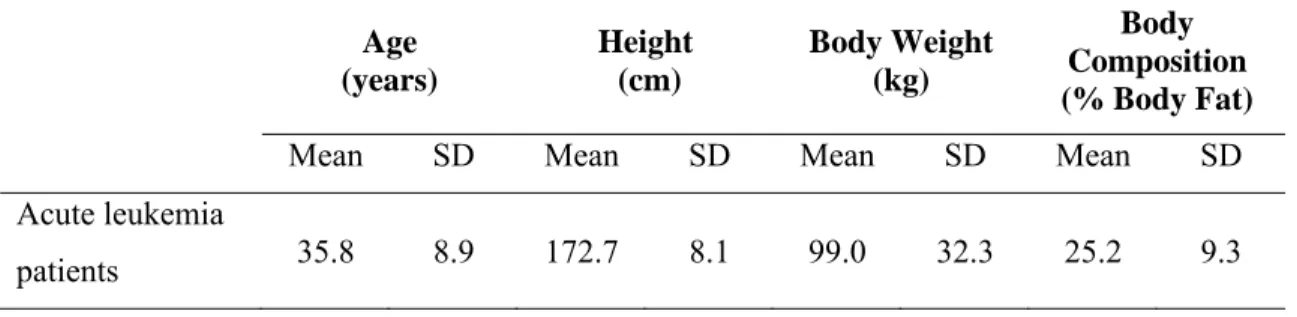
to complete treatment. Only 8 patients, 6 males and 2 females aged from 24 to 48, completed
the study protocol. Their characteristics are summarized in Table 2 below.
Table 2. Subjects’ characteristics.
Age (years)
Height (cm)
Body Weight (kg)
Body Composition (% Body Fat)
Mean SD Mean SD Mean SD Mean SD Acute leukemia
Hypothesis 1
Hypothesis 1 states that there will be a significant difference in cardiorespiratory
endurance between the beginning (CREpre) and the completion (CREpost) of the exercise
program. It was tested using a paired samples t-test. The variable used to measure
cardiorespiratory endurance was total time of cycling in minutes until subject reached RPE of
7 or requested termination. The descriptive statistics of the analyses of Hypothesis 1 is
presented in Table 3 below.
Table 3. Descriptive statistics of cardiorespiratory endurance at the beginning and the completion of exercise program.
Variable Mean SD
CREpre (minutes) 8.94 8.88
CREpost (minutes) 17.01 14.32
n = 8
A statistically significant difference was found in cardiorespiratory endurance at the
completion of the exercise program when compared to baseline measures (p= 0.009). Table
4 below presents the results of the t-test used to analyze Hypothesis 1.
Table 4. Difference in cardiorespiratory endurance at the beginning and the completion of exercise program (t-test).
n = 8
Hypothesis 2
Hypothesis 2 states that there will be a significant difference in overall muscular
endurance between the beginning and the completion of the exercise program. It was also
Paired Differences
t
df
Sig. (2-tailed)
Mean Std. Deviation Std. Error
Mean
tested using a paired samples t-test. In this case, the dependent variable used for analysis was
the summation of results (total number of repetitions) of the muscular endurance tests of the
upper body (biceps curls) and lower body (squats) exercises, assessed at the beginning
(OMEpre) and at the end of the study (OMEpost). The descriptive statistics of the analysis
of Hypotheses 2 are presented in Table 5.
Table 5. Descriptive statistics of overall muscular endurance at the beginning and the completion of exercise intervention.
Variable Mean SD
OMEpre (repetitions) 57.50 21.35
OMEpost (repetitions) 61.25 24.01
n = 8
No statistically significant difference was found in overall muscular endurance at the
completion of the exercise program when compared to baseline measures (p= 0.715). Table
6 below presents the results of the t-test used to analyze Hypothesis 2.
Table 6. Difference in overall muscular endurance at the beginning and the completion of exercise program (t-test).
n = 8
Hypothesis 3
Hypothesis 3 states that there will be a significant difference in overall fatigue levels
between the beginning and the completion of the exercise program. It was tested using a
paired samples t-test. The dependent variable, overall fatigue level was measured using total
scores on the Revised Piper Fatigue Scale, assessed at the beginning of the induction
Paired Differences
t
df
Sig. (2-tailed)
Mean Std.
Deviation
Std. Error Mean
treatment and at the end of the study. The descriptive statistics of the analysis of Hypotheses
3 are presented in Table 7 below.
Table 7. Descriptive statistics of overall fatigue levels at the beginning and the completion of exercise intervention.
Variable Mean SD
Fatigue (pre) 4.60 1.73
Fatigue (post) 1.80 1.67
n = 8
A statistically significant difference was found in overall fatigue levels at the beginning
and the completion of the exercise program (p= 0.009). Table 8 below presents the results of
the t-test used to analyze Hypothesis 3.
Table 8. Difference in overall muscular endurance at the beginning and the completion of exercise program (t-test).
n = 8
Hypothesis 4 and 5
Hypotheses 4 and 5were analyzed using a simple linear regression model and included
the following variables: the change score for the cardiorespiratory endurance (∆CRE), the
change score for the overall muscular endurance (∆OME), and the change score for overall
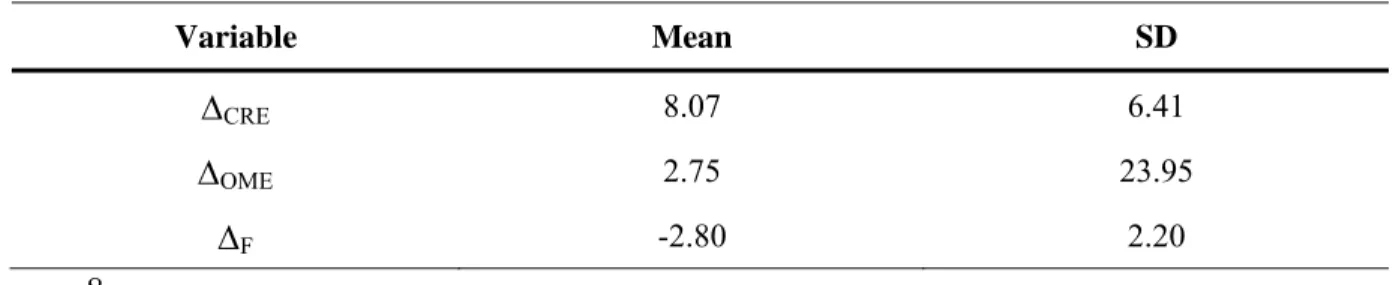
fatigue level (∆F). The descriptive statistics for these three variables for a simple linear
regression analyses are presented below in Table 9.
Paired Differences
t
df
Sig. (2-tailed)
Mean Std.
Deviation
Std. Error Mean
Table 9. Descriptive Statistics for Simple Regression Analysis.
Variable Mean SD
∆CRE 8.07 6.41
∆OME 2.75 23.95
∆F -2.80 2.20
n = 8
Hypothesis 4
Hypothesis 4 states that there will be a significant inverse relationship between changes
in cardiorespiratory endurance and overall fatigue levels assessed prior to and at the end of
the study. The independent variable in the regression was the change score for the
cardiorespiratory endurance (∆CRE), calculated as the difference in total time of cycling
between the final and initial assessments (∆CRE = CREpost - CREpre). The dependent
variable was the change score for overall fatigue level (∆F), calculated as the difference in
total score of fatigue between the final and initial assessments (∆F = Fatigue(post) –
Fatigue(pre). No statistically significant relationship was found between ∆CRE and ∆F in this
test (r (7) = -0.26, p = 0.534). The non-significant results of the regression analysis of
Hypotheses 4 are presented in Table 10 below.
Table 10. Relationship between changes in cardiorespiratory endurance and overall fatigue levels.
∆F
∆CRE
R2 .068
Slope -.089
P value .534
Hypothesis 5
Hypothesis 5 states that there will be a significant inverse relationship between changes
in overall muscular endurance and overall fatigue levels assessed prior to and at the end of
the study. The independent variable in the regression was the change score for the overall
muscular endurance (∆OME), calculated as the difference in total number of repetitions
between the final and initial assessments (∆OME = OMEpost – OMEpre). The dependent
variable was the change score for fatigue level (∆F), calculated as the difference in total score
of fatigue between the final and initial assessments (∆F = Fatigue(post) – Fatigue(pre). No
statistically significant relationship was found between the ∆OME and ∆F in this test (r (7) =
-0.335, p = 0.417). The non-significant results of the regression analysis of Hypotheses 5 are
presented in Table 11 below.
Table 11. Relationship between changes in overall muscular endurance and overall fatigue level.
∆F
∆OME
R2 .112
Slope -.026
P value .417
CHAPTER V
DISCUSSION, CONCLUSION, AND RECOMMENDATIONS
Introduction
Although standard treatments improve survival for individuals with all types of cancer
including leukemia, treatment-related side effects are commonly reported to have negative
effect on recovery process, physiological and psychological health of cancer patients, and can
potentially interfere with desired treatment outcomes (Servaes et al., 2002; Hemming and
Maher, 2005). These physiological and psychological changes may also persist for years
after completion of the treatment and can lead to functional disability and premature
mortality (Battaglini et al., 2006). Therefore, there is a great need in understanding the
preventive methods and complimentary therapies in managing cancer and cancer
treatment-related side effects.
The benefits of exercise for the cancer population have been reported in the literature to
be a promising complementary therapy in minimizing or even reverting both physiological
and psychological side effects of cancer and cancer treatment (Adamsen et al., 2006;
Courneya et al., 2003; Cunningham et al., 1986; Dimeo, 2001; Segal et al. 2003; Kolden et
al., 2002). However, the majority of these studies were conducted on breast and prostate
cancer patients using different exercise protocols making it difficult to compare their results.
Segal et al. (2003) and Cunningham et al. (1986) used resistance training only, Courneya et
flexibility exercises. Several studies used unsupervised exercise protocol; others performed
supervised in-hospital training and used different modes and intensities of exercise.
In the present study, a combination of aerobic, resistance, and flexibility exercises
performed at low to moderate intensities were used as the exercise protocol. Moreover, each
exercise session was supervised and individually prescribed for each patient depending on
his/her health status on the day of exercise.
The current study was the first study to explore the effects of exercise on the adult acute
leukemia population during the induction phase of treatment. Therefore, the primary purpose
of this study was to examine the effects of an individualized exercise prescription on selected
physical fitness parameters (cardiorespiratory and overall muscular endurance) and overall
fatigue in acute leukemia patients undergoing chemotherapy. A secondary purpose was to
examine a relationship between selected fitness parameters and fatigue assessed at the
beginning and at the end of the exercise program.
Improvement in Cardiorespiratory Endurance
According to Hypothesis 1, there would be a significant difference in cardiorespiratory
endurance (CRE) between the beginning and the completion of the exercise program. The
results of the analyses showed a significant improvement in CRE measured as total cycling
time (p= 0.009). These results are consistent with the results of two other studies that
performed similar exercise protocol including a combination of cardiovascular, resistance
and flexibility training (Adamsen et al., 2006; Kolden et al., 2002). Adamsen et al. (2006)
showed that a 6-week high-intensity supervised exercise program improved cardiovascular
capacity (VO2max) by 16% in various cancer patients including leukemia. A pilot study