USING FITBITS TO ASSESS ANXIETY IN ADULTS WITH AUTISM AND INTELLECTUAL DISABILITY
Amanda Kerns
A thesis submitted to the faculty at the University of North Carolina at Chapel Hill in partial fulfillment of the requirements for the degree of Master of Science in the Department of Clinical
Rehabilitation and Mental Health Counseling in the School of Medicine.
Chapel Hill 2020
ABSTRACT
Amanda Kerns: Using Fitbits to Assess Anxiety in Adults with Autism and Intellectual Disability
(Under the direction of Dara Chan)
Individuals with autism spectrum disorder (ASD) and co-occurring intellectual disability (ID) may have difficulty both understanding when they are anxious and communicating their anxiety to others. Using a measure that does not require communication to assess anxiety may allow for better accuracy to prepare interventions to help reduce overall anxiety. The purpose of this study is to develop and test whether heart rate can be used to identify anxiety in adults with ASD and ID. A small, pilot study was conducted at a residential facility in North Carolina. Participants had their heart rates measured for 2 weeks using Fitbit watches while staff
TABLE OF CONTENTS
LIST OF TABLES………..vi
LIST OF FIGURES………..………...vii
LIST OF ABBREVIATIONS……….……….viii
USING FITBITS TO ASSESS ANXIETY IN ADULTS WITH AUTISM AND INTELLECTUAL DISABILITY…….…..………...1
Introduction………..1
Autism Spectrum Disorder and Intellectual Disability………2
Autism Spectrum Disorder………..2
Intellectual Disability………...………...2
Communication and Social Understanding……….3
Cognitive Impairments………...……… 4
Measuring ID, ASD, and Anxiety……….. 4
Measures of Anxiety in Those with ID………..…….………....6
Heart Rate and Anxiety………...………..………. 9
The Present Study………. .10
Hypotheses……….. .11
Methods………..……11
Participants………... 11
Behavior Data Sheet………... 12
Daily Schedule………...………...13
Participant Notebooks………...………13
Procedures………..13
Data Analysis……….14
Results………15
Participant One: Adam…….……….….………...16
Participant Two: Oliver……...………..………....18
Participant Three: Benjamin….…….……..………..20
Participant Four: Lucas…….……….….………….………..22
Participant Five: Mason…….…….…….……….……….24
Participant Six: Wyatt….………….………….………….………26
Participant Seven: Henry ...….…....……..……….…....………...28
Discussion……….29
Limitations………..……….……….32
Conclusion……….35
APPENDIX A: BEHAVIOR DATA SHEETS……….36
APPENDIX B: DAILY SCHEDULES……….37
LIST OF TABLES
Table 1: Total number of elevated heart rate incidents by types of
LIST OF FIGURES
Figure 1: Participant One Heart Rate Graph………....………..18
Figure 2: Participant Two Heart Rate Graph……….20
Figure 3: Participant Three Heart Rate Graph………...21
Figure 4: Participant Four Heart Rate Graph………...24
Figure 5: Participant Five Heart Rate Graph……….25
Figure 6: Participant Six Heart Rate Graph………...27
LIST OF ABBREVIATIONS
ASD Autism Spectrum Disorder
ASD-CA Autism Spectrum Disorder Comorbidity for Adults
GAS-ID Glasgow Anxiety Scale for People with Intellectual Disabilities DASH-II Diagnostic Assessment for Severely Handicapped II
ID Intellectual Disability IRB Institutional Review Board
PAC Psychopathology in Autism Checklist
USING FITBITS TO ASSESS ANXIETY IN ADULTS WITH AUTISM AND INTELLECTUAL DISABILITY
Introduction
Autism Spectrum Disorder (ASD) is one of the most common developmental disabilities with a prevalence rate around 1 in 59 individuals (Center for Disease Control, 2019). ASD diagnostic criteria include communication and social skills, and individuals with ASD typically have differences in cognitive function, adaptive functioning, and emotion regulation (Center for Disease Control, 2019). While a diagnosis of ASD does not always result in a diagnosis of another co-morbid condition, there is a 31% occurrence rate of individuals with ASD and a diagnosis of intellectual disability (ID; (Center for Disease Control, 2019). Emerson and Hatton (2007) found that children and teenagers who have an ID are 4-5 times more likely to also show symptoms of mental health problems when compared to their neuro-typical peers (Emerson & Hatton, 2007). In adulthood, it was also found that having an ID increased the likelihood of also having a severe mental health diagnosis (Sheehan et al., 2015). One of the challenges of having a diagnosis of ID and ASD is the capability to accurately identify and diagnose emotional symptoms that are related to psychiatric disorders. In order to diagnose psychiatric disabilities, clinicians typically rely on self-report measures such as questionnaires or interviews to examine severity and intensity of various behaviors and emotions that could indicate a psychiatric
particularly with individuals who are lower on the spectrum (Gillot & Standen, 2007). The purpose of this study is to test the use of biological measures (e.g., heart rate) as a novel way to capture anxiety in individuals with ASD and ID who are poor at self-report and to discuss the implications for different diagnostic and monitoring methods in the future.
AUTISM SPECTRUM DISORDER AND INTELLECTUAL DISABILITY
Autism Spectrum Disorder
ASD is a spectrum disorder, with the severity ranging from mild to severe. ASD affects social and communication skills, with some of the most common deficits including rigidity in routines, impulsive conversation, difficulty in turn taking, and inappropriate social skills. While individuals with ASD have significant limitations in communication and social skills, they often show strengths in visual information processing and topics of special interest (National Institute of Mental Health, 2016).
Intellectual Disability
Roadmap, 2016). Some of the difficulties in ID also appear in ASD, including issues with adaptive functioning (communication, social, and self-care skills) and deficits in cognitive functioning (abstract thinking, impairments in judgement, ability to problem solve, etc.). Communication and Social Understanding
Individuals with both ASD and ID have difficulties in communication and social cognition. This can include difficulties with turn taking, initiating conversation, impulsive
conversation, scripting, and theory of mind. Theory of mind is the cognitive idea that we are able to understand other individual’s experiences and feelings. It allows us to understand that those who are different from us have different beliefs and desires than oneself (Hale & Tager-Flusberg, 2005). Individuals with ASD have a difficult time understanding that other individuals are
Cognitive Impairments
Both ID and ASD can impact cognitive functioning. Difficulties with problem solving, abstract thinking, cognitive shifting, and judgement are common cognitive impairments in both ID and ASD. These impairments may affect how individuals deal with stressors in their daily life. Baron and colleagues (2006) found that due to impairments with autism, most individuals lack the coping mechanisms to deal with normal stressors and anxieties (Baron, Groden, Groden, & Lipsitt, 2006). Impairments with cognitive shifting may be a big factor in the inability to handle daily stressors. The lack of cognitive shifting impairs the individual from pausing a task and shifting their focus and attention on something else. When individuals have difficulties with cognitive shifting, they focus their attention on the stressor rather than shifting their attention to something different. Individuals with both ID and ASD who had impairments with cognitive shifting also had more negative behaviors occurring such as rule breaking, intrusive, and/or aggressive behavior (Visser, Berger, Van Schrojenstein Lantman-De Valk, Prins, & Teunisse, 2015). Other impairments such as problem solving, abstract thinking, and impairments in judgement also play a role in coping with stress (White et al., 2014). For example, problem solving impairments can hinder someone’s ability to cope with stress effectively. If someone is unable to find a solution to the stressor, they will not be able to find effective ways to cope with said stress (White et al., 2014).
Measuring ID, ASD, and Anxiety
understand what the self-report measures are asking is a difficult task for individuals with ID. It is also difficult for clinicians to differentiate between mental health symptoms and the symptoms for ASD. Bakken and colleagues (2010) described three main problems involved in
differentiating the symptoms (Bakken et al., 2010). The first problem was that some of the characteristics of ASD (e.g. scripting or stimming, obsessive interests, or avoidance) can be similar to symptoms of some of the main psychiatric disabilities including schizophrenia, affective disorders, anxiety disorders, and Obsessive-Compulsive Disorder. Secondly, psychiatric problems may not be shown in typical fashion in individuals with ASD and ID. Individuals with ASD and ID may show the less common symptoms of a psychiatric disability including self-injurious behaviors, irritability, aggression, strange behavior, and bizarre
movements. Lastly, as part of the communication deficits in individuals with ASD and ID, individuals often have difficulty communicating their emotional problems and experiences (Bakken et al, 2010). Self-report measures are often not considered reliable due to the
communication deficits within ASD as well as problems with understanding the emotions one is feeling (Kushki et al, 2013). Therefore, many researchers rely on using caregiver interviews to measure anxiety in individuals with ASD but the observations made from the caregiver may not be consistent with how the individual actually feels. Gadow and colleagues (2005) looked at the differences in symptoms of anxiety in community versus clinical settings and found teachers and parents were not consistent in reporting anxiety in school-aged children. Here, teachers reported higher anxiety than the parents (Gadow, Devincent, Pomeroy, & Azizian, 2005). These
Measures of Anxiety in those with ID
There are several existing measures of anxiety symptoms designed for individuals with the communication and reporting difficulties seen in persons with ASD and ID. Most common are caregiver interviews or assessments, which look at a series of questions targeting behaviors or emotions that can help pinpoint any challenges. There are very few self-report options for individuals with ASD and ID, but there is also caution in using self-report measures with
individuals with ASD without an ID (Mazefsky, Kao, & Oswald, 2011). This is primarily due to studies that individuals with ASD without an ID also have difficulty reporting their symptoms accurately, which is consistent with challenges that individuals with ASD and ID exhibit (Mazefsky, Kao, & Oswald, 2011).
The Glasgow Anxiety Scale for People with an Intellectual Disability (GAS-ID) (Mindham & Espie, 2003) is one of the few self-report measures to identify anxiety in
individuals with ID. The GAS-ID was created to evaluate a self-report scale for individuals with mild ID, however, it was not created as a stand-alone diagnostic tool. Like many other measures, it was created to be used in conjunction with diagnostic measures. The assessment is given by asking questions targeting worries, specific fears, and physiological symptoms. The
“trait” or “state” symptoms of anxiety, so further research and replication needs to be completed (Mindham & Espie, 2003).
The Diagnostic Assessment for the Severely Handicapped II (DASH-II; Matson, 1995) is one of the most common informant-based measures for diagnosing mental health conditions in individuals with ID. The DASH-II assesses a full range of mental health conditions including depression, anxiety, schizophrenia, and mood disorders as well as other disorders such as eating disorders and sexual disorders (Matson et al, 1996). In a study by Cervantes and colleagues (2015), the most relevant indicators of anxiety in the items found in the DASH-II included, but not limited to, “clings to family and staff when involved in certain situations,” “runs away/hides from certain situations,” “shakes for no clear reason,” or “becomes agitated when separated from familiar individuals” (Cervantes & Matson, 2015). However, like most other measures, it lacks participant input, relying only on caregiver observation, therefore the diagnoses are often based on what caregivers observe rather than what the individual may actually be experiencing (Cervantes & Matson, 2015).
The Mini Psychiatric Assessment Schedule for Adults with Developmental Disabilities (PAS-ADD; Prosser et al., 1998) is another common measure used for individuals with ASD and ID. This measure is also a caregiver-informed measure. The Mini PAS-ADD has been used in many studies surrounding psychiatric disabilities; however, there have been discrepancies in results between caregiver observation and individual symptom presentation. Buck and colleagues (2014) found discrepancies in a study conducted in Utah with adults and their caregivers and their diagnoses (Buck et al, 2014). They noted that the most common disorder identified
discrepancies between what the caregivers were reporting and what the individuals were diagnosed with. (Buck et al., 2014). This could be due to a number of factors including current medications lowering the number of physical anxious symptoms, caregivers not understanding what their definitions of anxiety look like, or even the criteria to meet the diagnosis of anxiety is not met. A major limitation of this tool is that there is not a clinical interview with the
individuals, therefore making it difficult to gauge the accuracy of the results (Devine, Taggart, & McLornian, 2009).
The Autism Spectrum Disorders-Comorbidity for Adults (ASD-CA; Matson & Boisjoli, 2007) is a measure that was recently created to specifically look at comorbid psychopathology in adults with ID and ASD. The ASD-CA is an informant-based measure with 37 items that look at 5 different subscales, one of if which includes anxiety/repetitive behaviors (LoVollow, &
Matson, 2009). The measure also noted having moderate to good reliability, however, the ASD-CA is fairly new and was introduced in a small, exploratory study. (LoVollow & Matson, 2009). Although this measure is to be used with only individuals with ASD and ID (versus some of the other measures used for all developmental disabilities), there have not been studies completed by other researchers demonstrating accuracy and success with the ASD-CA.
overlap with symptoms of ASD (Bakken et al., 2010). There have not been many studies using the PAC making it hard to compare to other diagnostic measures, so more research is needed to evaluate the effectiveness of this tool.
While the majority of these measures are beneficial in examining symptomology and diagnosis of anxiety, they still rely on caregiver observations and lack information directly from the individual. For the few measures that exist that take into account self-report, they are still often piloted with individuals with mild ID. However, there are still reports of individuals not fully understanding what they are feeling, resulting in inaccurate diagnosis. Without a measure that allows individuals with ID to accurately relay their symptoms, practitioners continue to run the risk of over or under diagnosing anxiety.
Heart Rate and Anxiety
than during a few specific activities to get a better understanding if the heart rate changes were impactful. Using more specific measures to be able to differentiate between changes in heart rates based on activity or stress would allow for better understanding of what is causing the elevated heart rate and if it is contributed to anxiety.
THE PRESENT STUDY
Currently, symptomatic and diagnostic measures of anxiety for individuals with ASD and ID primarily rely on caregiver interviews. However, relying solely on these measures may not fully capture the anxiety that an individual with ASD and ID may be experiencing. Although the caregiver interviews may be useful for diagnostic purposes, individuals with ASD and ID who are experiencing anxiety that is not identified may be under-diagnosed and may not receive appropriate behavioral and medication interventions. As a step toward capturing the everyday experience of anxiety through a biological measure, the current study was designed to assess heart rate as a measure of anxiety, in conjunction with data collected from caregivers observing each individual’s activities, environment, and negative behaviors that may correspond with anxiety. If elevated heart rate can detect symptoms of anxiety, it may be possible for the individual and their caregivers to intervene and cope with anxiety more effectively.
with behavior data collected allowed for identification of patterns to assess the accuracy of heart rate in detecting anxiety.
Hypotheses
Hypothesis 1: Heart rate will be notably higher during times when behavior outbursts are recorded compared to times that no behavior outbursts are recorded.
Hypothesis 2: There will be notable increases in heart rate during the time directly preceding when a behavior outburst is recorded.
Hypothesis 3: There will be identifiable difference in heart rate patterns representing periods of behavior outburst versus periods of exercise and work activity.
METHODS
Participants
Seven men, ages 43-60, were recruited to help with this project. They live in a residential facility that serves individuals with a diagnosis of both ASD and ID, with an ID ranging from mild to profound. Most of the participants also have other co-morbid diagnoses that impact their daily functioning. Each of the seven participants have lived at the residential facility for longer than 20 years. While each individual has many set routines, presentation of anxiety and
Measures
Fitbit heart rate trackers. The Fitbit Alta HR watches were used in the study to collect
heart rate information. The Fitbit heart monitor stays on whenever the watch is worn and records information over a 24-hour period. Information collected from the watch was accessible via an iPhone on the Fitbit application. Seven new Fitbit’s were donated for the purpose of this study. There were a few problems over the course of the study in regard to the Fitbit including not being charged every day, staff or participants losing the Fitbit, participants taking off the Fitbit throughout the day, or the Fitbit not recording information after a certain period of time. It is uncertain if there was a problem with the particular Fitbit that stopped recording data halfway through the study or if it was an issue with the particular participant not wearing it. When staff did notice that the Fitbit either had a battery that was not charged or was not being worn, they did try to encourage wearing it or took the Fitbit to charge it.
Behavior data sheet. A behavior data sheet was designed for the purpose of this study.
that are not present, coloring intensely, etc. These behaviors were targeted due to the
participant’s individual history with demonstrating these types of behaviors and the behaviors being associated with anxiety.
Daily Schedule. The use of a daily schedule allowed the staff members to write down the
general activities of the participants during a 24-hour period. The schedule included the time periods and intensity of when individuals participated in other activities such as work or
exercise, activities that would also lead to an increase in heart rate. Hypothetically, it allowed for greater differentiation between spikes due to outdoor work or exercise and spikes due to an anxious period (see Appendix B). The staff members were trained on how to use the daily schedule and what to record on the daily schedule versus the behavior data sheet.
Participant Notebooks. Along with the behavior data sheets and daily schedules, each
participant was assigned a notebook for staff to carry around throughout the day. Because the staff/participant pairings change multiple times throughout the day due to shift changes, it proved to be difficult to keep up with the amount of data required to record for the study. Therefore, participants each had a mini notebook that was assigned to them that staff members carried around with them to record behavior incidents. When the staff changed and the participant was transferred to another staff, the notebook was passed as well.
Procedures
IRB approval was obtained for all aspects of the study. Guardian consent was obtained for each of the individuals participating in the study. There was also a presentation to seek approval of the study from the Human Rights Committee at the residential facility, which
presented with a social story using pictures and words that was personalized for their level of understanding and functioning so that they were also aware of what they were receiving a watch for, how long they would have to wear it, and that they got to keep the watch afterwards. During the course of the study, there were no known issues regarding individual participation.
Participants first wore the Fitbit trackers for 4 days as part of a trial period to collect baseline data to assess the participants’ normal resting heart rate and comfort with use. Then the Fitbit heart rate trackers were worn by all individuals over a 2-week period. The staff members were responsible for charging the Fitbits each night, as they already plug in other electronic devices at the end of the night. The Fitbit’s were worn starting at the time of the participant waking up and taken off by 9pm every night. The staff members also recorded any behavioral occurrences due to anxiety on the provided behavior sheet for each participant. Lastly, the staff members filled in the daily schedule regarding work and exercise activities. At the end of the 2-week period, the heart rate data collected was compared to the behavior data recorded. The use of schedules and data sheets helped differentiate between spikes in heart rate due to exercise or work and spikes contributing to anxiety. Staff were trained in understanding the type of
information they were to observe and write down including aggression (towards themselves and others), ritualistic behavior, or any other behavior that seemed out of the ordinary.
Data Analysis
rate (defined as any heart rate collected over the resting heart rate) and the behavior recorded into columns of time periods. It is important to note that most time periods and activities resulted in a heart rate above the resting heart rate. This could be due to simple changes in heart rate from normal activities such as getting up from a chair and walking to another room or efforts needed to carry a heavy laundry basket to the laundry room. However, for the purposes of this study, the principal investigator was interested in large increases in heart rate during periods of
work/exercise/anxiety as an indicator of change and potential anxiety more than small increases in heart rate. Related to Hypotheses 1 and 2, data was examined to identify how often increases in heart rate co-occur with activities and behavior outbursts, and changes in heart rate preceding documented behavioral events. In relation to Hypothesis 3, data was examined to identify differences in heart rate between work and exercise and behavior outbursts. The goal of this hypothesis was to differentiate between work and exercise heart rate increases versus increases due to anxiety or other negative feelings.
RESULTS
To best provide context to these individual patterns, background information regarding each participant is first provided; this information was provided by long-term staff members with detailed knowledge, since all participants have lived at the residential facility for over 20 years. While all participants have a formal diagnosis of ASD and ID, a diagnosis of anxiety or other psychiatric disabilities vary among individuals. Each participant was given a number to align with the confidentiality guidelines at the residential facility. However, for the purposes of this paper, each participant was also given a pseudonym.
Participant One-Adam
Adam is a 44-year old man who loves interacting with others. He is often wanting to know what comes next in the day, and although he uses schedules and other various structure to help him navigate his day, his anxiety often manifests through questions about what is next. He often asks the same question multiple times in a time period, sometimes to the point of
superfluity. In the past when he was anxious, he would show physical aggression towards objects and sometimes people. His aggression included ripping his clothing, physical aggression towards objects, and hitting staff and other housemates. While his anxiety presentation in terms of
aggression is less now, staff still recognize that he is anxious when he rips his clothing or asks a lot of questions. He is also starting to show more anxiety due to the aging of his parents and related changes in long-familiar routines and time spent with them. He is currently on two medications to help control for anxiety, as well as a medication to help control cholesterol and improve heart health.
During the course of this study, he primarily demonstrated anxiety through questions. He displayed some physical aggression towards objects (mainly ripping of clothing). When
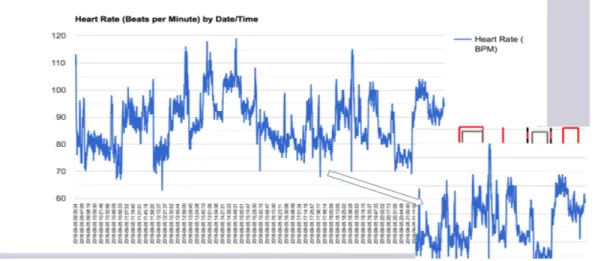
(81-120bpm). His heart rate showed clear increases in heart rate in the moments before asking a question, as well as a decrease in heart rate once the question was answered (see Figure 1). Most of the questions he asked were surrounding events that were happening next (asking for a work reinforcement, his next home visit, the next time he would go for a ride, etc.) Outside of the questions, his heart rate was notably raised throughout the course of the day, with his heart rate consistently higher than his resting heart rate (average 71bpm). His other activities that he participated in throughout the day that also contributed to his increased heart rate were exercise (daily walks in the afternoon and physical therapy) and some work tasks (sweeping, shredding paper, washing windows and tables, etc.). In relation to the hypotheses, his results aligned with all three of the hypotheses. His heart rate did spike in times of anxiety or stress compared to down times, as predicted by hypothesis 1. In terms of hypothesis 2, his heart rate increases were the clearest out of any participant in terms of predictability of anxiety or behavior outburst. When examining his results, this hypothesis was seen the most surrounding questions, as opposed to behavioral outburst related to aggression towards self or others. Aforementioned, there were clear increases in heart rate moments before the question was asked followed by decreases once the question was answered. If staff noted that the same question was asked every five minutes, there was a very clear pattern of increases and decreases that aligned with the time frame, as shown in Figure 1. Finally, in relationship to hypothesis 3, Adam still showed increases in heart rate during times that surrounded both work and exercise activities, but these heart rate increases were much smaller and considered normal when compared to increases due to anxiety during other times of the day.
being asked. The red marks demonstrate anxiety and the black demonstrates work or exercise. Using a graph allows for visual clarity on the events occurring and allows others to hypothesize about what caused increased anxiety in a specific week, which can lead to improvement of interventions moving forward. Aforementioned, the principal investigator used resting heart rate as a baseline and recorded any heart rate spikes above the resting heart rate as seen in Figure 1.
Figure 1: In this snapshot, there were several periods of elevated HR that correspond with anxiety inducing behaviors as well as periods of exercise/work.
Participant Two-Oliver
self-injurious behaviors (SIB), but over the past few years, his occurrence rate of SIB’s has decreased. His SIB’s manifest in holding his breath, covering his eyes, hitting his head, or biting himself. Usually when he starts to hold his breath or cover his eyes, it is an indicator that he is having a difficult time, and staff follow very clear instructions on how to deescalate. Due to this historical information, staff were instructed to record times when he was engaging in angry or unusual signing that seemed to be causing him stress as well as recording any SIB behaviors. He is on a number of medications for depression and anxiety to help alleviate his symptoms of his trauma.
Examination of the results showed Oliver maintained a stable heartrate throughout the study period. His resting heart rate averaged 58bpm and was the lowest out of all the
to his behavior incidents, as seen in Figure 2. In terms of hypothesis 3, his heart rate did increase significantly during times of recorded exercise; however, there were times during exercise that he also seemed to be upset. During these times, staff recorded angry facial expression combined with some signing during his daily exercise. It is unclear if the high heart rate was related to the exercise, the anxiety, or a combination of both.
Figure 2: In this snapshot, Oliver showed some periods of elevated HR, with most elevated HR’s staying under 100bpm. He also did not often experience drastic changes in HR in times recorded for anxiety.
Participant Three-Benjamin
Benjamin is a 45-year old man who has high verbal capabilities, both expressive and receptive, and is able to understand most things people tell him, needing limited clarification. He scripts the most out of all of the participants, meaning he is often engaging in self-talk by
Participant Four-Lucas
Lucas is a 44-year old man who has limited expressive verbal capabilities but is able to read and write independently. He usually keeps to himself and uses his free time to rest in his room. His anxiety often manifests in loud noises, which are sometime happy, but mostly cries and moans. He also displays a lot of repetitive behaviors, often tracing walls, doors, or windows, or walking laps around rooms, and can sometimes have difficulty transitioning away from these behaviors. He often gets “stuck” in places and has a hard time transitioning to different activities, resulting in prompting from staff to “hurry along”. He also shows anxiety before an upcoming home visit or other off-campus trips. He loves holidays and will show some anticipatory anxiety prior to holidays. This is primarily due to not knowing if he will get to celebrate the holiday the way he would like or what that celebration may look like. He has a history of aggression towards others, usually hitting and kicking. His aggression has historically been a result of being over-prompted.
(below) where Lucas demonstrated high heart rate spikes when prompted to complete morning hygiene compared to some other times throughout the day. Lucas also is the recipient of aggression from another housemate. It was thought that when an aggressive act occurred, his heart rate would spike as a result of the aggression. However, there were only a few moments when he was aggressed against that his heart rate rose. The rest of the recorded aggressive events resulted in a stable heart rate. It is unclear as to why he did not react biologically when aggressed towards, but some staff member’s hypothesized that he may have been participating in the aggression as a form of attention seeking behaviors. Said housemate did not like it when Lucas would clear his throat or cough, and staff members started to note that Lucas would walk in front of the housemate and cough, almost as if on purpose. If Lucas did this behavior purposely as a means to receive some interaction from staff that he may be seeking, it would explain why his heart rate did not increase once aggressed against.
Figure 4: This graph shows high increases in heart rate early in the morning when prompted to brush his teeth versus some other times throughout the day. This figure also shows how his heart rate during work is higher than other times of the day.
Participant Five-Mason
Mason is a 61-year old man who, along with his formal diagnosis of ASD and ID, also has a diagnosis of hearing loss and Tourette’s Syndrome. Mason is typically easy-going and keeps to himself but has a history of aggression towards others. Like most other participants his aggression has decreased as he has gotten older, mainly due to the interventions that have been put in place over the years to help him. Mason was added to the study after an original
participant did not want to wear the Fitbit and participate. Due to the late addition, Mason did not participate in the same two-week period as the other participants. Unlike the other participants, staff were not instructed to look out for anything in particular besides any ticks associated with his Tourette’s Syndrome. Mason’s results were difficult to interpret due to the lack of data that staff took and the incidents that were recorded were ticks associated with his Tourette’s
When looking at the preliminary data prior to analysis, it was thought that Mason would still have significant heart rate spikes during his ticks and although they were not producing negative behaviors that could be associated with anxiety, that there would still be an increase in heart rate. However, upon analysis, the results were inconsistent. At times his heart rate rose in patterns that were associated with the recorded ticks and at other times, his heart rate remained relatively stable. He had a few incidents that were historically associated with anxiety or frustration such as certain head ticks against the wall or slapping his stomach, but even when examining the heart rate associated with those events, the results were also inconsistent.
As mentioned, these inconsistencies resulted in lack of alignment with any of the three hypotheses. There were no identifiable trends associated with the hypotheses and the lack of data recorded by staff made it challenging to fully understand the changes in heart rate. Surprisingly, Mason did have an elevated heart rate (averaging 100-120bpm) throughout most of the day, as seen in Figure 5 (below), but it was hard to associate these high patterns of heart rate with
Figure 5: Besides one anxious event recorded, no other behavior data was taken from staff on this particular day. This figure shows the elevation of heart rate throughout the day but without accompanying observation, it made it hard to differentiate what was occurring at the times of the spikes.
Participant Six-Wyatt
Wyatt is a 58-year old man who enjoys spending time with his staff and with others. He is joyful and has no problem expressing himself, although some individuals may have trouble understanding him. He also has good receptive skills and understands basic verbal instructions. Unlike the other participants in this study, Wyatt is not on any psychotropic medications for anxiety or depression; however, Wyatt exhibits symptoms of anxiety daily. His anxiety manifests similarly to Adam (Participant One) in that he asks questions throughout the day about what is next on his schedule. Wyatt is also driven by food and will often ask questions about what is next to eat. Wyatt enjoys coloring and working on puzzles and often spends his down time doing these activities. These leisure activities are important to note because staff found that a lot of anxious behaviors such as asking continuous questions, loud vocalizations, and jerking body movements occurred while Wyatt was partaking in leisure activities.
Figure 6: The above figure shows how Wyatt’s heart rate was consistently between 80-120bpm per day. The gray represents leisure activity where his heart rate was raised similar to other anxious behaviors.
Participant Seven-Henry
Henry is a 50-year old man who, along with ASD and ID, has a diagnosis of depression. He has high verbal capabilities, both receptive and expressive, and is able to understand most things people tell him without needing further clarification. He occasionally is seen scripting to himself but it is often not distracting to others. Henry struggles with other people clearing their throats and coughing and becomes highly anxious when his housemates or staff members are sick. When he gets upset, he often yells at others to stop coughing or clearing their throat. He spends a lot of time in his room or outside in order to avoid perceived teasing from his
housemates. He also spends a lot of time in his room, refusing to complete his schedule or move about his day if he is feeling depressed that day. There are interventions in place to help gauge his mood each day and to encourage him to interact with others. For this study, staff were instructed to record the days he yelled at his housemates or yelled at staff, as it is thought that while he is yelling, the yelling is coming from a place of anxiety. Unfortunately, Henry’s watch stopped recording halfway through the study, only capturing seven days of data. Henry wore the watch daily so it is not clear as to what happened for the watch to stop recording the information.
For the results that were recorded, it was found that Henry’s heart rate was consistently higher during times of anxiety than compared to other times of the day, which aligns with
were also increases when he knew that something was about to happen, such as before dinner when he knew he would have to interact with his housemates, even if there was not a behavior outburst recorded. In relation to hypothesis 3, there were increases that occurred during work and exercise (averages 90-105bpm). These heart rate increases were not as high as the increases prior to an anxious outburst (averages 100-115bpm). However, there were times when he was
exercising, working, or other activities such as dinner, that he also exhibited anxious behaviors, therefore making it difficult to differentiate between increases in heart rate as it related to work/exercise or anxiety, as seen by the combined red and black markers in Figure 7.
Figure 7: This figure shows consistent increases in heart rate throughout the day. Heart rate remained elevated even after an event was over. There were also times of increased anxiety during work and leisure times, as demonstrated by the combined red and black lines.
DISCUSSION
This study explored the use of a biological measure to assess anxiety in adults with ASDH and ID by means of a wearable device. While there have been other studies using a wearable device such as a Fitbit to look at heart rate increases, this study is the first to use these methods with this population related to detecting symptoms of anxiety. Although each
individuals, heart rate increases were overall consistent with recorded anxious events and aligned with the hypotheses. In times of staff interventions such as redirecting, heart rate decreased, showing that the increased heart rate was related to the behavioral event and therefore impacting anxiety within the individual. It is important to note that staff have strong knowledge of each participant’s history and what their anxiety has historically looked like. This knowledge helped the caregivers understand various behaviors and relate it to anxiety. While most staff members were able to associate these behaviors, and predict what was occurring, there were some that were not as clear, as in Lucas’ case. As previously mentioned, staff were able to record
historically anxious behaviors but analysis showed that these behaviors did not cause increases in heart rate as one would suspect.
In some cases, individuals that we believed would be more anxious than others based on outward expressions of anxiety did not necessarily correspond with changes in HR as expected. There could be a few reasons for this, but the one explanation that needs to be explored more is the impact of certain medications on heart rate stability of the seven participants, five of them are on a psychotropic medication, one is on a blood pressure medication, and one is on only
supplements. The impact of these medications on the body and reduction of anxiety or
are aggressive, they do not earn something they want to do. This type of system is very common, especially within the ASD community. Regardless, it was shown that many of the participants did not exhibit aggressive behaviors towards others. Because of this, the results could also be different for someone who is actively aggressive, especially if the aggression is surrounding some type of known anxiety (food anxiety, uncertainty about the future, etc.)
In terms of feasibility, the study has a few major considerations when deciding to use a wearable biological measure of anxiety. The first major consideration is wear ability of the Fitbit. Individuals with ASD also often have sensory processing difficulties. If someone has tactile sensitivity related to sensory processing, wearing a fitted Fitbit may be uncomfortable for the individual, leading to unnecessary stress. When starting this study, the primary investigator ensured each participant was aware of the watch, why they were receiving the watch, the expectations of the watch, and allowed 4 days to wear it without data collection. The 4-day trial period was to ensure that each individual was comfortable with the watch and that it was not causing any unnecessary stress. If replicated in future studies, a similar trial period is strongly recommended for successful participation.
The copious amounts of data that is collected during the course of the study is another major factor that needs to be taken into consideration in future studies. During analysis, it was found that the amount of heart rate changes for each person was far greater than anticipated. This resulted in a lengthy review process. While the principal investigator matched the data entries from behavior sheets, time schedules, and notebooks with the heart rate that was recorded, a more concise review of the data may be possible with different technologies or techniques such as software designed to easily detect and analyze these changes with large data sets. It is
sample size larger than seven participants. It is also important to consider how much anxiety each participant presents with when starting the study. While most individuals presented with some outward anxiety, one participant showed constant anxiety during the study that is a normal occurrence in his daily life, resulting in copious amounts of data to examine. This resulted in a lengthy review period and another research consideration moving forward.
Limitations
Aforementioned, medication is a large limitation to this study. It is uncertain how big the impact (if any) psychotropic medications play on controlling the heart rate. A cardiologist was consulted to see if the changes to the heart rate are important and while she believed that the changes each minute are insignificant, it is important to keep in mind that drastic, continuous, changes to heart rate could imply a larger issue (Dr. Rima Jarrah, personal communication, September 23, 2019).
or inaccurately recording behaviors for the study. Also, previously noted, these individuals have lived at the residential facility for 20 or more years, and their behaviors now are very different than when they first moved in. Psychologists and case managers have had time to determine what works and what does not work in terms of interventions and medication, so capturing the full picture of their anxiety may be different now than if researchers captured it when they first moved in. It is also important to consider how various environments impact individuals and if their supports or environment are not stable, they may have different reactions.
Additionally, the sample size is a potential limitation. This pilot study was completed on a very small sample in a controlled setting. If this study were to be replicated, a variety of participants should be recruited in order to capture different environments, ages, races, and severity of disability. By changing the sample to one that is larger and reflects the population more, it may give a better picture of the utility of using heart rate to detect anxiety. However, it is important to remember the amount of data collected as mentioned previously and to carefully expand the number of participants based on the resources available to analyze the data.
Additionally, anxiety manifests differently in every person, so creating a behavior data sheet that can fully reflect the wide range of potential behaviors needs to be considered. The behavior data sheet used for this study was modeled off a behavior data sheet that is currently used for the individuals that live at the residential facility. However, it is not expected that the behavior data sheet that was used for this study would be effective and work for others in different settings, with different support staff, or with different behaviors.
forgetfulness on the documents resulting in missing data. The staff members did an excellent job of utilizing the participant notebooks; however, they would often forget to transfer the
in the study over the same 2-week period. It may be important to align the participation to make it easier to gather data. If using multiple participants from the same setting, having the
individuals participate at the same time could cut down on paperwork errors. Also, the length of the study could be changed in the future, depending on future participants. For some of the participants, enough data was collected during the first week to give a clear understanding of the anxiety and trends. This information also aligned with the data collected in the second week. However, for some participants that show less outward displays of anxiety, there were limited instances of anxiety, and if the time frame was shorter, there may have been missed information. Knowing the history of the participants and their presentation of suspected anxiety would help dictate the length of study.
CONCLUSION
Overall, this study examined whether using a biological measure alongside caregiver observation provides pertinent information when detecting and identifying anxiety in adults with ASD and ID. In most cases, heart rate measures confirmed the presence of known anxiety-related behaviors, and changes in heart rate predicated behavior outburst. However, for others, heart rate
measures revealed sustained or elevated heart rate that may indicate more chronic feelings of anxiety. The lack of change in heart rate demonstrated by others during the presence of anticipated anxiety may be influenced by medication. While preliminary findings show promise,
further research is needed to examine heart rate changes as they relate to understanding the impact of anxiety on individuals, and whether this information improves diagnosis and treatment
Table 1. Total number of elevated heart rate incidents by types of behaviors and activities over
the 2-week study period.
Participant
1 2 3 4 5 6 7
Resting HR
(Average) 71bpm 58bpm
68bpm 75bpm 78bpm 80bpm 70bpm Elevated HR Range: Anxiety Behaviors (avg.) 90-105bpm 65-80bpm 90-100 bpm 90-125bpm 90-113bpm 110-120 bpm 92-115bpm Elevated HR
Range: Work &
Exercise (avg.) 110bpm 80- 80-100 bpm
103-160bp
m 150bpm 125- 119bpm
10- 115-120bp
m 90-105bpm Number of Elevated HR Incidents
Type of Behavior
Aggression
towards others 0 0 1 1 0 0 0
Aggression
towards self 1 0 0 0 0 0 0
Aggression
toward objects 3 0 2 0 0 0 0
Other: Asking
questions 25 0 1 0 0 55 4
Other: Yelling 0 0 2 0 0 0 6
Other: Individual anxiety
markers 0
25 (angry signing, holding breath) 5 (telling others what to do) 49 (Being prompted ) 12 (Tics associated with Tourette) 20 (ticks associated with anxiety)
25 (seeming worried about a future
event)
Type of Activity
Work 6 5 6 7 3 9 5
Exercise 7 4 14 4 4 6 4
Leisure 7 18 8 4 7 20 6
Activity
Transition 0 0 0 18 0 0 0
Community
REFERENCES
Bakken, T. L., Helverschou, S. B., Eilertsen, D. E., Heggelund, T., Myrbakk, E., & Martinsen, H. (2010). Psychiatric disorders in adolescents and adults with autism and intellectual disability: A representative study in one county in Norway. Research in Developmental Disabilities, 31, 1669-1777. doi:10.1016/j.ridd.2010.04.009
Baron, M. G., Groden, J., Groden, G., & Lipsitt, L. P. (2006). Stress and coping in autism.
Oxford: Oxford University Press.
Bradley, E. A., Summers, J. A., Wood, H. L., & Bryson, S. E. (2004). Comparing rates of psychiatric and behavior disorders in adolescents and young adults with severe intellectual disability with and without autism. Journal of Autism and Developmental Disorders, 34(2), 151-161.
Buck, T. R., Viskochil, J., Farley, M., Coon, H., McMahon, W. M., Morgan, J., & Bilder, D. A. (2014). Psychiatric comorbidity and medication use in adults with autism spectrum disorder. Journal of Autism and Developmental Disorders, 44(12), 3063-3017. doi:10/1007/s10803-014-2170-2
Centers for Disease Control and Prevention(2019). Autism spectrum disorder (ASD).
Retrieved March 14, 2020, fromhttps://www.cdc.gov/ncbddd/autism/data.htmlCenter for Parent Information & Resources (2017). Intellectual disability. Retrieved April 03, 2020 from www. parentcenterhub.org/intellectual/
Cervantes, P. E., & Matson, J. L. (2015). Comorbid symptomology in adults with autism spectrum disorder and intellectual disability. Journal of Autism and Developmental Disorders, 45(12), 3961-3970. doi:10.1007/s10803-015-2553-z
Chiang, H. M., & Lin, Y. H. (2008). Expressive communication of children with autism. Journal of Autism and Developmental Disorders, 38, 538-545. doi:10.1007/s10803-007-0423-z Deb, S., & Prasad, K. B. (1994). The prevalence of autistic disorder among children with a
learning disability. The British Journal of Psychiatry, 165(3), 395-399. doi:10.1192/bjp.165.3.395
Devine, M., Taggart, L., & McLornian, P. (2009). Screening for mental health problems in adults with learning disabilities using the Mini PAS-ADD interview. The British Journal of Learning Disabilities, 38, 252-258. doi:10.1111/j.1468-3156.2009.00597.x
Emerson, E., & Hatton, C. (2007). Mental health of children and adolescents with intellectual disabilities in Britain. The British Journal of Psychiatry, 191(2007), 493-499.
Gadow, K. D., Devincent, C. J., Pomeroy, J., & Azizian, A. (2005). Comparison of DSM-IV symptoms in elementary school-age children with PDD versus clinic and community samples. Autism, 9(4), 392-415. doi:10.1177/1362361305056079
Gillott, A., & Standen, P. (2007). Levels of anxiety and sources of stress in adults with autism.
Journal of Intellectual Disabilities, 11(4), 359-370. doi:10.1177/1744629507083585 Grossman, R. B., & Tager-Flusberg, H. (2012). Quality matters! Differences between expressive
and receptive non-verbal communication skills in adolescents with ASD. Research in Autism Spectrum Disorders, 6(3), 1150-1155. doi:10.1016/j.rasd.2012.03.006
Hale, C. M., & Tager-Flusberg, H. (2005). Social communication in children with autism. SAGE Publications and the National Autistic Society, 9(2), 157-178.
doi:10.1177.1362361305051395
Helverschou, S.B., Bakken, T.L., & Martinsen, H. (2008). The psychopathology in autism checklist (PAC): A pilot study. Research in Autism Spectrum Disorders, 3(2009), 179-195. doi:10.1016/j.rasd.2008.05.004
Interactive Autism Network. (2015). Measuring intelligence in autism. Retrieved November 08, 2017, from https://iancommunity.org/ssc/measuring-iq-autism
Kushki, A., Drumm, E., Mobarak, M. P., Tanel, N., Dupuis, A., Chau, T., & Anagnostou, E. (2013). Investigating the autonomic nervous system response to anxiety in children with autism spectrum disorder. PLoS ONE, 8(4), e59730, 1-8.
doi:10.1371/journal.pone.0059730
LoVullo, S.V., & Matson, J.L. (2009). Comorbid psychopathology in adults with austism spectrum disorders and intellectual disabilities. Research in Developmental Disabilities, 30(6), 1288-1296. doi:10.1016/j.ridd.2009.05.004
Matson, J. L. (1995). The diagnostic assessment of the severely handicapped-revised (DASH-II).
Disability Consultants, LLC, Baton Rouge, LA (1995)
Matson, J. L, Baglio, C. S., Smiroldo, B. B., Hamilton, M., Packlowskyi, T., Williams, D., & Kirkpatrick-Sanchez, S. (1996). Characteristics of autism as assessed by the Diagnostic Assessment for the Severely Handicapped-II (DASH-II). Research in Developmental Disabilities, 17(2), 135-143. doi:10.1016/0891-4222(95)00044-5
Matson, J.L. & Boisjoli, J.A. (2007). Autism spectrum disorders in adults with intellectual disability and comorbid psychopathology: Scale development and reliability of the ASD-CA. Research in Autism Spectrum Disorders, 2(2), 276-287.
doi:10.1016/j.rasd.2007.07.002
spectrum disorders. Research in Autism Spectrum Disorders, 5(1), 164-174. doi: 10.1016/j.rasd.2010.03.006
Mindham, J., & Espie, C.A. (2003). Glasgow Anxiety Scale for people with an intellectual disability (GAS-ID): development and psychometric properties of a new measure for use with people with mild intellectual disability. Journal of Intellectual Disability Research, 47(1), 22-30. doi:10.1046/j.1365-2788.2003.00457.x
National Institute of Mental Health. (2016). Autism spectrum disorder. Retrieved November 08, 2017, from
https://www.nimh.nih.gov/health/topics/autism-spectrum-disorders-asd/index.shtml
Prosser, H., Moss, S., Costello, H., Simpson, N., Patel, P., & Rowe, S. (1998). Reliability and validity of the Mini PAS-ADD for assessing psychiatric disorders in adults with intellectual disability. Journal of Intellectual Disability Research, 42(4), 264-272. doi:10.1046/j.1365-2788.1998.00146.x
Sharma, R.K., Balhara, Y.P.S., Sager, R., Deepak, K.K., & Mehta, M. (2011). Heart rate variability study of childhood anxiety disorders. Journal of Cardiovascular Disease Research., 2(2), 115-122. doi:10.4103/0975-3583.83040
Sheehan, R., Hassiotis, A., Walters, K., Osborn, D., Strydom, A., & Horsfall, L. (2015). Mental illness, challenging behaviour, and psychotropic drug prescribing in people with
intellectual disability: UK population based cohort study. The BMJ,2015(351), 1-9. doi: 10.1136/bmj.h4326
Visser, E. M., Berger, H. J., Van Schrojenstein Lantman-De Valk, H. M. J., Prins, J. B., & Teunisse, J. P. (2015). Cognitive shifting and externalising problem behaviour in intellectual disability and autism spectrum disorder. Journal of Intellectual Disability Research, 59(8), 755-766. doi:10.1111/jir.12182
White, S. W., Mazefsky, C. A., Dichter, G. S., Chiu, P. U., Richey, J. A., & Ollendick, T. H. (2014). Social-cognitive, physiological, and neural mechanisms underlying emotion regulation impairments: Understanding anxiety in autism spectrum disorder.