ADHERENCE AND COMPLIANCE TO A 6-MONTH WALKING INTERVENTION FOR INDIVIDUALS DIAGNOSED WITH SCHIZOPHRENIA SPECTRUM DISORDERS
Jessica Marie McDermott
A thesis submitted to the faculty of the University of North Carolina at Chapel Hill in fulfillment of the requirements for the degree of Masters of Arts in the Department of
Exercise and Sport Science (Exercise Physiology).
Chapel Hill 2020
Approved By: Claudio L. Battaglini
ii © 2020
iii ABSTRACT
Jessica Marie McDermott: Adherence and Compliance to a 6-Month Walking Intervention for Individuals Diagnosed with Schizophrenia Spectrum Disorders
(Under the direction of Dr. Claudio L. Battaglini)
PURPOSE: To assess adherence and compliance of individuals diagnosed with
Schizophrenia Spectrum Disorders (SSDs) to a 6-month, progressive walking program. Changes in physical and psychological outcomes were also evaluated. METHODS: Subjects attended group-based walking sessions biweekly at local mental health clinics. RESULTS: Subjects attended 34% of group walks and wore their Fitbits 51% of the prescribed time. Compliance to individualized prescribed heart rate training ranges for home-based and group-based active minutes were low (0.6, and 4.9% respectively). However, subjects overall active minutes throughout the study surpassed the prescribed dosage, achieving 179%
iv
v
TABLE OF CONTENTS
LIST OF TABLES ... viii
CHAPTER ONE: INTRODUCTION ... 1
Background ... 1
Statement of Purpose ... 4
Research Questions ... 4
Hypotheses ... 5
Definition of Terms ... 5
Assumptions ... 7
Limitations ... 7
Delimitations ... 7
Significance of the Study ... 8
CHAPTER TWO: REVIEW OF LITERATURE ... 9
Overview ... 9
Epidemiology ... 9
SSDs: Signs, Symptoms and Diagnoses ... 10
Risk Factors of SSDs ... 12
Consequences of Living with SSDs ... 16
vi
Side Effects of Treatment of SSDs ... 22
Barriers to Physical Activity in SSDs ... 24
Exercise as a Potential Intervention and Longevity in SSDs ... 27
Summary ... 31
CHAPTER THREE: METHODS ... 32
Research Design Overview ... 32
Subjects ... 33
Recruitment and Enrollment Procedures ... 34
Exercise Training Intervention ... 35
Primary Purpose Methodology ... 36
Secondary Purpose Methodology ... 37
Tertiary Purpose Methodology ... 38
Statistical Analysis and Design ... 39
CHAPTER FOUR: RESULTS ... 42
Overview ... 42
Subjects ... 42
Primary Purpose Results ... 45
Secondary Purpose Results ... 47
Tertiary Purpose Results ... 49
CHAPTER FIVE: DISCUSSION ... 56
Overview ... 56
Primary Purpose ... 56
vii
Tertiary Purpose ... 65
Conclusion ... 67
Future Research ... 68
APPENDIX 3.1: WECHSLER ABBREVIATED SCALE OF INTELLIGENCE ... 70
APPENDIX 3.2: RESEARCH STUDY FLYER FOR RECRUITMENT ... 74
APPENDIX 3.3: PHONE SCREEN ... 75
APPENDIX 3.4: PHYSICAL ACTIVITY READINESS QUESTIONNAIRE ... 79
APPENDIX 3.5: MEDICAL HISTORY AND PHYSICAL EXAM FORM ... 81
APPENDIX 3.6: DEMOGRAPHIC FORM WITH MEDICATIONS AND SUPPLEMENT REPORT ... 86
APPENDIX 3.7: BIOLOGICAL MEASURES ... 89
APPENDIX 3.8: 6-MINUTE WALK TEST ... 91
APPENDIX 3.9: BASIC PYSCHOLOGICAL NEEDS IN EXERCISE SCALE ... 93
APPENDIX 3.10: BEHAVIORAL REGULATION IN EXERCISE QUESTIONNAIRE .. 94
APPENDIX 3.11: PHYSICAL ACTIVITY ENJOYMENT SCALE ... 96
APPENDIX 3.12: EXIT SURVEY ... 98
viii
LIST OF TABLES
Table 1 –Exercise Intervention Prescription Progression ... 35
Table 2 –Subjects Demographics ... 44
Table 3 –Adherence and Compliance Results Summary ... 45
Table 4 –Summary of Adherence Results ... 46
Table 5 –Summary of Compliance Results ... 47
Table 6 –Functional and Physiological Parameter Results ... 48
Table 7 –Psychometric Questionnaire Results ... 50
Table 8 –Exit Survey Likert Scale Results ... 54
1
CHAPTER ONE: INTRODUCTION
Background
Schizophrenia spectrum disorders (SSDs) are severe mental illnesses (SMI) in which individuals have a decreased life expectancy of up to twenty-five years when compared to the general population (Wildgust & Beary, 2010). However, the causes behind these mortalities are not unlike the causes of death as seen in the general population (Brown, Barraclough & Inskip, 2000),with the leading cause being cardiovascular disease (CVD) (Hjorthøj, Stürup, McGrath & Nordentoft, 2017). This may be due to the fact that individuals with SSDs are more susceptible to risk factors leading to CVD, including increased physical inactivity (Blair, 2009), as a result of their mental illness. Lack of physical activity (PA) is highly associated with significantly decreased health in both the general population and populations with SMIs, increasing overall risk for development of severe health conditions (Leitzmann et al, 2007; Vancampfort et al, 2017). In the field of exercise science, there is sufficient research on exercise interventions eliciting improvements in the quality of health of the general population from increased levels of physical activity (Kodama et al, 2009). There is growing evidence that exercise would yield similar results for individuals with SSDs, however an appropriate and specific exercise prescription for this population is lacking in the field, along with detailed reports of adherence and compliance.
2
alone (Chong et al., 2016). This includes the medical costs associated with SSDs as well as the overall productivity loss from both individuals with SSDs and their family members and caretakers (Chong et al, 2016; Doran & Kinchin, 2019). SSDs cause such an economic impact due to the fact that the disease onset occurs fairly early in an individual’s life and often results in persistent symptoms that must be managed throughout a person’s lifetime (Chong et al, 2016).
Both the symptoms and side effects of these disorders and treatment for these disorders have led this clinical population to become extremely sedentary for a multitude of reasons. These may include lack of energy and motivation, shame and embarrassment to leave the home due to stigma surrounding mental illness, lack of available infrastructure to participate in PA (Connolly & Kelly, 2005), and lack of time and social support, poor weather, disturbances to current routines and dislike of exercise (Dunn, et al, 1999). Overall, individuals with SSDs regularly spend up to 12.5 waking hours/day sedentary, compared to the general population regularly spending an average of about 9 waking hours/day sedentary (Stubbs, Williams, Gaughran & Craig, 2016), with motivation being the most reported cause of lack of engagement in activity (Firth et al, 2016). Lack of motivation may be addressed through a support-group-like session held to help individuals address barriers and goals throughout an exercise intervention.
3
associated with improved CRF (Kodama et al, 2009). There is growing evidence to support that individuals with SMI, including SSDs, would have a similar physiological response to exercise as the general population. Specifically, studies have shown that exercise interventions within this population have the potential to elicit improvements in weight, body mass index (BMI), and cardiorespiratory fitness (CRF) (Bartels et al, 2013; Browne, Penn, Battaglini, & Ludwig, 2016; Daumit et al, 2013). Therefore, implementing an intervention with the goal of improving physical activity participation would prove beneficial to this inactive population.
4 Statement of Purpose
The purpose of this study was to determine the adherence and compliance of individuals with SSDs to a 6-month group-based walking intervention held at local mental health clinics to help assess the feasibility of implementing physical activity programs in routine treatment for this clinical population. The intervention included progressive (distance and intensity) group walks, prescribed home-based walks, use of a Fitbit for monitoring of walking distance and intensity. Walking is a well tolerated and effective mode of exercise for individuals dianogsed with SSDs while Fitbits are user-friendly and cost-effective technology to assess physical activity through motion detection. The secondary purpose was to evaluate physical functional and health-related outcomes. The tertiary purpose was to evaluate subjects’ motivation towards physical activity, due to the fact that motivation is a highly reported barrier to participation in physical activity in this population.
Research Questions
RQ1: Will individuals diagnosed with SSDs adhere and comply to a 6-month walking intervention protocol?
5
RQ3: Will the motivation of individuals with SSDs towards physical activity and exercise change over the course of a 6-month walking intervention?
Hypothesis
H1: Subjects participating in a 6-month walking intervention will have adherence and compliance rates of 50%.
H2: Assuming subjects will adhere to at least 50% of the training prescription, functional and health-related outcomes including 6MWT, resting heart rate, resting blood pressure, mean arterial pressure, hip circumference, waist circumference, waist to hip ratio, body mass index and weight will improve significantly in individuals with SSDs over a 6-month exercise intervention. It is believed that 50% of the prescribed amount of activity is a reasonable amount to elicit improvements in these measures based on adherence and compliance rates reported in the literature.
H3: Motivation towards physical activity and exercise will improve over the course of a 6-month exercise intervention.
Definition of Terms
6
prescribed. Device adherence is defined as the percentage of days the subject had worn their Fitbit device compared to the total number of days they were in possession of the device.
Compliance: Compliance is defined in terms of subjects’ active heart rate during group walks compared to the prescribed heart rate range, subjects’ active heart rate during home-based walks compared to the prescribed heart rate range, and subjects’ total number of active minutes compared to total number of active minutes prescribed, without taking heart rate into consideration.
Active Minutes: Active minutes are defined as periods of time greater than fifteen minutes,
during which an individual is participating in movement that is sustained at greater than resting levels, regardless of heart rate at the time of activity. Fifteen minutes is the amount of time which is the threshold for bouts of activity to be automatically recorded from the Fitbit tracker.
Physical Activity and Exercise: For the purposes of this thesis, the terms physical activity and exercise will be used interchangeably, indicating any increase in energy expenditure above resting levels.
7 Assumptions
1. All subjects answered questionnaires truthfully.
2. All subjects adhered to keeping their Fitbit device charged and worn during all waking hours.
3. Subjects did not share their Fitbit with anyone else for the duration of their participation in the study.
Limitations
1. Time of day of testing may have varied between subjects due to scheduling conflicts including work shifts, medical appointments, family matters, etc.
2. Fitbit devices used were determined to be older technology and may create inaccurate or variable data in relation to resting and active heart rate values and minutes spent active.
3. Training and reassessment occurred during peak summer heat, which may have influenced the results of post-intervention assessments.
4. Changes in group leaders in the middle of the intervention may have impacted adherence.
Delimitations
8
2. All subjects were prescribed walking intensities based on their personal resting heart rates using the heart rate reserve method that were updated with each new intensity range as the intervention progressed.
Significance of the Study
9
CHAPTER TWO: LITERATURE REVIEW
Overview
For the purpose of organization, this review is subcategorized into three sections. The first section of this literature review is a comprehensive assessment of the definition and diagnosis of SSDs, types of signs and symptoms associated with SSDs, as well as epidemiology of the illness. The second section outlines the consequences of living with SSDs, as well as the treatments prescribed to individuals with SSDs, along with the side effects of treatments. The third and final section is a review of the benefits of exercise in both healthy individuals, as well as any research that has been done involving individuals with SSDs and exercise interventions. The third section also discusses the known barriers to physical activity in this clinical population.
Section 1.1 Epidemiology
10
onset of 15 in 100,000 (Kruse & Schulz, 2016). Although incidence rates are relatively consistent worldwide, they are, overall, seen to be higher in older studies performed, most likely due to different diagnostic criteria (Epping & Black, 2016; Kruse & Schulz, 2016). Differing diagnostic approaches and methodology causes reports of SSDs to vary, however, overall prevalence reports typically range from 4 to 7 per 1,000 persons consistently (Saha, Chant, Welham, & McGrath, 2005).
SSDs onset are typical during late adolescence or early adulthood, with the peak age being reported between 15 and 24 years old. Normally, men will experience SSDs onset earlier and more often than women (Epping & Black, 2016). However, prevalence of SSDs does not vary between sexes (Saha, Chant, Welham, & McGrath, 2005).
SSDs are said to be among the most, if not the most, severe and debilitating mental illnesses and rank amongst the top worldwide reasons for lifelong disability (Kruse & Schulz, 2016). SSDs diagnoses are greatly related to disability, due to their incurable nature and difficultly managed symptoms. Of all disabled persons in the United States, ten percent are diagnosed on the schizophrenia spectrum (Spaulding, Silverstein, & Menditto, 2017). Schizophrenia disorders are within the top 15 causes of disability worldwide (Moreno-Ku ̈stner, Mart ́ın, & Pastor, 2018).
Section 1.2 SSDs: Signs, Symptoms and Diagnoses
11
presence of both positive and negative symptoms – positive symptoms being those not present in the general population and negative symptoms being those present in the general population but not those with mental illness – must be continuous for at least six months in order for an appropriate diagnosis to be made (Spaulding, Silverstein, & Menditto, 2017). Negative symptoms typically occur first, and may first present up to five years prior to the first psychotic episode (Epping & Black, 2016). These symptoms are also more difficult to treat pharmacologically. Disorganized thought and behavior are also more difficult to treat in general, being that disorganization is the “fragmentation and breakdown of psychological functions needed to organize behavior for specific purposes” (Spaulding, Silverstein, & Menditto, 2017).
12
primarily anxiety, are more likely to develop psychosis (Yung, Phillips, Yuen, & McGurry, 2004).
Section 1.3 Risk Factors of SSDs
13
the more severe their symptoms are likely to be. Individuals can make modifications to various lifestyle factors affecting their coping skills, social support, meaningful activities and substance use, including medications, that may help reduce the severity of symptoms (The Stress-Vulnerability Model of Co-occurring Disorders, 2008).
14
pruning during late adolescence and early adulthood are the underlying cause to SSDs (Sekar, et al, 2016).
While many risk factors are explained through the stress-vulnerability model and genetic-based research, there are several others that appear to influence an individual’s risk of developing SSDs. Incidences of SSDs are 2 to 4 times greater in urban versus nonurban areas (Epping & Black, 2016; Kruse and Schulz, 2016). Also, individuals that migrate from one part of the world to another other than their country of origin and destination are at increased risk of SSDs (Epping & Black, 2016). Furthermore, an individual is at higher risk if in a developing country rather than a developed country (Kruse & Schulz, 2016). Aside from location, culture and ethnicity may also put an individual at greater risk for developing SSDs. Individuals that identify as African American, among other minorities, present with greater instance of SSDs diagnoses. This may be due to health disparities or bias in over-diagnoses amongst these populations of people (Epping & Black, 2016). Individuals diagnosed with SSDs are also more likely to be from the lowest socioeconomic class (Epping & Black, 2016).
15
cannabis, compared to 37% of control subjects. This study also found that people diagnosed with psychosis are up to twice as likely to have been using marijuana for at least the past five years, and are up to six times as likely to be daily users. There is also evidence that any increase in the use of marijuana in the five years preceding the first episode is predicative of the onset of psychosis (Kelley, et al, 2017).
16 Section 2.1 Consequences of Living with SSDs
Individuals diagnosed with SSDs are faced with unavoidable consequences and hardships, physically, mentally and emotionally. The most significant of these effects include comorbidities such as obesity and diabetes, decreased life expectancy and increased economic and societal costs (Kruse & Schulz, 2016). While one third of individuals diagnosed with SSDs have milder symptoms, resulting in better treatment outcomes, only one in seven persons with SSDs will exhibit a full recovery after diagnosis (Epping & Black 2016). Poor outcomes of treatments in the SSDs population are due to both poor adherence and poor response to treatments. These factors, along with past and continual substance use, cognition deficits and other mental disorders, and difficulties in accessing appropriate and adequate treatment all contribute to poor outcomes. The consequences that individuals with SSDs face, along with the poor outcome after they are first diagnosed and treatmented, lead SSDs to be the overall greatest rates of individual disability (Epping & Black, 2016).
17
Natural causes of death are not the only aspect leading to increased overall mortality rates. Suicide, along with suicide attempts and self-harming behaviors, are all increased in the SSDs populations (Epping & Black, 2016). Risk of suicide in persons with SSDs is up to twelve times greater when compared to the general population (Kruse & Schulz, 2016). However, even without considering suicide rates in this population, life expectancy remains decreased (Kruse & Schulz, 2016). While suicide rates are increased, natural causes of death, mainly involving cardiovascular diseases and cancer, occur more frequently and at younger ages in individuals with SSDs than the general population. Contributing factors for increased rates of natural deaths at younger ages in the SSDs populations include, but are not limited to, extremely high rates of smoking, poor self-care and unhealthy lifestyle behaviors. Inconsistent medical care is also an additional factor increasing death rates amongst individuals with SSDs (Epping & Black, 2016).
18
Furthermore, individuals with SSDs experience overall greater rates of self reported loneliness, up to 2.3 times greater than the general population (Eglit, et al, 2018). This is a major concern due to the fact that loneliness is a risk factor for heart disease, depression, anxiety and Alzheimer’s disease (Hawkley & Cacioppo, 2010). There is also evidence to support loneliness as one of the earliest symptoms of neurocognitive disorders, especially when associated with aging (Donovan et al, 2016). Loneliness negatively impacts health and is associated with negative interpersonal expectations and attributions of others, internalized stigma, lower self-efficacy for community life, lower self-esteem, paranoia, depression, anxiety, hypertension and abnormal hemoglobin A1c levels (Eglit et al, 2018). Individuals with mental health disorders, especially psychosis, are prone to loneliness. Individuals with SSDs experience loneliness due to facing stigma, greater clinical challenges, greater levels of socio-environmental difficulties including poverty and lower rates of employment and marriage, as well as objectively being less integrated into their communities (Eglit, et al, 2018).
19
2016). Lack of work, friends, and support contributes to feelings of isolation and may lead to individuals “stigmatizing” themselves, resulting in these individuals having low self-esteem and self-worth (Aberholden, Pientka, & Schulz, 2016). The stigma that individuals with SSDs face deters them from participating in physical activity and community-based activities, which may be something that can be combatted through a group-based intervention for individuals with SSDs.
Section 2.2 Current Treatment of SSDs
20
Cognitive behavioral therapy is a strategy that utilizes a structured psychological treatment plan to assist in improving symptoms of mental illnesses (Sensky, et al, 2000). This type of therapy is effective in managing and treating both negative and positive symptoms through the following techniques: processing and learning to deal with adversity; role playing; learning coping strategies and skills, which start externally and then work to become internalized (Morrison, 2009). CBT has been proven to successfully treat symptoms that are not responsive to antipsychotic medications (Sensky et al, 2000), as well as being an effective long-term treatment plan (Morrison, 2009). CBT produces large clinical effects of the symptoms of SSDs, but also provides individuals with additional benefits beyond routine treatment and supportive therapy methods (Rector & Beck, 2017).
Social skills training is also one of the most successful treatment methods at providing individuals with SSDs behavioral techniques and methods to improve and manage their symptoms. Social skills include improving negative symptoms, as well as psychosocial functioning (Kurtz & Mueser, 2008). This type of training allows individuals with SSDs to participate in learning activities that help them to acquire behavioral techniques to develop interpersonal disease management and independent living skills to improve their ability to function in the community (Kopelowicz, Liberman, & Zarate, 2006).
21
with an emphasis on prescribing clozapine, an antipsychotic medication, as well as psychosocial therapies, such as skills training and CBT. The PORT guidelines encourage providers to not only manage an individual’s symptoms but also focus on the big picture goal of enhancing the overall wellbeing of individuals through comprehensive treatment plans.
Oftentimes a large part of a person’s rehabilitation strategy involves the individual’s family, as noted with family therapy being one of the many treatment options. It is important that the family, or individuals closest to the person facing an SSD, be part of the treatment plan to help them adhere as best they can to the rehabilitation plan. Family members are also healthcare professionals’ best references to note any observations or changes in behavior in the indivdual, as it may be difficult for the care team to note everything due to the fact that they may not spend a lot of time with the person (Abderholden, Pientka & Schulz, 2016). Family also play a crucial role in building plans for emergency situations, such as when an individual exhibits extremely aggressive or violent behavior, or exhibit suicidal or self-harmful behaviors.
22
2012). Therefore, persons with SSDs must take additional medications, such as antidepressants, benzodiazepines and mood-stabilizers to target the symptoms of SSDs not affected by the antipsychotics. While adjunctive antidepressants are successful in decreasing risk of hospitalization or visits to the emergency room for individuals with SSDs, adjunctive benzodiazepines and mood-stabilizers do not elicit such benefits (Stroup et al, 2019).
Currently, exercise as part of treatment plans for individuals with SSDs is lacking attention. Healthcare providers often prescribe various types of therapies and medications to individuals with SSDs, but do not suggest increasing physical activity, as it does not take high priority, despite the probable benefits to both the physical and mental health and wellbeing of this clinical population. Despite the growing literature to support physical activity as part of treatment for individuals with SSDs, there is no clear or standard method for clinicans to follow in order to prescribe exercise (Pearsall et al, 2014). There is currently a call for greater focus on the physical health of indiviudals with SMIs as part of treatment plans (Firth et al, 2019), as exercise has been proven to treat symptoms of SSDs that medications have not, such as cognition (Girdler, Confino, & Wosener, 2019). There have also been claims to make fitness, specifically cardiorespiratory fitness, a measure of health not only in populations with SMIs, but all clinical population (Ross et al, 2016).
Section 2.3 Side Effects of Treatment of SSDs
23
not all antipsychotics cause weight gain, some medications in this class, including clozapine and olanzapine cause weight gain significant enough to have serious health implications (Connolly & Kelly, 2005). Weight gain is greatest in those taking second-generation antipsychotic medications, such as clozapine (Correll, Detraux, De Lepeleire, & DeHert, 2015). These weight gains often cause changes in body mass index (BMI) class from normal weight to overweight or obese. Individuals with SSDs are 2.8-4.4 times more likely to be obese compared to the general population (Correll, Detraux, De Lepeleire, & DeHert, 2015). Antipsychotics are not only associated with weight gain, but are also known to impair glucose metabolism (Connolly & Kelly, 2005), increase cholesterol and triglyceride levels, and cause arterial hypertension. Each of these criteria contribute to metabolic syndrome, which increases risk of developing diabetes mellitus by five times, and cardiovascular conditions by two times over the course of five to ten years (Dayabandara, et al, 2017).
There are further concerns over the side effects of newer antipsychotics, that also cause weight gain, diabetes, metabolic syndrome and hypertension, which will further contribute to increases in treatment-related morbidity and mortality (Epping & Black, 2016; Kruse & Schulz, 2016). Due to the fact that individuals with SSDs take antipsychotic medications to manage symptoms of these incurable disorders, most individuals will be on their prescriptions for decades, if not for life, exacerbating the negative side effects (Spertus, Horvitz-Lennon, Abing, & Normand, 2018). However, non-pharmaceutical interventions have proven to be helpful in managing the side effects of these medications (Dayabandara et al, 2017).
24
mental, emotional and social wellbeing. Medications often make individuals feel sedated, decreasing overall energy and motivation levels (Connolly & Kelly, 2005; Joshi, Quadros, Drumm, Ain, & Panicker, 2016; Muench & Hamer, 2010).
These side effects, such as diabetes, hypertension and sedentary behavior are risk factors for comorbidities such as cardiovascular disease (CVD) (Wildgust & Beary, 2010). The most common cause of natural death amongst individuals with SSDs is CVD, which is similar to the general population (Brown, Inskip, & Barraclough, 2000; Hjorthøj, Stürup,
McGrath & Nordentoft, 2017; Laursen, 2011), and is the biggest contributor to the population’s decreased life expectancy (Stubbs, Williams, Gaughran, & Craig, 2016).
Section 3.1 Barriers to Physical Activity in SSDs
25
further barriers to participation in exercise. The most reported barrier to exercise in individuals with SSDs is lack of motivation. Individuals that have had long-term SSDs report significantly greater levels of amotivation when it comes to engaging in physical activity when compared to the general population and individuals that have recently been diagnosed (Firth et al, 2016).
Sedentary behavior may be due to the severity and uniqueness of the symptoms of these disorders. Individuals with SSDs are often isolated from society and become relatively reclusive due to shame and embarrassment of their condition (Connolly & Kelly, 2005). This is a factor discouraging individuals from leaving their homes, resulting in the population disengaging in regular daily activities. By creating a group-based walking program, designed specifically for this population, these individuals may be able to overcome this barrier. It would be helpful to create a positive group environment surrounding physical activity in order for indivudals diagnosed with SSDs to have a safe space to engage in exercise.
26
participate in physical activity by both making a place to walk and a group of individuals, including group leaders, to help encourage and support group participants available on a regular basis throughout the course of the intervention.
Another important, also less reported, barrier to individuals with SSDs participating in physical activity is that they are oftentimes uninformed of the importance of being physically active and the dangers of regularly sedentary behavior (Connolly & Kelly, 2005). Individuals with SSDs lack the basic, yet important, information having to do with exercise (Firth et al, 2016). Individuals with SSDs have also reported significant rates of disinterest in exercise, however, there are few reports that individuals exhibit a fear of being unsafe or sustaining injury due to exercise (Firth et al, 2016). By making exercise specialists available to individuals with SSDs, a group lead by qualified trainers would be helpful to educate participants on the importance of becoming and remaining physical activity on a regular basis.
27
Section 3.2 Exercise as a Potential Intervention and Longevity in SSDs
One aspect that most treatment plans do not take into consideration for individuals diagnosed with SSDs is exercise. While there are noted benefits and incentives for this population to engage in physical activity, it is a part of treatment that remains to go under appreciated and under acknowledged (Firth et al, 2019). Physical activity is an important part of a balanced and healthful lifestyle in both healthy and clinical populations, but is often overlooked. As it has been well determined, individuals with SSDs are extremely sedentary, averaging 12.5 waking hours sedentary per day (Stubbs, Williams, Gaughran & Craig, 2016). Sedentary behavior is a well-known risk factor for many comorbid diseases, including cardiovascular disease, and may be combated through lifestyle changes, such as increasing time spent physically active.
28
Although there has been some research done in the area of exercise interventions in individuals with SMI, including SSDs, it continues to be an area that requires further investigation. The studies that have been completed have proven that exercise interventions are both feasible and illicit improvements in a number of parameters for individuals diagnosed with SSDs (Bartels et al, 2015; Daumit et al, 2013). However, each of these studies display several limitations that are important to make note of in order to fill the gaps in the current literature. For example, several studies in this field fail to evaluate in depth reports of adherence and compliance of individuals with SSDs to exercise intervention prescriptions, especially when subjects are being prescribed specific target HR ranges or minutes spent active per session or week.
29
or rewarding subjects for participating in order to help increase adherence, powering the study for appropriate recruitment numbers, increasing control for medications that may affect weight loss, and monitoring diet through a simple tracking tool. At the time of the study, there had been limited research in this area however, Daumit et al’s findings help to support the continuation of research in weight-loss interventions for persons with SMIs.
In 2015, Bartels et al. conducted a weight loss intervention program that provided a group of individuals with SSDs a free fitness club membership and health promotion coach, along with a personalized exercise and nutrition plan based on each individual’s goals. Individuals in the comparison group were offered the free gym membership. This study provided evidence that individuals with SSDs that start an exercise intervention with a BMI greater than 25 kg/m2 can lose a clinically significant amount of weight over the course of
one year. This program, which was administered by routine care providers, indicated that it is feasible for mental health clinics to offer an exercise program to its clients. However, there were several limitations to this study, including lack of monitoring the control group’s physical activity levels and lack of sample size to be able to analyze differences in results between various diagnosis groups, genders and ethnicities. Using physical activity trackers to monitor all study participants would help to eliminate any amount of unknown activity that subjects may be engaging in.
30
et al, 2015). Physical activity interventions are also proven to significantly reduce symptoms of SSDs as well as depression, along with improving anthropometric measures, cardiorespiratory fitness and quality of life (Rosenbaum et al, 2014).
There have also been studies showing that walking for individuals with SSDs in several aspects of health, can improve cardiopulmonary fitness and mental and emotional wellbeing (Beebe et al, 2009; Browne, Penn, Battaglini, & Ludwig, 2016). Beebe et al. studied the effects of a group-based, supervised treadmill walking intervention that lasted sixteen weeks. Subjects in this study were expected to walk 30 minutes, three times a week at a target HR that was prescribed based on baseline HR values. The target HR was used to create an exercise dose-response with the goal of maximizing the benefits of the walking intervention. This study helped to lay the groundwork for a group-based walking intervention at local mental health clinics by Browne et al. While a small sample, the intervention done by Browne, et al., in 2016 provided evidence that group-based walking sessions held at local mental health clinics may be accessible to a number of individuals with SSDs. This method of providing an intervention to individuals with SSDs provides solutions to several barriers often presented in this population. This study allowed subjects to feel a sense of community and support in their endeavor to increase engagement in physical activity, which is often known to help overcome many other barriers they may face towards exercise (Firth et al, 2016). Overall, walking has been proven to be a safe and effective mode of activity for individuals diagnosed with SSDs to partake in to improve physical and mental wellbeing (Soundy, Muhamed, Stubbs, Probst, & Vancampfort, 2014).
31
incentives to engage in physical activity including improvement in overall physical health and fitness as well as weight loss. Other notable improvements that individuals have reported with exercise include reduced stress levels and improved mood, reduced depression and improvement in overall psychological wellbeing (Firth et al, 2016). These are important incentives to note to help improve future research within this developing field of exercise psychology for individuals diagnosed with SSDs.
Summary
32
CHAPTER THREE: METHODOLOGY
Research Design Overview
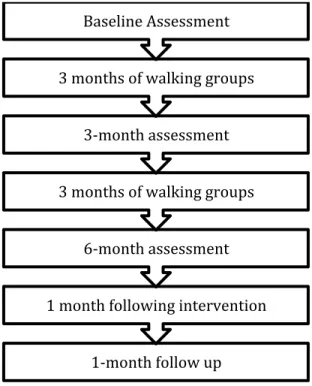
PACE-Life (Physical Activity Can Enhance Life) was approved by the Institutional Review Board at UNC Chapel Hill. During this open trial, subjects were enrolled in a walking intervention that met biweekly over the course of six months. Subjects were expected to attend as many groups as they were able to. Subjects were also expected to complete four rounds of assessments – one prior to the 6-month walking group intervention (baseline assessment), one 3-months into the intervention (mid-treatment assessment), one post-intervention (post-treatment assessment) and one 1-month following the termination of the intervention (1-month follow up assessment), as depicted in Diagram 1. These assessments took place at UNC Chapel Hill Hospital, in the Department of Exercise and Sport Science at UNC, and at either the Carrboro or Raleigh STEP clinics. Along with group walks, subjects also attended goal setting and if-then planning sessions during the second group of each week. These sessions were used to help subjects determine appropriate step and home-based walking goals along with assist subjects in brainstorming possible solutions to navigate around everyday obstacles that interfere with participating in physical activity. In addition to group walking sessions, subjects were also encouraged to complete home-based “intensity walks,” beginning after the seventh week of the intervention. Intensity walks are independent walking sessions that the subjects were to complete outside of group sessions.
33
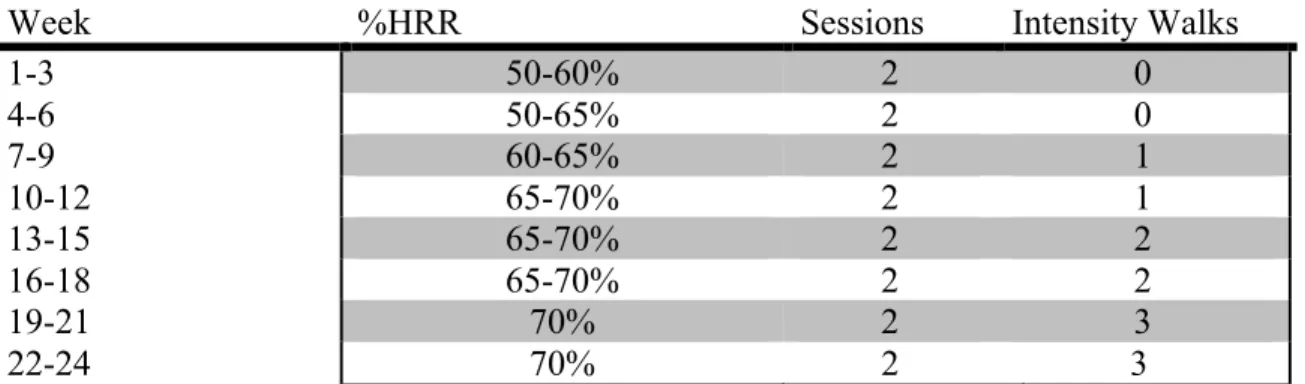
duration of the study, including during walks, which helped subjects monitor their HR during activity. For both group walks and intensity walks, each subject was given an individualized target heart rate range using the heart rate reserve method, based on resting heart rate and age as part of the intervention’s exercise prescription, which is depicted in Table 1.
Diagram 1: Study Design Process
Subjects
Inclusion/exclusion criteria were as follows: (i) subjects presented with a formal diagnosis of a Schizophrenia Spectrum including Schizophrenia, Schizoaffective Disorder, Brief Psychotic Disorder, Schizophreniform Disorder, and Unspecified Schizophrenia Spectrum and Other Psychotic Disorders based on the Diagnostic and Statistical Manual of Mental Disorders, 5th Edition (American Psychiatric Association, 2016); (ii) subjects were at least 18 years of age, of any gender and any ancestry; (iii) subjects were deemed clinically
1-month follow up 1 month following intervention
6-month assessment 3 months of walking groups
3-month assessment 3 months of walking groups
34
stable with no medication alterations one month prior to enrollment; (iv) subjects had no psychiatric related hospitalizations three months prior to enrollment; (v) subjects were not already engaging consistently in moderate-intensity exercise for at least 60 minutes per week over the 6 months prior to enrollment; (vi) subjects presented with no contra-indications to engage in regular, moderate-intensity exercised as defined by the American College of Sports Medicine (ACSM) guidelines (Exercise Preparticipation Health Screening, 2018); (vii) subjects scored an IQ of at least 70 as assessed via the Wechsler Abbreviated Scale of Intelligence (WASI) (see Appendix 3.1); (viii) subjects were not pregnant nor did they become pregnant throughout the duration of the study; (ix) subjects were willing and able to provide informed consent to participate in the study.
Recruitment and Enrollment Procedures
35 Exercise Training Intervention
Once subjects were enrolled in the study, they participated in the exercise training intervention in the form of walking groups. The intervention included group based community walks lasting 30 minutes, twice a week at a target heart rate based on heart rate reserve according to a resting heart rate acquired during the baseline assessment or through each participant’s Fitbit. Heart rate ranges were adjusted and progressed accordingly to Table 1 every three weeks over the course of six months. Group walks remained consistent at twice a week, while intensity walks were assigned starting in the seventh week and progressed from one to three walks over the following 18 weeks. The goal of this volume progression was to increase minutes of activity completed so that subjects were participating in at least 150 minutes of moderate intensity activity a week, as recommended by ACSM, by the end of the intervention.
Week %HRR Sessions Intensity Walks
1-3 50-60% 2 0
4-6 50-65% 2 0
7-9 60-65% 2 1
10-12 65-70% 2 1
13-15 65-70% 2 2
16-18 65-70% 2 2
19-21 70% 2 3
22-24 70% 2 3
36 Primary Purpose Methodology
For the purposes of assessing adherence, both group attendance and Fitbit data were collected. Subjects were asked to attend as many of the walking group sessions as they were able to. Attendance was taken by group leaders at each session. Along with attending walking groups, subjects were also asked to wear a Fitbit during all waking hours for the duration of the intervention. The group leaders synced Fitbits to mobile devices at the start and end of each walking sessions. The research team member administering assessments also synced subjects’ Fitbits. Some, but not all, of the subjects were able to sync their devices on their own and did so regularly. Throughout the study, the Fitbit data was logged from each subjects’ online account into a separate Excel file. Information pulled included resting heart rate, daily steps, bouts of activity including date and time of activity, type of activity, number of steps taken during the active bout, duration of activity (active minutes) and heart rate associate with each bout of activity. Days on which subjects completed at least 300 steps were counted as “present” while days on which subjects did not complete 300 steps were counted as “absent.”
37
prescribed overall, the total number of active minutes prescribed was compared to the overall number of active minutes completed by the subject, regardless of HR during active bouts.
Secondary Purpose Methodology
38 Tertiary Purpose Methodology
39
associated with a more positive association towards exercise (Kendzierski & DeCarlo, 1991). PACES is a valid measure for gauging an individual’s perceptions towards physical activity in general (Mullen et al., 2011). The score for this questionnaire is an overall sum from each question’s raw score. Finally, an Exit Survey (see Appendix 3.12) was also used in the final assessment stage to gather further information regarding attitudes and barriers towards physical activity and the intervention overall.
Statistical Analysis and Design
All data were analyzed via Jamovi Version 1.0.8.0 (The jamovi project, 2019). Descriptive statistics, including means and standard deviations, were calculated for all biological and physical function measurements, and physical activity data gathered from participant Fitbits. The alpha level for statistical analyses was set a priori at ≤.05. A power analysis was not conducted due to the novelty of the study and lack of available data regarding the population and intervention. It is hopeful that the results of this study will assist in power analyses of future studies.
40
H2: Assuming subjects adhered to at least 50% of the training prescription, functional and health-related outcomes including 6MWT, resting heart rate, resting blood
pressure, mean arterial pressure, hip and waist circumferences and waist to hip ratio, body mass index and weight will improve significantly in individuals with SSDs over a 6-month exercise intervention. It is believed that 50% of the prescribed amount of activity is a reasonable amount to elicit improvements in these measures based on adherence and compliance rates reported in the literature. The second hypothesis was analyzed using one-way ANOVAs with repeated measures using three timepoints (baseline, mid-treatment and post-treatment assessments). If significance was
observed, a post hoc Tukey test was conducted. No Bonferroni adjustment was made due to the fact that these results are preliminary. Effect size was also computed for all analyses. The effect size of each post hoc analysis was computed via the
Cohen’s d method (small effect size, d = .2 - .5: medium effect size, d = .5 - .8: large effect size, d > .8).
42
CHAPTER FOUR: RESULTS Overview
The primary purpose of this study was to determine the adherence and compliance of individuals diagnosed with SSDs to a 6-month, group-based walking intervention held at local mental health clinics. The secondary purpose of the study was to analyze if the 6-month intervention would impact physical functional and health-related outcomes in individuals with SSDs. The tertiary purpose of this study was to evaluate any effects on subjects’ motivation towards exercise after completing the intervention.
Subjects
43
Diagram 2: Consort Diagram
n = 70
• Subjects referred • 6 lost to contact • 1 not contacted
n = 63
• Screened
• 23 declined to participate • 23 ineligible
n = 17
• Enrolledn = 16
• Completed study
44
Characteristic Value
Average Age 38.2 ± 11.7years
Gender 62.50% Males
37.50% Females
Race 56.25% Caucasian
18.75% Black/African American 6.25% Asian
6.25% Native Hawaiian or Other Pacific Islander
6.25% American Indian or Alaskan Native 6.25% Other
Ethnicity 100% Non Hispanic or Latino
Education 6.25% Some high school
12.50% High school diploma or equivalent 56.25% Some college
12.50% College degree 12.50% Higher than college Estimated Years of Education 14.73 ± 3.78
Mother’s Education 18.75% High school diploma or equivalent
12.50% Some college 31.25% College degree 37.50% Higher than college Estimated Years of Mother’s
Education
15.61 ± 2.29
Father’s Education 6.25% Middle school or less
6.25% High school diploma or equivalent 12.50% Some college
25.00% College degree 43.75% Higher than college Estimated Years of Father’s
Education
15.6 ± 3.50
Smoker 43.75%
History of Substance Abuse 31.25%
45 Primary Purpose Results
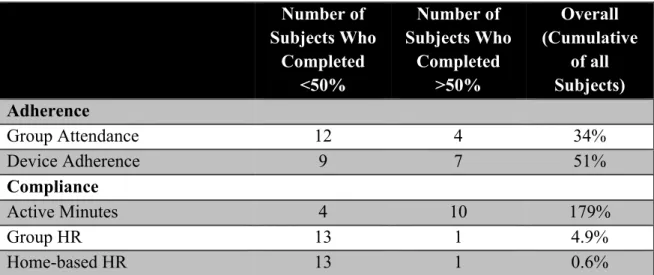
The primary purpose evaluated the overall adherence and compliance of the 6-month walking intervention by calculating the percentage of group walking sessions attended and the percentage of time subjects wore their Fitbits over the entire intervention. Compliance was calculated by determining the percentage of time subjects spent within the prescribed heart rate range during both group walking sessions and independent intensity walking sessions. Compliance was also calculated by determining the percentage of active minutes completed compared to the amount of active minutes prescribed. Results for adherence and compliance are summarized in Table 3.
Number of Subjects Who Completed <50% Number of Subjects Who Completed >50% Overall (Cumulative of all Subjects) Adherence
Group Attendance 12 4 34%
Device Adherence 9 7 51%
Compliance
Active Minutes 4 10 179%
Group HR 13 1 4.9%
Home-based HR 13 1 0.6%
Table 3: Adherence and Compliance Results Summary
Adherence
46
Overall adherence was evaluated as 25% of subjects having attended at least half of all groups and having worn their Fitbits half of the prescribed days, about 19% of subjects did not attend at least half of all walking sessions but wore their Fitbit half of the prescribed days, and about 56% of subjects neither attended at least half of all groups nor did they wear their Fitbit at least half of the prescribed days. Adherence results are summarized in Table 4.
Overall Level of Adherence Number of Subjects
Attended at least 50% of groups and worn Fitbit for at least 50% of prescribed time
4
Attended at least 50% of groups but did not wear Fitbit 50% of prescribed time
0
Wore Fitbit 50% of prescribed time but did not attend 50% of group sessions
3
Did not attend at least 50% of groups or wear Fitbit for 50% of prescribed time
9
Table 4: Summary of Adherence Results
Compliance
47
50% of active minutes completed during group walks. About 7% of subjects were within the target heart rate range for at least 50% of active minutes completed during home-based walks while the other 93% were within the target heart rate range for less than 50% of active minutes completed during home-based independent intensity walks. Compliance results are summarized in Table 5.
Level of Compliance Number of Subjects
Completed at least 50% of active minutes prescribed but did not comply with HR ranges for group-based, nor home-based walking sessions
8
Completed at least 50% of active minutes prescribed, complied with at least 50% HR ranges for group-based, but not home-based walking sessions
1
Completed at least 50% of active minutes prescribed, complied with at least 50% HR ranges for home-based, but not group-based walking sessions
1
Did not complete at least 50% of active minutes and also did not comply with HR ranges for group-based, nor home-based walking sessions
4
Fitbit did not record any number of active minutes (subjects not included in analyses for compliance)
2
Table 5: Summary of Compliance Results
Secondary Purpose Results
48 Baseline
Mid-Treatment
Post-Treatment
P-Value Effect Size Functional
Assessment
6MWT (m) 377 ± 112*∞ 465 ± 114* 466 ± 128∞ 0.001 0.142
Anthropometrics
Waist (cm) 103 ± 24.0 104 ± 24.3 107 ± 23.9 0.425 0.003
Hip (cm) 115 ± 20.7 114 ± 16.7 117 ± 19.7 0.683 0.002
W: H Ratio 0.897 ±
0.128
0.908 ± 0.111
0.915 ± 0.092
0.803 0.004
Body Weight (kg) 94.4 ± 30.6 94.9 ± 32.3 97.3 ± 32.0 0.513 0.000
BMI (kg/m2) 31.6 ± 9.38 32.0 ± 9.90 32.6 ± 9.62 0.785 0.000
Resting
Hemodynamics
RHR (bpm) 78.1 ± 17.8 85.3 ± 14.6 80.8 ± 16.3 0.470 0.018
RSBP (mmHg) 109 ± 11.9 108 ± 13.1 111 ± 12.1 0.578 0.008
RDBP (mmHg) 74.4 ± 11.5 74.5 ± 13.3 79.7 ± 11.3 0.199 0.039
MAP (mmHg) 85.9 ± 10.5 85.7 ± 12.0 90.2 ± 11.0 0.166 0.030
Table 6: Functional and Physiological Parameters Results:
** Significant differences in 6-minute walk distances between baseline and mid-treatment (377 ± 112 m, 465 ± 114, p < 0.001, and ∞baseline and post-treatment (377 ± 112 m, 466 ± 128 m, p < 0.001).
Note: 6MWT = 6-Minute Walk Test. W: H Ratio = Waist to hip ratio. BMI = Body mass index. RHR = Resting heart rate. RSBP = Resting systolic blood pressure. RDBP = Resting diastolic blood pressure. MAP = Mean arterial pressure.
Functional Assessment
49 Physiological Parameters
As reported in Table 6 above there were no significant findings observed from baseline, mid-treatment and post-treatment assessments for any of the physiological parameters, including anthropometric measures such as waist and hip circumferences, waist to hip ratio, as well as resting hemodynamics, including resting BP, MAP, RHR, weight and BMI.
Tertiary Purpose Results
50 Baseline
Mid-Treatment
Post-Treatment
P-Value Effect Size BPNES
Autonomy 3.00 ± 1.10*Φ 3.70 ± 0.745* 3.77 ± 0.697Φ 0.014 0.147
Competence 3.16 ± 1.08 3.50 ± 0.641 3.35 ± 0.885 0.143 0.066
Relatedness 2.37 ± 1.22∞ τ 3.27 ± 0.856∞ 3.44 ± 0.981τ 0.011 0.16
BREQ-2
Amotivation 0.391 ± 0.652 0.483 ± 0.513 0.517 ± 0.691 0.868 0.005
External Regulation
1.25 ± 0.913 0.967 ± 0.807 1.25 ± 1.00 0.287 0.030
Introjected Regulation
1.58 ± 1.29 1.62 ± 1.03 1.62 ± 1.08 0.887 0.002
Identified Regulation
2.78 ± 0.999 3.03 ± 0.700 2.95 ± 0.862 0.053 0.027
Intrinsic Regulation
2.70 ± 1.26° 3.17 ± 0.659° 2.82 ± 0.770 0.014 0.080
RAI 8.42 ± 6.86 10.60 ± 4.73 8.68 ± 4.87 0.127 0.057
PACES Overall Score
92.8 ± 15.2 86.8 ± 30.0 87.5 ± 27.6 0.715 0.012
Table 7: Psychometric Questionnaire Results
*Significant differences for autonomy on the BPNES between baseline and mid-treatment (3.00 ± 1.10, 3.70 ± 0.745, respectively, p = 0.038); Φ Significant differences for autonomy on the BPNES between baseline and post-treatment (3.00 ± 1.10, 3.77 ± 0.697, respectively, p = 0.021), ∞Significant differences for relatedness on the BPNES between baseline and mid-treatment treatment (2.37 ± 1.22, 3.27 ± 0.856, respectively, p = 0.040); τ Significant differences for relatedness on the BPNES baseline and post-treatment (2.37 ± 1.22, 3.44 ± 0.981, respectively, p = 0.014); °Significant differences for intrinsic regulation on the BREQ-2 between baseline and mid-treatment (2.70 ± 1.26, 3.17 ± 0.659, respectively, p = 0.011).
Note: BPNES = Basic Psychological Needs Scale. BREQ-2 = Behavioral Regulation in Exercise Questionnaire. PACES = Physical Activity Enjoyment Scale.
Basic Psychological Needs in Exercise Scale
51
significant ANOVA model was observed (p = 0.014, ES = 0.147). Post hoc analyses indicated significant differences for autonomy on the BPNES between baseline and midtreatment (3.00 ± 1.10, 3.70 ± 0.745, respectively, p = 0.038) and between baseline and post-treatment (3.00 ± 1.10, 3.77 ± 0.697, respectively, p = 0.021).
At baseline, subjects averaged a score of 2.37 ± 1.22 for relatedness on the BPNES. At mid-treatment, subjects averaged a score of 3.27 ± 0.856 for relatedness on the BPNES. At post-treatment, subjects averaged a score of 3.44 ± 0.981 for relatedness on the BPNES. A significant ANOVA model was observed (p = 0.011, ES = 0.160). Post hoc analyses were conducted and significant differences for relatedness on the BPNES were observed between baseline and mid-treatment treatment (2.37 ± 1.22, 3.27 ± 0.856, respectively, p = 0.040) and between baseline and post-treatment (2.37 ± 1.22, 3.44 ± 0.981, respectively, p = 0.014).
As reported in Table 7, there were no significant findings observed in competence between baseline, mid-treatment and post-treatment assessments.
Behavioral Regulation in Exercise Questionnaire-2
As reported in Table 7, there were no significant findings observed in amotivation, external regulation, introjected regulation or identified regulation between baseline, mid-treatment and post-mid-treatment assessments. There also was no significance observed in RAI between the three assessment periods.
52
regulation (p = 0.014, ES = 0.080). A post hoc test was conducted and a significance difference between baseline and mid-treatment were observed (2.70 ± 1.26, 3.17 ± 0.659, respectively, p = 0.011).
Physical Activity Enjoyment Scale
The ANOVA model was not significant, therefore no significant differences on the on the PACES questionnaire throughout the study were observed.
Subject Exit Survey
The results from the exit survey were encouraging, with the overall average of each Likert scale question (1-18) being 4.3 out of 5, indicating that subjects had positive feelings towards the intervention and research experience. The highest rated question was reported at 4.8 out of 5.0, indicating that subjects felt very included in conversations during group. The lowest ranked question was reported at 3.8 out of 5.0, indicating that subjects only moderately enjoyed tracking their active heart rates during walking groups. The Likert scale question results are summarized in Table 8.
53
Subjects reported that the number primary reason for not wearing their Fitbit was due to forgetting to put it back on after charging, with the second most common reasons being forgetting to put it on after sleep and dislike of monitoring physical activity.
54
Exit Survey Question Average Reported
Value 1. I enjoyed being part of a group focused on physical activity
and health.
4.4 ± 0.92
2. Overall, I enjoyed goal-setting/if-then plan sessions once a week.
4.4 ± 0.92
3. I felt included in conversations during group. 4.8 ± 0.46
4. I had a good relationship with the other members of the group. 4.4 ± 0.74 5. I was motivated to attend groups because of the social
interaction.
4.0 ± 1.12
6. I had a good relationship with the walking group leaders. 4.6 ± 0.74
7. I felt motivated by group leaders during walking. 4.6 ± 0.74
8. I was motivated to attend groups because of the health benefits I would gain from walking.
4.4 ± 0.53
9. I enjoyed using a Fitbit to track my physical activity. 4.2 ± 1.30
10. I found the Fitbit easy to use. 4.3 ± 0.50
11. I am likely to continue to use my Fitbit after the study ends. 4.0 ± 1.41
12. I enjoyed tracking my heart rate during walks. 3.8 ± 0.83
13. I enjoyed receiving target heart rate goals throughout the study.
4.0 ± 0.87
14. I felt the target heart rate goals were attainable for me. 4.2 ± 0.97 15. I enjoyed setting goals for home-based intensity walks. 4.3 ± 0.71 16. I felt that my if-then plans helped me overcome barriers to
walking.
4.2 ± 0.67
17. Overall, I feel that my health has improved since joining PACE-Life.
4.4 ± 0.88
18. If given the chance, I would join PACE-Life again. 4.3 ± 1.12
55 Exit Survey Question Subject Response 20. I missed group due to the
following reasons:
1. Issues with transportation
2. Temperature being too hot outside
3. Having to go to work or school at the same time 4. Not feeling well physically
5. Not feeling well emotionally 6. Family obligations
7. Appointments (scheduling conflict) 8. Lack of compensation for attending 9. Dislike of tracking physical activity 23. I did not wear my Fitbit
due to the following reasons:
1. I forgot to put it on after charging it
2. I forgot to put it on after taking it off to sleep 3. I found it uncomfortable to wear
4. It did not work well
5. I did not like having my physical activity monitored
6. Did not wear it on weekends when being inactive 25. What I liked most about
PACE-Life is...
1. Social interaction 2. Results
3. Meeting goals 4. Group walks 26. What I liked least about
PACE-Life is...
1. Having to walk outside in poor weather 2. Change/inconsistency of group leaders
3. Difficulty keeping up with faster walkers in the group
56
CHAPTER FIVE: DISCUSSION AND CONCLUSION Overview
The purpose of this study was to determine the adherence and compliance of individuals with SSDs to a 6-month walking, group-based intervention that met biweekly at local mental health clinics. Analyses showed that adherence to the PACE-Life study, including group walking sessions and Fitbit adherence was 34% and 51% respectively. Compliance to the exercise prescription’s individualized target heart rate ranges in both group walks and during home-based walks were 4.9% and 0.6% respectively. Compliance to the overall total number of active minutes completed was 179% of the prescribed minutes. Further, the effects of the walking intervention on various physical parameters (i.e. 6MWT, RHR, resting BP, MAP, BMI, weight, hip and waist circumferences and waist to hip ratio), and psychometrics (i.e. BREQ-2, PACES, and BPNES) from baseline to mid-treatment and post-treatment assessments was also evaluated. Lastly, physical activity enjoyment was also evaluated objectively through different questionnaires and also subjectively through an exit participation survey. Significant improvements in 6MWT distance, autonomy, relatedness and intrinsic regulation were observed.
Primary Purpose
57
subjects attended at least 50% of group sessions; 51% for days Fitbit worn – 44% of subjects wore Fitbit at least 50% of days prescribed), especially compared to a similar pilot study done in 2016, which had a group attendance rate of 84% and a pedometer adherence rate of 86% (Browne, et al, 2016). In Browne et al.’s study (2016) the intervention was only 10 weeks long, in comparison to the current study’s length of 24 weeks. The 2014 study also financially compensated subjects $10 for every group session attended, incentivizing subjects to participate, which was not included in the present study. The adherence rates seen in the current study were also less than those seen in most studies included in the systematic review and Meta analysis done by Firth et al. in 2015. The exercise interventions that this review reported on that were done in individuals diagnosed with SSDs reported adherence rates upwards of 70%, with the exception of two studies, one done in 2003 by Archie et al. and one completed by Abdel-Baki et al. (2013). Archie et al. reported an attendance rate of 48% over the course of a 14 week, supervised walking intervention while Abdel-Baki et al. reported an attendance rate of 30% of the course of a 24 week intervention providing subjects free, unsupervised, gym access.
58
high as 90 degree Fahrenheit. Due to the fact that groups were held predominantly outdoors in the area surrounding the mental health clinics, subjects may have been deterred from attending on days with extreme heat and humidity. This is in line with the information gathered from the exit survey, where subjects reported that one of the number one reasons for dislike of the PACE-Life study was having to walk outdoors in all weather conditions, including rain and heat. While one of the two locations where group was held had a convenient indoor location for inclement weather, including rain and heat, the other location did not experience this advantage, meaning that no matter outdoor conditions, groups were expected to be held in the outdoors.
Another fact that subjects reportedly did not like about PACE-Life was the change in group walking leaders and inconsistently in research staff. In the month of May, about halfway through the intervention, group leaders, which were primary graduate student research assistants, changed due to the end of the academic semester and change in work/school schedules. Due to the fact that individuals with SSDs typically dislike change and enjoy consistently in personnel, this may have contributed to a fall in attendance rates midway through the intervention. This may also help to explain why attendance rates decreased significantly from the first half of the program to the second.
59
other appointments taking place at the same time as group sessions; physical and mental unwellness; family obligations; lack of compensation; and dislike for tracking physical activity, which was encouraged during group walking sessions through the utilization of the Fitbit devices.
60
reported rates of 86% in the first week of the intervention, and a decrease in adherence to 74% by the end of the 12 week study (Swartz, et al, 2017). Each of these studies show the inconsistency, and decrease in adherence to wearable devices as the novelty of a new device wears off, supporting the low rates of device adherence in the current open trial. The current study faced a decreased Fitbit adherence from 63% in the first three months (71% of subjects adhered to wearing their Fitbit at least 50% of the prescribed time) to 43% in the second half of the PACE-Life intervention (50% of subjects adhered to wearing their Fitbit at least 50% of the prescribed time).
Adherence of subjects wearing their Fitbits in the current study was significantly low for a number of reported and other possible, although not reported, reasons. Overall, subjects reported dislike of the physical sensation of wearing the Fitbit on their wrists. Others did not enjoy the appearance of the watch and felt that the red color drew too much attention to it, while also not coordinating with their other fashion choices. Another reason that subjects reported as to why they did not wear their Fitbit was due to a dislike of tracking physical activity. Other plausible reasons that subjects did not adhere to wearing their Fitbits may include the fact that the devices were of outdated technology and often did not charge, tracked information incorrectly, and displayed the incorrect information including date and time, and possibly HRs. According to the exit survey, the number one reason that subjects did not wear their Fitbit on a given day, however, was that they forgot to put it back on their wrist after taking it off to charge. Another significantly reported reason for not wearing the Fitbit was that subjects forgot to put it back on after taking it off at night to sleep.