Sixth Edition
Sixth Edition
Publication
I
Copyright © 2010 by the American Psychological Association. All rights reserved. Except as permit-ted under the Unipermit-ted States Copyright Act of 1976, no part of this publication may bereproduced or distributed in any form or by any means, including, but not limited to, the process of scanning and digitization, or stored in a database or retrieval system, without the prior written permission of the publisher.
Published by
American Psychological Association 750 First Street, NE
Washington, DC 20002 www.apa.org
To order
APA Order Department P.O. Box 92984
Washington, DC 20090-2984
Tel: (800) 374-2721; Direct: (202) 336-5510 Fax: (202) 336-5502; TDDTITY: (202) 336-6123 Online: www.apa.org/books/
E-mail: [email protected]
In the U.K., Europe, Africa, and the Middle East, copies may be ordered from American Psychological Association
3 Henrietta Street Covent Garden, London WC2E 8LU England
Typeset in Sabon, Futura, and Universe by Circle Graphics, Columbia, MD Printer: Automated Graphic Systems, White Plains, MD
Cover Designer: Naylor Design, Washington, DC Production Manager: Jennifer L. Macomber Library of Congress Cataloging-in-Publication Data
Publication manual of the American Psychological Association. —6th ed. p. cm.
Includes bibliographical references and index. ISBN-b: 1-4338-0561-8 (softcover)
ISBN-10: 1-4338-0559-6 (hardcover) ISBN-lU: 1-4338-0562-6 (spiral bound) ISBN-13: 978-1-4338-0S61-5 (softcover)
[etc.]
i. Psychology—Authorship—Style manuals. 2. Social sciences—Authorship— Style manuals. 3. Psychological literature_Publishing—Handbooks, manuals, etc. 4. Social science literature_Publishing—Handbooks, manuals, etc. I. American Psychological Association.
BF76.7.P83 2010 808' .06615—dc22
2009010391
British Library Cataloguing-in-Publication Data A CIP record is available from the British Library. Printed in the United States of America
Contents
List of Tables and Figures xi
Foreword xiii
Preface xv
Editorial Staff xvii
Introduction 3
Organization of the Sixth Edition 4 Specific Changes in the Sixth Edition 4
How to Use the Publication Manual 6
1.
Writing for the Behavioral and Social Sciences
9Types of Articles 9
1.01 Empirical Studies 10
1.02 Literature Reviews 10
1.03 TheoreticalArticles 10
1.04 Methodological Articles 10
1.05 Case Studies 11
1.06 Other Types of Articles 11
Ethicaland Legal Standards in Publishing 11
Ensuringthe Accuracy of Scientific Knowledge 12 1.01 Ethical Reporting of Research Results 12
1.08 Data Retention and Sharing 12
1.09 Duplicate and Piecemeal Publication of Data 13
1.10 Plagiarism and Self-Plagiarism 15
Protectingthe Rights and Welfare of Research Participants 16 1.11 Rights and Confidentiality of Research Participants 16
CONTENTS
Protecting Intellectual Property Rights 18
1.13 Publication Credit 18
1.14 Reviewers 19
1.15 Author's Copyright on an Unpublished Manuscript 19
1.16 Planning for Ethical Compliance 20
2. Manuscript Structure and Content 21
Journal Article Reporting Standards 21
Manuscript Elements 23 2.01 Title 23
2.02 Author's Name (Byline) and Institutional Affiliation 23
2.03 AuthorNote 24
2.04 Abstract 25
205 Introduction
272.06 Method 29
2.07 Results 32
2.08 Discussion 35
2.09 Multiple Experiments 36
2.10 Meta-Analyses 36
2.11 References 37
2.12 Footnotes 37
2.13 Appendices and Supplemental Materials 38
Sample Papers 40
3. Writing Clearly and Concisely
61Organization 61
3.01 Length 61
3.02 Organizing a Manuscript With Headings 62
3.03 Levels of Heading 62
3.04 Seriation 63
Writing Style 65
3.05 Continuity in Presentation of Ideas 65
3.06 Smoothness of Expression 65
3.07 Tone 66
3.08 Economy of Expression 67
3.09 Precision and Clarity 68
3.10 Linguistic Devices 70
3.11 Strategies to Improve Writing Style 70
Reducing Bias in Language 70
General Guidelines for Reducing Bias 71
Guideline 1: Describe at the Appropriate Level of Specificity 71 Guideline 2: Be Sensitive to Labels 72
Guideline 3: Acknowledge Participation 73
Reducing Bias by Topic 73
3.12 Gender 73
3.13 Sexual Orientation 74
C 0 N
3.15 Disabilities 76
3.16 Age 76
3.17 Historical and Interpretive Inaccuracies 76
Grammarand Usage 77
3.18 Verbs 77
3.19 Agreement of Subject andVerb 78
3.20 Pronouns 79
3.21 Misplaced and Dangling Modifiers and Use of Adverbs 81
3.22 Relative Pronouns and Subordinate Conjunctions 83
3.23 Parallel Construction 84
4. The Mechanics of Style
87Punctuation 87
4.01 Spacing After Punctuation Marks 87
4.02 Period 88
4.03 Comma 88
4.04 Semicolon 89
4.05 Colon 90 4.06 Dash 90
4.07 Quotation Marks 91
4.08 Double or Single Quotation Marks 92
4.09 Parentheses 93
4.10 Brackets 94 4.11 Slash 95
Spelling 96
4.12 PreferredSpelling 96 4.13 Hyphenation 97
Capitalization 101
4.14 Words Beginning a Sentence 101
4.15 Major Words in Titles and Headings 101
4.16 Proper Nouns and Trade Names 102
4.17 Nouns Followed by Numerals or Letters 103
4.18 Titles of Tests 103
4.19 Names of Conditions or Groups in an Experiment 104
4.20 Names of Factors, Variables, and Effects 104
Italics 104
4.21 Use of Italics 104
Abbreviations 106
4.22 Use of Abbreviations 106
4.23 Explanation of Abbreviations 107
4.24 Abbreviations Accepted as Words 107
4.25 Abbreviations Used Often in APA Journals 108
4.26 Latin Abbreviations 108
4.27 Scientific Abbreviations 108
4.28 Other Abbreviations 110
4.29 Plurals of Abbreviations 110
CONTENTS
Numbers 111
4.31 Numbers Expressed in Numerals 111
4.32 Numbers Expressed in Words 112
4.33 Combining Numerals and Words to Express Numbers 112
4.34 Ordinal Numbers 113
4.35 Decimal Fractions 113
4.36 Roman Numerals 114
4.37 Commas in Numbers 114
4.38 Plurals of Numbers 114
Metrication 114
4.39 Policy on Metrication 114
4.40 Style for Metric Units 115
Statistical and Mathematical Copy 116
4.41 Selecting Effective Presentation 116
4.42 References for Statistics 116
4.43 Formulas 116
4.44 Statistics in Text 116
4.45 Statistical Symbols 117
4.46 Spacing, Alignment, and Punctuation 118
Equations 123
4.47 Equations in Text 123
4.48 Displayed Equations 123
4.49 Preparing Statistical and Mathematical Copy 124
5. Displaying Results
125General Guidance on Tables and Figures 125
5.01 Purposes of Data Displays 125
5.02 Design and Preparation of a Data Display 126
5.03 Graphical Versus Textual Presentation 126
5.04 Formatting Tables and Figures 127
5.05 Table and Figure Numbers 127
5.06 Permission to Reproduce Data Displays 128
Tables 128
5.07 Conciseness in Tables 128
5.08 Table Layout 128
5.09 Standard Forms 129
5.10 Relation of Tables and Text 130
5.11 Relation Between Tables 130
5.12 Table Titles 133
5.13 Table Headings 133
5.14 Table Body 137
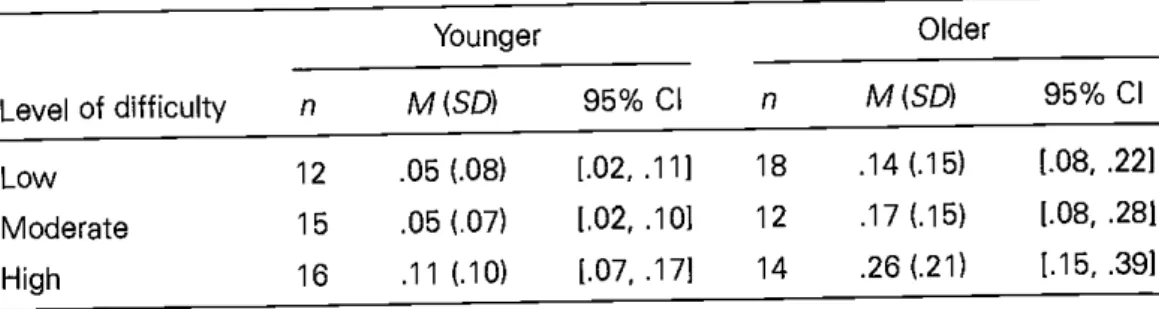
5.15 Confidence Intervals in Tables 138
5.16 Table Notes 138
5.17 Ruling of Tables 141
5.18 Presenting Data in Specific Types of Tables 141
5.19 Table Checklist 150
Figures 150
5.20 Principles of Figure Use and Construction 150
CONTENTS
____
5.21 Typesof Figures 151 5.22 Standards for Figures 152
5.23 Figure Legends and Captions 158 5.24 Planning Figures 161
5.25 Preparation of Figures 161
Presenting Electrophysiological, Radiological, and Other Biological Data 161
5.26 Electrophysiological Data 162
5.27 Radiological (Imaging) Data 162 5.28 Genetic Data 165
5.29 Photographs 165
5.30 Figure Checklist 167
6. Crediting Sources
169When to Cite 169
6.01 Plagiarism 170
6.02 Self-Plagiarism 170 Quoting and Paraphrasing 170
6.03 Direct Quotation of Sources 170
6.04 Paraphrasing Material 171
6.05 Direct Quotations of Online Material Without Pagination 171
6.06 Accuracy of Quotations 172
6.07 Changes From the Source Requiring No Explanation 172
6.08 Changes From the Source Requiring Explanation 172
6.09 Citations Within Quotations 173
6.10 Permission to Quote, Reprint, or Adapt 173
Citing References in Text 174
6.11 One Work by One Author 174
6.12 One Work by Multiple Authors 175
6.13 Groups as Authors 176
6.14 Authors With the Same Surname 176
6.15 Works With No Identified Author or With an
Anonymous Author 176
6.16 Two or More Works Within the Same Parentheses 177
6.17 Secondary Sources 178
6.18 Classical Works 178
6.19 Citing Specific Parts of a Source 179
6.20 Personal Communications 179
6.21 Citations in Parenthetical Material 179
Reference List 180
6.22 Construction of an Accurate and Complete Reference List 180
6.23 Consistency 181
6.24 Using the Archival Copy or Version of Record 181
6.25 Order of References in the Reference List 181
6.26 References Included in a Meta-Analysis 183
Reference Components 183
- 6.27 Author and Editor Information 184
CONTENTS
6.29 Title 185
6.30 Publication Information 186
6.31 Electronic Sources and Locator Information 187
6.32 Providing Publication Data for Electronic Sources 189
7.
Reference Examples
193 Typesand Variations 193Examples by Type 198
7.01 Periodicals 198
7.02 Books, Reference Books, and Book Chapters 202
7.03 Technical and Research Reports 205
7.04 Meetings and Symposia 206
7.05 Doctoral Dissertations and Master's Theses 207
7.06 Reviews and Peer Commentary 208
7.07 Audiovisual Media 209
7.08 Data Sets, Software, Measurement Instruments, and Apparatus 210
7.09 Unpublished and Informally Published Works 211
7.10 Archival Documents and Collections 212
7.11 Internet Message Boards, Electronic Mailing Lists, and Other Online
Communities 214
Appendix7.1: Referencesto Legal Materials 216
A7.01 General Forms 216
A7.02 Text Citations of Legal Materials 217
A7.03 Court Decisions (Bluebook Rule 10) 217
A7.04 Statutes (Bluebook Rule 12) 219
A7.05 Legislative Materials (Bluebook Rule 13) 221
P.7.06 Administrative and Executive Materials (Bluebook Rule 14) 223
A7.07 Patents 224
8.
The Publication Process 225
Editorial Process 225
8.01 Peer Review 225
8.02 Manuscript Acceptance or Rejection 226
AuthorResponsibilities 228
8.03 Preparing the Manuscript for Submission 228
8.04 Complying With Ethical, Legal, and Policy Requirements 231
8.05 Publisher Policy Requirements 236
8.06 Working With the Publisher When the Manuscript
Has Been Accepted 239
8.07 Checklist for Manuscript Submission 240
Appendix: Journal Article Reporting Standards (JARS), Meta-Analysis Reporting Standards (MARS), and Flow of Participants Through Each Stage of
an Experiment or Quasi-Experiment 245
References 255
Tables
Table 2.1 Author Bylines 24
Table 3.1 Format for Five Levels ofHeading in APAJournals 62 Table 4.1 Guide to Hyphenating Terms 98
Table 4.2 Prefixes and Suffixes That Do Not Require Hyphens 99 Table 4.3 Prefixed Words That Require Hyphens 100
Table 4.4 Common Abbreviations for Unitsof Measurement 109 Table 4.5 Statistical Abbreviations and Symbols 119
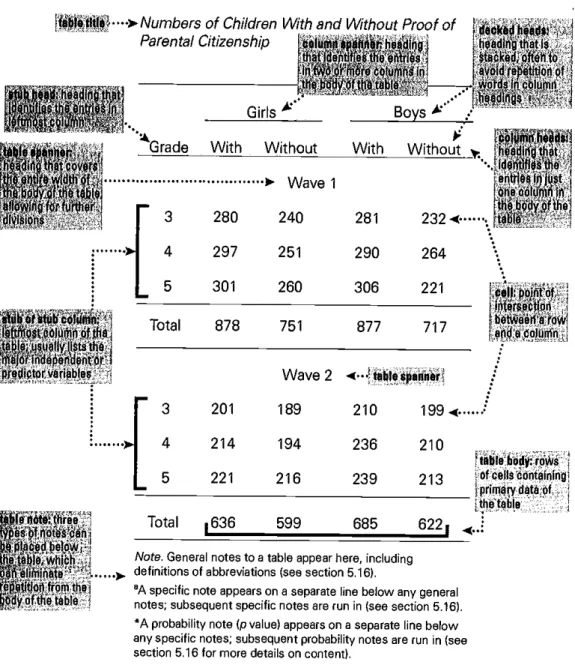
Table 5.1 Basic Componentsof a Table 129 Table 5.2 Sample of Effective TableLayout 130
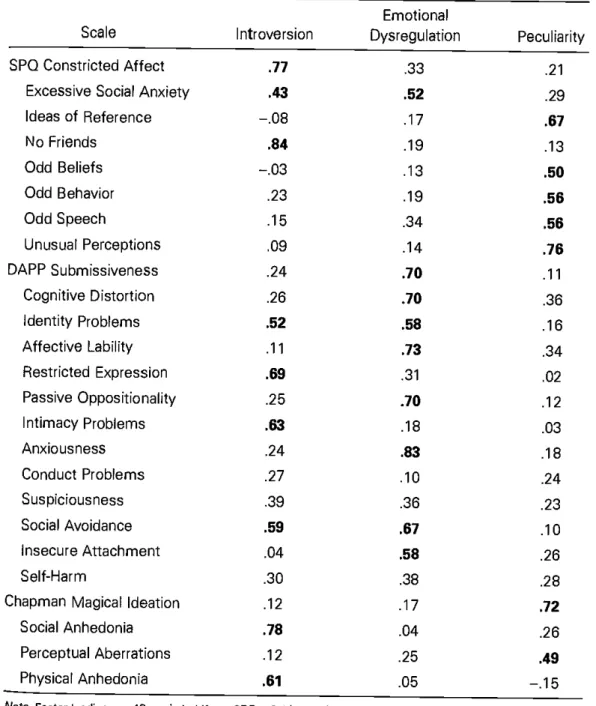
Table 5.3 Sample Factor Loadings Table (With Rotation
Method Specified) 131
Table 5.4 Sample Table With Detailed Specifications of Complex Experimental
Designs 134
Table 5.5 Sample Table Display of a Sample's Characteristics 135
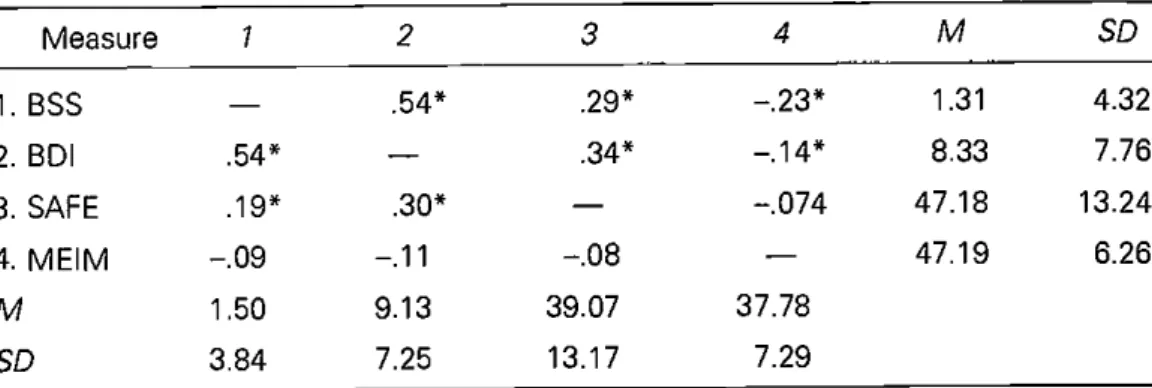
Table 5.6 Sample Table of Correlations in Which the Values for Two Samples ArePresented 136
Table 5.1 Sample Table of Results of Fitting Mathematical Models 137 Table 5.8 Sample Table Including Confidence Intervals With Brackets 139 Table 5.9 Sample Table Including Confidence Intervals With Upper
and Lower Limits 140
Table 5.10 Sample Table Display of Psychometric Properties of Key Outcome
Variables 142
Table 5.11 Sample Table of One-Degree-of-Freedom Statistical Contrasts 143 Table 5.12 Sample Regression Table 144
____
LIST OF TABLES AND FIGURES
Table 5.13 Sample Hierarchical Multiple Regression Table 145
Table 5.14 Sample Model Comparison Table 146
Table 5.15 Sample Multilevel Model Table 147
Table 5.16 Sample WordTable 149
Table 6.1 Basic Citation Styles 177
Figures
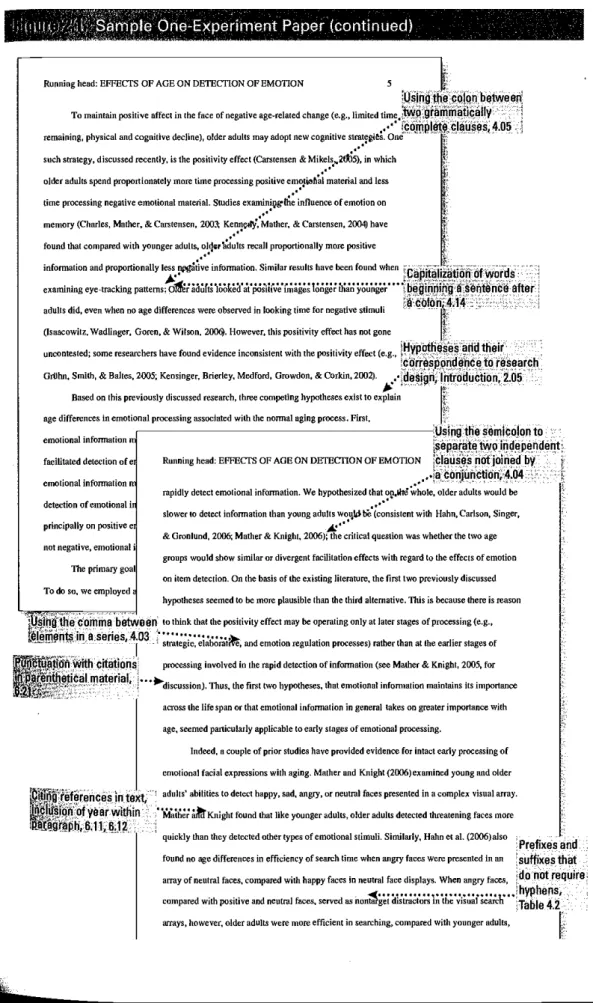
Figure 2.1 Sample One-Experiment Paper 41
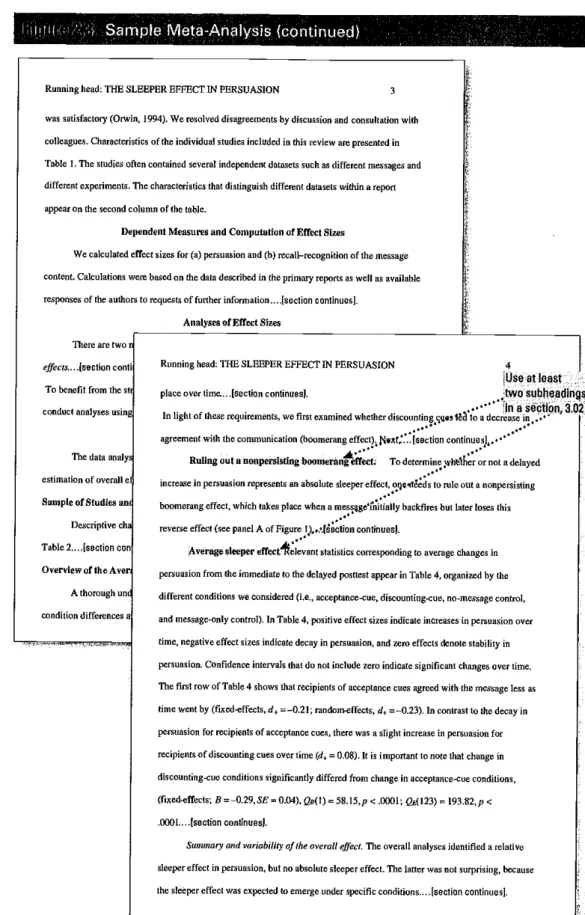
Figure2.2 Sample Two-Experiment Paper 54 Figure2.3 Sample Meta-Analysis 57
Figure5.1 Complex Theoretical Formulations 152
Figure5.2 Theory Through a Set of Path Models 153
Figure5.3 Samplingand Flow of Subjects Througha Randomized Clinical Trial
or Other Experiment 154
Figure5.4 Flow of Participants in a Survey Study 155
Figure5.5 Results of One-Way Design Using Error Bars to Represent Precision of the Resulting Estimates 156
Figure5.6 Empirical ResultsFrom a Complex Multivariate Model 157 Figure5.1 Kinds of Responses Being Gathered and Scoring Methods 158 Figure 5.8 Details of an Experimental Laboratory Set-Up 159
Figure5.9 Detailsof Experimental Procedure 160 Figure 5.10 Event-Related Brain Potential Data 163
Figure 5.11 Neuroimaging Data With Details of Processing Information 164
Figure 5.12 Display of Genetic Material—Physical Map 166 Figure 6.1 Example of Appropriate CitationLevel 170
Figure 6.2 Location of Digital Object Identifier (DOl) in Journal Article 189 Figure 6.3 Location of Digital Object Identifier for Article on Database Landing
Page 190
Figure 6.4 Example of Reference in Electronic Document With Digital Object Identifier Hidden Behind a Button 191
Figure 6.5 Digital Object Identifier Resolver 191 Figure 8.1 Sample Cover Letter 232
Figure 8.2 APA ComplianceWith Ethical Principles Form 233
Figure 8.3 APA Disclosure of Interests Form 235
Figure 8.4 APA Copyright Permission Request Form 237
F
romthe American Psychological Association has been designed to advance scholar-its inception as a brief journal article in 1929, the Publication Manual ofship by setting sound and rigorous standards for scientific communication. The
creators of the 1929 manuscript included psychologists, anthropologists, and business
managers who convened under the sponsorship of the National Research Council. They sought to establish a simple set of procedures, or style rules, that would codify
the many components of scientific writing to increase the ease of reading comprehen-sion. This goal was subsequently embraced not only by psychologists but also by
schol-ars in other social and behavioral sciences who wished to enhance the dissemination
of knowledge in their respective fields.
Uniform style helps us to cull articles quickly for key points and findings. Rules of style in scientific writing encourage full disclosure of essential information and allow us to dispense with minor distractions. Style helps us express the key elements of quan-titative results, choose the graphic form that will best suit our analyses, report critical details of our research protocol, and describe individuals with accuracy and respect. It removes the distraction of puzzling over the correct punctuation for a reference or the
proper form for numbers in text. Those elements are codified in the rules we follow
for clear communication, allowing us to focus our intellectual energy on the substance of our research.
Today, Style sets a standard that is realized in APA journals, books, and electron-ic databases. In my tenure as APA publisher, the APA Journals program has grown from one that publishes 17,700 pages a year to one that publishes 37,000 pages a year. The APA Books program has grown from 12 books to over 1,214 books as well as 160 psychother-apy training videos. APA electronic products have grown from one database to five data-bases that offer users immediate connection to abstracts, books, journals, reviews, and quality gray literature. This profusion of scholarship has been supported and defined by the guidance provided in the Publication Manual. Together with the APA Dictionary of
FOREWORD 4
Psychology and Encyclopedia of Psychology, it establishes a sound foundation for the advancement of the field.
The Publication Manual is consulted not only by psychologists but also by stu-dents and researchers in education, social work, nursing, business, and many other
behavioral and social sciences. Its standards are available in English as well as Spanish, Portuguese, Korean, Chinese, and many other languages. A central focus of
delibera-tion for this edidelibera-tion has been the way in which web-based technological innovadelibera-tions
have altered the way we conceptualize, conduct, and consume scientific research. The
sixth edition of the Publication Manual is devoted in large part to interpreting these advances and incorporating them into the style lexicon, It is my hope that, in concert
with our other reference products, it will serve as a solid base for all of your scientific communications.
Gary R. VandenBos, PhD
Publisher, American Psychological Association
rfo
better understand the complex changes in scientific publishing and address
them in this edition, many experts and professional groups were consulted. We
began the revision process in 2006 by looking closely at the fifth edition,
ana-lyzing more than five years of accumulated user feedback; evaluating published criti-cism; and commissioning reviews from senior editors in psychology, education, nurs-ing, history, and business. After deliberation of and debate about these comments, the
APA Publications and Communications Board set broad parameters for the revision
and appointed a panel of experienced editors and scientists from diverse specialty areas to collaborate with dedicated staff on the revision.
The six-member Publication Manual Revision Task Force met for the first time in February 2007. They determined that revisions were needed in seven key areas: ethics,
journal article reporting standards, reducing bias in language, graphics, writing style, references, and statistics. Working groups of experts were established to support the work of the task force in each area.
As the revision progressed, APA staff continued to solicit recommendations for
revision from the APA Council of Editors, from Publication Manual users at the
www.apastyle.org website, from APA members at professional meetings, and from APA boards and committees. Those recommendations were passed along to working
group and task force members for consideration.
Thus, this edition of the Publication Manual is the result of creative collaboration with many groups and individuals. We must first thank the members of the Publication Manual Revision Task Force. They devoted many hours to analyzing reviews, consid-ering the scholarly publishing climate, identifying topics in need of greater coverage,
meeting with working group members to generate and revise text, critiquing and dis-cussing new drafts, and poring over the final draft with a persistent commitment to
getting it right. We are fortunate to have benefited so thoroughly from their
enthusias-tic and generous support of this project.
PREFACE
We are also grateful for the contributions that came from the working groups of
experts who helped shape this edition. They dialed in faithfully to join Webex confer-ence calls, collaborating to ensure accurate and comprehensive coverage for their
respective areas. We benefited from the welcome blend of tact, humor, and insight that
they brought to this project.
Early in the revision process, we solicited critiques from selected core users, that is,
from senior editors and writers in the areas of psychology, nursing, education, and business. The overall recommendations gained from those individuals greatly
influ-enced the approach taken in planning this edition of the Publication Manual. For
shar-ing their insights and suggestions, we thank Barney Beins, Geoff Cummshar-ing, Janet Shibley Hyde, Judy Nemes, Kathryn Riley, Henry Roediger III, Peter W. Schroth, Martha Storandt, and Sandra P. Thomas. On a related note, we are indebted to Linda
Beebe and the PsycINFO staff for their invaluable guidance on how evolving technolo-gies continue to affect the reading, storage, and retrieval of scholarly work.
To guide us in our commitment to provide sound and timely instruction on scien-tific reporting, we solicited comments from several APA boards and committees. We are
grateful for recommendations received from the APA Committee on Ethnic Minority
Affairs; the APA Board of Scientific Affairs; the APA History Oversight Committee; the
APA Committee on Disability Issues in Psychology; the American Psychological Association of Graduate Students; the APA Task Force on Gender Identity, Gender
Variance, and Intersex Conditions; and the APA Committee on Socioeconomic Status. Several writing instructors and coaches contacted us with suggestions for making APA Style more accessible for students. For taking the time to share their
recommen-dations, we are most grateful to Dee Seligman, Wendy Packman, Scott Hines, Geeta
Patangay, Mylea Charvat, and Jeff Zuckerman.
Last, we thank the APA Office of Publications and Databases staff for their many
contributions to this edition, including Paige Jackson, Susan Herman, Annie Hill,
Harriet Kaplan, Edward Porter, Shenyun Wu, Amy Pearson, Ron Teeter, Hal Warren, Beverly Jamison, Susan Harris, and Julia Frank-McNeil. Nora Kisch, Julianne Rovesti,
Peter Gaviorno, and the entire sales and marketing team have worked tirelessly to inform the broad social science community about the new edition. We are
particular-ly grateful to Jennifer Macomber for her skilled and meticulous care in shepherding the manuscript through production. Finally, we thank Anne Woodworth Gasque, who man-aged the process with ingenuity and grace, for her superb stewardship of this project.
Mary Lynn Skutley
Editorial Director, APA Books
Gary R. VandenBos, PhD
Publication Manual of the
American
Psychological
Association, Sixth
Edition
Editorial Staff
Editor in Chief
GaryR. VandenBos, PhD
Project
Director
MaryLynn Skutley
Senior
Editors
Anne Woodworth Gasque
Paige Jackson
Publication
Manual Revision Task Force
MarkAppelbaum, Chair
Lillian Comas-Diaz
Harris Cooper
EDITORIAL STAFF
Publication Manual Revision Working Groups
Bias-Free Language Journal Article Reporting Standards (JARS) Lillian Comas-Din, Co-Chair Mark Appelbaum, Co-Chair
Peter Ornstein, Co-Chair Harris Cooper, Co-Chair
Norman Abeles Scott E. Maxwell
Kevin Cokley Valerie F. Reyna
Sari H. Dworkjn Kenneth J. Sher
Alba A. Ortiz Arthur Stone
Denise Sekaquaptewa
Nathan Grant Smith References
Glen W. White Mark Appelbaum, Co-Chair
Peter Ornstein, Co-Chair
Ethics SusanHerman
Leah L. Light, Co-Chair Annie Hill
Lois Tetrick, Co-Chair
Celia B. Fisher Statistics
LenoreW. Harmon Mark Appelbauin, Co-Chair
Mieke Verfaellie Harris Cooper, Co-Chair
Geoff Cumming
Graphics Michael Edwards
Mark Appelbaum, Co-Chair Joel Levin
Lois Tetrick, Co-Chair Abigail Panter
John Jonides
Penny Pexman Writing Style
David Thissen Leah L. Light, Co-Chair
Howard Wainer Peter Ornstein, Co-Chair
I
;sociation t
\':
T
he Publication Manual of the American Psychological Association was firstpublished in 1929 as a seven-page "standard of procedure, to which exceptions would doubtless be necessary, but to which reference might be made in cases of
doubt" (Bentley et a!., 1929, p. 57). Eighty years later, we launch the sixth edition of
the Publication Manual in the same spirit. Over the years, the Publication Manual has
grown by necessity from a simple set of style rules to an authoritative source on all
aspects of scholarly writing, from the ethics of duplicate publication to the word choice that best reduces bias in language.
The rules of APA Style are drawn from an extensive body of psychological
litera-ture, from editors and authors experienced in scholarly writing, and from recognized authorities on publication practices. This edition of the Publication Manual has been extensively revised to reflect new standards in publishing and new practices in infor-mation dissemination. Since the last edition of the manual was published, we have gone from a population that reads articles to one that "consumes content." New tech-nologies have made increasingly sophisticated analyses possible, just as they have accelerated the dissemination of those analyses in multiple forms, from blogs to
per-sonal Web postings to articles published in online databases.
To provide readers with guidance on how these and other developments have affected scholarly publishing, we have reordered and condensed the manual
signifi-cantly. Our first goal was to simplify the reader's job by compiling all information on a topic in a single place. We have ordered information in accordance with the publica-tion process, beginning with the idea stage and ending with the publicapublica-tion stage. We have retained and strengthened the basic rules of APA writing style and the guidelines on avoiding bias in language that were first published by APA more than 30 years ago. Most important, we have significantly expanded guidance on ethics, statistics, journal article reporting standards, electronic reference formats, and the construction of tables and figures.
ORGANIZATION OF THE SIXTH EDITION
Keyto this revision is an updated and expanded web presence, which exponential-ly increases the information we are able to provide. At www.apastyle.org, readers will find a full range of resources for learning APA Style as well as additional guidance on writing and publishing, which will evolve with changing standards and practices.
Organization
of the Sixth Edition
In Chapter 1, we acquaint readers with the types of articles common in scholarly
pub-lications. We also describe the role of ethics in publishing and offer guidance in follow-ing best practices for compliance.
In Chapter 2, we define all parts of a scholarly manuscript, from title to appendix,
emphasizing both function and form. We also summarize current reporting standards for journal articles. The chapter ends with sample papers that illustrate the rules of
APA Style.
In Chapter 3, we offer basic guidance on planning and writing the article. We
advise readers on how to organize their thoughts, choose effective words, and describe individuals with accuracy and sensitivity.
In Chapter 4, we instruct readers on the nuts and bolts of style: punctuation,
spelling, capitalization, abbreviations, numbers, and statistics in text. Consistency in the use of these basic aspects of style is key to clear scientific communication.
In Chapter 5, we describe the effective use of graphic elements in text and provide
readers with illustrations of graphic elements that are useful for the presentation of
data in tables and figures.
In Chapter 6, we provide guidance on citing sources. We discuss ground rules for
acknowledging contributions of others and for formatting quotations. We instruct readers on when and how to cite references in text and on how to construct a
refer-ence list that contains everything readers need to locate each source.
In Chapter 7, we provide a comprehensive selection of reference examples in APA Style. The examples cover a range of categories, from periodicalsto podcasts, with an
emphasis on references to electronic formats.
In Chapter 8, we provide an overview of the journal publishing
process. Weemphasize the author's responsibilities in manuscript preparation and at each subse-quent stage of publication.
Specific
Changes in the Sixth Edition
General Approach
Weconsidered two broad issues in planning this revision. First, given the wide use of
the Publication Manual by readers outside the field of psychology,
to what extent
should this edition focus specifically on the APA journals program? Detailed infor-mation on APA journals is available on the web (see http://www.apa.org/journals/);
each journal has its own web page, which includes specific instructions to authors. We decided to remove from the Publication Manual much of the APA-specific information that is readily accessible on the web, where guidelinesare kept current. In this edition of the Publication Manual, we emphasize general principles that researchers need to
INTRODUCTION
Second, to what extent should the Publication Manual be prescriptive rather than
descriptive of current practices in the field? A section in the foreword to the fourth edi-tion is reJevant:
The Publication Manual presents explicit style requirements but ackndWledges that alternatives are sometimes necessary; authors should balance the rules of the Publication Manual with good judgment. Because the written language of psychology changes more slowly than psychology itself, the Publication Manual does not offer solutions for all stylistic problems. In that sense, it is a transition-al document: Its style requirements are based on the existing scientific literature
rather than imposed on the literature. (American Psychological Association, 1994, p. xxiii)
Because of the diversity of practices in the social and behavioral sciénèes, we
antici-pated that the Publication Manual would likely prescribe new direction for some
subdisciplines and merely describe the current state of scientific reporting for other
subdisciplines.
New
and Expanded Content
Chapter 1. Because of the importance of ethical issues that affect the conduct of scien-tific inquiry, we have placed ethics discussions in this opening chapter and have signif-icantly expanded coverage of several topics. New guidance is included on determining
authorship and terms of collaboration, duplicate publication, plagiarism and self-plagiarism, disguising of participants, validity of instrumentation, and making data
available to others for verification.
Chapter2.In Chapter 2, we provide comprehensive information on specific manuscript parts, which were located in several chapters in the last edition. For each manuscript part, we describe purpose and core content as well as how it should appear in text.
This chapter has been significantly expanded with the addition of journal article
reporting standards to help readers report empirical research with clarity and preci-sion. We also provide an expanded discussion of statistical methods, including guid-ance on reporting effect sizes. In addition, we provide a new section on the use and preparation of supplemental materials for the web. We close the chapter with a new
selection of sample papers that instantiate elements of APA Style.
Chapter3. In this chapter, we offer two areas with significantly changed content. First,
we have simplified APA heading style to make it more conducive to electronic publi-cation. Second, we have updated guidelines for reducing bias in language to reflect cur-rent practices and preferences. A new section on presenting historical language that is
inappropriate by present standards has been added, and examples of good and bad language choices have been expanded and moved to the web, where they are more
accessible to all and can be easily updated.
Chapter 4.
New content in Chapter 4 includes guidelines for reporting inferential
statistics and a significantly revised table of statistical abbreviations. A new discus-slon of using supplemental files containing lengthy data sets and other media is alsoHOW TO USE THE PUBLICATION MANUAL
ChapterS. Procedures for developing graphic material have changed dramatically since the last edition of the Publication Manual was published. This chapter contains
signif-icantly expanded content on the electronic presentation of data. It will help readers
understand the purpose of each kind of display and choose the best match for commu-nicating the results of the investigation. We provide new examples for a variety of dis-plays, including electrophysiological, imaging, and other biological data.
Chapter 6. In this chapter, we have consolidated information on all aspects of citations,
beginning with guidance on how much to cite, how to format quotations, and how
to navigate the permission process. Basic in-text citation styles and reference
compo-nents are covered in detail. The discussion of electronic sources has been greatly
expanded, emphasizing the role of the digital object identifier as a reliable way to
locate information.
Chapter7. Chapter 7 contains a significantly expanded set of reference examples, with
an emphasis on electronic formats, for readers to use in mastering the changes described in Chapter 6. New examples have been added for a number of online sources, from data sets and measurement instruments to software and online discussion forums.
Chapter8.Chapter 8 has been revised to focus more on the publication process and less
on specific APA policies and procedures. It includes an expanded discussion of the func-tion and process of peer review; a discussion of ethical, legal, and policy requirements in publication; and guidelines on working with the publisher while the article is in press.
How to Use the
Publication Manual
The Publication Manual describes requirements for the preparation and submission of manuscripts for publication. Chapters in the Publication Manual provide
substantive-ly different kinds of information and are arranged in the sequence in which one con-siders the elements of manuscript preparation, from initial concept through
publica-tion. Although each chapter is autonomous, individuals new to the publication process
may benefit from reading the book from beginning to end to get a comprehensive
overview.
Organizational
Aids
We
have included checklists throughout the book to help you organize tasks and
review your progress. These are listed below.Checklist name Page
Ethical Compliance Checklist 20
Table Checklist 150
Figure Checklist 167
Checklist for Manuscript Submission 240
INTRODUCTION
Format Aids
Examples of points of style or format that appear throughout the book are in a
con-trasting typeface. This typeface is intended to help you locate examples quickly.
This is an example of the typeface used to illustrate style points.
Thefollowing are other formatting aids that are designed to help the reader locate specific information quickly:
• A detailed table of contents lists the sections for each chapter and will help you
locate categories of information quickly.• An abbreviated table of contents appears inside the front cover for ease in locating
broad categories of information.
• A list of tables and figures follows the table of contents and will help you locate spe-cific tables and figures.
• An abbreviated index of commonly used references appears inside the back cover.
We hope that these format aids will assist you in finding the instruction you need
in the pages that follow.1
R
esearch is complete only when the results are shared with the scientific com-munity. Although such sharing is accomplished in various ways, both formal and informal, the traditional medium for communicating research results isthe scientific journal.
The scientific journal is the repository of the accumulated knowledge of a field. The findings and analyses, the successes and failures, and the perspectives of many
investigators over many years are recorded in the literature. Familiarity with the
liter-ature allows an individual investigator to avoid needlessly repeating work that has
been done before, to build on existing work, and in turn to contribute something new. Just as each investigator benefits from the publication process, so the body of sci-entific literature depends for its vitality on the active participation of individual inves-tigators. Authors of scientific articles contribute most to the literature when they com-municate clearly and concisely.
In this chapter, we discuss several considerations that authors should weigh before writing for publication—considerations both about their own research and about the entific publishing tradition. We begin by identifying the types of articles that appear in sci-entific journals. In the rest of the chapter, we focus on overarching ethical and legal stan-dards in publishing that must be addressed as a first step in planningan investigation.
Types
of Articles
Journal articles are usually reports of empirical studies, literature reviews, theoretical articles, methodological articles, or case studies. They are primaryor original publica-tions. Members of the scientific community generally agree that the characteristics of these publications are that (a) articles represent research not previously published (i.e., first disclosure; for a discussion of duplicate publication, see section 1.09.), (b) articles
Writing for the Behavioral and
TYPES OF ARTICLES
arereviewed by peers before being accepted or rejected by a journal, and (c) articles
are archival (i.e., retrievable for future reference).
1.01
Empirical Studies
Empiricalstudies are reports of original research. These include secondary analyses that test hypotheses by presenting novel analyses of data not considered or addressed
in previous reports. They typically consist of distinct sections that reflect the stages in the research process and that appear in the following sequence:
• introduction: development of the problem under investigation, including its
histori-cal antecedents, and statement of the purpose of the investigation;
• method: description of the procedures used to conduct the investigation; • results: report of the findings and analyses; and
• discussion: summary, interpretation, and implications of the results.
1.02
Literature Reviews
Literaturereviews, including research syntheses and meta-analyses, are critical evalu-ations of material that has already been published. In meta-analyses, authors use
quan-titative procedures to statistically combine the results of studies. By organizing, inte-grating, and evaluating previously published material, authors of literature reviews consider the progress of research toward clarifying a problem. In a sense, literature reviews are tutorials, in that authors
• define and clarify the problem;
• summarize previous investigations to inform the reader of the state of research; • identify relations, contradictions, gaps, and inconsistencies in the literature; and • suggest the next step or steps in solving the problem.
The components of literature reviews can be arranged in various ways (e.g., by group-ing research based on similarity in the concepts or theories of interest, methodological similarities among the studies reviewed, or the historical development of the field).
1.03
Theoretical Articles
In theoretical articles, authors draw on existing research literature to advance theory.
Literature reviews and theoretical articles are often similar in structure, but theoretical articles present empirical information only when it advances a theoretical issue. Authors of theoretical articles trace the development of theory to expand and refine theoretical
constructs or present a new theory or analyze existing theory, pointing out flaws or
demonstrating the advantage of one theory over another. In this type of article, authors customarily examine a theory's internal consistency and external validity. The sections of a theoretical article, like those of a literature review, can vary in order of their content.
1.04
Methodological Articles
WRITING FOR THE BEHAVIORAL AND SOCIAL SCIENCES
community of researchers. These articles focus on methodological or data analytic
approaches and introduce empirical data only as illustrations of the approach.
Methodological articles are presented at a level that makes them accessible to the well-read researcher and provide sufficient detail for researchers to assess the applicabilit$' of the methodology to their research problem. Further, the article allows the reader tocompare the proposed methods with those in current use and to implement the
pro-posed methods. In methodological articles, highly technical materials (e.g., derivations,
proofs, details of simulations) should be presented in appendices or as supplemental
materials to improve the overall readability of the article.
1.05
Case Studies
Casestudies are reports of case materials obtained while working with an individual, a group, a community, or an organization. Case studies illustrate a problem; indicate
a means for solving a problem; and/or shed light on needed research, clinical applica-tions, or theoretical matters. In writing case studies, authors carefully consider the
bal-ance between providing important illustrative material and using confidential case
material responsibly. (See section 1.11 for a discussion on confidentiality.)
1.06
Other Types of Articles
Other,less frequently published types of articles include brief reports, comments and
replies on previously published articles, book reviews, obituaries, letters to the edi-tor, and monographs. Consult with the editor of the journal to which you are con-sidering submitting the manuscript for specific information regarding these kinds of
articles.
Ethical
and Legal Standards in Publishing
Much of the Publication Manual addresses scientific writing style. Style involves no
inherent right or wrong. It is merely a conventional way of presenting information that is designed to ease communication. Different scholarly disciplines have different pub-lication styles.
In contrast, basic ethical and legal principles underlie all scholarly research and
writing. These long-standing principles are designed to achieve three goals: • to ensure the accuracy of scientific knowledge,
• to protect the rights and welfare of research participants, and • to protect intellectual property rights.
Writers in the social and behavioral sciences work to uphold these goals and fol-low the principles that have been established by their professional associations. The
following guidance is drawn from the "Ethical Principles of Psychologists and Code of
Conduct" (hereinafter referred to
as the APA Ethics Code; APA, 2002; see also
http://www.apa.org/ethics), which contains standards that address the reporting and
ENSURING THE ACCURACY OF SCIENTIFIC KNOWLEDGE
Ensuring the Accuracy of Scientific Knowledge
1.07 Ethical Reporting of Research Results
The essence of the scientific method involves observations that can be repeated and verified by others. Thus, psychologists do not fabricate or falsify data (APA Ethics
Code Standard 8.lOa, Reporting Research Results). Modifying results, including visu-al images (for more discussion on visuvisu-al images, see Chapter 5, section 5.29), to sup-port a hypothesis or omitting troublesome observations from resup-ports to present a more
convincing story is also prohibited (APA Ethics Code Standard S.Ola, Avoidance of
False or Deceptive Statements).
Careful preparation of manuscripts for publication is essential, but errors can still
occur. Authors are responsible for making such errors public if the errors are discov-ered after publication. First, inform the editor and the publisher so that a correction
notice can be published. The goal of such a notice is to correct the knowledge base so
that the error is brought to the attention of future users of the information. Each
cor-rection notice is appended to the original article in an online database so that it will be
retrieved whenever the original article is retrieved (for more details on correction
notices, see section 8.06; APA Ethics Code Standard 8.lOb, Reporting Research
Results).1.08
Data Retention and Sharing
Researchers must make their data available to the editor at any time during the review
and publication process if questions arise with respect to the accuracy of the report.
Refusal to do so can lead to rejection of the submitted manuscript without further con-sideration. In a similar vein, once an article is published, researchers must make their
data available to permit other qualified professionals to confirm the analyses and
results (APA Ethics Code Standard 8.14a, Sharing Research Data for Verification).
Authors are expected to retain raw data for a minimum of five years after publication of the research. Other information related to the research (e.g., instructions, treatment
manuals, software, details of procedures, code for mathematical models reported in journal articles) should be kept for the same period; such information is necessary if others are to attempt replication and should be provided to qualified researchers on
request (APA Ethics Code Standard 6.01, Documentation of Professional and Scientific Work and Maintenance of Records).
APA encourages the open sharing of data among qualified investigators. Authors
are expected to comply promptly and in a spirit of cooperation with requests for data
sharing from other researchers. Before sharing data, delete any personally identifiable
information or code that would make it possible to reestablish a link to an individual participant's identity. In addition to protecting the confidentiality of research
partici-pants, special proprietary or other concerns of the investigator or sponsor of the
research sometimes must be addressed as well. Generally, the costs of complying with the request should be borne by the requester.To avoid misunderstanding, it is important for the researcher requesting data and the researcher providing data to come to a written agreement about the conditions under which the data are to be shared. Such an agreement must specify the limits on
how the shared data may be used (e.g., for verification of already published results, for
WRITING FOR THE BEHAVIORAL AND SOCIAL
shouldalso include a formal statement about limits on the distribution of the shared
data (e.g., it may be used only by the person requesting the data, it may be used by the
person requesting the data and individuals the requestor directly supervises, or there
are no limits on the further distribution of the data). Furthermore, the agreepierit
should specify limits on the dissemination (conference presentations, internaljournal articles, book chapters, etc.) of the results of analyses performed on the data and authorship expectations. Data-sharing arrangements must be entered into with proper consideration of copyright restrictions, consent provided by subjects,
ments of funding agencies, and rules promulgated by the employer of the holder of the data (APA Ethics Code Standard 8.14b, Sharing Research Data for Verificáti&ñ).
1.09
Duplicate and Piecemeal Publication of Data
Thescientific literature is our institutional memory. Thus, reports in the literature must
accurately reflect the independence of separate research efforts. Both duplicate and piecemeal publication of data constitute threats to these goals. Duplicate publication is the publication of the same data or ideas in two separate sources. Piecemeal
publi-cation is the unnecessary splitting of the findings from one research effort into multi-pie articles.
Duplicate publication. Misrepresentation of data as original when they have been
pub-lished previously is
specifically prohibited by APA Ethics Code Standard 8.13,
:w Duplicate Publication of Data. Duplicate publication distorts the knowledge base by
making it appear that there is more information available than really exists. It also
n- wastes scarce resources (journal pages and the time and efforts of editors and
review-ers). The prohibition against duplicate publication is especially critical for the cumula-id tive knowledge of the field. Duplicate publication can give the erroneous impression
that findings are more replicable than is the case or that particular conclusions are
more strongly supported than is warranted by the cumulative evidence. Duplicate pub-nt lication can also lead to copyright violations; authors cannot assign the copyright for
in the same material to more than one publisher.
if Previously published research. Authorsmust not submit to an APA journal a man-uscript describing work that has been published previously in whole or in substantial
Ic part elsewhere, whether in English or in another language. More important, authors should not submit manuscripts that have been published elsewhere in substantially
rs similar form or with substantially similar content. Authors in doubt about what
con-ta stitutes prior publication should consult with the editor of the journal in question.
le This policy regarding duplicate publication does not necessarily exclude from
con-al sideration manuscripts previously published in abstracted form (e.g., in the proceed-ings of an annual meeting) or in a periodical with limited circulation or availability
i.e (e.g., in a report by a university department, by a government agency, or in a U.S.
dis-sertation). This policy does exclude from consideration the same or overlapping
mate-rial that has appeared in a publication that has been offered for public sale, such as
conference proceedings or a book chapter; such a publication does not meet the crite-rion of "limited circulation." Publication of a brief report in an APA journal is with the understanding that an extended report will not be published elsewhere because
____
ENSURING THE ACCURACY OF SCIENTIFIC KNOWLEDGE
duplicate publication do not preclude subsequent reanalysis of published data in light
of new theories or methodologies, if the reanalysis is clearly labeled as such and
pro-vides new insights into the phenomena being studied.
Acknowledgingand citing previous work Authors sometimes want topublish what
is essentially the same material in more than one venue to reach different audiences.
However, such duplicate publication can rarely be justified, given the ready accessibil-ity of computerized retrieval systems for published works. If it is deemed scientifically necessary to re-present previously published material—for instance, in reports of new analyses or to frame new research that follows up on previous work from the authors' laboratory—the following conditions must be met:
1. The amount of duplicated material must be small relative to the total length of the
text.
2. The text must clearly acknowledge in the author note and other relevant sections of
the article (i.e., Method and/or Result sections) that the information was reported
previously, and the citation to the previous work must be given.
3. Any republished tables and figures must be clearly marked as reprinted or adapted,
and the original source must be provided both in the text and in a footnote to the
table or figure.
4. The original publication venue must be clearly and accurately cited in the reference list (see also the discussion on self-plagiarism in section 1.10).
When the original publication has multiple authors and the authorship is not
iden-tical on both publications, it is important that all authors receive agreed-upon credit (e.g., in an author note) for their contributions in the later publication.
Piecemeal publication. Authors are obligated to present work parsimoniously and as completely as possible within the space constraints of journal publications. Data that can be meaningfully combined within a single publication should be presented
to-gether to enhance effective communication. Piecemeal, or fragmented, publication of
research findings can be misleading if multiple reports appear to represent
independ-ent instances of data collection or analyses; distortion of the sciindepend-entific literature, espe-cially in reviews or meta-analyses, may result. Piecemeal publication of several reports of the results from a single study is therefore undesirable unless there is a clear benefit to scientific communication. It may be quite difficult to determine whether such a
ben-efit exists when multiple dependent variables that were observed in the same sample
and at the same time are reported in separate manuscripts. Authors who wish to divide
the report of a study into more than one article should inform the editor and provide
such information as the editor requests. Whether the publication of two or more
reports based on the same or on closely related research constitutes fragmentedpubli-cation is a matter of editorial judgment.
Reanalysisof published data. There may be times, especially in instances of
large-scale, longitudinal, or multidisciplinary projects, when it is both necessary and appro-priate to publish multiple reports. Multidisciplinary projects often address diverse
top-ics, and publishing in a single journal may be inappropriate. Repeated publication
from a longitudinal study is often appropriate because the data at different ages make unique scientific contributions. Further, useful knowledge should be made available to
others as soon as possible, which is precluded if publication is withheld until all the
studies are completed.
I WRITING FOR THE BEHAVIORAL AND SOCIAL SCIENCES
Asmultiple reports from large-scale or longitudinal studies are created, authors are
obligated to cite prior reports on the project to help the reader understand the work accurately. For example, in the early years of a longitudinal study, one might cite all previous publications from it. For a well-known or long-term longitudinal study, one
iat
might cite the original publication, a more recent summary, and earlier articles that
es. focused on the same or related scientific questions addressed in the current report. il- Often it is not necessary to repeat the description of the design and methods of a Ion-Ily gitudinal or large-scale project in its entirety. Authors may refer the reader to an
earli-er publication for this detailed information. It is important, howevearli-er, to provide
suffi-rs cient information so that the reader can evaluate the current report. It is also important
to make clear the degree of sample overlap in multiple reports from large studies. Again, authors should inform and consult with the editor prior to the submission of a
manuscript of this type.
of Alertingthe editor. Whether the publication of two or more reports based on the same ed or closely related research constitutes duplicate publication is a matter of editorial
judgment, as is the determination of whether the manuscript meets other publication
d, criteria. Any prior publication should be noted (see previous section on
acknowledg-he ing and citing previous work) and referenced in the manuscript, and authors must
inform the journal editor of the existence of any similar manuscripts that have already
ce been published or accepted for publication or that may be submitted for concurrent
consideration to the same journal or elsewhere. The editor can then make an informed judgment as to whether the submitted manuscript includes sufficient new information lit to warrant consideration. If, during the review or production process, a manuscript is discovered to be in violation of duplicate publication policies and authors have failed to inform the editor of the possible violation, then the manuscript can be rejected
with-as out further consideration. If such a violation is discovered after publication in an APA
tat journal, appropriate action such as retraction by the publisher or notice of duplicate
publication will be taken.
of Journal articles sometimes are revised for publication as book chapters. Authors
d- have a responsibility to reveal to the reader that portions of the new work were
previ-ously published and to cite and reference the source. If copyright is owned by a pub-lisher or by another person, authors must acknowledge copyright and obtain
permis-fit sion to adapt or reproduce.
n-de
1.10 Plagiarism and Self-Plagiarism
de Plagiarism. Researchersdo not claim the words and ideas of another as their own; they
re
give credit where credit is due (APA Ethics Code Standard 8.11, Plagiarism).
Ii- Quotation marks should be used to indicate the exact words of another. Each timeyou
paraphrase another author (i.e., summarize a passage or rearrange the order of a sen-tence and change some of the words), you need to credit the source in the text. The
following paragraph is an example of how one might appropriately paraphrase some
of the foregoing material in this section.
Asstated in the sixth edition of the Publication Manual of the American
to Psychological Association (APA, 2010), the ethical principles of scientific
publica-Eie tion aredesigned to ensure the integrity of scientific knowledge and to protect
Mt I PROTECTING THE RIGHTS AND WELFARE OF RESEARCH PARTICIPANTS
authors are expected to correct the record if they discover errors in their publi-cations; they are also expected to give credit to others for their prior work when
it is quoted or paraphrased.
Thekey element of this principle is that authors do not present the work of
anoth-er as if it wanoth-ere their own work. This can extend to ideas as well as written words. If authors model a study after one done by someone else, the originating author should
be given credit. If the rationale for a study was suggested in the Discussion section of
someone else's article, that person should be given credit. Given the free exchange of
ideas, which is very important to the health of intellectual discourse, authors may not
know where an idea for a study originated. If authors do know, however, they should
acknowledge the source; this includes personal communications. (For additional
infor-mation on quotations and paraphrasing, see sections 6.03—6.08; for instructions on referencing publications and personal communications, see sections 6.11—6.20.) Self-plagiarism.Just as researchersdo not present the work of others as their own (pla-giarism), they do not present their own previously published work as new scholarship (self-plagiarism). There are, however, limited circumstances (e.g., describing the details
of an instrument or an analytic approach) under which authors may wish to duplicate
without attribution (citation) their previously used words, feeling that extensive
self-referencing is undesirable or awkward. When the duplicated words are limited in scope, this approach is permissible. When duplication of one's own words is more extensive,
citation of the duplicated words should be the norm. What constitutes the maximum
acceptable length of duplicated material is difficult to define but must conform to legal notions of fair use. The general view is that the core of the new document must
consti-tute an original contribution to knowledge, and only the amount of previously
pub-lished material necessary to understand that contribution should be included, primarily
in the discussion of theory and methodology. When feasible, all of the author's own words that are cited should be located in a single paragraph or a few paragraphs, with a citation at the end of each. Opening such paragraphs with a phrase like "as I have pre-viously discussed" will also alert readers to the status of the upcoming material.
Protecting
the Rights and Welfare of Research
Participants
1.11 Rights and Confidentiality of Research Participants
Certification of standards. Standards 8.01—8.09 of the APA Ethics Code specify the princi-ples psychologists are to follow in conducting research with humans and animals.
Authors, regardless of field, are required to certify that they have followed these standards as a precondition of publishing their articles in APA journals (see http://www.apa.org/ journals; see also Figure 8.2, pp. 233—234). Authors are also encouraged to include such certifications in the description of participants in the text of the manuscript. Failureto
fol-low these standards can be grounds for rejecting a manuscript for publication or for
retraction of a published article.
par-WRITING FOR THE BEHAVIORAL AND SOCIAL SCIENCES
-ticipants, or other recipients of their services" (APA Ethics Code Standard 4.07, Use of Confidential Information for Didactic or Other Purposes). Confidentiality in case stud-ies is generally handled by one of two means. One option is to prepare the descriptive case material, present it to the subject of the case report, and obtain written consent for its publication from the subject. In doing so, however, one must be careful not to exploit persons over whom one has supervisory, evaluative, or other authority such as clients,
ild patients, supervisees, employees, or organizational clients (see APA Ethics Code
of Standard 3.08, Exploitative Relationships). The other option is to disguise some aspects of of the case material so that neither the subject nor third parties (e.g., family members, employers) are identifiable. Four main strategies have emerged for achieving this: (a)
tld altering specific characteristics, (b) limiting the description of specific characteristics, (c)
obfuscating case detail by adding extraneous material, and (d) using composites. Such disguising of cases is a delicate issue because it is essential not to change
vari-ables that would lead the reader to draw false conclusions related to the phenomena
[a- being described (Tuckett, 2000). For example, altering the subject's gender in a case illus-tip trating a promising therapy for rape trauma might compromise its educative value if the
ils client—patient's gender played a significant role in the treatment. Subject details should be
Lte omitted only if they are not essential to the phenomenon described. Subject privacy,
how-If- ever, should never be sacrificed for clinical or scientific accuracy. Cases that cannot
ade-quately disguise identifiable subject information should not be submitted for publication. re, t For additional information on the presentation of case material, see VandenBos (2001).
m!
al
1.12
Conflict of Interest
In all scientific disciplines, professional communications are presumed to be based on
ly objective interpretations of evidence and unbiased interpretation of fact. An author's
in economic and commercial interests in products or services used or discussed in a paper may color such objectivity. Although such relations do not necessarily constitute a
con-•e- flict of interest, the integrity of the field requires disclosure of the possibilities of such
• potentially distorting influences where they may exist. In general, the safest and most • open course of action is to disclose in an author note activities and relationships that
if known to others might be viewed as a conflict of interest, even if you do not believe that any conflict or bias exists.
Whether an interest is significant will depend on individual circumstances and
can-not be defined by a dollar amount. Holdings in a company through a mutual fund are not ordinarily sufficient to warrant disclosure, whereas salaries, research grants,
con-sulting fees, and personal stock holdings would be. Being the copyright holder of and/or recipient of royalties from a psychological test might be another example. Participation on a board of directors or any other relationship with an entity or person that is in some way part of the paper should also be carefully considered for possible disclosure.
In addition to disclosure of possible sources of positive bias, authors should also
carefully consider disclosure when circumstances could suggest bias against a product,
service, facility, or person. For example, having a copyright or royalty interest in a
competing psychological test or assessment protocol might be seen as a possible source of negative bias against another test instrument.
The previous examples refer to possible conflicts of interest of a researcher in the con-duct of the research. It is important to recognize that reviewers of research reports also have potential conflicts of interest. In general,one should not review a manuscript from a
PROTECTING INTELLECTUAL PROPERTY RIGHTS
editor will not select individuals to be reviewers in which this obvious conflict of interest
may exist. Howeveç if this might occuç a potential reviewer should consult with the
action editor about whether recusal from the evaluation process would be appropriate.
Reviewers also have an ethical obligation to be open and fair in assessing a
man-uscript without bias. If for any reason a reviewer may find this difficult, it is appropri-ate to discuss the potential conflict of interest with the action editor as soon as this sit-uation becomes apparent.
Last, reviewers have an obligation to maintain the confidentiality of a manuscript. This means, in general, that one does not discuss the manuscript with another individ-ual. Moreover, as noted in section 1.14, "editors and reviewers may not use the mate-rial from an unpublished manuscript to advance their own or others' work without the
author's consent."
Protecting
Intellectual Property Rights
1.13 Publication Credit
Authorship is reserved for persons who make a substantial contribution to and who
accept responsibility for a published work.
Definition of authorship. Individuals should only take authorship credit for work they
have actually performed or to which they have substantially contributed (APA Ethics Code Standard 8.12a, Publication Credit). Authorship encompasses, therefore, not only those who do the actual writing but also those who have made substantial scientific con-tributions to a study. Substantial professional concon-tributions may include formulating the problem or hypothesis, structuring the experimental design, organizing and conducting the statistical analysis, interpreting the results, or writing a major portion of the paper. Those who so contribute are listed in the byline. Lesser contributions, which do not con-stitute authorship, may be acknowledged in a note (see section 2.03). These contributions may include such supportive functions as designing or building the apparatus, suggesting or advising about the statistical analysis, collecting or entering the data, modifying or
structuring a computer program, and recruiting participants or obtaining animals. Conducting routine observations or diagnoses for use in studies does not constitute
authorship. Combinations of these (and other) tasks, however, may justify authorship. Determining authorship. As early as practicable in a research project, the collaborators should decide on which tasks are necessary for the project's completion, how the work
F will be divided, which tasks or combination of tasks merits authorship credit, and on
what level credit should be given (first author, second author, etc.). Collaborators may need to reassess authorship credit and order if changes in relative contribution are made
in the course of the project (and its publication). This is especially true in faculty—
student collaborations, when students may need more intensive supervision than origi-nally anticipated, when additional analyses are required beyond the scope of a student's current level of training (Fisher, 2003), or when the level of the contribution of the stu-dent exceeds that originally anticipated.