VOLUME 16 ISSUE 3 (2018) Page 285 – 296
NCIA-AMB MASUK KAMPUNG PROJECT: A PARADIGM OF OPPORTUNITIES AND CHALLENGES FOR SUSTAINABLE RURAL
DEVELOPMENT
Sana Malik1, Faiqa Khilat2, Fariha Tariq3, & Kamal Arifin4
1 School of Housing, Building & Planning
UNIVERSITI SAINS MALAYSIA
2,3 School of Architecture & Planning,
UNIVERSITY OF MANAGEMENT & TECHNOLOGY, PAKISTAN
4Pr1ma Homes
PERBADANAN PR1MA MALAYSIA, MALAYSIA
Abstract
Malaysian government is focused to accomplish world-class living standard of whole nation by year 2025 through sustainable development irrespective of regional, religious and ethnic boundaries. The Northern Corridor Implementation Authority (NCIA) is an organization set up for the implementation of Koridor Utara (Northern Corridor Economic Region, NCER) in Malaysia for achieving this vision. Such economic corridors are aimed to elevate the income levels through agriculture, manufacturing, logistics, education and tourism. The execution of development projects always impact the involved community in multiple dimensions. Masuk Kampung Project at Pantai Murni, Yan Kedah was one of the NCIA initiatives in collaboration with AMB (Akademi Binaan Malaysia). This paper draws out a conceptual framework of community perceptions associated with this project based on qualitative research. Viewpoints studied through interviews and participant observation helped in fabricating the opportunities and challenges connected with rural development. Findings revealed that community perception is of key importance and their prime reflections can be beneficial to policy makers, stakeholders, academicians and civil society in shaping the policy agenda for future projects of same nature in Malaysia. Hence, the study is a contribution to understanding development projects aiming at rural areas on national and global channels.
INTRODUCTION
Malaysia is a multi-ethnic and multi-religious country with a population of 28.5 million. It is characterized by three main ethnic groups: Malay and indigenous people, Chinese, and Indians. Ever since the independence from the long British rule in 1957, Malaysia has successfully transformed itself from a poor country into a middle-income nation by stressing on the economic development of rural areas in its five-year plans (Hatta & Ali, 2013). Many schemes were introduced to encourage development of agriculture sector, rural industrialization, resettlement schemes, infrastructure, and community development. This has been observed to be a continuous process, aimed to achieve certain, carefully crafted goals and solve root-level problems faced by rural community. Due to the exceptional nature of rural development plans, with prominent state interventions, rural development in Malaysia is now considered to be identical with state’s development strategies. Such plans are aimed to solve problems such as the sharp contrast between the lifestyles in the urban and rural areas, deficiency of financial growth, inadequate rural that prevailed prior to independence and little productivity. In this regard, Northern Corridor Implementation Authority (NCIA) is an authorized organization for the execution of one such project named as Northern Corridor Economic Region (NCER) in Malaysia. However, recent study discovered that accomplishments from the project have not visualized the expectation; hence leading to poor execution of NCIA which was meant to operate in flexible manner to achieve the overarching goal of shared growth while ensuring compliance from all stakeholders (Athukorala & Narayanan, 2018). This sets the direction to study the concerns of one of the stakeholders involved i.e. the community, for successful implementation and execution of such projects. Zal (2018) established that it is important to determine the right group of people from which to gain information about a community's potential, and also the need, as a first step, to involve both groups of people in the development process. The current study revolves around one of NCIA rural project in collaboration with AMB (Akademi Binaan Malaysia) in Pantai Murni, Yan, Kedah within the framework of such project. Discussions focused on the opportunities and challenges associated with sustainable rural development from the viewpoint of kampung (village) community. The study holds significance by observing the kampung perceptions in relation to the actual facts of rural economic progress in Malaysia.
THEORETICAL FRAMEWORK
of the world’s population (Flavin & Aeck, 2005). In many areas, people still live without refrigeration, television/radios, and even light. The investment of energy resources in rural areas is a core step in achieving economic sustainable development.
Sustainable development is generally discussed in terms of environmental considerations, but from a rural community perspective, sustainable development must address how people of the community generate the income to maintain their rural lifestyle (Freshwater, 2000). Sustainability ensures that generated benefits and supported organizations meant to continue even after the completion of project. Sustainability is defined as guarantee that the institutions supported through projects and the benefits realized are maintained and continue after the end of the project (Tango International, 2009).
There are many scholarly approaches to rural development. According to (Maxwell, Urey, & Ashley, 2001), “In peri-urban zones, the main opportunities are likely to include intensive agricultural activities for the city, short-distance commuting, weekend leisure, and town-oriented industrialization; further away from towns, arable farming, some tourism, and resource-based industrialization are options; in remote areas, subsistence farming, long-distance migration and ‘niche’ tourism are likely to be the main options”. This viewpoint describes distance of rural areas from cities as major factor for measuring the potential of rural development projects. Another stance relates to the evolving of rural development over the years as symbiotic feature. Ellis (2000) illustrated this evolution from basic community development to integrated rural development, which has got further attention as sustainable livelihoods providing solution to poverty eradication for more than two decades.
to limited understanding of village folks, state-funded information and management programs about perks and benefits of renewable technology will extend the usage of low-carbon technological impacts within Malaysian rural set-up (Sivapalan, Haunschmid, & Isa, 2017). Building set-upon dedicated momentum of rural development, 10th Malaysian Plan integrated economic corridors as a key
element of the country’s economic strategy, as well as a means to tackle “intra- and inter-regional imbalances” narrowing down to only or two lead respective sectors (Hutchinson, 2017)
PROJECT FRAMEWORK AND RESEARCH METHODOLOGY
Brief Description of NCIA-AMB Project
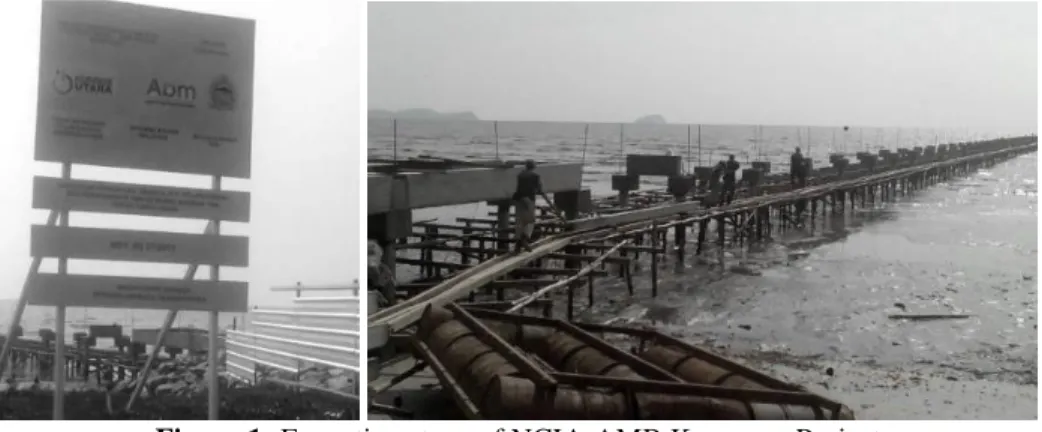
Vision of Koridor Utara (NCER) states: “To be a world-class economic region of choice for investments, work, living and learning in a safe, clean and sustainable environment by 2025” (Northern Corridor Implementation Authority, 2012).The Government of Malaysia is striving for establishment of socio-economic oriented projects to achieve remarkable progress of rural areas of the country. NCIA is responsible for developing the Koridor Utara (NCER) which includes four states of Malaysia i.e. Perlis, Kedah, Penang and Northern region of Perak. The objective is to upgrade living standard in the region economically and socially by year 2025 as stated earlier. NCIA-AMB Masuk Kampung Project in Pantai Murni, Yan Kedah was one of such development schemes (Figure 1). The theme of project was structured on economic development through automotive & aeronautics sectors and tourism development (Hutchinson, 2017). The expectations can be better realized by approaching kampung folks during and after the execution phase of project to discover their perspectives and ideologies. The purpose of this study is to understand the thin line between anticipations and actual impacts and experiences of kampung community as consequence of this project. Such perceptual framework is essential for drawing out environmental impact studies and future policies for rural development projects.
Research Methodology
Perceptions of kampung community were recorded through qualitative research methods comprising semi-structured interviews and participant observation. This combination of qualitative research was essential to document the perceptions and viewpoints of rural community of the project. The purpose of such methods permits the generation of facts and figures from multiple sources of information. This provides platform for broad understanding of research concerns.
rural environment into urban, negative impact on marine life, and inflation of land prices. The interview session involved 10 families randomly selected from the kampung community in the summer of 2014. Interviewees were asked to express their hidden concerns and thoughts about ongoing construction of project. The respondents were stimulated to speak freely on the established themes of discussion regarding the perceived challenges and opportunities associated with NCIA-AMB Kampong project. Also, exercise of participant observation further strengthened the discussion points highlighted by respondents involved in the study. Primary data was further complemented with secondary data through existing literature to justify the documented perceptions of community.
Figure 1: Execution stage of NCIA-AMB Kampung Project
Source: Author
RESULTS & DISCUSSION
Economic Sustainability
Table 1: Reduction in poverty in urban and rural Malaysia
1970 1992 2002 2012
URBAN 21.3% 4.7% 2.3% 1.0%
RURAL 58.7% 21.2% 13.5% 3.4%
Source: Elhadary & Samat (2015)
For instance, after upgrading of connecting bridge called White Elephant Bridge, between Pulau Bunting and Pantai Murni in Yan, Kedah, noticeable increase in activities of economic and social sectors leading to better employment opportunities was exposed as key forecast by the community. The Kedah government plans to develop Pulau Bunting as a port. Since the NCIA-AMB project is aimed at the economic development of region, rural community was observed to be curious about the business opportunities after the project completion. Before the completion of the project the employing activities to earn monthly income was majorly fishing as explained by one of the kampung folks. No doubt, demand for increased income opportunities is always there due to continuous population growth; indicating economic sustainability of rural projects through constant availability of social capital.
Tourism Development
Improvement of Infrastructure
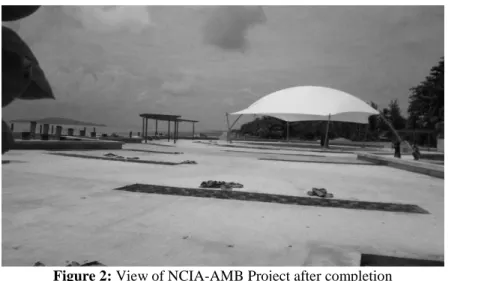
The Malaysian perspective is described in Government Transformation Program (GTP) that all nationals of Malaysia, regardless of their ethnicity and location, will receive good lifestyle. According to this viewpoint, the wide provision of improved infrastructure was one of major expectations of whole community (Figure 2). Electricity is beneficial in terms of new opportunities of work, domestic, household, educational and leisure benefits (Torero, 2014). In addition to electricity, provision of water facility is also key factor for adequate infrastructure. It is evident from previous rural development projects (1980-2005), there was 50% increase in households with piped water connections attaining figure of 90% where the only exception were states of Sabah and Kelantan achieving 60% of rural households with piped water provision. Taking expression on the supply of electricity to rural and urban areas during 1992 – 2000, Ngah (2010) confirmed that in year 2000 the families having electricity in East Malaysia were more than 90% in Sarawak and 70% in Sabah.
Figure 2: View of NCIA-AMB Project after completion
Source: Author
Exposure of Local Culture
Loss of Forest Cover
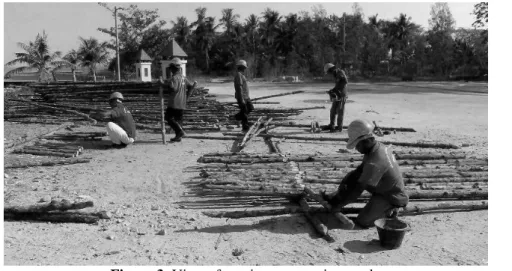
Forest cover and green lands are the prime assets of rural community of Malaysia. The proposed projects adversely impacting the green environment. Construction phase is more focused on removing the green cover instead of utilizing them in a healthy way for environmental sustainability as the planned framework of the projects demand more cutting of trees and concreting the land (Figure 3). During the execution phase, the natural touch of rural setting got affected through demolishing of traditional Malay houses. Gradual increase of temperature and gradual decrease of green environment were recorded as prime concerns according to kampung folks. Due to constructed bridge, the natural resources got disturbed to some extent. The venture of energy sources in the area created a little discomfort among kampung folks due to loss of forest cover.
Figure 3: View of on-site construction works
Source: Author
Transformation of Rural Environment into Urban
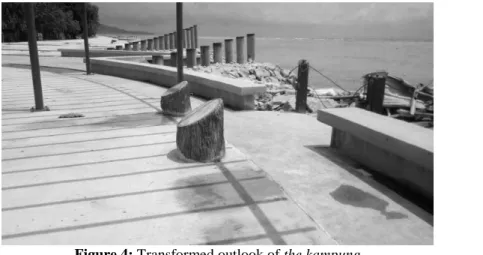
Figure 4: Transformed outlook of the kampung Source: Author
Negative Impact on Marine Life
Development projects tend to impact the natural environment due to human and mechanical activities involved in a construction project. NCIA- AMB Masuk Kampung project affected the marine environment and contributed to water pollution. In fact, this is a critical consequence as recent study established that despite vast development in Malaysia, there is a myriad of water shortage issues; the country needs to carefully manage its freshwater resources to achieve sustainable development (Oh, Leong, Poh, Chong, & Lau, 2018). One of the kampung representatives described that due to newly introduced commercial activities heaps of garbage and excessive amount of wastes went into the sea. In this regard, one such project named Crocker Range National Park (CRNP) was initiated in 1984 to save the biodiversity of the forest and preservation of water with its safe distribution. Later, the government opened it for tourists which adversely affected the natural habitat, resulting into loss of diverse variety of flora and fauna due to human activities (Hjulmand,
Nielsen, Vesterløkke, Busk, &
Erichsen
, 2003). Such negative impact is a great challenge for achieving sustainable nature of the project.Inflation of Land Prices
basic infrastructure and basic services (EPU, 2015). The NCIA-AMB Masuk Kampung Project has similar vision for upgrading the living standard of kampung community by providing amenities, communication and links to the neighbouring urban centres. The fresh investment for tourism purposes in the region has increased the land prices, creating an alarming situation for community in maintaining their homes in the near future. The conversion of adjacent land areas into commercial use within the premises of new development pushed back the existing settlements. This emerged as one of the great concerns for kampung folks. Commercial development encourages inflated rates of land due to provision of modern and up-to-date infrastructure leading to commercialism. This aspect considered as both opportunity for investors and challenge for kampung community at the same time.
CONCLUSION
The study established that there is need to improve the management and execution phase of development projects for rural areas in Malaysia. Similarly, the aims and activities of such projects should be designed to facilitate the life of rural community and to deal better with their social and environmental issues. This study was dedicated to explore the viewpoints of rural people affected by the NCIA-AMB Masuk Kampung Project (Table 2). Discussions show that improved economic activities, tourism development and upgraded infrastructure were considered as opportunities in viewpoint of rural community. While loss of forest cover, transformation of rural environment into urban and negative impact on marine life were recorded as challenges. Exposure of local culture and inflation of land prices were perceived as both opportunity and challenge by kampung people.
Table 2: Opportunities and challenges involved in NCIA-AMB Project
Kampung Concerns for NCIA-AMB project
Opportunity Challenge
Economic sustainability √
Tourism development √
Improvement of infrastructure
√
Exposure of local culture √ √
Loss of forest cover √
Transformation of rural environment into urban
√
Negative impact on marine life
√
This study concludes that these opportunities and challenges should be acknowledged in order to achieve sustainable nature of the rural development project. No doubt, improvement of rural-urban divide will elevate the living standard of rural community, but there is also need to satisfy what people think and feel. State and local governments must admit the vital importance of public participation and perception. This calls for resolving the institutional barriers which prohibit the practice of public engagement in project development process. Since Malaysia is focused in achieving its rural development goals for Vision 2025, incorporating rural community perceptions will help in establishing sustainable nature of rural development projects despite the mandatory mechanical processes and excessive commercialism.
ACKNOWLEDGMENT
We acknowledge the cooperation of kampung community for expressing sincere views in conducting this research.
REFERENCES
Athukorala, P., & Narayanan, S. (2018). Economic corridors and regional development: The Malaysian experience. World Development, 106, 1-14.
Derek Hall, I. K., & Mitchell, M. (2005). Rural tourism and sustainable business. Bristol, UK: Channel View Publications Ltd.
Donald, V. L., & MacLeod, S. A. (2010). Sustainable tourism in rural Europe: Approaches to development. London: Taylor & Francis.
Doolittle, A. A. (2014). Are they making fun of us? The politics of development in Sabah, Malaysia. France, Europe: Presses Universitaires de Provence.
Elhadary, Y., & Samat, N. (2015). Malaysia towards zero poverty by 2020. Proceedings of theInternational Conference on Development and Socio Spatial Inequalities 2015. Penang: USM Press.
Ellis, F. (2000). Livelihoods and rural poverty reduction in developing countries. Oxford: Oxford University Press.
Economic Planning Unit [EPU] (2015). Transforming rural areas to uplift wellbeing of rural communities. Putrajaya: Author.
Flavin, C., & Aeck, M. H. (2005). Energy for development - The potential role of renewable energy in meeting the millennium development goals. Washington DC: Worldwatch Institute.
Freshwater, D. (2000). Three parers on rural development. Potsdam: TVA Rural Studies Program.
Hatta, Z. A., & Ali, I. (2013). Poverty reduction policies in Malaysia: Trends, strategies and challenges. Asian Culture and History, 5(2), 48-56.
Hjulmand, L. G., Nielsen, U., Vesterløkke, P., Busk, R. J., & Erichsen, E. (2003). Tourism as a development strategy in rural areas adjacent to the Croker Range National Park, Sabah, Malaysia. ASEAN Review of Biodiversity and Environmental Conservation (ARBEC), 1-19.
Hutchinson, F. E. (2017). Evolving paradigms in Malaysia's regional development policy.
Kayat, K., & Mohd Nor, N. A. (2006). Community members involvement in community development programme: Homestay programme in Kedah. Akademika, 67(1), 77-102.
Lee, A. H. J., Lee, D. B. H., Yongseok Shin, & Wall, G. (2016). Creativity and Traditional Cultural Accommodations in Sustainable Community Development: The Case of ‘Hanok-stay’ Program in South Korea. Journal of Rural and Community Development, 11(1), 16-29.
Marzuki, A., Ali, K., & Othman, A. G. (2010). A review on rural tourism development in Malaysia. International Journal of Hospitality & Tourism Systems, 3(1), 23-30. Maxwell, S., Urey, I., & Ashley, C. (2001). Emerging issues in rural development.
London: Overseas Development Institute.
Ngah, I. (2010). Rural development in Malaysia. Kuala Lumpur: Universiti Teknologi Malaysia.
Northern Corridor Implementation Authority. (2012). Koridor Utara Malaysia. Pulau Pinang: Author.
Oh, K. S., Leong, J. C., Poh, P. E., Chong, M. N., & Lau, E. V. (2018). A review of greywater recycling related issues: Challenges and future prospects in Malaysia.
Journal of Cleaner Production, 171, 17-29.
Prime Minister's Department Malaysia (2010). Government transformation programme.
Putrajaya: Performance Management and Delivery Unit (PEMANDU). Sivapalan, S., Haunschmid, S., & Isa, M. H. (2017). Potential of renewable energy
technologies and its implications for the management of low carbon lifestyles in Rural Malaysia. Global Business & Management Research,, 9, 622-631. Tango International (2009). Sustainability of rural development projects-Best practices
and lessons learned by IFAD in Asia. Tucson-Arizona: International Fund for Agricultural Development (IFAD) IFAD.
Torero, M. (2014, December). The impact of rural electrification. 11th Conference AFD PROPARCO/EUDN: Energy for Development. December 3, 2014, Paris, France.
UN-DESA(2012). Finance for the transition to a green economy in the context of sustainable development and poverty eradication. RIO 2012 Issues Briefs, 16.