Journal of Applied Food Technology
H o m e p a g e : h t t p s : / / e j o u r n a l 2 . u n d i p . a c . i d / i n d e x . p h p / j a f t
Assessment of Probiotic Properties of Lactic Acid Bacteria from
Traditional Sourdoughs for Bread-Making in Turkey against Some Gut
Conditions
Murat Doğan1*, İsmail Hakkı Tekiner2
1Gastronomy and Culinary Arts Department, Faculty of Fine Arts, İstanbul Gelişim University, İstanbul, Turkey 2Nutrition and Dietetics Department, Faculty of Health Sciences, İstanbul Sabahattin Zaim University, İstanbul,
Turkey
*Corresponding author ([email protected])
Abstract Received: 25 August 2019 Article information:
Accepted: 06 October 2019 Available online: 10 October 2019
Keywords: lactic acid bacteria probiotic probiotic property sourdough
© 2019 Indonesian Food Technologists All rights reserved
This is an open access article under the CC BY-NC-ND license
doi: 10.17728/jaft.5662 This study aims to assess the probiotic properties of Lactic Acid Bacteria
isolated from the traditional sourdoughs used for bread making in Turkey against some gut conditions. A total number of 29 samples from twelve provinces of Turkey were collected, and screened for the presence of lactic acid bacteria using microbiological methods. The microbiological screening yielded 148 presumptive isolates. Of them, 62.8% were characterized as lactic acid strains by VITEK® MS. Following that, the characterized isolates were subjected to probiotic property testing, including gastric acid resistance, bile resistance and hydrophobic ability. The results showed that 44.1% exceeded gastric pH resistance, 33.3% survived under gastrointestinal system bile salt conditions, and 10.8% exhibited high hydrophobicity ability. In conclusion, our study revealed that only 4.3% (Enterococcus faecium, Lactobacillus brevis,
Lactobacillus pentosus, and Lactobacillus plantarum) out of 93 lactic acid bacteria isolated from the traditional sourdoughs could meet all probiotic requirements against some gut conditions.
Keywords: lactic acid bacteria, probiotic, probiotic property, sourdough.
Introduction
Probiotics are living microorganisms of the human intestinal microflora that show beneficial functions by keeping the human intestine in balance. Such bacteria form a colony in the human intestine, and compete with harmful microorganisms. The beneficial effects of probiotics have been known by Metchnikoff’s studies since the early 1900s. Metchnikoff has attributed the longer lifespan and healthiness of Caucasian societies to fermented products and probiotics present in these products (Metchnikoff, 2004; Otles, 2014; Doğan et al., 2019).
Probiotics can ferment non-digestible oligosaccharide dietary fibers in the colon to short-chain fatty acids, and thus prevent colon cancer. They contribute to lactose digestion by fermenting lactose, increases immunity by adjusting IgA production, and inhibit the absorption of intestines by breaking down antigens, resulting in reduced allergy. The introduction of
probiotics as fermented food and food supplement are important for public health, and these studies have also increased public interest (Cui et al., 2011; Kailasapathy, 2013; Butel, 2014; Polewski et al., 2016).
Lactic Acid Bacteria (LAB) can reduce the redox potential in the intestine and generally break down carbohydrates and proteins. Anaerobic fermentation produces microbial metabolites such as lactic acid, succinate, acetate, propionate, butyrate, short chain fatty acids, microbial metabolites such as hydrogen, carbon dioxide, methane. Lactobacillus casei, Lactobacillus acidophilus, Lactobacillus rhamnosus, Lactobacillus lactis, Lactobacillus brevis, Lactobacillus plantarum, Lactobacillus paraplantarum, Lactobacillus pentosus, Lactobacillus fermentum, Enterococcus faecium, Pediococcus pentosaceus, and Pediococcus acidilactici were determined as the probiotic LAB strains (Dhanasekaran et al., 2008; Lee and Salminen, 2009).
properties, it must reach the intestines alive. For this reason, they should primarily resist the gastric acid (pH 1.5-3.0), and maintain their viability. Probiotics that exceed the acidity of the stomach then encounter bile in the small intestine, and therefore must be resistant to the bile to maintain their viability. Probiotics, which pass into colon while maintaining their viability in the small intestine, must be able to attach to the epithel and mucosal surfaces in order to proliferate in the intestinal surfaces to form a colony. Probiotics have gastric acid resistance and bile resistance properties that enable them to form colonies by attaching to the colon, thus show their viability, and function in the gastrointestinal system (GIS) and these properties are among the most important probiotic selection criteria. Detection of microorganisms that provide probiotic properties is one of the objectives of food biotechnology (Dogan and Ozpinar, 2017).
Probiotics are also available in some foods and dietary supplements, in particular the fermented products, and similar to the probiotics that exist naturally in the Human gut. Probiotics has a shell that naturally protects it from acidic environments in the stomach and upper intestines until it reaches the desired location. For instance, sourdough is an ingredient in the cereal fermentation such as bread making. It is an initial preparation by fermenting flour and water mixture with yeast and LAB in order to improve sensory, nutritious, functional and technological properties of cereal based foods (Arendt et al., 2011; Gobbetti et al., 2014).
In terms of the media sources and environmental conditions of sourdough, LAB and yeasts compete with other microorganisms to form the dominant flora. LAB is a very important bacteria that plays significant role in the production of many fermented foods, including yoghurt, cheese, boza and kefir, that are mostly traditional Turkish fermented foods (Terpou et al., 2017).
In this study, we aimed to assess the probiotic properties of Lactic Acid Bacteria isolated from the traditional sourdoughs used for bread making in the different provinces of Turkey against some gut conditions.
Materials and Methods
Sampling
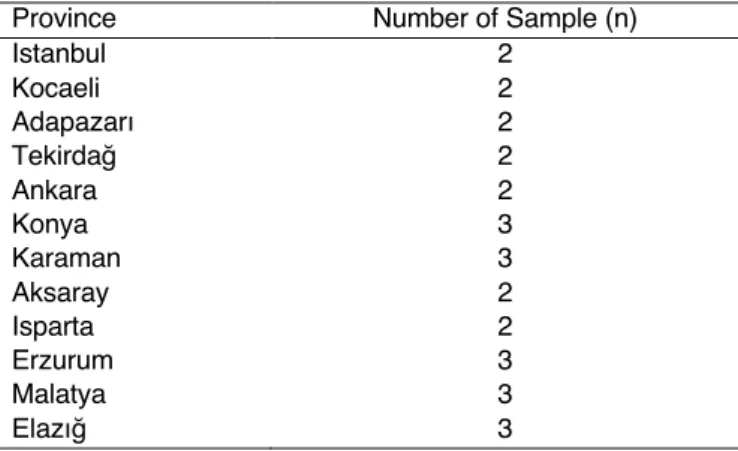
Twenty-nine traditional sourdough samples were taken from the bakeries located in the twelve provinces of Turkey (2 İstanbul, 2 Kocaeli, 2 Adapazarı, 2 Tekirdağ, 2 Ankara, 3 Konya, 3 Karaman, 2 Aksaray, 2 Isparta, 3 Erzurum, 3 Malatya, and 3 Elazığ) (Table 1). No industrial yeast or starter culture was used. All the sourdough samples were selected among the traditionally used ones. The collected sourdough samples were initially mixed with wheat flour, water, and salt according to the Instructions by ISO 11133 (2014). Subsequently, the wet doughs were fermented for 6 hours at least. After that, the fermented dough was taken to the laboratory at 4ºC, and cultured in the same day for further analysis.
Chemicals and Reagents
The chemicals and reagents used in the study
were DeMan, Rogosa and Sharpe (MRS) agar (Merck 1.10660, Germany), MRS Broth (Merck 1.10661), M17 agar (1.15108 Merck) and M17 broth (1.15029 Merck) for cultural examination, pre-identification and storage of LAB strains; crystal violet, safranin, and lugol dyes for biochemical and morphological tests; and physiological saline (8.5 g NaCl dissolved in water, autoclaved 15 minutes at 121°C, and cooled to room temperature) for dilution and 20% glycerol (Merck 10494) for storage of culture, respectively. MRS and M17 broths were prepared with 1 N sterile Hydrochloric Acid (HCL) (Merck H9892), and 0.3% (w/v) Oxgall Bile bovine (B3883 Sigma Aldrich, USA) were used to determine gastric acid and bile resistance of the cultures. As much as 0.1 M Potassium Nitrate (KNO3) (P8394 Sigma Aldrich) and 0.3
ml Xylene (Sigma Aldrich) chemicals were used to calculate % hydrophobicity of the cultures. All the chemicals and reagents were selected and prepared according to the Instructions by ISO 11133 (2014).
Table 1. Distribution of Traditional Sourdough Samples by Province
Province Number of Sample (n)
Istanbul 2
Kocaeli 2
Adapazarı 2
Tekirdağ 2
Ankara 2
Konya 3
Karaman 3
Aksaray 2
Isparta 2
Erzurum 3
Malatya 3
Elazığ 3
Sample Preparation and Microbiological Analysis Ten grams of sourdough sample were homogenized in 90 ml of sterile physiological saline solution. After that, each solution was diluted using physiological saline, and 1 mL was transferred onto
Characterization by Mass Spectrometry
The suspected LAB strains stored in MRS and/or M17 broths at –80°C were initially allowed to stand at room temperature for 2 hours. Subsequently, they were activated in aerobic and anaerobic conditions 37°C for 24-48 hours according to the Instructions by ISO 6887-6 (2013). The characterization of the strains was done by using VITEK® MS (bioMerieux, Marcy I’Etoile, France). A reference strain of Escherichia coli was used for the positive test control (Dubois et al., 2012; Rifaat et al., 2014).
Evaluation of Probiotic Properties of LAB Strains The probiotic properties of the characterized isolates, including gastric acid resistance, bile resistance, and hydrophobicity for adhesion to the intestines abilities were assessed according to the studies by Yadav et al. (2016) and de Melo Pereira et al.
(2018). All probiotic property tests were repeated three times, and the results were given as mean±standard deviation.
Gastric Acid Resistance
As much as 1 N sterile HCI, basically the acid present inside the stomach-comprising HCI around 5,000 to 10,000 ppm, was added to MRS and/or M17 broths to adjust pH to 2.5 – the normal pH in the human stomach ranges from 1 to 3. The activated culture was centrifuged at 10,000 rpm for 10 minutes, and the supernatant was removed away. The resulting pellet were initially suspended in 7 ml of physiological saline, and subsequently incubated for 3 hours at 37ºC with 1% inoculation into 10 ml broths with pH 2.5. Then, serial dilutions were made again, and allowed for incubation at 37°C for 72 hours. Finally, active bacteria counting were performed (Lee et al., 2016).
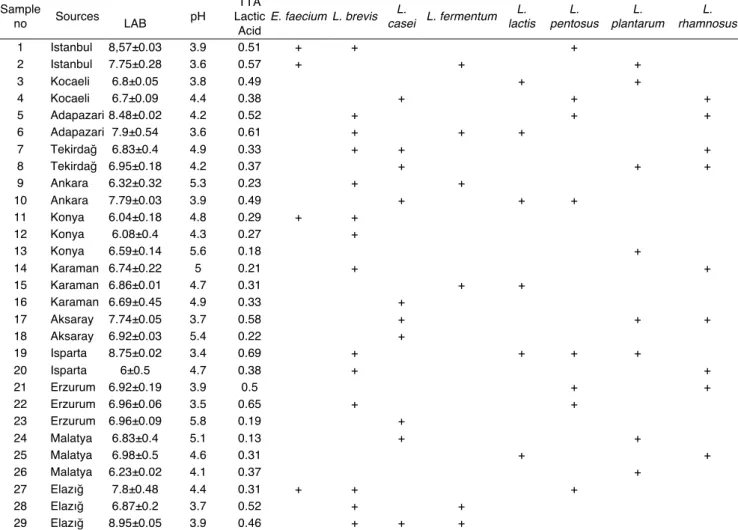
Table 2. Source of Sourdough Samples by Provinces, LAB Microbial Load ( log CFU/g), pH and TTA Values (%), Culture Distribution and Co-Growing Cultures
Sample
no Sources LAB pH
TTA Lactic Acid
E. faecium L. brevis L.
casei L. fermentum L. lactis
L. pentosus
L. plantarum
L. rhamnosus
P. acidilactici
1 Istanbul 8,57±0.03 3.9 0.51 + + +
2 Istanbul 7.75±0.28 3.6 0.57 + + + +
3 Kocaeli 6.8±0.05 3.8 0.49 + + +
4 Kocaeli 6.7±0.09 4.4 0.38 + + +
5 Adapazari 8.48±0.02 4.2 0.52 + + +
6 Adapazari 7.9±0.54 3.6 0.61 + + + +
7 Tekirdağ 6.83±0.4 4.9 0.33 + + +
8 Tekirdağ 6.95±0.18 4.2 0.37 + + +
9 Ankara 6.32±0.32 5.3 0.23 + +
10 Ankara 7.79±0.03 3.9 0.49 + + +
11 Konya 6.04±0.18 4.8 0.29 + +
12 Konya 6.08±0.4 4.3 0.27 + +
13 Konya 6.59±0.14 5.6 0.18 +
14 Karaman 6.74±0.22 5 0.21 + +
15 Karaman 6.86±0.01 4.7 0.31 + +
16 Karaman 6.69±0.45 4.9 0.33 + +
17 Aksaray 7.74±0.05 3.7 0.58 + + +
18 Aksaray 6.92±0.03 5.4 0.22 +
19 Isparta 8.75±0.02 3.4 0.69 + + + +
20 Isparta 6±0.5 4.7 0.38 + +
21 Erzurum 6.92±0.19 3.9 0.5 + + +
22 Erzurum 6.96±0.06 3.5 0.65 + +
23 Erzurum 6.96±0.09 5.8 0.19 + +
24 Malatya 6.83±0.4 5.1 0.13 + +
25 Malatya 6.98±0.5 4.6 0.31 + +
26 Malatya 6.23±0.02 4.1 0.37 + +
27 Elazığ 7.8±0.48 4.4 0.31 + + +
28 Elazığ 6.87±0.2 3.7 0.52 + + +
29 Elazığ 8.95±0.05 3.9 0.46 + + + +
Note: All experiments were repeated three times and the results were given as mean ± standard deviation
Table 3. High Performance Isolates According to Probiotic Properties
No Type Viability
(CFU/g, pH 2.5)
Viability
(CFU/g, 0.3% w/v Oxgall Bile) Hydrophobicity (%)
1 E. faecium 5.92±0.05 5.36±0.06 63.82±7.4
2 L. brevis 4.84±0.07 4.98±0.12 98.46±2.5
3 L. pentosus 5.91±0.04 5.38±0.08 62.59±13.6
4 L. plantarum 5.04±0.06 4.63±0.10 74.48±5.0
Bile Resistance Analysis
Seven milliliters of MRS/M17 broths were prepared with 0.3% (w/v) Oxgall Bile bovine. The activated cultures were centrifuged at 10,000 rpm for 10 minutes. The resulting pellets were suspended in 7 ml of physiological saline, and then incubated for 3 hours at 37ºC with 1% inoculation into 10 ml broths containing Ox-Bile. Finally, serial dilutions were made, and incubated again at 37°C for 72 hours, followed by active bacteria counting (Liong and Shah, 2005).
Hydrophobicity Analysis
The active cultures were centrifuged at 10,000 rpm for 15 minutes. The precipitate was washed twice with phosphate buffer solution, dissolved in 0.1 M KNO3
(pH 6.2) buffer, and plated. The spectrophotometer was adjusted to an optical density (OD) of 600 (A0). One milliliter of the suspension was placed on 0.3 ml of xylene hydrocarbon, and incubated at room temperature for 4 hours. The OD of the aqueous phase was measured again on a spectrophotometer at 600 nm (A1). The adhesion percentage of the cultures to hydrocarbons was calculated using the formula [(A0–A1)/A0]x100 (Mishra and Prasad, 2005).
Results and Discussion
In this study, the probiotic properties of LAB strains isolated from the traditionally used sourdoughs for bread making in the twelve provinces of Turkey were assessed. Our analysis showed that microbiological screening yielded 148 presumptive isolates of LAB, and 62.8% of them were characterized as LAB by VITEK® MS. Among the characterized ones, 44.1% exceeded gastric pH resistance, 33.3% survived under gastrointestinal system bile salt conditions, and 10,8% exhibited high hydrophobicity ability. Overall, only 4.3% (Enterococcus faecium, L. brevis, L. pentosus, and L. plantarum) could meet all required probiotic properties.
The studies previously conducted in Turkey detected two identical strains from the sourdoughs, in particular E. faecium and L. lactis, except for another LAB species different from that of our study, which was
L. rhamnosus (Dığrak and Özçelik, 1991; Menteşet al., 2004; Ertekin and Çon, 2014; Ekinci et al., 2016; Bakırcı and Köse, 2017). On the other hand, our work detected 148 presumptive isolates by microbiological methods, and VITEK® MS could identify 93 (62.8%) as LAB strains, which were P. pentosaceus (n=18), L. brevis
(n=14), L. casei (n=10), P. acidilactici (n=10), L. rhamnosus (n=9), L. pentosus (n=8), L. plantarum (n=8),
L. fermentum (n=6), L. lactis (n=6), and E. faecium (n=4) in number, respectively (Table 2).
To survive in the gut, the organisms must be tolerant to low pH and bile toxicity prevalent in the upper digestive tract. For colonization, they should exhibit good surface hydrophobicity and aggregation properties (Singh et al., 2014). Gastric acid resistance, bile resistance and hydrophobicity were the probiotic properties of the identified LAB isolates from the sourdoughs. One of the most important selection criteria of probiotics is the resistance to the acidity of stomach. Active bacteria were counted in the medium that had a pH similar to the real gastric acidity (Ramirez-Chavarin
et al., 2013; Dianawati et al., 2016). Our analysis provided that 41 isolate (44%) (E. faecium, L. brevis, L. casei, L. fermentum, L. lactis, L. pentosus, L. plantarum,
L. rhamnosus, P. acidilactici, and P. pentosaceus) were found to be resistant to gastric acidity (Figure 1). In order to protect LAB against gastric acid, microencapsulation method is recommended for the isolates that do not exhibit resistance to gastric acidity so that they can pass through the stomach with minimal harm to be used as probiotics. Firstly, the active isolates are powdered by lyophilization and then encapsulated with suitable material. In this way, active isolates are least damaged by the acidity of the stomach (Burgain et al., 2011; Singh
et al., 2017).
LABs that exceed the acidity of the stomach encounter bile in the small intestine. In the process of selection of probiotics, resistance of the probiotics to bile resistance is the most important criteria after gastric acid resistance. Therefore, isolates that are considered as probiotic should be resistant to bile, and remain alive in the small intestine (Maldonado and Nader, 2015). A medium was formed with Oxgall Bile bovine to create a broth media similar to the small intestine medium and counts of the active cultures that survived in this medium were performed (Son et al., 2018). In this study, 31 isolates (E. faecium, L. brevis, L. casei, L. fermentum, L. lactis, L. pentosus, L. plantarum, L. rhamnosus, P. acidilactici, and P. pentosaceus ) was able to pass the bile resistance test among 41 isolates, that could passed the gastric acid resistance test (Figure 2). Within the bile resistant strains, L. brevis, L. plantarum, and P. acidilactici were obtained to have the higher bile resistance. Our results on the resistant ability of L. brevis
and L. plantarum strains against bile were similar to the previous studies carried out by Ramos et al. (2013) and Landa-Salgado et al. (2019).
Another important criteria in the selection of probiotics is the adherence ability of the probiotic strains to the epithelial surfaces of intestine. A positive correlation was obtained between adhesion of bacterial cells and cell surface hydrophobicity (Angmo et al.,
2016). For this reason, the hydrophobicity of the cultures that passed the gastric acid resistance and bile resistance tests were examined, and the percentages of adherence to hydrocarbons were calculated as previously described by Mishra and Prasad (2005). Our study showed that 10 isolates (E. faecium, L. brevis, L. pentosus, L. plantarum, L. rhamnosus, P. acidilactici,
Figure 5. Hydrophobicity of Isolates
Conclusion
In conclusion, our study revealed that only 4.3% of the identified LAB strains (E. faecium, L. brevis, L. pentosus, and L. plantarum) from the traditional sourdoughs could meet all probiotic requirements against some gut conditions.
References
Aarti, C., Khusro, A., Varghese, R., Arasu, M.V.,
Agastian, P., Al-Dhabi, N.A., Choi, K.C. 2018. In vitro investigation on probiotic, anti-Candida, and antibiofilm properties of Lactobacillus pentosus
strain LAP1. Archives of Oral Biology 89:99-106. Angmo, K., Kumari, A., Bhalla, T.C. 2016. Probiotic
characterization of lactic acid bacteria isolated from fermented foods and beverage of Ladakh. LWT-Food Science and Technology 66:428-435. Arasu, M.V., Al-Dhabi, N.A., Rejiniemon, T. S., Lee, K.D.,
Huxley, V.A.J., Kim, D.H., Choi, K.C. 2015. Identification and characterization of Lactobacillus brevis P68 with antifungal, antioxidant and probiotic functional properties. Indian Journal of Microbiology 55(1):19-28.
Arendt, E.K., Moroni, A., Zannini, E. 2011. Medical nutrition therapy: use of sourdough lactic acid bacteria as a cell factory for delivering functional biomolecules and food ingredients in gluten free bread. In Microbial Cell Factories 10(1):S15. Ayyash, M., Abushelaibi, A., Al-Mahadin, S., Enan, M., Figure 1. Viability of Isolates Resistant to Gastric Acidity Figure 2. Viability of Isolates Resistant to Bile
Figure 3. Percentage of Hydrophobicity of Isolates Figure 4. Comparison of Isolates with pH 2.5 and Oxgall Bile
Lactobacillus plantarum
Lactobacillus pentosus
Viability (log CFU/g) Viability (log CFU/g)
El-Tarabily, K., Shah, N. 2018. In-vitro investigation into probiotic characterization of Streptococcus and Enterococcus isolated from camel milk. LWT 87:478-487.
Bakırcı, F., Köse, E. 2017. Ekşi Hamurlardan Laktik Asit Bakterileri ve Mayaların İzolasyonu ve Tanımlanması. Akademik Gıda 15(2):149-154. Burgain, J., Gaiani, C., Linder, M., Scher, J. 2011.
Encapsulation of probiotic living cells: From laboratory scale to industrial applications. Journal of Food Engineering 104(4):467-483.
Butel, M.J. 2014. Probiotics, gut microbiota and health. Médecine et maladies infectieuses 44(1):1-8. Cui, S.W., Nie, S., Roberts, K.T. 2011. Functional
properties of dietary fibre. Biotechnology 4:517– 525.
de Melo Pereira, G.V., de Oliveira Coelho, B., Júnior, A.I.M., Thomaz-Soccol, V.,Soccol, C.R. 2018. How to select a probiotic? A review and update of methods and criteria. Biotechnology Advances 36(8):2060-2076.
Dhanasekaran, D., Saha, S., Thajuddin, N., Panneerselvam, A. 2008. Probiotics effect of lactobacillus isolates against bacterial pathogens in clarias orientails. Facta Universitatis Medicine And Biology 15:97-102.
Dığrak, M., Özçelik, S. 1991. Elazığ ve Yöresinde Kullanılan Ekşi Mayanın Bileşimi, Morfolojik Fizyolojik ve Biyokimyasal Özellikleri. Gıda 16(5):325-331.
Dianawati, D., Mishra, V., Shah, N.P., 2016. Viability, acid and bile tolerance of spray dried probiotic bacteria and some commercial probiotic supplement products kept at room temperature. Journal of Food Science 81(6):1472-1479. Dogan, M., Ozpinar, H. 2017. Investigation of probiotic
features of bacteria isolated from some food products. Kafkas Üniversitesi Veteriner Fakültesi Dergisi 23(4):554-562.
Doğan, M., Tekiner, İ.H., Demirkesen Biçak, H. 2019. Probiotics From Food Products and Gastrointestinal Health. In: Dietary Interventions in Gastrointestinal Diseases (Ed.), (pp. 169-177). USA, Academic Press Elsevier.
Dubois, D., Grare, M., Prere, M.F., Segonds, C., Marty, N., Oswald, E. 2012. Performances of the Vitek MS matrix-assisted laser desorption ionization– time of flight mass spectrometry system for rapid identification of bacteria in routine clinical microbiology. Journal of Clinical Microbiology 50(8):2568-2576.
Ekinci, R., Şimşek, Ö., Küçükçuban, A., Nas, S. 2016. Evaluation of mono or mixed cultures of lactic acid bacteria in type II sourdough system. Preparative Biochemistry and Biotechnology 46(3):247-253. Ertekin, Ö., Çon, A. H. 2014. Farklı Gıdalardan İzole
Edilen Laktik Asit Bakterilerinin Endüstriyel ve Probiyotik Özellikleri. Academic Food Journal, 12(4):6-16.
Gobbetti, M., Rizzello, C.G., Di Cagno, R., De Angelis, M., 2014. How the sourdough may affect the functional features of leavened baked goods.
Food Microbiology 37:30-40.
ISO 6887-6. 2013. Microbiology of food and animal feed-Preparation of test samples, initial suspension and decimal dilutions for microbiological examination-Part 6: Specific rules for the preparation of samples taken at the primary production stage, Geneva, Switzerland.
ISO 11133. 2014. Microbiology of food, animal feed and water-Preparation, production, storage and performance testing of culture media, Geneva, Switzerland.
Kailasapathy K. 2013.Commercial sources of probiotic strains and their validated and potential health benefits-a review. International Journal of Fermented Foods 2(1):1-17.
Landa-Salgado, P., Caballero-Cervantes, Y., Ramirez-Bribiesca, E., Maria Hernandez-Anguiano, A., Mariana Ramirez-Hernandez, L., Espinosa-Victoria, D., Hernandez-Sanchez, D. 2019. Isolation and identification of potentially probiotic lactic acid bacteria for Holstein calves in the Mexican Plateau. Revista Mexicana De Ciencias Pecuarias 10(1):68-83.
Lee, K.W., Shim, J.M., Park, S.K., Heo, H.J., Kim, H.J., Ham, K.S., Kim, J.H. 2016. Isolation of lactic acid bacteria with probiotic potentials from kimchi, traditional Korean fermented vegetable. LWT-Food Science and Technology 71:130-137. Liong, M.T., Shah, N.P. 2005. Acid and bile tolerance
and cholesterol removal ability of lactobacilli strains. Journal of Dairy Science 88(1):55-66. Lee, Y.K., Salminen, S. 2009. Handbook of probiotics
and prebiotics. USA, John Wiley and Sons. NJ. Maldonado, N.C., Nader, M.E.F. 2015. Functional
properties (acid and bile tolerance) and antibiotic susceptibility of lactic acid bacteria isolated from newborn calves for the design of a probiotic product. International Journal of Veterinary Science and Research 1(1):011-022.
Maldonado, N.C., Ficoseco, C.A., Mansilla, F.I., Melián, C., Hébert, E.M., Vignolo, G.M., Nader-Macías, M.E. F., 2018. Identification, characterization and selection of autochthonous lactic acid bacteria as probiotic for feedlot cattle. Livestock Science 212:99-110.
Menteş, Ö, Akçelik, M, Ercan, R. 2004. Türkiyede Üretilen Eksi Hamurlardan Lactobacillus Suşlarının İzolasyonu, İdentifikasyonu ve Bu Suşların Temel Endüstriyel Özellikleri. Gıda, 29 (4):307-315.
Metchnikoff, I.I., 2004. The prolongation of life: optimistic studies. USA, Springer Publishing Company, NY. Mishra, V., Prasad, D.N., 2005. Application of in vitro methods for selection of Lactobacillus casei
strains as potential probiotics. International Journal of Food Microbiology 103(1):109-115. Otles, S., 2014. Probiotics and Prebiotics. In: Food,
Nutrition and Health (Ed.), 2th ed (pp. 30-33). USA, CRC Press, NY.
fermented herb. Annals of Microbiology 68(2):79-91.
Polewski, M.A., Krueger, C.G., Reed, J.D., Leyer, G., 2016. Ability of cranberry proanthocyanidins in combination with a probiotic formulation to inhibit in vitro invasion of gut epithelial cells by extra-intestinal pathogenic E. coli. Journal of Functional Foods 25:123-134.
Ramirez-Chavarin, M.L., Wacher, C., Eslava-Campos, C.A., Perez-Chabela, M. L., 2013. Probiotic potential of thermotolerant lactic acid bacteria strains isolated from cooked meat products. International Food Research Journal 20(2):991-1000.
Ramos, C.L., Thorsen, L., Schwan, R.F., Jespersen, L. 2013. Strain-specific probiotics properties of Lactobacillus fermentum, Lactobacillus plantarum and Lactobacillus brevis isolates from Brazilian food products. Food Microbiology 36(1):22-29. Rifaat, E.A., Tekiner, İ.H., Özpinar, H. 2014. Halk Sağlığı
Açısından İçme ve Kullanma Sularında Koliform ve Fekal Koliform Bakterilerin Varlıklarının Klasik ve MASS Spektrometresi Yöntemleriyle
İncelenmesi. Electronic Journal of Food Technologies 9(2):20-32.
Singh, T.P., Malik, R.K., Renuka, G.K., 2014. Safety assessment and evaluation of probiotic potential of Lactobacillus reuteri strains under in vitro conditions. International Journal of Current Microbiology and Applied Science 3(2):335-348. Singh, P., Medronho, B., Alves, L., da Silva, G.J., Miguel,
M.G., Lindman, B. 2017. Development of carboxymethyl cellulose-chitosan hybrid micro-and macroparticles for encapsulation of probiotic bacteria. Carbohydrate Polymers 175:87-95. Son, S.H., Jeon, H.L., Yang, S.J., Sim, M.H., Kim, Y.J.,
Lee, N.K., Paik, H.D. 2018. Probiotic lactic acid bacteria isolated from traditional Korean fermented foods based on β-glucosidase activity. Food Science and Biotechnology 27(1):123-129. Terpou, A., Gialleli, A.I., Bekatorou, A., Dimitrellou, D.,
Ganatsios, V., Barouni, E., Kanellaki, M. 2017. Sour milk production by wheat bran supported probiotic biocatalyst as starter culture. Food and Bioproducts Processing 101:184-192.