WHAT MAKES US MINDFUL AND WHY DOES IT MATTER?
RELATIONSHIPS AMONG MEANINGFULNESS, STATE MINDFULNESS, AND COUNTERPRODUCTIVE WORK BEHAVIOR
Erin Cooke Long
A dissertation submitted to the faculty at the University of North Carolina at Chapel Hill in partial fulfillment of the requirements for the degree of Doctor or Philosophy in the Department of
Organizational Behavior in the Kenan-Flagler Business School.
Chapel Hill 2017
Approved by:
Michael S. Christian
Jeffrey R. Edwards
Alison R. Fragale
Shimul Melwani
ABSTRACT
Erin Cooke Long: What Makes Us Mindful and Why Does It Matter? Relationships Among Meaningfulness, State Mindfulness, and Counterproductive Work Behavior
(Under the direction of Michael S. Christian)
Mindfulness has received increased attention in organizational research and practice, with the majority of work focusing on the beneficial, buffering effects of trait mindfulness and
mindfulness interventions. I extend work on mindfulness in the workplace by examining the causes and consequences of daily and momentary within-person fluctuations in state
mindfulness. Grounded in theories of self-regulation, this research helps shed light on dynamic, everyday antecedents and outcomes of state mindfulness in work contexts. Specifically, I argue that increases in meaningful work perceptions activate mindful states, which in turn have important associations with counterproductive work behavior (CWB). Across two studies—one laboratory experiment and a second experience sampling study conducted in the field—I test a mediated moderation model whereby fluctuations in meaningful work perceptions indirectly impact employee CWB through state mindfulness. Study 1 examines the impact of meaningful work on state mindfulness and CWB in a sample of undergraduate business students in a
laboratory experiment. Study 2 extends the first study by examining dynamic fluctuations among nurses’ experiences of meaningfulness, mindful states, and their CWB using an experience sampling methodology (ESM). Evidence from both studies converge to support the indirect effect of meaningfulness on CWB through state mindfulness, although these relationships were not conditional on controlled motivation. Implications and future research directions are
For my husband, Andrew, and my Mom and Dad.
ACKNOWLEDGEMENTS
I am forever grateful to the village of people who believed in me and supported me in various ways while I earned my doctorate degree and completed this dissertation. First, I am deeply indebted to my mentor and friend, Mike Christian. Mike is not only an incredible scholar, but the commitment and energy he gives to his students is unparalleled. His dedication as an advisor has changed my life, and he will remain an inspiration as I continue my academic career. I could not have dreamt of a better mentor. It doesn’t seem like enough, but thank you, Mike.
I have been fortunate to have a number of outstanding faculty in my corner throughout this program. Jeff Edwards has not only been invaluable to my training as a researcher and educator, but his support and generosity over the years is something that will stay with me always. I’ve lost count of the number of times that Jeff and his wife, Kamie, opened their home and hearts to me. I’m beyond thankful for all the music, laughter, amazing meals, beach trips, and support that helped carry me through the last six years—they have treated me like family and I am so grateful to them.
Alison Fragale has also been an amazing advocate and role model. Her guidance and support have been critical to my success. Alison’s perspective and insight have challenged my own assumptions about myself and abilities, and she has helped me to grow in confidence over the years.
dissertation and my success.
I give my sincerest thanks to the individuals in leadership, as well as all of my dedicated participants, from the field site that allowed me to collect data for this dissertation.
Finally, I would not be where I am today without the love and support of my family and friends. My husband, Andrew, has been my rock. He has supported me in more ways than I can name, and his love and laughter are two of the best things in my life. My mom and dad have been tremendous sources of love and support, and I am so very, very grateful to them for their sacrifices and all they given to help me pursue my dreams over the course of my life. I would like to acknowledge my brother, Jason, who always helps me keep things in perspective. I would also like to acknowledge my Aunt Carolyn, who has taught me so much about perseverance and supported me in countless ways over the years. The love and encouragement from Mary Pat and Pete Maguire, and Chuck Long, has been a huge source of strength for me. And of course, my dear friends, Justin Baker, Jenni Fink, Deirdre Snyder, Ayana Younge, and Lisa Barnard—their love and friendship have been tremendous as I completed this doctoral work.
TABLE OF CONTENTS
LIST OF TABLES ... vi
LIST OF FIGURES ... viii
CHAPTER 1: INTRODUCTION ...1
CHAPTER 2: LITERATURE REVIEW ...7
Unpacking the Meaning of State Mindfulness ...7
Brief Historical Overview ...7
State Mindfulness and Self-regulation ...9
Trait Versus State Mindfulness ...13
Antecedents and Outcomes of Mindfulness at Work ...13
CHAPTER 3: MODEL AND HYPOTHESES ...16
Dynamic Meaningful Work Perceptions ...16
Dynamic Meaningfulness and State Mindfulness ...18
Meaningful Work Perceptions, State Mindfulness, and CWB ...21
The Moderating Effect of Controlled Motivation ...24
CHAPTER 4: PILOT STUDY ...28
Pilot Study Methods ...28
Pilot Study Results ...30
Pilot Study Discussion ...31
CHAPTER 5: STUDY 1 ...32
Study 1 Results ...36
Study 1 Discussion ...37
CHAPTER 6: STUDY 2 ...39
Study 2 Methods ...39
Part 1: Intake Survey ...41
Part 2: Experience Sampling Procedure ...41
Study 2 Results ...44
CHAPTER 7: GENERAL DISCUSSION ...48
APPENDIX A: PILOT STUDY MATERIALS ...82
APPENDIX B: STUDY 1 (LABORATORY EXPERIMENT) MATERIALS ...86
APPENDIX C: STUDY 2 (FIELD ESM) MATERIALS ...98
APPENDIX D: SUPPLEMENTARY CONSTRUCT VALIDITY STUDY FOR NEW STATE MINDFULNESS ITEMS USED IN STUDY 2 ...107
LIST OF TABLES Table
1. Pilot Study: Means, Standard Deviations, and Correlations ...58
2. Pilot Study: Regression Model for Direct Effect of Perceived Meaningfulness on State Mindfulness ...59
3. Pilot Study: Regression Model for Direct Effect of State Mindfulness on Deviance Behavior ...60
4. Pilot Study: Regression Model for Direct Effect of Perceived Meaningfulness on Deviance Behavior ...61
5. Pilot: Test of Indirect Effect on Deviance Behavior ...62
6. Study 1: Means, Standard Deviations, and Correlations ...63
7. Study 1: Means and Standard Deviations by Condition ...64
8. Study 1: Model Results for CWB 1, CWB 2, and CWB 3 Regressed on State Mindfulness ...65
9. Study 1: Coefficient Estimates for Indirect Effect Models ...66
10. Study 1: Results for Indirect Effect on CWB 1 and CWB 2 ...67
11. Study 2: Means, Standard Deviations, and Correlations Among All Measured Variables ...68
12. Study 2: Percentage of Within-Individual Variance for Model Variables ...70
13. Study 2: Within-person Results of One-level Random-effects Models: CWB Regressed on Meaningfulness ...71
14. Study 2: Within-person Results of One-level Random-effects Models: State Mindfulness Regressed on Meaningfulness ...72
15. Study 2: Within-person Results of One-level Random-effects Models for CWB Regressed on State Mindfulness ...73
17. Study 2: Additional Random-effects Model Results for Coefficient Estimates used to test Indirect and Conditional Indirect Effect Models for
State Mindfulness (New Items) as Mediator Variable ...75 18. Study 2: Additional Random-effects Model Results for Coefficient
Estimates used to test Indirect and Conditional Indirect Effect Models for
State Mindfulness (MAAS) as Mediator Variable ...76 19. Study 2: Results of Random-effects Model of Indirect Effect of
Perceived Meaningfulness ...77 20. Study 2: Results of Random-effects Model of Conditional Indirect Effects
LIST OF FIGURES
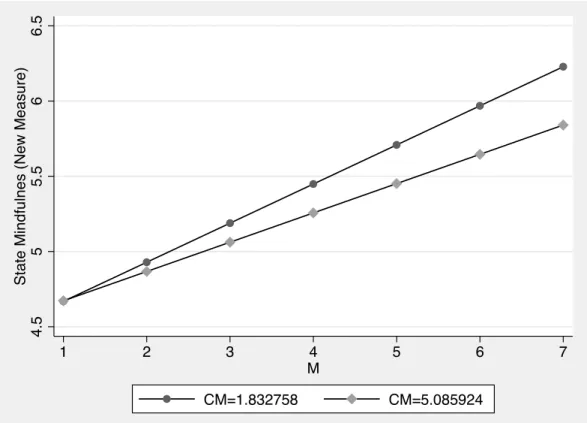
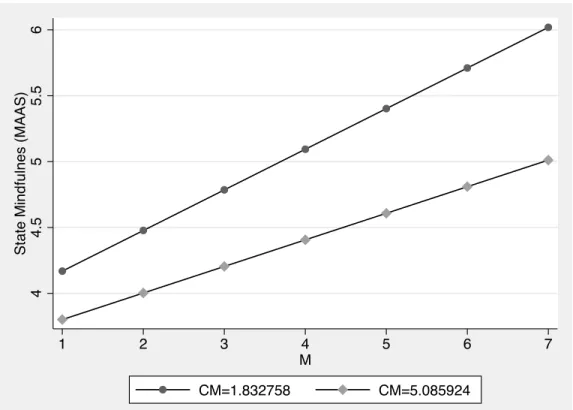
Figure 1 - Theoretical Model ...79 Figure 2 - Study 2: Interactive Effects of Meaningfulness and Controlled Motivation
on State Mindfulness (New Measure) ...80 Figure 3: Study 2: Interactive Effects of Meaningfulness and Controlled Motivation
CHAPTER 1: INTRODUCTION
What leads us to be mindful in some moments and mindless in others? As mindfulness at work gains traction in organizational research, this question is increasingly important.
Mindfulness is a psychological concept associated with attention to and awareness of moment-to-moment experiences (Brown & Ryan, 2003; Brown, Ryan, & Creswell, 2007a; Glomb, Duffy, Bono, & Yang, 2011). Recent empirical work demonstrates that mindfulness buffers against a number of undesirable employee outcomes, including biased decision making (Hafenbrack, Kinias, & Barsade, 2014), emotional exhaustion, (Hülsheger, Alberts, Feinholdt, & Lang, 2013), and retaliation toward those who commit an injustice (Long & Christian, 2015).
While the mindfulness concept suffers from amorphous definitions across literatures, recent work more precisely conceptualizes mindfulness as self-regulatory (e.g., Brown & Ryan, 2003; Brown, Ryan, & Creswell, 2007b; Glomb et al., 2011). Evidence from multiple literatures, including organizational behavior, psychology, and neuroscience, supports the regulatory nature of mindfulness and triangulates the finding that mindfulness enhances regulatory resource capacity (e.g., Alberts, Schneider, & Martijn, 2012; Brown & Ryan, 2003; Brown et al., 2007b; Long & Christian, 2015; Friese, Messner, & Schaffner, 2012; Glomb et al., 2011, Jha, Stanley, Kyionaga, Wong, & Gelfand, 2010; Teper & Inzlicht, 2013; Weger, Hooper, Heier, &
Further, antecedents of mindfulness are not well understood, and the present research therefore focuses on two important gaps. First, the majority of research has focused on trait mindfulness and suggests that individuals differ in the propensity to experience mindfulness. A smaller body of work investigating state mindfulness has examined mindfulness as an induced state typically preceded by a targeted intervention. While the latter has important implications for the role of mindfulness at work, particularly given that mindful states are more proximal to daily behavior and likely to have a stronger influence over and above trait levels, this research is of limited value to managers who may not have the resources to conduct large-scale training
programs. Thus, I focus on dynamic, within-person fluctuations in state mindfulness to argue that mindful states are activated by naturally occurring events and contexts and have important
consequences for volitional employee behavior.
(Deci, Ryan, Schultz, & Niemiec, 2015; Hodgins & Knee, 2004). Given these arguments, I expect that employees are more apt to experience increased state mindfulness when they perceive greater meaning in their work.
Second, as mindful states ebb and flow, the psychological resources involved in self-regulation will fluctuate concomitantly, impacting volitional employee behavior. Because mindful states optimize regulatory resource capacity (Hülsheger, 2013; Teper & Inzlicht, 2013; Zeidan et al., 2010), employee mindfulness should also enhance volitional work behaviors that are sensitive to momentary resource capacity, for example resisting temptation and behaving normatively (Christian, Eisenkraft & Kapadia, 2015; Christian & Ellis, 2011; Gino, Schweitzer, Mead, & Ariely, 2011; Welsh, Ellis, Christian, & Mai, 2014). Although individuals generally strive to be good and moral, findings from the aforementioned works demonstrate that
increased state mindfulness is associated with reduced CWB, and ultimately underlie a negative indirect effect of meaningfulness on CWB.
Finally, I introduce a boundary condition of these relationships. Both the model of psychological presence and SDT perspectives on work motivation emphasize that various factors—both intrapersonal and daily social-contextual cues—interact to shape the conscious processing of in-role experiences (Gagne & Deci, 2005; Deci, Connell, & Ryan, 1989) and impact whether individuals feel volitional and integrated with their work in “the here and now” (Ryan, 1995). Thus, the psychological experience of meaningfulness may not be the sole factor contributing to within-person fluctuations in state mindfulness. SDT describes controlled motivation—self-imposed pressures or external contingencies that regulate behavior—as a type of motivation originating from more salient, external and ego-driven reasons for acting (Deci, Eghrari, Patrick, & Leone, 1994; Deci & Ryan, 2004; Ryan & Deci, 2000; Weinstein & Ryan, 2010) that often disrupts autonomous functioning (Deci et al., 1994). Because this form of motivation narrows employees’ focus from the work itself to concerns of ego-driven
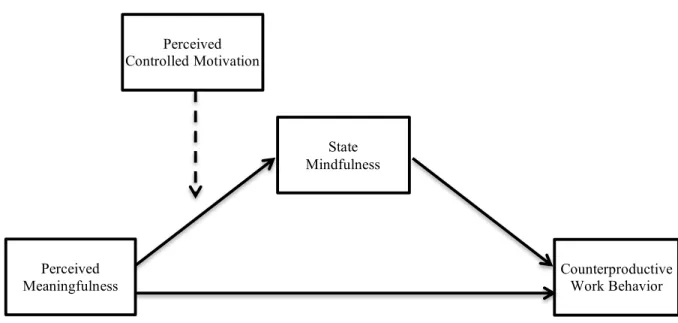
contingencies and pressures (Deci et al., 2015; Hodgins & Knee, 2004), I argue that controlled motivation will fundamentally alter employees’ attention and awareness of present moment experiences. Specifically, I expect perceived controlled motivation to attenuate the positive relationship between meaningfulness and state mindfulness, and expect the negative indirect effect of meaningfulness on CWB through state mindfulness to be conditional on perceptions of controlled motivation.
study by examining dynamic fluctuations among perceived meaningfulness, employee state mindfulness, perceived controlled motivation, and CWB using an experience sampling methodology (ESM) in a field sample of nurses.
Taken together, this research will contribute in the following ways. This work takes a self-regulatory perspective to shed light on both antecedents and outcomes of mindful states that have yet to be considered in the extant literature. Specifically, the current work extends theories of mindfulness in the workplace (Glomb et al., 2011) by examining within-person fluctuations in state mindfulness as a function of dynamic, everyday work factors (e.g., perceived
meaningfulness). Further, the majority of theoretical and empirical work linking mindfulness to behavioral outcomes examines the buffering role of induced mindful states (e.g., through
meditative and/or breathing exercises) on suboptimal relationships between constructs, while few have considered the possible direct effects of mindfulness on behavioral outcomes in the
workplace. Thus, much remains unknown regarding the impact of employee mindfulness on organizationally relevant outcomes. I extend mindfulness research—including work related to organizations—by moving beyond the literature’s focus on mindfulness as a moderator, suggesting that it has main effects that explain important variance in behavior (e.g., CWB). Finally, this work addresses recent calls to investigate the existence of momentary fluctuations in meaningful work perceptions (Albrecht, 2015).
CHAPTER 2: LITERATURE REVIEW Unpacking the Meaning of State Mindfulness
Despite the growing volume of mindfulness research, there remains substantial
disagreement and lack of clarity regarding the nature and meaning of the construct (Brown et al., 2007a, 2007b; Glomb et al., 2011; Quaglia, Brown, Lindsay, Creswell, & Goodman, 2014). Below I provide a brief discussion regarding conceptual confusion, following which I build on recent arguments that mindfulness is a regulatory state in an effort to more clearly define and unpack its meaning. Finally, I review both antecedents and outcomes of mindfulness to provide context for the gaps addressed in the present research.
Brief historical overview. The concept of mindfulness is rooted in ancient Buddhism, a plural tradition that offers no single, unified definition (Dreyfus, 2011; Gethin, 2015; Quaglia et al., 2014). Some scholarly interpretations of ancient Buddhist texts emphasize important
commonalities among the varying traditions in so far as mindfulness 1) may be interpreted as “a kind of lucid sustaining of attention on the object of awareness, in which the mind is both aware of the object and, in some sense, aware that it is aware…” (Gethin, 2015, p.32), and 2) is bound by an ethical framework in which cognition (e.g., evaluative thought and memories) is
discerningly engaged to regulate psychological states and behaviors (Gethin, 2015; Quaglia et al., 2014). However, this latter emphasis on intentional and moralistic cognitive operation differs considerably from the majority of contemporary (Western) definitions. Instead, Western
fail to recognize mindfulness as bringing “together capacities of attention and discerning thought to regulate mental states and behavior” (Quaglia et al., 2014, p. 154). In pitting mindfulness against cognitive evaluation and judgment, many contemporary definitions mistakenly imply a disconnect from all forms of subjective cognitive function (e.g. evaluation, judgment) that influence perceptions and guide behavior.
In addition, various interpretations of both the nature and meaning of mindfulness exist even within Western scientific research. From a psychological point of view, mindfulness is inconsistently defined either as one or a combination of the following: a self-regulatory state (Brown et al., 2007a; 2007b; Long & Christian, 2015; Glomb et al., 2011), or a trait or individual difference characteristic (Brown & Ryan, 2003). Perhaps more problematically, other scholars and practitioners define mindfulness as a meditation practice or clinical treatment (e.g., Linehan, 1993a; Segal, Williams & Teasdale, 2002; Kabat-Zinn, 1982), a skillset (Bishop et al., 2004; Linehan, 1993b; 1994), or as a process (Bishop et al., 2004). The trouble with the latter three conceptualizations is that they either a) fail to distinguish the psychological experience of mindfulness from its practice and/or training, b) define the concept as a process or set of processes and consequences, conflating the experience of mindfulness with explanatory mechanisms and outcomes, and/or c) are paired with conflicting operational definitions. Returning to canonical interpretations for conceptual guidance fosters greater clarity regarding the nature and meaning of mindfulness in more contemporary work (Brown & Cordon, 2009; Brown et al., 2007a; Dreyfus, 2011; Shonin, Van Gordon, & Griffiths, 2014; Quaglia et al., 2014).
and second by conceptualizing mindfulness as a self-regulatory state (Brown & Ryan, 2003; Brown et al., 2007a, 2007b; Glomb et al., 2011; Long & Christian, 2015). Thus, the current research refers to the psychological experience of mindfulness as a regulatory state of awareness and nonjudgmental attention toward present-moment experiences, both internal and external. Further, this definition is distinct from the following related concepts: 1) trait mindfulness, 2) mindfulness mechanisms and processes, 3) meditative exercises or practices that induce mindful states, and 4) mindfulness treatments or therapies (e.g., Linehan, 1993; Segal et al., 2002; Kabat-Zinn, 1982).
State Mindfulness and Self-Regulation. The current work conceptualizes mindfulness as a regulatory state. Self-regulation is defined as “the self exerting control to override a prepotent response, with the assumption that replacing one response with another is done to attain goals and conform to standards” (Vohs et al., 2008, p. 884), and most simply refers to self-control of thoughts, emotions, and behaviors1. Mindfulness is self-regulatory in that it helps maintain saliency of long-term goals in the face of short-term motives and desires—this a key distinction often lost in contemporary mindfulness research in which a present-focused mindful state and
1 Traditional control theory models conceptualize self-regulation as a series of feedback loops in
which state-goal discrepancies are detected and reduced through psychological and behavioral adjustments—a process that repeats until the discrepancy is resolved (Carver & Scheier, 1981; 1998). These models distinguish two specific functions of consciousness: monitoring (i.e., observation of internal and external experiences and events) and control (i.e., goal-oriented changes to internal experiences and behaviors). Recent work suggests that the control function diminishes the cognitive resource reserve that governs self-regulatory functions; discrepancy-reduction is an act of self-control that depletes a limited pool of available resources (Baumeister, Bratslavsky, Muraven, & Tice, 1998). Mindfulness has alternatively been likened to the monitor function of consciousness (Brown et al., 2007b). However, the two forms are not
other temporal orientations are mistakenly conceptualized as mutually exclusive. Moreover, its two defining qualities—awareness and attention to present-moment experiences—work together to help individuals more effectively regulate thoughts, emotions, and behaviors. Importantly, these defining characteristics are “overlapping and mutually supportive” (Brown et al., 2007a, p. 213; e.g., Brown & Ryan, 2003). Below, I describe the two critical elements of the definition.
First, attention to the present moment refers to “an initial ‘taking notice’ of or ‘turning toward’ the object” of attention (Brown et al., 2007a, p. 212). This present-moment attentional orientation is fundamental and distinguishes mindful states from other forms of self-focused attention and regulatory states (e.g., reflexive self-awareness, rumination, counterfactual thought, emotion, and/or thought suppression). Second, awareness of the present refers to “the conscious registration of stimuli” and “our direct, most immediate contact with reality” (Brown et al., 2007a, p. 212). Simply focusing attention on the present moment, absent the awareness quality of mindfulness, fails to distinguish mindfulness from other regulatory states, for example
impulsivity (Eysenck & Eysenck, 1977), flow (Csikszentmihalyi, 1990), or employee
engagement (Kahn, 1990; Schaufeli, Salanova, Gonzalez-Roma, & Bakker, 2002). Specifically, mindfulness is characterized by an increased breadth of awareness of both external
some degree of psychological separation between the self and the experiences being observed. Because “automatic meaning structures are toppled when consciously processed” (Heintzelman & King, 2013, p. 95), maintaining awareness of one’s psychological experiences inherently attenuates the power of any single emotion or thought that might otherwise trigger automatic, suboptimal reactions in that moment (Brown & Ryan, 2007a; Glomb et al., 2011).
Evidence supporting the regulatory function of mindfulness spans multiple disciplines— including psychology, neuroscience, and organizational behavior—and suggests that mindfulness optimizes human functioning through enhanced regulatory, or executive functioning capacity (e.g., Alberts et al., 2012; Brown & Ryan, 2003; Brown et al., 2007b; Gallant, 2016; Hülsheger et al., 2013; Friese et al., 2012; Glomb et al., 2011; Jha et al., 2010; Teper & Inzlicht, 2013; Weger et al., 2012; Zeidan et al., 2010). Neuroscientific research finds that mindfulness enhances self-regulation by affecting regions of the brain that govern judgment and decision making processes, emotion management, and behavioral inhibition (Creswell, Way, Eisenberger, & Lieberman, 2007; Taylor et al., 2013). Specifically, evidence from neuroimaging studies finds that increased mindfulness is associated with greater activation in the prefrontal cortex (Creswell et al., 2007; Taylor et al., 2013). This region acts as the executive control center of the brain, and is integral to individuals’ capacity to self-regulate thought, emotion, and behavior, particularly effortful and deliberate actions that require cognitive control (Bauer & Baumeister, 2004; Baumeister & Vohs, 2003). Indeed, research examining the impact of brief mindfulness inductions on these areas of the brain demonstrate enhanced emotion regulation and executive function improvement in novice meditators (Teper & Inzlicht, 2013; Zeidan et al., 2010).
scholars may benefit from taking a regulatory resource perspective to conceptualize the role of mindfulness in the workplace. Regulatory resource models (Baumeister et al., 1994; Muraven, et al., 1998) suggest that motivation and behavior are governed by a limited and consumable stock of psychological resources, analogous to the executive function, or core faculties of the
prefrontal cortex (Bauer & Baumeister, 2004; Baumeister & Vohs, 2003). According to these models, regulatory resources are depleted by efforts that recruit self-control and willpower (e.g., cognitively taxing tasks and decision-making; Baumeister et al., 1998), and this depletion impairs subsequent self-regulation of thoughts, emotions, and behaviors. Empirical evidence supports regulatory resource perspectives as a useful lens for understanding work-related
behavior and underlying psychological processes, finding that volitional actions at work are quite susceptible to fluctuations in resource capacity, such that depleted employees are less likely to keep suboptimal behaviors (e.g., interpersonal and production deviance, dishonesty and deception, abusive supervision, resisting unethical influence) in check (Barnes, Lucianetti, Bhave, & Christian, 2015; Christian & Ellis, 2011; Gino et al., 2011; Welsh et al., 2014).
Organizational research on work recovery and enrichment perspectives find that regulatory resource capacity may be replenished through various work and nonwork strategies (e.g.,
memory capacity and subsequent improvement in emotion regulation capacity for military personnel following high-stress time intervals. In addition, employee mindfulness has shown to buffer against the depletion for employees engaged in surface acting as an emotional regulation strategy (Hülsheger et al., 2013). Given recent psychological and neuroscientific evidence that mindfulness optimizes regulatory capacity (e.g., Alberts et al., 2012; Friese et al., 2012; Jha et al., 2010; Teper & Inzlicht, 2013; Weger et al., 2012; Zeidan et al., 2010), and the important role of psychological resource recruitment for volitional employee behavior and underlying
regulatory processes, employee mindfulness likely has important work-related consequences that have yet to be explored.
While the majority of existing research focuses either on correlates of trait mindfulness or the impact of targeted interventions, a subset of work demonstrates that state mindfulness
fluctuates within-person, absent any type of training or practice (Brown & Ryan, 2003;
Eisenlohr-Moul, Peters, Pond, & DeWall, 2016; Hülsheger et al., 2014). This evidence suggests that mindfulness may vary with dynamic contextual factors that shift individuals into and out of daily, and even momentary mindful states, however scholars have yet to establish whether these fluctuations are precipitated by naturally occurring events and contexts, and how they affect workplace behavior.
Antecedents and outcomes of mindfulness at work.
As discussed above, mindfulness scholars have traditionally focused either on outcomes associated with trait mindfulness or the impact of targeted mindfulness interventions, and research examining the role of mindfulness at work is no exception. For example, work on employee trait mindfulness suggests that trait mindfulness buffers against the depleting effects of emotional exhaustion and is associated with increased job satisfaction (Hülsheger et al., 2013), improved work recovery processes (e.g., ability to detach, better sleep quality; Hülsheger et al., 2014), enhanced job performance in women (Shao & Skarlicki, 2009), improved job
performance and reduced turnover intentions in a dynamic work environment (Dane &
Brummel, 2014), increased job satisfaction and reduced turnover (Andrews, Kacmar, & Kacmar, 2014), and reduced occupational safety failures (Dierynck, Leroy, Savage, & Choi, 2016).
improved sleep quality and duration) following a “low-dose” mindfulness intervention. Brief mindfulness inductions have also shown to reduce sunk-cost bias in decision-making
(Hafenbrack et al., 2014) and to reduce retaliatory responses to injustice by enhancing underlying cognitive and emotional regulatory processes (Long & Christian, 2015).
With the exception of Long & Christian (2015), who examine mindfulness as a
CHAPTER 3: MODEL AND HYPOTHESES
In this dissertation, I integrate Kahn’s (1992) model of psychological presence with SDT (Deci & Ryan, 1985; Gagne & Deci, 2005; Ryan & Deci, 2000) to argue that perceived work meaningfulness is a dynamic antecedent of state mindfulness. Next, I draw on models of regulatory resources (Baumeister et al., 1994; Muraven et al., 1998) to argue that the dynamic association between meaningful work perceptions and state mindfulness is associated with employee CWB. Finally, I argue that the above relationships are conditional on the presence of perceived controlled motivation, a boundary condition that I suggest undermines the relationship between meaningfulness and employee state mindfulness.
Dynamic Meaningful Work Perceptions
Meaningful work2—a positively valenced, subjective experience in which work is perceived as significant and purposeful (Hackman & Oldham, 1980; Lam et al., 2016; Pratt & Ashforth, 2003; Rosso et al., 2010; Shamir, 1991; Spreitzer, 1995)—is a dynamic factor that affects employee self-regulatory capacity and behavior at work (Kahn, 1992; Lam et al., 2016). Perceived meaningfulness is associated with a number of employee outcomes, including greater intrinsic motivation (Gagne, Senecal, & Koestner, 1997; Hackman & Oldham, 1980; Herzberg,
2 Meaningful work can be distinguished from a) the meaning of work, or “the role of work in a
society in terms of norms, values and traditions of work in the day-to-day life of people”, and b) meaning at work, or the “relationship between the person and the organization or the workplace” (Chalofsky, 2003, p. 73), and sense-making in regards to one’s role(s), interactions, and place in the organization. Thus, the term “work meaning” generally refers to work centrality (Dubin, 1956; Dubin, Champoux, & Porter, 1975; Dubin, Hedley, & Traveggia, 1976) and what work signifies to an individual. Alternatively, I focus on meaningful work as the amount of
Mausner, & Snyderman, 1959; Johns, Xie, & Fang, 1992; Steger, Dik, & Duffy, 2012; Thomas & Velthouse, 1990), increased engagement (Albrecht, 2013; Kahn, 1990; May, Gilson, & Harter, 2004; Steger et al., 2012), job satisfaction (Deci et al., 1989; Humphrey, Nahrgang, & Morgeson, 2007; Johns et al., 1992; Sparks & Schenk, 2001; Steger et al., 2012), subjective well-being (Humphrey et al., 2007; Steger et al., 2012), improved quality of relationships (Deci et al., 1989), and enhanced perceptions of self-worth (Aktouf, 1992; Rosso et al., 2010).
While meaningfulness has in the past been conceptualized as a stable quality or job attribute (Hackman & Oldham, 1976), scholars have begun to recognize and investigate its more malleable nature (Grant, 2008a, 2008b; Kahn, 1992; Lam et al., 2016; Lips-Wiersma & Wright, 2012; Wrzesniewski, Dutton, & Debebe, 2003). For example, Ryff & Singer (1998, p. 8) describe meaningfulness as “an ongoing, day-by-day, constantly unfolding phenomenon, not an end state that is once-and-for-all resolved,” and recent evidence suggests that day-level
fluctuations in meaningful work perceptions are likely to occur. For example, Grant (2008a; 2008b) enhanced employees’ perceptions that their work was significant and impactful by introducing fundraiser call center employees to beneficiaries. In another study, the extent to which employees of a support service management firm viewed their work activities as meaningful varied daily as a function of daily OCB, role ambiguity, and perceived in-role performance (Lam et al., 2016).
authentic self-expression through one’s work (Chalofsky & Cavallaro, 2013; Pitts, 1995), and a more general “feeling of rightness” (Heintzelman & King, 2013). As such, perceived
meaningfulness reflects an intrinsic caring about one’s work (Hackman & Oldham, 1980; Herzberg et al., 1959; Thomas & Velthouse, 1990), and is described as a “self-regulatory tool” (Baumeister & Vohs, 2002) that draws employees’ attention and awareness to the present moment (Deci et al., 2015; Hodgins & Knee, 2004; Kahn, 1992) and facilitates feelings of vigor in performing the work at hand (Lam et al., 2016). Thus, meaningfulness has important
implications for everyday work experiences, and particularly those amenable to more volitional motivational states (Johns et al., 1992; Howard, Curtin, & Johnson, 1991).
Dynamic Meaningfulness and State Mindfulness
Drawing from both Kahn’s (1992) model of psychological presence and SDT (Deci & Ryan, 1985; Gagne & Deci, 2005; Ryan & Deci, 2000), I theorize that when employees perceive greater meaning in the work at hand, their attention and awareness of present-moment
experiences will be enhanced, such that they become more present in their roles and experience increased levels of state mindfulness.
First, perceived meaningfulness will increase one component of mindfulness: present-oriented attention. Kahn’s (1992) model of psychological presence focuses on what it means to be fully present, or attentive and connected to one’s current in-role experience, during a given moment. However, it is important to note that while Kahn’s model offers a good starting point for understanding the relationships outlined in the current work by linking meaningful work to in-role present focus, his definition of psychological presence only bears similarity to
manifestation of behaviors rather than a psychological state. In addition, Kahn does not include awareness—a critical component of state mindfulness—as a characteristic of psychological presence. This distinction is important to make in order to clarify that the present work is not manufacturing “old wine in new bottles.”
In his model, Kahn (1992) outlines individual and systemic dynamics that contribute to what are described as “cycles of psychological presence and absence across roll performance situations,” (p. 332). In his model, Kahn describes meaningfulness as a psychological condition that fosters in-role presence, increasing present-oriented attention to one’s full experience with the ongoing work. Kahn adds that in these moments, individuals do not ruminate about past events or worry excessively about future events and outcomes, but rather are fully present and focused on the “here-and-now of their experience” and their connection to the work at hand. Indeed, evidence linking perceived meaningfulness and employee engagement finds that employees who perceive their work to be particularly significant and contributing to a greater purpose become more attentive to the process and experience of the job at hand (Albrecht, 2013; Kahn, 1990; May et al., 2004; Steger et al., 2012).
models of work motivation (Deci et al., 1989; Gagne & Deci, 2005), discuss that the integration between work and self—when one’s work reflects personally endorsed values and is viewed as “instrumentally important for personal goals” (Gagne & Deci, 2005, p. 335)—as being
characterized by greater volition, or autonomous motivation in performing work activities. Autonomous motivation is experienced as “emanating from or congruent with one’s self” and feeling “personal choice or volition in acting” (Weinstein & Ryan, 2010, p. 223), and stems from interest, enjoyment, or the value one finds in her work and behavior. Long standing theoretical and empirical work suggests that when employees experience greater meaningfulness in their work, they become more autonomously motivated in the execution of their responsibilities and tasks (Deci et al., 1994; Fried & Ferris, 1987; Gagne et al., 1997; Hackman & Oldham, 1980; Herzberz et al., 1959; Howard et al., 1991; Renn & Vandenberg, 1995; Thomas & Velthouse, 1990). Importantly, scholars have theorized that autonomous functioning enhances the conscious processing of experiences by increasing present-oriented attention to both internal and external circumstances (Deci et al., 2015; Hodgins & Knee, 2004).
Second, perceived meaningfulness will lead to increased awareness of present-moment experiences. When employees feel more autonomously motivated to perform their work, they are also more likely to be open and broadly aware of their immediate experiences (Deci et al., 2015; Hodgins & Knee, 2004). Hodgins and Knee (2004, p. 88) suggests that “when individuals function autonomously, they are open to experiencing what is occurring in the current moment.” The authors explain that when people are more connected to their core self through their
have a much broader, unbiased scope of awareness. Thus, during moments that individuals perceive greater meaning and thus greater autonomous motivation, they will gain fuller access to all aspects of the work and self, and therefore will be more aware of ongoing internal states and external circumstances.
Given the above arguments that perceptions of meaningfulness increase present-oriented attention and broaden awareness of present moment experiences, I hypothesize the following:
H1: Perceived meaningfulness is positively associated with state mindfulness.
Meaningful Work Perceptions, State Mindfulness, and CWB
Based on empirical work on regulatory resources and neuroscientific research, I argue that state mindfulness, activated by meaningful work perceptions, is vitalizing and expands
psychological resource capacity, and ultimately enhances employees’ ability to resist engaging in CWB.
Because state mindfulness involves a bare attention and receptive awareness to ongoing experiences, it is more efficient in terms of cognitive resource recruitment relative to other, more controlled regulatory strategies that attempt to suppress, alter, or elaborate on internal states (Alberts et al., 2012). Indeed, research spanning a number of disciplines provides evidence that mindfulness enhances regulatory resource capacity (Alberts et al., 2012; Allen & Kiburz, 2012; Brown & Ryan, 2003; Friese et al., 2012; Hülsheger et al., 2013; Teper & Inzlicht, 2013; Weger et al., 2012; Zeidan et al., 2010). For example, research demonstrating that increased
mindfulness is associated with greater feelings of vitality and personal energies (Allen & Kiburz, 2012; Brown & Ryan, 2003; Canby, Cameron, Calhoun, & Buchanan, 2015) supports the
regulatory resource capacity and evidence that resource availability is a key motivational factor underlying volitional workplace behavior (Christian & Ellis, 2011; Christian et al., 2015; Welsh et al., 2014), I argue that mindfulness will be associated with counterproductive work behavior.
Counterproductive work behavior—volitional behavior by employees that harms an organization or its members (Fox et al., 2001; Spector & Fox, 2002)—is costly to all parties involved. Evidence suggests that employees’ ability to resist engaging in CWB is particularly susceptible to momentary regulatory resource capacity, and that depleted employees are far less likely to override the temptation to behave counterproductively (Christian & Ellis, 2011; Welsh et al., 2014). Because mindful states are generative and expand regulatory resource capacities, they should enhance employees’ ability to resist engaging in CWB.
Further, when individuals experience increased levels of state mindfulness, automatic processes and impulses lose command over actions and psychological experiences, and
individuals gain fuller access to core values, interests, goals, and context (Brown & Ryan, 2003; Deci et al., 2015; Glomb et al., 2011; Parker, Nelson, Epel, & Siegel, 2015). In these moments, employees’ expanded capacity for attention and awareness of ongoing experience in relation to personal values should enhance issue recognition (Jones, 1991), or the ability to recognize discordant intentions, circumstances, or opportunities as they unfold. This awareness is a necessary condition for avoiding injurious behavior (Rest, 1986).
Given the above arguments, I hypothesize the following:
H2: State mindfulness is negatively associated with CWB.
that the autonomous motivation associated with more meaningful work is vitalizing and expands regulatory resource capacity, and should thus leave employees better equipped to resist
counterproductive behaviors. Regulatory resource models of work motivation have traditionally argued that any work requiring exertion of willpower depletes regulatory resources and
ultimately undermines subsequent efforts requiring self-control (Baumeister et al., 1998). However, evidence from an alternative enrichment perspective suggests that employee resource capacity may also be replenished through various work-related strategies, and that even when effortful, tasks that are learning-oriented, relational, and meaning-related can be energizing (Fritz et al., 2011). Recent evidence supports this enrichment perspective, finding that vigor, or
enhanced resource availability, was most proximally a function of daily meaningfulness perceptions related to work that was performed that day (Lam et al., 2016).
SDT offers a parsimonious explanation for these divergent viewpoints on depletion vs. enrichment of work activities, suggesting that type of regulation (versus amount of regulation) determines whether effortful behavior is energizing versus depleting (Moller, Deci, & Ryan, 2006). SDT agrees that controlled motivation—when one feels forced, pressured, or obligated to act by internal or external controls—requires greater self-control and drains resources, whereas autonomously motivated behavior—behavior that feels choiceful and self-endorsed—is
generative, particularly when behavior fulfills basic psychological needs of autonomy,
meaningfulness generates regulatory resources in the form of increased vitality (Barrick et al., 2013; Lam et al., 2016), and expands resource reserves through satisfaction of basic needs (e.g., autonomy; Deci et al., 1994). Given the above arguments and evidence supporting the optimizing nature of meaningful work in regards to regulatory resource capacity, I expect increased
meaningfulness to enhance employees’ resistance to engaging in CWB.
In addition, I expect that state mindfulness will underlie the negative effect of
meaningfulness on CWB. Specifically, I argue that the generative effects of meaningful work perceptions may be attributed to increased regulatory resource capacity associated with state mindfulness. Thus, I expect perceived meaningfulness to indirectly affect CWB through state mindfulness, such that in the moments employees perceive greater meaning in the work at hand, they experience increased state mindfulness, and in turn are less likely to engage in CWB. Given that in conjunction, support for both H1 and H2 will provide evidence of both the negative direct effect of meaningfulness on CWB and the negative indirect effect of meaningfulness on CWB through state mindfulness, formal hypotheses regarding these latter predictions are rendered redundant. Thus, should I find support for both H1 and H2, I will conduct tests of the relationships outlined above, despite omission of formal statements.
The Moderating Effect of Controlled Motivation
Kahn’s (1992) model of psychological presence and SDT perspectives of work
motivation (Deci et al., 1989; Gagne & Deci, 2005) both emphasize that the quality of conscious experience is dynamic and subject to ongoing negotiation among aspects of the self and a
that undermine the effect of perceived meaningfulness on state mindfulness. According to SDT perspectives, this ongoing negotiation reflects internal effort to resolve tensions that arise under autonomy-thwarting conditions, or when sources of both autonomous and controlled motivation simultaneously exert influence. I expect perceptions of controlled motivation to undermine the impact of perceived meaningfulness and to fundamentally alter employees’ attention and awareness of present moment experiences.
Theories of self-determination are rooted in the idea that the quality of human experience is largely a function of how self-determined, or volitional, regulation feels in a given context (Ryan, 1995; Ryan & Deci, 2000), and central to this perspective is that two types of
motivation—controlled versus autonomous—exist on opposite ends of a self-determination continuum. As discussed earlier, higher levels of autonomous motivation are experienced when activities and behavior reflect personally endorsed values and interests (e.g., when individuals are engaged in meaningful work), and as I have argued, increased attention and awareness to present moment experiences. Alternatively, controlled motivation is experienced when external contingencies (e.g. reward contingencies, punishment, surveillance, evaluation, imposed goals, competition) or internal pressures (e.g., guilt, shame, contingent self-worth) are the impetus for action (Deci & Ryan, 2004; Ryan, 1995; Ryan & Deci, 2000). However, both conceptual
motivating conditions (e.g., perceived meaningfulness) may in fact depend on the extent that individuals simultaneously feel pressure from more controlling motivational forces.
Therefore, I examine controlled motivation as a boundary condition to the relationship between perceived meaningfulness and state mindfulness, arguing that it diminishes feelings of integration and the autonomous nature of meaningful work. Recent empirical evidence from Weinstein and Ryan (2010) supports this argument, finding that when individuals engaging in prosocial behavior lacked volition, their autonomy and sense of connection to the work were undermined, which ultimately thwarted fulfillment of basic psychological needs, reduced feelings of vitality, and diminished well-being. However, when prosocial behavior was
volitional, the positive relationships between prosocial efforts and the above outcomes remained intact. Evidence suggests that controlled motivation interferes in part because controlling sources activate more salient, ego-driven reasons for acting (Deci et al., 1994). In addition, controlled motivation shifts one’s mindset from “I will” or “I want”, to “I should” or “I have to” in mobilizing efforts toward a given activity or outcome (Deci & Ryan, 2004). This change in mindset alters employees’ focus from being fully present and aware of their current experience with the work itself, to more narrow concerns of ego-driven contingencies and pressures to get the work done (Deci et al., 2015; Hodgins & Knee, 2004). In these circumstances, employees feel disconnected from their work and the present experience, and are more apt to perform tasks automatically without much awareness (Deci et al., 2015). Thus, I expect perceptions of
controlled motivation to attenuate the positive relationship between meaningfulness and state mindfulness.
Given the above arguments that perceptions of controlled motivation undermine the positive relationship between meaningfulness and state mindfulness, I further expect the negative indirect effect of perceived meaningfulness on CWB to be conditional on controlled motivation, such that increased levels of perceived controlled motivation will attenuate the negative indirect effect of perceived meaningfulness on CWB through state mindfulness. When perceived
CHAPTER 4: PILOT STUDY Pilot Study: Methods
Between-subjects test of hypothesized relationships. Although my arguments focus on dynamic, within-person associations among antecedents and outcomes of state mindfulness, I conducted a pilot study—a between-subjects field study—to establish that on a given day, employees who perceive their work as more meaningful also experience increased state mindfulness and are less likely to behave counterproductively that same day.
Sample and procedure. Participants were 144 employed individuals in the U.S. who responded to an online survey in exchange for payment of $0.50. Participants were recruited through Amazon’s Mechanical Turk (http://mturk.com/), which is argued to be a reliable data source (Buhrmester, Kwang, & Gosling, 2011). Within this sample, 45% of participants self-identified as female and 71% as Caucasian. On average, participants were 34.59 (SD = 10.64) years of age. Participants were asked to self-report experiences of meaningful work, state mindfulness, and CWB on the day that the online survey was completed. Trait mindfulness was measured and controlled for in all analyses.
Measures.
Work meaningfulness. Participants responded to a six-item meaningfulness scale from
May et al. (2004). This scale included three items adapted from Spreitzer’s (1995) meaning dimension of psychological empowerment and three items from May (2003). Instructions in the current study were adapted so that participants’ responses reflected work experiences that
personally meaningful to me,” and “I felt that the work I did was valuable.” Participants indicated their extent of agreement with each item on a scale of 1 (strongly disagree) to 7 (strongly agree). Higher scores reflected greater perceived meaningfulness. See Appendix A for scale items and instructions.
State Mindfulness. The Mindfulness Attention and Awareness Scale (MAAS, Brown &
Ryan, 2003) assessed state mindfulness. Instructions were adapted so that participants’ responses reflected work experiences that occurred on the same day the survey was completed. Example items are, “I found it difficult to stay focused on what was happening in the present,” and “I did jobs or tasks automatically, without being aware of what I was doing.” Participants indicated their extent of agreement with each item on a scale of 1 (strongly disagree) to 7 (strongly agree). All items were reverse coded so that higher scores reflected greater state mindfulness. See Appendix A for scale items and instructions.
CWB. A 19-item measure (Bennett & Robinson, 2000) assessed employee deviance
behavior. Employee deviance behavior is a form of CWB and the items in this measure map onto dimensions of CWB outlined by Spector and colleagues (2006). These dimensions include abuse toward others, production deviance, and sabotage. Instructions were adapted to refer to
experiences that occurred at work on that same day. Example items are, “said something hurtful to someone,” and “intentionally worked slower than I could have worked.” Participants indicated their extent of agreement with each item on a scale of 1 (strongly disagree) to 7 (strongly agree). Higher scores reflected greater deviance behavior. See Appendix A for scale items and
instructions.
Trait Mindfulness. The Toronto Mindfulness Scale (TMS, Lau et al., 2006) assessed
different items on a seven-point scale. Example items are, “I am curious to see what my mind is up to from moment to moment,” and “I am more concerned with being open to my experiences than controlling or changing them.” Higher scores reflected greater trait mindfulness. See Appendix A for scale items and instructions.
Pilot Study: Results
Intercorrelations, descriptive statistics, and reliabilities are reported in Table 1. Trait mindfulness was entered as a control variable in all main effect and indirect effect models.
Tests of direct effect hypotheses. Hypothesis 1 predicted that meaningful work
perceptions would be positively associated with state mindfulness. As Table 2 shows, there was a significant and positive direct effect of meaningful work on employee mindfulness (B = 0.19, p < .01). Hypothesis 2 predicted that state mindfulness would be negatively associated with
employee CWB. As Tables 3 shows, there was a significant and negative direct effect of mindfulness on employee CWB (B = -0.32, p < .01). These results provide some initial support for hypotheses 1 and 2.
Additional analyses. Although perceived meaningfulness and CWB were not
significantly related (B = -0.09, p > .05), the above support for hypotheses 1 and 2 warranted a follow-up test of the expected indirect effect of perceived meaningfulness on CWB through mindfulness. As Table 5 shows, the indirect effect through mindfulness was significant and negative (coefficient = -0.06, p < .05), providing initial evidence that perceived meaningfulness is indirectly and negatively related to employee CWB through increased levels of state
Pilot Study: Discussion
The goal of this initial pilot study was to examine and provide preliminary support for the proposed relationships among perceived meaningfulness, state mindfulness, and CWB. Indeed, findings from this cross-sectional between-subjects design pilot suggest that state mindfulness underlies a negative indirect effect of perceived meaningfulness and employee CWB on a given workday. Despite this preliminary support for relationships of interest, these findings are limited due to the cross-sectional self-report design. In addition to concerns regarding common method variance associated with this type of design (Podsakoff, MacKenzie, Lee, & Podsakoff, 2003), these findings can’t speak to whether these variables fluctuate within-person or whether the observed relationships are dynamic. These questions and limitations are addressed in the subsequent two studies. Finally, trait mindfulness (as measured by the TMS) and state mindfulness (as measured by the MAAS) were not significantly correlated. This lack of
relationship is not surprising given operationalization differences between the TMS and MAAS. Relative to items in the TMS, the items in the MAAS are more closely aligned with the
CHAPTER 5: STUDY 1 Study 1 Methods
Sample. Participants were 144 undergraduate business school students from a large,
southeastern university participating in exchange for course credit. The mean age of participants was 20.6 years of age and approximately 44% self-identified as female.
Procedure. Study 1 was a single factor design conducted in a laboratory setting. Participants were randomly assigned to one of two conditions: (1) meaningful, or (2) control. First,
meaningfulness was manipulated. Next, participants were asked to self-report their level of state mindfulness. Afterwards, participants completed three behavioral measures of CWB, which are described in more detail below. Participants completed the spacebar task (von Hippel, Lakin, & Shakarchi, 2005) on which cutting corners reflected CWB, as well as the Deceptive Messaging Task (Gneezy, 2005). I also assessed pen theft. Finally, participants completed demographic measures, were debriefed, and then paid for their performance on the deceptive messaging task.
Manipulation: work meaningfulness. In the meaningful condition, participants were asked to proofread a college essay written by a disadvantaged college applicant who was applying for admission and financial aid. Participants were told this was part of a new program at the
university called “Students Helping Students: A Carolina Initiative” (SHSCI), and that their efforts would help the applicant have a better chance of being accepted to college and receiving the financial aid he needed in order to attend. They were given a letter of intent from the
undergraduate students, it was expected that this task would feel particularly purposeful and significant for those assigned to the meaningful condition. In the control condition, participants were asked to proofread the same essay and were given the same instructions, but were not given any background information about the essay writer, nor did they have any knowledge regarding the purpose of the essay. See Appendix B for manipulation scripts and task.
Measures.
State mindfulness. State mindfulness was assessed using the MAAS (Brown & Ryan,
2003). Participants reported the extent to which they experienced six different items on a seven-point scale ranging from 1 (not at all) to 7 (very much) while performing the proofreading task. Example items are “I found it difficult to stay focused on what was happening in the present,” and “I found myself preoccupied with the future or the past.” All items were reverse coded so that higher scores indicated increased mindfulness. See Appendix B for scale items and instructions.
Meaningfulness Manipulation Check. Participants responded to three items adapted
from Spreitzer (1995), with respect to their experience while completing the proofreading task. An example item is, “The proofreading task was personally meaningful to me.” Participants indicated their extent of agreement with each item on a scale of 1 (strongly disagree) to 7 (strongly agree), with higher scores reflecting greater perceived meaningfulness. See Appendix B for scale items and instructions.
CWB.
Cutting Corners Behavior (Spacebar Task). The spacebar task (von Hippel et al., 2005)
The experimenter explained that participants would be asked to solve a string of math problems, and as part of the test, the researchers needed them to follow specific instructions to disable a program feature while working on each math problem. Specifically, participants were informed that the task was programmed so that the correct answer to each math problem would pop up on the screen after a few seconds, and that this feature was designed so that people could check their work as they completed each problem. However, participants were told that the researchers did not want them to use this feature while testing the program that day. Instead, they were asked to disable the feature by hitting the spacebar on the keyboard within about three seconds of the math problem appearing on the screen. After they hit the spacebar, they were to solve the math problem on their own and record their response. There were a total of 10 math problems presented as separate trials, similar to the following example:
4 + 3 +2 – 5 + 1 – 7 – 2 + 3 + 4 – 1.
solution reflected increased counterproductive behavior. See Appendix B for instructions and example items.
Deceptive Behavior. The Deceptive Messaging Task (Gneezy, 2005) involved the
allocation of $3 between two individuals who were either assigned a “sender role” or “decider role” by the computer. The person in the “sender” role provided information to the “decider” regarding monetary payouts associated with 2 different options while working on the task: Option A earned the sender less money than the decider and Option B earned the sender more money than the decider. The sender was given the option to either tell the truth about which option would earn her more money, or could lie to the decider about the monetary payout of each option. Each participant was told that she was playing against another participant, but in reality, everyone was assigned to the sender role and played against the computer. Deceptive behavior was demonstrated if participants chose to lie to the decider about decision options and in doing so, sent a deceptive message regarding payout. Thus, dishonest behavior that was meant to harm another’s outcomes while furthering one’s own gains reflected counterproductive behavior on this task. See Appendix B for participant instructions and decision task.
Theft Behavior. Pen theft was used as a second measure of CWB. Adapted from a
Thus, participants were given very clear instructions that the pens were university property and were not to be removed. As such, when participants chose to take a pen(s) despite these
instructions, their behavior reflected counterproductive behavior in the form of theft. The greater number of pens stolen reflected increased severity of counterproductive theft behavior.
Study 1: Results
Descriptive statistics, scale reliabilities, and correlations among study 1 demographic and model variables are reported in Table 6.
Manipulation check. Perceived meaningfulness was higher in the meaningful work condition (M = 3.75, SD = 1.93) than in the control condition (M = 2.59, SD = 1.45), F (1, 142) = 16.97, p < .001.
Tests of hypotheses. Hypothesis 1 predicted that perceived meaningfulness would be positively associated with state mindfulness. There was a significant main effect of the
meaningfulness manipulation on state mindfulness, such that individuals in the meaningful work condition reported significantly higher levels of state mindfulness (M = 5.25, SD = 1.03)
compared to those in the control condition (M = 4.85, SD = 1.10), F (1, 142) = 4.97, p < .05. Thus, hypothesis 1 was supported.
Hypothesis 2 predicted that state mindfulness would be negatively associated with counterproductive work behavior. As shown in table 6, state mindfulness was significantly and negatively related to CWB, both in the form of cutting corners on the spacebar task (r = -0.20, p < .05) and theft (r = -0.17, p < .05), but was not related to deceptive behavior on the messaging task (r = -0.09, p > .05). Thus, hypothesis 2 was partially supported.
meaningful work condition were significantly less likely to steal a pen (M = 0.03, SD = 0.17) compared to those in the control condition (M = 0.20, SD = 0.65), F (1, 142) = 4.23, p < .05. However, no main effect was found for cutting corners or deceptive messaging behavior.
While an indirect effect of perceived meaningfulness on CWB through state mindfulness may be concluded given support for hypotheses 1 and 2, in conjunction (MacKinnon et al., 2002), a follow-up test of the expected negative indirect effect was conducted. Because
hypothesis 2 was only supported for two of the CWB measures in study 1 (e.g., cutting corners and theft), a test of the indirect effect model was conducted only on for models with cutting corners and theft as the outcome variable. Following recommendations from Edwards & Lambert (2007), regression coefficients were estimated for the full sample using Stata (Version 14.2) and are reported in Table 9. Because both cutting corners and theft were count variables, models for the dependent variables were estimated using poisson regression analyses.
Coefficients from 1,000 bootstrap samples were then estimated and the indirect effect for each model was computed and tested using bias-corrected confidence intervals in a worksheet downloaded from Edwards’ website. As reported in Table 10, there was a significant negative indirect effect for both models, such that individuals in the meaningful work condition
experienced increased state mindfulness, and ultimately engaged in less cutting corners behavior (coefficient = -0.12, 95% CI [-0.344, -0.006]) and less theft behavior (coefficient = -0.19, 95% CI [-0.599, -0.002]).
Study 1: Discussion
and demonstrated reduced counterproductive behavior. However, state mindfulness was not significantly related to deceptive behavior. Thus, hypothesis 1 received support and hypothesis 2 was partially supported. A main effect of perceived meaningfulness on counterproductive
behavior was also expected, but not formally hypothesized because it was implied by hypotheses 1 and 2 in conjunction, and was supported in the relationship between the meaningfulness
manipulation and theft. However, there was no main effect of meaningfulness on cutting corners. Finally, study 1 results support the expected negative indirect effect of perceived meaningfulness on CWB—both cutting corners and theft—through state mindfulness.
While study 1 provides initial support for both hypotheses 1 and 2, demonstrating that a meaningfulness manipulation can lead to increased state mindfulness and that increased state mindfulness levels are associated with reduced counterproductive behavior in a lab setting, findings from study 1 are limited in terms of external validity. In addition, study 1 does not assess dynamic, within-person relationships among variables, and does not test the hypothesized boundary condition of controlled motivation. In order to address limitations and triangulate findings from study 1, a follow-up field ESM study was conducted and is described below.
CHAPTER 6: STUDY 2 Study 2: Methods
Study 2 was an experience sampling field study that examined within-person fluctuations in perceived meaningfulness and dynamic associations with state mindfulness, perceived
controlled motivation, and employee CWB. The study was conducted in two parts. Part 1 included a one-time intake survey, and part 2 involved the ESM portion of the study.
Sample. Participants were registered nurses (RNs) working at a large teaching hospital in the southeastern United States. The average age reported was 36 years (SD = 12.04), and 94% of respondents self-identified as female. The average tenure of respondents in the sample unit was 4.21 years (SD = 6.56).
Participants were recruited both in person and via email to participate in a 10-day experience sampling study. The following eligibility requirements—determined in part by hospital HR restrictions and in part by research goals—were maintained for all participants during the sign-up process: 1) participants must have been RNs working at least 50% time at the hospital’s flagship campus (i.e., compared to a smaller, sister campus), and 2) participants must have worked shifts that were a minimum of eight hours in length. This second requirement enabled me to use a 4-hour time referent for items on both mid-shift and late-shift surveys. Although this time window was arbitrarily chosen, I based the decision on theoretical
arrived at work until the time the mid-shift survey was received, as well as a four-hour minimum lag from receipt of the mid-shift survey to receipt of the late-shift survey. Over the course of the data collection period, approximately 6% of nurses worked 8-hour shifts, 90% worked 12-hour shifts, and the remaining 4% worked shifts that fell between 8 and 12 hours in length. Both day and night shift RNs were recruited, resulting in 60% of nurses who worked day shifts only, 33% who worked night shifts only, and 7% who worked a combination of day and night shifts over the course of their participation (see Table 11).
A total of 137 nurses signed up to participate in the study, and of those, 130 completed the initial intake survey and continued to participate in the experience sampling portion of the study, resulting in a response rate of 94.89%. Although 128 nurses completed at least 30% of the daily surveys, analyses were limited to the 120 who completed 50% or more in order to
maximize within-person sample size. Over a period of approximately one month, participants were surveyed twice daily for a total of ten work days, based on an interval contingent
experience sampling schedule (Alliger & Williams, 1993; Fisher & To, 2012; Wheeler & Reis, 1991). On each day that participants worked, they received two text messages with links to a two-minute survey, once mid-shift and once late-shift. Of the 120 nurses in the final sample, four received and completed all surveys via email because their cell phones were either incompatible with the SMS distribution feature, or because they preferred to refrain from cell phone use while working.
Respondents agreed to participate in exchange for a) $50 cash compensation, and b) entry into a lottery to win free registration to the hospital’s annual nursing research symposium.
into the lottery; participants who completed at least 80% (at least 16 daily surveys) received two entries into the lottery and $50 cash compensation; participants who completed 100% (20 daily surveys) received five entries into the lottery and $50 cash compensation. Overall, a total of 2327 surveys (1183 mid-shift; 1144 late-shift) were completed across all participants. Of the 120 participants included in the analyses, 75 completed 100% of the daily surveys, with the average participant completing 19 surveys (SD = 3.81).
Part 1: Intake Survey
The initial intake survey was a one-time online survey that participants received via email and completed immediately upon signing up for the study. On average, the intake survey took about twelve minutes to complete, asked participants to respond to a number of demographic and work history items (see Table 11), and to report their full work schedule for the upcoming
month. Participants provided exact shift dates, as well as start and end times for each shift so that the ESM portion of the study could be scheduled appropriately. Thus, all participants were required to complete the intake survey prior to beginning the daily surveys.
Part 2: Experience Sampling Procedure
Based on shift dates provided in the intake survey, participants received a two-minute survey, twice per day via text message, for a total of 10 shifts. Thus, participants had the