Teerlink, J. R. et al. (2016) Chronic oral study of myosin activation to
increase contractility in heart failure (COSMIC-HF): a phase 2,
pharmacokinetic, randomised, placebo-controlled trial. Lancet, 388(10062),
pp. 2895-2903. (doi:10.1016/S0140-6736(16)32049-9)
This is the author’s final accepted version.
There may be differences between this version and the published version.
You are advised to consult the publisher’s version if you wish to cite from
it.
http://eprints.gla.ac.uk/123023/
Deposited on: 14 December 2016
Contractility in Heart Failure (COSMIC-HF):
2A Phase 2, Pharmacokinetic, Randomised,
3Placebo-controlled Trial
45
John R. Teerlink, MD; G. Michael Felker, MD; John J. V. McMurray, MD; Scott D. Solomon,
6
MD;Kirkwood F. Adams, Jr., MD;John G. F. Cleland, MD, PhD; Justin A. Ezekowitz,
7
MBBCh, MSc; Assen Goudev, MD, DSc; Peter Macdonald, MD, PhD; Marco Metra, MD,
8
Veselin Mitrovic, MD, PhD; Piotr Ponikowski, MD, PhD; Pranas Serpytis, MD, PhD; Jindrich
9
Spinar, MD, PhD; János Tomcsányi, MD, PhD; Hans J. Vandekerckhove, MD; Adriaan A.
10
Voors, MD, PhD, Maria Laura Monsalvo, MD; James Johnston, PhD; Fady I. Malik, MD, PhD;
11
Narimon Honarpour, MD, PhD, for the COSMIC-HF Investigators
12
13
Affiliations: School of Medicine, University of California San Francisco and Section of
14
Cardiology, San Francisco Veterans Affairs Medical Center, San Francisco, CA, USA (Prof J
15
R Teerlink MD); Division of Cardiology, Duke University School of Medicine, Durham, NC,
16
USA (Prof G M Felker MD); British Heart Foundation Cardiovascular Research Centre,
17
University of Glasgow, Glasgow, UK (Prof J J V McMurray, MD); Division of
18
Cardiovascular Medicine, Brigham and Women’s Hospital and Harvard Medical School,
19
Boston, MA, USA (Prof S D Solomon MD); Division of Cardiology, University of North
20
Carolina at Chapel Hill (K F Adams MD); National Heart & Lung Institute, Royal Brompton
21
& Harefield Hospitals, Imperial College, London and Director of the Robertson Centre for
22
Biostatistics and Clinical Trials, University of Glasgow (Prof J G F Cleland MD PhD);
Department of Medicine, University of Alberta (J A Ezekowitz MBBCh MSc); Department
24
of Cardiology, Queen Giovanna University Hospital and Medical University-Sofia, Sofia
25
Bulgaria (Prof A Goudev MD); Heart Transplant Unit, St Vincent's Hospital and
26
Transplantation Research Laboratory, Victor Chang Cardiac Research Institute and
27
University of New South Wales, Sydney, Australia (Prof P Macdonald MD PhD); Division
28
of Cardiology, University of Brescia, Brescia, Italy (Prof M Metra MD); Kerckhoff-Klinik
29
Forschungsgesellschaft mbH and Johann-Wolfgang Goethe University, Frankfurt/Main,
30
Germany (Prof V Mitrovic MD PhD); Department of Heart Diseases, Medical University and
31
Centre for Heart Diseases, Military Hospital, Wrocław, Poland (Prof P Ponikowski MD
32
PhD); Emergency Centre, Vilnius University Hospital Santariskiu Klinikos and Vilnius
33
University (Prof P Serpytis MD PhD); University Hospital Brno and Medical Faculty of
34
Masaryk University, Brno, Czech Republic (Prof J Spinar MD PhD); Cardiology
35
Department, St. John of God Hospital, Budapest, Hungary (Prof J Tomcsányi MD PhD);
36
Department of Cardiology, AZ-St-Lucas Ghent, Belgium (H J Vandekerckhove MD);
37
University of Groningen, University Medical Centre Groningen, Groningen, the Netherlands
38
(Prof A A Voors MD PhD); Amgen, Inc., Thousand Oaks, CA, USA (M L Monsalvo MD, J
39
Johnston PhD, N Honarpour, MD PhD); Cytokinetics, Inc., South San Francisco, CA, USA
40
(F I Malik MD PhD).
41
42
43
Corresponding author:
44
John R. Teerlink, M.D.
45
San Francisco VA Medical Center
46
Cardiology, 111C
4150 Clement Street
48
San Francisco, CA 94121-1545 USA
49
Phone: +1-415-221-4810, x4160
50
Fax: +1-415-750-6950
51
email: [email protected] 52
Summary:
54
Background: Impaired contractility is a fundamental abnormality in heart failure with reduced
55
ejection fraction (HFrEF). We evaluated the pharmacokinetics of chronic therapy with the
56
cardiac myosin activator omecamtiv mecarbil as well as its effect on cardiac function and
57
structure in such patients.
58
Methods: In this randomised, parallel-group, double-blind study, 448 patients from 87 sites in
59
13 countries with stable, symptomatic chronic heart failure and left ventricular ejection fraction
60
d40% were randomly assigned (1:1:1) using an interactive web response system to oral
61
omecamtiv mecarbil (25 mg twice daily; or 25 mg twice daily with pharmacokinetic-guided
62
uptitration to 50 mg twice daily, PK-titration group) or placebo for 20 weeks. The primary
63
endpoint was the maximal omecamtiv mecarbil plasma concentration (Cmax); secondary 64
endpoints were changes from baseline in cardiac function and dimensions, heart rate and
NT-65
proBNP at week 20. (ClinicalTrials.gov, NCT01786512)
66
Findings: In patients enrolled from March 17, 2014 through March 5, 2015, Cmax (mean ± SD) at 67
12 weeks was 200±71 and 318±129 ng/mL in the 25 mg (n = 147) and PK-titration (n = 141)
68
groups, respectively. Differences were seen in all secondary endpoints by 20 weeks in the
69
PK-titration group (n = 149) compared to placebo (n = 149): systolic ejection time [least square
70
mean difference (95% CI); +25 (18, 32) msec, p<0·0001], stroke volume [+3·6 (0·5, 6·7) mL,
71
p=0·0217], left ventricular end-systolic and end-diastolic dimensions [-1·8 (-2·9, -0·6) mm,
72
p=0·0027; -1·3 (-2·3, 0·3) mm, p=0·0128, respectively], heart rate [-3·0 (-5·1, -0·8) bpm,
73
p=0·0070] and NT-proBNP [-970 (-1672, -268) pg/mL, p=0·0069). The maximum changes from
74
baseline in plasma troponin-I concentrations were greater in patients assigned to omecamtiv
75
mecarbil [PK-titration: 0·020 ng/mL, (0·005, 0·038); median (Q1, Q3), p<0·0001] than placebo
[0·010 ng/mL (0·000, 0·020)]. No important differences in adverse clinical events were
77
observed.
78
Interpretation: In patients with chronic HFrEF, pharmacokinetic-guided dosing of omecamtiv
79
mecarbil achieved plasma concentrations associated with improvements in cardiac performance
80
and ventricular dimensions.
81
Funding: Amgen in collaboration with Cytokinetics.
82
Introduction
84For over a century scientists have sought treatments to increase cardiac contractility1,2
85
assuming that improvement in ventricular systolic performance may blunt deleterious
86
neurohormonal activation and reverse adverse ventricular remodelling leading to improved
87
clinical outcomes. Currently available pharmacologic agents that increase cardiac contractility
88
have concomitant vascular effects (e.g. dobutamine, milrinone, levosimendan, dopamine) and
89
may provoke important adverse clinical effects such as tachycardia, hypotension, arrhythmias
90
and myocardial ischaemia, which may increase morbidity and mortality and confound their
91
utility in testing the above assumption.3 These adverse effects may be a consequence of their
92
mechanisms of action (adrenergic activation or phosphodiesterase inhibition) which increase
93
myocardial cytoplasmic calcium or activate second messenger signalling resulting in pleiotropic
94
effects on cardiac and vascular tissue rather than due to a direct consequence of the restoration of
95
contractility.
96
Omecamtiv mecarbil is a novel selective cardiac myosin activator that, in pre-clinical
97
studies, increased myocardial systolic function and systolic ejection time, but did not increase
98
intracellular calcium or the rate of change in left ventricular pressure (dP/dt), nor have any direct
99
effect on vascular tissue, cardiovascular receptors or ion channels.4,5 In clinical studies with an
100
intravenous formulation, omecamtiv mecarbil increased systolic ejection time and stroke volume
101
while decreasing ventricular dimensions starting at plasma concentrations from 100-200
102
ng/mL.6-8 In early dose-finding studies, the dose-limiting effect was excessive prolongation of
103
systole with a resultant decrease in coronary blood flow during diastole leading to
104
myocardial ischaemia, occurring in some patients with plasma concentrations above 105
1,200 ng/mL.6,7 At well tolerated doses, a small increase in troponin concentration has been
noted in the absence of other clinical evidence of myocardial ischaemia.8 The Chronic Oral
107
Study of Myosin activation to Increase Contractility in Heart Failure(COSMIC-HF;
108
ClinicalTrials.gov NCT01786512) was designed to test the hypothesis that administration of oral
109
omecamtiv mecarbil for 20 weeks using a pharmacokinetic-guided dose titration strategy would
110
result in effective and well-tolerated plasma concentrations that improve ventricular systolic
111
function and favourably decrease ventricular dimensions.
112
113
Methods
114Study design
115
COSMIC-HF was an international, multicentre, randomised, parallel group,
placebo-116
controlled, double-blind study conducted at 87 sites in 13 countries (see Supplementary
117
Appendix for listing of sites). Ethics committees approved the study at each centre. The study
118
protocol (see Supplementary Appendix) is available with the full text of this article at
119
thelancet.com.
120
121
Patients
122
All patients provided written informed consent. Eligible patients were aged 18 to 85 years with
123
chronic heart failure (NYHA class II or III) treated with stable, optimal pharmacological therapy
124
for at least 4 weeks, and had an N-terminal-B-type natriuretic peptide (NT-proBNP) of at least
125
200 pg/mL (e 1200 pg/mL if in atrial fibrillation at presentation) and left ventricular ejection
126
fraction d40% with acceptable image quality as determined by central reading of the screening
127
echocardiogram. Patients were excluded if they had recent acute myocardial infarction, unstable
angina, or persistent angina at rest, were receiving treatment with chronic antiarrhythmic therapy
129
(except amiodarone), or had severe chronic kidney disease (estimated glomerular filtration rate
130
< 30 mL/min/1·73 m2 at screening). Randomisation was stratified by presence of atrial
131
fibrillation with the proportion of patients with atrial fibrillation limited to approximately 20% of
132
study population. Complete eligibility criteria are listed in the Supplementary Appendix.
133
134
Randomisation and Masking
135
Eligible patients were randomised via an interactive web response system based on a
computer-136
generated schedule prepared by Amgen before the start of the study stratified by presence or
137
absence of atrial fibrillation/ flutter in a 1:1:1 ratio to three treatment groups: two groups
138
received oral omecamtiv mecarbil [fixed dose group: 25 mg twice daily; pharmacokinetic
(PK)-139
titration group: 25 mg twice daily uptitrated to 50 mg twice daily] or matching oral placebo.
140
141
Procedures
142
Patients entered a screening period for up to 30 days and had tests including a 12-lead
143
electrocardiogram (ECG), blood samples, and echocardiogram and eligible patients were
144
randomised to one of the three groups. In the PK-titration group, PK-guided dose titration was
145
employed to minimise the possibility of omecamtiv mecarbil plasma concentrations
146
>1,000 ng/mL. Patients in the PK-titration group received 25 mg twice daily for 2 weeks to reach
147
steady-state and if the trough omecamtiv mecarbil plasma concentration (Cpredose) at 2 weeks was 148
<200 ng/mL, then patients were uptitrated at week 8 to 50 mg twice daily, while those with
Cpredose e 200 ng/mL continued on 25 mg twice daily. Study drug was administered for 20 weeks 150
with a week 24 follow-up visit.
151
Full details of the study procedures are in the Supplementary Appendix. Intensive
152
pharmacokinetic sampling was performed at the end of week 2 and week 12 over a period of 8
153
hours on each day. After week 8, visits were every 4 weeks until week 24. Transthoracic
154
echocardiographic assessments were performed at screening, week 12 and week 20 (all centrally
155
analysed, blinded to treatment assignment). Blood samples were obtained at specified visits for
156
central analysis, including measurement of troponin I (cTnI; Siemens ADVIA Centaur Ultra
157
Troponin I)9,10at baseline, weeks 2, 8, 12, 16, 20 and 24. Investigator-reported events suspicious
158
of myocardial ischaemia or increases in cTnI [if cTnI > 0·04 ng/mL (99%URL) when prior level
159
was undetectable or if cTnI > 0·03 ng/mL (10% CoV) greater than any prior detectable value]
160
triggered an evaluation of possible cardiac ischaemia or infarction by the Clinical Events
161
Committee (CEC).
162
163
Outcomes
164
The primary endpoint was the maximal concentration of omecamtiv mecarbil (Cmax) during 165
dosing at weeks 2 and 12 and the concentration prior to the morning dose (Cpredose) at weeks 2, 8, 166
12, 16, and 20. Secondary endpoints were changes from baseline in systolic ejection time (SET),
167
stroke volume, left ventricular end-systolic (LVESD) and end-diastolic (LVEDD) dimensions,
168
heart rate and NT-proBNP at week 20. Additional pre-specified exploratory echocardiographic
169
endpoints included left ventricular fractional shortening (LVFS), systolic (LVESV) and
end-170
diastolic (LVEDV) volumes, and ejection fraction (LVEF). The CEC adjudicated all
hospitalizations and deaths, as well as all investigator-reported and troponin-triggered potential
172
episodes of myocardial ischaemia or infarction.
173
174
Statistical analysis
175
The primary endpoints of this study were the pharmacokinetic measures, Cmax and 176
Cpredose, of omecamtiv mecarbil described above. Assuming the standard deviations (SDs) for 177
Cmax and Cmin are in the range of 40 to 140 ng/mL,6-8,11-13 142 subjects (assuming 5% subjects 178
were excluded from the pharmacokinetic analysis set) would provide a 2-sided 95% confidence
179
interval with half width of 6.6 to 23 ng/mL, which was considered sufficient for accurate
180
population estimates of these concentrations. From prior work conducted in a similar patient
181
population, “plasma concentrations of omecamtiv mecarbil as low as 100–200 ng/mL had some
182
effect on cardiac function and the effect on stroke volume seems to plateau above 400 ng/mL.
183
Plasma concentrations greater than 1200 ng/mL were not clinically tolerated in two of three
184
patients who exceeded those levels.”7 Thus, we attempted to achieve Cmax greater than 200 185
ng/mL and avoid exposures above 1000 ng/mL. In addition, with 150 subjects in each arm at
186
two-sided alpha of 0·05, the statistical power for detecting a treatment effect on the
187
echocardiographic endpoints of SET, stroke volume and LVESD was greater than 90% (see
188
Supplementary Appendix, Protocol, Section 10.2). Treatment group differences for changes in
189
echocardiographic variables, heart rate as measured by electrocardiogram, and NT-proBNP were
190
estimated using a repeated measures model fitted separately for each variable and included the
191
stratification factor of presence or absence of atrial fibrillation/flutter at randomisation, baseline
192
value, treatment group, visit, and the treatment group by visit interaction. An unstructured
193
covariance matrix was used to account for the correlation between visits within a subject. Least
squares mean differences with 95% confidence intervals (95%CI) of the mean relative to placebo
195
are presented unless otherwise indicated. As the study was hypothesis generating, all p-values
196
are nominal with no multiplicity adjustment.
197
198
Role of funding source
199
The study was funded by Amgen Inc. in collaboration with Cytokinetics. The Executive
200
Committee designed and oversaw the conduct of the study and data analysis in collaboration
201
with Amgen and Cytokinetics. Data were collected, managed, and analysed by the sponsor
202
according to a predefined statistical analysis plan (see Supplementary Appendix). An external
203
independent Data Monitoring Committee evaluated patient safety throughout the trial. The first
204
author, who had unrestricted access to the data, prepared the first draft of the manuscript that was
205
critically reviewed by all authors, who attested to the accuracy and completeness of the analyses
206
and approved the final version of the manuscript for submission.
207
208
Results
209Study patients
210
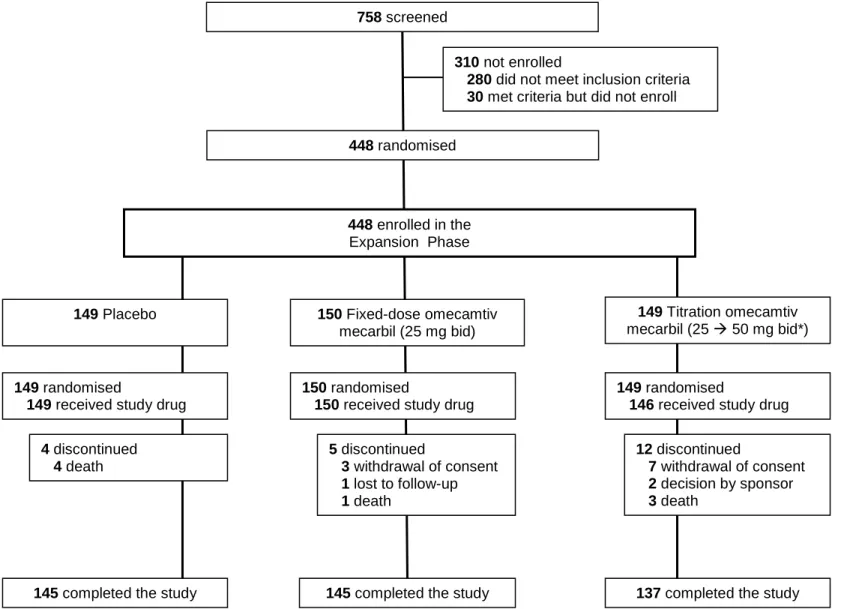
Of 758 patients screened from March 17, 2014 through March 5, 2015 at 87 centres in 13
211
countries, 448 were randomly assigned to either omecamtiv mecarbil fixed dose (n = 150; 25 mg
212
twice daily), omecamtiv mecarbil PK-titration dose (n = 149) or placebo (n = 149; see Figure 1).
213
The groups were balanced with respect to most baseline characteristics and patients were
214
receiving recommended pharmacologic therapy for chronic heart failure(Table 1). More than
215
60% had an ICD, CRT-P or CRT-D.
217
Pharmacokinetics
218
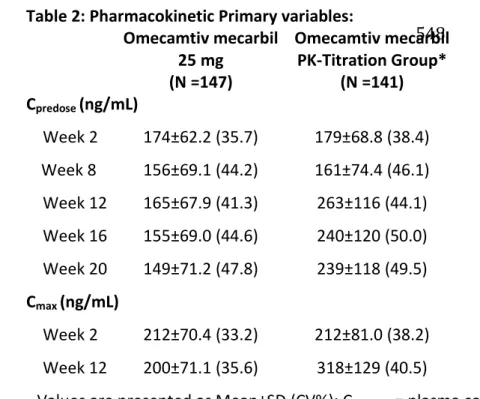
At week 12, the Cpredose (mean ± SD) of omecamtiv mecarbil was 165±68 and 263±116 ng/mL 219
and the mean Cmax was 200±71 and 318±129 ng/mL in the fixed dose and PK-titration groups, 220
respectively (see Table 2). At week 8, 78 of 146 patients in the PK-titration group were
up-221
titrated to 50 mg bid. At Week 12 in patients with measurements available, 63 of 137 (46%)
222
patients in the fixed dose and 110 of 127 (87%) patients in the PK-titration groups had Cmax 223
greater than or equal to 200 ng/mL. All patients had a Cmax <1000 ng/mL and only one patient in 224
the PK-titration group had a Cmax greater than 750 ng/mL. The maximal observed plasma 225
concentration was 453 ng/mL and 831 ng/mL in the fixed dose and PK-titration groups,
226
respectively.
227
228
Outcomes
229
All pre-specified secondary efficacy endpoints were significantly different from placebo in the
230
omecamtiv mecarbil PK-titration group at week 20 (Figure 2). There were placebo-corrected
231
increases in systolic ejection time of 11 (95%CI; 5, 18) msec (p=0·0007) in the fixed omecamtiv
232
mecarbil 25 mg bid dose group and 25 (18, 32) msec (p<0·0001) in the PK-titration group at
233
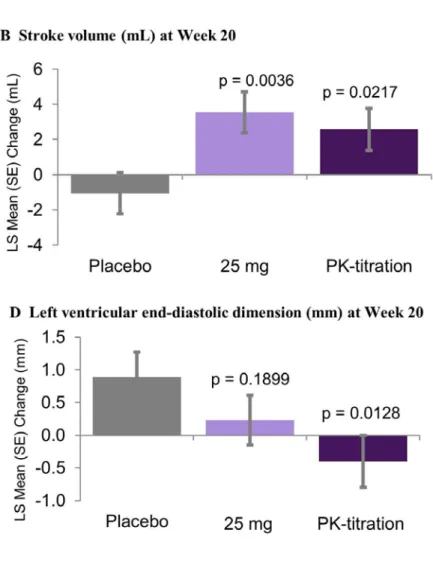
week 20. Additionally, there were placebo-corrected increases from baseline in stroke volume in
234
the fixed dose and PK-titration groups [5 (2, 8) mL, p=0·0036; 4 (1, 7) mL, p=0·0217,
235
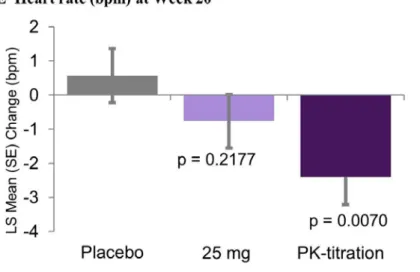
respectively]. Left ventricular end-systolic and end-diastolic dimensions, as well as heart rate
236
were reduced by omecamtiv mecarbil compared to placebo at week 20 only in the PK-titration
237
group. Reductions in the plasma concentrations of NT-proBNP at 20 weeks were observed both
in patients assigned to the fixed dose [-822 (-1516, -127) pg/mL; p=0·0205] and PK-titration
239
[-970 (-1672, -268) pg/mL, p=0·0069] groups.
240
In pre-specified exploratory analyses, placebo-corrected reductions in NT-proBNP persisted four
241
weeks after stopping omecamtiv mecarbil [fixed: -1327 (-2056, -597) pg/mL, p=0·0004;
242
PK-titration: -1306 (-2046, -566) pg/mL, p=0·0006]. Additionally, in the PK-titration group,
243
there were reductions in left ventricular end-diastolic and end-systolic volumes, as well as
244
increases in fractional shortening at week 20 compared to placebo (Supplementary Appendix,
245
Table).
246
247
Safety
248
Similar percentages of patients in the three groups completed study drug administration
249
(Table 3). Adverse events, serious adverse events, and deaths were similar across randomised
250
groups. Approximately one-quarter of the patients in the study had cardiac troponin I (cTnI)
251
plasma concentrations above the 99th percentile upper reference limit (0·04 ng/mL) at baseline
252
with no difference between the groups. At week 20, increased concentrations of cTnI compared
253
to placebo were noted in patients receiving omecamtiv mecarbil; median change from baseline
254
was 0·001 and 0·006 ng/mL in the fixed and PK-titration dose groups, respectively whereas
255
there was no median change in the placebo group (Table 3). An analysis of the maximum change
256
from baseline troponin at any time during the 20 weeks of treatment demonstrated that there was
257
a significant increase in troponin in both the 25 mg bid (p=0·0029) and PK-titration (p<0·0001)
258
groups compared to placebo. Over 92% of these increases were <0·1 ng/mL and 97% were
259
<0·2 ng/mL in patients assigned to omecamtiv mecarbil as compared to 95% and 97% in patients
260
assigned to placebo, respectively. Plasma concentrations of cTnI returned to baseline levels
within 4 weeks of discontinuing omecamtiv mecarbil. A patient’s maximum concentration of
262
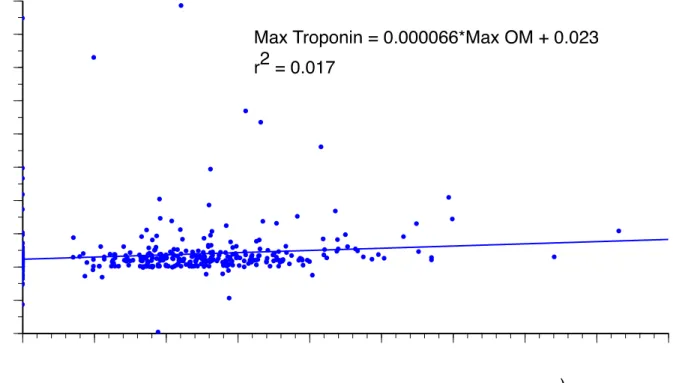
omecamtiv mecarbil was poorly predictive of their maximum change from baseline in troponin
263
(Figure 3; r2=0·017). There were 278 potential events triggered by an increase in troponin that
264
were submitted to the CEC for adjudication. Of these, none were adjudicated as an episode of
265
myocardial ischaemia or a myocardial infarction.
266
267
Discussion
268In COSMIC-HF, oral administration of omecamtiv mecarbil to patients with chronic heart failure
269
with reduced ejection fraction achieved target plasma concentrations; almost twice as many
270
patients in the pharmacokinetic (PK)-guided titration group attained target concentrations than in
271
the fixed dose group. Patients in the PK-titration group had increased duration of ventricular
272
systole and stroke volume, reduced ventricular dimensions and volumes and decreased
NT-273
proBNP and heart rate. These effects on cardiac function were similar to those seen in earlier
274
preclinical 4,5 and clinical studies 6-8 using short-term intravenous omecamtiv mecarbil. Unlike
275
currently available inotropes and inodilators, no increases in clinical episodes of tachycardia,
276
hypotension, atrial or ventricular arrhythmia, cardiac ischaemia, or myocardial infarction were
277
observed. The incidence of clinical adverse events was similar with placebo and omecamtiv
278
mecarbil though limited by small sample size, and patients receiving omecamtiv mecarbil had
279
small increases in plasma concentrations of troponin that returned to baseline after omecamtiv
280
mecarbil was discontinued. These findings from COSMIC-HF support the hypothesis that direct
281
and selective augmentation of systolic function can reduce myocardial wall stress (as suggested
282
by the decrease in NT proBNP) and possibly sympathetic activation (as suggested by the
decrease in heart rate), and promote favourable ventricular remodelling in patients with chronic
284
heart failure with reduced ejection fraction.
285
Omecamtiv mecarbil is a selective cardiac myosin activator that binds to the motor
286
domain of myosin and increases its probability of engaging the actin filament productively to
287
produce force during systole.4 This mechanism of action directly improves cardiac contractility
288
by specifically modulating the function of the sarcomere. In preclinical studies, omecamtiv
289
mecarbil did not increase the calcium transient in cardiac myocytes, and has no known activity
290
other than its action on cardiac myosin that could account for its effects on cardiovascular
291
function. In animals4,5 and humans,6-8 the pharmacodynamic signature of omecamtiv mecarbil is
292
an increase in the systolic ejection time. This finding is a reflection of the mechanism of action
293
of omecamtiv mecarbil; the increase in the number of myosin heads interacting with actin
294
filaments facilitates a longer duration of systole, even as cytoplasmic calcium concentrations fall
295
in the myocyte.
296
Since the 1960s, it has been recognized that systolic ejection times are shortened by
10-297
70 msec in patients with systolic heart failure compared to healthy controls.14 The exact
298
mechanism of this decreased systolic ejection time is unknown although it is proportional to the
299
decrease in stroke volume. In a recent analysis of 2,077 patients from the ARIC study, decreased
300
systolic ejection time was directly related to decreased fractional shortening and predicted the
301
future risk of heart failure.15 Consistent with studies of intravenous administration in healthy
302
volunteers and patients with acute and chronic heart failure,6-8 in this study of chronic oral
303
administration of omecamtiv mecarbil, systolic ejection times were increased on average from
304
11-25 msec, effectively extending the systolic ejection time toward normal.
In a contemporary model of the pathogenesis of heart failure, decreased systolic function
306
leads to multiple pathophysiological adaptations, including activation of the
renin-angiotensin-307
aldosterone (RAAS) and sympathetic systems and adverse ventricular remodelling resulting in
308
deteriorating cardiac function and worsening symptoms. This hypothesis has been supported by
309
multiple trials demonstrating the ability of RAAS and sympathetic blockade (e.g. ACE
310
inhibitors, ARBs, MRAs, and beta blockers) or augmentation of vasodilating peptides (e.g.
311
neprilysin inhibitors) to slow or prevent the progression of heart failure. However, to date, no
312
pharmacological therapy has been available to test the hypothesis that directly and selectively
313
augmenting cardiac function can also delay progression of heart failure. While this study was not
314
designed to specifically test this hypothesis, 20 weeks of omecamtiv mecarbil administration
315
reduced left ventricular end-diastolic dimensions and volumes consistent with favourable cardiac
316
remodelling. Although ventricular dimensions were not reassessed after discontinuation of
317
omecamtiv mecarbil, the persistent decrease in NT-proBNP suggests that the effects on cardiac
318
dimensions do not merely reflect a direct short-term effect on systolic function. The decreased
319
heart rate observed in patients assigned to omecamtiv mecarbil in this study, as well as earlier
320
preclinical 4,5 and clinical studies,6-8 is also consistent with reduced sympathetic activation. These
321
findings from COSMIC-HF may support the hypothesis that directly improving systolic function
322
can reverse maladaptive structural changes associated with progression of heart failure.
323
In several prior studies, therapies that improve ventricular remodelling have also had
324
beneficial effects on clinical outcomes. In a meta-analysis of the relationship between drug- or
325
device-related changes in ventricular volumes and subsequent mortality,16 therapies that
326
decreased end-diastolic or end-systolic volumes by 11 mL were associated with a 65-75%
327
likelihood of the therapy having a favourable effect on mortality. In the MADIT-CRT trial, a 5%
reduction in ventricular volumes was associated with an approximately 14-20% decrease in the
329
combined endpoint of death or heart failure hospitalizations.17 Plasma concentrations of
330
natriuretic peptides have also been a strong predictor of adverse clinical outcomes, including
331
cardiovascular death, 18,19 and in some studies are stronger predictors of clinical outcomes than
332
left ventricular ejection fraction or volumes.20Similar changes in these measures were
333
observed in COSMIC-HF following treatment with omecamtiv mecarbil warranting further 334
investigation of its effects on cardiovascular outcomes. 335
COSMIC-HF was a pharmacokinetic study that compared two dosing strategies with a
336
goal of achieving effective and well-tolerated plasma concentrations. The PK-titration group was
337
able to achieve the target plasma concentration of >200 ng/mL in 87% of the patients, compared
338
to 46% in the fixed dose group, and importantly, no patients in either group had plasma
339
concentrations above 1,000 ng/mL. However, a small, though potentially concerning increase in
340
plasma troponin concentration was noted temporally associated with administration of
341
omecamtiv mecarbil, but not correlated with maximal omecamtiv mecarbil plasma
342
concentrations, similar to findings in a previous study of patients with acute heart failure.8 The
343
magnitude of this troponin release is similar to the range of those experienced by healthy
344
endurance athletes21 and are within the limits of diurnal variation for patients without heart
345
failure.22 None of the increases in troponin were adjudicated as myocardial ischaemia in the
346
current trial and occurred in the context of improving systolic function, decreasing ventricular
347
volumes and declining NT-proBNP. Whether these troponin elevations are related to myocardial
348
damage or other mechanisms (e.g. exosomal trafficking23) is unknown and its impact on clinical
349
events can only be addressed by a large outcomes trial.
COSMIC-HF was designed as a Phase 2, pharmacokinetic study without formal
351
hypothesis-testing, and consequently, the echocardiographic findings should be considered
352
hypothesis-generating. While the study was prospectively powered for the secondary efficacy
353
endpoints of SET, stroke volume and LVESD and all pre-specified secondary efficacy endpoints
354
were significantly different than placebo in the PK-titration group, there were no adjustments for
355
multiple comparisons. With these caveats, the results of COSMIC-HF support the hypothesis that
356
directly and specifically improving cardiac systolic function with a cardiac myosin activator
357
results in favourable ventricular remodelling. However, its effects on long-term morbidity and
358
mortality remain untested and the risks and benefits of omecamtiv mecarbil can only be
359
determined by a large outcomes trial.
Research in context
361Evidence before this study
362
This study incorporated three major lines of evidence in its inception and design. The
363
first line of evidence was that a central defect in heart failure with reduced ejection fraction
364
(HFrEF) is a decrease in systolic function. The question emerges as to whether selectively
365
improving systolic function can reverse some of the other pathophysiologic processes in HFrEF
366
and result in improved clinical outcomes. The second line of evidence emerged from a review of
367
the literature of clinical studies of oral positive inotropes in patients with heart failure [PubMed,
368
see Supplementary Appendix]. Review of this literature revealed many agents given to improve
369
systolic function whose mechanism of action directly or indirectly increased intracellular
370
calcium and that acted on both the myocardium and vasculature. The poor clinical outcomes of
371
oral agents that did eventually advance to Phase III trials, such as milrinone, vesnarinone,
372
enoximone, and flosequinan, were also evident. In addition, this review established that, to-date,
373
the hypothesis of whether a pharmacologic agent that worked solely upon cardiac contractility
374
could favourably influence ventricular remodelling had not been tested. The third line of
375
evidence is derived from the studies performed with omecamtiv mecarbil to date,6-8,11-13 which
376
demonstrated that plasma concentrations of 100-200 ng/mL and above of intravenous omecamtiv
377
mecarbil could acutely improve cardiac function and dimensions and provided information on
378
the pharmacokinetics and pharmacodynamics of intravenous omecamtiv mecarbil, as well as
379
preliminary data on the pharmacokinetics of oral formulations. These data provided the
380
foundation for selecting the target plasma concentration ranges used in COSMIC-HF, as well as
381
for the hypothesis that oral omecamtiv mecarbil could chronically improve cardiac performance
382
and perhaps favourably influence ventricular remodelling.
Added value of this study
384
COSMIC-HF demonstrated that using a PK-titration strategy, the great majority of
385
patients achieved the targeted omecamtiv mecarbil plasma concentrations, avoiding excessive
386
drug concentrations where prior adverse effects had been noted. However, an increase in
387
circulating troponins was also noted which were poorly related to maximum plasma omecamtiv
388
mecarbil concentrations. This study provided evidence that omecamtiv mecarbil may improve
389
cardiac function associated with favourable reverse ventricular remodelling and reduced
NT-390
proBNP.
391
Implications of all the available evidence
392
The results of COSMIC-HF support advancing omecamtiv mecarbil into a Phase III trial
393
by providing essential data on the dosing strategy and supporting the hypothesis that selectively
394
increasing cardiac function can result in improved ventricular remodelling. The extension of this
395
hypothesis, that this improvement in ventricular function can also result in improved clinical
396
outcomes, needs to be tested in a prospectively powered outcomes trial.
Contributors:
398
All authors contributed to the interpretation of the results, writing or revision of the manuscript,
399
and approved the decision to submit the article for publication. JRT, GMF, JJVM, SDS,
400
KFA,JGFC, JAE, AG, PM, MM, VM, PP, PS, JS, JT, HJV, AAV were investigators in this
401
study. JJ, MLM and NM are employees of Amgen, and FIM is an employee of Cytokinetics,
402
Inc. JRT, GMF, JJVM, SDS, JJ, MLM, FIM and NM were involved in the study design. JRT
403
wrote the first draft of the article with input from the other authors.
404
Acknowledgment:
405
The COSMIC-HF study was funded and conducted by Amgen, Inc. in collaboration with
406
Cytokinetics, Inc.
407
408
Declaration of Interests:
409
Dr. Teerlink received research grants from Amgen, Bayer, Cytokinetics, Mast Therapeutics,
410
Novartis, and Trevena and has served as a consultant to Amgen, Bayer, Cytokinetics, Mast
411
Therapeutics, Novartis, Relypsa, Trevena and ZS Pharma. Dr. Felker has received research
412
grants from Amgen, Roche Diagnostics, Novartis, Otsuka, and NHLBI, and has served as a
413
consultant for Amgen, Novartis, Roche Diagnostics, Singulex, Trevena, Celladon, Bristol
414
Meyers Squibb, Merck, and Medtronic. Dr. McMurray's employer, Glasgow University, has
415
been paid by Cytokinetics/Amgen for his time spent working on the clinical trial program
416
with omecamtiv mecarbil. Dr. McMurray has had travel and accommodation costs paid by
417
Cytokinetics/ Amgen in relation to advisory board and clinical trial meetings about
418
omecamtiv mecarbil. Dr. Solomon has received research support from Amgen for conduct of
study and has served as a consultant for Amgen and Cytokinetics. Dr. Adams has received
420
research funds and/ or consulting fees from Amgen, Novartis, Roche Diagnostics, Otsuka,
421
Cardiorentis and Covis. Dr. Cleland has received research grants from Amgen and Novartis.
422
Dr. Ezekowitz has received research funds or honoraria from Amgen, Bayer, Merck,
423
Novartis and Servier. Dr. Goudev has received lecture and consultation fees from Amgen,
424
Novartis, AstraZeneca. Dr. Macdonald has received research grant funding from Novartis
425
(paid to St Vincent's Hospital). He has received honoraria from Novartis and Servier for
426
participation in advisory boards and lectures. He has received travel support from Novartis
427
and Transmedics to attend scientific meetings in North America and Europe. Dr. Metra
428
received consulting fees from Amgen, Bayer, Novartis, Servier. Dr. Mitrovic has received
429
consultation fees and honoraria from Bayer Healthcare AG, Novartis Pharma and
430
Cardiorentis Ltd. Dr. Ponikowski has received consulting fees from Amgen, Novartis,
431
Servier. Dr. Spinar received research funds from Amgen. Dr. Tomcsányi has received
432
consulting fees from Sanofi-Aventis, Servier, Novartis, Merck Darmstadt. Dr.
433
Vandekerckhove received research funds from Amgen, Novartis and Boehringer Ingelheim.
434
Dr. Voors has been paid by Cytokinetics/ Amgen for his activities related to his role as
435
national coordinator of COSMIC. Dr. Malik is an employee and stockholder of Cytokinetics.
436
Drs. Monsalvo, Johnston and Honarpour are employees and stockholders of Amgen.
437
References
439
1. Braunwald E, Ross J, Jr., Sonnenblick EH. Mechanisms of contraction of the normal and
440
failing heart. N Engl J Med 1967; 277: 1012-22 concl.
441
2. Packer M. The search for the ideal positive inotropic agent. N Engl J Med 1993; 329:
442
201-2.
443
3. Hasenfuss G, Teerlink JR. Cardiac inotropes: current agents and future directions.
444
European Heart Journal 2011; 32: 1838-45.
445
4. Malik FI, Hartman JJ, Elias KA, Morgan BP, Rodriguez H, Brejc K, et al. Cardiac
446
myosin activation: a potential therapeutic approach for systolic heart failure. Science
447
2011; 331: 1439-43.
448
5. Shen YT, Malik FI, Zhao X, Depre C, Dhar SK, Abarzua P, et al. Improvement of
449
cardiac function by a cardiac myosin activator in conscious dogs with systolic heart
450
failure. Circ Heart Fail 2010; 3: 522-7.
451
6. Teerlink JR, Clarke CP, Saikali KG, Lee JH, Chen MM, Escandon RD, et al.
Dose-452
dependent augmentation of cardiac systolic function with the selective cardiac myosin
453
activator, omecamtiv mecarbil: a first-in-man study. Lancet 2011; 378: 667-75.
454
7. Cleland JG, Teerlink JR, Senior R, Nifontov EM, Mc Murray JJ, Lang CC, et al. The
455
effects of the cardiac myosin activator, omecamtiv mecarbil, on cardiac function in
456
systolic heart failure: a double-blind, placebo-controlled, crossover, dose-ranging phase 2
457
trial. Lancet 2011; 378: 676-83.
458
8. Teerlink JR, Felker GM, McMurray JJV, Ponikowski P, Metra M, Filippatos GS, et al.
459
Acute treatment with omecamtiv mecarbil to increase contractility in acute heart failure
460
(ATOMIC AHF): A randomized, ascending-dose cohort, placebo-controlled study. J Am
461
Coll Cardiol 2016; in press.
462
9. Apple FS. A new season for cardiac troponin assays: it's time to keep a scorecard. Clin
463
Chem 2009; 55: 1303-6.
464
10. Thygesen K, Alpert JS, Jaffe AS, Simoons ML, Chaitman BR, White HD, et al. Third
465
universal definition of myocardial infarction. J Am Coll Cardiol 2012; 60: 1581-98.
11. Palaparthy R, Banfield C, Alvarez P, Yan L, Smith B, Johnson J, et al. Relative
467
bioavailability, food effect, and safety of the single-dose pharmacokinetics of omecamtiv
468
mecarbil following administration of different modified-release formulations in healthy
469
subjects. Int J Clin Pharmacol Ther 2016; 54: 217-27.
470
12. Vu T, Ma P, Xiao JJ, Wang YM, Malik FI, Chow AT. Population
pharmacokinetic-471
pharmacodynamic modeling of omecamtiv mecarbil, a cardiac myosin activator, in
472
healthy volunteers and patients with stable heart failure. J Clin Pharmacol 2015; 55:
473
1236-47.
474
13. Greenberg BH, Chou W, Saikali KG, Escandon R, Lee JH, Chen MM, et al. Safety and
475
tolerability of omecamtiv mecarbil during exercise in patients with ischemic
476
cardiomyopathy and angina. JACC Heart Fail 2015; 3: 22-9.
477
14. Weissler AM, Harris WS, Schoenfeld CD. Systolic time intervals in heart failure in man.
478
Circulation 1968; 37: 149-59.
479
15. Biering-Sørensen T, Roca GQ, Hegde S, Shah A, Clagett B, Mosley TH, et al. Systolic
480
Ejection Time is an Independent Predictor of Incident Heart Failure in a Community
481
Based Cohort Free of Heart Failure. J Card Fail 2015; 21: S84.
482
16. Kramer DG, Trikalinos TA, Kent DM, Antonopoulos GV, Konstam MA, Udelson JE.
483
Quantitative evaluation of drug or device effects on ventricular remodeling as predictors
484
of therapeutic effects on mortality in patients with heart failure and reduced ejection
485
fraction: a meta-analytic approach. J Am Coll Cardiol 2010; 56: 392-406.
486
17. Solomon SD, Foster E, Bourgoun M, Shah A, Viloria E, Brown MW, et al. Effect of
487
cardiac resynchronization therapy on reverse remodeling and relation to outcome:
488
multicenter automatic defibrillator implantation trial: cardiac resynchronization therapy.
489
Circulation 2010; 122: 985-92.
490
18. Cleland JG, McMurray JJ, Kjekshus J, Cornel JH, Dunselman P, Fonseca C, et al. Plasma
491
concentration of amino-terminal pro-brain natriuretic peptide in chronic heart failure:
492
prediction of cardiovascular events and interaction with the effects of rosuvastatin: a
493
report from CORONA (Controlled Rosuvastatin Multinational Trial in Heart Failure). J
494
Am Coll Cardiol 2009; 54: 1850-9.
19. Rahimi K, Bennett D, Conrad N, Williams TM, Basu J, Dwight J, et al. Risk prediction in
496
patients with heart failure: a systematic review and analysis. JACC Heart Fail 2014; 2:
497
440-6.
498
20. Cleland J, Freemantle N, Ghio S, Fruhwald F, Shankar A, Marijanowski M, et al.
499
Predicting the long-term effects of cardiac resynchronization therapy on mortality from
500
baseline variables and the early response a report from the CARE-HF (Cardiac
501
Resynchronization in Heart Failure) Trial. J Am Coll Cardiol 2008; 52: 438-45.
502
21. Shave R, Baggish A, George K, Wood M, Scharhag J, Whyte G, et al. Exercise-induced
503
cardiac troponin elevation: evidence, mechanisms, and implications. J Am Coll Cardiol
504
2010; 56: 169-76.
505
22. Klinkenberg LJ, van Dijk JW, Tan FE, van Loon LJ, van Dieijen-Visser MP, Meex SJ.
506
Circulating cardiac troponin T exhibits a diurnal rhythm. J Am Coll Cardiol 2014; 63:
507
1788-95.
508
23. Waldenstrom A, Ronquist G. Role of exosomes in myocardial remodeling. Circ Res
509
2014; 114: 315-24.
510
Figure legends:
512
Figure 1: Trial profile
513
514
Figure 2: Efficacy Endpoints
515
The least squares mean ± SEM change from baseline at week 20 are shown by treatment group
516
of the systolic ejection time (Panel A), stroke volume (Panel B), left ventricular end-systolic
517
(Panel C) and end-diastolic (Panel D) dimensions, heart rate (Panel E), and NT-proBNP (Panel F).
518
The 25 mg group received 25 mg bid for 20 weeks, while the PK-titration group received 25 mg
519
twice daily for 2 weeks to reach steady-state and if the trough omecamtiv mecarbil plasma
520
concentration (Cpredose) was < 200 ng/mL, then patients were uptitrated at week 8 to 50 mg
521
twice daily, while those with Cpredose≥ 200 ng/mL continued on 25 mg twice daily.
522
Approximately 60% of patients were up-titrated to 50 mg twice daily. P-values represent
523
comparisons to placebo group using a repeated measures model. The model was fitted
524
separately for each variable and included the stratification factor of presence or absence of
525
atrial fibrillation/flutter at randomisation, baseline value, treatment group, visit, and the
526
treatment group by visit interaction.
527
528
Figure 3: Maximum Change from Baseline in Troponin (μg/mL) by Omecamtiv Mecarbil
529
Maximum Concentration (ng/mL)
530
Shown are the maximal change from baseline in troponin and the maximum omecamtiv
531
mecarbil plasma concentration plotted individually for each patient (n = 429). The linear
532
regression (solid line) demonstrates a very poor correlation of the maximum omecamtiv
mecarbil plasma concentration (Max OM) with the maximal change from baseline in troponin
534
(Max Troponin) with r2 = 0·017.
Tables
536
Table 1: Baseline Characteristics of Patients, According to Treatment Group
537
Placebo
(n = 149)
Omecamtiv Mecarbil 25 mg BID
(n = 150)
Omecamtiv Mecarbil Titration Group
(n = 149)
Age — years 64±10 63 ±10 63 ±12
Men — no. (%) 119 (80) 127 (85) 125 (84)
White Race — no. (%) 136 (91) 142 (95) 140 (94)
Body Mass Index — kg/m2 29·7±5·7 28·5±5·6 29·5±6·1
Systolic blood pressure — mmHg 119±14 121±16 119±16
Heart rate — bpm 69±10 67±11 70±12
HF characteristics
Ischemic heart disease — no. (%) 89 (60) 97 (65) 101 (68)
Years from HF Diagnosis 8·0±7·1 7·7±7·9 7·7±6·5
Hospitalised for HF in past 12
months— no. (%) 38 (26) 51 (34) 38 (26)
NYHA class II/III — no. (%) 105 (70)/ 44 (30) 102 (68)/ 48 (32) 107 (72)/ 42 (28)
Co-morbidities
Angina — no. (%) 32 (21) 41 (27) 50 (34)
History of:
Myocardial Infarction — no. (%) 82 (55) 83 (55) 82 (55)
Unstable angina — no. (%) 20 (13) 28 (19) 27 (18)
Coronary angiogram with
clinically significant stenosis — no. (%)
Placebo
(n = 149)
Omecamtiv Mecarbil 25 mg BID
(n = 150)
Omecamtiv Mecarbil Titration Group
(n = 149)
Percutaneous Intervention — no.
(%) 62 (42) 61 (41) 63 (42)
CABG — no. (%) * 28 (19) 47 (31) 40 (27)
Persistent A Fib/Flutter — no. (%) 33 (22) 28 (19) 24 (16)
Diabetes mellitus — no. (%) 61 (41) 70 (47) 55 (37)
Hypertension — no. (%) 101 (68) 94 (63) 109 (73)
Dyslipidaemia — no. (%) 111 (74) 95 (63) 99 (66)
Transient ischemic attack — no. (%) 9 (6) 10 (7) 5 (3)
Stroke — no. (%) 14 (9) 15 (10) 14 (9)
Chronic obstructive pulmonary
disease — no. (%) 23 (15) 21 (14) 15 (10)
Laboratory variables a
Troponin I — ng/mL, median (Q1, Q3)
0·025
(0·016, 0·041) (0·016, 0·039) 0·022 (0·016, 0·042) 0·022
NT-proBNP — pg/mL, median (Q1, Q3)
1719
(699, 3242) (634, 3427) 1538 (881, 3060) 1719
eGFR — mL/min/1·73m2 65±19 63±19 65±19
Heart Failure Therapies – no. (%)
ACE inhibitor and/or ARB 140 (94) 142 (95) 137 (92)
ACE inhibitors 106 (71) 104 (69) 97 (65)
ARBs 36 (24) 42 (28) 40 (27)
Beta-blockers 146 (98) 146 (97) 144 (97)
MRAs 88 (59) 87 (58) 94 (63)
Placebo
(n = 149)
Omecamtiv Mecarbil 25 mg BID
(n = 150)
Omecamtiv Mecarbil Titration Group
(n = 149)
Digitalis glycosides 31 (21) 24 (16) 32 (22)
Implantable cardiac defibrillator
(ICD) only 52 (35) 58 (39) 60 (40)
Cardiac resynchronisation therapy
(CRT) without ICD 6 (4) 2 (1) 1 (1)
Cardiac resynchronisation therapy
(CRT) with ICD 30 (20) 39 (26) 37 (25)
Echocardiographic Variables
SET — msec 299±37 305±39 298±33
Stroke volume — mL 52·2±14·9 54·1±15·4 52·4±14·9
LVESD — mm 53·1±9·6 52·4±8·6 53·9±9·1
LVEDD — mm 61·9±9·6 61·2±8·3 62·8±9·0
Fractional Shortening — % 18·9±5·5 18·7±5·5 18·4±5·3
LVESV — mL 155·9±89·0 144·2±61·3 157·1±77·7
LVEDV — mL 215·7±99·2 199·9±69·1 215·9±88·8
Ejection Fraction — % 29·3±7·4 29·3±7·5 29·0±7·3
538
Note: Mean ± SD, unless otherwise noted. a Laboratory variables, heart failure therapies and
539
echocardiographic variables excludes 3 patients who were randomised but not dosed. SET =
540
systolic ejection time, LVESD/ LVEDD = left ventricular end-systolic/ end-diastolic dimension,
541
LVESV/ LVEDV = left ventricular end-systolic/ end-diastolic volume. * p <0·05, all others
542
p > 0·05; P-values provided as a measure of baseline difference and not for statistical testing.
543
Continuous variable p-values are from ANOVA tests and categorical variable p-values from
chi-544
square tests.
Table 2: Pharmacokinetic Primary variables:
547
548
Values are presented as Mean±SD (CV%); Cpredose = plasma concentration prior to an OM
549
dose; Cmax = maximum observed plasma concentration.
550
*Included 5 subjects who discontinued the study early prior to day 50 and were not treated
551
after week 8; Patients in the PK-titration group received 25 mg twice daily for 2 weeks to
552
reach steady-state and if the trough omecamtiv mecarbil plasma concentration (Cpredose) was
553
<200 ng/mL, then patients were uptitrated at week 8 to 50 mg twice daily, while those with
554
Cpredose≥200 ng/mL continued on 25 mg twice daily.
555 556
Omecamtiv mecarbil
25 mg Omecamtiv mecarbil PK-Titration Group*
(N =147) (N =141)
Cpredose (ng/mL)
Week 2 174±62.2 (35.7) 179±68.8 (38.4)
Week 8 156±69.1 (44.2) 161±74.4 (46.1)
Week 12 165±67.9 (41.3) 263±116 (44.1)
Week 16 155±69.0 (44.6) 240±120 (50.0)
Week 20 149±71.2 (47.8) 239±118 (49.5)
Cmax (ng/mL)
Week 2 212±70.4 (33.2) 212±81.0 (38.2)
Table 3: Safety Variables and Adverse Events
557
No. (%) (n = 149) Placebo
Omecamtiv Mecarbil 25 mg BID
(n = 150)
Omecamtiv Mecarbil Titration Group
(n = 146)a
Tolerability
Completed IP 133 (89) 134 (89) 127 (85)
Discontinued IP 16 (11) 16 (11) 19 (13)
Troponin I — ng/mL
Change to Week 20, median
(Q1,Q3) (-0·007, 0·004) 0·000 (0·000, 0·012) 0·001 (0·000, 0·024) 0·006 Maximum change from
baseline, median (Q1, Q3) 0
·010 (0·000, 0·020)
0·016 (0·003, 0·034)
0·020 0·005, 0·038) Change to Week 24, median
(Q1,Q3) (-0·006, 0·008) 0·000 (-0·002, 0·009) 0·000 (-0·003, 0·010) 0·000
Adjudicated Clinical Events
Hospitalisation 24 (16) 24 (16) 26 (18)
Heart failure 11 (7) 9 (6) 10 (7)
MI 1 (1) - 1 (1)
Unstable angina - 1 (1) -
Chest pain (non-MI/UA) 1 (1) 2 (1) 2 (1)
Other categories 15 (10) 14 (9) 15 (10)
Total MI c 2 (1) - 1 (1)
Death 4 (3) 1 (1) 3 (2)
CV Death 2 (1) 1 (1) 2 (1)
Any Adverse Event 91 (61) 92 (61) 95 (65)
No. (%) (n = 149) Placebo
Omecamtiv Mecarbil 25 mg BID
(n = 150)
Omecamtiv Mecarbil Titration Group
(n = 146)a
Dyspnoea 8 (5) 11 (7) 13 (9)
Fatigue 4 (3) 14 (9) 9 (6)
Dizziness 6 (4) 8 (5) 10 (7)
Cardiac failure 13 (9) 5 (3) 8 (5)
Nasopharyngitis 5 (3) 8 (5) 5 (3)
AE Leading to study
discontinuation 12 (8) 8 (5) 12 (8)
Serious Adverse Events 30 (20) 36 (24) 32 (22)
Cardiac SAEs 19 (13) 18 (12) 17 (12)
Cardiac failure 4 (3) 3 (2) 5 (3)
Cardiac failure acute 1 (1) 3 (2) 3 (2)
Cardiac failure congestive 3 (2) 3 (2) 3 (2)
Angina pectoris - 3 (2) 1 (1)
Ventricular tachycardia 1 (1) 2 (1) 1 (1)
558
a Tolerability includes 3 additional patients who were randomised but not dosed; b Treatment
559
Emergent Adverse Events occurring in ≥5% of patients; c Includes 0/278 increased
troponin-560
triggered potential myocardial ischaemia/ infarction events adjudicated by CEC as MI; AE =
561
adverse event; CV = cardiovascular; IP = Investigational product; MI = myocardial infarction; SAE
562
= serious adverse event; UA = unstable angina.
563
Figure 1: Trial Profile
758 screened
448 randomised
310 not enrolled
280 did not meet inclusion criteria 30 met criteria but did not enroll
149 Placebo 150 Fixed-dose omecamtiv
mecarbil (25 mg bid)
149 randomised
149 received study drug
150 randomised
150 received study drug
4 discontinued
4 death
5 discontinued
3 withdrawal of consent
1 lost to follow-up
1 death
145 completed the study 145 completed the study
149 Titration omecamtiv
mecarbil (25 50 mg bid*)
149 randomised
146 received study drug
12 discontinued
7 withdrawal of consent
2 decision by sponsor
3 death
137 completed the study