Abstract: A wireless sensor network (WSN) consists of number of autonomous sensors nodes to monitor environmental conditions and to cooperatively pass their data through the network to a main location. WSN is an application of MANET. Sensor nodes in WSN have limited storage capacity, limited processing capability, and limited battery power. The lifetime of the WSN depends upon the available battery power and generally this battery power is non-rechargeable. When the battery of the nodes get empty they will directly eliminated from the network operation.
In this Paper we are providing one scheme which is combination of various different schemes and integrating it with the AODV routing algorithm .Our proposed scheme uses AODV algorithm with the Threshold value based scheme, Average energy value based scheme and Max of Min energy scheme. This scheme will always select the best path to transmit maximum numbers of packets with maximizing the lifetime of the network. In this scheme we will first do the energy estimation and apply threshold value based scheme followed by the average energy value scheme and max of min energy value scheme for selection of best path with maximized lifetime. Our proposed scheme will always give the best results than these three methods by combining the advantages of all the schemes and maximizes the network lifetime.
Index Terms : AODV, Average Energy Scheme, Threshold
Value based scheme, Wireless Sensor Network (WSN).
I. INTRODUCTION
Wireless sensor network (WSN) is used for many monitoring application like forest fire detection, area monitoring, machine health monitoring, battle field monitoring, military surveillance, animal tracking etc. It is one of the most growing fields and it will become the part of human life like mobile phones in a near future due to its growing application. Nodes in WSN sense the surrounding and transfer the sensed data to the Base Station. In the WSNs, each node has limited energy because they operate on a battery power and this battery power is limited. Lifetime of the wireless sensor network depends upon its battery power and maximizing the lifetime of wireless sensor network is one of the major research areas currently.
Manuscript received February 14, 2013.
1Dhaval J. Rana , Information Technology Department , G.H.Patel
college of Engineering and Technology , V.V.nagar , India. 9978324427.
2
Nirav M. Raja, Asstt. Professor Information Technology Department, G.H.Patel college of Engineering and Technology, V.V.nagar , India. 9998861156.
A sensor node is made up of four basic components: a sensing unit, a processing unit, a transceiver unit and a power unit [12]. They may also have application dependent additional components such as a location finding system, a power generator and a mobilizer.
II. PROBLEM OF LIFETIME MAXIMIZATION IN WSN
In the Introduction part we had discussed the Components of Wireless Sensor Network [WSN] from that it is clear that the lifetime of the wireless sensor network is dependent on the available power and this power is generally limited and non-rechargeable[1]. So when the power of the sensor nodes gets empty those nodes will die and eliminated from the network.
Problem of Lifetime maximization is one major issue in WSN and I am going to provide solution of this lifetime maximization Problem by selection of best path by estimation of energy consumption for transmitting maximum number of packets through that path with the lowest power consumption.
III. HOW ENERGY CAN BE CONSUMED IN WSN? In Wireless Sensor Network [WSN] our major concern is on energy, that’s why first we discuss the different ways by which energy consumption can be done [2].
Transmission Power [Tx]
Receiving Power [Rx]
Ideal Power
Sensing Power
Sleep [Power Consumption in sleeping mode]
Suppose,
[Tx] = 1 Joule/Packet [Rx] = 1.5 Joule/Packet
Figure 1 shows an example, where S is sender which wants to send data to the receiver R through the intermediate node I.
A New Method for Network Lifetime
Maximization in Wireless Sensor Network
1
International Journal of Advanced Research in Computer Science and Electronics Engineering Volume 2, Issue 2, February 2013
S I R
Sender(S) Uses Only Transmission Power [ ]
Intermediate (I) node Uses Power [ +
Receiver(R) Uses Only Receiving Power [ ]
100 J 70 J 100 J
Figure 1 Example showing energy consumption in WSN
[Tx] is the Transmission Power required to transmit a single packet . [Rx] is the Receiving Power required to receive a single packet. Sender (S) needs only Transmission power [Tx] to send packet. Receiver (R) needs only Receiving power [Rx] to receive packet.
For sender,
Initial Energy (available Power) = 100 Joule Power require to transmit 1 packet = 1 Joule
= 100/1 = 100 packets For Receiver,
Initial Energy (available Power) = 100 Joule Power require to receive 1 packet = 1.5 Joule
= 100/1.5 = 66 packets
For Intermediate node,
Initial Energy (available Power) = 70 Joule
Intermediate node Receive and Transmit packets, so energy used by intermediate node per packet = [ Tx + Rx]
= 1 +1.5
= 2.5 Joule/packet
= 70/2.5 = 28 packets
From the above calculation it is clear that,
1) Sender can send 100 packets 2) Receiver can receive 67 packets
3) Intermediate node can forward 28 packets
Equation for calculating decreased energy,
1) For sender
2) For receiver
3) For Intermediate node
Above 3 equation gives the remaining energy after
transmission of the packets after the transmission
time (Time) for Sender, Receiver and Intermediate
node respectively.
IV. THRESHOLD AND AVERAGE ENERGY BASED SCHEME
Threshold value based scheme:
In threshold based scheme fix threshold value is used for path selection [3]. Means the nodes energy value is compared with the threshold value, if it is greater than the threshold value than that node will be taken in to consideration otherwise it is discarded. And finally all the path whose nodes have energy value greater than the threshold value are taken in to consideration and the shortest path from them is selected based on AODV algorithm [9] which is the best path based on threshold value scheme.
S
R 1
[12
2 3
4 5
100 J
100 J 12 J
80 J 30 J
7 J 5 J
Figure 2 Example of Threshold value based Scheme
For the given example (Figure 2),
Path 3=S-4-5-R
Now for Threshold Value (α) =10 J, node 4 and 5 have the energy value less than the threshold value (e.g. for node 4, 7 J<10 J) so the Path 3 containing node 4 and 5 will be discarded.
All other nodes have energy value greater than the threshold value so Path 1 and 2 are available and based on AODV algorithm shortest Path will get selected which is Path 1, which have only 1 hop.
But the above discussed threshold based scheme has one disadvantage, that is for the Path1 node 1’s energy value is 12 J means we can transmit 12/2.5=4 packets only.
But for Path2,
Node 2can transmit 80/2.5=32 packets Node 3 can transmit 30/2.5=12 packets
So, from Path-2 we can transmit minimum 12 packets (means Path-2’s lifetime is 12 seconds) but using threshold based scheme the Path-1 is selected which can transmit only 4 packets(means Path-1’s lifetime is 4 seconds). so, in such cases where some node have energy value nearer to threshold one at that time there is a chance that best path might not be selected.
So, this is one limitation of this scheme that when some node is there which will have energy level nearer to the threshold value this scheme might not select the best path with maximum lifetime. It can be solved using the average energy value based scheme discussed next.
Average Energy value based scheme :
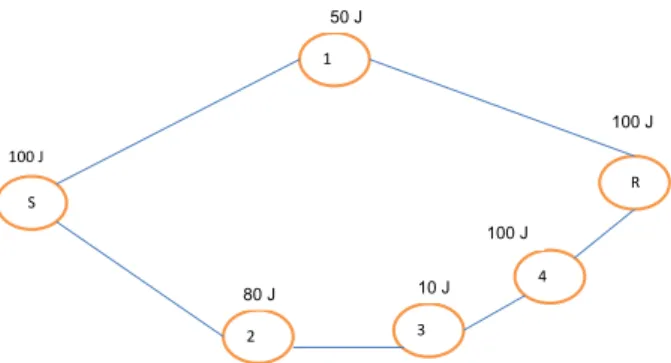
Figure 3 shows an example of Average Energy Value based scheme, in which average energy value of each available Path is calculated and the path with the maximum average energy value will be selected as a best Path.
S
R 1
[12
4
2 3
100 J
100 J 50 J
80 J 10 J
100 J
Figure 3 Example of Average energy value based Scheme
For example, consider figure 2 shown in the threshold value based method discussed above. The problem of best path selection in that example can be solved by using this average value based scheme. In figure 2 average energy values,
For Path-1 = 12/1 = 12 J
For Path-2 = (80+30)/2 = 110/2 = 55 J
For Path-3 = (7+5)/2 = 12/2 = 6 J
So, the path with the maximum average energy value is Path-2, which is the best Path.
For the above example (figure 3),
Path 1= S-1-R Path 2= S-2-3-4-R
Now calculating average energy value,
For Path 1= 50/1 = 50 Joule
For Path 2= (80+10+100)/3 = 190 / 3
= 64 Joule
This scheme will select the Path-2 as the best path which has the maximum average energy value. Now calculating total number of packets that can be transmitted by each node in Path 1,
For node 1 = 50/2.5 = 20 packets
Calculating total number of packets that can be transmitted by each node in Path 2,
For node 2 = 80/2.5 = 20 packets
For node 3 = 10/2.5 = 4 packets
For node 2 = 100/2.5 = 40 packets
So, it’s clear from the above calculation that Path1 will exist till transmission of 20 packets (means 20 second); where as in Path 2 node 3 have the available energy for transmitting 4 packets only (means 4 second).
International Journal of Advanced Research in Computer Science and Electronics Engineering Volume 2, Issue 2, February 2013
Path 2 as the best path which is wrong because it will be destroyed after transmitting 4 packets that is less than the lifetime of Path 1 .For such type of cases average energy value based scheme may get fail for the selection of best path.
In most of the cases average energy value based scheme works very well but when there is a cases like above example it will get fail to select the best path.
That’s why we need some scheme which works well in all scenarios. Neither threshold value based scheme nor average energy value based scheme provide best results. So we need some scheme which will have advantages of both the scheme and in the next section we are providing such a scheme for the selection of best path.
V. PROPOSED METHOD FOR LIFETIME MAXIMIZATION
We had discussed the threshold value based scheme and average energy value based scheme which works well for best path selection. But both of these schemes have some disadvantages and in some of the cases it will get fail. So, we need some scheme which works well in all scenarios and in this section we are providing one scheme which uses advantages of both this scheme as well as advantages of AODV algorithm and Max min scheme for selection of best path.
Our proposed scheme is a combination of,
AODV algorithm (for shortest path selection) +
Threshold value based scheme +
Average energy value based scheme +
Max-min energy value based scheme .
This scheme will always give the best path for lifetime maximization and solve the problems and disadvantages of the other scheme .It works well in all scenario and always gives the selection of best path.
Working of the above scheme:-
For the given network topology ,when some node wants to send packets to another node .It will first find all possible path between sender and receiver using AODV algorithm now we can transmit packets using any path but our objective is to select the best path for lifetime maximization. That’s why first applying the threshold value based scheme and filtering out the path who’s any of the node have energy value less than the threshold value. Now, next step is to calculate average energy value for the each available path and selecting the path which will have the maximum average energy value as well as Max-min energy for each path.
Means the path is selected as the best path which has maximum average energy value as well as max-min energy value from the remaining path for lifetime maximization.
Example:-
S
R 1
[12
8
6 7
100 J
100 J 50 J
80 J 10 J
100 J 2
3 30 J
40 J
4 5
7 J 5 J
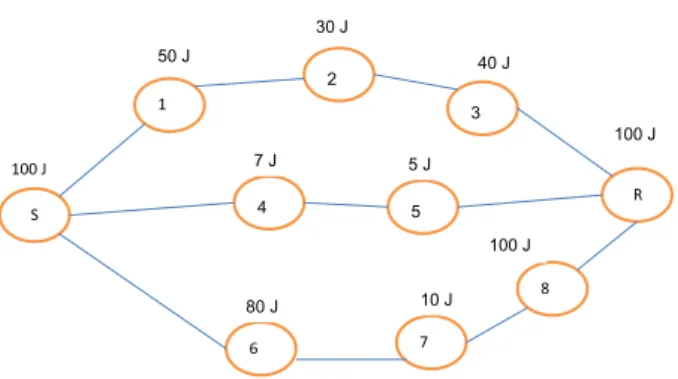
Figure 4 Example showing the new proposed scheme
Now we will explain how this scheme work by using above example,
For the above example (Figure 4),
Path 1= S-1-2-3-R Path 2= S-4-5-R Path 3 =S-6-7-8-R
After finding all possible number of paths, 1 step is to apply threshold value based scheme.
For the threshold value α=10, all nodes of Path 3 and Path 1 will pass (because they have energy value > α) but Path 2 will be discarded because node 4 & 5 has energy value less than threshold Value.
Now, we have Path 1 and Path 3 remaining. Applying Average energy value scheme ,
For Path 1 average energy = (50+30+40)/3 = 120 / 3 = 40 Joule
For Path 3 average energy = (80+10+100)/3 = 190 / 3 = 63 Joule
Now, we will also apply Max-Min energy scheme before selecting any path based on average energy value based scheme.
For Path 1,
Node 1= 50 J, Node 2= 30 J, Node 3= 40 J
So, number of minimum packets that can be transferred using path 1= 30 /2.5
= 12 packets (means 12 second of lifetime)
For Path 3,
Node 6= 80 J, Node 7= 10 J, Node 8= 100 J
Minimum energy node for Path 2 is 10 J for node 7.
So, number of minimum packets that can be transferred using path 3= 10 /2.5
= 4 packets (means 4 second of lifetime)
So Max-min energy based scheme will select the Path 1 because it has maximum of minimum energy value (e.g. 30 J) which is the best Path with the maximum lifetime of 12 seconds. Though the Path 3 has greater average energy value than Path 1 it is not selected because it is not giving us the maximum lifetime (e.g. lifetime of Path 3 is 4 seconds only).
VI. CONCLUSION
From the above discussion it is clear that our scheme which is the combination of AODV algorithm + Threshold value based scheme + Average energy value based scheme + Max of Min energy value scheme, will always selects the best path for lifetime maximization from the all available paths. Up till now there is no scheme has been proposed which provide such a good results. Our scheme selects the best path always through which maximum number of packets can be transferred and eliminates the disadvantages of all other schemes by providing maximum lifetime.
REFERENCES
[1] I.F. Akyildiz, W. Su, Y. Sankarasubramaniam, E. Cayirci “Wireless sensor networks: a survey” , Broadband and Wireless Networking Laboratory, School of Electrical and Computer Engineering, Georgia Institute of Technology,Atlanta, GA 30332, USA. Elsevier Publication.
[2] Peyman Arebi, “A New Method for Restoration Broken Links in Wireless Ad-hoc Networks by Estimation Energy Consumption”, 2012 Fourth International Conference on Computational Intelligence, Communication Systems and Networks, IEEE Computer Society.,IEEEDOI 10.1109/CICSyN.2012.75.
[3] Gaurav Soni, Ashish Khare, “Trust Based Solution for Detecting Uncertain Deteriorationof Node Energy in MANET”, International Journal of Scientific & Engineering Research (IJSER) Volum 6, Issue 9, ISSN 2229-5518 ,October-2011
[4] Mansoor-uz-Zafar Dawood,Noor Zaman,Abdul Raouf Khan,Mohammad Salih “Designing of energy efficient routing protocol for Wireless Sensor Network (WSN) Using Location Aware (LA) Algorithm.” Journal of Information & Communication Technology Vol. 3, No. 2, pp 56-70, 2009.
[5] Nicola Costagliola · Pedro Garçia López · Francesco Oliviero · Simon Pietro Romano “Energy- and Delay-Efficient Routing in Mobile Ad Hoc Networks”, Springer Science+Business Media, LLC, 23 July 2011.
[6] G. Umarani Srikanth, M. Akilandeswari “Computational Intelligence Routing For Lifetime Maximization in Heterogeneous Wireless Sensor Networks”, International Journal of Recent Technology and Engineering ,ISSN: 2277-3878, Volume-1, Issue-2, June 2012
[7] SOFY HAROLD and A. VIJA Y ALAKSHMI “Enhanced Power Control MAC Protocol for Wireless Ad Hoc Networks”, ICCSP, 978-1-4673-1622-4/12/, IEEE-2012
[8] Venetis Kanakaris, David Ndzi, Kyriakos Ovaliadis “IMPROVING AODV PERFORMANCE USING DYNAMIC DENSITY DRIVEN ROUTE REQUEST FORWARDING” Department of Electronic and Computer Engineering,University of Portsmouth, Anglesea Road, Portsmouth, PO1 3DJ, United Kingdom .
[9] Asar Ali ,Zeeshan Akbar, “Evaluation of AODV and DSR Routing Protocols of Wireless Sensor Networks for Monitoring Applications”, Department of Electrical Engineering with emphasis on Telecommunication Blekinge Institute of technology, October-2009.
[10] Parul Kansal, Deepali Kansal, Arun Balodi , “Compression of Various
Routing Protocol in Wireless Sensor Network”, International Journal of Computer Applications (0975 8887) , Volume 5– No.11, August 2010.
[11] Kadiveti. Koteswar Rao, Ragendra.C, Ramesh.Ragala, “An Enhanced Energy Efficient Routing Protocol for MANETs”International Journal of Computational Engineering Research (IJCER) ISSN: 2250-3005. [12] Kadiveti. Koteswar Rao, Ragendra.C, Ramesh.Ragala, “An Enhanced
Energy Efficient Routing Protocol for MANETs”International Journal of Computational Engineering Research (IJCER) ISSN: 2250-3005. [13] Ms. Sunita , Jyoti Malik , Suman Mor , “Comprehensive Study of
Applications of Wireless Sensor Network”, International Journal of Advanced Research in Computer Science and Software Engineering ,
ISSN: 2277 128X , Volume 2, Issue 11, November 2012 .
[14] Mohammad A. Mikki “Energy Efficient Location Aided Routing Protocol for Wireless MANETs”,(IJCSIS) International Journal of Computer Science and Information SecurityVol. 4, No. 1 & 2, 2009. [15] Wei Liu, Chi Zhang, Guoliang Yao and Yuguang Fang,” DELAR: A
Device-Energy-Load Aware Relaying Framework for Heterogeneous Mobile Ad Hoc Networks”, IEEE-JOURNAL ON SELECTED AREAS IN COMMUNICATIONS, VOL. 29, NO. 8, SEPTEMBER 2011.
[16] Nini Wei,Yi Song “An Energy-Aware Routing Strategy Based on Dynamic Priority Factor in Ad Hoc Metworks”,2011 International Conference of Information Technology, Computer Engineering and Management Sciences, 978-0-7695-4522-6/11, IEEE DOI 10.1109/ICM.2011.256, 2011.
[17] Ajina A,“Energy Efficient,Power Aware Routing Algorithm For Sensor Network”. International Journal of Computer Theory and Engineering,Vol.3,No.1.1793-8201, February-2011.
Dhaval J. Rana received Bachelor of Engineering degree in Information Technology from Sardar Vallabhbhai Patel Institute of Technology, Vasad, Gujarat, India. He is currently doing his Master of Engineering from G.H.Patel college of Engineering and Technology, V.V.Nagar, Anand, Gujarat, India. His interested field of research is Wireless Sensor Networks.
![Figure 1 Example showing energy consumption in WSN [Tx] is the Transmission Power required to transmit a single packet](https://thumb-us.123doks.com/thumbv2/123dok_us/8097145.2145757/2.892.90.428.152.269/figure-example-showing-energy-consumption-transmission-required-transmit.webp)