Significant improvements in the practice patterns of adult
related donor care in US transplant centers
Chloe Anthias MBChB1, Bronwen E Shaw, MD, PhD2, Deidre M Kiefer, MPH3, Jane L Liesveld, MD4, Jean Yared, MD5, Rammurti T Kambl, MD6, Anita D'Souza, MD, MS2, Peiman Hematti, MD7, Matthew D Seftel, MBChB, MPH, MRCP, FRCPC8, Maxim Norkin, MD, PhD9, Zachariah M DeFilipp, MD10, Kimberly A Kasow, DO11, Muneer H Abidi, MD12, Bipin N Savani, MD13, Nirali N Shah, MD, MHSc14, Paolo Anderlini, MD15, Miguel A Diaz, MD, PhD16, Adriana K Malone, MD17, Joerg P Halter, MD18, Hillard M Lazarus, MD19, Brent R Logan, PhD2,20, Galen E Switzer, PhD21, Michael A Pulsipher, MD22, Dennis L Confer, MD23, and Paul V O'Donnell, MD, PhD, FACP24
1Anthony Nolan Research Institute
2CIBMTR® (Center for International Blood and Marrow Transplant Research), Department of
Medicine, Medical College of Wisconsin
3CIBMTR® (Center for International Blood and Marrow Transplant Research), National Marrow
Donor Program/Be The Match®
4Strong Memorial Hospital - University of Rochester Medical Center
5Marlene and Stewart Greenebaum Cancer Center, University of Maryland School of Medicine 6Baylor College of Medicine Center for Cell and Gene Therapy
7University of Wisconsin Hospital and Clinics 8CancerCare Manitoba, University of Manitoba 9University of Florida
10Winship Cancer Institute of Emory University 11University of North Carolina
12Spectrum Health, Michigan State University 13Vanderbilt Medical Center
14National Cancer Institute – NIH
Corresponding author: Dr Chloe Anthias, Anthony Nolan Research Institute, 2 Heathgate Place, 75-87 Agincourt Road, London, NW3 2NU [email protected], Tel: 44 7723 006012, Fax: 44 2072848226.
Authorship Contributions: C.A, B.E.S., D.M.K and P.V.O designed the research, analyzed and interpreted the data, and wrote the manuscript; R.T.K., A.D., P.H., J.LL., M.N., Z.M.D., K.A.K., M.H.A., M.D.S., P.A., J.Y., B.N.S., M.A.D., A.K.M., J.P.H., B.R.L., H.M.L., G.E.S., M.A.P. and D.L.C. critically revised the paper.
Conflict of Interest Disclosure: The authors declare no competing financial interests.
Publisher's Disclaimer: This is a PDF file of an unedited manuscript that has been accepted for publication. As a service to our
customers we are providing this early version of the manuscript. The manuscript will undergo copyediting, typesetting, and review of
HHS Public Access
Author manuscript
Biol Blood Marrow Transplant. Author manuscript; available in PMC 2017 March 01.
Published in final edited form as:
Biol Blood Marrow Transplant. 2016 March ; 22(3): 520–527. doi:10.1016/j.bbmt.2015.11.008.
Author Manuscript
Author Manuscript
Author Manuscript
15The University of Texas M.D. Anderson Cancer Center 16Hospital Infantil Universitario Nino Jesus
17Mount Sinai Medical Center 18University Hospital Basel
19University Hospitals Case Medical Center
20Division of Biostatistics, Institute for Health and Society, Medical College of Wisconsin 21University of Pittsburgh, VA Medical Healthcare System
22Children's Hospital of Los Angeles, Keck School of Medicine of the University of Southern
California
23National Marrow Donor Program/Be The Match® 24Fred Hutchinson Cancer Research Center
Abstract
Recent investigations have found a higher incidence of adverse events associated with hematopoietic cell donation in related donors (RDs) who have morbidities that if present in an unrelated donor (UD) would preclude donation. In the UD setting, regulatory standards ensure independent assessment of donors, one of several crucial measures to safeguard donor health and safety. A survey conducted by the Center for International Blood and Marrow Transplant Research (CIBMTR) Donor Health and Safety Working Committee in 2007 reported a potential conflict of interest in >70% US centers, where physicians had simultaneous responsibility for RDs and their recipients. Consequently, several international organizations have endeavored to improve practice through regulations and consensus recommendations. We hypothesized that the changes in the 2012 FACT-JACIE Standards, resulting from the CIBMTR study, will have significantly impacted practice. Accordingly, a follow-up survey of US transplant centers was conducted to assess practice changes since 2007, and investigate additional areas where RD care was predicted to differ from UD care. 73 centers (53%), performing 79% of US RD transplants responded. Significant improvements were observed since the earlier survey; 62% centers now ensure separation of RD and recipient care (P<0.0001). However, this study identifies several areas where RD management does not meet international donor care standards. Particular concerns include counseling and assessment of donors before HLA typing, with 61% centers first disclosing donor HLA results to an individual other than the donor, the use of unlicensed mobilization agents, and the absence of long-term donor follow-up. Recommendations for improvement are described.
Keywords
related donor; accreditation; hematopoietic cell donation
Author Manuscript
Author Manuscript
Author Manuscript
Introduction
The importance of independent assessment of hematopoietic or solid organ donors to prevent real or perceived coercion of an individual who is undergoing a procedure from which they have no medical gain has been widely discussed1-6. The practice of a physician simultaneously managing both a hematopoietic cell (HPC) donor and their transplant recipient is prevented by National Marrow Donor Program (NMDP) and World Marrow Donor Association (WMDA) regulatory policies7,8 in the unrelated donor (UD) setting,8,9 as well as in solid organ transplantation.2 However, similar regulatory policies covering adult related donors (RDs) for HPC transplantation do not exist.
In 2007, the Donor Health and Safety Working Committee of the Center for International Blood and Marrow Transplant Research (CIBMTR) conducted a survey investigating practice patterns in RD care in US transplant centers.10 This study highlighted a potential conflict of interest in >70% of centers, where a physician would routinely have simultaneous responsibility for a HPC transplant recipient and their RD.
An earlier survey of delegates at the European Group for Blood and Marrow Transplantation (EBMT) annual meeting 2005, demonstrated similar practices in European centers, with only 25% respondents indicating that care of RDs was provided by clinicians who were not involved in the care of their transplant recipients.11 Both this group, and a subsequent study of Italian apheresis centers,12 illustrated further issues with the lack of standardized guidelines and screening procedures for RDs.
At the time of these early surveys, Foundation for the Accreditation of Cellular Therapy and the Joint Accreditation Committee – ISCT and EBMT (FACT-JACIE) Standards13 did not specifically require transplant centers to separate the care of a RD and their recipient. Following investigations showing a higher incidence of adverse events, including death, in RDs compared to UDs,14 and consensus recommendations heightening awareness around donor care practices, a specific recommendation addressing independent evaluation of RDs was introduced to 5th Edition of FACT-JACIE standards13 in March 2012.
Recommendations on family donor management15 from a subgroup of the Ethics Working Group and the Clinical Working Group of the WMDA are still more definitive, suggesting that family donors should be assessed by a practitioner “who is not directly involved in the recipient's care”. This latter publication also emphasized the importance of donor health assessment prior to tissue typing, and made recommendations for donor follow up to be in line with that of UDs. Donor follow up recommendations have subsequently been endorsed by a Worldwide Network for Blood and Marrow Transplantation (WBMT) consensus paper in 2013.16
We hypothesized that the changes to FACT-JACIE standards, in conjunction with other initiatives, will have significantly impacted practice patterns in US transplant centers. In order to test our hypothesis, we conducted a follow-up survey. In addition to investigating whether improvements have occurred in the areas addressed in the earlier survey, we took this opportunity to examine practice at other stages of the donor care pathway where we hypothesized RD care may differ from standard practice in the UD setting.
Author Manuscript
Author Manuscript
Author Manuscript
Materials and methods
A 38-item survey was developed to examine related donor care practice (see Supplemental Appendix). The survey contained identical questions to the earlier survey in order to allow direct comparison between eras, as well as new questions to address the areas of care not previously examined. The survey was administered as an internet-based questionnaire via a secure hyperlink (surveymonkey.com) from August to November 2014.Program directors of all US allogeneic transplant centers reporting data to CIBMTR, and all European allogeneic transplant centers reporting data to EBMT received an email invitation to participate with a request to forward the survey to the physician responsible for RD care. Entry into a drawing for a free Tandem Annual Meeting registration was offered as an incentive to increase the response rate. All procedures were approved by the National Marrow Donor Program (NMDP) Institutional Review Board.
Due to differences in practice, the results from CIBMTR and EBMT centers were analyzed separately. The CIBMTR center data is presented in this manuscript.
The survey invitation specified that the study referred to the care of adult related HPC donors only, and the survey terminated if respondents answered ‘no’ to the first question “Does your center perform allogeneic HPC transplants from adult (≥18 years old) related donors?”.
Following the initial invitation, non-responders received three further email reminders. If >1 response was received from a center, the most complete was used for analysis.
US centers were grouped by size in the analysis, defined as the number of allografts per year, as reported to CIBMTR (2011-2012). Centers were also grouped as previously10 according to their geographic location by US regions including: New England (ME, NH, VT, MA, RI, CT), Mid-Atlantic (NY, NJ, PA), South Atlantic (DE, MD, DC, VA, WV, NC, SC, GA, FL), East North Central (OH, IN, IL, MI, WI), East South Central (KY, TN, AL, MS), West North Central (MN, IA, MO, ND, SD, NE, KS), West South Central (AR, LA, OK, TX), Mountain (MT, ID, WY, CO, NM, AZ, UT, NV); and Pacific (WA, OR, CA, AK, HI).
Participants were able to skip questions they were unwilling/unable to answer, however results were only analyzed and presented for questions that >80% of responding centers had completed. Statistics were performed using SPSS software (version 22.0; SPSS, Chicago, IL). Relationships between categorical center characteristics and response rate or adherence to standards were examined using Chi squared or Fisher's exact test where appropriate.
Results
Response rate
Excluding duplicates, 73 responses from 139 eligible centers in the US were received, giving an overall response rate of 53%. All responding centers confirmed that they performed allogeneic transplants using RD aged ≥18 years. Responding centers performed
Author Manuscript
Author Manuscript
Author Manuscript
>80% of total allogeneic hematopoietic cell transplants (HCTs) and 79% of the total related donor HCTs reported to CIBMTR (2011-2012).
As found in the 2007 survey, centers with higher transplant volume were more likely to respond to the survey (shown in Figure 1A); 67% of non-responding centers performed < 30 allografts per year, compared to 22% of responding centers (P<0.0001). As shown in Figure 2B, the response rate did not vary significantly by US region (P=0.47), with similar response patterns to the earlier survey.
A higher response rate was seen in FACT accredited centers; 70/109 (64%) accredited versus 3/30 (10%) non-accredited centers responded (P<0.001), and >95% responding centers were FACT accredited. Responses were received from 59% of NMDP transplant centers, however no responses were received from the 20 transplant centers not affiliated with NMDP.
The characteristics of responding centers are summarized in Table 1.
Healthcare providers involved in donor care
We compared findings regarding providers of donor care from the current (2014) survey with the earlier survey conducted in 200710 and found no change in the professional
background of the healthcare providers responsible for donor clearance between eras (Figure 2A), with transplant physicians remaining responsible for donor clearance in almost 80% of centers. Despite this, we found a highly significant improvement with respect to separation of donor and recipient care over the seven years between surveys. As indicated in Figure 1B, 62% of centers now ensure separation of recipient and donor care (with the person providing clearance either being uninvolved in the transplant program or being affiliated with the transplant team but not involved in recipient care), an increase from 23% in the previous survey. In just 7% of centers the physician responsible for donor clearance routinely has responsibility for the transplant recipient (reduced from 32% centers in 2007), and in 30% of centers this physician responsible for donor clearance may be involved in the care of the transplant recipient (a reduction from 42% centers in 2007); P<0.0001. We investigated how other aspects of donor care, not previously studied, were provided, and found that bone marrow harvests were almost exclusively performed by transplant physicians (96%), who in half of these centers were members of the team caring for the recipient. Transplant
physicians were responsible for RD apheresis procedures in 50% of centers.
Care of potential donors prior to HLA typing
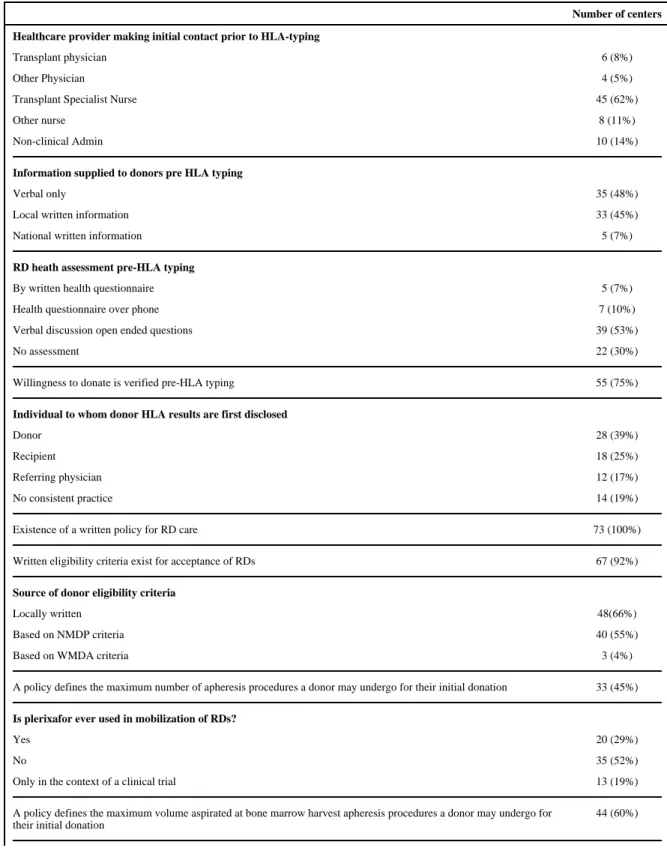
We found substantial center variation in most aspects of care received by RDs at the point of initial HLA typing (summarized in Table 2), with practice differing from that of potential UDs in most cases. The process for informing RDs prior to HLA typing consisted solely of a verbal discussion without written information in almost half of centers, with no verification of willingness to proceed with donation in 25% of centers. 30% of centers do not make any assessment of donor health prior to determining RD matching status, and only a small proportion (17%) undertake a formal health history questionnaire at this point.
Author Manuscript
Author Manuscript
Author Manuscript
The disclosure of donor HLA typing results also varied by center, with a quarter of centers stating that the transplant recipient was the first individual to be informed of the potential RD's matching status. An additional 17% of centers disclosed results to the referring physician first, 19% had no consistent practice and only 39% stated that the donor would always be told first.
Donor care policies and harvesting procedures
In some areas (largely those covered in FACT-JACIE Standards) a near-uniform existence of RD care policies was seen. All responding centers reported that they had a written policy or Standard Operating Procedure for RD care, and 94% had a process for credentialing physicians performing bone marrow (BM) harvests. 93% of centers used defined eligibility criteria to assess adult RDs, which in 55% of centers were based on NMDP criteria. 90% of centers also followed UD practice in using a written health questionnaire as part of the donor medical assessment.
In other aspects of care where clear policies exist for UDs, we found the presence of equivalent policies for RDs in US transplant centers to be less prevalent (shown in Table 2). More than 50% of centers did not have a limit for the number of apheresis procedures a donor could undergo during their initial donation, and, somewhat surprisingly, 29% of centers had used plerixafor off-label for RD mobilization outside the context of a clinical trial. 68% of centers had a limit for aspirated BM harvest volume, most commonly 20mls/kg, with only one center specifying a limit exceeding NMDP policy for UD marrow harvests.
Donor follow-up
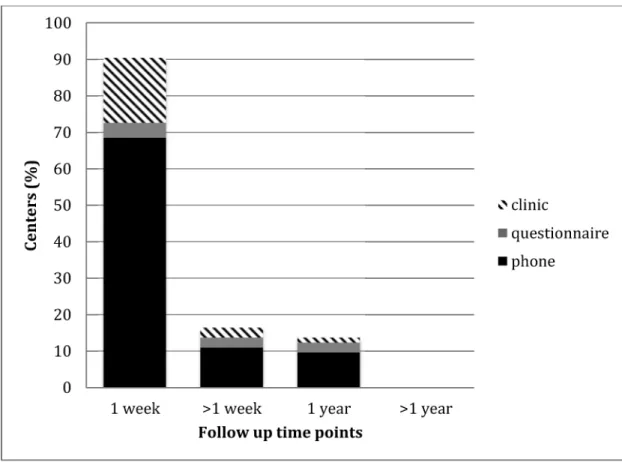
As shown in Figure 3, >90% of centers provided short-term follow up at one week post donation, usually by telephone, however in only 14% of centers did duration of follow up extend up to a year, and no centers followed up RDs beyond one year.
The impact of center volume
We compared the lower volume centers (performing fewer than the median 25 RD HCTs per year) to higher volume centers, and found that RD marrow harvests were more likely to be performed by the same transplant physicians caring for the recipient in lower volume centers (70% versus 38%; P=0.009). A trend was also seen towards the lower volume centers being less likely to have a policy defining the limit for BM volume aspirated at harvest, a policy present in 57% lower volume versus 79% higher volume centers
(P=0.077). Center volume did not impact any other areas of related donor practice studied.
Discussion
A major concern in RD care to date has been around the conflict of interest where the same physician may be responsible for a donor and their recipient, a practice which occurred in >70% of US centers in the 2007 survey10. We report a significant improvement in this survey, with only 7% of centers now routinely allowing a physician to be responsible for medical clearance of a RD while caring for their recipient, (with a further 32% indicating
Author Manuscript
Author Manuscript
Author Manuscript
that care may overlap). This demonstrates the power of practice-based surveys to identify areas of concern and drive innovations through awareness and engagement of the community.
This study provides important insights into aspects of RD care, which have not been previously evaluated in the US. Since responding centers were responsible for the care of approximately 80% of adult RDs, we believe these results are likely to be representative of the care received by the majority of RDs. Due to a very low response rate among small volume centers performing <30 allografts per year, and those which lack FACT accreditation or NMDP affiliation, the results cannot necessarily be generalized to these centers. We also acknowledge that despite requesting that the most appropriate specialist complete the survey, we cannot verify that this person was familiar with all areas of donor care in their center.
We found practice to be largely compliant with most FACT requirements, including the existence of a policy for RD care, written donor eligibility criteria and a credentialing process for physicians performing BM harvests. The notable exception was donor follow up, where, despite an explicit FACT requirement for systematic RD follow up, and international recommendations suggesting 10 year follow up for all donors,16 long-term RD follow-up in the US is universally absent. Although reassuring data from large studies of UDs report no increase in malignancies or autoimmune disease in peripheral blood stem cell (PBSC) donors compared to the general population,17-19 RDs are generally older than UDs, have more health issues, and are more likely to experience adverse events.20-22 Furthermore, we found that almost 30% of centers had used off-label plerixafor to mobilize RDs outside the clinical trial context. At present minimal data are available regarding the long-term effects of alternative mobilization agents in normal donors (e.g. plerixafor), and ongoing
surveillance will be essential to establish the safety of such agents and exclude long-term ill effects on donor health. A proportion of RDs may also experience psychological difficulties as a consequence of donation (particularly if the recipient dies or develops graft versus host disease).23
Although RD follow-up recommendations to date have focused on excluding late health complications associated with donation, there may also be a need to incorporate psychological support for RDs into follow-up programs.
In areas of care that have not yet been addressed by current FACT-JACIE standards, but where World Marrow Donor Association Standards for UD practice provide a benchmark, practice was heterogeneous, and generally fell below UD norms. Perhaps the greatest concern identified in this study relates to the care of potential donors at the stage of HLA typing. The duty of care to a related donor starts at the point of contact, and counseling before HLA typing is essential to identify both reluctance about donation, and health issues that would preclude donation, to allow early deferral of unwilling or unfit donors as well as reducing unnecessary costs of HLA typing. Failing to defer prior to HLA typing is
problematic for a number of reasons. Firstly, a formal donor medical assessment is frequently performed shortly before the planned donation date (often within 30 days, to obviate the need for repeat virology testing); if a donor is found to be unsuitable and
Author Manuscript
Author Manuscript
Author Manuscript
cancelled at this point, the transplant is almost invariably delayed while an alternative donor is found. Secondly, donors may experience distress and guilt if they are deferred once they are found to be a match, particularly since many exclusion criteria are, to a degree, lifestyle associated. It is possible that donors may even minimize their own health issues for fear of jeopardizing the treatment of their sick relative if they do not donate.
Additional issues can occur when the transplant recipient is informed about their matching status before the donor, a situation that occurred in a quarter of responding centers, with no consistent practice in a further 19%. This denies the donor the choice of declining to donate without potential consequences for the relationship with their relative, and may pressurize them to proceed. Improving practice in these early stages of donor care, should not require additional financial resources, and can in fact save costs. Hence we encourage healthcare providers involved in RD care to consider reviewing their early donor counseling practice. We also suggest that where possible formal donor medical assessments should be conducted far enough in advance of the donation that medical issues requiring further investigation or treatment prior to donation can be addressed. We have demonstrated the efficacy of FACT/ JACIE standards in advancing RD care and hope to see further improvements following the introduction of 6th Edition FACT-JACIE Standards in June 2015 which mandate that the allogeneic donor must consent for release before their health or HLA typing results can be disclosed to recipient or the recipient's physician. We also hope to see further improvements in separation of RD and recipient care following the introduction of the requirement that informed consent and donor evaluation must be obtained by a health care professional who is not the primary health care professional overseeing care of the recipient (this was only a recommendation in the 5th edition). We encourage registries to create and share further information resources with transplant centers to aid donor counseling and assessment. This already occurs to some extent (for example a few centers supplied RDs with written information sourced from NMDP, and many centers base their RD eligibility criteria on NMDP UD criteria) but could be extended to include standardized health assessment and information tools, or education resources to train persons involved in the evaluation of RDs.
It is important to recognize that in some areas ‘optimal’ care is nearly impossible to achieve with current transplant center staffing models. For example, in an ideal world, BM
harvesting of a donor should not be performed by the physician caring for the recipient; however the number of BM harvests has declined, and it is already difficult for operators to achieve sufficient experience resulting in declining harvest quality over time.24 Expertise in this procedure is crucial to achieve a good quality harvest ensuring a good cell dose for the recipient, whilst protecting the donor by avoiding a large volume harvest. In small centers where very few specialists can maintain competence in this procedure, avoiding overlap of care may be difficult, therefore policies defining limits for marrow aspiration volumes and procedure duration are essential to ensure standardized practice.
This study focused on determining current practice patterns. A critical next step will be to determine the opinions of the physicians delivering donor care regarding the perceived need for change and barriers to improving practice. For example, we suspect that the major obstacles to providing RD follow-up are logistical and financial constraints, but defining these more thoroughly is necessary before exploring potential solutions. In a similar manner
Author Manuscript
Author Manuscript
Author Manuscript
it was beyond the scope of this study to evaluate the precise RD eligibility criteria used by transplant centers, but it would be useful to determine how closely these mirror UD eligibility criteria. The WBMT have recently published consensus statements regarding suitability criteria for adult related donors25 and determination of eligibility in pediatric related donors26 which we hope will help centers move towards using uniform deferral criteria. Over the last 10 years, the use of haploidentical donors has dramatically increased in US transplant centers, raising questions around the capacity of transplant centers dealing with the increased RD workload. Additional approaches to the RD assessment may also be necessary since the dynamics of a son/daughter to their parent or a parent to their child are different to those between siblings.27 Pediatric donor practice was not addressed in this study due to different regulatory requirements for minor donors; few if any studies have directly investigated pediatric donor practice, and a similar study addressing this gap would be timely.
Supplementary Material
Refer to Web version on PubMed Central for supplementary material.
Acknowledgments
The CIBMTR is supported by Public Health Service Grant/Cooperative Agreement U24-CA076518 from the National Cancer Institute (NCI), the National Heart, Lung and Blood Institute (NHLBI) and the National Institute of Allergy and Infectious Diseases (NIAID); a Grant/Cooperative Agreement 5U10HL069294 from NHLBI and NCI; a contract HHSH250201200016C with Health Resources and Services Administration (HRSA/DHHS); two Grants N00014-13-1-0039 and N00014-14-1-0028 from the Office of Naval Research; and grants from *Actinium Pharmaceuticals; Allos Therapeutics, Inc.; *Amgen, Inc.; Anonymous donation to the Medical College of Wisconsin; Ariad; Be the Match Foundation; *Blue Cross and Blue Shield Association; *Celgene Corporation; Chimerix, Inc.; Fred Hutchinson Cancer Research Center; Fresenius-Biotech North America, Inc.; *Gamida Cell Teva Joint Venture Ltd.; Genentech, Inc.;*Gentium SpA; Genzyme Corporation; GlaxoSmithKline; Health Research, Inc. Roswell Park Cancer Institute; HistoGenetics, Inc.; Incyte Corporation; Jeff Gordon Children's Foundation; Kiadis Pharma; The Leukemia & Lymphoma Society; Medac GmbH; The Medical College of Wisconsin; Merck & Co, Inc.; Millennium: The Takeda Oncology Co.; *Milliman USA, Inc.; *Miltenyi Biotec, Inc.; National Marrow Donor Program; Onyx Pharmaceuticals; Optum Healthcare Solutions, Inc.; Osiris Therapeutics, Inc.; Otsuka America Pharmaceutical, Inc.; Perkin Elmer, Inc.; *Remedy Informatics; *Sanofi US; Seattle Genetics; Sigma-Tau Pharmaceuticals; Soligenix, Inc.; St. Baldrick's Foundation; StemCyte, A Global Cord Blood Therapeutics Co.; Stemsoft Software, Inc.; Swedish Orphan Biovitrum; *Tarix Pharmaceuticals;
*TerumoBCT; *Teva Neuroscience, Inc.; *THERAKOS, Inc.; University of Minnesota; University of Utah; and *Wellpoint, Inc. The views expressed in this article do not reflect the official policy or position of the National
Institute of Health, the Department of the Navy, the Department of Defense, Health Resources and Services Administration (HRSA) or any other agency of the U.S. Government.
References
1. Whitington PF. Living donor liver transplantation: ethical considerations. J Hepatol. 1996; 24(5): 625–627. [PubMed: 8773920]
2. Barr ML, Belghiti J, Villamil FG, et al. A Report of the Vancouver Forum on the Care of the Live Organ Donor: Lung, Liver, Pancreas, and Intestine Data and Medical Guidelines. Transplantation. 2006; 81(10):1373–1385. [PubMed: 16732172]
3. The Consensus Statement of the Amsterdam Forum on the Care of the Live Kidney Donor. Transplantation. 2004; 78(4):491–492. [PubMed: 15446304]
*Corporate Members
Author Manuscript
Author Manuscript
Author Manuscript
4. van Walraven SM, Faveri GND, Axdorph-Nygell UAI, et al. Family donor care management: principles and recommendations. Bone Marrow Transplantation. 2010; 45(8):1269–1273. [PubMed: 20023708]
5. Horowitz MM, Confer DL. Evaluation of Hematopoietic Stem Cell Donors. Hematology. 2005; 2005(1):469–475. [PubMed: 16304422]
6. [Accessed 9 October 2013] WHO guiding principles on human cell, tissue and organ transplantation. Available at http://www.who.int/transplantation/
Guiding_PrinciplesTransplantation_WHA63.22en.pdf
7. National Marrow Donor Program Standards. 20th. Minne-apolis, MN: National Marrow Donor Program; 2009. National Marrow Donor Program. http://www.marrow.org [Accessed 12th May 2015]
8. WMDA. [Accessed October 9, 2013] International Standards for Unrelated Hematopoietic
Progenitor Cell Donor Registries standards W. International Standards for Unrelated Hematopoietic Progenitor Cell Donor Registries. Available at: http://www.worldmarrow.org/fileadmin/
Committees/STDC/20140101-STDC-WMDA_Standards.pdf
9. Navarro WH, Switzer GE, Pulsipher M. National Marrow Donor Program Session: Donor Issues. Biology of Blood and Marrow Transplantation. 2013; 19(S):S15–S19. [PubMed: 23085601] 10. O'Donnell PV, Pedersen TL, Confer DL, et al. Practice patterns for evaluation, consent, and care of
related donors and recipients at hematopoietic cell transplantation centers in the United States. Blood. 2010; 115(24):5097–5101. [PubMed: 20228276]
11. Clare S, Mank A, Stone R, et al. Management of related donor care: a European survey. Bone Marrow Transplantation. 2010; 45(1):97–101. [PubMed: 19503111]
12. Coluccia P, Crovetti G, Del Fante C, et al. Screening of related donors and peripheral blood stem cell collection practices at different Italian apheresis centres. Blood Transfus. 2012; 10(4):440– 447. [PubMed: 22871823]
13. Joint Accreditation Committee - ISCT & EBMT. [Accessed October 9, 2013] International standards for cellular therapy product collection processing and adminstration. 5thAvailable at:
http://www.jacie.org
14. Halter J, Kodera Y, Ispizua AU, et al. Severe events in donors after allogeneic hematopoietic stem cell donation. Haematologica. 2009; 94(1):94–101. [PubMed: 19059940]
15. van Walraven SM, Nicoloso-de Faveri G, Axdorph-Nygell UAI, et al. Family donor care management: principles and recommendations. Bone Marrow Transplantation. 2009; 45(8):1269– 1273. [PubMed: 20023708]
16. Halter JP, van Walraven SM, Worel N, et al. Allogeneic hematopoietic stem cell donation-standardized assessment of donor outcome data: a consensus statement from the Worldwide Network for Blood and Marrow Transplantation (WBMT). Bone Marrow Transplantation. 2013; 48(2):220–225. [PubMed: 22773129]
17. la Rubia de J, de Arriba F, Arbona C, et al. Follow-up of healthy donors receiving granulocyte colony-stimulating factor for peripheral blood progenitor cell mobilization and collection. Results of the Spanish Donor Registry. Haematologica. 2008; 93(5):735–740. [PubMed: 18387976] 18. Pulsipher MA, Chitphakdithai P, Logan BR, et al. Lower risk for serious adverse events and no
increased risk for cancer after PBSC vs BM donation. Blood. 2014; 123(23):3655–3663. [PubMed: 24735965]
19. Hölig K, Kramer M, Kroschinsky F, et al. Safety and efficacy of hematopoietic stem cell collection from mobilized peripheral blood in unrelated volunteers: 12 years of single-center experience in 3928 donors. Blood. 2009; 114(18):3757–3763. [PubMed: 19666868]
20. Pulsipher MA, Chitphakdithai P, Logan BR, et al. Related PBSC Donors Age >60 Have High Rates of Baseline and Donation-Related Pain and Slow Recovery: First Report from the Related Donor Safety Study (RDSafe). Biology of Blood and Marrow Transplantation. 2014; 20(2):S41– S42.
21. Wiersum-Osselton JC, van Walraven SM, Bank I, et al. Clinical outcomes after peripheral blood stem cell donation by related donors: a Dutch single-center cohort study. Transfusion. 2012; 53(1): 96–103. [PubMed: 22554279]
Author Manuscript
Author Manuscript
Author Manuscript
22. Anthias C, Ethell ME, Potter MN, Madrigal A, Shaw BE. The impact of improved JACIE standards on the care of related BM and PBSC donors. Bone Marrow Transplantation. 2014; 50(2):244–247. [PubMed: 25387092]
23. Switzer GE, Dew MA, Magistro CA. The effects of bereavement on adult sibling bone marrow donors' psychological well-being and reactions to donation. Bone marrow …. 1998; 21(2):181– 188.
24. Remberger M, Ringdén O, Mattsson J. Bone marrow aspiration technique has deteriorated in recent years. Bone Marrow Transplantation. 2015
25. Nina, Worel; Andreas Buser, MDs; Hildegard, T.; Greinix, MD., et al. Suitability criteria for adult related donors: A consensus statement from the Worldwide Network for Blood and Marrow Transplantation (WBMT) Standing Committee on Donor Issues. Biology of Blood and Marrow Transplantation. 2015:1–53.
26. Bitan M, van Walraven SM, Worel N, et al. Determination of Eligibility in Related Pediatric Hematopoietic Cell Donors: Ethical and Clinical Considerations. Recommendations from a Working Group of the Worldwide Network for Blood and Marrow Transplantation Association. Biology of Blood and Marrow Transplantation. 2015:1–7.
27. van Walraven SM, Ball LM, Koopman HM, et al. Managing a dual role-experiences and coping strategies of parents donating haploidentical G-CSF mobilized peripheral blood stem cells to their children. Psycho-Oncology. 2010; 21(2):168–175. [PubMed: 22271537]
Author Manuscript
Author Manuscript
Author Manuscript
Highlights
Significant improvements in RD care following JACIE-FACT Standards in this area
Despite specific recommendations, long-term related donor follow-up remains absent
Practice regarding the disclosure of donor HLA results is concerning
Author Manuscript
Author Manuscript
Author Manuscript
Figure 1. Characteristics of responding and non-responding centers
(A) Percentage of centers that responded to the survey in each category of center volume (number of allogeneic hematopoietic cell transplants performed each year) (B) Distribution of responding and non responding transplant centers by geographic region: NE indicates, New England; Mid-Atl, Mid-Atlantic; S-Atl, South Atlantic; ENC, East North Central; ESC, East South Central; West North Central; WSC, West South Central; Mtn, Mountain and Pac, Pacific
Author Manuscript
Author Manuscript
Author Manuscript
Figure 2. Providers responsible for donor care in the 2007 and 2014 surveys
(A) Professional background of the provider responsible for donor clearance. (B) Involvement of donor's provider in care of the recipient.
Author Manuscript
Author Manuscript
Author Manuscript
Figure 3. Related donor follow-up
The duration of donor follow up offered and the method by which follow up is provided.
Author Manuscript
Author Manuscript
Author Manuscript
Author Manuscript
Author Manuscript
Author Manuscript
Author Manuscript
Table 1
Characteristics of responding centers.
Responding centers (n = 73)
Median related donor allografts per year (range) 25 (1-167)
Related donor allografts per year, n (%)
<10 12 (16)
11-40 45 (62)
41-70 9 (12)
71 or more 7 (10)
Median total allografts per year (range) 63 (1-397)
Total allografts per year, n (%)
<30 16 (22)
31-50 15 (21)
51-99 25 (34)
100-299 14 (19)
300 or more 3 (4)
NMDP-affiliated transplantation center n (%) 73 (100)
Author Manuscript
Author Manuscript
Author Manuscript
Author Manuscript
Table 2
Responses regarding the care of related donors
Number of centers Healthcare provider making initial contact prior to HLA-typing
Transplant physician 6 (8%)
Other Physician 4 (5%)
Transplant Specialist Nurse 45 (62%)
Other nurse 8 (11%)
Non-clinical Admin 10 (14%)
Information supplied to donors pre HLA typing
Verbal only 35 (48%)
Local written information 33 (45%)
National written information 5 (7%)
RD heath assessment pre-HLA typing
By written health questionnaire 5 (7%)
Health questionnaire over phone 7 (10%)
Verbal discussion open ended questions 39 (53%)
No assessment 22 (30%)
Willingness to donate is verified pre-HLA typing 55 (75%)
Individual to whom donor HLA results are first disclosed
Donor 28 (39%)
Recipient 18 (25%)
Referring physician 12 (17%)
No consistent practice 14 (19%)
Existence of a written policy for RD care 73 (100%)
Written eligibility criteria exist for acceptance of RDs 67 (92%)
Source of donor eligibility criteria
Locally written 48(66%)
Based on NMDP criteria 40 (55%)
Based on WMDA criteria 3 (4%)
A policy defines the maximum number of apheresis procedures a donor may undergo for their initial donation 33 (45%)
Is plerixafor ever used in mobilization of RDs?
Yes 20 (29%)
No 35 (52%)
Only in the context of a clinical trial 13 (19%)
A policy defines the maximum volume aspirated at bone marrow harvest apheresis procedures a donor may undergo for their initial donation
Author Manuscript
Author Manuscript
Author Manuscript
Author Manuscript
Number of centers
There is a process for credentialing physicians performing BM harvests 61 (84%)