i
WHAT FACTORS EMPLOYERS SHOULD CONSIDER IN DESIGNING AND IMPLEMENTATING VALUE BASED INSURANCE DESIGN?
Sophie Shen
A dissertation submitted to the faculty at the University of North Carolina at Chapel Hill in partial fulfillment of the requirements for the degree of Doctor of Public Health in the Department of Health
Policy and Management in the Gillings School of Global Public Health.
Chapel Hill 2015
ii ©2015 Sophie Shen
iii ABSTRACT
Sophie Shen: Value-Based Insurance Design Program- A Promising Way to Improve Employee Engagement: What Factors Should Employers Consider In Designing and Implementing VBID?
(Under the direction of James Porto)
Background Employers would like employees to become more involved in managing their own
health. This would not only benefit the employee but lead to decreased absenteeism and lower the healthcare costs for the employer. Employers and health plans have implemented various strategies to improve employee engagement. Value-based insurance designs (VBID) is one promising strategy that moves employees from being passive recipients of care to becoming active ones, willing to take more responsibility for managing their health and related costs, and making prudent and informed health care decisions. Although evidence exists that supports the positive impact of VBID and indicates strong interest from the employer community, adoption of VBID is far from universal. There is a need for research to generate an implementation reference for employers who are interested in using VBID to improve employee engagement.
Methods This study takes a two-step approach. A document review was conducted to understand
barriers of VBID implementation. Key informant interviews were also conducted with benefit managers from employers who have implemented VBID and directors at vendor companies who have supported employers in implementing VBID.
Results Findings provide a framework for successful VBID design and implementation – a
iv
TABLE OF CONTENTS
LIST OF TABLES ... vi
LIST OF FIGURES ... vii
LIST OF ABBREVIATIONS ... viii
CHAPTER 1: INTRODUCTION AND DEFINITIONS ... 1
Growing Interest in Programs to Encourage Employees to Better Manage Their Health ... 1
Low Employee Engagement is Concerning to Employers ... 2
Definition of Employee Engagement for this Study ... 2
Objective of this Study ... 3
CHAPTER 2: REVIEW ON EXISTING EMPLOYEE ENGAGEMENT STRATEGIES ... 4
Strategies Used by Employers Only ... 5
Strategies Utilized by Health Plans Alone ... 10
Strategies Utilized by Employers and Plans Together ... 14
Summary of Existing Engagement Strategies and Implication for the Focus of this Study ... 19
CHAPTER 3: SPECIFICS ABOUT VBID ... 22
Incentives Used in VBID ... 22
Five VBID Approaches Employers Use to Improve Employees’ Health ... 24
v
Framework for VBID Implementation ... 27
Examples of Employers Who Have Implemented VBID ... 28
Employers’ Barriers with VBID ... 31
CHAPTER 4: RESEARCH QUESTION AND RESEARCH METHODS ... 33
Research Question ... 33
Study Design ... 33
Data Collection Methods ... 34
Study Deliverables ... 35
IRB and Confidentiality Issues ... 35
CHAPTER 5: REVIEW ON BARRIERS FOR EMPLOYERS TO IMPLEMENT VBID ... 37
Key Findings ... 39
CHAPTER 6: KEY INFORMATION INTERVIEW FINDINGS ... 47
Descriptive Analysis ... 47
Interview Findings ... 50
CHAPTER 7: VBID DESIGN AND IMPLEMENTATION RECOMMENDATIONS ... 68
CHAPTER 8: PLAN OF ACTION ... 82
APPENDIX 1: CHECKLIST FOR EMPLOYERS TO IMPLEMENT VBID ... 93
APPENDIX 2: EMAIL INVITATION TO POTENTIAL INTERVIEWEES ... 94
APPENDIX 3: INTERVIEW SCRIPT FOR HEALTH PLAN/VENDOR INTERVIEWEE ... 95
APPENDIX 4: INTERVIEW SCRIPT FOR EMPLOYERS ... 96
vi
LIST OF TABLES
Table 1. Summary of Existing Engagement Strategies ... 20
Table 2. Five Types of VBID, Description and Employer Example ... 24
Table 3. Framework for VBID Implementation ... 28
Table 4. Summary of Literature about Employers Implementing VBID ... 30
Table 5. Summary of Existing Literature on ROI of VBID strategy ... 32
Table 6. Potential Employers to Interview ... 35
Table 7. Summary of Literature Review on Barriers and Challenges Related with VBID programs ... 46
Table 8. Interviewee Profile ... 48
Table 9. Types of Incentives Offered by Employer and Health Plan/PBM/Vendor Interviewees ... 49
Table 10. Summary of Reasons Why ROI Should Not Be the Only Metric To Make a Business Case .... 59
Table 11. Measures Recommended by Interviewees For this Study (Including ROI) ... 62
Table 12. Characteristics for Employers Suitable for VBID Programs ... 68
Table 13. Essential Data Sources for the Initial Analysis ... 70
Table 14. VBID Incentive Design Components ... 73
Table 15. Recommended KPIs to Assess and Improve a VBID program ... 81
Table 16. Kotter's Eight Steps to Promote Transformational Change ... 86
Table 17. Practical Implications from Wheatly's Leadership and New Science ... 86
Table 18. Stakeholder Map for Dissemination ... 88
vii
LIST OF FIGURES
Figure 1. A Multi-dimensional Framework for Employee Engagement in Health ... 3
Figure 2. Objective of the Study ... 3
Figure 3. Summary of Literature/Document Search and Review ... 5
Figure 4. Elements That Can Be Scaled To Influence the Cost of a VBID ... 26
Figure 5.Conceptual Model for VBID Implementation ... 38
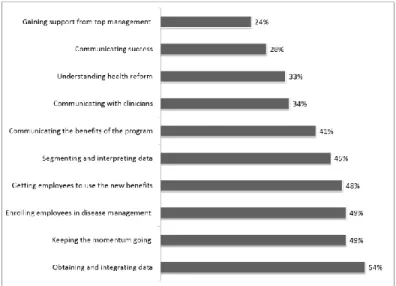
Figure 6. Top Ten VBID Challenges, Based on the Value-Based Design 2010 Survey Report ... 40
Figure 7.Availability and Use of Cost Information by Types of Insurance Plans, 2013 ... 44
Figure 8. A Dashboard of KPIs Provides Insights For Program Effectiveness and Future Planning ... 79
Figure 9. Framework for VBID Policy Change - Kingdon's Multiple Stream Model ... 83
viii
LIST OF ABBREVIATIONS
ACA Affordable Care Act
ACO Accountable Care Organization COE Center of Excellence
CEO Chief Executive Officer DMP Disease-management Program
HHS Department of Health and Human Services HLC Healthcare Leadership Council
IDM Integrated Disease Management IRB Institutional Review Board KPI Key Performance Indicator
NBCH National Business Coalition on Health NBGH National Business Group on Health PCMH Patient Centered Medical Home ROI Return on Investment
USPSTF U.S. Preventive Services Task Force VBID Value Based Insurance Design
1
CHAPTER 1: INTRODUCTION AND DEFINITIONS
Research shows that healthy employees have lower health care costs and provide greater intellectual capital to employers. Many consider employee engagement for both wellness and
condition/disease management to be the key to developing healthy employees. Employee engagement in this context is defined as actions that people take to improve their health and benefit from care.1
Unfortunately, employee engagement in wellness and care programs has been a top challenge for employers.2 A 2012 employer survey conducted by Towers Watson reported that 58% of employers selected employee engagement as the biggest obstacle to changing employee behavior related to health.3
In recent years, the use of value-based insurance design programs has gained increasing attention by employers to engage employees in healthy behaviors and to hold them more accountable for their health. Despite the increasing popularity of value-based programs, many questions remain. This study strives to identify and to recommend a framework for designing and implementing value-based insurance design programs.
Growing Interest in Programs to Encourage Employees to Better Manage Their Health
Employers have a huge interest in engaging employees in managing their health. About 60% of the population under age 65 is covered by employer-sponsored health insurance. Employers pay over 75% of total employee’s health care cost.4
2
As a result, extensive wellness and care management programs are commonly offered by large employer-sponsored health plans to improve employee engagement in managing their health and to reduce unnecessary health care costs. For this study, health management programs, sometimes called "wellness" or "health promotion" programs, focus on prevention and self-management targeted at remaining totally out of the care management system. Care management focuses on managing chronic disease and reducing utilization.
Low Employee Engagement is Concerning to Employers
It worries employers when employees do not engage in healthy behaviors demonstrated, for example, by low employee participation rates in wellness programs.6 More than half of the employers who offer health risk assessments to their employees report participation rates of 50% or less.
Participation rates in other programs, such as weight management, health coaching, and smoking cessation, are also low.7 In 2013/2014 Staying@Work™ Survey Report, 77% of employers view low employee engagement as the biggest obstacle to changing behavior.8
Definition of Employee Engagement for this Study
3
Figure 1. A Multi-dimensional Framework for Employee Engagement in Health
Domains of Engagement/ Continuum of Engagement
Consultation Involvement Shared decision making
Elicit and support employee
preferences
Employees receive information on coverage and care options
Employers are asked about their preferences in treatment plans
Coverage treatment decisions are made based on employees’
preferences, evidence and clinical judgment
Inform employee care choices
Patient centered medical homes involve patients
Target specific segment of employees to provide actionable information
Identify care opportunities for patients/providers to take actions
Activate employees
Provide personalized and integrated information to support decision making
Provide incentives for healthy lifestyle
Provide different cost-sharing arrangements based on value of services
Objective of this Study
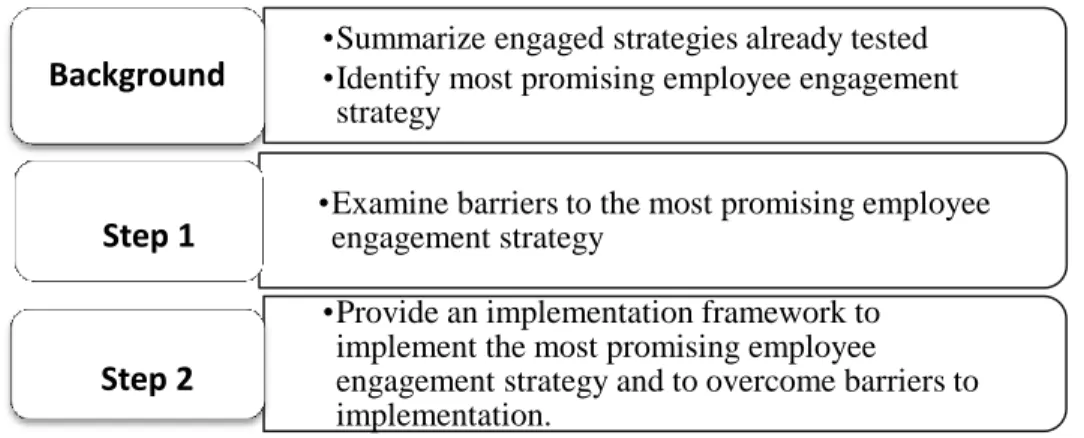
The objective of this study is to focus on the implementation process of one promising
engagement strategy (Figure 2). In order to identify one specific engagement strategy, it is important to understand past engagement strategies tested by employers and health plans and their effects. The review of past experience explains why this study focuses on one certain engagement strategy. Next, the study identifies barriers to the most successful and promising employee engagement practices, then proposes implementation strategies to overcome these barriers.
Figure 2. Objective of the Study
•Summarize engaged strategies already tested •Identify most promising employee engagement
strategy
Background
•Examine barriers to the most promising employee engagement strategy
Step 1
•Provide an implementation framework to implement the most promising employee
engagement strategy and to overcome barriers to implementation.
4
CHAPTER 2: REVIEW ON EXISTING EMPLOYEE ENGAGEMENT STRATEGIES
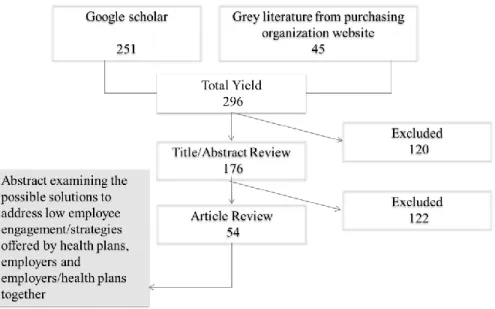
The background document review consisted of a Google Scholar search from September 2013 to March of 2014, using the following combinations of terms:
1. Health insurer OR payer OR employer AND 2. Engagement AND
3. Employee OR Customer
The search was restricted to results from the United States, published in the English language, and those that were updated within the past 10 years. Results were initially reviewed to identify sources cited more than once and when employer strategy was mentioned in association with these search terms. Literature that includes information with the following was included and summarized: (1) interventions to increase engagement (either a specific behavior or general participation); (2) descriptions of engagement strategies; and (3) outcome measures of engagement.
The review also included an environmental scan of documents posted on key employer business group websites: National Business Group on Health, America's Health Insurance Plans, Care Continuum Alliance, and Health Leadership Council, National Wellness Institute, and National Business Coalition on Health. These organizations were selected based on their claims to advocate on behalf of
5
Figure 3. Summary of Literature/Document Search and Review
The following sections summarize effects of three types of engagement strategies: (1) employers only, (2) health plans only and (3) employers in partnership with health plans.
Strategies Used by Employers Only:
1. Implement Environmental/Policy Changes to Promote Healthy Behavior
Environmental and policy changes are currently being promoted by organizations such as the Centers for Disease Control and other governmental organizations as ways to engage employees to adopt healthier behaviors.11 Specifically, employers can create a work environment that supports healthier behavior in a variety of ways: 1) easy access to physical activity; 2) workplace nutrition program and 3) point-of-decision prompts.
6
with access to safe places to walk near work were nearly twice as likely to engage in physical activity during work breaks.13,14
Workplace nutrition program: A workplace nutrition program encourages healthy eating that emphasizes fruit, vegetables and low saturated fat. Research shows that a healthy diet and good nutrition can promote chronic disease managements.15 A review of 13 studies found that work-site health
promotion programs that included environmental modifications to support healthy eating had a positive effect on employees’ diets.16
Financial discounts can play a very positive impact in engaging employees to have a healthy diet. Some studies found that financial discounts as small as 10% can increase the
percentage of healthy foods purchased without affecting overall vending machine sales or profits. In two separate studies, 50% discounts nearly doubled sales of healthy food items.17,18
Based on strong evidence for moderately increasing physical activity levels,19 employers put point-of-decision prompts at worksites to encourage employees to make healthier decisions at the location and moment when the issue is at the forefront of their minds. Prompts placed near elevators aim to motivate stair use; 20 labels and signage identifying and promoting healthy foods to encourage healthier meal consumption in the cafeteria.21 In a systematic review of 11 studies, point-of-decision prompts increased stairwell use by a 50%.22 Small incentives offered in the stairwell, such as fruit, along with stairwell enhancements including paint, carpeting, artwork and music, increased stair use even more.23 However, most studies evaluated short-term behavior change; limited evidence supports long-term behavior change. Overall, the existing evidence shows positive short-term effects for specific environmental/policy strategies.
2. Encourage Employees’ Participation in Wellness and Disease Management Programs
7
survey 2012, more than three-quarters of employees working for firms and organizations with 50 or more employees have access to a wellness program.25
To control the cost of chronic conditions, many employers have adopted disease-management programs (DMP) in the past 15 years. By carefully coordinating the delivery of high-quality care to patients with chronic conditions, DMPs are designed to enhance employees’ health, reduce hospitalization rates, and lower treatment costs.26 About 56% of employers with wellness programs also offer a disease management program.27 Results of some DMPs are often disappointing or inconclusive. Many of them produced, at best, only modest improvements in health outcomes, and few were able to decrease health care spending.28 DMP’s value largely depends on employee’s active participation and engagement. Simply being enrolled in a DMP does not guarantee engaged participation by employees, which is necessary to achieve improved health outcomes and subsequent reduced health care costs.
Some employers implement integrated disease management (IDM) protocol to improve employees’ engagement in DMPs. IDM protocol combines telephonic-delivered disease management with a worksite-based primary care center and pharmacy delivery. IDM substantially increased contact, enrollment, and engagement rates compared to traditional stand-alone telephonic DM.29 A 2013 study of BP program shows positive return on investment ($214.66 per disease management participant per month) one year after IDM program launch.30
Employers often offer financial incentives to promote participation in a variety of programs of wellness and disease management. Research indicates that financial incentives can have a significant impact on health management program participation rates.31 There are two types of incentives in general. Participation-based incentive: Participation-based incentives, which use simple, one-time
8
Outcome-based incentives: Outcome-based incentives link incentives with participants achievement of outcome targets. Outcome-based incentives have been used mostly in weight-loss programs. More than half of large employers (200+ employees) offer a weight-loss program and engage employees’ participation through outcome-based incentives.33
Some research suggests that incentives provided for actual weight loss outcome effectively improve program participation and increase overall weight loss. In a 2007 study, an incentive of $14 per percentage point of weight loss led to less attrition and five times greater odds of achieving a 5% weight loss in the first three months, as compared to the group receiving no incentives.34 Another study in 2013 found that employees receiving incentives based on group weight loss achieved greater results than those receiving no incentive and those receiving individual incentives. The weight loss was sustained 12 weeks after the incentives ended.35 However, these studies do not demonstrate long-term results lasting beyond that of the incentives; nor are they representative of current employer practices.36,37
3. Make the Default Option the Preferred Option
Voluntary wellness programs/biometric screening are typically made available if an employee would like to participate. This “opt-in” or “non-commitment contract” design places the responsibility on the employee to engage, a decision that they may procrastinate. Instead, some employers change the default option to the preferred option to enable employees to easily complete the programs.
9
One study found that when the default plan assigned users with various lengths of exercise contracts that user could actively change; the percentage of people selecting the default contract length increased by approximately 35% across all default lengths compared to the number who would have increased the contract length in the absence of a defaulted length. With changes in default values, individuals can be encouraged into longer exercise commitment contracts that obligate them to greater numbers of exercise sessions. 38
4. Communicate Health & Wellness Messages Effectively
A strong communications campaign can increase participation in wellness programs above that of an incentive when used alone.39 An effective communication strategy goes beyond just informing
employees about programs or educating them about why healthy behaviors are important,40 and also focus on engaging employees to actually change behaviors.41 Existing research found employees often ignore employers’ message when the message is not personally relevant. Individually tailored interventions are distinct from generic mass education approaches.42
Employers have designed and deployed tailored and segmented employee strategies in a variety of ways, such as by demographics, stage of life, lifestyle behaviors, chronic conditions, and readiness to change behavior. 43 In 2013, 66% of employers offered targeted communications based on an individual’s specific health conditions, and an additional 27% plan to offer this type of communication in the near future. 44
The results are mixed. Several studies show the more specific employers are in targeting messages, the greater the likelihood that the messages are relevant to the recipients and succeed in motivating them.45,46,47 On the other hand, according to Consumer Mindset 2013 report, only one-quarter of employees agree that employers should target certain communications based on a participant’s individual health condition. Even fewer agree or strongly agree (18%) that employers should target certain communications based on demographic information about participants.48
10
more effective workforces through programs such as nutrition counseling and onsite gyms. Studies have found that work site environment changes and health/wellness programs have demonstrated short-term results. However, long-term effects are inconclusive. Understanding that a strong communication campaign can increase participation in health and wellness programs, some employers have designed and deployed tailored employee communication strategies. Results have also been mixed. In summary, most engagement strategies used by employers are effective in the short term, but not known to be effective in the long term.
Strategies Utilized by Health Plans Alone:
1. Help Consumers Choose Health Plans According to Their Preferences
Choosing a health plan has significant implications for every consumer’s health and financial status. It is often difficult for consumers to select the right health plan, partially due to their inability to evaluate key benefit components of health plans.49 Consumers are also looking for information to help them through this process.50 Previous studies found that premium, breadth of the network, quality of providers, cost sharing, and cost containment provisions impact consumers’ choices on health
plans.51,52,53,54 Among everything, consumers pay most attention to premium cost, cost sharing, annual cap on out-of-pocket expenditures, and the annual deductible.55 Further down the list of consumers’
preferences was having a doctor of their choice or doctor with high quality score.56 Many health plans have been offering report cards on provider quality and cost information. However, there is little evidence that consumers choose or switch health plans on the basis of critical reflection and assessment of
11
2. Identify Care Opportunities for Consumers/Providers to Take Actions
Experience has shown that when consumers know they have options for the best treatment, screening test, or diagnostic procedure, most of them will want to participate with their clinicians in making the decision.58 Health plans are uniquely positioned to identify care opportunities. Through large-scale data mining, health plans can identify missed screening opportunities; gaps in care; fragmented or duplicative care; and patient safety issues such as incompatible medications. Health plans then reach out to consumers and/or providers by means of the consumers’ choosing and encouraging them to take actions.59 These actions impact two domains of patient engagement: identify care opportunities for
consumers/providers to take actions according to their preferences, and helping patients become activated. For example, United Healthcare constantly mines data from various data sources: claims,
laboratory, and pharmacy data; patient reports, via health risk appraisals or personal health records; and extracts from EHRs. These data are analyzed for gaps in care, quality and safety issues, and duplicative care—based on national performance measures, clinical guidelines, or consensus standards. United Healthcare’s HealthNote program then reaches out to plan enrollees via mail, phone, text message, or an online portal; and further customizes these messages by lifestyle, demographic segment, or both, using different message formats and content for different groups—for example, those already physically active versus those who are sedentary, and young professionals versus retirees. Customized to both to the patient (“you need to have your diabetic eye screening”) and the providers (“Ms. Jones is overdue for her diabetic eye screening”), HealthNotes are sent to 8 to 12 percent of eligible population to promote optimal care.60 When compared to a control population, consumers and their providers who receive these messages from United Healthcare’s “HealthNotes” program closed 64 percent more gaps related to medical management and 30 percent more gaps related to missed therapy over a three-month period. They also had 12.5 percent fewer hospital admissions and 20.9 percent fewer preference-sensitive heart surgeries. 61
out-12
of-pocket exposure.62 Information contained in public reports about health care quality and cost is typically ignored by most consumers or does not meet consumers’ needs. 63
Seeingthe gap in the information needed, several health plans focus on price sensitivity by providing proprietary information that aims to provide personalized, integrated information on cost and quality to support consumers’ decision making on providers and services.
Aetna delivers out-of-pocket estimate information to enrollees for services or procedures in real time using Payment Estimator tool.64 The tool takes enrollees’ benefit design parameters—deductibles and coinsurance—into account when calculating the cost estimates.65 This strategy is often used by Aetna’s members who have “preference-sensitive” conditions or treatment options in which consumers may or may not choose particular treatments, or to be treated at all, depending on their own feelings about the risks versus the benefits of treatment, their ability to live well with their conditions, or other factors.66 Aetna’s analysis shows that the focus on consumerism leads to higher consumer engagement and results in savings of $12.5 million over a six-year period for every 10,000 members. 67
4. Engage Consumers in Patient-Centered Medical Homes
Even consumers with insurance coverage may not have an established source of access to basic primary care services and that care fragmentation affects the quality and cost of care.68 Health plans have begun to engage patients with high quality primary care providers in Patient Centered Medical Home (PCMH). PCMH has become the national shorthand for the reinvention of primary care69 and a key
component of U.S. health care reform.70 One of the cornerstones for PCMH model is patient-centeredness, or the tailoring of care to meet the needs and preferences of patients. The PCMH model urges active engagement of consumers at all levels of care delivery, ranging from shared decision-making to practice improvement.
13
disease management and patients’ unique personal health goals. The PCMH team coordinates patients' health care, tracks their conditions and ensures that they receive the care they need. Michigan BCBS’s PCMH has demonstrated good outcomes. Based on an evaluation study conducted in 2013, the Michigan BCBS PCMH program is associated with 5.1 percent higher preventive care measure and a $26.37 lower per member per month medical cost for adults.71
However, some study findings suggest that practices transforming to PMCH models need to improve interaction with patients and better communicate about the team approach to health care, and the role of care management and group visits to better manage chronic conditions.72 For example, a recent survey of 112 PCMH practices in twenty-two states found that less than a third of PCMH practices engage patients in quality improvement. Nearly all of surveyed practices sought patient feedback, but only 32 percent involved patients in a continuing role in quality improvement. Interviews showed that practices with high patient involvement overcame barriers to ongoing patient participation. A cultural shift is needed in how practices view patients as partners and involve patients before they even get sick, not just in areas such as personal responsibility and self-management, but also in quality improvement and governance.73
To summarize the engagement strategies used by health plans: Health plan engagement strategies include helping plan enrollees choose health plans based on detailed cost and quality information;
identifying care opportunities for enrollees to take actions; and engaging enrollees in patient-centered medical homes. Document reviews shows all these strategies have been well accepted by health plan enrollees.
14
PCMH and increased preventive care utilization and reduction in medical cost, more research is needed to evaluate the effect on enrollee engagement.
With benefit structures moving toward higher deductibles and higher coinsurance in insurance exchanges, price information and provider network are important information for exchange enrollees. Fostering greater engagement will require new approaches that provide enrollees with cost and quality information at the time they need to make a decision. Greater engagement will also require more effective communication with enrollees about the best approach to health care.
Strategies Utilized by Employers and Plans Together:
As noted above, when it comes to choosing health plans, consumers would rather hand the process to group purchasing entities that collectively purchase insurance benefits for employers to offer to their employees. For large employers, the group purchasing entities are employers themselves. Therefore, for large employers, the most relevant relationship when purchasing a health plan is between the
employers and employees.74 Employers select health plan options and provide information on different options to employees.
Besides health plan choices, employers also have significant influence on employees’ choices of health care services. The choice of health plans is very different from the choice of a health care provider or service. Employees typically choose a health plan through employers prior to becoming ill, during the annual enrollment period or at the point of employment, and consider the provider panel and financial issues related to copayments at the point of seeking care.
15
health care decisions.76 This section summarizes literatures on strategies implemented by both health plans and employers. There are generally three types of plan designs offered by employers to improve employee engagement, as listed below:
1. Use High Deductible Health Plans (HDHPs) or Consumer Directed Health Plans (CDHPs)
Employers have been testing HDHPs and CDHPs to improve employee accountability and meet the preferences of cost conscious employees. HDHPs and CDHPs are used to drive employees to take a more participatory role in the management of their health and have more direct financial accountability for their care choices.
A HDHP is a health insurance plan with lower premiums and higher deductibles than a traditional health plan. CDHPs are often associated with three features: (1) a relatively high deductible, (2) a
personal spending account, and (3) the availability of information tools for employees.77 A personal spending account may be funded in part by the employer – such as a health reimbursement arrangement or HRA, and/or with the employee pre-tax funds such as a Health Savings Account (HSA) or Flexible Spending Account (FSA).
As outlined by the U.S. Treasury Department, individuals with an HSA-eligible HDHP are required to pay the full cost of most medications and services until deductibles are met. However, a safe harbor allows some primary preventive services deemed to prevent the onset of disease are covered prior to satisfaction of deductible. Preventive care includes: periodic health evaluations, including tests and diagnostic procedures ordered in connection with routine examinations, such as annual physicals; routine prenatal and well-child care; child and adult immunizations; tobacco cessation programs; obesity weight-loss programs and screening services.78 Some CDHPs exempt a defined list of preventive tests and therapies—such as mammograms and vaccines—from the deductible requirements.79
16
for HDHP enrollees.80 Aetna and United Healthcare found that CDHPs reduced the use of emergency rooms by 20% than those in the traditional health plans.81
Evidence shows enrollees in CDHPs are more engaged in their health care decision than those enrolled in traditional plans and use more preventive care. Research is inconsistent as to whether CDHPs are more successful than other types of plans at saving health care cost in the long run. While some studies indicate that CDHP enrollees access recommended care at higher rates than their counterparts in other plans, other surveys and studies show that CDHP enrollees forgo care such as medications due to the potential cost implication82,83
There is no consensus in the literature on the effect of CDHPs to improve employee engagement, which suggests that employers offering CDHPs may need to modify their plans to be more effective. The lack of consensus on the benefit of CDHPs suggests that employers offering CDHPs may need to develop more robust communication strategies. Emphasizing that preventive services are covered at no cost may lead to greater usage of preventive service; help mitigate more serious problems and help drive costs down in the future. Finally, a priority for policy development in this area is to determine how policy can promote the development and use of more effective information tools.
Looking forward, CDHPs will likely continue to increase in popularity. Currently, services or benefits meant to treat “an existing illness, injury or condition,” are excluded from first-dollar coverage in
HSA-eligible CDHPs.84 As the demand for HSA-eligible CDHPs grows, it is important that these plans maintain the flexibility to allow for effective health management for all beneficiaries. Employers must continue to educate employees on how these programs work.
2. Value-Based Insurance Design to Encourage Employees to Use Evidence-Based Care
17
VBID represents a cost-sharing innovation intended to align patients’ interest in disease control with payers’ interest in cost containment by linking copay levels to the clinical value of the product or service. 85,86 It is based on the premise that higher medication and administrative expenses incurred by payers will be offset by lower non-medication expenditures that result from better disease control. VBID has been mostly implemented by self-insured employers in the form of copay reductions for medications to improve medication adherence.87,88,89
It is possible to incorporate VBID elements in CDHP with high deductibles and to offer more protection for certain medical services through a value-based insurance design plan structure. One type of VBID strategy may incentivize employees to use more high-value preventive services. However, CDHP with an HSA excludes the bulk of secondary preventive services according to IRS guidance90 and prohibits health plans from offering these benefits before employees meet their deductibles. This
exclusion also precludes purchasers from pursuing many proven disease management programs which are often offered for free in VBID programs. Employers need to be aware of this limitation.
The evidence for the return on investment of VBID programs is limited. Four previous
observational studies and one trial that examined health expenditures for participants and non-participants one to three years after VBID implementation found similar spending trends for both groups. A study of Blue Cross Blue Shield of North Carolina’s VBID program, which began in 2008, found improved patient adherence and modest reduction in hospital admissions. However, there were no significant changes in emergency department use or total health expenditures. The insurer incurred $6.4 million in higher medication expenditures; total non-medication expenditures for the study population decreased $5.7 million. The results provide limited support for the idea that VBID can be cost-neutral in specific subpopulations. In summary, the business case for VBID may be more compelling over the long term. 91
18
beneficial treatments so that patients do not have to save up to refill their medications. On the other hand, disease management programs may be linked with a reduction of medication adherence because of the emphasis placed on alternative lifestyle behaviors rather than medication. 92
Further research is needed to understand how to structure VBID programs. A HealthAffairs study published in February 2014 identified five important features as a successful VBID program. They study found VBID plans that were more generous, targeted high-risk patients, offered wellness programs, did not offer disease management programs, and made the benefit available only for medication ordered by mail had a significantly greater impact on adherence than plans without these features. The effects were as large as 4–5 percentage points.93These findings can provide guidance for the structure of future VBID plans.
3. Target Specific Segments of Employees and Provide Actionable Information
Employers have been leveraging their health plans’ data analytical capacities to target specific segments of employees and implement employee engagement strategies in three ways:94
1. Track and report health and wellness-related costs;
2. Allows an employer to identify high-cost or high-risk employees; 3. Facilitates more targeting intervention or communication
Examples of this strategy are few so no conclusions can be drawn. But here is one example: Unilever, a leading consumer product company with over 9,000 employees in the U.S., has a long history of improving the lives of consumers and employees. United Healthcare, Unilever’s health plan, conducted an in-depth analysis of employees’ claims data to identify opportunities for improved employee
engagement through targeted communication. The data revealed several key areas that could be improved, including decreasing inappropriate emergency room (ER) use and decreasing musculoskeletal claims. Based on claims data, Unilever segmented the employee and dependents into several groups of high and low ER spenders and targeted them differently to reduce and prevent future avoidable ER use.
19
who visited the ER three or more times received an formal Unilever letter which highlighted the
seriousness of overuse of ER services to their employers and urged recipients to choose wisely when they have a medical problem, including starting with their primary care physician (PCP) for health care concerns and using the nurse-line to determine the right health care facility. The letter also included a general description of the services provided at urgent care centers and in ERs.95 Unilever experienced a 4% decline in ER visits and a concurrent 39% increase in urgent care visits, suggesting that members were utilizing these services more appropriately. Employee enrollment in Unilever’s Healthy Back program increased by 300%.96
Unilever focused on two domains of employee engagement: informing employee care choices and helping employees become activated. Unilever consistently refines the program to maintain employee engagement and the company won Best Employers for Healthy Lifestyles Silver award in 2009 and the Gold award in 2010 and 2011.97
A Summary of Engagement Strategies Offered by Employers and Health Plans: Three categories of engagement strategies offered by employers and health plans can be categorized as Value-Based Insurance Design (VBID) strategies. VBID may also be “value-based insurance design,” or “evidence-based benefit design.” No matter what the approach is called, the purpose is the same: to encourage consumers/employees to use high-value services that produce better health. VBID comprehensively addresses the way health benefits are structured and used by employees.
Summary of Existing Engagement Strategies and Implication for the Focus of this Study
20 Table 1. Summary of Existing Engagement Strategies
1. Employer only engagement strategies Continuum of engagement Domains of engagement
Overall findings on effects of these strategies
Implement environmental/policy
changes to promote healthy behavior Involvement 3
All three approaches are effective in the short term; long term impact is mixed Encourage employees’ participation
in wellness and disease management
programs Involvement 3
Communicate health & wellness
messages effectively Involvement 3
2. Plan only engagement strategies
Help consumers choose a health plan
according to their preferences Consultation 1,2
Information on cost and quality of providers and out-of-pocket information is helpful for consumer engagement; health plans need to strengthen their communication strategies and their team-based approach to health care Identify care opportunities for
patients/providers to take actions
Shared decision making
2,3 Provide personalized and integrated
information according to support consumers’ decision making
Shared decision making
1,2
Provide personalized services in patient-centered medical home
Shared decision making
3
3. Strategies utilized by employers and plans together-value based insurance design
Use consumer-directed health plans to engage cost-conscious employees
Shared decision making
1,2
Value based insurance design (VBID) approach demonstrated some evidences in improving employee engagement. Many employers are finding it difficult to realize the full benefits of VBID.
Employers need to better communicate the plan specifics
Value-based insurance design to encourage employees to use evidence-based care
Involvement 2,3
Target specific segments of employees and provide actionable information
Consultation 1, 3
"1” stands for employee engagement domain one- elicit and support employee preferences; “2” stands for employee engagement domain two- inform employees their care choices; “3” stands for employee engagement domain three- help employees become activated in their health
21
22
CHAPTER 3: SPECIFICS ABOUT VBID
VBID plans are built on the principles of engaging members in their health and well-being, and designing a benefit plan that:99
1. Promotes wellness by emphasizing primary/preventive care;
2. Lowers or removes financial barriers to essential, high-value clinical services; 3. Discourages the use of low-value health services and providers.
VBID plans clearly communicate with their members and provide tools to allow members to use their health plan more effectively and efficiently.
The concept of VBID was first introduced in 2001. The initial VBID proposal decreased copays for highly effective medications and increased copays for less effective medications.100 The concept was later applied to other health care services. “Value” is defined by interventions that either preserve health
care quality while reducing costs or that increase quality with acceptable increases in spending. Health plans and employers are interested in this design primarily for services whose increased use is expected to reduce or not to increase spending.101 More-sophisticated VBID designs encourage step therapy, in which high-cost options are fully covered only after lower-cost options have proven unsuccessful. For example, cost-sharing for weight-loss surgery can be decreased for employees who agree to participate in a
counseling program first. VBID relies on employers to invest extra resources into an employee’s health in the short term to create long-term savings.102
Incentives Used in VBID:
23
information and research on the effectiveness (i.e. the ability of an intervention to produce the desired result) and value of health care services.
1. Incentives to Use High-Value Services for Some Conditions
A high-value service is one that provides considerable clinical benefit, relative to the cost. 103 Incentives may include the following types:
Financial or other incentives for completing health risk assessments (HRAs) Waiving or reducing co-payments for certain classes of prescription drugs Waiving or reducing cost-sharing for high performing providers
Waiving or reducing cost-sharing for certain types of medical treatments, tests or screenings Waiving or reducing cost-sharing for particular settings of care (e.g., Centers of Excellence) Incentives for reaching health targets, such as adherence with physician recommended medications Tools that inform consumers about differences in treatment options and costs and sites of care
2. Disincentives to Discourage Low-value or Unproven Services for Some Conditions
A low-value or unproven service is one that does not provide substantial health benefit relative to the cost. Low-value services lack evidence of effectiveness, and many are used for conditions other than those for which evidence has been developed.
Disincentives are mostly plan-based, such as adjustments to deductible and copayment levels. Two scenarios are likely to occur in VBID as results of copayment level adjustment. In scenario 1, targeted copayment reductions for high-value services to encourage more use of higher-value services, but an uncertain effect on total health care cost trend. In scenario 2, targeted copayment reductions on high-value services, in combination with copay increases on low-value services lead to no change or savings in total health care cost. 104,105,106
24
be unnecessary and, in some instances, cause harm. Under the initiative, specialty societies developed lists of five evidence-based recommendations of tests and treatments that physicians and patients should question. The goal of the initiative is to encourage physicians to be responsible stewards of finite health care resources and to reduce low-value care. Studies have found that Choosing Wisely ® has made initial strides to reduce low-value care.108
A VBID program that includes both incentives (“carrots”) and disincentives (“sticks”) may be particularly desirable for employers interested in implementing a plan that is cost-saving from an actuarial perspective in the short-term. While disincentive programs are less popular than those that offer positive incentives, qualitative research from focus groups suggests that consumers may be willing to accept disincentives provided processes for identifying low-value services are perceived as fair and transparent.109, 110
Five VBID Approaches Employers Use to Improve Employees’ Health
There are four basic approaches to VBID by employers to improve employees’ engagement: (1)
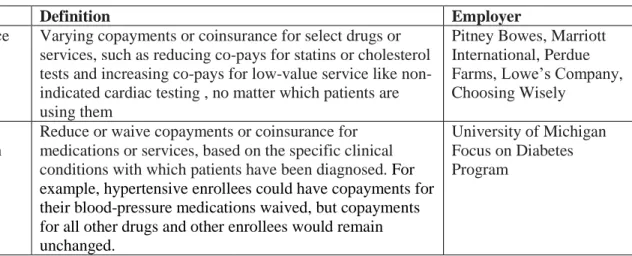
by service; (2) by condition; (3) by condition severity; (4) by disease management participation; and (5) by type of providers. Table 2 provides a list of employer examples that had successfully implemented VBID for each approach.111 The majority of VBID implementation focuses on the first type- encourage use of high-value drugs or high-value services.
Table 2. Five Types of VBID, Description and Employer Example
Type Definition Employer
By service Varying copayments or coinsurance for select drugs or services, such as reducing co-pays for statins or cholesterol tests and increasing co-pays for low-value service like non-indicated cardiac testing , no matter which patients are using them
Pitney Bowes, Marriott International, Perdue Farms, Lowe’s Company, Choosing Wisely
By condition
Reduce or waive copayments or coinsurance for medications or services, based on the specific clinical conditions with which patients have been diagnosed. For example, hypertensive enrollees could have copayments for their blood-pressure medications waived, but copayments for all other drugs and other enrollees would remain unchanged.
25 By
condition severity
Reduce or waive copayments or coinsurance for high-risk members who would be eligible for enrollment in a disease management program
Hannaford Brothers Company
By disease management participation
High-risk members who actively participate in a disease management program are provided reduced or waived copayments or coinsurance.
The City of Asheville, NC, HoneyWell
By provider type
Steer patients to high performing providers in Patient Centered Medical Homes (PCMHs), and preferred networks.
Whirlpool Corporation, Intel
One or more of these VBID types have been adopted by many large employers and health plans throughout the country. Based on 2013 Mercer National Survey of Employer-Sponsored Health Plans, 23% of larger firms—with 500 or more employee offered VBID and additional 27% responded that they are considering it.112
Elements of VBID that Impact Cost of the Program
Fully insured or self-insured employers treat VBID differently. In a fully insured plan, the
employer pays a per-employee premium to a health plan company, and the health plan assumes the risk of providing health coverage for insured events. The self-insured employer acts as its own health plan. The employer assumes the risk for paying the health care claim costs for its employees and uses the money that it would have paid health plans and instead directly pays health care claims to providers, which can be unpredictable. Therefore, self-insured employees have greater financial incentives to control their employees’ cost.
VBID is scalable, depending on the investment an employer is willing to make and the expected return. It draws heavily on employer data to identify areas of opportunity. Many large, self-insured employers have embraced VBID. Self-insured employers can customize VBID to meet the specific health care needs of its workforce, as opposed to purchasing a 'one-size-fits-all' insurance policy.
26
disease management, while others offer the financial incentive to all patients with a condition such as diabetes. A 2010 study summarized a list of key elements of a VBID approach that can each be scaled to influence the cost of a VBID effort, its population-wide reach and, potentially, its impact on health care outcomes (Figure 4).113 Design features of VBID, such as the direction and magnitude of copayment changes and the extent of targeting, impact the financial success of VBID. Available evidence suggests that programs that raise co-pays for low value services are most likely to save money, particularly in the short term. 114
Figure 4. Elements That Can Be Scaled To Influence the Cost of a VBID
Low Specificity
Patient Identification
High Specificity Lowest
Administrative Complexity
Highest Highest
Benefit Enhancement Cost
Lowest Lowest
Return on Investment
(ROI) Highest
Based on Figure 4, the potential return on investment for a VBID program firstly depends on population size and benefit cost targeted by the employer. For example, employers can target a benefit incentive to the entire employee or a select high-risk group. Smaller target groups mean a smaller outlay with a greater cost saving potential.
Administrative complexity (e.g., access to data, IT system, vendor management and
communication of benefit design) plays an important role in the final return on investment. Understanding the administrative complexity, many employers have turned to health plans administering their benefit policy for support in both designing and administering VBID approaches. Plans are developing the capability to identify high-needs patients, communicate with them about essential services, and administer variable, value-based benefits.
27
spending on high-value services (and the administrative costs of such a program) depends on 1) the underlying clinical risks in the population treated, 2) the effectiveness of the program at increasing the use of high-value services, 3) the ability of those high-value services to mitigate the risks and 4) the cost of the services averted. Depending on the relative magnitude of these factors, it appears clear that the better targeted the program, the more likely that the up-front spending to improve health will fully offset its costs.
Framework for VBID Implementation
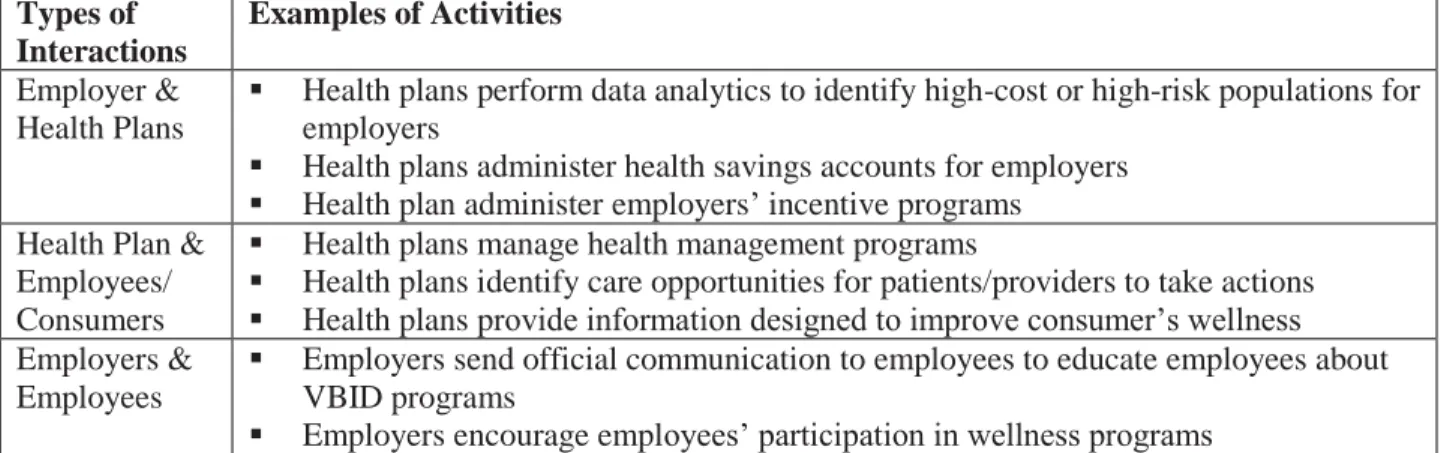
The implementation of a particular VBID program should be based on employer calculations that design a health benefit to target at a specific health care cost driver, coupled with communications to engage employees. To make sure the benefit is working as designed, employers need to involve health plans and employees and also design a rigorous evaluation that includes cost, quality and member experience metrics. Among employers, health plans and employers, there are three types of interactions (as shown in Table 3):
Type 1: Interaction between health plans and employees, including managing disease and health management programs, managing incentives and disincentives, identifying care opportunities for patients/providers to take actions and information designed to improve consumer’s wellness.
Type 2: Interaction between health plans and employers, including data analytics to identify high-cost or high-risk populations, administration of health savings accounts and managing incentives.
28 Table 3. Framework for VBID Implementation
Types of Interactions
Examples of Activities
Employer & Health Plans
Health plans perform data analytics to identify high-cost or high-risk populations for employers
Health plans administer health savings accounts for employers Health plan administer employers’ incentive programs Health Plan &
Employees/ Consumers
Health plans manage health management programs
Health plans identify care opportunities for patients/providers to take actions Health plans provide information designed to improve consumer’s wellness Employers &
Employees
Employers send official communication to employees to educate employees about VBID programs
Employers encourage employees’ participation in wellness programs
Examples of Employers Who Have Implemented VBID
Below are summaries of four employers who have implemented VBID: Pitney Bowes, Perdue Farms, Lowe’s Company and Oregon state health plan.
Pitney Bowes, a global shipping and mailing solutions with over 16,000 employees, has been widely recognized for its comprehensive, innovative VBID program to solving problems in areas of employee engagement. It focuses on employees’ access to high-value services. In the midst of increasing employee medical expenses, Pitney Bowes decided to pay for a greater share of employee’s diabetes and asthma medications, after the company’s study found that employees with chronic conditions that only filled their prescriptions two thirds of the time or less became the biggest liabilities on the company’s plan. At a time when health costs for other Pitney Bowes employees were increasing at 11% a year, the average amount spent on prescription drugs by employees with asthma and diabetes decreased by 10%. In addition, emergency room visits for employees with diabetes and asthma declined by 35% and 20%, respectively. Pitney’s strategy returned $1.33 for every dollar the company spent during a 3-year
follow-up period.115
29
services. Perdue Farms covers a schedule of seven high-cost interventions covered by employers’ health plans at 70% cost-sharing rate rather than the standard 90% cost-sharing. In cases where the patient or physician feels that the intervention is appropriate, Perdue Farms offers a second opinion process through the Cleveland Clinic “e-consult” service. If the consultation confirms the need for the procedure,
employees’ cost sharing will be lowered. In addition, BestHealth steers employees toward primary care
interventions by requiring participants to engage with their primary care physician and health coaches. Additionally, all BestHealth participants are required to be active in Perdue Farms’ free Health
Improvement Program (HIP) in which employees are given a health coach and personalized health plan based on their health risk assessment.116 In 2013, employee enrolment in the Perdue Farm’s HIP increased to 88% since the program’s inception in 2008, and the average associate “HIP” health score (measured on a scale of 1-5) has improved from 3.44 to 3.63.117
Lowe’s Company, a national chain store with over 160,000 employees, encourages employees to
access high-value providers. Lowe’s Company encouraged employees to go to the Cleveland Clinic for qualifying cardiac surgery as the Cleveland Clinic has expertise in this procedure. Full-time employees and dependents covered by the self-funded medical plans are eligible to receive these qualifying heart surgery procedures at no cost. Lowe’s also fully covers travel and lodging expenses associated with
traveling to the Cleveland Clinic for the employee that needs the procedure and an adult companion.118
In 2010 two Oregon public employee benefit boards implemented value-based insurance design
30
Table 4. Summary of Literature about Employers Implementing VBID
Organizatio n (Pub. Year)
Key Aspects of Intervention Results (Effects on Cost Italicized)
Marriott (2008/ 2013)
Encourage high-value services Eliminated copays for select
generic drugs
Reduced copays 50% for select brand-name drugs
Targeted medication classes: ACE inhibitors, ARBs, beta-blockers, diabetes control, statins, inhaled corticosteroids Disease management program
Decrease in total spending of $323 per member due to reductions in medical expenditures after year 1;
Improved adherence of 3.8-6.3% in all drug classes (statistically significant changes in 4 of 5 classes);
Greatest improvement for statins
Florida Health Care Coalition (2011)
Encourage high-value services Reduced coinsurance rates for
select generic and brand name drugs (to 10% from 10-35%) Targeted medication classes:
diabetes control
Disease management program
For first 1 year of program, diabetes-related ROI was $0.82 per $1 spent;
For first 2 years of program, diabetes-related ROI was $1.08 per $1 spent;
For first 3 years of program, diabetes-related ROI was $1.33 per $1 spent;
Diabetes control medication possession ratios were 6.5% higher in VBID/disease
management group than disease management-only group
Novartis Pharmaceutic als
(2009/2011)
Encourage high-value services Reduced copays for select
generic and brand name drugs Targeted medication classes:
asthma control,
anti-hypertensives, diabetes control* Disease management program
Decrease in mean diabetes-related payments of 37% for targeted diabetics between 2004 and 2007. Decrease in total medical payments for targeted diabetics of 13% over same period; Decrease in mean asthma-related payments of 2% for targeted asthmatics between 2004 and 2007. Increase in total medical payments for targeted asthmatics of 40% over same period; Increase in mean hypertension-related payments of 9% for targeted hypertensives between 2004 and 2007. Increase in total medical payments for targeted hypertensives of 9% over same period;
Improved adherence of 4-9%, varying by drug class Oregon Public Employees Benefit Boards (2010/2012)
Encourage high-value services Multiple category tiering of
health care services
Lower cost-sharing for high-value services, including office visits for chronically ill patients Targeted conditions for
incentives: diabetes, hyper-tension, cardiac conditions, depression, asthma, and chronic
Reduction in obesity rate of 4-5% between 2009 and 2011/2012;
Reduction in tobacco use of 6.6% between 2007 and 2012;
Decreases in high-tech imaging and sleep studies of 15-30% between 2009/2010 and 2012;
31 obstructive pulmonary disease (COPD)
Discourage low-value services Zero coverage or higher
cost-sharing for preference-sensitive services, such as bunion and breast reduction surgery (some exceptions apply)
Encourage healthy lifestyle Eliminated cost-sharing for
weight management and tobacco cessation
Employers’ Barriers with VBID
Adoption and implementation of VBID is not widespread. Currently VBID initiatives are primarily implemented by self-insured employers and less frequently offered to fully insured accounts. The majority of employers who have implemented a VBID believe that the programs have been very or somewhat successful. For many others, it is too early to tell.
VBID implementation requires a multi-factored approach. As demonstrated by a recently published Health Affairs article, VBID plans that targeted high-risk patients, offered wellness programs, did not offer disease management programs, and made the benefit available only for medication ordered by mail had a significantly greater impact on adherence than plans without these features.121
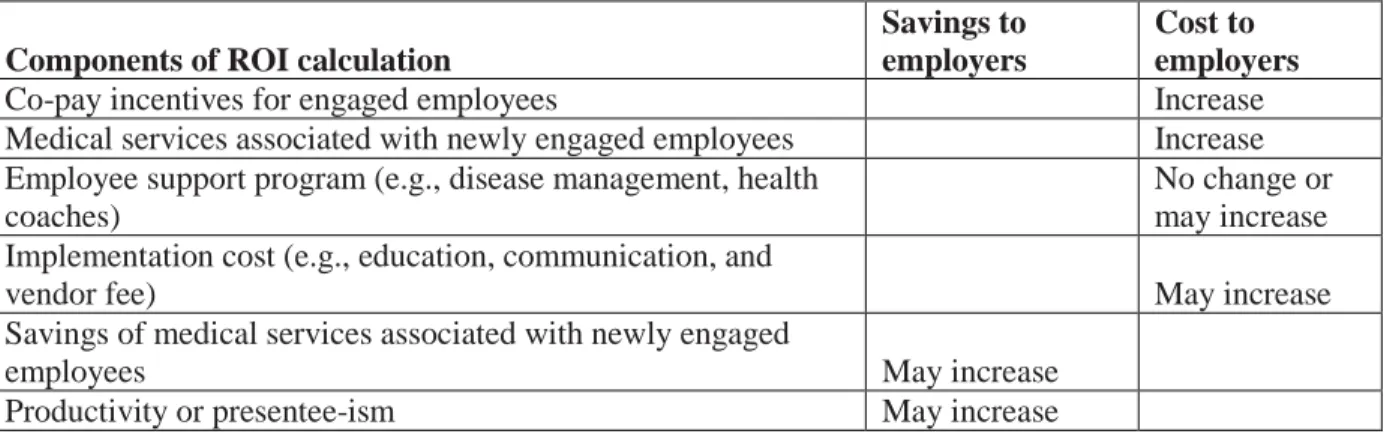
Document review identifies several barriers employers face with VBID: return on investment (ROI) of VBID and standardization of VBID implementation process. Available research documenting ROI from VBID initiatives is generally mixed and it is hard to draw conclusion on ROI of VBID. Table 5 summarizes various components that need to be considered for VBID strategy’s ROI calculation. Most
studies find that VBID is consistently associated with improved medication adherence as well as with lower out-of-pocket spending for drugs.122
32
the overall increasing medical services cost as a result of improved employee engagement in their own health care and wellness.
Table 5. Summary of Existing Literature on ROI of VBID strategy
Components of ROI calculation
Savings to employers
Cost to employers
Co-pay incentives for engaged employees Increase
Medical services associated with newly engaged employees Increase Employee support program (e.g., disease management, health
coaches)
No change or may increase Implementation cost (e.g., education, communication, and
vendor fee) May increase
Savings of medical services associated with newly engaged
employees May increase
33
CHAPTER 4: RESEARCH QUESTION AND RESEARCH METHODS
Research Question
VBID can be scalable to different employers, depending on the investment an employer wants to make and the expected return. It varies much depending on employer data availability, administrative complexity, feature designs and areas of opportunity. However, existing literature lacks generalizable information around how employers determine these factors and executive VBID strategy. Therefore, there is a need for more research that examines the framework for designing, implementing, and sustaining employee engagement in a VBID strategy.
To meet this research need, this study seeks to answer the question: What factors should
employers consider when designing and implementing VBID plans to improve employee engagement?
Study Design
The study design includes two steps: first, a document review is conducted to examine barriers of VBID implementation; second, key informant interviews of stakeholders that have experience with VBID design or implementation. Questions for key informant interviews focus on validating barriers and gathering solutions to the barriers during VBID design and implementation. The document review provides valuable foundational information to support the structure, content, and administration of key informant interviews.
34 Data Collection Methods:
1. Document Review of VBID Implementation Barriers
The document review specifically searches for documents describing experience by employers who have already implemented VBID strategies. Information gathered in the document review will be summarized thematically. This step provides valuable foundational information to aid the structure, content, and administration of key informant interviews. Informant interview results will validate and supplement findings in this document review. The document review consists of a Google Scholar search from October to November of 2014, using the following combinations of terms:
1. Barriers OR challenges AND
2. Value based benefit design OR value-based insurance design 3. Employer OR health plan
2. Key Informant Interviews of Employers
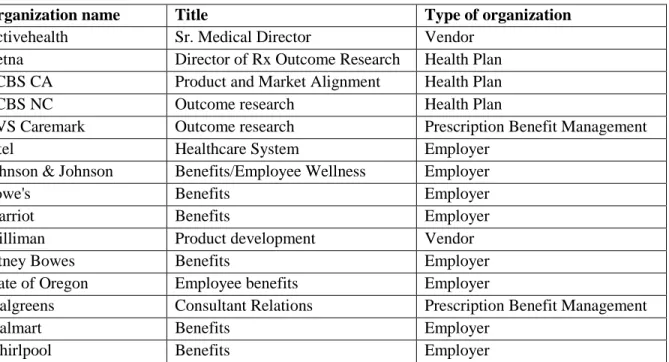
Informant interview includes human resources managers, benefit design consultant, and other personnel at organizations that have implemented VBID. A total number of 17 interviewees were completed. A national registry of value-based insurance design plans suggests several self-insured employers have begun to implement value-based design in a variety of ways.123 Table 6 includes a list of interviewees targeted for this study. All these targeted interviewees had experience overseeing the design and implementation of VBID either on behalf of an employer as an internal human resource manager, or for employer clients as vendors.
35 Table 6. Potential Employers to Interview
Organization name Title Type of organization
Activehealth Sr. Medical Director Vendor
Aetna Director of Rx Outcome Research Health Plan BCBS CA Product and Market Alignment Health Plan
BCBS NC Outcome research Health Plan
CVS Caremark Outcome research Prescription Benefit Management
Intel Healthcare System Employer
Johnson & Johnson Benefits/Employee Wellness Employer
Lowe's Benefits Employer
Marriot Benefits Employer
Milliman Product development Vendor
Pitney Bowes Benefits Employer
State of Oregon Employee benefits Employer
Walgreens Consultant Relations Prescription Benefit Management
Walmart Benefits Employer
Whirlpool Benefits Employer
3. Data Management and Analysis
Primary and secondary data were collected for this study. The information obtained from document review and key informant interviews are qualitative. The analysis results include summaries grouped by themes, a discussion of findings, and a presentation of recommendations. The interview recordings and transcripts are reviewed to identify themes and to compare and contrast responses across interviews. To the extent possible, the data are coded and then counted or weighted (either by frequency of mention, extent of treatment of a theme or code by counting lines of text in the transcription, or both).
Study Deliverables
This research results include two primary deliverables. The first is a summary of current barriers in implementing VBID by employers. The second includes factors employers should consider if they are interested in implementing a VBID program.
IRB and Confidentiality Issues
36
Qualifying interviewee candidates were recruited via email. Appendix 1 includes the recruiting email script. Respondents were provided with a short summary of the study prior to the interviews, and provided with an opportunity to ask questions and/or express concerns prior to scheduling their initial interview. Finally, interviewee candidates’ verbal consent was confirmed prior to any data collection, waiving written consent contingent upon IRB approval.
37
CHAPTER 5: REVIEW ON BARRIERS FOR EMPLOYERS TO IMPLEMENT VBID
This chapter summarizes literature related to barriers in VBID design and implementation. Self-insured employers have greater financial incentives to control their employees’ cost and many large, self-insured employers have embraced VBID. For this reason, this section focuses on self-self-insured employers and health plans/vendors that work as vendors to support self-insured employers to implement VBID strategies.
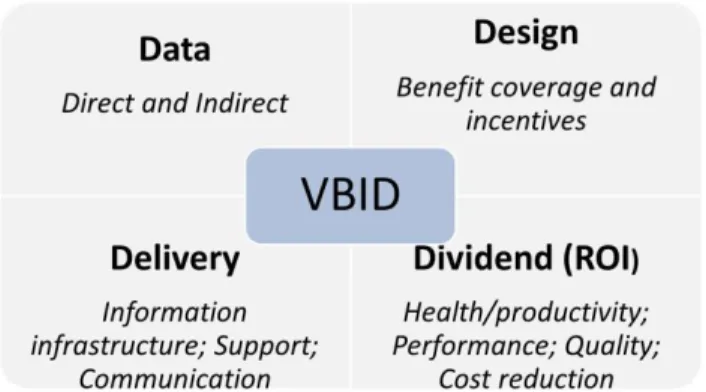
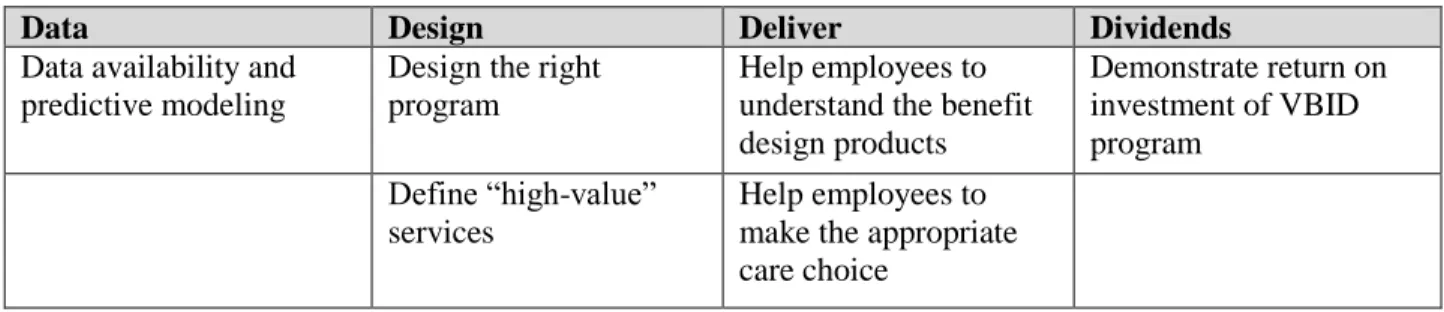
The National Business Coalition on Health published a “Value-based Benefit Design a Purchaser Guide” and summarized the implementation of VBID in four key components (shown in Figure 5):124 1. Data: analyze data to identify cost drivers
Analyze claim data and employee productivity data to determine the high-cost drivers 2. Design: design the VBID strategy
Determine which services, drugs, or providers have high value
Determine which conditions drive total costs, including medical costs and lost productivity Design incentives to encourage utilization of high-value services, drugs, or providers Design disincentives to discourage utilization of low-value services, drugs or providers 3. Deliver: implement VBID program
Design and implement an effective employee communication and education strategy
Manage vendor effectively. Large employers can have as many as 11 or 12 different vendors that touch the VBID initiative
4. Dividends: build a business case (return on investment) for the VBID program Calculate the return on investment of the VBID program.
38 Figure 5.Conceptual Model for VBID Implementation
When self-insured employers implement the four steps, health plans usually provide integrated support to VBID program, for example:
Manage data analytics to support VBID, including data analytics to identify high-cost or high-risk populations;
Educate and engage employees in better understanding their benefit design information;
Support and manage incentives for chronic condition management, use of preventive services and selection of effective acute care services, generally and by national and regional plans
Description of Data Sources for Document Review
Google Scholar search was performed to identify peer-reviewed articles that were published between 1995 and 2014. In addition, document review was also performed in online databases of four prominent employer-membership organizations, National Business Group on Health (NBGH), Health Leadership Council, National Business Coalition on Health and University of Michigan Center for Value-Based Insurance Design. The websites for these four organizations include a wide array of resources, including webinars, journal articles, case studies, meeting highlights, technical assistance tools, and policy and issue briefs.