CAREGIVING TEAMS AND TODDLERS STUDY: TWO SINGLE-CASE CHANGING CRITERION DESIGNS TO EXAMINE THE EFFECTS OF A TWO PARENT-MEDIATED
INTERVENTION FOR FAMILIES WITH TODDLERS AT RISK OR WITH AUTISM SPECTRUM DISORDER
Abigail Michelle Carroll
A dissertation submitted to the faculty at the University of North Carolina at Chapel Hill in partial fulfillment of the requirements for the degree of Doctor of Philosophy in the Department
of Allied Health Sciences (Division of Occupational Science) in the School of Medicine.
Chapel Hill 2019
2019
ABSTRACT
Abigail Michelle Carroll: Caregiving Teams and Toddler Study: Two Single-Case Changing Criterion Designs to Examine the Effects of a Two Parent-mediated Intervention for Families
with Toddlers at Risk or with Autism Spectrum Disorder (Under the direction of Nancy Bagatell)
This study examined the use of a family occupation-centered coaching intervention to support two parents’ implementation of evidence-based social interaction strategies in their
home with their toddler with autism spectrum disorder (ASD). The study was an exploration of applied intervention research in occupational science using the transaction
meta-theoretical perspective. Two-single case changing criterion designs (CCDs) within one family with a toddler with ASD were used to study the social interaction processes of a family and to determine the effect of the intervention on parent-child interactions. The research design embedded narrative reasoning and decision-making time points into the procedures to support social validity through caregiver choice of preferred activity, strategies, and criterion. The intervention yielded a 55.26% improvement in the quality of social
variability, through the parent’s participation together. Given that ASD is viewed as a
To my son, Gabriel, my family, the family who participated in the dissertation, and to the families, coworkers, and teachers who have joined me in occupational therapy throughout the years learning together through sharing what we love. In honor of my parents, grandparents, & Ma whose teachings and memory continue to guide me. In memory of Cosmo, Namaste’,
ACKNOWLEDGEMENTS
I acknowledge with tremendous gratitude the people who made this dissertation possible: my advisor, Dr. Nancy Bagatell; my dissertation committee: Dr. Brian Boyd, Dr. Ruth Humphry, Dr. Linn Wakeford, and Dr. Katarina Haley; and my research assistant: Annie Ford. To Nancy, the first time we spoke on the phone about the PhD program, I had no idea you would be the chair for my dissertation committee. Thank you for sharing your beautifully intuitive and sensing teaching abilities with me to provide the guidance and support to see this through. My gratitude is beyond words. . . To Brian, thank you for sharing your insights and expertise with me during our weekly meetings while you were at UNC. Your coaching to study the fundamentals of single case design were what made me discover changing criterion designs, which I believe are a hidden gem with untapped potential for intervention research. Thank you to the Dillar-Gilligan Summer Research Fellowship
supported me through the final summer of this process. I would also like to acknowledge the funding from the U.S. Department of Education through grant R324A100305 to the
University of North Carolina at Chapel Hill and to thank all of the faculty who made that grant possible (Dr. Betsy Crais, Dr. Grace Baranek, Dr. Harriet Able, Dr. Linda Watson, and Dr. Nancy Bagatell).
what we do matters, the world can be a safe and beautiful place where everyone and everything matters.
To my (our) family, my siblings, Renee, Jim, and Paul, and their families. Your encouragement, love, and hugs gave me a place to come home to as I repeatedly questioned if this was the right path for me. To Kevin, your partnership, patience, perspective, and encouragement kept me going through so many challenging times.
To Jennifer Harker and family, your friendship during (dark hours of) this journey was a gift beyond measure, our conversations and ‘family’ yoga sessions on the lawn were some of the best medicine. To Melissa, for your friendship, checking in, and sharing
conversations that keep me inspired because you just get it! To Stacey for understanding the good, bad, and ugly of what this experience can be to see it through, the toll it can take on cherished relationships. Your understanding and support mean so much! To Stephen, for your enthusiasm about this work from the beginning, our ongoing email conversations that kept us looking deeper into ideas and connections, and our ongoing collaboration to make the depth and breadth of this work better. To all of the other friends, old and new, who have offered support in little and big ways, it has certainly taken a village to finish this!
TABLE OF CONTENTS
LIST OF TABLES ... xiii
LIST OF FIGURES ... xv
LIST OF ABBREVIATIONS ... xvii
CHAPTER 1: BACKGROUND AND SIGNIFICANCE... 1
Autism in Development ... 3
Parent Implemented Intervention ... 4
Caregiver Well-being ... 5
The Influence of Family Social Interaction Processes on Social Learning and Development ... 6
Theoretical Frameworks ... 6
Perspectives of Transaction ... 7
Developmental Niche Framework ... 8
Organism-Environment System: The Importance of Emotion in Learning Processes ... 9
Contributions from Recent Theories on Autism: Enactive Approach ... 9
Guiding Research Question and Aims ... 11
CHAPTER 2: LITERATURE REVIEW ... 12
Occupational Science Literature ... 12
Family Routines ... 12
Instructional Strategies ... 16
Nature of Targets ... 17
Contexts of Delivery ... 21
Summary of Key Ingredients ... 24
CHAPTER 3: METHODS ... 26
Single Case Research Design... 26
Changing Criterion Design ... 26
Utility of CCDs ... 27
Measurement Procedures ... 31
Primary Dependent Variable ... 31
Independent Variable ... 34
Participants ... 37
Recruitment ... 37
Selection Criteria ... 37
Phone Screening ... 38
Research Family ... 39
Researcher/Interventionist (RI) ... 40
Research Assistant ... 40
Procedures ... 41
Pre-Intervention Data Collection ... 44
Baseline Description: Phase 1 of Experimental Data Collection (4 Sessions) ... 55
Description of Intervention Series Components: First Intervention Series Example, Phase 2 (Training Session 1 & Three Intervention Sessions) ... 68
Third Intervention Series, Phase 4 (Training Session 3 & Four
Intervention Sessions) ... 91
Post-Intervention Data Collection ... 95
Data Analysis of Full Study ... 96
CHAPTER 4: RESULTS ... 98
Guiding Research Question ... 98
Secondary Research Aim 1 ... 98
Secondary Research Aim 2 ... 126
CHAPTER 5: HOW CAN OCCUPATIONAL SCIENCE INFORM PRACTICE? ... 134
Theories are Alive in Practice ... 134
Theoretical and Clinical Reflections ... 135
Strengths and Contributions of Theories ... 135
How the Theories Played out in Intervention ... 138
Further Examples of Theory Translated to Practice Throughout the Study ... 152
Occupation, the Role of Emotion, and Power Forces and Structures ... 159
Occupation, Stress, Sleep, and Rhythm Capacity for Social Interaction ... 160
What do the Findings Tell Us About Occupation and Translating it to Practice? ... 162
Occupation and Generalization ... 162
Occupations with Certain Elements for Target Populations ... 164
Organism Environment System, Occupations with Certain Elements ... 164
Participant Choice of Occupation with Specific Qualities and Elements ... 164
Benefits of a Two-Parent Implemented Approach ... 166
Optimal Family Outcomes for Four Reasons and More ... 166
Feasibility, Fidelity, and Social Validity Considerations ... 174
Feasibility: Part C Services ... 174
Fidelity ... 174
Social Validity and Procedural Choice Making ... 175
Changes in Future Replication ... 176
Future Directions ... 178
Final Conclusions... 179
APPENDIX A: KEY INGREDIENTS ... 181
APPENDIX B: PARENT-CHILD INTERACTION CODING FORM ... 183
APPENDIX C: CHILD-PARENT INTERACTION CODING FORM ... 184
APPENDIX D: COACHING INTERVENTION FIDELITY CHECKLIST ... 185
APPENDIX E: PHONE SCREENING AND ELIGIBILITY INTERVIEW ... 190
APPENDIX F: PRE-INTERVENTION VISIT 1 ... 194
APPENDIX G: TEAM/FAMILY INFORMATION FORM: PART 1-PREINTERVENTION VISIT 1 ... 195
APPENDIX H: LIFE PARTICIPATION FOR PARENTS (LPP) ... 198
APPENDIX I: THE BRIEF COPE ... 203
APPENDIX J: PRE-INTERVENTION VISIT 2 ... 206
APPENDIX K: OCCUPATION-CENTERED INTERVIEW: BLENDED RBI & COPM ... 207
APPENDIX L: CULTURAL QUESTIONS ... 214
APPENDIX M: JOINT DECISION MAKING PROCESS TO SELECT PREFERRED ACTIVITY ... 216
APPENDIX O: PRE-INTERVENTION VISIT 2 PROCEDURES
CHECKLIST... 220 APPENDIX P: BASELINE CONDITIONS RECORDING FORM AND
SCRIPT ... 221 APPENDIX Q: VISUAL ANALYSIS ... 224 APPENDIX R: TRAINING SESSIONS – TEAM PLANNING ... 225 APPENDIX S: PARENT SOCIAL VALIDITY QUESTIONNAIRE FOR
TRAINING PHASE... 234 APPENDIX T: OUTLINE OF INTERVENTION SESSIONS ... 236 APPENDIX U: PARENT SOCIAL VALIDITY OF INTERVENTION
QUESTIONNAIRE ... 238 APPENDIX V: TEAM/FAMILY INFORMATION FORM: PART 2 ... 240 APPENDIX W: LIFE PARTICIPATION FOR PARENTS PRE &
POST-INTERVENTION RESULTS ... 242 APPENDIX X: PARENT’S COPM PRE & POST-INTERVENTION
LIST OF TABLES
Table 1. Common targets in intervention research for toddlers with ASD ... 18
Table 2. Summary of phase sequence, steps of CCDs, study tasks, and when steps of CCDs occur in parallel ... 29
Table 3. Father’s CCD ... 31
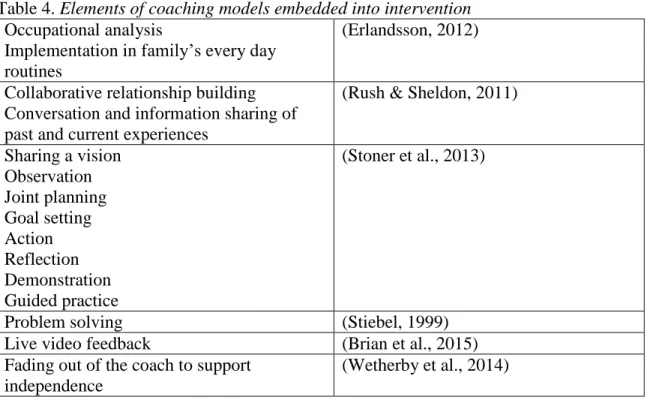
Table 4. Elements of coaching models embedded into intervention ... 35
Table 5. Research Assistant and RI coding reliability throughout the study ... 41
Table 6. Procedures ... 42
Table 7. Parental scores on the Life Participation for Parents Questionnaire ... 46
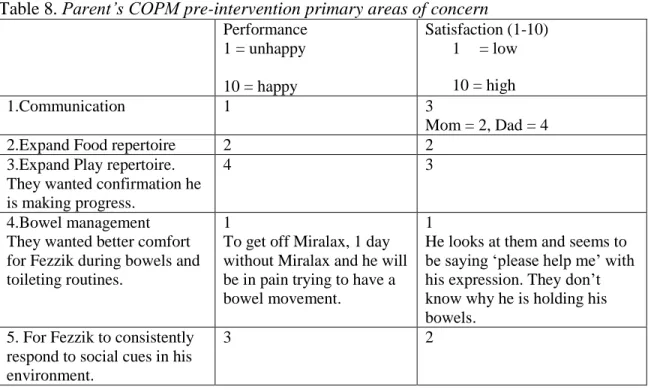
Table 8. Parent’s COPM pre-intervention primary areas of concern ... 51
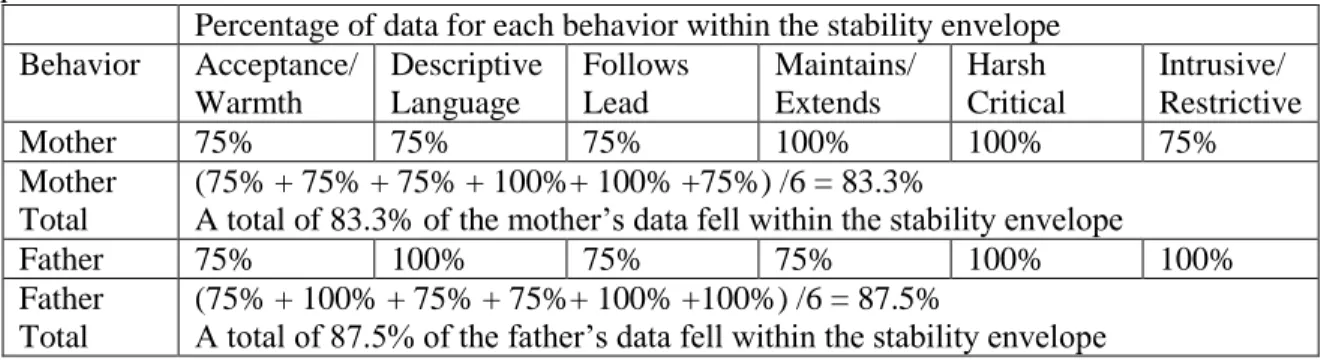
Table 9. Calculations for percentage of data within the stability envelope for baseline, phase 1 ... 61
Table 10. Baseline means ... 62
Table 11. Summary of the family’s baseline mean facilitative performance ... 73
Table 12. Summary of training session decisions – session 1 example... 74
Table 13. Behavioral definitions of strategy dimensions... 76
Table 14. Mother’s criterion level 1 options ... 78
Table 15. Training session 1 parents’ choices: criterion level 1 goals and strategy dimension 1 ... 79
Table 16. Visual analysis of data characteristics sample: phases 1 and 2 ... 86
Table 17. Training session 2 parents’ choices: criterion level 2 goals and strategy dimension 2 ... 91
Table 18. Training session 3 parents’ choices: criterion level 3 goal and strategy dimension 3 ... 93
Table 19. Parents as group facilitative performance data for each session in third intervention series... 94
Table 20. Parental outcomes after first intervention series ... 100
Table 22. Parental outcomes after second intervention series ... 105
Table 23. Child and family outcomes after second intervention series ... 107
Table 24. Parental outcomes after third intervention series ... 109
Table 25. Child and family outcomes after third intervention series ... 111
Table 26. Mother’s mean performance of each behavior during each phase ... 116
Table 27. Father’s mean performance of each behavior during each phase ... 116
Table 28. Domain mean totals during each phase of the study and the total changes in the quality of social interactions for the mother, father, and parents as a group ... 117
Table 29. The child’s mean performance of each behavior during each phase ... 123
Table 30. Child outcomes: child domain totals during each phase of the study and the total changes in the mean quality of his social interactions during the study ... 123
Table 31. Domain mean totals during each phase of the study and the total changes in the quality of social interactions for the family as group... 125
Table 32. RI task categories and approximate time spent ... 128
Table 33. Contextual and individual factors that influenced intervention delivery within and across sessions ... 129
Table 34. RI’s mean adherence to the intervention and quality of delivery ... 130
Table 35. Social validity ratings of the parents as group, and mother and father individually of the most important active ingredients of the pre-training sessions ... 131
Table 36. Social validity ratings of the parents as group, and mother and father individually of the most important active ingredients of the training sessions ... 132
Table 37. Social validity ratings of the parents as group, and mother and father individually of the most important active ingredients of the intervention sessions ... 133
LIST OF FIGURES
Figure 1. Mother’s baseline phase 1 data... 63
Figure 2. Father’s baseline phase 1 data ... 64
Figure 3. Child’s baseline phase 1 data ... 65
Figure 4. Mother, father, and child’s individual baseline domain mean totals ... 66
Figure 5. Parents as group baseline domain mean totals ... 67
Figure 6. Family as group baseline domain mean totals ... 67
Figure 7. Bar graph of the parents’ baseline means ... 72
Figure 8. Bar graph of the child’s baseline means ... 73
Figure 9. Mother’s performance above her criterion level 1 goal during the first intervention series ... 87
Figure 10. Father’s performance above his criterion level 1 goal during the first intervention series ... 88
Figure 11. Mother’s means during baseline compared to her criterion level 1 goal and her mean performance during the first intervention series ... 90
Figure 12. Father’s session by session improvements in facilitative behaviors during the second intervention series ... 92
Figure 13. Mother’s performance above her criterion level 2 goal during the second intervention series ... 103
Figure 14. Father’s performance above his criterion level 2 goal during the second intervention series ... 104
Figure 15. Parents’ performance at or above their criterion level 3 goals during the third intervention series ... 108
Figure 16. The mother, father, and child’s (respectively) mean performance of each behavior at each session during the study ... 112
Figure 17. Mother’s facilitative and interruptive domain means during each session and phase of the study ... 118
Figure 19. Parent’s facilitative and interruptive domain means during each
session and phase of the study ... 120
Figure 20. Figure 16 child’s portion repeated: The child’s mean performance of each behavior at each session during the study ... 122
Figure 21. Social interaction domain means for the child with ASD during each session and phase of the study ... 124
Figure 22. Family domain means during each session and phase of the study ... 125
Figure 23. Father’s facilitative behaviors and child’s engagement behaviors ... 147
Figure 24. Mother's facilitative and child's engagment behaviors ... 162
LIST OF ABBREVIATIONS ABA Applied Behavior Analysis
ADOS Autism Diagnostic Observation Schedule ART Adaptive Response Training
ASAP Advancing Social Communication and Play ASD Autism Spectrum Disorder
ASQ: SE Ages and Stages Questionnaire: Social Emotional
Brief-COPE Brief- Coping Orientation to Problems Experienced Inventory CCD Changing Criterion Design
CDSA Children’s Developmental Services Agency COPM Canadian Occupational Performance Measure FITT Family Implemented TEACCH Training IDEA Individuals with Disabilities Education Act IPCI Indicator of Parent Child Interaction
IT Information Technology
JAML Joint Attention and Mediated Learning
JASPER Joint Attention Symbolic Play Emotional Regulation LPP Life Participation for Parents
M-CHAT Modified Checklist for Autism in Toddlers
NDBI Naturalistic Developmental Behavioral Interventions OT Occupational Therapy
PhD Doctor of Philosophy
RRB Restricted and Repetitive Behavior SA Social Affect
SCD Single case design
SLP-CCC Speech-Language Pathology-Certificate of Clinical Competence
CHAPTER 1: BACKGROUND AND SIGNIFICANCE One of the core and pervading assumptions within occupational science and
occupational therapy has been that certain patterns of occupation may promote or counteract health, development, disease, or happiness (Erlandsson, 2004). The patterns of our daily occupations constitute a mixture of value perceptions, which are related to meaning and are shown to be associated with subjective health and wellbeing (Erlandsson, Eklund, & Persson, 2011). Dickie (2010) suggested there is a vital need for both basic and applied research in occupational science to identify essential elements of occupation and occupational processes in order to “support work relating occupation to health and well-being” (p. 195). It is my desire to support translational research in occupational science through collection of empirical evidence for elements of occupation theorized to be key to the development of particular skills that can support well-being. Through use of systematic methods and processes that infuse evidence-based practices into intervention, this research may lead to knowledge generation of occupational elements to be utilized in interventions for populations with targeted needs.
formation is suggested to occur through two competing pathways, one based on logical conscious choice and another pathway that occurs unconsciously through routine habit situations (Fritz & Cutchin, 2016). There is a need for intervention research to connect the concept of habit formation to occupational therapy treatment innovations and outcomes (Fritz & Cutchin, 2016).
Occupational science has a history of studying family patterns of occupations and routines (Bonsall, 2014; see also DeGrace, Hoffman, Hutson, & Kolobe, 2014; Larson, 2006; Pierce, Munier & Myers, 2009; Segal, 1999; Segal, 2004) and this research can inform understandings of how patterns of participation impact early development and health across the lifespan. My current research focus is on patterns of occupation in families with young children with autism spectrum disorders (ASD). Creating conditions for people to experience meaningful patterns of daily occupations is of concern to everyone involved in promoting health and welfare. Studies show that parents of children with ASD are often stressed (Case-Smith & Arbesman, 2008), but little work has been done to examine other factors influencing early experiences of parents, particularly those with children with ASD or with children at risk of developing ASD (Dawson et al., 2010; Freuler, et al. 2013). Discussion of elements, factors, or patterns that could be influencing caregiver well-being and the irregular
Occupational scientists have suggested there be increased study of occupations that connect (Hammel, 2009), or unifying occupations (Lavalley, 2017). Parents of children with ASD report difficulty connecting with their child in ways that support mutual participation, shared meaning, and experience during family occupations (Bagby, Dickie, & Baranek, 2012). Families with children with ASD also have difficulty engaging in family routines (Bagatell, Cram, Alvarez, & Loehle, 2014; Boyd et al., 2014). In this study three family members, two parents and their toddler, were the unit of analysis transacting in coordination around and through occupational engagement in a routine activity. Research with a focus on shared participation of the family unit could “have significant implications for family centered practice” (Boyd et al., 2014, p. 331) and inform our understanding of occupations
with the capacity to connect. Inquiries and consideration of the most basic unit of society, the family, and family health has the potential to yield linkages to the health of populations (DeGrace et al., 2014). Based on current ASD early intervention research, this study aims to identify and embed occupations with essential elements into family patterns and routines that may be key ingredients to the success of early intervention with families with toddlers with ASD.
Autism in Development
risen to an estimation of 1 in 59 school age children nationally and in some southeastern states 1 in 57 (Baio et al., 2018).
Key ingredients to improving outcomes for children with ASD are early identification, intervention (Baranek et al., 2015; Buzhardt et al., 2010), and choosing evidence-based interventions individualized to the child and family’s special needs (Buzhardt et al., 2010). Early intervention must take an act now approach (Landa, Holman, O-Neil & Stuart, 2011) because neurodevelopment occurs rapidly in the first few years of life and timing matters. The younger children are at the time of intervention, the greater their developmental gain and symptom reduction is across multiple forms of intervention (Rogers et al., 2012).
Early intervention for children with ASD is critical for seizing opportunities to foster the development of pivotal neurological connections and introductory social-communication skills (Mundy & Crowson, 1997). Early developmental foundations lay a framework
necessary for expansion of occupation - social, academic, and daily living activities later in life (Kasari et al., 2015). Early intervention can support optimal developmental outcomes, minimize disability, and considerably reduce later burdens on families and society (Baranek et al., 2014).
Parent Implemented Intervention
Due to the key role parenting plays in a child’s development, parent-mediated
IDEA Part C funding requires that programs use a family-centered approach to intervention. Yet, the traditional approach is to train one parent/caregiver and this approach has resulted in mixed findings (Oono, Honey & McConachie, 2013).
Given the heterogeneity of ASD, there is a need to individualize intervention (Baranek et al., 2015) and match clients to efficacious treatments based on family
characteristics (Stahmer, Schreibman, & Cunningham, 2011). Parent-mediated intervention needs to be examined using a family systems approach (Schertz et al., 2013) that delivers intervention within family’s natural contexts, daily activities, and routines, and fits within
Part C funding frameworks (Baranek et al., 2015). Parent-mediated coaching interventions with data collection procedures (Baranek et al., 2015) are one means to provide this type of family systems approach.
Caregiver Well-being
processes in families to support child development alongside family well-being. Parents of children with ASD report that certain types of social support, spousal and extended family support, can help decrease stress (Mancil, Boyd, & Bedesem, 2009). Spousal support has also been shown to be an effective strategy for coping with stress for parents with children with ASD (Higgins, Baily, & Pearce, 2005). Intervention research needs to engage parents
together in collaborative problem solving in order to empower them to continue evaluation of interactive strategies beyond the intervention period.
The Influence of Family Social Interaction Processes on Social Learning and Development
There is a critical need for the development of intervention designs with a family centered focus that support families in natural environments during routine family practices and can be provided within current Part C IDEA funding frameworks. Without the
development of interventions that further our understanding of the social interaction
processes of families with toddlers with ASD, we may lose a potentially critical component of early intervention - the role of family interactions in the social learning process and their influence on children’s development of social interaction skills. The objective of this study is to identify whether a novel intervention design utilizing a two-parent implemented method may be a key clinical approach for maximizing social interaction effects in parent-mediated interventions for toddlers with ASD.
Theoretical Frameworks
for how to target improvements in the dependent variable, quality parent-child interactions, for toddlers with ASD specifically.
Perspectives of Transaction
The transactional perspective is a meta theory that has emerged in occupational science over the past decade. The field is currently exploring how this perspective could be applied to research and intervention (Cutchin & Dickie, 2013). From this perspective, occupation is considered a form of functional coordination between person and world (Cutchin & Dickie, 2013). Important aspects of occupation are meaning, learning, growth, morals, and social improvement (Cutchin & Dickie, 2013). The transactional view calls for an understanding of relations of person and world (situation) and includes social, cultural geographical, temporal, historical, political, and biological contexts (Dickie, Cutchin, & Humphry, 2006). Social contexts include relations with other people involved in situations. The focus is on relations that connect person with context and enable occupation. Given this, a transactional perspective shifts the unit of analysis beyond the individual. From this view, people mutually influence each other and are constantly constructed and constructing one another through their transactions with the world. Use of this perspective allows for examination of family systems and analysis of the family as a unit to understand social learning processes.
Application of the transactional perspective has the potential to position families of children with ASD as capable of resilience, adaptation, and growth through investigation of shared engagement as a family unit. The lens is a good fit for studying parent-child
are seen as essential parts of understanding the human experience in a fluctuating world (Dickie et al., 2006). There is a focus on more than action because the qualities and context of actions, like timing and place, matter.
One component of designing intervention approaches is consideration of historical and structural forces influencing situations (Bailliard, 2014). Careful analysis of situations that lead to development of patterns of occupation that moves beyond the individual is necessary (Bailliard, 2014). Research on family routines and patterns of occupations indicates that outside forces, like work or school, influence the structure of family routines (Boyd et al., 2014; Larson, 2006). In this study the family is the unit of analysis and the transactional perspective is applied to an experimental design and process. The intervention is designed to collect information on and be ‘situated’ within a family’s developmental niche
(Harkness, et al., 2007). Information on the family’s developmental niche will help inform what outside forces are influencing the family’s situation and the structure of their routines. Developmental Niche Framework
The developmental niche framework as outlined by Harkness et al. (2007) supports a focus on intervention embedded in families’ home routines where practices influence
children’s skill development. The framework includes three main components: physical and
social settings of daily life, family values and customs of care, and the psychology of
Organism-Environment System: The Importance of Emotion in Learning Processes The organism-environment system theoretical foundation grounds the importance of use of a preferred activity/occupation (Jarvilehto, 2000) for intervention. This theory views emotions as the quality of learning and reorganizational processes. From this view feeling is knowing and emotion is viewed as the reorganization of the organism-environment system. Emotion is of key importance in the formation of cooperative systems, in this case a ‘family system.’ From this theory “the good learning process is happiness itself” (Jarvilehto, 2000, p. 58). Therefore, preferred activities will be utilized in the intervention process to elicit
positive emotions. Positive affect sharing during shared engagement of both parents and the child will then be emphasized as the starting point for the reorganizational process to facilitate child learning of social interaction skills.
Contributions from Recent Theories on Autism: Enactive Approach
The enactive approach is a logic model for how elements of social interaction develop and what is needed to support their development in children with ASD (DeJaegher, 2013). The approach explains that sense-making, or cognition, is thoroughly embodied and is a participatory process enacted through social interaction and inter-individual coordination (DeJaegher, 2013). Understanding and meaning is generated and transformed in and through our experiences and interactions. We develop a conceptual grasp of the nature of minds through affectively patterned experiences, coordinated relations with other people to develop intersubjectivity (DeJaegher, 2013). Intersubjectivity can be defined as the ability to share mental control with another person.
adapt or fit this subjective control with the subjectivity of others (Siegal, 2001). Simply put, it requires the ability to sense the thoughts and feelings of those around us. The degree to which this sensitivity fosters the formation of healthy relationships or not depends on the child’s experiences, their sense of security, the nervous system, and the development of
consistent positive feedback loops (socially and physiologically). Early intervention ASD research suggests that social affect sharing and socially engaged imitation may be building blocks to the development of intersubjectivity (Landa et al., 2011). Intersubjectivity, emotional connection, and perspective taking with social partners early in life are foundational for flexible creative thought and lifelong learning (DeJaegher, 2013).
Embodiment, sensory processing, and coregulation. DeJaegher (2013) suggests children with ASD experience a different embodiment and self-organizing process. For a child with ASD this may mean that their perspective of significance is “rooted in the body” (DeJaegher, 2013, p. 3). In research, the child with autism’s different embodied experience is often described as sensory processing differences that influence their ability to self-organize and self-maintain (DeJaegher, 2013). The literature suggests that children with ASD’s ‘breakdowns’ manifest as behaviors like tantrums, aggression, or self-injury whereas their
attempts to self-maintain or ‘repair’ as withdrawal.
interaction process may provide families with an understanding of how coregulation can occur between two or more autonomous agents, with each agent contributing to co-regulation in the interaction process (DeJaegher, 2013). A family systems approach to intervention can examine how mutual regulation between two parents and their child during engagement in a routine family activity may support toddler development of social interaction skills.
Guiding Research Question and Aims
The guiding research question for this study is: Can a two-parent implemented family and occupation-centered intervention using a coaching approach improve the quality of social interactions of families with toddlers with ASD? As with any intervention, fidelity, social validity, feasibility, and meaningful outcomes are important, therefore the secondary research aims include:
a) Determine if a two-parent implemented intervention, embedded in family home routines, improves social interaction outcomes for toddlers with ASD.
CHAPTER 2: LITERATURE REVIEW
In this section, occupational science literature on family occupations and routines is reviewed that relates to intervention design and intervention research for toddlers with ASD. The review identifies gaps that explicate the need for the study. This is followed by a review of literature on intervention for toddlers with ASD. Throughout the review, theoretical and empirical literature is provided to support why a two-caregiver implemented coaching intervention using a preferred routine family occupation may be the research approach needed to fill current gaps in multiple fields of study.
Occupational Science Literature Family Routines
Family routines can support health, wellbeing, and the development of language, academic, and social skills as well as contribute to family identity and cohesion (Bagatell et al., 2014; Feise, 2007; Spagnola & Fiese, 2007). Occupational scientists have studied the engagement of families as a group during family routines for decades (Segal, 1999).
However, mothers have largely been the primary informants in this research (Boyd, McCarty, & Sethi, 2014; Larson, 2006). Orban and colleagues (2012) were one of the first research teams to successfully gather information about all family members’ participation in routines
through collection of time use diaries completed by both parents. Their research examined families’ social coordination of patterns of daily occupations and how families work together.
target population to understand the influence of family patterns of daily occupations on health and development in this group. They applied their findings to the design of
interventions for families with children with obesity to support change and development of the family system (Orban et al., 2014).
Further research is needed to explore methods that can capture the families’ perspectives, including the child’s (Boyd et al., 2014), to learn more about roles in family
routines. Research of this nature is needed for a variety of target populations, including families with children with ASD. There is a need for occupational science research that looks closely at what children do and to examine the development of young children’s interest in
the activities of others (Humphry, 2016). A family-centered intervention with observation of how families do a routine activity together can inform both how children develop an interest in engaging with their parents and how families open up opportunities for participation of children in the family routine. Inquiries to understand the social interaction processes of families with children with ASD are necessary (DeJaegher, 2013) to understand their role in how children develop and learn complex adaptive skills like communication (Carpendale & Wehera, 2013) and social interaction. This study examined a preferred routine in a family with a toddler with ASD and focused on the quality of the family’s social interactions in order to investigate the influence of a coaching intervention on family social skill development.
occupation (Bagby et al., 2012). There is a need to investigate services for families with children with ASD that focus on the family unit as capable of supporting successful family participation in occupations (Boyd et al., 2014).
Occupational scientists and occupational therapists grapple with how to study social aspects of occupation beyond individual perspectives, and the fields continue to look for methodological approaches that will allow for evaluation and categorization of group occupational participation (Lavalley, 2017). One suggestion is to study collective
occupations of groups like families and to consider how well the group is doing together (Lavalley, 2017). Families with children with ASD often have difficulty connecting through shared participation, so this group has an implicit need for research of this nature.
Intervention research designs for families with children with ASD are needed that have structural elements capable of delivering a family-centered service with methodological rigor (Siller et al., 2014). Use of multiple changing criterion designs is one method that allows for examination of a family unit as well as analysis of each individual’s contributions to
collective participation in the family group. Using this method, the family can be viewed as a mini community of practice that works together toward socially identified collective goals to build skills that will support successful family participation in occupation.
Embodied Learning, Occupations with Preferred Elements to Support Positive Affect Sharing, Intersubjectivity, and Paths to Lifelong Learning
embodied affective experience during participation is a critical factor in whether additional opportunities to reengage in a similar experience will be pursued by an individual.
Interventions to elicit positive emotion and affect sharing in parent-child dyadic relationships have been targeted in ASD interventions and will be discussed later in this review. However, elements of occupation capable of triggering positive affect sharing between members of a group, in this case a family, as the mechanism for change in intervention have not been studied. The connections between family occupations, the embodied experience of group participation, and its relationship to learning need to be explored using experimental methods in intervention. Investigations of this nature are well suited for families with children with ASD who commonly have challenges with emotional regulation and have core deficits in social skills that can interfere with group engagement.
Research with Toddlers with ASD
The variations in the types of intervention approaches for working with children with ASD mirror the heterogeneity of the disorder. Naturalistic Developmental Behavioral
Interventions (NDBI’s) are common approaches that use core instructional strategies, similar targets, and contexts of delivery (Schreibman et al., 2015). NDBI’s use strategies that
integrate Applied Behavioral Analysis (ABA) with developmental principles. Both parent and child outcomes have been targeted in NDBI interventions but positive family outcomes are not universal. NDBI’s are often delivered through parent implemented or parent-mediated
Instructional Strategies
Three common approaches in NDBI interventions have been identified: 1) shared control between the interventionist and child (or parent and child); 2) use of natural
contingencies; and 3) strategies to teach developmentally appropriate skills (Schreibman et al., 2015). Parent-child relations are the most natural relationships to work on shared control and relational negotiation, therefore parent-mediated approaches to teach parents strategies for interaction are a common route for early intervention (Oono et al., 2013). Strategies to teach developmentally appropriate skills focus on building precursor skills to learning such as social engagement, social motivation, orienting, affect sharing, imitation, joint attention, or joint engagement.
The focus of this review is on parent-mediated approaches because of their relational focus and the premise that parental behaviors are the primary mechanism for changes in child behaviors. Parent-mediated approaches take into account the needs of the child, their interests, and their developmental level to ensure that activities are within an appropriate range of expectations for the child to be successful. Parents are trained to increase children’s learning opportunities and acquisition of important skills. Parent-mediated approaches have been shown to affect outcomes in child communication skills, social skills, and social emotional well-being (Landry, Smith, & Swank, 2006). Branded names of common parent-mediated interventions include: Family Implemented TEACCH Training (FITT) (Turner-Brown et al., 2016), Joint Attention and Mediated Learning (JAML) (Schertz et al., 2013), Adaptive Response Training (ART) (Baranek et al., 2015), and Joint Attention Symbolic Play Emotional Regulation (JASPER) (Kasari et al., 2015).
most studies one parent is usually designated as the primary caregiver during the research process and analysis. No intervention program has focused on the triadic social interaction processes of the parents with the child during the intervention, nor have they analyzed the influence of ‘family as group’ dynamics on the development of child social interaction skills.
There is a blinding gap in ASD research on the social interaction processes of families (DeJaegher, 2013) and a need for interventions based on the premise that family behaviors can be a primary mechanism for changes in child behaviors. Innovative interventions with this approach may expand our understanding of family systems within current cultural contexts and their influence on child development.
Nature of Targets
Extensive research on interventions for toddlers with ASD has been done on a variety of targets addressing the core deficit areas for the disorder. Table 1 provides a summary of some of the positive child outcomes that have been reported for a broad range of intervention targets. Parental outcomes have also been targeted due to the stress associated with
Table 1. Common targets in intervention research for toddlers with ASD
IQ (Dawson et al., 2010; Landa & Kalb, 2012;
Landa et al., 2011; Woods, Kashinath & Goldstein, 2004)
Verbal and language gains (Brian, Smith, Zwaigenbaum, Roberts & Bryson, 2015)
Joint attention (Landa et al., 2011; Schertz et al., 2013) Joint engagement (Kasari et al., 2015)
Social and functional communication (Baranek et al., 2015; Brian et al., 2015; Landa & Kalb, 2012; Landa et al., 2011; Turner-Brown et al., 2016; Wetherby et al., 2014; Woods et al., 2004),
Initiation (Brian et al., 2015)
Language expression (Landa & Kalb, 2012; Landa et al., 2011; Wetherby et al., 2014)
Language comprehension or receptive language
(Baranek et al., 2015; Kasari et al., 2015; Oono et al., 2013; Wetherby et al., 2014) Parent-child interaction or synchrony (Landa & Kalb, 2012; Landa et al., 2011;
Oono et al., 2013; Rogers et al., 2012) Adaptive behavior (Baranek et al., 2015; Dawson et al., 2010;
Woods et al., 2004) Restricted repetitive behaviors/ autism
symptoms
(Baranek et al., 2015; Oono et al., 2013) Positive affect sharing or social smiling (Brian et al., 2015; Landa et al., 2011) Socially engaged imitation (Landa et al., 2011)
Social orienting (Brian et al., 2015)
Parent-child interactions. In 2013, Oono and colleagues completed a review of seventeen parent-mediated studies completed since 2010. They evaluated ten interventions designed to enhance parent interaction style to facilitate children’s communication. The review found that parent-mediated interventions were effective for enhancing parent interaction style. The approach showed significant gains for children in language
Parent-mediated approaches included in the Oono et al. (2013) review did not show significant outcomes for reducing parent stress. However, more recent parent-mediated interventions that included a group parent training component found significant reductions in parent stress (Kasari et al., 2015; Turner-Brown, et al., 2016). For example, Brian et al. (2015) showed that use of a coaching approach with one caregiver can reduce the parent stress
associated with child characteristics.
Coaching approaches yield family (parent and child) outcomes. Brian et al.’s (2015) study on the Social ABC intervention was one of the first coaching approaches to show significant child and parent outcomes, improved child initiations, and decreased parent stress. Social ABC’s is an NDBI intervention that puts a strong focus on positive affect sharing. The approach is based on the premise that positive affect sharing supports learning. The study used a live video coaching model to deliver training to parent-child dyads in their homes. During the study, the children also showed improved social orienting, positive affect sharing, and social smiling but the improvements were not maintained at follow up.
The findings by Brian et al. (2015) suggest a gap in current intervention delivery for achieving sustainable outcomes for social orienting, positive affect sharing, and social smiling. The gap evokes the question of whether multiple social models (in this case a parent and coach) may be a key mechanism for child improvements in those areas. Social orienting, positive affect sharing, and social smiling seem to be reversible behaviors that may be more sensitive to social environmental change. This is of particular importance because social affect sharing is thought to be a precursor to the development of intersubjectivity, emotional connection, and perspective taking (Landa et al., 2011) which are foundational to the
orienting and affect sharing may be one of the most important precursor skills to be targeted through a two parent-implemented intervention to support skill maintenance and
generalization. Social skills require sensing and learning by watching multiple social actors transact in the environment (Thelen, 2000). Training two parents to implement an
intervention based on positive affect sharing, through use of preferred activity, may help lead to enduring skill development for the child and family.
Training two parents may also lead to reductions in caregiver stress because, as Mancil et al. (2009) reported, spousal support can help reduce stress. No approach has tried training two parents as a means to integrate spousal support into the intervention design to support routine quality engagement of the family and subsequently reduce caregiver stress. Appropriate environmental support is needed by both children and parents to support skill development (Adolph et al., 2010). Across cultures, skills only stabilize after weeks and months of practice (Adolph et al., 2010), thus an approach that provides coaching to two parents to provide one another and their child with social support could enable sustainable and generalizable skill development after the intervention when the coach is removed.
opportunities to perform. The earlier this skill is practiced, the more children are influenced toward social behavior and positive affects as mediators of compliance (Reddy, 2015). Routines help children learn to initiate and engage with their environment and practice skills (Reddy et al., 2013). Intervention delivered in the home environment within daily routines has been shown to result in improved outcomes for children with ASD (Wetherby et al., 2014), yet two parents have not been targeted to work together with their child to practice social skills as a family on a routine basis.
Two caregiver/parental social models need to be prioritized in research as a means of embedding practice of skills into ongoing family routines to support long-term skill
development. Children likely have the most enduring opportunities to watch parental social actors transact in their homes and community across the lifespan. A two-parent approach would provide the opportunity for one parent to draw the child’s attention to what the other
parent is doing (and vice versa) to facilitate the social learning process. Research needs to investigate whether this approach is capable of achieving sustainable caregiver and child outcomes. From a transactional view of development, patterns of interaction shape ongoing social communication and development (Wan et al., 2012), therefore understanding family patterns of interaction may be a key ingredient to improving child development of social interaction skills.
Contexts of Delivery
2015), or classrooms (Landa et al., 2011). Delivery of intervention in the context of home routines has been shown to result in better outcomes (Wetherby et al., 2014).
Duration, dosage, frequency. Rogers et al. (2012) reported that increased frequency of intervention with children with ASD results in increased opportunities for children to practice skills and improved child outcomes. However, meta analytic findings of traditional dosage dependent practices where professionals intervene directly with children showed that dosage in early intervention did not predict better outcomes (Schertz et al., 2018). Instead, the analysis suggested that the emphasis on dosage may need to be on the child and family’s opportunities to practice skills rather than the frequency of professional intervention.
Intervention processes that support family-centered capacity building practices may be more important for realizing child outcomes than high intensity professionally delivered
intervention (Schertz et al., 2018). The effectiveness of intervention may depend less on the intensity and dosage of “professional time commitment than on the quality of professional support to promote active parent learning and participation” (Schertz et al., 2018, p. 863).
This shifts the focus to parent implemented interventions as a means to empower parents to shape family contexts in ways that provide children with ongoing physical and social stimulation to support opportunities for practice of skills.
monitoring in family systems that can adequately measure and monitor families practicing of skills within their natural relationships and contexts. Change in interconnected systems (family, funding, or service delivery systems) during intervention can be difficult to monitor with experimental control while identifying the mechanisms of change. There is a need for innovatively designed experimental intervention research with the capacity to monitor interconnected family systems within current service delivery systems and funding frameworks.
Funding frameworks.Research by Rogers et al. (2012) is an indication that Part C services and treatment as usual are an effective intervention approach (natural context and frequency of services). Research needs to have a family-centered focus, work within Part C IDEA funding frameworks, and occur in currently funded intervention programs (Siller et al., 2014). Through shared involvement of families, teachers, clinicians, and administrators in the development of research we can bridge the research to practice gap in ASD intervention to foster large-scale use of effective treatments (Dingfelder & Mendell, 2011). Intervention models that facilitate parent participation, work within current funding frameworks, add components to reduce parent stress, and use coaching to individualize treatment to family characteristics can support this process (Schreibman et al., 2015). Parents need to be involved in a collaborative process to identify target behaviors that influence parent (Stahmer et al., 2011) and child participation and coaching models have this capacity. Coaching models have been shown to impact both child and parental outcomes (Brian et al., 2015) and can fit within current Part C service delivery systems.
Foster, Mische-Lawson, & Tanquary, 2012). Wetherby et al. (2014) conducted a comparative study that examined coaching approaches delivered in the home environment during daily routines to a group coaching setting outside of the home. The caregivers coached individually in their home showed faster and better gains for child social communication, comprehension skills, and decreased worsening of child adaptive behaviors than the caregivers coached in a group outside of the home (Wetherby et al., 2014). There is, however, a need for more research to study clinicians using coaching approaches to empower families and match current evidence-based strategies to family needs that are delivered within the natural context of family routines and current funding frameworks.
Summary of Key Ingredients
To close this section, a summary of key ingredients is provided (see Appendix A) that highlights the need to integrate these components into future intervention research to support optimal family outcomes. Research to examine use of these components to individualize treatment is needed to realize optimal child and parent outcomes within current funding frameworks (Stahmer et al., 2011). As Oono et al.’s (2013) review highlighted,
parent-mediated interventions did not show statistically significant improvements in primary aspects of child language and communication, frequency of child initiations, child adaptive skills, or parent stress. However, more recent parent-mediated interventions using coaching
integration of methods to help embed positive emotion into the intervention approach may also facilitate positive affect sharing, child initiations, and learning.
In summary, gaps in the empirical literature and supporting theoretical literature suggest a two-parent implemented coaching intervention for toddlers with ASD may be an effective strategy. This approach may yield optimal family outcomes for four main reasons: 1) social support for stress reduction and skill acquisition; 2) multiple skilled social models for positive affect sharing; 3) dosage through routine family practice; 4) and generalization. This study examines whether a critical component of early intervention is use of a coaching approach to empower two parents to use routine family occupations as a means to support their toddler’s learning and development of social interaction skills. The study also explored
whether intervention targeting quality family interactions within their developmental niche can also support the child’s development in other areas. Research on services focused on successful family participation in a collective occupation may support knowledge generation of elements of occupation that support group engagement. Methods that allow for
involvement of key stakeholders, such as family members and clinicians, in the research design may generate knowledge of how interventions within family systems can support optimal and sustainable family, child and parent, outcomes. These methods paired with data collection and progress monitoring of family behaviors and interactions may yield a
CHAPTER 3: METHODS Single Case Research Design
This study utilized two single case changing criterion designs (CCDs) to examine the effects of a family occupation-centered coaching intervention on the quality of family social interactions within and across three family members, two parents and one toddler. Single case designs (SCD) offer a means to understand transactional relationships between family members as well as a tool for evaluating the effectiveness of an intervention. The two-parent implemented family occupation-centered coaching intervention was the independent variable in this study. The dependent variable was the quality of family social interactions during engagement in a preferred occupation. The intervention was systematically implemented with experimental control to examine its influence on the dependent variable. The
experimental process provided descriptive information, analyzed the function of behaviors, and helped explain behaviors (Gast, 2010) during a process of change and development for a family. Experimental control and causal relationships between independent and dependent variables were established through replication of effects within and across participants (Gast
& Spriggs, 2010).
Changing Criterion Design
intervention founded on the premise that family members’ relational behaviors during routine
engagement can be a primary mechanism for changes in child behaviors. CCD’s were chosen as the best SCD methodology for this study for three additional reasons: 1) the design can measure dependent variables that are interconnected by nature, like family interactions; 2) the design can support gradual stepwise changes; and 3) the design has the capacity to accommodate participant choice making during intervention.
Utility of CCDs
Social interactions are complex adaptive skills that depend on the transaction of multiple interconnected social agents as they influence each other (Thelen, 2000).
Experimental measurement and change of a target behavior of this nature requires application of a design that can accommodate multiple interconnected agents as they mutually influence one another. To modify behaviors that require changes in multiple family members, it is critical to use a design that can support gradual stepwise change. CCDs can support these changes. In this study, the use of two CCDs together allowed for gradual stepwise
measurement of changes in the quality of parents’ social interactions both individually and together as a family. Each family member devoted time to identifying their current skill level and worked together toward a collective family goal of quality social interaction of the group during engagement.
Narrative reasoning was embedded into the intervention design through use of
and proactive social validation measures were structured into the intervention process at several time points to support multiple levels of social validity during each phase of the study. The family’s strengths, needs, and choices influenced the features of the CCDs as well as the researcher/interventionist’s (RI’s) clinical decision-making throughout the process. CCDs
provided a means for evaluating the feasibility of this approach to individualizing and contextualizing interventions for families. The proactive choice making procedures embedded in the intervention process are explained throughout this chapter.
29
Table 2. Summary of phase sequence, steps of CCDs, study tasks, and when steps of CCDs occur in parallel Phase
sequence
Pre- Intervention
Phase 1 Phase 2 Phase 3 Phase 4
Steps of CCDs
Get to know one another Collect baseline data Determine criterion levels Start the intervention Introduce the next criterion level Start the intervention Introduce the next criterion level Start the intervention Task summary Develop- mental niche inter-views Family’s (mother, father, and child’s) Baseline data Training session 1 First inter-vention series: Collected data Training session 2 Second inter-vention series: Collected data Training session 3 Third inter-vention series: Final data Steps in parallel
Phase 2 intervention data = Baseline data for Phase 3
One CCD was used for each parent so they could be their own control. This allowed for establishment of experimental control through implementation of the independent variable, intervention, with each parent while simultaneously examining the interrelated relationships of family members. Each parent had individual goals to improve facilitative social interaction skills while concurrently working toward the shared collective goal of quality social interaction of the group. Through the course of the intervention, three different criterion levels were set for each parent to demonstrate three replications of effect of the intervention on the target behavior in the predicted direction. This showed the functional relationship between the intervention and the target behavior. Table 3 provides an example of the phase sequence and the tasks completed during each phase of the Father’s CCD. The
Table 3. Father’s CCD Phase sequence Pre- Inter-vention
Phase 1 Phase 2 Phase 3 Phase 4
Tasks completed for steps of Father’s CCD Develop- mental niche inter-views Collected Father’s baseline data Father determined his criterion level 1 goal at Training session 1
Introduced the next criterion level: Father determined his criterion level 2 goal at Training session 2 Introduced the next criterion level: Parents determined their criterion level 3 goal at Training session 3 Started the first
intervention series with data collection and continued series until Father met his criterion level 1 goal
Started the second intervention series with data collection and continued series until Father met his criterion level 2 goal
Started the third intervention series with data collection and continued series until the Parents met their shared criterion level 3 goal Steps completed in parallel
Father’s Phase 2 intervention data was used as his baseline data for Phase 3
Father’s Phase 3 intervention data was used as his baseline data for Phase 4
Measurement Procedures Primary Dependent Variable
Quality parent-child interactions were the target behavior and dependent variable outcome measure for each CCD in this study. The primary dependent variable was the child’s exposure to quality, nurturing, and responsive social interaction with each parent both individually and collectively during participation in a routine occupation within the family’s
the baseline and intervention phases of the study. The Indicator of Parent Child Interaction (IPCI) Model and coding framework (Baggett et al., 2010) was used to code the videos after each session and prior to the subsequent session. Each video was coded by the RI for parent-child interactions (mother-parent-child and father-parent-child) and parent-child-parent interactions. A research assistant who achieved over 85% interassessor agreement with the RI second coded at least 25 % of the videos.
Parent domains. Parent-child interactions were measured across two domains for each parent, facilitators and interrupters. Quality social interactions were comprised of higher scores in parent facilitators and lower scores in parent interrupters. Parent facilitators are associated with positive child outcomes and interrupters are associated with poor child outcomes (Baggett et al., 2010). In the 2011 version of the IPCI coding manual (Baggett, Carta, & Horn), four key elements comprise parent facilitators of quality social interaction: 1) shows acceptance and warmth; 2) uses descriptive language; 3) follows child’s lead; and 4) maintains and extends child’s focus. In the IPCI coding manual, two key elements comprise
parental interrupters of quality social interaction: 1) use of harsh, critical behavior that at times includes rejections of children’s bids for attention; and 2) use of intrusions or restrictions. The IPCI coding manual reflects these elements in the criterion for coding parent-child interactions. See Appendix B for the IPCI coding forms used to code parent behaviors. One additional facilitative behavior, uses stress reducing strategies, and one additional interruptive behavior, rejects child’s bids, are discussed in the IPCI coding
framework (Baggett et al., 2010). However, these behaviors were not coded because the 2011 –II manual (Baggett, Carta, & Horn) used to code decisions in this study did not define these
behaviors in this study because she did not have a manualized guide to code those elements to ensure interrater reliability with her second coder. However, if the parents used stress reducing strategies or rejected the child’s bids for attention, the RI used clinical reasoning to
note the behaviors she believed fell into these categories and discussed them with the parents during the coaching process.
Child domains. Child-parent interactions were measured across two domains, child engagement and child reactivity/distress. The child’s quality of social interactions was
comprised of high scores in child engagement and low scores in child reactivity/distress. Child engagement behaviors coded included: 1) positive feedback; 2) sustained engagement; and 3) follow through. Child reactivity/distress behaviors coded included: 1) irritable fuss/cry; 2) external distress; and 3) frozen/watchful/withdrawn. See Appendix C for copies of the IPCI coding forms used to code child behaviors.
All videos were coded by the RI following sessions. A second assessor/research assistant, an undergraduate college student, coded 29 % of the videos. The research assistant was blind to the research question and achieved 85% interassessor agreement with the RI.
period. For example: if the parent demonstrated acceptance and warmth in 10/20 intervals during a session, they yielded a 50% frequency for acceptance and warmth that session.
After each family member’s percentages for individual behaviors were calculated, a
score was generated for each domain (i.e., parent facilitators, parent interrupters, child engagement, and child reactivity/distress). Domain percentages were calculated by adding together the percentages for each behavior in the domain and dividing the summed score by the total number of possible demonstrations for that domain (Baggett et al., 2010). This yielded a domain percentage score for each observation (Baggett et al., 2010). A percentage ranging from 0 to 100 was generated for each domain for the mother, father, and child, followed by parent domain and family percentages for quality interactions. What constituted as quality interactions were higher percentages for parental facilitative and child engagement scores and lower percentages for parental interruptive and child reactivity/ distressed scores. For example, parents’ demonstration of facilitative behaviors 80% of the time or more could
be considered higher quality if their interruptive behaviors were also low, less than 10 %. Independent Variable
The independent variable in this study was a family occupation-centered intervention using a coaching approach to train two parents to implement evidence-based strategies for learning social interaction skills with their toddler with or at risk of ASD. In parent
implemented interventions, parent behavior is considered the primary mechanism for changes in child behavior (Schertz et al., 2018). The intervention in this study used the family’s baseline performance on the IPCI to identify the parents’ current repertoire of skills
and to inform which evidence-based strategies to target. The coaching approach used
for individualization/contextualization of parent training to meet the targeted needs of each family member.
Table 4. Elements of coaching models embedded into intervention
Occupational analysis
Implementation in family’s every day routines
(Erlandsson, 2012)
Collaborative relationship building Conversation and information sharing of past and current experiences
(Rush & Sheldon, 2011)
Sharing a vision Observation Joint planning Goal setting Action Reflection Demonstration Guided practice
(Stoner et al., 2013)
Problem solving (Stiebel, 1999)
Live video feedback (Brian et al., 2015) Fading out of the coach to support
independence
(Wetherby et al., 2014)
Rush & Sheldon’s (2011) coaching elements of collaborative relationship building,
conversation and information sharing of past and current experiences, played a significant part in the RI’s understanding of the family’s narrative during intervention in this study.
Understanding the family narrative was necessary to enact the coaching. The RI’s use of clinical reasoning was also an inherent part of the intervention design. In Chapters 3 and 5 narrative descriptions are provided to give the reader a sense of the family’s narrative, or ‘life worlds,’ as the methods enfolded with the procedural choices and clinical reasoning of the
intervention process across time within the context of family life.
2011); 2) makes activity interactive (Ingersoll & Wainer, 2013); 3) models and expands language (Ingersoll & Wainer, 2013); 4) provides opportunities for initiation (Ingersoll & Wainer, 2013); 5) helps increase the complexity of initiations (Ingersoll & Wainer, 2013); and 6) paces the interaction (Ingersoll & Wainer, 2013). See Table 13 (pp. 76-77) for
behavioral definitions of each strategy dimension. The parents had the opportunity to choose a maximum of three strategies from the list of six strategy dimensions throughout the course of the intervention phases.
Procedural fidelity. The functional properties of the independent variable, the intervention condition, were operationalized and directly measured using coaching fidelity forms (see Appendix D). These forms were completed by the RI for a minimum of 30% of sessions and by a second observer on 10% of sessions (Gast, 2010). Throughout the course of the study the researcher/interventionist (RI) completed coaching fidelity forms after 80% of sessions and ten percent of intervention sessions were video recorded and second coded from the video by a research assistant to help control for threats to internal validity (2010).
referenced to provide the rating prompt descriptions and examples for the 3-point quality of delivery scale on the form. The delivery frequency was determined by the number of intervention sessions provided. Participant responsiveness was considered in the scoring of the quality of delivery. After completion of the study, mean values for the RI’s adherence and quality of delivery for the intervention sessions and phases were calculated and are reported in the results section.
Participants Recruitment
Community organizations such as the Autism Society in a south-eastern state were contacted to identify family advocates willing to act as gate keepers. The gate keepers contacted families with children who might benefit from the intervention and who were potentially interested in research participation. Community organizations were initially contacted via email. The Autism Society Director of Family Support connected the RI to a local community agency who referred a family to the study.
Selection Criteria
To be eligible for the study, the family was required to have two caregivers with a toddler between 12 and 36 months of age (confirmed by parent report of birthdate) identified as having autism spectrum disorder (ASD) or at risk for ASD. In this study at risk for ASD was defined as in the autism spectrum cut off range on the Autism Diagnostic Observation Schedule (ADOS). See ADOS section for details on module selection cut off ranges.