Early Childhood Abuse and Inhibition
By
Hannah Davis, Adam Bryant Miller, Emily Munier, and Margaret Sheridan
Senior Honors Thesis
Department of Psychology and Neuroscience University of North Carolina at Chapel Hill
Approved:
______________________________ Margaret Sheridan, Thesis Advisor Adam Miller, Reader
Abstract
Child maltreatment is a prevalent issue among adolescent females. Threatening
experiences are predictors for atypical neurobiological development which leads to maladaptive cognition and behavior during adolescent time periods. A subset of cognition is inhibition which encompasses both motor and reward inhibition. Childhood abuse alters reward sensitivity and processing allowing us to predict a decrease in the ability to inhibit rewarded responses compared to motor responses. A MID and CARIT task were used to measure both reward and motor inhibition. Self-reported child maltreatment and violence measures were then used to predict reward versus motor inhibition which were quantified as accuracy measures resulting from the CARIT task. Community violence marginally predicted a decrease in effective reward inhibition compared to motor inhibition. Reported maltreatment did not predict effective motor inhibition. This allows us to see the effect of abuse specifically on reward inhibition while also controlling for other outcomes of abuse such as psychopathology. Understanding the predictors of maladaptive behavior is useful in order to modify risky adolescent behavior appropriately. Future research should look at onset and frequency of maltreatment and the differing effects of specific forms of adversity.
Acknowledgements
First and foremost, I want to thank my research supervisor, Margaret Sheridan, PhD and Adam Miller, PhD for their continuous encouragement and support during the time of research and writing of this thesis. Their patience, guidance, and provision of time and expertise has allowed me to accomplish a senior honors thesis above any level I thought myself able to do.
I would also like to thank my committee member and previous professor Joseph
Hopfinger, PhD for offering comments and encouragement in order to better my understanding of this work.
I thank Jenna Snyder and Emily Munier for all of their guidance and understanding in order to help me produce the best work possible. I also would like to thank them for answering every question I had along the way.
Early Childhood Abuse and Inhibition
In 2014, the US Department of Health and Human Services reported an estimated 702,000 childhood abuse cases in the United States; for every 1,000 children in the population, there were 9.4 victims of abuse (US Department of Health and Human Services, 2016).
Demographically, victimization rates are slightly higher for females than males. Additionally, children are faced with the highest rate of victimization in their first year of life (US Department of Health and Human Services, 2016). These statistics reflect the enormity of child maltreatment, the most prevalent of child maltreatment subtypes being physical abuse and instances of neglect (US Department of Health and Human Services, 2016). Childhood abuse is a predictor for depression, PTSD, and substance abuse and has been shown to account for 30% of mental disorders (McLaughlin, Sheridan, & Lambert, 2014). Abuse is an overwhelming issue among females due to its presence in childhood and as a predicting risk factor for maladaptive
development which affects children biologically, cognitively, and socially into adolescence and adulthood (McLaughlin et al., 2014).
Effects of Child Maltreatment on Neurobiology
Child maltreatment can be divided in two categories: deprivation, in which the child is deprived of typical environmental contributions and threat, in which the child is threatened by additional experiences present. These two factors play different roles in typical neural
experience adversity. For the present study, abuse is considered a threatening experience as the included forms of maltreatment are additional threatening experience. Therefore it is necessary to differentiate the two outcomes in threatening versus depriving experiences in order to unpack which factors are present in neural development (McLaughlin et al., 2014).
Biologically, adversity may cause dysregulation of the hypothalamic-pituitary-adrenal axis as stress releases excessive glucocorticoids and corticotropin releasing hormone (Ito et al., 1993; Pechtel & Pizzagalli DA, 2013; McLaughlin et al., 2014 ). This in turn can lead to smaller anterior cingulate cortex volumes which has been linked to maladaptive decision making
processes (Pechtel & Pizzagalli DA, 2013). Excessive glutocorticoids resulting from childhood abuse also leads to changes in the structure and function of the hippocampus. Such changes have been proven to be disruptive, leading to errors in learning and memory (McLaughlin et al., 2014).
Threatening childhood experiences such as abuse can also alter amygdala functioning. Due to the fact that the amygdala is shown to be involved in threat detection and fear learning, threatening instances of abuse may increase sensitivity to future threatening situations
(McLaughlin et al., 2014). This results as amygdala activation increases with childhood abuse due to the growth of corticotropin releasing hormone receptor densities. This creates learned fear toward previously neutral instances in combination with hyper emotion and attention to
Other neurobiological abnormalities resulting from early maltreatment lie within the neural systems regulating hippocampal and, again, amygdala function. Within these systems, the ventral medial prefrontal cortex is necessary for extinction learning and modulating fear. This abnormal functioning develops as adversity impedes extinction learning and fear is continually present within the hippocampal and amygdala areas due to stressors such as abuse (McLaughlin et al., 2014). Context can be key in the recall of previously eliminated fear. As fear is recalled and extinction is lessened, the lack ventral medial prefrontal cortex activation decreases the amount of emotional regulation and eventually may decrease the area in volume (McLaughlin et al., 2014).
The prefrontal cortex is highly susceptible to change in early childhood, hence, in instances of abuse, early maltreatment can induce abnormalities within this cortex (Hart & Rubia, 2012). Studies have revealed that maltreatment can lead to a volume decrease in the prefrontal cortex which may suggest deficits in inhibitory control, motor control, and attentional behavior (Hart & Rubia, 2012). These neurobiological changes could occur during sensitive periods of development as growth may be vulnerable to stressors, which can alter morphology especially during early childhood (Andersen et al., 2008). Overwhelmingly, adversity creates a neurobiological environment for maladaptive behavior, cognition, and reward sensitivity.
Adversity and Maladaptive Behavior
aforementioned atypical neural development, decreased reward sensitivity, and changes in cognitive control.
Maladaptive behavior can arise from neurobiological changes resulting from the stress that occurs during adversity and further development (Ito et al., 1993; Pechtel & Pizzagalli DA, 2013) as these experiences shape the biological development of the brain (Teicher et al., 1993). This results in behaviors such as self-harm, increased violence, and increased risky sexual behaviors (Pechtel & Pizzagalli DA, 2013). Adversity can raise arousal and impulsivity as adolescents favor risky decisions (Guyer et al., 2006). Other studies report correlations between impulsivity, suicide attempts, and aggression with histories of abuse (Brodsky et al., 2001). These behaviors can result from a maladaptive coping style and an insensitivity to punishment or reward (Pechtel & Pizzagalli DA, 2013).
Reward-seeking. Environmental social factors play a key role when identifying reward-seeking behavior in adolescents (Chein, Albert, O’Brien, Uckert, & Steinberg, 2011). The differing timing of developmental factors and biological development such as puberty, reward-seeking from peers, the remodeling of the dopaminergic system, change in cognitive control, and changes in the prefrontal cortex structure all influence the rise in reward sensitivity in typical adolescents. These factors play a role in the socio-emotional system which is thought to lead to an increase in adolescent reward-seeking and changes in risk-taking behavior due to pubescent changes. Within this system, there is an increase in sensation seeking associated with changes in dopaminergic activity that allows social acceptance to be processed in a similar manner as
processing system. Therefore, as social stimuli activation occurs, it overlaps with reward magnitude processing (Steinberg, 2008). The result is the natural risk taking behaviors seen in adolescents. In combination with adversity, it leads to an increased lack of control over these risky behaviors. Risky behaviors decrease into adulthood as self-regulation improves (Steinberg, 2008).
There is a curvilinear relationship between age and reward sensitivity/risk biologically. Adolescents already seem to associate risky decision making with positive outcomes more than children. This shift into adolescence is accompanied with more activity in the nucleus accumbens during risk taking tasks (Steinberg, 2008). Interestingly, it seems that a history of childhood abuse alters the association as victims develop a reduced sensitivity to reward values. Extensive stress during childhood alters the neurobiological reward system. This may increase impulsivity as reward sensitivity no longer allows for modification of response to differing reward values. Adolescents then respond to all reward impulsively (Guyer et al., 2006). This observation allows us to make predictions about the ability to inhibit reactions to rewarded stimuli.
Cognitive Control and Inhibition
As children mature into adolescents, cognitive control develops dynamically over time (Teicher et al., 1993) leading to natural fluctuations of impulsivity and riskiness within
rewarding temptations (Aron, 2007). Inhibition is thought to contribute to controlling a wide range of distractors, emotions and responses. Hence, it makes sense that dysfunctional inhibition is used to explain the excessive impulsiveness seen in abused adolescents (Aron, 2007). In fact, it has been found that those who are more impulsive show deficiency in inhibiting prepotent motor responses, however, this was not attributed to a general, faster response time to the previous, prepotent responses. This suggests this deficiency is related to solely to a slow inhibition rather than the training and prepotency (Logan, Schachar, & Tannock, 1997).
Though behavioral inhibition seems to be used to explain a variety of behavioral
outcomes involving cognitive control, there are theories used to claim other factors that may be more viable. Arguments for the idea of inhibition in cognitive control involve the ability to suppress maladaptive behavior and filter out irrelevant information unconsciously. This prevents the brain from becoming overwhelmed within any given environment. Other claims against the idea of inhibition state that this efficiency is not sufficient for proving active inhibition
processes. Others even argue that inhibition may not even render usefulness based on lesion data. These claims suggest that brain areas associated with inhibition are actually associated with thought and action which then result in inhibition rather than functioning to produce inhibition directly (Aron, 2007).
Reward inhibition. In considering the inhibition of responses to previously rewarded stimuli and increase in impulsivity due to reward sensitivity, parts of the reward circuit must be known in order to understand what brain regions are subjected to inhibition activity (Aron, 2007). Key regions in the brain associated with the reward circuit are the anterior cingulate cortex, the orbital prefrontal cortex, the ventral striatum, the amygdala, the ventral pallidum, and the midbrain dopamine neurons (Haber & Knutson, 2010). Note that some of these regions, such as the amygdala and anterior cingulate cortex, are dysregulated with the addition of abuse. The reward circuit is important for reward and incentive-based learning which becomes more sensitive during adolescence (Haber & Knutson, 2010; Somerville & Casey, 2010).
Reward can specifically impact adolescent behavior by diminishing cognitive control. This effect can be predicted by developmental trajectories as adolescents become more susceptible to increased risk taking and reward becomes more potent (Somerville & Casey, 2010). As adversity predicts increased risk taking, we can infer that reward sensitivity may be altered in adolescents who have experienced adversity. Two regions which play a large role in motivation behavior seem to regulate the distinct behavior of adolescents; the prefrontal cortex, which is important for cognitive control, and the striatum, which detects novel and rewarding cues. These two regions make up the behavior model. Typical adolescents show a decrease in the ability to inhibit, as the prefrontal cortex develops linearly and the striatum develops in a
and attentional behavior (Hart & Rubia, 2012). In addition to the fact that victims of abuse develop a reduced sensitivity to reward values, these factors could lead to an inability to inhibit previously rewarded responses (Guyer et al., 2006).
Motor inhibition. Although motor inhibition appears to be less potent to adolescent development, considering its relationship with reward inhibition, it is necessary to discuss when considering cognitive behavior. Motor inhibition, or response inhibition, differs from reward in that one must inhibit a prepotent motor response rather than one that was previously rewarded. Motor inhibition is thought to improve with age, or linearly, compared to reward inhibition which worsens in adolescence (Somerville & Casey, 2010). However, this concept contradicts the dual-systems model which claims that reward and motor inhibitory control are regulated together. This model was used to explain adolescent brain development and risky behavior before new evidence arose suggesting motor and reward inhibitory control follow different trajectories (Somerville & Casey, 2010) (Pfeifer & Allen, 2012). Taking these new findings into account, we may conclude that adversity could negatively impact one form of inhibition without impacting the other.
A Go/NoGo is used to measure motor inhibition, and is illustrated as withholding a prepotent response while continuing to respond to all other presented stimuli. The active responses are “Go” trials while the inhibited responses are NoGo trials. Typically, the NoGo trials are lesser in number compared to Go trials in order to build prepotency (Bunge,
models, we could then test whether adversity could have some impact on reward inhibition without having effect on motor inhibition.
What is not known is how childhood abuse affects development of behavioral inhibition compared to those who have not experienced abuse during childhood. Based on the
neurobiological, behavioral, and cognitive effects of childhood abuse, we would predict a decrease in effective reward inhibition. We would not expect a change in motor inhibition based on literature (Sheridan, Winter, Way, Somerville, & McLaughlin, Under Review) that suggests motor and reward inhibition follow two separate trajectories. We also know that childhood abuse has a negative impact on reward sensitivity while motor inhibition seems to remain unaffected. We hypothesize that adolescent girls between the ages of 9 to 16 who have experienced abuse during childhood will perform less accurately while inhibiting previously rewarded stimuli during the Conditioned Approach Response Inhibition Task (CARIT) compared to adolescent girls who did not report instances of abuse. We also infer that adolescent girls between the ages of 9 to 16 who have experienced abuse during childhood will not perform different in terms of motor inhibition accuracy during the CARIT compared to girls who did not report instances of abuse (Sheridan et al., Under Review).
In order to test this idea, adolescents gave self-reports of any instances of abuse during childhood. In order to measure motor and reward inhibition, a modified Go/NoGo task was used. (Sheridan et al., Under Review). Go/NoGo tasks ask the subject to inhibit a voluntary response. This response is typically timed in order to assess reaction time along with accuracy (Logan, Van Zandt, Verbruggen, & Wagenmakers, 2014). During the CARIT task, however, reward
apart from motor inhibition. This task can be used to measure reward and motor inhibitory control by using motor and reward prepotency (Sheridan et al., Under Review). Consistent with our hypotheses, we expected those who had experienced abuse during childhood to have greater errors of commission based on previously reward stimuli than those who had not.
Method
Participants
Participants in this study included 29 female children and adolescents between the ages of 9 to 16 in the context of a larger study examining the neural correlates of emotion regulation. The age breakdown consisted of five 9-year olds, five 10-year olds, one 11-year old, five 12-year olds, four 13-year olds, five 14-year olds, three 15-year olds, and one 16-year old. Ethnic
demographics in this study were approximately 71% white, 22% African American, and 7% other. In order to be eligible for this study, the participant must have been female in sex and had parent consent and adolescent assent. The participant must have been able to read and speak English and had no major psychopathology such as psychosis or bipolar disorder.. They were not eligible if they displayed a development disability, an IQ less than 70, or a current active major psychopathology. Participants were drawn from the community and recruited by flyers,
Listservs, and Craigslist.
Materials
or CARIT (Knutson, Westdorp, Kaiser, & Hommer, 2000). The MID is designed to instill reward and motor learning through motivation by monetary incentives. The participant is presented a cue by which they know they will play to either win a large or small amount of money, prevent the loss of a large or small amount money, or receive nothing based on the cue shape. There is a short delay and when the target, a cross, appears on the screen, the participants are to react by pressing a button. The participant is asked to press this button every time the target appears. If they press quickly enough, they can win the money or prevent the loss of money. If the
participants do not react quickly enough, they will not win the money or lose a specified amount. The cue which was rewarded largely and the neutral cue were altered randomly between
participants. This was noted as the MID condition. Previous research claims that those shapes which provide reward or prevent loss will have quicker reaction times than the neutral stimuli (Winter & Sheridan, 2014b). Accuracy and reaction time were both recorded within this task. This task is designed to build both motor and reward prepotency to the respective stimuli as participants repeatedly respond to neutral Go stimuli and rewarded Go stimuli (Knutson et al., 2000). This provided a rewarded and neutral response to be inhibited in the CARIT.
A neutral stimuli measures motor inhibition skills while a previously rewarded stimuli measures motor and reward inhibition skills. We were able to use neutral stimuli as a baseline control in order to measure only reward effects from the previously rewarded stimuli. The effect of motor inhibition is the neutral accuracy. Neutral accuracy is the proportion of correct responses to neutral stimuli. The effect of reward inhibition is operationalized as the neutral accuracy
subtracted from the rewarded accuracy where the rewarded accuracy is the proportion of correct responses to previously rewarded stimuli. Accuracy and reaction time were both recorded during the CARIT task. It is important to note that this analysis is part of a larger Youth Emotion study (YES) analyzing emotion regulation and data from the testing portion of the CARIT was
collected while fMRI data was collected in an MRI scanner.
The SAVE is a self-report measure that measures childhood violence and abuse (Hastings & Kelley, 1997). This questionnaire also demonstrates high reliability and validity in measuring childhood traumatic violence, indirect violence, and physical and verbal abuse (Hastings & Kelley, 1997). The full 32-item version was used for the current study. Questions are quantified using a 5- point Likert scale ranging from “Never” to “Almost Always”. The SAVE asks questions such as “Grownups hit me”, or “I have been attacked with a knife”. A sample of this questionnaire can be found in Appendix B.
The YSR is a self-report measure that measures social competence and problem behaviors (Achenback, 1991). Social competence is measured using activities and social subscales, a total competence scale comprised of both subscales, and a mean of self-reported academic performance (Achenback, 1991). Problem behaviors are measured using a problems checklist. Eights subscales are used and identified as withdrawn, somatic complaints,
anxious/depressed, social problems, thought problems, attention problems, delinquent behavior, and aggressive behavior (Achenback, 1991). Internalizing and Externalizing composite scales can be derived from the core scales (Achenback, 1991). This questionnaire also demonstrates high test-retest reliability as well as criterion and content validity (Achenback, 1991). The full 112-item version was used for the current study. Behaviors are quantified on a 3-point Likert scale ranging from “Not true” to “Very true”. The YSR asks questions such as “I argue a lot” and “I fail to finish things that I start”.
measure fluid reasoning entitled Matrix Reasoning (Weiss, Keith, Zhu, & Chen, 2013).
Participants are shown a matrix missing a block, and asked to select from a set of blocks the one which would best fit the matrix. This task has been shown to be valid and reliable (Weiss et al., 2013).
Procedure
During an initial 2 hour visit, participants and their parents were informed about what would occur in the session and were later separated while the parent signed a consent form and the adolescent signed an assent form. Following this, the child completed sets of questionnaires on laptops using Qualtrics. The child packet of questionnaires contained the CTQ, SAVE, and YSR which are used as independent measures in this study. The participants also completed the matrix reasoning task taken from the WASI-IV and two clinical interviews to measure
psychopathology. The interviews and matrix reasoning task data will not be analyzed as part of this study.
During visit two, the participant was then trained on the MID and allowed to complete a practice trial. They completed the full MID after the practice trials. This included three runs which lasted five minutes each. Participants were then trained on the CARIT and allowed to complete the full CARIT. The full CARIT included three trials each lasting five minutes. The accurate and inaccurate responses from the CARIT task were taken as our dependent measures. The parent and child were then debriefed together and allowed to leave with the monetary rewards of the MID task. The entire appointment lasted approximately 3 hours.
Data were obtained from 29 adolescent females. Each participant completed the MID and CARIT task after training. The participant’s overall accuracy was calculated based on the
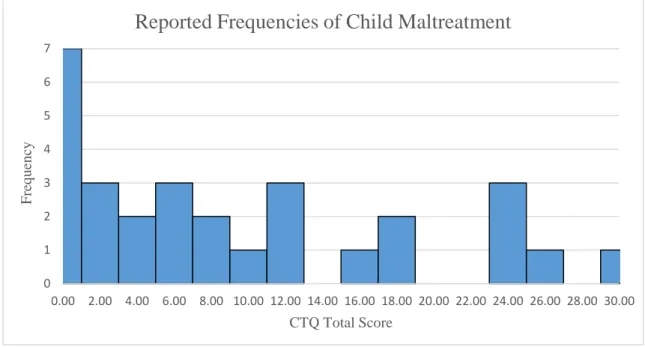
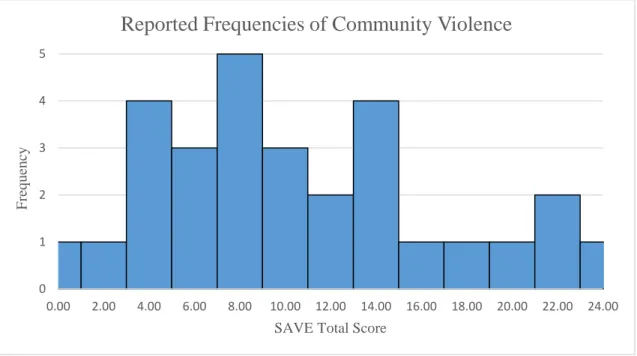
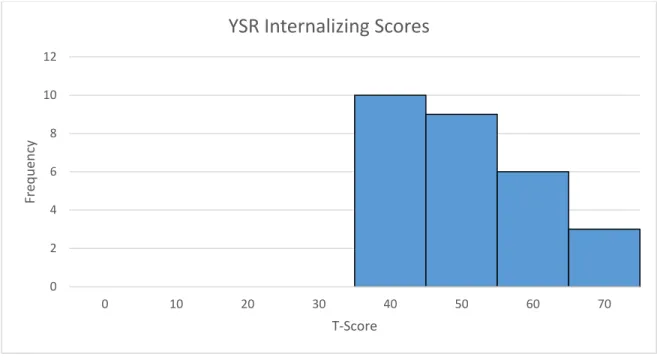
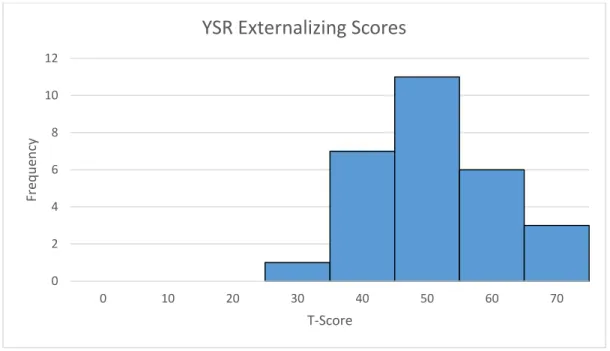
proportion of correct answers to neutral and rewarded stimuli. A total score for both the CTQ and SAVE were calculated by totaling the number of adverse experiences for each participant for both measures. The means and standard deviations of reported adversity are summarized in Table 1 in Appendix C as indicated by the CTQ, SAVE, and YSR. CTQ and SAVE score frequencies and distribution are indicated in Figures 1 and 2 in Appendix C. YSR internalizing and externalizing score frequencies and distributions can be seen in Figures 3 and 4 in Appendix C. It is important to note the differences in variance within the SAVE and CTQ. The SAVE appears to have a more normal distribution as a wider range of frequencies was obtained. This data set has more experiences of violence rather than maltreatment; community violence may provide a more accurate measure to predict accuracy.
Bivariate correlations were run between the CTQ and SAVE, the YSR externalizing and internalizing psychopathology, previously rewarded accuracy, neutral accuracy, and age. These can be seen in Table 2 in Appendix C and were used to provide more information in order to identify any uncontrolled for associations.
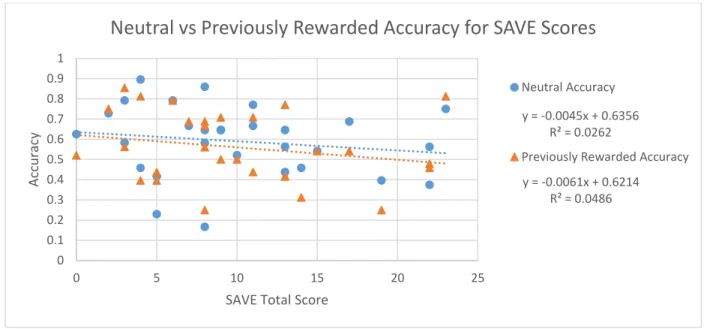
predicting reward accuracy, but it was not significant, β= -0.006, t(27)= 1.929, p= 0.065. This effect is shown in Figure 3 in Appendix C, such that with the increase of SAVE total score, reward accuracy decreases more so than neutral accuracy alone.
A linear regression was conducted to predict neutral accuracy using the CTQ total score while controlling for age. The CTQ total score did not significantly predict neutral accuracy, β= 0.000, t(27)= -0.071, p= 0.944. A linear regression was conducted to predict neutral accuracy using the SAVE total score while controlling for age. The SAVE total score did not significantly predict neutral accuracy, β= -0.009, t(27)=-1.671, p= 0.107.
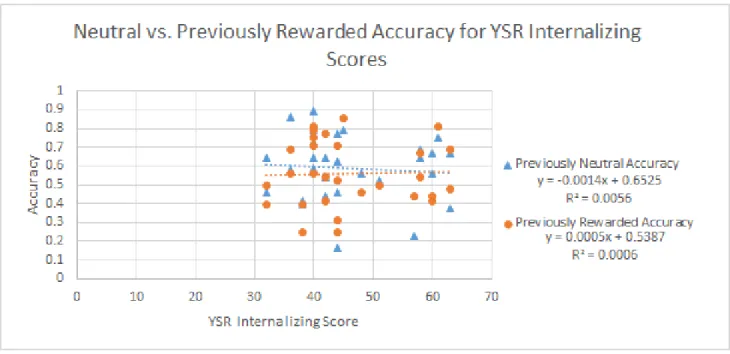
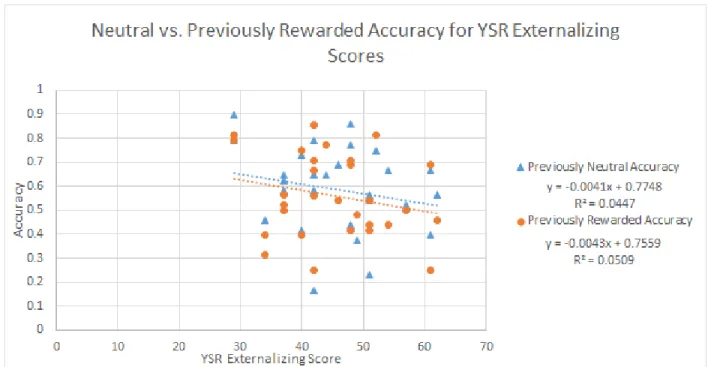
A linear regression was also conducted to account for internalizing and externalizing psychopathology. As seen in Figures 3 and 4, little psychopathology was reported by the population. Composite scores from the YSR were used to predict previously rewarded accuracy while controlling for age and neutral accuracy. The YSR externalizing score did not significantly predict rewarded accuracy, β= -0.003, t(27)= -1.367, p= 0.184. The YSR internalizing score also did not significantly predict rewarded accuracy, β= 0.001, t(27)= -0.567, p= 0.576. These effects are shown in Figures 7 and 8 in Appendix C.
Discussion
Based on these results, we can see that histories of abuse could potentially be related to decreased reward inhibition. In this particular study, community violence was the marginally related subset of abuse. This is important in adolescence as reward is significantly more potent during these developmental periods (Steinberg, 2008). This could be a cause of observed riskier behaviors compared to typical adolescents if future research assumes the trend to be significant. It is interesting that this research points to this effect being related to abuse alone and not the resulting psychopathology. We see a connection between abuse and cognitive control,
specifically inhibition, which is important when attempting to prevent risk taking in adolescence. The YSR showed that internalizing and externalizing psychopathologies did not predict rewarded or neutral accuracy. When considering the effect of abuse in adolescence and how to best manage the outcomes, we can look not only at behavior and psychopathologies, but at the cognitive results as well. These risk taking behaviors can arise from multiple sources, one of which possibly being maladaptive cognitive processes. The present research shows a different effect between accuracy and psychopathologies and accuracy and abuse so future research may look at difference sources of risk taking behavior and how to accommodate each. In other words, perhaps risk taking behaviors arising from psychopathology should be treated differently than risk taking behaviors arising from poor reward inhibition. However, it is important to note that a significant amount of psychopathology was not reported by this population.
The SAVE was specifically related to the rewarded inhibitory control. This measures specifically community violence while the CTQ measures maltreatment. Though we cannot draw conclusions as the CTQ did not elicit significant results, perhaps this can allude to future
of inhibition. This may include deprivation but also different forms of threat such a physical versus sexual abuse.
Neither the CTQ nor the SAVE were able to significantly predict motor inhibition. This could be due to the fact that abuse is not related to motor inhibition however more research should be done to support this hypothesis. This does marginally support the idea that motor and reward inhibition follow different biological trajectories (Somerville & Casey, 2010). Therefore, if in the future these hypotheses were supported, were could better attribute risky behaviors to altered reward sensitivity specifically rather than to a decrease in effective inhibition overall. Therefore, rather than modifying behaviors stemming from a decrease in overall cognitive control, modifications could be made with a basis in reward sensitivity.
In terms of the Youth Emotion study, these results give insight to the behavior of female adolescents typically and with the addition of threat, though these exposures are limited.
Inhibition is a subset of cognitive control (Aron, 2007), therefore, a decline in inhibition could signify changes in cognitive control. This could predict a decline in the ability to regulate one’s emotions. If supported with future research, a decline in inhibition could entail a number of maladaptive outcomes in addition to risky behaviors such as emotion regulation.
Future research could also look at larger populations with a greater variance of reported maltreatment and abuse. As a marginal effect was seen in a small population, it seems likely that larger populations would elicit a stronger effect. It may also be useful to observe frequencies of differing types of abuse as well as onset of maltreatment. Maltreatment beginning at younger age with a more frequent occurrence could lead to more potent effects.
It would be important to also look at males in this context. Perhaps this effect may only be seen in females. However, if interventions were to take place, it would be necessary to look at males and females alike into order to create the best outcome for the entire population.
References
Achenback, T. (1991). Manual for the Youth Self-Report and 1991 Profile. Burlington, VT: Department of Psychiatry, University of Vermont.
Andersen, S. L., Tomada, A., Vincow, E. S., Valente, E., Polcari, A., & Teicher, M. H. (2008). Preliminary Evidence for Sensitive Periods in the Effect of Childhood Sexual Abuse on Regional Brain Development. The Journal of Neuropsychiatry and Clinical
Neurosciences, 20(3), 292–301. https://doi.org/10.1176/jnp.2008.20.3.292
Aron, A. R. (2007). The neural basis of inhibition in cognitive control. The Neuroscientist: A Review Journal Bringing Neurobiology, Neurology and Psychiatry, 13(3), 214–228. https://doi.org/10.1177/1073858407299288
Bernstein, D. P., Fink, L., Handelsman, L., Foote, J., Lovejoy, M., Wenzel, K., … Ruggiero, J. (1994). Initial Reliability and Validity of a New Retrospective Measure of Child Abuse and Neglect. American Journal of Psychiatry, 151(8), 1132.
Brodsky, B. S., Oquendo, M., Ellis, S. P., Haas, G. L., Malone, K. M., & Mann, J. J. (2001). The Relationship of Childhood Abuse to Impulsivity and Suicidal Behavior in Adults With Major Depression. American Journal of Psychiatry, 158(11), 1871–1877.
https://doi.org/10.1176/appi.ajp.158.11.1871
Bunge, S. A., Dudukovic, N. M., Thomason, M. E., Vaidya, C. J., & Gabrieli, J. D. E. (2002). Immature frontal lobe contributions to cognitive control in children: evidence from fMRI. Neuron, 33(2), 301–311.
Guyer, A. E., Kaufman, J., Hodgdon, H. B., Masten, C. L., Jazbec, S., Pine, D. S., & Ernst, M. (2006). Behavioral alterations in reward system function: the role of childhood
maltreatment and psychopathology. Journal of the American Academy of Child and Adolescent Psychiatry, 45(9), 1059–1067.
https://doi.org/10.1097/01.chi.0000227882.50404.11
Haber, S. N., & Knutson, B. (2010). The Reward Circuit: Linking Primate Anatomy and Human Imaging. Neuropsychopharmacology, 35(1), 4–26. https://doi.org/10.1038/npp.2009.129 Hart, H., & Rubia, K. (2012). Neuroimaging of child abuse: a critical review. Frontiers in
Human Neuroscience, 6. https://doi.org/10.3389/fnhum.2012.00052
Hastings, T. L., & Kelley, M. L. (1997). Development and validation of the Screen for
Adolescent Violence Exposure (SAVE). Journal of Abnormal Child Psychology, 25(6), 511–520.
Ito, Y., Teicher, M. H., Glod, C. A., Harper, D., Magnus, E., & Gerlbard, H. (1993). Increased prevalence of electrophysiological abnormalities in children with psychological, physical, and sexual abuse. The Journal of Neuropsychiatry and Clinical Neurosciences, 5(4), 401–408. https://doi.org/10.1176/jnp.5.4.401
Knutson, B., Westdorp, A., Kaiser, E., & Hommer, D. (2000). FMRI Visualization of Brain Activity during a Monetary Incentive Delay Task. NeuroImage, 12(1), 20–27. https://doi.org/10.1006/nimg.2000.0593
Logan, G. D., Schachar, R. J., & Tannock, R. (1997). Impulsivity and Inhibitory Control.
Logan, G. D., Van Zandt, T., Verbruggen, F., & Wagenmakers, E.-J. (2014). On the ability to inhibit thought and action: General and special theories of an act of control.
Psychological Review, 121(1), 66–95. https://doi.org/10.1037/a0035230
McLaughlin, K. A., Sheridan, M. A., & Lambert, H. K. (2014). Childhood adversity and neural development: Deprivation and threat as distinct dimensions of early experience.
Neuroscience & Biobehavioral Reviews, 47, 578–591. https://doi.org/10.1016/j.neubiorev.2014.10.012
Pechtel P, & Pizzagalli DA. (2013). Disrupted reinforcement learning and maladaptive behavior in women with a history of childhood sexual abuse: A high-density event-related
potential study. JAMA Psychiatry, 70(5), 499–507. https://doi.org/10.1001/jamapsychiatry.2013.728
Pfeifer, J. H., & Allen, N. B. (2012). Arrested development? Reconsidering dual-systems models of brain function in adolescence and disorders. Trends in Cognitive Sciences, 16(6), 322– 329. https://doi.org/10.1016/j.tics.2012.04.011
Scher, C. D., Stein, M. B., Asmundson, G. J. G., McCreary, D. R., & Forde, D. R. (2001). The childhood trauma questionnaire in a community sample: Psychometric properties and normative data. Journal of Traumatic Stress, 14(4), 843–857.
https://doi.org/10.1023/A:1013058625719
Somerville, L. H., & Casey, B. J. (2010). Developmental neurobiology of cognitive control and motivational systems. Current Opinion in Neurobiology, 20(2), 236–241.
https://doi.org/10.1016/j.conb.2010.01.006
Teicher, M. H., Glod, C. A., Surrey, J., & Swett, C. (1993). Early childhood abuse and limbic system ratings in adult psychiatric outpatients. The Journal of Neuropsychiatry and Clinical Neurosciences, 5(3), 301–306.
US Department of Health and Human Services. (2016, January 25). Child Maltreatment 2014. Washington, DC: U.S. Government Printing Office.
Weiss, L. G., Keith, T. Z., Zhu, J., & Chen, H. (2013). WAIS-IV and Clinical Validation of the Four- and Five-factor Interpretative Approaches. Journal of Psychoeducational
Assessment, 0734282913478030. https://doi.org/10.1177/0734282913478030
Winter, W., & Sheridan, M. (2014a). Previous reward decreases errors of commission on later “No-Go” trials in children 4 to 12 years of age: evidence for a context monitoring account. Developmental Science. https://doi.org/10.1111/desc.12168
APPENDIX A CTQ
Instructions: These Questions ask about some of your experiences growing up as a child and a teenager. For each question, circle the number than best describes how you feel. Although some of these questions are of a personal nature, please try to answer as honestly as you can. Your answers will be kept confidential.
When I was growing up:
NeverTrue Rarely True Sometimes True Often True Very Often True
1.I didn’t have enough to eat. 1 2 3 4 5
2.I knew there was someone to take care of me and
protect me. 1 2 3 4 5
3.People in my family called me things like “stupid”,
“lazy”, or “ugly.” 1 2 3 4 5
4.My parents were too drunk or high to take care of
the family. 1 2 3 4 5
5.There was someone in my family who helped me
feel important or special. 1 2 3 4 5
6.I had to wear dirty clothes. 1 2 3 4 5
7.I felt loved. 1 2 3 4 5
8.I thought that my parents wished I had never been
born. 1 2 3 4 5
9.I got hit so hard by someone in my family that I had
10.There was nothing I wanted to change about my
family. 1 2 3 4 5
11.People in my family hit me so hard that it left me
with bruises or marks. 1 2 3 4 5
12.I was punished with a belt, a board, a cord, or
some other hard object. 1 2 3 4 5
13.People in my family looked out for each other. 1 2 3 4 5
14.People in my family said hurtful or insulting things
to me. 1 2 3 4 5
When I was growing up:
NeverTrue Rarely True Sometimes True Often True Very Often True
15.I believe that I was physically abused. 1 2 3 4 5
16. I had the perfect childhood.
17. I got hit or beaten so badly that it was noticed by
1 2 3 4 5
someone like a teacher, neighbor, or doctor. 1 2 3 4 5
18.I felt that someone in my family hated me. 1 2 3 4 5
19. People in my family felt close to each other.
20. Someone tried to touch me in a sexual way, or
1 2 3 4 5
tried to make me touch them.
21.Someone threatened to hurt me or tell lies about
1 2 3 4 5
me unless I did something sexual with them. 1 2 3 4 5
22. I had the best family in the world.
23. Someone tried to make me do sexual things or
1 2 3 4 5
24.Someone molested me. 1 2 3 4 5
25. I believe that I was emotionally abused.
26. There was someone to take me to the doctor if I
1 2 3 4 5
needed it. 1 2 3 4 5
27.I believe that I was sexually abused. 1 2 3 4 5
28.My family was a source of strength and support.
APPENDIX B SAVE
How often have the following things happened to you?
Never Hardly Ever
Some-times
A lot Almost Always
1. I have seen someone carry a gun 1 2 3 4 5
2. I have seen the police arrest someone
1 2 3 4 5
3. I have seen a kid hit a grownup 1 2 3 4 5
4. I have seen a grownup hit a kid 1 2 3 4 5
5. I have heard about someone getting shot 1 2 3 4 5
6. I have seen someone carry a knife 1 2 3 4 5
7. I have seen people scream at each other 1 2 3 4 5
8. I have seen someone get beat up 1 2 3 4 5
9. I have heard about someone getting killed 1 2 3 4 5
10. I have heard of someone getting attacked by a
knife 1 2 3 4 5
11. I have heard about someone getting beat up 1 2 3 4 5
12. I hear gunshots 1 2 3 4 5
13. I have ran for cover when people started shooting
1 2 3 4 5
14. I have heard of someone carrying a gun 1 2 3 4 5
15. Someone has pulled a gun on me
1 2 3 4 5
16. I have seen someone get killed 1 2 3 4 5
17. Someone has pulled a knife on me 1 2 3 4 5
18. I have had shots fired at me 1 2 3 4 5
19. I have seen someone get shot 1 2 3 4 5
20. I have been shot 1 2 3 4 5
21. I have seen someone pull a gun on someone
22. I have seen someone pull a knife on someone
else 1 2 3 4 5
23. I have been badly hurt 1 2 3 4 5
24. I have seen someone get attacked with a knife
1 2 3 4 5
25. I have been attacked with a knife 1 2 3 4 5
26. I have seen someone get badly hurt 1 2 3 4 5
Never Hardly
Ever
Some-times
A lot Almost Always
27. Grownups beat me up 1 2 3 4 5
28. Someone my age has threatened to beat me up
1 2 3 4 5
29. Grownups hit me 1 2 3 4 5
30. Grownups threaten to beat me up 1 2 3 4 5
31. Someone my age hits me 1 2 3 4 5
APPENDIX C
Table 1.
Means and Standard Deviations of Adversity Frequencies
Measure
CTQ SAVE YSR
Internalizing
Tables 2.
Measure and Behavioral Task Correlations
Measure CTQ SAVE YSR
Internalizing Score YSR Externalizing Score Previously Rewarded Accuracy Previously Neutral Accuracy Age
CTQ 1 0.487 0.170 0.626 0.091 0.111 0.461
SAVE 0.487 1 0.400 0.580 -0.221 -0.162 0.416
YSR
Internalizing Score
0.170 0.400 1 0.521 0.025 -0.075 0.141
YSR
Externalizing Score
0.626 0.580 0.521 1 -0.226 -0.211 0.362
Previously Rewarded Accuracy
0.091 -0.221 0.025 -0.226 1 0.828 0.383
Previously Neutral Accuracy
0.111 -0.162 -0.075 -0.211 0.828 1 0.267
Figure 1. The frequency of the number of child maltreatment instances as reported by each individual. There does not appear to be much maltreatment reported by the population.
0 1 2 3 4 5 6 7
0.00 2.00 4.00 6.00 8.00 10.00 12.00 14.00 16.00 18.00 20.00 22.00 24.00 26.00 28.00 30.00
Fre
q
u
en
cy
CTQ Total Score
Figure 2. The frequency of the number of instances of community violence as reported by each individual. There appears to be a normally distributed amount of violence reported by the population.
0 1 2 3 4 5
0.00 2.00 4.00 6.00 8.00 10.00 12.00 14.00 16.00 18.00 20.00 22.00 24.00
Fre
q
u
en
cy
SAVE Total Score
Figure 3. The frequency of the YSR internalizing scores. There does not appear to be much psychopathology reported bythe population
0 2 4 6 8 10 12
0 10 20 30 40 50 60 70
Fre
q
u
en
cy
T-Score
Figure 4. The frequency of the YSR externalizing scores. There does not appear to be much psychopathology reported by the population
0 2 4 6 8 10 12
0 10 20 30 40 50 60 70
Fre
q
u
en
cy
T-Score
Figure 5. This figure is a linear regression in which the SAVE total score predicts neutral and rewarded accuracy. The marginal effect can be seen as the previously rewarded accuracy decreases more than that of the neutral accuracy with the addition of instances of violence. The trend lines appear to diverge from each other with increased violence scores.
y = -0.0045x + 0.6356 R² = 0.0262
y = -0.0061x + 0.6214 R² = 0.0486
0 0.1 0.2 0.3 0.4 0.5 0.6 0.7 0.8 0.9 1
0 5 10 15 20 25
Acc
u
ra
cy
SAVE Total Score
Neutral vs Previously Rewarded Accuracy for SAVE Scores
Neutral Accuracy
Figure 6. This figure is a linear regression in which the CTQ total score predicts neutral and rewarded accuracy. No effect can be seen as the previously rewarded accuracy increases with the neutral accuracy with the addition of instances of maltreatment. The trend lines are closer in accuracy with the addition of maltreatment.
.
y = 0.0021x + 0.5707 R² = 0.0123
y = 0.0017x + 0.5438 R² = 0.0084
0 0.1 0.2 0.3 0.4 0.5 0.6 0.7 0.8 0.9 1
0 5 10 15 20 25 30 35
Acc
u
ra
cy
CTQ Total Score
Neutral vs Previously Rewarded Accuracy for CTQ Scores
Neutral Accuracy