HIV and Concurrent Genital Ulcer Disease Among a Malawian Cohort
By
Sima Pendharkar
A Master's Paper submitted to the faculty of the University of North Carolina at Chapel Hill
in partial fulfillment of the requirements for the degree of Master of Public Health in
the Public Health Leadership Program.
HIV and Concurrent Genital Ulcer Disease Among a Malawian Cohort
July 261h, 2007
By
Sima Pendharkar
A Master's Paper submitted to the faculty of the University of North Carolina at Chapel Hill
In partial fulfillment of the requirements for the degree of Master of Public Health in
the Public Health Leadership Program.
Chapel Hill 2007
Advisor
Abstract Background
The HIV epidemic continues to be a major problem in sub Saharan Africa. Nearly 70% of the world's HIV- 1 seropositive individuals live in sub Saharan Africa 1. Several factors are thought to be unique to the HIV epidemic in sub Saharan Africa. The prevalence is higher than other parts of the world, clinical co infections are seen frequently, women are infected at higher prevalence rates in comparison to men and the disease progresses more rapidly 2. Of the
different co infections that occur among HIV - 1 seropositive individuals, genital ulcer disease (GUD) has been shown to be associated with HIV- 1 infection 3. It is thought that GUD
increases infectivity, transmissibility and acquisition of HIV - 1. GUD is also of concern since its prevalence in sub Saharan Africa continues to rise. Understanding the relationship between HIV- 1 infection and GUD could help create policies which may more effectively contain and reduce the spread of the HIV- 1 pandemic.
Methods
A systematic review was performed to evaluate the current body ofliterature regarding GUD co infections among adult females in sub Saharan Africa with HIV- 1. It was
Results
Within the Malawian cohort that was studied, the incidence rate for GUD among men was 5.33 cases per 100,000 person years while the incidence rate among women was 20.12 cases per l 00,000 person years. The incidence rate of GUD among HIV - l seropositve and
seronegative individuals was 8.98 cases per 100,000 person years and 8.02 cases per l 00,000 person years, respectively. Among individuals who were HIV- l seropositive, 3,811 clinical diagnoses were made in the l3 month period while l ,983
Interpretation
Table of Contents
I. Abstract ... (pages 2- 3) a. Background
b. Methods c. Results d. Interpretation
II. Introduction ... (pages 6- 13) a. Epidemiology of the AIDS Epidemic in Africa (page 7)
b. Clinical Co infections Seen with HIV- I (page 7- 9) c. STis and the HIV Pandemic (page 9)
d. What is known about GUD and HIV- I Infection (page 10, 11)
e. What Has Been Shown About STis and HIV I Existing Studies (pages II -14)
i. Cross sectional studies ii. Cohort studies
f. Addendum (pages 14 - 18)
1. HIV Background Information (page 14, 15)
11. Genital Ulcer Disease in the HIV Seropositive Individuals (page 15)
111. GUD and the HIV Epidemic in Women (page 16)
iv. Behavioral Factors and HIV Infections in (page 17, 18)
III. Systematic Review of Literature ... (pages 19-23) a. Selection of Articles (page 19)
b. Appraisal of Literature (pages 19-23) 1. Internal Validity Ratings (page 20) 11. Selection of Study Population (page 20) m. Measurements (page 20, 21)
IV. Statistical Analysis/Confounding (page 21)
v. Results (page 21, 22) I. GUD
2. GUD in men vs women
3. GUD and Sociobehavioral Factors v1. Summary ofinternal Validity (page 23) vii. External Validity (page 23)
c. Table 1 -Final Appraisal of the Literature Table (pages 24- 31) d. Table 2- Final Quality Ratings Table (pages 31 - 32)
IV. Manuscript ... (pages 33- 48) a. Intro/BriefProblem Overview (page 33)
b. Methods (page 34- 36) 1. Subjects (page 34) 11. Data Collection
111. Dependent Variables (outcomes)
I. patient oriented outcomes 2. disease oriented outcomes
1. demographics c. Statistical Analysis (pages 36- 37) d. Results (pages 37- 40)
1. Table 4- Selected Characteristics for a Cohort of Adults in Thyolo
District, Malawi at Baseline (page 40)
11. Table 5- Prevalence of Syphilis (based on RPR seropositivity) by Sex Among All Visits Made Through Duration of Study (page 41)
111. Table 6- GUD Incidence Define by GUD, RPR Positivity or GUD and
Incident RPR Positivity by Sex (page 41)
IV. Table 7- Prevalence of Syphilis (determined by RPR serostatus) by HIV
Serostatus for Visits Made During 12 Month Study Period (page 43) v. Table 8- GUD Incidence by HIV Status (page 43)
VI. Table 9- Comparison of Diagnoses Among HIV Seropositive and
Seronegative Individuals (pages 45 - 48)
V. Discussion ... (pages 48- 60) a. GUD
b. GUD and New RPR Positives c. RPR Positive Tests only
d. Comparing Diagnoses of HIV Seropositive and HIV Seronegative Individuals e. Limitations
1. RPR test
ii. Study population
iii. Recall bias in interviewing
f. Concluding remarks g. Addendum
1. Future Studies 11. Treatment
111. Models of Success: 100% Condom Use Program in Thailand
IV. Psychosocial factors
Introduction
Among HIV - 1 seropositive individuals in sub Saharan Africa, co infection with other diseases is an important problem. Co infections among HIV - I seropositive individuals can increase acquisition ofHIV -1, increase transmission ofHIV -1 as well as speed up progression of AIDS 2• The AIDS epidemic in sub Saharan Africa continues to persist and the highest incidence and prevalence rates are seen among young women of reproductive age 4. In the last decade, there has also been an increase in the prevalence of genital ulcer disease (GUD) in sub Saharan Africa. Evidence has shown that there may be an association between GUD and HIV-1 infection 3 While several studies have looked at the association between GUD and HIV - 1 among men, less literature exists to examine this relationship among women. With the
increasing prevalence and incidence of HIV - 1 among women and the recent increase in GUD cases and HIV - 1 prevalence and incidence across sub Saharan Africa, more research should be done to understand the role ofGUD in the spread ofHIV- 1 among women in sub Saharan Africa. It is hypothesized that women oflower SES, education and age have higher prevalence proportions of both GUD and HIV.
a comparison of the diagnoses made for HIV- 1 seropositive and seronegative persons was made.
Epidemiology of the AIDS Epidemic in Africa
At the end of 2003, the global estimate of individuals living with HIV -1 was
approximately 40 million people. It was estimated that 5 million of these cases were new cases, and that there were over 3 million deaths globally due to HIV -1 . Furthermore, of the 40 million HIV -1 positive individuals, 26 million of these people, or 65%, were living in Sub-Saharan Africa 1• Over 30% of the people in Botswana, Lesotho, Swaziland and Zimbabwe were .infected with HIV-1 at the end of2001. Namibia and Zambia had prevalences exceeding 20% while Malawi and Kenya's HIV-1 prevalence exceeded 15%5•
In sub-Saharan Africa, females comprise 60% of those individuals infected with HIV-1. Furthermore, 75% of the females in sub-Saharan Africa who are infected are between the ages of 15 and 24. This pattern of increased incidence and prevalence ofHIV-1 among women has been described as the "feminization" of the HIV-1 pandemic 6•
Clinical Co infections Seen With HIV - I
disproportionately. Also notable is that HIV appears to be transmitted more easily, the clinical manifestations seen among individuals are different and they progress more rapidly 2•
Clinical co infections are of significant clinical importance because they increase HIV transmission, acquisition and they also increase the progression of disease among those with HIV/AIDS by increasing both infectiousness and susceptibility 7.
Some of the more common clinical co infections seen among HIV -I infected individuals in sub Saharan Africa include bacterial infections, helminthic infections and
protozoal infections. Bacterial infections associated with sexually transmitted infections (STis) include ulcerative organisms like Haemophilus ducreyi (chancroid), Treponema pallidum (syphilis) and HSV- 2. Nonulcerative bacterial STis include Neisseria gonorrhea and Chlamydia trachomatis. While non ulcerative STis are more prevalent than ulcerative STis, epidemiological evidence shows that ulcerative STis significantly increase the risk of acquiring HIV - I infection. Tuberculosis, caused by mycobacterium tuberculosis, is the most common opportunistic infection seen among HIV - I infected individuals worldwide 8 9. Helminthic infections are also common in developing countries. These infections are oftentimes acquired during early childhood and persist into old age. Epidemiological studies have shown that in sub Saharan Africa, there is similarity between the geographical distribution of helminthic infections and HIV. This pattern has raised questions as to causal relationships between hehninthic
infections and HIV. Protozoal infections often seen with HIV infection include Plasmodium falciparum malaria, Leishmaniasis and Trypanosomiasis. P. falciparum malaria, also associated with HIV - I infection, also has a high prevalence in sub Saharan Africa 2 10 .
infections that can drastically affect both the clinical course, transmission and acquisition ofHIV - 1. Numerous studies have shown that sexually transmitted infections (STis) increase the risk of HIV- I transmission and acquisition 7• Genital ulcer disease (GUD) is a manifestation of several different types ofSTis. GUD is most commonly defined as a lesion on the surface of the skin caused by superficial loss of tissue with inflammation 11• In sub Saharan Africa and throughout the world, the most common etiology of GUD is 2. Studies have shown that both HSV-2 infection and HIV- HSV-2 infection are on the rise in sub Saharan Africa. Accordingly, more cases of GUD have also been reported 12• For these reasons, it is important to understand associations between GUD and HIV - I infection.
STis and the HIV Pandemic
Of the clinical manifestations mentioned, STis are of special importance in considering the HIV pandemic in sub Saharan Africa. STis are "hyperendemic" in tropical Africa 13•
Additionally, they have the ability to increase both infectiousness of and susceptibility to HIV -I
7
• Epidemiological evidence has shown that there is a strong association between STis and
increased risk of acquiring HIV -I. In fact, it is the "epidemiological synergy" that has been used to explain the rapid spread of the HIV -1 pandemic within certain populations like sub Saharan Africa 14• The spread ofHIV-1 in sub Saharan Africa has primarily been through heterosexual contact 15• Thus, it has commonly been hypothesized that the rapid spread of HIV -I in sub Saharan Africa can be explained by the presence of sexually transmitted diseases, especially
What is known about GUD and HIV - 1 Infection
Genital ulcer disease (GUD) is most commonly defmed as a lesion on the surface of the skin caused by superficial loss of tissue with inflammation 11• The lesions can be caused by a
number of different etiologic agents. In developing countries, GUD is most cormnonly caused by Treponema pallidum, Haemophilus ducreyi, herpes simplex virus type 2 (HSV-2) and HSV-1
17
In the 1980's, epidemiologic studies conducted in South Africa showed that chancroid and syphilis were the major causes of GUD and represented 70- 90% of cases of GUD 11.
However, in the 1990's, the prevalence ofGUD due to Herpes began to increase in Africa and today HSV-2 is the leading cause of genital ulcer disease worldwide 18 19. In some areas of sub Saharan Africa with alarming numbers of HIV -1 infected individuals, HSV -2 prevalence rates among women are as high as 75% 12•
mucosal lesions decrease both physical and mechanical barriers which allows for easier access of HIV into the bloodstream 23•
In summary, genital ulcer disease results in areas of ulceration that have increased HIV-1 load making transmission to an HIV- HIV-1 seronegative individual more likely. Additionally, persons with genital ulcerations are at increased risk for acquiring HIV - 1 since areas of inflammation around the ulcer bed are targets for HIV - 1 and since ulceration causes a
breakdown of skin which normally serves as a protective barrier. Additionally, co infection of an STI and HIV- I may result in a more infectious HIV- 1 variant.
What Has Been Shown About STis and HIV- 1 -Existing Studies
Cross Sectional Studies
While studies in molecular biology have demonstrated that the presence of HSV- 2 can increase HIV- 1 replication, studies in humans have also shown clear associations between GUD and HIV- 1. The following studies showing associations between HIV- 1 and GUD are all cross sectional. Although cross sectional studies do contribute to the current body of knowledge, they are limited because they cannot show temporality.
In a cross sectional study of 418 lower socioeconomic strata prostitutes in Nairobi by Simonsen et a!., significant associations were found between HIV seropositivity and younger age, use of oral contraceptives (OR= 1.8, CI 95% = 1.1 - 2.9, p < 0.05) and GUD (OR= 3.2, p < 0.00001). One limitation of this study was that genital ulcers were only cultured for
prevalence ofGUD compared to HIV- I seronegative individuals (9 versus 3%, p < 0.001), were less likely to use condoms in their sexual encounters (9 versus 15%, p = 0.009) and reported more frequent use of antibiotics to prevent STDs (55 versus 42%, p = 0.001 ). Ulcers were cultured for H. ducreyi and HSV and dark field microscopy was performed 25.
Cohort Studies
Cohort studies are more useful than cross sectional studies because they allow subjects to be followed over a set period of time and temporal associations can be made. A prospective cohort study by Martinet al. followed 779 FSWs in and STD clinic in Mombasa Kenya
examining the associations between STD' s, HIV and OCPs. GUD was significantly associated with HIV -I infection 26.
A retrospective cohort study conducted by Gray et a!. in Rakai, Uganda, attempted to calculate the probability of HIV
-I transmission per coital act and how various factors influenced
infectivity. The study participants were HIV-1 discordant, monogamous couples ranging in age from 15 years old to 59 years old. Only couples who were monogamous, with only one person in the couple being HIV-1 positive were included in the study. 174 couples who met the inclusion criteria were enrolled to be in the study for the duration of four years. Results from this study showed that the probability ofHIV-1 transmission per sexual act was higher ifGUD was reported by the HIV-1 positive partner than if it was not. (0.0041 vs 0.0011; p=0.02). The higher probability of transmission among those with ulceration was seen at all viral loads. Additionally, the rate ratio of transmission was lower for 1 positive men compared topersons aged 35-59. Another important fmding was that the probability of transmission per act increased significantly with HIV viral load 27•
Some of the limitations of this study include the small sample size of 17 4 couples. The reported probability of the overall transmission per coital act in the Rakai population was 0.0011. This probability is comparable to the range of 0.0001-0.0020 seen in European, north American and Thai heterosexual couples. However, since the sample size was small and the cultural norm may not be having a monogamous relationship, this probability may not be generalized to the Ugandan population. Another limitation of this study may be the fact that reporting or recall bias could be present. The data gathered is based on interviews with individual patients. Since individuals may not have felt comfortable reporting the details of their sexual encounters or may have forgotten details about various sexual encounters, this could lead to reporting bias 27.
Another retrospective cohort study by Gray et a!. based on the Rakai cohort examined determinants ofHIV-lload. The cohort consisted of256 subjects ranging in age from 15 to 40 + with both incident and prevalent HIV infections. The retrospective cross sectional cohort study conducted in the Rakai District in Uganda by Gray eta!. showed that individuals with prevalent HIV infection and symptomatic GUD had higher viral loads than HIV prevalent individuals without GUD. This is an important finding because it has significant implications for
infections 21• This finding is important given that a previous study showed that HSV-2 was the
main etiology of GUD within the Rakai population 21.
Additionally, a stUdy by Obasi showed that HSV-2 infection starts at an earlier age in women. The same study also showed that HSV-2 infection was significantly associated with a history of genital ulcer disease 28 29.
A retrospective cohort study by Simonsen et aL looked at HIV infection among lower socioeconomic strata prostitutes in Nairobi, Kenya. The study included 418 prostitutes in Nairobi living in one lower socioeconomic residential section of Nairobi. The study found that there was a significant association between HIV seropositivity and GUD (OR= 3.32, p < 0.00001) and also younger age. Another interesting finding in this study was the association between women who were HIV seropositive and OCP 24.
Addendum for Masters Paper
HIV Background Information
Human Immunodeficiency Virus (HIV) is a retrovirus classified as a member of the genus Lentivirus and the family Retroviridae. Lentiviruses are single stranded, positive- sense, enveloped RNA viruses. They contain reverse transcriptase allowing the viral RNA genome to be converted to double-stranded DNA subsequent to entry within the target cell 30•
HIV causes acquired immunodeficiency syndrome (AIDS). AIDS is a debilitating health condition wherein the immune system begins to fail leading to potentially life threatening
fluid, pre- ejaculate or breast milk. The major modes of transmission whereby HIV is transmitted from one person to another include unprotected sexual intercourse, contaminated needles and transmission from an infected mother to her baby at birth or through breast milk 31.
There are two species ofHIV that can infect humans: HIV- 1 and HIV- 2. It is thought that HIV - I originated in southern Cameroon after being transmitted from wild chimpanzees to humans. HIV-2 on the other hand, is thought to have originated from they Sooty Mangabey, an Old World Monkey found in Guinea- Bissau, Gabon and Cameroon 32• HIV- 2 has decreased pathogenicity compared to HIV- I. It is transmitted less efficiently than HIV - I and it
establishes a slower disease progression due to lower viral loads. All of these factors may help explain the pandemic distribution of HIV - 1. In contrast, HIV - 2 has an endemic distribution and is mostly limited to West Africa. However, there has been growing concern for increasing prevalence of HIV - 2 in certain parts of Europe, most notably Portugal, as well as southwestern
. fl d" 32 regwns o n 1a .
Genital Ulcer Disease in the HIV Seropositive Individuals
The course of GUD in patients with HIV -I is different from that seen in patients without HIV-1. Studies have shown a delay in ulcer healing in persons who have HIV- I seropositivity
33
GUD and HIV Epidemic and Women
The trend in suh Saharan Africa of women showing higher prevalence and incidence rates of HIV - I infection has been termed the feminization of HIV 6. There are several
biological and psychosocial explanations to account for this growing pattern.
Additionally, several markers serve as reliable predictors of female vulnerability to HN
-I infection. Some of these factors include poverty, cultural norms, violence and certain legal issues and access to information and services and biological factors.
It is important to understand the biological mechanisms that make women more susceptible to HIV -I infection. Susceptibility to HIV -1 varies throughout the course of a
woman's reproductive life. Adolescent girls seem to be the population that is most vulnerable to HIV-1. Biologically, younger women have immature physiologic properties such as cervical ectopy and exposed columnar cells provide easier targets for HIV-1 6. It is thought that higher
levels of progesterone which are found during pregnancy, cause women to be more susceptible to HIV -1 infection. Equally important is the fact that 20- 45% of infants born to HIV - 1 positive mothers in the African setting also become infected with HIV - I. Pregnant women who are HIV- 1 seropositive can pass the virus to their children during the intrauterine, intrapartum or breastfeeding periods 35• Additionally, it has been shown that it is easier for HIV to be transmitted to women in comparison to men.
Table I 36•
Estimated per act risk for acquisition ofHIV -1 by exposure rout.,Jlll ·
Exposure Route
Estimated infections.per I 0,000 exposures to an
Blood Transfusion
3olill
6.5=
I Insert:ive fellatio •
Behavioral Factors and HIV Infection in Women
In addition to biological factors that increase HIV -1 infection among women, several behavioral mechanisms have also been proposed. It is thought that the use of hormonal
study by Sagar et a!. showed that use of hormonal contraceptives by women could accelerate the progression ofHIV but the exact mechanism of this interaction is not known 37• Additionally, younger women are more likely to engage in high risk sexual behaviors. Some of these risky behaviors include unprotected sex, injection drug use, commercial sex as well as limited empowerment 6.
While biological and behavioral mechanisms ofHIV infection and transmission are important, it is also important to consider psychosocial phenomenon. In Sub Saharan Africa and across the globe, these factors have a profound effect on the feminization of the HIV-1
pandemic. Because cultural norms and attitudes control how individuals behave, these factors often dictate behavior in a sense. In fact, studies have shown a strong link between HIV -I infection among women and cultural norms that influence power in interpersonal relationships 38.
Systematic Review of the Literature
A systematic review of the literature was conducted to show that among individuals in sub-Saharan Africa with low SES, low education levels, women of a younger age group are more likely than men to have genital ulcer disease and to be HIV seropositive.
Selection of Articles
In order to identifY the relevant literature for this paper, the MEDLINE database was searched in March and April2007. The following MeSH terms were used in the search: "Genital Diseases, Female/epidemiology"[MeSHJ and hiv and subsaharan Africa. Further more, the search was limited to individuals ranging in age from 13 to 80+ years old and to studies in English. Linda Collins, the UNC Health Sciences librarian, was also consulted to ensure that the search terms were broad enough. 432 studies resulted from the initial search.
Abstracts of each of the articles from the initial search were reviewed. The articles selected from the initial pool of studies were selected based on selection criteria. The selection criteria included studies that were looking at genital ulcer disease and HIV - 1 in both men and women or women only in sub Saharan Africa. However, studies focusing only on men with no women were excluded. The studies that only focused on women involved female sex workers. An attempt was made to search for studies that involved male sex workers so that comparisons could be drawn between the two populations. However, no studies involving male sex workers were identified. Case reports and editorials were excluded. Additional studies were included based on the references from each of the studies selected.
Appraisal of the Literature: Genital Ulcer Disease Among Women in sub Saharan Africa
Internal Validity Ratings
Table 1 presents ratings for the various articles which have been classified based on the study design. Most of the studies pertaining to this topic are cross sectional although there are some cohort studies and some randomized control trials .
•••••••••••••••••••••••••••••••••••••••••••••••••••••••••••••••••••••••••••••••
Selection of Study Population
The target population of this study was women ranging in age from 13 - 80+ years old. The only studies that focused exclusively on women looked at female sex workers and were included in the systematic review. Efforts were made to identify studies focusing on male sex workers in order to compare the populations of female and male sex workers. However, no studies involving male sex workers were identified. Since comparisons were being drawn between men and women, studies including both men and women were also included. However, those studied that only focused on males were excluded from the study.
Measurements
Various studies utilized different measurements in their studies. Whether or not the paper made specific mention oflab test and interview questions that were used in the study was noted.
Most of the studies that were given a good rating included specific information on tests used to determine HIV serostatus and presence of HSV - 2, Treponema pallidum, Haemphilus ducreyi and Lymphogranulum venerum. In addition, the study by Simonsen et al. included a physical examination that included a vaginal speculum exam and a bimanual exam. The study also included a thorough sexual history.
multiplex PCR was usedc. Additionally, the studies thoroughly described specific interview questions that were used in the study ..
Other studies were lacking in their description oflab tests conducted. The study by Mwansasu et al. described techniques used to detect HSV at great lengths. However, it was not mentioned what or if tests were conducted to test for HIV serostatus. Additionally, several patients were thought to have ulceration due to syphilis however no tests were done to confirm this diagnosis. This was a major flaw of this particular study. In a study by Morgan et al, no testing was done to determine the etiology ofGUD. Additionally, the diagnosis ofGUD was made based on asking the patient whether they thought that they had GUD.
Statistical Analysis and Confounding
The quality of analysis of each study was based on whether appropriate statistical methods whether or not confounding was adjusted for.
Results
Association Between GUD and HIV
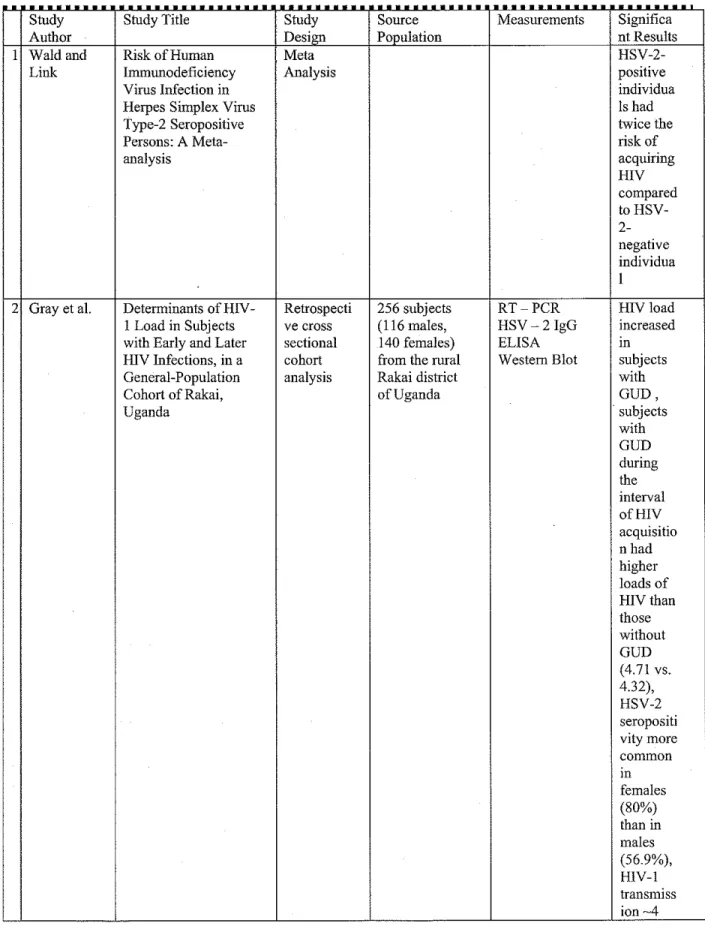
Several studies in the systematic review showed that there was some association between genital ulcer disease and HIV- 1 infection. The meta analysis by Wald and Link showed a 2.2 RR (95% CI, 1.4- 3.2) ofHIV acquisition in persons with HSV- 2. The Gray study showed that the probability of transmission of HIV- 1 was greater among those with GUD (0.0041) compared to those without GUD (0.00 11, p = 0.02). The Mwansasu study showed that there was
an association between HIV- 1 and GUD however the exact relationship was unclear. The Kamya study showed that there was an association between HIV - 1 serostatus and the particular size of an ulcer. Persons infected with HIV- 1 were found to have larger ulcers. Studies
done earlier in the 1980's usually found H. ducreyi or Treponema pallidum to the be most common cause ofGUD. However, in the late 1990's the more common cause ofGUD was found to be HSV- 2.
Comparison Between Males and Females
While most studies were not able to show significant differences among men and women, the Ahmed study was able to do this. The study showed that women with HSV- 2 were more likely to be HIV- infected than men (60% versus 39%, p = 0.006). No studies that looked at only female populations were available unless the population was female sex workers. For men, the opposite was true. There were studies involving exclusively men from the general
population but no studies only looking at male sex workers were available. The Martin and Nzila studies, both involving female sex workers, showed associations between GUD and HIV-1 infection. Both studies also showed association between HIV seropositivity and use of oral contraceptive pills. The Martin study showed as association between use of high dose oral contraceptive pills and HIV- 1 acquisition (HR, 2.6; CI, 0.8- 8.5).
Association Between GUD and HIV and other Sociobehavioral Factors
In studies involving female subjects, several interesting factors arose. The study by Todd et a!. showed that HIV status in women was associated with never having given birth (OR 4.11 95% CI 1.47- 11.5) and women who are married to HIV- positive spouses (OR= 34, 95% CI 5.77- 200). Another trend seen among women and described by Martinet a!. was the
Additionally, there was an independent association shown between HIV seropositivity and persons ranging in age from 26- 30, regnlar use of oral medications, presence of genital ulcer, antibody to H. ducreyi and cytological evidence ofHPV on PAP smear.
Summary of Internal Validity
Articles tbat were studied in this particular systematic review was fair to poor. In most of the studies, participants were selected from either STD clinics or from a hospital setting. This factor affected the internal validity of tbe study by creating selection bias. That is, the study population characteristics would be drastically different from those of the general population. Additionally, studies that utilized information from patient interviews were subject to recall bias. All patients were not likely to be able to remember their exact sexual histories and furthermore, some patients may not have been comfortable revealing this information. An additional flaw in the cross sectional studies is a lack of ability to control for confounding factors such as sexual behavior, age and other factors. Another issue among cross section studies is being able to determine causality. Whether HIV infection causes GUD or whether GUD causes HIV infection is not able to be closely examined within a cross sectional study.
External Validity of Findings from the Systematic Review: Generalizability to Malawi
Population
The external validity of tbe findings from the systematic review as they could be
generalized to the people of sub Saharan Africa are fair to poor. Most of the subjects from these studies were recruited from either STD clinics, hospitals or were part of special populations including female sex workers. Because the prevalence and incidence rates of STis are most likely much higher among all of the above mentioned populations, it would not be accurate to generalize these findings to the general population .
Table 2. Final Appraisal of the Literature Table •
Study Study Title Study Source Measurements Significa
Author Design Population nt Results
I Wald and Risk of Human Meta
HSV-2-Link lnununodeficiency Analysis positive
Virus Infection in individua
Herpes Simplex Virus Is had
Type-2 Seropositive twice the
Persons: A Meta- risk of
analysis acquiring
HIV compared to HSV- 2-negative individua I
2 Gray et al. Determinants of HIV- Retrospecti 256 subjects RT-PCR HIV load I Load in Subjects ve cross (116 males, HSV -2lgG increased
with Early and Later sectional 140 females) ELISA m
HIV Infections, in a cohort from the rural Western Blot subjects General-Population analysis Rakai district with
Cohort ofRakai, of Uganda GUD,
Uganda subjects
with GUD during the interval ofHIV acquisitio nhad higher loads of H!Vthan those without GUD (4.71 vs. 4.32), HSV-2 seropositi vity more common in females (80%)
than in
males (56.9%), HIV-1 transmiss
times higher for subjects with genital ulcers compared to those without 3 Gray Probability ofHIV -I Retrospecti 174 HIV- RT-PCR Transmis
transmission per coital ve cohort discordant ELISA SIOn act in monogamous, study monogamous Western Blot probabilit heterosexual, HIV -I- couples from Patient y discordant couples in Rakai, Uganda Interview increased
Rakai, uganda (174 men, 174 from
women) .0001 per
act at viral loads< 1700 copies/m L to 0.0023 per act at 38500 copies/m Lor more (p ~
0.002) and were 0.0041 with genital ulceratio n versus 0.0011 without (p ~ 0.02) 4 Mwansasu Detection ofHSV-2 Cross 69 people (50 HSV-2 42%HIV in genital ulcers from sectional males, 19 specific IgG E positive, STD patients in Dar females) Unclear how 52.5% es Salaam, Tanzania presenting with HIV was women
genital ulcers tested and 38%
selected from of men
an STD clinic Associati
in Dares on
Salaam between
HIV and HSV-2 exists but
IS
in Uganda Mugalo RPR, VDRL genitalis
Hospital (most
(Uganda) STD common
clinic between STD?
December diagnosis
1990 and )
January 1991 HIV
(73 men, 27 infection
women), 57% maybe
HIV positive associate
d with larger lesions in patients with herpes Herpetic ulcers not associate dwith seropositi vity
8 Simonsen HIV infection among Retrospecti 418 female RPR, TPHA 62%of
lower socioeconomic ve cohort prostitutes in ELISA, the
strata prostitutes in study Nairobi living Western Blot women
Nairobi in one lower were HIV
socioeconomic seropositi
residential ve
section of Significa
Nairobi nt
associatio ns found between HIV seropositi vity and Tanzania n orgigin (OR~ 2.12, Cl 95%~ 1.18-3.81, p <
0.03), younger age, shorter duration of prostituti on, reduced fecundity
, use of
1.8, CI 95%~ 1.1-2.9, p< 0.05), GUD (OR~ 3.32, p < 0.00001) 1 Ahmed Etiology of Genital Cross Patients at two PCR of genital HIV
Ulcer Disease and sectional STD clinics in ulcer specimen infection
Association With Tanzania ( 48 Rapid latex rates
Human women and 54 agglutination among
Immunodeficiency men) test for HIV, GUD
Virus Infection in ELISA patients
Two Tanzanian Cities were
46% and 52% in Dares Salaam and Mbeya; among the non-GUD patients the rates were 35% and 45%, HIV infection rate in womenm Dares Salaam higher than that in men, women with HSV-2 in Dares Salaam were significan tly more likely to be HIV-infected than men (60% versus 39%; p<,
and 54 men) diagnois of four withGUD in genital ulcers times
Tanzania and no higher
mention of among what participa techniques nts usedforHIV infected testing withHN
compared
to those who are HIV negative
I Todd Risk Factors Case 92 cases, 903 ELISA HIV Influencing HIV control controls Questionnaire status in Infection Incidence in nested selected from Data women a Rural African within an 12 rural abstraction associate Population: A Nested RCTof communities in from chart d with Case-Control Study treatment of Mwanza, review never
syndromic Tanzania having
sexually given
·transmitted birth (OR
infections 4.11 95%
incidence ofHIV infection and reported syndromi c STI, HSV-2 was the most important RFfor HIV infection showing a65% PAPin men and a 59% PAPin women. I Serwadda Human Nested Case 132 female and HIVEIA GUDis Immunodeficiency Control 116 male Western Blot increased
Virus Acquisition Study subjects HerpSelect 2 during
Associated with matched with ELISA IgG HIV Genital Ulcer Disease 264 female and seroconv
and Herpes Simplex 232 male ersion
Virus Type 2 subjects from and after
Infection: A Nested rural Rakai HIV
Case-Control Study in District in acquisitio
Rakai, Uganda southwestern nand this
Uganda IS seen
mainly among HSV-2 positive individua Is.
I Nzila HIV and other Cross 1233 Darkfield H.
sexually transmitted sectional prostitutes microscopy ducreyi
diseases among study from different performed for was the
female prostitutes in geographic GUD,no most
Kinshasa areas of mention of common
Kinshasa HSV test cause of
EIA for HIV GUD ELISA (38% of Western Blot cases)
HIV positive women (9 versus 3%,p< 0.001), independ ent associatio n with HIV seroposit
vity: 26 to 30 years old, regular use of oral medicatio n, presence of genital ulcer, antibody to H. ducreyi on cytologic evidence ofHPV on PAP smear
I Martin Hormonal Prospective 779 female sex Interview Trend for
Contraception, cohort study workers in Physical exam associatio
Sexually Transmitted Mombasa, HIV -I ELISA n Diseases, and Risk of Kenya Western Blot between
Heterosexual attending STD KOH use of
Transmission of clinic microscopy
high-Human Gram's stain dose oral
Immunodeficiency EIA contracep
Virus Type 1 tive pills
andHIV
- I acquisitio
n(HR, 2.6; CI, 0.8 -8.5).
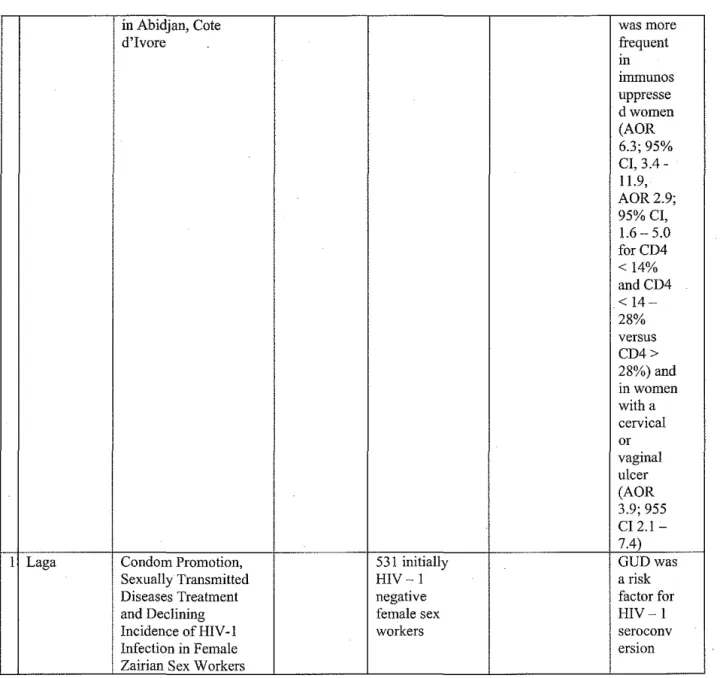
I Ghys The associations Prospective 1201 female EIA Among between cohort study sex workers in RPR 609 HIV cervicovaginal HIV Abidijan, Cote TPHA - I
shedding, sexually d'lvoire from a Western Blot seropositi
transmitted diseases confidential ELISA ve
and clinic for women,
in Abidjan, Cote was more
d'Ivore frequent
Ill imrnunos uppresse dwomen (AOR 6.3; 95% CI, 3.4-11.9, AOR2.9; 95% CI, 1.6-5.0 forCD4 < 14% andCD4 < 14-28% versus CD4> 28%) and mwomen with a cervical or vaginal ulcer (AOR 3.9; 955 CI 2.1-7.4)
I Lag a Condom Promotion, 531 initially GUDwas
Sexually Transmitted HIV -I a risk
Diseases Treatment negative factor for
and Declining female sex HIV -I
Incidence of HIV -I workers seroconv
Infection in Female erswn
Zairian Sex Workers
Table 3. Final Quality Ratings Table. Each study was rated 0-3 for each category, with O=poor, I =fair, 2=good, 3=excellent
Kamya Ahmed Morgan
Nzila
Simonse n
Serwadd a
3 3 3 3
2
3 2
2 2
1 2
1 2
0 0
0 2 3 13
2 1 1 11
0 1 1 8
0 1 1 8
Manuscript Section
Introduction: The HIV I AIDS Epidemic and Genital Ulcer Disease in Malawi
The HIV I AIDS pandemic poses a major health concern throughout the world and particularly in sub Saharan Africa where both prevalence and incidence are extremely high. In
the southeastern African nation of Malawi, HIV I AIDS is a leading cause of death. In 2003 it was estimated that 87,000 of the nation's 12 million people died from AIDS and that there were
110,000 new infections 39 40.
Studies have shown that those infections which are concurrent with HIV - 1 can increase both the transmission and acquisition ofHIV- 1 7 It has also been suggested that infections concurrent with HIV- 1 may further compromise and individual's immune system due to chronic immunosuppression. Furthermore, immunosuppression can lead to higher viral loads levels. Immunosuppression combined with increased HIV- !loads accelerate an individual's progression towards AIDS and the accompanying clinical manifestations 41. Of the various co infections that occur among HIV - 1 seropositive persons, GUD is of particular concern. The incidence and prevalence of GUD in sub Saharan Africa and in Malawi are high 11 42 .
F urt ermore, stu 1es ave s own assoc1ahons etween h d. h h · · b GUD an d HIV l · , - m1ect10n · 21 2s 21 43-47 · ' .
Understanding the patterns and etiology of GUD could be instrumental in helping to control the HIV I AIDS epidemic in sub Saharan Africa and throughout the world. With a better knowledge of the exact association between GUD and HIV- I, more effective treatment protocols can be created to reduce prevalence and incidence of both conditions.
Additionally, diagnoses among HIV- 1 seropositive and seronegative individuals are compared.
Methods
Study Setting and Population
A secondary data analysis was conducted using an existing data set that was compiled in a prospective cohort study conducted during 2000-2001. Potential participants (N = 2,383)
were recruited from a tea estate in Thyolo District, Malawi through an HIV screening process whereby HIV- 1 serostatus was determined by a series of rapid diagnostic assays. After the initial screening, 656 (27%) were individuals were found to be HIV - 1 seropositive, 171 0 (72%) were HIV- 1 seronegative and 17 (1 %) were missing information on HIV- 1 serostatus.
Subjects who had clinical AIDS - defining features, a history of tuberculosis or who could not commit to remaining in the area for the following 9 months were excluded from the study. Additionally, adults who were determined to be febrile at baseline (sublingual temperature> 3 7.4 C) were either excluded or their emollment was postponed until they were asymptomatic. 569 (24%) of those persons initially recruited to be in the study consented to participate in the study and agreed to remain in the study area for 9 months 10• 48.
Data Collection
Outcome Variable Measurements
demographic information was collected and CD4 counts were measured for all participants. At all subsequent visits, medical history and physical examinations were conducted; blood samples were taken to measure CBCs, detect malaria parasites and to determine HIV- l RNA
concentrations. Plasma HIV- 1 RNA levels were measured by polymerase chain reaction at the Malawi- Liverpool Wellcome Laboratories.
Measurement of Genital Ulcer Disease and Other Clinical Outcomes (Patient Oriented
Outcomes)
The outcomes of interest in this study were GUD and other clinical diagnoses among individuals in the cohort as detected over a 12 month period. GUD was broadly defined to include the following diagnoses : Genital Ulcer Disease (GUD), Sexually Transmitted Infection (STI), GUD follow up visits, Chancroid, Herpes Genitalia, Herpes Simplex, Pubic Sores, Penal Sores, Syndromic Syphilis defined by the classical clinical symptoms commonly associated with primary, secondary and tertiary forms of syphilis, Syphilis, Syphilitic Sores, Syphilis and Anal Sores. For the purposes of this study, subjects with positive RPR test results alone were considered to have syphilis but were not placed in the GUD category. For subjects with a negative RPR at baseline but subsequent positive RPR test during the 12 month study period, a variable called new RPR was created. Eventually, the GUD variable and the new RPR variable were combined.
All clinical diagnoses made during the 12 month study period were recorded and categorized according to diagnoses made among persons who were HIV - 1 seropositive and those who were HIV- 1 seronegative.
Patient names and identifier numbers were stored in the database. For the purposes of this study, data was de identified in order to protect the privacy of the patients involved in the study. However, at baseline visits, information including the patient's gender, age, marital status, HIV serostatus and whether or not condoms were given to the subject were all recorded and stored in a database.
Statistical Analysis
For the purposes of this study, identifiers such as names and medical record numbers were removed from the data set in order to protect the patients' privacy. Analysis of data was conducted using Stata (version 9; Stata Corporation). GUD was broadly defined to include the following diagnoses : Genital Ulcer Disease (GUD), Sexually Transmitted Infection (STI), GUD follow up visits, Chancroid, Herpes Genitalia, Herpes Simplex, Pubic Sores, Penal Sores,
Syndromic Syphilis defined by the classical clinical symptoms commonly associated with primary, secondary and tertiary forms of syphilis, Syphilis, Syphilitic Sores, Syphilis and Anal Sores.
Three separate outcome variables were created which included 1.) GUD 2.) incident syphilis based on RPR- positivity and 3) GUD and incident syphilis based on RPR- positivity. In Malawi, the diagnosis of GUD and the different diagnoses falling under the diagnosis of GUD is made based on clinical symptoms. RPR tests are based on lab results and give a presumptive diagnosis of syphilis. In this cohort, the RPR test was not conducted on any individuals with the diagnosis of GUD. Thus, the combined variable of GUD and new RPR cases was simply a sum of incident GUD cases and incident RPR positive test results.
differences in GUD prevalence by gender and HIV status using Chi-square tests. Differences were considered statistically significant if the p -value associated with the Chi - square test was less than 0.05. Kaplan Meier survival time models were used to calculate incidence rates
separately for: the three definitions of GUD: GUD, RPR- positivity and for GUD including new
RPR positives.
Results
Table 4. Selected Characteristics for a Cohort of Adults in Thyolo District, Malawi (N= 571) at Baseline
The characteristics of a cohort of 571 Malawian individuals were examined at baseline (Table 1). In this study sample there were 311 (45.53%) males and 260 (54.47%) females. Most individuals were between 18-34 years old. Nearly one third of the study population (n = 180)
was 18- 24 years old and 36.65% of individuals (n = 21 0) were in the 25 - 34 year old age
range. 68 or 11.87% individuals were in the 45+ age range. Most individuals in this cohort were married (77.41 %) while only 9.28% of the individuals were single and 8.06% were divorced and 20 or 3.50% individuals were widowed. Among the 569 individuals tested for HIV- 1 at
baseline, 64.50% were HIV- 1 seropositive while 35.50% were seronegative. HIV- 1· serostatus results were either missing or not reported for two individuals.
Table 5. Prevalence of Syphilis (based on RPR seropositivity) by Sex Among All Visits Made Through Duration of Study
positive resulting in a prevalence of 52.06% for syphilis (based on RPR positivity). There were 2, 717 ( 4 7.94%) negative RPR test results.
RPR status at baseline was also examined by gender. There were more males with syphilis (bases on positive RPR test) compared to females (p = 0.0001). 2,982 (89.68%) male
visits were found to have syphilis at baseline (based on a positive RPR test) while 23 (0.96%) female visits were found to have syphilis (based on positive RPR test result). There were more female visits without syphilis (based on negative RPR test) compared to males visits without syphilis (p < 0.0001). 2,367 (99.04%) female visits did not have syphilis compared to 337 (10.32%) of male visits who did not have syphilis.
RPR status at baseline was also examined by HIV serostatus. Among those with HIV seropositivity, there were more visits with cases of syphilis (RPR positive test) compared to visits made by HIV seronegative subjects. Of those who were HIV seropositive, 2,919 (85.90%) visits were made where the subject had syphilis (based on RPR positive test). In contrast, there were 479 (14.10) visits were made wherein HIV seronegative individuals had syphilis (based on positive RPR test). Among HIV seronegative individuals, there were more visits with no cases of syphilis. Among HIV seronegative individuals, 32 (1.42%) visits were made where subjects were found to have syphilis. Among HIV seronegative individuals 2,225 (98.58%) visits were made where the subjects were not found to have syphilis.
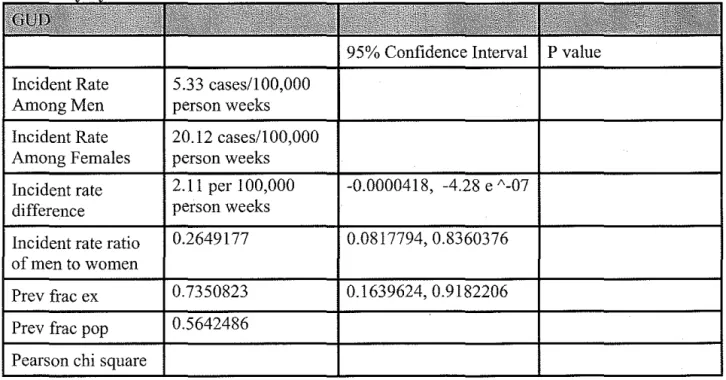
Table 6. GUD Incidence Defined by GUD, RPR Positivity or GUD and Incident RPR Positivity by Sex
incidence rates for GUD and new RPR positive individuals were much higher among men. Males had an incidence rate of 133.25 cases per 100,000 person weeks while females had an incidence rate of 20.12 cases per 100,000 person weeks. The incidence rate for RPR positivity was also higher among males compared to females. Males had an incidence rate of 127.92 cases per 100,000 person weeks. No incident cases ofRPR positivity were observed among women during the study period.
Table 7. Prevalence of Syphilis (determined by RPR Serostatus) by HIV Serostatusfor Visits Made During 12 Month Study Period
Incidence rates for GUD, GUD and new RPR positive individuals and for RPR were calculated by HIV serostatus. GUD incidence rate among both HIV seropositve and
seronegative subjects were similar. The incidence rate among HIV seropositive subjects was 8.98 cases per 100,000 weeks and 8.02 cases per 100,000 weeks for HIV seronegative individuals. Incidence rates for GUD and new RPR positive were much higher in HIV seropositive individuals (p = 0.0001). The HIV seropositive group had an incidence rate of
134.67 cases per 100,000 person weeks while HIV seronegative persons had an incidence rate of 8.01 cases per 100,000 person week. For RPR positivity alone, the incidence rate among HIV seropositive individuals was much higher at 125.69 cases per 100,000 person weeks while no cases were found among HIV seronegative individuals.
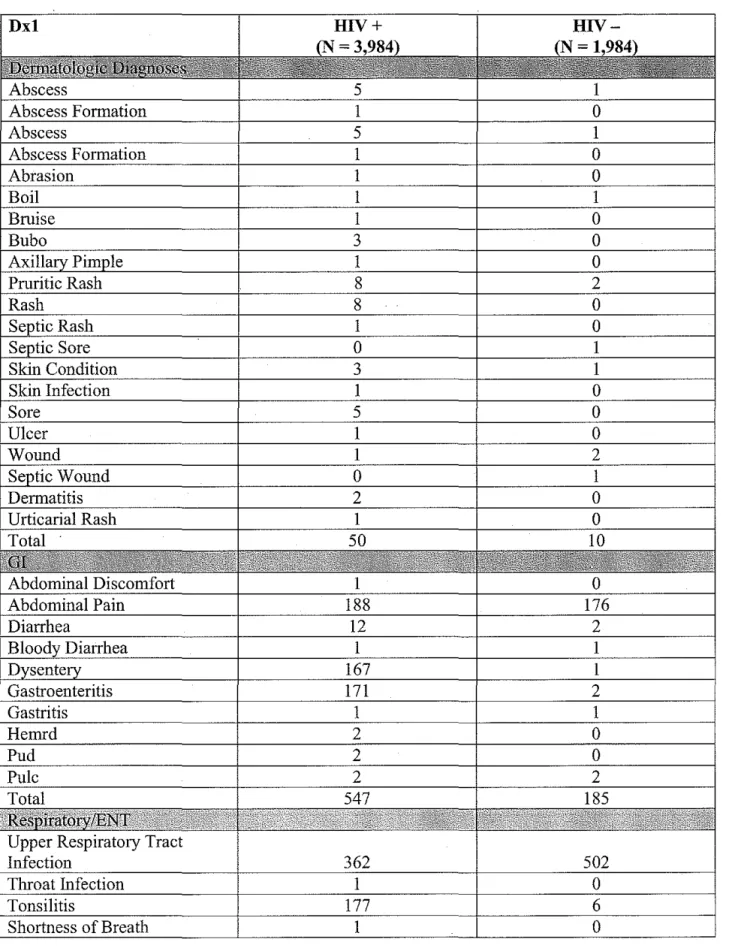
Table 9. Comparison of Diagnoses Among HIV Seropositive and Seronegative Individuals
seropositive and seronegative individuals was musculoskeletal pain. Other diagnoses that were frequent among those with HIV seropositivity included upper respiratory tract infection, back ache and body pain. Diagnoses that were frequently reported among HIV seronegative patients
included fever of unknown origin, body pains and malaria.
Table 4. Selected Characteristics for a Cohort of Adults in Thyolo District, Malawi (N=571) at Baseline
Characteristic N (%)
Gender
Male 311 45.53
Female 260 54.47
Age (Years)
18-24 180 31.41
25-34 210 36.65
35-44 115 20.07
45 + 68 11.87
Marital status at enrollment
Married 442 77.41
Single 53 9.28
Separated 10 1.75
Divorced 46 8.06
Widowed 20 3.50
HIV Serostatus
Positive 367 64.27
Negative 202 35.38
Missing data 2 0.35
Condoms Given
Yes 64 11.21
No 461 80.74
Table 5. Prevalence of Syphilis (based on RPR seropositivity) by Sex Among All Visits
~ade of
Positive Negative Total
Visits Made by Males with Positive RPR Visits Made by Males with Negative RPR Visits Made by
Females with Positive RPR
2,951 52.06 2,717 47.94 5,668 100
2,982 89.68
337 10.32
23 0.96
Visits Made by
Females with Negative RPR
2,367 99.04
Table 6. GUD Incidence Defined by GUD, RPR Positivity or GUD and Incident RPR Sex
95% Confidence Interval
P
value Iocident Rate 5.33 cases/100,000Among Men person weeks Incident Rate 20.12 cases/1 00,000 Among Females person weeks
Incident rate 2.11 per I 00,000 -0.0000418, -4.28 e "-07 difference person weeks
Incident rate ratio 0.2649177 0.0817794,0.8360376 of men to women
Prev frac ex 0.7350823 0.1639624,0.9182206 Prev frac pop 0.5642486
test for Difference by Gender Incident Rate Among Men Incident Rate Among Females Incident rate difference
Incident rate ratio of men to women Prev frac ex Prev frac pop Pearson chi square test for Difference by Gender Incident Rate Among Men Incident Rate Among Females Incident rate difference
Incident rate ratio of men to women Prev frac ex Prev frac pop Pearson chi square test for Difference by Gender
0.0001
95% Confidence Interval P value 133.25 cases/100,000
person weeks 0.0000287 or 20.12 cases/1 00,000 person weeks
0.0001616 0.0001271, 0.0001961
6.622943 3.287967, 15.58231
0.8490097 0.6958607, 0.9358247 0.8118945
0.0001
95% Confidence Interval P value 127.92 cases/100,000
person weeks 0 cases
0.0001827 0.0001551,0.0002104
0 13.6377
1 0.9266738, 1
1
Table 7. Prevalence of Syphilis (determined by RPR Serostatns) by HIV Serostatus for
Made 12 Month
Characteristic Prevalence
HIV
+
with Positive 2,919 85.90 RPRHIV- with Negative 479 14.10 RPR
HIV
+
with Positive 32 1.42 RPRHIV - with Negative 2,225 98.58 RPR
95% Confidence Interval P value Incident Rate Among 8.98 cases per
HIV Seropositive 100,000 person weeks
Incident Rate Among 8.02 cases per HIV Seronegative 100,000 person
weeks
Incident rate 1.37 e" 06 -0.0000135, 0.0000162 difference
Incident rate ratio of 1.119997 0.3022515,6.184702 men to women
Prev frac ex 0.1071403 -2.308503,0.8383107 Prev frac pop 0.0857122
Pearson chi square testfor Difference by
Gender
95% Confidence Interval P value Incident Rate Among 134.67 cases per
HIV Seropositive 100,000 person weeks
Incident Rate Among 8.01 cases per HIV Seronegative 100,000 person
weeks
Incident rate 0.0001809 0.00015, 0.0002119 difference
Incident rate ratio of 16.79995 5.657365, 82.22885 HIV
+toHIV-Prev frac ex 0.940476 0.8232393, 0.9878388
Prev frac pop 0.9250584 Pearson chi square
test for Difference by Gender
0.0001
95% Confidence Interval P value Incident Rate Among 125.69 cases per
HIV Seropositive 100,000 person weeks
Incident Rate Among 0 cases per I 00,000 HIV Seronegative person weeks
Incident rate 0.0001796 0.0001524, 0.0002067 difference
Incident rate ratio of 12.61232,. (exact) men to women
Prev frac ex 1 0.9207124, 1
Prev frac pop I Pearson chi square test for Difference by Gender
Swallow Pain 1 0
Thnnbhroid 1 0
Tongue Sore 1 0
Trauma 7 0
Vitamin Deficiency 0 1
Rltinf 1 0
Pruritis 0 4
Prbdsr 1 0
Para1agia 1 0
Livprob .
1 0
Loa 2 0
Human Bite 1 0
Hydrocoele 2 0
Hernia 0 1
Headache 37 346
Fever of Unknown Origin 4 0
Cut on Toe 0 1
Total 66 353
Discussion
The incidence rate for GUD was almost three times higher among females compared to males. Females had a GUD incidence rate of20.12 cases/100,000 person weeks while males had an incidence rate of 5.33 cases/100,000 person weeks (p = 0.0001). With an incident rate ratio of
0.265, men are only 26.5% as likely as women to get GUD. While these results show clear differences in GUD incidence rates between men and women, no other studies that compared the incidence rates of GUD among men and women were found.
GUD and New RPR Positives
for GUD and new RPR positive individuals is 6.62 making men 6.62 times as likely to get GUD or a positive RPR test.
RPR Positive Tests
Males had an RPR incidence rate of 127.92 cases/! 00,000 person weeks while among the females, there were no new RPR positive test results. The high number of new RPR positive test results among men while no new cases are seen among females is interesting and alarming. One explanation for this could be that females in the cohort had prevalent cases of syphilis. That is, their cases already existed. Studies have shown that T. pallidum infection in sub Saharan Africa as well as in countries such as Malawi have began to decrease over the last decade 49. The decrease in cases ofT. pallidum most likely reflects several aggressive programs over the past decade which have supported empiric treatment of syphilis. While the incidence rate among this cohort of men is higher than it is among women, it would be interesting if this rate has decreased in comparison to what is was five years ago.
Comparing Diagnoses o( HIV Seropositive and HIV Seronegative Individuals
Comparison of the different diagnoses made for HIV seropositive and HIV seronegative individuals showed that there were more diagnoses made for HIV- I seropositive individuals. For Dermatologic diagnoses, HIV- I seropositive individuals had 44 different types of diagnoses while those who were HIV - I seronegative had a total of 9 different diagnoses. Among HIV- I seropositive individuals, rashes and pruritic rashes were the most common diagnose. Anti- retro virals (ARV s) are often associated with skin rashes. In fact, Abaca vir causes a hypersensitivity reaction in 5% of adults and children. Among GI diagnoses, the diagnosis of abdominal pain was the most frequent in both HIV- I seropositive and
gastroenteritis were quite common while this was not seen among the HIV - 1 negative diagnoses. Many of the ARVs that the HIV -1 seropositive patients must take have GI side effects. Several of the Nucleoside Reverse Transcriptase Inhibitors have GI side effects. These include Stavudine which causes GI disturbances, Lamivudine which causes abdominal pain and diarrhea and Didanosine which causes diarrhea, abdominal pains as well as nausea and vomiting. Some Non Nucleoside Reverse Transcriptase Inhibitors also cause diarrhea including Abacavir and Nevirapine. Other areas where there were striking differences in diagnoses was in the Cardiovascular diagnoses. HIV - 1 seronegative individuals had 167 complaints of chest pain compared to 14 complaints among HIV- 1 seropositive individuals. Additionally, under ID diagnoses, HIV - 1 seropositive individuals had more diagnoses of Malaria. This finding is consistent with previous studies that show that HIV- 1 infected adults living in malaria endemic regions have a high risk for malaria. Finally, in the OB/Genito- Uninary diagnosis section, HIV - 1 seropositive individuals had 198 diagnoses compared to 0 diagnoses for HIV - seronegative individuals. This finding is consistent with the hypothesis of this systematic review and with other studies that have been conducted. That is, sexually transmitted diseases which cause many of the OB/Genito Urinary diagnoses on the list like Urethritis, Orchitis, Pelvic Inflammatory Disease, Bartholinitis, can lead to or have manifestations of GUD leading to increases in HIV- 1 transmission and acquisition.
Limitations
Therefore, these tests are not specific and they cannot be used to rule in disease. The RPR test has a sensitivity of 80% for patients with symptomatic primary syphilis and 100% sensitivity in patients with secondary syphilis. Positive RPR test results should be confirmed by treponema! tests which include the fluorescent treponema! antibody absorption (FTA- ABS) and the microhemagglutination assay (MHA- TP) forT. pallidum. Although these two tests can detect antibodies to other treponemes also, the T. pallidum antibodies are separated from other
treponema! antibodies during a washing phase of the reaction 50• 51.
It is also important to consider that the RPR test takes a considerable amount of time to complete, interpretation of the test is subjective and experience is required to identify positive results 52• With these factors in mind, measurement bias may have been present with regards to RPR testing. Additionally, differences in the training ofhealthcare workers may have differed and all study subjects may not have been screened for syphilis equally.
Aside from RPR, diagnoses that were made may vary from one clinical officer to another depending on their level of experience and comfort.
Another limitation in this study was the study population. There were more men than women which could be one factor which may account for the higher incidence rate ofRPR among men compared to women. A search was done to compare syphilis prevalence or incidence between men and women in sub Saharan Africa but no such studies were identified. There may a disproportionate number of men who are infected with syphilis compared to women who are infected with syphilis. In fact, in the United States, studies have shown that the
incidence of syphilis has been rising among men. Furthermore, in the United States in 2003, men having sex with men (MSM) accounted for 60% of total syphilis cases.
The data from this study shows that women in Malawi have a higher incidence rate of GUD compared to men. Additionally, the study shows that there are differences in the diagnoses for those who are HIV - I seropositive and for those who are HIV - I seronegative. Past studies have indicated that GUD is associated with HIV - I acquisition and transmission. In light of these findings, women should be targeted for GUD prevention as well as treatment. Both Reproductive and STD clinics should provide education, and condoms to all clients but women should be targets for these efforts. Additionally, further studies should be conducted to
understand the etiology ofGUD among women in particular. Addendum
Future Studies
Most existing studies examining the relationship between GUD and HIV - I are cross sectional. Thus, they are not able to explore the issue of temporality. Cross sectional studies are not good at determining whether GUD results in increased HIV - I acquisition or whether
HIV-I acquisition results in an increase in GUD cases. Therefore, it would be beneficial if more prospective cohort studies could be conducted to look at GUD and HIV - I co infection.
Additionally, there are no studies that examine female populations other than populations of female sex workers. While the sex industry is quite large in sub Saharan Africa and is very important in the spread of HIV - I, populations of females that are not sex workers should be studied. Thus, the results could be generalized to the population at large.
who had exposure to a greater number of sexual encounters and more men who were HIV - I seropositive were found to have a decrease in HIV - I prevalence. The two explanations for this phenomenon was that women were resistant to HIV - I, or that they were seroverters 24 53. This
phenomenon should be further investigated by conducting additional studies. The information could be used in the development of vaccines or other therapies for HIV- I.
Another factor of interest was that 2 prospective cohort studies found positive
associations between DMPA, injectable high dose progestin, and HIV- I. Several theories have been suggested to explain this including decreased use of condoms by these women,
contaminated needles for the birth control injection and misclassification of contraceptive status 26
• While all of these explanations seems plausible, further studies should be conducted to examine the cause for this pattern that was noted in two studies.
Treatment
The control and treatment ofHIV is linked to sexually transmitted infections (STis). Numerous studies have shown that STis increase the infectivity and transmissibility ofHIV. However, there is still a large amount of stigma associated with STis which makes their treatment very difficult 11•
would be beneficial for each country to implement programs specific to its own cultures and beliefs.
While individuals play a large role in whether they seek care for STDs or not, more robust efforts should be made to improve access to STI specialists who are well trained. In
Africa, many STI specialists work in the private sector and are not available in public clinics 11•
Furthermore, the large scale, public health efforts to reduce STis has been geared towards either mass treatment or syndromic treatment ofSTis. An example of mass treatment for STis can be noted in a study conducted in Rakai, Uganda. The Rakai study was a community based
randomized control trial carried out in 56 rural communities grouped into ten clusters. The 5 clusters which were randomly selected to be treated received directly observed treatment with highly effective single dose antibiotics every ten months. Additionally, those individuals with syphilis were treated with an intramuscular dose of penicillin. This trial was stopped
prematurely because after three rounds of mass treatment, there was no effect on HIV -1 incidence. A similar study in Mwanza, Tanzania, also attempted to test the theory of mass treatment. However, the approach to mass treatment in Mwanza was different compared to the Rakai study because in addition to treating patients with antibiotics, healthcare workers were trained, patients made regular visits to health facilities and village campaigns to improve
treatment-seeking behavior were implemented. This strategy which was more expansive proved to be more effective because HIV-1 incidence was 38% lower in the intervention group than in the comparison communities 54•
population. In contrast, the prevalence ofHIV -1 in Mwanza was relatively low at 4%, but rising. Thus, mass treatment and education may be more useful in communities with lower prevalence rates. In fact, computer generated models show that as HIV epidemics mature and become more generalized, STD' s contribute less to HIV - 1 transmission 55.
Another barrier to the treatment of STDs, GUD in particular, is the lack of clinical examination confirming the presence of ulcers. A study in KwaZulu, South Africa showed that only 19% of patients in an STD clinic were offered physical examinations 56.
Also important is that STI epidemiology varies geographically depending on what stage of the HIV epidemic a particular country may be in. For example, in the 1990's, syphilis and chancroid were thought to be the most common causes of GUD in sub Saharan Africa. Now, however, HSV - 2 is thought to be the most common cause of GUD in sub Saharan Africa. With this information, treatment could include helping educate patients on identifying herpetic sores.
Yet another powerful component that factors into STI treatment is the politics behind policy that drives the creation of various guidelines. Although targeting high risk groups has been shown to be an important strategy, governments have failed to do this out of a fear of further stigmatization of certain groups. In sub Saharan Africa, all heads of states are men. Consequently, the male dominated leadership, with a puritanical view of sex, oftentimes, do not allow sexuality to be discussed openly.
Models o(Success: The 100% Condom Use Programme in Thailand