An Assessment of the Effects of Risk Profiles on Preterm Delivery in African American Women
Erikka Daniene Taylor
A Master's Paper submitted to the faculty of The University ofNorth Carolina at Chapel Hill
In partial fulfillment of the requirements for The degree ofMaster of Public Health in
The Public Health Leadership Program
Abstract
Objective: The purposes of this study are to determine the prevalence of various risk profiles among pregnant women, and to determine whether or not there are certain combinations of risks that are more strongly associated with preterm birth.
Methods: Secondary data was analyzed from the Stress Pregnancy Evaluation and Community Project (SPEAC) dataset, which is a cross sectional study that was conducted in Philadelphia, PA. The study included 3419 subjects, as well as 2136 birth records. The association between multiple risk factors and preterm birth, as well as risk profiles and preterm birth were determined by using logistic regression analyses.
Results: Compared with women with no risks, women with 3 risks had a greater risk of preterm birth, as the adjusted odds ratios for this category was 1. 3 8 (95% CI 0.92, 2.08). Exposure to 4 risks was associated with a higher rate of preterm rate; however the odds ratio was no longer significant after adjusting for confounding variables, OR 0.64 (95% CI 0.29-1.38). The risk profile combination of bacterial vaginosis and smoking was associated with the highest risk ofpreterm birth, with an adjusted odds ratio of 5.09 (95% CI 2.07, 12.49). In addition, the combination of stress, smoking and poverty resulted in higher rates of preterm birth, adjusted OR 2. 07 (95% CI 1. 08, 3. 98).
Introduction
When evaluating the health status of any country, it is important to consider its infant mortality rate, as this is one of the strongest indicators of a nation's overall health status as well as a worldwide indicator of social well-being.1 Although the United States is recognized as a nation that is extremely advanced in medical technology and a nation that has made vast contributions to the field of medicine, the trends for infant mortality within the United States reflect that there is room for much improvement in this nation's overall health status. Although the infant mortality rate within the United States has shown a downward trend since 1933 by approximately 1.3% per year, its international ranking has decreased from 121h (highest) in the 1960's to 28th in 2001, suggesting that the United States is not making as much progress in reducing infant mortality rates as other nations2
The infant mortality rate is defined as death of an infant less than one year of age, divided by the total number of births in the same year. In 2001, the infant mortality rate was 6.8 infant deaths per 1000 live births, a decline of 10% from 7.6 infant deaths per 1000 live births in 19953 However, the infant mortality rate among Mrican Americans was 13, four times greater than the lowest infant mortality rate among Chinese Americans of 3.23 The leading causes of infant mortality in the United States are birth defects, preterm birth, and SIDS, respectively. However, the leading cause of infant mortality among African Americans is preterm birth4 Preterm birth, birth that occurs before 37 weeks of
. d" ._.., h' h f b'd' d a]' 782631
Blacks are approximately 1. 7 times more likely to have preterm births than whites, and in 2001 the preterm birth rate among Black infants was approximately
17.5% compared to 10.5'% of white infants5
Given that preterm birth accounts for over two thirds of the racial disparity in
infant mortality among African Americans, it is vitally important to identity the
risk factors that are associated with preterm birth, particularly among African
Americans6 It is thought that there are three major mechanisms that are
responsible for preterm birth: vascular, mechanical, and inflammatory7•8
Examples of vascular mechanisms include decidual hemorrhage, hypertension or
clotting disorders. Mechanical pathways include uterine overdistention or
cervical incompetence. The last mechanism, which involves inflammation, has
i
recently been receiving the most attention in the medical literature. Some of the
major risk factors that contribute to the inflammatory pathway will be discussed
below.
Poverty has been described as a maJor contributor to poor birth outcomes,
including preterm birth and low birth weight (LBW), which is defined as birth
weight less than 2500g9 African Americans are disproportionately affected by
poverty, which is a significant contributor to the disparity in preterm birth. One
study found that income and socioeconomic determinants account for 20% of the
lower social classes are two times more likely to give birth prematurely than
women representing higher social classes.10
Poverty has not been documented to have a direct effect on birth outcomes;
however, there are several mechanisms by which low income contributes to
preterm birth and low birth weight. For instance, women in poverty are more
likely to live in crowded conditions, and they are disproportionately exposed to
environmental toxins and toxic wastes. 9 Further, they are more likely to receive
late or no prenatal care9 In addition, impoverished women are at higher risk of d eve opmg mtectlons, an t ey are expose to more stressors. · I . . " . d h d 1011
Although poverty plays a significant role in preterm birth, it is not solely
i
responsible for the disparity in preterm birth. Studies have documented that the
preterm birth rates among college-educated Blacks are higher than their White
counterparts, and the gap is actually larger than that between less educated whites
and blacks.12"14 This finding suggests that there are other factors that contribute to
the disparity in preterm birth.
Recent studies have suggested that maternal stress may play an important role in
preterm birth.12 Women that are exposed to chronic maternal stress are 1.5-2
times more likely to give preterm birth. 19 Maternal stressors such as poverty,
negative life events, pregnancy related anxiety, gender or racial discrimination,
perception of stress, which places an individual at an increased risk of preterm birth.15-16 In addition, chronic maternal stress has been found to be more prevalent in populations that represent lower social classes. 17
Maternal chronic stress has an independent effect on preterm birth, and there are several mechanisms that are hypothesized to lead to this outcome. Chronic stress disrupts maternal hormonal homeostasis, through activation of the hypothalamic-pituitary-adrenal axis as well as the sympathetic system. This activation results in increases in CRH, corticotrophin-releasing hormone, which enhances the effect of estrogen on the uterus and results in the release of prostaglandins from the placenta. It is ultimately responsible for parturition and stimulation of uterine activity.15•18 In addition, chronic stress can result in an increase in glucocorticoids, which suppress and inhibit the production of lymphocytes, differentiation ofT cells, activation of B cells, and expression of MHC-I, major histocompatibility complex. This ultimately leads to immunosuppression, which also increases the susceptibility to infection.
vaginosis among African American pregnant women ranges from 20-50%, and African American women are 2.5 times more likely than whites to have bacterial vaginosis21-23 Also, bacterial vaginosis accounts for approximately 30% of the
disparity in preterm birth6 In addition, impoverished women, less-educated women, and younger women are all at higher risk of having bacterial vaginosis during pregnancy 6 Other risk factors that have been associated with bacterial vaginosis include smoking, alcohol and drug use, sexual practices, i.e number of sexual partners, vaginal douching, and frequency of intercourse.17
Culhane et al. reported that there is a linear relationship between maternal chronic stress and BV, even after controlling for other sociodemographic and behavioral risk factors.15"17 They also concluded that maternal stress accounted for a significant portion of the disparity in bacterial vaginosis. Further, chronic stress seems to be prevalent in the same populations that are at risk for BV. Women that have been exposed to chronic stress are more likely to have dysregulation of the neuroendocrine system, resulting in immunosupression. This ultimately leads to increased susceptibility to bacterial vaginosis infections. As discussed earlier, infection can alter the production of inflammatory factors, which all contribute to preterm birth.
Smoking is also a significant individual level risk behavior that leads to preterm birth25 Many studies have linked smoking to poor perinatal outcomes such as placenta previa, premature rupture of the membranes, intrauterine growth
restriction, SIDS, and preterm birth24 Although the rate of smoking during pregnancy has decreased over the past couple of years, approximately 15-20% of
. k d . h . . 24-26 0 d h
women contmue to smo e unng t e1r pregnancies. ne stu y reports t at smoking is responsible for 15% of all preterm births24•26 In addition, women who smoke are 2 times more likely to have a preterm delivery than women who do not smoke24 Despite the fact that African American women tend to smoke less than white women, there is a greater association between smoking and preterm birth among African American women than among white women.
Smoking has been regarded as a risk factor that is affected by behavioral norms. For instance, women that live in poor socioeconomic conditions, are more likely to have higher stress, and are also more likely to smoke. Smoking in combination with various stressors may further disrupt the neuroendocrine system, resulting in inflammatory cascades24 Further, smoking and stress have synergistic effects on catecholamine levels24 In addition, recent studies have shown that smoking may cause an increase in the susceptibility of bacterial vaginosis24 Given this association with bacterial vaginosis, this may possibly explain why smoking among Black women has a greater impact on preterm birth than in White women.
these factors has an independent effect on the outcome of preterm birth, and the
combination of all four of these risk factors may lead to higher rates of preterm
birth compared to the individual risk factors.
Women that are exposed to one type of behavioral or psychosocial risk are
usually more likely to be engaged in or exposed to other risks. Ahluwalia et a!.
found that there is a direct correlation between increased number of risk factors
and risk of SGA (small for gestational age).27 Thus, women who are exposed to
greater than 4 risks during their pregnancies are more likely to have SGA
Several studies have documented the effect of individual risk factors on the
outcome of preterm birth, and Ahluwalia et al. have studied how multiple risk
factors may affect SGA However, there have not been any studies that explore
the effect of multiple risk factors on preterm birth, nor have there been any studies
that have documented if specific combinations of risk factors are high! y
associated with preterm birth. The purposes of this study are to determine the
prevalence of various risk profiles among African American women, and to
determine whether or not there are certain combinations of risk factors that are
more strongly associated with preterm birth. Given that low income, stress, BV,
and smoking are all known to independently significantly increase the risk of
preterm birth, and all feed into similar inflammatory processes, this study will
Materials and Methods Study Question:
This analysis will determine if certain combinations of risk factors are more strongly associated with preterm birth. The hypothesis is that preterm birth is influenced by the interaction of multiple risk factors, such as smoking, stress, bacterial vaginosis, and income instability, and that the combination of all four of these risk factors will be associated with a higher prevalence of preterm birth. In
addition, it is hypothesized that the risk profiles that are associated with the highest rate of preterm birth are also more prevalent among African American women.
SPEAC Study Design
This study is a secondary analysis using the Stress Pregnancy Evaluation and Community Project (SPEAC) dataset. This is a cross sectional study that was conducted in public health prenatal clinics in Philadelphia between 1999-2001. The study includes a total of 3419 subjects, and some of these records are linked to Philadelphia birth records from 1999 and 2001.
Approximately 3419 pregnant women remained in the study, and birth records were obtained for 2136 of these women as of the time of this analysis.
All eligible women received prenatal care from public health centers in Philadelphia, P A. Interviews were conducted by trained, female interviewers during the first prenatal visit in order to assess risk factors for bacterial vaginosis, exposure to chronic stress, and other demographic and behavioral risk factors such as maternal age, ethnicity, marital status, alcohol and drug use, smoking, domestic violence, weight gain, income, education, vaginal douching, multiple sexual partners, and receptive oral sex. The interviews were conducted using an instrument which combines closed and open-ended questions.
BV diagnosis was made during the first prenatal clinic visit. Vaginal smears were gathered from the posterior wall of the vaginal fornix. The smears were gram-stained, using Nugent's method, at the University of Washington's Anaerobe Laboratory. Reliability was determined by randomly selecting 10% of the slides and reviewing them by a blinded technician at the Department of Microbiology at the Children's Hospital of Philadelphia. Positive results had a score between 7-10, intermediate results between 4-6, and negative scores between 0-3. In this analysis, intermediate scores will be considered BV negative.
Studies have shown that this scale has construct validity and reliability across gender, socioeconomic status, age groups, race, and other demographic
h . . 30 c aractenstJcs.
Income is based on the entire household, and includes income from jobs, public assistance, unemployment, SSI, friends and family support, child support, and any other form of income. Women are considered to be below the poverty level if they are receiving Medicaid or welfare. In addition, women are considered to be below poverty level if the total household income is below the poverty threshold as defined by the US government28
Dependent Variable
Pretenn birth is the outcome variable in this study. A dichotomous categorical variable was created from a variable measuring gestational length. Gestational length equal to or greater than 3 7 weeks was considered to be negative for preterm birth, whereas gestational length less than 37 weeks was labeled as positive for preterm birth. Only 2136 subjects were recorded as being positive or negative for preterm birth. There were 1283 missing values for this variable, and the missing values were not included in the prevalence of preterm birth.
Independent Variables
Perceived Stress. Perceived stress was determined from the Cohen Stress Scale variable. The Cohen Stress Scale scores range between 0 and 52. A dichotomous
categorical variable was created by a median split (median is 22.3). All values
below the median were labeled as negative, and all values above the median were
labeled as positive.
Bacterial Vaginosis. A dichotomous categorical variable was created by the
results of the Nugent's method for diagnosing bacterial vaginosis. All negative
values (between 0-3) and intermediate values (between 4-6) were labeled as
negative and all positive values (between 7-1 0) were labeled as positive.
Smoking. A dichotomous categorical variable was created by labeling women that
continued to smoke cigarettes during their pregnancy as positive, and those that
did not continue to smoke cigarettes as negative.
Poverty. A categorical variable was created to determine the total household
income for each subject. For each number of people in the household, a
dichotomous variable was created for being either above and at or below the
poverty threshold, as determined by the US Census Bureau for the year 2001.24 A
composite variable was then created, labeling all households above or at the
poverty threshold as negative, and all households below the poverty threshold as
positive.
Composite Variables
Multiple Risk Index. A risk index was created for each subject based on the
number of risks to which the subject was exposed. The multiple risk index
variable is labeled as 0-4, and it corresponds to exposure to 0, 1, 2, 3, or 4 risks,
Risk Profile. The risk profile was determined for each subject based on the number and combination of risks factors to which they were exposed. For instance, women with income below poverty level, positive for BV, smoking, and chronic perceived stress were labeled as having all 4 risks. Women with 3 co-occurring risks were labeled as being either below poverty level, positive for BV, and smoking, or below poverty level, smoking, and chronic stress, or positive for BV, smoking, and chronic stress, etc. Various combinations were determined for having all 4 risk factors, 3 co-occurring risk factors, 2 co-occurring risk factors, and individual risk factors. All of the combinations were recoded into one categorical variable, and the missing values were excluded. The variable encodes 16 combinations of risk factors, with I representing no risks, and 16 representing all four risk factors. In addition, the effect of missing values was tested by coding missing values first as negative, and then as positive to see how they would change the outcome.
Co-variables
Statistical Analysis
First, the prevalence of the individual risk factors (stress, smoking, bacterial vaginosis, poverty, age, race, education and parity) were determined by conducting univariate analyses. Next, the prevalence of the multiple risk indexes and risk profiles were determined by univariate analyses. The association between preterm birth and multiple risk indexes, as well as preterm birth and risk profiles was determined by using Pearson's Chi2 Test. The measures of the effect were in percentages and p-values. In addition, the prevalence of the multiple risk indexes in addition to the association between preterm birth and multiple risk indexes were stratified according to race.
Results
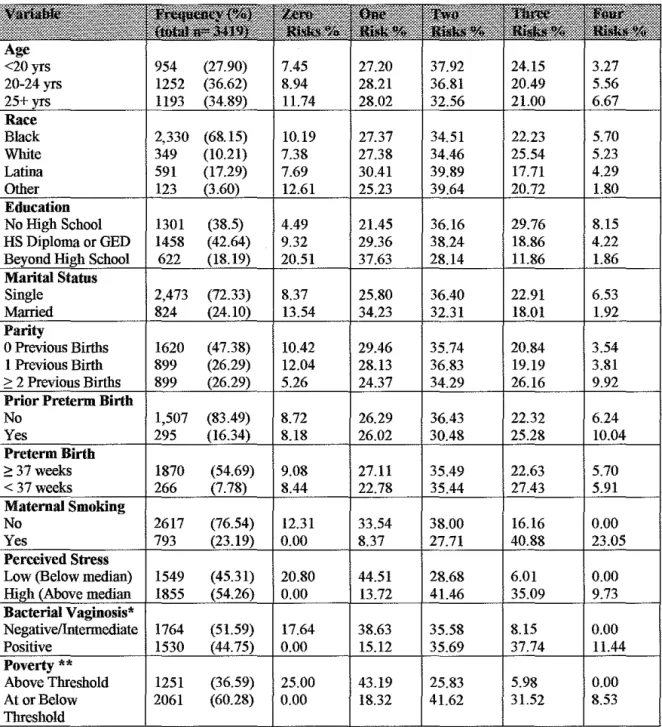
The demographic characteristics of this population reveal that 68% of the population was black, 17% Latina, and 10% white (Table 1). Roughly 3 7% of the women studied were between the ages of 20-24, 35% were older than 25, and 28% were less than 20 years old. Forty-three percent of the women received a high school diploma or aGED, 39% of the women did not complete high school, and 18% of the women received education beyond high school. Seventy-three percent of the population was single, whereas 24% of the population was married. Approximately 47% of the women did not have any previous births, whereas 26% of the women had 1 prior birth, and 26% had 2 or more prior births. Eighty-three percent of the women who did have prior births did not deliver preterm, whereas 16% of the women delivered preterm (Table 1). Out of the risk factors that were examined in this study, 23% of the population continued to smoke during pregnancy, 54% .of the population had chronic stress, 45% tested positive for bacterial vaginosis, and roughly 60% were at or below the poverty threshold (Table 1 ). Approximately 8% of the women delivered preterm.
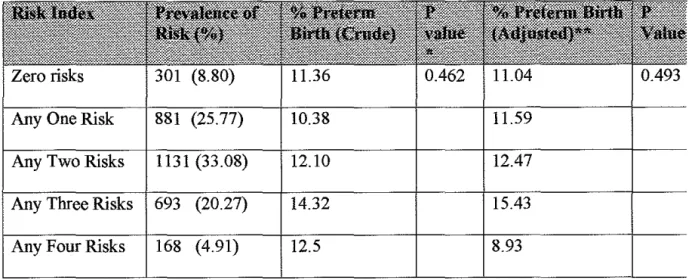
The risk index that was associated with the highest rate of preterm birth was having any 3 risks. The rate of preterm birth among this category was 14.32%. Also, the OR for preterm birth among those with 3 risk factors compared to those with no risk factors was 1. 3 8 after adjusting for race, age, marital status, education, parity, and prior preterm birth (95% CI 0.92, 2.08). Having all 4 risk factors was associated with a preterm birth rate of 12.50%. The OR among this category was 1.03 (95% CI 0.58, 1.04), which dropped to 0.64 (95% CI 0.29, 1.3 8) after adjusting for covariates. The adjusted OR for having 0, 1 or 2 risk factors was 1.45, 1.36, and 1.45, respectively. All of the 95% confidence intervals overlapped one, indicating that there is no significant correlation between risk indexes and preterm birth. (Table 3,5)
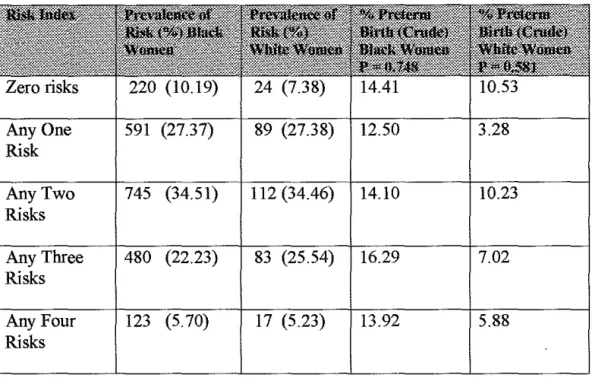
The prevalences of the multiple risk indexes were comparable for both white and black women (Table 4). However, among black women, each risk index was associated with higher rates of preterm birth. The rates of preterm birth among black women with 1, 2, 3, or 4 risks were 12.5%, 14.1%, 16.29%, and 13.9% respectively. In contrast, the rates of preterm birth among white women were much lower: 3.28%, 10.23%, 7.02%, and 5.88% for having 1, 2, 3 or 4 risks respectively.
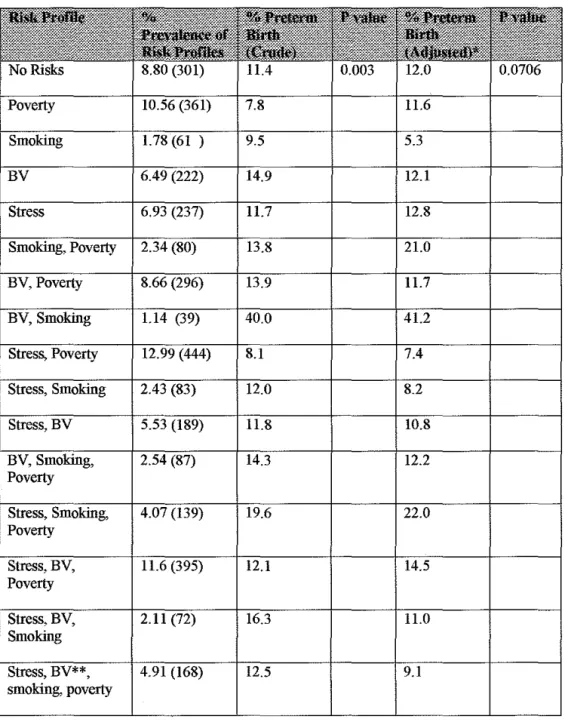
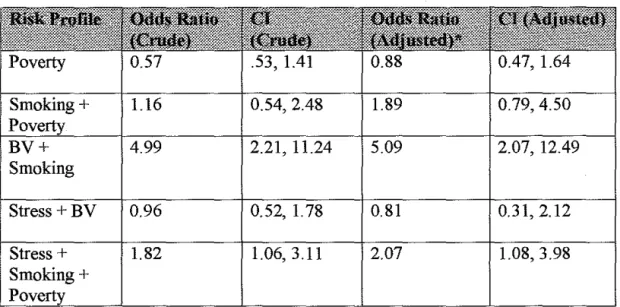
profiles studied, the combination of smoking and bacterial vaginosis had the
greatest association with preterm birth, with an adjusted OR of 5.09, (95% CI
2.07, 12.49). The next combination that had a significant effect on preterm birth
was stress, smoking and poverty, which had an adjusted OR of 2.07 (95% CI
1.08, 3.98). Smoking and poverty was also associated with higher rates of
preterm birth, with an adjusted OR of 1.89 (95% CI 0.79, 4.50). (Table 7)
Discussion
The results from this study indicate that being exposed to any 3 of the studied
risks, which included poverty, stress, bacterial vaginosis, and smoking, is
associated with a greater risk of preterm birth. In addition, there was a non-significant association between having all 4 risk factors and preterm birth.
Surprisingly, the data demonstrate that having all 4 of the risk factors are not
necessarily associated with a higher rate of preterm birth than having any 3 risk
factors, thus this analysis did not follow the same pattern between multiple risk
factors and SGA which was identified in the Ahluwalia et al. study27
This analysis also reveals that there is a very strong relationship between the risk
profile combination of bacterial vaginosis and smoking (OR 10.98) and preterm
I
birth. This finding supports some studies which have suggested that smoking may
potentiate the effects of bacterial vaginosis, and vice versa. The results from this
study show that the combination of smoking and bacterial vaginosis significantly
increases the risk of preterm birth. A recent cohort study examining the
association between bacterial vaginosis and smoking found that there is a
significant dose response relationship between bacterial vaginosis and smoking
(adjusted OR 3.0; 95% CI 1.3-6.9)29 Further, some studies have documented that
smoking may increase the likelihood of developing bacterial vaginosis, especially
given the association between smoking and other risk factors associated with BV.
25
•32 Although the mechanism responsible for this relationship has not been
nicotine and cotinine in the vagina, which may have an effect on the vaginal bacterial flora, predisposing one to B V. 32•33
Smoking and poverty also seem to lead to higher rates of preterm birth. In addition, the risk profile combination of smoking and poverty led to a significant increase in the rate of preterm birth. Many studies have already linked socioeconomic status to preterm birth, and they have shown that socioeconomic status increases the rate for preterm birth, even after adjusting for maternal smoking. The results from this study suggest that although smoking and poverty individually increase the rate of preterm birth, the combination of the two has a greater impact on this outcome.
The analysis also reveals an association between smoking, stress and poverty and preterm birth. It is surprising that this combination leads to greater rates of preterm birth than the combination of bacterial vaginosis, stress and poverty or bacterial vaginosis, stress and smoking, especially given the strong relationship between bacterial vaginosis and stress. However, the results also indicate that stress, bacterial vaginosis, and smoking are still associated with a higher rate of preterm birth, although it does not exceed that of the combination of smoking, stress and poverty.
would seem to follow that having all 4 risk factors would increase the likelihood that an inflammatory reaction leading to preterm birth would occur. However, the results from this study did not indicate this. Rather, the relationship between these risk factors proved to be more complicated than what was initially anticipated. This analysis reveals a relationship between multiple risk factors and preterm birth; however, having 2 or 3 risk factors was associated with higher rates of preterm birth than having all 4 risk factors. Although the results indicate that there is some synergy between having 2 or 3 risk factors that contribute to the same inflammatory pathway, this synergy is not as apparent in the 4 risk category as one would expect. This suggests that there are some other extrinsic factors and additional pathways that may be contributing to preterm birth. In addition, the risk profile analysis further supports that the relationship between all 4 risk factors is not that simple, and that smoking seems to potentiate the effects of bacterial vaginosis, poverty, and stress.
There are some limitations to this study that must be addressed. First, only 4 maternal risk factors were studied. Although these 4 risk factors all significantly increase the risk of preterm birth individually, there are other maternal risk factors that were not included in the analysis. Multiplicity of risk factors may have proven to be a significant determinant of preterm birth had more maternal risk factors been included. In addition, there are several other combinations of risk factors that may have a stronger association with preterm birth.
Secondly, the risk profile strata were very small, which limits the power of the study to detect a significant effect. In particular, the risk profile that was associated with the highest rate of preterm birth, bacterial vaginosis and smoking, had only 39 women in that category. This may account for the high standard error as well as the wide confidence intervals. In addition, the confidence intervals for the adjusted odds ratios were very wide, which also suggests that the power of the study is limited.
Lastly, the study revealed that bacterial vaginosis and smoking have a significant impact on preterm birth. Given that smoking is such a strong predictor of preterm birth, this number may reflect the effect of smoking on preterm birth24-25' On the other hand, it may suggest that there is a synergistic relationship between bacterial vaginosis, causing an increased risk of preterm birth.
Although there were some limitations to this study, there were also some strengths. For instance, the dataset included over 3400 patients, and birth records were gathered for over 1100 of the subjects, and this contributed to the reliability of the study. In addition, the findings from this study are generalizable, and can be applied to pregnant women that go to the public health department for prenatal care.
inflammation, and to develop pharmaceuticals that interfere with the inflammation processes before they lead to preterm birth. In addition, given that multiple risk factors that lead to inflammation lead to higher rates of preterm birth among black women, more research should be done to determine why black women are more negatively influenced by inflammatory processes.
In practice, women that receive prenatal care should be screened not only for individual risk factors, but also for combinations of risk factors. In addition, prevention efforts should be directed towards multiple risk factors, and in particular prevention efforts should address the combination of bacterial vaginosis and smoking.
References
1. Davis, LJ, Okuboye, S, Feguson, SL. "Healthy People 2010: Examining a Decade of Maternal and Infant Health" AWHONN Lifelines. 2000; 4(3): 26-33
2. Singh, GK; Yu, SM. Infant Mortality In the United States: Trends, Differentials and Projections, 1950 - 2010. American Journal of Public Health. 1995; 85(7): 957-964.
3. Matthews, TJ; Menacker, F; MacDorman, MF. Infant Mortality Statistics from the 2001 Period Linked Birth/Infant Death Data Set. National Vital Statistics Reports (NVSS) 2003; 52(2)
4. Lu, MC; Tache, V; Alexander, GR; Kotelchuck, M; Halfon, N. Preventing Low Birth Weight: Is Prenatal Care the Answer? The Journal of Maternal-Fetal and Neonatal Medicine. 2003; 13: 362-280
5. Hogan, V; Richardson J et al. A Public Health Framework for Addressing Black and White Disparities in Preterm Delivery. JAMW A 2001 ;56:
177-180
6. Fiscella, K. Racial Disparities in Preterm Births: The Role of Urogenital Infections. Public Health Reports. Mar/ April 1996; 111: 104-113
7. Holzman, C; Bullen B et al. Pregnancy Outcomes and Community Health: the POUCH study of preterm delivery. Paediatric and Perinatal Epidemiology 2001; 15: 136-158
8. Slattery, MM; Morrison JJ. Preterm Delivery. Lancet. 2002; 360:1489-97 9. Cramer, J. Racial and Ethnic Differences in Birthweight: The Role of Income
and Financial Assistance. Demography. 1995; 32(2):231-245
10. Parker, JD; Schoendorf, KC; Kiely, JL. Associations between measures of socioeconomic status andlow birth weight, small for gestational age, and premature delivery in the United States. Annals of Epidemiology. 1994; 4:271-278
12. Conley, D; Bennett, N. Birth Weight and Income: Interactions Across
Generations. Journal of Health and Social Behavior. Dec 2001; 42(4):
450-465
13. Hogue, CJ; Hargraves, MA. Class, Race, and Infant Mortality in the United
States. American Journal ofPublic Health. Jan 1993; 83(1): 9-12
14. Schoendorf, KC; Hogue, CJ; Kleinman, KC eta!. Mortality among infants of
black as compared with white college-educated parents. New England
Journal ofMedicine. 1992; 326: 1522-1526
15. Culhane, JF; Rauh, V. et al. Exposure to chronic stress and ethnic differences in rates of bacterial vaginosis among pregnant women. Am J of Obstet
Gynecol. Nov 2002; 187(5): 1272-1276
16. Dole, N, Savitz, DA et al. Maternal Stress and Preterm Birth. American
Journal ofEpidemiology. 2003; 157(1):14-24
17. Culhane, JF; Rauh, V. et a!. Maternal Stress is Associated with Bacterial Vaginosis in Human Pregnancy. Maternal and Child Health Journal. 2001;
5(2): 127-134
18. Ruiz, RJ; Fullerton, J et al. The Interrelationship of Maternal Stress,
Endocrine Factors and Inflammation on Gestational Length. Obstet and
Gyeneco Survey. 2003; 58(6): 415-428
19. Robel, C; Culhane, J. Role of Psychosocial and Nutritional Stress on Poor
Pregnancy Outcome. American Journal for Nutritional Sciences.
2003;1709S-1717S
20. Paige, DM; Augustyn, M. Bacterial Vaginosis and Preterm Birth: A
Comprehensive Review of the Literature. Journal of Nurse-Midwifery.
March/April1998; 43(2):83-89
21. Hillier, S; Nugent, R et a!. Association between bacterial vaginosis and preterm delivery of a low birth weight infant. New England Journal of
Medicine. 1995; 333:1737-1742
22. Goldenberg, R; KlebenoffM eta!. Bacterial Colonization of the vagina during
23. Mead, P. Epidemiology of bacterial vaginosis. American Journal Obstet Gynecol. 1993;169:446-449
24. Andres, R and Day, M. Perinatal Complications Associated with Maternal Tobacco Use. Semin Neonatol. 2000; 5: 231-241
25. Ahern, J; Pickett, KE et al. Preterm birth among African American and white women: a multilevel analysis of socioeconomic characteristics and cigarette smoking. Journal of Epi and Community Health. Aug 2003; 57(8):606-612
26. Goldenberg, RL. The Management of Preterm Labor. Obstet and Gynecol. Nov 2002; 100(5): 1020-1037
27. Ahluwalia, IB; Merritt, R et al. Multiple Lifestyle and Pscychosocial Risks and Delivery of Small for Gestational Age Infants. Obstet and Gynecol. May 2001; 97(5):649-655
28. U.S. Census Bureau, Current Population Survey. 2001 www.census.gov/hhes/poverty/threshldlthresh01.html 29. StataCorp USA, College Station, Texas.
30. Cohen, Setal. A Global Measure of Perceived Stress. Journal of Health and Social Behavior. Dec 1983; 24: 385-396
31. Mattison, D et al. Preterm Delivery: a public health perspective. Paediatric and Perinatal Epidemiology. 2001; 15:7-16
32. Hellberg, D et al. Bacterial Vaginosis and Smoking. International Journal of STD and AIDS. 2004: 11(9); 603-606.
Table la. Demographics and Other Descriptive Characteristics Compared to Multiple Risk Factors: Row Values. SPEAC Study, (Philadelphia, PA.) 1999-2001.
Age
<20yrs 954 (27.90) 7.45 27.20 37.92 24.15 3.27 20-24 yrs 1252 (36.62) 8.94 28.21 36.81 20.49 5.56
25+ 1193 11.74 28.02 32.56 21.00 6.67
Race
Black 2,330 (68.15) 10.19 27.37 34.51 22.23 5.70
White 349 (10.21) 7.38 27.38 34.46 25.54 5.23
Latina 591 (17.29) 7.69 30.41 39.89 17.71 4.29
No High School 1301 (38.5) 4.49 21.45 36.16 29.76 8.15 HS Diploma or GED 1458 (42.64) 9.32 29.36 38.24 18.86 4.22
School 622 20.51 37.63 28.14 11.86 1.86
Marital
Single 2,473 (72.33) 8.37 25.80 36.40 22.91 6.53
Married 824 13.54 34.23 32.31 18.01 1.92
Parity
0 Previous Births 1620 (47.38) 10.42 29.46 35.74 20.84 3.54 I Previous Birth 899 (26.29) 12.04 28.13 36.83 19.19 3.81
34.29
No 1,507 (83.49) 8.72 26.29 36.43 22.32 6.24
Yes 295 8.18 26.02 30.48 25.28 10.04
Preterm Birth
;:: 37weeks 1870 (54.69) 9.08 27.11 35.49 22.63 5.70
< 37weeks 266 8.44 22.78 35.44 27.43 5.91
Maternal Smoking
No 2617 (76.54) 12.31 33.54 38.00 16.16 0.00
Yes 793 23.05
Low (Below median) 1549 (45.31) 20.80 44.51 28.68 6.01 0.00
median 1855 0.00 13.72 41.46 35.09 9.73
Negative/Intermediate 1764 (51.59) 17.64 38.63 35.58 8.15 0.00
Positive 1530 0.00 15.12 35.69 37.74 11.44
Poverty**
Above Threshold 1251 (36.59) 25.00 43.19 25.83 5.98 0.00 At or Below 2061 (60.28) 0.00 18.32 41.62 31.52 8.53
*
Bacterial vaginosis determined by gram stain with Nugent ScoreTable lb. Demographics and Other Descriptive Characteristics Compared to Multiple Risk Factors: Column Values. SPEAC Study, (Philadelphia, PA) 1999-2001.
954 (27.90) 21.93 27.36 31.20
1252 (36.62) 34.22 36.89 34.40
1193 43.85 35.75 34.40
Race
Black 2,330 (68.15) 73.09 67.31 66.28 70.07
White 349 (10.21) 7.97 10.14 9.96 12.12
Latina 591 (17.29) 14.29 19.36 19.84 14.45
Other 123 4.65 3.19 3.91 3.36
Education
No High School (38.5) 17.94 29.42 38.91 52.42 HS Diploma or GED (42.64) 41.86 45.27 46.24 37.34
14.85
2,473 (72.33) 63.46 66.93 74.06 76.35
824 35.22 30.45 22.55 20.58
0 Previous Births 1620 (47.38) 51.83 50.06 47.30 45.09 1 Previous Birth 899 (26.29) 33.55 26.79 27.32 23.27 2 Previous Births 899 14.62 23.16 25.38 31.65 Prior Preterm Birth
No 1,507 (83.49) 84.83 83.94 86.10 82.25
Yes 295 15.17 13.74 17.75
Preterm
<;:37weeks 1870 (54.69) 88.64 89.62 87.90 85.68
<37 266 11.36 10.38 12.10 14.32
Maternal Smoking
No 2617 (76.54) 100.00 93.08 82.14 57.00
Yes 793 0.00 6.92 17.86 43.00
Perceived Stress
Low (Below median) 1549 (45.31) 100.00 73.10 1855
Negative/Intermediate 1764 (51.59) 100.00 74.80
1530 0.00 25.20
Poverty
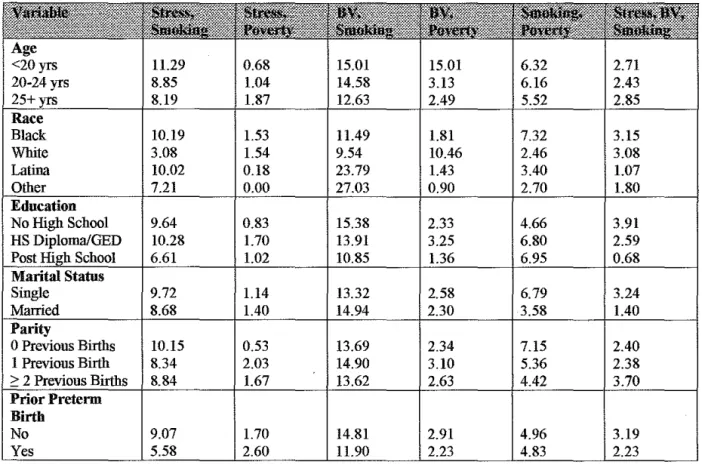
Table 2. Demographics and Other Descriptive Characteristics Compared to Risk Profiles. SPEAC Study, (Philadelphia, PA.) 1999-2001.
1.13 6.55 2.17 7.99 2.31 6.41
Race
Black 10.19 10.47 1.48 8.52 6.90 2.18
White 7.38 8.62 6.77 4.00 8.00 7.38
Latina 7.69 16.46 1.07 3.94 8.94 1.07
Other 12.61 12.61 0.90 1.80 9.91 1.80
Education
No High School 4.49 11.14 1.66 4.24 4.41 3.33
HS Diploma!GED 9.32 11.24 2.22 7.69 8.21 2.29
Post
Marital Status
Single 1.71
2.43
0 Previous Births 10.42 12.83 1.67 7.15 7.82 1.87
1 Previous Birth 12.D4 8.94 2.26 8.46 8.46 3.10
2 Previous Births 5.26 11.23 2.03 5.26 5.85 3.11
Prior Preterm
Birth
No 9.92 10.56 2.06 6.52 7.16 2.98
Table 2 Cont. Demographics and Other Descriptive Characteristics Compared to Risk Profiles. SPEAC Study, (Philadelphia, PA.) 1999-2001.
10.19 1.53 11.49 1.81 7.32 3.15
3.08 1.54 9.54 10.46 2.46 3.08
10.02 0.18 23.79 1.43 3.40 1.07
7.21 0.00 27.03 0.90 2.70 1.80
9.64 0.83 15.38 2.33 4.66 3.91
10.28 1.70 13.91 3.25 6.80 2.59
6.61 1.02 10.85 1.36 6.95 0.68
9.72 1.14 13.32 2.58 6.79 3.24
8.68
Parity
0 Previous Births 10.15 0.53 13.69 2.34 7.15 2.40
1 Previous Birth 8.34 2.03 14.90 3.10 5.36 2.38
8.84 1.67 13.62 2.63 4.42 3.70
Birth
No 9.07 1.70 14.81 2.91 4.96 3.19
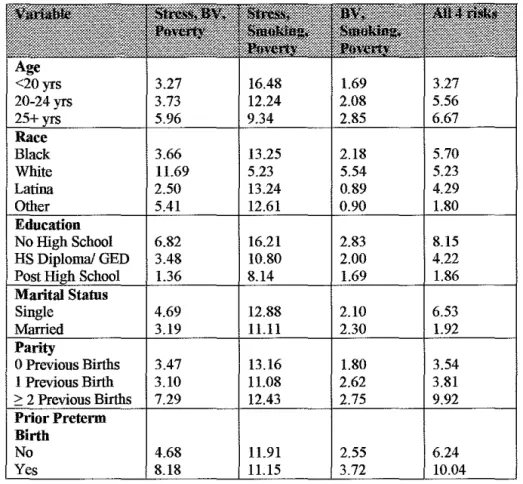
Table 2 Cont. Demographics and Other Descriptive Characteristics Compared to Risk Profiles. SPEAC Study, (Philadelphia, PA.) 1999-2001.
Black 3.66 13.25 2.18 5.70
White 11.69 5.23 5.54 5.23
Latina 2.50 13.24 0.89 4.29
Other 5.41 12.61 0.90 1.80
6.82 16.21 2.83 8.15
3.48 10.80 2.00 4.22
1.36 8.14 1.69 1.86
4.69 12.88 2.10 6.53
11.11 2.30 1.92
0 Previous Births 3.47 13.16 1.80 3.54 1 Previous Birth 3.10 11.08 2.62 3.81
2: 2 Previous Births 7.29 12.43 2.75 9.92
Prior Preterm Birth
No 4.68 11.91 2.55 6.24
Table 3. Association between Multiple Risks and Preterm Birth Presented as Percentages. SPEAC Study, (Philadelphia, PA), 1999-2001
Any One Risk 881 (25.77) 10.38 11.59
Any Two 12.10 12.47
Any Three Risks 693 (20.27) 14.32 15.43
12.5 8.93
*P-value determined by logistic regression
Table 4. Prevalence of Multiple Risk Indexes and Preterrn Birth Stratified by Race. SPEAC Study, (Philadelphia, PA) 1999-2001.
591 (27.37) 89 (27.38) 12.50 3.28
745 (34.51) 112 .46) 14.10 10.23
Any 480 16.29 7.02
Risks
Any Four 123 13.92 5.88
Table 5. Association Between Multiple Risk Indexes and Preterin Birth Presented as Odds Ratios and Confidence Intervals. SPEAC Study, (Philadelphia, PA) 1999-2001.
1.29 0.94, 1.76 1.38 0.92, 2.08
1.03 0.58, 1.04 0.64 0.29-1.38
Table 6. Association Between Preterm Birth and Risk Profiles Presented as Percentages. SPEAC Study, (Philadelphia, PA) 1999-2001.
BV 12.1
12.8
Poverty BV, Poverty
Poverty
Stress, 4.07 (139) 19.6 22.0
Poverty
11.0
Smoking
Stress, BV**, 4.91 (168) 12.5 9.1 smoking, poverty
Table 7. Association Between Preterm Birth and Selected Risk Profiles, Presented as Odds Ratios and Confidence Intervals. SPEAC Study, (Philadelphia, PA) 1999-2001.
1.16 0.54, 2.48 1.89 0.79, 4.50
BV+ 2.21, 11.24 5.09 2.07, 12.49
Smoking
Stress+BV 0.96 52, 1.78 0.81 0.31, 2.12
Stress+ 1.82 1.06, 3.11 2.07 1.08, 3.98
Smoking+