Mitigation of Impact of HIV/AIDS in Kinshasa, Democratic Republic of Congo
By
Tania Goossens-AIIen
A Master's Paper submitted to the faculty of the University of North Carolina at Chapel Hill
In partial fulfillment of the requirements for the degree of Master of Public Health in
the Public Health Leadership Program.
Chapel Hill
2009
TROCAIRE
Worklng for a just World
Femme
Plus
Mitigation of Impact ofHIV/AIDS in Kinshasa,
Democratic Republic of Congo
A project managed by Femme Plus
with the support of
Trocaire and Catholic Relief Services
Final Evaluation of Phase II
September 2009
Tania Goossens-Allen
MPH Candidate
Working for a just World
Femme Plus
Mitigation of Impact ofHIV/AIDS in Kinshasa,
Democratic Republic of Congo
A project managed
by
Femme Plus
with the support of
Trocaire and Catholic Relief Services
Final Evaluation of Phase II
September 2009
Tania Goossens-Allen
MPH Candidate
Acknowledgements
This evaluation of the "Mitigation of Impact of HIV I AIDS in Kinshasa" could not have been
conducted without the time and support provided by a number of people, including Mrs.
Bernadette Mulelebwe (Femme Plus), Dr. Allain Mosange (Femme Plus), Dr. Andre Tonda
(CRS), Meredith Stakem (CRS) and Dr.Mabasi Mayala (FHI). I would also like to thank Mr.
Willy Ngbabaro for his assistance with translation and for his valuable contributions to the
evaluation.
I greatly appreciate the warm welcome I received from the social assistants, managers of the
Matete, Camp Kokolo and St. Marc centers, activists and volunteers.
Last, but not least, I extend my thanks to the project beneficiaries for welcoming us in their
AIDS ART ARV BCC CRS DRC FHI HIV IEC IGA NGO
or
ovc
PLHIV PNLS PNMLS PMTCT STI VCT WFPACRONYMS
Acquired Immune Deficiency Syndrome
Anti retroviral treatment
Anti retroviral
Behavior Change Communication
Catholic Relief Services
Democratic Republic of Congo
Family Health International
Human Immunodeficiency Virus
Information, Education and Communication
Income-generating Activities
Non-governmental organization
Opportunistic Infection
Orphans and Vulnerable Children
People living with HIV
National Program to Control AIDS and STI
National Multisectoral Program to Control AIDS and STI
Prevention of Mother to Child Transmission
Sexually Transmitted Infection
Voluntary Counseling and Testing
World Food Program
Table of Contents
Executive Summary ... 6
I. Introduction ... 9
A. Context ... 9
I. The Democratic Republic of Congo (DRC) ... 9
2. HIV/AIDS in the Democratic Republic of Congo (DRC) ... 9
3. National Response ... 10
B. Mitigation ofimpact ofHIV/AIDS in Kinshasa ... 11
1. Overview ofProject ... 11
2. Femme Plus ... 14
3. Key Partners of the Project.. ... 15
C. Evaluation of the Project ... 15
1. Purpose ... 15
2. Methodology ... 16
II. Findings ... 17
A. Achievements of the Project... ... 17
I. Reduction of Risk of HIV transmission ... 17
2. Mitigating the socio-economic impact ofHIV/AIDS ... 20
B. Operation and Management ... 27
1. Staff roles, motivation and participation ... 27
2. Knowledge and learning ... 29
3. Monitoring and Evaluation ... 30
C. Sustainability ... 32
2. Partnership ... 32
3.Funding ... 33
4. The way forward ... 34
III. Recommendations ... 35
IV. Conclusion ... 41
V. References ... 43
Executive Summary
The goal of the "Mitigation of hnpact of HIVIAIDS in Kinshasa" project is to preserve the
human dignity and quality of life of individuals affected by HIVIAJDS, their families and their
communities. The project, which began in 2001, is implemented by Femme Plus, a Congolese non-governmental organization, with the support of Tr6caire and Catholic Relief Services
(CRS). More specifically, the objectives of the project are to reduce the risk ofHIV transmission
through information and counseling of at least 5,000 People Living with HIV (PLHIV) and their
families and to alleviate the socio-economic impact of HIV I AIDS. The project is implemented
through five centers and community networks. Centers provide psychosocial support,
income-generating activities, medical care and payment of school fees for Orphans and Vulnerable
Children (OVC). HIV awareness sessions are organized in markets and health centers, while two
Femme Plus centers provide Voluntary Counseling and Testing (VCT).
The purpose of this evaluation has been to assess the effectiveness of the project in meeting its
goal and objectives. The evaluation also looks at the operation and management of the project,
its relevance in view of community needs and national policy and its sustainability. The
evaluator conducted interviews and focus group discussions with Femme Plus management,
staff, volunteers and partner organizations and conducted home visits to Femme Plus-selected
beneficiaries. A total of 53 persons participated in the evaluation.
The efforts of Femme Plus with regards to raising awareness on HIV I AIDS, to advocating on
behalf of PLHIV and to engaging PLHIV and their families through different activities have
participating in the evaluation speak of their lives having value agam and recovering their
dignity. Staff and volunteers note a reduction in stigma and discrimination with people now
coming to the organization for information and support rather than the organization having to
identifY and approach them first. Some PLHIV have been able to set up successful small
businesses with credit provided by Femme Plus, while assistance with school fees has allowed
children to stay in school. Using information gained from project activities, Femme Plus
responds to challenges faced by PLHIV by lobbying key stakeholders for access to treatment,
negotiating reduced fees at hospitals and seeking food aid for those on treatment. Staff and
volunteers alike are motivated, proud of the organization and committed to its mission. Overall,
the "Mitigation of Impact" project has brought services to areas where previously there were
none, and staff work hard to reach beneficiaries despite financial and logistical challenges.
While an important outcome of the project has been the acceptance of positive living by PLHIV,
there is some concern with regards to dependency. Despite the multiple needs, Femme Plus
cannot respond to all of them and must be more selective of the types of activities it can engage
in and how long beneficiaries can be supported. While the evaluator appreciates the challenge
with regards to the lack of quality and affordable health care, it is recommended that Femme
Plus continue its organizational focus on support and referral rather than expand into direct care
or treatment, which would prove costly and not sustainable. Despite some success stories, many
challenges remain with income-generating activities, and there is a need to better assess the
activity selected by the beneficiary, their capacity to manage the activity and the ability of a
family member to manage the activity on their behalf should the person fall ill. The organization
should also review and standardize its selection criteria for OVC and to better document the
outcomes of education support.
Despite the wealth of knowledge within the organization, more could be done to document
lessons learned and the outcomes of different meetings while also improving the collection,
analysis and reporting of qualitative data. Although the organization's focus on capacity
building is well-appreciated by all, trainings are not sufficiently tailored to reflect people's roles,
existing knowledge or capacity. Roles and job descriptions should also be reviewed to optimize
the use of resources; and more visibility and support should be given to the newly identified staff
responsible for mobilization of resources. While there is good knowledge among staff and
volunteers of the objectives of the project, less well-knowu perhaps is the financial context of the
project resulting in somewhat unrealistic expectations by some stakeholders of what the project
can and should achieve.
With regards to sustainability, it is recommended that Femme Plus investigate how it can build
on its existing experience in promoting the independence of PLHIV and structure support group
meetings so as to render them more autonomous. Given the vastness of the project, Femme Plus
should also review its geographic coverage and explore further decentralization of the
community networks. Despite competition for limited resources, opportunities for better
collaboration, more transparency and partnership among organizations working on the ground
should be explored.
The upcoming strategic planning process in November 2009 will be an opportune time for
Femme Plus to review and prioritize the recommendations detailed in this evaluation, identify
persons responsible for taking the lead and costing the activities. It is also strongly encouraged
I. Introduction
A. Context
1.
The Democratic Republic of Congo (DR C)
The Democratic Republic of Congo (DRC) is the third largest country in Africa with an
estimated population of 68,6 million inhabitants, a population growth of 3,2% and a life
expectancy of 54 years (Central Intelligence Agency, 2009). The DRC is also one of the world's
poorest countries despite vast natural resources including minerals. After obtaining
independence from Belgium in 1960, the country experienced more than thirty years of
corruption and gradual social and economic collapse under the Mobutu regime followed by the
outbreak of war in 1997 which became known as "Africa's world war" and involved numerous
neighboring countries and rebel groups all vying for control over DRC's wealth. It is estimated that nearly 5 million died either as a direct or indirect result of conflict between 1997 and today.
Presently, more than a million people continue to be displaced due to ongoing conflict in the east
of the country where rape has been systematically used as a weapon of war.
2. HIV/AIDS in the Democratic Republic of Congo (DRC)
The HIV epidemic in DRC is a generalized one. HIV prevalence among adults aged 15-49 years
is estimated at 4,1% by the National Program to Control AIDS and STI (PNLS) (Ministry of
Health, Democratic Republic of Congo, 2008); heterosexual activity is the main mode of
transmission. HIV prevalence is twice as high among young women aged 15-24 than young men
in the same age group and twice as high among female military personnel compared to
prevalence among their male counterparts (Wei!, Garcia, & Marvard, 2009). HIV prevalence is
also highest in areas of the country and among groups most affected by conflict. Prevalence
among survivors of sexual violence, for example, is 25.6% (Wei!, Garcia, & Marvard, 2009). Numerous factors favor HIV transmission including low awareness (22% of people aged 15-59
are able to identifY three methods of transmission), difficult living conditions, limited access to
prevention services, promiscuity and population mobility (Programme Nationale Multisectoriel
de Lutte contre le SIDA, Democratic Republic of Congo, 2009). There are also cultural barriers
with regards to sexuality both within families and society as a whole. Even though 15% of girls
and 21% of boys have had their first sexual encounter before the age of 15, many parents remain
opposed to sex education (Programme Nationale Multisectoriel de Lutte contre le SIDA,
Democratic Republic of Congo, 2009). Overall, HIV in the DRC today can be characterized as
an epidemic that is increasingly young, female and rural.
3. National Response
The DRC was one of the first African countries to officially recognize HIV I AIDS in 1983, and
the National Program to Control AIDS and STI (PNLS) was created in 1987 (Wei!, Garcia, & Marvard, 2009). Several short and medium term plans to fight the epidemic were developed in
the years that followed. In 2004, the National Multisectoral Program to Control AIDS and STI
(PNMLS) was created by Presidential Decree. The national extension plan for access to
antiretroviral drugs 2005-2009 in the framework of the 3 by 5 initiative was adopted in 2005, and
a law protecting the rights of people living with HIV (PLHIV) and people affected by HIV was
adopted in 2008 (Wei!, Garcia, & Marvard, 2009). Combating HIV/AIDS is one of the pillars of the DRC's Poverty Reduction Strategy Paper and is also addressed in the donors' Country
released its National Strategic Plan for the Fight against HIV/AIDS 2008-2012 for the health
sector, while the PNMLS's released its National Strategic Plan 2010-2014 Plan in August this
year. Nearly all support for HIV/AIDS comes from external sources including the World Bank,
the Global Fund to fight HIV/AIDS, Malaria and Tuberculosis, the United Nations, the U.S.
President's Emergency Plan for AIDS Relief (PEPF AR) and individual country donors.
Despite this, coverage of prevention, treatment and care services is still very low. Less than
600,000 people have been tested for HIV (Wei!, Garcia, & Marvard, 2009), and condoms are not widely available. In 2008, only 5% of pregnant women had received HIV testing and counseling
and services for Prevention of Mother to Child Transmission (PTMCT), and less than 2% of
Orphans and Vulnerable Children (OVC) had access to care and support (Wei!, Garcia, & Marvard, 2009). In 2007, 46,8% of donated blood was tested for HIV (Programme Nationale
Multisectoriel de Lutte contre le SIDA, Democratic Republic of Congo, 2009). The existence of
men who have sex with men is denied in the DRC (Wei!, Garcia, & Marvard, 2009). An estimated 300,000 PLHIV are eligible for antiretroviral treatment (ART); however, in 2008
approximately 8% of those in need were receiving ART (Wei!, Garcia, & Marvard, 2009).
B.
Mitigation oflmpact ofHIV/AIDS in Kinshasa
1.
Overview of Project
Phase I (2001-2004)
When Femme Plus began its project "Mitigation of Impact of HIV/AIDS in Kinshasa" in
mid-200 I, the capital had seen its population increase greatly with the influx of internally displaced
persons from all over the country and the presence of foreign troops (some of them from
rose steadily and more and more women and girls turned to sex work for survival. HIV
prevalence in Kinshasa was estimated at 5.07% (today it is an estimated 1,9% according to
PNLS/Ministry of Health figures).
In this context, Femme Plus approached CRS and Tr6caire to fund a three year project with the
goal to preserve the human dignity and quality of life of individuals affected by HIVIAIDS, their
families and their communities. More specifically, the project aimed to provide access to information, counseling, psychosocial assistance and home based care to 3,000 PLHIV m
Kinshasa and to raise awareness on HIV I AIDS and sexually transmitted infections (STI) to 6,000
students in 1 0 schools. Four centers were opened (Kingasani/St. Marc, Kisenso, Limete, Camp
Kokolo). The role of each center is to identify and register PLHIV and OVC; provide
psychosocial support through home visits, meetings and support groups; assist beneficiaries with
income-generating activities and school fees; and raise awareness on HIV transmission. Each
center is staffed by a manager/social assistant who supervises on average 8 activists. Each
activist manages a community network supervising 2-3 volunteers. The centers are supervised by
a director and technical assistant based at the national office, which also employs four social
assistants (psychosocial support, income generating activities, advocacy & mobilization of resources, human resource management) and finance and administrative staff, some of whom are
supported by Christian Aid through a separate project.
An evaluation of the project conducted in 2004 by CRS found that although the project achieved
some very positive results, challenges remained with regard to the provision of quality
psychosocial support (i.e. need for more trained activists/volunteers and improved supervision)
their deteriorating socio-economic situation (Catholic Relief Services, 2004). The evaluation thus
advocated for an integrated approach responding to the different needs of PLHIV and the
establishment of Voluntary Counseling and Testing (VCT) to meet high demand (Catholic Relief
Services, 2004).
Phase II (2005-2008)
Following the initial 3-year Phase I, and based on the results of the 2004 evaluation, CRS and
Trocaire financed a second 3-year Phase II from 2005 to 2008. During this phase, Femme Plus
opened a fifth center (Mikondo) in 2005, trained additional activists and volunteers and
expanded into community-based VCT. The organization also linked with other organizations for
access to antiretroviral treatment and food aid for beneficiaries. As for the school activities, it
was decided to limit these to the distribution of IEC materials. The overall goal of the project
had not changed since 2001. However, for phase 2, Femme Plus identified the following
objectives:
Objective 1: The risk of HIV transmission is reduced through information and counseling of at least 5,000 PLHIV and their families in the city of Kinshasa;
Objective 2: The socio-economic impact ofHIV/AIDS is alleviated for 5,000 PLHIV and OVC.
The total budget for phase II was USD 346,60 I; in addition, Tr6caire provided an additional
Euros 50,000 in 2008 to resume VCT services in Matete (which had since stopped) and expand
income-generating activities. A mid-term evaluation by CRS of phase II again noted the
challenges of meeting PLHIV's multiple needs and recommended that Femme Plus increase its
income-generating activities, that centers be equipped with basic medicines and that the
was also recommended that Femme Plus link with health care facilities to negotiate lower fees
for beneficiaries presenting opportunistic infections (Ols) and that management lobby with
specialized institutions to increase access to antiretroviral treatment. Finally, the evaluation
noted the need to introduce a small financial motivation for volunteers and to equip them with a
small field kit to assist them in their work.
Phase III: the project today
Taking into account lessons learned from previous phases, the project entered its third phase in
late 2008. Due to funding constraints, Femme Plus was forced to close two centers thus
remaining with only one VCT (Matete ). However, the organization was able to use some of its
funding to start mobile VCT services in June 2009. As the project nears the end of the first year
of phase III, it faces the additional challenge that CRS funding will not continue due to funding
constraints.
2. Femme Plus
Femme Plus is a Congolese non-governmental organization that was founded in 1994 by four
Congolese women. Its mission is "to render hope to persons living with HIV, to persons and
families affected by AIDS and to women survivors of sexual violence." The organization's
philosophy and activities focus on positive living. 80% of its beneficiaries are women. Femme
Plus counts a network of more than two thousand activists and volunteers around the country. In
addition to the national office in Kinshasa, there are provincial offices in Kinshasa, Goma,
Kikwit, Bukavu, Kindu, Uvira and Kisangani. Femme Plus also works closely with, amongst
others, Family Health International (FHI) and Christian Aid and manages a free national
3. Key Partners of the Project
Tr6caire, the Irish Catholic Agency for Overseas Development, has been funding partners in the
DRC since the late 1990s in the areas of emergency relief and recovery, peace building and HIV
and AIDS. The organization opened its Kinshasa office in 2008. Catholic Relief Services
(CRS), the official international humanitarian agency of the U.S. Catholic community, has been
working in DRC since 1961 and currently works in the areas of community health, HIV and
AIDS, justice and peace, agriculture, emergency response and education.
C. Evaluation of the Project
1. Purpose
Tr6caire's involvement with phases I and II was limited to monitoring visits from its head office
in Ireland. With the opening of a country office in 2008 and the creation of a new HIV
prevention and care program, the organization wanted to conduct an evaluation of the project.
The purpose of this evaluation has been to assess the effectiveness of the project in meeting its
goal and objectives in mitigating the impact of HIV I AIDS among vulnerable populations in
urban Kinshasa. The evaluation also looks at the operation and management of the project, its
relevance in view of community needs and national policy, and its sustainability. However, the
evaluation did not assess the quality of VCT services at this time. Value added from this
evaluation is expected through lessons learned and recommendations as the project has moved
into its third phase.
2. Methodology
This has been a participatory evaluation. The literature review included Femme Plus proposals,
reports, evaluations, promotional literature and national policy documents. Qualitative data was
collected through interviews and focus group discussions with Femme Plus senior management,
staff and volunteers, beneficiaries and partners (53 persons in total). Consent to share names and
HIV status was obtained from beneficiaries by Femme Plus staff prior to the evaluation; consent
to participate in the evaluation was obtained from all interviewees and focus group participants
prior to discussions. All interviews/focus group discussions were conducted in French and
Lingala with the assistance of a translator. Quantitative data consists largely of secondary data
collected by Femme Plus staff for quarterly monitoring purposes and for donor reporting.
The evaluation team met with senior management (2 persons), 2 partner organizations and 7
social assistants, including 3 heads of centers. Focus group discussions, which lasted nearly two
hours, were held with 21 activists and volunteers and 10 beneficiaries. The 11 beneficiaries
interviewed in their homes, two of whom were couples, were selected by Femme Plus as limited
time, small sample size and the consent process did not allow for random selection. The
evaluation team observed that nearly all beneficiaries visited were horne owners with living
conditions better than the average family in Kinshasa; however, this may be more a reflection of
Femme Plus wishing to send the evaluator to easily accessible, "comfortable" and more secure
surroundings rather than an actual representation of the typical beneficiary.
When asked, Femme Plus pointed out that this is also a reflection of the beneficiaries, i.e. those
who agreed to participate in the evaluation were more independent and able and willing to
was not possible for the expatriate evaluator to visit Camp Kokolo beneficiaries and these four
persons were interviewed by the assistant instead.
II. Findings
A. Achievements of the Project
1. Reduction of Risk ofHIV transmission
1.1 Community sensitization
Femme Plus has used different vehicles to raise the awareness of the population, to prevent
transmission and to reduce stigma and discrimination with regards to HIV I AIDS. This includes
monthly behavior change and communication campaigns targeting schools, markets, churches
and military camps and monthly VCT campaigns encouraging people to get tested either on site
or at one of the centers. The organization has seen a steady increase in the demand for V CT
services, especially mobile services, and staff sometimes run out of supplies. Some centers
report not having the necessary materials such as megaphones, television and VCRs.
Additionally, Femme Plus does not have condoms to distribute to clients given that this is not
covered in the budget and it has not been able to obtain them from other organizations. Flyers
produced by Femme Plus are currently in French only (though there are plans to develop Lingala
ones) and use full text rather than images. Staff also visit government health centers and
maternities to sensitize clients and encourage them to go for testing. A number of these facilities
refer clients to Femme Plus. While in the past, Femme Plus had to go out into the community to
identify and recruit beneficiaries, staff report that now people are approaching them for services.
It is no longer taboo to speak of HIV or to get tested. People are informed and ignorance has decreased. When the centers first opened, no one dared touched the walls; today, people are not
afraid and, instead, visit the centers regularly for information, counseling and support.
1.2 Engaging PLHIV and their families
An important vehicle used by Femme Plus to reach community and family members is the "seminaire-dialogue," a monthly meeting organized for PLHIV and their confidants (friends or
family members in whom to confide) where they discuss topics such as nutrition, home based
care and support, health and hygiene and family cohesion. Femme Plus also organizes monthly
support group meetings for PLHIV. These take place at the centers and are facilitated by an
activist or the head of the center. Initially the group discussed topics proposed by the national
program; now Femme Plus has added topics based on problems identified during home visits.
Participants include men, women, children and adolescents. Some groups ask for small financial
contributions which are then used to support each other in case of need; however, this remains
very informal and the groups are not structured as such (e.g. no management committee). For all
meetings, participants are expected to fund their own transport to the center; they may be
reimbursed by Femme Plus if funding is available.
Nearly all beneficiaries interviewed reported participating in at least one type of meeting on a
regular basis. However, as noted earlier, given that all those interviewed were Femme
Plus-selected beneficiaries, there is a potential bias with regards to the answers given. In the case of
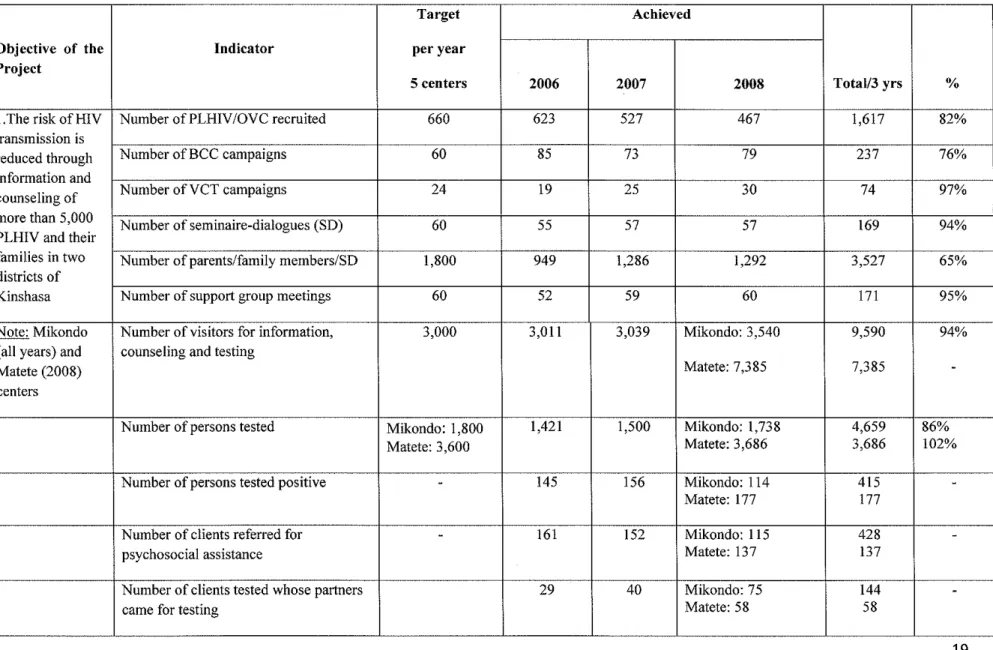
Table 1. Summary of Results Achieved: Key Indicators
(based on FP Annual Reports 2006-2008)
Target Achieved
Objective of the Indicator per year
Project
5 centers 2006 2007 2008 Total/3 yrs %
I. The risk of HIV Number of PLHIV/OVC recruited 660 623 527 467 1,617 82%
transmission is
reduced through Number ofBCC campaigns 60 85 73 79 237 76%
information and
counseling of Number ofVCT campaigns 24 19 25 30 74 97%
more than 5,000 Number of seminaire-dialogues (SD)
60 55 57 57 169 94%
PLHIV and their
families in two Number of parents/family members/SO 1,800 949 1,286 1,292 3,527 65% districts of
Kinshasa Number of support group meetings 60 52 59 60 171 95%
Note: Mikondo Number of visitors for information, 3,000 3,011 3,039 Mikondo: 3,540 9,590 94%
(all years) and counseling and testing
Matete (2008) Matete: 7,385 7,385
-centers
Number of persons tested Mikondo: 1,800 1,421 1,500 Mikondo: 1,738 4,659 86%
Matete: 3,600 Matete: 3,686 3,686 102%
Number of persons tested positive - 145 156 Mikondo: 114 415
-Matete: 177 177
Number of clients referred for
-
161 152 Mikondo: 115 428-psychosocial assistance Matete: 137 137
Number of clients tested whose partners 29 40 Mikondo: 75 144
-came for testing Matete: 58 58
- - - -L.
may go with a parent or care-giver. It seems that outside of the confidant, there is very little involvement of remaining family members in any Femme Plus activities. Several of the
beneficiaries encountered do not want their remaining children or close relatives to know their
status despite the fact that some of them are raising the orphans of siblings who died of AIDS.
Those beneficiaries attending support group meetings report high satisfaction with the
opportunities for mutual sharing, comfort and learning; while among those who do not attend,
reasons cited include fear of being recognized by a family member or friend, embarrassment,
lack of time because of work or being too ill to go. Because of the constraints around organizing
in a military camp and lack of confidentiality, it is especially difficult for beneficiaries from
Camp Kokolo who have to travel outside of the camp for support group meetings.
Despite these challenges, an important outcome of the project has been the acceptance of
positive living by PLHIV, of PLHIV feeling that their life has value again and that they have
recovered their dignity. The efforts by Femme Plus have greatly contributed to the reintegration
ofPLHIV into their families and society.
2. Mitigating the socio-economic impact ofHIV/AIDS
2.1 Psychosocial Support
Any one requesting or referred to Femme Plus for support is first visited by the team in their
home during which a questionnaire is completed to assess the person's household characteristics,
health status, socio-economic conditions, psychological well-being, relationship with the family
and motivation for psychosocial support. Difficulties encountered by the team include refusal to
whether or not to accept the person as a beneficiary in line with criteria such as the person's
status, acceptance to live positively and degree of vulnerability.
The organization aims to balance its support to 60% PLHIV and 40% OVC (some of whom are
HIV positive). Overall, anywhere from 60-80% of applicants are retained as beneficiaries. A
few years ago Femme Plus decided to sign a time bound contract with beneficiaries outlining the
support that would be provided. It is not clear, however, how many staff are actually aware of these contracts or whether these are respected. Some beneficiaries interviewed have been
supported by Femme Plus since 2001, while activists and volunteers interviewed deny the
existence of a contract and instead speak of an engagement with beneficiaries "for life."
Home visits conducted by the Femme Plus team may be as frequent as once a week (in addition
to phone contact if necessary) or once every three months. Most beneficiaries interviewed
reported having contact with Femme Plus at least once a week not counting meetings at the
centers. The team plans meetings at the beginning of the week based on the person's file (i.e.
situation during last visit, complications) although ill beneficiaries and new cases are considered
priorities for home visits. A form is completed by the team after each visit.
Activists and volunteers report a number of challenges with home visits. The main challenge is
access to beneficiaries, many of whom live far from the centers and in areas difficult to access
other than on foot. An area covered by a community network (activist and 2-3 volunteers) can
be quite dispersed and the team has to organize its own transport, which is difficult given the
size, road conditions and lack of reliable public transport in Kinshasa. Access is especially
challenging for the Camp Kokolo team who are expected to cover eight military and police
camps spread over the city. The Femme Plus team at all levels report the difficult conditions in
which the majority of beneficiaries find themselves and the expectation of assistance. Some staff
report discomfort at not having any material support to give beneficiaries and sometimes buying
something out of their own pocket. One staff member pointed out people's high expectations
and the dependency created. Access to food for those beneficiaries on antiretroviral treatment
was a commonly reported challenge.
2.2 Medical care
Although not initially planned in the project design, medical care has always been and continues
to be a challenge for the project today. Despite Femme Plus equipping its centers with a small
dispensary, recruiting medical personnel to volunteer their services and negotiating reduced fees
with hospitals for the treatment of opportunistic infections, problems related to poor health,
inability to pay medical bills and transporting emergency cases to hospital are reported as a huge
constraint by members of the team and beneficiaries alike. Some beneficiaries also mentioned
having experienced an interruption in their ARV treatment due to stock shortages; however, this
is external to the project as Femme Plus does not prescribe ARVs.
Across the board, staff and beneficiaries requested that Femme Plus be equipped with an
ambulance and that the organization have its own center to do CD4 testing, exams and prescribe
ARV for its beneficiaries. This would ensure a continuous supply of ARV and reduce the time
and cost involved for beneficiaries, while allowing staff to provide a comprehensive package of
services to beneficiaries and respond quickly to urgent cases. There was also the general feeling
that, given the relationship of trust that exists between Femme Plus and its beneficiaries, having
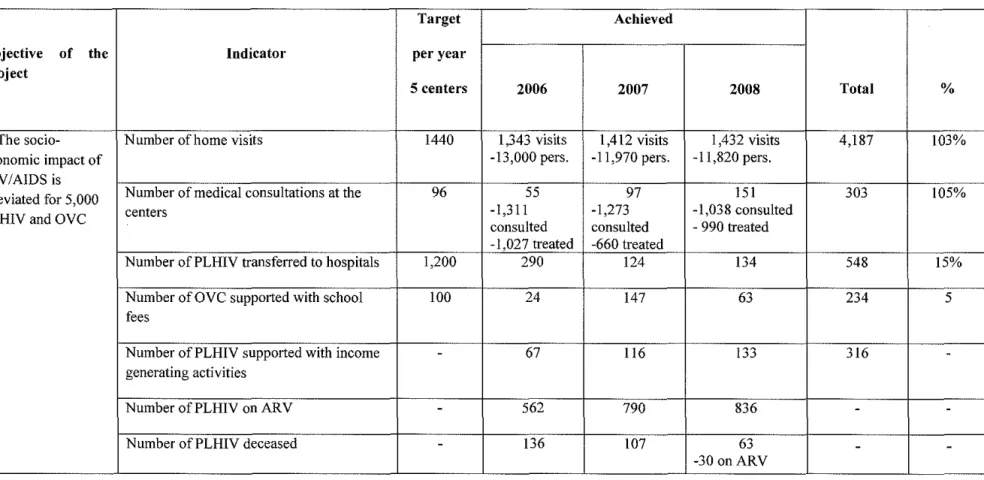
Table 2. Summary of Results Achieved: Key Indicators (based on FP Annual Reports 2006-2008)
Target Achieved
Objective of the Indicator per year
Project
5 centers 2006 2007 2008 Total %
2. The socio- Number of home visits 1440 I ,343 visits I ,412 visits I ,432 visits 4,187 103%
economic impact of -13,000 pers. -II ,970 pers. -II ,820 pers.
HIV/AIDS is
alleviated for 5,000 Number of medical consultations at the 96 55 97 151 303 105%
PLHIV and OVC centers -1,311 -1,273 -1,038 consulted
consulted consulted - 990 treated -1,027 treated -660 treated
Number ofPLHIV transferred to hospitals 1,200 290 124 134 548 15%
Number of OVC supported with school 100 24 147 63 234 5
fees
Number ofPLHIV supported with income
-
67 116 133 316-generating activities
Number ofPLHIV on ARV
-
562 790 836-
-Number ofPLHIV deceased
-
!36 107 63-
--30 onARV
- - - ...
information on its clients and leaves clients open to discrimination and poor treatment.
Additionally, it was requested that the project increase its budget for the purchase of medicine,
especially to treat malaria, Ois and complicated conditions.
Following discussions with the military authorities, the Camp Kokolo team was able to negotiate
that all Femme Plus beneficiaries, civilian or military, in need of medical care be treated for free
at the military hospital (medicine and food must be paid however). Although this is
commendable, it has resulted in an increased demand and use of services by beneficiaries,
leaving the organization with high medical bills which it does not have the resources to pay.
2.3 Orphans and Vulnerable Children (OVC)
The primary support provided by Femme Plus to OVC is with regard to school fees and the
provision of school kits (books, materials, uniform). Staff link with school principals to
negotiate reduced school fees and to monitor the child's progress. Most support goes to primary
school students, followed by secondary school and vocational training. This has allowed OVC to
be reintegrated into school and a number of children have graduated and gone on to college. Due
to funding constraints, however, this support has dwindled over the years with fewer and fewer
OVC being able to benefit from assistance. The organization currently uses broad selection
criteria such as being a PLHIV or person affected by HIV, vulnerability of the family and the
child's desire to study. Given that the number of children meeting these criteria outnumbers the
resources available, it is not clear on what basis decisions are taken.
Among those beneficiaries interviewed who had received assistance with school fees, it was
difficult to assess whether this support has been continuous or consistent with some people
Plus had not been able to. There is also no clear data on the number of children who have had to
stop school due to the loss of support. Among beneficiaries who are raising orphaned family
members in addition to their own children, it was also difficult to assess which children are
schooled and whether this is due to Femme Plus support or paid for by their families. Some
beneficiaries report difficulties meeting the constant demands of "unofficial" payments at
universities; one widow asked whether Femme Plus could support at least one child to attend
university or formal training as future head of household.
If OVC are HIV positive, then they and their families may benefit from psychosocial support,
meetings and income generating activities. However, with the exception of assistance with
school fees, there are currently no plans within the project or the organization to provide any
other direct support to OVC living in AIDS-affected households (for example, counseling,
planning, memory books) nor are there any links with organizations that may do so. In a few
cases where a separated or widowed beneficiary has passed away, Femme Plus staff have tried to
reunite her children with their fathers or relatives and, when this was not possible, have arranged
for the children to go to a foster home or orphanage.
2.4 Income Generating Activities (IGA)
Since expanding its support into the creation of IGA, FP has gradually increased the number of
beneficiaries benefitting from credit and training with the aim to render PLHIV and OVC
families more independent. Individuals are selected based on specific criteria and given USD
I 00-150 credit and training on small business management. Beneficiaries are expected to
reimburse approximately 2/3 of the credit to Femme Plus who places these funds in a savings
account either at a cooperative or a local bank. On the basis of these savings, beneficiaries can
then obtain a second and third line of credit. At the moment, Femme Plus only manages
individual I GAs and not group I GAs.
Although the potential of IGA is well-appreciated by staff and beneficiaries with many
recommending that more be invested in this activity so that more people can become
autonomous and beneficiaries can obtain higher levels of credit, there are numerous challenges to
its successful implementation and any consequent impact on beneficiaries. These include a need
to better assess the activity selected by the beneficiary, that person's capacity to manage the
activity and whether there is any one in the family available to manage the activity on their
behalf should the person fall ill. Femme Plus team members and beneficiaries alike report
people failing with their business because it was physically too difficult to manage or because
they fell ill and there was no one else to take over. Earnings are often completely consumed by medical bills and school fees. Some beneficiaries also report a lack of interest or capacity to
manage a small business and a preference for stable employment.
It is difficult to fully grasp how the reimbursement is managed as beneficiaries did not seem clear as to whether they are reimbursing Femme Plus or managing a savings account. It also seems that several different offices are involved in the process thus compounding the confusion.
For example, credit may be given by one center, training is organized by the national office and
reimbursement is done via another center. While there are some success stories among
beneficiaries, this has not been sufficiently documented.
In the past year Femme Plus management has undertaken some work to improve the selection
criteria, accompaniment and monitoring of IGA beneficiaries. However, outcomes have yet to
months, Femme Plus plans to conduct an in depth market study on IGA for PLHIV, which will
address some of the issues noted above.
2.5 Advocacy
The main focus of Femme Plus's advocacy work is with regard to access to antiretroviral
treatment, and Femme Plus was a key participant in a national march organized in November
2007 to launch a national advocacy campaign to protest unequal access to ARVs in DRC.
Femme Plus continues to lobby government authorities, the military, service providers and
donors to facilitate access to ARV and offer medical treatment to its beneficiaries for free or at
reduced fees. The organization has also lobbied the World Food Program (WFP) to continue its
food aid for people on treatment.
2.6 Other support
Whenever possible, the organization tries to provide food aid and material support to vulnerable
beneficiaries although this is very sporadic. The project budget does not really allow for such
expenses, so Femme Plus depends on other donors for this. WFP used to provide food aid to
beneficiaries on treatment but this stopped two to three years ago. Funeral expenses are very
high in DRC, and this is a big problem for poor beneficiaries, especially military women many of
whom are in Kinshasa on their own.
B. Operation and Management
1.
Staff roles, motivation and participation
Femme Plus staff, activists and volunteers encountered are generally very dedicated and
motivated about their work with the organization. Some have been with the organization for
years and have had the opportunity to be promoted (volunteer to activist, activist to head of
center. .. ). A number of activists and volunteers are also beneficiaries. All those who
participated in the evaluation are well-informed with regards to the mission of Femme Plus and
the objectives of the project. They are proud of the organization for its pioneering work in
psychosocial support, for its strong commitment to PLHIV, for building staff capacity and for the
opportunities people have to share their concerns and contribute. Most cited a spirit of
volunteerism and wanting to help others as the reasons for joining Femme Plus; some mentioned
the experience and knowledge they have gained over the years as a reason for staying despite
low salaries. The job market has become increasingly competitive, and the difficulty to recruit,
train and retain qualified personnel is recognized by management.
While reporting lines are clear, there is some confusion among paid staff, activists and volunteers
as to whether job descriptions exist (they do). At times staff have been promoted or moved to
new positions but without sufficient orientation or training. There are also conflicting reports as
to whether volunteers are expected to work one or three days a week or whether this depends
simply on their availability; activists work three days. Together activists and volunteers conduct
home visits in their area, sometimes with a head of center, and follow up anywhere from forty to
eighty PLHIV and OVC beneficiaries.
The main difference between activists and the volunteers they supervise is that activists are
responsible for completing reports for the center. Although criteria for recruitment of activists
and volunteers exist on paper, it is questionable whether this is applied in practice. Activists
volunteers get reimbursed for transport based on actual expense. Both groups have requested
that their financial motivation be increased.
A common request by staff, activists and volunteers alike is for Femme Plus to cover their
medical expenses as this is currently not the case. Some staff also mentioned that their work is
difficult, that working conditions are challenging (not enough space, no computers, no means of
transport) and that workloads have increased following the closure of two centers and the follow
up of some of those beneficiaries. Some centers have been supplied with necessary equipment
but there is a fear that this will be stolen or disappear when used during outreach. Several of the
centers also experience regular power cuts.
There are several meetings organized each month between different actors within the
organization. While these provide an important opportunity for staff to discuss activities,
individual beneficiaries and difficulties encountered, they do not seem to address overall project
progress as such, especially the qualitative as opposed to quantitative aspects. While generally
knowledge of project objectives was high among those interviewed, there is much less
comprehension with regards to the project's context and future including its limitations. Recent
funding cuts and reduced activities are seen more as the result of the donors' displeasure or
disinterest with the project rather than the reality of cuts due to the global financial crisis and the
need to be more strategic.
2. Knowledge and learning
Staff, activists and volunteers across the board have accessed training on all aspects of
psychosocial support, counseling, home based care, following up PLHIV on ARV and the
management of income generating activities. Refresher training is also provided. Some staff
have received training on support group facilitation and VCT counselor training. Most training
is conducted in house with the support of external trainers from PNMLS and NGOs. In addition,
FP has also benefitted from ongoing capacity building support by Family Health International
(FHI) with regards to organizational management.
Staff cited the training they have received as not only a great learning experience but also a key
motivating factor in their work with Femme Plus. They are comfortable providing psychosocial
support to beneficiaries and share their knowledge on HIV I AIDS with their own families. On the
other hand, some mid-level management staff report that they lack job-specific training including
mobilization of resources, donor liaison and human resource management. It also seems that every one participates in the same trainings and that these are not necessarily adjusted depending
on people's roles within the organization, existing knowledge or capacity. One challenge with
sending staff to trainings and workshops outside of the country is that most don't have passports
and these are difficult and expensive to obtain.
There is a great deal of knowledge and experience within Femme Plus, but it is not sufficiently
documented. While the organization undertakes much effort in ensuring there are opportunities
for staff to meet and exchange, more could be done to document the outcomes of these meetings
and to involve staff and beneficiaries in qualitative assessments, case studies and lessons learned.
Several staff noted their appreciation for participating in this evaluation as it was the first time
they had met a donor and were asked to comment on the project's achievements.
3. Monitoring and Evaluation
The main tools used by the project for monitoring and evaluation are supervisory visits by the
networks and staff meetings. Heads of centers supervise the community networks, organize
meetings with activists and volunteers and conduct home visits. Since the project began in 2001,
two evaluations have been conducted by CRS staff.
Monthly information is collected by the heads of center and sent to the technical assistant at the
national office for verification. All reports are currently written manually at center level and it is
the technical assistant's responsibility to computerize the data, to analyze the results and present
a report to the director. The technical assistant also prepares the quarterly and annual monitoring
reports to be sent to Tr6caire and CRS. In the past, monthly reports from the centers were
shared with the four social assistants based at the national office for initial review and comments,
though it seems that this is no longer the practice and that they receive the final reports from the
technical assistant instead.
There is not a central repository at the moment for data storage. Data is largely kept on the
technical assistant's computer, and the system as it currently exists does not allow easy retrieval
of project data. Data from phase I, for example, has been lost due to virus problems and
insufficient back up.
The monitoring reports submitted by Femme Plus are largely based on quantitative data with
much focus on outputs (number of activities, number of participants, number of visitors, etc.).
However, qualitative indicators and data analysis remain quite weak. Given the wealth of
information and experience within the organization, the way information is collected, analyzed
and presented should be strengthened. This includes further breaking down data to more
accurately represent results; for example, as seen in tables 1 and 2 on pages 19 and 23,
respectively, consultations and visits are counted aggregately rather than per person.
C. Sustainability
1.
Relevance of the project
Femme Plus was among the first organizations in DRC to do community-based VCT, to promote
positive living and to provide psychosocial support and continues to be recognized nationally
and internationally for its work. The organization's strategies with regard to prevention, care and
support as well as social mobilization are in line with national policy, including the Ministry of
Health's National Plan 2008-2012 and the recently released 2010-2014 Plan of the Multisectoral
Program. In Kinshasa, the "mitigation of impact" project has brought services to areas where
previously there were none, and project staff continue to reach new beneficiaries despite
financial and logistical challenges. In response to the high prevalence of HIV among women
survivors of sexual violence, Femme Plus has responded as an organization by including women
survivors as a target group. The organization is well-respected by partners for its role in
advocating on behalf of PLHIV across the country.
Given the high levels of poverty in urban Kinshasa, the continuous demands of an ever growing
number of beneficiaries and the current inability of the public system to comprehensively
respond to the needs of PLHIV, the Femme Plus project and the strategies used continue to be
relevant. However, rather than chase new opportunities such as expanding its medical coverage,
the organization should reinforce its existing structures and focus on what it does best.
2. Partnership
Overall, Femme Plus has a positive relationship with its partners, which is demonstrated by its
number of national task forces. Project staff have built a strong partnership with the hospitals
and health centers to whom Femme Plus refers its beneficiaries and who refer clients to Femme
Plus in return. They have also worked hard to establish good working relationships with the
military hierarchy and commuuity leaders. Partner meetings are usually organized on a monthly
basis and invitees include the head of the commune or his representative, the head of the health
zone and other NGOs working in the area.
While it was not possible to assess the exact participants, frequency or agenda of these meetings,
it provides an important opportunity for organizations to be informed of each other's activities,
to coordinate and to refer beneficiaries if necessary. One topic that was mentioned by Femme
Plus a few times is the problem of beneficiaries registering with several organizations for
services, sometimes using false names, and thus meetings are often about how to address this
duplication. Some new community-based NGOs have also lured Femme Plus beneficiaries with
promises of better support and financial assistance, but this has never surmounted to anything
and beneficiaries eventually return to Femme Plus.
While opportunities for better collaboration, more transparency and partnership among
organizations working on the ground should be further explored and encouraged, it should also
be recognized that this is difficult in the current context given the multiple needs, the difficult
operating environment for local organizations and the increasing competition for limited
resources.
3.
Funding
The issue of funding is a critical one for the project today. As of late 2009, Tr6caire is the
to maintain its current number of centers, activities and beneficiaries. This also needs to be
clearly communicated by senior management to project staff, some of whom believe that
Tr6caire is stopping its funding and that the project will have to close, while others envision a
project that should expand geographically (i.e. more centers and more beneficiaries) and
programmatically (i.e. IGA, school fees and medical care) all of which demands more resources.
While the decision to appoint a long serving staff member as assistant in charge of resource
mobilization is a positive one, more support should be given to this person to build their capacity
in fund raising and to engage them in discussions with donors. This would also allow Femme
Plus to map existing donors interested in supporting HIV work in Kinshasa and to be informed
and prepared when funding opportunities or deadlines arise.
4. The way forward
The project as it exists today continues to respond to an important need with regards to reducing
the risk of HIV transmission, mitigating the socio-economic impact of HIV I AIDS and
encouraging PLHIV to live positively and value their lives again. However, given the changing
context in DRC (an increasing "ruralization" of the pandemic, increased competition for funding,
reduced funding available for the project), it is important for Femme Plus to capitalize on its
experiences and lessons learned and engage in a strategic planning process with its stakeholders
to identifY the organization's strengths, weaknesses, opportunities and threats.
Despite the multiple needs of its beneficiaries, Femme Plus cannot respond to all of them and the
organization must be more selective of the types of activities it can engage in and how long
expenence m promoting the independence of PLHIV and g1ve people the technical and
organizational skills to render them more autonomous.
When asked about a long term VISIOn for the organization, nearly all staff, activists and
volunteers raised the idea of building a center which could temporarily house PLHIV who have
been abandoned or rejected from their homes, provide medical care, provide nutritional support
for those with low Body Mass Index (BMI) and assist with the search for employment. This
would be a very costly intervention to build and maintain, demand would far outnumber capacity
and there is a risk that it would increase participating PLHIV s' dependency on the organization.
Femme Plus has plarmed its strategic planning process for October 2009. This would be an
opportune time to conduct a SWOT analysis of the organization and to address some of the
issues that have been raised in this evaluation.
III.
Recommendations
These recommendations are based on the findings of the evaluation team following in-depth
discussions with Femme Plus staff, volunteers, partners and beneficiaries as well as Tr6caire's
more direct engagement with Femme Plus the past two years. Given current funding constraints,
not only for the project but also for the national office, the evaluator appreciates that it may be
difficult for Femme Plus to fully adopt and implement some of the recommendations notably
those that require a financial investment.
On the other hand, many of the recommendations can be implemented at no cost at all but
demand, instead, that the organization review its mode of operation, existing tools and the roles
and involvement of staff and beneficiaries. The upcoming strategic plarming process will be an
opportune time for Femme Plus to review and prioritize these recommendations, identifY persons
responsible for taking the lead and costing the activities, whenever necessary. It is also strongly
encouraged that all partners supporting Femme Plus be actively involved in the process and
identifY ways to strengthen their communication and cooperation, for example through joint
planning, implementation and monitoring activities.
Sensitization
• Strengthen the capacity of the centers to do community sensitization by supplying them
with necessary equipment;
• Produce IEC materials in Lingala and investigate the possibility of integrating more
images and less text for low literacy beneficiaries;
• Use data from VCT services to design the messages and to better identifY the target
groups for behavior change communication and V CT sensitization;
• Explore ways to encourage more men and, especially, partners to be engaged by
exploring models such as family VCT;
• Conduct a separate evaluation of the VCT component of the project.
Engaging PLHIV and their families
• Explore the feasibility of involving close family members other than confidants in
activities; relying on a young son or daughter to be the sole confidant may place them
under much stress when the parent falls ill or passes away;
• Explore whether support group meetings could be organized for child and adolescent
PLHIV instead of having them participate in groups with adults;
• Explore whether the different meetings organized each month at the centers could be
combined, decentralized or rescheduled to accommodate those beneficiaries who work
and to minimize travel for beneficiaries given the time and cost involved.
Psychosocial support
• Review the criteria for beneficiary recruitment, especially how vulnerability is defined as
this is currently quite broad and open to individual interpretation;
• Review on what basis contracts with beneficiaries are established, explore perhaps a less
formal means of engagement with beneficiaries and ensure that all those concerned are
properly informed;
• Explore the possibility of phasing out beneficiaries after a given time; for example,
encourage long term participation in support group and other meetings and encourage
long standing beneficiaries to support new members but build in clear targets with regard
to home visits, income-generating activities, school fees and other support;
• Establish links with organizations working in urban horticulture including Action against
Hunger who are developing tools and activities to improve food security for PLHIV;
• Investigate the issue of beneficiary dependency and expectations and address this also
with all staff and beneficiaries;
• Rather than completing a standard form following each home visit, focus more on
monitoring progress and qualitative outcomes using the initial targets set as a basis;
• In the case of concordant couples, ensure that both people are given the opportunity to
participate in services and that the needs of one do not overshadow the needs of the other.
Medical care
• Continue organizational focus on support and referral rather than direct care or treatment;
• Rather than expand further into medical care as an organization, continue instead to lobby
institutions for improved access to care and reinforce the partnership with existing
organizations and service providers;
• For specific needs such as an ambulance, approach donors such as embassies for a
possible donation.
• Reassess the increased referral of beneficiaries for free medical care at the military
hospital at Camp Kokolo given the inability of Femme Plus to meet the high cost of
medicine and food.
Orphans and Vulnerable Children (OVC)
• Review and standardize selection criteria;
• Document the outcomes of education support including number of children who drop out
of school due to a loss of Femme Plus support, schooling of orphaned children,
consistency of school fee payments, reasons for dropping out or failing school;
• Whenever possible, strengthen linkages with other organizations providing OVC support;
• Consider assigning one social assistant and a small team to follow up only OVC
beneficiaries and redesign support provided (e.g. home visits, counseling, support group
Income Generating Activities
• Ensure that recent tools developed by Femme Plus to help with the recruitment, training,
accompaniment and monitoring of IGA beneficiaries are applied and shared with staff;
• Ensure beneficiaries are clear on whether reimbursements to Femme Plus are managed as
savings accounts or loan repayments;
• Explore the possibility of group I GAs;
• Conduct an in depth market study on IGA with the assistance of an external consultant
with expertise in this domain and context and follow up with formal training for Femme
Plus staff on how to manage I GA.
Staff roles, motivation and participation
• Seek ways to retain and duplicate the spirit of volunteerism and motivation which
currently exists across the organization;
• Ensure people are familiar with their job descriptions;
• Review roles and job descriptions to optimize use of resources as the mam tasks
identified for social assistants, heads of centers, activists and volunteers are largely the
same despite hierarchical and remunerative differences;
• Review communication charmels and consider monthly meetings with key staff to engage
them in not only technical but also administrative, financial and fundraising 1ssues,
including a greater focus on project progress and prioritization;
• Engage key staff in budget planning;
• Ensure that budgets include fixed costs such as medical care for paid staff;
• Review the current practice of providing fixed allowances for some but not others.
Knowledge and Learning
• Explore how to better document and market the wealth of knowledge and experience that
exists within the organization;
• Review how trainings are organized and mm to tailor training to staff needs,
responsibilities and capacity;
• As recommended by staff, identify and train (TOT) in house trainers rather than
continuing to depend on external trainers for all staff training;
• Strengthen links and exchanges with the provincial office m Kinshasa who is
implementing a similar project in the east of Kinshasa and capitalize on its experiences
especially with regard to IGA;
• Donors supporting Femme Plus should aim to coordinate their support to the organization
and schedule opportunities to exchange on project design, implementation and M&E;
Monitoring and Evaluation
• Integrate more qualitative indicators and strengthen data analysis;
• Further break down quantitative data (e.g. number of home visits per person per year
instead of total cumulative home visits for all beneficiaries) to allow for better analysis;
• Review the role and participation of all social assistants in the M&E process;
• Consider assigning a staff person to assist the Technical Assistant with the