Orange County Department on Aging
Capstone Summary Report (2013-2014)
Implementation of Project EngAGE: A Leadership Initiative to Improve the Health
and Quality of Life of Older Adults in Orange County, NC
MPH Student Team: Jessica Boten
Rebecca Bruening Yvette Garcia Missri Kellie Walters Callie Womble
Capstone Preceptors: Janice Tyler
Mary Fraser, DSW, MPA
Faculty Advisors: Jason Smith, PhD, MPH Angela Thrasher, PhD, MPH
Honor Code:
Abstract
Background: The world is aging, creating both challenges and opportunities for improving quality of life for older adults. The number of people worldwide aged 60 years and over is projected to increase from 605 million to 2 billion between 2000 and 2050, doubling from about 11% to 22% of the population in the same time period. North Carolina and Orange County match the national aging trends. The Orange County Department on Aging (OCDOA) Master Aging Plan (MAP) outlines pertinent areas to improve the quality of life for older adults living in Orange County. Project EngAGE is a 12- week action-oriented senior leadership program that addresses two major goals of the MAP: (1) information dissemination and (2) service gap resolution. In Project EngAGE, senior leaders are trained to become resource leaders who address concerns in their communities. Upon graduation from Project EngAGE, senior leaders organize themselves in Senior Resource Teams (SRTs) to collaborate on community projects. Methods: Two major activities were conducted during the Capstone project: (1) development of Project EngAGE and (2) implementation of the first phase of Project EngAGE. To develop Project EngAGE, we established long-term goals, adapted the existing Haywood County EngAGED curriculum to meet the needs of Orange County older adults, and created an evaluation plan and tools for the program. Subsequently, to
implement Project EngAGE, we recruited for the program and managed program logistics such as budget creation, session planning and coordination, program facilitation and program evaluation. Results: Our key findings can be sorted into two groups: (1) results from development of Project EngAGE and (2) results from implementation of Project EngAGE. Within the development of Project EngAGE, we created the mission statement, goals, objectives, and logic model for Project EngAGE that informed the
development of 12 lesson plans to address a variety of topics. Each lesson plan contains a brief
description of the session, objectives, key knowledge points, methods, operational materials, an agenda of the class, and resources related to the topic. The evaluation plan and tools guided the Capstone team to ensure that all of the data were properly collected throughout the implementation of the program. During the implementation of Project EngAGE we recruited 15 senior leaders, exceeding our goal of 10-12, through personal interviews, snowballing and promotional materials. The participants came from a variety of rural communities, including three participants from Bingham, four participants from Little River, and one participant from each of the following communities: Cedar Grove, Mebane, Eno, and New Hope. The implementation of the program led to the development of handouts that can be utilized for future
Acknowledgments
Acronyms and Public Health Terms
CDC: Centers for Disease Control and Prevention COSC: Central Orange Senior Center
Central Orange Senior Center (COSC) is a senior center located in Hillsborough North Carolina where most of the Project EngAGE sessions will be held. COSC offers a variety of programs including classes, wellness programs, trips and lunches.
MAP: Master Aging Plan, 2012
The Master Aging Plan (MAP) is a strategic plan for OCDOA. In 2000, the OCDOA was the first county in North Carolina to create a five-year MAP. Today, the 2012-2017 MAP is community oriented and includes public input throughout every step. MAP is dedicated to the promotion of equity around the county.
MPH: Master’s of Public Health
OCDOA: Orange County Department on Aging
The Orange County Department of Aging’s (OCDOA) mission is “to provide leadership in planning and operating a system of integrated aging services through state of the art senior centers, serving as focal points for coordinated community and individualized programs designed to educate seniors and their families and maximize the health, well-being, community engagement, and independence of older adults at all functional levels” (MAP, 2012)
SDV: Self-Directed Volunteer
SMART: Specific, Measurable, Attainable, Relevant, and Time-Bound SRTs: Senior Resource Teams
Table of Contents
Abstract ... 2
Acknowledgments ... 3
Acronyms and Public Health Terms ... 4
Introduction ... 6
Capstone Project and Project EngAGE ...6
OCDOA & Project EngAGE ...6
Table 1: Project EngAGE Goals ...7
Table 2: Major Deliverables ...8
Methods ... 14
Formative Work & Orientation ... 14
Overview of Capstone Project Work ... 15
Developing Project EngAGE ... 15
Table 3: Project EngAGE Preliminary Outcome Objectives ... 15
Implementing Project EngAGE ... 17
Results ... 19
Results from the Development of Project EngAGE ... 19
Table 4: Key Components of EngAGED that were utilized in Project EngAGE ... 20
Results from the Implementation of Project EngAGE ... 21
Figure 2: Map of Participants Locations in Orange County ... 21
Table 5: Summary of Process Evaluation Objectives & Findings... 22
Table 6: Summary of Outcome Evaluation Objectives & Findings ... 23
Conclusion ... 27
Appendices ... 29
Appendix A: Deliverable Tables ... 29
Appendix B: North Carolina Older Adult Projections ... 34
Appendix C: Project EngAGE, MAP Goals, Objectives ... 35
Introduction
Capstone Project and Project EngAGE
Capstone is a team-based, mentored, and evaluated service-learning opportunity designed to
improve Master’s students’ skills while aiding the work of local partner organizations and improving
public health. This yearlong project is a requirement of the Department of Health Behavior, Master’s of
Public Health (MPH) curriculum at The University of North Carolina at Chapel Hill Gillings School of
Global Public Health. Five MPH in Health Behavior candidates formed the student team responsible for
this Capstone project. The Capstone community partner was the Orange County Department on Aging
(OCDOA) and the Capstone team’s preceptors were Janice Tyler, Department Director, and Mary Fraser,
Director of Aging Transitions.
OCDOA & Project EngAGE
OCDOA provides services for Orange County’s older adults and their caretakers, with their
mission being “to provide leadership in planning and operating a system of integrated aging services
through state of the art senior centers, serving as focal points for coordinated community and
individualized programs designed to educate seniors and their families and maximize the health,
well-being, community engagement, and independence of older adults at all functional levels” (Goldberg,
Major, Perritt, Prentice-Dunn, & Woodruff, 2012). OCDOA provides a variety of programming through
its senior centers that include wellness and exercise-based classes and activities, entertainment
opportunities, and communal lunches. Additionally, OCDOA offers aging transition services that assist
older adults in finding the resources they need to age well and independently. These services include
support accessing social services, long term and short term care planning, and an aging helpline. OCDOA
also houses the R.S.V.P. volunteer program that matches adults, aged 55 and older, with community
volunteer opportunities. OCDOA’s main offices are located in both Chapel Hill and Hillsborough, North
Carolina, and encompass two senior centers: the Seymour Senior Center, in Chapel Hill, and the Central
Project EngAGE arose from the work of two previous OCDOA Capstone teams. The 2011-2012
OCDOA Capstone team’s 2012-2017 Master Aging Plan (MAP) identified resource and information gaps
for older Orange County adults (Goldberg et al., 2012). Using the MAP and additional formative
research, the 2012-2013 OCDOA Capstone team specifically recommended, “developing a senior
leadership program to train older adults to be resources in their own neighborhoods” (Black, Frank,
Kolander, LaMotte & Weinhold, 2013). As such, the current 2013-2014 OCDOA Capstone team’s goal
was to create Project EngAGE.
Project EngAGE is a 12-week leadership-training program, whose mission is to engage and
enable older adults in Orange County to serve as leaders and resources, and make their community an
ideal place to age well. During the 12-week course, senior leaders learn about community resources,
resource and resource access gaps, and methods of information dissemination. The course is based at the
COSC in Hillsborough, and the group takes field trips throughout Orange County.
By tapping into the growing resource of skilled, experienced, and motivated Orange County older
adults, Project EngAGE ultimately seeks to create self-directed Senior Resource Teams (SRTs). SRTs
will consist of Project EngAGE graduates, organized in their local communities to help other older adults
and their caregivers learn about and access needed local services. SRTs will not only provide a structure
for older adult volunteers to contribute their skills and wisdom, but also provide a mechanism for
community engagement that has been shown to produce benefits for both volunteers and recipients
(Crites, 2011). Project EngAGE’s major goals are described below in Table 1:
Table 1: Project EngAGE Goals
Goal 1: To develop a network of engaged and informed senior leaders to create new supports for the aging community in Orange County.
Goal 2: To form self-directed Senior Resource Teams that will act as resources to older adults and their families.
Goal 3: To have Senior Resource Teams identify assets, needs, and issues of importance in their communities and advocate for solutions to those issues.
Haywood County, NC (Crites, 2011; Goldberg et al., 2012; Walters, 2013). Specifically, Project EngAGE
aims to address two major MAP goals: (1) information dissemination, and (2) service gap resolution
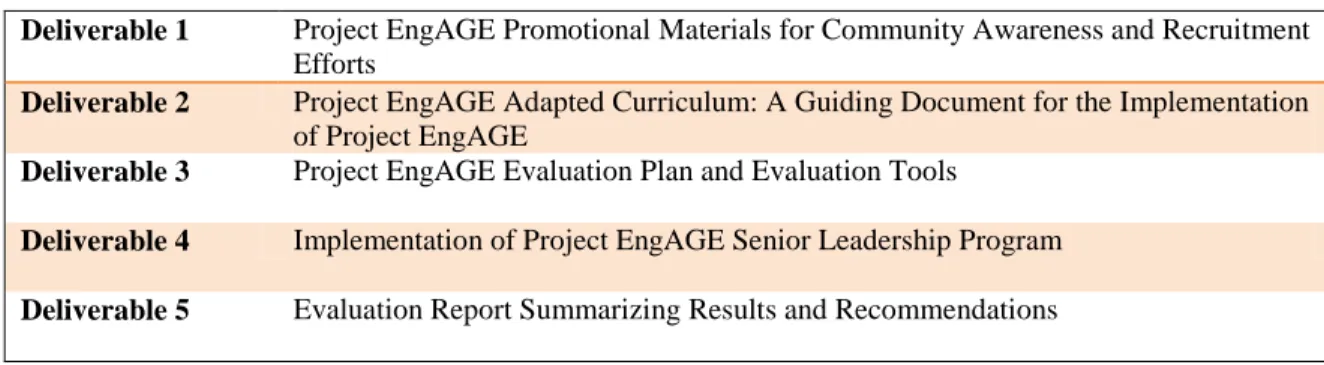
(Goldberg et al, 2012). To reach these goals, the Capstone team completed five deliverables, as described
in Table 2:
Table 2: Major Deliverables
Deliverable 1 Project EngAGE Promotional Materials for Community Awareness and Recruitment
Efforts
Deliverable 2 Project EngAGE Adapted Curriculum: A Guiding Document for the Implementation
of Project EngAGE
Deliverable 3 Project EngAGE Evaluation Plan and Evaluation Tools
Deliverable 4 Implementation of Project EngAGE Senior Leadership Program
Deliverable 5 Evaluation Report Summarizing Results and Recommendations
The Capstone Team’s logic model, contained in Figure 1, describes the resources, activities,
intended outcomes, and impacts of our work. These key inputs and activities encompass our team’s work,
which led to our intended results, consisting of our main outputs and impacts. Our logic model illustrates
how our initial inputs, such as our team’s efforts, ultimately lead to Project EngAGE’s impact, including
Background
Aging Around the World and in North Carolina
The world is aging, creating both challenges and opportunities for improving quality of life for
older adults (Anderson, Goodman, Holtzman, Posner, & Northridge, 2012). The number of people
worldwide aged 60 years and over is projected to increase from 605 million to 2 billion between 2000 and
2050, doubling from about 11% to 22% of the population in the same time period (World Health
Organization, 2012). In the United States alone, the proportion of persons aged 65 and older has more
than tripled over the past century, from 4.1% in 1911 to 12.9% in 2011 (Anderson, Goodman, Holtzman,
Posner, & Northridge, 2012), and by 2040 there will be approximately 80 million older adults, over twice
for Disease Control and Prevention (CDC) has called on public health practitioners to address the leading
causes of death and to enable high quality of life at every age (Anderson et al, 2012).
North Carolina and Orange County largely reflect national aging trends (see Appendix B.
The proportion of North Carolinians aged 65 and older increased by 25.7% from 2000 to 2010, to become
12.9% of the state's total population, and 13.2% of Orange County’s total population in 2011 (Orange
County Health Department, 2012; UNC Institute on Aging, 2011). In 2011, 19% of North Carolinians aged 65 and over belonged to ethnic minority groups; 15.7% were African American, 1.2% were Hispanic
or Latinos of any race, 0.8% were American Indian or Alaska Native, and 0.9% were Asian(Orange
County Health Department, 2012). Between 2010 and 2030, North Carolina's 65 and older population is
projected to increase by over 400,000 persons per decade, reaching 2.14 million, or about 18% of the state
total (UNC Institute on Aging, 2011). As these demographic trends continue North Carolina and Orange
County public health practitioners must be cognizant of the quality of life of their older adults.
Information and Resource Gaps for Older Adults in Orange County
The Master Aging Plan (MAP) identifies information dissemination and service gap resolution as
two major goals to increase the quality of life for Orange County older adults. Older adults, particularly
those in rural areas, experience challenges accessing essential services and programs – such as healthcare,
social activities, and transportation. By addressing the current gaps in services and ensuring that
information about current services are disseminated widely, practitioners can help to resolve some of the
challenges older adults face and improve quality of life.
Older adults vary in their preferred channel to access resources and information (Black et al.,
2013). The OCDOA 2012-2013 Capstone Team concluded that while the Internet was the most popular
way to find information, most adults aged 70 years or older do not use the Internet to access information.
Though many 55 to 70 year olds do rely on the Internet, its use may be limited among lower
preferred sources of information for both urban and rural Orange County older adult populations include
newspaper, television, radio, and health care providers (Black et al., 2013). Involvement in clubs or
voluntary organizations is associated with greater awareness of community services among both urban
and rural residents (Black et al., 2013). For Orange County rural populations, however, “word of mouth is
the most trusted form of communication about information” (Black et al., 2013).
The MAP identifies eight goals with accompanying objectives, aimed at addressing gaps and
increasing quality of life for Orange County older adults (Goldberg et al, 2012). Appendix C outlines the
MAP’s goals and objectives, and how Project EngAGE addresses each objective. Additionally, interviews
with Orange County residents identified resource gaps that included lack of transportation, limited social
opportunities, and healthcare gaps (Walters, 2013). Further, the participants stated that there is limited
access to local services, aging-in-place resources, healthy food, and affordable senior housing options.
Other less frequently identified resource gaps included emergency preparedness, racial segregation,
community and political awareness, legal issues, and finance education (Walters, 2013). These gaps affect
all Orange County older adults but are especially salient in rural communities (Walters, 2013).
Accordingly, Project EngAGE aspires to address resource gaps and barriers in Orange County in order to
make it an ideal place to live and age well.
Addressing Information and Resource Gaps for Older Adults in Orange County
A review of the literature revealed few programs that address the information and resource access
needs of older adults; however, the EngAGED program and the model it was based on, Wisdom Works:
Building Better Communities, are examples of how older adults can take an active role in closing this gap
in their communities through an evidence-supported social network strategy(Southwell, 2013).
Wisdom Works intends “to create self-directed, diverse teams of mature volunteers and, in the
process enhance senior volunteer leadership skills” (The National Council on the Aging (NCOA), 2005).
sites, two of which were in North Carolina, generated volunteer projects that addressed the community’s
needs and functioning of self-directed volunteer (SDV) teams, both of which were correlated with
participant satisfaction (NCOA, 2005).
EngAGED is a long-running senior leadership program based on the core principles of Wisdom
Works provided by Haywood Community Connections in Haywood County, North Carolina (Crites,
2011). Haywood County, like Orange County, faces the challenge of a rapidly aging population and
limited resources to serve it (Crites, 2011; Goldberg, Major, Perritt, Prentice-Dunn, & Woodruff, 2012).
EngAGED includes two key components that reflect the Wisdom Works model: 1) a 16-week course in
which participants learn about and visit community resources for older adults, including those related to
aging at home, mental health, wellness, and long term care, and 2) the creation of Senior Resources
Teams (SRTs) that work to identify and meet community needs (Crites, 2011). Over six years and 12
classes, EngAGED has produced positive results for Senior Leaders and communities alike (Crites, Gold,
& Young, 2013). Participants in the fall 2012 class reported an increased sense of community and social
connectedness after the program (Crites, Gold, & Young, 2013). In 2012, SRT members logged 13,002
hours of service valued at $260,040 (Haywood Community Connections, 2012). Team projects have
included establishing a community kitchen, hosting a senior emergency preparedness event,
disseminating information about senior programming, and beginning a Senior Advocacy Network (Crites,
Gold, & Young, 2013). Success of both Wisdom Works and EngAGED is rooted in a belief that the aging
population brings significant value to community programs and the use of self-directed teams.
Many programs that involve older adults as volunteers, such as foster grandparent programs,
Experience Corps, Wisdom Works, and EngAGED, recognize the wisdom, skills, and value these
individuals bring to organizations (Evans & Carnegie, 2009; Fried et al., 2004). Indeed, utilizing the
talents of enthusiastic and highly skilled Baby Boomer volunteers is one goal of Wisdom Works and is a
guiding principle of EngAGED (Crites, 2011; NCOA, 2005). Considering 60-year-olds may have a third
contribute to their communities and enhance their own well-being (Fried et al., 2004; Hinterlong &
Williamson, 2006; Morrow-Howell, 2012). EngAGED seeks to capitalize on the assets of seniors by
providing an active and intentional learning model that satisfies the principles of adult learning (Knowles,
1996; Thurber, 2003).
Recently, SDV teams have been developed as a way to harness individuals’ knowledge and skills
in order to make a difference in their communities. SDV teams are “multi-skilled group[s] of volunteers
who share responsibilities for addressing a challenge or opportunity in their community” (SDV Network,
2012). SDV teams are self-led and share responsibility for group decision-making, conflict resolution,
project planning and implementation, measuring effectiveness, and developing processes for recognizing
accomplishments (Hickman & Creighton-Zollar, 1998; Manz & Sims, 1987; Spreitzer, Cohen, &
Ledford, 1994; NCOA, 2005). WisdomWorks and EngAGED use SRT as SDV teams. The SRTs are a
way to organize community volunteers into groups that can determine the needs of the community based
on their knowledge, expertise, and skills.
Group dynamics play a major role in SDV teams’ effectiveness (Hickman & Creighton-Zollar,
1998). Some factors that affect their productivity include workload division, diversity, level of
communication, open-mindedness, and level of contribution to the team (Hickman & Creighton-Zollar,
1998). It has also been shown that groups are more successful when they have clear direction, strong
leadership, well-articulated team-oriented tasks, and support from their agency (Levi & Slem, 1995). Both
Wisdom Works and EngAGED train and support SDV teams to promote strong group cohesion and team
effectiveness.Project EngAGE draws on the aforementioned methods to meet the needs of older adults in
Orange County. Through recruiting a diverse cohort of skilled leaders, Project EngAGE values the talents
of this community. Comparably, the curriculum focuses on relationship building between participants,
and with local leaders, visits to local organizations and agencies, and learning from relevant guest
to their communities, equipped and motivated to share information about community resources and to fill
resource gaps with their own unique projects.
Methods
Formative Work & Orientation
OCDOA has a long-standing relationship with the UNC Health Behavior department, having
hosted two prior Capstone teams whose work led to the decision to implement Project EngAGE. Prior to
our involvement, OCDOA purchased Haywood County’s EngAGED toolkit and access to consultations
with the program’s creators. Two Capstone team members, Kellie Walters and Yvette Garcia Missri,
worked at OCDOA as practicum students in summer 2013, allowing them to learn about the organization
and population. As formative research for Project EngAGE, Kellie conducted 19 qualitative interviews
with older adults in Orange County. Through this work she identified community needs and assets,
recruitment strategies, potential participants, and recommendations for the program. During this time, the
Project EngAGE Advisory Committee, a subset of the Aging Advisory Board, was created to provide
guidance and stakeholder input during the first year of the program.
Several activities were planned to introduce the Capstone team to OCDOA, Orange County, and
Project EngAGE. Preceptors took three of the Capstone team members on a tour of the county and the
senior centers. Furthermore, Capstone team members took part in an orientation to Project EngAGE,
facilitated by Kellie, which included a Skype videoconference with the three EngAGED consultants in
Haywood County. All Capstone team members reviewed prior Capstone deliverables, including the MAP,
formative work, the Project EngAGE Recruitment Strategy & Program Recommendations documents,
and the EngAGED toolkit. Finally, to prepare for the planning and implementation of Project EngAGE,
the three EngAGED consultants from Haywood County planned and facilitated a four-hour facilitation
training for the Capstone team and OCDOA staff. We utilized all of this work to inform the planning and
Overview of Capstone Project Work
This Capstone project included two overarching sub-projects: (1) developing Project EngAGE
and (2) implementing the first iteration of Project EngAGE. To develop this program, we identified
long-term goals, adapted the EngAGED curriculum, and created an evaluation plan and tools. To implement
Project EngAGE, we promoted the program, recruited participants, created a budget, planned and
coordinated program sessions, facilitated program sessions, and evaluated the program. Throughout this
entire process, stakeholders were heavily involved. Stakeholders and consultants included: OCDOA
preceptors, OCDOA staff, area aging experts, the Project EngAGE Advisory Committee, Project
EngAGE participants, and EngAGED consultants. We turned to our stakeholders to solicit ideas,
troubleshoot challenges, make key program decisions, gather feedback, and plan for the future and
sustainability of Project EngAGE.
Developing Project EngAGE
We began the planning and adaptation process by developing the mission and long-term goals of
Project EngAGE. We utilized prior student work at OCDOA to understand the needs, assets, and goals of
the community. Additionally, we reviewed and considered Haywood’s EngAGED core components,
which include seniors as resource leaders, an adventurous and non-traditional training, and the use of
SDV teams. Using this information, we presented ideas to the Advisory Committee, who provided their
opinions on the overall mission and goals of Project EngAGE. After multiple meetings and discussions,
we reached consensus on a mission statement and the long-term goals described in Table 1. Guided by
our overall mission and best practices largely developed through our core MPH course, "Planning Public
Health Interventions," we developed a list of five short-term objectives (see Table 3) that would be used
for outcome evaluation.
Table 3: Project EngAGE Preliminary Outcome Objectives
Objective 1: To advance senior leaders’ understanding of the local human service network for older
Objective 2: Increase senior leaders’ self efficacy for engaging their community: Increase the scores on participant self-assessment of comfort engaging their community by 25% upon completion of Project EngAGE as verified through self-assessment pretest and posttest data.
Objective 3: To increase senior leader intent to participate in the newly formed self-directed teams in their own community upon graduation: 80% of the seniors in Project EngAGE will intend to participate in self-directed teams upon graduation as verified through posttest data.
Objective 4: To train local senior leaders to serve as information resources in their communities: a)80% of the seniors in Project EngAGE will complete Project EngAGE as verified through attendance records. b) 80% of the seniors in Project EngAGE will be able to introduce, explain and recommend community resources upon completion of Project EngAGE as verified through a variety of learning activities during class session 12.
Objective 5: To develop a sense of community and lasting bonds amongst senior leaders: Increase rapport among the senior leaders as Project EngAGE progresses, as verified through weekly observations by the Capstone Team (in Facilitator Reflection document).
In tandem with the development of goals and objectives, we began to adapt the EngAGED
program by reducing the number of sessions and selecting topics to meet the needs of Orange County. To
achieve this, we considered the MAP priorities and recommendations from formative research, and
reviewed Haywood County’s topics. We created and refined a topic list, presented it to the Advisory
Committee for feedback, and identified the topics for our 12 sessions. We ordered the sessions so that the
program began with more substantive content topics to build a foundation and ended with skill
development and community engagement topics. Then, we created a name, description, and preliminary
resource list for each of the 12 sessions. These outlines guided the development of the lesson plans, which
were created in two waves, with sessions one through seven created first, and sessions eight through
twelve created next. Given our limited aging expertise and knowledge of Orange County resources, we
collaborated with OCDOA staff members and area aging experts to develop session activities, agendas,
and learning objectives and to identify speakers and site visits. This proved an iterative process, as
sessions changed throughout planning and implementation.
Next, we developed the process and short-term outcome evaluation plan, including SMART
(Specific, Measurable, Attainable, Relevant, and Time-Bound) objectives, a logic model of the program,
and a process for collecting and analyzing data. The evaluation plan included multiple tools to measure
participants, including their demographic information, personal history, concerns about their community,
and interest in Project EngAGE. The adaptation log documented the changes from the EngAGED
curriculum to the new Project EngAGE curriculum. For each session, the facilitation observation tool,
facilitator reflection guide, participant satisfaction activity, and the attendance log were developed to
acquire the participant satisfaction & knowledge, facilitator feedback, and attendance in order to gain a
better understanding of what went well in each session and areas for improvement for future iterations of
the program. Finally, the pre and post-course questionnaire, stakeholder satisfaction discussion guide, and
course completion log were tools to measure changes of participant knowledge over the program, the
satisfaction of our stakeholders with our program, and the participants’ completion of the program. These
tools were used to evaluate the extent to which the pilot program of Project EngAGE achieved its goals
and objectives. We used best practices from our Program Planning and Intervention courses, guidance
from faculty advisors, and feedback from older adults and EngAGED consultants to develop the
evaluation plan and tools.
Implementing Project EngAGE
We began the implementation process by promoting Project EngAGE to build recognition of the
program and recruit participants. Using the Project EngAGE Recruitment Strategy & Program
Recommendations document created over summer 2013, we created a “talking points” document to
encourage consistent messaging. Primary communications channels included press releases, Senior Times
articles, fliers placed throughout the county, and word of mouth.
The Advisory Committee and preceptors’ primary goal for recruitment was to find potential
participants who were not usually involved with OCDOA efforts. As such, we consulted the Advisory
Committee to identify priority communities and to gain recommendations for recruitment. The consensus
was that Project EngAGE’s inaugural class should focus on rural areas, but that participant fit superseded
Additionally, some participants self-selected after hearing about the program. We interviewed interested
participants in order to learn about them, explain Project EngAGE, and determine fit. To be selected,
participants had to be residents of Orange County, aged 55 and older, be respected and trusted in their
community, have a willingness to help their community, have good communication skills, and express
passion for the goals and activities of Project Engage. We presented a list of potential participants to the
Advisory Committee for approval, and the preceptors assisted us in approving final participants. The final
fifteen participants received a formal invitation and preliminary details about the class.
While lesson plans were created, we concurrently began to plan the day-to-day tasks and
responsibilities associated with managing a 12-week, 15 participant program. We developed a program
budget, which required consultation with EngAGED consultants, collaboration with preceptors, and
forward thinking to determine necessary supplies for future sessions and graduation. We secured a
primary location for the course, assigned roles (i.e., facilitators, co-facilitators), and ordered and prepared
course materials.
Each member of the Capstone team served as the facilitator for two or more sessions, as well as a
co-facilitator for two or more sessions. As facilitators, we developed the session lesson plan with
OCDOA staff and coordinated logistics for the five-hour session. We contacted and booked guest
speakers who could present expert views on relevant topics and organized site visits so that participants
could see Orange County resources first hand. In many cases, this required us to build new relationships
and promote Project EngAGE. We planned discussion and community building activities using our
facilitation training as guidance. Finally, we created handouts, including a standardized “session handout”
for each session that included an overview of the session, a detailed agenda, speaker information, and
session-related resources. Additional handouts supplemented the curriculum and were created in
collaboration with OCDOA staff and content-area experts.
Facilitators were responsible for coordinating and leading their sessions. Each week, prior to the
class, we emailed participants with the session’s details, including the agendas, lunch menu, and
participant binders, flip charts, and other materials; facilitated discussions; introduced speakers; and
collected evaluation data. For evaluation purposes, we led a discussion to gather qualitative satisfaction
data including information or experiences that pleased them, concerned them, or surprised them. This
information was used to adjust the current program and will be used to improve future iterations.
Following each session, we completed multiple evaluation tools including: the facilitation observation
tool, facilitator reflection guide, participant satisfaction activity, and the attendance log. A protocols
document was developed to outline these tasks and encourage consistency among facilitators.OCDOA
staff, especially the preceptors, played an active role in logistics planning and troubleshooting. Our
preceptors attended all of the program sessions for support and program sustainability purposes.
The Capstone team used both qualitative and quantitative methods in their analysis for the
evaluation report. These tools were completed by the Capstone team, Project EngAGE participants,
Advisory Committee, preceptors, and OCDOA staff. For the quantitative sections, including the
attendance proportions and certain questions from the pre-post participant survey, evaluators calculated
the proportions using Excel. For the qualitative analysis, which included the participant satisfaction
activity, participant interviews, advisory committee discussion, and facilitator feedback, the evaluators
developed an iterative process to identifying key themes. Due to time constraints, the data was analyzed
continually throughout the spring and new emerging themes were integrated into the analysis. All of the
data was compiled and analyzed into the evaluation report at the completion of the Project EngAGE
course. Based on the analysis and discussion, the Capstone team developed a series of recommendations
for the program and for future facilitators of Project EngAGE.
Results
Results from the Development of Project EngAGE
All process objectives, including fidelity, reach, satisfaction, and feasibility were achieved.
EngAGE curriculum, was measured throughout the development of the program. When the Capstone
team created the curriculum overview, we decided to keep two of the key components of EngAGED,
described below in Table 4. The non-traditional training component was the guiding principle for the
structure of our course. We integrated non-traditional training into each session, from field trips to
community resources such as the Orange County Health Department, Carol Woods, and the PACE
facility in Burlington. Although originally unplanned, we also added tours to each of the participants’
neighborhoods, which allowed them to learn about the county from each others’ perspective. The use of
the self-directed teams component framed the post-graduation plans for Project EngAGE and guided the
development of the program. Following these components throughout our adaptation assisted in achieving
our fidelity and participant satisfaction goals in our process evaluation. In our outcome evaluation, the
adaptation based on these components supported the development of SRTs and growth in the sense of
community among participants.
Table 4: Key Components of EngAGED that were utilized in Project EngAGE
1. Adventurous and non-traditional training through field trip based learning experiences
2. The use of self-directed teams
The curriculum, adapted from EngAGED, was shortened from a 15-lesson course to a 12-lesson
course. The majority of sessions from EngAGED were maintained or combined, although their titles and
objectives were adjusted to fit the needs of our participants. The 12 topics that were covered in the course
were: Introduction to Project EngAGE, Wellness and the Body, Wellness and the Mind, Aging in the
Community, Healthcare, Long-Term Care, Preparing for Emergencies, Dementia and Caregivers,
Understanding the System, Community Engagement, Skills Lab, and Preparation for Graduation. These
results, as well as the information on fidelity in Table 5 (see page 22), summarize the fidelity process
Results from the Implementation of Project EngAGE
The majority of process and outcome objectives were measured during the implementation of
Project EngAGE. To summarize the results from the reach objective, we exceeded our goal of recruiting
10-12 diverse individuals from rural, low-resource priority areas with the initial class of 15 senior leaders.
Furthermore, all of these individuals met our participant selection criteria as established by the Project
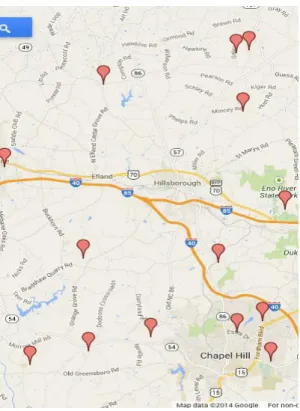
EngAGE Advisory Committee. Figure 2 is a map that represents the distribution of participants
throughout Orange County and is a visual representation of achieving our reach objective.
Figure 2: Map of Participants Locations in Orange County
The participants, facilitators, and stakeholders were all extremely satisfied with the first iteration
of Project EngAGE. Furthermore, each of these groups provided structural and logistical
recommendations to improve upon in future iterations of the programs. The feasibility objective showed
that future implementers of Project EngAGE will need a diverse skill set, including facilitation skills,
roughly 15-20 hours per week to plan and implement Project EngAGE. The summary of the process
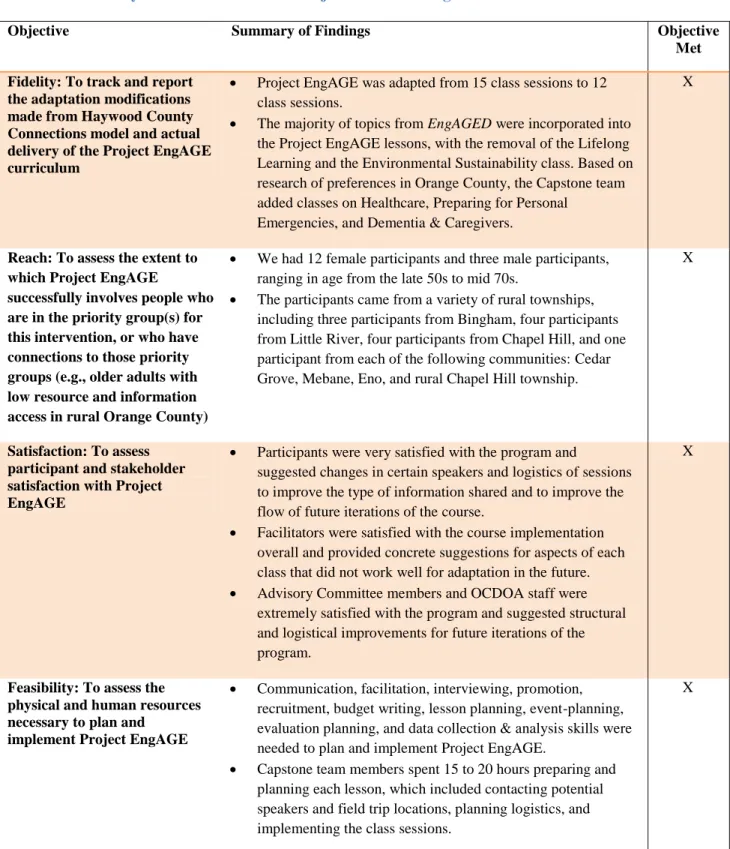
evaluation findings is shown in Table 5.
Table 5: Summary of Process Evaluation Objectives & Findings
Objective Summary of Findings Objective
Met
Fidelity: To track and report the adaptation modifications made from Haywood County Connections model and actual delivery of the Project EngAGE curriculum
Project EngAGE was adapted from 15 class sessions to 12
class sessions.
The majority of topics from EngAGED were incorporated into
the Project EngAGE lessons, with the removal of the Lifelong Learning and the Environmental Sustainability class. Based on research of preferences in Orange County, the Capstone team added classes on Healthcare, Preparing for Personal
Emergencies, and Dementia & Caregivers.
X
Reach: To assess the extent to which Project EngAGE
successfully involves people who are in the priority group(s) for this intervention, or who have connections to those priority groups (e.g., older adults with low resource and information access in rural Orange County)
We had 12 female participants and three male participants, ranging in age from the late 50s to mid 70s.
The participants came from a variety of rural townships, including three participants from Bingham, four participants from Little River, four participants from Chapel Hill, and one participant from each of the following communities: Cedar Grove, Mebane, Eno, and rural Chapel Hill township.
X
Satisfaction: To assess participant and stakeholder satisfaction with Project EngAGE
Participants were very satisfied with the program and
suggested changes in certain speakers and logistics of sessions to improve the type of information shared and to improve the flow of future iterations of the course.
Facilitators were satisfied with the course implementation overall and provided concrete suggestions for aspects of each class that did not work well for adaptation in the future.
Advisory Committee members and OCDOA staff were
extremely satisfied with the program and suggested structural and logistical improvements for future iterations of the program.
X
Feasibility: To assess the physical and human resources necessary to plan and
implement Project EngAGE
Communication, facilitation, interviewing, promotion, recruitment, budget writing, lesson planning, event-planning, evaluation planning, and data collection & analysis skills were needed to plan and implement Project EngAGE.
Capstone team members spent 15 to 20 hours preparing and
planning each lesson, which included contacting potential speakers and field trip locations, planning logistics, and implementing the class sessions.
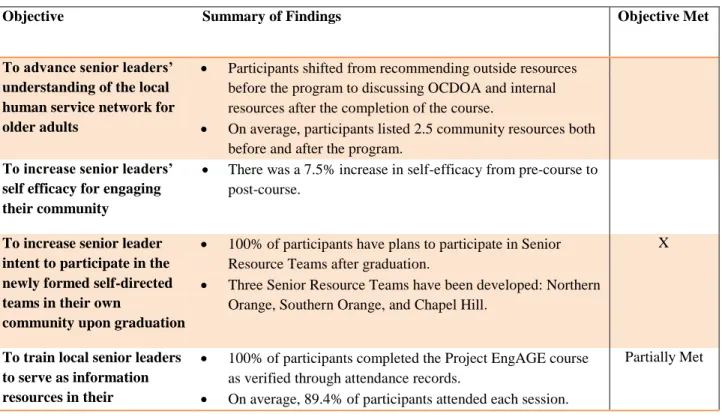
Project EngAGE met two and a half, out of the five outcome objectives. 100% of participants
completed the course, achieving half of the objective to train senior leaders to serve as information
resources in their communities. Additionally, 100% of Project EngAGE participants intend to work in
their SRTs after graduation. The program also successfully increased the sense of community and created
lasting bonds among participants. However, the goals of advancing senior leaders understanding of the
local service network, and of improving their self-efficacy for community engagement, were not met.
Significantly, for the understanding of the local service network objective, the Capstone team recognizes
that the knowledge evaluation tools focused on senior leaders knowledge of specific information, rather
than on measuring overall ability to find the resources. Further, for the self-efficacy outcome objective,
participants’ high measure of self-efficacy measured before the program made it difficult to identify
noticeable differences after the program. Changes to the evaluation tools could potentially more
accurately measure these objectives. Table 6 summarizes the outcome evaluations objectives and
findings.
Table 6: Summary of Outcome Evaluation Objectives & Findings
Objective Summary of Findings Objective Met
To advance senior leaders’ understanding of the local human service network for older adults
Participants shifted from recommending outside resources
before the program to discussing OCDOA and internal resources after the completion of the course.
On average, participants listed 2.5 community resources both before and after the program.
To increase senior leaders’ self efficacy for engaging their community
There was a 7.5% increase in self-efficacy from pre-course to post-course.
To increase senior leader intent to participate in the newly formed self-directed teams in their own
community upon graduation
100% of participants have plans to participate in Senior Resource Teams after graduation.
Three Senior Resource Teams have been developed: Northern
Orange, Southern Orange, and Chapel Hill.
X
To train local senior leaders to serve as information resources in their
100% of participants completed the Project EngAGE course
as verified through attendance records.
On average, 89.4% of participants attended each session.
communities The explanation of community resources objective was not met.
To develop a sense of community and lasting bonds amongst senior leaders
The sense of the community amongst the senior leaders has
grown over the course by taking interest in learning more about their fellow leaders, talking and brainstorming ideas for their Senior Resource Teams, their plans to meet monthly after the course is completed, and their willingness to support each other.
X
Discussion
Our Capstone project has the potential to have a long-term impact on OCDOA and the people it
serves. This first year of planning and implementing Project EngAGE laid the foundation for future
iterations of the program. Already, the first cohort of Project EngAGE graduates are poised to act as
resource leaders in their communities and conduct community projects in SRTs. The connections with
community leaders and speakers established in this iteration of Project EngAGE will be important for
future sessions, and will help to widen the networks of both Project EngAGE participants and OCDOA.
OCDOA can consider the senior leaders and subsequent Project EngAGE graduates as an extension of
their network in the county. Each senior leader has a multitude of connections, skills, and wisdom. This
mechanism of continually generating “human capital” has the potential to transform how OCDOA will
gather information about the needs of Orange County citizens, design programs, and disseminate
information to intended recipients of -- or participants in -- its programs. For instance, OCDOA will be
able to spread the word of any new initiative to rural Orange County communities by engaging the senior
leaders to hold information sessions. Sustaining the participant network and implementation of Project
EngAGE also has implications for how OCDOA operates in the future. Specifically, by taking this first
step to adapt and implement Project EngAGE in Orange County, OCDOA has committed itself to
providing the support and resources necessary to facilitate the SRTs’ efforts, to implement Project
EngAGE in future years, and to continually evaluate and improve upon the program with each iteration.
More broadly, the planning and implementation of Project EngAGE in Orange County has
implications for older adult development, leadership, and volunteerism programs in other settings.
core components of a successful senior leadership program (as outlined in the results section) may be
responsible for the outcomes. Going forward, longer-term outcome evaluation of Project EngAGE –
measuring the number and quality of projects completed by senior leaders, changes in rural older adults’
access to county services, and changes in rural older adults’ quality of life overall – may reveal positive
effects on older adult volunteerism, sense of community belonging, connections to services, and improved
quality of life. If so, other older adult communities across the US should implement programs based on
these core components and test their generalizability to new settings and populations through rigorous
evaluation research.
This Capstone project had some limitations centered mainly on time constraints. The Capstone
team feels that the planning and execution of Project EngAGE would have benefitted from more
investment of time at nearly every stage, even though the team and other stakeholders had little capacity
to give more time. Had the Capstone team had more time to collaborate with the Advisory Committee, the
Committee could have taken a more active role in directing Project EngAGE, thereby better reflecting the
interests of the stakeholders. Increasing the number of contact hours in the curriculum -- or maintaining it
at 80 contact hours like Haywood’s EngAGED program, instead of reducing it to 60 hours -- could have
increased the quality of the program, allowing participants to experience topics more deeply and have
more time for discussion and reflection.
Another limitation dealt with the evaluation design, which limited our ability to quantitatively
assess three of Project EngAGE’s outcome objectives. If the team had not chosen to focus on
content-level knowledge as an outcome objective from the course, and instead assessed participants’ ability to
locate resources relevant to Orange County older adults, the evaluation would have more closely reflected
the goals of Project EngAGE. Overall, although Project EngAGE did not meet quantitive targets in three
short-term outcome objectives, qualitative findings related to those objectives and the fulfilment of two
other outcome objectives and all process objectives suggest that Project EngAGE was an overall success
The Capstone team has several recommendations for Project EngAGE’s next steps. With a newly
graduated cohort of Project EngAGE senior resource leaders, OCDOA staff and future implementers
should create a sustainability plan to support them as individuals and SRTs on an ongoing basis. The
OCDOA staff already plans to host monthly meetings with the graduates to keep them connected to each
other and to OCDOA for advice and assistance in implementing community projects. These graduates
should also have access to assistance from OCDOA and their peers through real-time communication
networks, such as Internet forums and dedicated support personnel, where possible. Program graduates
interested in taking a leadership role in Project EngAGE should be encouraged to join the Advisory
Committee. Not only should Project EngAGE graduates have accessible support, but OCDOA and/or
future Project EngAGE evaluators should create and implement a plan for tracking SRT activities. These
data will facilitate a long-term outcome evaluation of Project EngAGE. Future evaluators should build
upon the first year evaluation plan to design continued process and outcome evaluations of the program.
To prepare for the next iteration of Project EngAGE, OCDOA staff and/or implementers should begin
recruiting the next class of participants by three months before sessions begin. Finally, program
implementers should publicize Project EngAGE and the activities of its graduates in local news outlets
(e.g., Senior Times, News of Orange, Chapel Hill News) in order to build community awareness and
support of the program. Each of these steps would help to solidify the gains from the first year of Project
EngAGE and prepare for its continuation into the second year.
In the longer term, the Capstone team recommends the consideration of several steps to ensure
the sustainability of Project EngAGE in Orange County. The most immediate consideration is, as
mentioned, continued support for the SRTs who have graduated from Project EngAGE and will continue
to work in their communities as resource and project leaders. This support would ideally be provided by
OCDOA, a stable organization with thorough knowledge of Project EngAGE’s mission and goals. The
program would benefit from full-time staffing with the proper skills and resources to carry out continued
support for SRTs, the Project EngAGE annual training program, and longer-term outcome evaluation.
community and participant stakeholders continue to guide the implementation and adaptation of Project
EngAGE to address changing future circumstances and needs. Fundamentally, OCDOA should apply for
grants and/or state funds to provide a steady, term funding source to ensure Project EngAGE’s
long-term sustainability and facilitate the aforementioned steps.
The impact of Project EngAGE extends not only to its stakeholders, Orange County residents,
and similar programs for older adults, but also to the Capstone team members’ professional development.
The experience of planning, implementing, and evaluating Project EngAGE as a student team has given
us the opportunity to learn about new areas of public health, acquire new skills, develop confidence in our
abilities, and gain wisdom from one another, stakeholders, and participants. Project EngAGE has been a
formative experience, and as a result, some of us have decided to pursue further public health work
related to aging. Although we each brought many skills to the Capstone project, we all have come away
with a full “toolbox,” including recruitment, training, curriculum adaptation, facilitation, program
management, evaluation, and community engagement skills. We acquired some of these skills through
external training and self-education, but many we learned from one another. Through our collaboration as
a student team, we not only exchanged ideas and developed one another’s skills, but we also learned
together how to build and maintain a positive, productive, supportive, and highly functional team. Finally,
the Capstone team has learned from the wisdom of our preceptors, advisors, community stakeholders, and
program participants, who have all shown us the immense diversity of experience, knowledge, skills, and
perspectives that older adults can contribute to their communities, and to the world.
Conclusion
Project EngAGE has been an overwhelming success, measured not only by its exceptional
inaugural class of 15 graduate Senior Leaders, but also by establishing a new and innovative model for
Orange County older adults to utilize their skills, experiences, and interests to meaningfully improve their
feedback. Moreover, as a result of our strong partnership with OCDOA, our Capstone team was able to
create a program, built both to endure time and to adapt to changing resources. As a team, and
individually, we are excited to watch Project EngAGE continue to adapt to the growing and changing
Appendices
Appendix A: Deliverable Tables
Deliverable I: Promotional Materials
Format: 1 page, “Talking Points” word document 1 page information sheet
Two 150 – 250 word pieces for Senior Times newspaper in Winter, Spring, & Summer editions
Two 200 - 300 word press releases
Purpose: To build awareness of Project EngAGE in the Orange County community and recruit participants
Intended Audience(s): Primary: Retirees representing various local communities within Orange County
Secondary: Greater Orange County
Activities: Drafted Internal Talking Points document with key details about Project EngAGE to encourage consistency across communications
Revised existing Project EngAGE information sheet, previously vetted by members of the Aging Advisory Board Wrote article for Winter Senior Times to promote Project
EngAGE
Wrote press release to recruit for Project EngAGE
Wrote article for Spring Senior Times about the start of the class and participants
Wrote press release about Project EngAGE graduation Wrote article for Summer Senior Times about the success of
the first class and to start recruitment for the next class All Senior Times articles and press releases were reviewed by
and submitted by OCDOA staff
Archived all materials in a Dropbox folder, shared with the preceptors, for future use by OCDOA and Project EngAGE facilitators
Recommendations: Future Project EngAGE implementers should:
Develop an overall purpose (e.g. promote Project EngAGE, recruit participants) for the communications plan. This will guide the channels and messages used.
Continue utilizing best practices for communication and design for older adults (e.g. greater font size, contrast, white space) when creating publications.
Strongly encourage the Aging Advisory Board, Project
EngAGE Advisory Committee, and/or OCDOA staff to provide feedback on promotional materials.
Purpose: To produce a guiding document for the implementation of Project EngAGE.
Intended Audience(s): The Capstone team and other Senior Leadership Class facilitators Activities: Reviewed Haywood Community Connection’s EngAGED
toolkit and Master Aging Plan (MAP) needs assessment Created list of goals, objectives, and draft topics for Project
EngAGE
Submitted goals, objectives and draft topics to mentors and Advisory Committee for feedback
Incorporated feedback to finalize goals and objectives Selected 12 overarching topics to cover (1 per each class), as
well as additional graduation agenda (“class 13”) Scheduled the order of topics
Created an outline for the overall curriculum with a brief description of the purpose of each class and possible community resources related to each class
Submitted outline to mentors for feedback
Incorporated feedback to finalize overall curriculum Drafted adapted curriculum for first half of the curriculum
(classes 1-7)
Submitted to mentors and other identified project stakeholders for feedback
Incorporated mentor feedback to finalize first half of the curriculum
Drafted adapted curriculum for second half of the curriculum (classes 8-12) and the graduation agenda
Submitted to mentors and other identified project stakeholders for feedback
Incorporated mentor feedback to finalize second half of the curriculum
Archived all materials in a shared folder for future use by OCDOA and Project EngAGE facilitators
Recommendations: Future Project EngAGE implementers should:
Use participant feedback in future curriculum planning in order to continuously improve the quality and relevance of course material.
Create lessons plan agendas well in advance of sessions, as they are extremely time consuming to plan when accounting for speakers schedules, availability of site visit locations, and possibly competing visions between stakeholders. Schedule ample time for group activities, discussion, and
reflection. Participants appreciate having time to discuss their ideas/topics in depth.
Deliverable III: Evaluation Plan and Evaluation Tools
Format: Plan: 7 page word document
spreadsheets
Purpose: 1. To specify how the fidelity, feasibility, reach, and satisfaction of recruiting and training Senior Leadership Class participants will be evaluated
2. To establish outcome measures that OCDOA staff and stakeholders will use in the future
Intended Audience(s): The Capstone team, OCDOA staff, and other Senior Leadership Class facilitators
Activities: Created an outline of the Evaluation Plan Wrote Evaluation Plan document
Created 8 qualitative Evaluation Tools, including the following: Advisory Committee meeting reflection tool, Advisory
Committee satisfaction discussion guide, Curriculum Adaptation Log, Facilitator Observation Tools, Group Satisfaction Activity tool, Skills Log, and OCDOA Staff Satisfaction discussion guide
Created 4 quantitative tools (with some open-ended response frames), including the following: Graduation Log, Pre-Training Participant Questionnaire, Post-Training Participant
Questionnaire, Recruitment Log
Archived all materials in a shared folder for future use by OCDOA and Project EngAGE facilitators
Recommendations: Future Project EngAGE implementers and evaluators who plan to conduct a process evaluation of Project EngAGE should modify the tools and evaluation plan to adapt to:
o Changes made to the curriculum or program implementation
o Recommendations from the final Evaluation Report
Deliverable IV: Implementation
Format: Delivery of 12, five-hour weekly Project EngAGE sessions
Graduation event agenda Program budget
Program participant recruitment Course materials
Securing of program logistics Process evaluation data collection
Purpose: To empower and enable Orange County older adults to become community resource leaders by developing and enhancing their leadership skills and resource knowledge base.
Intended Audience(s): Orange County older adult Senior Leader class members Activities: Created and utilized Project EngAGE Program budget
Orange County, NC, older adult leaders for the inaugural Project EngAGE class, in consultation with OCDOA, and the Project EngAGE Advisory Committee
Secured Project EngAGE program logistics for each session, including site visit locations, key personnel, program schedules, meeting space, guest speakers, and participant transportation
Created course materials for each session, including session information, agendas, list of resources and speaker information
Created written Project EngAGE session protocols Created graduation event agenda in consultation with
preceptors and Advisory Committee
Delivered 12, five-hour weekly sessions that included relevant speakers, site visits and student team
presentations, reflected and archived in lesson plans and course materials
Collected process evaluation data and analyzed results, summarized in Evaluation Report (Deliverable 5)
Recommendations: Recruitment-related recommendations for future Project EngAGE implementers/recruiters:
Identify potential participants through snow-balling efforts, beginning with previous graduates as sources for new potential participants (e.g., each current participant replaces her/himself with a new participant).
Invest time in the interview process with participants. This helps ensure we know a lot about them and that they know what they are getting into.
For consistency and order, the interviewers should use the same talking points document and interview guide. Prospective participant information should be recorded in Excel.
The Advisory Committee or other overseeing entity should be responsible for selecting participants, especially as participation becomes more selective. Participants should receive formal invitations for the program. Both of these items will increase the prestige of Project EngAGE. Implementation-related recommendations for future Project EngAGE implementers:
When possible, before selecting speakers, interview them about the content of their lectures/discussions to assess fit and to avoid negative surprises.
Before first session, survey participants about any dietary restrictions, need for special accommodations, and general information about their comfort.
Will add more recommendations as sessions progress
Deliverable V: Evaluation Report
Purpose: To summarize the results of implementing the Project EngAGE curriculum and recommend improvements in design and implementation for future course offerings
Intended Audience(s): Department on Aging staff, Advisory Committee, community stakeholders, future implementers and evaluators
Activities: Created an outline for the evaluation report Developed a dissemination plan
Analyzed evaluation data every four class sessions, compiling in data summaries
Wrote the evaluation report
Incorporated feedback from preceptors and faculty advisors Disseminated findings to Advisory Committee and Department
on Aging staff
Recommendations: Future Project EngAGE implementers and evaluators should: Lengthen debriefing and reflection time at the end of each class
session to allow time for written and verbal evaluation tools. Adapt knowledge points evaluation tool to a short, written
response from participants at the end of each session that asks about one insight from the session and how they can use the insight in their community.
Shift knowledge evaluation tools away from measuring actual knowledge, toward measuring the general ability to navigate Orange County resources.
Continue current evaluation practices for the second iteration of Project EngAGE program.
Appendix B: North Carolina Older Adult Projections
Table 1 shows the 2011 proportions of older adults in North Carolina, as well as some 2031 projection (North Carolina Division of Aging and Adult Services, 2012).
Age Group 2011 Population
Proportion
2013 Population Proportion (projected)
Baby Boomers (47‐65 years) 24.6% N/A
60 years and older 19.1% N/A
65 and over 13.3% 19.6%
85 and over 1.6% 2.3%
Table 2 depicts 2011 and 2025 projected growth for Orange County (UNC Institute on Aging, 2010). Significantly, in 2011, Orange County 0-17 year olds outnumbered the 60 and over age group. But, in 2025, the 60 and over age group will surpass 0-17 year olds.
Year 0-17 Age Group 60+ Age Group
2011 27,975 20,954
Appendix C: Project EngAGE, MAP Goals, Objectives
MAP Goal Goal Objectives Addressed
by PE?
How Addressed by PE Goal 1: Empower older adults, their families, and other consumers to make informed decisions and to easily access available services and supports.
Objective 1.1: Increase the accessibility of information about resources, programs, and services for older adults in Orange County.
Objective 1.2: Provide general information related to finances, long-term care insurance, and estate planning to older adults within Orange County.
Objective 1.3: Ensure the attention to diversity in Department on Aging programs and information sharing efforts.
X PE addresses all three objectives though its implementation. PE’s overarching goal is to fulfill the first
objective, and will fulfill the second objective through its course content. Further, PE aims for diversity in its program content and participant roster.
Goal 2: Enable older adults to age in their place of choice with appropriate services and supports.
Objective 2.1: Orange County, with input from the towns of Chapel Hill, Carrboro, and
Hillsborough, will develop and adopt a housing plan for Orange County’s increasing older adult population that includes action steps and a plan for implementation and evaluation.
Objective 2.2: Preserve and increase the number of affordable housing options for low and middle income older adults.
Objective 2.3: Increase the proportion of the housing stock that accommodates the needs of older adults through universal design features.
Objective 2.4: Coordinate the navigation and transportation plans between the various counties, towns, and other regional bodies that enable community mobility for older adults.
Objective 2.5: Orange County will encourage transportation services that enable community mobility for older adults.
Objective 2.6: Protect and increase the provision of meal assistance services in Orange County.
Orange County are able to maintain, modify, and afford their homes.36
Goal 3: Empower older adults to enjoy optimal health status and to have a healthy lifestyle.
Objective 3.1: Promote wellbeing and the
prevention and maintenance of chronic disease for all older adults in Orange County through
increased access to evidence-based programs.
Objective 3.2: Ensure that older adults and their families can access appropriate care for their health needs.
Objective 3.3: Improve quality of and access to mental health and substance abuse services for older adults and their families.
Objective 3.4: Collaborate with faith-based groups and other chaplaincy organizations to provide for the psychological, emotional, and spiritual needs of older adults.
X PE addresses objectives 3.1, 3.2 and 3.3. by providing its Senior Leaders with information through its course content, and building relationships between Senior Leaders and relevant resources and services.
Goal 4: Promote the safety and rights of older and vulnerable adults and prevent their abuse, neglect, and exploitation.
Objective 4.1: Collaborate with Emergency Management Services (EMS) to improve services for older residents of Orange County.
Objective 4.2: Improve the quality of programs and services provided to residents of long-term care facilities, nursing homes, assisted living facilities, and family care homes in Orange County.
Objective 4.3: Increase older adults’ ability to protect themselves from exploitation, abuse, and neglect.
X PE addresses all three objectives through building meaningful relationships between Senior Leaders, EMS, assisted living
facilities, and through information dissemination about emergency preparedness and assisted living facilities. Goal 5: Empower older adults to engage in the community through volunteerism, lifelong learning, and civic activities.
Objective 5.1: Promote lifelong learning of older adults through increased access to continuing education classes and programs throughout the community.
Objective 5.2: Encourage the participation of older adults and their advocates in housing and transportation planning efforts in Orange County.
X PE directly addresses the first objective through its program, and indirectly addresses the second objective by creating relationships between Senior Leaders and housing and transportation services agencies. Goal 6: Prepare Orange County for an
Objective 6.1: Promote aging preparedness so that the Orange County community and its residents may be better able to transition to senior living.