Full Length Research Article
CONDITIONING IN ORGANIZATIONS
*
Ahmet Aydemir
Ph.D Program i n Management, Boğaziçi University, Faculty of Economics and Administrative Sciences, Turkey
ARTICLE INFO ABSTRACT
A psychological topic that has been neglected is organizations is conditioning. Though this concept has been extendedly examined in theoretical settings, its application to professional and organizational life has not really been touched upon. The aim of this paper is to show that conditioning in fact plays an important role in organizational settings and professional life. The main purpose of the research is to show that conditioning in the workplace affects the motivation and so performances of both the employees and managers. The research aims to form a short training program that includes an examination of the concepts of conditioning in the workplace.
Copyright © 2016 Ahmet Aydemir.This is an open access article distributed under the Creative Commons Attribution License, which permits unrestricted use, distribution, and reproduction in any medium, provided the original work is properly cited.
INTRODUCTION
It is quite apparent that in today’s business world, training is a must for the companies and employees. It is a must for the companies because, it allows for the development of its employees with respect to certain skills and functions, and so enables them to work more efficiently, which in return increases the effectiveness of the organization. It also is a must for the employees because, since it significantly enhances personal and professional development, the capacity and employability of the employees grow in return, and so training becomes beneficial for them as well. For professional (corporate) training, there are many topics that can be applied into training format. Though these topics can be categorized using varying specifications, the general categorization is done as follows: trainings on technical issues and trainings on personal development. Trainings on technical issues include those topics that are specific to the type of business context and aim to develop the skills of the trainees in that specific subject (sales, phone interviews, finance etc.). Trainings on personal development, on the other hand, provide trainees development opportunities in issues that are more applicable to the many stages of one’s overall life (presentation techniques, interpersonal relationships, E.Q. etc.). Though both types of trainings include a wide array of topics to be covered, it is somewhat more possible to include as much
*Corresponding author: Ahmet Aydemir,
Ph.D Program in Management, Boğaziçi University, Faculty of
Economics and Administrative Sciences, Turkey.
technical information as available in the technical trainings; they are more formally structured and more issue-specific. On the contrary, the topics of trainings on personal development are more humane, and since they include all humane thoughts, feelings and behavior, they are much broader in terms of concepts. That is why, though up to date training programs have included many humane aspects, there are definitely those that have been excluded, intentionally or inadvertently, from these programs. One of these topics that has been somewhat neglected is the concept of conditioning. Though this concept has been extendedly examined in theoretical settings, its application to professional and organizational life has not really been touched upon. Naturally, there might be certain reasons as to why this is as such. The first reason could be that behavior modification may be seen as somewhat impossible by many people; in fact, a large number of people believe that after a certain age, people’s attitudes cannot be changed. And since this belief is quite prevalent in the community, it is in line with the understanding that the issue of conditioning is not to be included in the training programs.
One other reason could be that behavior modification may include some unethical aspects; some of the processes of the conditioning system occur unconsciously, and it might oppose certain ethics to expose people to these issues and change their behavior without their consent (more on this issue will be explained in the addiction part of the literature review). A last reason may be that, simply, people may not be aware that conditioning may play a vital part in organizational settings, and so they may not choose to include this topic in their
ISSN: 2230-9926
International Journal of Development Research
Vol. 06, Issue, 01, pp. 6592-6601, January,2016
DEVELOPMENT RESEARCH
Article History:
Received 21st October, 2015
Received in revised form 12th November, 2015
Accepted 26th December, 2015
Published online 31st January, 2016
Key Words:
training programs. The aim of this paper is to show that conditioning in fact plays an important role in organizational settings. The main purpose of the research is to show that conditioning in workplace is so crucial that it will affect the motivation and so performances of both the employees and managers. Naturally, this affect can be positive or negative; it might be negative if the workings and processes of conditioning are not noticed, taken into account or cared about. But, by making people aware of these processes and -if needed- modifying the behaviors that cause the occurrence of these processes, the negative consequences of these processes can be eliminated and positive resolutions can be reached.
That is why, after determining the crucial reflections of conditioning, both positive and negative, in professional settings, the research aims to form a short training program that includes a thorough examination of the concepts of conditioning, how they affect organizational workplaces, and how they can be modified so that negative effects are gotten rid of and positive consequences are protected and enhanced. For these purposes, the paper will firstly offer an explanation of conditioning concepts to the reader, then the information on conditioning (and its importance) in organizations in the literature will be reviewed, and finally the methodology of the research will be explained. The first part of the paper will include a detailed look at the concept of conditioning. The concept will be explained based on Pavlov, Watson and Skinner’s works on these issues. Classical conditioning and operant conditioning will be separately explained, and their mechanisms will also be made clear to the reader. Basically, though the reader won’t become an expert on the subject, he or she will know the basics of it enough to understand its repercussions in organizational settings. The literature review will be focusing on the application of psychological concepts to organizational settings. Naturally, the focus will be on conditioning and behavioral psychology, but other psychological categories will be evaluated as well.
The review will try to look at different examples of how psychological issues work and affect the process and progress of organizational settings. In the review, the types of effects of psychological concepts on different issues in different departments and organizations will be examined. This will be especially important for the development of the aimed training program; what issues (rewards, promotions, motivation, training, performance, personal growth etc.) are most affected by psychological happenings will be found out. This will also help to determine to which department (marketing, sales, training, HR) the training should be conducted in support with, and in which category of trainings it should be included in. Though the issues that will be examined in terms of conditioning for organizational workplaces will be made more clear after the literature review, some of the issues that can be analyzed in terms of classical conditioning can be advertising, consumer behavior and addictions, while some other issues that can be evaluated in terms of operant conditioning can be employee rewarding and promotions. The methodology part will firstly include the models formed by the variables in the research and also their operational definitions. These will be based on certain effects of workplace conditioning on the motivation, behavior, performance, training and reward perception of the employees and managers. Then the method
of data collection and research instrument (questionnaire) for the interviews will be looked at. The methodology will also examine the formation and application of the subject training program based on the data from the interviews. This part will look at the methods of testing the training program (experimentation, sampling etc.), ways of developing the program, and how the program can be integrated to a company’s training schedule.
Literature Review
In order to understand the importance of conditioning in organizational settings, the theoretical concepts must first be explained and fully digested. For this purpose, this part of the paper will focus on the issues of conditioning and their explanations. The first type of conditioning is the classical one, proposed by Pavlov and continued by Watson to become respondent behaviorism. In this type, an unconditioned stimulus (US) elicits a natural, automated reaction in the subject, which is called the unconditioned response (UR). The unconditioned stimulus is then paired with a conditioned stimulus (CS), which doesn’t initially elicit any reaction by itself, but when paired with the US, the CS also results in the UR to be activated in the subject. After a certain number of times, the CS itself, without being paired with the US, gains the ability to form a response from the subject, and that response is referred to as the conditioned response (CR). After a certain time, if the CS is continuously presented without the US, the CR then diminishes, and that is called extinction. And if the subject reacts to a CS, and reacts to other stimuli that are similar to the CS as well, then that is called generalization (Hergenhahn and Olson, 2003).
We can observe the mechanisms of classical conditioning in real and professional life in the advertisements and shopping behaviors of consumers. The advertisements usually pair with their product (CS) a character, celebrity or situation (US) that creates a positive reaction in the consumers (UR), and thus that positive reaction is paired with the action of buying that product (CR). The shopping behavior is also affected by these processes; when a certain announcement is made about sales in a mall, many people will rush to take advantage of that sale, even if the sold items may not be of desirable value. The second type of conditioning is the operant one, which Skinner (1930) developed and worked on. This conditioning simply states that if the occurrence of a behavior or action is reinforced, then its occurrence will increase. For reinforcements, there are two types: primary and secondary. Primary reinforcers are those that are related to the survival of human beings (food, oxygen, water etc.) while secondary reinforcers are those that are not directly related with survival, but gain importance due to environment, society and their indirect links to primary reinforcers.
modified step by step. Certain responses are reinforced while others are not (differential reinforcement) and those responses that are closer in content to the ultimate desired modification or behavior are more and more reinforced (successive approximations). Superstitious behavior can also be explained by operant conditioning. Normally, there is a process of contingent reinforcement in operant conditioning, which means that for a certain reinforcer to occur, the appropriate response has to be made. But, if the reinforcer occurs regardless of the response of the subject, a noncontingent reinforcement will occur and the subject will think whatever it was doing caused that reinforcer to occur. In this belief, he or she will continue to do that action which is supposed to bring about the desired reinforcement, and thus superstitious behavior will occur (Hergenhahn and Olson, 2003).
The concept of reinforcement can be categorized in two types, positive and negative. Positive reinforcement is the presentation of a stimulus to the subject which will make the subject feel happy, rewarded, satisfied etc. Negative reinforcement, on the other hand, is the removal of an annoying or problematic situation from the subject’s presence (so the removal is the reward itself). Naturally, the opposite of reinforcement, punishment, can also be used in operant conditioning, and this has two types as well. Positive punishment is the application of a stimulus to the subject that will make the subject unhappy, dissatisfied etc. Negative punishment, on the other hand, is the removal of a positive or rewarding situation or occurrence from the presence of the subject (so the removal is the punishment itself). One crucial issue in terms of reinforcement is the issue of reinforcement schedules. These schedules show in what frequency and after what occurrences reinforcements are presented. Four types of schedules can be mentioned: fixed interval (FI), fixed ratio (FR), variable interval (VI) and variable ratio (VR).
In FI, the reinforcement is given after fixed amounts of time, and in FR, the reinforcement is given after fixed amounts of responses. In VI, the reinforcement is presented on the average of a certain amount of time, and in VR, the reinforcement is presented on the average of a certain amount of responses (thus the time will vary since responses are not given by subjects in fixed schedules). These schedules are important because they increase the rate of responding; VR produces the highest rate, then FR, then VI and lastly FI. These schedules also increase resistance to extinction; again, VR produces the highest resistance, then FR, then VI and lastly FI (Hergenhahn and Olson, 2003). A most common example of FI is the employee of the month reward system, where the title is bestowed upon an employee on a monthly basis. Naturally, wages and payments are also examples of FI, as they are also distributed per month. The grading system is an example of FR, where the reward (grade) is given after each completed project, test or homework. For VI, a random schedule of absence check by a teacher can be given as an example. And for VR, a husband surprising his wife with flowers can be a real life example; he won’t do it every time he feels good or every time his wife does something nice, but will do it on the average of a certain number of times of the occurrence of these events. Operant conditioning is widely used in behavioral disorders, and so can also be used in professional life to modify harmful behavior. It can also give managers important
information on how reinforcement (rewards, promotions etc.) or punishment (warnings, removal from projects or even firing etc.) must or must not be used in order to change results in the organization. And, the reinforcement schedules give us important clues as to the effectiveness of reward systems such as employee of the month. Now that the theoretical information on the issues of conditioning has been examined, the next part of the paper will look at some of the works of literature on the reflections and effects of conditioning in professional life.
The first three articles discuss how conditioning can be used to increase safety in the workplace, the next article examines how behavioral psychology affects economical markets and may cause crises, the following four articles examine how consumer behavior is affected by conditioning, and the last two articles analyze how education and training should be implemented in applied behavioral sciences. William Atkinson, in his article “Behavior-Based Safety” (2000), discusses how behavior-based safety (BBS) can be used in certain organizations to reduce work-related accidents and injuries. The method starts with the observation and identification of behaviors that lead to accidents and injuries in the work place, it continues with making the employees aware of these behaviors and showing them the right ways to modify their actions, it goes on with making employees observe each other during work time to see each others’ mistakes that may lead to accidents or injuries (here Atkinson states that this observation will lead to self-modification of behavior; the employees will see the mistakes of their colleagues and so will not conduct them themselves) , and it ends with reengineering the workplace or work processes to reduce the occurrence of these harmful events. The article is related to the research in two ways; first, it points to an area of work that can be analyzed in terms of behavioral psychology for the research purposes (work place accidents), and second, it presents a concrete counter argument to the widely accepted yet mistaken belief that people’s behaviors cannot be changed after a certain age. Stephen E. Johnson, in his article “Behavioral Safety Theory” (2003), discusses the same issue, safety in the workplace, from a more theoretical perspective.
consequences of conditioning in the work place, can be better understood). The article is also quite relevant to the research in that it shows a direct relationship between motivation and conditioning, which is also one of the relationships that will be analyzed in the methodology part of this study.
A similar issue is examined by Kathleen Blake McCann and Beth Sulzer-Azaroff, in their article “Cumulative trauma disorders: Behavioral injury prevention at work” (1996). The article states that the occurrence of cumulative trauma disorders (CTD) is frequently increasing in occupational areas, and by the advent and frequent use of the computer systems, a rapidly prevailing disorder among this family is the carpal tunnel syndrome (CTS, where the compression of the median nerve at the wrist causes pain and muscle weakness in the hand and forearm). Thus, the article aims to decrease the occurrences of this disorder by a training program that modifies the disorder causing behavior of employees and by post training methods that include many elements from behavioral psychology. The study finds out the there is a significant decrease in the occurrence of CTS after the application of these programs and after measures. The study is firstly related to the research since it shows that training can be used effectively to modify employee behavior (which is one of the more advanced aims of this research). It is also related in that the after measures include reinforcement for employee behavior, and these measures also reduce the occurrence of CTS, which shows that reinforcement is crucial to change employee behavior.
On a different topic, Robert Ferguson, in his interesting article “On Crashes” (1989), examines the role of behavioral psychology in the occurrence of economical crises and crushes. He focuses on the concept of stimulus generalization (explained above) and states that several economical stimuli that occur simultaneously may be perceived as signs of a new market crash (because they’ve been associated with previous market crashes), and so affect the decisions of the investors. And in return, it sometimes is these conditioned decisions themselves (not the actual market factors) that lead to economical crashes. The author also suggests a new model that will deal with this issue in the markets. The article is related to the research in that it offers a new area of analysis for conditioning concepts: economical markets. And since it refers to a specific psychological concept -stimulus generalization- and how it affects the investors, it shows how conditioning can be observed in economical markets, and so the economists must be trained about these issues in order to be better able to understand the investors’ decisions. In the topic of consumer behavior, David Court and Sandeep Dayal, in their article “Beyond Behavioral Bounds” (2002), look at the ways in which the shopping behaviors of customers can be changed so that they may become frequent online shoppers.
They state that the online shopping web sites should have a familiar feel, include rare items hard to find in stores, be customizable and have transparent and clear steps, and these will make the customers more prone to shopping online. The article offers two concepts that are related to the research, invisible decisioners and viral advocacy. Invisible decisioners try to eliminate the factors that can condition the buyers to perceive the product or service negatively, while viral
advocacy involves offering small rewards to certain customers so that they become (conditioned via rewards) advertisers of that product or service themselves. These basically show that conditioning processes play important roles in the customers’ decisions to buy, and so should be considered by marketers as factors of analysis. David Laibson, in his similar article “A Cue-Theory of Consumption” (2001) looks at how certain cues become habit forming behaviors, and how these affect the consumption patterns of customers.
The paper first explains the workings of the classical conditioning system (similar to this research), and then looks at how these experimental workings are reflected to real life in different analogies. The findings suggest that cues specific to certain categories tend to increase the willingness to consume in people for the products within these categories. The results of this study have significant implications for the whole sectors of advertising and marketing. The paper basically explains some of the vital processes that form or affect people’s decisions in terms of consumption, and that is why it is very important for this research. Since this research tries to explain the concept of conditioning and its reflections in real life, the findings of this study are extremely useful for this purpose, as they present facts of consumption patterns which the marketing and advertising people should be made aware of. The paper is also important in that it offers a certain group of sectors (marketing and advertising) of which the employees must be well trained in able to fully grasp these issues. And since one of the final works of this paper is to find out to which group of employees the newly formed training must be applied to, this study will help the researcher in making that decision.
Gary S. Becker and Kevin M. Murphy, in their article “A Theory of Rational Addiction” (1988) also look at a similar issue, that is, the formation of rational and addictive consumption behavior. The article proposes many models to analyze the actions of rational decisions and addictions, and then looks at how these actions influence the buying behaviors of customers. Three important findings of this paper are related with this research. As is known, addiction is a repeated behavior, and will mostly occur inadvertently. But the research shows that addictions can be created, enhanced or stopped via certain actions if the need be. This finding is important because it shows that behaviors can be modified in such ways as to create addictions to certain products (naturally, ethical issues may arise as to the righteousness of creating addictions for certain products, but here, one must note that the subject addictions are not about cigarettes or alcohol, rather, they are about products in categories of food or healthcare that already have complementary and substitute products, so no ethical boundaries are crossed). And this fact is quite important for marketers and advertisers, since they want their ideas to make the products sell more, and if they know the system of how people get addicted to certain products, they can create better and more effective campaigns. The second finding is related and shows that temporary or permanent price changes of products do not significantly affect the buying decisions of customers who are addicted to these products.
This finding is again crucial for marketers, since it shows that once an addiction to a certain product is created, price-sensitivity of the consumers decrease and thus more flexible pricing may be applied. The last finding of the article is related to the research in a more general way; the article suggests that conditioned behaviors may become addictions unconsciously, but even addictions can be modified. This finding is vital because, some organizational behaviors, since people may not be consciously aware of their consequences, may become addictions, and thus this presents the researcher with new areas of investigation of behavior that needs to be modified in organizations. Ronald R. Short, in his article “Competency Education and Evaluation: Issues and Dilemmas” (1977) discusses how education programs should be prepared for the applied sciences. He starts by an explanation of humanistic and behavioral psychology, and then states that a good applied science training program should include aspects from both paradigms. The article suggests that the best combination of evaluation and measurement (behaviorism) with free personal expression (humanism) can be reached via competency education and training programs. Here, the author states that for a training program for applied behavioral sciences should itself model the principles of applied behavioral sciences; there should be trainee input as well as trainer input, yet evaluation also must be made thoroughly.
The article is related to the research in that, since the research also aims to formulate a training program for an applied behavioral science, it provides and suggests ways of making this training more efficient and effective, and so is quite beneficial for the research. Timothy T. Baldwin, Richard J. Magjuka, and Brian T. Loher, in their article “The Perils of Participation: Effects of Choice of Training on Trainee Motivation and Learning” (1991), talk about the effects of having or not having a choice in the training to be received on
the learning and motivation of the trainees. The study presents three cases of analysis, one where the employees (trainees) are not offered a choice, one where they are offered a choice and are granted the training of their choice, and a last one where they are offered a choice but receive the training they did not prefer.
The final findings of the study suggest that for trainees that are offered a choice and are granted the training of their choice, the motivation to participate in a training program significantly increases. But, the motivation to participate in a training program significantly decreases for those trainees that are offered a choice but receive the training they did not prefer. The article, in light of these findings, suggests that if the choices of the employees can be applied to the training programs, it is beneficial that they receive a choice. But, if these choices won’t affect the end results (either because the schedule is not flexible or trainings are predetermined), than since many employees will receive a training program they did not choose, their motivation will drastically decrease. This latter finding is crucial, since it shows that not having a choice for training programs is much better than having a choice but not receiving the chosen training. The study is related to the research because; one of the final steps of the research will be examining how the formed training program can be integrated into professional settings. In that examination, the researcher will certainly come upon the issue of offering this training program as a choice or as a standard, and this research will help the researcher in making that decision.
Though the literature review is quite informative and extensive, a brief summary is necessary in order to decide upon the content of the training program that this research is willing to create. First of all, it is fairly obvious from the research that conditioning and behavioral psychology play an important role in organizational settings, and thus, regardless of the department or status, every employee must be informed on the theoretical bases of these issues. So, a training program about conditioning should first include this information. From the literature, we can also see that conditioning can be effectively used to increase the safety of the workplace, be it by preventing accidents / injuries or by modifying behavior as to inhibit the occurrence of certain physical disorders. These issues could both be included in the training program; the former would be crucial for employees working in factory or workshop settings, and the latter would be highly beneficial for any organization that has an office setup. The article on economic crises suggests an interesting and unique area of use for behavioral psychology: prediction of economic crises. It would be quite wise to include this issue in the training, especially to those people in departments of finance, accounting and economics, and also to any people in managerial positions, since it would benefit them in the long run in terms of better understanding the economical phenomena. In fact, since this understanding is somewhat necessary for almost all employees (since all of them are parts of the general economy in a sense) the topic might even be included as a general, standard issue in the training.
depends on classical conditioning, and the literature also explains in detail how consumer behavior is shaped, and how it can be modified via certain cues, actions, strategies and stimuli, and this information is vital for marketers who want to increase the sales of their products and create brand loyalty. Because of these, the workings of the processes of conditioning must be well explained in the training to the marketers and advertisers. From the literature, information on how the training program itself should be prepared and conducted was obtained as well. It has been seen that the program should include both humanistic and behaviorist approaches, that is, it must be informative, interactive and carefully evaluated. In terms of presenting the employees with the choice of training programs, research believes that since the training program on conditioning will be a new one, many employees may not choose to receive it if they have a choice, simply because they do not know about it.
But research also argues that this program will be vital for many employees, and since it is not good for them to receive this training as the one they didn’t choose, it will probably be better not to offer them a choice of trainings and make them participate in the conditioning training, at least, in the first place, until the training stabilizes and becomes part of the regular training schedules. One important finding in the literature was the effect of conditioning on the motivation, and ultimately performance of the employees. Many events may results in the unconscious conditioning of employees towards certain issues, and if not noticed, these effects may decrease the motivation of the employees. This is because consequences are the true motivators of behaviors for the employees, and if the employees do not receive the necessary reinforcements after their work, they may become unmotivated to work more. But the literature also suggests that reinforcements should not be given with a predetermined schedule, else they become habituated and lose their motivational properties.
For this issue, the reinforcement schedules must be very well understood, so that an effective reinforcement program might be applied (on this issue, it was also stated in the literature that the FI schedule is the least effective one, yet many companies use systems such as employee of the month on a standard basis, so its no wonder that these systems lose their effectiveness after a while). The literature also suggests that some negative conditioned behaviors, even if they become addictions, can be inhibited and remedied via the appropriate interventions. As can be seen, though the literature review is quite extensive and satisfactorily answers many of the research questions, some of these still remain unanswered. These unanswered questions are mostly from two categories: the context of current training programs and evaluation of the newly formed training program. The way to find out information on the content of training programs that are currently applied in the organization is to conduct interviews with the employees or managers from human resources and training departments of certain companies, or from any employee or manager from training companies. But, since this part of the research does not include interviews, these questions are left to be answered in later researches (but the study does include the method of data collection for these interviews and the questionnaire itself). For now, all that can be said is that since the newly proposed conditioning training
will have many issues to deal with, it might be prepared as a separate program rather than being integrated into an existing program (but still the final say in this issue will depend on the nature of the existing programs and their compatibility with the proposed program).
The questions about the effectiveness and evaluation of the programs can also not be addressed to at this stage, because the proposed training program itself is not yet formed. The evaluation of this program can only be done at the final steps of the research, after all the training application has been done. In the next and final part of the paper, the methodology will be explained. Firstly, the study models and the dependent and independent variables for certain relationships in the research will be examined. Then, the data collection method that will be used to obtain the information for preparing the training program will be looked at (a sample of the questionnaire will also be provided in the Appendix part). Finally, the aimed training program, its formation and application (experiment and sampling) will be briefly examined. Here, one must note that the methodology part includes information on both the interviews and the aimed training program. For the interviews, their methodology will be looked at and also the questionnaire that will be used in these interviews will be provided. Since the research’s aim is to develop a training program based on the findings from these interviews, the next part of methodology will look at the experimentation and sampling process of this training program.
Methodology
The Models
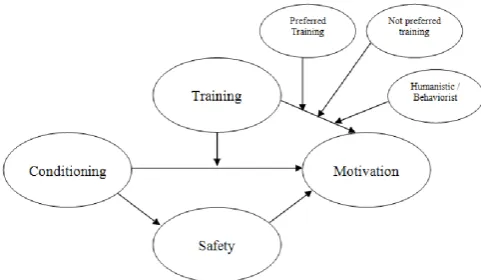
[image:6.595.313.554.576.716.2]For the current research, many variables were analyzed and thus models were formed. Before the models are explained, it must be noted that conditioning is a concept that can have both negative and positive effects. In order to be able to show that more clearly, the research will focus on four separate models, in which the first one will include the positive effects of conditioning, the second one will examine the negative effects of conditioning and the third and the fourth ones will look at both affects. The first model to be examined is about the effects of conditioning on safety and motivation, and also the effects of the training programs according to their properties. The model is presented in Figure 1.
Figure 1. Effects of Conditioning on Safety and Motivation
variable and training is the moderating variable. Also, for the relationship between training and motivation, whether the training is preferred or not, and the humanism / behaviorism of the model are all moderating variables. Thus the following propositions are deduced from Model 1:
Conditioning increases the motivation of the employees by increasing the safety of the workplace.
Conditioning increases the motivation of the employees when the appropriate training programs are applied.
Training increases the motivation of the employees when the preferred training programs are received.
Training increases the motivation of the employees when the training programs are both humanistic and behaviorist.
From these propositions, the first hypothesis of the research can be obtained:
Conditioning and training increases the motivation of the employees.
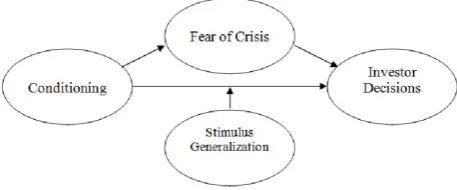
[image:7.595.311.543.183.284.2] [image:7.595.47.276.340.435.2] [image:7.595.319.548.353.447.2]The second model to be examined is about the effects of conditioning on economical crises. The model is illustrated in Figure 2.
Figure 2. Effects of Conditioning on Economical Crises
In this model, conditioning is the independent variable, investor decisions is the dependant variable, fear of crisis is the intervening variable and stimulus generalization is the moderating variable. The second model sets the following proposition:
Conditioning negatively affects the decisions of the investors by making them fear an upcoming crisis when stimulus generalization is present.
From these propositions, the second hypothesis of the research can be obtained:
Negative conditioning increases the risk of an economical crisis.
The third model to be examined is about the effects of conditioning on reward systems and the reinforcement schedules associated with these systems, and how these overall affect the motivation of the employees. The model is presented in Figure 3.
In this model, conditioning is the independent variable, motivation is the dependant variable, reward systems is the intervening variable and reinforcement schedule is the moderating variable. The third model proposes that:
Conditioning increases the motivation of the employees by increasing the effectiveness of the reward systems when applied with a VR schedule.
Conditioning decreases the motivation of the employees by decreasing the effectiveness of the reward systems when applied with a FI schedule.
From these propositions, the third hypothesis of the research can be obtained:
Conditioning affects the motivation of the employees.
Figure 3. Effects of Conditioning on Reward Systems
The fourth and final model is about the relationship between advertising, conditioning and consumer behavior. The model is shown in Figure 4.
Figure 4. Effects of Conditioning on Advertising and Consumer Behavior
In this model, conditioning is the independent variable, willingness to buy is the dependant variable, the effects of advertising is the intervening variable and the type of unconditioned stimulus is the moderating variable. The fourth and final model proposes that:
Conditioning increases the willingness to buy of consumers by increasing the effects of advertising when positive US are used in promotion.
Conditioning decreases the willingness to buy of consumers by decreasing the effects of advertising when negative US are used in promotion.
From these propositions, the fourth hypothesis of the research can be obtained:
* Conditioning affects the willingness to buy of customers.
Data Collection
study, will ask them about the training programs in their organizations, whether these programs include issues from psychology, their ideas on behavioral psychology in the workplace and opinions on the development of a behavioral psychology based training program for organizations. The interviews will be administered by one interviewer (to eliminate instrumentation threats to internal validity). That the provided information will be kept confidential will be clearly stated in the interviews in order to prevent any hesitation while answering the questions (to eliminate testing threats to internal validity). After a brief introduction, the questions will be asked by the interviewer, and the respondent’s answer will be recorded via a recording machine.
If the respondents feel uncomfortable with such devices, the data recording method will shift to interviewer taking notes on what the interviewees tell. After the questions, a final question will be stated asking the participants to talk about any other opinions that they may want to add on the issue. This is done so that if there is anything that is left uncovered in the questionnaire that the participant wants to mention or talk about, he or she will have a chance to do so. Obviously, such a comment will not be made mandatory; rather, it will be voluntary (so if people do not want to add any further comments, no further probing will be made). After the interviews are conducted, the results of the questionnaires will be carefully analyzed. The issues mentioned by the participants for the behavioral concepts in organizations will be examined, and their comments on how these issues can be dealt with by behavioral psychology will be looked at. The content of the current training programs stated by the participants will also be analyzed; if these contents already include many of the issues planned to be covered in the behavioral psychology program proposed by this study, then the consideration of integrating the remaining issues into those programs will be looked at. If the contents of the current training programs do not include some critical issues from this study, then the formation of a brand new training program will be considered. This program will be developed by taking into account the suggestions of the participants in the questionnaires.
Research Design: Experimentation
As stated before, the research aims to develop a training program about conditioning and its affects in organizations. It can be said that the training program will mostly be based on models 1 and 3, since those are the ones that include general topics related to everyone in the organization. The more specific contents of models 2 and 4 can be integrated into other training programs of similar topics. Naturally, before any training program is finalized, it must be tested for effectiveness. The content of the training programs, as stated in the literature review, cannot be finalized before the interviews with people responsible from training are conducted. But still, the methods of conducting the training can be hypothesized beforehand. For this purpose, the best type of experimental design is the classical true-experimental design of “Two group, before-after design” with control group. (Aaker, Kumar and Day, 2007). For this design, two groups of employees can be selected, one experimental group
and one control group. The experimental design can also be seen in Figure 5 below:
Figure 5. The Experimental Design
In the figure, EG stands for the experimental group while CG stands for the control group. R denotes random assignment of employees to trainings. X denotes the application of the training program to the employees of the experimental group, while the dotted line represents that the groups are separate and that the control group won’t receive the training. O1, O2,
O3 and O4 denote observation (measurement) before the
training for employees in the EG, observation after the training for employees in the EG, observation before the training for employees in the CG and observation after the training for employees in the CG, respectively. Before the training is applied, the motivation levels and amount of conditioned behaviors that the employees conduct can be measured via certain tests. After the tests, the experimental group will receive the conditioning training while the control group will not. After a certain time, the motivation levels and amount of conditioned behaviors that the employees conduct can again be measured via similar tests, and thus the results can be compared. This way, by including control groups, the research will have a chance to negate the effects of history and maturation threats to internal validity. Instrumentation won’t be an issue since the pre and post evaluation of the groups will be done by the same researchers.
resources. But, even though the training has influences on many departmental programs, it could still be categorized as personal development since it aims to produce changes in employees on a very personal level and develop their psychological perceptions and processes. Lastly, in the implementation of the program to the training schedules of organizations, the managers of those organizations should be informed of the program’s benefits and consulted on how to integrate that program in a fitting schedule for the organization, so that both the managers and the employees can benefit from the program.
Research Design: Sampling
Before sampling is conducted, the target population must be clearly defined. For the target population, it is important to select similar kinds of organizations to eliminate validity threats and spurious relationship possibilities. It is also important to choose organizations where training is seen as crucial, and is applied in a more planned and clearly understood manner. Here, it could be said that multinational companies have a better understanding in terms of the purposes of their training programs, and also they spend almost double the amount of money that the local companies spend on training programs (Erden, 1988). So, for this research, the target population will be the multinational companies operating in Turkey. So, the unit is the multinational company, and the element is an employee working in that MNC. The extent of the study will include the employees who have been in a training program before, so that being in a training program for the first time will be eliminated as a threat (testing effect) to internal validity and better results can be obtained. After the target population is defined, sampling will be conducted. For the selection of employees to be included in the training programs, the probability sampling method of stratified sampling can be used. This will increase the sampling efficiency by increasing the accuracy of the sampling. In this selection, the strata will be the different departments of the employees. It can be said that in MNCs employees in a certain department will probably be similar to each other, and those employees from different departments will probably be somewhat different. So there is in-group homogeneity (similar employees within the departments) and inter-group heterogeneity (different employees between the departments). Since the training program can only include a certain number of people, and that certain number cannot be changed drastically for every training session, a disproportional stratified sampling method will be used. This way, regardless of the employee populations of the organizations, the same number of employees will be chosen from each organization. This method is chosen because MNCs will have more or less similar (and high) number of employees to each other. This way, analyses of total populations and proportions won’t lengthen the research process. As stated before, after the samples are selected, the experimentation will take approximately two weeks. Therefore, the time of the study can be stated as two weeks.
Training Rationale and Application
Whetten and Cameron (2005) argue that, in an effort to increase the performance and motivation of employees,
today’s companies spend millions of dollars on training expenses. They state that an effective motivation program must realize that motivation affects performance, which in turn results in different outcomes, and so determines the satisfaction of the employee. To control these factors, they also talk about the rewards and punishments that managers can use in order to maintain a better status in their organizations which in return lead to more successful organizations. It is apparent that the issues that Whetten and Cameron (2005) talk about are based on the concepts of conditioning explained in the previous sections of this paper. As Johnson (2003) mentions in his article, understanding the theoretical concepts is crucial in determining and controlling their practical applications. Therefore, in the training program that this research aims to help create, firstly, the psychological concepts of conditioning will be explained to the participants.
Whetten and Cameron (2005) do not directly talk about classical conditioning, but it is a phenomenon that can be encountered in the workplace. The foremost example of classical conditioning can be seen in Becker and Murphy’s (1988) article, which is in the use of commercials. Though commercials are not a part of organizational behavior directly, the introduction of anything new, be that a method, program, or even a person, requires a link between stimuli, and so classical conditioning may occur. If the department director talks about a new voluntary training program for the employees, they may be willing to join the program, not because of the program’s properties, but because it is told by the department head (so, department head is the US, the reaction (respect, fear etc.) to him or her is the UR, the training program is the CS and the reaction to the program becomes CR). Or, if something undesirable happens to an employee in one of the meetings, he or she may start avoiding meetings or performing low not because of their content, but because he or she associates a general bad meaning to meetings in general.
On the other hand, this information will help the employees better understand and make sense of the processes around them. Noncontingent reinforcement, on the other hand, is vital due to its strong connection to superstitious behavior. Regardless of a person’s education, intellectual capacity, intelligence, wisdom, experience or knowledge, anyone may act in a superstitious way some time or another without noticing, and so the psychological explanation behind these occurrences is necessary. What won’t be included in the training program is Ferguson’s (1989) discussion on the occurrence of economical crises due to conditioning. Though the article is highly interesting and informative, and offers a whole new perspective and area of research, it is somewhat not quite applicable to the training program that this research aims to establish. The only inclusion of this issue could be that it is given as an example which symbolizes the importance and wide occurrence of conditioning in different areas. But any further explanations or inclusions seem inappropriate at this stage, and so won’t be provided in the training program. The program will be prepared on these basic rationales, and hopefully this paper will provide potential directions for any academician or trainer to apply the concepts of classical and operant conditioning for a training program in an organizational setting.
REFERENCES
Aaker, David A., Kumar V. and Day, George S. 2007,
Marketing Research, 9th edition. John Wiley and Sons,
Inc., NJ, USA.
Atkinson, William 2000. “Behavior-Based Safety,”
Management Review, (Feb), 89, 2, ABI/INFORM Global
pg. 41.
Baldwin, Timothy T., Magjuka, Richard J. and Loher, Brian T. 1991. “The Perils of Participation: Effects of Choice of Training on Trainee Motivation and Learning,” Personnel
Psychology, (Spring), 44, 1; ABI/INFORM Global pg. 51.
Becker, Gary S. and Murphy, Kevin, M. 1988. “A Theory of Rational Addiction,” The Journal of Political Economy, (Aug), 96, 4, ABI/INFORM Global pg. 675.
Court, David and Dayal, Sandeep 2002. “Beyond Behavioral Bounds,” Marketing Management, (Sep/Oct), 11, 5, ABI/INFORM Global pg. 28.
Domjan, Michael 2003. The Principles of Learning and
Behavior, 5th Edition. Thomson, Wadsworth.
Erden, Deniz, 1988. “Impact of Multinational Companies on Host Countries: Executive Training Programs,”
Management International Review, Third Quarter, 28, 3,
ABI/INFORM Global pg. 39
Ferguson, Robert 1989. “On Crashes,” Financial Analysts
Journal, (Mar/Apr), 45, 2, ABI/INFORM Global pg. 42.
Hergenhahn, B. R. and Olson, Matthew H. (2003), An
Introduction to Theories of Personality, 6th edition.
Pearson Education international.
Johnson, Stephen E. 2003. “Behavioral safety theory,”
Professional Safety, (Oct), 48, 10, ABI/INFORM Global
pg. 39.
Laibson, David 2001. “A Cue-Theory of Consumption,” The
Quarterly Journal of Economics, Vol. 116, No. 1. (Feb),
pp. 81-119.
McCann, Kathleen Blake and Sulzer-Azaroff, Beth 1996. “Cumulative trauma disorders: Behavioral injury prevention at work,” The Journal of Applied Behavioral
Science, (Sep), 32, 3; ABI/INFORM Global pg. 277.
Short, Ronald R. 1977. “Competency Education and Evaluation: Issues and Dilemmas,” Group and
Organization Studies (pre-1986), (Mar), 2, 1,
ABI/INFORM Global pg. 75.
Wathieu, Luc 2004. “Consumer Habituation,” Management
Science, (May), 50, 5, ABI/INFORM Global pg. 587.
Whetten, David A. and Cameron, Kim 2005. Developing
Management Skills, 6th Edition. Pearson, Prentice Hall.