The London School of Economics and Political Science
The Emergence and Work Processes of
Executive Remuneration Consultants
Nadine de Gannes
A thesis submitted to the Department of Accounting of the
London School of Economics and Political Science for the
degree of Doctor of Philosophy.
Declaration
I certify that the thesis I have presented for examination for the MPhil/PhD degree of the London School of Economics and Political Science is solely my own work other than where I have clearly indicated that it is the work of others (in which case the extent of any work carried out jointly by me and any other person is clearly identified in it).
The copyright of this thesis rests with the author. Quotation from it is permitted, provided that full acknowledgement is made. This thesis may not be reproduced without my prior written consent.
I warrant that this authorisation does not, to the best of my belief, infringe the rights of any third party.
Abstract
This thesis studies the emergence of executive remuneration consulting as a distinct occupation from the 1990s, and the co-emergence of remuneration consultants and remuneration committees from the early 2000s. These actors, their work processes, norms and interlinkages are studied within the context of key social, economic and political factors, which shape the fields of remuneration consulting work and remuneration governance.
In light of recent conflicting governance recommendations, it is important to evaluate the system of governance in relation to the historical reference points which have shaped executive pay practices. In so doing, this thesis analyses the dynamic processes in which numerous actors (remuneration committees, executive directors, Reward/HR directors, remuneration consultants and institutional investors), documents (corporate governance codes, governance guidelines and regulations) and tools (market trends analysis and pay benchmarking) are collectively engaged.
Executive remuneration has overwhelmingly been researched from the agency perspective, delineated into two theoretical points of departure: optimal contracting (Jensen and Meckling, 1976) and managerial capture (Bebchuk and Fried, 2003; 2004). Despite managerial capture theorists seeking to address perceived shortcomings in optimal contracting, both result in an undersocialised (Granovetter, 1985; cf. Main, 2006) view of executive pay practices.
Acknowledgements
What a journey! Not a single step of which I travelled alone.
I am grateful to the Department of Accounting for their financial and administrative support. I have benefitted immensely from the encouragement and scholarship of Professors Wim Van de Stede, Andrea Mennicken, Peter Miller and Bjorn Jorgensen.
Thank you to the many remuneration consultants who gave of their time and energy to share their histories and experiences with me.
Researchers are not born, they are built and my research methods are a testament to the diligence and direction of my second supervisor, Professor Matthew Hall. My first supervisor, Professor Michael Power, committed to constructing a social scientist, and I obliged by making it no mean feat. This thesis simply would not have been possible without Mike’s guidance and prescience. I was a leap of faith, and I am grateful you took it.
Throughout, I was uplifted, pushed and prodded by a phenomenal cast of women. Thank you Renuka for your cheering spirit, and Rani, for laughter that dulls all pain. Laura, you were my anchor, and Dorothy, your belief carried me on the many days I struggled to find my footing. You saw the possibility of this well before I did.
I was blessed with the love and support of my family. Dad, from your quiet confidence, I drew strength. Sasha and Nina, from blazing your own trails, I drew inspiration. Mom, for travelling wherever and whenever you were needed, I am exceedingly grateful. Ross, thank you for the countless times you read my chapters, offered words of encouragement and celebrated milestones.
The Emergence and Work Processes of Executive Remuneration Consultants
Table of Contents
Page
Declaration ... 2
Abstract ... 3
Acknowledgements ... 4
List of Figures and Tables………9
Abbreviations ... 10
1. Bringing the ‘Social’ in 11
1.0Introduction 11
1.1Literature review 14
1.2Fresh perspective 21
1.2.1 Genealogical approach 22
1.2.2 Ethnographic influence 23
1.2.3 Social constructivist perspective 23
1.3‘Bricolage’ 24
1.4Key actors 27
1.4.1 Executive Remuneration Consultants 27
1.4.2 Remuneration Committees 28
1.4.3 Human Resource / Reward Function 28
1.4.4 Statutory Regulators 29
1.4.5 Institutional Investors and Investor Representative Bodies 29
1.5Executive pay problem 32
1.6Key contributions 37
2. Research Methods 41
2.0Introduction 41
2.1Original project formulation 41
2.2Methodological approach 44
2.3Research design 44
2.3.1 Archival data 45
2.3.2 Participant observation 49
2.3.3 Interview design 52
2.4Thematic analysis 57
2.4.1 Reflexivity, writing and theorizing 58
3. The Emergence of Executive Remuneration Consulting 62
3.0Introduction 62
3.1Remuneration advice in the 1970s 64
3.1.1 Towers’ first mover advantage 65
3.2The birth of ‘executive pay’ in Britain 67
3.2.1 Share scheme legislation 67
3.2.2 Thatcher’s Enterprise Culture 68
3.2.3 ‘Now Cash is Clean Again’ 71
3.3Practice formation 73
3.3.1 Accounting firms 74
3.3.2 Law firms 75
3.3.3 ‘All about data’ 76
3.4Key shifts in pay governance 76
3.5Emergent occupation 78
3.5.1 New Bridge Street 78
3.5.2 Coopers and Lybrand 79
3.5.3 Still ‘all about the data’ 80
3.5.4 Coopers and Lybrand to PwC 81
3.6Expanding work domains 81
3.6.1 Institutional investors shape consulting work 83
3.7Moral panic deepens: The Greenbury Report 86
3.7.1 Greenbury’s Recommendations 87
3.8Proactive governance, reactive legislation 90
3.9‘All about corporate governance’ 94
3.9.1 Shareholder engagement 95
4. The co-emergence of remuneration consultants and remuneration
committees 103
4.0Introduction 103
4.1The rise of non-executive directors 104 4.1.1 Demands for greater board oversight 104
4.2Board Oversight in the 1980s 107
4.3The rise of institutional investors 109 4.4The field of remuneration governance 111
4.4.1 Cadbury Report 111
4.4.2 Cadbury deliberates on pay governance 112
4.4.3 Impact of the Cadbury Report 114
4.5Statutory intervention in remuneration governance 116 4.5.1 Higgs Review: Defining independence 117
4.6Documenting Independence 118
4.6.1 No marked advantage for boutique firms 120 4.7Continuous intervention in remuneration governance 121
4.7.1 Crisis, Collaboration & the Professional Code of Conduct 123 4.7.2 Consultants’ ‘policing’ role emerges 126
4.8Discussion 127
4.9Future work on gatekeepers’ independence 131
5. Remuneration consulting work 133
5.0Introduction 133
5.1Methods 134
5.2The field site: ExComp 135
5.3Analysts 136
5.3.1 Analyst recruitment 136
5.3.2 Analyst training 139
5.3.3 Analyst induction 140
5.3.4 Data collection 143
5.3.5 Data analysis 147
5.3.6 Communication skills 151
5.3.7 Establishing Norms 152
5.4Progression to senior analyst 154
5.4.1 Background packs 156
5.5Associates 157
5.5.1 Client work 157
5.6Principals/Partners 160
5.6.1 Shaping Client Attention 162
5.7Discussion 165
6. Pay benchmarking: Art or Science? 172
6.0Introduction 172
6.1Historical linkages 173
6.1.1 US Context 174
6.1.2 UK Content 177
6.1.3 Problematising the market for executive pay 181
6.2Pay benchmarking practice 183
6.2.1 Peer Group Selection 185
6.2.2 Judgment in peer group selection 187
6.2.3 Communicating the benchmark 187
6.3Reacting to the benchmark 188
6.4The upward ratchet 190
6.5Toward a theory of pay benchmarking 195
6.5.1 Benchmarking: a system of ranking 196
6.5.2 Internalization of the pay benchmark 199
6.6Summary 202
7. Risk in Remuneration Governance 203
7.0An impossible job 203
7.1Risk in society 206
7.2Risk in regulation 207
7.3Risk in remuneration governance 209
8. Conclusion 213
8.0Research questions revisited 213
8.1Research limitations 213
8.2Key contributions 215
8.3Future work 219
Appendices 221
List of Figures and Tables
Figures
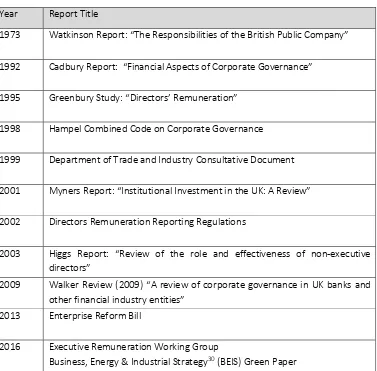
Figure 1.1: Overview of the Substantive Chapters 13 Figure 1.2: Focal areas of executive compensation research 15 Figure 1.3: Shareholder Structure in the UK 30 Figure 1.4:Actions shaping executive pay design & governance 31
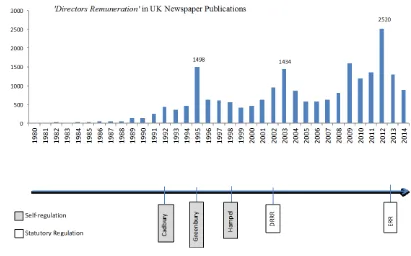
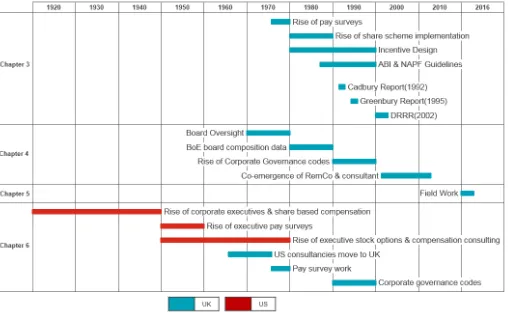
Figure 1.5: Frequency of Directors Remuneration in UK Newspapers 33 Figure 1.6:Timeline of key pay-related events and governance episodes 40
Figure 3.1: Inter-relationship between institutional investors and companies 96 Figure 5.1: Organizational hierarchy at ExComp 135
Figure 5.2: The Single Figure Table 144
Figure 5.3: Example of Market Trends Analysis 148
Figure 6.1: Pay Benchmark 188
Tables
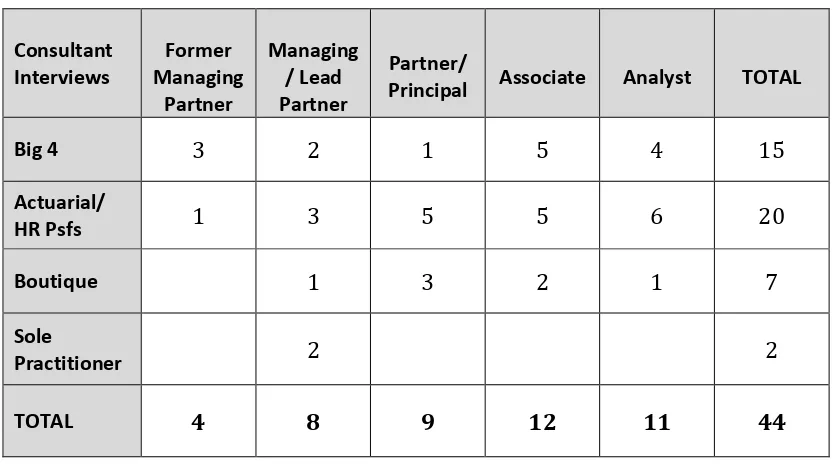
Table 1.1 Devers et al. (2007) Review of Executive Compensation Literature 17 Table 1.2 Institutional investors representative bodies and proxy advisors 31 Table 1.3 Contributions to academic discourse 37 Table 2.1 Corporate Governance Codes and Regulation 47 Table 2.2 Summary of Consultant Interviews 55 Table 2.3 Summary of Non-Consultant Interviews 55 Table 2.4 Category I vs. Category II Interviews 56
Table 2.5 Inductive Coding 59
Table 3.1 Share schemes growth (1986-1989) 70 Table 3.2: Key Steps in Executive Pay Governance: Early-mid 1990s 83 Table 3.3: Remuneration Advice to FTSE 350 Remuneration Committee 92
Table 4.1: Key Governance Guidelines 110
Table 4.2: Executive Pay Governance (2009-2010) 121 Table 5.1: Common acronyms used in remuneration consulting work 142
Table 5.2 ISS Pay for Performance Tests 163
Abbreviations
ABI Association of British Insurers
BEIS Department for Business, Energy and Industrial Strategy BIS Department for Business, Innovation and Skills
CBI Confederation of British Industry
DRRR Directors Remuneration Report Regulations (2002) DTI Department of Trade and Industry
ERR Enterprise and Regulatory Reform Act (2013) FRC Financial Reporting Council
IA Investment Association IoD Institute of Directors
ISC Institutional Shareholders’ Committee ISS Institutional Shareholder Services IVIS Institutional Voting Information Service NAPF National Association of Pension Funds
PIRC Pension and Investments Research Consultants PLSA Pensions and Lifetime Savings Association RREV Research Recommendations Electronic Voting SEC Securities and Exchange Commission
UK United Kingdom
Chapter 1
Bringing the ‘Social’ in
1.0Introduction
Repeatedly over the past 25 years, the pay packages for public company executives have been subject to public and political ire. Often seen to be egregious and unjustified, executive pay packages have triggered moral panic in British society. In response to this, and often in the wake of corporate failings, politicians have sought to quell public anxiety by introducing governance codes and statutory regulation. From the 1990s, institutional investors, investor representative bodies, and proxy advisors have entered the fray, wielding substantial clout in executive pay design and governance. From within the ‘ivory tower’ of corporate Britain, remuneration committees (RemCos) have emerged as central in setting and monitoring executive pay, and critically placed to advise the RemCo are their appointed executive remuneration consultants.
Although executive pay remains one of the most emotive and recurrent topics in corporate governance, few researchers have investigated the dynamics processes involved in pay design and governance, or the social interactions amongst the key actors engaged in these processes. Furthermore, while there is consensus that executive remuneration consultants are pay experts (Murphy and Sandino, 2010; Conyon et al., 2011; Bender, 2012; Gallani, 2015), and remuneration committees are central in pay governance, little is known of how these actors attained their relevance in executive pay design, or how they reproduced their relevance when their legitimacy was challenged.1
This study addresses the undersocialised (Granovetter, 1985; cf. Main, 2006) view of executive pay practices, which arguably pervades much of the extant literature. In the chapters that follow, the study investigates (i) the emergence of remuneration consulting work at the interface of key governance episodes, (ii) the day-to-day activities of executive remuneration consultants, and (iii) the interrelationships between consultants and other key actors. This study aligns strongly with the research agenda that have sought to study accounting practice
1Remuneration consultants have been implicated in the upward ratchet of pay, especially
within its social, organisational and institutional contexts. As such, it is deeply interested in the emergence of executive pay practices in ‘particular, localised historical settings, (and) the ‘how’ of such processes’ (Miller, 1994, p. 20). Accounting researchers, attentive to practice and its meaning are keenly aware of the importance of ‘analysing the complex interplay between the multiple arenas’ (Miller, 1994, p. 27) within which practices emerge. An interest in practice, especially is organisational settings, has also garnered a significant research following in recent decades.2 Influenced by these traditions, this study is both attentive to the historical specificity of contemporary practices as well as the study of practice in its natural environment; ‘as embodied, materially mediated arrays of human activity centrally organised around shared practical understanding’ (Schatzki, 2000, p. 2). Thus, the research questions at the core of this study are as follows:
(I) How did executive remuneration consultants become central in the design and governance of executive pay in UK public companies?
(II) How do remuneration consultants design and govern executive pay?
The first two substantive chapters – Chapter 3 and Chapter 4 – address research question (I). Chapter 3 explores the emergence of executive remuneration consulting as a distinct occupation from the 1990s, while Chapter 4 studies the emergence of the independent non-executive director in Britain and later the rise of the RemCo in pay governance, prior to analysing the interplay between RemCos and executive remuneration consultants. Studying these histories enables the claim that the consultant and committee co-emerge from the early 2000s; their design and governance work mutually dependent and inextricably linked. In these two chapters, the historical emergence of these actors, their practices, norms and interlinkages are importantly analysed within the context of key social, economic and political episodes.
The latter two substantive chapters – Chapter 5 and Chapter 6 – investigate the contemporary pay practices of executive remuneration consultants, and the role of these practices in the production of pay expertise and the pay benchmark, respectively. Chapter 5 - based on a participant observation and 20 interviews with consultants at a leading executive remuneration consultancy - describes consultants work activities, and in so doing, problematizes the divide between mundane and expert tasks, as well as routine and knowledge work. Chapter 6 studies the emergence of executive pay benchmarking practice; problematizing both the market for executive pay and the upward ratchet of executive pay.
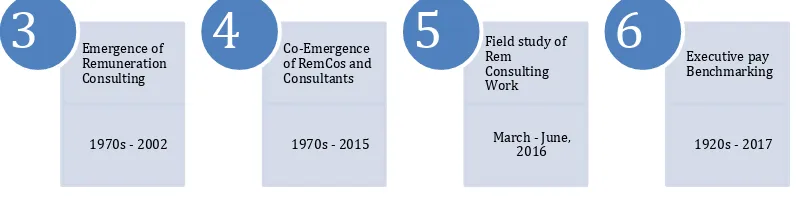
Figure 1.1: Overview of the substantive chapters3 (and their longitudinal ranges)
The longitudinal range as well as the level of analysis (individual, group, organisational, institutional) varies across the four chapters. The methodological approach and research methods also differ across the chapters. Chapters 3 and 4 take a genealogical approach and draw on archival and interview-based methods. In Chapter 5, ethnographic methodology influences the way in which the participant observation was designed and carried out. Chapter 6 draws on a social constructivist perspective, weaving together archival, interview and field-based data in order to construct an account of pay benchmarking practice. The various methodological approaches are detailed in Section 1.2, while the research methods are described in Chapter 2.
In light of the differences in methodology, research methods and the longitudinal range of the chapters, it was somewhat surprising to the researcher that there emerged a common thread, which linked all four substantive chapters. This common thread was the recurring evidence of risk, risk concerns, and risk
3 The numbers in the diagram correspond with the chapter numbering in this thesis.
Emergence of Remuneration Consulting
1970s - 2002
3
Co-Emergenceof RemCos and Consultants
1970s - 2015
4
Field study ofRem Consulting Work
March - June, 2016
5
Executive payBenchmarking
1920s - 2017
management, in the design and governance of executive pay. It was through the process of interpreting the data, writing the chapter narratives, and then connecting these narratives with broader academic discourses, that the logic of risk emerged as centrally important in the analysis of executive pay practices. Chapter 7 was written to explore the role and pervasiveness of risk in remuneration governance as well as to position these findings within the broader discourses of risk in society and risk management in corporate governance.
In summary, this thesis is neither monograph, nor paper-based in style.4 Rather, it is something of a hybridized format. There is an overarching research objective - to investigate the dynamic processes of executive pay design and governance – as well as a central actor of concern - the executive remuneration consultant. At first glance, the mosaic of methodologies and methods may appear more hodgepodge than systematic, but then systematising the organic and serendipitous nature of social research would prove challenging to any disciple of qualitative research.
The following section, which reviews the extant literature, also provides some insights into why fresh methodological approaches are needed in this area of research. It is worth noting that the remuneration (or compensation5) literature is vast, and while an initial overview of the literature is provided (cf. Murphy, 1999; Devers et al., 2007), the focus narrows to more specifically review the social and governance influences on executive pay design and determination. The limitation of this narrow focus is addressed in Chapter 8.
1.1 Literature Review
In his review of the literature, Kevin Murphy described the modern history of executive compensation research as beginning in the early 1980s6, paralleling ‘the emergence and general acceptance of agency theory’ (Murphy, 1999). In his comprehensive review of the extant literature for the Handbook of Labour Economics in 1999, Murphy describes the research areas in which compensation
4 In paper-based theses, each paper might stand independently of the other, with little or no reference made to the other paper(s).
5Compensation is the term typically used in US-based academic literature.
6Hallock and Murphy (1999), drawing on the Social Science Citation Index database,
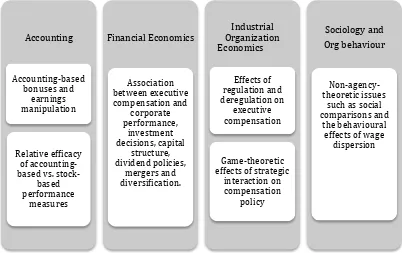
studies had taken flight, including accounting, economics, finance, industrial relations, law, organisational behaviour and strategy. Interestingly, Murphy (1999) noted that there was scant evidence of compensation research by labour economists. Instead, research had flourished in the following four areas:
Figure 1.2 Focal areas of executive compensation research (1999)
Source: Adapted from Murphy (1999, p. 2488) and tabularised by the researcher
Overwhelmingly across the areas of research, the dominant theoretical lenses were optimal contracting theory and managerial capture theory. Jensen and Meckling (1976)’s seminal work on the agency problem7 was instrumental in popularising the optimal contracting research agenda. Executive compensation was seen to be the ideal ‘real-world’ example of how principals could align their agents’ interests via contracting. Optimal contracting theorists assumed that the principal would ex ante formulate the optimal pay-out for eventual superior performance. Therefore, the incentive contract could correct for the principals’ inability to monitor the agents’ actions.
7 The agency problem can be described as the divergent interests of shareholders (principals) and managers (agents). Shareholders, as residual claimants, seek the maximum net present value for the firm, while managers seek maximum utility.
Accounting Accounting-based bonuses and earnings manipulation Relative efficacy of accounting-based vs.
stock-based performance measures Financial Economics Association between executive compensation and corporate performance, investment decisions, capital structure, dividend policies, mergers and diversification. Industrial Organization Economics Effects of regulation and deregulation on executive compensation Game-theoretic effects of strategic
interaction on compensation policy Sociology and Org behaviour Non-agency-theoretic issues
such as social comparisons and
the behavioural effects of wage
Those scholars within the “efficient contracting” camp (Murphy, 2013, p.214) largely focused on identifying the determinants of pay and evaluating the linkages between pay and performance. The use of multiple regression analysis enabled researchers to make general claims about the characteristics that determined pay. Although researchers agreed that executive pay was determined8 by firm size9 and firm complexity, ‘the failure to document a consistent and robust relationship between executive pay and firm performance has frustrated scholars and practitioners’ (Devers et al., 2007, p. 1016). In search of explanations for the inconsistent results (Pepper, 2014), scholars argued for the research focus to be broadened, in part suggesting that undocumented and untested political and social explanations might account for divergent findings (Jensen and Murphy, 1990; Gomez-Meija and Wiseman, 1997; Murphy, 1999).
Whether or not in response to these calls, there emerged in the early 2000s, a second research agenda. This was largely influenced by the work of Bebchuk et al. (2002) and Bebchuk and Fried (2003, 2004) on managerial capture theory. The “managerial power” camp (Murphy, 2013, p.214) argued that the level and composition of pay was determined by captive board members (and later captive remuneration consultants) catering to rent-seeking executives, as opposed to contracts being set by competitive market forces. The managerial capture camp grew to include event studies, which sought to determine the impact of changes in governance and regulation on either the stock market or executive pay (see Ferri and Maber, 2013 as an example), or the characteristics of boards, RemCos and consultants on the quantum and structure of executive pay.
Thus, within a decade of Gomez-Meija and Wiseman (1997) and Murphy (1999), the executive compensation literature had exploded. An updated literature review by Devers et al. (2007) analysed 99 executive compensation studies10 published in
8 In multiple regression analyses, where executive pay is the dependent variable, firm size and firm complexity have repeatedly been tested and confirmed as the strongest determinants of pay, that is, the strongest independent variables.
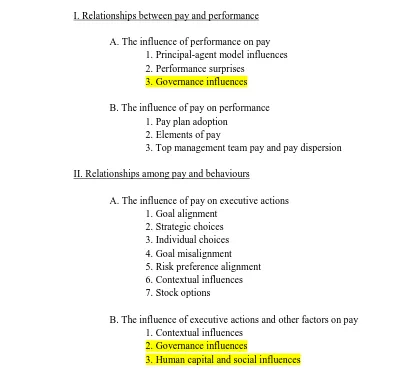
the most widely cited journals from 1997 to 2007. Devers et al. (2007) categorised the main areas of compensation research as follows:
Table 1.1: Devers et al. (2007) Review of Executive Compensation Literature
I. Relationships between pay and performance
A. The influence of performance on pay 1. Principal-agent model influences 2. Performance surprises
3. Governance influences
B. The influence of pay on performance 1. Pay plan adoption
2. Elements of pay
3. Top management team pay and pay dispersion
II. Relationships among pay and behaviours
A. The influence of pay on executive actions 1. Goal alignment
2. Strategic choices 3. Individual choices 4. Goal misalignment 5. Risk preference alignment 6. Contextual influences 7. Stock options
B. The influence of executive actions and other factors on pay 1. Contextual influences
2. Governance influences
3. Human capital and social influences
Source: Devers et al. (2007, p. 1017-1018)
In the categorisation of the dominant research strands in Table 1.1, three subsections – see highlighted – particularly overlap with this study’s interest in the social factors which shape executive pay practices. In the category of research on governance influences on pay for performance, Devers et al. (2007) criticised these studies for overlooking two key factors, (i) labour market considerations11 and (ii) regulation (such as tax and accounting treatments on pay). With respect to regulation, Murphy (2013) also noted that researchers had largely ignored remaining 10% were from economics, psychology, or other journals (Devers et al., 2007, p. 1017)
government intervention12 in executive pay, yet such interventions had been ‘a major driver of time trends in CEO pay’ (p. 215). Arguably, these ‘variables’ were likely missed or omitted from empirical quantitative studies, as they are difficult to measure.
In the category of research on governance influences on the design and determination of pay (i.e. behaviour-focused research), findings once again proved divergent. Daily et al. (1998) found no support for the hypothesis that compensation committee composition influenced CEO pay levels. On the other hand, Core, Holthausen, and Larcker (1999) found that CEOs earned more under weak governance structures. Core, Holthausen, and Larcker (1999) more specifically found that CEO compensation was higher when the CEO was also the board chair, the board was larger, there was a greater percentage of the board composed of outside directors (and the outside directors are appointed by the CEO), when outside directors were older and served on more than three other boards (p. 371).
Research on the human capital and social influences on pay determination drew on a plethora of theories, including managerialist theory (or managerial capture theory13), social comparison theory14 (Festinger, 1954), tournament theory15 (Lazear and Rosen, 1981), equity theory16 (Adams, 1965) and human capital theory17. Key research contributions using these theories are reviewed below.
12 Murphy (2013) is likely making a distinction here between government intervention and the introduction of regulation.
13 Due to the parameters used in Devers et al. (2007), Bebchuk et al. (2002) and Bebchuk and Fried (2003) was missed in the review.
14In 1954, Leon Festinger laid out the foundation of social comparison theory in the format of several hypotheses, corollaries and deviations that described the situations in which people evaluate and compare their opinions and abilities with others. In the context of executive remuneration research, social comparison theory has been used to explore the ways in RemCo members engage in social comparison for the determination of executive pay packages.
15 O’Reilly et al. (1988), in describing tournament theory, state that ‘executive salary structures can be likened to a series of tournaments or lotteries among contestants (Lazear and Rosen, 1981). Winners of the tournament at one level are allowed to enter the next tournament. In this scheme, the compensation of the CEO represents the prize in the lottery’ (p.257)
O’Reilly, Main and Crystal (1988) tested a tournament model and a social comparison model to explain CEO pay. While the tournament test returned insignificant results, the social comparison test found that the ‘presence of highly remunerated outside board members is related to high CEO salaries in a statistically significant manner. And these results hold even when there are controls for the fundamental economic characteristics of the corporation such as size, profitability and industry’ (p. 269). Also drawing on social comparison theory, Ezzamel and Watson (1998) suggest that compensation committees pay executives at least at the going rate and deviations from that rate influence subsequent pay. They also found that there was a significant adjustment toward the going rate for underpaid executives, thus reducing external market pay anomalies. Later work by Ezzamel and Watson (2002), drawing on both social comparison theory and equity theory, suggests that external labour market and board pay comparisons were important in explaining both CEO and directors' pay rewards. Further to these, Malsch et al. (2012) draw on culture theory and specifically the cultural logics for remuneration committees determining executive pay in the Canadian context. The authors found that committee members ‘are genuinely doing their best to fulfil their responsibilities, according to their cultural beliefs.’
Studies on the role of the consultant include Conyon et al. (2010), which used a multi-theoretic approach incorporating economic, institutional, managerial power and social comparison literatures to study the role of external consultants on pay setting. The authors mostly drew on neo-institutional theories, with an emphasis on the embeddedness of institutional actors such as the pay consultant, and the isomorphic effects on compensation outcomes. Conyon et al. (2010) suggest that consultants facilitate homogenization of compensation contracts. Gallani (2015) similarly sought explanations for these isomorphic tendencies (Meyer and Rowan, 1977). Drawing on Granovetter’s work in social network theory, Gallani examines how compensation consultants as interfirm networks are likely to that an increase in one executive’s pay quantum must be matched for other executives. Equity is assessed based on pattern changes in compensation, and not necessarily magnitude.
‘facilitate information transfer and knowledge creation regarding the design of executive compensation packages’ (Gallani, 2015). Using a vectorial approach, Gallani found that firms connected by board interlocks, hiring the same compensation consulting firm, or sharing a blockholder, exhibit a higher degree of similarity in the design of executive compensation contracts than what would be predicted by similarities in organizational characteristics. Adamson et al. (2015) employed an interview-based approach and mobilised the concept of institutional work in analysing the internal dynamics of executive remuneration consultants’ professionalisation project. Through an exploration of the macro organizational level and the micro individual level of remuneration consulting, the authors find inconsistencies, which call into question the extent to which the occupation is in fact seeking to professionalise. However, Adamson et al. (2015) remain wedded to the analytical construct of the professionalisation project.
In the UK setting, two scholars have contributed substantially to our understanding of remuneration committees and remuneration consultants, and the dynamics between the two: Brian Main and Ruth Bender. Brian Main has made significant contributions to the study of executive pay setting and governance in British public companies. Over a career span of 30 years, Main has provided insights on the relationships between pay and performance (1991), the inner workings of remuneration committees (1993), the implications of changes in institutional investor governance guidelines (2006), and (with O’Reilly) economic and psychological perspectives on CEO pay (2010). In drawing on tournament theory, Main, and his co-authors, argued that optimal contracting theory provided no plausible explanation for the continued rise in remuneration. Bender’s early work focused on the remuneration committees and their role in pay determination and governance. Her later work centred on remuneration consultants and their role in pay design and governance. In both instances, the research drew on ‘economic and social-psychological theories’ (Bender, 2003).
vote in 2002, or the ABI’s 1999 governance guidelines), as well as cutting across multiple actors. Neither scholar has studied executive pay tools or the dynamic interlinkages among actors, documents and tools, which is an important contribution of this thesis.
1.2 Fresh perspectives
Executive pay has overwhelmingly been studied through the lens of optimal contracting and managerial capture theories. As Murphy (2013) noted, ‘viewing executive compensation as a “horse race” between efficient contracting and managerial power ignores other forces that may be even more important in explaining trends in pay’ (p.322). Devers et al. (2007) similarly summarised that
‘there is a need for research that more thoroughly examines how different board
configurations and various governance contexts and situations influence executive pay’ (p. 1036).
To unearth and analyse these underexplored and unexplained factors, approaches are needed to elucidate the ways in which actors, documents (e.g. white papers, governance codes and statutory regulations), and tools (e.g. market trends analysis and pay benchmarking) are collectively engaged in executive pay design and governance. As Murphy (1999) surmised, research may describe the prevalence of stock options in executive pay packages, but it does not answer why stock options became an important part of the compensation package. Explanations for why a new incentive scheme is adopted or how new practices are institutionalised is not captured in the discrete columns of pay data. Rather, it is played out in the complex networks in which pay design is negotiated. In essence, there has been inadequate emphasis on investigating who designs pay, and how and why they go about doing so. As Main (2011) noted: ‘of course, at the end of the day, determining remuneration through a remuneration committee remains a human process subject to all the cognitive bias and social influence effects to which people are prone’ (p.5).
historical perspectives in the study of executive pay practices, and in particular, remuneration consulting practices. In order to develop an account of the field of remuneration consulting practices, this study is first attentive to the historical pre-conditions of the consultants’ contemporary pay practices. History has been investigated in a multitude of ways. The following section describes the genealogical approach taken in Chapters 3 and 4.
1.2.1 Genealogical approach
In the opening sentence of his 1971 essay entitled ‘Nietzsche, Genealogy, History’, Foucault describes genealogy as ‘gray, meticulous and patiently documentary’ (Foucault, 1971, p. 76). Standing in opposition to the idea that history is linear or evolutionary, Foucault dispels with any pursuit of ‘origins’ and suggests instead, that through extensive and thorough data collection – ‘the vast accumulation of source material’ (ibid) - that the researcher can ‘recognize the events of history, its jolts, its surprises, its unsteady victories and unpalatable defeats’ (p. 80).
The practices and processes observed and the emergence of remuneration consulting work are not assumed to be static or absolute, rather they are temporally stabilised and constantly subject to change and transformation. A genealogical approach destabilises that which appears to be immutable; actors who are taken as self-evident, documents and events, which are presented as natural features of the governance landscape.
In a similar vein to Miller and Napier (1993), this study draws ‘attention to the different meanings that have been attached to practices at different moments in time, rather than taking contemporary practices and the meanings currently attached to them as historical constants’ (p. 632). What appears self evident and unquestioned are in fact contingent on turns in history, which must not be detached from our understanding or analysis of the present.
influence of ethnographic methodology on the design of the field-based participant observation.
1.2.2 Ethnographic influence
Ethnography, when interpreted epistemologically, has been described as a ‘philosophy of research’ (Anderson-Levitt, 2006), or ‘an attunement, a way of being in the world’ (Ingold, 2001). As Hammersley and Atkinson (2007) have noted, the social world - as far as possible - should be studied in its natural state. A natural setting affords the capturing of empirical richness in terms of context, complexity and ‘mess’. The researcher will be ‘focused not just on what people do but also on understanding the meaning and function of the activities, decisions and actions people undertake in the context in which they are embedded’ (Hall and Messner, 2018).
The terms ethnography and participant observation are often conflated, partly because their meanings are difficult to pin down. In this study, the distinction is made as follows: ethnography is a methodological approach and participant observation (discussed in detail in Chapter 2) is the method employed in ethnography.
1.2.3 Social constructivist perspective
critically shape the voting decisions of institutional investors, and as such, the methodology used is the subject of criticism by consultants, remuneration committees and heads of reward.
In the study of complex relations and interactions amongst human and material actors, this ‘set of sensibilities’ also enables the researcher to probe ‘blackboxes’ whose material action have gone undocumented. This is especially the case in the investigation of pay benchmarking practice in Chapter 6. This social constructivist perspective, and its intersection with reflexivity and conceptual leaping (Klag and Langley, 2013), is discussed in Chapter 2.
1.3 ‘Bricolage’
As detailed above, this study does not drawn on a single theory, but rather is shaped or influenced by a genealogical approach to historical research; an ethnographic approach to field-based research and a social constructivist perspective in problematising taken for granted practices. This mosaic of theories and methodologies can be likened to theoretical ‘bricolage’ (Boxenbaum and Rouleau, 2011). Bricolage has been described as bringing together different concepts from existing theories, thereby giving analytical purchase or shape to an empirically rich and complex setting. Boxenbaum and Rouleau (2011), see theoretical ‘bricolage’ as particularly well suited to developing new knowledge on understudied phenomena (p. 281), as is the case in this study. Arguably the theories are more adjacent and complementary than interwoven. The genealogical approach shapes the first two substantive chapters, and the ethnographic influence and social constructivist perspective shape the latter two chapters.
Field
Within an institutional field, actors take one another into account as they carry out interrelated categories of taken-for-granted practices within and across organizations (McAdam and Scott, 2005). While the actors themselves may cease to question their norms and practices, it is incumbent on the researcher to question taken-for-granted practices. Institutional theorists, interested in problematising norms, have argued that too many researchers have emphasised the taken-for-granted practices at the expense of intentional (if bounded rational), directive and conflict-laden processes that define fields’ (DiMaggio, 1991, p. 168).
In the emergence of the field of remuneration governance, researchers must be attentive to ‘both politics and routine in the structuring’ of fields (Lawrence, 1999, p. 162). DiMaggio’s conflict laden processes find affinity with the ANT agenda, which is also in search of the incommensurable and disruptive activities in which actors engage. Lawrence (1999) encourages attention to cohesion and disruption, routine and peculiar, as it is the homogeneity and heterogeneity in relations and practices, which constitute the field.
Thus, this research seeks to explicate the homogeneity and heterogeneity in social interactions. It is social interactions, which sustain institutional fields, by producing and reproducing, the values and practices that guide members as to how to act and interact (Bell and Haugh, 2015, p. 5). When the values and sources of meaning come to be widely held by the group of actors, and these values shape cognition and provide a frame of reference for decision-making, scholars have described these central organising forces as institutional logics.
Ocasio, 1999, 2008), when beliefs are shared (and where there are competing belief systems), shifts or changes can occur within a field.
Logic
Logics are described as supra-organizational patterns, both symbolic and material, that order reality and provide meaning to actions and structure conflicts (Friedland and Alford, 1991; Thornton et al., 2012). As stated in Thornton and Ocasio (1999):
(Logics) provide the formal and informal rules of action, interaction, and interpretation that guide and constrain decision makers in accomplishing the organization’s tasks and in obtaining social status, credits, penalties, and rewards in the process (Ocasio 1997). These rules constitute a set of assumptions and values, usually implicit, about how to interpret organizational reality, what constitutes appropriate behavior, and how to succeed (Jackall 1988; March and Olsen 1989). (p. 804)
The concept of institutional logic has journeyed considerably from its early formulations in Friedland and Alford’s (1991) highly influential paper. No longer tethered to institutional orders, research on the emergence, adoption and transformation of logics has considerably developed and empirically informed the concept. Recent research has been attentive to the role of competing or conflicting logics in bringing about institutional change. This attention to a multiplicity of logics is appealing in this study. This is epically the case given the numerous actors engaged in remuneration governance.
Overall, fields are not assumed to exist a priori; they were discovered through empirical inquiries (DiMaggio and Powell, 1983). Similarly, although logics are described as the invisible structures, which reinforce and sustain fields, it becomes to researcher’s work to empirically ground the emergence and transformation of core logics. Academic research on the emergence, re-emergence, and adaptations of institutional logics are relatively novel and unexplored topics (Thornton et al., 2012). It has also been observed that ‘while actors may reproduce behaviours consistent with existing institutional logics, they also have the capacity to innovate and thus transform institutional logics’ (Thornton et al. 2012, p. 4). As such, the study implicitly engages with the concept of logics in three ways; how logics emerge within a field, how logics focus attention and shape action, and how actors within the field transform logics.
1.4 Key actors
The key actors were identified through an examination of media articles, governance guidelines and regulatory documents, and also through the interview process as actors described their work, and ultimately those they worked with.
Regulators, institutional investors and investor representative bodies, proxy advisors, remuneration committees, executive remuneration consultants, heads of reward, and executive directors were identified as the key actors engaged in the design and governance of executive pay. This subsection briefly describes these actors.
1.4.1 Executive Remuneration Consultants
1.4.2 Remuneration Committees
At the centre of pay governance are remuneration committees, which is the board sub-committee principally responsible for the oversight of executive pay setting. The remuneration committee emerged an increasingly common feature of UK public companies following recommendations made in the Cadbury Report (1992). It is the remit of the remuneration committee (or RemCo) to recommend and monitor the level and structure of executive remuneration, with the goal of promoting long term success for the company, while managing conflicts of interest with executives and the risk of pay ratcheting and pay-performance misalignment (UK Corporate Governance Code, 2006, 2014).
1.4.3 Human Resource/ Reward Function
While a number of the executive remuneration consultancies operate within human capital-focused18 psfs, the human resource or reward function in this case refers to the team situated within the corporation, and responsible for executive remuneration, broad-based remuneration or both. Some firms will operate distinct HR and Reward function, where the former focuses on workforce pay while the latter focuses on executive pay. This is often the case for the largest FTSE companies. It is more typical for FTSE companies to operate on internal HR team, under which the Executive compensation and benefits director works.
With the falling demand for industrial relations (given the de-recognition of the unions), and separately the rise of the company secretary, the HR function was slow to create a role for itself in executive remuneration design. During the 2000s, the field of human resource management began vying for greater visibility and voice in board matters and executive pay decisions. In the largest FTSE companies, Heads of Reward are increasingly engaging with their company’s largest institutional investors, accompanying remuneration committee chairs to shareholder meetings, and designing executive pay packages for the company. This is a group that has been overlooked in the extant literature, and remains under-examined in this study. This is partly because access to these individuals proved challenging, with ‘cold’ interview requests sent by the researcher going unanswered. Three interviews with Head of Reward/ HRDs were made possible
through introductions enabled by the researcher’s personal and alumni networks. Going forward, it is the aspiration to interview many more members of the internal HR function, as well as engage more fully with the reward management and human resource academic literatures.
1.4.4 Statutory Regulators
The Business Secretary’s Department is the epicentre of statutory regulatory change with respect to corporate governance. This Department has undergone several name changes over the decades. From Department of Trade and Industry (DTI), to Department for Business, Innovation and Skills (BIS), and most recently the Department for Business, Environment, Innovation and Skills (BEIS). There is also a broader political discourse, which shapes regulatory attention. This discourse is largely shaped by the political party in power; and often the views of the Prime Minster (as is currently the case) or an influential Cabinet Minister, as was the case when Sir Vince Cable was Secretary of BIS from 2010-2015.
1.4.5 Institutional Investors and Investor Representative Bodies
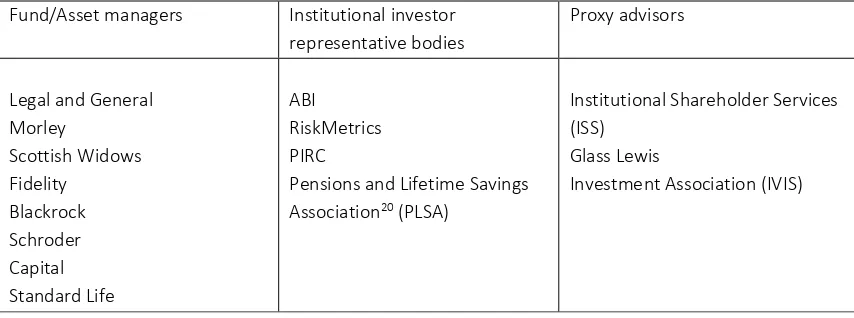
Institutional investors are broadly defined as organizations that invest on behalf of its members; common examples include pension funds, hedge funds, mutual funds, and asset managers. The larger asset and fund managers typically have in-house teams dedicated to corporate governance analysis. Often in tandem with in –house advice, institutional investors subscribe to external proxy advisory firms, which supply governance analysis and AGM voting recommendations. The main players include Institutional Voting Information Services (a part of the Investment Association19), and Institutional Shareholder Services (ISS). ISS is widely known by FTSE companies and has become hugely influential in shaping AGM vote outcomes. It was founded in the US, and deems itself ‘the world’s leading provider of corporate governance solutions’ (ISS website, 2017).
Up until the 21st century, institutional investors, generally, were dominated by pension funds and insurance companies; their percentage of share ownership having collectively grown from 9 per cent in 1957 to 33 per cent in 1975 and 51
19 The Investment Association (formerly the Association of British Insurers (ABI)
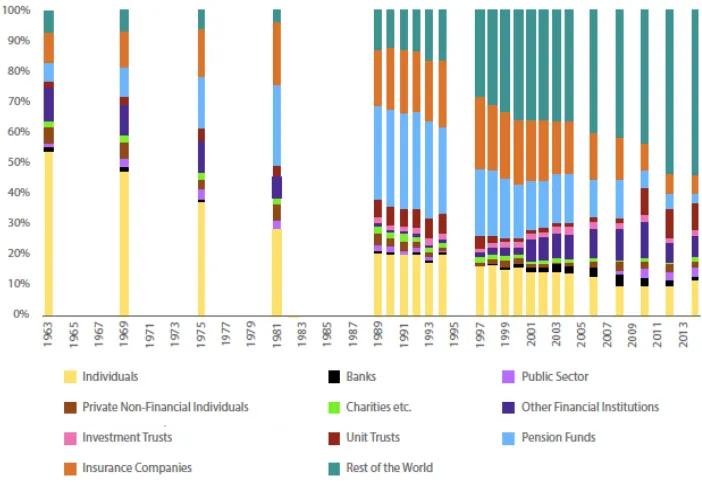
per cent in 1991. By 2001, institutional investors were of such political and economic importance that the UK government commissioned an investigation into the corporate governance responsibilities of institutional investors to UK capital markets and British capitalism more generally. As Lord Myners noted in his 2001 report; ‘institutional investors – particularly pension and life funds – ‘own’ and control most of British industry (Myners, 2001). However, the institutional investor landscape has changed drastically since the Myners Report. Within a decade of the report, pension and insurance companies had drastically reduced their holdings. Thus, the majority of FTSE company shares are now held by foreign institutional investors (See Figure 1.3). Holding periods have also changed markedly. In 1950, shares were held for an average period of six years. This average had fallen to six months by 2017.
[image:30.595.158.509.472.714.2]In spite of Myners’ effort, institutional investors were seen to fall short of the stewardship ideal, and a second report was commissioned in 2012. The Kay Review of UK equity markets and long-term decision-making appears has met with similar challenges to its uptake.
In the context of this study, the term ‘Institutional Investors’ encompasses the investors themselves, their representative bodies and the external governance analysts and proxy advisors. While a more nuanced treatment of these varied actors is desired going forward, for the purposes of this study, there is more commonality amongst these actors than differences, and as such, the grouping is justified in this instance.
Table 1.2: Institutional investors, representative bodies and proxy advisors
Fund/Asset managers Institutional investor representative bodies
Proxy advisors
Legal and General Morley
Scottish Widows Fidelity
Blackrock Schroder Capital Standard Life
ABI RiskMetrics PIRC
Pensions and Lifetime Savings Association20 (PLSA)
Institutional Shareholder Services (ISS)
Glass Lewis
Investment Association (IVIS)
[image:31.595.130.520.495.717.2]Figure 1.4 maps some of the key interactions between the actors described above. These interactions, interdependencies, and interlinkages are developed in depth in the substantive chapters.
Figure 1.4: Actions shaping executive pay design and governance
To this point, the chapter has detailed the motivation for research from the standpoint of the academic literature. This research is also motivated by the public policy agenda for executive pay governance. The following section details the recent tone and events in Britain, as they relate to executive pay, the actors who govern pay and how they govern pay.
1.5The executive pay problem
The governance of executive remuneration has recurrently been the object of political censure and public policy interest over the past 25 years. Attention increased markedly in the wake of the global financial crisis as incentive systems were implicated in excessive risk taking and subsequent bank failings. The initial response to the crisis resulted in the Walker Review (2010) and Enterprise Regulatory and Reform Act (2013), yet the appetite for governance has not abated. From July 2016 to April 2017 - four reports have called for changes to the design and governance of executive pay. In all four instances, the pay problem was described differently, resulting in conflicting recommendations as well as bold attempts to fundamentally alter or abolish long established pay practices.
Figure 1.5: Frequency of ‘Directors Remuneration’ in UK Newspapers
With the exception of the DRR (2002) and the ERR (2013), the approach to governance of executive pay has largely rested with best practice corporate governance codes, established by industry-led committees or institutional investor representative bodies such as the Association of British Insurers (ABI) and the National Association for Pension Funds (NAPF). Shareholders and particularly institutional investors have been cast in an oversight role since the 1980s. Thatcher’s enterprise culture, premised on less state intervention in private sector and market functions, meant that shareholders – those with ‘skin in the game’ – were called upon to monitor and actively participate in governance systems. Shareholders’ ‘voices’ were later bolstered by the DRRR (2002) and the ERR (2013) which introduced a mandatory non-binding vote on the remuneration report and a binding vote on the remuneration policy, respectively.
Given the significant regulatory changes introduced in the ERR (2013), in particular, it was somewhat surprising that less than two years later, the Investment Association established the Executive Remuneration Working Group (ERWG), an independent panel, to address concerns with complexity in executive pay design. Concurrently, the Big Innovation Centre21 convened the Purposeful
21 The Big Innovation Centre is a British based open innovation hub. Open Innovation is "a distributed innovation process based on purposively managed knowledge flows across organizational boundaries, using pecuniary and non-pecuniary mechanisms in line
#
of
a
rt
icl
Company Task Force in 2015. This was followed by two state-led initiatives, a BEIS Parliamentary Select Committee report and a BEIS-led consultation on corporate governance in 2016. The following subsection describes these initiatives in further detail.
No solution in sight
There is consensus amongst business leaders, institutions, think tanks, boards and politicians that executive pay should be aligned with the long-term strategy of the company, incentivising the generation of long-term value while dis-incentivizing the pursuit of short-term results at the expense of long-term results. Recent discourse, both locally and internationally22, has centred on stewardship, long termism and a broadened stakeholder concept (Economist, 2016; WEF, 2016; May, 2016) as critical for the improvement of executive pay design and governance. Yet, this is where the similarities end.
Political interest in corporate governance surged in response to ‘failings’ at Tesco, BHS, and Sports Direct. These governance failings ignited a fierce debate on executives’ corporate responsibilities and the extent to which these include worker and societal interests. Concerns with corporate governance has also been voiced recently in academic and policy circles due to the perceived entrenched wealth for the top 1% (Piketty, 2013; Oxfam, 2016) or the ‘privileged few’ (May, 2016), and the implications for ‘social cohesion’ in Britain (TPC, 2017). The incredible growth in executive pay over the last 30 years contrasts sharply to stagnating or declining real pay levels for the broader workforce. While concerns with pay inequality have been associated with executive remuneration in the past
(The Royal Commission on the Distribution of Income and Wealth23, 1975), the link has been substantially reinforced in the wake of the global financial crisis, the growing anti-capitalist and anti-corporatist Occupy movements in the UK.
Despite the consensus described earlier, non-state actors have conceived of the pay problem differently and subsequently tabled solutions, which stand in opposition to key government proposals. In September 2015, leading institutional investor body, the Investment Association, launched an Executive Remuneration Working Group to radically simplify executive pay. The group’s final report24 identified the problem with executive pay as follows:
Executive pay is opaque to the outsider and difficult even for some participants, remuneration committees and shareholders to understand. Growing complexity has contributed to poor alignment between executives, shareholders and the company, sometimes leading to levels of remuneration which are very difficult to justify.
A central cause of this complexity is that companies feel they are forced to adopt a one-size-fits-all LTIP model.
The ERWG recommended three solutions to the LTIP problem: an improved LTIP Model, the payment of deferred bonuses in shares, and/or the introduction of Restricted Share Awards.
Concurrently, the Big Innovation Centre convened the Purposeful Company Task Force. The Task Force, a collaboration of academics and executive remuneration practitioners, published The Purposeful Company Policy Report in February 2017. The Report made a strong case for the de-emphasis of performance-based incentives, arguing that evidence demonstrated that incentive plans based on performance targets over periods of 1 to 3 years may cause short term behaviour to the detriment of purpose and long-term value. The report encouraged the use of long-term equity and debt holdings, with equity released to executives in phases over 5 to 7 years.
As noted earlier, in 2016, the state was catalysed into action by corporate failings at Tesco, BHS and Sports Direct. In her bid for party leadership, Theresa May homed in on corporate governance in order to demonstrate her commitment to righting the corporate wrongs. May stated that ‘there is an irrational, unhealthy and growing gap between what these companies pay their workers and what they pay their bosses’ and further stated:
The people who run big businesses are supposed to be accountable to outsiders, to non-executive directors, who are supposed to ask the difficult questions, think about the long-term and defend the interests of shareholders… as we have seen time and time again – the scrutiny they provide is just not good enough.
May went on to suggest a binding vote on remuneration policy, full disclosure of bonus targets and the CEO pay ratio, and consumer and employee representation on boards. On all these points, she received push back from think tanks, the Institute of Directors, institutional investors or corporations.
The Government’s Green Paper on Corporate Governance was released in November 201625 and the Department for Business, Energy and Industrial Strategy (BEIS) report entitled ‘Corporate Governance’26 was published in April 2017. In contrast to the ERWG and Task Force reports, the BEIS committee report recommended the abolition of LTIPs altogether by 2018 and the re-introduction of deferred stock options. The BEIS report also recommended the publication of pay ratios, and the inclusion of employees on the remuneration committee, items that met with objection when proposed by Theresa May.
Some have voiced concerns that statutory regulation should be limited or targeted (Ferrarini et al., 2010), or it is not yet warranted given the recency of the 2013 statutory changes, and its unproven effectiveness. Where the government has, in recent decades, adhered to a practice of evaluating regulatory effectiveness after major legislative change, and/or prior to further regulatory action, this latest
25 The Green Paper, issued by Business Secretary Greg Clark, called for views on executive pay, strengthening employee and customer voice, and corporate governance in large private businesses. The consultation period ended in February 2017, and the final report is pending.
iteration in government intervention does not appear to have adequately assessed the previous round of regulatory changes. With only one AGM season of shareholder voting on the remuneration policy having elapsed, there is limited evidence on the effectiveness of the mandatory voting mechanism introduced in 2013.
A rushed regulatory response to public indignation threatens to overlook key concerns. Contemporary practices in executive design are the product of complex social, economic and political conditions; 30-year histories of establishing norms, structures and practices. These pre-conditions have often been subordinated in the extant literature, with researchers listing key governance events as a summary of the institutional environment in which executive pay is designed and governed. The following section reviews the academic literature, further highlighting the need for a more careful and in-depth examination of the system of remuneration governance, both past and present.
1.6 Key Contributions
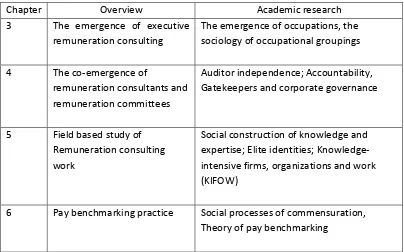
[image:37.595.127.531.493.745.2]The substantive chapters contribute to several academic discourses.
Table 1.3 Contributions to academic discourse
Chapter Overview Academic research
3 The emergence of executive remuneration consulting
The emergence of occupations, the sociology of occupational groupings
4 The co-emergence of
remuneration consultants and remuneration committees
Auditor independence; Accountability, Gatekeepers and corporate governance
5 Field based study of Remuneration consulting work
Social construction of knowledge and expertise; Elite identities; Knowledge-intensive firms, organizations and work (KIFOW)
First and foremost, much has been assumed of remuneration consultants with respect to their role in the upward ratchet of executive pay. Yet, there has been little in depth study of these critically placed actors. This thesis not only studies the historical emergence of executive remuneration consulting, but also the consultants’ situated practice. Neither a comprehensive history of the occupation, nor a field-based study of executive remuneration consulting is known to the researcher; thus, the contributions are manifold. There are two key findings when analysing the historical emergence of the occupation. First, consultants (or rather the lawyers, accountants and actuaries who first carried out executive pay advisory work) were not pursuing a professionalisation project (Larson, 1977). In its place, a dominant market logic propelled the formation of the field of remuneration consulting practice. Later, as regulation of executive pay disclosure exploded in 2002, the occupational grouping appealed to a gatekeeping logic, thereby broadening their work domain and producing their relevance in remuneration governance work.
The study of consultants’ day-to-day tasks informs two discourses. In the sociology of professions and occupations, there has been a lengthy debate on the production of knowledge and expertise, and the means by which market closure is achieved and legitimacy sustained in the absence of abstract knowledge, licensure, or accreditation processes. Existing with neither abstract knowledge (Abbott, 1988) nor accreditation, the thesis contributes to our understanding of how vulnerable occupations buttress their expert claims. Taking a deeper dive - in Chapter 6 - with respect to studying the practice of pay benchmarking, the thesis describes the mechanisms by which the ratchet occurs in pay benchmarking work, and the cultural logic, which propels it.
1.7 A brief note on chapter overlap
Figure 1.6: Timeline of key executive pay-related events and governance episodes
Chapter 2
Research Methods
2.0 Introduction
In Chapter 1, the study is described as one deeply interested in the social dynamics of executive pay design and governance in UK public companies. However, when the study was initially proposed for doctoral research, it was fitted with a different methodological point of departure. While changing a study’s methods is neither surprising nor unusual in the course of doctoral research, fundamental changes to the methodological approach are less common. Although methodology has been described as ‘a general approach to the study of research topics’ (Silverman, 1993), there is arguably little that is ‘general’ when comparing and contrasting methodologies.
The methodological approach taken by a researcher provides insights as to the philosophical underpinnings, which shape and guide the research project. Methodology influences how the researcher puzzles over phenomena, the questions designed to explore the phenomena, and the data collected, interpreted, theorised and re-presented in written accounts. The critical re-directions taken in this research were integral in shaping the research study and design, and importantly, the researcher.
The chapter is organised as follows. Section 2.1 briefly describes the original formulation of the study and the reasons it was re-formulated. Section 2.2 briefly summarises the methodological approach, and Section 2.3 describes the research design. Section 2.4 details the data sources, Section 2.5 describes the approaches taken in analysing the data and writing the chapters.
2.1 Original project formulation
initial formulations of the research question sought answers to the effects of regulation on executive pay packages. The methods - though loosely specified – were ‘mixed’, suggesting both qualitative and quantitative methods would be used in the study. There was the idea that interviews and/or surveys could supply data, which could then be coded into quantified or binary data points. These data points in turn could be used in multiple regression analyses. Regression analysis held the potential to elucidate causal relationships between executive pay and key features of the institutional environment. Specifying the independent variables for the regression analysis required a sound understanding of the institutional environment in which public company executive pay was designed.
Through an examination of the remuneration literature within the fields of accounting, economics and finance, it became evident that accounts of the institutional environment failed to critically engage with who, why and how questions. Such as: Who designs pay? How is pay designed? What work tasks are involved in designing pay? And then at the more granular level: Why are performance share plans chosen over stock options? Why is total shareholder return used over earnings per share when measuring performance for triggering incentive payouts?
These are just a small sample of the questions, which went unanswered as the study progressed. This raised concerns about building an empirical model upon an incomplete or rather inadequately researched foundation. Adding to the concerns was the awareness that the results from prior empirical quantitative studies were largely ambivalent. The theoretical and conceptual reliance on optimal contracting theory and ‘managerial capture’ cast a long shadow on research questions and research design. The extant body of research was what Miller and Power (2013) might describe as methodological reductionism 27 (p. 575). 28 Furthermore, executive remuneration research was stagnating. New research projects were often
27 Italics in original
28This study is not at attempt to engage in a critique of empirical quantitative methods