Public Health Theses School of Public Health
Fall 1-9-2015
An Examination Of The Association Between
Adverse Childhood Experiences And Alcohol
Consumption Patterns Among High Risk Youth In
Kampala, Uganda
Nina Babihuga
Georgia State University
Follow this and additional works at:https://scholarworks.gsu.edu/iph_theses
This Thesis is brought to you for free and open access by the School of Public Health at ScholarWorks @ Georgia State University. It has been accepted for inclusion in Public Health Theses by an authorized administrator of ScholarWorks @ Georgia State University. For more information, please contact
Recommended Citation
Babihuga, Nina, "An Examination Of The Association Between Adverse Childhood Experiences And Alcohol Consumption Patterns Among High Risk Youth In Kampala, Uganda." Thesis, Georgia State University, 2015.
i
AN EXAMINATION OF THE ASSOCIATION BETWEEN ADVERSE CHILDHOOD
EXPERIENCES AND ALCOHOL CONSUMPTION PATTERNS AMONG HIGH
RISK YOUTH IN KAMPALA, UGANDA
By
NINAH K. BABIHUGA
B.A., UGANDA CHIRISTIAN UNIVERSITY
A Thesis Submitted to the Graduate Faculty of Georgia State University in Partial
Fulfillment of the Requirements for the Degree
MASTER OF PUBLIC HEALTH
ATLANTA, GEORGIA 30303
ii
AN EXAMINATION OF THE ROLE OF ADVERSE CHILDHOOD EXPERIENCES
ON ALCOHOL CONSUMPTION AMONG HIGH RISK YOUTH IN UGANDA
By
Ninah K. Babihuga
Approved:
Dr. Monica Swahn
__________________________________________ Committee Chair
Dr. Shanta Dube
__________________________________________ Committee Member
12/16/2014
I would like to thank God for his goodness over the years, I would also like to thank the
faculty and staff of the School of Public Health at Georgia State University for enriching
me with a wealth of knowledge and skills over the past two years.
I would like to acknowledge my parents and sisters, as well as my extended family for
always showing their support.
Lastly, I extend my special appreciation to my committee chair, Dr. Monica Swahn for
her encouragement and assistance and whose dedication and guidance has made my
experience at Georgia State worthwhile. Her expertise and understanding greatly added to
my graduate experience in the public health program. She provided me with direction and
support through her passion for the work she does and her efforts to help so many world
over. It has been an absolute honor to serve as a graduate research assistant under her
direction. I am very grateful for all of her encouragement throughout this process, it has
led me this far.
My appreciation also goes to the other member of my committee, Dr. Shanta Dube for
Objective: To examine the prevalence of adverse childhood experiences and associations
with early alcohol use initiation and alcohol use patterns among high-risk urban youth in
Kampala, Uganda.
Methodology: Data from the Kampala Youth Survey (N=457) conducted in May through
June 2011 in Kampala, Uganda was used for analysis. Indicators of adverse childhood
experiences included: hunger, having parents, talking to parents, ever having lived on the
street, parents hitting each other, parents hitting children and parental use of alcohol.
These were dichotomized as either possessing the characteristic or not. Alcohol outcomes
assessed were; age at alcohol initiation (age 13 was the cutoff point), frequency of
drinking and intensity of drinking. Bivariate and multinomial logistic regression analyses
were computed to determine statistical association between adverse childhood
experiences and alcohol use patterns.
Results: Findings in this study showed that parents hitting the youth (p<.05), parental use
of alcohol (p<.001), being hungry (p<.001), having ever lived on the street (p<.001), and
having been raped (p<.001) were significantly associated with the youth’s age of alcohol
initiation by age 13, frequent drinking and heavy drinking in bivariate analyses. Results
also showed gender differences for: parental alcohol use (p<.05), parents hitting each
other (p<.05), being hungry (p<.001), ever having lived on the street (p<.001) and having
been raped (p<.001). Girls reported higher values for these measures except for being
raped where boys had higher values. Parental use of alcohol (p<.001), having ever lived
on the street (p<.001) and having been raped (p<.001) were particularly significant
included in a multivariate model.
Conclusion: This study demonstrates that adverse childhood experiences are strongly
associated with early alcohol use initiation as well as frequent and heavy drinking. As
such, early prevention efforts are urgently needed to ameliorate the consequences of
Author’s Statement Page
In presenting this thesis as a partial fulfillment of the requirements for an advanced
degree from Georgia State University, I agree that the Library of the University shall
make it available for inspection and circulation in accordance with its regulations
governing materials of this type. I agree that permission to quote from, to copy from, or
to publish this thesis may be granted by the author or, in his/her absence, by the professor
under whose direction it was written, or in his/her absence, by the Associate Dean,
College of Health and Human Sciences. Such quoting, copying, or publishing must be
solely for scholarly purposes and will not involve potential financial gain. It is understood
that any copying from or publication of this dissertation which involves potential
financial gain will not be allowed without written permission of the author.
Ninah K. Babihuga, 12/16/2014
____________________________
All theses deposited in the Georgia State University Library must be used in accordance
with the stipulations prescribed by the author in the preceding statement.
The author of this thesis is:
Ninah K. Babihuga
104 Brockett Way
Clarkston, GA, 30021
The Chair of the committee for this thesis is:
Dr. Monica Swahn
School of Public Health
Georgia State University
P.O. Box 3995
Atlanta, Georgia 30302-3995
Users of this thesis who are not regularly enrolled as students at Georgia State University
are required to attest acceptance of the preceding stipulation by signing below. Libraries
borrowing this thesis for the use of their patrons are required to see that each user records
here the information requested.
NAME OF USER ADDRESS DATE TYPE OF USE
(EXAMINATION ONLY OR
CURRICULUM VITAE NINA BABIHUGA
•E-MAIL:[email protected]
EDUCATION
M.P.H., Epidemiology Expected 2014
Georgia State University, Atlanta, GA
B.A., Social Work and Social Administration 2011 Uganda Christian University, Mukono, Uganda
PROFESSIONAL EXPERIENCE
GRADUATERESEARCHASSISTANT, 2013 August-Current School of Public Health, Georgia State University, Atlanta, GA
Supporting global public health research projects through; literature reviews, survey development, data analysis (SPSS) and writing reports/journal articles for publication in the specific areas of HIV/AIDS, mental health and substance abuse among high risk youth in Kampala, Uganda, and around the world.
RESEARCH INTERN, 2014 May-August
Georgia Coalition Against Domestic Violence, Atlanta, GA
Supporting the agency’s research grant application process primarily in the area of domestic violence by participating in different aspects of the research grant application life cycle including; the conceptualization and design of the research project, data management and analysis plan, as well as a plan for publication of study findings.
INTERN, 2010 May - 2010 August
Communication for Development Foundation Uganda, Kampala, Uganda
Activities to support the organization’s work through; sensitization, research, carrying out social action campaigns, advocacy, raising awareness on people’s own participation in making informed decisions and choosing their own priorities, monitoring and evaluation.
GRADUATE SCHOOL THESIS
Examining the association between adverse childhood experiences and alcohol consumption patterns (underage drinking, heavy drinking and frequent drinking) among high risk youth in Kampala, Uganda.
HONORS AND AWARDS
Golden Key International Honor Society 2013
Who’s Who Among Students in American Universities & Colleges 2014
viii
TABLE OF CONTENTS
ACKNOWLEDGEMENTS ... i
LIST OF TABLES ... 3
CHAPTER I ... 1
INTRODUCTION ... 1
1a. Background ... 1
1b. Purpose of study ... 5
1c. Hypotheses ... 5
1d. Biological Plausibility ... 6
CHAPTER II ... 7
LITERATURE REVIEW ... 7
2a. Studies on alcohol use, age of alcohol use initiation frequent and heavy drinking ... 7
2c. Studies of alcohol use and ACEs in the United States ... 11
2d. Alcohol use and ACE studies in sub- Saharan Africa... 13
2e. Risk Factors, Prevention Strategies and Recommendations for ACEs and their impact . 15 2f. Measures selected ... 17
REFERENCES ... 19
MANUSCRIPT ... 30
INTRODUCTION ... 30
METHODS ... 32
RESULTS ... 34
DISCUSSION ... 37
Appendix ... 48
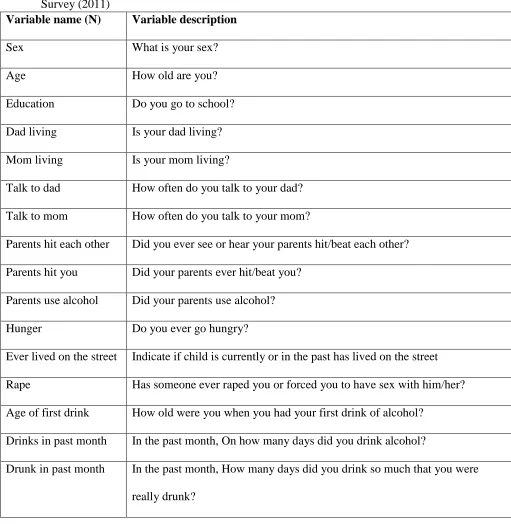
Table 5: Variable name and description of variables examined in the Kampala Youth Survey (2011) ... 48
ix
LIST OF TABLES
CHAPTER I
INTRODUCTION
1a. Background
The WHO global status report on alcohol and health 2014 describes alcohol as a
psychoactive substance with dependence-producing properties that has been widely used
in many cultures for centuries (“WHO | Global status report on alcohol and health 2014,”
n.d.). The WHO highlights the harmful use of alcohol including causing disease, social
and economic burden in societies (“WHO | Alcohol,” n.d.-a). There are differences and
historical trends in alcohol consumption and related harm that can be explained by
environmental factors such as economic development, culture, availability of alcohol and
the level and effectiveness of alcohol policies (“WHO | Global status report on alcohol
and health 2014,” n.d.).
Globally, alcohol is the third-leading risk factor for premature death and disability
(“Alcohol grows as risk factor for death and disability in 2010 GBD Study,” n.d.).
Alcohol consumption can lead to alcohol dependence and abuse, contribute to a number
of diseases and mental and behavioral disorders, and may lead to a range of injuries
(“NIAAA Publications,” n.d.). Also, drinkers and their families are subject to social
problems like; familial dysfunction, criminal convictions, and financial problems.
Drinking leads to enormous costs to society in terms of health care expenses, lost
productivity, and lost years of lives (“NIAAA Publications,” n.d.; Thavorncharoensap et
Alcohol consumption is an important risk factor for chronic disease and injury
(Seitz & Becker, 2007; Taylor et al., 2010). Researchers have quantified the burden of
mortality and disease attributable to alcohol, both globally and across nations (Lim et al.,
2012; Rehm et al., 2009; WHO, 2009). Findings have shown that the harmful effects
of alcohol consumption on health account for 3.8% of all global deaths and 4.6% of
global disability-adjusted life-years attributable to alcohol (Rehm et al., 2009). Disease
burden was found to be closely linked to volume of alcohol consumption, with
disproportionate effects on poor people and those marginalized in society (Rehm et al.,
2009). Alcohol consumption was identified as one of the major avoidable risk factors for
injury/disease and death and actions to reduce the burden and costs associated
with alcohol should be made a priority (Rehm et al., 2009). While alcohol consumers cite
various reasons for initiating alcohol use and for drinking relatively large amounts of
alcohol, researchers have found that early childhood trauma including adverse childhood
experiences more broadly, likely exacerbate risk for early alcohol use initiation and
heavier drinking in adulthood.
Adverse Childhood Experiences (ACEs), also referred to as child maltreatment,
refer to any act or series of acts of commission or omission by a parent or other caregiver
that results in harm, potential for harm, or threat of harm to a child (CDC, 2014).
Similarly, the Substance Abuse and Mental Health Services Administration (SAMHSA)
defines ACEs as stressful or traumatic experiences, including abuse, neglect and a range
of household dysfunction such as witnessing domestic violence, or growing up with
substance abuse, mental illness, parental discord, or crime in the home (SAMHSA, 2014)
Abuse (Emotional Abuse, Physical Abuse, Sexual Abuse), neglect (Emotional Neglect,
Physical Neglect), Household dysfunction, household substance abuse, household mental
Illness, parental separation or divorce and incarcerated household member (CDC, 2014).
From an international perspective, ACEs include multiple types of abuse; neglect;
exploitation; exposure to violence between parents or caregivers; other kinds of serious
household dysfunction such as growing up with alcohol and substance abusing family
members; and peer, community and collective violence(WHO, 2014).
International studies assessing childhood adversities indicate that approximately
20% of women and 5–10% of men report being sexually abused as children, while 23%
of people report being physically abused as children (WHO, 2014). Many more children
are subject to emotional or psychological abuse and to neglect. In armed conflict and
refugee settings specifically, girls are particularly vulnerable to sexual violence,
exploitation and abuse by combatants, security forces, members of their communities, aid
workers and others (Gender Based Violence and livelihood Interventions, 2007). Every
year, there are an estimated 34,000 homicide deaths in children under 15 years of age and
this is an underestimates (WHO, 2014).
ACEs are strongly related to child and adolescent development and have been
associated with the prevalence of a wide range of health and social problems. These
problems include substance abuse (alcohol and drug abuse) and problems with forming
and maintaining relationships (Dube et al., 2002).
Findings from a number of studies suggest that early-life social environments can
have long-lasting impacts on health that persist well into adulthood (Shonkoff et al.,
behavioral, physical and mental health problems such as: being a victim or perpetrator of
violence, depression, substance abuse, obesity, high-risk sexual behaviors, unintended
pregnancy, HIV/AIDS, heart disease and cancer that they experience for a large part of
their lives and premature mortality at worst (Springer et al., 2003; Shuper et al., 2010;
Dube et al., 2002). In addition to the health and social consequences of child
maltreatment, there is an added economic impact, including costs of hospitalization,
mental health treatment, child welfare, and longer-term health (physical and emotional)
costs (Rehm et al., 2009; Dube et al., 2002).
Alcohol use especially as a consequence of ACEs is an important public health
concern because of the several detrimental health and social outcomes (“The Health and
Social Impact of Growing Up With Adverse Childhood Experiences,” n.d.). However,
despite the vast literature on either alcohol use or ACEs, there is surprisingly limited
research on ACEs and alcohol use in Sub Saharan Africa where alcohol use is highly
prevalent. It is of particular interest to examine ACEs and links to alcohol use patterns
particularly among high-risk youth in Kampala, Uganda who do not attend school
because these youth have many unmet needs and are likely to drink alcohol at young
ages, drinking frequently and heavily. As such, this study seeks to examine ACEs and
alcohol drinking patterns, that is, early alcohol use initiation, frequency and intensity of
drinking with the goal of informing program planning and intervention strategies among
1b. Purpose of study
To examine the association between ACEs and alcohol use patterns among high-risk
urban youth in Kampala, Uganda.
Research Questions
1. What is the prevalence and socio demographic correlates of ACEs among high
-risk youth living in the slums of Kampala?
2. Do high-risk youth living in the slums of Kampala who report ACEs initiate
alcohol use earlier and use alcohol frequently and heavily compared to those who
do not report any ACEs?
1c. Hypotheses
For research question #2, there are three alternative hypotheses:
1. High-risk youth living in the slums of Kampala who report ACEs will report
initiating alcohol use at an earlier age compared to youth who do not report
ACEs.
2. High-risk youth living in the slums of Kampala who report ACEs will report
frequent alcohol use compared to youth who do not report ACEs.
3. High-risk youth living in the slums of Kampala who report ACEs will report
heavy alcohol use compared to youth who do not report ACEs.
Several reasons have influenced these assumptions including previous research that
has demonstrated that there is a strong dose-response relationship between ACEs and a
compared to those who did not report experiencing ACEs (“Exploring the Connection
between Adverse Childhood Experiences (ACEs) and Alcohol Abuse,” n.d.).
1d. Biological Plausibility
In Bradford Hill’s 9 criteria for establishing an argument for causation, biological
plausibility is considered a key element and it refers to the strength of the convergence
between epidemiology and neurobiology (“Public Health Classics: Association or
causation: evaluating links between ‘environment and disease,’” n.d.).
Research findings from population studies and those from the neurobiology
discipline have indicated that ACEs disrupt normal brain development and function. This
then leads victims of ACEs to suffer with long lasting health effects (Teicher et al.,
2003). This effect on the brain gives biological evidence to support public health research
findings that have linked ACEs to the negative outcomes including affecting an
individual’s long term health (Anda et al., 2006).
In addition, study findings have shown that the regular operation of the immune
and nervous systems of people who experience ACEs are interfered with
(Thavorncharoensap et al., 2009). These findings are particularly critical for those who
have these experiences early on in life because of the emotional vulnerability associated
with them across lifespan including alcohol and drug abuse (Dube et al., 2002; Dube et
CHAPTER II
LITERATURE REVIEW
The literature review will comprise of compiled research from various studies on the
prevalence of alcohol use and the prevalence of ACEs and studies documenting an
association between ACEs and alcohol consumption among youth. Studies reviewed will
be global in nature including those from the United States and sub-Saharan Africa,
including Uganda. The words child maltreatment and ACEs will be used interchangeably.
2a. Studies on alcohol use, age of alcohol use initiation frequent and heavy drinking
The deleterious impact of alcohol is among the top five risk factors for disease,
disability and death throughout the world (WHO, 2014). It is a causal factor in more than
200 disease and injury conditions and is associated with health problems like alcohol
dependence, liver cirrhosis, cancers and injuries and for most diseases and injuries
causally impacted by alcohol, there is a dose–response relationship (WHO, 2014; WHO,
2014). Alcohol use has been found to be associated with alcohol dependence (Hingson et
al., 2006; NIAAA Publications, 2014), other substance use (NIAAA Publications, 2014),
criminal activity (NIAAA Publications, 2014),unintentional injuries (Hingson, et al.,
2003; Hingson et al., 2006), suicidal ideation and attempts (Swahn & Bossarte, 2007),
problems like forming and maintain relationships (“The Health and Social Impact of
Growing Up With Adverse Childhood Experiences,” n.d.). Recent findings from research
also suggest associations between harmful alcohol use and infectious diseases such as
tuberculosis and HIV/AIDS (WHO, 2013). Findings have also shown differences and
historical trends in alcohol consumption and related harm which can be explained by
environmental factors such as economic development, culture, availability of alcohol and
the level and effectiveness of alcohol policies (WHO, 2014).
Correlates of alcohol use include: genetic factors (NIAAA, 2008; “WHO 2014),
age (Hilton, 1987; Midanik & Clark, 1995; Mäkelä & Mustonen, 2000; WHO, 2014),
gender (Grucza et al., 2008; Wilsnack, 2013; “WHO | Global status report on alcohol and
health 2014,” n.d.), family characteristics (Merigankas et al., 1998; WHO, 2004a; WHO,
2014), socio economic status (Grittner et al., 2012; WHO, 2014), culture (Neumark et al.,
2003; Chartier et al., 2013; WHO, 2014) and childhood maltreatment (Springer et al.,
2003; Shuper et al., 2010; Dube et al., 2002). Findings on alcohol consumption
particularly in Africa have shown that alcohol use and risky sexual behaviors are linked
to drinking venues and alcohol serving establishments, sexual coercion, and poverty
(Kalichman et al., 2007; Swahn et al., 2011). These results point to the pressing public
health issue of alcohol use in sub-Saharan Africa which is linked to other health-risk
behaviors and adverse outcomes.
In 2012, 5.9% of all global deaths were as a result of alcohol consumption
(“WHO, 2013; Gulland, 2014). There are significant sex differences in the proportion of
global deaths attributable to alcohol, for example, in 2012, 7.6% of deaths among males
in 2012, 5.1% of the global burden of disease and injury were as a result of alcohol
consumption (WHO, 2014).
Children and adolescents are more vulnerable to alcohol-related harm from a
given volume of alcohol than adults (Faden, 2006; NIAAA, 2009). Early initiation of
alcohol use (before 14 years of age) is also a predictor of impaired health status because
of its association with increased risk for alcohol dependence and abuse at later ages
(DeWit et al., 2000) leading to alcohol-related motor vehicle crashes and other
unintentional injuries. Family history of alcohol use disorders is considered a key
susceptibility factor for both genetic and environmental reasons and account for an
extensive fraction of the disparity in alcohol dependence and people with lower
socioeconomic status (SES) who appear to be more susceptible to the problems and
consequences associated with alcohol consumption (WHO, 2014).
Youth who report being stressed are at a higher risk of initiating alcohol use at an
early age and are likely to drink more frequently as well (NIAAA, 2014). Research
findings indicated that street children, specifically in Brazil who lived and slept on the
streets were more likely to use alcohol and on nearly a daily basis (Leticia et al., 1996;
WHO, 2001). Similarly, findings from a 1989 study of a national sample of Canadian
youths who lived on the street found that over 80 per cent drank alcohol and 9 per cent
2b. The pioneer ACE Study conducted in the United States
The CDC initiated the ACE Study, one of the largest investigations ever
conducted to assess associations between childhood maltreatment and later-life health
and well-being which it has continued on an ongoing basis (CDC, 2014). This study has
created a wealth of knowledge in the area of ACEs and the several factors that surround
them. Interest in replications of the ACE Study is growing globally and presently there
are efforts to replicate the ACE Study or use its questionnaire in Canada, China, Jordan,
Norway, the Philippines and the United Kingdom and the World Health Organization has
included the ACE Study questionnaires as an addendum to the document, ‘Preventing
Child Maltreatment: A Guide to Taking Action and Generating Evidence’ (Dube et al.,
2002).
The original ACE study which began in 1995 with more than 17,000 Kaiser
patients completing a confidential survey comprising questions about childhood
maltreatment and family dysfunction, as well as their current health status and behaviors
(CDC, 2014). Findings also revealed that: ACEs are strongly related to development and
prevalence of a wide range of health and social problems throughout their lifespan and
across birth cohorts (Dube et al., 2002; Dube et al., 2003). Furthermore, many
ACE-related problems have a tendency to be co-occurring (CDC, 2014).
The ACE Study uses the ACE Score, which is a total count of the number of
ACEs reported by adult respondents (CDC, 2014). The ACE Score is used to
retrospectively assess the total amount of adversity during childhood and its impact on
adult life. Findings have shown that as the number of ACEs significantly increase, the
obstructive pulmonary disease, depression, fetal death, chronic disease, intimate partner
violence and risky sexual behavior, suicidal behavior (Anda, 2006).
2c. Studies of alcohol use and ACEs in the United States
The CDC emphasizes that excessive alcohol use is the third leading cause of
preventable death in the United States and is a risk factor for many health and societal
problems (CDC, 2014). In 2006, the estimated economic cost of excessive drinking in the
U. S. was $223.5 billion (Bouchery et al.,; Brewer, 2011; CDC, 2014). Excessive alcohol
consumption can take the form of heavy drinking - more than two drinks per day on
average for men or more than one drink per day on average for women, binge drinking -
five or more drinks during a single occasion for men or four or more drinks during a
single occasion for women, or underage drinking (NIAAA, 2014.; CDC , 2014). This
makes alcohol and its associated risk factors particularly child maltreatment, a major area
of concern for public health research and practice (The Community Guide, 2014).
In a retrospective cohort study of adult health maintenance organization (HMO)
members in California examining the relationship between multiple ACEs and both the
likelihood of ever drinking and the age at initiating alcohol use; respondents completed a
survey about ACEs which included; childhood abuse and neglect, growing up with
various forms of household dysfunction and alcohol use in adolescence and adulthood.
Results showed that 89% of the cohort reported ever drinking and all individual ACEs
except physical neglect increased the risk of ever using alcohol (p < .05). Among ever
drinkers, initiating alcohol use by age 14 was increased two to three times by individual
four birth cohorts emphasizes that the negative effects of ACEs exceed changes overtime,
something that should inform prevention efforts (Dube et al., 2003).
In the 2001- 2002 National Epidemiologic Survey on Alcohol and Related
Conditions, researchers studied associations between ACEs, psychological distress and
adult alcohol problems among more than 43,000 participants. Findings showed that those
who experienced 2 or more adverse events in childhood were about 2 times more likely
to develop alcohol dependence than those who experienced one or no ACE, ACEs and
psychological distress were also associated with increased risk of self-reported alcohol
problems in both men and women although different ACEs were associated with these
alcohol problems for each gender. With alcohol use, alcoholism, and alcohol abuse
among men tending to be higher than for women, findings in this study suggest that
behaviors among men may be influenced by early childhood actors. The use of alcohol in
this context may be a coping technique to deal with distress and unresolved trauma. It is
therefore vital to identify early childhood trauma in interventions that aim to reduce
alcohol abuse (Strine et al., 2012; NIAAA, 2014).
In examining the mediating role of psychological distress on the relationship
between ACEs and adult alcohol problems by gender, researchers found that
psychological distress mediated large portions of alcohol problems associated with
childhood emotional and physical maltreatment, mental illness, parental separation or
divorce, sexual abuse, and household drug use among women and; mental illness in the
household, emotional and physical maltreatment, household drug use, and sexual abuse
childhood in programs trying to reduce alcohol abuse as well as identifying the
contributing factors that are gender sensitive (Strine et al., 2012).
2d. Alcohol use and ACE studies in sub- Saharan Africa
Nationally representative data from Burkina Faso, Ghana, Malawi, and Uganda
(N=9,819, ages 12-19) were examined in a study to assess the association between four
ACEs and self-reported past year drunkenness among adolescents. ACEs were measured
by; living in a food-insecure household, living with a problem drinker, having been
physically abused, and having been coerced into having sex. Findings showed that
respondents who had experienced an adverse event during childhood were more likely to
report drunkenness and the association between adverse events and reported drunkenness
was more pronounced for females. For both males and females there was an association
between the number of adverse events experienced and the proportion reporting
drunkenness and researchers found that ACEs may predispose adolescents to alcohol use
(Kabiru et al., 2010).
Associations between childhood adversity, depression, substance abuse and HIV
in rural South African youth were studied to describe prevalence of childhood
experiences of adversity and their associations with health outcomes. Findings showed
that sexual abuse was associated with alcohol abuse in men (AOR 3.68, 95% CI 2.00,
6.77, p < .0001) and alcohol abuse in women (AOR 3.94, 95% CI 1.90, 8.17, p < .0001).
This finding emphasizes that childhood exposure to adversity is very common and
in Africa particularly research on emotional abuse and neglect, which has shown an
negative impacts on the health of young people (Jewkes et al., 2010).
In a study to determine the prevalence of violence involving weapons in a
convenience sample of service-seeking youth in Kampala (N=457), researchers found
that reporting drunkenness (AOR=2.35 ;95%CI:1.12-4.92) was significantly associated
with violence while parental neglect as a result of alcohol use was a significant correlate
of violence victimization among the youth (Swahn, Gressard, et al., 2012).
Using data from students in Zambia and Uganda from the Global School-Based
Student Health Survey, researchers studied the associations between early alcohol use,
before age 13, and problem drinking among adolescents. Findings from the study showed
that early alcohol initiation was associated with problem drinking in both Zambia
(AOR=1.28; 95% CI:1.02-1.61) and Uganda (AOR=1.48; 95% CI: 1.11- 1.98) among
youth as well as a significant association between alcohol initiation before 13 years of
age and problem drinking among youth in both countries (Swahn et al., 2011).
To describe the magnitude of risky sexual and its association with Khat and
alcohol consumption in Ethiopia, researchers studied 20,434 in-school and out-of-school
youths aged between 15 and 24 years of age about their sexual behavior and substance
use. Findings showed that there was a significant and linear association between alcohol
intake and unprotected sex, with those using alcohol daily having a threefold increased
odds compared to those not using it (Kebede et al., 2005).
In a study to examine the associations between alcohol marketing strategies,
School-Based Student Health Survey conducted in Zambia in 2004 of students largely 11
to 16 years of age (N=2257). Findings indicated that alcohol marketing, especially
providing of free alcohol through a company representative, was associated with
drunkenness (AOR = 1.49; 95% CI: 1.09–2.02) and problem drinking (AOR = 1.41; 95%
CI: 1.06–1.87) among youth (Swahn et al., 2011).
In Uganda, a country with one of the highest per capita alcohol consumptions in
the world ( Tumwesigye et al., 2009), research was conducted to establish the
relationship between social interaction and alcohol consumption in Uganda among 1479
participants in 2003 as part of a transnational study. Findings showed that the stronger the
social interaction, the more the likelihood of taking alcohol frequently p<0.001 even after
controlling for sex, age group and education level (Tumwesigye et al., 2009).
Researchers analyzed data on patterns of alcohol consumption with adjustment for
cluster effects and found a significant variation in the likelihood of drinking frequently at
village level (p<0.01). The variation in the likelihood of heavy drinking remained
significant after controlling for background characteristics of respondents and
village-level prevalence of drinking and unemployment (Tumwesigye et al., 2013).
Researchers examined the role of religion and religiosity on alcohol consumption
at two fish landing sites on Lake Victoria in Uganda. Findings indicated that people
reporting low religiosity were five times more likely to have consumed alcohol compared
to those reporting low/average religiosity (Tumwesigye et al., 2013).
Through research, several risk factors associated with ACEs have been identified
and although they are not present in all social and cultural contexts, they give an
understanding of the causes of child maltreatment and its link to alcohol problems (CDC,
2014). The risk factors include but are not limited to the following; characteristics of a
parent or caregiver such as - difficulty bonding with a newborn, not nurturing the child,
having been maltreated themselves as a child, lacking awareness of child development or
having unrealistic expectations, misusing alcohol or drugs, being involved in criminal
activity and experiencing financial difficulties; family breakdown including parent-child
relationships or violence between other family members as well as community and
societal factors like gender and social inequality, high levels of unemployment and
poverty, easy access to alcohol and drugs, and inadequate policies and programs (Dube et
al., 2002).
Alcohol literature demonstrates a critical gap in the literature for the need to
examine the role of ACEs in early alcohol use especially in sub-Saharan Africa. In
particular, early alcohol use initiation has been found to be associated with a host of other
adverse consequences such as alcohol dependence, suicide, self-harm, injuries and
diseases including the risk of acquiring HIV (Swahn & Bossarte, 2007; Stueve &
O’Donnell, 2005; Hawkins et al., 1997; Hingson & Zha, 2009). As such, it is clear that
early alcohol use initiation should be a key outcome when examining the role of ACEs.
Additionally, epidemiologic research of alcohol use among youth also tend to focus on
frequency of use (Muchimba et al., 2013; Weitzman et al., 2003) as well as heavy use
The present study will examine the prevalence of ACEs and socio demographic
correlates, as well as the contribution of ACEs to early alcohol use initiation, frequency
of alcohol use and heavy alcohol use in a population of high risk youth living in the
slums and streets of Kampala, Uganda.
2f. Measures selected
Measures selected for this study were informed by previous research that has
shown prevalent alcohol use (Swahn et al., 2013) and adverse experiences (Swahn et al.,
2012) in this and such populations. They are described below.
Parental involvement characteristics – In a study of street and slum youth in
Kampala, more than three quarters of the youth in our survey reported one or both parents
deceased, an alarming issue that is likely the key underlying cause of their current living
conditions (Swahn et al., 2012a).
Parents hitting each other - Family breakdown including parent-child
relationships or violence between other family members have been identified as one of
several risk factors associated with ACEs. (CDC, 2014; DHHS 2001; Lipsey and Derzon
1998; Resnick et al. 2004; Dube et al., 2002)
Parents hitting youth – In a study of youth living on the streets and slums of
Kampala, 63% reported being hit or beaten by their parents (Swahn et al., 2012).
Parental alcohol use - 21% of youth living on the streets and slums of Kampala
reported that their parents' alcohol use had prevented them from providing care for them
Hunger - 61% of youth living on the streets and slums of Kampala reported
experiencing hunger (Swahn et al., 2012).
Ever lived on street- Street children specifically in Brazil who lived with their
families and attended school were less likely to drink alcohol than those who spent all
day in the streets and slept there while a 1989 study of a national sample of Canadian
youths who lived on the street found that over 80 per cent drank alcohol and 9 per cent
reported drinking daily (WHO, 2001).
Raped- International studies have shown that approximately 20% of women and
5–10% of men report being sexually abused as children (WHO, 2014) something that has
been identified as a risk factor for alcohol use later in life.
Alcohol has serious long lasting implications on the life of the individual and the
presence of ACEs increases this risk something that it likely for the population that will
be a part of this study. This study will give an opportunity for knowledge about this
particular population to be shared beyond the borders of the slums in which these high
risk youth live thereby providing an opportunity for more exploratory research
opportunities and possibly interventions to improve the public health in this and such
populations. This study will also address a gap in the literature concerning research on
REFERENCES
A Developmental Perspective On Underage Alcohol Use. (n.d.). Retrieved October 28,
2014, from http://pubs.niaaa.nih.gov/publications/AA78/AA78.htm
Adverse Childhood Experiences | Prevention Training and Technical Assistance. (n.d.).
Retrieved October 23, 2014, from
http://captus.samhsa.gov/prevention-practice/targeted-prevention/adverse-childhood-experiences/1
Adverse Childhood Experiences (ACE) Study |Child Maltreatment|Violence
Prevention|Injury Center|CDC. (n.d.-a). Retrieved October 21, 2014, from
http://www.cdc.gov/violenceprevention/acestudy/index.html
Adverse Childhood Experiences (ACE) Study |Child Maltreatment|Violence
Prevention|Injury Center|CDC. (n.d.-b). Retrieved October 21, 2014, from
http://www.cdc.gov/violenceprevention/acestudy/
Alcohol and Injury in Emergency Departments. (n.d.). Retrieved from
http://www.who.int/substance_abuse/publications/alcohol_injury_summary.pdf
Alcohol grows as risk factor for death and disability in 2010 GBD Study. (n.d.).
Retrieved October 28, 2014, from
http://www.globalgapa.org/IAS/What-we-
do/Publication-archive/The-Globe/Issue-1-2013/Alcohol-grows-as-risk-factor-for-death-and-disability-in-2010-GBD-Study.aspx
A multilevel analysis of alcohol consumption patterns in Uganda.pdf. (n.d.). Retrieved
http://www.afdb.org/fileadmin/uploads/afdb/Documents/Publications/African%20Statisti
cal%20Journal%20Vol.%2016%20-%20Alcohol%20consumption%20patterns.pdf
Anda, R. F., Felitti, V. J., Bremner, J. D., Walker, J. D., Whitfield, C., Perry, B. D., …
Giles, W. H. (2006). The enduring effects of abuse and related adverse
experiences in childhood. A convergence of evidence from neurobiology and
epidemiology. European Archives of Psychiatry and Clinical Neuroscience,
256(3), 174–186. doi:10.1007/s00406-005-0624-4
Bouchery, E. E., Harwood, H. J., Sacks, J. J., Simon, C. J., & Brewer, R. D. (2011).
Economic costs of excessive alcohol consumption in the U.S., 2006. American
Journal of Preventive Medicine, 41(5), 516–524.
doi:10.1016/j.amepre.2011.06.045
CDC - Chronic Disease - Excessive Alcohol Use - At A Glance. (n.d.). Retrieved October
29, 2014, from
http://www.cdc.gov/chronicdisease/resources/publications/aag/alcohol.htm
CDC - Fact Sheets-Alcohol Use And Health - Alcohol. (n.d.). Retrieved October 29,
2014, from http://www.cdc.gov/alcohol/fact-sheets/alcohol-use.htm
Childhood socioeconomic status and adult health. (n.d.). Retrieved from
http://www.unnaturalcauses.org/assets/uploads/file/ChildhoodSESandHealth.PDF
Dawson, D. A., Grant, B. F., Stinson, F. S., & Chou, P. S. (2004). Another Look at
Heavy Episodic Drinking and Alcohol Use Disorders among College and
Definitions|Child Maltreatment|Violence Prevention|Injury Center|CDC. (n.d.). Retrieved
October 28, 2014, from
http://www.cdc.gov/violenceprevention/childmaltreatment/definitions.html
Definitions|Suicide|Violence Prevention|Injury Center|CDC. (n.d.). Retrieved October 15,
2014, from http://www.cdc.gov/violenceprevention/suicide/definitions.html
DeWit, D. J., Adlaf, E. M., Offord, D. R., & Ogborne, A. C. (2000). Age at First Alcohol
Use: A Risk Factor for the Development of Alcohol Disorders. American Journal
of Psychiatry, 157(5), 745–750. doi:10.1176/appi.ajp.157.5.745
Drinking Levels Defined. (n.d.). Retrieved October 29, 2014, from
http://www.niaaa.nih.gov/alcohol-health/overview-alcohol-consumption/moderate-binge-drinking
Dube, S. R., Anda, R. F., Felitti, V. J., Edwards, V. J., & Croft, J. B. (2002). Adverse
childhood experiences and personal alcohol abuse as an adult. Addictive
Behaviors, 27(5), 713–725. doi:10.1016/S0306-4603(01)00204-0
Dube, S. R., Felitti, V. J., Dong, M., Giles, W. H., & Anda, R. F. (2003). The impact of
adverse childhood experiences on health problems: evidence from four birth
cohorts dating back to 1900. Preventive Medicine, 37(3), 268–277.
doi:10.1016/S0091-7435(03)00123-3
Dube, S. R., Miller, J. W., Brown, D. W., Giles, W. H., Felitti, V. J., Dong, M., & Anda,
R. F. (2006). Adverse childhood experiences and the association with ever using
alcohol and initiating alcohol use during adolescence. Journal of Adolescent
Exploring the Connection between Adverse Childhood Experiences (ACEs) and Alcohol
Abuse. (n.d.). Retrieved September 24, 2014, from
http://www.scattergoodfoundation.org/activity/general/exploring-connection-
between-adverse-childhood-experiences-aces-and-alcohol-abuse#.VCNaqxaRWXU
Faden, V. B. (2006). Trends in initiation of alcohol use in the United States 1975 to 2003.
Alcoholism, Clinical and Experimental Research, 30(6), 1011–1022.
doi:10.1111/j.1530-0277.2006.00115.x
Gender Based Violence and livelihood Interventions. (n.d.). Retrieved from
http://www.fao.org/fileadmin/templates/dimitra/pdf/guidance_note_gbv_livelihoo
ds.pdf
Genetics of Alcohol Use Disorder. (n.d.). Retrieved November 10, 2014, from
http://www.niaaa.nih.gov/alcohol-health/overview-alcohol-consumption/alcohol-use-disorders/genetics-alcohol-use-disorders
GlobalHealthRisks_report_full.pdf. (n.d.). Retrieved from
http://www.who.int/healthinfo/global_burden_disease/GlobalHealthRisks_report_
full.pdf
Global Status Report: Alcohol and Young People. (n.d.). Retrieved from
http://apps.who.int/iris/bitstream/10665/66795/1/WHO_MSD_MSB_01.1.pdf
Gulland, A. (2014). Alcohol consumption kills 3.3 million people a year, WHO
calculates. BMJ, 348(may15 5), g3335–g3335. doi:10.1136/bmj.g3335
Hawkins, J. D., Graham, J. W., Maguin, E., Abbott, R., Hill, K. G., & Catalano, R. F.
Risk Factors on Subsequent Alcohol Misuse. Journal of Studies on Alcohol,
58(3), 280–290.
Hingson, R., Heeren, T., Zakocs, R., Winter, M., & Wechsler, H. (2003). Age of First
Intoxication, Heavy Drinking, Driving after Drinking and Risk of Unintentional
Injury among U.S. College Students. Journal of Studies on Alcohol and Drugs,
64(1), 23.
Hingson, R. W., Heeren, T., & Winter, M. R. (2006). Age at drinking onset and alcohol
dependence: age at onset, duration, and severity. Archives of Pediatrics &
Adolescent Medicine, 160(7), 739–746. doi:10.1001/archpedi.160.7.739
Hingson, R. W., & Zha, W. (2009). Age of Drinking Onset, Alcohol Use Disorders,
Frequent Heavy Drinking, and Unintentionally Injuring Oneself and Others After
Drinking. Pediatrics, 123(6), 1477–1484. doi:10.1542/peds.2008-2176
Jewkes, R. K., Dunkle, K., Nduna, M., Jama, P. N., & Puren, A. (2010). Associations
between childhood adversity and depression, substance abuse and HIV and HSV2
incident infections in rural South African youth. Child Abuse & Neglect, 34(11),
833–841. doi:10.1016/j.chiabu.2010.05.002
Jurgen Rehm. (2011). The Risks Associated With Alcohol Use and Alcoholism.
Retrieved November 7, 2014, from
http://pubs.niaaa.nih.gov/publications/arh342/135-143.htm
Kabiru, C. W., Beguy, D., Crichton, J., & Ezeh, A. C. (2010). Self-reported drunkenness
among adolescents in four sub-Saharan African countries: associations with
adverse childhood experiences. Child and Adolescent Psychiatry and Mental
Kebede, D., Alem, A., Mitike, G., Enquselassie, F., Berhane, F., Abebe, Y., …
Gebremichael, T. (2005). Khat and alcohol use and risky sex behaviour among
in-school and out-of-in-school youth in Ethiopia. BMC Public Health, 5(1), 109.
doi:10.1186/1471-2458-5-109
Klima, T., Skinner, M. L., Haggerty, K. P., Crutchfield, R. D., & Catalano, R. F. (2014).
Exploring heavy drinking patterns among black and white young adults. Journal
of Studies on Alcohol and Drugs, 75(5), 839–849.
Muchimba, M., Haberstick, B. C., Corley, R. P., & McQueen, M. B. (2013). Frequency
of alcohol use in adolescence as a marker for subsequent sexual risk behavior in
adulthood. The Journal of Adolescent Health: Official Publication of the Society
for Adolescent Medicine, 53(2), 215–221. doi:10.1016/j.jadohealth.2013.02.005
NIAAA Publications. (n.d.). Retrieved October 21, 2014, from
http://pubs.niaaa.nih.gov/publications/arh29-2/74-78.htm
Public Health Classics: Association or causation: evaluating links between “environment
and disease.” (n.d.). Retrieved from
http://www.who.int/bulletin/volumes/83/10/792.pdf
Reducing Underage and Young Adult Drinking. (n.d.). Retrieved October 28, 2014, from
http://pubs.niaaa.nih.gov/publications/arh40/29-44.htm
Rehm, J., Mathers, C., Popova, S., Thavorncharoensap, M., Teerawattananon, Y., &
Patra, J. (2009). Global burden of disease and injury and economic cost
attributable to alcohol use and alcohol-use disorders. Lancet, 373(9682), 2223–
Risk and Protective Factors|Child Maltreatment|Violence Prevention|Injury Center|CDC.
(n.d.). Retrieved October 29, 2014, from
http://www.cdc.gov/violenceprevention/childmaltreatment/riskprotectivefactors.ht
ml
Seitz, H. K., & Becker, P. (2007). Alcohol metabolism and cancer risk. Alcohol Research
& Health: The Journal of the National Institute on Alcohol Abuse and
Alcoholism, 30(1), 38–41, 44–47.
Shonkoff, J. P., Garner, A. S., Siegel, B. S., Dobbins, M. I., Earls, M. F., Garner, A. S.,
… Wood, D. L. (2012). The Lifelong Effects of Early Childhood Adversity and
Toxic Stress. Pediatrics, 129(1), e232–e246. doi:10.1542/peds.2011-2663
Shuper, P. A., Neuman, M., Kanteres, F., Baliunas, D., Joharchi, N., & Rehm, J. (2010).
Causal considerations on alcohol and HIV/AIDS--a systematic review. Alcohol
and Alcoholism (Oxford, Oxfordshire), 45(2), 159–166.
doi:10.1093/alcalc/agp091
Springer, K. W., Sheridan, J., Kuo, D., & Carnes, M. (2003). The Long-term Health
Outcomes of Childhood Abuse. Journal of General Internal Medicine, 18(10),
864–870. doi:10.1046/j.1525-1497.2003.20918.x
Strine, T., W., Dube, S., R., Edwards, V., J., Witt Prehn, A., Rasmussen, S., Wagenfeld,
M., … Croft, J., B. (2012). Associations Between Adverse Childhood
Experiences, Psychological Distress, and Adult Alcohol Problems. American
Stueve, A., & O’Donnell, L. N. (2005). Early Alcohol Initiation and Subsequent Sexual
and Alcohol Risk Behaviors Among Urban Youths. American Journal of Public
Health, 95(5), 887–893. doi:10.2105/AJPH.2003.026567
Substance Abuse and Mental Health Services Administration. (n.d.). Retrieved October
29, 2014, from
http://captus.samhsa.gov/prevention-practice/targeted-prevention/adverse-childhood-experiences/3
Swahn, M. H., Ali, B., Palmier, J. B., Sikazwe, G., & Mayeya, J. (2011). Alcohol
Marketing, Drunkenness, and Problem Drinking among Zambian Youth: Findings
from the 2004 Global School-Based Student Health Survey. Journal of
Environmental and Public Health, 2011, e497827. doi:10.1155/2011/497827
Swahn, M. H., Ali, B., Palmier, J., Tumwesigye, N. M., Sikazwe, G., Twa-Twa, J., &
Rogers, K. (2011). Early alcohol use and problem drinking among students in
Zambia and Uganda. Journal of Public Health in Africa, 2(2), e20.
doi:10.4081/jphia.2011.e20
Swahn, M. H., & Bossarte, R. M. (2007). Gender, Early Alcohol Use, and Suicide
Ideation and Attempts: Findings from the 2005 Youth Risk Behavior Survey.
Journal of Adolescent Health, 41(2), 175–181.
doi:10.1016/j.jadohealth.2007.03.003
Swahn, M. H., Gressard, L., Palmier, J. B., Kasirye, R., Lynch, C., & Yao, H. (2012).
Serious Violence Victimization and Perpetration among Youth Living in the
Slums of Kampala, Uganda. The Western Journal of Emergency Medicine, 13(3),
Swahn, M. H., Palmier, J. B., & Kasirye, R. (2013). Alcohol Exposures, Alcohol
Marketing, and Their Associations with Problem Drinking and Drunkenness
among Youth Living in the Slums of Kampala, Uganda. International Scholarly
Research Notices, 2013, e948675. doi:10.1155/2013/948675
Swahn, M. H., Palmier, J. B., Kasirye, R., & Yao, H. (2012a). Correlates of suicide
ideation and attempt among youth living in the slums of Kampala. International
Journal of Environmental Research and Public Health, 9(2), 596–609.
doi:10.3390/ijerph9020596
Swahn, M. H., Palmier, J. B., Kasirye, R., & Yao, H. (2012b). Correlates of Suicide
Ideation and Attempt among Youth Living in the Slums of Kampala.
International Journal of Environmental Research and Public Health, 9(2), 596–
609. doi:10.3390/ijerph9020596
Taylor, B., Irving, H. M., Kanteres, F., Room, R., Borges, G., Cherpitel, C., … Rehm, J.
(2010). The more you drink, the harder you fall: a systematic review and
meta-analysis of how acute alcohol consumption and injury or collision risk increase
together. Drug and Alcohol Dependence, 110(1-2), 108–116.
doi:10.1016/j.drugalcdep.2010.02.011
Teicher, M. H., Andersen, S. L., Polcari, A., Anderson, C. M., Navalta, C. P., & Kim, D.
M. (2003). The neurobiological consequences of early stress and childhood
maltreatment. Neuroscience & Biobehavioral Reviews, 27(1–2), 33–44.
doi:10.1016/S0149-7634(03)00007-1
Thavorncharoensap, M., Teerawattananon, Y., Yothasamut, J., Lertpitakpong, C., &
systematic review. Substance Abuse Treatment, Prevention, and Policy, 4, 20.
doi:10.1186/1747-597X-4-20
The Community Guide-Preventing Excessive Alcohol Consumption. (n.d.). Retrieved
October 29, 2014, from http://www.thecommunityguide.org/alcohol/index.html
The Global Strategy to reduce the harmful use of alcohol. (n.d.). Retrieved from
http://www.who.int/substance_abuse/msbalcstragegy.pdf
The Health and Social Impact of Growing Up With Adverse Childhood Experiences.
(n.d.). Retrieved from
http://acestudy.org/files/Review_of_ACE_Study_with_references_summary_tabl
e_2_.pdf
Tumwesigye, N. M., Atuyambe, L., Kibira, S. P. S., Wabwire-Mangen, F.,
Tushemerirwe, F., & Wagner, G. J. (2013). Do Religion and Religiosity Have
Anything to Do With Alcohol Consumption Patterns? Evidence From Two Fish
Landing Sites on Lake Victoria Uganda. Substance Use & Misuse, 48(12), 1130–
1137. doi:10.3109/10826084.2013.808464
Tumwesigye, N. M., Kasirye, R., & Nansubuga, E. (2009). Is social interaction
associated with alcohol consumption in Uganda? Drug and Alcohol Dependence,
103(1–2), 9–15. doi:10.1016/j.drugalcdep.2009.01.016
Uganda Youth Development Link | Official Website. (n.d.). Retrieved November 3, 2014,
from http://www.uydel.org/
Weitzman, E. R., Folkman, A., Kerry Lemieux Folkman, M. P. H., & Wechsler, H.
and drinking-related problems among college students at eight universities.
Health & Place, 9(1), 1–6. doi:10.1016/S1353-8292(02)00014-X
WHO | Adverse Childhood Experiences International Questionnaire (ACE-IQ). (n.d.).
Retrieved October 21, 2014, from
http://www.who.int/violence_injury_prevention/violence/activities/adverse_child
hood_experiences/en/
WHO | Alcohol. (n.d.-a). Retrieved October 28, 2014, from
http://www.who.int/mediacentre/factsheets/fs349/en/
WHO | Alcohol. (n.d.-b). Retrieved November 9, 2014, from
http://www.who.int/substance_abuse/facts/alcohol/en/
WHO | Child maltreatment. (n.d.). Retrieved October 28, 2014, from
http://www.who.int/mediacentre/factsheets/fs150/en/
WHO | Global status report on alcohol and health 2014. (n.d.). Retrieved October 23,
2014, from
http://www.who.int/substance_abuse/publications/global_alcohol_report/en/
WHO | World Health Organization. (n.d.). Retrieved December 14, 2013, from
CHAPTER III
MANUSCRIPT
INTRODUCTION
Globally, alcohol is the third-leading risk factor for premature death and disability
(Lim et al., 2012) and it accounts for 3.2% of all deaths and 4.0% of the disease burden
(WHO, 2007). The World Health Organization (WHO) has highlighted the detrimental
use of alcohol globally (WHO, 2010).The disease burden of alcohol has been found to be
closely linked to volume of alcohol consumption, with disproportionate effects on poor
people and those marginalized in society (Rehm et al., 2009).
A key area that has yet to be explored is the role of early Adverse Childhood
Experiences (ACEs) in early alcohol use initiation and consumption patterns. Research in
the U.S. on ACEs shows that; an association between ACEs and alcohol use at an early
age which transcends time (Dube et al., 2002; Dube et al., 2006) experiencing 2 or more
ACEs increases the risk of alcohol dependence by a similar margin, psychological
distress increases the risk of self-reported alcohol problems (Strine et al., 2012; NIAAA,
2004) and there are differences in how ACEs affect men and women (Strine et al., 2012;
NIAAA, 2004) thereby indicating that ACEs likely have a strong association with early
strategy among youth based on research in North America and Europe. It is very likely
that youth in sub-Saharan Africa, and in Kampala specifically, will have similar
experiences (Swahn et al., 2013). As such, the following study was guided by two
research questions: What is the prevalence and socio demographic correlates of ACEs
among high -risk youth living in the slums of Kampala? Do high-risk youth living in the
slums of Kampala who report ACEs initiate alcohol use earlier and use alcohol frequently
and heavily than those who did not experience ACES? In this study, ACES were broadly
defined and used indicators to reflect whether youth did not having living biological
parents, did not actively talk to parents, saw parents hitting each other, parents hit the
youth, parental use of alcohol, hunger, having ever lived on the street and having been
raped.
These indicators were guided by previous research (Swahn et al., 2013; Swahn et
al., 2012; WHO, 2014; CDC, 2014). Moreover, alcohol use initiation (<13 years and >13
years) was a key outcome as it is a key metric for efforts to delay and reduce alcohol use.
Also, having had more than 5 drinks in the past month and having been drunk on more
than 5 days in the past month were used to measure frequent and heavy drinking
respectively.
Youth in the slums of Kampala lack so many basic needs (Swahn et al., 2013;
Swahn, Gressard, et al., 2012; Swahn et al., 2011). Youth who live in the slums and on
the streets rarely attend school and are particularly vulnerable to a range of health risks
including substance abuse (Leticia et al. 1996; WHO, 2001). As such, early public health
interventions are needed and the current study is conducted to inform prevention
METHODS
Data from the Kampala Youth Survey conducted in May and June 2011 in
Kampala, Uganda was used. The study protocol was approved by the Georgia State
University Institutional Review Board and also by the Uganda National Council for
Science and Technology. The main objective of this cross-sectional survey was to
quantify and describe high-risk behaviors and exposures in a convenience sample of
urban youth living on the streets or in the slums, 14–24 years of age, who were
participating in a Uganda Youth Development Link (UYDEL) drop-in center for
disadvantaged street youth. UYDEL is a non-profit making organization that operates in
Kampala, Uganda whose goal is to enhance human capital development among the
disadvantaged youth (UYDEL, 2014).
Face-to-face surveys, lasting about 30 minutes, were administered by social workers or
peer educators employed by UYDEL. The study was implemented across eight drop-in
centers across Kampala. Detailed methodology from the cross-sectional study has been
reported previously (Swahn et al., 2012; Swahn, Gressard, et al., 2012).
The youth who were selected to be a part of the study were those who were
receiving services from any of UYDEL’s 8 drop-in centers for street youth (UYDEL,
2013), which altogether serve approximately 650 youth per month. For the present study,
507 youth were approached to participate in the survey. Among these, 46 declined and
461 agreed to participate, yielding a participation rate of 90.9%. Four surveys were
missing substantial numbers of responses and were therefore excluded, yielding 457
completed surveys for the final analytic sample of youth between the ages of 14 and 24
Several variables informed by previous research (WHO, 2014) and the CDC ACE
Study questionnaire (CDC, 2014), were used in the analysis to find relationships between
adverse experiences and alcohol use patterns. Independent variables included were:
hunger, having parents, talking to parents, ever having lived on the street, parents hitting
each other, parents hitting children and parental use of alcohol, these were dichotomized
to form two groups of either possessing the characteristic or not. For all selected
variables, all missing values were excluded.
Indicators to measure ACEs were informed by; (WHO, 2014) and the CDC ACE
Study questionnaire (CDC, 2014). A description of the eight measures used as broad
indicators of ACEs is described below;
Talking to parents - Participants were asked how often they talked to their fathers
and mothers (Categories were: ‘Yes’ for daily, weekly, monthly and annually or ‘no’ for
never).
For the following indicators, there were 2 categories (Yes - for presence of the indicator,
No and N/A - for absence of the indicator).
Having parents - Participants were asked if their parents (fathers and mothers)
were alive at the time of the survey. Parents hitting each other - Participants were asked if
they had seen or heard their parents hitting each other. Parents hitting you - Participants
were asked if they had ever been hit or beaten by their parents. Parental use of alcohol -
Participants were asked if their parents used alcohol. Hunger – Participants were asked if
had ever lived on the streets or were currently living on the streets. Having been raped –
Participants were asked if they had ever been raped.
The three outcome measures of interest were measured by; age of alcohol use
initiation (<13 years or >13 years), frequent drinking (< 5 drinks or >5 drinks in the past
month) and heavy drinking (< 5 days or >5 days in the past month). All measures had
three levels - presence or absence of the measure under study and the third level was
non-drinkers who served as the reference group.
Three statistical techniques were used; Chi-Square tests of associations, Bivariate
and Multivariate multinomial logistic regression analyses were computed to determine
statistical association between ACEs and each of the 3 alcohol use measures among
youth. Analyses were conducted using the SPSS statistical software package version 21.
Initial bivariate analyses were performed. Measures with significant associations with the
outcome variables were also examined in multivariate analyses.
RESULTS
Bivariate associations between demographic characteristics and ACE indicators
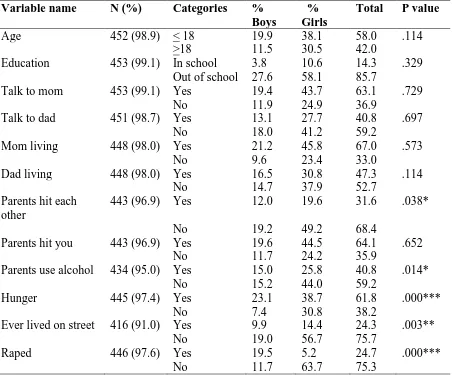
by sex are presented in Table 1. Chi-square tests of association were performed to
identify gender differences on other demographic variables and ACEs. Results showed
significant gender differences for; parental alcohol use, being hungry, ever having lived
on the street and having been raped.
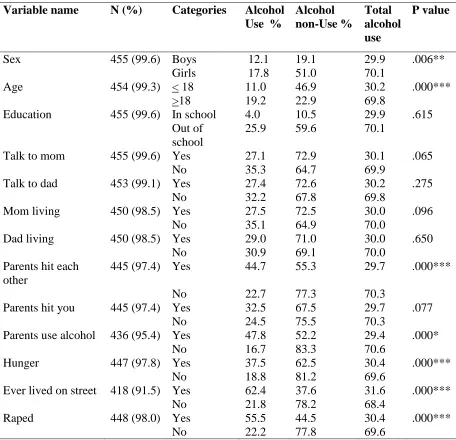
The demographic characteristics and ACE indicators’ association with alcohol use
was more common among girls), age (alcohol use more common among youth 18 years
of age and older) and alcohol use was also more common among youth who reported the
following ACEs; parents hitting each other, parental use of alcohol, hunger, having ever
lived on the street and rape.
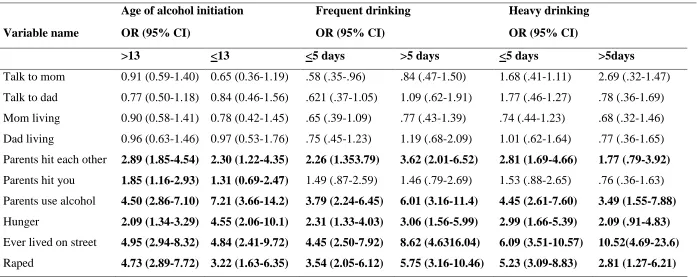
Bivariate multilogistic regression analyses of the associations between ACEs and
alcohol use initiation, frequent drinking, heavy drinking are presented in Table 3.
Significant results were shown for youth who reported parents hitting each other (OR
<13=2.30; 95% confidence interval (CI):1.22-4.35, OR>13=2.89; 95% CI:1.85-4.54);
parents hitting the youth (OR<13=1.31; 95% CI:0.69-2.47, OR>13=1.85; 95%
CI:1.16-2.93); parental use of alcohol (OR<13=7.21; 95% CI:3.66-14.2, OR>13=4.50; 95%
CI:2.86-7.10); being hungry (OR<13=4.55; 95% CI:2.06-10.1), OR>13=2.09; 95%
CI:1.34-3.29); having ever lived on the street (OR<13=4.84; 95% CI:2.41-9.72,
OR>13=4.95; 95% CI:2.94-8.32) and having been raped (OR<13=3.22; 95%
CI:1.63-6.35, OR>13=4.73; 95% CI:2.89-7.72).
Results also indicated significant differences between frequent drinking and ACEs on:
parents hitting each other (OR<5=2.26; 95% CI:1.353.79, OR>5=3.62; 95%
CI:2.01-6.52); parental use of alcohol (OR<5=3.79; 95% CI:2.24-6.45, OR>5=6.01; 95%
CI:3.16-11.4); being hungry (OR<5=2.31; 95% CI:1.33-4.03, OR>5=3.06; 95%
CI:1.56-5.99); having ever lived on the street (OR<5=4.45; 95% CI:2.50-7.92, OR>5=8.62; 95%
CI:4.63-16.04) and having been raped (OR<5=3.54; 95% CI:2.05-6.12, OR>5=5.75; 95%
CI:3.16-10.46).
Lastly, results indicated significant differences between heavy drinking and ACEs on:
CI:.79-3.92); parental use of alcohol (OR<5=4.45; 95% CI:2.61-7.60), OR>5=3.49; 95%
CI:1.55-7.88); being hungry (OR<5=2.99; 95% CI:1.66-5.39, OR>5=2.09; 95%
CI:.91-4.83); having ever lived on the street (OR<5=6.09; 95% CI:3.51-10.57), OR>5=10.52;
95% CI:4.69-23.6) and having been raped (OR<5=5.23; 95% CI:3.09-8.83, OR>5=2.81;
95% CI:1.27-6.21).
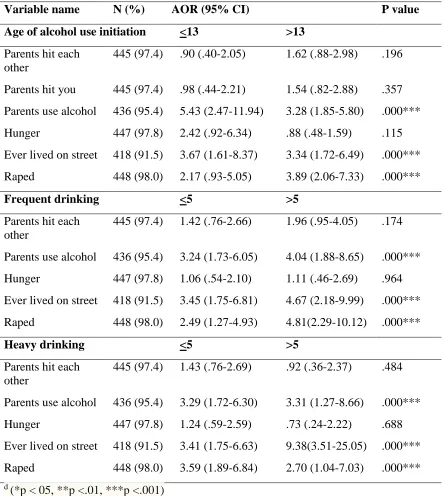
The multivariate associations between ACEs and alcohol use patterns (age of
alcohol use initiation, frequent and heavy drinking are presented in Table 4.Results
indicated that parental use of alcohol, having ever lived on the street and having been
raped were all significantly associated with age of alcohol initiation, frequent drinking
and heavy drinking.
Parental use of alcohol, AOR< 13=5.43 (95% CI:2.47-11.94), AOR>13=3.28 (95%
CI:1.85-5.80), having ever lived on the street, AOR<13 =3.67 (95% CI:1.61-8.37),
AOR>13=3.34 (95% CI:1.72-6.49) and having been raped, AOR< 13=2.17 (95%
CI:.93-5.05), AOR>13=3.89 (95% CI:2.06-7.33) were significantly associated with age of
alcohol use initiation.
Similarly, parental use of alcohol, AOR< 5=3.24 (95% CI:1.73-6.05), AOR>5=4.04
(95% CI:1.88-8.65), having ever lived on the street, AOR<15 =3.45 (95% CI:1.75-6.81),
AOR>5=4.67 (95% CI:2.18-9.99) and having been raped, AOR< 5=2.49 (95%
CI:1.27-4.93), AOR>5=4.81 (95% CI:2.29-10.12) were significantly associated with frequent
drinking.
Finally, parental use of alcohol, AOR< 5=3.29 (95% CI:1.72-6.30), AOR>5=3.31 (95%
AOR>5= 9.38 (95% CI:3.51-25.05) and having been raped AOR< 5=3.59 (95%
CI:1.89-6.84), AOR>5=2.70 (95% CI:1.04-7.03) were significantly associated with heavy
drinking.
DISCUSSION
The present study provides novel data to further document that adverse childhood
experiences are common and are associated with alcohol use consumption patterns
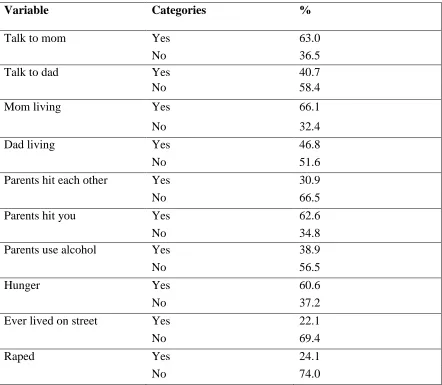
among youth living in slums in Kampala. Findings of relatively high prevalence of ACEs
(> 20% for each indicator) were expected because of the unique circumstances that face
these youth (Swahn, Gressard, et al., 2012).
It was surprising that several parental involvement characteristics were not
significantly associated with alcohol consumption patterns among these youth but this
may be attributed to the unique circumstances of these youth that make them resilient or
that parental involvement is viewed differently in this culture thus its impact on alcohol
use would be different. Moreover, several ACES are also strongly associated with all
three outcome measures examined that is; parents hitting each other, parental use of
alcohol, hunger, ever having lived on the street and having been raped. These findings
were consistent with previous research that has found similar results (Anda et al., 2002;
WHO, 2001; Jewkes et al., 2010; Dube et al., 2001).
This study examined slightly different ACEs than the original Kaiser study in
order to take into account the cultural differences in this population. Culturally, for this
highly vulnerable population and similar populations, it will be important to emphasize