ILIA
Innovative Learning in Action
Issue Five: Learning Technologies in the Curriculum
Spring/Summer 2006
Introduction
Dear Colleagues,
Consideration of the papers and snapshots in this edition of Innovative Learning in Action, focused on learning technology, will provide the reader with insights into a range of excellent and innovative approaches to the application of learning technologies to enhance learning both in the classroom and at a distance. It also provides us with examples of how learning technologies can both stimulate and support partnership with staff and students and collaborative learning and working. This edition is particularly timely given the aim of the University’s 2005-2008 Learning Technologies Implementation Plan (LTIP), which is to enhance the quality of, and access to, learning, teaching and assessment by supporting and developing the curriculum through the appropriate and effective use of learning technologies.
The LTIP is designed to help us to reach a situation where the effective use of appropriate learning technologies becomes part of our normal teaching, research and enterprise activities, and enhances access to our programmes by all our students whether they are learning on campus, at a distance, or in the workplace.
The emphasis at the University of Salford has consistently been on the identification and creative application of the appropriate blends of ICT and
traditional methods, shaped by pedagogical, rather than technological drivers, and acknowledging and reflecting different academic contexts and professional and vocational requirements. We have some excellent examples of how this has been achieved here, ILIA once again providing us with an opportunity to reflect on practice and student learning, to share experience and hopefully to identify future areas for collaboration in a key area of curriculum development.
Dorothy Oakey
Head of Staff and Curriculum Development
Education Development Unit
Mike James
Frances Bell
[email protected]
Information Systems Institute
Mary Hall
[email protected]
Self employed e-Learning
and web development
contractor in Wellington,
New Zealand, (student of
MEd through the University
of Southern Queensland).
Abstract
Learning technologies and the Internet pervade UK higher
education, yet if teachers and learners are to use them effectively, both must change their practice. In this paper, the case of an international cross-institutional online discussion is studied with respect to its contribution to academic development. Participants in the discussion were mainly academics and learning technologists. We use theories of community of practice and social networking as lenses to examine academic development that is neither centralised nor within a discipline or departmental setting but may be seen as ‘feral’ by the
participants. The paper concludes that at a given time, this can work for some but not all of those who may be interested.
Introduction
Provision of learning technology infrastructures is widespread within UK Higher Education (HE). A Joint Information Systems Committee (JISC) survey conducted in 2003 indicated that 83% of the responding
institutions used some kind of virtual learning environment (VLE) (Study of MLE Activity: Final Report and Case Studies 2005)1.
At the University of Salford, the Blackboard VLE has been implemented institution-wide in conjunction with other learning technologies that can be used free-standing or integrated with the VLE.There are however, as with any technological innovation, considerable differences in the extent and the way in which learning technology is used within programmes and modules. A JISC report on embedding learning technologies in UK HE institutions identified that academics need to consider their roles if benefits are to be fully realised.
While academic staff are often seen as a client group for learning-technology support, they in fact play a crucial role in learning technology development.
(Embedding Learning Technology Institutionally, Senior Management, 2003)
VLEs and Managed Learning
Environments (MLEs) tend to have an institutional focus, since they use institutional information systems to manage and control access to resources by individuals and groups within an institution. Hence it is much easier for academics to share
resources and organise student activities (using a VLE) within the institution rather than across institutions. However, almost all students and staff in UK higher education have access to the Internet, and thus have the potential to communicate online with others (who also have Internet access) beyond institutional boundaries.
Concomitant with academics and students getting to grips with learning technologies and how they can use them within formal
education, they are making use of a range of Information and
Communication Technologies (ICTs) in their daily lives. In a case of distance
learners, for example, multiplexity (niche use of media) was observed:
Webboard for diffuse class-wide communication; Internet Relay Chat more to named others but still for general communication across the class; and e-mail primarily for intrateam communication (Haythornthwaite, 2001:211).
These media can be under the control of the institution (e.g discussion boards in VLEs), or the student (e.g. personal mobile phone) or both (e.g University email between students or access to Internet Relay Chat via University resources). Since new media and applications are constantly emerging, there is likely to be a range of sophistication of use in the deployment of social and
communication technologies within a group of teachers and learners in higher education.
The context for this research is the Higher Education Learning Professionals (HELP) network, an online community of those interested in online collaboration between higher education students from different programmes, universities and countries. This paper examines the case of a scheduled online discussion event between teachers and others interested in the use of online discussion, and specifically its assessment, in higher education. This discussion took place online in January 2006, on the CABWEB portal
at http://www.cabweb.net,
established by the Collaboration Across Borders project.
The paper considers a key issue, that is, if academics need to change their roles as they use new technologies in their work with students and
do this? And what support do they need? Recent literature in academic development suggests that it is more effective within a disciplinary or departmental setting, yet on the other hand, ICT offers the
opportunity to learn from others by online discussion and collaboration which breaches disciplinary and departmental boundaries. In this paper we provide some insights by exploring how a ‘non-co-located’ group of academics and learning technologists try to make sense of changing their roles in the context of their own and their students’ use of ICTs. The online discussion where this occurred was intense and involved a relatively small subset of the HELP Network membership.
Academic development and
communities of practice
The University of Salford, like other UK HE institutions, recognises that staff can benefit from guided and shared reflection on their practice as teachers. Various short courses and certificated and accredited in-service programmes, with a significant emphasis on reflective practice, are provided within the institution. Akerlind (2003) raises the possibility that teachers may need to develop a broader understanding of teaching before they can achieve a
corresponding broadening of understanding of their own growth and development in the teaching role.
Development as a university teacher was varyingly experienced as an increase in:
■ the teacher’s comfort with teaching, in terms of feeling more confident as a teacher or teaching becoming less effortful;
■ the teacher’s knowledge and skills, in terms of expanding content knowledge and teaching materials, and/or an expanding repertoire of teaching strategies;
■ learning outcomes for students, in terms of improving students’ learning and development. (Akerlind, 2003:380).
For new teachers, the use of learning technology is just one of an array of skills that they may need to learn in order to function effectively. For established teachers, the introduction of a new technology may reduce their comfort and confidence in the context of its use, presenting the need for change and development, and provoking a mixture of engagement and resistance.
Centralised staff development
provision, particularly short courses for in-service teachers, is common in UK universities yet can be criticised as being abstracted from the everyday realities and the specificity of the disciplinary context. Research has indicated the role of collaborative approaches at a departmental level in changing practice in teaching and learning (Knight & Trowler, 2000; Neumann, Parry & Becher, 2002). Similarly, the concept of ‘intellectual sociability’ includes dialogue between academics about teaching and research (Rowland, 2002). Exchange of ideas between colleagues has the potential to promote what Weil calls ‘systemic learning and inquiry from “within the mess”' (Weil, 1999). Sharing a context allows academics to achieve dialogue grounded in practice.
In their exploration of five rich case studies of practice, Lave & Wenger (1991) point out that abstract representations are often associated with de-contextualization, and that the ‘power of abstraction’ is situated in the person and culture that make it possible. They identify ‘legitimate peripheral participation in
‘communities of practice - a set of relations among persons, activity and world over time’ - as an engagement in generative social practice. In this
sense, a department of academics who collaborate with each other can be seen as a community of practice.
Wenger has further developed the concept of community of practice in relation to learning within
organisations, leading to a recent, more loosely constructed definition of ‘communities of practice’ as groups of people who share a concern, a set of problems, or a passion about a topic, and who deepen their knowledge and expertise in this area by interacting on an ongoing basis” (Wenger,
McDermott & Snyder, 2002: 4).
carry the risk of reinforcing a reductionist discourse on academic development, typified by terms like ‘good practice’, ‘excellence’, ‘skill’ (Wei,l 1999), rather than providing space for the reflexive engagement with theory informed by own practice that is recommended for academics (Biggs, 1999). Indeed, it may be argued that without links to different contexts, communities of practice also carry the risk of maintaining the status quo and reinforcing resistance to new ideas.
Contextualisation becomes a particular issue in distributed communities of practice where the ‘ties’ between members may be weaker than in local or co-located communities of practice.
Haythornthwaite (2002) argues that the relative strength of a tie is related to how and why people
communicate. Strong ties are characterised by frequent exchanges using multiple media. Weak ties, which are often dependent on organisational media for
communication, may be lost if the media are changed or removed. Having alternative media under personal control can help ties to survive media failure. While strong ties are important for emotional bonds and confirmation within an individual’s private network, weak ties play a part in the dissemination of ideas between private network communities such as communities of practice, thus facilitating information exchange between networks of strong ties (Haythornthwaite, 2002). In effect, those who maintain membership of multiple communities can in this way act as what Wenger calls ‘knowledge brokers’. It is crucial to consider the way in which information is
exchanged, in order to avoid the ‘boundary object’ being
communicated like a reification, that is, lacking the all important contextual information that will make it useful to the receiving community of practice
(Wenger, McDermott & Snyder, 2002). Furthermore, Haythornthwaite (2002) notes that for an individual, the maintenance of weak ties is not without cost:
The lower the overhead in terms of technical know-how or social
exposure, the easier it is for individuals to use that medium to activate and maintain weak ties.
Notwithstanding the nature of the ties developed within co-located and distributed communities of practice, it is clear that the opportunity to reflect on experience and to negotiate meaning in a shared setting provides a central underpinning for the role of communities of practice in supporting academic development. Reflection can be traced back to Socrates’ use of dialogue, asking students questions that expose errors in order to improve their reasoning processes. Much more recently, Schön (1983) introduced the idea of the reflective practitioner (this could be student or teacher) who will engage in both reflection-in-action, ‘thinking on their feet’, and reflection-on-action, done after the encounter. Reflection-in-action foregrounds ‘repertoire’ that is, the inquirer’s collection of ideas, actions, images that they can draw on quickly in doing.
As [inquirers] frame the problem of the situation, they determine the features to which they will attend, the order they will attempt to impose on the situation, the directions in which they will try to change it. In this process, they identify both the ends to be sought and the means to be employed. (Schön 1983: 165)
Repertoire can also be used as an object of reflection later, during reflection-on-action. However, the process of reflection-on-action frequently embraces reflexivity which is a classic means of connecting theory and practice (where the
practice for staff could be
development of teaching and learning activities, or for students, work-based learning or project work within the course) placing the focus on the process of learning. Critical reflection can be individual or take place within a group dialogue, (Boud, Keogh, & Walker, 1985), but in either case it is demanding of those who engage in it, and is a skill that students and teachers need to develop over time in order to enhance learning and practice.
CABWEB – a context for this
case study
The CABWEB portal proclaims itself to be for students and teachers
interested in international
collaboration online. A feature of this portal is that it hosts discussions between students (usually facilitated by staff), discussions between staff, and some discussions generally open to both students and staff. At the time of the discussion event reported here, the organisation of the portal was as in Figure 1, a conceptual model developed in April 2004 that has informed the subsequent development of the CABWEB portal using Moodle Open Source software, see http://moodle.org .
al. 2005, and of 1427 participants enrolled on 4 March 2006, only 190 had been active in the previous 45 days.
Figure 1 - CABWEB Conceptual Model
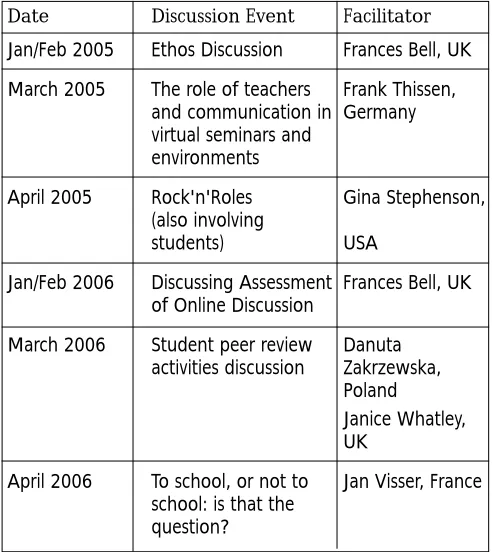
HELP was launched in January 2005, and has grown steadily since then. The event entitled “Discussing Assessment of Online Discussion” was the fourth
discussion in an ongoing series on HELP, detailed in Table 1. There has also been intermittent discussion in the Social Forum (a permanent forum). The archives of these forums have been stored on HELP, see
[image:6.595.58.260.204.348.2]http://www.cabweb.net/portal/course/view.php?id=7. Guests who agree to the Site Policy can read all messages and resources in HELP, but only registered members of CABWEB can post messages to the discussion forums and use the other services provided. Self-registration on CABWEB and self-enrolment on HELP are in operation. Those enrolled on HELP receive low volume news mailings relating to events and developments, and can subscribe themselves to any forum for which they wish to receive email reminders of postings.
Table 1 - HELP Discussion Events Jan 2005- April 2006
Date Discussion Event Facilitator
Jan/Feb 2005 Ethos Discussion Frances Bell, UK
March 2005 The role of teachers Frank Thissen, and communication in Germany virtual seminars and
environments
April 2005 Rock'n'Roles Gina Stephenson,
(also involving
students) USA
Jan/Feb 2006 Discussing Assessment Frances Bell, UK of Online Discussion
March 2006 Student peer review Danuta activities discussion Zakrzewska,
Poland
Janice Whatley, UK
April 2006 To school, or not to Jan Visser, France school: is that the
question?
Launching and Profiling the ‘Discussing
Assessment of Online Discussion’ event
Frances Bell was the facilitator for the discussion event “Discussing Assessment of Online Discussion” that ran from Monday 23 January until Sunday 5 February 2006. On 15 January, this event was announced to the HELP network via the News forum with the following message:
Things have been rather quiet on the HELP Network while we have been completing CAB project outputs. On January 23, our new schedule of discussions will start with this discussion on Assessment of Online Discussion. We do hope that you existing members of HELP will join in, and we will be inviting new members to join us. If you want to discuss anything in the mean time, please use the HELP Social Forum. The (quite short) paper to read before this discussion is Assessment of online discussion. I will open the discussion on 23 Jan with a post that should arrive in your mail box. Thereafter you can unsubscribe from the forum if you wish. You may also wish to set your profile to receive a daily digest of messages. If you would like to host a discussion in future please contact me at
At the same time, a ‘trigger’ paper for the discussion event ‘Aligning
assessment, activity and outcomes in online student discussion’ (provided at Appendix A) was posted for
participants to read in advance of the discussion. The paper was uploaded to CABWEB and linked via an entry in the HELP Resources glossary, a resource which can be read by all and written to by enrolled participants. A similar message was posted on ALT-M, Association of Learning Technology members list and the University of Salford LTRN list (Learning and Teaching Research Network).
Data available for analysis included activity logs for the forum and other HELP activities and resources; the content of the discussion postings; post-event online questionnaire completed by 17 respondents; and private communication between the facilitator and several participants. During this event 96 participants were enrolled on the HELP network, some of whom were already members but many of whom came for the first time in response to the publicity. Unlike in previous and past HELP discussion events, the forum in which the discussion took place was set up as ‘opt out’, in that all HELP network participants were subscribed initially but could unsubscribe at any time. There were also ‘guest’ accesses by people who did not choose to enrol. 24 participants posted to the social forum in the period between publicity and the conclusion of the event.
30 participants posted to the actual discussion, contributing 118 posts over the 2 week period. Participants came from Europe, USA and Australia, and included PhD students, lecturers, schoolteachers, learning technologists and others. The full discussion can be found at CABWEB by going to the HELP network and looking for the topic entitled Past Discussions on HELP. The facilitator opened the discussion by asking participants to
share their experiences with assessing or being assessed in online discussion - the highs, the lows, good/bad practice.
The discussion started at a great pace with over one third of posts in the first three days. Participants showed a willingness to share ideas and
experiences from their practice. Not unusually in threaded discussions, it was difficult for participants to maintain a coherent topic for a thread as similar issues cropped up in different places. One week into the discussion, the discussion took an interesting turn, instigated by Mary Hall’s post that started:
Now this question of why students get excited about learning that isn't just about credit is one that's dear to my heart. The answer, I believe, is that although as practitioners we tend to regard learning as a "tame" activity, in fact in its natural form, it is quite feral. Curriculum, credit etc are concepts that relate to teaching activity, rather than learning perse - in fact, for many students they may constitute barriers to genuine 'deep' learning by defining boundaries that the student might not perceive otherwise (!)
This post provoked 25 responses, and was subsequently split off into a new thread. Mary said that feral learning is the kind we are all born with, have an instinctive capacity for, and is holistic, student-led, seamless and a-curricular. The discussion was rich and varied with many different views expressed and examples provided. It was allowed to tail off a few days after its allotted two weeks, and the facilitator posted a summary (see Appendix B), closed the forum to new postings, and moved it to the archive topic in HELP.
Situated learning for
students, academics and
learning technologists
Early Unsubscribers, Learners by Onlooking and Active Posters
Analysis of the CABWEB activity data has revealed an interesting category of participants that can be termed early unsubscribers. In the Moodle environment, unless a participant has disabled email or set a digest option (to receive postings daily), they will receive email copies of each posting 30 minutes after it was posted. Since for this forum, all current members of HELP were initially subscribed, those who were not particularly interested in the topic must have been rather surprised by the 44 posts that occurred within the first three days of the discussion. If they had not set a daily digest option, these posts may have seemed like an intrusion in their mail boxes, what Haythornthwaite (2002) refers to as an increased social exposure that inhibits the
maintenance of weak ties. Emails of postings contain clickable links to the portal, including one to unsubscribe from the forum and 19 of the 25 participants who chose to unsubscribe did so in the first three days of the discussion. One of the 19 had enrolled recently (presumably in response to the invitation) and only two had actually visited the forum before unsubscribing. This tends to suggest that rather than being disappointed by the content of a discussion in which they were
The other 17 of these 19 remain members of HELP at the time of writing, but only two of them have re-visited HELP in the interim.
[image:8.595.294.533.332.503.2]Because participants can stay in touch with the discussion by reading emails of postings, it is not possible to isolate the behaviour pejoratively called lurking or more positively called learning by onlooking - a phrase probably coined by Steve Draper http://www.psy.gla.ac.uk/~steve/LandL.html otherwise known as vicarious learning - simply learning from inspecting activity logs. However, we can infer the occurrence of this behaviour from a significant minority who were regular viewers, yet posted rarely or not all, and private communication with a few participants who told us that they stored the emails for later perusal. Indeed one response to the question about ‘the best thing about the discussion’ was ‘Did not have to do anything :)’. It is also interesting to note that there have been 160 views of the discussion since it closed, providing further evidence that the discussion itself has provided a resource for more than those who actually posted to it..
Figure 2 shows the activity of those participants who posted messages (excluding the moderator) by the number of messages they posted. Posters to the discussion fell into two groups: those who posted only once (9 in number), and a second group (14 in number) referred to here as active posters. In this second group, although the average number of postings was about 6, there was quite a variation in activity with a couple of very active posters. Active posters’ messages were typically fairly lengthy, dialogic with other posters and referring to their own experiences or other resources from the Internet and print literature. Being an active poster carried significant overheads of time and concentration but seems to have been satisfying and rewarding for members of the core active posters group, and also for a few learners by onlooking.
Figure 2: Number of messages posted
When asked to choose the statement that best describes their participation in the event, survey respondents answered as in Table 2. Bearing in mind that the early unsubscriber group are unlikely to have received the message reminding them to complete the survey, the survey results tend to confirm the categories of early unsubscribers, learners by onlooking, and active posters observed from analysis of the log data.
Table 2: Statement describing respondent’s participation
Choose the statement that best describes your participation in the event
Never participated (0)
Read first few messages
then did not participate 5.9% (1)
Read occasionally throughout
two weeks, did not post 29.4% (5)
Read regularly, did not post (0)
Read regularly, posted once 17.6% (3)
Active reader and poster 47.1% (8)
TOTAL 100.0% 17
‘Distributed’ or ‘Local’ Community of Practice?
[image:8.595.66.225.616.759.2]Certainly, with a very few exceptions, participants are neither ‘co-located’ nor have they engaged in student collaborations on CABWEB. However, all are engaged in, or at least
interested in, learning and teaching online. Their shared practice may in fact be learning more about this specifically and this in itself may represent context or ‘situatedness’:
Instead it [situatedness of activity] took on the proportions of a general theoretical perspective; the basis of claims about the relational character of knowledge and learning, about the negotiated character of meaning, and about the concerned (engaged, dilemma-driven) nature of learning activity for the people involved. That perspective meant that there is no activity that is not situated. (Lave & Wenger, 2002)
Considering the discussion event within the framework of the concept of situatedness, as articulated by Lave and Wenger (2002), participants were negotiating meaning, were engaged, and were addressing dilemmas. On these grounds it can be claimed that the HELP network is a community of practice, albeit with members maintaining weak ties in the main -ties characteristic of the distributed community of practice. Moreover, the activity in which these academics and learning technologists were engaging is analogous to activities in which they may wish their students to engage – discussing and collaborating online with peers from across the world. Thus academics and learning technologists were engaging in reflection on and in their practice of learning and teaching, simultaneously sharing and increasing their repertoire.
Technological Convergence,
Feral Learning and
Communities of Practice
The issue of feral learning is what re-invigorated the second week of the discussion event, moving away on a tangent from the original topic of assessment of online discussion. The first published reference to the concept of "feral learning", appears to be a single throw-away line in Ted Nunan’s 1996 paper (Nunan 1996) that has since been cited widely (32 citations on
http://scholar.google.com). The idea of feral learning is also present in a number of papers authored about this time by Dr. Roy Lundin of Queensland University of Technology, (Lundin 1998a, 1998b).
Although Nunan's is the first published reference, several of Lundin’s papers attempt to flesh out the concept. However it seems likely that someone else actually coined the phrase. According to Lundin:
Given the convergence of
technologies and the development of universal communications and data bases, it is becoming possible for learners of all ages to initiate their own educational pathways and learn what they want, when they want, where they want; the ideal of open learning. A university lecturer, when marking her students' papers, found references to writings by key people in the field, but she had not yet read these articles. When she asked the students where they came from, they replied: 'The Internet!' She dubbed this 'feral learning'. (Lundin, 1997)
Increased technological options… will make it possible for adults to tap learning just-in-time from sources anywhere in the world to meet life and work needs as they arise. This type of virtual or 'feral' learning will not necessarily have any overall sequence or plan and educational
institutions will be challenged in terms of learners fronting up for recognition of prior learning. The learner, whether professional adult or young child will be able to say: 'I am my school' or 'I am my university'. Lundin (1999)
To Lundin ‘feral learning’ was synonymous with ‘virtual learning’ – by going online, students could choose to broaden their reference base rather than constraining their research to the recommended references given by their course leader. There is also a sense of bemusement among academics when they speak of their feral learner students - a slight sense of ‘Who'd of thunk it?’ and of this feral learning leaning towards undisciplined research, one foot on the slippery slope towards off-task or at least unproductive time wasting. All of this points - even at this relatively early stage - to the shift in power from course leader to student that the Internet has promoted (as an idea at least). Lundin's explanation of the way the term was coined contains a clear subtext that the idea of students reading articles that have not been recommended or even read by the course leader is unexpected, maybe even a bit perverse. However, the move from ‘I am at university’ to ‘I am my university’ will be a complex societal change rather than a simple consequence of the diffusion of the Internet and learning technologies.
technology, and with those who support them and their students in the use of learning technology.
Table 4: How event affects their practice
Which statement(s) best describe the links between the discussion and your practice (choose all that apply)?
I brought ideas/resources 41.2% (7)
from my practice to the discussion
Some discussion postings 76.5% (13)
provoked me to reflect on my practice
Some discussion postings 52.9% (9)
gave me new ideas to use in my practice
I have made contacts with 23.5% (4)
whom I will explore ideas outside HELP discussion
The discussion will not change 11.8% (2) my practice
I found ideas/resources on HELP 17.6% (3) (apart from this discussion)
that I will use in my practice
I invited colleagues/contacts to 17.6% (3) join HELP discussion
Our survey findings (see Table 3) show that engagement with this discussion event did influence participants to reflect on and change their practice. This tends to confirm that HELP is operating as a distributed community of practice for academics and learning technologists from different disciplines – as diverse as Criminology, Ophthalmology, English, Information Systems,
Construction, Learning and Educational Technology, History, Psychology and others.
The richness of the dialogue shows that meaningful discussion on using learning technology in HE can cut across disciplines, as is confirmed by this post:
I've only had a brief peek and our subject areas are different - I'm a criminologist - but it seems that we are following similar routes in working with the technology and exploring how it can best work for students.
What is not clear is what limitations, if any, are imposed by the cross-disciplinary and distributed nature of the
community of practice. There has been a core group of HELP members who have participated since its launch in January 2005 but for many, their association began as CAB project partners. As new people join CABWEB, it remains to be seen how the community will develop, and whether or not it will survive.
The following message was posted as a response to an educational technologist’s contribution of a web site to support students and staff in making effective use of online discussion
Your site looks great and I particularly like the Gilly Salmon guide to students on what they can expect from online communication. Could I please use it? Let me know what citation I should add to acknowledge it as your work.
The post indicates the quality of the referred site, and reinforces the possibility of engagement with the ‘knowledge’ within the community, particularly the discussion forum, both contemporaneously with the discussion, and retrospectively by visitors to the archived forum. However, it is the case that, across the networks and collaboration spaces of CABWEB, consistently forums are the most accessed of all resources and activities.
Reifications and Knowledge Brokers
Each academic will take primary responsibility for monitoring approximately 10 discussion groups. This monitoring involves checking that students are posting messages appropriately but should not require intervention unless problems arise. The students are required to submit a reflective assessment of their
participation and copies of the 2 best threads (they have to decide and explain why they feel these are the best threads).
The students are given a copy of the assessment criteria in advance of the project starting and this helped last year in being transparent about how they would be assesed. Of course, some students failed to take heed of this advice - what can you do!?
This provoked the response:
Interesting project. Could you tell us what the assessment criteria were?
The first participant then shared her assessment criteria. Introduced as part of a dialogue, these criteria were both more grounded and more accessible to participants than those that appeared as codified knowledge in the trigger paper (see Appendix A). Participants were much more
interested in exchanging and discussing examples from their practice and research, than they were in reading the paper.
A successful approach adopted by one participant was not giving an example in this slightly teasing message that prompted five direct replies and a thread with 29 posts in total.
Standards/grade descriptors use in assessment of discussion contributions by xxxxx - Monday, 23 January 2006, 03:00 AM
Now you will be disappointed, because I am not offering an example of doing this . . . but rather asking who has and how did it go?
I know of some examples. The only situation in which I am directly involved in making judgements about online discussion contributions is still having some flaws ironed out, so isn't a useful example at the moment.
An example from the trigger paper did eventually attract some discussion when it was cut and paste into a message but why was it seemingly irrelevant to the discussion as a trigger? The reason why the facilitator had chosen the topic was the assessment rubric discussed in the paper had attracted significant interest in a similar exchange in a different forum two years previously. It appears then that it is not necessarily the content of the codified knowledge in the trigger paper that is the problem but rather its role in and relationship to the dialogue.
In effect, active posters were acting as ‘knowledge brokers’ who were bringing knowledge from elsewhere to the community but they were able to contextualise it for others within the dialogue. Furthermore, the subject being discussed – learning using the Internet – can be seen as the practice in which these active posters were engaging. For example, in bringing in this idea of feral learning that was new to the group, Mary Hall acted as a knowledge broker, rewarding the network for the weak link she had maintained without visiting from March 2005 until January 2006, since when she has maintained regular contact.
Comparing Tables 2 and 3 we can see that 76.5% (n=13) of respondents found that discussion postings provoked them to reflect on their practice, significantly more than the 47.1% (n=8) who described themselves as active posters. This is borne out by the postings which were rich with examples from practice and linked to the discussion, such as (three different contributors):
I tried evaluating discussions and the contributions made about 6 years ago. It was a nightmare especially as the course had about 45 students on it. We tried to assess individual contributions and also contribution to the thread in question. It became very difficult or I should say impossible to manage. As a result I now ask for a reflective and analytical commentary on any discussion, which I have found is a very good way of promoting use of a discussion forum but it also encourages students to read other responses and think about them.
My students often consider their international homestays and study abroad experiences to be especially rich learning experiences, and I suspect it may be for this [feral learning] very reason.
Although there are quite clear real benefits for the students in terms of gaining contact with German students, having access to grassroots information etc., in preparation for their placements and year abroad it seems they have very little incentive to participate unless presumably their contribution is tied to assessment.
Conclusions and Further
Research
Based on analysis of survey responses and activity logs, we have identified three typical behaviours of participants in HELP that allow us to understand how weak links and strong links between participants can benefit individuals and the community of practice. The identification of early unsubscribers has provoked
examination of the most appropriate configuration of the forum for a discussion event, the publicity
were subscribed initially was low in terms of technical know-how but proved to be high in social exposure for a significant number of
participants. The higher level of participation (in terms of number of posters) for this event as compared with previous and subsequent discussions where subscribers had to ‘opt in’ to subscribe to the forum indicates that this ‘opt out’ configuration has positive and negative impacts. It may capitalise on weak links to promote participation by placing the first post from the forum in all HELP members mail boxes, along with a link to click if they wish to unsubscribe. We have some evidence to suggest that participants can find it difficult to navigate CABWEB and HELP ( for example activity logs in the days immediately after publicity that show participants who get to CABWEB front page but no further). On the other hand, participants may prefer to elect to join a discussion, in response to an invitation. We need to undertake further research to
determine howwe can minimise social exposure without placing undue technical demands on participants.
Although early unsubscribers may have a particular relevance in this discussion, the other two behaviours are more generally relevant. Active posters are clearly essential to the health of an online discussion, providing activity during the event with postings that can become a permanent resource. Learners by onlooking can be seen as weakly linked in that their communication is limited to ‘listening’ but they do play an important role as potential active posters either within HELP or in another community. As these are behaviours rather than ways of categorising individuals, we can think of participants as Janus-like figures, active poster looking one way and learning by onlooking in the opposite direction. If these participants can change directions over different
discussion events, we can achieve active discussions without domination by a small unchanging group of participants. Under what conditions this happens is a subject for further research.
Feral learning suggests learning that has escaped from domesticity, gone beyond the pale. If we think of the pale as the boundary of the community of practice, then academics who traverse online communities and networks engaging in feral learning can be seen as knowledge brokers when they return to domesticity. Furthermore, reflecting on such practice will reveal the potential of feral learning for students. Knowledge brokers take knowledge from practice abroad as well as bringing it home. This discussion event benefited from the knowledge brokership of its many new active posters. Dialogue provided a more acceptable home
for reifications from practice than the resource and glossary areas within HELP.
Returning to the questions that we asked in the introduction, it is clear that this discussion event did offer opportunities for academics to learn more about a particular use of learning technology (for critical reflection via online discussion ). The richness and depth of the discussion points to reflexive engagement of theory with practice, and the survey results tend to suggest that this was a satisfying and
productive experience for participants, especially active posters. This was an example of academic development taking place outside a departmental setting. The discussion event at HELP constituted a community of practice, and being international and cross-institutional allowed for the
propagation of knowledge across the boundaries of co-located communities of practice.
Feral is OK and is in the eye of the community.
Acknowledgements
We wish to acknowledge the contributions of HELP network members, particularly those who enriched the discussion event studied here, contacted us personally or completed surveys; the funding provided by Socrates- Minerva for the CAB project (110681-CP-1-2003-1-UK-MINERVA-M); and the Moodle open source software provided by one of the best distributed communities of practice we know, the Moodle community at http://moodle.org .
References
Akerlind, G. S. (2003), 'Growing and Developing as a University
Teacher--Variation in Meaning',
Studies in Higher Education, 28 (4): 375-90.
Biggs, J. (1999), Teaching for Quality Learning at University, Open University Press, Buckingham.
Carliner, S. (2005), Course
Management Systems Versus Learning Management Systems, American Society for Training & Development, Available at:
<http://www.learningcircuits.org/2005 /nov2005/carliner.htm>.
Embedding Learning Technology
Institutionally : Snr Mgt, (2003), Joint Information Systems Committee, Available at:
<http://www.jisc.ac.uk/index.cfm?nam e=pub_smbp18embeddinglearningtec h>.
---- (2002), 'Strong, weak, and latent ties and the impact of new media',
Information Society, 18 (5): 385-401.
Knight, P. T. & Trowler, P. R. (2000), 'Department-level cultures and the improvement of learning and
teaching', Studies in Higher Education, 25 (1): 69-83.
Lave, J. & Wenger, E. (1991), Situated Learning: Legitimate peripheral participation, Learning in Doing: Social, Cognitive, and Computational Perspectives, Cambridge University Press, Cambridge, UK.
---- (2002), 'Legitimate peripheral participation in communities of practice', in Distributed Learning: Social and Cultural Approaches to Practice, eds. M. R. Lea & K. Nicoll, Routledge Farmer Press, London.
Lea, M. R. & Nicholl, K. (2002),
Distributed Learning: Social and Cultural Approaches to Practice, Routledge Farmer Press, London.
Lisewski, B. & Joyce, P. (2003), 'Examining the five stage e-moderating model: deSIGned and emergent practice in the learning technology profession', Association for Learning Technology Journal, ALT-J, 11 (1).
Lundin, R. (1997), 'Human Factors and Interactive Communications
Technologies', Canadian Journal of Learning and Technology, 26 (2)
---- (1998)a, Feral Learning: Being Unreal in a Virtual Education World, paper presented to Learning Technologies ‘98, Dolphin Heads Beach Resort.
---- (1998)b, Flexible Delivery of Continuing Professional Education: Models, Issues and Trends, Distance Learning Center, University of Saskatchewan, Available at:
<http://www.usask.ca/dlc/Context.htm l>.
Neumann, R., Parry, S. & Becher, T. (2002), 'Teaching and Learning in their Disciplinary Contexts: a conceptual analysis', Studies in Higher Education, 27 (4): 405-17.
Nunan, E. (1996), Flexible delivery:
What is it and why is it a part of current educational debate?
Conference Proceedings of Higher Education Research and Development Society of Australasia: Different Approaches: Theory and Practice in Higher Education, Perth, Western Australia., Available at:
<http://www.lgu.ac.uk/deliberations/fl ex.learning/nunan_fr.html>.
Rowland, S. (2002), 'Overcoming Fragmentation in Professional Life: The Challenge for Academic
Development', Higher Education Quarterly, 56 (1): 52-64.
Schön, D. (1983), 'The Reflective Practitioner - How Professionals think in Action'.
Study of MLE Activity: Final Report and Case Studies, (2005), Joint Information Systems Committee, Available at:
<http://www.jisc.ac.uk/project_mle_ac tivity.html>.
Weil, S. (1999), 'Re-creating universities for 'beyond the stable state': From 'Dearingesque' systematic control to post-Dearing systemic learning and inquiry', Systems Research and Behavioral Science, 16 (2): 171-90.
Wenger, E., McDermott, R. & Snyder, W. (2002), Cultivating Communities of Practice, Harvard Business School Press, Boston, Massachusetts.
Wenger, E. C. & Snyder, W. M. (2000), 'Communities of practice: The
organizational frontier', Harvard Business Review, 78 (1): 139-+.
Whatley, J. & Bell, F. (2003), 'Discussion Across Borders: Benefits for Collaborative Learning',
Educational Media International, 40 (1-2): 139-52, March-June 2003.
Whatley, J., Bell, F., Shaylor, J., Zaitseva, E. & Zakrzewska, D. (2005), CAB - Collaboration Across Borders: Peer Evaluation for Collaborative Learning, paper presented to InSITE (Informing Science + IT Education), Flagstaff, Arizona, eds. E. Cohen & B. Boothroyd, Informing Science Institute.
Appendix A – Trigger Paper
for Discussion Event
Aligning assessment, activity and outcomes in online student discussion
Or making it useful and bearable for student and tutor
Frances Bell, Information Systems Institute, University of Salford, http://www.isi.salford.ac.uk/staff/fb
Introduction
How can we set authentic and meaningful online student activities that can deliver desired learning outcomes for students and be assessed without overwhelming the tutor?
Some background reading
and ideas
Biggs advocates the concept of constructive alignment in teaching and learning, where assessment, learning outcomes and learning activities are aligned (Biggs, 1999). Constructive alignment is based on a constructivist approach to teaching and learning that recognises that learners construct their own learning by actively constructing meaning rather than learning “facts”. A summary of constructive alignment is presented at
http://legacywww.coventry.ac.uk/legac y/ched/links/Teaching/Biggs.htm .
There are many good examples and discussion of assessment of online learning to be found on the Internet, e.g.
http://cde.athabascau.ca/online_book/ ch11.html#three
This paper gives some good examples of what works and what doesn’t by considering a feminist pedagogy http://ifets.ieee.org/periodical/vol_3_2 002/campbell.html
A benefit claimed for online discussion is its potential to enable critical thinking within a community of inquiry, see
http://communitiesofinquiry.com/docu ments/CTinTextEnvFinal.pdf .
Online discussions, for example within communities of practice, can be vehicles for knowledge sharing, see http://www.ejkm.com/volume-1/volume1-issue-2/issue2-art18.htm
Three Different Approaches
In this section, we look at different approaches to assessment (there will be others) that represent a variety in methods of assessment, in who assesses, and in what is assessed.
Assessing the fact of contribution – teacher or semi-automated
Since there is evidence that
participation in online discussion is a valuable experience for students, many tutors use the simple method of giving marks for postings, in the hope that once students try it, they will continue. This can be effective in getting them started but can backfire if students adopt an instrumental approach to ‘getting the marks’, as reported in
http://ifets.ieee.org/periodical/vol_3_2 002/campbell.html.
Other measures have been used in this semi-automated method of assessment:
“We focus on the number of posted messages, length of messages and number of responses that a post elicits from classmates and/or TA or
instructor. We also have explored an additional measure that takes into account the contribution content, i.e., the technical terms that the students used during the discussions.” (Kim & Beal, 2006)
http://www.isi.edu/~jihie/papers/Kim-AERA-2006.pdf. The use of software tools is attractive for large classes where Kim et al argue that a tutor’s time is better spent on other
interactions with students. However, it can be argued that teacher presence in assessment of activity is
encouraging to students.
Teacher assessment of the fact and quality of contribution
In my assessment of student online discussion, I started by using a method that I had adopted in assessment of face to face discussion. I used a simple coding scheme to assess the quality of student contributions, and recorded student attendance at seminars (as an additional measure of their participation). This was then converted into a mark, using a
contribution threshold to discourage domination of the discussion by students keen to maximise their marks. When I adapted this method for online discussion, I used four criteria Frequency of Reading, Quality of Postings, Attribution of References, and Evidence of Collaboration. Here is a link to the background to this case, and here is a link to the student instructions and assessment rubric. When used with Masters students on different modules, it was successful in promoting knowledge-sharing. However, this benefit came at a fairly high cost in terms of tutor time, assessment being a tedious and time-consuming activity. A few students resented the time taken but most participated enthusiastically. Student Assessment of the fact and quality of contribution
In order to retain the student benefits, without the tutor sinking under the burden of assessing each posting, I handed the assessment of a student’s participation over to the student, to be presented to the tutor as evidence to support claims made in a student’s reflective report (which were
themselves assessed by the tutor), see student instructions and rubric. This approach was equally effective in the promotion of knowledge-sharing, but with a manageable assessment load for the tutor. It does rely on student willingness and capacity to understand the scheme and to engage in
self-reflection, and thus may work better with postgraduates than with undergraduates.
Discussion
I am relying on you to engage in discussion so that we can explore these ideas further. Some questions that we might wish to answer include: What experiences have we had of the assessment of online discussion? Should we use assessment to coerce students into using online discussion? What are students’ fears and concerns about online discussion? And are these valid and reasonable? How can online discussion, and its assessment, fit with other module learning activities in a process of constructive alignment?
Our online discussion of these and other questions related to Assessment of Online Discussion will take place on the HELP network at
http://www.cabweb.net. If you have not already joined, you can create an account at the log in page, or start by reading the Information for First Time Visitors on the Main Menu. Please mail [email protected] in case of any problems.
References
Biggs, J. (1999). Teaching for Quality Learning at University. Buckingham: Open University Press.
Kim, J., & Beal, C. (2006). Turning quantity into quality: Supporting automatic assessment of on-line discussion contributions. Paper presented at the American Educational Research Association (AERA 2006).
Appendix B - Summary of
Discussion posted in forum 13
Feb 2006
Introduction
This is a summary of the event ‘Assessment of Online Discussion’ held on the HELP network at
http://www.cabweb.net
23/01/2006-5/02/2006
The discussion opened with Helen Jones sharing her experiences of an international project, and the assessment criteria used there.
Assessment and Standards
Christine Clifford started this thread by raising questions about the Why? the what? and against what? of assessment.
The issues of engagement and ‘real’ dialogue were raised and ideas on how students could be supported in trying to achieve such dialogue. Helen Wozniak told us about her approach based on Salmon’s 5 stage model, including several links to papers and resources.
Other ideas included the benefits of reflective commentaries and student determination of assessment criteria.
Standards/grade descriptors
use in assessment of
discussion contributions
Mary Jane Mahony started this thread by asking for others’ experiences of this. Participants posted interesting and varied examples that were compared and critiqued.
Understanding student behaviours was a theme , and David Dowdle proposed some categories:
“Early Responders’ – want to get in first, often without thinking their point(s) through or reading further, after the ‘kudos’;
‘In-Betweenies’ – take their time, carry out background reading, reflect, develop thoughts and post when they are ready. Read responses, reflect, refine original position if thought necessary, etc, etc.
‘Delayed Responders’ – read as many earlier responses as they can, pick up on useful citations, strong arguments, perceptive criticisms, etc. and re-work/mould them into something that looks good to the untrained eye but perhaps does not add a lot to the discussion;”.
Quality vs quantity and how to use grade criteria without distorting student engagement and the experience of all were themes that recurred through several threads.
Students Assessing their own
and others' posts
Mary Hall linked student peer and self-assessment to constructivist pedagogy, and used the example of students choosing their “two best” postings and reflective elements (both also mentioned elsewhere). Helen Wozniak then linked this to her use of Salmon’s model, from which there was a discussion on the nature of the development of discussion, the role of social discussion and the value of stages to conceptualise these. This flowed into an exploration of identity and anonymity, in distance and blended learning settings. Lesli Smith contributed her experiences of using Moodle for qualitative scaling in student peer assessment of discussion and identified the role of discussions such as this one in establishing software requirements. She also told us of her use of anonymised examples for the benefit of future students. David Dowdle concluded the thread with a scenario for assessing student reviews of the discussion, instead of the postings themselves.
Without Assessment
Debra Wagener shared a problem she had about a student collaboration that proved to be inactive and that led on to an interesting discussion about pragmatic approaches to motivation. Greg Salyer told us how he rejected assessment as a motivator of discussion, preferring to link assignments (discussion, learning journals, Wikis), with assessment of an activity following in a later activity. The tensions between using
Feral learning
This was a very fruitful thread. Mary Hall introduced us to the concept of feral learning, see her blog at http://my_learning_log.blogspot.com/ 2004/10/new-pedagogy-feral-learning.html which comes top of google for feral learning BTW.
Mary told us that feral learning is the kind we are all born with an
instinctive capacity for, and is • holistic
• student-led • seamless • a-curricular
The idea that learning sprang form the learner chimed with many participants who offered examples of independent (or feral) learning; linguistical role of portfolios; student use of instant messaging for language learning. There was an interesting exchange about the role, fixedness and expression of learning outcomes that explored how feral learning might be encouraged/discouraged. Jan Visser posted a very interesting contribution that discussed the benefits of escaping from the domestication of formal learning systems, whilst recognising such systems can still have place. He stressed the gap that can exist between achievement of high grades and learning where learners can transcend themselves, and lauded Karl Donert’s willingness to take risks in the cause of stimulating creativity in students. (Stephen Downes
differentiates feral learning from other informal learning on his blog entry on theory for e-learning). Several participants posted on the role, if any, of ‘school’ and teachers in feral learning. If learning is to be
emancipatory and transformative for learners, do teachers have a role in this, and if so, what?
Summary
The discussion was rich and varied with many different views expressed and examples provided. It raised several contradictions and questions: • assessment can motivate learners to
engage in valuable learning activities but can also constrain and distract if learners become totally focused on ‘getting the grades’
• learning outcomes can be a measure of learning but can/should they be prescribed in advance or emerge from the learning activity?
• Emancipated transformative learning is about the learner not the teachers – so what, if anything can teachers do to promote such learning?
Roland Fox
[email protected]
School of Accounting,
Economics and Management
Science (AEMS)
Roger Pearson
[email protected]
Curriculum Development,
Faculty of Business and
Informatics
Abstract
This paper reports on the use of audio lectures made available to a class of 293 second year
undergraduate students enrolled on a business degree module entitled Financial Planning and Control (FPC). Low development costs in terms of time and money are a feature of this initiative.
Introduction
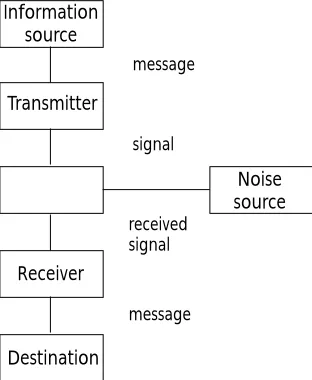
In the area of accounting and finance there are surprisingly few articles reflecting on the experience of developing multimedia in virtual learning environments (VLEs). It seems reasonable to infer that such material is not common as part of a blended learning approach even in e-learning environments. One barrier that is evident in the literature is the cost of development. Here an alternative approach is offered based on Shannon and Weaver’s (1949) communication model and the software development concept of “good enough” (Bach 1995: 2003). Armed with these concepts, the paper shows by example that large amounts of useful content can be developed quickly and easily.
The paper is divided into four sections, the first reviews the existing literature in the finance and
accounting area; the second outlines the audio lecture content
development. The third section analyses the value of the material produced and the final section discusses the results.
Literature review
It is becoming evident that the siren voices on the future of technology in education, and in accounting in particular, are very far from coming true. The major structural changes predicted by Hague (1991) have not occurred. Teaching has not been revolutionised by the new technology. Rather, a philosophy of “blended” learning has arisen. Though not a clearly defined concept (Oliver and Trigwell, 2005; Oblinger et al, 2001) the Open University (OU) provides some evidence of current trends in that of 450 courses offered in 2005 more than half were web-enhanced (internet encouraged), 158 were web-focused and 23 web-intensive (total online delivery and support) (Hoare, 2005). E-learning works alongside more traditional modes of delivery as evidenced by a recent OECD report (2005) which found that fewer than 10% of e-learning courses were fully online and by far the most common use was to supplement classroom teaching – again, the blended approach.
For over 20 years, the accounting profession has been encouraging greater use of technology in subject delivery (AAA, 1985, Marriot et al, 2004). The rapid spread of
Blackboard and WebCT has made any delivery of the material to the student via a number of media a readily available resource (Bryant and Hunton, 2000). The old complaints about cost (Williams, 1991) are no longer valid. Some have questioned the significance of the development claiming that it is no more than ‘mere vehicles that deliver instruction’
(Clark, 1983). There are studies to support such claims at least between differing methods of IT delivery (Smeaton and Keogh, 1999). Others have questioned the value of trying to evaluate delivery distinguished only by the particular technological product (Gros and Spector, 1994). Yet it is recognized that there are a number of potential advantages to using more advanced products such as audio and video (multimedia). The analysis is not new. Students it is claimed shift their learning strategy with such material, and that the benefits are not equal amongst students (Kierwa et a,l 1991). The time allocated to subjects can be tailored to students more readily. The lecturer does not have to worry about the student who is having difficulties and is less likely to have to delay the majority of the class to help a minority if that minority can resort to review material (Tomic, 1993). The quality of time spent delivering is thereby improved (Shultz, 1989). Although few would disagree with these advantages, the
development of on line learning has been much slower than expectations.
A series of notable failures illustrate the difficulties of e-learning
development. The e-University in the UK was closed in 2004 having lost £50million and attracted only 900 students. AllLearn, a venture set up by Oxford University, Yale and Stanford failed in 2006 having also not attracted enough students. NYU Online, Fathom (Columbia University and the London School of Economics) are further instances. High costs and a lack of demand has significantly held back development.
In academic research papers the simple, if rather crude, methodology has been to try to encourage use by demonstrating that VLE’s variously defined enhance student
well by students. The results are sometimes very strong (Fordham, 1996) but always the more traditional modes of delivery receive strong advocacy (Gagen and Shepard, 2001; Ponzurick et al, 2000) with some exceptions (Russell 1999). A worrying feature of such studies is the time devoted to preparing the material Dunbar (2004: 341) reports: ‘I did not track my time for the planning part of the process, but I estimate that I spent at least 10 – 15 hours per week for the spring semester working on transforming the face to face class to an online class.’ And Fordham (1996: 39) notes:
Video can be superior to the lecture environment in many respects. The presentation can be prepared in a studio. Studio sound control and quality is often superior to acoustics in lecture halls and classrooms. Pre-recording allows for “re-takes” which eliminate misstatements and unnecessary pauses. The tape can be free of distractions found in
classroom settings. The finished tape can incorporate animation and special effects which can more clearly convey a complete idea than can chalk or still transparencies. Music and other enhancements can be used to better delineate and demarcate sections or idea transitions…
Fordham then notes that 16 hours were spent editing 24 segments of 6 minutes each!! Such efforts are fine if one’s research is education, but not otherwise!The cost of development is never really addressed in journal articles. In some respects the academic paper process is to blame. Poor results are not attractive, so why should the researcher save time and money and risk rejection. Developing a course of the highest standards and arguing that this is a “genesis” (Dunbar, 2004) or that evidence is being collected about an aspect of
development is a safer option. Generally, approaches are taken that avoid the issue of wider development beyond the research ‘laboratory’. In practice, however, development can only be described as faltering. Yet to anyone engaged in ‘Imagineering’ the future in the early 90’s would surely have predicted that lecturers would have by now been producing a wealth of good multimedia material (audio and video) to exploit the benefits outlined in the literature and that the cost of such development would be very low and an obvious saving to the lecturer in time and effort. The conundrum is that this situation is by and large true in terms of the software possibilities but is not actually taking place.
The research mentality is not the only source of frustration. In the authors’ institution good practice originally included using an actor to read material. As with other universities keen to monitor quality, special approval procedures were put in place to evaluate e-learning material under the watchful eye of specialists. Internal funds were allocated to develop such material; external funds have been won to be used for the same purpose. The result in the accounting and finance area has been a dearth of content development. Anecdotally, the experience is not unique. Funding, far from helping the process, creates a barrier as the message is that to produce the material requires expert knowledge not possessed by the ordinary lecturer. In economic terms it creates an artificially high entry cost. In practice, the cost is much lower. Software is now more developed. HTML pages of good quality can be created by packages such as Course Genie very easily. Audio can be created using free downloads such as Audacity with no technical
knowledge other than the ability to
use a cassette recorder. Video is still a bit more demanding but will clearly soon become within the grasp of the motivated lecturer. But insistence on ‘high standards’ still makes content development very difficult for what is still a craft product aligned to a specific module.
Questioning of the concept of high standards is rare but does exist. Notably James Bach (1995; 2003) in the context of software development has coined the term ‘good enough’ to attack the idealistic stance that he describes as follows: ‘Software quality is a simple concept at least in the textbooks. Just determine your requirements, and systematically assure that your requirements are achieved. Assure that the project is fully staffed and has adequate time to do its work. Assure that the quality assurance process is present in every phase of the development process, from requirements definition to final testing. Oh and remember that it’s absolutely critical that management be committed to quality on the unquestioned faith that it is always worth whatever it will cost.
Otherwise, forget the whole thing’. In terms of software development he describes the goal as ‘to reach an acceptable level of risk. At that point, quality is automatically good enough’ (Bach 2003: 3). The argument is that that quality cannot be determined outside its immediate context. He notes that highly successful software packages were marketed with known bugs. But as he notes ‘it isn’t the number of bugs that matters, it’s the effect of each bug’ (Bach 2003: 5) if it does not matter, the quality is not affected.
widely accepted representations and will serve the purpose of describing this particular context in generalisable terms. The framework can be applied by substituting the following terms in the general model in Figure 1:
Information source = lecturer information set
Transmitter = lecturer
Signal = recording
Noise = source equivocation of the signal (lack of clarity by lecturer) / interference through poor transmitters or receivers (poor understanding by student)
[image:19.595.57.213.408.598.2]Destination = student knowledge
Figure 1: The Shannon and Weaver communication model
Students can be characterised as inefficient receivers. Repeating oneself on an audio can both reduce the equivocation of the message (if different terms are used in the repetition of the message) and at the same time overcome the noisy receiver by repeating the message. Pauses, coughs digressions can all help the noisy receiver if the students inattention coincides with such events none of the message is lost. The stop and replay button also helps the
student to improve the communication. The recording pauses, coughs etc are the equivalent of the bugs in Bach’s context, only here, rather than being benign, they can actually help the process. What Fordham (1996) was spending hours editing, would probably have been harmless if left in. Similarly, Dunbar (2004) applies a battery of software tools that is daunting to all but the specialist – one strongly suspects that an inferior but simpler package would have been good enough. In this study, the good enough approach was put into practice. Audio was prepared with very limited editing, using simple software on a home PC for the FPC module. The question is: is ‘good enough’ good enough?
Test outline
The style adopted in developing the audio for the module in this research was founded on the experience of developing audio for a complete lecture course on international finance(available at
http://www.aems.salford.ac.uk/elearni ng/ international_finance/index.php) As the material was fully reproduced in the lectures, the university quality procedures did not apply.
Nevertheless, in pursuit of some abstract idea of quality, editing and retakes were used extensively. It was only when following up the work in questionnaires to students and in conversation (not reported here) that it became clear that the students’ concept of quality did not coincide with many of the time consuming editing processes. In 2005 the exercise was repeated for the FPC module, only this time all the editing was severely curtailed. Audio was almost always first takes.
Interruptions, coughs, corrections were almost always left in. The judgement was that these elements are at worst harmless, and as the model clearly suggests, there is good reason to suspect that
communication may have actually
been helped. The consequent economy of effort enabled the development of a complete product that otherwise would have been impossible to achieve.
Audio files were recorded for 163 slides of about 10 minutes each, a total of about 27 hours. Editing time was probably no more than about 3 hours making a total of 30 hours. Fordham (1996), one of the few commentators to note such details, developed video of 24 segments of 3 to 6 minutes each a total of about 2 hours. This then took 16 hours of editing. There is no reason to believe that the editing process is that much more efficient today than when the paper was written – it is not an especially technical process. Applying this ratio to the current product implies a further 216 hours of editing or 5 weeks of full time work by one or more staff. Editing audio may be slightly easier, but in general terms these approximate calculations suggest that aspiring to some general notion of quality would have taken 9 times longer at least. The product would not have been developed. As there is no reason to suggest that these calculations are anything other than general to the problem of developing content, there is the strong suspicion that such possibly unnecessary costs may well be a major factor in the generally slow development of content.
The FPC module is a compulsory element of the second year of the Business and Management degree at Salford University. It was delivered in the first semester of 2005 to a total of 203 students. The audio material was released to the students via Blackboard and usage monitored by means of the Blackboard system. For technical reasons, the material was only released at the half way point of the module. Towards the end of the module delivery a total of 31 students requested CD copies, these were Information
source
Transmitter
message
signal
received signal
message
Receiver
Destination