An Interpretive Field Study of
Packaged Software
Selection Processes
Brian Andrew Light
Information Systems Research Institute
University of Salford, Salford, United Kingdom.
Submitted in Partial Fulfilment of the
Requirements of the Degree of Doctor of
Table of Contents
LIST OF TABLES ... VII
LIST OF FIGURES ... VIII
ACKNOWLEDGEMENTS... IX
ABSTRACT ... X
1 INTRODUCTION ...1
1.1 Introduction ... 1
1.2 The Research Context ... 2
1.2.1 An Introduction to Packaged Software ... 3
1.2.2 The Research Tradition in Packaged Software... 6
1.2.3 Decision Making in Organisations ... 9
1.2.4 Rationality in Custom Systems Development ... 12
1.3 Research Objective ... 15
1.4 Organisation of the Thesis ... 16
2 A MARKET PERSPECTIVE OF PACKAGED SOFTWARE...19
2.1 Introduction ... 19
2.2 The Packaged Software Market... 20
2.3 Globalisation in the Packaged Software Industry ... 23
2.4 Competing in the Market... 25
2.5 Product Development ... 28
2.6 Vendors and Implementation Partners ... 31
2.6.1 Intermediation in the Packaged Software Supply Chain ... 31
2.6.2 Relationships Amongst Vendors, Implementation Partners and Purchasers ... 33
3 AN ORGANISATIONAL PERSPECTIVE OF PACKAGED
SOFTWARE ...38
3.1 Introduction ... 38
3.2 Reasons for Packaged Software Purchase... 39
3.2.1 The Desire for Standardisation ... 40
3.2.2 To ‘Overcome’ IT Legacy Problems ... 41
3.2.3 To Deal with an Applications Backlog... 43
3.2.4 The Role of Selling ... 46
3.2.5 Cost ... 47
3.2.6 The Perception of a ‘Tried and Tested’ Product... 49
3.2.7 The Availability of a Broader Knowledge and Skills Base ... 50
3.2.8 To ‘Free up’ the information systems Function... 51
3.2.9 To Implement Change and Attain Best Practices ... 52
3.2.10 Bravado... 53
3.2.11 Policy ... 54
3.2.12 Functionality ... 55
3.2.13 Summary of Reasons for Packaged Software Purchase ... 56
3.3 Theories of Packaged Software Selection... 58
3.4 Packaged Software Selection: Definition of User Requirements ... 61
3.5 Packaged Software Selection: Evaluation ... 62
3.5.1 Vendors and Implementation partners ... 64
3.5.2 Functionality Considerations ... 65
3.5.2.1 Packaged software as Organisational Educator... 66
3.5.2.2 Expectations of Functionality Fit ... 69
3.5.2.3 Packaged Software and Organisational Change... 70
3.5.3 Customisation Considerations ... 71
3.5.4 Maintenance and Upgrade Considerations ... 72
3.6 Packaged Software Selection: The Final Decision... 74
3.7 Packaged Software Implementation ... 75
3.7.1 User Involvement and Acceptance ... 76
3.7.2 Appropriate Business Process Change ... 77
3.7.3 Top Management Commitment ... 77
3.7.4 Personnel Capabilities... 77
3.7.5 Understanding of the Capabilities of the Package ... 78
3.7.6 Appropriate Decisions Regarding Customisation and/or Configuration78 3.7.7 Recognition of Legacy Information Systems ... 79
3.7.8 Sound assessment of User Requirements ... 79
3.7.9 Management of Change and Expectations... 79
3.7.10 Summary... 80
3.8 The Conceptual Framework... 80
4 THE RESEARCH PROCESS...84
4.1 Introduction ... 84
4.2 The Research Tradition in Information Systems ... 85
4.3 Paradigms of Inquiry ... 87
4.3.1 Positivism... 88
4.3.2 Interpretivism... 91
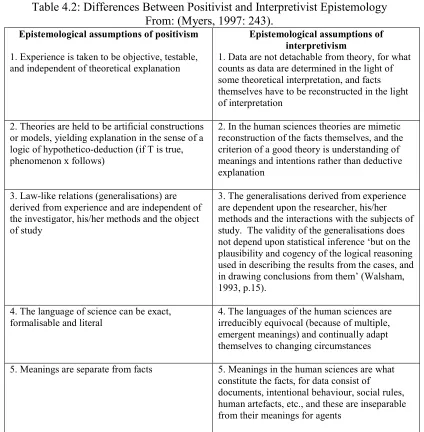
4.3.3 A Comparison of Positivistic and Interpretive Paradigms... 93
4.4 The Methodology ... 96
4.4.1 Case Study Research... 100
4.4.2 Action Research... 103
4.4.3 Data Collection and Reporting ... 107
4.4.4 The Development of Theory... 111
4.4.5 Role of the researcher ... 115
4.5 Principles for the Conduct and Evaluation of the Research ... 117
4.5.1 Principles for the Conduct and Evaluation of Interpretive Field Research 117 4.5.2 Contribution to Knowledge ... 119
4.5.3 Appropriate Methodological Choices ... 119
4.6 Summary and Conclusion... 120
5 PACKAGED SOFTWARE SELECTION AT T.CO...122
5.1 Introduction ... 122
5.2 An Overview of T.Co... 123
5.2.1 Service Offerings ... 123
5.2.2 Competing in the Environment... 125
5.2.3 Organisational Paradigm and Structure ... 126
5.2.4 A Process Map of T.Co... 128
5.2.5 The information system Infrastructure ... 129
5.2.6 The Evolution of information system and Organisation... 132
5.2.7 The Motivation for Change... 136
5.3 The Migration Project... 138
5.3.1 The Migration Project: Finding the Vendor ... 138
5.3.2 Obtaining Approval ... 142
5.3.3 The Migration of the Filemaker Pro Applications... 144
5.3.4 The Shift from Microsoft Office (Apple Mac) to Microsoft Office (Windows) ... 145
5.3.5 Issues Associated with the Microsoft Office Package... 146
5.4 The OneSource Project ... 149
5.5 The Client-tracking Project... 155
5.5.1 The ‘Job Search Times’ Project... 155
5.5.2 The Sales and Marketing Wish List... 156
5.5.3 The ‘Client-tracking’ Project ... 158
5.5.4 The Consultants’ Wish List ... 159
5.5.5 The Client-tracking Project Begins Proper... 160
5.5.6 Product Identification and Selection... 163
5.5.7 Phase 1 of Implementation Planning ... 167
5.5.8 The Workflow Day ... 169
5.5.9 Phase 2 of Implementation Planning ... 174
5.5.10 Signing Off the Workflow Document ... 176
5.6 Summary Review... 178
6 AN ANALYSIS OF PACKAGED SOFTWARE SELECTION PROCESSES AT T.CO...181
6.1 Introduction ... 181
6.2 Reasons for Packaged Software Selection ... 182
6.2.1 Standardisation and Best Practices ... 183
6.2.2 The T.Co Legacy Information Systems ... 187
6.2.3 The Applications Backlog at T.Co ... 188
6.2.4 Forms of Selling... 190
6.2.5 Cost ... 193
6.2.6 The Tried and Tested Solution with an Associated Knowledge and Skills Base... 197
6.2.7 Freeing up the Information Systems Related Staff ... 199
6.2.8 Implementing Change to Working Conditions... 200
6.2.9 Bravado... 202
6.3 Package Software Selection: The Definition of User Requirements . 204 6.4 Packaged Software Selection: Evaluation ... 207
6.4.1 Functionality Considerations ... 209
6.4.2 Issues Related to Vendors... 212
6.5 Package Software Selection: The Final Selection Decisions ... 216
6.6 Implications of Packaged Software Selection for Implementation and Usage ... 218
6.6.1 Implementation ... 219
6.6.2 Management of Change and Expectations... 224
6.6.3 Functionality ... 224
6.6.4 Vendors and Implementation Partners... 227
6.6.5 Customisation, Maintenance and Upgrades... 228
7 SUMMARY AND CONCLUSION ...234
7.1 Introduction ... 234
7.2 Review of the Research Objective... 234
7.3 Evaluation of the Research ... 236
7.3.1 Contribution to Knowledge ... 236
7.3.2 Appropriate Methodological Choices ... 238
7.3.3 The Fundamental Principle of the Hermeneutic Circle ... 239
7.3.4 Contextualisation ... 240
7.3.5 Interaction Between the Researchers and the Subjects... 241
7.3.6 Abstraction and Generalisation... 241
7.3.7 The Principle of Dialogical Reasoning... 242
7.3.8 The Principle of Multiple Interpretations ... 244
7.4 Interpretation of Research Findings... 245
7.4.1 The Development of the Concept of Packaged Software ... 245
7.4.2 An Alternative Theory of Packaged Software Selection ... 246
7.5 Recommendations for Further Research ... 251
7.6 Conclusion ... 254
APPENDIX A: LEGACY INFORMATION SYSTEMS (WORKING PAPER) ...255
APPENDIX B: ILLUSTRATIVE EXAMPLES OF THEORY DEVELOPMENT ...272
List of Tables
Table 2.1: Customer-Developer Links in Packaged Software Development... 33
Table 3.1: Summary of Reasons for Packaged Software Purchase... 57
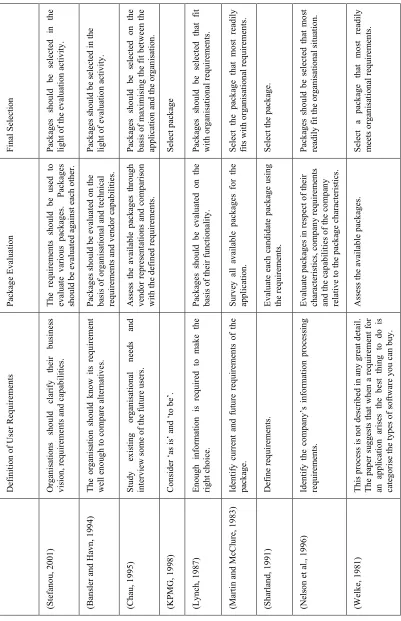
Table 3.2: A Summary of Packaged Software Selection Processes... 60
Table 3.3: Examples of Function Miss-Fits ... 66
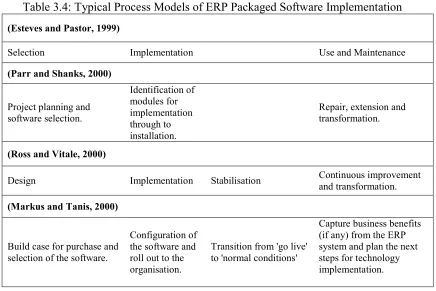
Table 3.4: Typical Process Models of ERP Packaged Software Implementation... 76
Table 4.1: Fundamental Questions for Determining Inquiry Paradigms ... 88
Table 4.2: Differences Between Positivist and Interpretivist Epistemology... 95
Table 4.3: Issues for Action Research in Field Study and Consultancy Modes... 108
Table 4.4: Contact Points at T.Co. 2000-2002 ... 112
Table 5.1: Key Features of the Content of the Migration Project ... 138
Table 5.2: Migration Investment Justification ... 143
Table 5.3: Benefits and Recommendations for the Purchase of OneSource... 152
Table 5.4: Client Journey: Model I ... 158
Table 5.5: Highlights from Workflow Day 1. ... 171
Table 5.6: A Comparison of Vendor E and T.Co’s Implementation Plans... 176
Table 6.1: Summary Findings - Reasons for Packaged Software Adoption ... 231
Table 6.2: Summary Findings – Definition of User Requirements... 232
Table 6.3: Summary Findings – Package Evaluation... 232
Table 6.4: Summary Findings – Final Selection Decision... 233
List of Figures
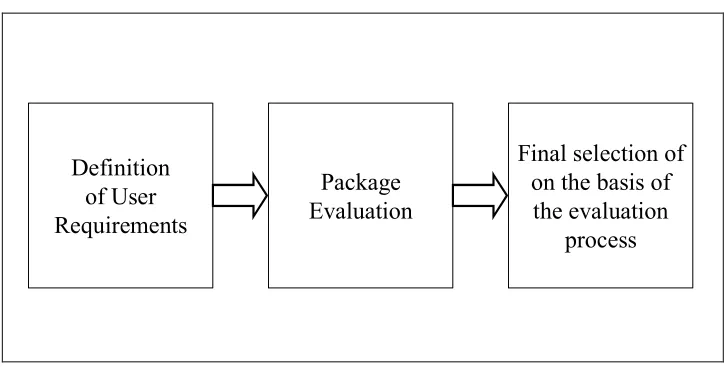
Figure 3.1: An Ideal Model of Packaged Software Selection ... 59
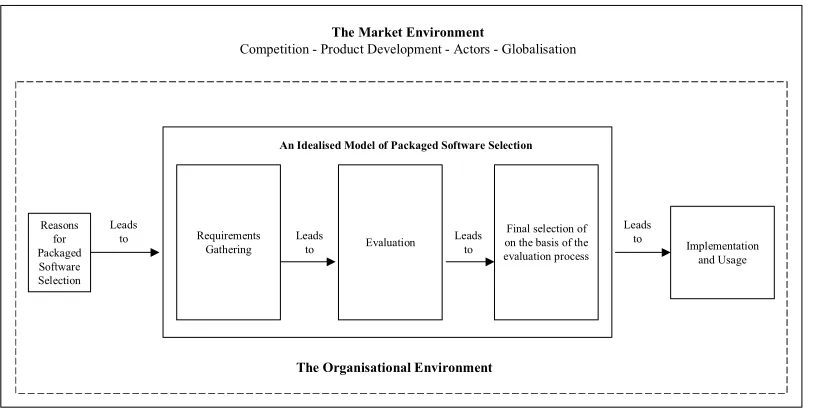
Figure 3.2: The Conceptual Framework... 81
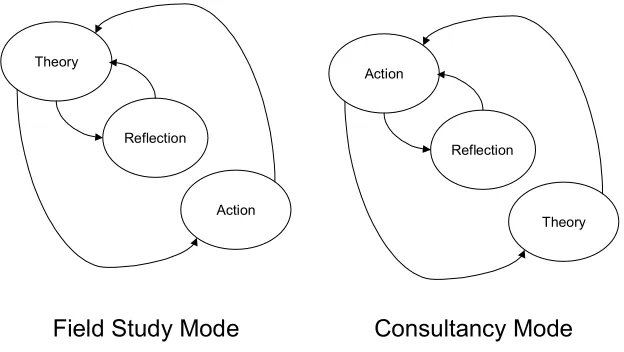
Figure 4.2: Field Study and Consultancy Mode Theory-Action Cycles ... 114
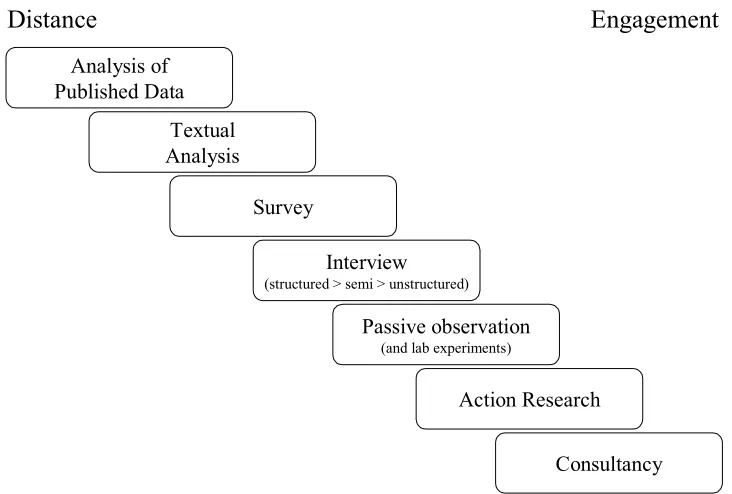
Figure 4.4: Forms of Engagement in Research ... 116
Figure 5.1: The Organisation Structure of T.Co... 127
Figure 5.2: A Process Map of T.Co... 129
Figure 5.3:Applications by Department ... 132
Figure 5.4:The Client-tracking Implementation Plan... 168
Figure 5.5: Summary Timeline of Events at T.Co. ... 180
Figure 6.1: The Conceptual Framework... 182
Acknowledgements
Many thanks go to Professor Trevor Wood-Harper, and the rest of the staff at the University of Salford who have ‘encouraged’ me to get this done since I joined the group in 1999.
Abstract
Packaged software is pre-built with the intention of licensing it to users in domestic
settings and work organisations. This thesis focuses upon the work organisation
where packaged software has been characterised as one of the latest ‘solutions’ to the
problems of information systems. The study investigates the packaged software
selection process that has, to date, been largely viewed as objective and rational. In
contrast, this interpretive study is based on a 2½ year long field study of
organisational experiences with packaged software selection at T.Co, a consultancy
organisation based in the United Kingdom.
Emerging from the iterative process of case study and action research is an
alternative theory of packaged software selection. The research argues that packaged
software selection is far from the rationalistic and linear process that previous studies
suggest. Instead, the study finds that aspects of the traditional process of selection
incorporating the activities of gathering requirements, evaluation and selection based
on ‘best fit’ may or may not take place. Furthermore, even where these aspects
occur they may not have equal weight or impact upon implementation and usage as
may be expected. This is due to the influence of those multiple realities which
originate from the organisational and market environments within which packages
are created, selected and used, the lack of homogeneity in organisational contexts
1 Introduction
1.1 Introduction
People in organisations still face difficulties in getting information technology (IT)
to do what they want it to do. In recent years, the selection of packaged software
over custom development has been viewed as the ‘solution’ to this problem. In the
information systems research community, this shift has been followed by research
efforts gaining ground in this area. However, much of this focus has mirrored
organisational trends in the adoption of packaged software application types,
particularly that for Enterprise Resource Planning (ERP). Whilst this research is
valuable, research into application types has overridden specific investigation into
the generic nature of packaged software. This is problematic as focussing upon the
nuances of application types at the expense of the issues associated with the
packaged software element of a study may have broader theoretical implications.
Thus theoretically, the favouring of application types over package software has led
to a comparative dearth of work on packaged software. To compound the problem,
the work that is available, is largely ignored by ‘application types’ studies, especially
those concerned with ERP, the most pervasive. Moreover, it is also clear that the
from many packaged software related studies. In summary therefore, there is a need
to theorize about packaged software and its place within the field of information
systems.
Of course, this leaves a large area of potential research that cannot possibly be
conducted within one thesis. The literature that is available on packaged software
has therefore been used to help scope the nature of the contribution. Earlier
packaged software studies have examined the barriers to packaged software adoption
(Gross and Ginzberg, 1984) and selection processes (Chau, 1994). However, the
results of recent studies, (Pozzebon, 2001; Sawyer, 2001), when compared with the
rationalistic assumptions of earlier studies suggest that packaged software selection
is much more complex, and hence, is worthy of further study. Moreover, there is
Lynne Markus’ call for information systems research to examine the different
rationales for adopting technologies (Markus, 2000). Thus, this study aims to
reconsider the theory of packaged software selection.
In the following section, the context of the research is outlined in terms of the
content and importance of the topic, the tradition in packaged software research and
the fit of this research with other studies. In the following section the research
objective is presented. The chapter concludes with an overview of the organisation
of the rest of the thesis.
1.2 The Research Context
This section expands the context of the research outlined in the introduction. It
demonstrate the motivations for the study. That is, to respond to the idea that
packaged software theory is largely ignored in favour of packaged software
application types, and that those studies that exist are mostly positivistic (and hence
rationalistic) in nature, particularly those concerned with selection - cf. (Anderson,
1990) for example. Then, as the study is concerned with packaged software
selection, theories of organisational decision-making are presented. Following this,
reference is made to the research on custom development which has already
established the futility of rationalistic views of systems development. Thus, the
overall aim of this section is to highlight the futility of rationalistic theorizing in
relation to packaged software selection and to situate packaged software research
within the field of information systems.
1.2.1 An Introduction to Packaged Software
The well documented ‘software crisis’, borne out of the problems of how software is
(and is not) developed and maintained has been argued to have led to applications
backlogs in organisations (Pressman, 1997). Moreover, even when developed and
implemented, information systems failures are widely reported. It is doubtful that
many people in information systems will not have some key information systems
failure such as the French Railways (Mitev, 1999) or Taurus (Currie, 1995; Flowers,
1996) with which they are familiar. Recently, combinations of these problems have
been conceptualised as legacy information systems problems, resulting in large
funded research efforts such as the Systems Engineering for Business Process
Change (SEPBC) programme of the United Kingdom (UK) Engineering and
Physical Sciences Research Council. Indeed, a multitude of theories, toolkits and
time around are available. It was whilst working on the SEBPC project at the
Manchester Business School that I became aware of the latest ‘solution’ - packaged
software1.
Amongst other benefits, packaged software is supposed to speed up the deployment
of applications in organisations, tidy up the technical infrastructure, and through
outsourcing, provide organisations with a constantly renewable state-of-the-art IT
infrastructure (Klepper and Hartog, 1992; PriceWaterhouse, 1996; McKeen et al.,
2002). There is broad agreement that packages are pre-written software systems that
organisations use instead of developing a system in-house. For example:
- Bansler and Havn (1994) state that generic systems are systems designed and
developed for general use, as opposed to custom systems, designed for a specific
user or group of users;
- Laudon and Laudon (2000) define software packages as written and
pre-coded, therefore eliminating the need for people in organisations to write
software programs for certain functions;
- and Kunda and Brooks (2000) suggest that packages carry a sense of getting
something that already does the job instead of starting from scratch.
Packages are often also perceived as faster and more cost effective to implement
than custom development. It is argued that because packaged software is developed
with large customer bases in mind and, is more or less complete software, it can be
readily implemented in contrast to custom development (Andersson and Nilsson,
1 Also known as Commercial-off-the-shelf (COTS) software, standard software, shrink-wrapped software, commercial
1996; Dube, 1998; Lassila and Brancheau, 1999). Carmel (1997) focuses on the
commercial perspective of packaged software and suggests that it is sold as a
tradable product. Steve Sawyer, who has worked with Carmel in this area,
unsurprisingly offers commensurate insights:
“…packaged software (also known as shrink-wrapped, commercial-off-the-shelf (COTS) and commercial software) means all software sold as a tradable product (purchased from a vendor, distributor or store) for all computer platforms including mainframes, workstations and microcomputers Typically, packaged software is licensed for use, not sold.” (Sawyer, 2000: 47)
However, it is important to note that the software is not usually sold, as Carmel and
Sawyer would agree. Instead, packaged software tends to be licensed for use. The
packaged software product is essentially intellectual property and therefore the
vendor retains the ownership of the application and negotiates a licence governing its
use with the purchaser (Butler, 1999). Whilst, packaged software may be
commercially licensed, there are applications, such as Microsoft Internet Explorer
and Netscape Navigator, that are not licensed on a commercial basis although users
still enter into a licensing agreement. However, this research is mostly concerned
with packaged software which does incur license fees and therefore this aspect is
included.
Like most studies, this one focuses upon packaged software used in work
organisations. However, it is critically important to point out the significant shift in
home computing and the considerable emerging domestic market for packaged
software. This includes applications supporting ‘Domestic Automation’ (For
example: Microsoft Money, Email and applications that assist in home improvement
computers and consoles) and ‘Learning’ (language and encyclopaedias such as
Microsoft Encarta). In no way are these categories perfect or exhaustive. These
examples merely illustrate that packaged software is pervading domestic settings.
Therefore, packaged software can be seen as software that is pre-built with the
intention of it being licensed for use. Although it is problematic to attempt to strictly
define the concept – it is necessary to inform the reader of the conceptualisation for
the purposes of the study at hand. The point of this definition is that it recognises
that packages are products that require licensing for use, but it is inclusive enough to
cover software which is not commercially licensed or used in work organisations.
1.2.2 The Research Tradition in Packaged Software
It has been suggested that the packaged software industry traces its roots to the 1968
United States’ (US) Justice Department’s decision to force International Business
Machines (IBM) to unbundle hardware and software (Carmel, 1997). In the late
1970s and early 1980s they were primarily viewed as a way to ‘deal’ with the
applications backlog (Gremillion, 1982). Since then, people in organisations have
used packages to varying extents although this has mostly been in smaller
organisations (Markus and Tanis, 2000). In the mid 1990s, ERP packages became
an incredibly popular choice for larger organisations and today packages are
pervasive (Light and Holland, 2000; OECD, 2002). However, despite the
phenomenal uptake of packages by organisations, until around 1998 they had
received scant attention, in contrast to custom developments, by the information
packaged software application types rather than packaged software per se (Esteves
and Pastor, 2001; Westrup, 2002).
This growth and turbulence in the market is reflected in the interest of information
systems researchers. It has been reported that during the period 1997-2000, 189
papers related to the subject of ERP were published (Esteves and Pastor, 2001).
Panels on the topic were held at key information systems conferences such as the
Americas Conference on Information Systems, the European Conference on
Information Systems, the International Conference on Information Systems and the
Australian Conference on Information Systems. However, it is again interesting to
note that the focus is upon a particular application type rather that packaged software
per-se. Indeed, Westrup (2002) argues that much ERP research has followed the
organisational fashion for this application type.
Moreover, the information systems community still primarily focuses upon custom
software, despite shifts in development strategies in work organisations. Very few
courses on packaged software run on undergraduate and postgraduate degree
programmes, and where they do, these centre on application types, usually with the
sponsorship of the vendor2. ERP vendors such as SAP and Oracle have been
relatively quick to approach universities to set up joint initiatives. Despite
undertaking research into ERP packages, myself, for some years I am still unclear
how this happens. This is another selection process requiring investigation.
Certainly, ERP as an area of research, has expanded dramatically since 1997 – is it
that academics have approached vendors, or vice versa? This may not be important,
neglect of the development of theory about packaged software which generally has
much more longevity than any particular application type. There are aspects of ERP
packages that are worthy of study, as is true of other package application types such
as Customer Relationship Management (CRM) and groupware. Yet, the theoretical
issues that may have broader consequences are generally being ignored. This
grounds my motivation for theorizing about packaged software selection.
If an organisation is buying a standardised pre-built product that contains finite
functionality then the selection process becomes very important. Thus, it would be
expected that throughout the selection process, organisational members would
evaluate products to ensure they chose one that met their requirements. To put is
another way, it would be silly to buy a Mini motor car if you have 10 kids! There
are several studies of packaged software selection process (see Table 3.2 later) but
they tend to treat selection in an objective fashion as in the example of the Mini. The
majority of studies present the process as one that can be carefully orchestrated and
executed to achieve a successful result. The underlying assumption is that those
involved in the process have an equal stake and share common objectives that will
lead to a sensible decision. However, it is clear that organisational decision making
is not so straight forward, and the same has been recognised in the custom
development of information systems.
As a result of ‘passing over’ packaged software in favour of the ‘glamour’ of
application types, valuable lessons that will enable the furtherance of theory in
information systems are being ignored. This is because packages, and particularly
from what has gone before (cf. (Newell et al., 2001; Westrup, 2002)). Instead, it
would be preferable to view packages as information system that may share
similarities and differences when compared with custom developed systems.
Moreover, theories of organisational decision making and custom development are
widely acknowledged as subjective as outlined in the next two sections. Why
therefore, should packaged software selection be any different? Recognition of prior
work in the area, rather than attempts to jump on the latest bandwagon are incredibly
important if the field of information systems is to avoid labels such as ‘a fragmented
adhocracy’. Banville and Landry ( 1992) afford information systems this label on a
number of fronts, but particularly because they perceive research as personal and
weakly coordinated in the field and where researchers can gain a reputation by
contributing to specific groups – ERP packages for example.
1.2.3 Decision Making in Organisations
Decision making, the process of choosing between alternatives, is based on the idea
that if there are no alternatives, there is no decision to make. Decision making
theories fall broadly into two camps, normative and descriptive (Rollinson and
Broadfield, 2002). Normative models emphasise rationality and assert how
decisions should be made whereas descriptive models set out to explain how
decisions are made (Jennings and Wattam, 1994). Normative models assume that
decision makers:
- have a sound basis of knowledge available to them, so they can know the alternatives and successfully predict a variety of outcomes;
However, there is a great deal of research which questions rational models of
decision making (Brunsson, 2000) . For example, it is rarely the case that decision
makers have complete information about alternatives and the use of intuition is more
prevalent that may be reported (Kahneman and Tversky, 1983; Jennings et al., 1994;
Yiannis et al., 2000). Moreover, preferences are seldom rigid and may change in the
light of experience (Singh, 1986). Also, rational models ignore the contexts within
which decisions are made, in particular group and organisational influences in this
respect (Lye, 1994).
Interestingly, even in the light of these critiques, packaged software selection studies
to date broadly conform to the rational choice model. Furthermore, in other areas of
information systems where decision making is required, such as systems thinking
(Checkland, 1981), systems development (Wood-Harper et al., 1985), strategic
information systems (Ciborra and Associates, 2000) and strategy planning (Knights
et al., 1997), mechanistic approaches have been shown to be inherently flawed This
therefore raises serious questions regarding the appropriateness of viewing packaged
software selection in a rationalistic fashion. The general assumption is that a
decision making process is linear one. It begins with the identification of a problem
that requires solving. Then, people with relevant interest and knowledge are brought
together to discuss all the relevant information they can gather and out of this
emerges the solution to the problem (Watson, 2002). However, it is useful to
acknowledge, and even welcome, contributions to decision making processes that
may not be viewed in such a fashion. The second category of theory in relation to
A key model in the descriptive tradition is the garbage can model (Cohen et al.,
1972). The garbage can model indicates that the process of decision making is far
more complex than normative models would suggest. It asserts:
- There is typically more than one problem (others may bring different problems to
the table).
- Solutions are rarely created in the decision making process (people come to the
table with ‘the’ solution, and the one that may suit them).
- Who is involved and not involved in the decision making process may affect the
outcomes.
- The extent to which those who are involved, are involved, may also affect
outcomes. cf. (Teale et al., 2003: 288-289) and (Watson, 2002: 339-340)
The utility of this model is that it allows for a degree of interpretation in respect of
what is ‘the’ rational decision. The garbage can model implies multiple realities
(Kaplan and Duchon, 1988) and therefore decision-making becomes less
straightforward than the rational model suggests. The process is not linear and is
heavily influenced by the social context of the decision making process. Because of
these multiple realities, multiple rationales are present which may influence decision
making and which may be variously interpreted as rational/irrational, good/bad by
those involved (Bullock et al., 1988). Returning to the Mini example – it may seem
eminently sensible for the parent to buy the car knowing full well they will not be
able to seat all the kids if they want an excuse to go out on their own sometimes.
Alternatively, it may be that the kids view the purchase as limiting their chances of
These two models imply some form of a decision making process. However, it has
been suggested that some decisions will not be implemented and some things will be
implemented that have not undergone a decision process (Brunsson, 1994). That is,
where there are no alternatives or perhaps more interestingly, where there are
perceived to be no alternatives.
In summary the dynamics of packaged software selection processes require further
theorization in the light of the models presented here. In particular, there is a need to
consider the nature of potential problems and solutions (the organisational situations
and packaged software products), how solutions may be formulated and who is
involved. These issues have already received significant attention in information
systems in relation to custom development and are discussed in the next section.
1.2.4 Rationality in Custom Systems Development
Early systems development efforts were relatively unstructured. Lehman (1980) for
instance, argues that in the 1950's the ecstasy of instructing a machine to undertake
computations at speed overshadowed the rather dull need for a guiding theory and
discipline. However, as organisations came to rely more upon information systems -
structured programming, design and analysis methods took on more importance.
The rationale for this was that a perfect system would be produced if a logical and
structured procedure was followed (Friedman and Cornford, 1989; Fitzgerald, 1996).
It has been argued that the systems development methodologies can:
- accurately record the requirements of an information system
- provide a systematic method of development so progress can be monitored
effectively
- provide an information system within an appropriate time scale and cost
- produce a system that is well documented and easy to maintain
- provide an indication of any changes that need to be made as early in the process
of development as possible
- provide a system that is liked by those people who are affected by it (Avison and
Fitzgerald, 1995: 11-12)
Similarly, as ideas on systems development and implementation evolved it was felt
that the only way of achieving the perfect system was to involve end users (Friedman
and Cornford, 1989). Consequently much effort has, and continues to be spent upon
rationalising the process of custom systems development and involving end users in
an attempt to build the perfect system.
However, despite the process of systems development being historically
characterised as inherently rational it has been argued that the custom systems
development process (and the decision making which forms part of this) is not
necessarily as rational as some structured approaches might suggest (Lewis, 1994).
This can be illustrated by considering points in relation to the system developer and
In respect of the developer, although they are often thought of as the objective expert
with a tool kit of logical techniques to make the perfect system, there are other
factors as play. Developers may have limited experience or knowledge and their
own agenda (Yourdon, 1986; Fitzgerald et al., 2002; Kotamraju, 2002). As Edward
Yourdon states:
“For a majority of computer programmers and analysts now, their jobs simply occupy them from nine to five and enable them to pay the rent and buy two color televisions.” (Yourdon, 1986: 207)
This may be at odds with system commissioner’s objectives and the organisational
situation within which the outcome is to be realised. In terms of end users, they are
often assumed to share unitary views of organisations where they are believed to
hold an equal stake in systems development when in reality, as with developers, this
is not the case (Flynn, 1998). End users will have varying personal or group
agendas, levels of interest and degrees of power in systems development efforts
(Markus and BjØrn-Andersen, 1987; Quintas, 1994). Clearly then, even in this brief
example, there are multiple realities and hitherto potential interpretations of
irrationalities in existence. Developers, end users and system commissioners (who
may also be end users) are not heterogeneous communities and will variously impact
upon decision making processes in custom development. It has for instance, been
argued that the developer and the end user cannot be removed from the problem
domain (Wood-Harper, 1985). Custom system development is arguably not a
rational and linear process. Indeed, it has been characterised, quite some time ago,
as whilst holding the potential to be explained by rational motives, also being
inherently influenced by politics and power (Markus, 1983; Robey and Markus,
Even though packaged software may display differences to custom development
there are still developers, users, the use of methodologies and of course, hopefully, a
resulting information system. Thus, it is difficult to see how packaged software
selection theory can be presented as, and taken to be, rational given the lessons from
custom development. It appears that theory on packaged software has not kept pace
with the changes in custom development theories and therefore it is still rooted in the
quest for rationalism evident in systems development in the 1970s.
1.3 Research
Objective
This research questions the utility of existing theories of packaged software
selection. Existing theories of packaged software selection implicitly or explicitly
assume a unitary view of organisations thus ignoring the presence of potentially
competing organisational realities. Moreover, these theories assume that it is those
in the consumer organisation who will ‘control’ the process of selection, and
therefore they do not adequately account for the influence of others in the market
within packaged software is created and selected. Furthermore, packaged software
selection is currently conceptualized as a linear, well ordered process.
The objective of this study therefore, is to develop an alternative theory to assist in
developing an understanding of packaged software selection. The intention is that
the theory will more plausibly account for the multiple realities of the process and
the consequent potential ‘disruptions’ to what is usually described as a well ordered
In order to achieve this objective, the study:
- Critically reviews a range of issues associated with existing theories of, and
related to, packaged software selection from market and organisational
perspectives (chapters 2 and 3).
- Reports and analyses the experiences of people in one organisation in relation to
a number of packaged software selection processes (chapters 5 and 6).
- Develops an empirically informed alternative theory of packaged software
selection (Chapters 6 and 7).
1.4 Organisation of the Thesis
In order to understand packaged software selection it is necessary to refer to the
environment within which this occurs. For the purposes of this study this has been
split into the environment within which products are created and sold (the market)
and the environment within which they are selected and used (the organisation).
Chapter 2, examines the market within which selection may be performed by
reviewing certain aspects of the packaged software industry. This includes specific
reference to modes of competition, the process of product development and the role
of intermediaries. The major theme of the chapter is that packaged software
Chapter 3 considers the selection of packaged software from the organisational
perspective. This chapter begins with a review of the reasons for packaged software
selection. Existing theories of packaged software selection process are then
reviewed resulting in the presentation of an ideal model. Further review of the
literature on packaged software is then used to highlight the problems of the
idealised model in terms of its rationalistic assumptions and how it is isolated from
the market, the process of implementation and the context of usage. The chapter
concludes with a conceptual framework which illustrates how packaged software
selection theory is couched in relation to other packaged software research.
Chapter 4 discusses the research process of the study. It begins by examining the
research tradition in information systems that is argued to be dominated by
positivism. Positivism and the interpretive approach of the study, are then
introduced and critiqued. Following this the methodology that was constructed is
outlined in terms of methods used – case study and action research, the techniques
for data collection and reporting, theory development and the role of the researcher.
The approach towards the conduct and evaluation of the research is also outlined.
The story of T.Co. is presented in Chapter 5. It begins in June 2000 and ends in
December 2002. This chapter commences with an introduction to T.Co and then
offers interpretations of three information systems projects involving packaged
software selection. Project 1 began as case study research and then became action
research. It involves the selection of office automation, email, operating system and
database packages in the context of a migration from an Apple Mac to a Windows
business intelligence package. Project 3 is based upon action research and
documents the selection of a package to support client-tracking activities.
Chapter 6 uses the conceptual framework developed from chapters 2 and 3 to
organise and analyse the data from the T.Co projects. The analysis focuses upon
how the activities involved in the packaged software selection processes differed and
were constructed by the differing perspectives of those involved and the nature of the
packages in question. The findings from the analysis are used as the basis for the
development of the alternative theory of packaged software selection discussed in
the final chapter.
Chapter 7 summarises the overall findings of the research, reports the conclusions
and offers recommendations for further research in the area. It begins with a review
of the research process, specifically in relation to the evaluation criteria outlined in
Chapter 4. In doing this, the research objective, methodology and the evaluation
criteria are revisited. Following this, the overall findings of the research are
presented. The thesis closes with some recommendations for future research and the
2 A Market Perspective of
Packaged Software
2.1 Introduction
In recent years, packaged software has become the preferred form of applications
deployment in organisations. Significantly, in contrast to custom development,
packaged software is primarily thought of in market terms and this has various
implications for the process of selection. In order to begin to illustrate these
implications, this chapter examines aspects of the packaged software market. The
chapter begins by reviewing the growth and global nature of the market. Following
this, the features of competition in the market are discussed with reference to their
implications for selection processes. The nature of product development and the
issues associated with vendors and implementation partners are also discussed in a
similar fashion. This chapter situates the processes of packaged software selection
within the environment within which the product is created. It further acts as a basis
for the next chapter that focuses upon the organisational aspects of packaged
2.2 The Packaged Software Market
There is little doubt that the rise of the packaged software industry over the last two
decades has been considerable.
- In 1980 the industry was predicted to record sales of US$ 2 billion, growing US$
8 billion by 1985 but in 1984 a report suggested figures that outstripped the
previous estimates stating that sales would reach US$ 10 billion in that year and
US$ 30 billion by 1988 (Business Week, 1984).
- In 1991 the world packaged software market stood at US$ 52 billion (Economist,
1994).
- Sales for packaged software rose 280% during the period 1986 to 1995 (Sawyer,
2001).
- In 1995, packaged software sales were said to represent around 20 per cent of the
total software market which stood at US$ 77 billion, a 270 per cent increase
since 1986 (Leebaert, 1995).
- In 2001 it was estimated that world packaged software markets totalled US$ 196
billion (OECD, 2002).
This increase in the market has been reflected in predictions by consultancy firms.
For example, PriceWaterhouse’s IT review for 1995/1996 indicated that by 2000,
nearly 50 per cent of their respondents would have applications support comprised of
over 80 per cent packaged software (PriceWaterhouse, 1996). Even some in-house
information systems departments have become packaged software companies such
Much of this rise is arguably due to the adoption of packaged software by larger
organisations. Traditionally, it has been suggested that packaged software has been
more acceptable in smaller organisations but throughout the 1990s, faced with
problems such as the year 2000, packaged software has become more attractive to
larger ones (Markus and Tanis, 2000). In particular, this has arguably been driven
by two key packaged software application types – ERP and CRM software.
The market for ERP packages for example, has grown spectacularly throughout the
1990s. Between 1995 and 1999 it was estimated that £18.7 billion had been spent on
ERP software packages alone. Numerous other predictions have estimated growth in
the late 1990s and early into the 2000s – these range from around US$ 31 billion to
US$ 66 billion (August, 1999c; August, 1999b; August, 1999d). At the
organisational level, implementations can last between one and five years and costs
can range from US$ 2 to 130 million (Ross and Vitale, 2000). Couple this with a
recent ERP survey which suggested that 62 per cent of organisations had abandoned
their ‘legacy information systems’ after adopting an ERP package (Themistocleous
et al., 2001), and the rising market is understandable.
Following quickly behind ERP packages, came CRM packages with similarly
astronomical markets and spending. For example, during 1998-1999 Siebel
Systems, the CRM packaged software market leader, saw revenue rise by 93 per cent
to US$ 790.9 million (Goodley and Bennett, 2000) and the Royal Bank of Scotland
committed to roll out CRM packages across the organisation with spending running
Some of the figures above represent license revenues alone and others include
associated software services. These include the consulting, contracting, integration,
training, support staffing for hardware and software. This has also grown
extensively in recent years. Forrester Research (1998) reports that this segment has
grown at 16 per cent per annum for more than a decade and accounted for US$ 180
billion in 1997. Clearly, packaged software has become a critically important feature
of contemporary information systems support in organisations and it receives much
applause. Statements such as those below are not uncommon.
ERP packages, including those from SAP AG, People Soft, Oracle, and Baan, have made a tremendous contribution to the world of business (Li, 1999: 31).
When it came to the promise of packaged software, you could say it was an offer we could not refuse. In fact, most of our respondents have said that (PriceWaterhouse, 1996: sic).
However, packaged software is not as unproblematic and successful as it is often
described. A number of highly publicised failures have been associated with the
ERP packages.
- Hershey, Aero Group and Snap-On have blamed the implementation of ERP
packages for negative impacts upon earnings (Scott and Vessey, 2000).
- Cadbury Schweppes implemented plans to fulfil 250 orders where normally they
would fulfil 1000 due to the increased complexity and the need to re-train staff
post implementation (August, 1999a).
- FoxMeyer drug company’s implementation of an ERP package has been argued
to have lead to bankruptcy proceedings resulting in litigation against SAP, the
Furthermore, a recent Harvard Business School study findings indicate that 65
percent of executives felt that ERP packaged software had a moderate chance of
hurting their business (Cliffe, 1999).
The reported experiences of packaged software are, as would be expected,
contradictory and multifarious, but clearly the market is burgeoning and the selection
of products in this ‘highly charged’ predominantly commercial environment offers
significant interest.
2.3 Globalisation in the Packaged Software Industry
The packaged software industry is global in nature. In 1991, the US held 78 per cent
of the market, with Europe in second place with 16 per cent (Brouthers and van't
Kruis, 1997). By 1997, the US still dominated the industry although Japan and
Europe had both increased their shares of the market significantly and overall
worldwide growth was evident (OECD, 2000).
An important issue in this respect is the question of whether the origin of a packaged
software product relates to the inscribed assumptions about the conduct of work that
they may display as a result. That is, if software is developed by people in the US –
will it be in agreement with the ‘ways of life’ that exist throughout Europe or Asia?
It has been suggested that the origin of the development of the package might be at
odds with the country of implementation even though the drive for economies of
scale may require a globally acceptable product (Krumbholz et al., 2000). Moreover,
Carmel (1997) in attempting to explain the hegemony of the US in the packaged
recognises that the ‘American Culture of Software’ is an intersection of
characteristics including US culture, immigrant culture and that of computer
programmers and software professionals. The latter point relating to the culture of
the developers refers to ‘Mealy’s Law’3 whereby:
“The eventual structure of the system reflects the structure of the organization that builds the system” (Yourdon, 1986: 81-82).
That is, the product that has been developed apes the organisational structure within
which the developers operate (Bloomfield, 1992). Yet, Carmel points out that US
culture is in fact US ‘cultures’. Moreover, in respect of ‘Mealy’s Law’, the problem
is that given the rising complexity of packaged software offerings and the
characteristics of organisations in the intended markets, developing organisations
may lack the structures in place for developers to mirror. One SAP development
team found it necessary to involve customers in the development of its treasury
module in an attempt to build a product with high market acceptability (Scott and
Kaindl, 2000). These arguments also assume that developers are free to build
products in a manner that they wish when in fact they, and the organisations they
belong to, are to some extent, constrained by market demands if they wish to
continue in business.
Of course, the country of origin of the software, the cultural composition of the
development team and their environment may impact upon the eventual product but
this is not as simple as first suggested. Certainly, many people I have worked with
on SAP implementations have commented on how ‘German it is in the way it
expects you to work’. What this means is that the globalisation of the packaged
software industry has significant implications where the producer aims for
standardisation to achieve economies of scale across diverse geographical and
cultural environments. However, it does not necessarily follow that a product built
in the US will turn a corner shop in the UK into Wal-Mart.
Thus, in terms of culture, it is perhaps more useful to consider the global argument in
relation to the problems of implementing a generic product that has been targeted at
a broad market. Undoubtedly, there will be features of the product that will be
engrained with cultures that may be influenced by the origins of production and the
ethos of the developing organisation. The issue in relation to selection would appear
to be understanding the implications of this for the context within which the product
will be used. That is, asking the question of whether the package will fit with the
cultures of the organisation within which is to be implemented. Of course the matter
is more much more complicated. For instance assumptions are made that those
involved in selection are willing and able to find out about this, that cultural changes
are not part of the reason for implementation, and that those using the eventual
system do not subvert the system to avoid any formal culturally rooted directives in
the system.
2.4 Competing in the Market
For vendors, the benefits of selling packaged software derive largely from economies
of scale. In order to attain these economies, products have to be standardised so they
have broad appeal in the market (Robson, 1997; Fan et al., 2000). Thus, the vendor
need only develop the software once and can distribute the cost of development and
ongoing maintenance over a large base (Gremillion, 1982; Dube, 1998; Butler,
Consequently, in order to attain the economies of scale, and thereby increase profit
margins, vendors have to implement competitive strategies as in any other business
(Porter, 1980; Porter, 1996). This means that the vendor has to determine how they
will compete in this environment and within which market/s they wish to operate.
From a work organisation perspective, packaged software vendors may, for instance,
target a mass market with an application type (Microsoft Windows), a particular
customer organisation size (SAP versus Sage for accounting products), or sector
(IBM’s Corebank) in the banking industry. Vendors may also choose to manage
product delivery schedules and consumption patterns, for example by segmenting the
market via the use of editions4. Editions serve to differentiate among similar low
and high-end products particularly via differences in functionality and price. What
this essentially means is that a vendor may produce multiple editions of their
products for various markets e.g. domestic, business, small business, or sector
specific such as education. This segmentation activity may of course also be
combined with targeting a particular market. That is, various editions may be made
available with a market sector. This is done mainly to allow decisions to be made
regarding tradeoffs of cost and functionality. It has been argued that this process
requires consideration of:
- The type and size of the software product
- The nature of the market -in particular, the status of buyer and seller power
- The need for market information - vendors may release multiple editions
simultaneously to gather information
4 Note the difference between editions and upgrades. Microsoft launched recently launched two editions of Windows XP:
- The required profit margin - releasing better editions, later may increase the
lifecycle of a product (Raghunathan, 2000)
In respect of the process of selection, a way of reading these activities is that they
used by the vendor as control mechanisms. As the vendor effectively determines
who their market will be, how much they will pay and what they will receive, and
when (if ever), the consumer organisations palette of choice is limited.
A number of studies have also indicated that time to market is of competitive
importance (Carmel and Becker, 1995; Carmel and Sawyer, 1998). It has even been
argued, that in this segment of the software industry, time-to-completion is the most
important issue and that future competition will be based upon accelerated release
cycles (Carmel, 1995b). However, it has been further proposed by the same author
that many packaged software companies have not fully recognised cycle time as a
competitive concept and rather, that other pressures dominate such as features,
performance, customer service, adherence to standards and price (Carmel, 1995a).
In order to improve cycle times it is argued that traditional software development life
cycle approaches do not work and that new ones need to evolve (Carmel and Becker,
1995; Dube, 1998). This is particularly important as trust from a customer is
reportedly often gained through vendor responsiveness and dependability (Gefen,
2002). Therefore, for vendors to sell products it is not good enough just to have
them to market first, they need to release products that are perceived to be of good
Consequently, whilst vendors may control landscape of selection to a fair degree,
they clearly have to respond to market demands to some extent (as further discussed
in the next section). Yet, vendors may attempt to circumvent this by engaging in
processes of convincing consumer organisations that their products are the ‘best’ and
that they should buy into their vision for the package especially where comparable
alternatives exist. Friedman and Cornford (1989) call this ‘salesmanship’, the idea
that users may be taught what is good for them and to do things in a new way. Thus,
it is possible to argue that, due to the competitive nature of the packaged software
market, the selection process may be directly/indirectly or implicitly/explicitly
influenced by vendors who bring their own agendas to ‘the table’. This is not
generally made explicit in existing theories of selection.
2.5 Product
Development
As the market requires customers to buy the products on offer it is widely
recommended that there are benefits to be had from including them in product
development activities. For instance, it is made clear by Raghunathan (2000) that
market information, in the form of customer input was essential. This point is also
brought out by Carmel and Becker (1995) in their explanation of the requirements of
a process model for packaged software product development and Holmström (2001)
in her study of the development of the ‘Clusterball’ online game. However, the
extent and nature of the inclusion of consumers in the development process, and for
what purpose, is far from simple. This is of particular importance in relation to
selection, because once organisations buy a package they automatically become
questions surrounding how the product will develop in the future and the extent to
which any purchaser will be able to influence that activity.
For example, one study recounts the product enhancement process of the SAP
Treasury module which involved a number of European and US organisations (Scott
and Kaindl, 2000). The study illustrates just how exclusive the packaged software
development process can become. Most of the participating organisations were large
global firms from a variety of industries which where pruned by the SAP team.
They did this by selecting ones with what they felt to be ‘state of the art’ knowledge
in the area. Moreover, to ‘ensure mutual goal alignment’, they chose organisations
that were willing to change their processes. The authors suggest, that as a result, the
chosen individuals felt like members of an ‘elite group’, were excited to influence
the design and to be among the first customers to have the module. The process
demonstrates how the packaged software company used customers to improve its
product, but in a way that mostly accommodated them rather than their customers.
They wanted the knowledge of the market, but not the arguments and complexity of
heterogeneous ways of work. Essentially, the organisations in the study submitted to
a form of salesmanship.
One example of conflict within the process however, is illustrated whereby there
were disagreements regarding the linkage of SAP with other applications in place in
the participating organisations. The SAP team was unwilling to write interfaces to
support these applications. Instead, the most common applications were catered for
and users were told to place a request with their software vendors to work with SAP
to influence the design of packages. Indeed, it has been suggested that even where
purchasers do get involved, vendors may not view all requirements as relevant
(Pozzebon, 2001), especially as they want to maintain a ‘generic’ product so that
they can sell it to as many customers as possible (Bansler and Havn, 1994).
Again, it can be seen how a vendor may reduce complexity through standardisation
in order to maximise economies of scale. Moreover, customers may find it
necessary to make demands upon the producers of packages. Yet, even where
demands were made in a relatively strong fashion, the power of the vendor
outweighed that of the customers even though they were large companies.
However, it is generally considered to be more expensive to market products to new
customers rather than existing ones (Gronroos, 1994; Buttle, 1995; Payne et al.,
1999). Consequently, vendors have to balance their desires for increased
profitability via economies of scale with customer demands. Andersson and Nilsson
(1996) suggest that price competition is less when selling services such as support
and maintenance to existing customers and that contracts for these can generate
considerable repeat income. Essentially what this means is that packaged software
vendors will have little scope for operating a cost based strategy in relation to the
initial sale of licences but they will be more successful in generating profit once the
customer is locked-in through maintenance and upgrade services as switching costs
increase dramatically. In contrast to the Scott and Kaindl (2000) case, VF
Corporation and Reebok were both big enough companies to demand changes in the
functionality of SAP to suit their requirements (Brown, 1998; Orenstein, 1998;
Although this is a typical reflection of any competitive environment (Porter, 1980;
Porter, 1996), it does raise issues in respect of packaged software selection.
Specifically, issues related to the responsiveness of the vendor and the ability of the
adopting organisations to influence the development trajectory of a given product
may require consideration. This is really no different to custom development where
various users at the organisational level deal with the development team in various
ways with various outcomes (Quintas, 1994; Flynn and Davarpanah Jazi, 1998).
Yet, with packaged software the stakes are higher as this negotiation is undertaken in
a market environment where the user base is more diverse and diffuse. Indeed, it has
been argued that the market represents a barrier between the developer and the user
(Bansler and Havn, 1994). With packaged software, the development process is
divided into two processes performed by at least two different organisations. The
vendor designs, programs and tests the software, while the customer is responsible
for the configuration, the organisational implementation, and the operation of the
information system. There may be no other connection between the activities of the
two organisations, other than in the sale. In addition, the barrier may be further
‘thickened’ by the presence of intermediaries as discussed in the next section.
2.6 Vendors and Implementation Partners
2.6.1 Intermediation in the Packaged Software Supply Chain
The packaged software market has been described as a prime target for
disintermediation. Giaglis et al. (2002) argue that given the dominance of companies
such as Microsoft, intermediaries have struggled to differentiate themselves in order
to attract customer. However, the software product market exists in part because of
here are consulting groups, system integrators, trainers and other software producers.
These intermediaries facilitate the linkage between software purchasers and
producers because vendors often minimise their role in implementation. A dominant
goal of software vendors is to sell their products, leaving it to others to implement
them in consumer organisations (Sawyer, 2001). Intermediaries may even sell the
vendor’s products on their behalf (sometimes also referred to as vendors, or as
resellers). Moreover, these intermediaries may also sell their own services such as
consultancy to assist with finding a product and implementing it, support services,
customisations and bolt-on products. The software product market therefore gives
rise to a software services market. The intermediaries that comprise this market can
thus, also affect selection processes.
In contrast to custom approaches where close links between users and developers are
considered critical (Flynn and Davarpanah Jazi, 1998; Peppard, 2001), software
purchasers and developers use a variety of mediated means to communicate. Some
of these links are shown in Table 2.1. Although these links may be necessary for the
functioning of the packaged software market, they can represent a barrier between
end users and developers. This point clearly made in the previous section where
even large organisations did not necessary have all of their requirements satisfied.
Moreover, even where direct contact does occur (the preferred kind of link according
to Keil and Carmel (1995)), it may be that those involved in the link are unable to
convey requirements and interpret them (again as with custom development (Curtis
et al., 1988; Flynn, 1998; Lai, 1998). The dynamics of purchaser-vendor links are
important considerations in packaged software selection as they give an indication of
of vendors and how they might deal with other matters, such as support, post
purchase.
Table 2.1: Customer-Developer Links in Packaged Software Development Adapted from: (Keil and Carmel, 1995)
Link Support line Survey User-interface prototyping Requirements prototyping Interview Testing Email/bulletin board Usability lab Observational study
Marketing and sales
User group
Trade show
Focus group
Description
A unit that helps customers with day-to-day problems
Textual surveys administered to a sample of customers
Customers are exposed to a demo, or early version, to uncover user-interface issues
Customers are exposed to a demo, or early version to discover system requirements
One-on-one with end-user; open-ended or semi-structured
New requirements and feedback stemming from testing
Customers post problems, questions, and suggestions electronically
Specially constructed labs for taping and measuring user subjects at work.
Customers are followed for an extended period to learn what they do
Representatives meet current and potential customers to obtain requirements
Customer groups convene periodically to discuss software usage and improvements
Customers are exposed to mock-up or prototype and asked for feedback
A small group of customers are brought together to discuss the software
2.6.2 Relationships Amongst Vendors, Implementation Partners and Purchasers
There is a co-dependent relationship amongst vendors, intermediaries and
purchasers. Organisations enter into long-term relationships with packaged software
vendors. They do not want to customise software and so they need to become active
the vendor's plans for package maintenance and enhancement (Markus and Tanis,
2000). Conversely, the packaged software vendors need customers to buy their
products. In addition, it is possible to highlight links between vendors and
intermediaries. This is often based on the exchange of information about products,
services and market conditions. In cases where an intermediary has contact with
customers, a vendor may not be able to offer services such as new versions of
products without their assistance. If the vendor bases his range of products/services
and products and services from the intermediary then a corresponding dependency
relationship arises (Andersson and Nilsson, 1996). Therefore, it is also possible to
highlight a co-dependent relationship between vendors and intermediaries.
Intermediaries help the consumer organisation in a number of ways and this is their
reason for being in business. Unsurprisingly, these relationships amongst purchases,
vendors and intermediaries can be fraught with difficulties.
Consultants may offer standard solutions to problems that are very specific to the
organisations that are employing them – they may not want, or be able to, grasp
specific organisational realities. Consultants may also be viewed as holding too
much power, influence and knowledge which may ‘walk out of the door’ when they
do (Skok and Legge, 2001). In one ERP project, the company reported that the
documentation provided by the consulting group was not tailored to their needs. For
example, a costing invoice was called a ‘different outlet’ which did not make much
sense to their employees (Skok and Legge, 2001). In contrast, Guilbert looked into
the use of intermediaries to facilitate their ERP implementation process. However,
the management team decided that it was preferable to use internal expertise to