Image Segmentation for Different Color Spaces using
Dynamic Histogram based Rough-Fuzzy Clustering
Algorithm
E.Venkateswara Reddy
Research Scholar Acharya Nagarjuna University
Guntur
E.S.Reddy,
Ph.D PrincipalUniversity College of Engg ANU, Guntur
ABSTRACT
This paper describes a comparative study of color image segmentation for various color spaces such as RGB, YUV, XYZ, Lab, HSV, YCC and CMYK using Dynamic Histogram based Rough Fuzzy C Means (DHRFCM). The proposed algorithm DHRFCM is based on modified Rough Fuzzy C Means (RFCM), which is further divided into three stages. In the pre-processing stage, convert RGB into required color space and then select the initial seed points by constructing histogram. In the next phase, use the rough sets to reduce the seed point selection and then apply Fuzzy C-Means algorithm to segment the given color image. The proposed algorithm DHRFCM produces an efficient segmentation for color images when compared with RFCM and also the unsupervised DHRFCM algorithm is compared with different clustering validity indices such as Davies-Bouldin (DB index), Rand index, silhouette index and Jaccard index and their computational time for various color spaces. Experimental results shows that the proposed method perform well and improve the segmentation results in the vague areas of the image.
General Terms
Image Processing, Color Image Segmentation, Validity indices
Keywords
Rough Sets, Dynamic Histogram Fuzzy C-Means algorithm, Rough Fuzzy C-Means algorithm, histogram, RGB, YUV, HSV, XYZ, LAB, CMYK conversions
1.
INTRODUCTION
Image segmentation is one of the most challenging tasks in image analysis and a one of the very important pre-processing steps in low level computer vision as well as high level computer vision. It is also useful in the field of pattern recognition. In recent years, representing uncertainty in spatial data has become more and more of a concerning. Spatial data is often associated with uncertainty because of measurement inaccuracy, sampling discrepancy, outdated data sources, or other errors [1][2]. Uncertainty can be caused by our limited perception or understanding of reality (e.g., limitations of the observation equipment; limited resources to collect, store, transform, analyze, or understand data). It can also be inherent in nature (e.g., due to prejudice). Moreover, sensors (e.g., acoustic, chemical, electromagnetic, mechanical, optical radiation and thermal sensors) are often used to collect data in applications such as environment surveillance, security, and measurement inaccuracies, sampling frequency of the sensors, deviation caused by a rapid change of the measured property over time (e.g., drift, noise), wireless transmission errors, or
consequently, how large the uncertainty in the information obtained from this data is. Image mining deals with the extraction of implicit knowledge, image data relationship, or other patterns not explicitly stored in the images [5][6][7]. Image Segmentation is becoming more important for medical diagnosis process. Currently, development an efficient computer aided diagnosis system that assist the radiologist has thus become very interest, the aim being not to replace the radiologist but to over a second opinion [3, 4]. Consequently, the need of efficient research on features extracted and their role to the classification results makes researchers to select features randomly as input to their systems. In image segmentation an image is divided into different regions with similar features. There are many different types of approaches of image segmentation. Edge-based method, region-based techniques and threshold-based techniques and so on. Images are partitioned according to their global feature distribution by clustering based image segmentation methods. In this paper, a image segmentation method based on K-means using rough set theory is proposed, in which pixels are clustered according to the intensity and spatial features and then clusters are combined to get the results of final segmentation. The paper is organized as follows. In section 2 color models and conversions are described. In section 3 rough set based fuzzy c means algorithm is presented. In section 4 the proposed method of Histogram based fuzzy C-Means clustering algorithm is presented. In section 5 experimental results and in section 6 some conclusions have been made
2.
COLOR MODELS
3.
ROUGH SET CONCEPTS
Rough Set Theory was firstly introduced by Pawlak in 1982 [2][3],and is a valuable mathematical tool for dealing with vagueness and uncertainty [4]. Similar or indiscernibility relation is the mathematical basis of the Rough Set theory. The key concept of rough set theory is the approximate equality of sets in a given approximation space [2][3]. An approximation space
A
is an ordered pair( , )
U R
, whereU
is a certain set called universe, and that equivalence relationR
U U
is a binary relation called indiscernibility relation; ifx y
,
U
any( , )
x y
R
, this means that x andy
are indistinguishable inA
; equivalence classes of the relationR
are called elementary sets (atoms) inA
(an empty set is also elementary), and the set of all atoms inA
is denoted by U/R. In the Rough Set approach, any vague concept is characterized by a pair of precise concepts, that is the lower and upper approximation of the vague concept (Pawlak, 1997). Let XU be a subset ofU
, then the lower and upper approximation ofX
in A are respectively denoted as:( ) { : [ ] }
A X xU xR X ,
( ) { : [ ] }
A X xU x R X
,Where [ ]x Rdenotes the equivalence class of the relation
R
containing elementx. In addition, the set( ) ( ) ( )
BNA X A X A X is called a boundary of
X
inA
. If setX
is roughly definable inA
it means that we can describe the setX
with some "approximation" by defining its lower and upper approximation inA
. The upper approximation A X( ) means the least definable set inA
containing the objects that possibly belong to the concept, whereas the lower approximationA X
(
)
.3.1
Rough Set Based Fuzzy C -Means
Algorithm
Specific steps of the RFCM clustering algorithm are given as follows:
Step1: Randomly initialize the number of clusters to c, where 2 ≤ c ≤√n and n is number of image points
Step2: Randomly chooses c pixels from the image data set to be cluster centers
Step3: Optimize the initial cluster centers set by Rough Sets Step4: Set step variable t=0, and a small positive number ε. Step5: Calculate (at t=0) or update (at t>0) the membership matrix
U
{
u
k x,}
usingn n
m m
ij j ij j 1 j 1
U X /
U
i
C
Step6: Update the cluster centers
ij 2
k ij
j 2
l=1
ij
1
U
d
1
,x
Rwi(
)
d
m-1
Step7: Compute the corresponding Xie-Beni index Step8:Repeat step 5-8 until
||
XB
t1
XB
t||
Step9:Return the best XB and best center positions4.
RELATED WORK
In the existed rough set based fuzzy c means algorithm, initial seed points will consider randomly. This will take time consuming and will not get more accuracy. Instead of selecting seed points randomly, we select initial seed points by constructing the histogram for three components and then split each component as ‘C’ groups (required no of clusters C). Consider peak values of every group as initial seed point. The proposed Method, Dynamic Histogram based RFCM consists of the following steps
Algorithm DHRFCM
Step1: Read an RGB image as input
Step2: Convert RGB image into Required Color Space (HSV, YCC, CMYK, Lab, etc.).
Step3: Split Image into n partitions
Step4: Construct histogram for each partition, and then split it into ‘C’ blocks (C is no of clusters required).
Step5: Consider peak values of every block as initial seed point of that particular cluster.
Step6: Apply Rough sets concepts to reduce the seed points Step7: Use Fuzzy C-Means (FCM) algorithm to get the segmented image
Step8:Find the cluster validity indices such as DB index, Rand index, XB index, etc, to identify the best segmentation results
5.
EXPERIMENTAL RESULTS
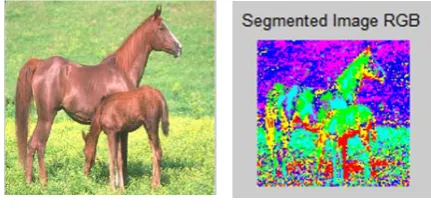
In this section, experimental results on real images are described in detail. In these experiments, the number of different types of object elements in each image from manual analysis was considered as the number of clusters to be referenced. The Xie-Beni index value has been utilized throughout to evaluate the quality of the classification for all algorithms. All experiments were implemented on PC with 1.8GHz Pentium IV processor using MATLAB (version9.0).
[image:2.595.315.531.529.638.2]
(c) Segmented in HSV (d) Segmented in YUV
(e) Segmented in Lab (f) Segmented in YCC
[image:3.595.53.264.69.402.2](g) Segmented in XYZ (h) Segmented in CMYK
Table 1. Segmentation Time for different Color Models of the Image: Corel - 744
Color Model Time in Sec
RGB 47.849976
HSV 30.783493
YUV 35.007284
LAB 49.635199
XYZ 65.500038
YCC 64.521090
CMYK 31.921300
Fig 2. Segmentation Time for different Color Models
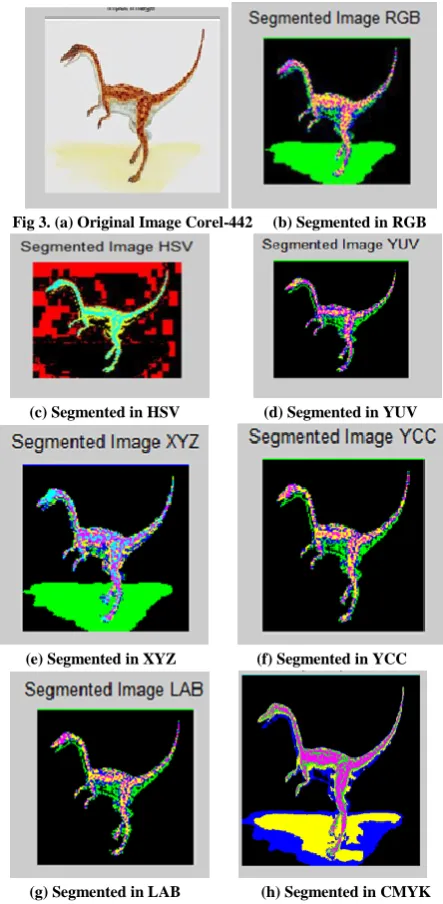
Fig 3. (a) Original Image Corel-442 (b) Segmented in RGB
(c) Segmented in HSV (d) Segmented in YUV
(e) Segmented in XYZ (f) Segmented in YCC
(g) Segmented in LAB (h) Segmented in CMYK
Table 2. Segmentation Time for different Color Models of the Image: Corel - 442
Color Model Time in Sec
RGB 44.641166
HSV 33.496686
YUV 51.033043
LAB 41.160160
XYZ 53.374113
YCC 42.118179
CMYK 39.482357
0
100
Ti
m
e
in
Sec
s
Color Models
Image segmentation in
different color models
[image:3.595.317.539.71.524.2] [image:3.595.49.293.428.678.2]Fig 4. Segmentation Time for different Color Models
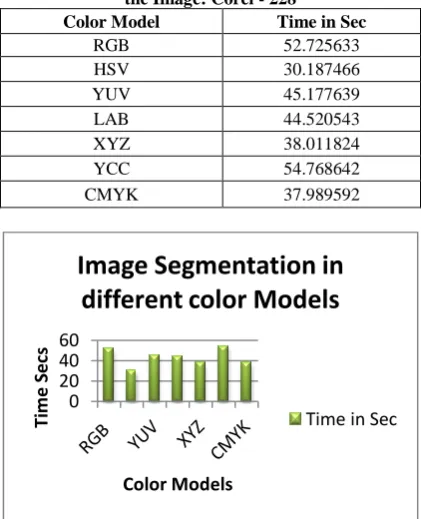
Fig 5. (a) Original Image Corel-228 (b) Segmented in RGB
(c) Segmented in HSV (d) Segmented in YUV
(e) Segmented in LAB (f) Segmented in XYZ
(g) Segmented in YCC (h) Segmented in CMYK
[image:4.595.323.534.102.362.2]Table 3. Segmentation Time for different Color Models of the Image: Corel - 228
Color Model Time in Sec
RGB 52.725633
HSV 30.187466
YUV 45.177639
LAB 44.520543
XYZ 38.011824
YCC 54.768642
CMYK 37.989592
[image:4.595.70.265.383.726.2]Fig 6. Segmentation Time for different Color Models
Table 4. Various Validity Indices for Iris Data set using Rough Fuzzy C Means Clustering with Euclidean distance
No of Clusters
DB index
Jaccard Index
Silhouette index
Rand index 2 1.1827 0.72886 0.61289 0.92886 3 1.1335 0.69586 0.55282 0.87973 4 0.85632 0.62817 0.42217 0.85423 5 0.76193 0.55673 0.4899 0.83884 6 0.75073 0.62719 0.3895 0.85351 7 0.52537 0.55544 0.46448 0.8511 8 0.40347 0.46883 0.33198 0.80555 9 0.35298 0.35674 0.34265 0.78523 10 0.27834 0.32514 0.20386 0.76653
Fig 7. Validity indices value based on the Clusters 0
20 40 60
RG
B
H
SV
YU
V
LAB XYZ YCC
CMY
K
Ti
m
e
in
Sec
Color Models
Image Segmentation in
different color Models
Time in Sec
0 20 40 60
Ti
m
e
S
e
cs
Color Models
Image Segmentation in
different color Models
Time in Sec
0 0.5 1 1.5
2 3 4 5 6 7 8 9 10
Inde
x
V
al
ue
No of Clusters 'C' RFCM with Euclidean distance
DB index
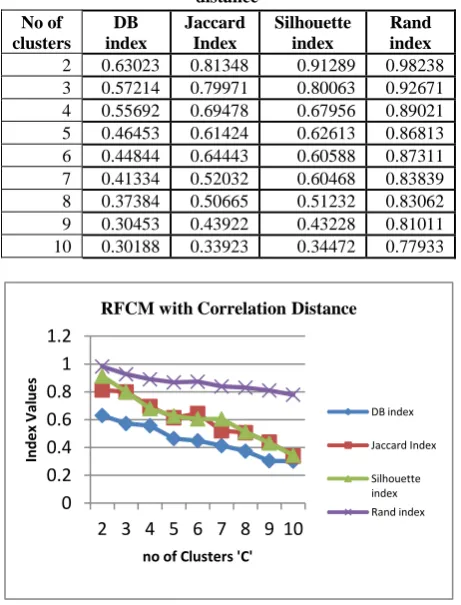
[image:4.595.316.544.407.695.2]Table 5. Various Validity Indices for Iris Data set using Rough Fuzzy C Means Clustering with Correlation
distance No of clusters DB index Jaccard Index Silhouette index Rand index 2 0.63023 0.81348 0.91289 0.98238 3 0.57214 0.79971 0.80063 0.92671 4 0.55692 0.69478 0.67956 0.89021 5 0.46453 0.61424 0.62613 0.86813 6 0.44844 0.64443 0.60588 0.87311 7 0.41334 0.52032 0.60468 0.83839 8 0.37384 0.50665 0.51232 0.83062 9 0.30453 0.43922 0.43228 0.81011 10 0.30188 0.33923 0.34472 0.77933
[image:5.595.53.284.103.406.2]Fig 8: Validity indices value based on the Clusters
Table 6. Various Validity Indices for Iris Data set using Dynamic Histogram based RFCM Clustering with
Euclidean distance No of Clusters DB index Jaccard Index Silhouette index Rand index 2 0.51842 0.54886 0.62283 0.57123 3 0.40561 0.52586 0.56283 0.54674 4 0.45632 0.49817 0.42217 0.49145 5 0.36193 0.45674 0.48553 0.43861 6 0.25073 0.35714 0.34952 0.39382 7 0.22536 0.32544 0.46234 0.32167 8 0.10356 0.23863 0.32784 0.23162 9 0.09218 0.15684 0.23265 0.19234 10 0.08834 0.12614 0.10386 0.11346
Fig 9: Validity indices value based on the Clusters
Table 7. Various Validity Indices for Iris Data set using Dynamic Histogram based RFCM Clustering with
Correlation distance No of Clusters DB index Jaccard Index Silhouette index Rand index 2 0.41845 0.54182 0.72478 0.61231 3 0.38745 0.42154 0.52314 0.56178 4 0.35123 0.49812 0.50012 0.49123 5 0.29654 0.38513 0.42378 0.41789 6 0.19643 0.24178 0.32167 0.38156 7 0.11262 0.19436 0.21378 0.31445 8 0.08934 0.21468 0.19236 0.29134 9 0.04623 0.09256 0.25618 0.19231 10 0.02674 0.10245 0.11673 0.09267
Fig 10: Validity indices value based on the Clusters
6.
CONCLUSION
The developed approach contributes a hybrid methodology, which integrates judiciously rough sets and fuzzy c-means algorithm. This formulation is geared towards maximizing the utility of both rough sets and fuzzy sets with respect to knowledge discovery tasks. The proposed method is applied on several real data sets from UCI Machine Learning Repository and Images from Corel, BSDS data set. Some of the cluster validity indices such as DB index, Rand index, silhouette index, and Jaccard index for evaluating the quality of the proposed algorithm are also considered. The effectiveness of the proposed algorithm is demonstrated, along with a comparison with other related algorithm like RFCM and proved better performer by considering various indices given. Experimental results shows that the proposed method perform well and improve the segmentation results in the vague areas of the image. The proposed algorithm proves that HSV and CMYK color images will give better segmentation results when compared with other color models.
7.
REFERENCES
[1] Skowron A., Stepaniuk,J. : Information granules in distributed environment. In: Zhong, N., Skowron, A., Ohsuga,S. . (eds.) RSFDGr C 1999.LNCS (LNAI) Vol. 1711, pp. 357–365. Springer, Heidelberg (1999).
[2] Wei Zhang, Yu-zhu Zhang, Cheng Li, “A new hybrid algorithm for image segmentation based on rough sets and enhanced fuzzy c-means clustering”, IEEE, International Conference on Automation and Logistics, August 2009. 0 0.2 0.4 0.6 0.8 1 1.2
2 3 4 5 6 7 8 9 10
Inde x V al ue s
no of Clusters 'C'
RFCM with Correlation Distance
DB index Jaccard Index Silhouette index Rand index 0 0.2 0.4 0.6 0.8
2 3 4 5 6 7 8 9 10
Inde x V al ue s
No of Clusters 'C'
HRFCM with Euclidean distance
DB index
Jaccard Index Silhouett e index Rand index 0 0.2 0.4 0.6 0.8
2 3 4 5 6 7 8 9 10
Inde x V al ue s
No of Clusters 'C'
HRFCM with Correlation distance
DB index
[image:5.595.55.282.461.735.2][3] Milinda M. Mushrif, Ajoy K. Ray, “Color image segmentation: Rough-set theoretic approach”, Pattern Recognition Letters, Elsevier, 2008
[4] S Mohapatra, D Patra, “Unsupervised Leukocyte Image Segmentation Using Rough Fuzzy Clustering”, ISRN Artificial Intelligence, 2012
[5] Hassanien, A. E., A. Abraham, J. F. Peters, G. Schaefer, and C. Henry. 2009. Rough sets and near sets in medical imaging: A review. IEEE Transactions on Information Technology in Biomedicine 13(6):955–968. Digital object identifier: 10.1109/TITB.2009.2017017.
[6] Beaubouef, Theresa, Frederick E Petry, and Gurdial Arora. 1998. Information-theoretic measures of uncertainity for rough sets and rough relational databases. Information Sciences 109(1-4):185–195.
[7] Martin, D.,C. Fowlkes, D. Tal, and J. Malik. 2001. A database of human segmented natural images and its application to evaluating segmentation algorithms and measing ecological statistics. In proceedings of the 8th
international conference on computer vision, vol. 2, 416– 423.
[8] Bhatt, R B, and M Gopal. 2004. Frid: fuzzy-rough interactive dichotomizers. In Proceedings of the ieee international conference on fuzzy systems, 1337–1342.
[9] N. Mac Parthalain, R. Jensen, and Q. Shen. Comparing Fuzzy -Rough and Fuzzy Entropy-assisted Fuzzy-Rough Feature Selection. Proceedings of the 6th Annual Workshop on Computational Intelligence (UKCI’06), 2006.
[10]Z.Bao, B.Han, and S. Wu. A novel clustering algorithm based on variable precision rough-fuzzy sets, Proceedings of the International conference on in-
telligent computing, ICIC 2006, Kunming, China, August 16-19, pp. 284-289, 2006.
[11]S. Asharaf and M.N. Murty. An adaptive rough fuzzy single pass algorithm for clustering large data sets, Pattern Recognition, vol. 36, no. 12, pp. 3015–3018, 2004.
[12]W.H. Au and K.C.C. Chan. An Effective Algorithm for Discovering Fuzzy Rules in Relational Databases. Proceedings of the 7th IEEE International Conference on Fuzzy Systems, pp. 1314–1319, 1998.
[13]Banerjee, M., Mitra, S., Pal, S. K.: Rough-Fuzzy MLP: Knowledge Encoding and Classification.
[14]S Mohapatra, D Patra, “Unsupervised Leukocyte Image Segmentation Using Rough Fuzzy Clustering”, ISRN Artificial Intelligence, 2012
[15]Jensen, R., Shen, Q.: Fuzzy-Rough Attribute Reduction with Application to Web Categorization, Fuzzy Sets and Systems, 141, 2004, 469–485.
[16]Krishnapuram, R., Keller, J. M.: A Possibilistic Approach to Clustering, IEEE Transactions on Fuzzy Systems, 1(2), 1993, 98–110.
[17]E.V.Reddy, Dr. E.S.Reddy “Image Segmentation using Rough set based Fuzzy K Means clustering algorithm”, Global Journals Inc, GJCST Volume 13 Issue-6 Version 1.0 ISSN : Online: 0975-4172 Print: 0975-4350
[18]E.V.Reddy, G.V.Suresh, Dr. E.S.Reddy “rough set analysis for uncertain data classification”, IEEE Explore, 2010.