S T U D Y P R O T O C O L
Open Access
Evaluating the optimal timing of surgical
antimicrobial prophylaxis: study protocol for a
randomized controlled trial
Edin Mujagic
1†, Tibor Zwimpfer
1†, Walter R Marti
2, Marcel Zwahlen
3, Henry Hoffmann
1, Christoph Kindler
4,
Christoph Fux
5, Heidi Misteli
1, Lukas Iselin
1, Andrea Kopp Lugli
6, Christian A Nebiker
1, Urs von Holzen
1,
Fabrizio Vinzens
1, Marco von Strauss
2, Stefan Reck
2, Marko Kraljevi
ć
1, Andreas F Widmer
7, Daniel Oertli
1,
Rachel Rosenthal
1and Walter P Weber
1*Abstract
Background:Surgical site infections are the most common hospital-acquired infections among surgical patients. The administration of surgical antimicrobial prophylaxis reduces the risk of surgical site infections . The optimal timing of this procedure is still a matter of debate. While most studies suggest that it should be given as close to the incision time as possible, others conclude that this may be too late for optimal prevention of surgical site infections. A large observational study suggests that surgical antimicrobial prophylaxis should be administered 74 to 30 minutes before surgery. The aim of this article is to report the design and protocol of a randomized controlled trial investigating the optimal timing of surgical antimicrobial prophylaxis.
Methods/Design:In this bi-center randomized controlled trial conducted at two tertiary referral centers in Switzerland, we plan to include 5,000 patients undergoing general, oncologic, vascular and orthopedic trauma procedures. Patients are randomized in a 1:1 ratio into two groups: one receiving surgical antimicrobial prophylaxis in the anesthesia room (75 to 30 minutes before incision) and the other receiving surgical antimicrobial prophylaxis in the operating room (less than 30 minutes before incision). We expect a significantly lower rate of surgical site infections with surgical antimicrobial prophylaxis administered more than 30 minutes before the scheduled incision. The primary outcome is the occurrence of surgical site infections during a 30-day follow-up period (one year with an implant in place). When assuming a 5% surgical site infection risk with administration of surgical antimicrobial prophylaxis in the operating room, the planned sample size has an 80% power to detect a relative risk reduction for surgical site infections of 33% when administering surgical antimicrobial prophylaxis in the anesthesia room (with a two-sided type I error of 5%). We expect the study to be completed within three years.
Discussion:The results of this randomized controlled trial will have an important impact on current international guidelines for infection control strategies in the hospital. Moreover, the results of this randomized controlled trial are of significant interest for patient safety and healthcare economics.
Trial registration:This trial is registered on ClinicalTrials.gov under the identifier NCT01790529.
Keywords:Randomized controlled trial, Surgical antimicrobial prophylaxis, Surgical site infection
* Correspondence:[email protected] †Equal contributors
1
Department of General Surgery, University Hospital of Basel, Spitalstrasse 21, 4031 Basel, Switzerland
Full list of author information is available at the end of the article
Background
The importance of surgical research for the prevention of surgical site infections
Surgical site infections (SSI) account for 14% to 16% of all nosocomial infections in hospitalized patients and are considered the most common form of nosocomial infec-tion among surgical patients [1]. Despite a variety of dif-ferent prevention measures, as many as 5% of all patients undergoing surgery develop SSI, which lead to additional morbidity and mortality [2-4]. Patients with SSI require a longer hospital stay, more nursing care, and often read-missions with additional surgery [5-8]. The combined additional direct and indirect costs of treating SSI are sub-stantial [9-12]. Hospitals are under pressure to reduce costs, and efforts to decrease the rate of SSI have there-fore become a matter of increasing interest for surgeons, operating room nurses, anesthesiologists, infection control professionals and healthcare epidemiologists [13]. Now-adays, SSI are considered to reflect the quality of care in a hospital, as they are potentially preventable complications directly linked to surgery. However, many of the current recommendations of the Centers for Disease Control and Prevention (CDC) and the World Health Organization are based on evidence from observational studies in the ab-sence of confirmatory trials [1,14].
Surgical antimicrobial prophylaxis
The introduction of routine surgical antimicrobial prophylaxis (SAP) was a breakthrough in the prevention of SSI [15]. Today, SAP is administered in surgical units on a daily basis. Based on evidence from observational and randomized controlled trials (RCT), there is wide-spread agreement for the use of SAP before all gastro-intestinal, oropharyngeal and gynecological procedures [15-23]. There is ongoing controversy about the use of SAP for‘clean’operations, in which the absolute number of infections is low and the number of administrations of SAP needed to prevent one infection is high. It is well accepted for the following clean surgeries, in which the consequence of any infection is severe: orthopedic pros-thesis placement, vascular surgery, open-heart surgery and neurosurgery procedures [24-33]. A reduction in in-fection rates is well documented for other clean opera-tions such as breast, varicose vein and herniorrhaphy procedures [34-38]. However, in these procedures the morbidity of the infection is generally low and the bene-fits of SAP must be balanced against its costs and pos-sible adverse effects.
Several antibiotics have been shown to reduce the inci-dence of SSI. Many hospitals, especially in the US, use very complex SAP regimes with a variety of antimicrobial drugs that have different pharmacokinetics depending on the type of surgery performed [15,16,39,40]. Current guidelines, however, suggest that single-shot administration of a
first-or second-generation cephalospfirst-orin is sufficient ffirst-or optimal prevention of SSI in the absence of high rates of resistant bacteria [41]. Due to a limited anaerobic activity of most cephalosporins, treatment is supplemented with metro-nidazole where indicated. The time interval to motivate redosing is generally set at four hours. Therefore, in sev-eral hospitals in Switzerland, including the University Hospital of Basel and the Hospital of Aarau, SAP consists of single-shot administration of cefuroxime (a second-generation cephalosporin), combined with metronidazole in colorectal and proctologic surgery, that is repeated in operations exceeding four hours.
When to administer surgical antimicrobial prophylaxis? Before the late 1960s, most prophylactic antibiotics were administered after the end of a surgical procedure and were found to be ineffective [42]. In 1961, Burke [43] showed the timing of SAP to be crucial in animals. Sub-sequent studies in humans suggested that adequate tis-sue levels of an appropriate antibiotic during surgery were essential [21,44-47]. The observational landmark study by Classen and colleagues [48] in 1992 provided the basis for the antimicrobial agents to be administered within two hours before skin incision. Other authors narrowed the optimal window for SAP to less than 60 minutes before skin incision [49,50]. Importantly, two large prospective studies observed the lowest risk of SSI when SAP was given within 30 minutes prior to incision, and the National Surgical Infection Prevention Project simply recommends administering SAP as close to the incision time as possible [51-53]. Similar statements are made in European guidelines [54,55].
Several recent studies of other antimicrobial agents with different pharmacokinetics support this hypothesis.In vivo microdialysis, for example, is a new development that al-lows the measurement of continuous unbound antibiotic concentrations in muscular and subcutaneous interstitial fluid during surgery. Hutschala et al. [59] described this in vivo approach of microdialysis to measure continuous tissue levels of cefazolin. Importantly, the authors state that ‘Cefazolin should be administered at least 60 mi-nutes before skin incision to guarantee for optimal tissue concentration at the beginning of surgery. Vast inter-individual differences were observed for the time required to reach maximum interstitial concentrations. So it seems reasonable to administer the prophylactic antibiotic as early as possible before skin incision’[59].
Two recent prospective observational studies of other antimicrobial agents with different pharmacokinetics are noteworthy [60,61]. In one, the administration of vanco-mycin 16 to 60 minutes before incision in coronary artery bypass surgery was associated with the lowest risk of SSI [60]. The other study showed that the rate of SSI after un-complicated open appendectomy is lower when the anti-biotic is administered more than one hour versus one hour or less before surgery [61]. Finally, the results of an observational cohort study performed at the University Hospital of Basel suggest that the ideal timing of SAP is between 74 and 30 minutes before skin incision [62].
Relevant ongoing research
As of 27 January 2014, there were 198 studies on‘surgical site infection AND prevention’ or ‘surgical site infection AND prophylaxis’- excluding the present one - registered on ClinicalTrials.gov, 88 of which were open. There were 122 studies found using the terms ‘surgical site infection AND antibiotic’, all of which were covered by the above search criteria. Finally, there were 75 studies found using ‘surgical site infection AND prophylaxis AND antibiotic’.
None of these 198 studies investigates the incidence of SSI as a function of SAP timing. Instead, most of them as-sess the impact of multiple SSI prevention measures on the risk of SSI, such as nasal decontamination, surgical hand antisepsis, preoperative patients’skin cleansing, hair clipping, supplemental oxygen, local warming and antibac-terial sutures. Some studies focus on different aspects of SAP, such as the overall efficacy of different types, doses, durations or ways of applications of SAP in specific subsets of patients, others assess the impact of quality improve-ment programs on compliance with current guidelines.
In summary, SSI are frequent surgical complications that have an important impact on healthcare costs. SAP prevents SSI and has therefore become a main stem of surgical infection control in many surgical interventions. Current guidelines for the correct timing of SAP,
however, are still based on observational and pharmacoki-netic studies. Such studies have recently achieved discord-ant results. A well-conducted RCT seems warrdiscord-anted to obtain a clear answer on the optimal timing. There is currently no ongoing or planned trial registered on Clin-icalTrials.gov to address this question. The use of a single-shot single-drug SAP regime at two tertiary referral centers in Switzerland provides an ideal setting to plan and conduct an RCT on the optimal timing of SAP.
Current state of own research in the field
In a quality assessment study conducted at the University Hospital of Basel, we prospectively followed 6,283 consecu-tive general, oncologic, vascular and orthopedic trauma surgery procedures closely for evidence of SSI, and then analyzed the dataset for the influence of various SSI risk factors. Thea priorihypothesis of this study was that the timing of SAP had a significant impact on the occurrence of SSI. The lowest rates of SSI were observed with the anti-biotics being administered between 74 and 30 minutes before surgery, and the association remained virtually unchanged when controlling for patient and procedural risk factors for SSI [62].
Within that cohort study, a matched case-control study was conducted on the economic impact of in-hospital SSI at the University Hospital of Basel. The mean additional hospital cost per SSI was 19,638 CHF (95% confidence interval 8,492 to 30,784 l) or 12,765 Euro (95% confidence interval 5,520 to 20,010) [63]. Fur-ther analyses of this cohort study suggest that glove per-foration is associated with an increased SSI risk in the absence of SAP, but show no statistically significant asso-ciations between transfusion, anemia or tutorial assist-ance and the risk of SSI [64-66]. A review of the microbiological features of SSI in this series demon-strates the absence of multiresistant germs and validate the continuous use of single-shot single-drug SAP with cefuroxime (plus metronidazole in colorectal and proc-tologic surgery) [67]. Finally, a secondary analysis has been conducted to assess the sensitivity of our clinicians SSI surveillance system to register in-hospital SSI [68].
Aims
Methods/Design Study design and sites
This bi-center prospective RCT is being conducted at the University Hospital of Basel and the Hospital of Aarau, two tertiary referral centers in Switzerland. The trial has been registered on ClinicalTrials.gov under the identifier NCT01790529.
Patients
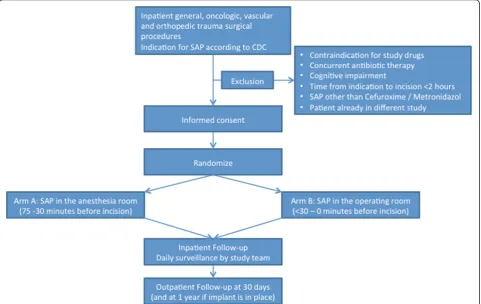
Eligible patients are informed about the study by a mem-ber of the surgical team and receive a patient information sheet explaining the rationale and procedures of the study. The information sheet is available in Albanian, English, French, German, Italian, Portuguese, Serbo-Croatian, Spanish and Turkish. Patient information and recruitment is continuously assisted and supported by members of the study team. Written informed consent is obtained from each patient prior to randomization (Figure 1).
Inclusion criteria
Inpatients aged 18 years or older undergoing general, oncologic, vascular and orthopedic trauma procedures with an indication for SAP according to clinical stan-dards are eligible for this study.
Clinical standards for SAP administration are based on CDC guidelines for surgical wound classification as fol-lows: class I (clean) involving an implant (for example, hernia mesh repair and trauma surgery), and most major vascular and breast surgery procedures; class II (clean-contaminated) procedures (for example, colorectal, small intestinal, gastroesophageal and biliary surgery); and class III (contaminated) procedures when the source of infection is surgically removed, obviating the need for xantibiotic therapy (for example, surgery for uncompli-cated appendicitis, cholecystitis) [1]. SAP is not indiuncompli-cated for CDC class IV (dirty-contaminated) wounds. This wound class suggests that the organisms causing postop-erative infection were present in the oppostop-erative field before the operation, and patients are frequently receiving thera-peutic antimicrobial agents perioperatively for established infections. Therefore, neither the term SAP nor the term SSI is correct in such procedures.
Exclusion criteria
Patients are excluded on the following bases:
Outpatient surgery
[image:4.595.58.540.409.713.2]Contraindication for study drugs, in particular penicillin type I allergy
Pre-existing antibiotic therapy within 14 days of surgery
Any doubt that the patient can make the decision to participate fully informed because of cognitive impairment, such as in critically ill patients or those with dementia
Combined operations between general, oncologic, vascular or orthopedic trauma surgery with other surgical disciplines not participating in this trial
Indication for SAP other than cefuroxime and/or metronidazole
Patients who have already been included in other interventional studies, unless specific permission has been granted in accordance with local ethics committee guidelines
Emergency procedures with planned incision within two hours after the surgeon indicated the procedure.
In the case of the latter criterion, emergency proce-dures within two hours may not allow proper patient in-formation and randomization and we want to exclude any risk that the procedure could be delayed by partici-pation in this study. Patients scheduled for less urgent but non-elective procedures with planned incision more than two hours after the time of indication are eligible for participation in this study since evidence for the cor-rect timing of SAP in such procedures is needed and cannot simply be deduced from elective procedures. Thus, the results of this trial potentially have an impact on the prevention of SSI in patients undergoing such procedures in the future. However, if obtaining appropri-ate informed consent is jeopardized by the urgency of the procedure, the patient will be excluded and data on the reason for individual exclusion will be collected.
Randomization and intervention
After written informed consent is obtained from eligible patients, they are randomized electronically and strati-fied by hospital, according to pre-existing randomization lists. Randomization results are presented both electron-ically and printed to the anesthesiologist responsible for SAP administration. Patients are randomized in a 1:1 ra-tio to have SAP administered in the anesthesia room, which is located next to the actual operating room (arm A), versus in the operating room itself (arm B). Patients in arm A receive the antibiotics between arrival in the anesthesia room and transfer to the operating room, cor-responding to the time window of 75 to 30 minutes be-fore the scheduled incision. Patients in arm B receive the antibiotics between arrival in the operating room and the time of incision, corresponding to the time window of less than 30 minutes to 0 minutes before the sched-uled incision, preferably as close to the incision time as possible. SAP is administered by the anesthetic team to
all patients via single-shot, intravenous infusion of 1.5 g or 3 g for patients ≥80 kg of cefuroxime in 100 ml of a 0.9% sodium chloride solution within 5 minutes and is combined with metronidazole (500 mg or 1,000 mg for patients ≥80 kg intravenous infusion, within 5 minutes) in colorectal patients, who receive no additional intra-luminal antibiotics. Hence, the duration of the infusion is highly standardized. The anesthesiologist or anesthetic nurse who administers SAP records the exact time at which the infusion starts. Until 29 April 2013, corre-sponding to the inclusion of the first 221 patients, we in-stead recorded the time that the infusion ended. We had to make this amendment for feasibility reasons after consulting several opinion leaders in the field and the corresponding literature, and confirming that the stand-ard in the US is to report when the infusion starts. In operations that last more than four hours, SAP is re-administered every four hours after the first dose ac-cording to clinical standards. In patients with impaired renal function, this re-dose will be adapted according to the creatinine clearance.
Study endpoints
The primary endpoint of this study is the occurrence of any SSI within 30 days after surgery (within one year after implant surgery). SSI are defined as incisional (either superficial or deep) infection or organ-space infection ac-cording to CDC criteria [1]. Superficial incisional SSI in-volve skin and subcutaneous tissues only, common stitch mini-abscesses are excluded; deep incisional infections volve fascia and muscle; and organ-space infections in-volve any organ or space other than the incised layer of body wall that was opened or manipulated during surgery. The operating surgeon, his team and ward residents, and the patients are unaware of assignments to treat-ment groups and are therefore blinded for treattreat-ment al-location. The operating surgeon and his team perform routine wound surveillance according to clinical stan-dards including diagnosis and treatment of SSI. The resi-dent in charge of the patient on the ward is responsible for registration of SSI, cross-checked by the attending surgeon in charge. In addition, inpatients are seen regu-larly by members of the study team. This ensures appro-priate sensitivity to detect in-hospital events. Clinicians are not allowed to overrule study team members in arbi-trary situations about diagnosing of SSI.
clinically relevant microbiological samples are cultured as needed, and the patient receives standard treatment. Whenever the telephone assessment suggests past SSI, primary care physicians are contacted and outpatient charts reviewed to gain additional information for val-idation of the event as described below.
In case of implant surgery, an additional monitoring assessment is performed one year after surgery, covering the mandatory follow-up period of one year as defined by CDC [1].
To ensure appropriate specificity, all cases of SSI are validated by a board certified infectious disease specialist who is blinded for the intervention, based on a compre-hensive review of patient history, clinical findings, microbiology results and follow-up data.
Secondary endpoints of this study are all-cause 30-day mortality and length of hospital stay. In addition, we plan to evaluate the SSI-related economic burden in a matched case-control study nested within this RCT.
Patient and procedure characteristics
The selection of demographics and assessment of pa-tients’ health profiles are in accordance with the design used in our observational study [62], including all rele-vant patient characteristics, as well as preoperative la-boratory values and factors that might influence wound healing. These involve, but are not limited to, American Society of Anesthesiologists (ASA) score, number of co-morbidities on admission, smoking status, diabetes mel-litus, immunosuppressive drugs, body mass index, preoperative albumin, wound class, type and duration of surgery, experience of the surgical team, surgical spe-cialty, intraoperative core temperature, adherence to aseptic technique, and emergency procedure. The Study on the Efficacy of Nosocomial Infection Control and the National Nosocomial Infections Surveillance System (NNIS) SSI risk indices are based on some of these vari-ables and will be calculated for each patient.
Study management and administration
Data management and monitoring is supported by the Clinical Trial Unit of the University Hospital of Basel. Source data of every study participant are entered into an electronic data capturing system (eOPPS/ISOP; Protec-Data AG, Boswil, Switzerland) and secondarily transferred into the study data management system SecuTrial® (inter-Active Systems GmbH, Berlin, Germany).
Quality control measures
Monitoring
Continuous central and on-site monitoring of the study is performed by the Clinical Trial Unit for quality con-trol and assurance purposes; to evaluate the progress of the study; to verify the accuracy and completeness of
case report forms (CRFs) ; to ensure that all protocol re-quirements are met, and all applicable local authority regulations and investigator’s obligations are being ful-filled; and to resolve any inconsistency in the study re-cords. Monitoring will consist of one initiation visit (12 hours), two monitoring visits (two days each) per year and one close-out visit (12 hours) each per center.
Sample size considerations and statistical analyses
Sample size consideration
We base our sample size consideration on the planned 1:1 ratio between the two groups of patients (SAP ad-ministered 75 to 30 minutes (arm A) versus less than 30 minutes to 0 minutes (arm B) before surgery), ac-cording to the results of our observational study con-ducted in the years 2000 to 2001 at the University Hospital of Basel [62]. In this study, an average SSI rate of 4.7% in 3,836 general, oncologic, vascular and ortho-pedic trauma surgery procedures was observed. This rate varied between 4.7% and 6.8% with SAP given between 29 and 0 minutes before incision, and between 2.4% and 3.4% with SAP given 75 to 30 minutes prior to incision. The main scenario for sample size calculations was that administration of SAP 75 to 30 minutes before surgery (in the anesthesia room) will result in a 33% relative re-duction of SSI risk and that SAP administration less than 30 minutes before surgery (in the operating room) will result in a SSI rate of 5%. We therefore plan to randomize 5,000 patients in a 1:1 ratio, thus resulting in two groups of 2,500 patients each. Sample size calcula-tions were conducted using the ‘sampsi’ command of Stata Software Version 11 with a power of 80% and a two-sided type I error of 5%.
Statistical analyses
In order to analyze the difference in SSI occurrence be-tween the two timing groups, logistic regression models will be used with the treatment group as the main expos-ure variable. The main analysis will be an intention-to-treat analysis. In secondary analyses, the logistic regression model will include the following known and suspected baseline risk factors for SSI: wound classification, ASA score, NNIS score, age, body mass index categories, pres-ence of diabetes, smoking status, adherpres-ence to aseptic technique, and experience of the surgical team.
Descriptive analyses will show the difference in the distribution of exact timing by randomization group and further analyses will focus on the detailed association of the exact timing of SAP with SSI risk. These latter ana-lyses will be of observational character.
Interim analysis
One interim analysis is planned after 2,500 patients. For this interim analysis, the outcome will be 30-day SSI risk. Decisions to stop will be taken using a fully prob-abilistic approach [69]. Briefly, we will calculate the pre-dictive probability to obtain a statistically significant difference between the two arms at the end of the study. If this predictive probability is less than 5%, we will stop the trial for futility. For illustration, this will occur if the observed risk ratio in the interim analysis (SAP in anesthesia room versus SAP in operating room) is exactly 1 with 100 SSI in both study arms with 1,250 pa-tients per arm. After 2,500 papa-tients, this would result in an estimate of the risk ratio of 1 with a 95% confidence interval from 0.77 to 1.31. The predictive probability to obtain a statistically significant difference (P <0.05) be-tween the two arms is 4.6% at the end of the study (that is, after the next 2,500 patients in both arms) and thus the trial would be stopped for futility. If the predictive probability to obtain a P-value of less than 4.5% at the end of the study is more (or equal) than 95%, we will stop the trial early for benefit. If not stopped early for superiority, the study continues to full length and a P -value of less than 4.5% is necessary to call a final result statistically significant. The overall type I error for this superiority stopping rule is 4.9% and was estimated using simulations of the scenario of identical SSI risk in two study arms of 5%.
Ethical considerations
Participation in this trial is strictly voluntary, and pa-tients are allowed to exit the trial at any point without explanation. All eligible patients are provided an mation sheet describing the study with sufficient infor-mation for them to make an informed decision about their participation in this study. In addition, patients will be informed in detail directly by members of the study team. Patients will be excluded if receipt of adequate in-formed consent is jeopardized by cognitive impairment or the urgency of the procedure.
The study protocol, patients’ information sheets and informed consents and their translations were approved by the two respective local ethics committees (‘ Ethik-kommission beider Basel’and ‘Kantonale Ethikkommis-sion Kanton Aargau’). Moreover, insurance coverage of general liability has been obtained by both study centers. Patients who decline to participate in this study are treated according to clinical standards. This includes the
administration of SAP in one of the two timing categor-ies. However, these patients will not be included and no study-specific follow-up will be performed.
Participants’confidentiality
The participants’confidentiality is maintained at all times. For confidentiality reasons, CRFs must not contain any personal data of study participants. Personnel from the sponsor and regulatory authorities and members of the ethics committees are obliged to respect confidentiality and to refrain from divulging the participants’identity or any other personal information they might be aware of. Source data in the hospital’s electronic patient information systems are secured by personal passwords and handled with respect to medical secrecy.
Archiving and data retention
The investigator will maintain all study-related records, such as CRFs, medical records, laboratory reports, in-formed consent documents, safety reports, information regarding participants who discontinued, and other per-tinent data. All records are to be retained by the investi-gator as long as required by the applicable laws and regulatory requirements (10 years). Thereafter, all data will be destroyed.
The only parameters exclusively acquired for study purposes are the result of randomization and whether the 30-day follow-up (one year if an implant is in situ) has been performed or not.
The study is conducted in compliance with this proto-col and according to Good Clinical Practice standards as well as legal regulations.
Discussion
There is abundant literature on SAP and its benefits. However, this is the first RCT addressing the issue of exact timing of SAP. Therefore, the aim of this RCT is to provide level I evidence for optimal SAP timing, which will eventually lead to an appropriate high-grade recommendation. The results of this RCT will poten-tially have an important impact on current international guidelines for this universal infection control strategy and their implementation is highly likely to reduce SSI rates all over the world.
Nowadays, SSI are considered to reflect the quality of care in a hospital, as they are potentially preventable complications directly linked to surgery. SSI are a major cause of surgical patient morbidity and mortality, and the results of this RCT may translate into a significant improvement of patient safety in the future.
been presented previously [63]. Hence, this RCT has the potential to become a matter of significant intere-st in terms of national and international healthcare economics.
Trial status
The trial including all respective documents was ap-proved by both local ethics committees by July 2012. The core study team members including study nurses were recruited and trained by November 2012. Anesthe-siologists who administer SAP were trained in January 2013. The initiation visit by the Clinical Trial Unit took place in February 2013. The first patient was randomized at the University Hospital Basel on 21 February 2013. As of 18 February 2014, 1,492 patients have been random-ized at the University Hospital Basel.
Patient recruitment at the second study center, the Hos-pital Aarau, started on 7 August 2013. As of 18 February 2014, 609 patients have been randomized. In total, the study centers have randomized 2,101 patients as of 18 February 2013.
We expect to enroll the calculated sample size of 2,500 patients per intervention arm (5,000 patients total) within a two to three year time period at the two study sites. This is realistic as both hospitals together perform more than 10,000 general, oncologic, vascular and ortho-pedic trauma surgery procedures per year, of which about two thirds include SAP.
Post-discharge follow-up extends the study period for 30 days after the last patient undergoes surgery (one year if an implant is in place). Thorough data cleaning and validation of registered SSI by board certified infec-tious disease specialists occur continuously during the study period and will be completed soon thereafter.
Abbreviations
ASA:American Society of Anesthesiologists; CDC: Centers for Disease Control and Prevention; CRF: case report form; NNIS: National Nosocomial Infections Surveillance System; RCT: randomized controlled trial; SAP: surgical antimicrobial prophylaxis; SSI: surgical site infection.
Competing interests
The authors declare that they have no competing interests.
Authors’contributions
EM is responsible for the setting up and coordination of the study as well as patient recruitment and data acquisition in Basel. He drafted this manuscript. He obtained funding for this trial. He has revised this manuscript critically for important intellectual content and given final approval of this final version. He agrees to be accountable for all aspects of the work in ensuring that questions related to the accuracy or integrity of any part of the work are appropriately investigated and resolved. TZ is responsible for data acquisition and follow up and he drafted this manuscript. He has revised this
manuscript critically for important intellectual content and given final approval of this final version. He agrees to be accountable for all aspects of the work in ensuring that questions related to the accuracy or integrity of any part of the work are appropriately investigated and resolved. WRM participated in the conception and design of the study. He participated in drafting this manuscript. He is responsible for the coordination of the study as well as patient recruitment in Aarau. He obtained funding for this trial. He
has revised this manuscript critically for important intellectual content and given final approval of this final version. He agrees to be accountable for all aspects of the work in ensuring that questions related to the accuracy or integrity of any part of the work are appropriately investigated and resolved. MZ participated in the conception and design of the study. He participated in drafting this manuscript. He is responsible for all analysis and
MK is part of the data acquisition team and participates in patient follow up in Basel. He has revised this manuscript critically for important intellectual content and given final approval of this final version. He agrees to be accountable for all aspects of the work in ensuring that questions related to the accuracy or integrity of any part of the work are appropriately investigated and resolved. AFW is responsible for the validation of all SSI and data acquisition in Basel. He has revised this manuscript critically for important intellectual content and given final approval of this final version. He agrees to be accountable for all aspects of the work in ensuring that questions related to the accuracy or integrity of any part of the work are appropriately investigated and resolved. DO participated in the conception and design of this trial and is responsible for all legal and ethical concerns of this study in Basel. He obtained funding for this trial. He has revised this manuscript critically for important intellectual content and given final approval of this final version. He agrees to be accountable for all aspects of the work in ensuring that questions related to the accuracy or integrity of any part of the work are appropriately investigated and resolved. RR participated in the design and conception of this trial and drafting this manuscript. She is responsible for trial methodology and coordination. She obtained funding for this trial. She has revised this manuscript critically for important intellectual content and given final approval of this final version. She agrees to be accountable for all aspects of the work in ensuring that questions related to the accuracy or integrity of any part of the work are appropriately investigated and resolved. WPW initiated, designed and concepted this study. He is the principal investigator and responsible for overall study coordination. He drafted this manuscript. He obtained funding for this trial. He has revised this manuscript critically for important intellectual content and given final approval of this final version. He agrees to be accountable for all aspects of the work in ensuring that questions related to the accuracy or integrity of any part of the work are appropriately investigated and resolved. All authors read and approved the final manuscript.
Authors’information
Our team has extensive experience in SSI prevention and control. We have published several observational and interventional studies in high-impact journals in this field [62-68]. The hypothesis to be tested in this RCT originates from the results of our prospective observational study [62], although others have published results that differ from ours.
Acknowledgements
This work is supported by the research grant 32003B_138467/1 from the Swiss National Science Foundation. In addition, grants from private foundations (Gottfried und Julia Bangerter-Rhyner-Stiftung, Nora van Meeuwen-Haefliger-Stiftung, Hippocrate Stiftung), the University Hospital of Basel, the University of Basel and the Hospital of Aarau have been obtained. No industry funding has been obtained. We thank these public and private funding agencies that support this trial financially. We state that they have no influence on the conductance of this trial and on any decision on publication. We also thank all of the study nurses in both study centers for their invaluable contribution towards the successful conduction of this study.
Author details
1
Department of General Surgery, University Hospital of Basel, Spitalstrasse 21, 4031 Basel, Switzerland.2Department of General Surgery, Hospital of Aarau,
Tellstrasse, 5000 Aarau, Switzerland.3Institute of Social and Preventive Medicine, University of Bern, Finkenhubelweg 11, 3012 Bern, Switzerland.
4
Department of Anesthesiology, Hospital of Aarau, Tellstrasse 15, 5001 Aarau, Switzerland.5Department of Infectious Diseases, Hospital of Aarau, Tellstrasse
15, 5001 Aarau, Switzerland.6Department of Anesthesiology, University Hospital Basel, Spitalstrasse 21, 4031 Basel, Switzerland.7Department of
Infectious Diseases, University Hospital Basel, Spitalstrasse 21, 4031 Basel, Switzerland.
Received: 28 February 2014 Accepted: 7 May 2014 Published: 24 May 2014
References
1. Mangram AJ, Horan TC, Pearson ML, Silver LC, Jarvis WR:Guideline for prevention of surgical site infection, 1999. Hospital Infection Control
Practices Advisory Committee.Infect Control Hosp Epidemiol1999,
20:250–278. quiz 279–280.
2. Coello R, Charlett A, Wilson J, Ward V, Pearson A, Borriello P:Adverse impact of surgical site infections in English hospitals.J Hosp Infect2005,
60(2):93–103.
3. Coskun D, Aytac J, Aydinli A, Bayer A:Mortality rate, length of stay and extra cost of sternal surgical site infections following coronary artery bypass grafting in a private medical centre in Turkey.J Hosp Infect2005,
60(2):176–179.
4. Kirkland KB, Briggs JP, Trivette SL, Wilkinson WE, Sexton DJ:The impact of surgical-site infections in the 1990s: attributable mortality, excess length of hospitalization, and extra costs.Infect Control Hosp Epidemiol1999,
20(11):725–730.
5. Jenney AW, Harrington GA, Russo PL, Spelman DW:Cost of surgical site infections following coronary artery bypass surgery.ANZ J Surg2001,
71(11):662–664.
6. McGarry SA, Engemann JJ, Schmader K, Sexton DJ, Kaye KS:Surgical-site infection due toStaphylococcus aureusamong elderly patients: mortality, duration of hospitalization, and cost.Infect Control Hosp Epidemiol2004,
25(6):461–467.
7. Ortona L, Federico G, Fantoni M, Pallavicini F, Ricci F, Antinori A:A study on the incidence of postoperative infections and surgical sepsis in a university hospital.Infect Control1987,8(8):320–324.
8. Vegas AA, Jodra VM, Garcia ML:Nosocomial infection in surgery wards: a controlled study of increased duration of hospital stays and direct cost of hospitalization.Eur J Epidemiol1993,9(5):504–510.
9. Engemann JJ, Carmeli Y, Cosgrove SE, Fowler VG, Bronstein MZ, Trivette SL, Briggs JP, Sexton DJ, Kaye KS:Adverse clinical and economic outcomes attributable to methicillin resistance among patients withStaphylococcus
aureussurgical site infection.Clin Infect Dis2003,36(5):592–598. 10. Hollenbeak CS, Murphy DM, Koenig S, Woodward RS, Dunagan WC, Fraser
VJ:The clinical and economic impact of deep chest surgical site infections following coronary artery bypass graft surgery.Chest2000,
118(2):397–402.
11. Poulsen KB, Bremmelgaard A, Sorensen AI, Raahave D, Petersen JV:
Estimated costs of postoperative wound infections. A case-control study of marginal hospital and social security costs.Epidemiol Infect1994,
113(2):283–295.
12. Whitehouse JD, Friedman ND, Kirkland KB, Richardson WJ, Sexton DJ:The impact of surgical-site infections following orthopedic surgery at a community hospital and a university hospital: adverse quality of life, excess length of stay, and extra cost.Infect Control Hosp Epidemiol2002,
23(4):183–189.
13. Yasunaga H, Ide H, Imamura T, Ohe K:Accuracy of economic studies on surgical site infection.J Hosp Infect2007,65(2):102–107.
14. World Health Organization:Objective 6: The team will consistently use methods known to minimize the risk for surgical site infection.InSafe Surgery Saves Lives: WHO Guidelines for Safe Surgery 2009.Geneva: WHO; 2009. 15. Dellinger EP, Gross PA, Barrett TL, Krause PJ, Martone WJ, McGowan JE Jr,
Sweet RL, Wenzel RP:Quality standard for antimicrobial prophylaxis in surgical procedures. Infectious Diseases Society of America.Clin Infect Dis
1994,18(3):422–427.
16. Page CP, Bohnen JM, Fletcher JR, McManus AT, Solomkin JS, Wittmann DH:
Antimicrobial prophylaxis for surgical wounds. Guidelines for clinical care.Arch Surg1993,128(1):79–88.
17. Clarke JS, Condon RE, Bartlett JG, Gorbach SL, Nichols RL, Ochi S:
Preoperative oral antibiotics reduce septic complications of colon operations: results of prospective, randomized, double-blind clinical study.Ann Surg1977,186(3):251–259.
18. Nygaard K, Hognestad J:Infection prophylaxis with doxycycline in colorectal surgery. A preliminary report.Scand J Gastroenterol Suppl1980,
59:37–39.
19. Baum ML, Anish DS, Chalmers TC, Sacks HS, Smith H Jr, Fagerstrom RM:
A survey of clinical trials of antibiotic prophylaxis in colon surgery: evidence against further use of no-treatment controls.N Engl J Med1981,
305(14):795–799.
20. Stone HH, Haney BB, Kolb LD, Geheber CE, Hooper CA:Prophylactic and preventive antibiotic therapy: timing, duration and economics.Ann Surg
1979,189(6):691–699.
22. Pories WJ, Van Rij AM, Burlingham BT, Fulghum RS, Meelheim D:
Prophylactic cefazolin in gastric bypass surgery.Surgery1981,
90(2):426–432.
23. Chodak GW, Plaut ME:Use of systemic antibiotics for prophylaxis in surgery: a critical review.Arch Surg1977,112(3):326–334.
24. Kaiser AB, Clayson KR, Mulherin JL Jr, Roach AC, Allen TR, Edwards WH, Dale WA:Antibiotic prophylaxis in vascular surgery.Ann Surg1978,
188(3):283–289.
25. Hasselgren PO, Ivarsson L, Risberg B, Seeman T:Effects of prophylactic antibiotics in vascular surgery. A prospective, randomized, double-blind study.Ann Surg1984,200(1):86–92.
26. Fong IW, Baker CB, McKee DC:The value of prophylactic antibiotics in aorta-coronary bypass operations: a double-blind randomized trial.
J Thorac Cardiovasc Surg1979,78(6):908–913.
27. Austin TW, Coles JC, Burnett R, Goldbach M:Aortocoronary bypass procedures and sternotomy infections: a study of antistaphylococcal prophylaxis.Can J Surg1980,23(5):483–485.
28. Geraghty J, Feely M:Antibiotic prophylaxis in neurosurgery. A randomized controlled trial.J Neurosurg1984,60(4):724–726. 29. Barker FG 2nd:Efficacy of prophylactic antibiotic therapy in spinal
surgery: a meta-analysis.Neurosurgery2002,51(2):391–400. discussion 400–401.
30. Lidwell OM, Lowbury EJ, Whyte W, Blowers R, Stanley SJ, Lowe D:Infection and sepsis after operations for total hip or knee-joint replacement: influence of ultraclean air, prophylactic antibiotics and other factors.
J Hyg (Lond)1984,93(3):505–529.
31. Bullock R, Van Dellen JR, Ketelbey W, Reinach SG:A double-blind placebo-controlled trial of perioperative prophylactic antibiotics for elective neurosurgery.J Neurosurg1988,69(5):687–691.
32. Shapiro M, Wald U, Simchen E, Pomeranz S, Zagzag D, Michowiz SD, Samuel-Cahn E, Wax Y, Shuval R, Kahane Y:Randomized clinical trial of intra-operative antimicrobial prophylaxis of infection after neurosurgical procedures.J Hosp Infect1986,8(3):283–295.
33. Young RF, Lawner PM:Perioperative antibiotic prophylaxis for prevention of postoperative neurosurgical infections. A randomized clinical trial.
J Neurosurg1987,66(5):701–705.
34. Platt R, Zucker JR, Zaleznik DF, Hopkins CC, Dellinger EP, Karchmer AW, Bryan CS, Burke JF, Wikler MA, Marino SK:Perioperative antibiotic prophylaxis and wound infection following breast surgery.J Antimicrob Chemother1993,31:43–48.
35. Platt R, Zucker JR, Zaleznik DF, Hopkins CC, Dellinger EP, Karchmer AW, Bryan CS, Burke JF, Wikler MA, Marino SK:Prophylaxis against wound infection following herniorrhaphy or breast surgery.J Infect Dis1992,
166(3):556–560.
36. Platt R, Zaleznik DF, Hopkins CC, Dellinger EP, Karchmer AW, Bryan CS, Burke JF, Wikler MA, Marino SK, Holbrook KF:Perioperative antibiotic prophylaxis for herniorrhaphy and breast surgery.N Engl J Med1990,322(3):153–160. 37. Lewis RT, Weigand FM, Mamazza J, Lloyd-Smith W, Tataryn D:Should
antibiotic prophylaxis be used routinely in clean surgical procedures: a tentative yes.Surgery1995,118(4):742–746. discussion 746–747. 38. Yerdel MA, Akin EB, Dolalan S, Turkcapar AG, Pehlivan M, Gecim IE,
Kuterdem E:Effect of single-dose prophylactic ampicillin and sulbactam on wound infection after tension-free inguinal hernia repair with polypropylene mesh: the randomized, double-blind, prospective trial.
Ann Surg2001,233(1):26–33.
39. ABX Guide.http://www.hopkins-abxguide.org.
40. Antimicrobial prophylaxis in surgery.Med Lett Drugs Ther1997,
39:97–101.
41. Bratzler DW, Houck PM:Antimicrobial prophylaxis for surgery: an advisory statement from the National Surgical Infection Prevention Project.
Clin Infect Dis2004,38(12):1706–1715.
42. McKittrick LS, Wheelock FC Jr:The routine use of antibiotics in elective abdominal surgery.Surg Gynecol Obstet1954,99(3):376–377. 43. Burke JF:The effective period of preventive antibiotic action in
experimental incisions and dermal lesions.Surgery1961,50:161–168. 44. Stone HH, Hooper CA, Kolb LD, Geheber CE, Dawkins EJ:Antibiotic
prophylaxis in gastric, biliary and colonic surgery.Ann Surg1976,
184(4):443–452.
45. DiPiro JT, Vallner JJ, Bowden TA Jr, Clark BA, Sisley JF:Intraoperative serum and tissue activity of cefazolin and cefoxitin.Arch Surg1985,
120(7):829–832.
46. Friedman RJ, Friedrich LV, White RL, Kays MB, Brundage DM, Graham J:
Antibiotic prophylaxis and tourniquet inflation in total knee arthroplasty.
Clin Orthop Relat Res1990,260:17–23.
47. Martin C, Ragni J, Lokiec F, Guillen JC, Auge A, Pecking M, Gouin F:
Pharmacokinetics and tissue penetration of a single dose of ceftriaxone (1,000 milligrams intravenously) for antibiotic prophylaxis in thoracic surgery.Antimicrob Agents Chemother1992,36(12):2804–2807. 48. Classen DC, Evans RS, Pestotnik SL, Horn SD, Menlove RL, Burke JP:The
timing of prophylactic administration of antibiotics and the risk of surgical-wound infection.N Engl J Med1992,326(5):281–286. 49. Geroulanos S, Marathias K, Kriaras J, Kadas B:Cephalosporins in surgical
prophylaxis.J Chemother2001,1:23–26.
50. Vuorisalo S, Haukipuro K, Pokela R, Syrjälä H:Risk features for surgical-site infections in coronary artery bypass surgery.Infect Control Hosp Epidemiol
1998,19(4):240–247.
51. National Nosocomial Infections Surveillance (NNIS):System report, data summary from January 1992 through June 2004, issued October 2004.
Am J Infect Control2004,32(8):470–485.
52. Steinberg JP, Braun BI, Hellinger WC, Kusek L, Bozikis MR, Bush AJ, Dellinger EP, Burke JP, Simmons B, Kritchevsky SB, Trial to Reduce Antimicrobial Prophylaxis Errors (TRAPE) Study Group:Timing of antimicrobial prophylaxis and the risk of surgical site infections: results from the Trial to Reduce Antimicrobial Prophylaxis Errors.Ann Surg2009,
250(1):10–16.
53. Van Kasteren ME, Mannien J, Ott A, Kullberg BJ, de Boer AS, Gyssens IC:
Antibiotic prophylaxis and the risk of surgical site infections following total hip arthroplasty: timely administration is the most important factor.
Clin Infect Dis2007,44(7):921–927.
54. Vogel F, Naber KG, Wacha H, Shah P:Parenterale Antibiotika bei Erwachsenen.Chemother J1999,8:3–49.
55. Kujath P, Bouchard R, Scheele J, Esnaashari H:Neues in der perioperativen antibiotischen Prophylaxe.Chirurg2006,77:490–498.
56. Davies AJ, Lockley RM, Jones A, el-Safty M, Clothier JC:Comparative pharmacokinetics of cefamandole, cefuroxime and cephradine during total hip replacement.J Antimicrob Chemother1986,17(5):637–640. 57. Maier W, Strutz J:Concentration of cephalosporins in tissues of the head
and neck after parenteral infusion.Chemotherapy1995,41(6):421–426. 58. Alfter G, Schwenzer N, Friess D, Möhrle E:Perioperative antibiotic
prophylaxis with cefuroxime in oral-maxillofacial surgical procedures.
J Craniomaxillofac Surg1995,23(1):38–41.
59. Hutschala D, Skhirtladze K, Kinstner C, Mayer-Helm B, Müller M, Wolner E, Tschernko EM:In vivo microdialysis to measure antibiotic penetration into soft tissue during cardiac surgery.Ann Thorac Surg2007,
84(5):1605–1610.
60. Garey KW, Dao T, Chen H, Amrutkar P, Kumar N, Reiter M, Gentry LO:
Timing of vancomycin prophylaxis for cardiac surgery patients and the risk of surgical site infections.J Antimicrob Chemother2006,58(3):645–650. 61. Kasatpibal N, Norgaard M, Sorensen HT, Schønheyder HC, Jamulitrat S,
Chongsuvivatwong V:Risk of surgical site infection and efficacy of antibiotic prophylaxis: a cohort study of appendectomy patients in Thailand.BMC Infect Dis2006,6:111.
62. Weber WP, Marti WR, Zwahlen M, Misteli H, Rosenthal R, Reck S, Fueglistaler P, Bolli M, Trampuz A, Oertli D, Widmer AF:The timing of surgical antimicrobial prophylaxis.Ann Surg2008,247(6):918–926.
63. Weber WP, Zwahlen M, Reck S, Feder-Mengus C, Misteli H, Rosenthal R, Brandenberger D, Oertli D, Widmer AF, Marti WR:Economic burden of surgical site infections at a European university hospital.Infect Control Hosp Epidemiol2008,29(7):623–629.
64. Misteli H, Weber WP, Reck S, Rosenthal R, Zwahlen M, Fueglistaler P, Bolli MK, Oertli D, Widmer AF, Marti WR:Surgical glove perforation and the risk of surgical site infection.Arch Surg2009,144(6):553–558. discussion 558. 65. Rosenthal R, Weber WP, Zwahlen M, Misteli H, Reck S, Oertli D, Widmer AF,
Marti WR:Impact of surgical training on incidence of surgical site infection.World J Surg2009,33(6):1165–1173.
66. Weber WP, Zwahlen M, Reck S, Misteli H, Rosenthal R, Buser AS, Kaufmann M, Oertli D, Widmer AF, Marti WR:The association of preoperative anemia and perioperative allogeneic blood transfusion with the risk of surgical site infection.Transfusion2009,49(9):1964–1970.
67. Misteli H, Widmer AF, Rosenthal R, Oertli D, Marti WR, Weber WP:Spectrum of pathogens in surgical site infections at a Swiss university hospital.
68. Rosenthal R, Weber WP, Marti WR, Misteli H, Reck S, Dangel M, Oertli D, Widmer AF:Surveillance of surgical site infections by surgeons: biased underreporting or useful epidemiological data?J Hosp Infect2010,
75(3):178–182.
69. Berry SM, Carlin BP, Lee JJ, Muller P:Bayesian Adaptive Methods for Clinical Trials.Boca Raton, FL: Chapman & Hall/CRC Biostatistics Series; 2010. doi:10.1186/1745-6215-15-188
Cite this article as:Mujagicet al.:Evaluating the optimal timing of surgical antimicrobial prophylaxis: study protocol for a randomized controlled trial.Trials201415:188.
Submit your next manuscript to BioMed Central and take full advantage of:
• Convenient online submission
• Thorough peer review
• No space constraints or color figure charges
• Immediate publication on acceptance
• Inclusion in PubMed, CAS, Scopus and Google Scholar
• Research which is freely available for redistribution