© 2017, IRJET | Impact Factor value: 5.181 | ISO 9001:2008 Certified Journal | Page 276
PC to PC LASER Communication
Manureet Seehra
1,Anushka
2,Joohee Gupta
3, Anurag Bhushan Verma
41
Department of Electronics and Communication Engineering
IMS Engineering College, Ghaziabad
---***---Abstract -
This paper illustrates the concept of free spaceoptical communication in order to fabricate physical connections between two systems which have a line of sight arrangement, using serial communication for transfer of data. MAXIM Corporation’s IC MAX 232 is used, it needs only a single power supply of 5V (for TTL to RS-232 and vice-versa) level conversion and then an optical transmitter circuit is used to transmit data via fiber optic cable. There is a combination of laser and photodiode for transmitting and receiving the data respectively. We point the laser beam of transmitting module to fall on the photodiode of the receiving module connected to the other PC and vice-versa. The whole set up is kept in a dark box preferably black in color to avoid any reflection. The communication over the short distance of 2-3 m is possible using IR diodes. The range could be increased up to few meters, using the laser diode module in place of IR LEDs. The only need for fiber optic communication is felt because it is cheaper and corresponds to fewer losses.
Keywords: free space optical communication (FSO),
LASER, serial communication, photodiode.
1.INTRODUCTION
For several years the use of laser light has been merely for piping light around the dark corners or inaccessible places to allow the hidden objects to be seen, but now laser has evolved its use and its advantage in comparison to conventional coaxial cable or twisted wire pairs is manifold. It has evolved its use in field of telecommunication, by carrying information over larger distances. The laser light has less transmission losses and is not susceptible to electromagnetic interference. It is highly focused and due to its focusing nature it has various applications in the field of surgery. Today, lasers have become one of the world’s most efficient technologies and have found its use in industries ranging from information technology to telecommunications,
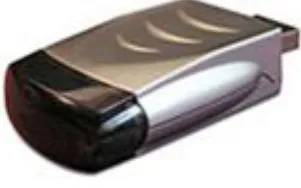
[image:1.595.343.494.390.484.2]medicine, consumer electronics, law enforcement, military equipment, entertainment and manufacturing. Furthermore the free space optical communication involves use of infrared laser light or LED. LED is used mainly for low data rate communication over short distance. The Infrared Data Association (IrDA) provides specifications for a complete set of protocols. Main feature of this type of wireless optical communication is physically securing data transfer, line-of-sight (LOS) and very low bit error rate (BER) that makes it very efficient.
Figure 1: IrDA via USB
2. OPERATION
In this project our main concern is to transmit data serially between two PCs placed at a distance. This can be achieved easily by fabricating the following parts-
1) Transformer. 2) Power supply 3) Rectifier 4) PCB
5) Schmitt trigger 6) MAX232 7) RS232 8) LASER 9) Photodiode
© 2017, IRJET | Impact Factor value: 5.181 | ISO 9001:2008 Certified Journal | Page 277
regulator, bridge or center tap rectifier and capacitor torectify the ripples. Since we can place the transmitter and receiver side at a distance we use two transformer and two power supply circuits. The MAX232 [1] IC is used to convert the logic from RS232 serial port [2] and transmit it over the PC. The Schmitt trigger is used to smoothen the wave pattern. The two PC’s can be installed with a software called Docklight which specializes in handling the RS232 serial port. The baud rate is set to 2400 for error free transmission and the setup of laser and photodiode always maintains line of sight.
2.1 POWER SUPPLY
The power supply circuit consists of bridge rectifier along with shunt capacitance filter and voltage regulator. The transformer is used to convert the 220V supply voltage to 12 V; this is done by using a step down transformer. The diodes are so arranged to form a bridge rectifier or a center tap rectifier in order to correct the waveform, further it has capacitor to remove the ripples and voltage regulator to transform the voltage level to 5V or 12V as per the need.
2.2 TRANSFORMER
The step up is connected to a transformer which is a device that transfers electrical energy from one circuit to another circuit without change in frequency. It is based on principle of electromagnetic induction [3] i.e. when current flows through a wire magnetic field id produced, and when a conductor passes through a magnetic field a current will flow.
There are three main parts in a transformer-
1) Primary winding: When this winding is connected to electrical source it takes electrical power as an input and produces magnetic flux.
2) Magnetic core: It is produced by primary winding and it creates a close magnetic circuit while passing through a low reluctance path linked with secondary winding.
3) Secondary winding: With the help of mutual induction in transformer this winding provides desired voltage as output.
By altering the number of windings on the primary and secondary coils, we can alter the amount of volts and amps between the source and the load.
Based on windings the transformer is of two types:
1) Step down Transformer: If there are more turns of wire on the primary coil than on the secondary coil, the output voltage will be lower than the input voltage.
2) Step up Transformer: If there are more turns of wire on the secondary coil than on the primary coil, the output voltage will be higher than the input voltage.
2.3 PCB DESIGN
The first step towards carrying out a particular experiment involves the designing of a printed circuit board. The layout can be graphically established by use of various applications such as DroidPCB, EveryCircuit etc. Once we have realized the desired layout it is essential to fabricate the PCB.
For fabricating a PCB we require:
1) Copper Clad Sheet 2) Nail Polish or Paint
3) Ferric Chloride Powder(FeCl) 4) Plastic Tray
Once the PCB has been obtained soldering of elements is done to obtain desired connections.
Advantages of PCB over Bread-board are:
1) We get a much higher density board with PCB.
2) The PCB design is more reliable than the one made on a bread board. The circuit looks neat without any wires popping up and does not fall apart.
3) There is precise control over the circuit component.
4) For production of large volume of circuit boards, the costs become less and the soldering can be done with the help of fully automated machines.
For PCB fabrication, some basic steps are:
1) PCB Etching Process 2) PCB Drilling
© 2017, IRJET | Impact Factor value: 5.181 | ISO 9001:2008 Certified Journal | Page 278
3. FREE SPACE OPTICAL COMMUNICATION
Free space refers to air, vacuum or outer space or an environment of similar traits. Free space optical communication [4] refers to a form of wireless communication which involves free space as a propagation medium for light to propagate. Generally free space optical communication is applied to places where it is impractical to fabricate physical connections; this can be due to various reasons such as high cost and labor.
There are various advantages of using free space optical communication, such as:
1) The arrangement is easy.
2) It is used to power a variety of devices.
3) It has long range of operation in contrast with the radio communication.
4) It has high bit rates and lower bit error rates. 5) It is immune to electromagnetic interference. 6) It has full duplex operation.
There are a few factors which limit its range, such as:
1) Beam dispersion. 2) Atmospheric absorption. 3) Rain.
4) Snow.
5) Interference from background light sources. 6) Pollution.
These factors lead to higher bit error rate because of an attenuated receiver signal. These factors can be overcome by implementing multi beam or multi path architectures involving more than on sender and receiver.
4. LASER
In the following project, we have used LASER as transmitting path between the two PC’s.
Laser is an acronym used for Light Amplification by stimulated emission of radiation. It emits light by the process called optical amplification based on stimulated emission. Laser works on three different mechanisms which are:
1) ABSORPTION: An atom in a lower level absorbs a photon of frequency hν and moves to an upper level. 2) SPONTANEOUS EMISSION: In this type of emission, an atom in an upper level can decay spontaneously to the lower level further emitting a photon of frequency hν if the transition between E2 and E1 is radiative. This photon consist of random direction and phase.
3) STIMULATED EMISSION: An incident photon forces
an upper level atom to decay, thus emitting a “stimulated” photon whose properties are identical to those of incident photon.
Figure 2: LASER Mechanism
It consists of a gain medium which is a mechanism to energize it and provide optical feedback. For the gain medium, it uses a process called PUMPING to amplify light.
4.1 LASER PUMPING
In this, the energy is transferred from an external medium into the gain medium of a laser. When a system exists in a state with more members in excited state then in the ground state or lower excited state POPULATION INVERSION occurs, which is a necessary step in the working of standard laser. The pumping for population inversion can be achieved by following methods:
1) OPTICAL PUMPING
2) ELECTRIC DISCHARGE OR EXCITATION BY ELECTRONS
3) INELASTIC ATOM-ATOM COLLISION 4) THERMAL PUMPING
5) CHEMICAL REACTIONS
© 2017, IRJET | Impact Factor value: 5.181 | ISO 9001:2008 Certified Journal | Page 279
There are different types of laser [5] used in Optics whichare:
1) SOLID STATE LASER 2) GAS LASER
3) LIQUID LASER
4) SEMICONDUCTOR LASER
In our project, we have used a Solid-State laser called the Ruby Laser that uses the synthetic ruby crystal as its laser medium. Ruby laser is amongst the laser which produce visible deep red light of wavelength 694.3nm. It is a three level solid state laser which uses optical pumping (light as energy source) technique to supply energy to the laser medium.
Figure 4: Cross Section of a Ruby LASER
5. LED
LED stands for light emitting diode, which is a semiconductor light source having the properties intermediate to the incandescent light bulb and laser. LED is incoherent source of light as well as divergent. Energy is released in the form of the photons. The color of the corresponding LED is derived by the corresponding energy of the photons. The power density of LED being low is the major reason of not including that in the project. The other factors that govern the use of LASER over LED are as follows: 1) LED is a non-coherent source of light and further diffraction is common in LED as compared to the LASERS which are coherent sources.
2) In LEDs a lot of energy is wasted in random constructive and destructive interference, while LASERS are perfect for targeting the specific areas which governs the overall working of our project.
Figure 5:Infrared LED
6.PHOTODIODE
A photodiode is a simple semi-conductor device, with a p-n junction and an intrinsic layer between p and n layers used to convert light into current or voltage. Photo diode has two terminals: anode and cathode.
Figure 6: Symbol of a Photodiode
There are mainly three types of photo diodes
1) PN junction photo diode
2) Avalanche photo diode
3) PIN photo diode
Normally PN junction photo diode is used in low frequency and low sensitive applications whereas when high frequency of operation and high sensitivity is needed avalanche photo diode or PIN photo diodes are used. A photodiode can be operated mainly in two modes
1) Photo conductive mode
2) Photo voltaic mode
The photo diodes used as photo detectors are optimized to have fast response times whereas the photo diodes used in electrical energy generation are optimized to have high efficiency of energy conversion. Photo conductive mode is the mode of operation of photo detectors while the solar cells are operated in Photo voltaic mode.
© 2017, IRJET | Impact Factor value: 5.181 | ISO 9001:2008 Certified Journal | Page 280
junction electron and hole start to form. The flow of electronand holes create a current.
Figure 7: P-N Junction Photodiode
7. SERIAL COMMUNICATION
MAX232 is an integrated circuit created by MAXIM integrated products in 1987. It converts signals from a RS-232 serial port to signals useful in TTL compatible digital logic circuits. It is a dual transmitter/receiver that typically is used to convert RX, TX, CTS, and RTS signals.
Later MAX232A was introduced which is backward compatible with original MAX232 but may operate at higher baud rates. it has two receivers that convert RS-232 to TTL voltage level, and two drivers that convert from TTL logic to RS-232 voltage levels. Newer MAX3232 [6] and MAX3232E [7] have been introduced to operate at broader voltage ranges.
RS232 is a serial port used for transmitting the data. Even though serial port is harder to program than the parallel port, this is the most effective method in which the data transmission requires less wire that yields to the lesser cost. The RS-232D exists in two types.
1) D-TYPE 25 pin connector
2) D-TYPE 9 pin connector, which are male connectors on the back of the PC.
We need a female connector on our communication from Host to Guest
The advantages of using serial data transfer rather than parallel:-
1) Serial cables are longer than Parallel cables. The serial port transmits a '1' as -3 to -25 volts and a '0' as +3 to +25 volts whereas a parallel port transmits a '0' as 0v and a '1' as 5v. Therefore the serial port can have a maximum swing of 50V whereas the parallel port has a maximum swing of 5 Volts. Therefore cable loss is not going to be as much of a
problem for serial cables then it is for parallel cables.
2) Lesser wires are required in comparison to parallel transmission. If a device needs to be mounted at a far distance from the computer then 3 core cables (Null Modem Configuration) is going to be a lot cheaper that running 19 or 25 core cable. However the cost of the interfacing at each end must be taken into account.
3) Microcontrollers have in built SCI (Serial communication interfaces). Serial communication reduces the pin count of MPU.
Transistor-transistor logic (TTL) is a logic built from BJTs and resistors. It performs the function of logical AND as well as amplification. 7401 IC [8] series is used.
Schmitt trigger is a comparator circuit based on hysteresis implemented by applying a positive feedback to the noninverting input of a comparator or differential amplifier. It is known as a trigger because the output holds the value till the time input changes sufficiently to trigger a change.
Figure 8: hysteresis curve
© 2017, IRJET | Impact Factor value: 5.181 | ISO 9001:2008 Certified Journal | Page 281
Conclusion
We would like to conclude the topic by saying that a lot of further improvisations and improvements can be done so as to increase the efficiency and the overall working of the project. This system has a lot of applications throughout in every field and our proposed methodology makes an emphasis on serial transfer of data from one pc to the other pc. Rest cyptology can also come in handy in sending of crypts hence improving the efficiency.
Acknowledgement
We are very thankful to each and every person involved directly or indirectly in the completion of the project. We would like to thank our mentor for devoting her time to our work. Further the almighty for providing us with the strength and the power which helped us till the end.
8.REFRENCES
[1] “RS232 Tutorial on Data Interface and cables” ARC Electronics 2010. Retrieved2011-07-28 [2] MAX232(MAX220toMAX249) product webpage;MAXIM [3]Ulaby Fawwaz(2007).Fundamentals of applies electromagnetics(5th ed.)
[4]Eric Korevaar, Isaac I. Kim and Bruce McArthur (2001). "Atmospheric Propagation Characteristics of Highest Importance to Commercial Free Space Optics" (PDF). Optical Wireless Communications IV, SPIE Vol. 4530 p. 84. Retrieved October 27, 2014.
[5] Mompart, J.; Corbalán, R. (2000). "Lasing without inversion" (PDF). J. Opt. B: Quantum Semiclass.
[6] MAX3232 (MAX3222 to MAX3241) product webpage; Maxim.
[7]MAX3232E (MAX3222E to MAX3246E) product webpage; Maxim.