MATRIX BASED SEQUENTIAL INDEXING TECHNIQUE
FOR VIDEO DATA MINING
1D.SARAVANAN 2V.SOMASUNDARAM
Assistant Professor, Faculty of Computing, Sathyabama University
Chennai 600 119, Tamil Nadu, India
Email: 1 [email protected] [email protected]
ABSTRACT
Due to the technology development digital media play very vital role in information technology Availability of increasing volumes of non-text information such as audio, image and video, on web it increases the accuracy of the search process. Video data mining plays an important role in efficient video data management for information retrieval. Gaining and storage of video data is an easy task but retrieval of information from video data is a challenging task. Due to this rapid development and increasing demand of users, indexing process must be automated, from the collection of information. Indexing associated with this type of files differ from normal indexing techniques. With the help of that user can find and retrieve the relevant information effectively. Many successful data mining indexing techniques have been developed through academic research and industry .This paper describes the sequential indexing technique and the experimental result verifies that the proposed technique is better than the existing technique.
Keywords:Data Mining, Information Retrieval, Knowledge Extraction, Video data mining, Indexing,
Clustering, Sequential Indexing, Image Data .
1. INTRODUCTION
The usage of the images has been increasing day by day as they are not only being used for expressing and explanation but also for identification and analysing. They are being used in every field today. Large amounts of image data is being stored in the databases everyday. All the data can only be used efficiently only
when the correct data is retrieved
successfullyHalf a terabyte or 9,000 hours of motion pictures are produced around the world every year. Furthermore, 3,000 television stations broadcasting for twenty-four hours a day produce eight million hours per year, amounting to 24,000 terabytes of data. Although some of the data is labeled at the time of production, an enormous portion remains un indexed. For practical access to such huge amounts of data, there is a great need to develop efficient tools for browsing and retrieving content of interest, so that producers and end users can quickly locate specific video sequences.
Due to the technology improvement image is the essential tool to communicating the information
in the form of displaying the detailed text message it is the alternative tool. A video sequence is a set of image frames ordered in time. Generally video indexing refers to indexing of individual video frames based on their contents and the associated camera operations involved in the imaging process. We note that the image indexing techniques can be applied individually to index each frame based on their content. Hence, for computational efficiency, the video sequence is segmented and index is created for fast retrieval.
2. RELEATED WORK
Indexing is the oldest technique for identifying the content and to assist in their retrieval. Indexing was created with reference to the original text. Another decision is made by indexing the item is creating the index for the document. [1 book]. Xuchecn, Alfred o.Hero, Silvio Savanvese[1] they propose a Multimodal video indexing and retrieval using directed information , in this paper they propose SODA
(shrinkage optimized directed information
reterival.In this method they calculate empirical probability distribution of both audio and visual feature over successive frames, to calculate the joint probability density functions of audio and visual feature in order to fuse feature from different modalities. The proposed method is
effective for joint probability
function.D.Saravanan, Dr.S.Srinvasan [2] they propose a new clustering algorithm for grouping of video frames. In this technique video frames are extracted and frame compared with each other to define relationship. Hierarchal clustering technique is adopted to make group, to detect particular event as per user demand. Bahjat safadi, Georges Quenot [3], in their paper have proposed video retrieval using Re-Ranking technique, by re-evaluating the scores of shots by the homogeneity and the nature of the video they belong to .This method improves the system performance over 18% in avg. In case of non-homogeneity content system performance over 11-13%. Essam A.El-kwae, Mansur .R.Kabuka [4] have they proposed a two signature multilevel signature file, where (2SMLSF) is
introduced to access a large image
information.2SMLSF encode the image
information into binary signature and create a tree structure that can effectively search to satisfy the user query. This method reduces storage space, created indexed structure answer more number of users queries by creating index structure in large image file the storage space is 78% and image retrieval performance improved by 98%.
3. VIDEO INDEXING AND RETRIEVAL
3.1 Image Mining
Image mining is a complex problem because of a variety of reasons. When we try to mine image information we need some type of domain knowledge. Second, feature extraction used to identify objects. Images can be indexed by two methods 1. Text based index 2. Image based indexing. According to text based indexing the user specifying the text base query to retrieve image or image content in the database. In Image based indexing, input is given in a visual form, images are retrieved by image characteristics such as color, texture and pixel values stored in the frame and shape are used. Among the different types of image contents, the shape feature usually plays an important role due to its relatively unique property. Both methods have their own limitations. The aim of image indexing
is to retrieve the similar image which is stored in the database. Stored images have their own feature image indexing and can be implemented by comparing their features, which are extracted from the images. The Essential operation performed on image mining is
1. It should be unsupervised. 2. It should be flexible.
3. It should be computationally simple. 4. It should discover interesting patterns. 5. Generationof Semantic Labels.
Based on requirement 1 while using
unsupervised techniques, knowledge of the domain through their features and strategy for pattern discovery. Any mining process is flexible i.e. should not have any assumption about the data mining. Finally the method satisfy the requirement 5 i.e. discover the interesting patterns based on the data.
3.2 Video Classification
Classification is a way to categorize class labels to a pattern set under the supervision. Decision boundaries are generated to discriminate between patterns belonging to different classes. The data set is initially partitioned into segments and the classifier is trained on the former
3.3 Video Clustering
Clustering in data mining is a discovery process that groups a set of data. It maps a data item into one of several clusters, where clusters are natural grouping for data items based on similarity metrics. Traditional clustering algorithms can be categorized into two main types: Partitioned and hierarchical clustering. Video clustering has some differences with convential clustering algorithms, due to the unstructured nature of video data, preprocessing of video data by using image processing g or computer vision techniques is required to get structured format features, Another difference in video clustering is that the time factor should be considered while the video data is processed.
3.4 Indexing
The amount of multimedia content has increased in the recent year due to users needs like news, entertainments , games, medical ,education ,cinema etc .Multimedia is the combination of audio ,video, motion, sound and images. A lot of research work has been carried out on image
researchers. It is important to organize the above data to make easy access to the large number of users. The storing and retrieval of multimedia is not an easy work, integrating of that item in standard format is also not simple. For this easy and efficient access of those files, in order to build image dictionary (indexing) in an efficient manner. The objective of image indexing is to reduce the overhead of the user. In multimedia creating of index for a particular type of data is not sufficient, we need different level of knowledge for different level of data. This result leads to a different level of quality indexing is available. The complexity of the multimedia content Retrieval is more complex than retrieval of textual information. Most of the video retrieval system uses still image as input to search the needed video content. It is also used for identifying the specified scene in the video content. Any video is represented changing the image continuously based on time. The user given input query retrieval done either stored order or time order.
4. IMAGE PROCESING FUNCTIONS
4.1 Image pre-processing
In video file, images are segmented as frames, that contains lot of impurities (such as noise) it is eliminated during the preprocessing steps. Finally we get the needed image based on the user’s requirement
4.2 Feature extraction
Here image feature is set based on the users relevant of information. Many data analysis software are used for this purpose like MAT LAB, Numpy etc.
4.3 Training of images
After extracting the image features like texture and matrix conversion the pixel values are trained in the database by labeling the features of the images. The matrix conversion is done by giving intensity at each point x, y and RGB values are found [A matrix will be formed having M rows and N columns. Then the images are labeled in the database. So, it can be retrieved from the database easily. These labeling is done by the features of the image. Now, the image is stored in the database
4.4 Retrieval of Image
In the final phase we get the image based on the users query. Various techniques are used to retrieve the relevant image.
.
4.5 These Results Are Extracted By The Following Process
Step1: First, the image is given as the input to the from the camera.
Step2: Initially, this image is a raw image where it contains noise.
Step3: Then, the Features like Texture, Color and Shape are extracted by the RGB values Step4: These features values and database values are matched. If it matched there will be fast retrieval of the image is done. The content of the image is also retrieved.
5. SEQUENTIAL INDEXING TECHNIQUES
Sequential Indexing technique similar to Binary search technique. Five sets of Video files are taken After segmenting the image, Grey value represents the value of the difference between the two adjacent image grey values. By assuming a threshold for the grey value the duplicate images are found out. Using file handling method the duplicate files are eliminated .After eliminated duplication the grouping frames are taking as input for matrix based indexing technique. In each frame the histogram value is calculated in the the following manner. This value is stored for retrieval of user input query
For i = 0 to matrix1 height For j = 0 to matrix1 Width
Histoval 1 = histoval 1 +histo (i,j) Loop
Loop
For i = 0 to matrix2 height For j = 0 to matrix2 Width Histoval 2 = histoval 2+histo (i,j)
Loop Loop
the middle element values, then the process is repeats on the other part of the middle elements.
5.1 Benefits Of The Sequential Scheme That They Propose
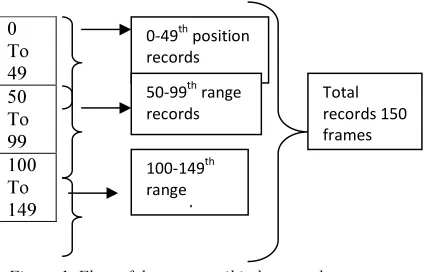
[image:4.595.84.301.253.389.2]Searching Time reduced because instead of checking all the records we have to split it into number of segments and made search with appropriate segments of frames.
Figure 1. Flow of the sequentail index search
5.2 Drawbacks Of The Sequential Scheme
That I Established By Practical
Implementation
Time must be calculated including the indexing time and searching time. But sequential search scheme establish the method for search the frame only. When we include the indexing time (Training phase) with the search time, the method take much time than that of our cell based technique.
6. EXPERIMENTAL SETUP AND
RESULTS
6.1 Training Phase Algorithm
• Select Frame
• Find pixel values of frame
• Select 2 matrixes diagonally with pixel
values as dynamic as per the original height and width of the frame
• Read the matrix1 and matrix2 pixel values
and convert to histogram format and store it in database
• Find the input parameters like frame no,
frame name, pathname, matrix value1, matrix value2, index time, Sorted order Values of Matrixvalue1, Matirx value 2 are stored as trained inputs in the database
• Select next frame, continue with step2
6.2 Frame Retrieval Or Recognition Phase
• Select Input frame
• Find pixel values of frame
• Select 2 matrixes diagonally with pixel
values as dynamic as per the original height and width of the frame
• Read the matrix1 and matrix2 pixel values
and convert to histogram format and store it in database
• Find the input parameters like frame no,
frame name, pathname, matrix value1, matrix value2, index time , Sorted order value of Matrix1, Sorted value of Matrix2.
• Compare the parameters with the existing
database. But the comparison is based on the setting the threshold
• Matrix1 histo val (threshold) = matrix 1
histoval (input frame)+(Total pix val of matrix1/2)
• Matrix2 histo val (Threshold) = matrix 2
histoval (input frame)+(Total pix val of matrix2/2)
• Frames that are related to those threshold
values are the output frames.
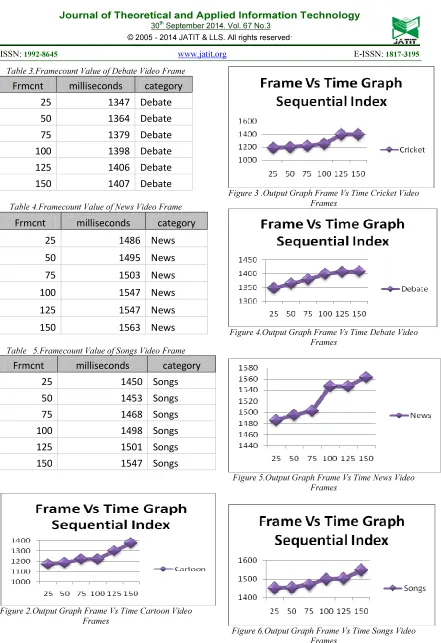
Table 1.Framecount Value of Cartoon Video Frame
Frmcnt
milliseconds
category
25
1174 Cartoon
50
1185 Cartoon
75
1219 Cartoon
100
1222 Cartoon
125
1300 Cartoon
150
1375 Cartoon
Table 2.Framecount Value of Cricket Video Frame
Frmcnt
milliseconds
category
25
1187 Cricket
50
1198 Cricket
75
1220 Cricket
100
1250 Cricket
152
1390 Cricket
125
1391 Cricket
0 To 49 50 To 99 100 To 149
Total records 150 frames 0-49th position
records
50-99th range records
Table 3.Framecount Value of Debate Video Frame
Frmcnt
milliseconds
category
25
1347 Debate
50
1364 Debate
75
1379 Debate
100
1398 Debate
125
1406 Debate
150
1407 Debate
Table 4.Framecount Value of News Video Frame
Frmcnt
milliseconds
category
25
1486 News
50
1495 News
75
1503 News
100
1547 News
125
1547 News
150
1563 News
Table 5.Framecount Value of Songs Video Frame
Frmcnt
milliseconds
category
25
1450 Songs
50
1453 Songs
75
1468 Songs
100
1498 Songs
125
1501 Songs
150
1547 Songs
Figure 2.Output Graph Frame Vs Time Cartoon Video Frames
Figure 3 .Output Graph Frame Vs Time Cricket Video Frames
Figure 4.Output Graph Frame Vs Time Debate Video Frames
[image:5.595.88.529.61.704.2]Figure 5.Output Graph Frame Vs Time News Video Frames
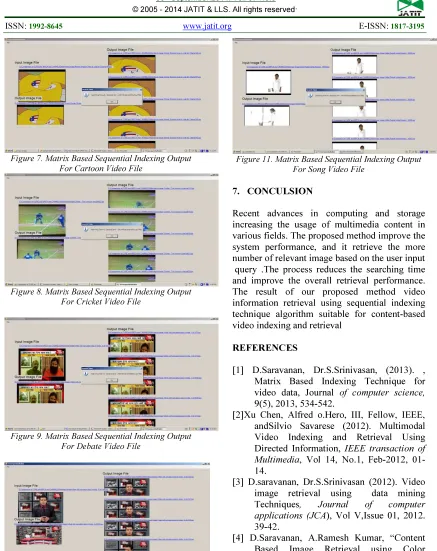
Figure 7. Matrix Based Sequential Indexing Output For Cartoon Video File
Figure 8. Matrix Based Sequential Indexing Output For Cricket Video File
Figure 9. Matrix Based Sequential Indexing Output For Debate Video File
Figure 10. Matrix Based Sequential Indexing Output For News Video File
Figure 11. Matrix Based Sequential Indexing Output For Song Video File
7. CONCULSION
Recent advances in computing and storage increasing the usage of multimedia content in various fields. The proposed method improve the system performance, and it retrieve the more number of relevant image based on the user input query .The process reduces the searching time and improve the overall retrieval performance. The result of our proposed method video information retrieval using sequential indexing technique algorithm suitable for content-based video indexing and retrieval
REFERENCES
[1] D.Saravanan, Dr.S.Srinivasan, (2013). , Matrix Based Indexing Technique for
video data, Journal of computer science,
9(5), 2013, 534-542.
[2]Xu Chen, Alfred o.Hero, III, Fellow, IEEE, andSilvio Savarese (2012). Multimodal Video Indexing and Retrieval Using
Directed Information, IEEE transaction of
Multimedia, Vol 14, No.1, Feb-2012, 01-14.
[3] D.saravanan, Dr.S.Srinivasan (2012). Video image retrieval using data mining
Techniques, Journal of computer
applications (JCA), Vol V,Issue 01, 2012. 39-42.
[4] D.Saravanan, A.Ramesh Kumar, “Content Based Image Retrieval using Color
Histogram”, International journal of
computer science and information
technology (IJCSIT), Volume 4(2), 2013, Pages 242-245, ISSN: 0975-9646
[5] Bahjat safadi, Geprges Qenot(2011).
and knowledge management, Glasgow, United Kingdom.
[6] D.Saravanan, Dr.S.Srinivasan(2013) “Video information retrieval using :CHEMELEON Clustering” International Journal of Emerging Trends & Technology in Computer Science (IJETTCS), Volume-02, Issue 01, January –February 2013, Pages 166-170
[7] D.Saravanan, Dr.S.Srinivasan (2011). A proposed new Algorithm for analysis for analysis of Hierarchical clustering in video
Data mining, international journal of Data
mining and knowledge engineering , vol 3, no 9.
[8] D.Saravanan, Dr.S.Srinivasan (2010).
Indexing ad Accessing Video Frames by Histogram Approach, In the Proc. Of International Conference on RSTSCC 2010, 196-1999.
[9] Ajay divakaran, koji miyahara, kadir A.peker, Regunathan Radhakrishnan, and
Ziyou Xiong (2004), Video mining using
combinations of unsupervised and supervised learning techniques
[10] Essam A.El-kwae, Mansur.R.Kabuka
(2000). Efficient Content based indexing of
large image database, ACM transaction on
information systems, Vol 18, No.2 .April 2000, 171-210.
[11] D.Saravanan, A.Ramesh
Kumar(2013),”Content Based Image
Retrieval using Color Histogram”,