DEVELOPING PROCESS MODEL FOR MANAGEMENT OF
KNOWLEDGE-INTENSIVE ORGANIZATION – A CASE STUDY
OF A HOSPITAL
Nurhidayah Bahar, Department of Operations and MIS, University of Malaya, Kuala Lumpur,
Malaysia, [email protected]
Shamshul Bahri Zakaria, Department of Operations and MIS, University of Malaya, Kuala
Lumpur, Malaysia, [email protected]
Abstract
This study explores knowledge management practices in a Malaysian public healthcare organization. Knowledge management has gained much attention not only from business enterprises but also in other fields such as education, urban planning and development, governance as well as healthcare and has allowed for an enterprise-wide structure to be put in place to promote efficient and effective decision-making process. As a result, many organizations are now more serious about managing knowledge and embracing the concepts associated with knowledge management to remain competitive, or even to survive. Healthcare practitioners are a knowledge-based community that depend heavily on knowledge management activities. However, little study has explored the processes used by practitioners in managing knowledge as one of the intellectual assets of the business. Hence, this paper focuses on knowledge management practices among medical staffs particularly on how they build their knowledge schemes, scan for knowledge and use knowledge in their organizations. The paper's primary goal is to examine how medical staffs employ knowledge management processes to the benefit of their clinical routines and ultimately to develop a knowledge management model for disease management. Theoretically, this study aims to provide a model that will add to the existing models on knowledge management processes; extend the initial model used in this study; examine the contribution of different knowledge workers to the model as well as guide practitioners in understanding, acquiring and applying knowledge effectively. By adopting an interpretive case study approach, two distinct roles of medical staffs were selected to reflect how knowledge management process is being practiced in their organization.
1
INTRODUCTION
Knowledge management has become an important paradigm in today’s business world. It has received so much attention from both practitioners in creating new business knowledge and in the ever-growing academic literature where researchers have investigated strategies, enablers, models, tools and techniques use in knowledge management (Lee & Choi 2003; Beveren 2003; Soon & Zainol 2011). It is believed that a good understanding and the effective implementation of knowledge management model have become a crucial part in achieving a company’s long-term goals (Soon & Zainol 2011). Recently, the conventional knowledge management approach has evolved into a strategic management approach that has also spread into other fields such as education, urban planning and development, governance and healthcare. As a result, organizations from various fields embrace the concepts associated with knowledge management and leverage on its opportunities to ensure efficiency in carrying out operations internally and achieve competitiveness externally (Ergazakis et al. 2004). Much of the literature in the area of knowledge management has focused on the private sector, where it is reported that the implementation of knowledge management facilitates growth, increase revenue and create competitive advantage. However, fewer have investigated how knowledge management can operate in organizations that provide healthcare services (Beveren 2003). Healthcare organizations, particularly those in public sector are not profit-based by nature and do not have the same ideologies as private business enterprises. However, healthcare is still concerned to address issues of cost, quality, customer satisfaction and efficiency. In addition, healthcare organizations are facing significant challenges such as medical errors, shortage of specialized personnel, compliance with government regulations and the ever-increasing demand for more effective cures especially for chronic disease (Camilleri & O’Callaghan 1998; Porter & Teisberg 2004; Wills et al. 2010). In today’s increasingly complex clinical environment, a well-organized and effective strategy for knowledge management in healthcare is actually more important than we realize.
Healthcare organizations are knowledge-oriented organizations and most of the services provided by these organizations, are operated by the human knowledge (Hojabri et al. 2012). Clinicians today must have access to numerous information i.e more than 10,000 known diseases, thousands of medications in use, some 1,100 lab tests, more than 300 radiology procedures and it is evident that hospital services involve knowledge-intensive processes that are carried out to solve patient health-related problems (Jih et al. 2006). Given the knowledge-intensive nature of the clinical domain, healthcare professionals are actively experimenting with various management initiatives and programs, such as total quality management and knowledge management for optimal achievement of higher service quality (Jih et al. 2006).
2
LITERATURE REVIEW
One of the most famous quotes about knowledge is Francis Bacon’s dictum that “knowledge is power”. Scholars have now firmly established the role of knowledge as one of the key competitive resources of modern times (Drucker 1993; Penrose 1959). According to Bock (2001), knowledge can be defined as individual’s beliefs for solving organizational problems whereas knowledge management is the management program which manages and diffuses a set of activities of knowledge-resources acquisition, creation, and sharing. It is the process of “continually managing knowledge of all kinds to meet existing and emerging needs, to identify and exploit existing and acquired knowledge assets and to develop new opportunities” (Quintas et al. 1997). In healthcare context, knowledge management, from research observation to routine clinical practice, can be broken down into four discrete activities: knowledge production; knowledge transfer; knowledge reception; and knowledge use’ (Cooksey in Treasury 2006). The healthcare industry is a knowledge-based community that is connected to hospitals, clinics, pharmacies, and customers for sharing knowledge, reducing administrative costs and improving the quality of care. Thus the success of healthcare depends critically on the collection, analysis and seamless exchange of clinical, billing, and utilization information or knowledge within and across the above organizational boundaries (Jadad et al. 2000; Kohli et al. 1999). According to Ferlie et al. (2012), there is a well established literature on implementing clinical evidence into practice, but less consideration of how management and organisational knowledge gets into practice in healthcare organisations.
Based on generic management literature alongside specific healthcare literature, many researchers have investigated how knowledge is managed. Evidence is provided by a variety of studies on knowledge (Davenport & Prusak 1998; Earl 2001; Nonaka 1994; Swanson 1996; Tuomi 1999), knowledge process (Grant 1996; Grover & Davenport 2001; Lee 1999; Lee & Kim 2001; Leonard-Barton 1998; Malhotra 2000; Nonaka & Takeuchi 1995), intellectual capital (Edvinsson 1997; Han et al. 2000; Sveiby 1997), knowledge management architecture (Alavi 1997; Wiig et al. 1997) and knowledge management frameworks (Holsapple & Joshi 2002; Quinn et al. 1998; Rubenstein-Montano et al. 2001). In addition, researchers have also investigated strategies, enablers, theoretical models, tools and techniques use in knowledge management (Lee & Choi 2003; Beveren 2003; Soon & Zainol 2011). These studies have explored the foundations and disciplines of knowledge management. However, they fall short of incorporating the whole processes of knowledge management by exploring knowledge management relationships in isolation and continue to downplay how healthcare organization can leverage on knowledge management especially in managing disease among the practitioners (Wills et al. 2010).
To fill the gap, this research attempts to investigate how healthcare practitioners i.e doctors and nurses practice knowledge management in their clinical routines, and to examine the similarities and differences between doctors and nurses in their practices.
3
RESEARCH METHOD
3.1 Research Model
Figure 1. The initial model shows the linkages between knowledge scheme, scanning and use
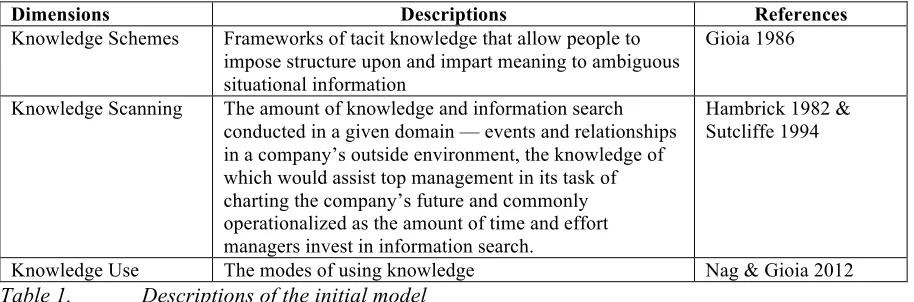
Nag & Gioia (2012) suggest on emphasizing the importance of understanding how one schema relate to the interpretation, search for, and utilization of knowledge. Since there is a lack of attention paid to the influences on scanning and actual information acquisition behaviours, there is a need to appreciate executive scanning as a key knowledge-search/acquisition behaviour (Boyd & Fulk 1996; Garg et al. 2003; Hambrick 1982; Nag & Gioia 2012). It is essential to investigate whether differences in the ways that executives scan for information might lead to the acquisition of different kinds of knowledge that might be useful in practice (Nag & Gioia 2012). Based on observations from the schema, scanning, and practice literatures suggest the need for a more concentrated focus on the beliefs, knowledge-seeking orientations, interpretations, and actions of key agents in firms—and specifically, a more integrated consideration of processes by which they identify, search for, and use knowledge (Nag & Gioia 2012).
Dimensions Descriptions References
Knowledge Schemes Frameworks of tacit knowledge that allow people to impose structure upon and impart meaning to ambiguous situational information
Gioia 1986
Knowledge Scanning The amount of knowledge and information search conducted in a given domain — events and relationships in a company’s outside environment, the knowledge of which would assist top management in its task of charting the company’s future and commonly operationalized as the amount of time and effort managers invest in information search.
Hambrick 1982 & Sutcliffe 1994
[image:4.595.87.399.101.299.2]Knowledge Use The modes of using knowledge Nag & Gioia 2012 Table 1. Descriptions of the initial model
3.2 Research Approach
[image:4.595.85.542.475.626.2](Mathiassen et al. 2007). Case study research allows gaining rich, contextual insights into the dynamics of phenomena under investigation (Dyer & Wilkins 1991), in our case the knowledge management practice in clinical care environment. Given our research objectives, we concentrated on understanding the content of medical staffs’ schemas (belief structures) about knowledge, their knowledge scanning tendencies, and the use of knowledge in clinical practices.
3.3 Data Collection
We followed a purposeful sampling approach in selecting the informants in the study. Of the 35 informants in our sample, 12 doctors, 13 nurses, 5 assistant medical officers from the Medical department and the remaining 5 are head of department, senior staffs and key members from the hospital’s research centre.
Over three-month period, we carried out 37 interviews involving all the informants, head of department, senior staffs and key members. We used the interviews with the head of department and senior staffs to develop an understanding of the common issues facing the industry and to gain a historical perspective on the evolution of the industry especially on disease management. We conducted on-site interviews with the medical staffs of different roles that play key part in the execution of knowledge management processes in their organization. Table 2 provides a breakdown of the informants. The different types of roles in the organization will be treated as multiple sources for assessing similarities and differences in knowledge management practices, which enabled the generation of emergent framework and their interrelationships. We also spent time at the medical clinic observing the flow of work and engaging in impromptu talks with medical staffs. During data collection, to ensure the credibility of the data of our informants were providing to us, we encouraged them to provide concrete examples to support their commentary for most of the questions. This approach is important to reach confidence in ascribing reliability of the informants’ claims.
Role Number of
Informants
Number of Interviews
Mode
Head of Department 1 3 Phone / Site
Key Members 2 2 Phone / Site
Senior Staffs 2 2 Phone / Site
Doctors 12 12 Site
Nurses 13 13 Site
Assistant Medical Officers 5 5 Site
TOTAL 35 37
Table 2. Informants
3.4 Data Analysis
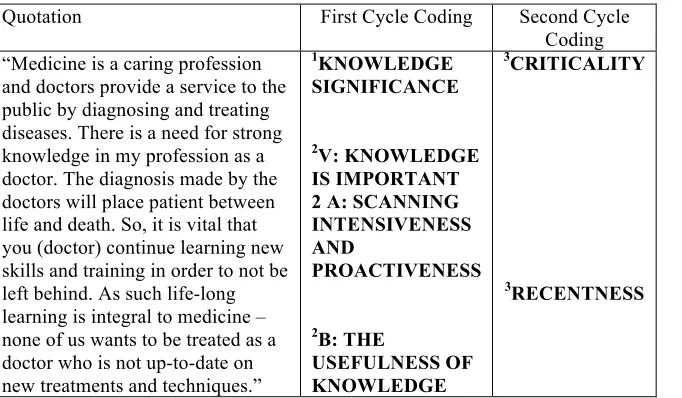
The interview data were analysed while the interviews took place. Drawing on Miles and Huberman’s (1984) suggestions, the data analysis focuses on coding data segments for category, theme, and pattern development. From the field-study, we have collected information in the form of handwritten and audio recordings. The recordings were then, transcribed into text. On to the methods, we begin with First Cycle Coding, then Second Cycle or Pattern codes and the process of deriving even more general categories or themes through jotting and analytic memoing (Saldana 2013). The main elemental methods that serve as foundation approaches to coding is descriptive coding1 – assign labels to data to
summarize in a word or most often a noun. These eventually provide an inventory of topics for indexing and categorizing. Another approach used in this study is values coding2. This is the
knowledge and a belief (B:) is part of the system that includes values and attitudes, plus personal knowledge, experiences, opinions and other perceptions towards knowledge management practices. As we discerned codes that were similar and collated them into first-order categories, we continued to employ subcoding3 – a second-order tag assigned after a primary code to enrich the entry – we then
assembled the second-order themes.
Quotation First Cycle Coding Second Cycle Coding “Medicine is a caring profession
and doctors provide a service to the public by diagnosing and treating diseases. There is a need for strong knowledge in my profession as a doctor. The diagnosis made by the doctors will place patient between life and death. So, it is vital that you (doctor) continue learning new skills and training in order to not be left behind. As such life-long learning is integral to medicine – none of us wants to be treated as a doctor who is not up-to-date on new treatments and techniques.”
1KNOWLEDGE
SIGNIFICANCE
2V: KNOWLEDGE
IS IMPORTANT 2 A: SCANNING INTENSIVENESS AND
PROACTIVENESS
2B: THE
USEFULNESS OF KNOWLEDGE
3CRITICALITY
[image:6.595.84.425.165.364.2]3RECENTNESS
Table 3. An example comes from interview transcripts about the importance of knowledge in participant’s profession.
4
FINDINGS
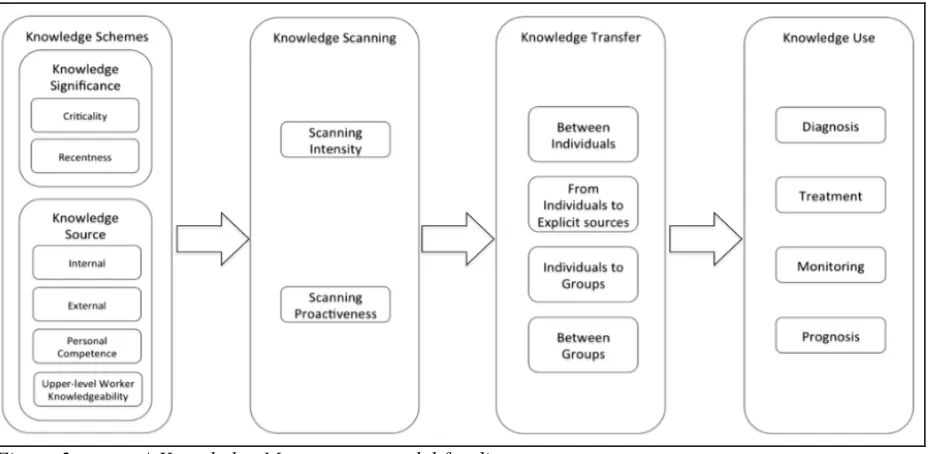
Figure 2. A Knowledge Management model for disease management.
We found patterns of how medical staffs understood and evaluated the role of knowledge in managing day-to-day work. The knowledge schemes had two main themes: (1) knowledge significance (beliefs about the importance of knowledge to perform clinical process) and (2) knowledge source (beliefs about the usefulness or quality of the origins of knowledge). Each of these themes consists of two and four second-order subthemes respectively.
Knowledge Significance has two second-order subthemes; criticality and recentness. Criticality
reflects the degree of importance for a particular knowledge domain (i.e., diagnosis, technology, or customer service) in terms of its effects on the success of clinical processes. For example, most of medical staffs believe that one’s ability and competency in diagnosing are critical to place the patient between life and death and using information technology significantly facilitates the clinical process. Meanwhile, recentness is the quality of the knowledge of being new and modern. In healthcare setting, doctors must keep their knowledge and skills up to date by engaging in lifelong learning and local quality assurance activities. This has long been recognized by doctors as a responsibility integral to the medical professionalism which underpins the relationship between themselves and the public, and which helps to maintain trust. This combination is reflected in the following quotation:
A doctor reflected: “As doctors, we must keep our knowledge and skills up to date throughout our working life. We should be familiar with relevant guidelines and developments that affect our work. We should regularly take part in seminar, medical course and training that maintain and further develop our competence and performance in treating our patients. Furthermore, we must keep up to date with and adhere to, the laws and codes of practice relevant to our work. Our viewpoints about patients’ needs especially those with chronic disorders are very much
important to ensure we can cure disease and save lives. "
knowledge. Some of our informants mainly doctors, expressed a high-level of confidence of their personal competence as a source of valid knowledge for others. It is the nature of work in a medical clinic, where medical staffs at different level often work hand-in-hand to improve health and patient safety. Therefore, one’s personal competence can become other person source of knowledge. The last subtheme for this element, upper-level knowledgeability, refers to lower-level workers’ belief about upper-level workers’ professional knowledge and know-how as a source of valid and useful knowledge. Senior doctors are often become the source of knowledge for junior doctors, doctors become the source of knowledge for nurses and senior nurses become the source of knowledge for lower level medical staffs. The lower-level medical staffs have a strong belief and confident towards the knowledge gained from their upper-level. Junior doctors or nurses do communicate effectively with senior doctors or managers to acquire more information about the clinical practice and to affirm the possible decisions they made for their patients.
Knowledge Scanning has two themes: scanning intensity and scanning proactiveness. Scanning intensity refers to the amount of time and effort medical staffs invest in information seeking and knowledge acquisition. Scanning proactiveness represents not just time and energy devoted to information search and acquisition, but also the tendency to actively acquire knowledge. A comparison between the medical staffs shows that the higher the position, the higher the scanning intensity is and the more proactive they are in acquiring new knowledge. Doctors are always go above and beyond of what is available in-house to do research about patients’ disease and proactively find the possible solution from various sources including CPGs from other countries such as the UK and US. Nurses, on the other hand, noted that the limitation of organization’s facilities such as computers and internet access, as well as time constraint during clinic hours limit them from extensively search for external knowledge and instead, they favor the method of referring to their upper-level for acquiring information in decision making.
To recap the initial model we adopted from Nag & Gioia (2012), the overall process model consists of only three elements (i) knowledge scheme, (ii) knowledge scanning and (iii) knowledge use. As we conducted this study in healthcare setting, we uncover another important element, which is Knowledge Transfer. Knowledge Transfer domain takes a functionalist approach, in which knowledge is commodified as an asset that can be ‘moved around’ to augment organizational performance and occurs at various levels: transfer of knowledge between individuals; from individuals to explicit sources; from individuals to groups; between groups; across groups; and from the group to the organization (Ferlie et al. 2012; Alavi & Leidner 2001). Based on our analysis within the given scope, we found that knowledge transfer in clinical domain commonly occurs in four levels: transfer of knowledge between individuals; from individuals to explicit sources; from individuals to groups; and between groups. Knowledge transfer can be accomplished in many ways depending on the different levels. Between individuals – doctors and nurses do effectively communicate with each other in their clinical practices. This is when they exchange and share knowledge about their past experiences and professional clinical knowledge to make a collective decision about particular treatment for patients.
From individuals to explicit sources – Clinical Practice Guidelines (CPGs) and in-house standard operating procedures (SOPs) are the examples of explicit sources developed by individuals. CPGs are guidelines for best practice for clinical practice, based on the best available evidence at the time of development. Ministry-appointed experts from the Academy of Medicine Malaysia, practitioners, professional societies, and stakeholder representatives are responsible to produce these guidelines.
Knowledge use refers to modes of applying knowledge in clinical care practice such as diagnosis, treatment, monitoring and prognosis. Our data and analyses suggested a consistent pattern emerged showing that most informants viewed knowledge as embedded in practices especially in the processes of clinical care. At the clinical level, knowledge use is seen as a process through which practitioners formulate solution in order to solve their day-to-day problems in managing disease. Throughout the interviews, a similar pattern emerged showing doctors or nurses, when faced with a problem, they perform intensive scanning and sharing knowledge in order to find a solution for a specific problem. To them, knowledge has high value if can solve critical problems in their practices as it helps to enrich decisions and actions.
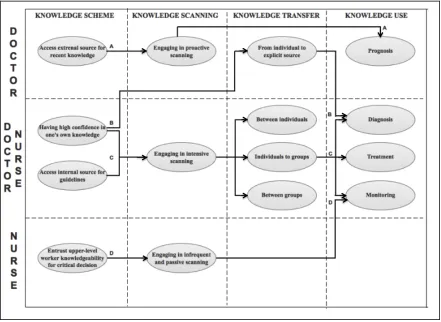
[image:9.595.85.526.317.639.2]In the following section, we provide a discussion on the linkages among the key concepts derived from the model. Differential emphases between doctors and nurses tend to be associated with the amount and quality of knowledge scanning, as well as with how knowledge was then applied in clinical care. Because the use of knowledge in clinical care such as prognosis, diagnosis, treatment and monitoring is the most interest, in this section we trace the pathways to clinical processes via linkages with elements of knowledge schemes, the two scanning modes and knowledge transfer. Figure 3 demonstrates the linkages among the subthemes of the main elements.
Figure 3. The linkages among Knowledge Scheme, Scanning, Transfer and Use.
about their knowledge management practices. However, they are differed in term of the degree of practicing every process. This idea is reflected from the following observation:
“I normally search information beyond the readily available information within organization. I do not rely only with local CPGs (Clinical Practice Guidelines) alone but usually refer to international CPGs as it has wider coverage about one disease. I spend a lot of time looking for information especially when encounter new case.” (Doctor)
“At times, I have to find more information but it does not frequently happen. I can always refer to my colleagues, superior or doctors on duty. Normally I’m able to find the required information within my team.” (Nurse)
Normal clinical practices involve diagnosis, treatment and monitoring of a patient’s health condition. Link A shows the relationship among the element when the doctors are required to perform prognosis. Prognosis is a doctor’s opinion of the likely outcome of a medical situation. Doctors typically estimate a patient’s likelihood of being cured, their extent of functional recovery, and their life expectancy by looking at studies of groups of people with the same or similar diagnosis. This involves a proactive knowledge search from external sources. Nurses are unlikely to determine a patient’s prognosis. While link B indicates the process to execute diagnosis. Both doctors and nurses are responsible to diagnose which disease or condition is causing a patient's health condition in a different degree. Diagnosis can be done based on explicit sources such as CPGs and internal SOPs for common disease and/or based on one’s professional clinical knowledge. Experienced medical staffs commonly produce the explicit sources to transfer their clinical knowledge and expertise. To provide treatment to patients, doctors and nurses engage in an intensive (but not necessarily proactive) scanning and rely on their knowledge and internal sources for guidelines. They normally discuss and share their medical opinions between individuals and/or between groups to encourage a preference for a collaborative decision-making as shown in link C. Finally, link D represents the practice to monitor patients where nurses play a vital role in monitoring treatment outcomes in terms of relapses and disease progression. This involves infrequent and proactive scanning and heavily relies on upper-level worker knowledgeability’s directions.
5
DISCUSSION AND CONCLUSION
Knowledge management is about enhancing the use of organizational and individual knowledge through sound practices to achieve optimal achievement of higher service quality in healthcare setting. In this paper, we proposed a knowledge management model for healthcare setting and the linkages among the key concepts in the model. Most studies explored knowledge management relationships in isolation, however, in this study we capture the entire processes of knowledge management and take into consideration of how knowledge management can operate in organization that provide healthcare specifically for disease management. Our analysis indicates the organization of knowledge management is shaped in particular by components such as processes, knowledge workers, type of knowledge and information system infrastructure. This is aligned with the definition of Knowledge Management in healthcare context according to Healthcare Information & Management Systems Society (HIMSS), a multidisciplinary group of health care IT professionals, clinicians, managers, and consultants, “aligning people, processes, data and technologies to optimize information, collaboration, expertise, and experience in order to drive organizational performance and growth”.
both cognitive and technical elements (Nonaka 1994). The explicit dimension of knowledge is articulated, codified, and communicated in symbolic form and/or natural language (Alavi & Leidner 2001). We found an assortment of knowledge types that directly contribute to diagnosis, treatment, monitoring and prognostic activities of clinical care.Tacit knowledge is personal, context-specific and hard to formalize and communicate. It consists of experiences, beliefs and skills. One of the examples of tacit knowledge is the doctors’ rule of thumb for psychosocial problems or the best means of dealing with specific patient care. Whereas explicit knowledge is the knowledge that can be easily collected, organized and transferred through digital means for example information gained from CPGs. Also, our findings suggest that not necessary that some of the staffs operating in the same conditions simply possess better knowledge than the others, but rather that the tendency to proactively scan for knowledge and their belief towards the criticality of the knowledge help to create better knowledge. Furthermore, their beliefs about the usefulness and trustworthiness of the origins of useful knowledge that they can apply in their day-to-day work will lead to a higher amount of time and effort they invest in information seeking and knowledge acquisition.
The infrastructure plays a vital role to facilitate the process of transmitting and exchanging information among medical staffs and enables the KM-related activities such as groupware, online databases, intranet, and virtual communities (Acharyulu 2011; Lin 2011). The medical staffs are extensively using technology to enable individuals to coordinate and facilitate the logistics of face-to-face meetings. Computer-mediated communication such as electronic mail or instant messaging has helped to maintain continuity and connection between conversations, especially for those in different locations. Not to limit themselves with the readily available infrastructure provided by the organization, most of medical staffs utilize their personal device and Internet data plan in performing their duties such as informal discussion and sharing laboratory image for diagnosis purposes among them. They create virtual communities to interact through common social media and instant messaging applications. It is evident that one of the actors that drive knowledge management is collaborative technology. Collaboration tools enable a company's professionals to work together and work virtually in real-time regardless of the geographical location. Data storage, retrieving and sharing in a databases and networked environment for example are fundamental aspect in Information and Communication Technology (ICT) that support KM application in an organization.
References
Acharyulu, G. V. R. K. (2011). Information Management in a Health Care System: Knowledge Management Perspective. International Journal of Innovation, Management and Technology, Vol. 2, No. 6, December 2011
Alavi, M., & Leidner, D. E. (2001). Review: Knowledge management and knowledge management systems: Conceptual foundations and research issues. MIS quarterly, 107-136.
Beveren, J. V. (2003). Does health care for knowledge management?. Journal Of Knowledge Management, Vol. 7 No 1, pp. 90-95.
Bock, G. (2001). Determinants of the Individual’s Knowledge Sharing Behavior in the Organization: The Theory of Reasoned Action Perspective. Ph. D. Dissertation, Korea Advanced Institute of Science and Technology.
Buranarach, M., Supnithi, T., & Chalortham, N. (2009). A Semantic Web Framework to Support Knowledge Management in Chronic Disease Healthcare. MTSR 2009, CCIS 46, pp. 164–170, Springer-Verlag Berlin Heidelberg.
Boyd, B. K., & Fulk, J. (1996). Executive scanning and perceived uncertainty: A multidimensional model. Journal of Management, 22: 1–21.
Camilleri, D., & O’Callaghan, M. (1998). Com- paring public and private hospital care ser- vice quality. International Journal of Health Care Quality Assurance, 11(4), 127.
Davenport, T. H., & Prusak, L. (1998). Working knowledge: How organizations manage what they know. Harvard Business Press.
Drucker, P. F. (1993). Managing in turbulent times. Routledge.
Dyer, W. G., & Wilkins, A. L. (1991). Better stories, not better constructs, to generate better theory: a rejoinder to Eisenhardt. Academy of management review, 16(3), 613-619.
Earl, M. (2001). Knowledge management strategies: Toward a taxonomy. Journal of management information systems, 18(1), 215-233.
Edvinsson, L., & Malone, M. S. (1997). Intellectual capital: Realizing your company's true value by finding its hidden brainpower (Vol. 225). New York, NY: HarperBusiness.
Eisenhardt, K. M. (1989). Building theories from case study research. Academy of management review, 14(4), 532-550.
Ergazakis K, Metaxiotis K And Psarras J (2004) Towards knowledge cities: conceptual analysis and success stories. Journal of Knowledge Management 8(5), 5–16.
Ferlie, E., Crilly, T., Jashapara, A., & Peckham, A. (2012). Knowledge mobilisation in healthcare: A critical review of health sector and generic management literatüre. Social Science & Medicine 74, 1297e1304.
Garg, V. K., Walters, B. A., & Priem, R. L. (2003). Chief executive scanning emphases,
environmental dyna- mism, and manufacturing firm performance. Strate- gic Management Journal, 24: 725–744.
Gioia, D. A. (1986). Symbols, scripts, and sensemaking: Creating meaning in the organizational experience. In H. P. Sims & D. A. Gioia (Eds.), The thinking organization: 49–74. San Francisco: Jossey-Bass.
Grant, R. M. (1996). Toward a knowledge-based theory of the firm. Strategic management journal, 17(S2), 109-122.
Grover, V., and Davenport, T.H. (2001). General perspectives on knowledge management: fostering a research agenda. Journal of Management Information Systems 18, 1, 5-21.
Han, I., Jang, J., & Na, I. (2000). The Measurement and Disclosure of Knowledge Assets. Korea Accounting Institute, Seoul.
Hambrick, D. C. (1982). Environmental scanning and organizational strategy. Strategic Management Jour- nal, 3: 159–174.
Hojabri, R., Borousan, E., & Manafi, M. (2012). Impact of using telemedicine on knowledge
Holsapple, C. W., and Joshi, K.D. (1999). Description and analysis of existing knowledge
management frameworks. Proceedings of the 32nd Hawaii International Conference on System Sciences.
Jadad, A. R., Haynes, R. B., Hunt, D., & Browman, G. P. (2000). The Internet and evidence-based decision-making: a needed synergy for efficient knowledge management in health care. CMAJ, 162(3), 362–365.
Jih, W. J., Chen, C. H. & Chen, A. (2006). Effects of Knowledge Management Implementations in Hospitals: An Exploratory Study in Taiwan, International Journal of Knowledge Management, 2(3), 1-20
Kohli, R., Tan, J. K., Piontek, F. A., Ziege, D. E., & Groot, H. (1999). Integrating cost information with health management support system: an enhanced methodology to assess health care quality drivers. Topics in health information management, 20(1), 80-95.
Lee, H. (1999). How knowledge management theory suitable for Korean firm: based on hypertext structure of Nonaka. The 3rd Knowledge Management Academic Symposium, pp.463- 479 Lee, H. & Choi, B. (2003). Knowledge management enablers, processes, & organizational
performance : An integrative view & empirical examination. Journal of Management Information systems, Vol. 20, 1, pp. 179-228.
Lee, J.H and Kim, Y.G. (2001). A stage model of organizational knowledge management: a latent content analysis. Expert Systems with Applications, 20, 299-311
Leonard-Barton, D. (1998). Wellsprings of knowledge: Building and sustaining the sources of innovation. Harvard Business Press.
Lin, H. F. (2011). Antecedents of the stage-based knowledge management evolution. Journal of Knowledge Management, 15(1), 136-155. pp. 136 – 155
Malhotra, Y. (2000). Knowledge management and new organization forms: A framework for business model innovation. Knowledge management and virtual organizations, 2-19.
Mathiassen, L., Saarinen, T., Tuunanen, T., & Rossi, M. (2007). A contingency model for
requirements development. Journal of the Association for Information Systems, 8(11), 569-597. Miles, M. B., & Huberman, A. B. (1984). Qualitative data analysis: A source book of new methods.
Beverly Hills, CA: Sage.
Nag, R. and Gioia, D.A. (2012). From Common To Uncommon Knowledge: Foundations Of Firm-Specific Use Of Knowledge As A Resource. Academy of Management Journal, pp. 421–457. Nonaka, I. (1994). A dynamic theory of organizational knowledge creation. Organization science,
5(1), 14-37.
Nonaka, I., & Takeuchi, H. (1995). The knowledge-creating company: How Japanese companies create the dynamics of innovation. Oxford university press.
Penrose, E. T. (1995). The Theory of the Growth of the Firm. Oxford university press.
Polanyi, M. (2012). Personal knowledge: Towards a post-critical philosophy. University of Chicago Press.
Porter, M., & Teisberg, E.O. (2004). Redefining competition in health care. Harvard Business Review, 82(6), 65–72.
Quinn, J. B., Anderson, P., and Finkelstein, S. (1996). Leveraging intellect. Academy of Management Executive, 10, 3, 7-27.
Quintas, P., Lefrere, P., & Jones, G. (1997). Knowledge management: a strategic agenda. Long range planning, 30(3), 385-391.
Rubenstein-Montano, B., Liebowitz, J., Buchwalter, J., McCaw, D., Newman, B., Rebeck, K., and The Knowledge Management Methodology Team. (2001). A systems thinking framework for
knowledge management. Decision Support Systems, 31, 5-16.
Saldana, J. (2013). The coding manual for qualitative researchers (2nd ed.). London: Sage. Profiles 32 different methods for coding qualitative data; includes examples, along with ways to develop analytic memos.
Sveiby, K. E. (1997). The new organizational wealth: Managing & measuring knowledge-based assets. Berrett-Koehler Publishers.
Swanson, E. B. (1996). The new organizational knowledge and its systems foundations. In System Sciences, 1996., Proceedings of the Twenty-Ninth Hawaii International Conference on, (Vol. 3, pp. 140-146). IEEE.
Treasury, H. M. (2006). A review of UK health research funding: Report by Sir David Cooksey. London: HMSO. Cooksey Report.
Tuomi, I. (1999). Data is more than knowledge: Implications of the reversed knowledge hierarchy for knowledge management and organizational memory. In Systems Sciences, 1999. HICSS-32. Proceedings of the 32nd Annual Hawaii International Conference on (pp. 12-pp). IEEE. Wiig, K. M., De Hoog, R., & Van Der Spek, R. (1997). Supporting knowledge management: a
selection of methods and techniques. Expert systems with applications, 13(1), 15-27. Wills, M. J., Sarnikar, S., El-Gayar, O. F., & Deokar, A. V. (2010). Information systems and
healthcare XXXIV: Clinical knowledge management systems—Literature review and research issues for information systems. Information Systems, 6, 1-2010. Chicago