Rich Mobile Applications: Genesis, Taxonomy, and Open Issues
Saeid Abolfazlia, Zohreh Sanaeia, Abdullah Gania, Feng Xiab,, Laurence T. Yangc
a
Mobile Cloud Computing Research Lab, Faculty of Computer Science and IT, University of Malaya, Kuala Lumpur, Malaysia
b
School of Software, Dalian University of Technology, Dalian 116620, China
c
Department of Computer Science, St. Francis Xavier University, Canada
Abstract
Rich Mobile Applications (RMAs) comprise a budding research area receiving increasingly abundant at-tention from the academic and industrial communities. RMAs are deemed to be a candidate blueprint of future online smartphone applications aiming to deliver high functionalities and rich immersive experience to mobile users. RMAs are still in early stages and comprehensive survey of the domain is lacking. In this paper, we use structuralism and functionalism paradigms to analyze RMAs’ origins, trends, and character-istics. RMAs are distinguished from traditional mobile applications and Rich Internet Applications (RIAs). Comprehending the distinction between delivering Rich User eXperience (RUX) in desktop and mobile computers, and the inward similarities and dissimilarities between RMAs and RIAs will facilitate and ac-celerate the development of rich, smartphone-centric applications. We analyze several problems inhibiting the adoption of RMAs and review corresponding solutions to devise a taxonomy. Our study advocates that the majority of problems stem from the intrinsic characteristics of mobile devices and the heterogeneity in this environment, especially when cloud computing is employed to enhance mobile computing. Several open issues on RMAs’ domination and adoption are presented as future research directions.
Keywords: Rich Mobile Application, Mobile Computing Systems, Ubiquitous Computing, Smartphone, User Experience
1. Introduction
Since the invention of computers, enhancing the user computing and interaction experience has been the key motivation for computing technology advancements. The invention of web in 90’ significantly enhanced user experience in stationary computers, but ever increasing ownership and maintenance costs of web servers stimulated researchers to connote Rich Internet Applications (RIAs) model [1]. The term
rich, indicates overwhelming user experience while interacting with computing devices though application —interpreted as Rich User eXperience (RUX) by the computer community, something that could not be delivered by traditional application frameworks. RIAs such as Google Map are the state-of-the-art web application model aiming to enhance desktop user experience via complex functionality, rich interaction, and compelling Graphical User Interface (GUI) while optimizing the server side costs. However, absence of mobility in stationary computers antiquates desktop PCs and establish a concrete ground for emergence of contemporary smartphones towards delivering RUX.
Smartphones have recently obtained momentous ground in various computing-intensive domains, partic-ularly enterprise applications, management information systems, education, and healthcare towards surpass-ing desktop computers [2–5]. Several electronic devices such as PDAs, digital cameras, Internet browssurpass-ing devices, and Global Positioning Systems (GPS) are being substituted by smartphones towards all-in-one
Email addresses: [email protected](Saeid Abolfazli),[email protected](Zohreh Sanaei),[email protected]
(Abdullah Gani),[email protected](Feng Xia),[email protected](Laurence T. Yang)
ubiquitous computing devices [6]. Moreover, human dependency to the contemporary smartphones is insa-tiably increasing in various domains due to its unique characteristics.
Success and adoption of RIAs in desktop computers and significant achievements in mobile communi-cations and computing technologies, particularly Mobile Cloud Computing (MCC) [7, 8] beside HTML5 encourage researchers to deliver RUX to mobile users, that breed Rich Mobile Applications (RMAs). RMAs are online mobile applications that are characterized by several rich traits inherited from RIAs meant to deliver RUX to mobile users. RMAs inherit the majority of RIAs’ attributes and are characterized by extensive functionality, compelling UI, high interactivity, quick responsiveness, code portability (ability to transfer application code to various platform/devices with minor/no modification [9]), and asynchronous communication —to name a few. MCC “is a rich mobile computing technology that leverages unified elastic resources of varied clouds and network technologies towards unrestricted functionality, storage, and mobil-ity to serve a multitude of mobile devices anywhere, anytime through the channel of Ethernet or Internet regardless of heterogeneous environments and platforms based on the pay-as-you-use principle” [7].
RMAs can remarkably enhance quality of mobile computing in the near future. They can significantly improve the feasibility and accuracy of several computational tasks in varied mobile environments. For instance, a mobile surgeon would be able to save a patient’s life by performing remote surgery using a rich mobile surgery application. Similarly, a mobile enterprise employee can utilize GPS sensor of the smartphone to accurately and quickly locate the service delivery destination and exploit device’s interactive features such as camera to record varied real-time spontaneous events during merchant delivery process. Thus, manual data-entry delay, man-made mistakes, and operation costs will substantially shrinks.
Despite of the significant research about RMAs [10–13] and their potential advantages, there seems to be scant literature presently available. Their characteristics and technological requirements are not yet studied and the impact of smartphones shortcomings, particularly limited processing and battery capacity on RMAs are not fully explored. Hence, a need for a study that comprehensively surveys RMAs, identifies their structural and behavioral characteristics, and presents the current trend of RMAs is inevitable.
In this paper, we comprehensively survey RMAs - a first study in this area to the best of our knowledge. In order to present a clear insight into RMAs, we ascertain RMA genesis from the literature and define them using structuralism and functionalism paradigms. Structuralism and functionalism are paradigms used in social science to analyze, characterize, and interpret a phenomenon, which are extrapolated in this study. Structuralism studies the evolution of the phenomenon, compares/contrasts its structural characteristics, and unveils its limitations mostly maintaining ontology and epistemology [14]. Structuralism aims to identify the underlying building blocks and their relationships to deeper comprehend the phenomenon. Functionalism, however, analyzes the current and future roles and functionalities of the phenomenon in certain environment to identify its characteristics and behavior. We employ structuralism to identify major characteristics of RMAs and synthesize them with RIAs attributes to demonstrate existing similarities and dissimilarities between RIAs and RMAs. Development problems towards RMAs’ success and adoption are described and solutions that aim to alleviate current problems are taxonomized. Several open issues that grant future research directions are described. Such survey is beneficial to the mobile and networking community, because by comprehending the state-of-the-art advancements of mobile applications and computing, researchers can enhance fundamental technologies to enrich quality of future mobile systems.
The remainder of this article is organized as follows: The genesis of RMAs is described in Section 2. Section 3 presents the definition and current trends of RMAs, and Section 4 provides a structural comparison of RMAs against RIAs. We devise taxonomy of developing problems and solutions in Section 5. Section 6 highlights open issues, and finally the paper is concluded in Section 7.
2. Genesis of RMAs
2002 onwards · Client Side Scripting (JavaScript) · Flash and Vector Animation · Servlet
· HTML4
· Web 2.0 · XML · AJAX · SilverLight · Java FX · ... 1990s · Internet · HTML Standalone Application Client-Server Application
· High User Engagement · Less Server-Side Cost · Client-Side Computing · Online/Offline Usability · Less Page Refresh · User Collaboration · High Responsiveness · High User Interaction
Web Application Rich Mobile Application
2012
· HTML5
· Mobile SilverLight · Adobe Air Mobile · Adobe Flash Mobile · Service Oriented Arch · Semantic Technology <<Future Advancement>> · Seamless Connectivity · Mobile Cloud Computing · ...
· Mobility · Context Awareness · Green Computing · Trust · Universal Access
· Thin Client
(No Client Side Computing) · Portability
· Heavy Computing · Extensive Resources · Large Database
1970s
· Multi Tier Application Architecture · Networking /Intranet
· Resource Sharing · Remote Execution
Rich Internet Application
Tec hno log ies In vol ved Req uir eme nts
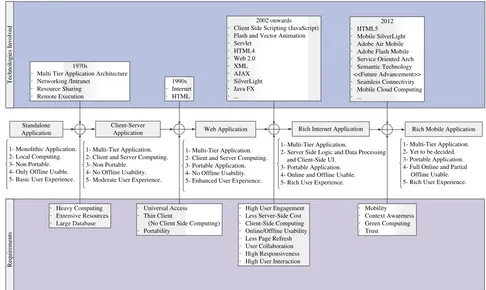
Metrics considered in this analysis are: 1- Application Architecture; 2- Computing Distribution; 3- Application Portability; 4- Offline Usability; 5- User Experience.
1- Multi-Tier Application. 2- Yet to be decided. 3- Portable Application. 4- Full Online and Partial
Offline Usable. 5- Rich User Experience. 1- Multi-Tier Application.
2- Server Side Logic and Data Processing and Client-Side UI.
3- Portable Application. 4- Online and Offline Usable. 5- Rich User Experience. 1- Monolithic Application.
2- Local Computing. 3- Non Portable. 4- Only Offline Usable. 5- Basic User Experience.
1- Multi-Tier Application. 2- Client and Server Computing. 3- Non Portable.
4- No Offline Usability. 5- Moderate User Experience.
[image:3.612.59.545.60.350.2]1- Multi-Tier Application. 2- Client and Server Computing. 3- Portable Application. 4- No Offline Usability. 5- Enhanced User Experience.
Figure 1: Genesis of Rich Mobile Applications- This figure shows gradual development of candidate application archi-tectures from early desktops till recent years from left to right that ends with RMA. Five metrics are studied for candidate architectures and results are summarized in the central segment. At the bottom of the diagram, the requirements of every era are briefed and the top segment shows involved technologies. Note that this figure shows a narrow field of technology and architecture development which is related to RMA .
offline usability, and user experience —all influential factors to enhancing application functionality and the quality of user experience. Studying the genesis of RMAs is beneficial to comprehending conceptual founda-tions, vision, and hype. Application evolution is explained next, and the results of our analysis are presented in Figure 1.
Standalone applications are monolithic platform-dependent applications that perform entirely on a single processing unit and reflect to the users’ actions based on the hosting machine’s computing speed. Such single-tier architecture demands rich native computing resources and limits code execution performance to the computing capabilities of the hosting machines. They cannot perform outsourcing and load balancing mechanisms in case of excessive computing load. Moreover, the applications’ code and data are vulnerable to several threats like physical damage, hardware malfunction, and robbery of hosting machine. However, standalone applications are protected against external threats in the absence of intersystem communications. Monolithic applications on the hosting machines must be installed and maintained, and every code update should be applied to all available copies. Due to various types of heterogeneity in client side (e.g., hardware, Operating System (OS), and programming language), various versions of a single application should be developed for different platforms, a practice that is a costly and time consuming [7]. Such limitations beside the exponential growth in data volume and processing tasks, inefficiency of terminal-mainframe communications, and noticeable advancements in networking technologies, paved the way in the 1970s for innovation of the client-server model [15].
client-server model enables distribution of computation-intensive tasks by leveraging resource sharing and remote execution mechanisms, which in turn facilitates execution of computing- and data-intensive processes. In client-server application model, heavy and resource-intensive components of the application are executed in the powerful server and lightweight components are running inside the client device. The client initiates the application and calls for remote execution when required. However, client-side code portability, programming complexity (due to due to intricate intersystem networking operations), and necessity to update client codes are challenging tasks that inhibit client-server applications’ adoption.
To alleviate these challenges and provide ubiquitous access to the code and data, web applications were invented in the convergence of client-server architecture and hypertext [15]. Web applications are multi-tier, browser-dependent, portable applications run on various computing devices regardless of underlying platform. They deliver ubiquitous access to functionality and data and utilize the channel of Internet or Intranet for intersystem communications. Any update in the application code is performed inside the server machine so the clients can access the latest version without updating effort. However, web applica-tion development, maintenance, and management became extremely complex, because such huge number of transactions needed human interpretation and intervention in the absence of machine-comprehensible transactions. Sharp growing of inscrutable information, synchronous communication, and lack of user con-tribution and social interaction in the web applications [16] intensify such complexity and outpaced web technology of the time. In 1999 DiNucci coined the termWeb 2.0 as the future web technology. Thereafter, web 2.0 bloomed to address several insufficiencies of traditional web (i.e., web 1.0) to deliver fascinating, engaging online experience to end-users.
Although web 2.0 could deliver platform-independent, rich, online computing experience to the end-users, their intensive back-end processing drastically raised the ownership and maintenance costs of servers. To mitigate such cost and complexity and stimulate green computing, researchers utilize the computation power of PCs that are able to perform heavy computing in client side. They separate presentation layer from the application and transferred UI (User Interface) to the client side to lessen server-side costs and complexities, reduce communication overhead, and enhance the application responsiveness which bred RIAs [17, 18]. RIAs are multi-tier applications that converge the lightweight, distributed architecture of web applications with aesthetically pleasing, interactive, and easy-to-navigate interface of desktop applications to deliver RUX to stationary users. RIAs employ technologies such as HTML5, XML, and AJAX [19–21] to delivering portability, online/offline functionality, and ubiquitous data access via persuasive UI, rich interaction, and crisp response. Because presentation layer in RIAs are migrated to their immediate environment, they can benefit from context- and social-aware computing.
Parallel to the RIAs’ success in stationary computers and advancements in ubiquitous computing [22], smartphones have gained noticeable attention because of their unique capabilities and features, particu-larly mobility, context awareness, context sensing, multimedia, and location-based services such as [23]. Researchers endeavored to empower smartphones functionality, enhance user experience, and realize com-puting richness in mobile devices that bred RMAs. NTT DOCOMO used Adobe Flash Lite for the first time in 2003 to increase mobile applications’ functionality and engagement. Later in 2008, Google shifted ’Google Gear’ to Windows Mobile 5 and 6 devices to support platform-neutral mobile applications in offline mode. Google Gears for mobile devices is a mobile browser extension for building rich web applications. Such web applications can be executed inside the mobile browser in every mobile device with a web browser. Later in April 2008, Microsoft released Silverlight for mobile platforms to develop engaging, interactive UIs. Silverlight is a .NET plug-in compatible with several mobile web browsers that can execute the Silverlight-enabled mobile applications. In September 2008, Android incorporated the Google Gear plug-in to the Chrome Lite browser to enrich the interaction experience of Android end-users. Thenceforth, richness dra-matically entered into the mobile domain and encouraged rich applications in users’ pockets.
3. RMAs: Definition and Current Trends
3.1. Definition
Rich Mobile Applications are energy efficient, multi-tier, online mobile applications originated from the convergence of mobile cloud computing, future web, and imminent communication technologies envisioning to deliver rich user experience via high functionality, immersive interaction, and crisp response in a trustworthy wireless environment while enabling context-awareness, offline usability, portability, and data ubiquity.
At a superficial glimpse, RMAs are suitable for various computing devices like smartphones, PDAs, and tablets, but the recent emerging trend of smartphones [24] dedicates RMAs to smartphones because PDA popularity is sharply fading [25] and slow-growing tablets (190 million tablet shipping against 1.9 billion smartphone [24]) are more like laptops than mobile devices. In addition, PDAs, tablets, and laptops cannot acquire sufficient knowledge from the surrounding environment due to limited sensing ability that inhibits context awareness in RMAs. RMAs’ execution is initiated from the hosting mobile devices; therefore, they are different from web applications that start up remotely in a back-end machine.
3.2. Current Trends
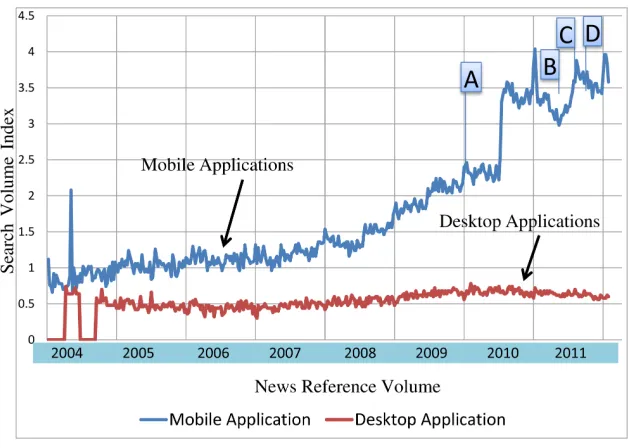
[image:5.612.145.462.303.527.2]Figure 2 displays the popularity trend of mobile versus desktop applications from 2004 till present, as measured by Google Trend. The constant trend of desktop applications versus the drastically hiking trend of mobile applications advocates a demand for mobile applications. The prominent spot points in Figure 2 indicate that mobile applications usability is sharply increasing in several domains including business, government, health, and social networking. Spot points related to mobile application are as follows.
Figure 2: Google Search Trend for Mobile and Desktop Applications Since 2004
(A) WebMD Launches New Version of Free Mobile Application for Physicians CNNMoney.com - Feb 16 2010
(B) LexisNexis(R) Launches Accurint(R) Mobile Application for Government and LawNewsday - Jul 12 2011
(C) Health Insurance Launches Mobile Application to Help Consumers Compare and Apply for Health Insurance Coverage Market Watch- Sep 19 2011
(D) Facebook acquires mobile application firm Gowalla Economic Times- Dec 6 2011
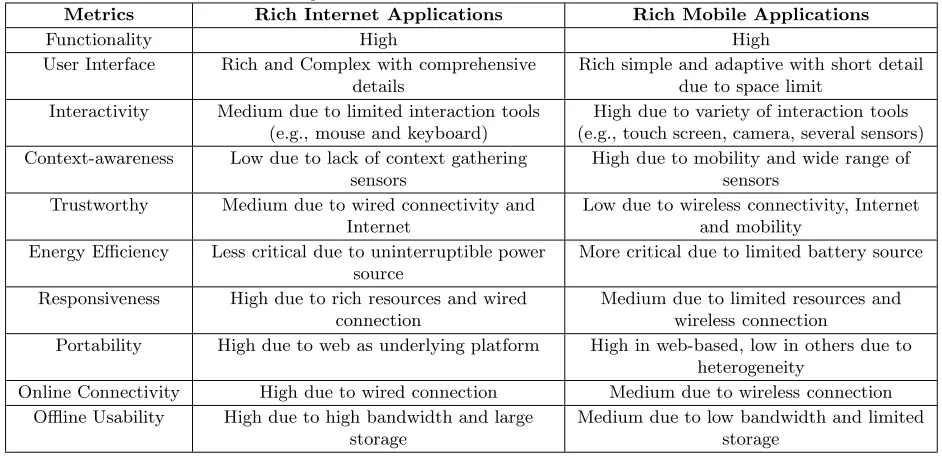
Table 1: Comparison of Rich Characteristics between RIAs and RMAs
Metrics Rich Internet Applications Rich Mobile Applications
Functionality High High
User Interface Rich and Complex with comprehensive
details
Rich simple and adaptive with short detail due to space limit
Interactivity Medium due to limited interaction tools (e.g., mouse and keyboard)
High due to variety of interaction tools (e.g., touch screen, camera, several sensors) Context-awareness Low due to lack of context gathering
sensors
High due to mobility and wide range of sensors
Trustworthy Medium due to wired connectivity and
Internet
Low due to wireless connectivity, Internet and mobility
Energy Efficiency Less critical due to uninterruptible power source
More critical due to limited battery source
Responsiveness High due to rich resources and wired connection
Medium due to limited resources and wireless connection
Portability High due to web as underlying platform High in web-based, low in others due to heterogeneity
Online Connectivity High due to wired connection Medium due to wireless connection
Offline Usability High due to high bandwidth and large storage
Medium due to low bandwidth and limited storage
example, Microsoft Silverlight Mobile is a platform to conveniently develop and integrate rich interactive features (e.g., pixel shader and sketchflow) to resource-constrain mobile devices regardless of time, place, or platform. Oracle Sun has introduced Java FX Mobile technology to actuate generating cross-platform mobile applications adaptive to all screen types, e.g., mobile, tablet, laptop, and TV. By using Adobe Air, developers can build off-browser standalone applications for PCs and mobile phones. Flash Builder and Flex of Adobe enable developers to use a common codebase to build cross-platform applications for Android, Blackberry, tablet OS, and iOS. Leading companies like IBM and HP are also contributing in R&D activities. The efforts of IBM and HP research groups are to enhance user experience and pave the way towards RMAs development. IBM Mobile Portal Accelerator is a content/application adaptation product that provides rich mobile-centric experience to users of various mobile devices with different visualization capabilities. µCloud
[10] is a recent cloud-based RMA framework developed by HP that aims to facilitate RMA development using cloud resources. Such innovations and contributions from the academic and industrial communities advocate rapidly emerging trend of RMAs in the near future.
4. RMAs Versus RIAs
Although RMAs inherit their properties from RIAs, their similarities are mostly ostensive due to intrinsic smartphone properties and the mobile environment. In this Section, the major characteristics of RMAs are described based on literature and current smartphone advancements as well as application and user requirements. Several differences in the way richness is delivered to immobile and mobile users are discussed and summarized in Table 1.
4.1. RMAs Characteristics
Figure 3: Screen comfort Zone of Rich UI [29]
in RMAs, its degree varies among varied applications depending on how rich traits are combined and deployed in different RMAs. Traditional application models demand a high degree of user concentration and competence, and consume noticeable amounts of resources that are not appropriate in such domains.
Richness among RMAs differs due to several influential metrics such as (i) appropriate composition of technologies and characteristics, (ii) applying user preferences and expectations in the design level, and (iii) the quality of execution environment (including quality of wireless communication and computational capabilities of hosting device). Certainly, basic characteristics of software systems and applications (that are not discussed here) such as consistency, reliability, and scalability [26, 27] are necessary for the success of RMAs. Several key attributes of RMAs that are realized or will be realized in near future are explained as follows.
4.1.1. Rich Functionality
RMAs deliver overwhelming functionality compared to traditional mobile applications, regardless of smartphone resource constraints. From user perspective, rich functionality is the ability to conveniently perform any computation regardless of the application resource requirements and mobile device’s constraints. Rich functionality is directly affected by the architecture, logic, algorithm, programming language, and computing technologies used in design and development phases. For instance, a highly functional navigation application utilizes available features of the hosting device (e.g., GPS, accelerometer, gyro, and multimedia) to minimize user effort (e.g., automatically identifies current location and driving speed) in fulfilling users’ needs. Maintaining adequate map including a large POI (Place of Interest) database in addition to a lightweight, optimum, consistent search algorithm can deliver the essence of rich functionality to the users navigating on the go. However, rich functionality increases the development and execution complexity, imposing extra effort on the application analyst, designer, and developer, and requires several cornerstone technologies.
4.1.2. Rich User Interface
Rich Design. Rich and user-centric mobile interface leveraging modern interaction technologies, particularly touch, gesture, multimedia processing, and sonification (conveying a message or alert to user via non-speech audio [30]) is transforming traditional UI to rich UI [31]. Microsoft Silverlight, Adobe Air, and Adobe Flash are eminent industrial efforts to enrich mobile user interface using various multimedia and visual effects. In an attempt to create guidelines for designing a rich UI —taking into account ergonomic principles—IBM-acquired Worklight Inc. [29] identifies three comfort zones, namely Easy, Reach, and Medium (Figure 3). Positioning touchable icons in the Reach and Medium zones likely degrade Quality of Experience (QoE) —since accessing objects in these areas is not easy for the majority of users—, whereas utilizing the Easy zone is convenient for a wide range of users to tap. However, the enlarged screen of contemporary smartphones changes the way users interact with devices. Though they are handheld devices, it is awkward to hold with a single hand and interact with them.
Easy and Less Astonishing. Intuitive, simple, well-designed UI is one of the major factors contributing to the astounding success of RMAs. According to the principle of least astonishment, applications should look and behave analogous to users’ mental expectations —not according to the application’s functionalities —in order to keep them engaged and satisfied [32]. However, designing a simple and less astonishing UI, especially in a small visualization area of a mobile device is a non-trivial task. Very large number of+ mobile users are experiencing digital interaction for the first time. Besides, most of them are in a hurry and have less concentration while interacting with the device. Hence, a rich UI can effectively enable end-users to interact with the device to obtain the required output with the least concentration while still are able to undo possible mistakes and correct them.
4.1.3. Immersive Interactivity
Smartphones are an intrinsically suitable platform that leverages expressive interaction and conveys RUX to mobile users by responding to their instantaneous reflections and gestures. At first glimpse, tiny physical or virtual keyboards and lack of mouse seem to be serious problems, but mobile applications are privileged to alleviate contemporary digital features, especially tilting sensors, accelerometer, GPS, and camera to offer alternative interaction techniques. Moving a magnet near smartphone [33], using accelerometer for data entry [34, 35], tilting handset to browse photos [36], and tapping the screen to mute and unmute the sound [37] are among the alternative smartphone interaction methods. The smart composition of these interaction methods for designing multi-modal mobile applications [38] is vital in delivering RUX to mobile users.
4.1.4. Context-Awareness
RMAs can leverage context information to deliver user-centric functionality, UI, and interaction to mobile users. Context is a piece of information that can be used to characterize the structure and behavior of various entities such as person, place, environment, or object [39]. For instance, in mobile computing, context can be geographical coordination of a user, weather humidity, bandwidth availability, mobility traits, and user preferences which are not difficult to acquire with current smartphones [40]. Smartphones utilize multiple tools and technologies such as accelerometer, light sensor, compass, and GPS to acquire comprehensive knowledge about their surrounding environment and people [41]. Context in RMAs can be utilized to adapt content and presentation of functions and services according to individual users with the aim of generating user-centric context-aware applications [42].
4.1.5. Trustworthy
complicated resource-intensive security algorithms is infeasible due to resource deficiencies of mobile devices. Therefore, it is crucial to assure mobile users, especially corporate business users, regarding the security and privacy of their data.
4.1.6. Energy Efficiency
Energy efficiency is an inseparable trait of RMAs because a battery-hungry application can quickly deplete available energy source and hinder the usability of applications main functionality and secondary rich traits. The miniature nature of mobile devices and user safety concerns inhibit exploiting large battery pack with mobile devices and frequent recharging battery is one of the most aggravating impediments for mobile users [49]. Thus it is vital to deliver complex high-performance functionalities at the cost of the least energy demand. Researchers have been endeavoring to enhance energy efficiency in mobile devices using varied approaches, particularly energy-aware hardware and OSs, fidelity adaptation, efficient resource management, and Mobile Cloud Computing (MCC) solutions [50–52]. In MCC, researchers exploit cloud-based resources to augment computational capabilities of mobile devices to not only conserve local resources, particularly battery, but also alleviate rich functionality by execution of substantially compute-intensive applications on the go [53].
4.1.7. Crisp Response
Spontaneous reflection to changes/actions and arrival of data are desirable to users and hence, are crucial for RMAs. Application processing time and communication latency are major evaluating metrics to convey a sense of responsiveness to users. Though tolerable waiting time for web users is recently measured as 2 seconds [54], it is an unacceptable delay to thin-client applications [55]; smartphones, as thin computing devices, strive for crisp response of less than 150 ms. However, response delays of less than 1 second are noticeable to annoying, while delays of more than 1 second pose potential threats to user experience and should be avoided.
4.1.8. Cross-Platform Cross-Device
Developing cross-platform and cross-device RMA significantly enriches developers and end-users expe-rience. Enterprise employees are not interested in corporate-issued smartphones and prefer to use their personal devices for business purposes [56]. In the absence of portability trait of mobile applications, de-velopers should write different versions for a single mobile application, each for a specific platform —this not only imposes financial costs, but also significantly increases development time [7]. Although realizing portability for RMAs is a challenging task, it significantly enhances quality of mobile users’ experience.
4.1.9. Ubiquitous Functionality and Data Access
Multi-tier architecture of RMAs enables distribution of task between native device and remote servers resulting in seamless ubiquitous functionality and data access which can realize the true feel of real time well-connected mobile applications to mobile users. Responding to asynchronous events as they occur in smartphones and back-end servers is an intrinsic trait of RMAs. In the event of network failure, techniques like widgets, push messaging, and partial cached data are suitable just-in-time reactions that convey a sense of connectivity to users. If developers assume that mobile devices are always connected to the web, application usefulness increases and user experience is enhanced. Because mobile users confront various connectivity levels at different times (i.e., high/low bandwidth and limited or no connectivity [57]), it is important to consider heterogeneous connectivity and bandwidth to provision offline support while designing and developing RMAs. However, ubiquitous content access while client, content, or network is moving demands forthcoming technologies and efforts [58, 59].
4.1.10. Offline Usability
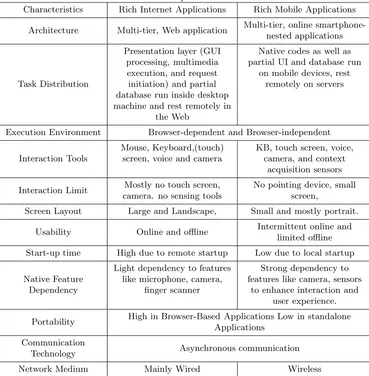
Table 2: Structural Comparison of RIAs and RMAs
Characteristics Rich Internet Applications Rich Mobile Applications
Architecture Multi-tier, Web application Multi-tier, online smartphone-nested applications
Task Distribution
Presentation layer (GUI Native codes as well as
processing, multimedia partial UI and database run
execution, and request on mobile devices, rest
initiation) and partial remotely on servers
database run inside desktop machine and rest remotely in
the Web
Execution Environment Browser-dependent and Browser-independent
Interaction Tools
Mouse, Keyboard,(touch) KB, touch screen, voice,
screen, voice and camera camera, and context
acquisition sensors
Interaction Limit Mostly no touch screen, No pointing device, small
camera. no sensing tools screen,
Screen Layout Large and Landscape, Small and mostly portrait.
Usability Online and offline Intermittent online and
limited offline
Start-up time High due to remote startup Low due to local startup
Light dependency to features Strong dependency to
Native Feature like microphone, camera, features like camera, sensors
Dependency finger scanner to enhance interaction and
user experience.
Portability High in Browser-Based Applications Low in standalone
Applications
Communication
Asynchronous communication Technology
Network Medium Mainly Wired Wireless
synchronized when the user returns online. RMAs can deliver offline usability via caching, state management, and data access mechanisms that requires large native storage as a non-trivial issue [60]. Google presently provides offline Gmail facilities to their smartphone clients using browser, which is a step towards delivering richness to end-users [61].
4.2. Structural Comparison of RMAs and RIAs
While the common vision of RIAs and RMAs is to deliver RUX, there are several structural discrepancies in fulfilling such aim. Table 2 presents major characteristics of RIAs and RMAs that are briefly analyzed and synthesized as follows.
architecture for RMAs—is to keep a partial copy of the application (including the presentation layer, logic, and data layer) in the mobile device and distribute the remaining components (which are likely resource-intensive tasks and contents) among private servers or public resources, particularly clouds. However, native components (e.g., camera-related codes) of the mobile application cannot be migrated from the device; non-native codes are free to be bounded to the smartphone or remote server.
From a communication perspective, both RIAs and RMAs leverage asynchronous communication mecha-nism as the most predominant technology for enhancing the quality of communication in online applications [62]. In asynchronous communication, the user request will be instantly forwarded to the server (either local or remote server) in the background while interaction can continue without interruption till the request is served and response is received. Eliminating redundant messaging between client and server reduces communication latency, something more crucial in RMAs due to the characteristics of the wireless medium. In terms of application usability, offering online and offline application functionality and access to content in RIAs and RMAs is necessary to fulfill user requirements and deliver RUX. In RIAs, desktop computers and LAN-connected laptops are well connected to Internet via broadband, leveraging high bandwidth and low jitter and latency. Such reliable communication mediums (compared with the wireless medium) and giant disk storage with terabyte spaces, facilitate online and offline functionalities and content delivery in immobile computers. However, wireless communication mediums of smartphones are comparatively low-bandwidth, error-prone, and intermittent with high jitter and long WAN latency. Limited smartphone disk storage in the wireless environment hampers online usability and offline functionality of applications. Disconnecting from the network impedes application usability in the absence of offline functionality and local data storage.
Visualization capabilities and interaction mediums are additional differentiating aspects of RIAs and RMAs. Desktop users benefit from large screens, full-size physical keyboards, and multi-key mice. However, a small mobile screen and the lack of a physical keyboard or mouse differ the interaction quality of mobile applications from desktop applications. Data entry and interaction using contemporary mobile devices have recently revolutionized utilizing modern data acquisition tools like accelerometer, compass, GPS, camera, and thermal sensors tools to enhance user experience [41, 63, 64]. However, sensing large amounts of data consumes local mobile device resources. Storing and interpreting such extensive data are also challenging tasks that require future research and development.
5. Taxonomy of RMA Development Problems
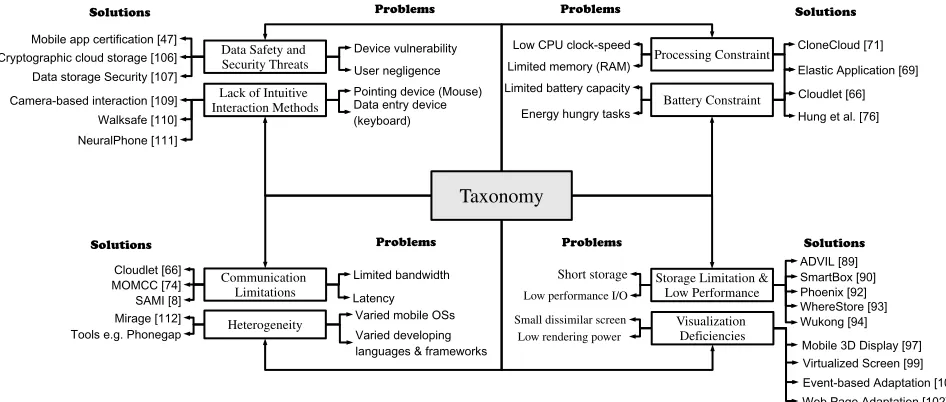
RMAs are likely a future generation of smartphone applications with the likelihood of becoming domi-nantly popular as compared to other mobile and desktop application models such as RIAs or web applica-tions. However, several problems encumber RMAs’ adoption and success. In this Section, we discuss RMAs’ development problem and review efforts and proposals that aim to alleviate these problems. The devised taxonomy is depicted in Figure 4.
5.1. Processing Constraint
Processing deficiencies of mobile clients due to low CPU speed and limited RAM is one of the major problems in mobile computing [50, 53]. Users constantly envision using smartphones with similar computing capabilities to desktop machines to perform heavy computing tasks on the go. Such vision requires rich resources, including a powerful processor and large memory. Although smartphone processing abilities are on the increase, user expectations —especially business users—are still far beyond the actual smartphones’ processing capabilities.
Figure 4: Taxonomy of RMA Development Problems and Solutions
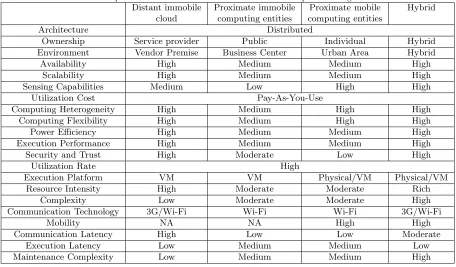
augmentation solutions, RMAs can provide more complex functionality to the users, consume less energy, and perform tasks in less time —if augmentation overheads do not exceed conserved resources [65]. While efforts to manufacturing high-end hardware devices are in progress, software approaches are tremendously emerging. MCC solutions are the most prominent software approaches to alleviate smartphone shortcomings. In the state-of-the-art MCC efforts, researchers [8, 66–74] exploit four types of cloud-based computational resources, namely immobile distant clouds (e.g., public clouds like Amazon EC2), proximate immobile computing entities (e.g., PC in coffee shops), proximate mobile computing entities (e.g., smartphones), and hybrid (e.g., Amazon EC2 and PC in coffee shops) [53]. Table 3 summarizes the characteristics of these four types of based resources that are presented in our recent study [53]. Some of the most credible cloud-based augmentation efforts in MCC that use such heterogeneous cloud-cloud-based resources for augmentation are reviewed as follows.
CloneCloud [71] uses immobile distant cloud resources. It is an application partitioner and execution runtime framework that clones the entire mobile platform into the cloud Virtual Machine (VM) and runs the mobile application inside the VM without performing any change in the application code. The CloneCloud enables partial execution of mobile application locally when the intensive components are running in the cloud unless local execution tries to accessing the shared memory state. CloneCloud can substantially decrease the overall execution time via thread-level code offloading. When the native execution reaches the intensive component(s), the CloneCloud system migrates the computations to the cloud and continues native execution until the application fetches data from the offloaded state. The native execution is paused until the results are returned and integrated to the local application. However, the virtualization overhead, clone transferring cost to the cloud, and recurring synchronization of the shared data between the mobile and cloud degrade augmentation performance [75].
Table 3: Comparison of Cloud-Based Resources for Mobile Computation Augmentation.
Distant immobile Proximate immobile Proximate mobile Hybrid
cloud computing entities computing entities
Architecture Distributed
Ownership Service provider Public Individual Hybrid
Environment Vendor Premise Business Center Urban Area Hybrid
Availability High Medium Medium High
Scalability High Medium Medium High
Sensing Capabilities Medium Low High High
Utilization Cost Pay-As-You-Use
Computing Heterogeneity High Medium High High
Computing Flexibility High Medium High High
Power Efficiency High Medium Medium High
Execution Performance High Medium Medium High
Security and Trust High Moderate Low High
Utilization Rate High
Execution Platform VM VM Physical/VM Physical/VM
Resource Intensity High Moderate Moderate Rich
Complexity Low Moderate Moderate High
Communication Technology 3G/Wi-Fi Wi-Fi Wi-Fi 3G/Wi-Fi
Mobility NA NA High High
Communication Latency High Low Low Moderate
Execution Latency Low Medium Medium Low
Maintenance Complexity Low Medium Medium High
mobile applications to immobile distant cloud’s virtual execution environment. The efficiency and precision of runtime environment is noticeably impacted by the completeness and fidelity of emulated platform. The authors exploit software agents in smartphone and cloud counterparts to decrease system complexity and facilitate its management and maintenance. The agent in mobile side creates VM and clones the application in whole (even native codes and UI components) with partial data/memory state and migrates to the cloud. Different from CloneCloud, this proposal reduces latency by partial offloading part of the data stack that is explicitly created and solely owned by the application to the VM instead of cloning the complete memory. In remote execution stage, the system continuously updates the progress between smartphone and cloud to ensure integrity of both copies. Probabilistic QoS-aware communication technique in this effort aimed to perform a communication-QoS trade-off to satisfy the requirements and enrich user experience. For example, the control data which are often small in size can be given a reliable communication technique, whereas voluminous video streaming data can be transmitted via less accurate communication method. Peripheral features in this solution such as automatic virus scanning, data imaging and recovery, and data sharing in the virtual environment are promising to enhance quality of user experience. In this effort, RMA’s crisp response and rich interactivity are degraded due to the remote UI execution. To enhance responsiveness and interactivity of RMAs, UI and interaction components can be executed locally instead of migrating the entire application to the cloud.
SAMI (Service-based Arbitrated Multi-tier Infrastructure for mobile cloud computing) [8] proposes a novel cloud-based computation augmentation solution that leverages a 3-tier cloud-based resources, namely public clouds, Mobile Network Operators (MNO) as one-hop cloud provider for mobile users, and autho-rized MNO dealers that are distributed in urban and rural areas. In this solution, two types of cloud-based resources are utilized in its hybrid resource type, which are distant immobile clouds and proximate immobile computing entities. The main rational behind such hybrid infrastructure is to provide highly elastic local-ized computational resources anywhere anytime. In this model heterogeneous communication technologies, namely IEEE 802.11 and cellular technologies are used; IEEE 802.11 enables energy efficient communica-tion with nearby MNO dealers since it consumes less energy than cellular [77], whereas cellular technology (e.g., 2G and 3G) realizes communication with public clouds and MNOs. Although SAMI is a conceptual framework, its hybrid solution is can significantly reduce long WAN latency and increase energy efficiency for execution of RMAs towards RUX. Moreover, authors need to discuss a detailed discussion of a feasible business plan for SAMI.
5.2. Battery Constraint
Battery power is the only non-replenishable resource in smartphones that requires external resources to be renewed [78]. Current smartphones are equipped with a lithium-ion battery with less than 3000 mAh capacity that lasts few hours when they are used as computing or communicating devices. Manufacturers’ ideals of attaining device lightness, compactness, and handiness are preventing the production of bulky batteries, unless alternative power technologies such as nuclear energy that can last month or years imminently enter the market. Moreover, user safety is another vital issue that restrains hardware producers not to produce high capacity, long lasting batteries [79]. Explosion of a battery with few hundreds milliamperes capacity is potentially dangerous and can threaten users’ health.
Additionally, battery capacity growth is as slow as about 5-10% per annum [80] because current battery cells are excessively dense [81]. Via sundry energy harvesting efforts [82, 83] researchers are endeavoring to restore battery power from renewable resources such as muscle power, wireless signals, and solar power. Nevertheless, usability of these resources is inhibited due to their unreliability and intermittency [84]. For example, an immobile end-user at dark cannot replenish his/her device battery in the absence of uninterrupt-ible wall power and wireless radiations. Recent researches are towards developing alternative long-lasting energy sources, particularly nuclear batteries that can last for months or years [85]. However, future R&D efforts are essential to fulfill insatiable energy demands of mobile users.
context-aware selection of communication medium from a pool of heterogeneous technologies can conserve mobile batteries (under investigation in the next generation of wireless systems [86, 87]), the energy resource limitations in smartphones remain a problematic challenge in the development of RMAs.
Researchers efforts in conserving mobile energy can be classified as four major categories of i) developing energy-aware OSs, ii) optimizing wireless communication interface and protocols, iii) optimizing sensors, and iv) augmenting mobile devices via outsourcing [52, 53]. Moreover, optimizing mobile battery lifetime requires prior knowledge on energy consuming components in mobile device, energy requirements of running mobile applications, charging and de-charging cycle of the battery, and estimation of next battery recharge. One of the most credible approaches to alleviate energy deficiency of mobile devices is to perform computa-tional augmentation and offload energy-hungry components of mobile applications to a remote resources, as explained in section 5.1. Mobile computation augmentation not only aims to deliver intensive computation to mobile users, but also save scarce energy and prolongs battery life. In order to realize the latter vision, researchers investigate various dimensions of energy dissipation in mobile augmentation. High communica-tion between mobile device and remote resources, pre-offloading transaccommunica-tions in mobile device (e.g., resource profiling, identifying and partitioning resource-intensive codes, identifying appropriate remote resource), and overheads associated with long distance between mobile and remote devices are major sources of de-pleting mobile device’s battery. Other transactions like monitoring, synchronizing, and integrating remote computations with native codes are part of post-offloading tasks that drains battery.
Researchers in µCloud [10] aim to minimize the pre-offloading overheads by executing battery-hungry
components of RMAs inside the cloud. MOMCC [74] and SAMI [8] exploit service oriented architecture to reduce the code partitioning and migrating overheads. In Cloudlet, Hyrax [88], and MOMCC researchers endeavor to reduce the long WAN latency and energy cost of augmenting computing power of mobile devices using nearby computing entities. While Cloudlet uses proximate immobile computing entities such as coffee shop and Airport computers, MOMCC and Hyrax build a cloud of nearby smartphones which are able to perform computations on behalf of neighboring resource-poor smartphones. Although researchers have significantly study varied energy efficiency approaches from different perspectives [51–53] mobile battery conservation is still one of the most crucial research agendas in mobile computing.
5.3. Storage Limitation
Storage medium in majority of contemporary mobile devices is dominated by flash-based memory mod-ules such as eMMCs (Embedded MultiMedica Cards) and micro SD cards to provide space for OS, appli-cation, and data [89]. Low power cost, small form factor, and shock resistance are some appealing features of such memories. However, higher utilization cost compared with hard disk drives beside lower write per-formance compared with their read perper-formance impact on system usability and efficiency leading to user experience degradation and RMAs failure. Thus, limitations in storage system of mobile devices are capacity (due to ever-increasing digital contents [90]) and low I/O performance (since majority of mobile online and web applications are write dominant) [89]. While desktop computers are equipped with vast storage to store voluminous data inside local hard disks, smartphones storage is bounded to few gigabytes mostly utilized by OS, user applications, and personal content. Therefore, content management is intensified and offline usability is hindered in smartphones. To expand smartphones’ local storage, researchers and industrialists employ rich cloud storages to enable unrestricted code and data access in mobile devices. For instance, Amazon S3 and Dropbox are general purpose cloud storages products offering simple operations to store and retrieve infinite data in cloud while enabling data synchronization in multiple devices.
In I/O performance improvements researchers have proposed several solutions. We review some of the academic storage solutions that expand capacity using cloud resources, and efforts that aim to enhance I/O performance of mobile devices as follows.
block is replicated on at least K nearby mobile nodes (e.g., at least 2 nodes) to ensure that data blocks are always available even when nodes are leaving the regional cloud or getting disconnect from the network. However, Phoenix robustness and reliability highly depend on the precise selection ofK value so that data consistency can be ensured with minimum data redundancy. In this approach, advertising model is used to enable autonomous ad hoc system management and maintenance, in the absence of central administration entity. Thus, there are large redundant unicast and multicast communications between participating nodes to manage the system, which increase system complexity and networking overhead. Moreover, security, privacy, and data safety (of both mobile storage consumer and provider) in unauthenticated wireless environment originate noticeable implications that hinder usability of such system in practice. Incentivizing mobile users to share their scarce storage with other resource-constraint mobile nodes is another issue not studied in this research. Phoenix is currently working in one-hop networks only and future efforts are essential to ensure that multi-hop communication between nodes is possible.
Smartbox [92] is a self-management, online, cloud storage and access management system developed for mobile pervasive devices to expand device storage and facilitate data access and sharing. In Smartbox, each mobile device is associated with a shadow storage to store/retrieve personal data using a unique account. To facilitate data sharing among larger group of end-users in office or at home, a public storage space is provisioned. Smartbox enhances the interaction quality by exploiting traditional hierarchical namespace for smooth navigation and employ an attribute-based method to facilitate data navigation and service query using semantic metadata (e.g., the publisher-provider metadata). Data navigation and query using tiny keyboard and small screen irk mobile users when inquiring and navigating stored data in cloud. However, mobile users need always-on connectivity to access online cloud data which is not yet achieved and demand great deal of research to become a reality.
Researchers in WhereStore [93] propose a location-based data storage for cloud-connected smartphones to minimize the data fetch time and energy costs by replicating important cloud-stored data on the mobile device. This proposal aims to enhance context awareness, application interactivity, and energy efficiency while minimizing long WAN latency for RMAs. The fundamental concept of the WhereStore is that users entertaining in dissimilar activities in different locations require heterogeneous types of data. For example, an international visitor in Kuala Lumpur demands information related to nearby places of interest than entire Malaysia. Therefore, identifying user location beside predicting and caching essential information in timely manner could improve the system efficiency and enrich the user experience. Nevertheless, accurate prediction of future user location and his/her demanding data, and determining the right time for caching data are challenging tasks that inhibit usability and adoption of WhereStore.
Efforts in Wukong [94] is to propose a cloud-based user-friendly, highly available file service for multitude of heterogeneous mobile devices. It realizes the vision of opening and modifying cloud-stored contents from mobile application without downloading them into the native mobile device storage. Utilizing a service abstraction layer (SAL), the researchers provision support of heterogeneous cloud-side services such as FTP and Google docs service in a transparent manner and propose the cache management and pre-fetch mech-anisms in varied scenarios to enhance system performance and reduce long WAN latency. Nevertheless, it fails to always minimize long WAN latency because of limited wireless bandwidth and costly I/O operations. Pre-fetching data from cloud to the smartphone can reduce WAN latency and save energy towards rich user experience when there is a long gap between open and read operations. Moreover, Wukong alleviate data security and shrinks data communication volume by employing an encryption and compression mechanisms. Although compression methods leveraged in this work is beneficial for text and log files compression, it is less effective when compressing multimedia files such as image, music, and video.
When the log area is consumed, its hot contents (data that will be overwritten in the future) are appended to the hot region and cold data are written to the original area. Such mediation role improves the overall write performance of mobile storages up to 3 times.
5.4. Visualization Deficiencies
Developing rich UI and interaction experience in RMAs is a non-trivial task due to small visualization area and rendering limitations of mobile devices. Small screen size obstructs data visualization, especially large data, while rendering constraints prohibit utilization of resource-intensive, high-end data presentation techniques. To mitigate these problems, academic and industrial communities endeavor to augment smart-phones’ visualization abilities. We classify them into two major groups of visualization area extension and content adaptation that are described as follows.
5.4.1. Visualization Area Extension
Kyocera Communications manufactured a double 3.5-inch screen smartphone named Echo1 envisioning to extend shared screen size of smartphones to 4.7 inches diagonally. Such device is built to be used in different functioning modes so that screens can be used either individually or together. However, adoption of such devices is hindered due to their form factor and energy dissipation issues that demand future R & D efforts. GeoTV [95] and the Nirvana phone [96] utilize proximate, large screens similar to a TV or computer monitor to expand smartphone presentation area. Yet, these solutions require immobile infrastructure like a TV that would immobilize the smartphones. Alternatively, ad hoc solutions such as the mobile projector used in Samsung Galaxy Beam2 improves smartphone data visualization and enable mobile users to beam and share photos, videos, and presentation slides on a 50-inch wide area wall and such. Although the battery lasts for about 3 hours and the projection quality is not as fine as a modern projector’s —especially in a bright place —it can be beneficial in scenarios where people desire to share their screen. Clearly, screen projection is not a suitable solution when looking at private, sensitive information.
Mobile 3D display technology can overcome visualization problems if computing and power limitations of smartphones are mitigated. Glass-free auto-stereoscopic displays [97] are designed to present 3D data via binocular parallax that offers a different view for each eye. However, this is computationally more com-plex than 2D display [98]. Moreover, several soft techniques, including tabular pages, 3D objects, multiple desktops, switching between landscape and portrait views (needs accelerometer sensor), and verbal commu-nication can increase presentation area and enrich quality of interaction in contemporary smartphones.
Virtualized screen [99] aims to enhance UI rendering capabilities by moving screen rendering processes to the cloud and produce the rendered screen as an image to the mobile device. The authors assume that most of compute- and data-intensive computations take place in the cloud and so it is feasible to enrich the user experience and migrate the screen rendering tasks to the cloud. Therefore, exploitation of infinite clouds can augment computing capabilities of smartphones, prolongs device battery, and enhances the interaction and responsiveness of mobile applications towards rich user experience [53]. Screen virtualization technique (running partial UI rendering in cloud and remaining in the mobile device) can enrich user experience, especially for lightweight, high-fidelity, and interactive mobile applications that can be executed on the local resources. The authors in this proposal aim to augment visualization abilities of mobile devices, reduce the impacts of heterogeneity among multitude of mobile devices, and ease porting RMAs to dissimilar mobile devices (e.g., smartphone, laptop, and IP TV) with different screen sizes [7]. To mitigate the overhead of mobile-cloud data transmission, a frame-based delegate system is maintained to forward the visual updates from the cloud to the smartphones. Frame-based delegate system captures and feeds the entire screen image to the transmission unit. In this work, frames are updated according to the changes in previous frame stored inside the mobile and cloud device. However, interactivity and responsiveness requirements of RMAs obligate online streaming of screen images which is impacted by long WAN latency. Although optimized screen transmission approaches are deployed to reduce the networking traffic, the impacts of computation and communication latencies are not yet investigated in this preliminary solution.
1
http://www.echobykyocera.com/
2
5.4.2. Content Adaptation
Mobile and immobile applications feature dissimilar scope, aims, and contents abstraction levels. Com-prehensive contents are desirable in immobile machines, whereas compact contents are appropriate for smartphones [100]. However, it is not feasible to produce different content versions for various devices and accurate automatic content adaptation is associated with two challenges of semantic gap and user intention gap. To realize accurate content adaptation for multitude of heterogeneous mobile devices, researchers in [101] leverage event-based semantic image adaptation scheme to eliminate unnecessary or less important contents based on user preference and available visualization areas. In this approach, an event-dependent semantic extraction method aims to identify important people or objects and associate them with each other in any given image. Also, a simple feedback mechanism dynamically collects user updated preference context to integrate them with the information provided during semantic extraction. Accordingly, an adaptation algorithm integrates important objects with user preferences to produce a suitable version for target mobile device.
Chen et al. [102] propose and implement a page split method inside of the mobile browser to adapt the web page contents to the mobile devices according to the screen size and content semantics. The web page can be further processed to build a two-level hierarchy with thumbnail in top level and global view at bottom level. During a 3-step page analysis mechanism, they exploit production-time layout of web pages to split the page into small logically related blocks. In the first step HTML tags are analyzed to specify high-level content blocks. In second step, contents in each high-level contents block are analyzed to identify explicit page separators and in last step, implicit separators are analyzed to accurately split the contents in a particular page. Although results are promising, components like page analysis, content detection, page splitting, and index-page generation algorithms consume high volumes of local resources.
5.5. Data Safety and Security Threats
Establishing trust in RMAs becomes extensively complex due to the insecure nature of smartphones in wireless mobile environment. Mobile devices are susceptible to safety breaches because of high probability of hardware malfunction, physical damage, stealing, and loss. Hence, information stored inside the local storage of mobile devices is not safe. Moreover, common mobile malwares such as virus, Trojans, rootkits, and botnets [46] beside future threats, specifically financial malware and surveillance attacks deteriorate security and privacy of mobile users, especially Android users.
Additionally, the need for simple UI in RMAs and neglecting security principles by end-users increase security risks of mobile computing [103]. For instance, hiding a bank’s web link beneath an icon helps the mobile user to read and login quickly, but a hidden bank address is susceptible to being changed to a fake link without the user perceiving it [104, 105]. Moreover, features like GPS and accelerometer in smartphones potentially can violate user security and privacy [48]. For example, authors in (SP)iphone demonstrate that utilizing smartphone’s accelerometer sensor, the malicious code can recover text entered on a nearby keyboard. They could extract as high as 80% of the text by detecting and decoding keystrokes while measuring the physical position and distance between different vibrations.
Researchers in [47] aim to augment trust among mobile users by analyzing more than 300 Android applications to identify attacking points and approaches in mobile application. The authors develop an application certification model to automatically distinguish malware from safe applications. However, the usability of this algorithm cannot be extended much due to the presence of complicated malware that cannot be spotted easily. Moreover, mobile devices are not a safe medium for storing sensitive user data (e.g., banking and financial data) due to their security vulnerabilities. To enhance data safety, researchers employ remote storage to store data on remote servers which are likely safer than mobile devices. However, cloud resources are vulnerable too. Several efforts [106, 107] by various researchers were meant to investigate cloud storage security and propose methods to better secure cloud storage; however, breaches like Amazon EC2 crash and Dropbox security glitch are still reported [45].
5.6. Intuitive Interaction Methods
Providing rich interaction in RMAs is a challenging task in the absence of intuitive interaction devices. Without mouse, intuitive methods such as selection, double click, and right click are redefined or even undefined in smartphones; if the object is touched, execution is initiated. Similarly, double clicking is dismissed, the dragging gesture is transformed to scrolling and right clicking is virtually simulated by a long touch in several OSs, particularly iOS and Android.
The keyboard is a common text-based data entry method in the majority of smartphones, but data entry using a tiny keyboard is an irksome impediment to users. However, several features such as handwriting recognition, camera, data collecting sensors, GPS, and accelerometer can be leveraged for collecting data, that noticeably enhance the quality of interaction in modern smartphones [108]. For instance, Samsung maintains 3-axis accelerometer and 3-axis magnetic sensor to provide 3D motion-detection and enable device to collect data when user is moving, a computing task that is resource-intensive. We present some of the efforts that aim to enrich interaction quality of mobile users as follows.
Authors in [109] aim to facilitate mobile-user interaction in the absence of mouse, using the smartphone camera. A mobile-user can interact with an application by moving his/her device while the camera cap-tures user reflection and movement, a feature-based tracking algorithm analyzes them and determines the scrolling directions and magnitudes. The collected data are sent to the event handler —identical to the same component used in detecting mouse movement—to determine the scroll direction and level. The camera is leveraged as a pointing device and zoom level control in applications, similar to mouse function. Hence, it can meet the requirements of mouse-driven applications and mouse-oriented users. However, accurate estimation of camera movements in dynamic, rapidly-changing, mobile environment is challenging. For in-stance, if user moves in front of camera without moving the device, the system is unable to identify the source of movement and fail to accurately identify the scrolling direction and level.
WalkSafe [110] is an Android application that aims to increase the interaction quality of mobile users with their external environment. It utilizes smartphone’s back camera and accelerometer sensor to enhance the walking safety of mobile talking pedestrians. While the user is talking on the phone, the camera continuously captures and analyzes captured images to alert users if a car is approaching. However, WalkSafe functionality heavily relies on the vision capabilities of smartphones. So, users are at risk if they obscure the camera vision by finger, scarf, or any other object while talking. Likewise, if an approaching car is not in the camera’s view or the surrounding light is not sufficient to capture a good photo, user safety is in danger. These methods are also not energy-efficient; in case of WalkSafe, the application turns the camera on while the user is talking and its decision making is based on an image recognition process including several steps of capturing, pre-processing, and analyzing captured images via an offline dataset which rapidly drains the battery. Leveraging cloud-based augmentation models [53] in MCC can significantly improve the interaction quality and reliability in such systems.
NeuralPhone is a brain-to-smartphone interface [111] that enables intuitive interaction with smartphone applications without touching the device. They leverage a non-expensive digital device (called electroen-cephalography) to process brain’s signals and transform them into wireless signals understandable by the smartphone. The authors have implemented an address book application which can flash the photos from the contact lists, when the photo matches the user decision, the phone automatically dial the number. However, it requires user to wear a bulky electroencephalography device to read the neural signals and look at the images to pick a particular contact. Users in future NeuralPhone may think about a friend and smartphone can dial the number without browsing all the contact list’s photos.
5.7. Heterogeneity
and Symbian are developed with different operating architectures, programming languages, and API levels. Even a single OS, in particular Android comes in various versions with different API levels. Therefore, mobile application developers should develop multi versions of a single mobile application, each for a par-ticular mobile device —which is a non-trivial task. Developing one application for several platforms is a costly process and demands extensive knowledge of several OSs and programming languages, and enforces redundant design, programming, testing, and evaluating tasks.
Microsoft, Adobe, and Oracle have been proposing heterogeneous developing technologies and platforms to deliver richness to end-users. Each of these technologies focuses on certain richness aspects. For in-stance, Adobe Flex enables developers to build cross-platform online applications. Java FX Mobile creates feature-rich applications with emphasis on security and portability. Using Java FX mobile, one can run an application on desktop, mobile, and any other device regardless of screen size, shape, and quality. How-ever single mobile OS does not support all available tools and technologies; similarly there is no single developing platform usable for all mobile devices. Heterogeneity problems are intensified in RMAs due to their dependency to remote computational resources, especially heterogeneous cloud-based resources. Heterogeneity-made problems such as portability and interoperability among cloud-based resources com-plicate development of RMAs. Therefore, further research and study are required to facilitate portability and interoperability between heterogeneously built RMAs. Some of the efforts and proposed solutions to alleviate heterogeneity towards enhancing RMAs development are described as below.
Mirage [112] is an OS kernel (exokernel [113]) that enables developers to produce rich, multi-tier applica-tions on normal OSs like Linux and port them to large number of mobile phones and cloud resources. Mirage can automatically convert the application to a fully standalone cross-platform application. The converted application runs on large variety of devices like desktop, smartphone and TV regardless of underlying plat-form’s heterogeneity. Mirage compiles and binds mobile application into the kernel installed and directly runs on ARM-based mobile devices and Xen-based clouds.
Researchers in [114] perceive interoperability issues between cloud systems and argue that convergence of SOA and semantics can herald a new interoperable cloud landscape. The authors describe RASIC which is an architecture for heterogeneous clouds that realizes semantic interoperation among inhomogeneous clouds. A user-centric paradigm is proposed to enhance development and deployment of SOA-based services in a large-scale, resource-intensive environment hosted by different cloud providers. Utilizing SOA design philosophy facilitates content movement across heterogeneous clouds and reduce the cost of data and code porting from one cloud to another.
Researchers [115] propose a solution for portability and interoperability by employing semantics in the cloud resource to overcome three fundamental problems of defining functionalities, modeling data, and fa-cilitating service description. The authors propose a semantic-centric programming paradigm by identifying four types of semantics for an application, namely system, non-functional, data, and logic & process. How-ever, utilizing semantics in MCC is not straightforward due to intensive processing and reasoning tasks beside challenges of acquiring and integrating large, reliable, and accurate semantic data [116, 117].
Moreover, several cross-platform solutions like Marmalade and PhoneGap automatically transit appli-cations to other platforms by code regeneration. The mobile application is developed once and transited to many devices with different OSs. However, according to American National Standard Dictionary of IT, portable applications should be able to migrate among different platforms with no/less modification and configuration which is yet an open research area.
5.8. Communication and Mobility Limitations
![Figure 3: Screen comfort Zone of Rich UI [29]](https://thumb-us.123doks.com/thumbv2/123dok_us/8646881.866501/7.612.250.346.61.245/figure-screen-comfort-zone-rich-ui.webp)