Efficient Image Pixel Comparison in Background
Subtraction for Real Time Motion Estimation
Neha1, Ms. Amrita Chaudhary2
1M.Tech Scholar Computer Science & Engineering. Deptt. Galaxy Global Group of Institutes, Dinarpur, Ambala 2Asst. Professor Computer Science & Engineering. Deptt. Galaxy Global Group of Institutes, Dinarpur, Ambala
Abstract: Digital video coding has gradually increased in importance since the 90s when MPEG-1 first emerged. It has had large
impact on video delivery, storage and presentation. Compared to analog video, video coding achieves higher data compression rates without significant loss of subjective picture quality. In image and video processing, the estimation of motion plays a vital role in video compression as well as multi-frame image enhancement. . The main problem is to detect and extract each frame in video sequence for detecting motion between these frames with less computation time. To solve this, it proposes an algorithm to detect and extract each frame in video sequence for detecting motion between these frames by improved background subtraction technique. In this, each frame of video sequence will be extracted and stored. After this, difference between frames will be computed. The performance in terms of MSE and PSNR is calculated.
Keywords- Motion Estimation, background Subtraction, Block Based Method, Pixel Based Method etc.
I. INTRODUCTION
From the period of 1990s the importance of digital video coding rapidly grows up. At this time MPEG-1 was introduced and it has a large number of features that it can deliver store and present the video in a very effective way. Digital video coding has higher data compression rate as compare to analog video coding and have no loss or less loss in picture quality [1]. Digital video coding has another advantage over the analog that it requires less bandwidth and has a wide area of applications like mobile TV broadcasting, point to point video transformation, video conference over Internet Protocol network, set-top box video playback by using CD, etc. Video processing systems are designed of different size, cost quality, power consumption and performance.
Digital video signals are represented and stored as sequences of video frames [2]. Each frame is in the form of a rectangular grid of pixels. The size of the grid defines the spatial resolution of a video frame. Different video formats have different spatial resolutions. For instance, the resolution can be as small as QCIF (176*144) for a video camera phone, or it can be as large as 4096*2048 or even larger for digital cinema applications. The pixels are in general represented in the RGB, YUV or other tri-component color spaces. Each component is typically digitized to 8 to 12 bits. The storage and transmission of uncompressed video requires significant resources. For example, we examine one second of a standard NTSC CCIR601 (720 * 480) sequence at 30 frames per second. Every pixel is represented by three color components, each being digitized to 8 bit.
To reduce the storage and transmission bandwidth requirements of digital video, compression is used. Video compression is used mainly for confiscating the redundancy in to the video signal and it is its main objective. The introduction of video compression also affects many system performance tradeoffs. Issues such as data rate, algorithm complexity, transmission channel characteristics, video source statistics, and buffer conformance should all be considered in the design. Various application scenarios may have different priorities in video coding. For instance, for video data archiving applications, highest priority is often given to preserving the original data as much as possible; while for real-time video streaming the channel bandwidth imposes a limit on the available data rate [3].
Video signals contain information in three dimensions. These dimensions are modeled by the temporal and spatial domains. Digital video compression seeks to reduce the redundancy in both domains. While there are many methods that can reduce the spatial redundancy, transform coding proves to be very effective as it can compact the energy into a few coefficients and only these coefficients need to be coded. One early transform-based video coding method is motion-JPEG [4].
by pixel approach or block based approach. In block based, various techniques are used like TSS, 4SS etc. So, many algorithms are developed to address the problem of motion estimation in real time. A major problem was to set up the automatic video storage which we eventually did not lead to a successful end because of a high demand factor. This also deal with a practical issues related to work with graphics and graphical objects, which can be further used for possible future use in other projects [5].
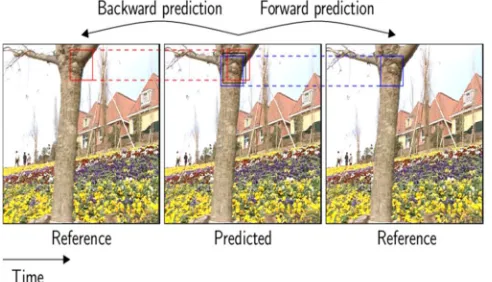
[image:3.612.184.430.183.324.2]The paper is organized as follows. In Section II, It describes introduction of motion detection. In Section III, it describes the proposed system with some introduction of three step search and four step search algorithm. Section IV defines the results of proposed system. Finally, conclusion is given in Section V.
Figure 1: Sample of Motion Prediction
II. MOTION DETECTION
Motion estimation is typically the most compute intensive part of video processing. It is therefore sensible to perform motion estimation only where motion is present. Recall the simple translational motion model (will drop arguments for displacement function d to make things easier to read.)
In(x) = In-1(x + dn;n-1) + e(x)
It is expected that e(.) will be small where d = 0 but BIG where d≠0. Therefore we can detect motion by measuring the Pixel
Difference (PD) = In(x) - In-1(x). The PD is then threshold to detect motion. Given the image sequence model below, the motion estimation problem is to estimate d at all pixel sites that are at moving object locations. The image sequence model is restated below for convenience.
In(x) = In-1(x + dn;n-1) + e(x)
Solution of this expression for motion is a massive optimisation problem, requiring the choice of values for d at all sites to minimise some function of the error e(x). It is typical to choose the value of d such that it results in the minimum DISPLACED FRAME DIFFERENCE (DFD) defined as
DFD(x) = In(x) - In-1(x + dn;n-1)
The problem is complicated by the fact that the motion variable d is an argument to the image function In-1(.). The image function generally cannot be modelled explicitly as a function of position and this makes access to the motion information difficult. Many motion estimators can be derived from the idea of minimising some function of the DFD. However the Bayesian framework is the only one from which all motion estimators can be derived.
A. Types of Motion Estimation
Different types of motion estimator can be identified by the way in which they solve the image sequence model for the motion variable d. These types are summarised as follows.
1) Simplest is Exhaustive search. That is: try every single possible value of d until DFD is minimised. It is computationally
intensive, but suitable for VLSI. Block Matching is an example of this type of motion estimator.
2) Make the equation an explicit function of d by using Taylor series to linearise the motion equation. Gradient based motion
estimators: Optic Flow, Wiener based, Pel-recursive all fall into this category.
4) Optic flow motion estimators include additional constraints (on the motion field itself) to estimate motion.
III. DESCRIPTION OF PROPOSED SYSTEM
A. Why Motion Estimation?
Image data in an image sequence remains mostly the same between frames along motion trajectories. This is the same as saying that the scene content does not change much from frame to frame. To exploit the image data redundancy in image sequences there is a need to estimate motion in the image sequence so one can process along motion trajectories after motion estimation, modules such as noise reduction and compression can be executed. Note that this is a practical approach to what is a JOINT problem of motion estimation and noise reduction or motion estimation and compression.
B. Problems with Pixel Difference
Unfortunately, the PD can be `noisy' because of noise in the sequence. This can cause `ragged' edges in detected motion regions, and holes in otherwise completely moving objects. This can be overcome by smoothing the PD (using spatial Gaussian filter for example) before thresholding. This causes `leakage' of detected motion into non-moving areas. Alternatively, one can use a block based strategy instead and average the PD over blocks to make a block-based motion detection decision. Note that we only want to do this to limit the image area over which we will be trying to estimate motion. Therefore it is sufficient for false alarms to be kept reasonably low. This mechanism for motion detection will generally fail in regions that show no textural variation or have low image gradient.
C. Objects Tracking
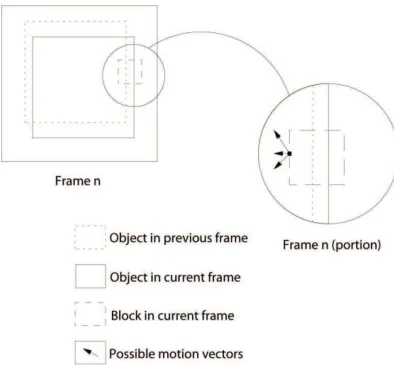
[image:4.612.206.403.401.584.2]Object tracking is the act of extracting a motion trajectory through an image sequence that is identified with the same object throughout the sequence. For instance, tracking is the process of extracting the position of the same robot fingertip through a sequence of images, or tracking the motion of human hand gestures for human computer interaction. Efficient tracking requires that the motion estimator incorporates knowledge about the expected smoothness of motion along a motion trajectory between frames.
Figure 2: Motion Ambiguity at Edge
D. Block Matching Motion Estimation
The most popular and to some extent the most robust technique to date for motion estimation is Block Matching (BM). Two basic assumptions are made in this technique.
1) Constant translational motion over small blocks (say 8*8 or 16*16) in the image. This is the same as saying that there is a
minimum object size that is larger than the chosen block size.
2) There is a maximum (pre-determined) range for the horizontal and vertical components of the motion vector at each pixel site.
block in frame n with a set of blocks of the same size at locations defined by some search pattern in the previous frame.
Given a possible vector v = [dx; dy], we can define the DFD between a pixel in the current frame and its motion compensated pixel in the previous frame as
DFD(x) = In(x) - In-1(x + dn;n-1)
Define the Mean Absolute Error of the DFD between the block in the current frame and that in the previous frame. The block matching algorithm then proceeds as follows at each image block.
Pre-determine a set of candidate vectors v to be tested as the motion vector for the current block For each v calculate the MAE
Choose the motion vector for the block as that v which yields the minimum MAE.
The set of vectors v in effect yield a set of candidate motion compensated blocks in the previous frame n-1 for evaluation.
E. Computation
The Full Motion Search is computationally demanding. Given a maximum expected displacement of ±w pels, there are (2w + 1)2
searched blocks (assuming integer displacements only). Each block considered requires on the order of N2 operations to calculate
the MAE. This implies N2 (2w + 1)2 operations per block for an integer accurate motion estimate. They attempt to reduce the
operations required either by reducing the locations searched [5] or by reducing the number of pixels sampled in each block [9]. However, reduced searches may find local minima in the DFD function and yield spurious matches.
F. Three step search
The simplest mechanism for reducing the computational burden of Full Search BM is to reduce the number of motion vectors that are evaluated. The Three-step search is a hierarchical search strategy that evaluates first 9 then 8 and finally again 8 motion vectors to refine the motion estimate in three successive steps. At each step the distance between the evaluated blocks is reduced. The next search is centred on the position of the best matching block in the previous search. It can be generalised to more steps to refine the motion estimate further. The major disadvantage of this technique is that it uses evenly allocated checking point pattern in the first step which makes it unsuccessful for the estimation of small motion. In this algorithm:
1) An initial step size is picked. Eight blocks at a distance of step size from the centre (One center point and eight points on the
boundary of the search square) are compared in the first step and thereafter only 8 points are searched.
2) At the start of a new step the search point center is moved from the best matching point from the previous step. Step size is
reduced by half after each step.
3) At the end of the search the step size is one pel.
G. Four Step Search Algorithm (FSS)
This algorithm was proposed by Lai-Man Po and Wing-Chug Ma in 1996 [5]. It is based on real world image sequences feature of centre-biased motion and half way stop techniques. Through a search pattern of +/-7, the FSS algorithm utilizes a center-biased search pattern with nine checking points on a 5 X 5 window in first step, instead of a 9 X 9 window as in Three Step Search. The center of the window is then shifted to the point with least BDM. In addition to that, Four Step Search minimizes the worst case search points from 33 to 27.
The Four Step Search Algorithm is as follows:
1) A least BDM point is initiated from a nine checking point model on a 5*5 window situated at the centre of 15*15 search area,
as shown in figure. If least BDM point is found at center, then go to step 4 else go to step 2.
2) Search window size is maintained at 5 X 5. Search pattern will depend on the arrangement of the previous minimum BDM.
a) If the previous lowest BDM point is positioned at the corner of pervious search window, 5 further checking points shown in
Figure are used.
b) If the earlier minimum BDM point is situated at the center of the horizontal or the vertical axis of the previous search window,
three further checking points as shown in Figure (b) are used.
c) If least amount of BDM is found at the midpoint of the search window, go to step 4 else, go to step 3.
3) The searching pattern strategy is same as step 2, but it will at last go to step 4.
4) The search window reduces to 3 X 3 as shown in Figure (c) and the direction of on the whole motion vector is consider as
IV. RESULTS & DISCUSSION
The main problem is to detect and extract each frame in video sequence for detecting motion between these frames with less computation time. To detect the moving objects in a video sequence based on background subtraction approaches, a background model should be generated at the first time before subtract it from each image of the sequence and then segmenting the moving objects. The block based approaches only reconstruct the image with the cost of high computation time. To solve this, it proposes an algorithm to detect and extract each frame in video sequence for detecting motion between these frames by improved background subtraction technique.
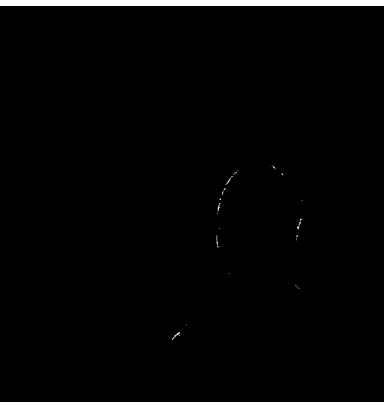
[image:6.612.210.403.258.461.2]We know that motion estimation is a process that calculates difference of two frames. It may be consecutive in nature. They used statistical information that featured activities of motion in previous frame. It helped in predicting the characteristics of current frame. They can skip checking points and make a decision on early termination. They presented an application to increase speed of motion detection with minimum loss of code efficiency. In video coding, the motion estimation is used to compress video sequences. The motion estimation is done either by pixel approach or block based approach. In block based, various techniques are used like TSS, 4SS etc. So, many algorithms are developed to address the problem of motion estimation in real time.
Figure 3: Real Time Frame Prediction
The block matching concept has been used in inter frame motion compensation coding because its complexity is lower than other recursive methods. In block based technique, original image is partition into different blocks and the same dislocation vector is assign to all pixels within a block. The motion system assumes that an image is composed of inflexible objects in translational motion.
The efficient representation of motion is serious to reach high performance in coding of videos. Motion estimating methods should provide good predictions and also have low load complexity. In video sequences, motion is a key cause of information. Motion occurs due to moving objects in scenes. It may be 2D or 3-D as well as camera motion. . The purpose of motion estimation techniques is to recover this information by analyzing the image content. Efficient and accurate motion estimation is an necessary component in the domain of image sequence examination, computer vision and video communication.
The function of Motion estimation is to internationally reduce the sum of these two terms. As a conciliation, block matching technique in motion, has been used in inter-frame motion compensated predictive coding. Motion estimation is a process to guess the pixels of the current frame from reference frame. The sequential prediction technique used in video is based on this concept. The basic principle of this technique is that in most cases, consecutive video frames will be related except for changes induced by objects affecting within the frames. It can be done using the block matching method which develop different search patterns and search strategy for finding motion vector for particular motion which condensed the number of search points. The result of real time frame prediction is shown in fig 3.
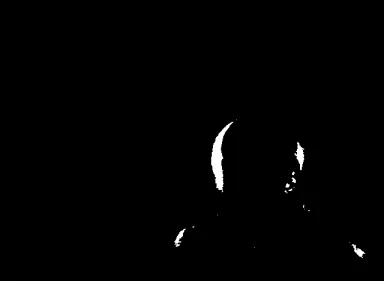
Figure 4: Real Time Motion Prediction with Enhancement
The linear contrast stretching linearly adjusts the image’s lively range and histogram equalization uses the input to output mapping relation obtained from the essential of the image histogram. Histogram equalization is a system which consists of adjusting the gray scale of the image so that the gray level histogram of the input image is mapped onto a uniform histogram. The basic assumption used here is that the information conveyed by an image is connected to the likelihood of occurrence of gray levels in the form of histogram in the image. The result is shown in Fig 4. The performance is found using MSE and PSNR value. The proposed system shows better improvement in terms of MSE and PSNR value as compared to 3SS and 4SS algorithm as shown in fig 5.
Figure 5: Performance Comparison of System
V. CONCLUSION
Now days, Internet becomes more popular and universal. Along with the technology multimedia has also been progressed. So the image processing or digital image processing became very important. Now more advanced methods for image and data compression are present. The main problem is to detect and extract each frame in video sequence for detecting motion between these frames with less computation time. To detect the moving objects in a video sequence based on background subtraction approaches, a background model should be generated at the first time before subtract it from each image of the sequence and then segmenting the moving objects. The block based approaches only reconstruct the image with the cost of high computation time. To solve this, it proposes an algorithm to detect and extract each frame in video sequence for detecting motion between these frames by improved background subtraction technique. The proposed system shows better improvement in terms of MSE and PSNR value as compared to 3SS and
299. .405
0 50 100 150 200 250 300
MSE PSNR
3SS
4SS
[image:7.612.189.425.371.568.2]4SS.
REFFERENCES
[1] Gonzalez, R.C., Woods, R., “Digital Image Processing”, 2nd Edition, Prentice-Hall, (2002).
[2] R. Gonzalez, R. Woods and S. Eddins, “Digital Image Processing Using Matlab”, 2004, Prentice Hall.
[3] H. Peters, R. Sethuraman, “Application Specific Instruction-Set Processor Template for Motion Estimation in Video Applications”, IEEE Transactions on Circuits and Systems For Video Technology, Vol. 15, No. 4, April 2005.
[4] M. Sushmitha, M. Rizkalla, “High Speed Search Algorithms for Block-Based Motion Estimation Video Compression”, IEEE Transactions on Image Processing, Vol. 15, No. 10, 2006.
[5] H. Alzoubi, W. D. Pan, “Efficient Global Motion Estimation Using Fixed And Random Sub-sampling Patterns”, IEEE Transactions on Image Processing, Vol. 17, No. 15, 2007.
[6] J. Chamorro-Martınez and J. Fern´ andez-Valdivia, “A New Approach to Motion Pattern Recognition and Its Application to Optical Flow Estimation”, IEEE Transactions On Systems, Man, And Cybernetics—Part C: Applications And Reviews, Vol. 37, No. 1, January 2007.
[7] Shen-Chuan Tai, Ying-Ru Chen, “A Multi-Pass True Motion Estimation Scheme with Motion Vector Propagation for Frame Rate Up-Conversion Applications”, IEEE Journal of Display Technology, Vol. 4, No. 2, June 2008.
[8] Ying Zhang, Wan-Chi Siu, “Fast sub-pixel motion estimation based on directional information and adaptive block classification”, IET the Institution of Engineering and Technology, 2008.
[9] Yasser Ismail, Mohammed A. Elgamel, “Fast Variable Padding Motion Estimation Using Smart Zero Motion Prejudgment Technique for Pixel and Frequency Domains”, IEEE Transactions on Circuits and Systems for Video Technology, Vol. 19, No. 5, May 2009.
[10] Martin Haller, Andreas Krutz, “Evaluation of Pixel- And Motion Vector-Based Global Motion Estimation for Camera Motion Characterization”, IEEE Transactions on Image Processing, Vol. 20, No. 12, 2009.
[11] X.Chen, N. Canagarajah, J.L. Yanez, “Backward Adaptive Pixel-Based Fast Predictive Motion Estimation” IEEE Signal Processing Letters, Vol. 16, No. 5, May 2009.
[12] Yangjie Wei, Zaili Dong, “Analysis, Comparison and Improvement of Block Matching Based Sub-Pixel Motion Measurement Methods for Image Sequences”, IEEE International Conference on Information and Automation, 2009.
[13] Rajet Krishnan, Balasubramaniam Natarajan, “Two-Stage Approach for Detection and Reduction of Motion Artifacts in Photoplethysmographic Data”, IEEE Transactions on Biomedical Engineering, Vol. 57, No. 8, August 2010
[14] Ka-Ho Ng, Lai-Man Po, Shen-Yuan Li, “A Linear Prediction Based Fractional-Pixel Motion Estimation Algorithm”, IEEE 2010.