I
Factors Affecting Implementation of Quality Excellence
Framework at a Senior Management Level in the Context
of Dubai
Khurram Nawaz
II
TABLE OF CONTENTS
TABLE OF CONTENTS II
LIST OF TABLES XI
LIST OF FIGURES XIII
DEDICATION XIV
ACKNOWLEDGEMENT XV
GLOSSARY OF TERMS AND ABBREVIATION XVII
ABSTRACT XVIII
CHAPTER ONE - INTRODUCTION
1.0 Chapter Introduction 1
1.1 Research Back Ground 1
1.2 The Need and Originality of Research 3
1.2.1 The Scarcity of Research on Quality Framework Implementation in Dubai
3
1.2.2 Governmental Backing for Excellence Implementation 5
1.2.3 Research Focus on Senior Management Level 6
1.3 Problem Statement 8
1.4 The Research Outline 9
1.4.1 Research Aim 9
1.4.2 Research Questions 9
1.4.3 Research Objectives 10
1.4.4 Tabular view of Research Aim, Research Questions and Research Objectives Alignment
11
1.5 Expected Contribution to Knowledge 11
1.5.1 Expected Contribution to Knowledge in Theoretical Terms 11 1.5.2 Expected Contribution to Knowledge in Practical Terms 12
1.6 Literature Review (Chapter-2) 13
1.7 The Dubai Context (Chapter-3) 14
III
1.9 Research Findings (Chapter-5) 15
1.10 Discussion (Chapter-6) 15
1.11 Conclusion, Contribution to Knowledge and Recommendations (Chapter-7)
16
1.12 Chapter Summary 16
CHAPTER TWO - LITERATURE REVIEW
2.0 Chapter Introduction 17
2.1 The Meaning and Definition of 'Quality' 17
2.2 Definition of Total Quality Management (TQM) and Excellence 19 2.3 Relationship Between TQM and Quality Excellence Framework 22
2.4 Benefits of Adopting TQM and Excellence Model 24
2.5 Confusions of TQM and Excellence Model 25
2.6 Is TQM a Fad? 27
2.7 What Aspects of Dubai Play Role in Shaping and Influencing the Findings?
29
2.7.1 Economic Growth 29
2.7.2 Competition 30
2.7.3 Expatriate Population 31
2.7.4 Government Backing for Quality / Excellence 31
2.8 Overview of Dubai Quality Award (DQA) Model 32
2.8.1 The Fundamental Concepts of Excellence 33
2.8.2 The EFQM Excellence Model (Basis of Dubai Quality Award) 34
2.8.3 DQA Criteria 35
2.8.3.1 DQA Criteria (Enablers) 35
2.8.3.2 DQA Criteria (Results) 38
2.8.4 RADAR Logic 40
2.8.5 PDCA - The Central Theme Behind TQM and RADAR Logic 41
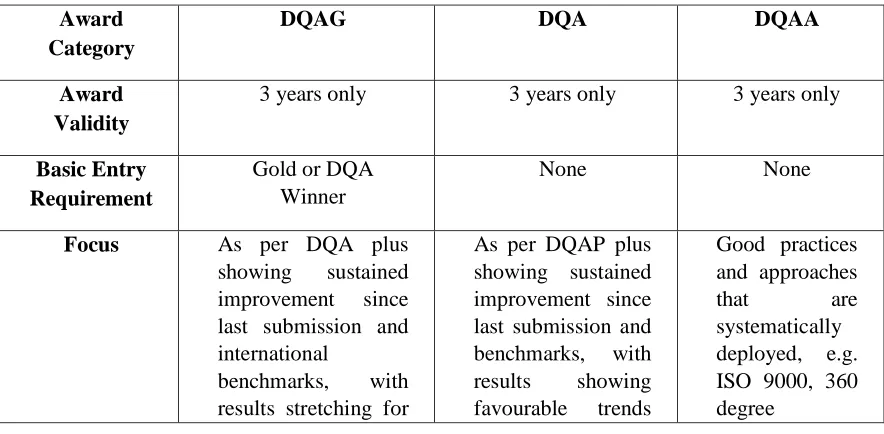
2.8.6 Dubai Quality Award (DQA) Validity 43
2.8.7 Dubai Quality Award (DQA) Categories 43
IV
2.8.7.2 The Dubai Quality Award Category 44
2.8.7.3 The Dubai Quality Award Appreciation Category 44
2.8.8 Rules for DQA Categories 44
2.9 Critical Factors of TQM / Excellence Model Implementation 45 2.10 Factors Affecting TQM / Excellence Models Implementation 51
2.10.1 Building-in Quality 51
2.10.2 Strategy and Priorities 52
2.10.3 Excellence Framework Integration 53
2.10.4 Business Issues 54
2.10.5 Management and Change 55
2.10.6 Overlapping of Responsibilities 56
2.10.7 Coordination 57
2.10.8 Commitment and Participation 58
2.10.9 Perceived Benefits of Excellence 61
2.10.10 Training 62
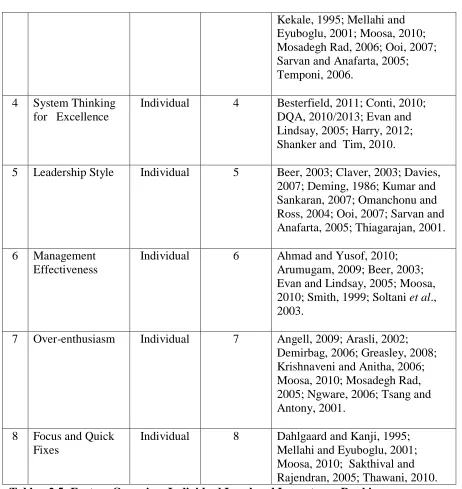
2.10.11 Leadership Style 64
2.10.12 Management Effectiveness 66
2.10.13 Over-enthusiasm 67
2.10.14 Focus and Quick Fixes 67
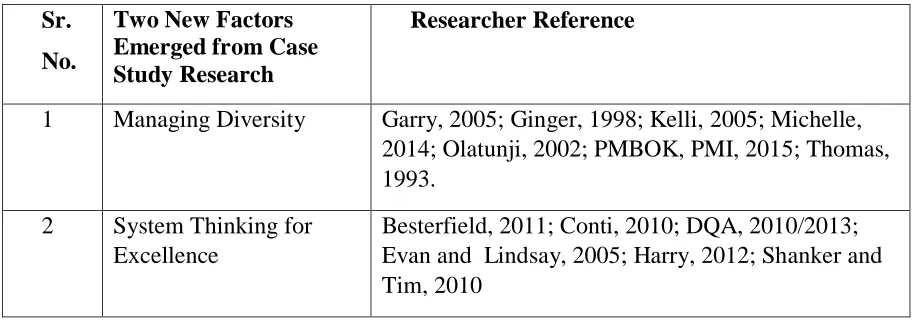
2.10.15 Managing Diversity 68
2.10.16 System Thinking for Excellence 72
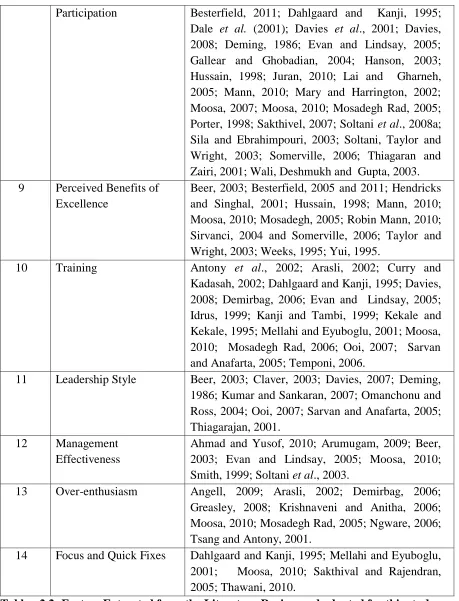
2.11 Rationale for Selection and List of Factors Affecting Implementation of Excellence Model Criteria at the Senior Management Level
74
2.12 Emerging Knowledge Gaps and Theoretical Contribution Potential 81
2.13 Chapter Summary 83
CHAPTER THREE - THE DUBAI CONTEXT
3.0 Chapter Introduction 84
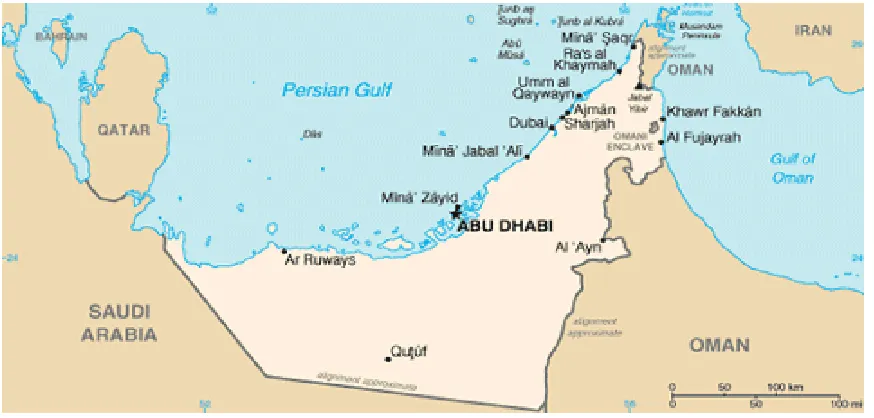
3.1 Geographical Background and Location of the UAE 84
V
3.2.1 Climate 87
3.2.2 Population 88
3.2.3 Historical Background of the Dubai 88
3.2.4 Other Factors Influencing Organisations Life in Dubai 89 3.3 Quality Excellence Framework (Dubai Quality Award) in Dubai 91
3.4 Chapter Summary 92
CHAPTER FOUR - RESEARCH METHODOLOGY
4.0 Chapter Introduction 93
4.1 Definition of Research Methodology 95
4.2 Research Philosophy 96
4.2.1 Positivism 97
4.2.2 Phenomenology 97
4.2.3 Justification of adopting 'Phenomenology' as Research Philosophy 99
4.3 Research Approach 100
4.3.1 Quantitative Approach 101
4.3.2 Qualitative Approach 101
4.3.3 Justification of 'Qualitative' Research Approach Adopted 102
4.3.4 Deductive vs Inductive 105
4.3.5 Justification for Research Approach adopted - Inductive 107 4.3.6 Addressing Issues of Credibility, Transferability, Dependability,
Confirmability
107
4.4 Research Strategy 109
4.4.1 Selection of Case Study as Research Strategy 110
4.4.2 Justification of the 'Case Study' Strategy Adopted 112 4.4.3 Justification for Choosing Multiple (two) Case Study
Organisations
113
4.4.4 Case Study Selection Criteria 114
4.4.4.1 Rationale for Case Study Selection Criteria 116 4.4.4.2 Justification for not selecting Dubai Quality Award Appreciation
Category and Non-winners
118
VI for this Research
4.5 Delimitations of the Study 120
4.6 Data Collection Methods 121
4.6.1 Mixed Method vs Multi method 124
4.6.2 Interviews 126
4.6.3 Semi-structured Interviews 126
4.6.4 Documentation 128
4.6.5 Observations 128
4.6.6 Archival Records 129
4.6.7 Justification for Choice of Data Collection Methods 129 4.6.8 Generating and Developing Interview Topics and Questions 131 4.6.8.1 Steps Taken for Generating and Developing Interview Questions 131
4.6.9 The Units of Analysis 133
4.6.10 Ethical Considerations 133
4.6.11 Triangulation 137
4.6.12 Translation 138
4.6.13 Validity and Reliability 138
4.6.13.1 Construct Validity 139
4.6.13.2 Internal Validity 139
4.6.13.3 External Validity 139
4.6.13.4 Reliability 140
4.6.13.5 What does the term 'Measure' refer to? 140
4.6.14 Sampling Strategy 141
4.6.15 The Position of Interviewees 143
4.6.16 Pilot Study 145
4.6.17 Conducting the Real Case Study 148
4.7 Data Analysis 151
4.7.1 Pattern Matching 153
4.7.2 Explanation Building 154
VII
4.7.4 Logic Models 155
4.7.5 Cross-Case Synthesis 156
4.8 Chapter Summary 156
CHAPTER FIVE - RESEARCH FINDINGS
5.0 Chapter Introduction 158
5.1 Data Collection and Coding the Responses 158
5.2 Techniques used in Data Collection 160
5.3 Analysis of Data / Responses 161
5.4 Findings from the Case Study Organisation A (CSO / A) 166
5.4.1 Building-in Quality 167
5.4.2 Strategy and priorities 169
5.4.3 Excellence Framework Integration 171
5.4.4 Business Issues 172
5.4.5 Management and Change 173
5.4.6 Overlapping of Responsibilities 175
5.4.7 Coordination 176
5.4.8 Commitment and Participation 177
5.4.9 Perceived Benefits of Excellence 179
5.4.10 Training 180
5.4.11 System Thinking for Excellence 181
5.4.12 Leadership Style 183
5.4.13 Management Effectiveness 184
5.4.14 Over-enthusiasm 185
5.4.15 Focus and Quick Fixes 187
5.4.16 Summary of Identified Common and Unique Factors in Case Study A (CSO / A)
188
5.5 Findings from the Case Study Organisation B (CSO / B) 189
5.5.1 Building-in Quality 190
5.5.2 Strategy and Priorities 191
VIII
5.5.4 Business Issues 194
5.5.5 Management and Change 195
5.5.6 Overlapping of responsibilities 196
5.5.7 Coordination 197
5.5.8 Managing Diversity 199
5.5.9 Commitment and Participation 200
5.5.10 Perceived Benefits of Excellence 202
5.5.11 Training 203
5.5.12 Leadership Style 205
5.5.13 Management Effectiveness 206
5.5.14 Over-enthusiasm 207
5.5.15 Focus and Quick Fixes 208
5.5.16 Summary of Identified Common and Unique Factors in Case Study B (CSO / B)
209
5.6 Chapter Summary 210
CHAPTER SIX – DISCUSSION
6.0 Chapter Introduction 212
6.1 Implications of the Quality Award on Organisational Change 212 6.2 Motives for Implementing Quality Excellence Framework 216
6.3 Building-in Quality 218
6.4 Strategy and Priorities 220
6.5 Excellence Framework Integration 222
6.6 Business Issues 225
6.7 Management and Change 227
6.8 Overlapping of Responsibilities 229
6.9 Coordination 232
6.10 Commitment and Participation 234
6.11 Perceived Benefits of Excellence 236
6.12 Training 238
IX
6.13.1 How the Context of Dubai Plays a Role in Leadership Style 241
6.13.2 Case Study Discussion on Leadership Style 243
6.14 Management Effectiveness 245
6.15 Over-enthusiasm 247
6.16 Focus and Quick Fixes 249
6.17 Managing Diversity 251
6.17.1 How has the context of Dubai Influenced the Emergence of 'Managing Diversity'
254
6.17.2 Managing Diversity Discussion in CSO / B 255
6.18 System Thinking for Excellence 256
6.18.1 How has the context of Dubai Influenced the Emergence of 'System Thinking for Excellence'
259
6.18.2 System Thinking for Excellence Discussion in CSO / A 259
6.19 Critique of the Research Methodology 263
6.20 Chapter Summary 267
CHAPTER SEVEN - CONCLUSIONS, CONTRIBUTIONS TO KNOWLEDGE AND RECOMMENDATIONS
7.0 Chapter Introduction 268
7.1 Conclusions 268
7.1.1 Problem Statement and How it was Addressed 268
7.1.2 Achieving the Research Aim of the Study 269
7.1.3 Addressing the Research Questions 270
7.1.4 Achieving the Research Objectives 271
7.2 Contributions to Knowledge 273
7.2.1 Contribution to Knowledge in Theoretical Terms 274
7.2.2 Contribution to Knowledge in Practical terms 281
7.2.3 Contributions of Specific Aspects of the Case Study Organisations 282 7.2.4 Proposed Theoretical Framework and Suggested Implementation
Steps
284
7.2.4.1 Suggested Implementation Steps for the Proposed Theoretical Framework
X
7.3 Implications for Senior Management 290
7.3.1 Operational Recommendations for Senior Management based on Implications and Research Findings
294
7.4 Suggestions for Future Research 297
7.4.1 Cogent Propositions in view of New Knowledge 299
7.4.2 Limitations of the research as Suggestions for Future Research 300
7.5 Chapter Summary 302
REFRENCES 303
APPENDICES 329
Appendix-1: Informed Consent Form 330
Appendix-2: Linkage Between Research Aim, Research Questions, Research Objectives and Interview Questions
331
Appendix-3: Linkage Between Factors Identified through
literature at a Senior Management Level, Research Questions and Interview Questions
333
Appendix-4: Pilot Interview Transcript 336
Appendix-5: Main Interview Transcript 343
XI
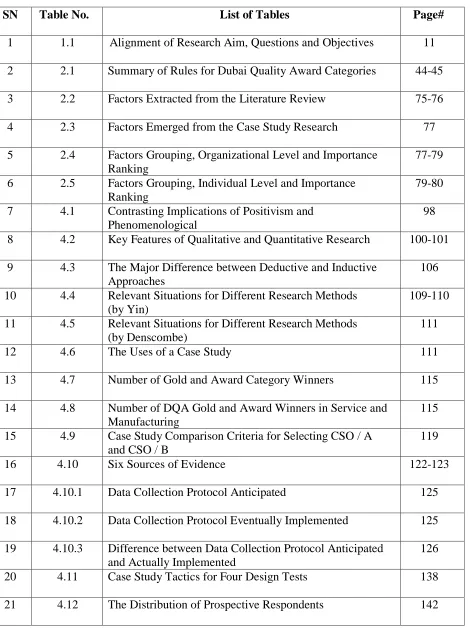
LIST OF TABLES
SN Table No. List of Tables Page#
1 1.1 Alignment of Research Aim, Questions and Objectives 11 2 2.1 Summary of Rules for Dubai Quality Award Categories 44-45
3 2.2 Factors Extracted from the Literature Review 75-76
4 2.3 Factors Emerged from the Case Study Research 77
5 2.4 Factors Grouping, Organizational Level and Importance Ranking
77-79 6 2.5 Factors Grouping, Individual Level and Importance
Ranking
79-80 7 4.1 Contrasting Implications of Positivism and
Phenomenological
98 8 4.2 Key Features of Qualitative and Quantitative Research 100-101 9 4.3 The Major Difference between Deductive and Inductive
Approaches
106 10 4.4 Relevant Situations for Different Research Methods
(by Yin)
109-110 11 4.5 Relevant Situations for Different Research Methods
(by Denscombe)
111
12 4.6 The Uses of a Case Study 111
13 4.7 Number of Gold and Award Category Winners 115
14 4.8 Number of DQA Gold and Award Winners in Service and Manufacturing
115 15 4.9 Case Study Comparison Criteria for Selecting CSO / A
and CSO / B
119
16 4.10 Six Sources of Evidence 122-123
17 4.10.1 Data Collection Protocol Anticipated 125
18 4.10.2 Data Collection Protocol Eventually Implemented 125 19 4.10.3 Difference between Data Collection Protocol Anticipated
and Actually Implemented
126
20 4.11 Case Study Tactics for Four Design Tests 138
[image:11.612.90.560.93.721.2]XII
22 4.13 Interviewee Groups from the two Case Study Organisations
143
23 4.14 Four General Strategies 152-153
24 5.1 Case Study Codes 159
25 5.2 Respondents’ (Interviewee) Codes 159
26 5.3 Codes for Identified Factors at Organisational Level Category
160 27 5.4 Codes for Identified Factors at Individual Level Category 160
28 5.5 Development of Coding Categories 162-166
29 5.6 Summary of Identified, Common and Unique Factors in the CSO / A
188
30 5.7 Organisational Level Factors in the CSO / A 189
31 5.8 Individual Level Factors in the CSO / A 189
32 5.9 Summary of Identified, Common and Unique Factors in the CSO / B
209
33 5.10 Organisational Level Factors in the CSO / B 210
34 5.11 Individual Level Factors in the CSO / B 210
35 6.1 Inter-linkages and categorisation of factors identified in literature and identified in the researched firms and context
261-263
36 7.1 Summary of Main Contribution to Knowledge in Theoretical Terms
XIII
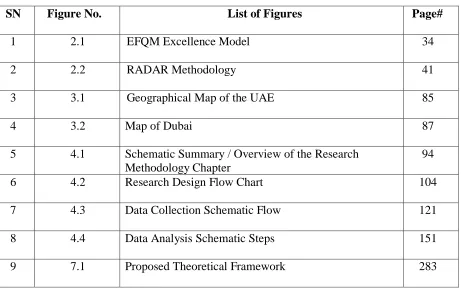
LIST OF FIGURES
SN Figure No. List of Figures Page#
1 2.1 EFQM Excellence Model 34
2 2.2 RADAR Methodology 41
3 3.1 Geographical Map of the UAE 85
4 3.2 Map of Dubai 87
5 4.1 Schematic Summary / Overview of the Research Methodology Chapter
94
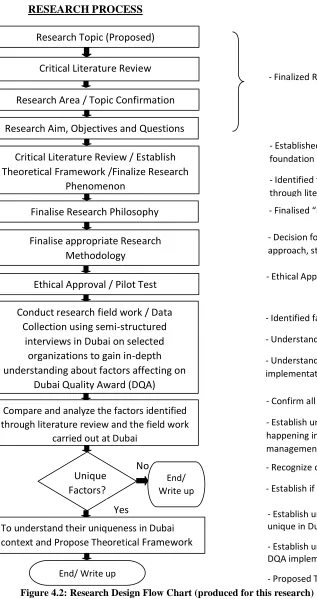
6 4.2 Research Design Flow Chart 104
7 4.3 Data Collection Schematic Flow 121
8 4.4 Data Analysis Schematic Steps 151
[image:13.612.87.548.94.382.2]XIV
DEDICATION
In the name of Almighty Allah, the
Merciful, the Compassionate
Today I Surrender To Your Eminence, O ALLAH! Bearing Witness That There Is No God But ALLAH! Never Has There Been A Moment Where I Was Abandoned,
With Selfless Devotion And Unequalled Affection, I Thank You, O ALLAH! Thank You For Making Me Capable Of This Contribution,
Thank You For Answering My Problems With Solutions, Thank You For Eliminating My Myriads Of Confusions,
And If This Work Is Worth Dedicating,
Then I Bow Before You, Requesting Your Acceptance, For This Is Wholly Dedicated To You, O ALLAH!
XV
ACKNOWLEDGEMENTS
This research and the thesis are resultant of efforts and contributions of many people as without their continuous support, selfless help and unconditional devotion and time, this goal was not possible. It is a pleasant opportunity to express my sincere thanks for all of them.
My gratitude goes to the Prophet Mohammed (PBUH), whose teachings are direction of my life. I am also grateful to my mentor, Syed Mohammed Habib Irfani, for his advises and continued prayers for my ongoing success. I am indebted for his continuous affection.
I am heartily thankful to the great person who guided me all the way, Dr. Tahir Rashid, for his continuous support, patience, encouragement and regular follow up. I owe him lots of gratitude for his professional supervision of this research that enabled me to achieve my PhD goal. His noble personality and kind attention to me, will remain in my heart for rest of the life.
I also would like to thank my previous supervisor, Derek Hill, for keeping my morale high during interim assessment. I also would like to express my gratitude to the academic staff and administrative employees in the Salford Business School for the help and prompt communication.
XVI
XVII
GLOSSARY OF TERMS AND ABBREVIATIONS
Term / Abbreviation
Description
BSC Balanced Score Card
CEO Chief Executive Officer CSO Case Study Organisation
CSF Critical Success Factor
DQGA Dubai Quality Gold Award
DQA Dubai Quality Award
DQAA Dubai Quality Award Appreciation
EFQM European Foundation for Quality Management GCC Gulf Cooperation Council
GDP Gross Domestic Product
GM General Manager
MBNQA Malcolm Baldrige National Quality Award QFD Quality Function Deployment
TQM Total Quality Management
UAE United Arab Emirates
XVIII
ABSTRACT
Total Quality Management (TQM) is a philosophy adopted by many organisations around the globe for continuous improvement of processes, products and / or services. Based on the TQM Philosophy, various quality excellence frameworks known as business excellence models and related quality awards have been established in different countries. Dubai Quality Award in Dubai is one such quality excellence framework that is being applied since 1994 by many organisations within Dubai to gain benefits in terms of profits, employee satisfaction and customer satisfaction. To gain anticipated business benefits through quality excellence framework, role of senior management during implementation is crucial as highlighted by most researchers. However, what are the other factors that may affect at senior management level for the implementation of quality excellence framework such as Dubai Quality Award are not comprehensively reflected in the literature. Therefore, many researchers have suggested investigating factors affecting implementation of quality excellence framework at a senior management level. Accordingly there has not been any study conducted in Dubai for the same concern.
The main aim of this research was "to investigate factors affecting implementation of quality excellence framework at a senior management level in the context of Dubai". This research has adopted a phenomenological philosophy and has employed multiple case studies as a research strategy. Two case study organisations were selected from Dubai based manufacturing and service organisations. The relevant data was collected through diverse sources of evidences including semi-structured interviews, documentation, archival records and direct observations. Explanation building method was used to analyse the collected data.
XIX
framework at a senior management level, thus contributing towards enhancement of the existing literature. Two unique factors identified are 'system thinking view of the excellence model' and 'managing diversity of workforce'.
1
CHAPTER ONE
INTRODUCTION
---
1.0 Chapter Introduction
The purpose of this introductory chapter is to present the background to the study and to provide a rationale for pursuing the issue of quality excellence framework in the context of Dubai. The aim, objectives, and research questions are established, and the expected contributions to knowledge are presented. Thereafter, a brief indication of the proposed research methodology is provided, and this is followed by an outline of the structure of this thesis.
1.1 Research Background
2
2015), in Australia, the Australian Business Excellence Award (World BAES, 2015) and in Canada, the Canadian Award for Excellence (CAE, 2010 and 2015) have been established.
3 1.2 The Need and Originality of this Research
1.2.1 The Scarcity of Research on Quality Framework Implementation in Dubai
The main purpose for conducting this research is the lack of empirical research on the investigation of factors affecting implementation of quality excellence framework at a senior management level in the context of Dubai. While there has been good deal of work done in relation to the factors affecting implementation of TQM and EFQM, most of such studies have been carried out in developed economies (Jaber, 2010; Thiagarajan et al., 2001). A review of the literature by Kim et al. (2009), consistent with the comparative study of quality implementation in the Middle Eastern countries by Najeh and Kara-Zaitri (2007), shows that there has been significant research and application relating to the business excellence models and use of associated self-assessment in Western countries. However there is comparative lack of studies in the Middle Eastern countries relating to in-depth implementation studies of business excellence.
This lack of empirical research beyond the developed economies, together with the growing awareness for the application of quality excellence frameworks globally, makes it appropriate to investigate factors affecting implementation of quality excellence framework in the developing economies where there is shortage of relevant information, and where consequently, both academics and practitioners would benefit (Jaber, 2010; Thiagarajan et al., 2001). Furthermore, Kim et al., (2009) review of business excellence research suggests,
there is a need for more in-depth observations and context based interpretations.
4
Council, 2006). According to Marri (2007) and Jones and Seraphim (2008), in the Middle Eastern countries, the application of business excellence and self-assessment is less well developed and established beyond that of corporate level applications.
Highlighting UAE and in particular Dubai scenario for quality excellence frameworks implementation, Rodney, William, Adil and Paul (2013) suggested that more research should be undertaken to explore business excellence implementation and critical success factors. They further emphasised, from a practical perspective, there is a need for UAE organisations to develop bespoke approaches for implementing business excellence and self-assessment. Furthermore, there is an opportunity for practitioners to develop awareness programmes in relation to UAE business excellence practices. Advocating it, Conti (2009, p-18) emphasised that “excellence models are not high level standards, compliance with which guarantees high level performance. They do not give recipes for excellence. They must be
understood and interpreted in relation to own situation”.
Presently Dubai organisations have made little breakthrough in achieving some level of maturity in TQM implementation through applying Dubai Quality Award excellence model. However, so far no comprehensive research has been carried out in Dubai to explore the factors associated with the success and failure of excellence model implementation at a senior management level (DQA secretariat, 2008 and 2014). Thawani (2013; p.9) mentioned in his article on UAEs Journey towards excellence that "there is shortage of credible research data in the field of quality and excellence in the region. Good opportunity exists to
conduct leading edge research on key performance indicators of industries." Keeping in
5
In summary, the importance of quality excellence framework in practice, understanding of related factors, the lack of theory and corresponding research and the need to develop knowledge for the benefits of organisations and academics outside the developed economies, support that expanding the knowledge regarding quality excellence framework implementation is a valid topic to research. To further support it, Mellahi and Eyuboglu (2001) mentioned that the concept of TQM is now well understood in the developed economies; however there is still scarcity of knowledge on TQM in developing countries.
1.2.2 Governmental Backing for Excellence Implementation
Government of Dubai has been at forefront for strengthening TQM through pushing quality excellence framework implementation within Dubai. Therefore, on the directive of the ruler of Dubai, Dubai Quality Award (DQA) Secretariat was established in 1998 within Department of Economic Development in Dubai. The main role of the DQA secretariat was fixed as custodian of Dubai Quality Award model and to promote a culture of excellence within Dubai. Thus, backing and push of the Dubai government (DQA criteria book, 2003, 2010 and 2013) for Dubai Quality Award process and its importance for organisations to win the award for enjoying competitive advantage add to the compelling need for such research.
Quoting the ruler of Dubai, Thawani (2013, p-8) highlighted that during the Emirates Government Excellence Conference, 2013 “Prime Minister of the UAE and ruler of Dubai, emphasized that “Excellence is a lifestyle, a government culture and a national advantage by which we can make a lot of achievements. The implementation of the UAE Vision 2021
becomes more feasible for us if we establish excellence at all government departments and
6
1.2.3 Research Focus on Senior Management Level
During literature review, the researcher realised that most of available researches mentioned the factors mostly from overall organisation perspective such as continual improvement rather specifically focusing at any hierarchy level and related concerns from excellence framework view point. Therefore these make it difficult to understand in-depth for issues and concerns at senior management level distinctively. Williams, Champion and Hall (2012, p.7) differentiated top (senior) management and middle management. They stated that top managers are executives responsible for the overall direction of the organisation, whereas middle managers are responsible for setting objectives consistent with top management's goals and for planning and implementing sub-unit strategies for achieving these objectives.
Park (2008, p-98) investigated in her study that the European Excellence Model may be useful as a management control model, however further research is needed in order to supplement the theoretical approach with the collection of evidence on;
(i) How various ordinary companies and award winning companies are using the EFQM excellence model?
(ii) Why are they using the model the way they are doing?
Park (2008, p-119) further highlighted it from management control perspective and mentioned “what are major problems when using the model in a real set need to investigate”.
7
respective organisations. Identification of implementation issues would certainly enhance their understanding about excellence model (DQA secretariat (2008) / Assessments Report). Emphasising on the role of senior management, Thawani (2013, p-9) stated that "business leaders need to make quality a top priority. CEOs, CFOs and COOs still need to be
convinced of the potential of quality management offers to reduce cost and improve product
features and thereby positively impact on corporate performance". Moreover, implementing
business excellence framework will yield benefits only if concepts are well understood at a senior management level and implemented effectively. Ficher (2014) highlighted a similar situation from EFQM organisations and revealed that after 25 years of promoting excellence in Europe, we have found that this aspiration is beyond the means of most organisations. Excellence is simply too hard to achieve in short time which need to be understood by the senior management.
Emphasizing the importance of the senior management role, Dubai Quality Award excellence framework highlights one of the fundamental principle of excellence i.e. leading with vision, inspiration and integrity (DQA criteria book, 2013, p-10). It further defines that "excellent organisations have leaders who shape the future and make it happen, acting as role models for its values and ethics and inspiring trust at all times. They are flexible,
enabling the organisation to anticipate and react in a timely manner to ensure the on-going
success of the organisation" (DQA criteria book, 2013, p-16). Furthermore, recognizing the
8
To conclude, in view of the scarcity of empirical research in the context of Dubai regarding understanding of factors affecting the implementation of quality excellence framework at a senior management level not only reveal the need of this research but also reflect originality of this study in the context of Dubai.
1.3 Problem Statement
Adoption and application of business excellence frameworks are increasing within organisations globally in order to enhance their customer satisfaction and remain ahead of competition. So, organisations continue focus on overall factors such as continual improvement rather specifically focusing on any hierarchy level and related issues. Therefore, in this connection, most of research studies have been conducted to reflect overall organisational factors and that also in developed countries while very less available in Arab region and in particular within UAE and in Dubai. Therefore making it difficult to understand in-depth for issues and concerns at senior management level distinctively for excellence framework implementation. Dubai Quality Award Secretariat (2008 and 2014) has highlighted that so far no comprehensive research has been carried out in Dubai to explore the factors associated with the success and failure of excellence model implementation at a senior management level. Therefore lack of empirical research on the investigation of factors affecting implementation of quality excellence framework at a senior management level in the context of Dubai makes it appropriate to carry out this research where consequently gap in literature for shortage of information will be fulfilled and thus both academics and practitioners would benefit.
9
problem statement and in order to address it, research aim (refer 1.4.1) is conceptualized, research questions (refer to 1.4.2) are formulated, research objectives (refer to 1.4.3) are set forth and qualitative case study research is conducted.
1.4 The Research Outline
This section highlights the research aim, research questions and research objectives.
1.4.1 Research Aim
The aim of this study is, to investigate factors affecting implementation of quality excellence framework at a senior management level in the context of Dubai.
1.4.2 Research Questions
Based on the research aim and in order to achieve it, four research questions are set forth including:
1- What are the factors affecting the implementation of quality excellence framework at a senior management level in the context of Dubai?
10
3- Why do these factors affect the implementation of quality excellence framework at a senior management level in the context of Dubai?
4- What are the implications for senior management in the implementation of Dubai Quality Award and the proposed theoretical framework?
1.4.3 Research Objectives
In order to achieve the aim of the research and to answer the above main research questions, four objectives are formulated including:
1- To critically review the relevant literature highlighting organisation’s factors affecting the implementation of quality excellence framework at a senior management level, in order to identify these factors and understand them in the context of Dubai.
2- To identify factors through field work, those are affecting the implementation of quality excellence framework at a senior management level in Dubai.
3- To conduct an empirical study in the context of Dubai based organisations in order to understand the factors affecting the implementation of quality excellence framework at a senior management level.
11
1.4.4 Tabular View of Research Aim, Research Questions and Research Objectives Alignment
Research Aim: To investigate factors affecting implementation of quality excellence framework at a senior management level in the context of Dubai
Research Questions (RQ)
Research Objectives (RO)
Research Method
RQ1 RO1 and RO2 - Literature review
- Primary research
RQ2 RO2 and RO3 - Literature review
- Primary research
RQ3 RO2 and RO3 - Literature review
- Primary research
RQ4 RO4 - Primary Research
Table: 1.1 – Alignment of Research Aim, Questions and Objectives (produced for this thesis)
1.5 Expected Contribution to Knowledge
1.5.1 Expected Contribution to Knowledge in Theoretical Terms
12
management level and consequently, this study is original in its field. According to Thawani (2013), good prospects available for the researchers to conduct pioneering research on the quality and excellence in the region.
This study is also intended to contribute to the body of knowledge through understanding of the existing factors of quality excellence framework implementation and that required for guiding effective implementation through enhanced understanding of factors at a senior management level in the Dubai context. Kim et al., (2009) suggested that context based study for business excellence models is needed to gain in-depth understanding regarding relevant factors effect on implementation.
Most of the identified factors in the literature with respect to TQM philosophy are investigated and identified as an overall organisational level rather focusing on the senior management level. The most common having a relation with senior management is appearing as management commitment. In view of establishing whether there are other factors specifically at senior management level, this research will focus on in-depth study of the factors at a senior management level, thus to understand why and how these affect the excellence model implementation so to narrow down the gap in the literature from the senior management level angle as well.
Finally, this study is also intended to propose a theoretical framework and make recommendations to senior management in order to facilitate implementation of quality excellence framework such as Dubai Quality Award. Zairi (2006) highlighted that dearth of credible research in the Arab region emphasises the need of more realistic and detailed understanding of issues related to senior management. Moreover, some sort of steps to avoid such issues and minimise their adverse impact would be beneficial.
1.5.2 Expected Contribution to Knowledge in Practical Terms
13
planning for implementation of Dubai Quality Award model as the research findings will help them gain detailed understanding about the factors, why and how these affect the implementation of excellence model criteria at a senior management level. Most of the work was done for TQM philosophy elaborations and explanations while lesser work was done in TQM implementation (Moosa, 2010).
The findings of this study will also be helpful for other Emirates of the UAE who have similar excellence award with their own brand name, so to enhance understanding regarding factors of senior management level in their organisations and to guide the organisations in their efforts for implementation of excellence model.
In view of resemblance between European Foundation for Quality Management (EFQM) excellence Model and Dubai Quality Award (DQA) model, the understanding of identified factors will facilitate to increase knowledge and awareness regarding their impact on implementation for organisations in other countries who have adopted EFQM excellence model for organisational excellence.
The study will also reveal common and unique factors affecting implementation of the excellence model in the case study organisations in Dubai providing deep understanding of why and how they affect in this way.
Based on the proposed theoretical framework, this study will highlight implications and suggest recommendations in terms of practical steps in order to assist senior management while considering implementation of the proposed theoretical framework.
1.6 Literature Review (Chapter-2)
14
relationship between TQM and excellence models, benefits of TQM and excellence framework, and negative aspects have been demonstrated. As this research is being carried out in the context of Dubai, therefore an overview of the Dubai Quality Award model was also presented. The chapter has provided detailed discussion on various critical factors as revealed in the literature. Finally, focusing on the aim and objectives of the study, through the literature review, 14 factors were identified and justified by the author which affect the implementation of excellence requirements at the senior management level. At the end, a summary of these 14 factors has been provided in the form of a list. Moreover, two unique factors identified through this research are also discussed.
1.7 The Dubai Context (Chapter-3)
In this chapter, an overview of the Dubai context has been discussed in order to create an environment where the research took place. Information has been provided about Dubai's geography and historical background including other factors which have influence on the research.
1.8 Research Methodology (Chapter-4)
15
review, observation, and archival records. The data collected was analysed by using the explanation building method and reasons for using explanation building also reflected.
1.9 Research Findings (Chapter-5)
This chapter starts with outlining the coding done for responses gathered through data collection, techniques used for data collection and their justification. The chapter then proceeds with thorough discussion about research findings for the case study organisation 'A' mentioned here as CSO / A and case study organisation 'B' noted as CSO / B. During discussion of research findings, it was made certain that research questions are properly addressed and research objectives are achieved. Thus, each factor revealed through literature review was looked into in relation to both case study organisations. While discussing research findings, explanation regarding each factor is complimented with transcribed responses of the interviewees. Finally, research findings discussion reveals common and unique factors comparing those identified through literature review and present in the case study organisations.
1.10 Discussion (Chapter-6)
16
1.11 Conclusions, Contribution to Knowledge and Recommendations (Chapter-7)
This chapter concluded the research by reflecting how the study has addressed the research questions, met prescribed aim and objectives and so addressed the problem. It also highlighted the contributions made by the study including proposed theoretical framework and suggested implementation steps. Finally this chapter presented implications for senior management and provided recommendations for future research efforts on this subject and in this field.
1.12 Chapter Summary
17
CHAPTER TWO
LITERATURE REVIEW
---
2.0 Chapter Introduction
This chapter reflects a critical review of the literature, starting with the definitions of quality, TQM and excellence. It then highlights the benefits of TQM and quality excellence framework and problems associated with them. The appropriateness of the TQM philosophy and quality excellence framework in context of Dubai, UAE are discussed. The critical success factors (CSFs) related to the effective implementation of TQM are studied comprehensively, and finally a list of factors are identified to draw on within the empirical characteristic of the study.
In the early 1980s, consumer demands forced organisations around the world to continuously improve their products and services. Different technologies, methodologies and philosophies such as TQM supported companies allowing them to focus on continuous improvement of their goods and services (Bayazit and Karpak, 2007). According to Soltani and Lai (2007), competitive pressure forced many companies to adopt the quality management system in order to gain the consumer trust and ensure business survival.
2.1 The Meaning and Definition of Quality
18
meaning 'what kind of' (Besterfield, 2011). According to Sahney et al. (2004), it is difficult to define the term that has distinctive meanings to different individuals. According to Evan and Lindsay (2005), the history of quality revealed that to a large extent, the control of quality was in the hands of craft people serving both as manufacturers and inspectors where they dealt with customers directly. Being in control of the kingdom of quality instilled a sense of pride in workers regarding the quality of their workmanship, however this sense of pride was believed to be a positive attitude when the fact that the craft people were adequately trained was proven. Owing to greater complication of products and the higher degree of job specialization, the post manufacture inspection of products became a necessity and inspection became the primary means of ‘quality control’ (Besterfield, 2005; Evan and Lindsay, 2005). The field of ‘quality’ originated from Japan in the 1950s and rapidly spread in organisations worldwide highlighting emphasis of Deming on top management leadership and continuous improvement, Juran’s quality trilogy such as quality planning, quality control and quality improvement, Crosby’s absolutes of quality, conformance to requirements and zero defect approach and lastly Feignbuam’s total quality control (Cole, 1998; Evan and Lindsay, 2005; Moosa, 2010; Powell, 1995). Highlighting the importance of continual improvement within strategic management, Ross (1996) mentioned that continual improvement is an organisation’s mind set, reinforced and achieved through effective fulfilment of Strategic Management and TQM within all functions, processes and management levels of the organisation. Warwood and Roberts (2004) revealed that the concept of quality has evolved over the last few decades rather being a revolutionary concept.
Various definitions of the term 'quality' have been evolved by different professionals. For instance, W. Edward Deming defined quality as a process that "should be aimed at the needs of the customer, present and future" (Deming, 1986, p.5); Joseph M. Juran, defined the
quality as "fitness of purpose or use" (Juran, 1988, p.11); Armand Feignbaum first highlighted the term "Total Quality Control" defining quality as "the total composite product and service characteristics of marketing, engineering, manufacturing and maintenance
19
(Feignbaum, 1963, p.7). Furthermore, Philip B. Crosby highlighted quality as "conformance to requirements not as goodness" (Crosby, 1984) and Oakland (2003, p.4) revealed the
definition of quality as "meeting the customer requirements" whereas International Organisation for Standardisation ISO (2005) defined it as "totality of features and characteristics of product or service that bear on its ability to satisfy stated or implied
needs". Finally, Williams, Champions and Hall (2012, p.360) defined quality as "a product
or service free of deficiencies, or the characteristics of a product or service that satisfy
customer needs".
In summary, quality meaning and concept have been evolved with time and thus different definitions are observed by various scholars. However most of the authors agreed and linked the quality with continuous improvement, customer satisfaction and standardisation.
2.2 Definition of TQM and Excellence
There is no standardised understanding of the TQM concept among different authors, hence TQM has distinctive meanings to different quality professionals. Therefore one can observe various definitions of TQM (Aksu, 2003; Mosadegh Rad, 2005; Demirbag et al, 2006; El-Araby and Irgens, 2006). Despite different TQM definitions, there is wide agreement that TQM is an integrated management philosophy (Kangi and Tambi, 1999; Bayazit and Karpak, 2007; Hodgkinson and Kelly, 2007) aimed at continuously improving the performance of products, processes and services to meet and exceed customer requirements and expectations (Bayazit and Karpak, 2007).
According to Oakland (2003, p.2), TQM is "an approach to improving the effectiveness and flexibility of business as a whole, meeting customer requirements both external and internal
20
organisation, every department, every single person at every level". In concurrence with
Oakland's definition, Demirbag et al (2006, p.830) defined TQM as "a holistic management philosophy aimed at continuous improvement in all functions of an organisation to deliver
services in line with customer's needs or requirements under the leadership of top
management". The reference to leadership also appeared in the definition provided by Aksu
(2003, p.592) who mentioned that "TQM is a leadership and management philosophy and guiding principles stressing continuous improvement through involvement of people and
quantitative methods focusing on total customer satisfaction".
An empirical study carried out by Garcia-Bernal and Ramirez-Aleson (2010) revealed that adopting TQM in line with organisational design increases performance and promotes substantial benefits. Further, Gallear and Ghobadian, 2004, p.1045) formulated the TQM definition as:
"A structural attempt to re-focus the organisation's behaviour, planning and working
practices towards a culture which is employee driven, problem solving, customer oriented;
and open and fear free. Furthermore, the organisation's business practices are based on
seeking continuous improvement, devolution of decision making, removal of functional
barriers, education of sources of errors, team working and fact- based decision making".
William, Champion and Hall (2012, p.363) stated that TQM is not a specific tool or technique but a philosophy or overall approach to management that is characterised by three principles: customer focus and satisfaction, continuous improvement and team work. They further defined TQM as "an integrated, principles-based, organisation-wide strategy for improving product and service quality". The International Standardisation Organisation ISO
defined TQM as "a management approach of an organisation, centred in quality, based on the participation of all its members and aiming at long run success through customer
21
According to Suby, Faisal and Jamshed (2014), TQM has been widely considered as strategic, tactical and operational tool in the quality management research field.
Based on TQM philosophy, different quality and excellence frameworks have been developed such as ISO 9001 Quality Management System and excellence models. Indeed, various organisations worldwide have adopted quality models and self-assessment approaches. Therefore, for better understanding of 'excellence' a range of definitions have been evolved. For instance, European Foundation for Quality Management (EFQM Excellence Model, Glossary of Terms, 1999-2003) highlighted excellence as "outstanding practice in managing the organisation and achieving results based on a set of fundamental
concepts which will include: results orientation, customer focus, leadership and constancy
of purpose, management by processes and facts, involvement of people, continuous
improvement and innovation, mutually beneficial partnerships and corporate social
responsibility”; while Thawani (2010; p.88) defined excellence as “Achieve and sustain
superior levels of performance that meet or exceed the expectations of all their
stakeholders”.
22
It can be concluded that there is a wide agreement among scholars that TQM is an integrated management philosophy aimed at continual improvement of organisational performance, products, services and processes through participation of all stakeholders in order to achieve and exceed customer expectations. Thus the quality excellence framework is used not only to strengthen the application of TQM but also to gauge the level of continual improvement from various aspects of business.
In this study, the research will focus on investigating factors affecting the implementation of quality excellence framework at a senior management level in the context of Dubai.
2.3 Relationship between TQM and Quality Excellence Frameworks
Over the last few decades, TQM has gained substantial institutional value and has become the accepted way of performing and managing activities in organisations (Zbaracki, 1998). Underpinning the principles of TQM, various quality awards / business excellence models have been established. A large number of studies exist which confirm the positive correlation of TQM with organisational excellence (Besterfield, 2005 and 2011; Evan and Lindsay, 2005; Hendricks, 2001a; Ollila, 1995; Samson and Terziovski, 1999). Kim, Kumar and Murphy (2008) established that the EFQM business excellence model is widely recognized as a representative theory to improve traditional TQM by expanding the narrow quality-oriented concept into a holistic management concept. Slavko and Zora (2014) through their empirical research have established a positive correlation for impact of quality on business excellence.
23
standards or awards have addressed TQM from four dimensions: (1) core values, (2) business excellence models/frameworks, (3) tools and techniques, and (4) implementation and cultural integration (Beer, 2003; Besterfield, 2011; ISO 9001, 2008; Kekale, 1998; Kwai-Sang, 2002; Moosa, 2010; NIST, 2008; Penland, 1997; Saffold, 1998; Samson and Terzivski, 1999; Tata and Prasad, 1998; Thiagarajan, 2001, Zikmund, 2000). According to Moosa (2010), after analysing these studies, it was found that most of the work was done in the first three dimensions while lesser work has been done in TQM implementation and cultural integration, the fourth dimension.
According to Besterfield (2005 and 2011), the Malcolm Baldridge National Quality Award was established and became a mean of measuring TQM. Evan and Lindsay (2005) reflected that all quality awards are based on a certain criteria, usually known as the criteria for performance excellence. According to Moosa (2010), many professionals including TQM practitioners, sometimes erroneously confuse two points with each other, which are: (1) TQM Requirements (standards), and (2) TQM Implementation (processes of adoption). The frameworks for TQM requirements are commonly known as Business Excellence Models / Quality Award Criteria such as Dubai Quality Award, or standards such as ISO 9000 Quality Management System (ISO 9001:2008 standard).
24
2.4 Benefits of Adopting TQM and Excellence Model
Since the inception of TQM philosophy, many organisations have adopted it and many are applying quality excellence models in an effort to gain the well-known benefits, some of which have been mentioned as follows:
Competitive advantage: as many organisations realised it as their competitive edge in terms of customer satisfaction and in gaining greater market share (Besterfield, 2001; Warwood and Roberts, 2004, p. 1109). Soltani et al. (2008b), highlighted that effective implementation of TQM and excellence model framework improves competitiveness and eases the achievement of business excellence.
Quality management is an important weapon for any organisation wishing to generate a competitive advantage (Oakland, 2003) through:
Increased customer satisfaction (Besterfield, 2011; Claver et al., 2003; Demirabag et al., 2006; Bayazit and Karpak, 2007)
Adoption of TQM and Excellence Model framework to gain continuous improvement in every aspect of their organisational culture (Moosa, 2010; Mosadegh Rad, 2005)
Increased return on investment and increased market share (Chin et al, 2003; Hendricks and Singhal, 2001)
Strengthening the brand image (Claver et al., 2003 ; Hendricks and Singhal, 2001) Increased employee satisfaction and improved team work among departments
(Besterfield, 2011; Hendricks and Singhal, 2001)
Reduction in defects and costs (Bayazit and Karpak, 2007; Claver et al., 2003; Kanji and Tambi, 1999)
Improved Communication throughout the organisation as layers of bureaucracy are removed (Demirbag et al., 2006; Evan and Lindsay, 2005)
25 2.5 Confusions of TQM and Excellence Models
Many studies exist to show concerns about failure of TQM and some published estimates of its success levels range only between 10%-30%, as extracted from the organisations’ experiences. Improper implementation or prematurely abandoning the TQM program were the main reasons for this (Atkinson, 1990; Besterfield, 2005; Oakland, 2003). One of the drawbacks and difficulties of TQM that researchers have highlighted is that the implementation of TQM differs from one company to another (Besterfield, 2011; Evan and Lindsay, 2005). Therefore companies develop TQM models suiting their own particular needs and thus the same model may not be suitable to the other organisations. The implementation of any TQM framework not only depends upon the framework being applied but also on other factors that exist in organisations and it is a common problem of identifying and setting the organisational factors which contribute to the success and failure of TQM framework such as the excellence model (Kanji and Tambi, 1999; Moosa, 2010).
Furthermore, when it comes to the deployment of TQM Models / standards, usually finding a standard methodology or model that spells out as how to implement these becomes difficult and blurs the understanding of factors affecting the standard’s success or failure. The study (TQM Implementation, 2000) carried out by Yusof and Aspin wall (2000) on TQM implementation frameworks identified that the implementation of TQM is one of the most complex activities that any company can attempt. The main reason for this is that it requires a change in the working culture and people (Kanji and Baker, 1990). Although many case studies provide good guidelines on the implementation of TQM frameworks, the following problems are faced: (1) they usually lack adequate details and factors which can be generalised and thus can be fitted in any organisation, (2) lack of sufficient short-term and / or long-term steps to understand the sequences of implementation.
26
According to Evan and Lindsay, 2005; Besterfield, 2011, traditionally quality management has been considered as a functional / operational level strategy, where most of the research and theory building in quality management is related to the micro-level of organisations. Therefore, management focus sometimes remains at the micro level instead of the macro level of TQM application.
Steiner (1997) revealed that there are two categories of management, the one done at the top of an organisational structure is Strategic Management and the other is Operational Management. Strategic management provides guidance, directions and boundaries for operational management which is more tactical in nature and focuses on execution. Nawaz (2004; p.4) through the proceedings of the Eighth World TQM Congress mentioned that if strategic management has no relation to quality and is not applied as Strategic Quality Management, then Operational quality management will not be applied properly as well, hence organisations will not be able to achieve operational effectiveness. Moreover, the bond between strategy and quality will be lacking among strategic quality management and operational quality management due to which organisational alignment will not improve. Keeping in view the micro-level focus of quality management, Ahmed and Machold (2004) highlighted that “there is not much related work on macro-level analysis of organisations and accordingly there is a need to look at quality management from the strategic view point”.
27
Furthermore, the implementation of TQM requires different approaches from one organisation to another and the working environments and culture. Moreover, benefits of TQM are not immediately realised and require time to materialise hence the initiative is perceived as too time consuming for eventual return.
2.6 Is TQM a Fad?
There has been a difference of opinion among various researchers regarding the successes and failures of TQM in different organisational context. Soltani et al. (2008a) mentioned that the high rate of failure of TQM across diverse organisational context had a major influence that made TQM a management fad rather than an organisational panacea. According to Moosa (2010), there are serious concerns among professionals as to why TQM and related frameworks fail prematurely and how its implementation may be improved; therefore further research was recommended by him to explore the implementation phenomenon of TQM more deeply and to identify the factors that influence TQM (Moosa, 2010).
Researchers and scholars are divided in two groups regarding TQM performance and effectiveness. According to Arsali, (2002) and Evan and Lindsay, (2005), various studies revealed that the 'fad' aspect has resulted in distrust of organisations’ management over TQM and has been a source of de-motivation among employees at different levels of hierarchy.
28
EL-Enein, 1998). Mosadegh Rad (2005) argues that the failure of TQM and related frameworks can be due to either inappropriate methodology and / or improper implementation.
On the other hand, there are many researchers who supported TQM and quality excellence framework. For instance there has been a growing and continuous interest in establishing and adopting national quality awards. According to Rodney, Willian, Adil and Paul (2013), over the last two decades, excellence models have been spread as a way of increasing competitiveness and reducing costs by helping to incorporate and assess the TQM principles and practices within the organisations. A UNECE (2004) report says that there are at least 90 quality and business excellence awards in 75 countries. Miguel (2004) reports that national quality awards are operating in around 76 countries. According to a study conducted by Talwar (2011), at present 100 business excellence models / national quality awards are being used in 82 countries. This gradual increase in establishing business excellence models / national quality awards highlights that the TQM philosophy through quality excellence frameworks is still receiving considerable attention worldwide. Singhal and Hendricks (2001 and 2005) found in their study that the TQM award winning companies averaged 44% higher stock price return, 48% higher growth in operating income and 37% higher growth in sales. Other empirical studies cited by Arasli (2002) indicated that more the firms adopted a TQM philosophy, the more successful they are in terms of profit, employee satisfaction, and customer and supplier relations. Another study carried out by Mann (2011) for analysing the impact of business excellence and quality awards has highlighted that companies reported that business excellence had a major impact on their competitiveness and performance. According to Williams, Champion and Hall (2012, p. 363), "the companies that have won the Baldrige Award have received superior financial returns. They further mentioned that since 1988, an investment in Baldrige Award winners
would have outperformed the Standards and Poor's 500 stock index 80 percent of the time".
29
of the EFQM excellence model has improved overall company's performance including key results, customer results, people results and society results.
Various researches on the positive impact of quality excellence frameworks and the growth in the number of quality awards worldwide provide evidence that TQM is still a valid management approach.
2.7 What Aspects of Dubai Play Role in Shaping and Influencing the Findings?
As this research is being carried out in the context of Dubai, therefore it is critical to understand relevant aspects which play a role in shaping and influencing the findings. The Report (Dubai, 2015) indicates four aspects which are important to understand the Dubai context and these include:
i- Economic Growth ii- Competition
iii- Expatriate Population
iv- Government Backing for Quality
2.7.1 Economic Growth
30
vision and a strategy that depends on the active participation of the private sector. As per Dubai Statistics Centre (Dubai Report, 2015), Dubai's economy grew by 4.65 in 2013, over 4.1% in 2012. Furthermore, GDP growth projections from 2015 to 2019 are envisaged from 5% to 6%. Building on the progress, the government launched a Dubai strategic plan (DSP) 2021 in December 2014 as a framework for the emirates to continue its development.
Keeping in view the Dubai strategic plan (DSP) 2021 and active involvement of the private sector for continual economic growth, improving excellence in organisations and governmental departments are fundamental. Therefore, application of excellence practices to achieve and sustain the economic growth is crucial (Dubai Report, 2015). Importance of this aspect thus shape and influence the research findings.
2.7.2 Competition
31
and excellence (The Dubai Report, 2015). The researcher noticed that the aspect of competition in Dubai' context play a role in shaping and influencing the research finding.
2.7.3 Expatriate Population
According to the Dubai Statistics Centre, Dubai's total population stood at 2.27 million as of 2014, from which 89% accounted for expatriate population. As a results, the emirate is especially ethnically diverse and hosts dozens of languages and people from around the world. This multinational workforce has served the emirates well. The high population of expatriate and their diversity reveals cosmopolitan culture of Dubai, which is also reflected in the organisations as well. Arabic is the official language of the UAE including Dubai, but many languages are spoken in daily life. English is a business language of the region. Therefore, there is a realisation among authorities that instilling the performance excellence and achievement of Dubai strategic plan (DSP) require managing the diversity of workforce (The Dubai Report, 2015). Thus in view of the research context the researcher understands that the huge expatriate population of Dubai with diverse culture influences the research findings.
2.7.4 Government Backing for Quality and Excellence
32
into a smart government through applying advanced technology and excellence approaches are essential for sustaining economic growth, enhancing human resources, improving excellence in performance levels and continuing the climb to the top of the global competitive index. Therefore, government backing for quality and excellence is evident by establishing Dubai Quality Award secretariat and reinforcing Dubai Quality Award to the organisations. The researcher noticed this government backing for quality and excellence plays a role in shaping and influencing the research findings. (Also refer to 1.2.2)
2.8 Overview of the Dubai Quality Award (DQA) Model
As this research is being conducted in the context of Dubai where Dubai Quality Award (DQA) is a known quality excellence framework, therefore the researcher feels appropriate to investigate factors in Dubai context. Keeping in view, an overview of the DQA is being provided in order to establish the understanding regarding the DQA framework. The Dubai Quality Award is based on the Excellence Model used by the European Foundation for Quality Management (EFQM, 2003, 2010 and 2013). The latter has been successfully applied in various European private and public sector organisations since 1992 (EFQM, 2003, 2010, 2013). Quoting EFQM excellence model, the Dubai Quality Award (2013) mentions that excellent organisations achieve and sustain outstanding levels of performance that meet or exceed the expectations of all their stakeholders.
33
toll to benchmark performance and document existing gaps (DQA criteria book, 2003, 2010 and 2013). From the Dubai Quality Award secretariat’s perspective, recipients of the award represent themselves as role model organisations in the sectors they operate in. Therefore, in order to maintain the credibility and high standing of the award, it is important for the organisations to demonstrate sustained improvement activities with the results reflecting favourable trends over three to five consecutive years.
The EFQM / DQA excellence model provides a holistic framework for organisational excellence. Thawani (2010; p.18) states that “the model provides a non-prescriptive (non-dictatorial), generic framework of criteria which can be applied to any type and size of
organisation”. All nine criteria work as one complete system such that any deficiency in one
area will affect scores in the other areas. The model does not deny that the system has parts rather it focuses on the whole, where the whole is larger than the sum of its parts. The model was designed to be non- prescriptive to acknowledge the fact that there may be more than one approaches for achieving excellence (DQA-model in practice, 2002; DQA, 2013). An applicant of the DQA must demonstrate sustained continual improvement. They should focus on the improvement process and not only on winning the award trophy. That is because the journey for excellence and improvement activities will be much more valuable for organisations than just winning a trophy. The EFQM foundation was formed to recognise and promote sustainable success and to provide guidance to those seeking to achieve it. This is realised through a set of three integrated components which comprise the EFQM Excellence Model:
2.8.1 The Fundamental Concepts of Excellence: