BIROn - Birkbeck Institutional Research Online
Hillebrandt, H. and Dumontheil, Iroise and Blakemore, S.J. and Roiser, J.P.
(2013) Dynamic causal modelling of effective connectivity during perspective
taking in a communicative task. NeuroImage 76 , pp. 116-124. ISSN
1053-8119.
Downloaded from:
Usage Guidelines:
Please refer to usage guidelines at or alternatively
Manuscript Draft
Manuscript Number: NIMG-12-2331R2
Title: Dynamic Causal Modelling of effective connectivity during perspective taking in a communicative task
Article Type: Regular Article
Section/Category: Social Neuroscience
Corresponding Author: Mr. Hauke Frerk Hillebrandt, Corresponding Author's Institution:
First Author: Hauke Hillebrandt
Order of Authors: Hauke Hillebrandt; Iroise Dumontheil; Sarah-Jayne Blakemore; Jonathan P Roiser Abstract: Previous studies have shown that taking into account another person's perspective to guide decisions is more difficult when their perspective is incongruent from one's own compared to when it is congruent. Here we used dynamic causal modelling (DCM) for functional magnetic resonance
imaging (fMRI) to investigate effective connectivity between prefrontal and posterior brain regions in a task that requires participants to take into account another person's perspective in order to guide the selection of an action. Using a new procedure to score model evidence without computationally costly estimation, we conducted an exhaustive search for the best of all possible models. The results elucidate how the activity in the areas from our previously reported analysis (Dumontheil et al., 2010) are causally linked and how the connections are modulated by both the social as well as executive task demands of the task. We find that the social demands modulate the backward connections from the medial prefrontal cortex (MPFC) more strongly than the forward connections from the superior occipital gyrus (SOG) and the medial temporal gyrus (MTG) to the MPFC. This was also the case for the backward connection from the MTG to the SOG. Conversely, the executive task demands modulated the forward connections of the SOG and the MTG to the MPFC more strongly than the backward
Highlights
- We investigated effective connectivity with dynamic causal modelling for fMRI - We used a new exhaustive search procedure to find the best of all possible models - Social demands modulate the backward and lateral connections most strongly
Graphical abstract
Running head: CONNECTIVITY OF PERSPECTIVE TAKING
Dynamic Causal Modelling of effective connectivity during perspective taking in a communicative
task
Hauke Hillebrandt1, Iroise Dumontheil1, Sarah-Jayne Blakemore1, Jonathan P. Roiser1
1. Institute of Cognitive Neuroscience, University College London
Corresponding author:
Hauke Hillebrandt
UCL Institute of Cognitive Neuroscience, 17 Queen Square, London, WC1N 3AR, UK.
E-mail: [email protected]
Tel: +00 44 20 7679 1126
Fax: +00 44 20 7813 2835
Words in abstract: 226
Abstract
Previous studies have shown that taking into account another person’s perspective to guide
decisions is more difficult when their perspective is incongruent from one’s own compared to when
it is congruent. Here we used dynamic causal modelling (DCM) for functional magnetic resonance
imaging (fMRI) to investigate effective connectivity between prefrontal and posterior brain regions
in a task that requires participants to take into account another person’s perspective in order to
guide the selection of an action. Using a new procedure to score model evidence without
computationally costly estimation, we conducted an exhaustive search for the best of all possible
models. The results elucidate how the activity in the areas from our previously reported analysis
(Dumontheil et al., 2010) are causally linked and how the connections are modulated by both the
social as well as executive task demands of the task. We find that the social demands modulate the
backward connections from the medial prefrontal cortex (MPFC) more strongly than the forward
connections from the superior occipital gyrus (SOG) and the medial temporal gyrus (MTG) to the
MPFC. This was also the case for the backward connection from the MTG to the SOG. Conversely, the
executive task demands modulated the forward connections of the SOG and the MTG to the MPFC
more strongly than the backward connections. We interpret the results in terms of hierarchical
Keywords: Dynamic causal modelling, effective connectivity, Theory of mind, perspective taking,
Introduction
Verbal and non-verbal social interactions both rely on an understanding of other people’s mental
states, also called Theory of Mind (ToM) or mentalising (Frith and Frith, 2007, 2012; for an excellent
review of the extensive research in theory of mind literature we refer the reader to Apperly, 2011).
During social interactions, in a complex real-world environment, ToM enables individuals to take
decisions and choose actions that are appropriate to the present situation and the inferred mental
states of the other people involved. Recent research suggests that it is important to investigate not
only ToM development but also how individuals are able to efficiently use ToM information during
decision making and reasoning (Samson and Apperly, 2010), and the distinction between
ToM-specific processes and executive control (e.g. Saxe et al., 2006; Scholz et al., 2009; Van Overwalle,
2009, 2011; Dumontheil et al., 2012; Meyer et al., 2012).
Studying the neural mechanisms of social cognition with the “Director” task
Keysar and colleagues designed a paradigm to investigate real-world social decision-making, in which
participants are faced with a real set of shelves containing objects that are either visible or not
visible from the viewpoint of a “director” (a confederate; Keysar et al., 2000, 2003; Lin et al., 2010).
The director asks participants to move objects in the shelves and critical instructions require the
participant to use information about the director’s viewpoint to interpret his instructions correctly.
In this Director task, around 50% of the time adult participants fail to use information about the
director's perspective and instead erroneously use their own (egocentric) viewpoint when trying to
follow instructions (Keysar et al., 2003, 2000). These results were replicated using a computerised
version of the task (Apperly et al., 2010; Dumontheil et al., 2010). The Director task differs from
other ToM tasks in that it requires participants both to have a functioning ToM to compute the
concert with other cognitive processes such as attentional and inhibitory control to overcome their
egocentric bias and select the appropriate response quickly and accurately (Apperly et al., 2010).
In a previous fMRI study, we employed an adapted version of this Director task (Dumontheil et al.,
2010), which in contrast to previous studies that were designed to assess error rates, included
extensive task instructions such that participants performed at high levels of accuracy. As in the
behavioural version of the task (Keysar et al., 2000), participants followed auditory instructions to
move objects in a set of shelves. Using this modified paradigm for fMRI, we found that: (1) selection
of an appropriate action when faced with alternatives (Object factor) was associated with
domain-general bilateral brain activations located primarily in the frontal and parietal cortices, with
additional activations in the inferior temporal cortex; (2) the processing of social information vs.
symbolic cues (Director factor) was associated with specific activations in the dorsal medial
prefrontal cortex (MPFC) and superior temporal sulcus; (3) the use of social cues as opposed to
symbolic cues for the selection of the appropriate action from the alternative options (interaction)
was associated with further recruitment of dorsal MPFC and middle temporal gyri, extending into
the left temporal pole (Dumontheil et al., 2012, 2010).
Thus, part of the network of brain regions implicated in social cognition, specifically the MPFC and
temporal cortex (Brothers, 1990; Frith and Frith, 2007; Van Overwalle, 2009), was recruited when
the guiding information was of a social nature compared to more arbitrary symbolic stimuli.
Research using visual search paradigms suggests that the prefrontal cortex (PFC) supports the
integration of information from the current environment and internal representations, thereby
providing a “top-down” influence (i.e. intentionally driven by knowledge, expectations and goals) on
attentional orientation and action selection appropriate with current goals (Burgess et al., 2007;
mechanisms (Beck and Kastner, 2009; Hahn et al., 2006). Therefore one interpretation of these
findings is that the dorsal MPFC, similarly to lateral parts of the PFC, may play a role in providing a
top-down influence for the selection of the correct target among distractors when the relevant
guiding information is in the social domain. To test this hypothesis we examined the top-down and
bottom-up influences of social and executive manipulations on network coupling during the Director
task, using Dynamic Causal Modelling (DCM: Friston et al., 2003).
The current study: dynamic causal modelling
DCM estimates the experimental modulation of forwards and backwards connections between
regions that are active during a particular task in a directional manner, and thus makes it possible to
infer whether experimental manipulations affect top-down or bottom-up influences. We refer to
forward and backward connections in the framework of hierarchical predictive coding, in which
sensory input is passed forward and processed in the brain hierarchically, from primary sensory to
secondary sensory areas, then on to association areas and finally to higher (frontal) areas (Clark,
2012; Friston, 2010, 2005). We used DCM to investigate coupling between frontal, temporal and
occipital brain regions (which represented the aforementioned hierarchy in descending order)
involved in the Director task, and its modulation by social cues, using fMRI data from a group of
adults (Dumontheil et al., 2010).
An important methodological advance in our analysis is the use of a new post hoc model selection
procedure (Rosa et al., 2012) to find (1) the best model out of all possible connection architectures
with Bayesian model selection (BMS), (2) posterior probabilities resulting from family level
inferences testing whether a parameter exists or not, and (3) Bayesian parameter averages (BPA)
over all possible models showing how strong fixed connections were and how much they were
(e.g. which connections are modulated by the experimental manipulations). This is because the
estimation of each different model takes a few seconds and with increasing number of nodes in each
model the combinatorial explosion of possible models that makes it prohibitively expensive in
computational terms to estimate all possible models in model space. Instead, we used a new method
to find the model evidence for all possible models without estimating them (Friston and Penny,
2011; Friston et al., 2011; Rosa et al., 2012). This approach permits the selection of the winning
model as well as family level inferences (Penny et al., 2010) over all possible models to find (1) the
probability of certain connections existing and (2) whether these connections are modulated by the
experimental manipulations.
We hypothesized that, while occipital and temporal cortex regions process the social aspects of the
stimuli in a bottom-up manner (faces and bodies of the directors), the MPFC is involved in the
computation, maintenance, and use of perspective information to guide the selection of an
appropriate action. These processes are recruited in the Director present vs. Director absent
conditions, where the role of the MPFC may be particularly important in the 3-object condition,
which requires, on half of the trials, the inhibition of the prepotent bottom-up responses related to
one’s own perspective.
Material and methods
Participants
Fourteen adult (mean age 24.9 years, standard deviation (SD) 3.0, range 21.3–30.6) right-handed
female volunteers included in Dumontheil et al. (2010) were considered for DCM analysis, of which
11 were included in the final analysis (see Volume of Interest Extraction section below). All
Participants gave written informed consent and the study was approved by the University College
London ethics committee.
Experimental design
Our paradigm includes two manipulations embedded in a 2 × 2 factorial design with the factors
Director (“Director present” vs. “Director absent”) and Object (“3-object” vs. “1-object”). In the
Director present conditions, two directors are shown, one female and one male. This enabled the
participant to identify easily which director was speaking by the sound of their voice. One director
stands behind the shelves, facing the participant, while the other stands on the same side of the
shelves as the participant. The position of the male and female directors changed within blocks and
was counterbalanced between conditions and within and between participants. Therefore the
gender of the directors was not confounded with the different experimental conditions. In the
3-object conditions, the instructions refer to an 3-object that is one of three exemplars in the shelves;
the correct object to move depends on which director is speaking and whose perspective to take
(see Figure 1A). Thus in the Director present 3-object trials, participants need to use the social cues,
i.e. the position of the speaking director, to select and move the appropriate object. On half of the
Director present 3-object trials the perspective of the director issuing the instruction is different
from that of the participant; on the other half the director’s and participant's perspectives are the
same. This is varied on a trial-by-trial basis, and thus participants need to consider the director's
perspective on every trial. Note that this is not an experimental factor (our analyses collapsed across
these trial types) but a manipulation that ensures participants integrate trial-specific cues. In
Director present 1-object trials, there is no need to take into account the director's perspective to
identify the correct object (e.g. “Move the turtle left”), as there are no distractors or other referents;
(Buschman and Miller, 2007). The Director absent conditions were logically equivalent to the
Director present conditions, but the directors were replaced by symbolic cues (see Figure 1B).
Stimuli consisted of sets of 4 × 4 shelves with objects located in half of the shelves. Five of the
shelves had a grey background (Figure 1; see Dumontheil et al. (2010) for details). On each trial,
participants were given instructions via headphones, by either a male or a female voice, to move one
of the eight objects in the shelves to a different slot, either up, down, left or right (note that this was
the participant's left or right). A 2 × 2 factorial within-subject design was used with the factors
Director (Present vs. Absent) and Object (1-object vs. 3-object) varying between blocks.
Director factor
In the Director present conditions the display included two directors, one female and one male. In
the Director absent conditions, there were no directors in the display (Figure 1). Instead, the letter
“F” for female and “M” for male were shown beside the shelves. Below each of the letters there was
either one transparent box, which indicated to participants that only objects in open shelves should
be moved; or two boxes, one grey and one transparent, which indicated that there was no
restriction on the participant's choice and all objects (both in open shelves and occluded shelves)
could be moved (see Figure 1B for an example). These rules had precisely the same consequences as
the position of the director in the Director present conditions. In Director present conditions the
physical position of the director issuing the instruction varied on a trial-by-trial basis; similarly, in
Director absent conditions the M/F rules changed on a trial-by-trial basis.
Object factor
Instructions in 1-object conditions (e.g., in Figure 1, “Move the turtle left”) referred to a unique
3-object conditions (e.g., “Move the large ball up”) could refer to an 3-object in a closed shelf (with a
grey background) or an object in an open shelf, which could both be described with the same
instruction (e.g. “large ball”). Which of the possible referents was in fact correct was determined by
whether the director giving the instruction (identified as male or female by his/her voice) was at the
back or front of the shelves (in Director present), or whether the cues indicated that only objects in
open shelves could be moved (in Director absent). This manipulation ensured that in Director
present 3-object blocks participants had to consider the director's perspective (which was different
from their own perspective on 50% of the trials) in order to know which was the correct object to
move. In Director present 1-object blocks the director's perspective made no difference to the
correct interpretation of his or her instructions, and thus participants could use their own
perspective to select the appropriate object on all trials. In the Director absent condition,
perspective taking was not involved. On each trial the visual stimulus and the auditory instruction
were presented over a period of 2.2 s, after which the display remained on the screen for another
3.8 s. Four such trials formed one block in our block design and each scanning session consisted of 16
task blocks lasting 24.8 s and four fixation blocks lasting 20 s. Participants responded with their right
hand using a trackball mouse (see Dumontheil et al. (2012, 2010); for more detailed methods
information).
fMRI data acquisition
3D T1-weighted fast-field echo structural images and multi-slice T2-weighted echo-planar volumes
with blood-oxygen level dependent (BOLD) contrast (35 axial slices with a voxel resolution of
3 × 3 × 3 mm covering the whole brain; TR = 3 s; TE = 50 ms; TA = 2.9143 s) were obtained using a
1.5 T MRI scanner (Siemens TIM Avanto, Erlangen, Germany). Functional imaging data were acquired
in three scanning sessions (one session of one participant was discarded due to low accuracy) lasting
session were discarded to allow for T1 equilibrium effects. A T1-weighted anatomical image lasting
5 min 30 s was acquired after the first two functional sessions for each participant.
Data analysis
fMRI data
fMRI data were analysed using Statistical Parametric Mapping (SPM8 for the GLM and SPM12a for
DCM, www.fil.ion.ucl.ac.uk/spm8). Detailed methods of the preprocessing and General Linear Model
(GLM) analysis of the fMRI data can be found in Dumontheil et al. (2012). Here we report results of
data reanalyzed with concatenated sessions for the purpose of DCM. Thus, the results of the GLM
differ slightly due to the concatenation of sessions. Briefly, images were realigned, slice timing
corrected, and normalised to a standard EPI template based on the Montreal Neurological Institute
(MNI) reference brain. The resulting 3 × 3 × 3 mm images were spatially smoothed with an 8-mm
Gaussian kernel. The time series were modelled with boxcar regressors of the instructions, fixation,
four types of task blocks, and with one event-related regressor representing error trials. In addition,
we included constant session effects. Appropriate stimulus functions were convolved with the
canonical hemodynamic response function to form regressors. Together with regressors
representing residual movement-related artifacts and the mean over scans, these regressors
comprised the full model for each session. A flexible factorial 2nd level analysis was performed to
identify significant regional effects for the Director present – Director absent contrast and the
Director × Object interaction contrast ([Director present 3-object – Director present 1-object] –
[Director absent object – Director absent 1-object], masked inclusively by [Director present
3-object – Director present 1-3-object]) to ensure that any interactions observed were driven by effects
in the Director present condition (see Table 1).
Two volumes of interest (VOIs) were extracted based on the peaks of the Director present > Director
absent contrast (see Results section for GLM results and Dumontheil et al. 2010). The first VOI was
located in the left superior occipital gyrus (SOG) (-12 -94 4, note that this peak coordinate was
labelled as left cuneus in Dumontheil et al., 2010, because the activation was more diffuse due to a
less conservative statistical threshold). The domain general function of the SOG is visual perception
relevant for motor control (Lui et al., 2006). Activation in this region is observed in more specific
social contexts such as during the perception of bodies (Kret et al., 2011). The second VOI was the
left middle temporal gyrus (MTG) (-45 -70 13). The MTG domain general function is thought to be
motion processing and multisensory integration (Hein and Knight, 2011; Onitsuka et al., 2004), and is
recruited in more specific social cognitive tasks during face and speech processing (for a review see,
Hein and Knight, 2011). A third VOI was extracted based on the most active peak from the (masked)
interaction contrast. This VOI was located in the left dorsal MPFC (-9 38 34). The MPFC is thought to
support the processing of one’s own and others’ mental states (Amodio and Frith, 2006; Van
Overwalle 2009).
Timeseries from VOIs associated with different contrasts were summarised using the SPM12
Eigenvariate toolbox: we extracted each participant’s principal eigenvariate around the
participant-specific local maxima activation nearest to the peak voxel of the group (2nd level) GLM analysis (see
Table 1). All VOIs were taken from the left hemisphere, which showed higher levels of activity,
possibly due to the language demands of the task, the fact that participants responded using a
trackball mouse held in their right hand and/or the fact that the directors were presented in the right
visual field. For the purpose of VOI extraction the normalised images were smoothed with a 4 mm
Gaussian kernel to improve anatomical accuracy. The radius of the VOI spheres was 8 mm and the
search radius for local maxima from the group analysis was restricted to 16 mm for the main effect
eigenvariates were significant at p < 0.05 uncorrected and adjusted at p < 0.05, for the effects of
interest (i.e. only for those regressors that were used in the DCMs for input or modulation). We were
unable to create VOIs for 3 participants from the interaction contrast, as they did not show any
activation above threshold within the search radius. The interaction contrast had less power (due to
a lower number of trials in each level contrast) and showed weaker effects overall than the main
effect. Hence, we conducted all analyses on 11 of the initial 14 participants.
Specification of dynamic causal models
We created and estimated DCMs (Friston et al., 2003) with DCM12 (version 4750) as implemented in
SPM12a. The DCM estimation routines in SPM12a differ slightly from those in SPM8 and DCM10, in
that the hyperpriors have been adjusted to reflect a more realistic signal-to-noise ratio in regional
(VOI) timeseries. The DCMs were based on the VOIs reported above and used the main effects of
director and object to modulate the connections between regions. All our DCMs were deterministic
(as opposed to stochastic, see Daunizeau et al., 2012), bilinear (as opposed to nonlinear, see Stephan
et al., 2008), two-state models (Marreiros et al., 2008), with mean-centred inputs. Two-state DCMs
differ from one-state models in that activity in one brain region is modelled so that is has both
excitatory and inhibitory neuronal populations, and introduces positivity constrains that allow
extrinsic (between regional) populations influences of one region on another to only be excitatory
(Marreiros et al., 2008). To simplify the models and ease interpretation, we disallowed the
modulation of self-connections within each region. In the present study the diagonals in DCM.B
matrix, which describes the change in coupling strength (Friston et al., 2003), were thus set to zero,
while all other connections were set to one. Self-connections were only present in the DCM.A matrix,
which represents the fixed connection strength between areas (also referred to as endogenous,
direct, context-independent, or average connectivity; see Friston et al., 2003). The driving input into
present vs. absent. This driving input entered the most posterior region, the SOG. Our hypothesis
was that this region would be the first region showing sensitivity to the presence of cues (faces and
bodies), indicating the Director present vs. absent, and that it would subsequently influence activity
in more anterior regions.
Post-hoc Bayesian model selection
Until recently, one aspect of DCM was that one had to have specific hypotheses about the structure
of the model (e.g. which connections are modulated by the experimental manipulation, Stephan et
al., 2010). A model space with n nodes has 2n × n permutations of connections that can be turned on
or off, which can be modulated by different experimental manipulations (Friston and Penny, 2011).
This combinatorial explosion makes it prohibitively expensive to estimate a large number models
(Friston et al., 2007). Instead, we used a new method to find the model evidence for all possible
models by only inverting (estimating) the full model (Friston & Penny, 2011; Rosa et al., 2012) to
select the winning model. This was achieved by searching over all possible models to find the
probability of certain connections existing and estimating whether certain connections are
modulated by certain experimental manipulations or not (Friston & Penny, 2011; Rosa et al., 2012).
Below, we first present the results of Bayesian model selection comparing all models at once to find
the winning model. Then we present the model posterior probability over parameters (with and
without a given free parameter) of whether a fixed connection or a particular modulation exists at all
using family-level inferences (Penny et al., 2010). The posterior probability is the probability that a
model (or family of models) provides the best explanation for the measured data across participants
(Penny et al., 2004). The log-evidences for all subsequent analysis were pooled in a fixed effects
fashion, because we assumed that the underlying model structure did not vary across the
parameter estimates for the model with the highest evidence (the winning model) to elucidate the
quantitative nature of the connection e.g. how much a connection is modulated or how much fixed
connectivity there is (Friston et al., 2003). BPA computes a joint posterior probability density over
parameter estimates for a group of participants, by using the posterior from one participant as the
prior for the next participant, whose posterior then serves as the prior for the next participant etc.
(Kasess et al., 2010; Stephan et al., 2010). Note that the fixed and modulatory parameters were
always scale parameters (exponentiated) to ensure positivity as per convention for two-state DCMs,
so that the extrinsic connections are always excitatory (Marreiros et al., 2008). Scale parameters of
two-state DCMs are thus higher than parameter estimates from one-state DCMs. Our
unexponentiated parameter estimates ranged from -1.3 to 1.8 Hz, similar to one-state DCM
parameter estimates reported in other studies (Goulden et al., 2012; Rosa et al., 2012).
In addition to the average BPA estimates, the post-hoc optimisation also provides BPA parameter
estimates for individual participants that can be compared with conventional frequentist statistics
(Stephan et al., 2010). We supplemented our Bayesian inference with analysis of variance of
individual changes in connection strengths to demonstrate the consistency of these effects across
subjects. Critically, post-hoc routines and the conventional variational free energy approach have
been shown to yield very similar results (Rosa et al., 2012).
Results
General Linear Model results
As reported previously (Dumontheil et al., 2010), the Director present > Director absent contrast,
performed with a whole-brain voxel-level FWE-corrected threshold of p < .05, showed increased
BOLD signal in the left middle temporal gyrus (MTG VOI), left superior occipital gyrus (SOG VOI), and
the left posterior superior temporal sulcus (STS)/temporo-parietal junction (TPJ), left temporal pole
and left MPFC on the basis of coordinates from previous studies (Dumontheil et al., 2010, for
details). This revealed significant interactions in the left middle temporal gyrus and left dorsal MPFC
(Table 1); the latter was the most significant after small volume correction. Hence, this region was
selected as a VOI for the DCM analyses.
Dynamic Causal Modelling results
DCMs were created using the three VOIs described above: SOG; MTG; and MPFC in the left
hemisphere (Table 1). The post-hoc analysis (see Methods for details) finds the best model and also
furnishes the posterior probability of whether individual parameters exist or not. The latter is
equivalent to family comparison inferences, which test whether a family of models without a certain
parameter (e.g. a connection between two areas) has a higher probability than the family of models
with this parameter (Penny et al., 2010). Finally, we show the results of the parameter estimates
using the BPA of the winning models parameter estimates.
Bayesian model selection and family-level inferences
We first assessed the model with the best evidence (a metric in which model fit is traded off against
model complexity). A comparison of the evidence for all possible models showed that the winning
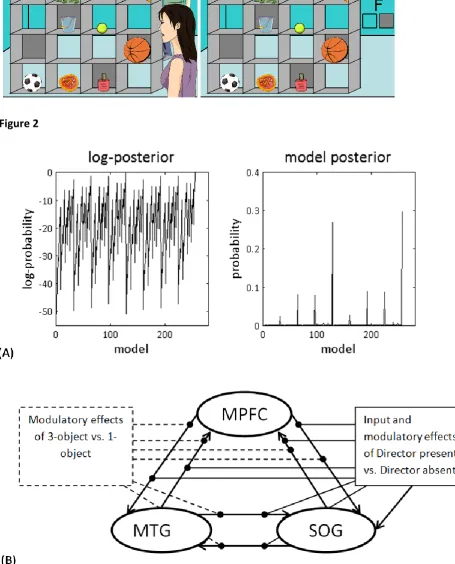
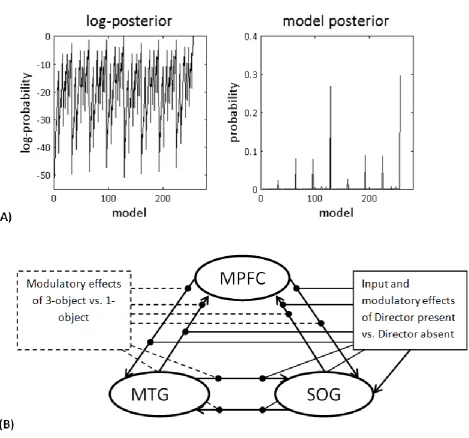
(optimal) model with the highest probability had a probability of 0.30 (Figure 2A). The winning
model was the full model that had all connections and all modulations (Figure 2B). The next most
probable model’s probability was 0.27. When comparing this model to the winning model, the Bayes
factor is only 1.11. In Bayesian statistics, this would not be considered strong evidence for the full
model over the next probable model. In frequentist, classical hypothesis testing this would
correspond to a non-significant difference. However, traditional Bayesian as well as frequentist
that the posterior mass is diluted over a high number of models and no single model has a very high
probability (Rosa, Friston, & Penny, 2012), since all models that share some characteristics with the
full winning model will have a non-zero probability in the presence of any noise. For instance, using
the post-hoc approach with synthetic data, Rosa et al. (2012) were able to obtain the model they
knew a priori to be the true model in a model space that was even smaller than ours (half the size)
and a Signal to Noise Ratio (SNR) of 2.6. However, when they compared this winning true model
(that the data was generated from) to the next probable (false) model the resulting Bayes factor was
just 1.94 (which is comparable to ours). Figure 2A shows the (log-)posterior probability of all models
examined (256 models overall). Crucially, the ‘‘best model’’ approach used in Bayesian model
selection is very useful but can become brittle (as in software brittleness; see Penny et al. 2010),
when one compares a large number of models (Penny et al. 2010) so, in addition, we performed a
family level inference.
When assessing the probabilities for each parameter existing or not using family-level comparison
(Penny et al., 2010), we found evidence for reciprocal fixed connectivity between all three regions
and modulation of all connections. The results of the family-level inference of all models showed
that the posterior probability (over parameters) for reciprocal fixed connectivity between all the
VOIs was (almost) 1. Moreover, the evidence that these connections were all modulated by both
contrasts (main effects of director and object) was also (almost) 1.
Since the full model had the highest evidence, this indicates that none of the alternative, reduced
models outperformed the full model. Moreover, because the family-level inferences also showed
that all fixed connections were modulated by both modulators, the full model was selected for
further analyses of the parameter estimates in order to examine the strengths of the fixed
Comparison of connection strength
We tested whether there were quantitative differences between the selected model’s Bayesian
parameter estimates to find out whether connections between different areas were subject to
different modulation. To achieve this, we conducted repeated measures ANOVAs with SPSS 20.0 for
both modulators (Director present vs. Director absent and 3-object vs. 1-object) on the individual
participants’ (BPA) parameter estimate values of the optimal model with connection as a factor with
6 levels. While the two state-DCMs use exponentiated scale parameters that introduce positivity
constrains and are so more plausible to interpret, these values are likely to not be normally
distributed and heteroscedastic, because the exponential function is the inverse function of the
natural logarithm (which is commonly used to transform data to meet the assumption of a normal
distribution, see (Bland and Altman, 1996a, 1996b). Thus, we used the original unexponentiated
non-scale parameter estimates for these statistics (see Table 2), but plot the exponentiated values in
Figure 3 and 4a-b. When significant, the main effect of connection was followed-up by paired
post-hoc comparisons between the connections.
The 6 (connections) × 2 (modulator) repeated measures ANOVA showed no significant main effects
of connection or modulator, but a significant connection × modulator interaction (F(5,50) = 8.26, p <
0.001). When considering the modulators separately, there was a main effect of connection for both
the Director present vs. absent modulation (F(5,50)=4.26, p=0.003), and the 3-object vs. 1-object
modulation (F(2.4,24.4)=8.93,p=0.001; Greenhouse-Geisser corrected). Post-hoc tests showed that
connections from the MPFC to the SOG and MTG, and the lateral reciprocal connections between
them, were more strongly modulated by the Director present vs. absent modulation (Table 2; only
post-hoc comparisons of connections with connections going to the MPFC are displayed in Table 2)
modulated connections leading to the MPFC more strongly than those projecting from this region or
the reciprocal connections between the SOG and MTG (Table 2).
Discussion
We used DCM to explore effective connectivity between SOG, the MTG, and the MPFC, in a task that
required participants to take into account another person’s perspective in order to guide action
selection. We used a novel post-hoc model selection routine (Friston and Penny, 2011; Rosa et al.,
2012) to look at all possible dynamic causal models. Family-level inference provided strong evidence
for reciprocal fixed connectivity between all three areas and modulations by both the Director and
the Object factors, which respectively manipulate the nature of the stimuli (social vs. non-social) and
the need for top-down influences on action selection.
Fixed and modulatory connectivity
Our family-level inferences suggest that there is high probability of reciprocal fixed connectivity
between all three areas that was context-independent and thus driven by the input of the Director
present vs. absent manipulation. Our hypothesis was that, similar to the role played by lateral parts
of the PFC during tasks that are novel or not automatic and require attentional control and action
selection (Burgess et al., 2007; Fuster, 2008, 2000; Koechlin and Summerfield, 2007), the MPFC plays
a role in the control of attention and action selection when the guiding and informative cues are of a
social nature. We thus predicted that, in the condition that requires perspective-taking information
to be used to identify the correct target object (Director present 3-object), we would observe
increased effective connectivity from the MPFC towards the SOG and MTG. We found strong
evidence that all connections were modulated by both the social and executive manipulations –
however, we were also able to disambiguate the relative contribution of modulatory strength on
Social manipulation
Consistent with our prediction, analysis of the modulatory effects revealed that the presence of a
social cue (Director present vs. absent contrast) increased the strength of the backward connections
from the MPFC more strongly than the forward connections from the SOG and the MTG.
Interestingly, this was also the case for the backward connection from the MTG to the SOG. The
dorsal MPFC consistently shows increased activation in response to social stimuli and mentalising, in
particular when participants are thinking about others’ thoughts, intentions or personality traits, and
has been suggested to hold the representation of other people’s mental states (Tamir and Mitchell,
2010). The left MTG region was close to TPJ which is also consistently implicated in social cognition
and perspective taking (Frith and Frith, 2006). Our interpretation of these findings is that the social
context leads the dorsal MPFC and the MTG to increase activation in regions processing
socially-relevant information, and also to increase the coupling between these regions.
Attentional and executive control manipulation
The 3-object vs. 1-object factor increased bottom-up connectivity by modulating the forward
connections of the SOG and the MTG to the MPFC more strongly than the backward connections.
This may reflect the transmission of the socially relevant information (location of the directors,
presence or not of the grey background on the two possible target objects) to the MPFC for further
computation of viewpoint and intention of the relevant director. In 3-object trials, the position of the
directors, and the relative position or relative size of the three objects needed to be considered to
infer the intention of the director correctly. This was associated with longer reaction times (see
Dumontheil et al., 2010) and increased demands of processing both the social and non-social
information. Note, that in previous perspective-taking tasks (Aichhorn et al., 2006; David et al., 2006;
whereas in our task, participants have to infer and select which object another person refers to,
based on their perspective (Dumontheil et al., 2010).
However, executive demands sometimes increase activity in MPFC (Levy and Wagner, 2011) areas
and social demands increase activity in MTG and SOG (as evidenced by our fMRI data), which may at
least partly account the corresponding modulating effects on the connectivity between these brain
areas. Furthermore, the visual search, and the computation and selection of the correct action in the
3-object vs. 1-object condition, which we have summarized as increased executive demands like the
inhibition of prepotent responses and working memory demands, is likely to have also required
more attention and cognitive resources (Levy and Wagner, 2011). This is partly supported by the
activation of regions associated with attention and control in the 3-object vs. 1-object main effect
contrast (Dumontheil et al., 2012, 2010; Duncan, 2010). Finally, since SOG and MTG are essentially
sensory areas, the top-down predictions to these areas can only serve to mediate the inhibition of
prepotent responses by selectively reducing the attentional capture by incorrect but prepotent
stimuli (Ji and Neugebauer, 2012; Levy and Wagner, 2011; Sharp et al., 2010).
Bayesian hierarchical predictive coding during social behaviour
Our results can be interpreted within the framework of recent theories that attempt to explain
(social) behaviour in terms of Bayesian hierarchical predictive coding (Brown and Brüne, 2012; Clark,
2012; Friston, 2010). Predictive coding postulates that forward, bottom-up connections pass
prediction error signals with (unexpected) sensory information about the stimulus from ‘lower’
(sensory) areas to areas ‘higher’ in the cortical hierarchy (Friston, 2010). In this frame-work, the
top-down backward connections pass predictions based on an internal (generative) model about the
stimulus to lower sensory areas to minimize sensory prediction error (by selectively sampling the
stimulus array) and to induce behavioural responses (Clark, 2012; Friston, 2010). In our 3-object
traditional top-down visual search paradigms (see for instance, Buschman and Miller, 2007) to find
the correct target (‘which ball is referred to?) amidst distractors, and so ‘surprising’ unpredicted
sensory information about distractors is passed forward in the cortical hierarchy as prediction error,
unlike in bottom-up searches (where a ball ‘pops out’ among trucks). Lastly, the main effect of
director modulates particularly strongly not only the backward connections (potentially by passing
down predictions about the director), but also modulates what is usually characterized as a forward
connection from SOG to MTG (Figure 4A). Because the task requires multisensory integration of
visual stimuli with auditory instructions, the connection from SOG to MTG might be a backward
connection where the SOG predicts auditory responses in the MTG in a top-down fashion.
Limitations
Our study has some limitations. First, by using the DCM post-hoc procedure, like Rosa et al. (2012),
our posterior mass was diluted over a large number of models and so we were not able to reach a
statistically significant Bayes Factor when comparing our winning model with the next probable
model in our large model space (see results section for more details). This is important to consider
for future research using the post-hoc estimation routines with large model spaces. Furthermore, we
did not test for any potential nonlinear modulatory gating effects that the activity in brain regions
exerts on the connections between them (Stephan et al., 2008) in order to simplify the model and
ease interpretability. For the same reason, we chose to look only at brain connectivity in the left
hemisphere and omitted extracting a VOI around the right MTG, which was active during Director
present vs. Director absent contrast. Indeed, as we only included three left hemisphere regions
recruited in the social (Director present) condition, and not right hemisphere regions or regions
responsive to the executive demands, our more constrained model would have failed to capture
mediating effects and connections between hemispheres and between social and executive regions
Summary
Our results suggest that effortful search and selection of the correct mental state of other people for
the purpose of action selection involves lower sensory areas and multisensory integration areas
(SOG, MTG, Hein and Knight, 2011) as well as prefrontal areas (MPFC). We provide evidence for an
account in which social predictions based on an internal model modulate backward connections,
whereas when a perspective diverges from one’s own perspective one has to search for the correct
Acknowledgements
We are grateful to K. Friston for valuable discussion and comments on the manuscript. This study
was funded by grants from the Royal Society to S.J.B., a Fellowship from the European Commission
to I.D., a University College London scholarship and a Charlotte and Yule Bogue Research Fellowship
References
Aichhorn, M., Perner, J., Kronbichler, M., Staffen, W., Ladurner, G., 2006. Do visual perspective tasks need theory of mind? NeuroImage 30, 1059–1068.
Apperly, I.A., 2011. Mindreaders: The cognitive basis of ―Theory of Mind‖. Psychology Press, Hove, UK.
Apperly, I.A., Carroll, D.J., Samson, D., Humphreys, G.W., Qureshi, A., Moffitt, G., 2010. Why are there limits on theory of mind use? Evidence from adults’ ability to follow instructions from an ignorant speaker. Q J Exp Psychol (Colchester) 63, 1201–1217.
Beck, D.M., Kastner, S., 2009. Top-down and bottom-up mechanisms in biasing competition in the human brain. Vision research 49, 1154–65.
Bland, J.M., Altman, D.G., 1996a. Statistics Notes: Transforming data. BMJ 312, 770–770.
Bland, J.M., Altman, D.G., 1996b. Statistics notes: Transformations, means, and confidence intervals. BMJ 312, 1079–1079.
Brothers, L., 1990. The social brain: A project for integrating primate behavior and neurophysiology in a new domain. Concepts in Neuroscience 1, 27–61.
Brown, E.C., Brüne, M., 2012. The role of prediction in social neuroscience. Front Hum Neurosci 6, 147.
Burgess, P.W., Gilbert, S.J., Dumontheil, I., 2007. Function and localization within rostral prefrontal cortex (area 10). Philos Trans R Soc Lond B Biol Sci 362, 887–899.
Buschman, T.J., Miller, E.K., 2007. Top-Down Versus Bottom-Up Control of Attention in the Prefrontal and Posterior Parietal Cortices. Science 315, 1860 –1862.
Clark, 2012. Whatever next? Predictive brains, situated agents, and the future of cognitive science. Behavioral and Brain Sciences. Sec. 3, 1–86.
Daunizeau, J., Stephan, K.E., Friston, K.J., 2012. Stochastic dynamic causal modelling of fMRI data: Should we care about neural noise? Neuroimage 62, 464–481.
David, N., Bewernick, B.H., Cohen, M.X., Newen, A., Lux, S., Fink, G.R., Shah, N.J., Vogeley, K., 2006. Neural representations of self versus other: visual-spatial perspective taking and agency in a virtual ball-tossing game. J Cogn Neurosci 18, 898–910.
Dumontheil, I., Hillebrandt, H., Apperly, I.A., Blakemore, S.-J., 2012. Developmental Differences in the Control of Action Selection by Social Information. Journal of Cognitive Neuroscience 24, 2080–2095.
Dumontheil, I., Küster, O., Apperly, I.A., Blakemore, S.-J., 2010. Taking perspective into account in a communicative task. NeuroImage 52, 1574–1583.
Duncan, J., 2010. The multiple-demand (MD) system of the primate brain: mental programs for intelligent behaviour. Trends Cogn. Sci. (Regul. Ed.) 14, 172–179.
Friston, K., 2005. A theory of cortical responses. Philos. Trans. R. Soc. Lond., B, Biol. Sci. 360, 815– 836.
Friston, K., 2010. The free-energy principle: a unified brain theory? Nat. Rev. Neurosci. 11, 127–138. Friston, K., Mattout, J., Trujillo-Barreto, N., Ashburner, J., Penny, W., 2007. Variational free energy
and the Laplace approximation. Neuroimage 34, 220–234.
Friston, K., Penny, W., 2011. Post hoc Bayesian model selection. Neuroimage 56, 2089–2099.
Friston, K.J., Harrison, L., Penny, W., 2003. Dynamic causal modelling. Neuroimage 19, 1273–1302. Friston, K.J., Li, B., Daunizeau, J., Stephan, K.E., 2011. Network discovery with DCM. Neuroimage
56, 1202–1221.
Frith, C.D., Frith, U., 2006. The Neural Basis of Mentalizing. Neuron 50, 531–534. Frith, C.D., Frith, U., 2007. Social cognition in humans. Curr. Biol 17, R724–732.
Frith, C.D., Frith, U., 2012. Mechanisms of Social Cognition. Annual Review of Psychology 63, 287– 313.
Goulden, N., Elliott, R., Suckling, J., Williams, S.R., Deakin, J.F.W., McKie, S., 2012. Sample size estimation for comparing parameters using dynamic causal modeling. Brain Connect 2, 80–90. Gusnard, D.A., Raichle, M.E., 2001. Searching for a baseline: Functional imaging and the resting
human brain. Nature Reviews Neuroscience 2, 685–694.
Hahn, B., Ross, T.J., Stein, E.A., 2006. Neuroanatomical dissociation between bottom-up and top-down processes of visuospatial selective attention. Neuroimage 32, 842–853.
Hein, G., Knight, R.T., 2011. Superior Temporal Sulcus—It’s My Area: Or Is It? Journal of Cognitive Neuroscience 20, 2125–2136.
Ji, G., Neugebauer, V., 2012. Modulation of medial prefrontal cortical activity using in vivo recordings and optogenetics. Mol Brain 5, 36.
Kasess, C.H., Stephan, K.E., Weissenbacher, A., Pezawas, L., Moser, E., Windischberger, C., 2010. Multi-subject analyses with dynamic causal modeling. Neuroimage 49, 3065–3074.
Keysar, B., Barr, D.J., Balin, J.A., Brauner, J.S., 2000. Taking perspective in conversation: The role of mutual knowledge in comprehension. Psychological Science 11, 32–38.
Keysar, B., Lin, S., Barr, D.J., 2003. Limits on theory of mind use in adults. Cognition 89, 25–41. Koechlin, E., Summerfield, C., 2007. An information theoretical approach to prefrontal executive
function. Trends in cognitive sciences 11, 229–235.
Kret, M.E., Pichon, S., Grèzes, J., De Gelder, B., 2011. Similarities and differences in perceiving threat from dynamic faces and bodies. An fMRI study. NeuroImage 54, 1755–1762.
Levy, B.J., Wagner, A.D., 2011. Cognitive control and right ventrolateral prefrontal cortex: reflexive reorienting, motor inhibition, and action updating. Annals of the New York Academy of Sciences 1224, 40–62.
Lin, S., Keysar, B., Epley, N., 2010. Reflexively mindblind: Using theory of mind to interpret behavior requires effortful attention. J. Exp. Soc. Psychol. 46, 551–556.
Lui, L.L., Bourne, J.A., Rosa, M.G.P., 2006. Functional Response Properties of Neurons in the
Dorsomedial Visual Area of New World Monkeys (Callithrix jacchus). Cereb. Cortex 16, 162– 177.
Marreiros, A.C., Kiebel, S.J., Friston, K.J., 2008. Dynamic causal modelling for fMRI: a two-state model. Neuroimage 39, 269–278.
Meyer, M.L., Spunt, R.P., Berkman, E.T., Taylor, S.E., Lieberman, M.D., 2012. Evidence for social working memory from a parametric functional MRI study. Proc. Natl. Acad. Sci. U.S.A. 109, 1883–1888.
Onitsuka, T., Shenton, M.E., Salisbury, D.F., Dickey, C.C., Kasai, K., Toner, S.K., Frumin, M., Kikinis, R., Jolesz, F.A., McCarley, R.W., 2004. Middle and Inferior Temporal Gyrus Gray Matter Volume Abnormalities in Chronic Schizophrenia: An MRI Study. Am J Psychiatry 161, 1603–1611.
Penny, W.D., Stephan, K.E., Daunizeau, J., Rosa, M.J., Friston, K.J., Schofield, T.M., Leff, A.P., 2010. Comparing Families of Dynamic Causal Models. PLoS Comput Biol 6, e1000709. Penny, W.D., Stephan, K.E., Mechelli, A., Friston, K.J., 2004. Comparing dynamic causal models.
NeuroImage 22, 1157–1172.
Rosa, M.J., Friston, K., Penny, W., 2012. Post-hoc selection of dynamic causal models. J. Neurosci. Methods 208, 66–78.
Samson, D., Apperly, I.A., 2010. There is more to mind reading than having theory of mind concepts: new directions in theory of mind research. Infant and Child Development 19, 443–454.
Saxe, R., Schulz, L.E., Jiang, Y.V., 2006. Reading minds versus following rules: dissociating theory of mind and executive control in the brain. Soc Neurosci 1, 284–298.
Scholz, J., Triantafyllou, C., Whitfield-Gabrieli, S., Brown, E.N., Saxe, R., 2009. Distinct regions of right temporo-parietal junction are selective for theory of mind and exogenous attention. PLoS ONE 4, e4869.
Sharp, D.J., Bonnelle, V., Boissezon, X.D., Beckmann, C.F., James, S.G., Patel, M.C., Mehta, M.A., 2010. Distinct frontal systems for response inhibition, attentional capture, and error
Stephan, K.E., Kasper, L., Harrison, L.M., Daunizeau, J., Den Ouden, H.E.M., Breakspear, M., Friston, K.J., 2008. Nonlinear dynamic causal models for fMRI. Neuroimage 42, 649–662. Stephan, K.E., Penny, W.D., Moran, R.J., Den Ouden, H.E.M., Daunizeau, J., Friston, K.J., 2010. Ten
simple rules for dynamic causal modeling. Neuroimage 49, 3099–3109.
Tamir, D.I., Mitchell, J.P., 2010. Neural correlates of anchoring-and-adjustment during mentalizing. PNAS 107, 10827–10832.
Van Overwalle, F., 2009. Social cognition and the brain: a meta-analysis. Hum Brain Mapp 30, 829– 858.
Van Overwalle, F., 2011. A dissociation between social mentalizing and general reasoning. Neuroimage 54, 1589–1599.
Table 1: GLM results.
The Director present > Director absent contrast was performed with FWE correction at p < 0.05,
whole brain level. For the Director × Object[(Director present 3-object > 1-object) – (Director absent
3-object > 1-object), inclusively masked by (Director present 3-object > 1 –object)], only those
regions are listed that survived small volume FWE correction at p < 0.05 based on a 12mm sphere
centred on coordinates from previous literature (see Dumontheil et al., 2010 for details). * and #
indicate FWE-corrected values for the whole brain or a small volume (12 mm sphere) respectively.
Area
MNI
Coordinates Cluster size Z-value
p-value for peak coordinate (FWE-corrected)
Director present vs. Director absent
Left middle temporal gyrus -45 -70 13 16 5.07* 0.006*
Right middle temporal gyrus 60 -64 13 6 4.95* 0.01*
Left superior occipital gyrus -12 -94 4 9 4.91* 0.012* Director × Object interaction
Left superior dorsal medial
prefrontal cortex -9 41 34
5 3.96# 0.004#
Left middle temporal gyrus -36 8 -26
Table 2: Comparison of modulatory connection strengths.
Post-hoc paired comparisons of connections strengths of the modulatory effects of the Director
present > absent manipulation and the 3-object > 1-object manipulation. Connections leading to the
SOG and MTG were significantly more strongly modulated by the Director present vs. absent
manipulation than those leading to the MPFC. By contrast, the 3-object vs. 1-object manipulation
modulated the connections leading to the MPFC significantly more strongly than those leading to the
MTG and SOG. For clarity, we only report the values of regions going to the SOG and MTG for the
Director present vs. absent contrast and the values going to the MPFC for the 3-object vs. 1-object
Modulation by Director present vs. absent contrast
Backward/lateral
connection Forward connection
Mean Difference between backward/lateral - forward connections
Std.
Error p value
MTG to SOG SOG to MPFC 0.446
*
0.121 0.004
MTG to MPFC 0.530* 0.163 0.009
MPFC to SOG SOG to MPFC 0.488 0.267 0.097
MTG to MPFC 0.572* 0.179 0.009
SOG to MTG SOG to MPFC 0.507
*
0.122 0.002
MTG to MPFC 0.591* 0.209 0.018
MPFC to MTG SOG to MPFC 0.456 0.214 0.059
MTG to MPFC 0.540* 0.151 0.005
Modulation by 3-object vs. 1-object contrast
Forward connection Backward/lateral connection
Mean Difference between forward -
backward/lateral connections
Std.
Error p value
SOG to MPFC MTG to SOG 0.759* 0.271 0.019
MPFC to SOG 1.091* 0.271 0.002
SOG to MTG 0.896* 0.211 0.002
MPFC to MTG 0.867* 0.203 0.002
MTG to MPFC MTG to SOG 0.473* 0.18 0.025
MPFC to SOG 0.804* 0.151 <0.001
SOG to MTG .609* 0.224 0.022
MPFC to MTG .581* 0.162 0.005
Figure legends
Figure 1: Examples of a 3-object trial in the Director present (A) and the Director absent (B)
conditions. In this example, participants hear the instruction: “Move the large ball up” in either a
male or a female voice. Two of the objects could correspond to this instruction depending on the
director’s viewpoint. The largest ball (or equivalent) was always located in a closed shelf (not visible
from the back), while the second largest ball was located in an open shelf. Here, if the voice is
female, the object to be moved would be the basketball, since in the Director present condition (A)
the female Director is standing in front of the shelves and can see all the objects, while in the
Director absent condition (B) the two boxes below the “F” (for “female”) indicate that all objects can
be moved by the participant. If the voice is male, the only appropriate response would be to move
the football, since in the Director present condition (A) the male Director is standing behind the
shelves and therefore cannot see the larger basketball (which was thus a distractor), while in the
Director absent condition (B) the single a transparent box below the “M” (for “male”) indicates that
only objects in clear slots can be moved by the participant. The third object was another type of
distractor that did not fit any of the perspectives (the tennis ball).
Figure 2: (A) The left graph shows the range of log-posterior probability of all possible models
examined. The right graph shows the posterior probability of all models. Model 256 had the highest
posterior probability of 0.3. (B) The winning model: The full model was the winning model, with the
highest evidence: in this model all connections were modulated by both modulators. The driving
input was fixed and went into the most posterior region, the SOG.
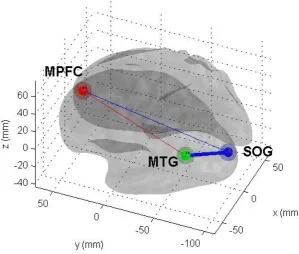
Figure 3: (A) VOIs used in the DCM analyses and illustration of the fixed connectivity between them.
Two VOIs were based on the peaks of the Director present > Director absent main effect contrast
gyrus (MTG; -45 -70 13; circled in green). One VOI was based on the PFC peak from Director × Object
contrast [(Director present 3-object > 1-object) – (Director absent 3-object > 1-object), inclusively
masked by (Director present 3-object > 1 –object)] and was located in the left dorsal medial
prefrontal cortex (MPFC; -9 38 34; circled in red). The colour of the line represents the source of the
strongest bidirectional fixed connection, while its width represents its absolute strength (see web
version for a colour figure of this graph). (B) Bayesian Parameter estimates under selected (winning)
model of fixed connections strength in absence of task specific modulation. Values indicate scale
(exponentiated) parameter estimates for each particular connection.
Figure 4: Modulatory connectivity. (A) Modulatory effects of the Director present vs. absent
contrast: Backward connections coming from the MPFC (highlighted in green) and lateral
connections between SOG and MTG are subject to stronger modulation. (B) Modulatory effects of
the 3-object vs. 1-object contrast: connections leading to the MPFC (highlighted in red) are subject to
stronger modulation. Values indicate scale (exponentiated) parameter estimates for each particular
connection. On (A), the input strength to the SOG is shown. The modulatory parameters estimates
can be interpreted as percentage change in connection strength (e.g. the model with the highest
evidence has a parameter estimate of 1.55 for the modulation of the MPFC-SOG connection, which
Figure 1 (color for the Web)
[image:37.595.52.508.142.707.2]Figure 3 (color for the Web)
(A)
[image:38.595.98.398.85.339.2]Figure 1 (black-and-white for print)
[image:40.595.54.397.75.212.2] [image:40.595.54.524.257.695.2]Figure 3 (black-and-white for print)
(A)
[image:41.595.95.395.85.339.2]