GE-International Journal of Management Research
ISSN (O): (2321-1709), ISSN (P): (2394-4226) Impact Factor- 5.779, Volume 5, Issue 8, August 2017Website- www.aarf.asia, Email : [email protected] , [email protected]
THE EFFECT OF ADVERTISEMENTS ON HOW PEOPLE
COMPREHEND THE WORLD
Dr. K. R. Subramanian
Senior Consultant & Professor of Management
SYNOPSIS
Not a single day goes without people being subjected to the din and noise of Advertisement
commercials on the TV or other media. Some have become oblivious to this while others
consider it as a distraction and very few are there who see the commercials with any interest. We
need to understand the reaction of listeners to this, as many advertisers sincerely think that their
advertisement is informative and attractive and will increase the market value of their offerings.
Is this so? This is the topic of the current research paper. When people see advertisements and
particularly visuals they form some mental pictures and try to make some sense out of it. Their
comprehension and understanding will result in action in favor of or against the theme of the
advertisement. Their perception goes a long way for advertisers to design their text and visuals
so that the desired message goes across to the targeted audience. The present research paper will
analyze how advertisers and media are efforts in this direction. The ultimate success of an
advertisement would depend on the right comprehension and prompt action from the audience.
There is an effort through this research paper to analyze how the audience sees the world as
depicted by advertisers! This paper would try to precisely understand how the audience receive
the advertisement message and make sense out of it.
Key words: Advertisement noise, how customers discern the advertisement message, the
INTRODUCTION
Everywhere we go, we are bombarded with advertisement messages and propaganda and we are
clearly affected by those. Every time we walk past an advertisement board or TVCommercial,
our brains remember certain key points on that ad and that eventually affect our daily lives.
There are positive and negative consequences. We get a lot of useful information about products
that we may need in our daily lives and create awareness about new products and ways of
buying. We get a comparative idea of various competing products to make our decisions more
informed and precise. With the proliferation of digital media messages bombard us at regularly
and the younger people are the most desired targets. Sometimes youngsters are misled because
they do not understand! At other times they are led by mob and peer pressures! Such
consequences may be detrimental for the long term health and decision making capability of
individuals.
Advertisements affect our daily lives by causing us to think a certain way. For example, shoe
advertisements would want you to think that their shoes are the best shoes and will make you
want to buy them. However, not all that information may be true. Although there is some truth
about information, most of that is false and is just used as a marketing tool. In addition, most ads
include pictures which may not even be true and are just fake photoshopped photos making
people want to buy their products.Advertisements affect our actions and the things that we buy.
Whenever we see an advertised brand, we are more prone to buy that than an unknown brand.
Therefore, the brand symbol is very important. If you see a certain brand more often, you will want to buy that certain product more. However, that doesn‟t mean that that certain brand is
Figure 1: Effect of Social Advertisements
In the so called digitalized world of mobiles and networks, the youngsters tend to believe or
made to believe what comes to them through SMS and mobile messages; it is a field day for
advertisers – particularly the unscrupulous type! It is sad to see teenagers have more confidence
and lap up what they get through messages even when they do not comprehend fully the impact
and purport of such messages. Every time you switch on the TV and you will see some products
being pushed on you with some assurance. This is advertising. Your mind is being sold to these
advertisers. Advertising is the promotion of product or services. This gives companies a way to
expose their products to people and hence maximize their sales. Advertising is the mostly
debated topic now. Like every other thing it has also some positive as well some negative points.
If it has some positive aspect of social and economic impact on society then it do have some
negative impact also. Advertising a public welfare program has positive social impact whereas
exposing woman in an advertisement has negative impact on society.
METHODOLOGY AND OBJECTIVES
The subject matter of this research paper is quite understood by many and is a matter of
discussion in various forums. A lot of research has gone into this and a large volume of
published literature is available in print and the web media. For the purpose of this research work
1. A review of current advertisements and their purpose
2. Advertisement media currently popular and reasons thereof.
3. Positive and negative impact of various advertisements in the media.
4. Effect of advertisements on consumer comprehension.
5. Role of advertisements in shaping consumer opinion and reaction
6. Analysis, Conclusions and recommendations.
The nature of research and the topic rends itself convenient to draw from a large volume of
published literature. An overview of available literature on the subject made it possible to zero
down on specific literature relevant for the topic under consideration. From published research
and available data on the web pages, data was compiled and reviewed to arrive at suitable and
appropriate conclusions keeping in mind the specific objectives of the research ass mentioned
above. The results can be seen in the following pages.
REVIEW OF LITERATURE
Advertising is a mass marketing technique. Assorted techniques are used for advertising which
persuades the consumers why they need the product which is being advertised. They focus more
on the benefits, which consumer will get from that product, rather than the product itself.
Through advertising, products can be known to public easily. They can decide which product
they need and why, thus increasing the consumption and as a result also increasing the demand
of the product. Advertising can also be used to generate awareness among public that which
product they use and to which product they can say no. It can also be used to educate people
about certain diseases or danger (example: - AIDS, TB, viral diseases, etc.). Even the backward
people are now aware of many diseases and their problems. And all these credits goes to proper
advertising. Diseases like Polio could never been controlled if the timings for polio drops aren‟t
advertised regularly. Advertising can also be used to inform public about social events like
concerts and performances. Charities can use media to advertise about the illnesses and
encourage people for donations. Social organizations and NGOs can use the mean of
advertisement for promoting their campaigns. Seeking help through advertisement during
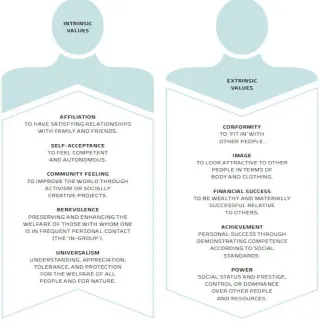
Figure 2: Intrinsic and Extrinsic value of advertising.
There are also various blames that advertising is causing negative social impact on lives. Even if
advertising has a vast good impacts on society, it cannot be ruled out that it has no bad impact. It
plays with the emotions of general public and encourages them to think that buying and
depleting are the activities of life. Advertising posters of modern films, where sexuality is shown
much more than the actual theme of the movie, can divert the society a lot. Materialism is being
much glorified through advertisements, which can again have dangerous consequences Society is
becoming ignorant towards social or world issues because we are too obsessed to satisfy our
newly created needs. We want to earn more and more money so that we can buy happiness in
forms of products, being advertised as they can bring all the happiness in our lives. We are
starving for material goals, because we always just want to have more.
Products which are heavily advertised are expensive due to the cost spent on advertising. It is
true that advertising increases consumption, but it is also true that the more we consume, the
consumption and production also increases. Thus the need of raw materials also increases. So,
we can say that advertising has positive as well as negative impact on society. The balance, of
what is necessary and what really not needed should be focused more. Advertisement can create
contentment but can also simultaneously create discontentment. Our society and the marketing of
products depend so badly on advertisement that even its negative impact on society can‟t
outweigh the many positive social and economic effects.
Advertisements are messages paid for by a business or advertiser and delivered via a mass
medium with the attempt to persuade a target audience to like a brand, develop a more favorable
attitude or intend to buy. Small businesses often have limited budgets to spend on advertising,
but the positive effects are often worth it. Advertisement is a means of disseminating Product
information and Company performance to build brand equity. Many advertisements are
educative with respect to new products and opportunities like employment and business. With
better awareness of consumers the return on investment of companies also indirectlyimprove.
Negative Impacts of Advertising
Advertising aims to present a product in the best light possible. There is some leeway in the
creative process. The problem arises when the dramatization crosses the line into falsely
representing a product. Hefty fines can result from false advertising when levied by the Federal
Trade Commission. Direct-to-consumer advertising for prescription drugs has resulted in
unrealistic expectations about the effectiveness of drugs and their side-effects, according to the
Food and Drug Administration's study "Patient and Physician Attitudes and Behaviors
Associated. With DTC Promotion of Prescription Drug” Voice-overs give the downside to the
drug, but the visual images show healthy, happy people. It's not unusual to hear that even death
may be a side-effect of a prescription drug. Beauty and health products may also not live up to
their promises, resulting in wasted consumer dollars. Disclaimers are often hidden in very small
print on product packaging and in out-of-the way spots in ads. Advertising is ingrained in the
culture, from children's programs on Saturday/ Sunday morning to talk shows and prime time
TV. Advertising even invades movies through product placement. It's not an accident when a
movie hero holds up a can of Coke instead of Pepsi. Advertising influences how people feel
about themselves - often in a negative way. Based on the images they see in advertising, women
often feel they should be thin and beautiful and hold down time jobs while also being
husbands, thoughtful fathers and virile at all times. These images are often unrealistic and
unattainable.
In his study "Review of Research on the Effects of Food Promotion to Children," Professor
Gerard Hastings found there is a link between food advertising and children's preferences
regarding what they will consume. Ads for many sugary cereals encourage children to ask their
parents for those particular products - regardless of whether the products are good for the
children. It's not coincidental that the most heavily advertised toys during the holiday season end
up being the top sellers. Children are susceptible to advertising
[image:7.612.200.414.224.365.2].
Figure 3: THE CULTURAL IMPACT OF ADVERTISING
In a new report from WWF and the Public Interest Research Centre takes its title from a quote from a notable advertiser who remarked that he “would rather be thought of as evil than useless,” and it‟s an analysis of how advertising impacts culture. Obviously advertising is a useful thing to the businesses that use it, and that‟s all of them if they expect to have any customers. It‟s a means of informing choice, and it‟s vital to new entrants in any market. When it comes to society
however, and the big picture effects of advertising in general, it‟s not pretty. The report‟s
conclusion is that advertising promotes values that are directly opposed to human wellbeing,
environmental sustainability and a fair society. It ought to be considered a detrimental influence,
and regulated accordingly.That‟s not how advertisers see it of course. As far as they‟re
advertising may be encouraging society to save less, borrow more, work harder and consume greater quantities of material goods.”
Some advertisement messages can have a powerful impact as shown by the above social
advertisement advising people of the consequences of talking and using mobiles indiscreetly
while driving (See Figure 4). Advertising also impacts values. While it reflects society to a
certain degree, it also has the effect of „normalizing‟ values or behaviors. With the average
citizen exposed to between 500 and 1,000 commercial messages a day, it wields considerable
power over what we consider normal. An example that came to mind for me was the idea of
cosmetics for men. Only a few years ago, the idea that men might want to use moisturizers
would have been laughable to most British men. A sustained advertising campaign from Nivea later, including prominent billboards at football stadiums, and there‟s nothing unusual at all about men using hand cream. Hand cream is benign stuff, and it‟s not the products that are the
problem here, but the values behind the ads. Research by Frederick Grouzet and Tim Kasser shows how advertising tends to promote „extrinsic‟ values rather than „intrinsic‟ values (See
Figure 2). The former are those that rely on external factors for validation – the opinions and
admiration of others. The latter meanwhile, are rewarding in themselves, such as a sense of
family belonging, rewarding work, or self-development. This matters because “placing greater
importance on extrinsic values is associated with higher levels of prejudice, less concern about
the environment and weak (or absent) concern about human rights.” That‟s bad for society, but it‟s not great for the individual concerned either: “People who attach greater importance to
[image:8.612.168.447.503.664.2]extrinsic values are also likely to report lower levels of personal wellbeing.”
Finally, advertising might not even promote choice after all. By subtly manipulating its audience,
it may in fact stifle choice. Much advertising is subliminal, drip-feed, all about creating positive
associations without prompting conscious thought. If we consciously sat down and decided to objectively analyze whether we preferred Coke or Pepsi, we‟d probably conclude that we didn‟t care and that it doesn‟t matter. An active choice, in this instance, is bad for the brand. Instead, advertising “operates darkly, beyond the light of consciousness”, in the words of Agnes Nairn
and Cordelia Fine, two active participants in a research study. “Intuitive brand judgments are
made instantaneously and with little or no apparent conscious effort on the part of consumers”
says one Ad agency. “Intuition is now well accepted as a powerful driver of brand choice and brand affiliation.” So if advertising circumvents our thought processes and subtly encourages
further debt, selfishness, and a cavalier attitude to the environment, then maybe we do need to
think of it as evil. Or if that seems a little dramatic, at least we ought to be more aware of
advertising, be clearer about where the limits lie. And we certainly need more public debate
about the ethics of advertising, which is ultimately what this report is calling for. The problem is
the cumulative effect of advertising – another case of reaping as a society what we did not choose as individuals. So we can‟t do away with advertising, but we can examine it, ask more
questions, regulate it better, and minimize its harmful effects on society.
Consider Fair & Lovely cream advertisement produced by Lowe, where the parents are worried
about their dark skinned girl and express their frustration of having a son to take care of them.
The girl eventually gains fair complexion by using the cream and becomes professionally successful. Don‟t you think this ad so rudely used the agony of dark complexion and gender
biases? Hence, the ad agencies must be more careful and conscious of the ads they make. We can
discuss two more such examples, the first of which had to be withdrawn and in second case,
ASCI directed to modify the ad.
Surf Kid stains Challenge:This ad created by Lowe showed a child throwing ketchup on another‟s shirt and asking “tumhare ghar mein Surf hain?” (Do you have Surf at your home?) The major argument against this ad was that deliberately soiling someone else‟s dresses with a
coloured food is a form of insulting and embarrassing, which could give rise to quarrels and
fights among children.Super Nirma detergent cake:This ad created by Purnima Advertising
detergent cake in appreciation and joy. But doing so the wet detergent cake can leave a residue
on the lips, which could possibly enter the mouth. This practice could have a dangerous and fatal
outcome, as the detergents are skin irritants with toxicity potent.
The ad filmmakers are formulating fresh ways of enticing consumers to buy products. If an
advertisement for a product attracts the consumer, they tend to purchase it frequently, or at least
buy it once. If a company has to survive in this competitive world, they have to project the image
of their products in such a way that they pick up the maximum sales, when they hit stores. The
best way to persuade the consumer to stick to the product of the particular brand, when numerous
choices are provided to them in the market – is through attractive advertisements. However, ad
filmmakers should remember that the commercials can also have a negative IMPACT on people,
especially young children. Positive Effects of Advertisements on Kids : Advertising makes the
kids aware of the new products available in the market. It increases their knowledge about the
latest innovations, in the field of technology as well as otherwise. Convincing ads, which center
around healthy food products, can help improve the diet of a child, if they are attractive enough.
Negative Effects of Advertisement on Kids
Advertisements encourage the children to persuade their parents to purchase the products shown
in the commercials, whether useful or not. The little ones tend to get adamant, if the product is
not bought for them. Children often tend to misinterpret the messages conveyed in commercials.
They overlook the positive side and concentrate more on the negatives. Many advertisements in
the present times include dangerous stunts, which can be performed only by experts. Even
though the commercials broadcast the statutory warnings with the ad, kids often try to imitate the
stunts at home, with fatal results. Flashy advertisements broadcast in television generate impulse
shopping in children. Children, after watching the glitter of commercials, often lose the ability to
live a life without materialistic joy. Kids usually get more attracted towards costly branded
products, such as jeans and accessories. They disregard the inexpensive, but useful ones that are
not shown in the commercials. Advertisements have an indirect effect on the behavior of
children. They might develop temper tantrums, when deprived of the latest toys and clothes that
children are altered by advertisements, to a great extent. Junk foods, such as pizzas, burgers and soft drinks, are heavily promoted during children‟s TV viewing time. This develops a craving for
[image:11.612.209.366.114.317.2]fatty, sugary and fast foods in kids, thereby affecting their health adversely.
Figure 5: Advertisement impact on children
Image Source: [http://www.apa.org/Images/sep00-advertising_tcm7-42484.gif]
ANALYSIS AND CONCLUSION
A review of current Advertisements in print and the electronic or mobile media shows that their
primary purpose is to promote the product or service. As a mass marketing technique it creates
Product awareness and product pull. It can have a positive or negative impact based on
advertisement message and the visuals. Visual content in advertisement has increased as the
competition between agencies and competing products have intensified.
There is a marked shift to electronic and mobile media advertisement ass the print media has
almost become irrelevant and very few people read the newspaper. This is because of the growth
of TV and the other electronic media like the internet and mobiles. The younger generation finds
these media useful as they want everything as a „quick fix‟ and they do not seem to have the time
or patience for tolerating other communication media. They hardly have time to meet or talk to
other peer pressure and influences have played a role is for the people at large to decide;
particularly parents and society.
The paper has reviewed at length the positive and negative effects of advertisements.
Advertisements are seen to provide more accurate and relevant information to the audience to
make a decision and choice. This is a result of intense competition among product manufacturers
and service providers to take a share of the decision making mind. Such campaigns have resulted
in changes in consumption patterns with an emphasis on Quality. But advertisers are not far
behind in offering free bees to increase consumption by offering 2 for the price of one etc.
Negative impacts have been clearly identified particularly for children. This can be seen under
the subheading of negative impact of advertisements on children. This is a critical area of
concern for the future of our country as we would like children to be strong and independent to
make wise decisions and not to depend on props like a media campaign!
Advertisement messages have recently been twisted to promote consumption. We need to guard
against this tendency. Consumer psyche has taken a severe beating due to repeated din and noise
of advertisements. By continuous bombarding through electronic media messages most of which
youngsters do not comprehend, they have brain washed them and made them human robots with
an appetite for conspicuous consumption – and that is the IN thing! Ideological changes are
implanted in young minds like Pitza and Burgers in place of Iddli , Dosa or samosas. Coco-cola
and other beverages at a cost have replaced plain water and coconut water or fruit juices. The
present state of confused mind in a flux is difficult to repair! But unless conscious efforts are
made to regain the lost ability to discriminate and understand the difference, it would be a lost
cause.
From the above paragraphs and the review of literature, it is evident that advertisements have a
big role in shaping young minds and their discriminative intelligence. Unless a conscious and
concerted effort is made in this direction, we would lose the war though we have already lost the
battle! In conclusion we can say that people need to comprehend the advertisement messages
with a discriminative intelligence to discern the difference between positive and negative
attributes. There is conclusive evidence that the multinational companies and corporate giants
will continue to bombard people and particularly the young and the impressionable ones to sell
RECOMMENDATION
The author would strongly recommend more research and understanding of this, so that future
generations of people can be saved from their wrong influence. It is a very important subject
needing very close attention. Medical misguidance through advertisements have resulted in
Obesity among children because of their addiction to wrong food as a consequence of peer
pressure and parental negligence. The pig and other animal fat content in some of the products
sold in India but not in other advanced countries because of their strong laws is a case for study
and legislation. Corporate averacity and greed should not lead us to destruction of our tradition
and culture.
REFERENCES
1. Archpu, A. M., & Alden, D. (2010). Global brand positioning and perceptions:
International advertising and global consumer culture. International Journal of
Advertising, 29(1), 37- 56.
2. Beattie, G., and Shovelton, H. 2005. Why the spontaneous images created by the hands
during talk can help make TV advertisements more effective. British Journal of
Psychology, 96: 21-37
3. Coulter, R. A., Zaltman, G., & Coulter, K. S. (2001). Interpreting consumer perceptions
of advertising: An application of the Zaltman metaphor elicitation technique. Journal of
Advertising, 30(4), 1-21.
4. Golden, Linda L. (1977), "Attribution Theory Implications for Advertisement. in
Credibility", Journal of Marketing Research, 115-118.
5. Krugman, H. E. (1965), "The Impact of Television Advertising: Learning Without
Involvement", Public Opinion Quarterly, Vol. 29, no. 2, 349-356.
6. Koslow, S., Sasser, S. L., & Riordan, E. A. (2006). Do marketers get the advertising they
need or the advertising they deserve? Agency views of how clients influence creativity.
Journal of Advertising, 53 (3), 81-101.
7. La Tour, K. A. B., La Tour, M. S., Pickrell, J. E., & Loftus, E. F. (2004). How and when
advertising can influence memory for consumer experience. Journal of Advertising, 33
8. Li, H., Edwards, S. M., & Lee, J. (2002). Measuring the intrusiveness of advertisements:
Scale development and validation. Journal of Advertising, 31(2), pp.37-47.
9. Mai, L. & Schoeller, G. (2009). Emotions, attitudes and memorability associated with TV
commercials. Journal of Targeting, Measurement and Analysis for Marketing, 17 (1),
55-64.
10.Mehta, N., Xinlei, J. C., & Narasimhan, O. (2008). Informing, transforming and
persuading: Disentangling the multiple effects of advertising on brand choice decisions.
Marketing Science, 27 (3), 334-355.
11.Park, W. C., & Young, M. S. (1986). Consumer response to television commercials: The
impact of involvement and background music on brand attitude formation. Journal of
Marketing Research, 23(1), 11–24.
12.Perrien, Jean and ChTron, Emmanuel J. (1979), "Pro-Consumer Information on TV:
Results and Implications of the Canadian Experience", 8th Annual Meeting of the
European Academy for Advanced Research in Marketing, D1-D23.
13.Brucks, Merrie, Gary M. Armstrong, and Marvin E. Goldberg (1988), “Children‟s Use of Cognitive Defenses Against Television Advertising: A Cognitive Approach,” Journal of
Consumer Research, 14 (March), 471-482.
14.Donohue, Thomas R., Lucy L. and William A. Donohue “Do Kids What TV
Commercials Intend Journal of Advertising Research, 20 (5) 5l-57.
15.Goldberg, Marvin E. “A Quasi-Experiment Assessing the Effectiveness of TV Advertising Directed to Children,” Journal of Marketing Research, 27 (November), 445 -
454.
16.Goldberg, Marvin E. and Gerald J. Gom “Some Unintended Consequences of TV
Advertising to Children,” Journal of Consumer Research, 5 (June), 22-29
17.Pieters, Rik G.M. and Tarn.1110 H.A. Bijmolt Consumer Memory for Television
Advertising: A Field Study of Duration, Serial Position, and Competition Effects,” of
Consumer Research, 23 (March), 362-372.
18.Reid, Leonard N. “The Impact of Family Group Interaction on Children‟s Understanding
of Television Advertising”, Journal of Advertising, 8 (Summer), 13-l 9,
19.Rossiter, John R. (!979)“Does TV-Advertising Affect Children?,” Journal of Advertising
20.Wiman, Alan R. (1983) “Parental Influence and Children‟s Responses to Television Advertising,” Journal of Advertising Research, 12 (1), 12 -18
21.Marc G. Weinberger and Charles S. Gulas ,The Impact of Humor in Advertising: A
Review, Journal of Advertising, Volume XXI, Number 4, December 1992
22.Biel, Alexander and Carol A. Bridgwater (1990), "Attributes of Likable Television
Commercials," Journal of Advertising Research, 30 (JunQ/July) 38-44.
23.Brooker, George (1981), "A Comparison of the Persuasive Effects of Mild Humor and
Mild Fear Appeals," Journal of Advertising, 10 (4), 29-40
24.Gelb, Betsy D. and Charles M. Pickett (1983), "Attitude-TowardThe-Ad: Links to Humor
and To Advertising Effectiveness," Journal of Advertising, 12 (2), 34-42
25.Leavitt, Glark (1970), "A Multidimensional Set of Rating Scales For Television
Commercials," Journal of Applied Psychology, 34 (5), 427-429
26.Stewart, David M. and David H. Furse (1986), Effective Television Advertising,
Lexington, MA: D.C. Heath and Company, Chicago.
27.Leiss, W., Kline, S., & Jhally, S. (1990). Social communication in advertising: Persons,
products, & images of well-being (2nd Ed.). New York: Methuen publications.
28.McQuarrie, E. F., & Phillips, B. J. (2005). Indirect persuasion in advertising: How
consumers process metaphors presented in pictures and words. Journal of Advertising,
34, 7-21.
29.Phillips, B. J. (1997). Thinking into it: Consumer interpretations of complex images.
Journal of Advertising, 26, 77-86
30.Srivastava, V.,& Nandan, T. (2010). A study of perceptions in society regarding unethical