University of South Carolina
Scholar Commons
Theses and Dissertations
2015
A Botanical Survey of Native and Non-Native
Species Along the Three Rivers Greenway in
Columbia, South Carolina
Rebecca L. Givens
University of South Carolina - Columbia
Follow this and additional works at:https://scholarcommons.sc.edu/etd Part of theNatural Resources Management and Policy Commons
This Open Access Thesis is brought to you by Scholar Commons. It has been accepted for inclusion in Theses and Dissertations by an authorized administrator of Scholar Commons. For more information, please [email protected].
Recommended Citation
A
B
OTANICALS
URVEY OFN
ATIVE ANDN
ON-
NATIVES
PECIES ALONG THET
HREER
IVERSG
REENWAY INC
OLUMBIA,
S
OUTHC
AROLINAby
Rebecca L. Givens
Bachelor of Science
University of South Carolina, 2010
Submitted in Partial Fulfillment of the Requirements
For the Degree of Master of Earth and Environmental Resources Management in
Earth and Environmental Resources Management
College of Arts and Sciences
University of South Carolina
2015
Accepted by:
Jill Anderson, Director of Thesis
John Nelson, Reader
John Kupfer, Reader
D
EDICATIONTo Jesse Crooks, without whom I would be lost. Thanks for loving me and
keeping me grounded and focused. Also, to Edgar-what would life be without an
A
CKNOWLEDGEMENTSI would like to express my sincere appreciation and thanks to my committee
member, Dr. John Nelson, for his patient guidance, mentorship, and inspiration on my
road to becoming a botanist. His classes opened a new world for me and a passion for
plants that I did not realize lay dormant. I am fortunate to have experienced his
enthusiasm for field trips, plant jokes, and lunch time pep talks, which pushed me to
make the most of my education in a career I love. I would also like to thank my
committee member, Dr. John Kupfer, for his guidance and keeping me on point
throughout this study, and my advisor, Dr. Jill Anderson for counting me as one of her
graduate students.
I would also like to recognize my fiancé, Jesse Crooks, and my father, Michael
Givens, for their many trips and constant companionship while completing my field work
for the survey. Similarly, I want to give many thanks to my sister, Dr. Carrie Givens, for
her unwavering support, endless proof-reading, and fount of knowledge concerning any
aspect about research and writing a thesis. I would like to acknowledge Marvin Brown
for his assistance with GIS mapping and fun at the USCH and Herrick Brown for all of
his knowledge about plants and the USCH database. Finally I would like to thank my
A
BSTRACTBaseline surveys are important tools in establishing the present flora located
within an area for future monitoring. In addition, knowledge of invasive species presence
is essential to help maintain native ecosystem biodiversity. This study aimed to establish
a baseline inventory of plant species found along a portion of the Three Rivers Greenway
in Columbia, South Carolina, and to create a comprehensive list of native and invasive
plant species within this area. In addition, a geographic information system (GIS) was
employed to show the spread of a particular known invasive plant species, Hedera helix
within the area. Specimens were collected in the study area from July 2013 to April 2015
with a focus on the fruiting or flowering status of each species gathered. This field study
yielded a total of 178 specimens, with 53 of the specimens being duplicate species. Of
the 125 identified species, 99 were dicots, 23 were monocots, and 3 were gymnosperms.
The three largest dicot and monocot families found in the study area were that of
Asteraceae, Fabaceae, and Rosaceae with 38%, 20%, and 18% and Poaceae,
Commelinaceae, and Cyperaceae with 31%, 18%, and 18%, respectively. Of the species
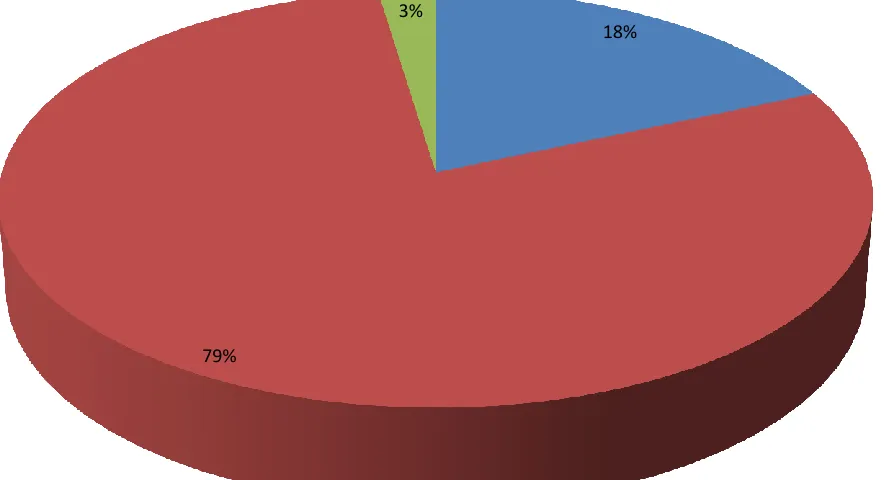
collected, 73% were native and 27% were non-native. Maps of the spread of H. helix
showed a large portion of the southern area of interest (AOI) and 54% of the total AOI as
inundated with this invasive species. Specimens were archived with identification labels
T
ABLE OFC
ONTENTSDEDICATION ... iii
ACKNOWLEDGEMENTS ... iv
ABSTRACT ...v
LIST OF TABLES ... vii
LIST OF FIGURES ... viii
LIST OF ABBREVIATIONS ... ix
CHAPTER 1:INTRODUCTION AND LITERATURE REVIEW...1
CHAPTER 2SURVEYING THE RIVERFRONT PARK ...16
2.1HEDERA HELIX:INVASIVE PLANT SPECIES OF INTEREST ...24
2.2STUDY OBJECTIVE ...25
2.3 METHODS ...32
2.4RESULTS ...37
2.5DISCUSSION ...39
WORKS CITED ...71
APPENDIX A: LIST OF VASCULAR PLANT TAXA ...78
APPENDIX B: ADDITIONAL VASCULAR PLANT TAXA FROM RIVERFRONT PARK ...85
L
IST OFT
ABLESTable 2.1 Important Terms ...46
Table 2.2 USCH Database Specimen Records ...47
Table 2.3 Specimen Identifications and Localities ...51
Table 2.4 Species Conservation Status ...57
Table A.1 Appendix B: Additional vascular plant taxa from Riverfront Park ...86
L
IST OFF
IGURESFigure 2.1 Three Rivers Greenway Map ...61
Figure 2.2 Map of South Carolina Lakes and Rivers ...62
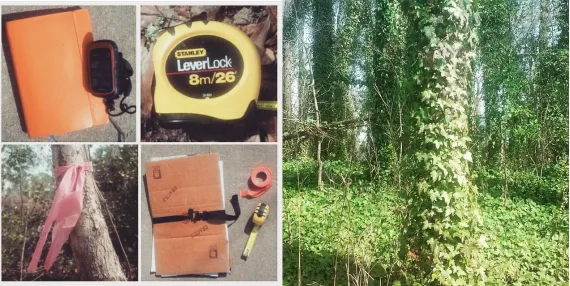
Figure 2.3 Surveying the AOI A) Field Work Materials B) Landscape of the AOI ...63
Figure 2.4 Breakdown of Plant Types ...64
Figure 2.5 Dicot Families ...65
Figure 2.6 Monocot Families ...66
Figure 2.7 Native vs. Non-native Plants ...67
Figure 2.8 Breakdown of Non-native Species ...68
Figure 2.9 Specimen Data Points ...69
L
IST OFA
BBREVIATIONSGIS ... Geographic Information System
AOI ... Area of Interest
EU ... European Union
CAP ... Common Agricultural Policy
IPPC ... International Plant Prevention Convention
RSPMs ... Regional Standards for Phytosanitary Measures
USDA ... United States Department of Agriculture
NISC ... National Invasive Species Council
ESA ... Endangered Species Act
USCH ... University of South Carolina Herbarium
FERC... Federal Energy Regulatory Commission
GPS ... Global Positioning System
ITIS ... Integrated Taxonomic Information System
CHAPTER
1:
Introduction and Literature Review
Considered a modern instigator of worldwide changes in ecosystems, invasive
plant species adapt from harmless plants to noxious ones with deleterious repercussions
for conservation, primary production, and ecosystem services (Petanidou et al. 2011). An
invasive plant species is classified as any species, which is non-native and upon
introduction does or has the ability to inflict harm on the environment, the economy, or to
human health (Martin and Blossey 2012). Conservationists, decision makers, managers,
and the public typically distrust new species introductions because these species have the
potential to become invasive species and threaten native biodiversity (Chauvenet et al.
2012). In addition, the introduction of new species can disrupt nutrient cycling,
productivity, biotic interactions, and dispersal patterns (Kreyling et al. 2011). The
possibility of introducing an invasive species to a new habitat is worrisome because an
invasive species could have a large, negative impact on biodiversity (Chauvenet et al.
2012).
Global trade provides opportunities for new forms of dispersal of potential
invasive species. For example, present reductions in European Union (EU) restrictions to
transport and trade, along with increased tourism and support for agricultural
modernization through the EU Common Agricultural Policy (CAP), have altered control
measures allowing for an increased probability of invasive species spread (Bardsley and
France first highlighted the potential dangers associated with invasive species and
international travel and trade.
The concept of international plant protection was originally conceived after the
devastation of European grape vineyards by the North American invasive aphid
Daktulosphaira vitifoliae (grape phylloxera) in the late 1800s (“History of the IPPC”
2014). The International Plant Prevention Convention (IPPC) is a legally binding
international agreement developed in 1929 that creates standards for addressing world
phytosanitary concerns (Lindgren 2012). The IPPC first began addressing invasive
species in 1951, and defines a “pest” as any species, strain, or biotype of plant, animal, or
pathogenic agent injurious to plants or plant products. Subsequently, a “quarantine pest”
is a pest of potential economic importance to the area, endangered and not yet present, or
present but not widely distributed and being officially controlled (FAO 2007). The IPPC
includes pests, such as invasive plants, that may directly or indirectly adversely affect
agriculture or the environment (Hedley 2004). At a regional level, the IPPC allows for
the development of Regional Standards for Phytosanitary Measures (RSPMs), providing
guidelines for screening plants prior to import (Lindgren 2012). RSPMs are significant
because they suggest modeling as a tool that should be used in pest risk analysis, such as
with invasive plant species (Lindgren 2012). However, to model an area appropriately
for future monitoring it must first be surveyed to the fullest extent.
Global leaders in importing and exporting with comparable ecosystems, the
United States and China have become both suppliers and victims of the international
transport of invasive plant species (Jenkins and Mooney 2006). Extensive trade and
spread. For example, approximately 40% of U.S. total imports are from China and
China’s imports from the U.S. have doubled in the past 10 years, while their exports
worldwide have increased 400% (Jenkins and Mooney 2006). With a similar
biogeography, the native biodiversity of both nations will likely suffer as the flora and
fauna merges (Jenkins and Mooney 2006). As evidenced in the early 1900s with the
destruction of the population of Castanea dentata (American chestnut), pests,
competitors, and pathogens can be stressors negatively affecting the fitness of forests
resulting in mass mortalities of some native plant species in North American forests
(Jenkins and Mooney 2006).
An increasing body of scientific literature has explored the environmental
concerns associated with plant species’ introductions and invasions and there are many
resources and studies documenting the effects of invasive plant species. Baker and
Murray (2012) addressed the effects of seasonal litter-fall from non-native Pinus radiata
on local primary production ecosystem services in Australia’s native woodland
vegetation over a two-year period. Results showed that in autumn and winter large
amounts of needles from invasive pines fell up to three times more than the number of
native leaves (Baker and Murray 2012). The pine needles, which were of lesser quality
than native leaves, contained fewer carbon (C) and nitrogen (N) molecules, but with a
higher ratio of C to N (Baker and Murray 2012). Though inputs of C and N were higher
because of the pine needles, the results indicated that the pine needles decomposed
slowly and immobilized N, limiting availability of N for native plant growth in the long
Furthermore, the intrusion of large amounts of pine needles to native eucalyptus
woodland ground cover could lead to both short and long term detrimental effects on the
native biodiversity, such as alteration of leaf-litter invertebrate communities, changes to
microclimate, and increased fire intensity (Baker and Murray 2012). It was suggested
that the influx of P. radiata needles be controlled through the use of buffer zones,
addition of plant strips composed of native trees that could cushion the native vegetation
from the pine microclimate, the replacement of P. radiata with mixes of two or more
species (polycultures), or the effective management of planting P. radiata on lower
elevations and in areas not exposed to strong winds where litter can be carried to nearby
woodlands (Baker and Murray 2012). These mechanisms could help limit the intrusion
of pine needle litter in adjacent woodlands and aid to keep the primary productivity at an
optimal level.
While P. radiata behaves as an invasive species to native eucalyptus woodlands,
Eucalyptus globulus (Tasmanian blue gum eucalyptus) is an invasive plant species in
California where oak woodlands are native. Imported as an ornamental from Australia in
the 1850s, E. globulus was recently classified as a “limited” invasive plant species by the
California Invasive Plant Council (Cal-IPC) in a 2015 assessment of the tree’s ecological
impacts (Wolf et al. 2015). The species is most notable for being fire-intensive and
altering groundwater availability, which results in interesting circumstances when E.
globulus is planted or grows at a high density in California, where drought and fires are
prominent. Furthermore, E. globulus has parameters for greater fuel loads than the native
oak woodlands and can survive prolonged dry summers by tapping into deep water
disturbance is crucial to establishing new populations of the species; however, established
stands of E. globulus are already expanding, especially along the coast of California. In
addition, a 50-400% increase in the size of E. globulus stands has been documented
between 1930 and 2001 across six sites along the coastline (Wolf et al. 2015). Such
impacts on the native habitats of the California coastline should factor into future
management decisions.
Economic impacts caused by invasive species are being researched extensively,
and many conservation organizations have expanded their budget to include management
of invasive species, especially invasive plant species (Martin and Blossey 2012). In
2006, the federal budget for invasive species control in the United States was $466
million, $400 million more than the 2002 budget (Martin and Blossey 2012). The U.S.
Fish and Wildlife Service reports species of nutria, zebra mussels, lionfish, Asian carp,
Burmese pythons, and two species of plants, Eurasian watermilfoil and Tamarisk spp.
(salt cedar) as current invasive species that cost the most in damage, management, and
control (U.S. Fish & Wildlife Service 2012). Models can be extrapolated to determine
how the presence of invasive plant species can influence the appeal of land for
conservation procurement and help to reframe the economic impact of invasive plants in
terms of trade-offs that are relevant to conservation specialists (Martin and Blossey
2012).
Martin and Blossey (2012) studied the ecological and economic effects invasive
plant species have on the desirability of lands for conservation acquisition. Using a
web-based survey, public and private land owners were asked to choose between plots of
(Martin and Blossey 2012). Of the 285 responses received, rare plant species richness
had the strongest effect on land parcel desirability, seconded by invasive plant
abundance, area, and lastly maintenance cost (Martin and Blossey 2012). It was noted
that federal land managers were most sensitive to invasive plant species cover (Martin
and Blossey 2012). Results showed that species richness was highly valued and an
increase of one rare plant species was worth a 4.31% reduction to non-native invasive
plant species cover (Martin and Blossey 2012). Furthermore, responses favored invasive
plant control that cost less than $142.72 acre per year to maintain (Martin and Blossey
2012). Organizations participating in this survey spend a combined total of
approximately $35 million a year to manage invasive plant species; thus it is imperative
that the cost of management not be excessive. Control programs costing more than
$142.72 acre per year would not be economically efficient (Martin and Blossey 2012).
Because money is a chief concern of management, programs that restrict the movement
of invasive plant species should be enacted early to prevent a rise in cost later on when
the invasive species becomes unmanageable.
On an economic level, invasive species can cause harm to farming through the
take-over of croplands (Bartz et al. 2010). Farmers can suffer from tradeoffs in the
fitness of species invading croplands leading to diversification in populations across
habitats. In Lee’s review (2002) the invasive species Malus pumila (paradise apple),
which ripens prior to Crataegus spp. (native hawthorn), has higher internal temperatures,
allowing for a divergence in the phenology and physiology of Rhagoletis pomonella
(apple-maggot fly). R. pomonella can develop 3-4 weeks earlier in the year due to an
crops (Lee 2002). R. pomonella evolved as a new species in the process of sympatric
speciation from a group of flies that fed on hawthorn species after the arrival of apples to
North America in the 1800s. Due to their evolution, R. pomonella only feeds on species
of apples, whereas hawthorn flies still feed on only hawthorn species (Lee 2002).
Experiments have shown that warmer conditions during development of larvae select for
alleles seen in populations of R. pomonella and cooler conditions select for alleles
common in hawthorn fly populations (Lee 2002). Distinct physiological species can exist
because of fitness tradeoffs when invasive species disrupt croplands. The development
of R. pomonella earlier in the growing season of apple crops can greatly harm apple
harvests for farmers (Lee 2002).
Furthermore, species have evolved responses in plasticity to irregular conditions.
Introduced to the U.S. from Southeast Asia before 1700, Abutilon theophrasti (velvetleaf)
has become a hostile invasive species in croplands in the Midwestern U.S. over the past
century (Lee 2002). A. theophrasti has evolved as a response to interspecific competition
for light with soybean, allowing it to outcompete soybean crops and harm harvests in
invaded cultivated fields (Lee 2002).
Invasive plant species also affect human health with the introduction of new
allergenic pollens that can cause medical outbreaks in communities (Bartz et al. 2010).
Pests and vectors, such as mosquitos and R. pomonella can also contribute to issues of
human health when their development is effectively sustained by an influx of invasive
species to a habitat. Mack and Smith (2011) discussed potential risks of different vectors
of human parasites supported by the catalyst of invasive plant species growth and spread.
areas of foliage above and below the water line in tropical South America. It is
commonly known as “the world’s worst weed” as it is a serial invader in the tropics and
naturalized in temperate latitudes, requiring only that the temperature of its freshwater
habitat be above 5°C (41°F) (Mack and Smith 2011). The damage wrought by E.
crassipes is massive to aquatic ecosystems and nearby humans dependent on food,
transportation, and clean water from such ecosystems (Mack and Smith 2011). This
monoculture species with short stolons, dense, large foliage, and fibrous roots impedes
the water current resulting in stagnant water and creating an optimal habitat for the
incubation of parasite larvae (Mack and Smith 2011). For decades there has been a
definitive link between E. crassipes and cases of malaria as Anopheles female mosquitos,
which carry the instrumental agents for malaria (Plasmodium spp.), frequently deposit
their eggs on the mats of E. crassipes.
In Africa, the terrestrial invasive plant Lantana camara (largeleaf lantana) is a
notorious escapee from its original horticultural and ornamental status (Mack and Smith
2011). Native to the tropics of America, its aggressive growth as an invasive species
allows it to form dense thickets of sprawling, entangled, and spiny stems in disturbed
areas. By creating these habitats, L. camara facilitates the growth of Glossina ssp. (the
tsetse fly) which carries trypanosomiasis commonly known as African sleeping sickness,
a fatal illness if not treated (Mack and Smith 2011). Although a beautiful, flowering
shrub, L. camara is a driver of disease that humans are unwittingly aiding by promoting
sites for tsetse flies with shrubbery alongside their homes and throughout their villages
In North America’s temperate environment, contracting Lyme disease caused by
the tick-borne spirochete, Borrelia burgdorferi, is emerging as a more serious threat
being exacerbated by the growth and spread of Berberis thunbergii and Lonicera spp.,
two types of terrestrially invasive shrubs (Mack and Smith 2011). Originally introduced
for ornamental uses, B. thunbergii and Lonicera spp. have spread into North American
forests and compete with native species. As both the plants’ coverage and the
concentration of deer populations has increased simultaneously, though exclusive of one
another, the number of ticks has also increased (Mack and Smith 2011). Attaching to the
deer population and thereby traveling with them, the ticks and deer form a dual role in the
spread of Lyme disease. Tick populations have increased as a response to the surge in
growth of these shrub species because these invasive plants provide places for the ticks to
conceal themselves and breed, as well as preserve a high humidity favorable to tick
survival (Mack and Smith 2011). B. thunbergii and Lonicera spp. are aggressive invasive
species that can be transported to similar ranges and ecosystems with similar climates and
biogeography, similarly to their introduction to North America as they originate in the
East. As easily spread invasive species, they have a higher ability to promote circulations
of disease as vectors that harbor parasites (Mack and Smith 2011).
In addition, damage to ecosystem biodiversity can further occur in the genetic
modification of native flora. For example, genetically modified crops and ornamental
plants that escape from their designated sites where they were planted and maintained can
alter the genotypes of wild species via hybridization, which may result in abundance loss
Invasive species notably cause long-term ecosystem change, such as altering the
composition and function of ecosystems and reducing species biodiversity (Bardsley and
Edwards-Jones 2007). Alterations in the most basic of ecosystem functions have
injurious effects on other environmental components. Ecosystem functions are crucial to
maintaining biodiversity because they regulate change and stability, which is visible in
the effects of deforestation on climate change and climate change on coral bleaching
(Sekercioglu 2010). However, invasive species can potentially offer ecosystem benefits
by providing habitat and food resources to rare and endangered species, filling voids left
by extinct species and even supplying some ecosystem functions (Schlaepfer et al. 2011).
Schlaepfer et al. (2011) studied the benefits of invasive species on areas where
conservation efforts are focused. The study noted that in ecosystems where non-native
tree species were introduced into pastures that were no longer employed for grazing and
could not be recolonized by native species of trees, the non-native species were
successful. The introduced species thrived and created a new habitat bolstering native
animal and plant populations. The new, non-native species provided shelter, food, and
nutrients, ultimately creating a new microclimate of species. Not only did the introduced
species facilitate restoration and recolonization, but they filled a niche left bare by the
native species that could no longer survive in the altered pasture conditions (Schlaepfer et
al. 2011).
Raghubanshi et al. (2005) conducted an experiment on the effects of invasive
plant species on biodiversity in India. The experiment looked at several South American
species which had been introduced. Ageratum conyzoides is a fast growing weed that has
ecosystems, several species were noted as nuisances with adverse effects to biodiversity
by outcompeting other native marine plant species. However, some invasive species
were noted as being economically beneficial and helpful to maintain biodiversity. For
example, the use of invasive species for phytoremediation to repair ecosystems with
metalliferous soils via the ability to accumulate or exclude and store essential elements
and metal deposits was proposed as a form of therapy for ecosystems (Raghubanshi et al.
2005). Although many invasive plant species pose problems to ecosystems, when
researched and managed properly they can provide ecosystem functions in a degraded
ecosystem and aid the economy and biodiversity when native species cannot sustain their
niches.
The increasing importance of studying climate change is vital to understanding
and preventing the spread of invasive plants. Changing climatic conditions provide
opportunities for invasive species to expand their distribution and establish themselves in
new ecosystems (Bardsley and Edwards-Jones 2007). Hellmann et al. (2008) led a study
to predict how climate change influences invasive species movement. Because invasive
species are distributed in qualitatively predictable behaviors and respond differently from
native species, climate change has the potential, depending on the habitat, to alter those
behaviors. For example, invasive plant species behaviors are noted to follow the
common “invasion pathway” (Hellmann et al. 2008). The pathway was utilized to
identify five consequences to invasive species by climate change including 1) altered
transport and introduction mechanisms, 2) establishment of new invasive species, 3)
altered impact of existing invasive species, 4) altered distribution of existing invasive
These consequences provide suggestions for invasive species management plans
and stress a need for greater environmental monitoring and management coordination
(Hellmann et al. 2008). Such environmental changes provide challenges for policy
planning and management strategies for natural, agricultural, and urban areas (Bardsley
and Edwards-Jones 2007).
Invasive species display characteristics of increased competitive ability, and thus
increase the susceptibility of habitats to being invaded by other non-native species
(Colautti and Richardson 2009). Currently in some countries, the floral composition of
non-native species is one third of all plant species, and in the United States, there are
more than 4,300 naturalized non-native species (Martin and Blossey 2012). For example,
Nandina domestica (sacred bamboo) and Elaeagnus umbellata (autumn olive) were
introduced to the U.S. from Asia in the 1800s as ornamental species (“Invasive Plants”
2014), and E. umbellata was also later cultivated to attract wildlife in habitats and to aid
in erosion control (Fordham et al. 2003). Both N. domestica and E. umbellata appear on
the United States Department of Agriculture (USDA) and National Invasive Species
Council (NISC) list of invasive plant species and are noted to cause impact by displacing
native species (“Invasive Plants” 2014). It is unfortunately common for non-native,
ornamental plant species to escape cultivation and become invasive species. There are
approximately 17,000 native plant species in the U.S. and an additional 5,000 plant
species in the U.S. that have escaped and thrive in their non-native ecosystems (Pimental
et al. 2004).
In addition to habitat loss and climate change, invasive species are believed to be
listed as threatened or endangered within the Endangered Species Act (ESA),
approximately 400 are deemed in jeopardy because of competition or predation by
non-native species (Pimental et al. 2004). Worldwide almost 80% of endangered species are
at risk as a consequence of invasive species stress (Pimental et al. 2004). For example,
Arundo donax (giant reed), is an introduced plant that is an aggressive invasive species
originally brought from the Mediterranean to Los Angeles, California in the 1800s to be
used as both an ornamental plant and for erosion control in drainage canals (“Fire Effects
Information” 2014). As it desiccates waterways, A. donax eliminates native waterway
flora that provide habitats for four endangered species: Vireo bellii pusillus (least bell’s
vireo), Empidonax traillii extimus (southwestern willow flycatcher), Rana draytonii
(California red-legged frog), and Gasterosteus aculeatus (three-spine stickleback)
(Invasive Species 1999).
Known as one of the most prevalent invasive species in the United States,
Lythrum salicaria (purple loosestrife) is an escaped ornamental introduced in the early
1800s that destroys invaded riparian habitats (Invasive Species 1999). The U.S. Fish and
Wildlife Service cites this species as occurring in all U.S. states except Florida. Roadside
maintenance, such as mowing and the construction of roads and ditches, allows L.
salicaria to easily spread from exposed meadows and old pastures to unexposed wetlands
(“Purple Loosestrife” 2014). It is known to invade a myriad of wetland habitats
including freshwater wet meadows, river banks, marshes, pond edges, reservoirs, and
ditches (“Purple Loosestrife” 2014). By overcrowding upwards of 44 native grasses, L.
salicaria limits wetland plant species, such as federally endangered orchids and Hibiscus
cost of more than $45 million L. salicaria is both ecologically and economically
damaging (“Purple Loosestrife” 2014).
Commonly seen on roadsides along the Atlantic coast, north to Illinois and
Massachusetts, west to Texas and Oklahoma, and south to Alabama, Georgia and
Mississippi, Pueraria montana var. lobata (kudzu) and Arundo donax (giant reed), which
have spread from the East to West coast throughout the southern United States, are two
noticeable invasive plant species. Other less common, but still prevalent invasive plant
species in the United States are Hydrilla verticillata (hydrilla), Lygodium japonicum
(Japanese climbing fern), Ligustrum japonicum (Japanese privet), Nandina domestica
(sacred bamboo), Ailanthus altissima (tree of heaven), Albizia julibrissin (mimosa tree),
Vinca major (big leaf periwinkle), and Wisteria sinense (Chinese wisteria). Common
invasive plant species in South Carolina are Ligustrum sinense (Chinese privet), Hedera
helix (English ivy), Microstegium vimineum (Japanese stiltgrass), and Morus alba (white
mulberry), to name a few.
Schierenbeck et al. (1994) completed a study in the Upper Coastal Plain of South
Carolina to document the spread of Lonicera species, specifically L. japonica and L.
sempervirens, common invasive vines throughout the state. The biomass and growth
patterns of these species were monitored and measured to determine their adaptation
abilities for survival and spread. Measurements of spread during seasonal and growth
changes showed there was no single explanation for the spread of these invasive vines;
rather, multiple plant advantages combined with wider distribution ranges increased
competitive abilities (Schierenbeck et al. 1994). For example, L. japonica thrived
allowing for higher photosynthetic capabilities and growth. Studying such growth
patterns in invasive and native plants in the same habitat could provide opportunities to
identify invasive species competitive adaptations before they expand and establish new
CHAPTER 2:
Surveying the Riverfront Park
Considered a modern instigator of worldwide changes in ecosystems, invasive
plant species adapt from harmless plants to noxious ones with deleterious repercussions
for conservation, primary production, and ecosystem services (Petanidou et al. 2011). An
invasive plant species is classified as any species, which is non-native and upon
introduction does or has the ability to inflict harm on the environment, the economy, or to
human health (Martin and Blossey 2012). Conservationists, decision makers, managers,
and the public typically distrust new species introductions because these species have the
potential to become invasive species and threaten native biodiversity (Chauvenet et al.
2012). In addition, the introduction of new species can disrupt nutrient cycling,
productivity, biotic interactions, and dispersal patterns (Kreyling et al. 2011). The
possibility of introducing an invasive species to a new habitat is worrisome because an
invasive species could have a large, negative impact on biodiversity (Chauvenet et al.
2012).
Global leaders in importing and exporting with comparable ecosystems, the
United States and China have become both suppliers and victims of the distribution of
invasive plant species (Jenkins and Mooney 2006). Extensive trade and travel between
these two countries and worldwide has only exacerbated invasive species spread. For
example, approximately 40% of U.S. total imports are from China, and China’s imports
biodiversity of both nations will likely suffer as the flora and fauna merges (Jenkins and
Mooney 2006). As evidenced in the early 1900s with the destruction of the population of
Castanea dentata (American chestnut), pests, competitors, and pathogens can be stressors
negatively affecting the fitness of forests resulting in mass mortalities of some native
plant species in North American forests (Jenkins and Mooney 2006).
Economic impacts caused by invasive species are being researched extensively,
and many conservation organizations have expanded their budget to include management
of invasive species, especially invasive plant species (Martin and Blossey 2012). In
2006, the federal budget for invasive species control in the United States was $466
million, $400 million more than the 2002 budget (Martin and Blossey 2012). The U.S.
Fish and Wildlife Service reports species of nutria, zebra mussels, lionfish, Asian carp,
Burmese pythons, and two species of plants, Eurasian watermilfoil and Tamarisk spp.
(salt cedar) as current invasive species that cost the most in damage, management, and
control (U.S. Fish & Wildlife Service 2012). Models can be extrapolated to determine
how the presence of invasive plant species can influence the appeal of land for
conservation procurement and help to reframe the economic impact of invasive plants in
terms of trade-offs that are relevant to conservation specialists (Martin and Blossey
2012). However, to model an area appropriately for future monitoring it must first be
surveyed to the fullest extent.
Invasive plant species also affect human health with the introduction of allergenic
pollens that can cause medical outbreaks in communities (Bartz et al. 2010). Pests and
vectors, such as mosquitos can also contribute to issues of human health when their
(2011) discussed potential risks of different vectors of human parasites supported by the
catalyst of invasive plant species growth and spread. The aquatic, invasive plant
Eichhornia crassipes (water hyacinth) creates dense, floating areas of foliage above and
below the water line in tropical South America. It is commonly known as “the world’s
worst weed” as it is a serial invader in the tropics and naturalized in temperate latitudes,
requiring only that the temperature of its freshwater habitat be above 5°C (41°F) (Mack
and Smith 2011). The damage wrought by E. crassipes is massive to aquatic ecosystems
and nearby humans dependent on food, transportation, and clean water from such
ecosystems (Mack and Smith 2011). This monoculture species with short stolons, dense,
large foliage, and fibrous roots impedes the water current resulting in stagnant water,
creating an optimal habitat for the incubation of parasite larvae (Mack and Smith 2011).
For decades there has been a definitive link between E. crassipes and cases of malaria as
Anopheles female mosquitos, which carry the instrumental agents for malaria
(Plasmodium spp.), frequently deposit their eggs on the mats of E. crassipes.
In North America’s temperate environment, contracting Lyme disease caused by
the tick-borne spirochete, Borrelia burgdorferi, is an emerging disease being exacerbated
by the growth and spread of Berberis thunbergii and Lonicera spp., two types of
terrestrially invasive shrubs (Mack and Smith 2011). Originally introduced for
ornamental uses, B. thunbergii and Lonicera spp. have spread into North American
forests and compete with native species. As both the plants’ coverage and the
concentration of deer populations has increased simultaneously, though exclusive of one
another, the number of ticks has also increased (Mack and Smith 2011). Attaching to the
spread of Lyme disease. Tick populations have increased as a response to the surge in
growth of these shrub species because these invasive plants provide places for the ticks to
conceal themselves and breed, as well as preserve a high humidity favorable to tick
survival (Mack and Smith 2011). B. thunbergii and Lonicera spp. are aggressive invasive
species originating in the East that can be transported to similar ranges and ecosystems
with similar climates and biogeography, similarly to their introduction to North America.
As easily spread invasive species they have a higher ability to promote circulations of
disease as vectors that harbor parasites (Mack and Smith 2011).
In addition, damage to ecosystem biodiversity can occur with the genetic
modification of native flora. For example, genetically modified crops and ornamental
plants that escape from their designated sites where they were planted and maintained can
alter the genotypes of wild species via hybridization. This may result in reduced species’
abundance and ecosystem biodiversity (Bartz et al. 2010).
Invasive species notably cause long-term ecosystem change, such as altering the
composition and function of ecosystems and reducing species biodiversity (Bardsley and
Edwards-Jones 2007). Alterations in the most basic of ecosystem functions have
injurious effects on other environmental components. Ecosystem functions are crucial to
maintaining biodiversity because they regulate change and stability, which is visible in
the effects of deforestation on climate change and climate change on coral bleaching
(Sekercioglu 2010). However, invasive species can potentially offer ecosystem benefits
by providing habitat and food resources to rare and endangered species, filling voids left
An an increasing body of scientific literature has explored the environmental
concerns associated with plant species’ introductions and invasions and there are many
resources and studies documenting the effects of invasive plant species. Schlaepfer et al.
(2011) studied the benefits of invasive species on areas where conservation efforts are
focused. The study noted that in ecosystems where non-native tree species were
introduced into pastures that were no longer employed for grazing and could not be
recolonized by native species of trees, the non-native species were successful. The
introduced species thrived and created a new habitat bolstering native animal and plant
populations. The new, non-native species provided shelter, food, and nutrients,
ultimately creating and new microclimate of species. Not only did the introduced species
facilitate restoration and recolonization, but they filled a niche left bare by the native
species that could no longer survive in the altered pasture conditions (Schlaepfer et al.
2011).
The increasing importance of studying climate change is vital to understanding
and preventing the spread of invasive plants. Changing climatic conditions provide
opportunities for invasive species to expand their distribution and establish themselves in
new ecosystems (Bardsley and Edwards-Jones 2007). Hellmann et al. (2008) led a study
to predict how climate change influences invasive species movement. Because invasive
species are distributed in qualitatively predictable behaviors and respond differently from
native species, climate change has the potential, depending on the habitat, to alter those
behaviors. For example, invasive plant species behaviors are noted to follow the
common “invasion pathway” (Hellmann et al. 2008). The pathway was utilized to
transport and introduction mechanisms, 2) establishment of new invasive species, 3)
altered impact of existing invasive species, 4) altered distribution of existing invasive
species, and 5) altered effectiveness of control strategies (Hellmann et al. 2008).
These consequences provide suggestions for invasive species management plans
and stress a need for greater environmental monitoring and management coordination
(Hellmann et al. 2008). Such environmental changes provide challenges for policy
planning and management strategies for natural, agricultural, and urban areas (Bardsley
and Edwards-Jones 2007).
Invasive species display characteristics of increased competitive ability, and thus
increase the susceptibility of habitats to being invaded by other non-native species
(Colautti and Richardson 2009). Currently in some countries, the floral composition of
non-native species is one third of all plant species, and in the United States, there are
more than 4,300 naturalized non-native species (Martin and Blossey 2012). For example,
Nandina domestica (sacred bamboo) and Elaeagnus umbellata (autumn olive) were
introduced to the U.S. from Asia in the 1800s as ornamental species (“Invasive Plants”
2014), and E. umbellata was also later cultivated to attract wildlife in habitats and to aid
in erosion control (Fordham et al. 2003). Both N. domestica and E. umbellata appear on
the United States Department of Agriculture (USDA) and National Invasive Species
Council (NISC) list of invasive plant species and are noted to displace native species
(“Invasive Plants” 2014). It is unfortunately common for non-native, ornamental plant
species to escape cultivation and become invasive species. There are approximately
17,000 native plant species in the U.S. and an additional 5,000 plant species in the U.S.
In addition to habitat loss and climate change, invasive species are believed to be
a serious threat to endangered species (Martin and Blossey 2012). Of the 958 species
listed as threatened or endangered within the Endangered Species Act (ESA),
approximately 400 are deemed in jeopardy because of competition or predation by
non-native species (Pimental et al. 2004). Worldwide almost 80% of endangered species are
at risk as a consequence of invasive species stress (Pimental et al. 2004). For example,
Arundo donax (giant reed), is an introduced plant that is an aggressive invasive species
originally brought from the Mediterranean to Los Angeles, California in the 1800s to be
used as both an ornamental plant and for erosion control in drainage canals (“Fire Effects
Information” 2014). As it desiccates waterways, A. donax eliminates native waterway
flora that provide habitats for four endangered species: Vireo bellii pusillus (least bell’s
vireo), Empidonax traillii extimus (southwestern willow flycatcher), Rana draytonii
(California red-legged frog), and Gasterosteus aculeatus (three-spine stickleback)
(Invasive Species 1999).
Known as one of the most prevalent invasive species in the United States,
Lythrum salicaria (purple loosestrife) is an escaped ornamental introduced in the early
1800s that destroys invaded riparian habitats (Invasive Species 1999). The U.S. Fish and
Wildlife Service cites this species as occurring in all U.S. states except Florida. Roadside
maintenance, such as mowing and the construction of roads and ditches, allows L.
salicaria to easily spread from exposed meadows and old pastures to unexposed wetlands
(“Purple Loosestrife” 2014). It is known to invade myriad wetland habitats including
freshwater wet meadows, river banks, marshes, pond edges, reservoirs, and ditches
limits wetland plant species, such as federally endangered orchids and Hibiscus
moscheutos (swamp rose mallow) (“Purple Loosestrife” 2014). With an annual control
cost of more than $45 million L. salicaria is both ecologically and economically
damaging (“Purple Loosestrife” 2014).
Commonly seen on roadsides along the Atlantic coast, north to Illinois and
Massachusetts, west to Texas and Oklahoma, and south to Alabama, Georgia and
Mississippi, Pueraria montana var. lobata (kudzu) and Arundo donax (giant reed), which
has spread to from the East to West coast throughout the southern United States, are two
noticeable invasive plant species. Other less common, but still prevalent invasive plant
species in the United States are Hydrilla verticillata (hydrilla), Lygodium japonicum
(Japanese climbing fern), Ligustrum japonicum (Japanese privet), Nandina domestica
(sacred bamboo), Ailanthus altissima (tree of heaven), Albizia julibrissin (mimosa tree),
Vinca major (big leaf periwinkle), and Wisteria sinense (Chinese wisteria). Common
invasive plant species in South Carolina are Ligustrum sinense (Chinese privet), Hedera
helix (English ivy), Microstegium vimineum (Japanese stiltgrass), and Morus alba (white
mulberry), to name a few.
Schierenbeck et al. (1994) completed a study in the Upper Coastal Plain of South
Carolina to document the spread of Lonicera species, specifically L. japonica and L.
sempervirens, common invasive vines throughout the state. The biomass and growth
patterns of these species were monitored and measured to determine their adaptation
abilities for survival and spread. Measurements of spread during seasonal and growth
changes showed there was no single explanation for the spread of these invasive vines;
competitive abilities (Schierenbeck et al. 1994). For example, L. japonica thrived
because it escaped herbivory, but it also sprouted leaves in two different seasons,
allowing for higher photosynthetic capabilities and growth. Studying such growth
patterns in invasive and native plants in the same habitat could provide opportunities to
identify invasive species competitive adaptations before they expand and establish new
distributions (Schierenbeck et al. 1994).
2.1 Hedera helix: Invasive Plant Species of Interest
Hedera helix is an evergreen dicot member of the plant family Araliaceae.
Derived from the Greek ‘helisso,’ meaning ‘to turn around’ (Paulsen et al. 2010), it is a
liana that specializes in spread via climbing with adventitious roots that allow the plant to
maneuver along a wide range of organic and non-organic substances (Melzer et al. 2011).
A popular ornamental plant species in the New World (Americas), H. helix behaves as an
invasive species, whereas in the Old World (Europe, Africa, and Asia) its native habitat,
it grows naturally in gallery forests or riparian zones. The root system of H. helix is
adaptable in its method of attachment, tolerating myriad substrates such as rocks, tree
bark, and mortar, enabling it to climb up to 30 meters with appropriate moisture, light,
and attachment conditions (Melzer et al. 2011). Unbranched adventitious roots
specialized in attachment develop at the side of its shoots nearest to the climbing
substance, and when in contact with soil, shoots will develop beneficial underground
roots that are branched (Melzer et al. 2011).
Melzer et al. (2011) studied the ability of H. helix’s adventitious roots to attach to
different host species and non-organic substances. The tensile strength of the roots was
In addition, results showed that H. helix grows on a wide variety of bark types and the
root attachment system is adapted to function on most vertical areas that might be
encountered during growth (Melzer et al. 2011). When testing the tensile strength of the
attachment roots, it was found they were stiffer, had a higher breaking stress than plants
with radicles, and a higher maximum strain overall. The ability of the attachment roots to
maintain their grip and not break easily allows H. helix to move quickly, attach to many
surfaces, and withstand weather conditions in non-native ecosystems as a hardy invasive.
While the adventitious roots of H. helix are adapted to function for attachment
specializing in anchoring to surfaces and climbing to allow the plant growth space, they
offer little nourishment unlike the subterranean roots of the plant (Melzer et al. 2011).
This high level of adaptation gives H. helix the great ability to easily become an invasive
species where any such vertical spaces are present in non-native habitats. Such a species
bears importance in considering the management of habitats where invasive plant species
are present; therefore in this study, H. helix was chosen to study its current spatial extent
in the area of interest (AOI).
2.2 Study Objective
South Carolina has a long history of botanical exploration. The University of
South Carolina Herbarium (USCH) or A.C. Moore Herbarium shares in that history as it
was established in 1907 by botanist Dr. Andrew Charles Moore. With over 100,000
specimens, it is the largest collection in the state of South Carolina. Herbariums are
fundamental in documenting current and historical patterns of plant diversity, which is
structure (Kristensen 2009). This study contributes to the specimen database at the
USCH with its baseline survey of the AOI.
A 9 ½ mile linear park located in the cities of Columbia, West Columbia, and
Cayce, the Three Rivers Greenway is the convergence site of the Saluda, Broad, and
Congaree rivers, as seen in Figure 2.1. The Three Rivers Greenway was created and is
managed by The River Alliance which is a non-profit organization in Columbia, SC.
This study aimed to understand the presence of all species and the prevalence of a
particular invasive plant species in a portion of the Three Rivers Greenway in Columbia,
South Carolina. This was to be accomplished by: 1) surveying the existing flora found at
the site, 2) scientifically identifying collected specimens of species at the site, 3)
cataloging the specimens by their native or non-native status, including whether or not
they were invasive, 4) researching the USCH database for specimens already found in
and around the AOI, and 5) using GIS to map the spread of H. helix, a noted invasive
vine along the greenway as well as, the presence of all other identified specimens.
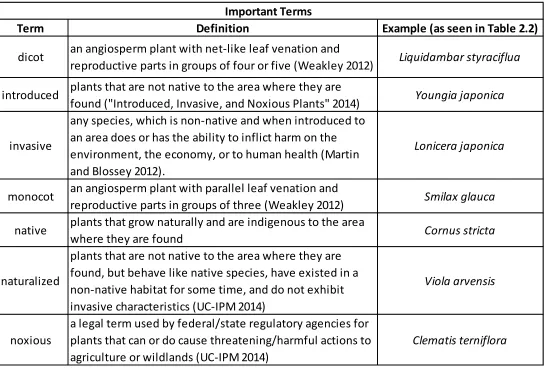
Important definitions to know for this study are found in Table 2.1. Both
angiosperms and gymnosperms were collected in the AOI. Angiosperms have flowers
and seeds borne in fruiting structures, whereas gymnosperms do not produce flowers and
bear “naked seeds” so termed because they are unenclosed (Weakley 2012). Introduced
plants in this study are harmless currently, but may or may not have the potential to
become invasive if brought to an area lacking co-evolved competitors and natural
enemies (“Introduced, Invasive, and Noxious Plants” 2014). To be considered noxious, a
can be banned, quarantined, or eradicated depending on its impact (UC-IPM 2014). In
this study, plants termed “noxious” are listed on South Carolina noxious weed lists.
Confusion can arise when discussing the terminology of naturalized, invasive, and
native plants. Some species, such as Lonicera japonica, which is a common invasive
plant species, is also a considered a naturalized species to the AOI. It has existed so long
in the AOI that it has come to be considered native as it behaves like a native species in
this habitat despite its typical invasive tendencies. However, the species is technically
invasive because it not original to the New World and is difficult to manage as it spreads
rapidly and aggressively, displacing native plants. In this study, a plant species’ origin
will be considered to determine its status as native or non-native. For example, L.
japonica is termed both ‘non-native’ and ‘invasive’ to the AOI because its native range is
in eastern Asia.
The City of Columbia recently employed the engineering firm Chao and
Associates, Inc. to monitor seepages, animal burrowing, fallen trees, live and dead
standing trees, and slope instability by observing the west or river side of the canal
embankment (Chao and Associates, Inc. 2011). The firm also measured the cross section
of the embankment along the length of the canal to catalogue the area in sections based
on the probability of failure risk. Sections were grouped as ‘A’, ‘B’, ‘C’, and ‘D’ (Chao
and Associates, Inc. 2011). The City of Columbia cited maintenance of the embankment
and public safety, as well as the continued operation of the hydroelectric power
generation station and the City of Columbia’s drinking water supply as reasons for
environment and people who use the Riverfront Park were noted as goals. This examined
area is the same as that of the AOI surveyed.
Chao and Associates, Inc. decided during Phase I evaluations that large portions
of the embankment should be maintained as they were currently (Grego 2012).
Furthermore, in the Columbia Canal West Embankment-Phase II plan prepared for FERC
(Federal Energy Regulatory Commission) from early 2012, references were made to
protect the riparian zone. However, it was eventually decided that environmental and
water quality issues should be tabled in favor of embankment safety and that vegetation
down to the water’s edge should be removed (Grego 2012).
The ultimate plan advised that all trees on the embankment be removed as they
block observation procedures, disrupt embankment stability, and generate habitats for
burrowing animals (all proposed management actions in this paragraph are from: Chao
and Associates, Inc. 2011). All trees and woody vegetation, except for trees that were of
great size and age, were advised to be removed in portions of sections ‘B’, ‘C’, and ‘D’.
Older, larger trees were to be monitored for disease or storm damage, and no new trees
should be planted or allowed to grow in the areas. The main goals of the firm for each
section was as follows: 1) sections ‘C’ and ‘D’ were to be stabilized with no trees on the
embankment and only mowable ground cover remaining, 2) section ‘B’ was to have all
understory trees removed, leaving canopy trees, and removing all trees when damaged or
diseased with no replanting, and 3) section ‘A’ needed no vegetation removal besides
what is currently done, which is the periodic removal of snags and fallen trees.
While the durability of the embankment for utility operations and the City of
zone can cause more problems. Degraded riparian zones as a result of vegetation loss can
lead to riverbed erosion, an increase in water temperature, a reduction in dissolved
oxygen in the water, and loss of property or land value (US-NRCS 2006). Disturbance is
defined as the disruption of functions or services within an ecosystem that maintain and
benefit the ecosystem’s viability (Villnäs et al. 2013). While natural disturbances such as
drought, flooding, and fire can cause devastation, such situations are temporary and
ecosystems can recover with time if not disturbed further. However, human disturbances
such as clear-cutting, habitat fragmentation, and pollution are permanent and place more
difficult pressures on ecosystems and species (Villnäs et al. 2013). Without time to
adjust to one stressor before another stressor creates change, ecosystems cannot recover
and natural cycles of disturbance including growth, dieback, and regrowth do not occur.
Continued disturbance without recovery allows new species to move into and establish
themselves in the area (Villnäs et al. 2013).
The study area is located in Richland County, South Carolina. The climate is
humid subtropical climate with hot, long summers and short, mild winters. Spring and
fall are mild intermediate periods between summer and winter (Newcome 2003).
Temperatures average 26.9 °C (80.5 °F) in the summer and 9.2 °C (48.6 °F) in the winter,
rarely exceeding 37.8 °C (100 °F) or falling below -6.7 °C (20 °F). The hottest and
wettest month is July (14.1 cm (5.54 inches) rainfall) and the coldest month is January;
however, October is the driest month (6.5 cm (2.56 inches) rainfall) (Newcome 2003).
The growing season lasts for 8 months and snow is uncommon and short in duration if it
does occur. Hurricanes from the Atlantic Ocean and the Gulf of Mexico contribute to
(Newcome 2003). For ecosystems, hurricanes can mean a partial to complete loss of
hardwood trees and native species, which in turn clears habitats for the invasion and
establishment of invasive plant species.
The specific area of interest (AOI) included 52.9 acres on the east bank of the
Three Rivers Greenway in a portion called Riverfront Park, comprising a distance of
approximately 2 miles from the Diversion Dam (34° 2' 0.06"N, 81° 4' 9.63"W)south to
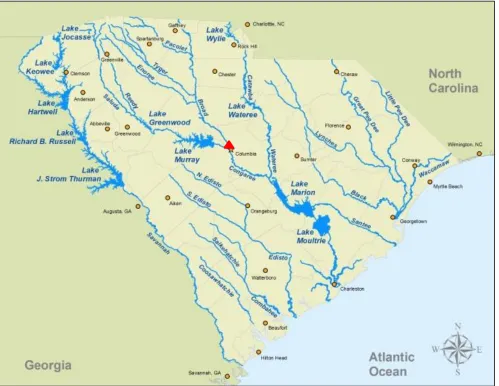
the Interstate 126 overpass (34° 0' 32.84"N, 81° 3' 30.42"W). The area is highlighted by
the red triangles in the map of South Carolina in Figure 2 and includes sections ‘A’ and
‘B’ from the City of Columbia’s embankment plan. The Broad River, which flows along
the area of study is approximately 150 miles long flowing through North and South
Carolina, and is a primary tributary of the Congaree River. In Columbia, SC, the Broad
River is crossed by two interstates (Interstates 20 and 126) and one major road (River
Drive).
The habitat along the river in the study area was that of a riparian zone, which is
defined as lands contiguous to streams or rivers and inundated with hydrophilic
vegetation (US-NRCS 2006). These buffers are vital to improving water quality and
preventing the runoff of pollutants, such as nitrogen, phosphorus, and pesticides, or
sediments (US-NRCS 2006). A large source of nutrients and energy for aquatic
communities, riparian zones contribute to energy input with woody debris and leaf litter
and by offering shade, sustenance, and travel passages for both aquatic and terrestrial
wildlife (US-NRCS 2006). Vegetation in riparian zones is characterized by native trees,
shrubs, and grasses that aid to slow water from flooding and consequently stabilize and
recharge groundwater (US-NRCS 2006). As areas of sediment deposition, riparian zones
build river banks and prevent erosion by trapping sediments (US-NRCS 2006). The soil
type in the AOI was 100% Toccoa loam, which is located in flood plains, has low runoff,
occasional flooding, and is moderately well drained (Custom Soil Resource Report 2014).
River travel was a primary mode of transportation in the late 1700s and Columbia,
the capital of South Carolina was strategically placed along the confluence of these rivers
to maximize their conveyance capabilities. A major thoroughfare for the exporting of
goods, the canal dates back to 1820 and ran from the Midlands to the Atlantic Ocean via
the Port of Charleston. The portion of the greenway studied began in the recently
disturbed northern section of the Riverfront Park at the Diversion Dam, which was
constructed in 1891. This is also known as the Canal Embankment or the headwaters of
the Old Columbia Canal.
Today these rivers are popular for recreation, development, and boating sites.
Considering historical and ongoing changes to the ecosystem along the greenway,
invasive species have had frequent opportunities to invade, establish, and thrive. With
the growing need to calculate biodiversity loss, interest in botanical surveys has increased
(Buckland et al. 2007). Collection and identification of invasive plant species in
herbariums, as well as management of such species in varying habitats is a principal
concern for conservation of native species and ecosystems (Evans 2013).
Knowledge of invasive species dispersal and spread is important to maintain
native ecosystem biodiversity and help create preventative measures which can be
applied to deter invasive species introductions. In disturbed ecosystems, invasive species
alternative, degraded condition. Removing such species cannot guarantee the ecosystem
will be restored, but it is worth investigation because ecosystem functions are crucial to
maintaining biodiversity by regulating natural change and stability (Khanna et al. 2012).
Therefore, comprehending invasive species interactions can be helpful in predicting
potential community shifts (Khanna et al. 2012).
2.3 Methods
A botanical survey was conducted of the overall species variability along the west
bank consisting of approximately 2 miles from the Diversion Dam (34° 2' 0.06"N, 81° 4'
9.63"W)south to the Interstate 126 overpass (34°0'32.84"N, 81°3'30.42"W) from July
2013 to April 2015. The total area of the AOI was calculated to be 52.9 acres (214,078.7
m2). Because disturbance is credited as an influence on the structure of plant
communities and is associated with the spread of invasive plant species, the spatial extent
of H. helix, an invasive plant, was calculated and quantified in the AOI (Larson 2002).
The northern portion of the AOI, from the Diversion Dam (34° 2' 0.06"N, 81° 4' 9.63"W)
to the Broad River Road overpass (34° 1' 35.22"N, 81° 4' 6.25"W), has been disturbed in
the past but has been left undisturbed for many years, only receiving some partial
removal of snags and fallen trees occasionally. The second area is the southern portion of
the AOI from the Broad River Road overpass (34° 1' 33.30"N, 81° 4' 5.22"W) to the
Interstate 126 overpass (34° 0' 32.84"N, 81° 3' 30.42"W), which was disturbed
approximately two years ago as part of the City of Columbia’s embankment plan. The
southern portion of the AOI was disturbed similar to section ‘B’ of the embankment plan,
where understory trees, woody vegetation, snags, fallen trees, and any diseased or
The study area began at the edge of the Broad River and spread east to the main
sidewalk lining the canal. Plants between the main sidewalk and canal embankment were
not included in this study as the area is frequently mowed and maintained by the local
park rangers. Concrete and man-made trails were used to transverse the study areas,
although more often specimens and GIS data were collected off the main trails.
The survey began at the Diversion Dam. A Garmin etrex 20 (Figure 2.3) global
positioning system (GPS) was used to determine latitude and longitude, as well as
elevation for location of the species identified. Transects (ca. 8 m in length) were created
using a meter measuring tape (Figure 2.3). Once measured, transects were numbered and
labeled with their associated number on nearby trees with Presco Pink Glo flagging tape
(Figure 2.3). Some transects were a few meters longer because of a lack of trees able to
be labeled due to the circumference of the tree trunk. For example, trees trunks were
individually determined visually to be too large in circumference or too thin for tagging.
This was done to conserve materials with larger trees and to not potentially lose labels on
thinner trees during heavy rains when flooding would occur in the area and thinner trees
were damaged.
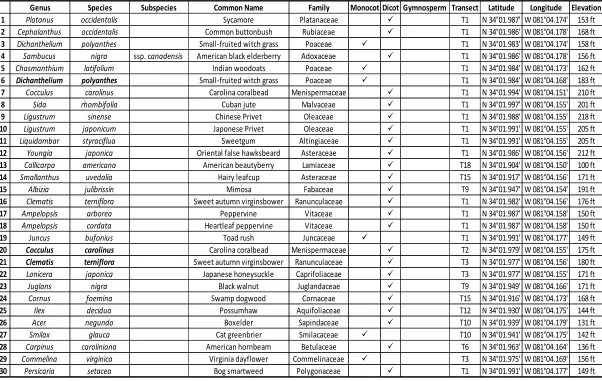
As the purpose of this survey was to identify different species in the area and
create a baseline survey, one or more specimens of all plant species found were collected.
Specimens were selected by status of fruiting or flowering, two important identifiers
when keying flora. Furthermore, specimens collected were defined by type of plant, the
area in which they were collected, the season, the weather, and the date. Notes were
taken during the survey to list these observances, as well as the latitudinal and
gathered placement. The specimens were pressed together in a dryer for periods of one to
three weeks depending on the potential moisture levels determined to be in their floral or
fruiting portions.
Once dried, specimens were keyed or identified. Specimen keys, listed below,
and the University of South Carolina Herbarium (USCH) were employed as resources.
Already recorded data for the Riverfront Park area, including the AOI, was researched at
the USCH with the assistance of Herrick Brown, the Assistant Curator. Using multiple
database queries, including “Richland County”, “South Carolina”, and “Riverfront Park”
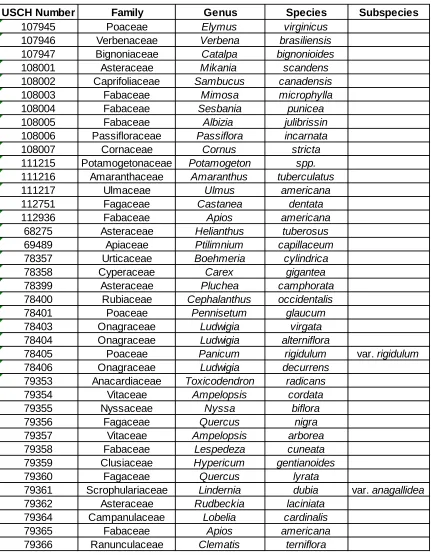
in Specify 6 (2014), data was accessed on March 18, 2015. The queries returned multiple
results for the area, which were organized into Table 2.2 using the specimen’s binomial
nomenclature, family, and official USCH number.
Using both the Manual of the Vascular Flora of the Carolinas (1968) and Flora
of the Southern and Mid-Atlantic States (2012), specimens were keyed to determine their
genus and specific epithet. Of the literature Radford et al. (1968) contains full keys,
whereas Weakley (2012) is lacking in some plant families. However, Radford, et al.
(1968) has not been revised since 1968 and some binomial nomenclature has since been
altered. Weakley (2012) is the more current version and uses the latest binomial
nomenclature for identifying flora; thus, all specific names keyed are associated with that
information. In addition, all identified specimens using the Weakley (2012) key were
cross-referenced with the Integrated Taxonomic Information System (ITIS) (2014).
Information on specimen families, genera, species, and common names was retrieved
December 8, 2014, from the Integrated Taxonomic Information System on-line database,