O R I G I N A L R E S E A R C H
Risk taking behaviors in relation to Attention
De
fi
cit and Hyperactivity Disorder in Iranian male
workers: a latent class analysis
This article was published in the following Dove Press journal: Neuropsychiatric Disease and Treatment
Abbas Abbasi-Ghahramanloo1 Leila Janani2,*
Seyed Kazem Malakouti3 Mahshid Rabetian3 Shahnaz Rimaz4,*
1Department of Epidemiology, School of Public Health, Iran University of Medical Sciences, Tehran, Iran;2Preventive Medicine and Public Health Research Center, Department of Biostatistics, School of Public Health, Iran University of Medical Sciences, Tehran, Iran;3Mental Health Research Center, Department of community psychiatry, Faculty of Behavioral Sciences and Mental health, Iran University of Medical Sciences, Tehran, Iran;4Radiation Biology Research Center, Department of Epidemiology, School of Public Health, Iran University of Medical Sciences, Tehran, Iran
*These authors contributed equally to this work
Background:Risk taking behaviors are a serious risk to the health and safety of workers. The aims of this study were to identify the subgroups of workers on the basis of risk taking behaviors and assess the independent role of ADHD on the membership of participants in each latent class.
Methods: This cross sectional study was performed on 2434 workers. The sample was selected through random cluster sampling from Kaveh Industrial City. All workers completed
five sets of checklists and questionnaires. Data analysis was performed using chi-square, Fisher’s exact test, and latent class analysis.
Results:Four latent classes were identified; namely, 1) very low risk (65.6%), 2) low risk (27.8%), moderate risk (4.1%) and, high risk (2.5%). After adjusting for other studied covariates, having ADHD significantly increased the odds of membership in moderate risk class (OR=3.42, 95% CI: 2.21−5.29) and high risk class (OR=3.10, 95% CI: 1.80−5.34) compared to very low risk class. Also, having anxiety increased the odds of membership in latent class 2 (OR=1.28, 95% CI: 1.02–1.62), 3(OR=2.15, 95% CI: 1.51–3.10) and 4 (OR=2.06, 95% CI: 1.32–3.22) in comparison to class 1. Among all participants, 187 (7.7%) had ADHD and among studied variables, ADHD has the strongest role in the membership of subjects in different classes.
Conclusion: Results from the present study indicate that 6.6% of the workers fell under moderate or high risk class. Focusing on the treatment of ADHD with considering other comorbid factors such as anxiety may be helpful in designing and executing effective programs to reduce risk taking behaviors among workers.
Keywords:latent class analysis, risk taking behaviors, ADHD, workers
Introduction
Risk taking behavior is defined as any behavior that can increase the risk of a
specific disease, discomfort, and ill-health or directly impair the organs. These
behaviors can lead not only negative and serious health related consequences but also socio-economic impacts as well. For example unintended pregnancies, sexually
transmitted diseases, substance abuse, injuries, and even death.1–3
Several studies have pointed out the co-occurrence of risk taking behaviors
among adults. For example, 59% of adults in Brazil,468% in England,5and 52% in
the US6were found to engage in two or more risk taking behaviors simultaneously.
Risk taking behaviors are a serious risk to the health and safety of workers. The workplace consequences of risk taking behaviors include injuries, poor work
Correspondence: Shahnaz Rimaz Department of Epidemiology, School of Public Health, Iran University of Medical Sciences, P.O Box: 14665-354 Shahid Hemmat Highway, Tehran, Iran Tel +(98-21) 86709
Fax +(98-21) 88052248 Email [email protected]
Leila Janani
Department of Biostatistics, School of Public Health, Iran University of Medical Sciences, Shahid Hemmat Highway, Tehran, Iran
Tel +(98-21) 86709 Fax +(98-21) 88052248 Email [email protected]
Neuropsychiatric Disease and Treatment
Dove
press
open access to scientific and medical research
Open Access Full Text Article
Neuropsychiatric Disease and Treatment downloaded from https://www.dovepress.com/ by 118.70.13.36 on 25-Aug-2020
performance (includes missing work, arriving late/leaving early, doing less work, withdrawal behaviors and
absen-teeism) and problems such as fighting and
insubordination.7,8There is limited information about the
prevalence and distribution of risk taking behaviors among
workers in the world and specifically in Iran. For example,
3.1% of U.S workers reported illicit drug use before work
or during working hours.9Among street cleaner and
man-ual workers of Zahedan city (Southeast of Iran), 7.8% of
them reported previous risk taking behaviors.1
A great deal of variable-centered research focused on
the relationship between Attention Deficit and
Hyperactivity Disorder (ADHD) and risk taking behaviors among different age groups. Individuals with ADHD are more likely to engage in risk taking behaviors and their
negative outcomes.10The relationship between ADHD and
risk taking behaviors is more important among adults.11
About 30% of adults who are substance user have a con-comitant ADHD and approximately 20 to 40% of adults
with ADHD have histories of substance use disorders.12
ADHD can affect a lot of aspects of life. Some studies have reported a negative relationship between ADHD and
self-esteem.13 On the other hand, anxiety is a common
comorbid of ADHD14, with prevalence ranging from
15% to 35%.15
Latent Class Analysis (LCA) is a person-centered approach that uses categorical and cross sectional
observed indicators to find subtypes of related cases and
yield latent classes of participants.16
Understanding of how risk taking behaviors co-occur is possible with subgrouping of workers based on these beha-viors. Identifying these subgroups, as well as factors, pre-dict co-occurrence of these behaviors is important for public
health policymakers and health service providers.17,18
Based on above-mentioned background, the aims of this study were to identify the subgroups of workers based on risk taking behaviors and assess the independent role of ADHD on the membership of participants in each latent class after adjusting for other covariates.
Materials and methods
Study population and sampling framework
This cross sectional study was performed on 2434 workers from October 2017 to February 2019. The sample was selected through random cluster sampling from Kaveh Industrial City, a city in the center of Iran. All workers were eligible to participate in this study. Data werecollected through the questionnaire and interview. Before interviews, some explanations were presented by the research team about the aims of the study, the anonymity of the questionnaires, and the voluntary nature of the participation in the study. The study was approved by the Ethics Committee of Iran University of Medical Sciences. Permission to conduct the study was obtained from this committee and all workers had signed an informed consent form.
All workers completedfive sets of checklists and
ques-tionnaires. The first part assessed demographic
informa-tion such as age, marital status and, etc. The second part evaluated information regarding various risk taking beha-viors including general risk taking behabeha-viors (lifetime), experiences of self-injury (lifetime), cigarette and hookah smoking (last year), alcohol consumption (last year), illicit drug use (lifetime) and sexual risk behaviors (last year). The questions about substance use had been prepared based on the World Health Organization (WHO) Core
Questionnaires and WHO Alcohol, Smoking and
Substance Involvement Screening Test (ASSIST) in pre-vious studies in Iran by considering the situation of
sub-stance use in Iran.19,20 To assess whether or not the
participants had sexual risk behavior in the last year, we
used their response to the following question:“had you the
extramarital heterosexual activity in the last year?” the
next questions focus on the having unsafe sex. As a result, using illicit drugs or alcohol before the last sexual relation-ship or having sexual intercourse with numerous persons, or having sex without using a condom for prevention of
sexually transmitted diseases was defined as sexual risk
behaviors.3
ADHD was measured using the Persian version of
Conner’s Adult ADHD Rating Scales 30-item
question-naire. The scale items were rated on a 0-to-3 response
scale as follow: “never (not at all), once in a while (just
a little), often (pretty much) and very frequently (very much). This questionnaire was validated for adults ADHD in Iran. The scale has four subscales, comprising subscale A (inattention), subscale B (hyperactivity, impul-sivity), subscale C (A+B), and subscale D (ADHD index). We used subscale D in this study. The overall score of this subscale varied from 0 to 36 and t a score of higher than 15 considered as“yes”.21
Additionally, the 10-item Rosenberg questionnaire was used to measure the self-esteem status of the workers. The
scale 4-point items were rated on a 0–3 response scale:“
com-pletely agree, agree, disagree, and comcom-pletely disagree”.22The
Neuropsychiatric Disease and Treatment downloaded from https://www.dovepress.com/ by 118.70.13.36 on 25-Aug-2020
overall score of this scale varied from 0 to 30 and a score of
less than 15 considered as low self-esteem.23
Last part of the questionnaire assessed anxiety status among workers. This variable was measured using the Beck Anxiety Inventory (BAI) 21-item questionnaire. The scale items were rated on a 0-to-3 Not at
all-Severely response scale as follow: “not at all, mildly,
moderately and severely”. The scores of this scale varied
from 0 to 63 that scores higher than 21 considered as
“yes”.24
Statistical analysis
The LCA model was used to detect the subgroups of risk taking behaviors among workers. According to this model, a number of observed (indicator) variables are aggregated to represent a categorical latent variable. In order to select
the best fitted model, atfirst we calculated the G2 index,
which is an index similar to Chi-square. Also, the Akaike Information Criterion (AIC) and Bayesian Information Criterion (BIC) were calculated, for selection of the best model. For all of these indices, lower values indicate a
better fit and parsimony for the model. We used item
response probabilities of above 0.5 to label each latent class and describe its characteristics. Seven dichotomous observables (ie, indicators) were selected for subgrouping of workers. These indicators were general risk taking behaviors, the experience of self-injury, cigarette smoking, hookah smoking, alcohol use, illicit drug use, and sexual
risk behaviors. After finalizing the model, we entered
ADHD and other covariates in the LCA model. These covariates were age, marital status (married/single), educa-tion (academic/nonacademic), religiosity, anxiety (yes/no) and self-esteem (low/normal). Based on previous studies,
the 2434 sample size was sufficient to run LCA.25,26
To perform simple statistical analysis, chi-square and
Fisher’s exact test were used with SPSS version 16. LCA
were performed by using WinLTA (v. 3.1) and Stata ver-sion 10. In all analysis, P -value <0.05 was considered statistically significant.
Results
The present study showed that the mean age of the
parti-cipants was 32.80±7.05 (range: 18–67) years. Among all
workers, 29.4% of them had academic education and only 1.6% was illiterate. The majority of the participants were married (72.2%).
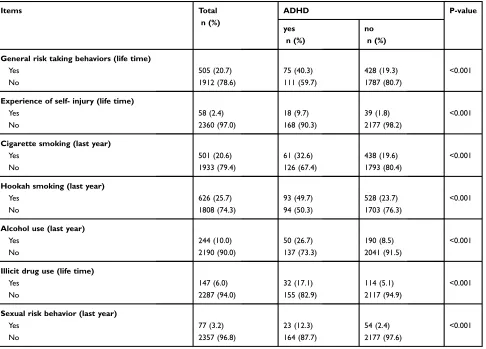
A summary of risk taking behaviors is shown inTable 1.
The results suggested that some of the risk taking behaviors
(e.g. hookah smoking) were more common than others. Also, the prevalence of experience of self-injury has the lowest prevalence among workers.
Table 1 also presents the conditional distribution of ADHD at each level of the risk taking behaviors. All
items of risk taking behaviors have a significant
relation-ship with ADHD.
We used seven binary variables to perform the LCA.
We attempted tofit the LCA models with classes ranging
from 1 to 8. Different measures of model selection are
shown in Table 2. As shown in this table, for each LCA
model, G2, AIC, and BIC were computed. According to
these model selection indices and interpretability of the results, we concluded that the four class model was
appro-priate for workers.Table 3presents the result of the LCA
model. As can see in this table, the first class, very low
risk, described 65.6% of the workers. Also the second class, low risk, third class, moderate risk, and fourth class, high risk, described 27.8%, 4.1% and 2.5% of parti-cipants respectively.
Latent class 1, very low risk, was characterized by low probability of risk taking behaviors and latent class 4, high risk, was characterized by the high probability of all risk taking behaviors, except sexual risk behaviors. There were
also two other latent classes reflected different patterns of
risk taking behaviors. Latent class 2, low risk, was char-acterized by the high probability of hookah smoking. It should be noted that in this latent class, the probability of general risk taking behavior and cigarette smoking are relatively high. Latent class 3, moderate risk, was charac-terized by the high probability of general risk taking beha-viors, cigarette smoking hookah smoking and, alcohol use.
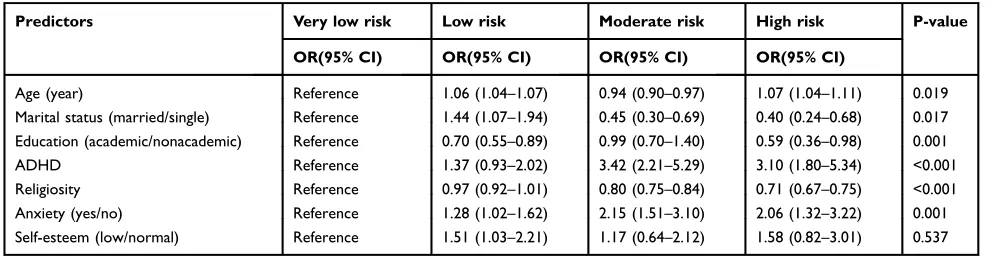
Table 4 shows the odds ratio of membership in each
class compared to first class, associated with ADHD and
other covariates. This index compares the odds of
mem-bership in each class with the reference class (e.g. first
class). As can be seen inTable 4, the odds of membership
in classes 2 and 4 increased significantly by age. On the
other hand, the odds off membership in class 3 signifi
-cantly decreased by age. This table also shows that marital
status significantly increased the odds of membership in
class 2 and decreased this odds in class 3 and 4. Having academic education decreased the odds of membership in latent class 2 and 4 in comparison to class 1.
In the case of religiosity,Table 4indicates that a higher
score of religiosity significantly decreased the odds of
membership in class 3 and 4 compared to class 1. Also, having anxiety increased the odds of membership in latent
Neuropsychiatric Disease and Treatment downloaded from https://www.dovepress.com/ by 118.70.13.36 on 25-Aug-2020
class 2, 3 and 4 in comparison to class 1. As can see in
Table 4, having ADHD significantly increased the odds of
membership in class 3(OR: 3.42, 95% CI: 2.21−5.29) and
class 4 (OR: 3.10, 95% CI: 1.80−5.34)compared to class
1. This table indicates that among the studied variables, ADHD had the strongest role in the membership of
sub-jects in different classes. Also, only self-esteem didn’t
show a significant effect on the membership of workers
in different classes.
Discussion
The results of this study indicated the prevalence of each risk taking behavior, namely general risk taking behaviors, the experience of self-injury, cigarette smoking, hookah
Table 1Risk taking behaviors by‘ADHD’in a sample of Iranian workers
Items Total
n (%)
ADHD P-value
yes n (%)
no n (%)
General risk taking behaviors (life time)
Yes 505 (20.7) 75 (40.3) 428 (19.3) <0.001
No 1912 (78.6) 111 (59.7) 1787 (80.7)
Experience of self- injury (life time)
Yes 58 (2.4) 18 (9.7) 39 (1.8) <0.001
No 2360 (97.0) 168 (90.3) 2177 (98.2)
Cigarette smoking (last year)
Yes 501 (20.6) 61 (32.6) 438 (19.6) <0.001
No 1933 (79.4) 126 (67.4) 1793 (80.4)
Hookah smoking (last year)
Yes 626 (25.7) 93 (49.7) 528 (23.7) <0.001
No 1808 (74.3) 94 (50.3) 1703 (76.3)
Alcohol use (last year)
Yes 244 (10.0) 50 (26.7) 190 (8.5) <0.001
No 2190 (90.0) 137 (73.3) 2041 (91.5)
Illicit drug use (life time)
Yes 147 (6.0) 32 (17.1) 114 (5.1) <0.001
No 2287 (94.0) 155 (82.9) 2117 (94.9)
Sexual risk behavior (last year)
Yes 77 (3.2) 23 (12.3) 54 (2.4) <0.001
No 2357 (96.8) 164 (87.7) 2177 (97.6)
Table 2Comparison of LCA models with different latent classesbased on model selection statistics
Number of latent class Number of parameters estimated G2 df AIC BIC Entropy Maximum
log-likelihood
1 7 1398.51 120 1412.51 1453.09 1.00 −5826.83
2 15 184.40 112 214.40 301.36 0.76 −5219.77
3 23 118.69 104 164.69 298.03 0.67 −5186.92
4 31 90.82 96 152.82 332.54 0.73 −5172.99
5 39 71.50 88 149.50 375.59 0.71 −5163.32
6 47 60.88 80 154.88 427.35 0.74 −5158.02
7 55 52.92 72 162.92 481.77 0.75 −5154.04
8 63 46.97 64 172.97 538.20 0.78 −5151.06
Abbreviations:LCA, latent class analysis; AIC, Akaike information criterion; BIC, Bayesian information criterion.
Neuropsychiatric Disease and Treatment downloaded from https://www.dovepress.com/ by 118.70.13.36 on 25-Aug-2020
smoking, alcohol use, illicit drug use and, sexual risk behavior. Hookah smoking was common behavior with a rate of prevalence of 25.7% and experience of self-injury was uncommon with a prevalence rate of 2.4%. The lit-erature review indicated that there are some national esti-mations for low stigma substances like cigarette and hookah in Iranian adults, however for high stigma ones
like illicit drugs we couldn’t find national reports. The
pooled analysis of national surveys in 2006–2009 showed
that the prevalence of hookah smoking ranged from 1.7 to
10.9% among Iranian adult men.27 The results of the
present study represent that 20.6% of workers were a cigarette smoker. The results of four national surveys on Iranian adult population showed that the prevalence of current cigarette smoking was 25.6% in 2000, 21.5% in
2005, 24.9% in 2007 and 21.3% in 2011 among males.28
As a result, although the results aren’t comparable it seems
that the prevalence of hookah smoking among workers is higher than other adults, however, the prevalence of cigar-ette smoking is higher in adults.
In this study, we identified different patterns of
risk-taking risk risk-taking behaviors with LCA and were able to detect four distinct classes that we named them as fol-lows: very low risk, low risk, moderate risk, and high risk. The probability of engaging in each risk taking behavior is quite low among the workers in the latent class 1. In the second class, however, the probability of hookah smoking is high. Also, the probability of cigarette smoking and general risk taking behaviors are relatively high. In the third class, the probability of general risk taking behavior, cigarette smoking, hookah smoking, and alcohol use is high. Finally, in the fourth class, the prob-ability of all variables except sexual risk behavior is quite high among the participants. To the best of our
knowl-edge, this study is the first attempt to use LCA for
subgrouping of workers on the base of risk taking beha-viors. There are some studies that have employed the
LCA among specific groups in Iran like university
students.19 Although researchers have used various
indi-cator variables to indicate subgroups of risk taking
Table 3The four latent classes model of risk taking behaviors among Iranian workers
Latent class
Very low risk Low risk Moderate risk High risk
Latent class prevalence 0.656 0.278 0.041 0.025
Item-response probabilities
General risk taking behaviors 0.090 0.378 0.592 0.810
Experience of self- injury 0.004 0.017 0.022 0.638
Cigarette smoking 0.071 0.400 0.711 0.736
Hookah smoking 0.060 0.574 0.962 0.767
Alcohol use 0.001 0.162 0.908 0.678
Illicit drug use 0.000 0.145 0.121 0.596
Sexual risk behavior 0.007 0.032 0.295 0.241
Notes:The probability of a“No”response can be calculated by subtracting the item-response probabilities shown above from 1. *Item-response probabilities >0.5 in bold to facilitate interpretation.
Table 4Predictors of membership in latent classes of risk taking behaviors among workers
Predictors Very low risk Low risk Moderate risk High risk P-value
OR(95% CI) OR(95% CI) OR(95% CI) OR(95% CI)
Age (year) Reference 1.06 (1.04–1.07) 0.94 (0.90–0.97) 1.07 (1.04–1.11) 0.019
Marital status (married/single) Reference 1.44 (1.07–1.94) 0.45 (0.30–0.69) 0.40 (0.24–0.68) 0.017
Education (academic/nonacademic) Reference 0.70 (0.55–0.89) 0.99 (0.70–1.40) 0.59 (0.36–0.98) 0.001
ADHD Reference 1.37 (0.93–2.02) 3.42 (2.21–5.29) 3.10 (1.80–5.34) <0.001
Religiosity Reference 0.97 (0.92–1.01) 0.80 (0.75–0.84) 0.71 (0.67–0.75) <0.001
Anxiety (yes/no) Reference 1.28 (1.02–1.62) 2.15 (1.51–3.10) 2.06 (1.32–3.22) 0.001
Self-esteem (low/normal) Reference 1.51 (1.03–2.21) 1.17 (0.64–2.12) 1.58 (0.82–3.01) 0.537
Neuropsychiatric Disease and Treatment downloaded from https://www.dovepress.com/ by 118.70.13.36 on 25-Aug-2020
behaviors among other population than workers, some of the relatively similar studies will be discussed below:
Deleuze et al found three separated subgroups of addic-tive behaviors in a community sample study, which were labeled as follow: Addition prone, mood regulators and
non-addiction prone.29 Abbasi-Ghahramanloo et al were
able to identify three latent classes for substance use pattern among university students in Tehran (capital of Iran), including non-users, users of low-stigma substances
and drug users.30 In another study that was performed on
university students in Bushehr (south of Iran) found five
latent classes for risk taking behaviors among participants, including low risk, high risk, somewhat low risk, hookah
user and very high risk.19
Considering the co-occurrence nature of risk taking behaviors is a very important approach in preventive inter-ventions. Several studies have pointed out the
co-occur-rence of risk taking behaviors with each other.30,31 The
findings of the present study indicated that 34.4%(27.8%
in low risk class, 4.1% in moderate risk class and 2.5% in high risk class) of all workers engaged in risk taking behaviors with different patterns.
The results of the present study indicated that the prevalence of ADHD was 7.7% among workers. In Iran,
there isn’t a national estimation of adults ADHD, however,
this disorder was assessed among some specific
popula-tion. For example, among male prisoners, its prevalence
reported as 16.2%.32 Also among university students, it
was found that 15.4% of them had ADHD symptoms.33In
overall, it seems that the prevalence of ADHD is remark-ably lower among workers than prisoners and university students. Research has consistently demonstrated that adults with ADHD would often have a broad range of problems such as substance abuse, more frequent changes in employment and multiple marriages, unemployment
and career ability.15,34,35 Although the symptoms of
ADHD along with its comorbid disorders (such as depres-sion, phobias, and dysthymia) can increase the risk of engaging in risk taking behaviors, these are not the only
determinants of risk taking behaviors.36As a result, based
on different situation and related factors, the pattern of risk
taking behavior among a specific group like workers can
differ from other population like university students. Among workers, individuals with ADHD may stop work-ing due to this disorder and may have health insurance
problems as they considered as high risk group.37A
repre-sentative study in ten countries showed that ADHD is associated with 22.1 annual days of excess loss of role
performance compared to individuals without this
disorder.38 A review by Frodl indicated that ADHD has
high comorbidity with substance use disorders. The author concluded that adequate treatment of ADHD could reduce
craving and relapse into substance use.39Also, Lee et al in
a review study reported that ADHD is a strong predictor of
substance abuse regardless of participant’s demographic
characteristics.40 The findings of the present study
reported that after adjusting for demographic and other related factors, ADHD increases the odds of membership in moderate risk class and high risk class significantly
among workers. This is an importantfinding, and
policy-makers should carefully consider this in designing inter-ventional programs in order to prevent or reduce risk taking behaviors among workers. As a result, treatment of ADHD can be quite effective in improving workers functioning in the workplace. Nevertheless, only a small percentage of workers with ADHD are treated in most countries.38
Having unsafe sex or sexual risk behavior such as sex with multiple partners with inconsistent or non-use of condoms, exacerbate the spread of sexually transmitted infections. Only a few studies reported the prevalence of
sexual risk behavior among workers.31 The present study
showed that 3.2% of the workers reported sexual risk behaviors in the last year. This rate is quite low in
com-parison with a similar study among workers.31Lower rate
of sexual risk behavior in this study could be related to the difference in demographic characteristics of workers (like as age and marital status), cultural stigma against sexual risk behavior, disapproval of sexual risk behavior by families and probably fear of dismissal from work. Results from the present study also indicate that in the four class subgrouping of the workers, the sexual risk
behaviors didn’t play any role. This means that sexual
risk behavior didn’t co-occur with other risk taking
beha-viors. In previous similar studies on Iranian university students, sexual risk behavior showed more co-occurrence
with other risk taking behaviors in LCA.3,19 As a result,
we can say that among workers there are some individuals that engaged only in sexual risk behavior without doing other risk taking behaviors.
Conclusion
In this study, we reported the prevalence and pattern of risk taking behaviors among workers. We also evaluated the role of ADHD on the odds of membership in different
latent classes identified by LCA. Results of this study
Neuropsychiatric Disease and Treatment downloaded from https://www.dovepress.com/ by 118.70.13.36 on 25-Aug-2020
showed that the majority of workers fell under the latent class of very low risk. In addition, it should be noted that although a small percentage of the workers are in high risk class, the probability of all items except sexual risk beha-vior is quite high in this class. We found that ADHD increases the odds of membership in moderate and high risk classes compared to latent class 1. Consequently, focusing on the treatment of ADHD with considering other comorbid factors such as anxiety may be helpful in designing and executing effective programs to reduce risk taking behaviors. Also some educational workshops in the workplace about risk taking behaviors could be effective in enhancing workers knowledge toward these behaviors.
Abbreviations
LCA, latent class analysis; AIC, Akaike Information Criterion; BIC, Bayesian Information Criterion.
Acknowledgment
This research was supported by grant No 96-03-27-31802 from Iran University of Medical Sciences. Also, we would like to thank Mr. Karim Shahidi and Mr. Hadi Azani for their assistance in data collection. We are also thankful to Dr. Hamid Reza Baradaran who shared his great experience.
Author contributions
All authors contributed to data analysis, drafting or
revis-ing the article, gave final approval of the version to be
published, and agree to be accountable for all aspects of the work.
Disclosure
The authors report no conflicts of interest in this work.
References
1. Ansari-Moghaddam A, Ansari H, Mohammadi M, Khosravi S, Sanei-Moghaddam E, Miri-Bonjar M. Predictors of high-risk behaviors in municipal workers and staff in Zahedan, South-East of Iran.Int J High
Risk Behav Addict.2016;5:4. doi:10.5812/ijhrba
2. Fuertes JN, Grindell SR, Kestenbaum M, Gorman B. Sex, parent attachment, emotional adjustment, and risk-taking behaviors. Int J
High Risk Behav Addict.2017;6(2):1–12.
3. Mohammadpoorasl A, Ghahramanloo AA, Allahverdipour H. Risk-taking behaviors and subgrouping of college students: a latent class analysis. Am J Mens Health. 2013;7(6):475–481. doi:10.1177/ 1557988313483540
4. Silva DA, Peres KG, Boing AF, González-Chica DA, Peres MA. Clustering of risk behaviors for chronic noncommunicable diseases: a population-based study in southern Brazil. Prev Med. 2013;56 (1):20–24. doi:10.1016/j.ypmed.2012.10.022
5. Poortinga W. The prevalence and clustering of four major lifestyle risk factors in an english adult population. Prev Med. 2007;44 (2):124–128. doi:10.1016/j.ypmed.2006.10.006
6. Coups EJ, Gaba A, Orleans CT. Physician screening for multiple behavioral health risk factors. Am J Prev Med. 2004;27(2):34–41. doi:10.1016/j.amepre.2004.04.021
7. Spicer RS, Miller TR. The evaluation of a workplace program to prevent substance abuse: challenges and findings. J Prim Prev.
2016;37(4):329–343. doi:10.1007/s10935-016-0434-7
8. Pidd K, Kostadinov V, Roche A. Do workplace policies work? An examination of the relationship between alcohol and other drug policies and workers’substance use.Int J Drug Policy.2016;28:48– 54. doi:10.1016/j.drugpo.2015.08.017
9. Frone MR. Prevalence and distribution of illicit drug use in the workforce and in the workplace:findings and implications from a US national survey.J Appl Psychol. 2006;91(4):856. doi:10.1037/ 0021-9010.91.4.856
10. Shoham R, Sonuga-Barke EJ, Aloni H, Yaniv I, Pollak Y. ADHD-associated risk taking is linked to exaggerated views of the benefits of positive outcomes.Sci Rep.2016;6:34833. doi:10.1038/srep34833 11. Pollak Y, Shalit R, Aran A. Risk taking and adult attention deficit/
hyperactivity disorder: a gap between real life behavior and experi-mental decision making. Psychiatry Res. 2018;259:56–62. doi:10.1016/j.psychres.2017.10.012
12. Schubiner H. Substance abuse in patients with attention-deficit hyper-activity disorder. CNS Drugs. 2005;19(8):643–655. doi:10.2165/ 00023210-200519080-00001
13. Edbom T, Granlund M, Lichtenstein P, Larsson J-O. ADHD symp-toms related to profiles of self-esteem in a longitudinal study of twins a person-oriented approach.J Child Adolesc Psychiatr Nurs.2008;21 (4):228–237. doi:10.1111/j.1744-6171.2008.00157.x
14. Schatz DB, Rostain AL. ADHD with comorbid anxiety: a review of the current literature. J Atten Disord. 2006;10(2):141–149. doi:10.1177/1087054706286698
15. Kessler RC, Adler L, Barkley R, et al. The prevalence and correlates of adult ADHD in the United States: results from the national comorbidity survey replication.Am J Psychiatry.2006;163(4):716– 723. doi:10.1176/ajp.2006.163.4.716
16. Abbasi-Ghahramanloo A, Heshmat R, Safiri S, et al. Risk-taking behaviors in iranian children and adolescents: a latent class analysis approach: caspian IV study.J Res Health Sci.2018;18(4):e00428. 17. McAloney K, Graham H, Law C, Platt L. A scoping review of
statistical approaches to the analysis of multiple health-related beha-viours. Prev Med. 2013;56(6):365–371. doi:10.1016/j.ypmed.2013. 03.002
18. Meader N, King K, Moe-Byrne T, et al. A systematic review on the clustering and co-occurrence of multiple risk behaviours. BMC
Public Health.2016;16(1):657. doi:10.1186/s12889-016-3373-6
19. Afrashteh S, Ghaem H, Abbasi-Ghahramanloo A, Tabatabaee HR. Clustering and combining pattern of high-risk behaviors among ira-nian university students: a latent class analysis.J Res Health Sci.
2017;17(4):e00398.
20. Amin-Esmaeili M, Rahimi-Movaghar A, Yunesian M, Sahimi-Izadian E, Moinolghorabaei M. Trend of smoking among students of Tehran university of medical sciences: results from four consecu-tive surveys from 2006 to 2009.Med J Islam Repub Iran.2013;27 (4):168.
21. Sadeghi-Bazargani H, Abedi L, Mahini M, Amiri S, Khorasani-Zavareh D. Adult attention-deficit hyperactivity disorder, risky beha-viors, and motorcycle injuries: a case-control study.Neuropsychiatr
Dis Treat.2015;11:2049. doi:10.2147/NDT
22. Anbarlouei M, Sarbakhsh P, Dadashzadeh H, et al. Cigarette and hookah smoking and their relationship with self-esteem and commu-nication skills among high school students. Health Promotion
Perspect.2018;8(3):230–236. doi:10.15171/hpp.2018.31
Neuropsychiatric Disease and Treatment downloaded from https://www.dovepress.com/ by 118.70.13.36 on 25-Aug-2020
23. García JA, y Olmos FC, Matheu ML, Carreño TP. Self esteem levels vs global scores on the rosenberg self-esteem scale.Heliyon.2019;5 (3):e01378. doi:10.1016/j.heliyon.2019.e01378
24. Kaviani H, Mousavi AS. Psychometric properties of the Persian version of Beck Anxiety Inventory (BAI).Tehran Univ Med J.2008;66(2):136–140. 25. Lanza ST, Collins LM, Lemmon DR, Schafer JL. PROC LCA: a SAS procedure for latent class analysis. Struct Equ Modeling. 2007;14 (4):671–694.
26. Lanza ST, Bray BC. Transitions in drug use among high-risk women: an application of latent class and latent transition analysis.Adv Appl Stat Sci.2010;3(2):203.
27. Nemati S, Rafei A, Freedman ND, Fotouhi A, Asgary F, Zendehdel K. Cigarette and water-pipe use in Iran: geographical distribution and time trends among the adult population; a pooled analysis of national STEPS surveys, 2006–2009.Arch Iran Med.2017;20(5):295. 28. Meysamie A, Ghalehtaki R, Ghodsi S, et al. Trend of cigarette smoking
in Iranian adult population from 2000 to 2011 based on four national surveys.Social Determinants Health.2017;3(3):148–159.
29. Deleuze J, Rochat L, Romo L, et al. Prevalence and characteristics of addictive behaviors in a community sample: a latent class analysis.
Addict Behav Rep.2015;1:49–56. doi:10.1016/j.abrep.2015.04.001
30. Abbasi-Ghahramanloo A, Rahimi-Movaghar A, Zeraati H, Fotouhi A. Pattern of substance use among students of medical sciences in Tehran, Iran: a latent class analysis.J Subst Use.2018;23(6):648– 654. doi:10.1080/14659891.2018.1489007
31. Al Rifai R, Nakamura K, Seino K, Kizuki M, Morita A. Unsafe sexual behaviour in domestic and foreign migrant male workers in multinational workplaces in Jordan: occupational-based and beha-vioural assessment survey. BMJ Open. 2015;5(6):e007703. doi:10.1136/bmjopen-2015-007703
32. Hamzeloo M, Mashhadi A, Salehi Fadardi J. The prevalence of ADHD and comorbid disorders in Iranian adult male prison inmates.J Atten
Disord.2016;20(7):590–598. doi:10.1177/1087054712457991
33. Mosalanejad M, Mosalanejad L, Lashkarpour K. Prevalence of ADHD among students of Zahedan university of medical science in Iran.Iran J Psychiatry Behav Sci.2013;7(2):83.
34. Faraone SV, Wilens TE, Petty C, Antshel K, Spencer T, Biederman J. Substance use among ADHD adults: implications of late onset and subthreshold diagnoses.Am J Addict.2007;16(Suppl 1):24–32. quiz 3–4. doi:10.1080/10550490601082767
35. Kessler RC, Adler L, Ames M, et al. The prevalence and effects of adult attention deficit/hyperactivity disorder on work performance in a nationally representative sample of workers.J Occup Environ Med.
2005;47(6):565–572.
36. Bakhshani N-M. Attention-deficit/hyperactivity disorder (ADHD) and high risk behaviors.Int J High Risk Behav Addict.2013;2(1):1. doi:10.5812/ijhrba.12817
37. Ginsberg Y, Quintero J, Anand E, Casillas M, Upadhyaya HP. Underdiagnosis of attention-deficit/hyperactivity disorder in adult patients: a review of the literature. Prim Care Companion CNS Disord.2014;16(3):1–8.
38. de Graaf R, Kessler RC, Fayyad J, et al. The prevalence and effects of adult attention-deficit/hyperactivity disorder (ADHD) on the per-formance of workers: results from the WHO world mental health survey initiative. Occup Environ Med. 2008;65(12):835–842. doi:10.1136/oem.2007.038448
39. Frodl T. Comorbidity of ADHD and Substance Use Disorder (SUD): a neuroimaging perspective. J Atten Disord. 2010;14(2):109–120. doi:10.1177/1087054710365054
40. Lee SS, Humphreys KL, Flory K, Liu R, Glass K. Prospective association of childhood attention-deficit/hyperactivity disorder (ADHD) and substance use and abuse/dependence: a meta-analytic review. Clin Psychol Rev. 2011;31(3):328–341. doi:10.1016/j.cpr. 2011.01.006
Neuropsychiatric Disease and Treatment
Dove
press
Publish your work in this journal
Neuropsychiatric Disease and Treatment is an international, peer-reviewed journal of clinical therapeutics and pharmacology focusing on concise rapid reporting of clinical or pre-clinical studies on a range of neuropsychiatric and neurological disorders. This journal is indexed on PubMed Central, the‘PsycINFO’database and CAS, and
is the official journal of The International Neuropsychiatric Association (INA). The manuscript management system is comple-tely online and includes a very quick and fair peer-review system, which is all easy to use. Visit http://www.dovepress.com/testimo-nials.php to read real quotes from published authors.
Submit your manuscript here:https://www.dovepress.com/neuropsychiatric-disease-and-treatment-journal
Neuropsychiatric Disease and Treatment downloaded from https://www.dovepress.com/ by 118.70.13.36 on 25-Aug-2020