267 © 2016 AESS Publications. All Rights Reserved.
TRADEMARK IDENTIFICATION AND EXPANSION- USING
VISUAL INFORMATION MAP TO SUPPORT TREND
ANALYSIS
Rain Chen1+ Jo-Han Chang2 Hung-Yuan Chen3
1Department of Visual Communication Design, Southern Taiwan University of Science and Technology, Taiwan, R.O.C.
Email:[email protected]
(+ Corresponding author)
2Department of Industrial Design, National Taipei University of Technology, Taiwan, R.O.C.
3Department of Visual Communication Design, Southern Taiwan University of Science and Technology, Taiwan, R.O.C.
ABSTRACT
Article History
Received: 17 July 2017 Revised: 12 August 2017 Accepted: 23 August 2017 Published: 6 September 2017
Keyword
s
Global brand Word marks Trends Positioning
Comprehending global brand identification and expansion is critical because trademarks are one major approach employed by top hundred companies worldwide for staying competitive. This study examined 173 word marks of the top hundred global trademarks, and 60 ordinary consumers participated in this trademark identification experiment. Multidimensional scaling (MDS) was used to assess study participants’ level of similarity of word marks from eight major industries. The present study also built a trademark map to facilitate companies’ trademark-related decision-making. Company managers can use this trademark map approach to assess the identificationy of their trademarks in the industry. Trademark analysis too is useful for exploring trademark expansion, which suppresses the competitors. The results here show that the top hundred global trademarks had a very good identifiability among consumers. In the future, companies can use this analysis method to build their own trademark maps for evaluating the identification and expansion of their trademarks in the industry.
1. INTRODUCTION
Trademark infringement litigation has always played a crucial role in trademark competition. Trademarks are usually reviewed by the trademark authority of each country for approval, but in trademark infringement litigation, the scope of coverage of the plaintiff’s trademark will still catch great attention because it is a key factor for judging whether the defendant has infringed the plaintiff’s trademark or not. Therefore, how to determine the level of similarity of trademarks objectively is critical not only for the two parties, as well as their lawyers, in trademark infringement litigation but also the judge, who needs to identify and evaluate concrete evidence of trademark infringement. As for trademark designers, it is risky if they are unaware of infringing the ISSN(e): 2225-4226
ISSN(p): 2309-8295
DOI: 10.18488/journal.1006/2016.6.12/1006.12.267.285 Vol. 6, No. 12, 267-285.
268 © 2016 AESS Publications. All Rights Reserved.
intellectual property of others. Even if designers intentionally stay away from the trademark design or trademark right of others, they still need to know how to design around safely while maximizing trademark benefits. That’s why the above issues should be handled carefully.
Trademarks were designed by companies to represent their goods and services (Palumbo and Herbig, 2000). A trademark not only differentiates one’s goods and services from those of others in the market but also protects the goods and services by law (Yu and Yi, 2011). The World Intellectual Property Organization (WIPO) gave trademarks a general definition: A trademark is a sign capable of distinguishing the goods or services of one enterprise from those of other enterprises. Trademarks are protected by intellectual property rights (WIPO, 2016).
A trademark should allow consumers to identify easily the goods or services labeled with the trademark. This feature of trademarks is called “identifiability” or “distinctiveness”, and it is an essential component for the application of trademark registration (TAPTO, 2016).
Trademark similarity refers to partial similarities, either visually or conceptually, between word marks or figurative marks, and trademark similarity could prevent consumers from differentiating goods or services of a similar kind. The purpose of using trademarks is to help consumers identify the source of goods and services, and there are three main types of trademark infringement: similar pronunciation, similar appearance, and similar concepts (Zeng and Cai, 2007).
There are studies analyzed the evaluation models of brand identification in product design (Herm and Moeller, 2014). Because patents and trademarks share some similar properties, some studies proposed pattern identification in patents (Venugopalan and Rai, 2015). Researchers pointed out that when judging whether two trademarks are similar or not, such judgment should be made based on objective facts and by consumers with an average level of knowledge and experience. The researchers when conducting experiments should observe if two goods or services are mistaken as from the same source with a common level of attention. Moreover, trademark identification should be performed based on (1) overall observation, (2) isolated observation at different time and different place, and (3) overall impression of similarity (Wang, 2008).
Trademark confusion and misidentification refers to the condition where consumers misidentify the source of goods or services because of highly similar trademarks. According to the guidelines on “possible confusion and misidentification” issued by the Ministry of Economic Affairs, there are eight factors that should be considered: (1) Level of distinctiveness of trademark(s); (2) Whether two trademarks are similar and the extent of the extent of their similarity; (3) Whether the goods or services are similar and the extent of their similarity; (4) Status of diversified operation of a prior right holder; (5) Circumstances of actual confusion; (6) The extent to which relevant consumers are familiar with the trademarks concerned; (7) Whether the application to register a trademark at issue is filed in good faith; and (8) Other factors that cause confusion (TIPO, 2004).
Chen et al. used MDS to build a visual map Studies for examining design patent expansion (Chen and Chang, 2015). There are also many patent expansion studies focusing on patent search technology (Sharma et al., 2015;Mahdabi and Crestani, 2014; Al-Shboul and Myaeng, 2014). Chen
et al. examined the distance relationship among brands by analyzing data of the top hundred global brands of a specific year (Chen and Liang, 2013). Cheng et al. used Google as an example to study factors causing word mark confusion (Chen and Cheng, 2013).
269 © 2016 AESS Publications. All Rights Reserved.
2. METHOD
2.1. Subjects
This study recruited 60 ordinary consumers because the key trademark observers are ordinary consumers. Among them, 35% were males (N=21); 65% females (N=39). The average age of the participants was 37 years old. A Likert scale (Chernyak et al., 2016) with a range from 1 (very unfamiliar) to 5 (very familiar) was used to assess the participants’ level of familiarity with trademarks from the eight major industries. The average score of familiarity with trademarks from the eight major industries was 3.14, suggesting that the study participants had an above medium level of familiarity.
2.2. Samples
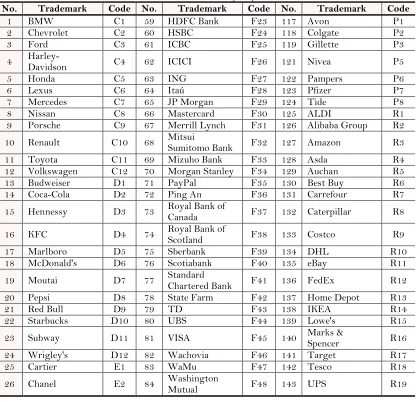
Each year, world-famous trademark valuation companies would rank global brands by brand value. Well-known brands are often counterfeited, and for word marks, counterfeiting is especially serious. This study explored the word marks of the top hundred global brands (BrandZ) between 2006 and 2015 (for a total of ten years) (Brand, 2016). A total of 173 word marks were picked and examined (See Table 1). For figurative marks, they were not discussed here but in another study.
Table-1. Word mark study samples
No. Trademark Code No. Trademark Code No. Trademark Code
1 BMW C1 59 HDFC Bank F23 117 Avon P1
2 Chevrolet C2 60 HSBC F24 118 Colgate P2
3 Ford C3 61 ICBC F25 119 Gillette P3
4 Harley-Davidson C4 62 ICICI F26 121 Nivea P5
5 Honda C5 63 ING F27 122 Pampers P6
6 Lexus C6 64 Itaú F28 123 Pfizer P7
7 Mercedes C7 65 JP Morgan F29 124 Tide P8
8 Nissan C8 66 Mastercard F30 125 ALDI R1
9 Porsche C9 67 Merrill Lynch F31 126 Alibaba Group R2
10 Renault C10 68 Mitsui Sumitomo Bank F32 127 Amazon R3
11 Toyota C11 69 Mizuho Bank F33 128 Asda R4
12 Volkswagen C12 70 Morgan Stanley F34 129 Auchan R5
13 Budweiser D1 71 PayPal F35 130 Best Buy R6
14 Coca-Cola D2 72 Ping An F36 131 Carrefour R7
15 Hennessy D3 73 Royal Bank of Canada F37 132 Caterpillar R8
16 KFC D4 74 Royal Bank of Scotland F38 133 Costco R9
17 Marlboro D5 75 Sberbank F39 134 DHL R10
18 McDonald's D6 76 Scotiabank F40 135 eBay R11
19 Moutai D7 77 Standard Chartered Bank F41 136 FedEx R12
20 Pepsi D8 78 State Farm F42 137 Home Depot R13
21 Red Bull D9 79 TD F43 138 IKEA R14
22 Starbucks D10 80 UBS F44 139 Lowe's R15
23 Subway D11 81 VISA F45 140 Marks & Spencer R16
24 Wrigley's D12 82 Wachovia F46 141 Target R17
25 Cartier E1 83 WaMu F47 142 Tesco R18
270 © 2016 AESS Publications. All Rights Reserved.
27 Disney E3 85 Wells Fargo F49 144 Wal-Mart R20
28 Esprit E4 86 Westpac F50 145 Woolworths R21
29 Gucci E5 87 Telecom Italia O1 146 Accenture T1
30 H&M E6 88 Airtel O2 147 Apple T2
31 Hermes E7 89 AT&T O3 148 Baidu T3
32 Louis Vuitton E8 90 Beeline O4 149 BlackBerry T4
33 Nike E9 91 BP O5 150 Canon T5
34 Prada E10 92 BT O6 151 Cisco T6
35 Rolex E11 93 Chevron O7 152 Dell T7
36 Zara E12 94 China Mobile O8 153 Electronic Arts T8
37 US Bank F1 95 China Telecom O9 154 Facebook T9
38 ABN AMRO F2 96 Cingular Wireless O10 155 GE (General Electric) T10
39 Agricultural Bank of China F3 97 ExxonMobil O11 156 Google T11
40 AIG F4 98 Movistar O12 157 HP T12
41 Allstate F5 99 MTN O13 158 Huawei T13
42 American Express F6 100 MTS O14 159 IBM T14
43 ANZ F7 101 NTT DoCoMo O15 160 Intel T15
44 AXA F8 102 O2 O16 161 LinkedIn T16
45 Banco Santander F9 103 Orange O17 162 Microsoft T17
46 Bank of America F10 104 Petrobras O18 163 Motorola T18
47 Bank of China F11 105 PetroChina O19 164 Nintendo T19
48 Barclays F12 106 Shell O20 165 Nokia T20
49 BBVA F13 107 Sinopec O21 166 Oracle T21
50 Bradesco F14 108 SoftBank O22 167 Samsung T22
51 Chase F15 109 Telcel O23 168 SAP T23
52 China Construction
Bank F16 110
Telefónica
Movistar O24 169 Siemens T24
53 China Life F17 111 Telstra O25 170 Sony T25
54 China Merchants Bank F18 112 TIM O26 171 Tencent/QQ T26
55 Citi F19 113 T-Mobile O27 172 Twitter T27
56 Commonwealth Bank of
Australia F20 114 verizon O28 173 Yahoo! T28
57 Deutsche Bank F21 115 Verizon Wireless O29
58 Goldman Sachs F22 116 Vodafone O30
2.3. Tools
For experiment planning, his study followed the three general trademark-judging principles: (1) general cautions, (2) overall observation, and (3) isolation comparison. The researchers of this study first prepared picture cards for the experiment; each card was 8cm x 8cm. Because the target of the analysis was word marks, Times, a commonly used serif typeface, was used to make the picture cards. This measure is to prevent special typefaces from distracting the participants’ attention.
2.4. Statistical
271 © 2016 AESS Publications. All Rights Reserved.
industries were (1) cars, (2) drinks and food, (3) entertainment, apparel, and luxury, (4) financial, (5) oil, gas, and telecom, (6) personal care and medical, (7) retail and logistics, and (8) technology. Then, the level of similarity of word marks of each industry was determined. The present study used the MDS approach and established a trademark map for each of the eight major industries.
3. TRADEMARK DEVELOPMENT TREND
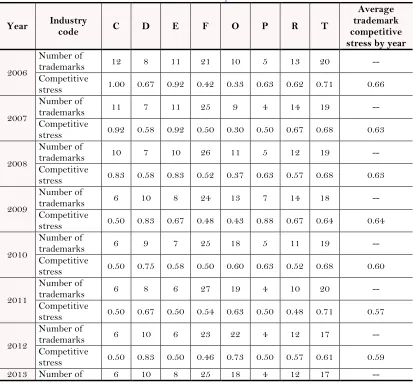
To show the level of trademark competitiveness of each year, the present study plotted a trademark map for each year from 2006 to 2015, and trademarks were classified by the industry (eight industries) for the analysis. The researchers further calculated the trademark competitive stress between 2006 and 2015 of the eight major industries. Trademark competitive stress refers to the number of trademarks of a specific industry in a specific year, and the more trademarks, the greater the trademark competitive stress (the maximum stress coefficient is 1 and the minimum is 0). Take the car industry (coded C) as an example, the industry had twelve trademarks in the global top hundred between 2006 and 2015, and in 2007, the number of trademarks of the car industry was 11. Therefore, the trademark competitive pressure of the car industry in 2007 was 11/12=0.92, which means that the car industry was highly competitive. The present study calculated the average competitive stress of each year and the average competitive stress of the industry between 2006 and 2015. See Table 2.
Table-2. Trademark competitive stress
Year Industry code C D E F O P R T
Average trademark competitive stress by year
2006
Number of
trademarks 12 8 11 21 10 5 13 20
--Competitive
stress 1.00 0.67 0.92 0.42 0.33 0.63 0.62 0.71 0.66
2007
Number of
trademarks 11 7 11 25 9 4 14 19
--Competitive
stress 0.92 0.58 0.92 0.50 0.30 0.50 0.67 0.68 0.63
2008
Number of
trademarks 10 7 10 26 11 5 12 19
--Competitive
stress 0.83 0.58 0.83 0.52 0.37 0.63 0.57 0.68 0.63
2009
Number of
trademarks 6 10 8 24 13 7 14 18
--Competitive
stress 0.50 0.83 0.67 0.48 0.43 0.88 0.67 0.64 0.64
2010
Number of
trademarks 6 9 7 25 18 5 11 19
--Competitive
stress 0.50 0.75 0.58 0.50 0.60 0.63 0.52 0.68 0.60
2011
Number of
trademarks 6 8 6 27 19 4 10 20
--Competitive
stress 0.50 0.67 0.50 0.54 0.63 0.50 0.48 0.71 0.57
2012
Number of
trademarks 6 10 6 23 22 4 12 17
--Competitive
stress 0.50 0.83 0.50 0.46 0.73 0.50 0.57 0.61 0.59
--272 © 2016 AESS Publications. All Rights Reserved.
trademarks Competitive
stress 0.50 0.83 0.67 0.50 0.60 0.50 0.57 0.61 0.60
2014
Number of
trademarks 6 9 8 27 16 4 11 19
--Competitive
stress 0.50 0.75 0.67 0.54 0.53 0.50 0.52 0.68 0.59
2015
Number of
trademarks 6 9 7 26 17 4 12 19
--Competitive
stress 0.50 0.75 0.58 0.52 0.57 0.50 0.57 0.68 0.58
2006-2015
Industry
Total 12 12 12 50 30 8 21 28 Sum: 173
Industry average trademark competitive stress
0.63 0.73 0.68 0.50 0.51 0.58 0.58 0.67 Ave: 0.61
3.1. 2006 Trademark map
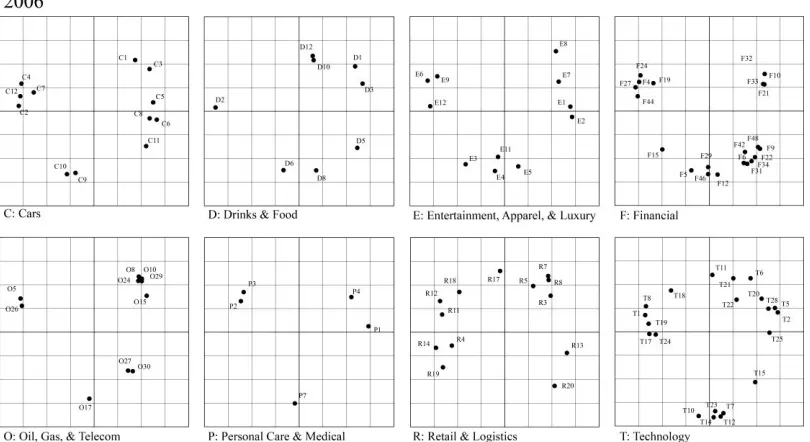
Among 2006 global top hundred trademarks, the financial industry had the highest number of trademarks, accounting for 21% of all trademarks in 2006. The technology industry had the second highest number of trademarks, 20%. The personal care and medical industry had the lowest number of trademarks, 5%. The average trademark competitive stress of 2006 was 0.66. In terms of the level of overlap, most of the industries had excellent trademark identifiability, except the financial industry. The financial industry had a greater number of trademarks, and therefore more intense trademark stress. As for other industries, the trademark competitive stress was relatively smaller compared to that of the financial industry. Please refer to Figure 1.
273 © 2016 AESS Publications. All Rights Reserved.
3.2. 2007 Trademark map
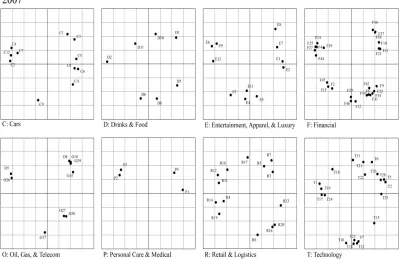
Among the global top hundred trademarks in 2007, the financial industry had the highest number of trademarks, accounting for 25% of all trademarks in 2007. The technology industry had the second highest number of trademarks, 19%. The personal care and medical industry had the lowest number of trademarks, 4%. The average trademark competitive stress of 2007 was 0.63. In terms of the level of overlap, most of the industries had excellent trademark identifiability, especially the drinks and food industry. The drinks and food industry had fewer brand competitors, and therefore, the trademark competitive stress was relatively small. Moreover, the trademark competitive stress of the oil, gas, and telecom industry was the lowest (0.30) over the years. Please refer to Figure 2.
Figure-2. 2007 Trademark map of the eight major industries
3.3. 2008 Trademark map
274 © 2016 AESS Publications. All Rights Reserved.
Figure-3. 2008 Trademark map of the eight major industries
3.4. 2009 Trademark map
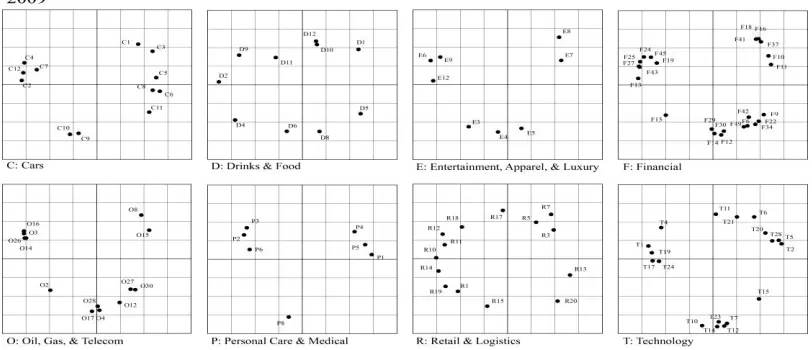
Among the global top hundred trademarks in 2009, the financial industry had the highest number of trademarks, accounting for 24% of all trademarks in 2009. The technology industry had the second highest number of trademarks, 14%. The car industry had the lowest number of trademarks, 6%. The average trademark competitive stress in 2009 was 0.64. In terms of the level of overlap, most of the industries had excellent trademark identifiability, especially the car industry, the entertainment, apparel, and luxury industry, the personal care and medical industry, and the retail and logistics industry. In addition, the personal care and medical industry had the highest trademark competitive stress (0.88) over the years. Please refer to Figure 4.
275 © 2016 AESS Publications. All Rights Reserved.
3.5. 2010 Trademark map
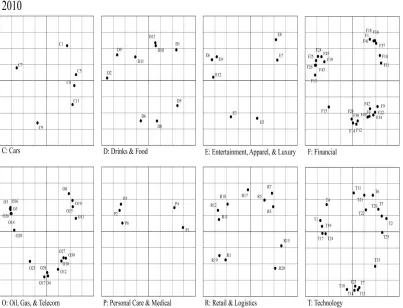
Among the global top hundred trademarks in 2010, the financial industry had the highest number of trademarks, accounting for 25% of all trademarks in 2010. The oil, gas, and telecom industry had the second highest number of trademarks, 18%. The personal care and medical industry had the lowest number of trademarks, 5%. The average trademark competitive stress in 2010 was 0.60. In terms of the level of overlap, most of the industries had excellent trademark identifiability, especially the car industry, the entertainment, apparel, and luxury industry, the personal care and medical industry, and the retail and logistics industry. Please refer to Figure 5.
Figure-5. 2010 Trademark map of the eight major industries
3.6. 2011 Trademark map
276 © 2016 AESS Publications. All Rights Reserved.
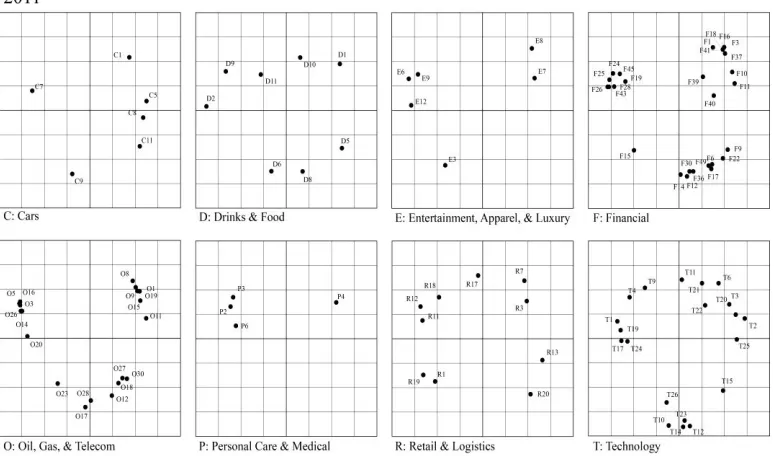
Figure-6. 2011 Trademark map of the eight major industries
3.7. 2012 Trademark map
Among the global top hundred trademarks in 2012, the financial industry had the highest number of trademarks, accounting for 23% of all trademarks in 2012. The technology industry had the second highest number of trademarks, 22%. The personal care and medical industry had the lowest number of trademarks, 4%. The average trademark competitive stress in 2012 was 0.59. In terms of the level of overlap, most of the industries had excellent trademark identifiability, especially the car industry, the drinks and food industry, the entertainment, apparel, and luxury industry, and the retail and logistics industry. Please refer to Figure 7.
277 © 2016 AESS Publications. All Rights Reserved.
3.8. 2013 Trademark Map
Among the global top hundred trademarks in 2013, the financial industry had the highest number of trademarks, accounting for 25% of all trademarks in 2010. The oil, gas, and telecom industry had the second highest number of trademarks, 18%. The personal care and medical industry had the lowest number of trademarks, 4%. The average trademark competitive stress in 2013 was 0.60. In terms of the level of overlap, most of the industries had excellent trademark identifiability, especially the car industry, the drinks and food industry, the entertainment, apparel, and luxury industry, the personal care and medical industry, and the retail and logistics industry. Please refer to Figure 8.
Figure-8. 2013 Trademark map of the eight major industries
3.9. 2014 Trademark map
278 © 2016 AESS Publications. All Rights Reserved.
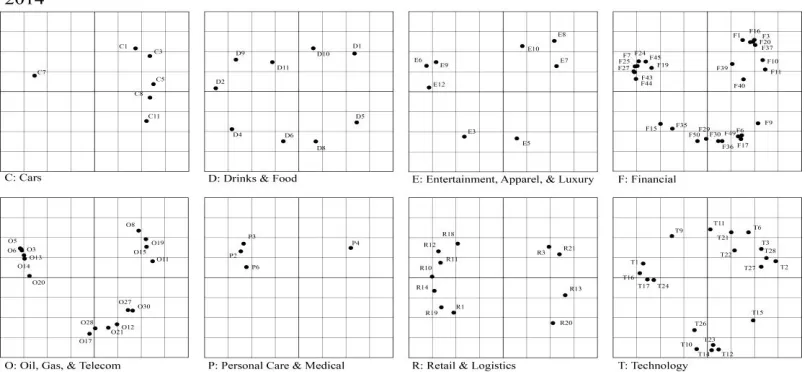
Figure-9. 2014 Trademark map of the eight major industries
3.10. 2015 Trademark map
Among the global top hundred trademarks in 2015, the financial industry had the highest number of trademarks, accounting for 26% of the number of trademarks of 20015. The technology industry had the second highest number of trademarks, 19%. The personal care and medical industry had the lowest number of trademarks, 4%. The average trademark competitive stress in 2015 was 0.58. In terms of the level of overlap, most of the industries had excellent identifiability, especially the car industry, the drinks and food industry, the entertainment, apparel, and luxury industry, the personal care and medical industry, and the retail and logistics industry. Please refer to Figure 10.
279 © 2016 AESS Publications. All Rights Reserved.
4. TRADEMARK MAPS OF THE EIGHT MAJOR INDUSTRIES
Similarity judgment in this study was made based on MDS, which analyze quantitative data, such as ratio scales . The present study examined the level of similarity of the word marks of the eight major industries and then set up a data matrix of the similarity level. Next, a two-dimensional trademark map was plotted. Though this kind of two-dimensional map may slightly exaggerate the stress coefficient, it is good for visualizing the trend of trademarks over years. See Table 3 for the stress and RSQ of the eight major industries.
Table-3. Stress and RSQ of the eight major industries
Number Industry Industry code Stress RSQ
1 Cars C 0.1549 0.9318
2 Drinks & Food D 0.2831 0.5963
3 Entertainment, Apparel, & Luxury E 0.2791 0.6692
4 Financial F 0.3170 0.6693
5 Oil, Gas, & Telecom O 0.3121 0.6304
6 Personal Care & Medical P 0.2413 0.7181
7 Retail & Logistics R 0.3030 0.6232
8 Technology T 0.3584 0.4107
The present study used the MDS approach to plot the trademarks of the eight major industries on a plane based on trademark identifiability. Figures 11 to 18 showed the trademark maps of the following eight industries: (1) cars, (2) drinks and food, (3) entertainment, apparel, and luxury, (4) financial, (5) oil, gas, and telecom, (6) personal care and medical, (7) retail and logistics, and (8) technology.
4.1. Trademark map of car industry
For the car industry (coded C), the industry had a total of 12 trademarks in the global top hundred between 2006 and 2015. There are three to four key competitive groups. The good identifiability among the trademarks suggested that it was unlikely for consumer to misidentify trademarks used in the car industry. Please refer to Figures 11.
280 © 2016 AESS Publications. All Rights Reserved.
4.2. Trademark map of drinks and food industry
For the drinks and food industry (coded D), the industry had 12 trademarks in the global top hundred between 2006 and 2015. The non-decentralized distribution of trademarks suggests that these trademarks had a good identifiability. Moreover, the trademark competitors were the same between 2006 and 2015, meaning that competitors in the drinks and food industry were quite stable. Please refer to Figure 12.
Figure-12. Trademark map of drinks and food industry
4.3. Trademark map of entertainment, apparel, and luxury industry
For the entertainment, apparel, and luxury industry (coded E), the industry had 12 trademarks in the global top hundred between 2006 and 2015. The non-decentralized distribution of trademarks suggests that the trademarks had a very good identifiability. This result may be directly attributed to the fact that the luxury industry tends to put great emphasis on brand positioning. Please refer to
Figure 13.
281 © 2016 AESS Publications. All Rights Reserved.
4.4. Trademark map of financial industry
For the financial industry (coded F), the industry had 50 trademarks in the global top hundred between 2006 and 2015. There were three to four key competitor groups. Among the eight major industries, this industry had the highest number of trademarks, suggesting that the financial industry was highly dependent on trademark competition. As a result, the number of trademark competitors of this industry is likely to remain the highest among the eight major industries in the future. Please refer to Figure 14.
Figure-14. Trademark map of financial industry
4.5. Trademark map of oil, gas, and telecom industry
For the oil, gas, and telecom industry (coded Q), the industry had 30 trademarks in the global top hundred between 2006 and 2015. The trademarks can be classified into three to four groups. Moreover, some of the samples were found to be highly overlapped, suggesting that the trademark identifiability of this industry was lower than of other industries. As a result, consumers may easily misidentify trademarks of the oil, gas, and telecom industry. Please refer to Figure 15.
282 © 2016 AESS Publications. All Rights Reserved.
4.6. Trademark map of personal care and medical industry
For the personal care and medical industry (coded P), the industry had eight trademarks in the global top hundred between 2006 and 2015. There were three key competitor groups. This industry had the lowest number of trademark competitors among the eight, and moreover, the trademarks can be easily identified. This finding suggests it was unlikely for consumers to misidentify trademarks of the personal care and medical industry. Please refer to Figure 16.
Figure-16. Trademark map of personal care and medical industry
4.7. Trademark map of retail and logistics industry
For the retail and logistics industry (coded R), the industry had 21 trademarks in the global top hundred between 2006 and 2015. Aside from a bigger overlap between R7 and R8, trademarks of this industry had pretty good identifiability. This finding suggests that it was unlikely for consumers to misidentify trademarks from the retail and logistic industry. Please refer to Figure 17.
283 © 2016 AESS Publications. All Rights Reserved.
4.8. Trademark map of technology industry
For the technology industry (coded T), the industry had 28 trademarks in the global top hundred between 2006 and 2015. There were three key competitor groups. This industry had many trademarks, but overall, the identifiability of trademarks was good. This finding indicates that it was unlikely for consumers to misidentify trademarks from the technology industry. Please refer to
Figure 18.
Figure-18. Trademark map of technology industry
5. DISCUSSION AND CONCLUSION
This study recruited sixty general consumers. Among them, 35% were males (N=21); 65% females (N=39). The participants in average showed a medium level of familiarity with trademarks from the eight major industries (a Likert-scale score of 3.14).
Similarity judgment in this study was performed using MDS, and the participants’ word mark distance of the eight major industries were obtained. The researchers in this study further set up a data matrix for the level of similarity and created two-dimensional trademark maps. Two-dimensional distribution maps were used to present the trademark distribution visually, which is useful for corporate executives in their trademark-related decision-making process.
It can be found from the 2006 to 2015 trademark maps that the financial industry always had the highest number of trademarks, the oil, gas, and telecom industry the second, and the technology industry the third. Although these three industries had the highest number of trademarks, their trademark competitive stress was not the highest.
284 © 2016 AESS Publications. All Rights Reserved.
The two industries with the lowest trademark competitive stress were the financial industry (0.50) and the oil, gas, and telecom industry (0.51), suggesting that the trademarks of these two industries had changed gradually.
In terms of the total quantity, the financial industry had 50 trademarks that were the top hundred global trademarks from 2006 to 2015, and they account for 29% of all the trademarks (173 trademarks).
This finding shows that trademarks were a primary area of competition in the financial industry. For trademark identifiability, all industries were found to have a good trademark identifiability, except the financial industry, which had a bigger overlap. This finding indicates that for consumers, international trademarks were distinct enough for clear identified.
The present study explored the identification and expansion of global trademarks through examining the distribution of the top hundred global trademark samples.
The results here are useful for companies in developing their trademarks. Other companies can also use the analysis method presented here to build their own trademark map for determining the identification and expansion of their trademarks in their industries.
Funding: This work was partially supported by the Ministry of Science and Technology, Taiwan,
under the Grant No. MOST 104-2221-E-218 -015 -MY2.
Competing Interests: The authors declare that they have no competing interests.
Acknowledgement: All authors contributed equally to the conception and design of the study.
REFERENCE
Al-Shboul, B., & Myaeng, S. H. (2014). Wikipedia-based query phrase expansion in patent class search. Information Retrieval, 17, 430-451.
Brand, Z. (2016). Global top 100. http://wppbaz.com/ContentCollection/23, accessed 20 October 2016.
Chen, R., & Chang, H. Y. (2015). Expansion of design patent: from united patents to continuation patents. Journal of Industrial and Production Engineering, 32, 16-23.
Chen, R., & Cheng, I. T. (2013). Studying factors causing wordmark confusions to improve brand identity. International Journal of Information and Management Sciences, 24, 265-277.
Chen, R., & Liang, C. (2013). The strategy tool: the trademark map of best 100 brands in the world.
Journal of Management and Strategy, 4, 21-31.
Chernyak, N., Stephan, A., Bachle, C., Genz, J., Julich, F., & Icks, A. (2016). Assessment of information needs in diabetes: development and evaluation of a questionnaire. Primary Care Diabetes, 10, 287-292.
Herm, S., & Moeller, J. (2014). Brand identification by product design: the impact of evaluation mode and familiarity. Psychology & Marketing, 31, 1084-1095.
Mahdabi, P., & Crestani, F. (2014). The effect of citation analysis on query expansion for patent retrieval. Information Retrieval, 17, 412-429.
Palumbo, F., & Herbig, P. (2000). The multicultural context of brand loyalty. European Journal of Innovation Management, 3, 116-124.
Sharma, P., Tripathi, R., & Tripathi, R. C. (2015). Finding Similar Patents Through Semantic Query Expansion. 11th International Conference on Data Mining and Warehousing (ICDMW). Bangalore, India, pp.21-23.
TAPTO (2016). Trademark system in Taiwan. Taiwan advance patent & trademark office,
http://www.aipo.com.tw/tc/p4-trademark_2.asp, accessed 20 October 2016.
TIPO (2004). Examination guidelines on likelihood of confusion. Taiwan Intellectual Property Office.
285 © 2016 AESS Publications. All Rights Reserved.
Venugopalan, S., & Rai, V. (2015). Topic based classification and pattern identification in patents.
Technological Forecasting and Social Change, 94, 236-250.
Wang, D. C. (2008). Trademark law. Wu-Nan Culture Enterprise Co. Ltd.
WIPO (2016). What is a trademark?, http://www.wipo.int/trademarks/en/, accessed 20 October 2016.
Yu, L., & Yi, W.Y. (2011). Initial exploration to the enterprise brand strategy centering on trademark in the minority concentrated area, Heilongjiang National Series.
Zeng, C. M. R., & Cai, M. C. (2007). Trademark law. New Sharing Culture Enterprise Co. Ltd.